Last Updated on July 9, 2026 by Kim Crawmer, KPA CTP, LFDM
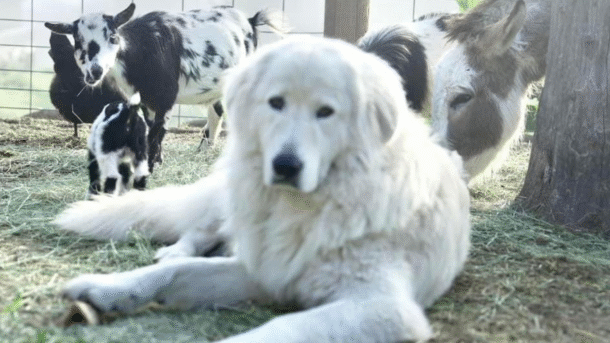
As a Maremma Sheepdog breeder, LGD trainer and admin of a large Maremma Sheepdog Facebook group (Living and Working with Maremma Sheepdogs), the question I hear most every summer is some version of: "How do Maremmas actually handle the heat?" Summertime can be challenging for Livestock Guardian Dogs as they seek relief from the sweltering heat.
The heat is equally brutal on the livestock these brave dogs guard, whether that means goats, sheep, cattle, horses, poultry, or other species. As responsible owners and caretakers, it's essential to prioritize their well-being and implement effective cooling strategies. This comprehensive guide will provide expert tips and techniques to keep your Livestock Guardian Dogs and the animals they guard cool and comfortable throughout the summer months.
Living With Maremmas and Livestock in Extreme Heat Conditions
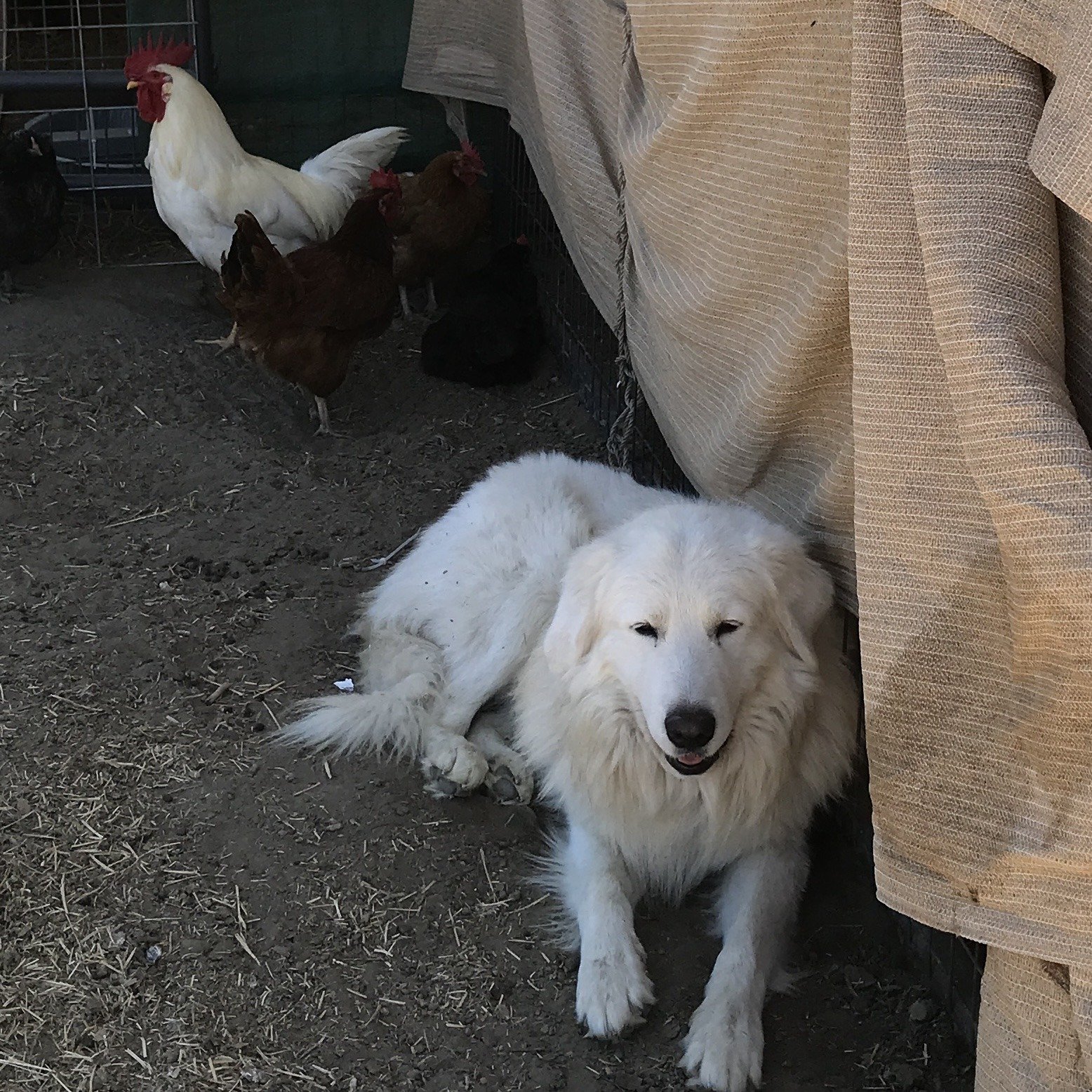
We're a small farm in Lemoore, California, breeding registered Maremma Sheepdogs and Mini Nubian and Nigerian Dwarf dairy goats, alongside horses, mini horses, donkeys, chickens, ducks, geese, turkeys, and barn cats. Central Valley temperatures regularly hit 110–115°F, and we get "excessive heat watch" warnings from June straight through September. People love to say "it's a dry heat" — it's still hot.
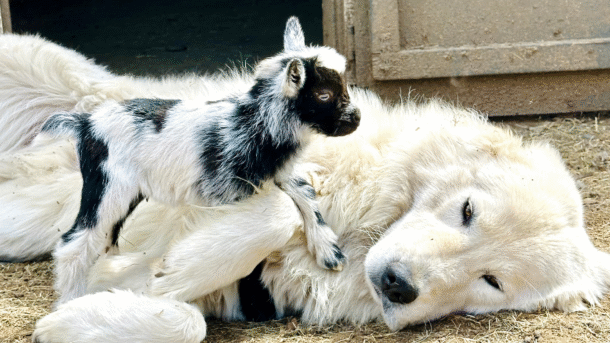
Here's the part that surprises people: my Maremmas handle it better than the goats and other livestock they guard. Dogs may just be more resourceful (or hardier) than goats and poultry. I haven't had real problems with the dogs or horses, and only occasional issues with the goats. Sadly, I have lost a few birds to heat over the years.
High temperatures can put animals at risk of heat stress, dehydration, and even death. So, I ensure that my Maremmas, goats, and other animals are kept as cool and comfortable as possible throughout the summer. Below are some strategies and tips that you can use to help your Livestock Guardian Dogs, and other animals beat the heat, too. And most of them are very inexpensive and easy to implement.

Provide Adequate Shade for Your Maremma Sheepdog
Shade is the simplest tool you have. Trees, barns, and purpose-built structures all work — but after over a decade of Central California drought, we've lost almost every mature tree on our property. The new ones we've planted are still too young to help much, so we lean heavily on man-made shade.
Barns and Outbuildings:
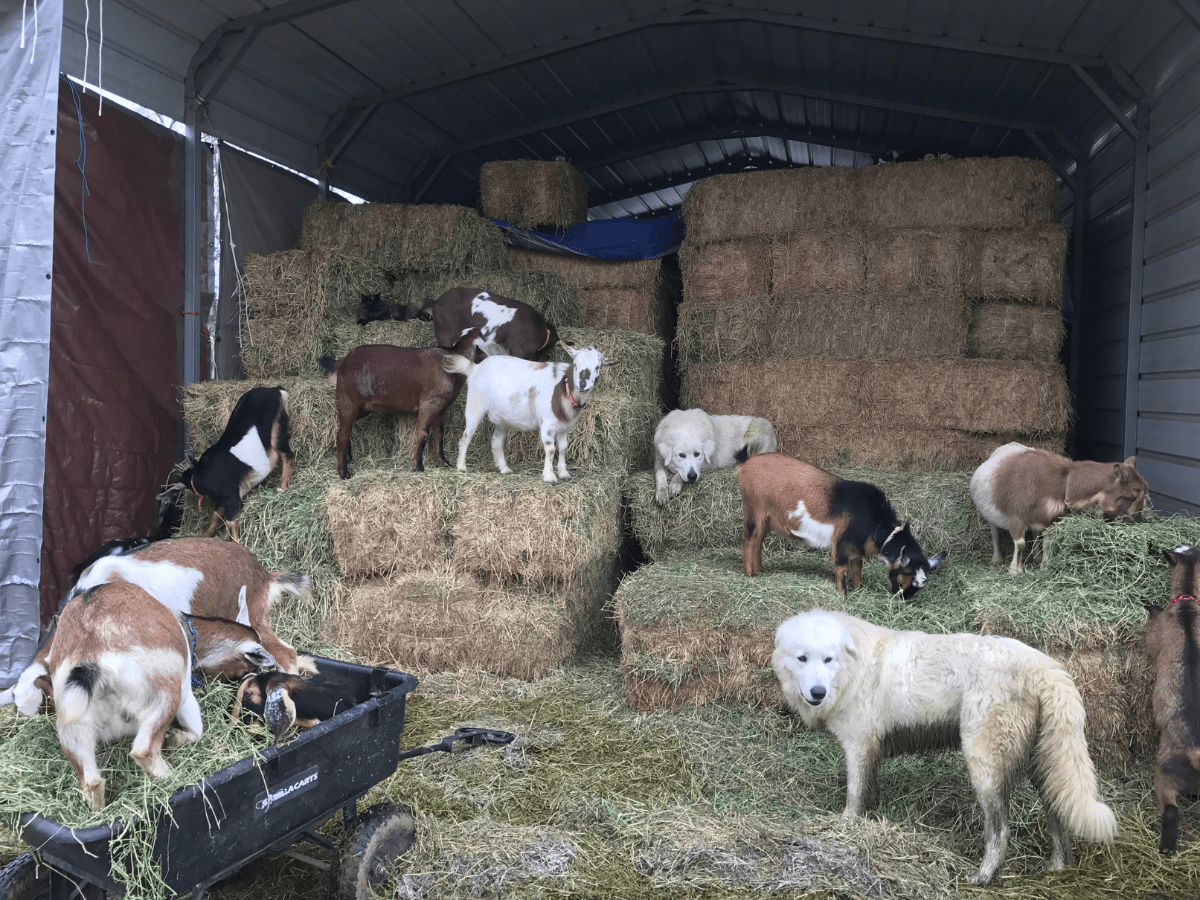
Our main barn (90' x 25') is a tall, flat-roofed structure with welded pipe and horse-panel sides — open enough for real airflow, which matters more than almost anything else for preventing heat stroke. We hang shade sails to block direct summer sun. Our one-sided hay barn, usually empty of hay by summer, doubles as extra shade. Even our converted grooming trailer casts useful shade for dogs and goats who like to lounge underneath it.
Horse Shelters
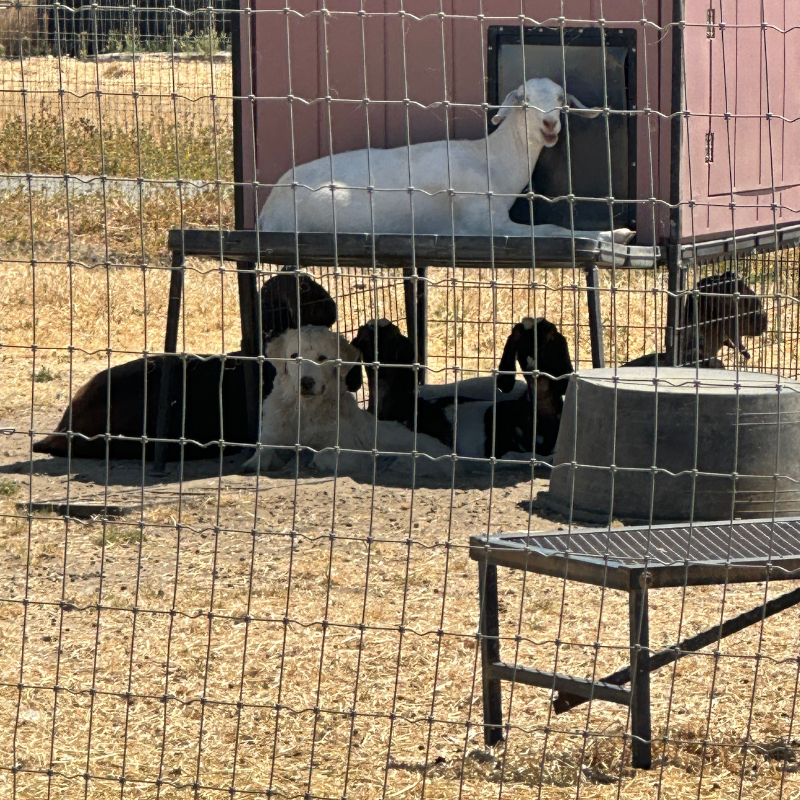
Our property came with several horse shelters sprinkled throughout the pastures. These are tall metal structures with flat roofs and no sides. They work well and stand up to the wind, rain, heat, and animals pushing on them. A dead tree fell on one of them a few years ago, crushing the roof, but the structure is still intact enough to provide shade for our Maremmas, horses, and goats. We plan to get it repaired one of these days. But we have higher priorities right now, and an ugly shelter still works to keep the animals cool.
The Puppy Parlor
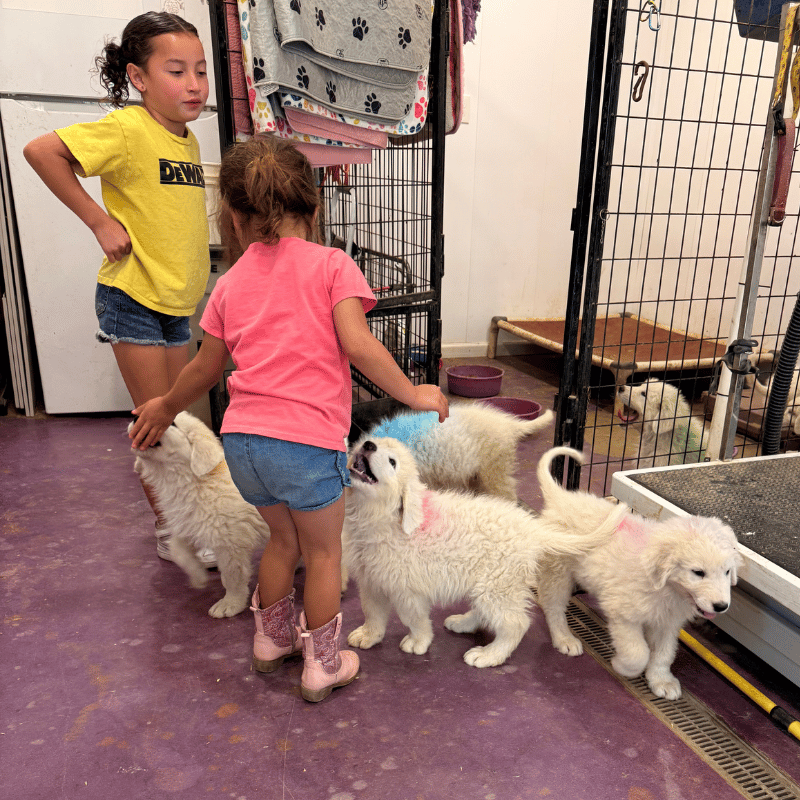
Our Puppy Parlor — a fully insulated, heated, and air-conditioned 16' x 30' building with industrial ceiling fans and dog doors leading to the goat pastures — lets puppies and mama dogs come and go as they please. We run the AC as needed when puppies are tiny but the fans alone make a huge difference. The dogs happily stretch out on the cool concrete floor during the hottest hours. We often use this time for training and socializing puppies indoors until it's cool enough to go back outside in the early evening.
Extra Pasture Shade Options
Pop-up Canopies
One thing we tried a few times for shade that didn't work well was pop-up canopies that are popular for parties, sporting events, and camping. They are convenient and look nice, but they don't hold up well to wind, rain, goats, dogs, and horses pushing on them. We gave up on that idea after buying a few that quickly ended up in the trash.
Calf Hutches
We use calf hutches from Calftel and Polydome in our pastures, but they are primarily for providing shelter in the wintertime. They are too hot to lay inside during the heat of the day, but sometimes the goats, Maremmas, or birds will lay in the shadows cast by the sun.
Easy Homemade Shade Structures


Another quick and inexpensive trick we've found is to attach sections of shade cloth to existing fences. Our fences are 5' high, so we buy 4 or 5' wide panels in whatever length we need in a particular area. These are made for lining patios and backyard fences and have rivets along all four sides, which makes attaching them to the fence with zip ties a breeze. This method only works for part of the day, but if you install it in the right spot, the animals can lay in the shadow cast by the sun. We use this as a backup for additional shade in a pasture, not as the only shade source.
After putting all that work and money into building those structures, we've determined there are better choices than this. But they are a quick way to provide your Livestock Guardian Dogs and livestock shade on a budget. They are suitable temporary structures that will last a year or two if you build them right. Or a day or two if you don't make them high and tight!
Dog Kennels Make Great Pasture Shelters
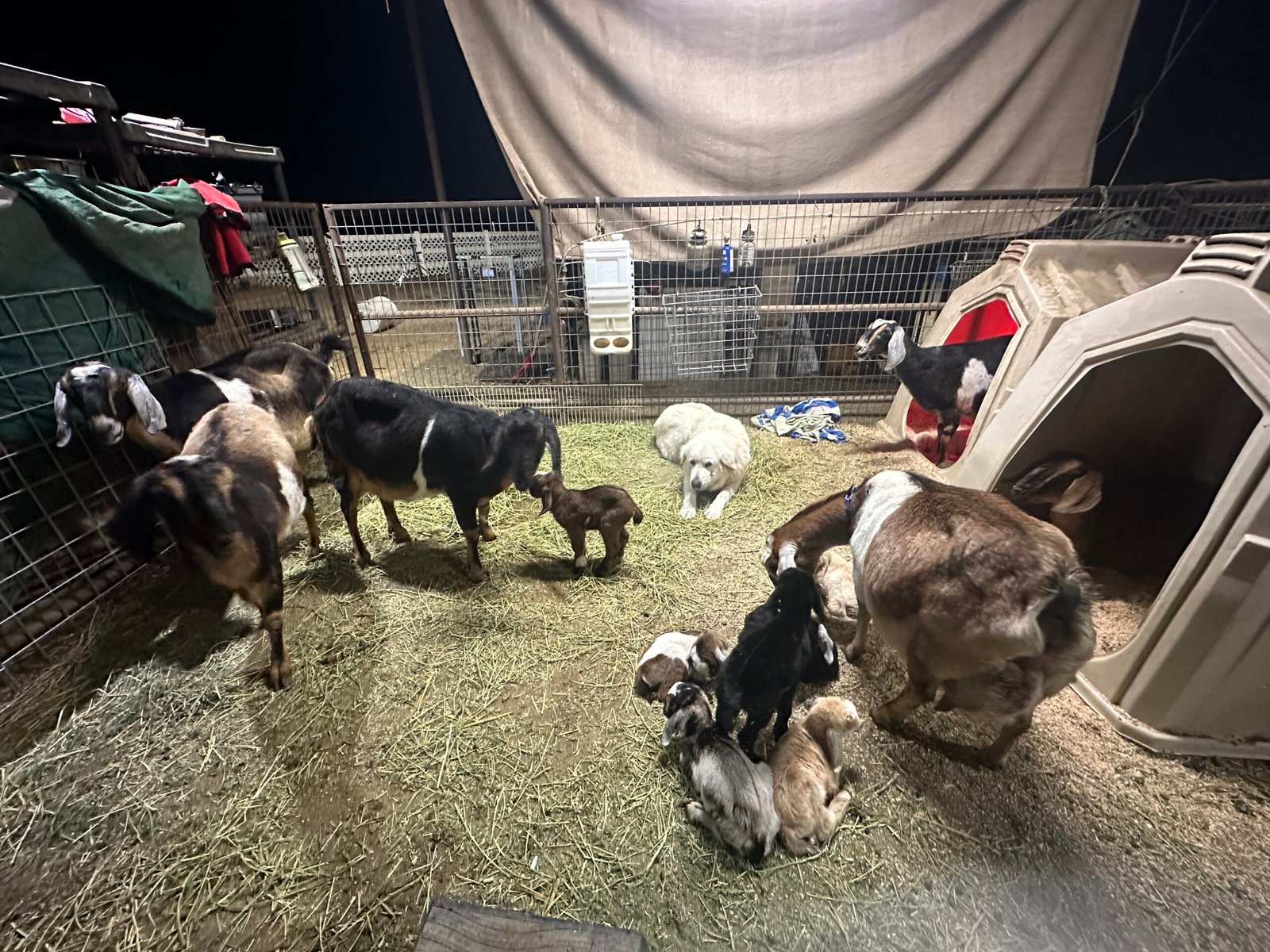
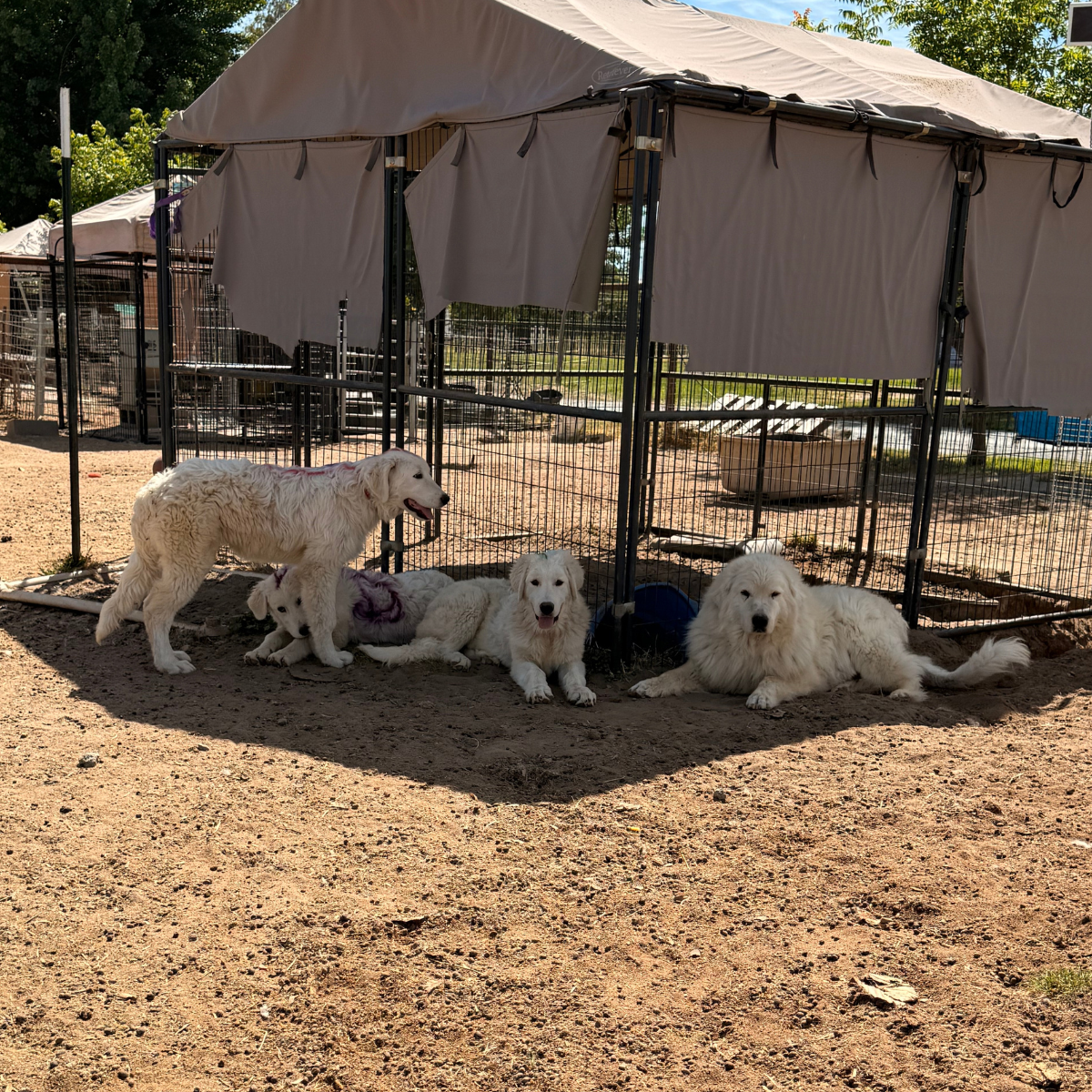
We've found that dog kennels with canvas roofs and sides provide the best shade for our Maremmas and dairy goats. We have several of these, and they can serve multiple functions. They can be used as mini "barns" for the goats or Maremmas. They provide shelter from rain, cold, and heat. We can put the goat minerals in there during the rainy season to keep them dry. They are an excellent place to feed the dogs so the goats can't steal the food, which can lead to resource guarding. And they are great when we need to temporarily contain an animal or group of animals, such as when we need to work in the pasture without the animals getting in the way. We have kennels for this purpose in most of our pastures and plan to add others eventually.
You can buy kennels from places like Tractor Supply or Lowes. We have a few of these, but the quality isn't great, and they are not very easy to assemble. Our favorite kennels come from K9 Kennel Store. These kennels are much more expensive than the ones bought locally, and the shipping is costly, but the quality is worth it. They assemble with pins, like the corral panels used for horses, so it takes mere minutes to put them together or take them apart. They come in different sizes, or you can buy individual panels and use whatever you need to make different sizes and configurations. I prefer to buy configurations that use 4' and 6' panels since they are easier for me to move than the 8' panels.
You can also buy canvas or metal roofs and canvas or mesh side covers that provide additional shade or protection from the weather and keep the rain and sun off. These are super easy to put up and take down as needed. Much, much easier than the ones from Tractor Supply or Lowes!
There are many other ways to provide shade for your livestock guardian dogs and goats. If you are handy with carpentry work or can hire someone to build a structure, you can provide something nice. I'm not talented in that area, so I have devised other measures that work well for us. But eventually, I would like to have some more permanent structures built. Structures that are a few feet off the ground and can double as climbing structures for the goats and shade structures for the dogs and goats would be perfect.

Let Your Maremma Sheepdog Dig to Cool Off
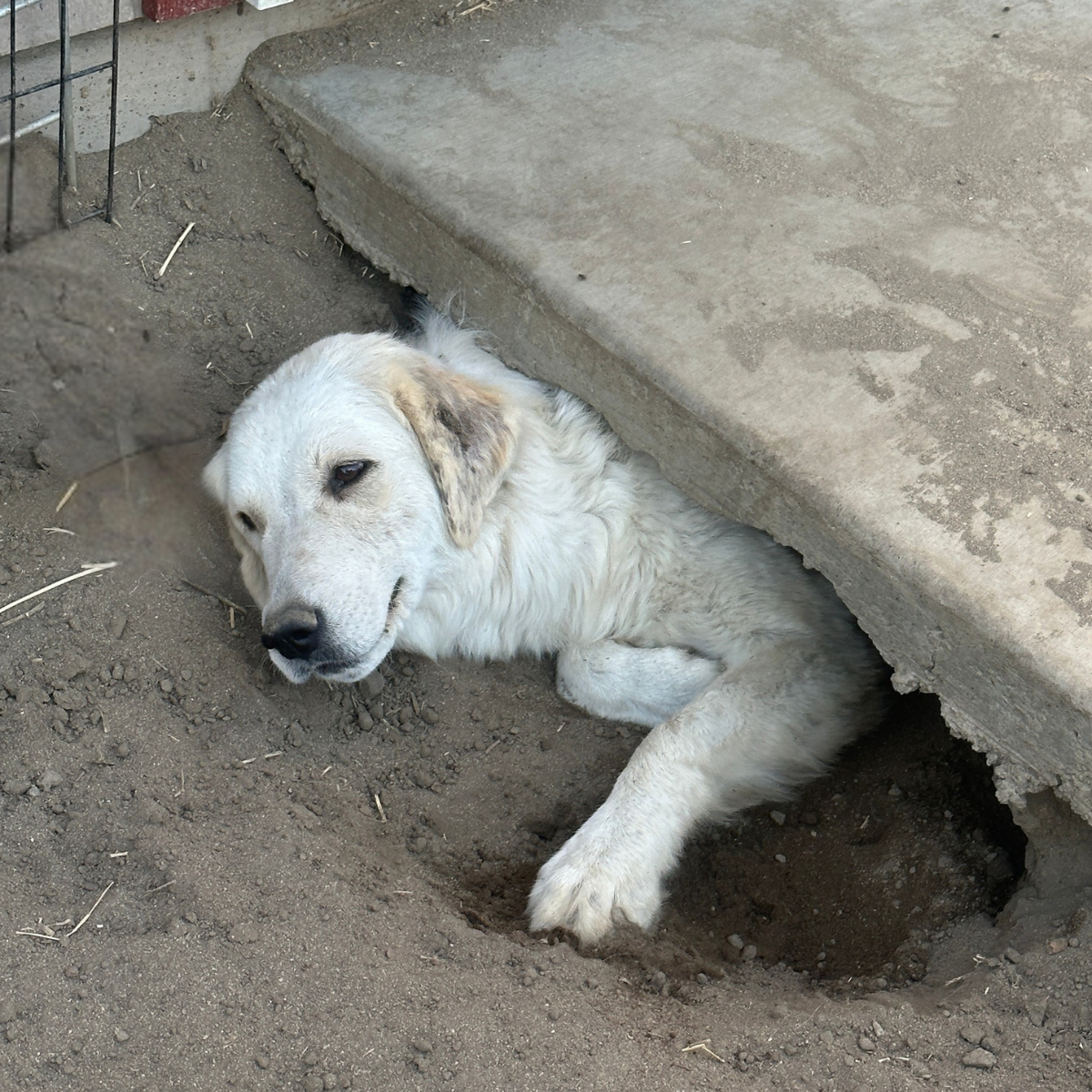
Another way most livestock guardian dogs like to keep cool is by digging holes. If you provide them with a place to do it, they will take care of it themselves. Usually, they will find a shady, sandy spot or a spot that is already mostly bare dirt, and they will dig themselves a nice little Hobbit hole. Then they will lay in it to keep cool. If you don't have such a spot, you could give your dogs a sandbox in a shady area or build a sandbox with a roof so they have a nice soft spot to dig and lay.
Since we don't have grass and only have an endless supply of dirt, I don't have this problem. My dogs make their own Hobbit holes to keep cool in. Usually, I manage to step in these holes when I'm out in the pastures and have fallen flat on my face many times because of these "Maremma death traps." Texting and walking in a pasture is almost as dangerous as texting and driving.
Water, the Essential Element for Keeping Animals Cool
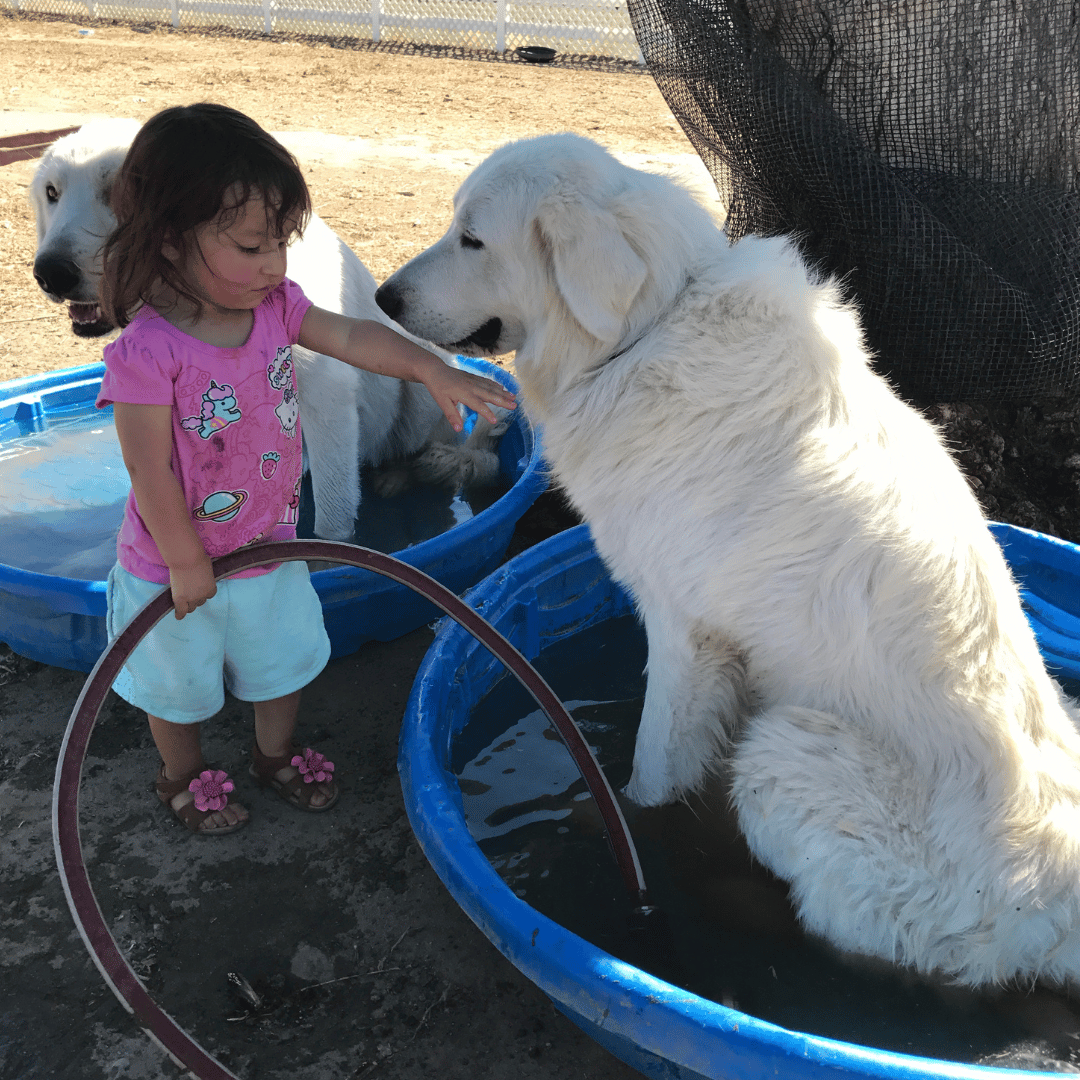
You may find that your Livestock Guardian Dogs like to submerge themselves in the water because it keeps them cool. (Most of my Maremmas love water, but a few don't. ) Because of this, you will need to change your water regularly. The dogs will pollute the water so that no one wants to drink it, especially if you own goats, who are more picky about having clean water than dogs.
What works well is to provide drinking water for the animals and "swimming" water for the dogs in two separate containers. You can use a child's wading pool for the dogs, but using a shallow trough for horses or livestock works better. These are sturdier than wading pools and are easier to empty and clean. And they hold up better to dogs and livestock than children's wading pools do.
For providing drinking water, you want to use smaller containers to discourage the dogs from using them for wading. The easiest way to do this is to use a flatback horse bucket of approximately 20 quarts. Then you attach an automatic waterer designed for livestock to that bucket. (You can find these on Amazon or Tractor Supply, usually for less than $20.) Attach that to a hose and clip the whole thing to a fence or other stable object. That way, the water will continually fill, but the bucket is small enough that the dogs cannot usually play in it. The animals will always have clean water, and then you provide separate water for the dogs to swim in. These smaller buckets are also easy to dump, scrub, and clean periodically to keep algae and other nasty stuff out.
You can use the automatic waterers to fill the swimming water or fill those with a hose. But those need to be dumped and cleaned up more often because the dogs will get them quite dirty when using them. The animals sometimes choose to drink from them, but that is their choice. I do always provide separate water so that they have clean water available.
If you own ducks or geese that share a pasture with your Livestock Guardian Dogs or other livestock, you'll have to dump and clean the water at least daily. They make a terrible mess of the water, and it's not fit for other animals to use or drink. I will cover keeping poultry cool later in this article. 🐓🦃🦆
Of course, you can always have however many buckets you need and fill them with a hose by hand, but I have a lot of animals, so this method works much better for me. I prefer to put as much on autopilot as I can. This way, I only need to check that everything is working instead of filling the waters daily.
Automatic Waterers

Putting it All Together
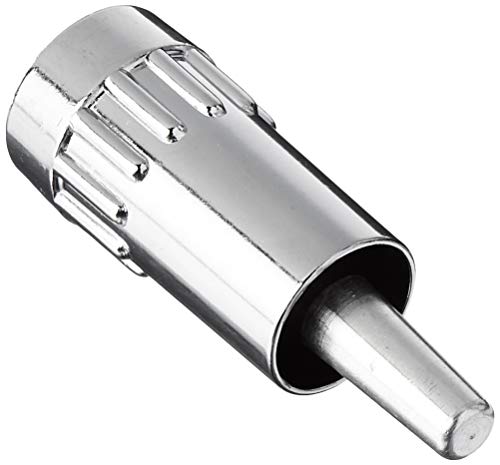
To keep your hoses from blowing out and causing the water to overflow, you can put a pressure regulator (designed for drip irrigation systems) on your faucet before you attach everything else. You can get these from Amazon or any hardware store. Make sure all your rubber washers are good quality and in good condition, and if you need to, you can also use plumbers' tape to minimize leaks.
The Zero-G brand cloth hoses last much longer than rubber hoses, and the dogs are less likely to chew on them. I've also found some metal hoses on Amazon that hold up to most chewers. But a determined chewer will even chew these up, so be aware! (Ask me how I know! 🤦🏻♀️)

Overview of Our Watering System
Clean, accessible water is non-negotiable. Many Maremmas love submerging themselves to cool off — which means they'll quickly foul any water source they share with goats, who are notoriously picky about clean water.
Our system: separate "drinking" water from "swimming" water.
- Drinking water goes in a smaller flatback horse bucket (~20 quarts) fitted with a livestock automatic waterer (under $20, widely available), so it's small enough that dogs can't really play in it.
- Swimming water goes in a shallow livestock trough — sturdier and easier to clean than a kid's wading pool, which won't survive dogs, goats, and horses for long.
- Automatic waterers (Lixits) mounted on pasture faucets give animals 24/7 access to fresh water without daily bucket-filling. Our goats actually prefer these to drinking from buckets.
- Nelson Waterers, while a bigger investment, hold up exceptionally well to wear and tear.

Electrolytes, Ice Packs and Animal Popcicles
Electrolytes are especially beneficial for goats (sheep, cows, or other dairy animals) if they are in milk. They can help prevent production from dropping due to dehydration. There are species-specific electrolytes for different animals. You can use them interchangeably, or you can get an all-species electrolyte. These powders look like Kool-Aid, and you mix them into the water.
The brand I like best for my goats is Goat and Sheep BlueLite, from Premier 1 Supplies. This brand is the best one on the market, and the goats go crazy for it. For horses, I usually use Red Cell or a similar brand. For poultry, I use a poultry-specific brand.
There are electrolytes made for dogs, but I only use them if I have a sick dog, and it won't hurt the dogs to drink the ones for goats or other livestock. But they may or may not like it. Whenever I offer electrolytes, I put them in a separate bucket and offer them plain water in addition to the electrolytes. I do this to ensure the animals still drink even if they don't care for the electrolytes, and so the automatic waterers don't dilute the electrolyte solution.
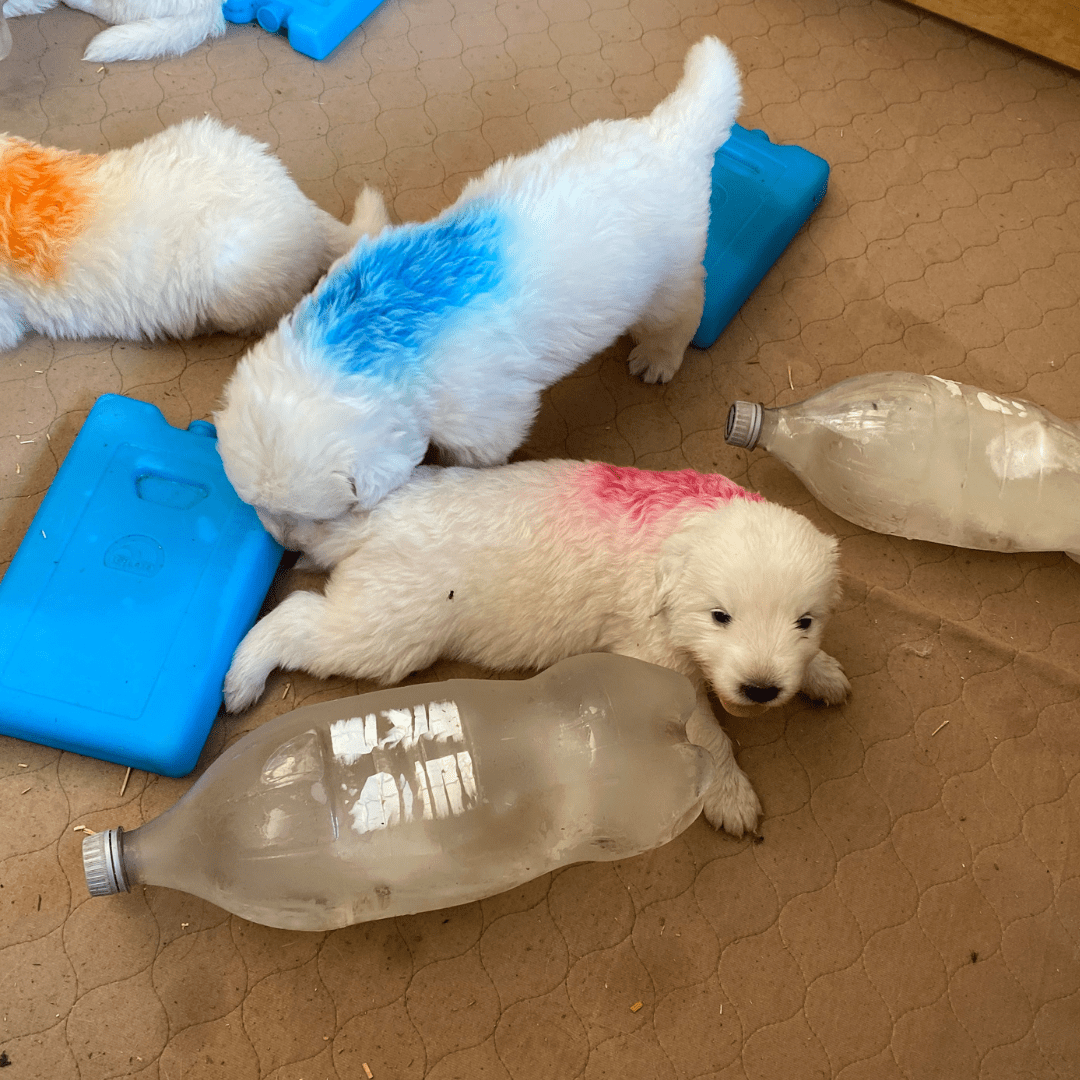
If the weather is especially hot you can use cooler ice packs and float them in the water. You can make homemade ice packs out of empty soda bottles or milk jugs. Before we built our puppy parlor we used the ice packs in the whelping box to keep puppies cool in the summer. It was still too hot, which is why we built the Puppy Parlor.
You can also make "popsicles" for your animals, using things like frozen broth or goat milk for the dogs and some combination of fruit or vegetables for goats, sheep, horses and poultry. Lay the "popsicle" in a dog dish or feed bucket so it doesn't all get wasted as it melts. Using a Toppl to prefreeze the ingredients makes this easy. Just pop it out of the freezer and let the dog enjoy a cool treat.

Interactive Chew Toys for Dogs Dog Toy for Moderate Chewers. Holds Kibble, Treats, X-Large.
These are so much better than Kongs! They hold a lot of treats, but it is easier for the dog to get the food out. We like to fill it with goat milk or broth mixed with various treats and frozen for a longer-lasting experience.
Misting Systems and Fans
You can also install a mister system along a fence, a dog kennel, a barn wall, or some other spot. Misters provide a fine mist of water and can be put on a timer to come on and off automatically. We have used these in the past. Some systems are better than others, so definitely do your research here.
Of course, goats will not appreciate any of these methods of using water to help them cool off other than the drinking water and the electrolytes. Goats hate getting wet. They don't like rain. They don't like swimming, and they don't like misters. They would rather be hot than get wet, so if you own goats, the misters are only for the benefit of your Livestock Guardian Dogs. Your goats will watch the dogs having fun in the water and wonder if they have lost their minds.

20000mAh Rechargeable Battery Fan with Water Box, 3 Strong Winds, 3 Spray Mister, Camping/Beach Summer Essentials
Schedule Around the Heat ~ Take a Siesta Approach to Life
If you have a cool building to work in, that might be a good option. But I don't suggest working with the animals outside when it is too hot. That will be harder on them and you. Allowing them to rest and stay cool during the hottest hours reduces stress on them and you as the owner.
We do most of our barn work at night, right before it gets dark and on into the night. Some people prefer to get up early to do their chores, but that doesn't work for me, so we do things this way. We also have our Puppy Parlor and an air-conditioned dog grooming trailer that we can use if we need anything done during the day. But for general outdoor activities, we do all that after it cools off.

Grooming Helps Your Maremma Sheepdog Stay Cool
Keep your Livestock Guardian Dog cool and comfortable with regular grooming. Grooming removes mats, tangles, and loose fur and improves air circulation around their skin, allowing heat to escape more easily. Plus, maintaining clean coats helps prevent the buildup of dirt and debris, ensuring good airflow. Grooming controls shedding and reduces the risk of heat-related illnesses like heatstroke. Help your loyal LGD beat the heat and stay healthy with proper grooming.
Keeping Poultry Cool Too
Summertime can be challenging for poultry, as birds can be more susceptible to the heat than mammals. All of the steps already discussed apply to farm birds. Here's a recap, plus a few extra tips.
- Provide shaded areas for birds to retreat from the sun. Use shade cloth, trees, or some of the recommended shelters. Keep the waterers in the shade to cool the water and refresh them periodically.
- If your birds are in a coop, be sure it has good ventilation. You can use fans to circulate the air, but keep them at a safe distance from the birds.
- If your birds are free range, make sure they have easy access to shade.
- Provide plenty of cool water. Your birds will need access to cool water throughout the day. Consider using a large waterer, and add frozen water bottles to help keep the water cool.
- Ducks and geese should have extra water for swimming. You can use the recommendations made earlier in this post. Remember to change the water often and ensure the birds don't pollute the water for the Livestock Guardian Dogs and other animals.
- Misters are an excellent way to decrease the temperature and keep your birds cool. You can install misters around your coop or run area and set them to a timer to provide periodic cooling bursts.
- Your birds will be more comfortable if they can keep themselves clean, so providing a dust bath is a good idea. If you have a dusty barnyard like us, your birds will make their own dust baths. Otherwise, a shallow pan filled with sand or dirt will encourage your birds to keep themselves clean and can also help keep them cool.
FAQs
How do Maremma Sheepdogs handle hot weather?
Maremmas are surprisingly heat-tolerant, often handling extreme heat better than the livestock they guard, especially with adequate shade, fresh water, and the ability to dig their own cooling spots.
Do livestock guardian dogs need air conditioning?
Not typically. Good ventilation, shade, and water access cover most needs — AC is a bonus, not a requirement, for healthy adult LGDs.
What temperature is too hot for a livestock guardian dog?
There's no single cutoff, but watch for signs of heat stress (heavy panting, lethargy, drooling) any time temps climb past the mid-90s, and always provide an escape from direct sun.
Your Title Goes Here
Your content goes here. Edit or remove this text inline or in the module Content settings. You can also style every aspect of this content in the module Design settings and even apply custom CSS to this text in the module Advanced settings.
Your Title Goes Here
Your content goes here. Edit or remove this text inline or in the module Content settings. You can also style every aspect of this content in the module Design settings and even apply custom CSS to this text in the module Advanced settings.
Quick Takeaways
- Ventilated shade beats enclosed structures every time
- Separate drinking water from "swimming" water
- Goats will destroy anything they can climb on or pull down — build tall and tough
- Electrolytes matter most for lactating/milking animals
- Schedule chores and training for early morning or evening
Conclusion
Have questions or Experiences to Share?
Leave a comment below or reach out directly - I love hearing from fellow farmers and LGD owners!