Last Updated on June 7, 2026 by Kim Crawmer, KPA CTP, LFDM
Six months ago, I got an email that started with: "I know this is crazy, but I live in Hawaii..."
Sarah wasn't wrong—getting a dog to Hawaii is a bit crazy. The quarantine requirements are extensive, the timeline is long, and the process is daunting. But when you fall in love with the right breed and find the right breeder, sometimes "crazy" is just another word for "totally worth it."
When You Know, You Know
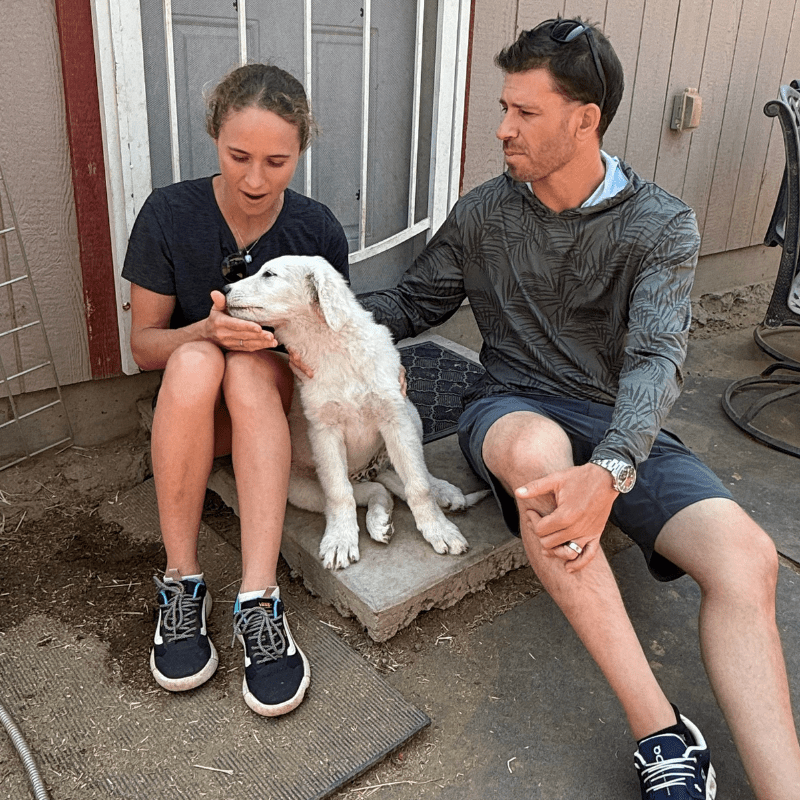
Sarah and Casey had met a Maremma in their Hawaii neighborhood and fallen head-over-heels for the breed. But living on an island presented some serious challenges. Could they even find a Maremma breeder willing to work with them? And even if they could, how would they navigate Hawaii's strict quarantine requirements?
After researching (and even considering breeders in Australia), Sarah found Prancing Pony Farm. We had a long phone consultation where we talked about everything—the breed, their goals, their lifestyle, and yes, the logistics of getting a puppy to Hawaii.
The timeline was the hard part. The quarantine process takes approximately six months because of required rabies vaccinations, titer tests, paperwork, and more. Sarah knew she wanted the youngest puppy possible, so instead of taking one from my current litter, she placed a reservation for the next available puppy.
The Long Wait (Made Sweeter by a Special Visit)
When our April litter arrived, Sarah and Casey were thrilled. We eventually chose their puppy—a beautiful girl they named Caia—and the countdown began.
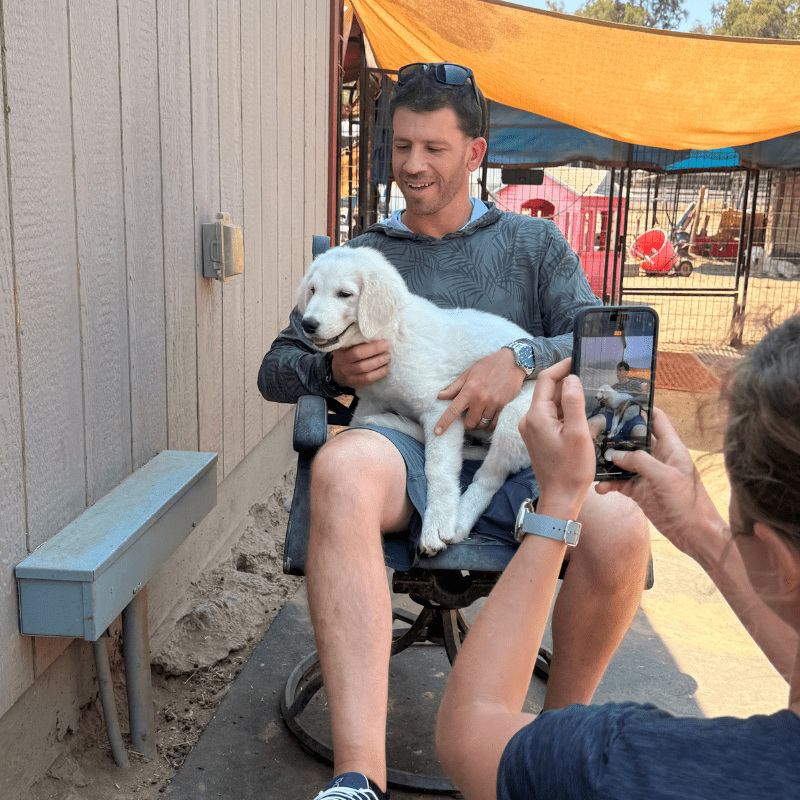
Then came the sweetest surprise. A couple of months later, Sarah and Casey were already traveling to California (Sarah was having surgery in Northern California), and they asked if they could drive down to meet their puppy, even though they couldn't take her home yet.
Of course I said yes.
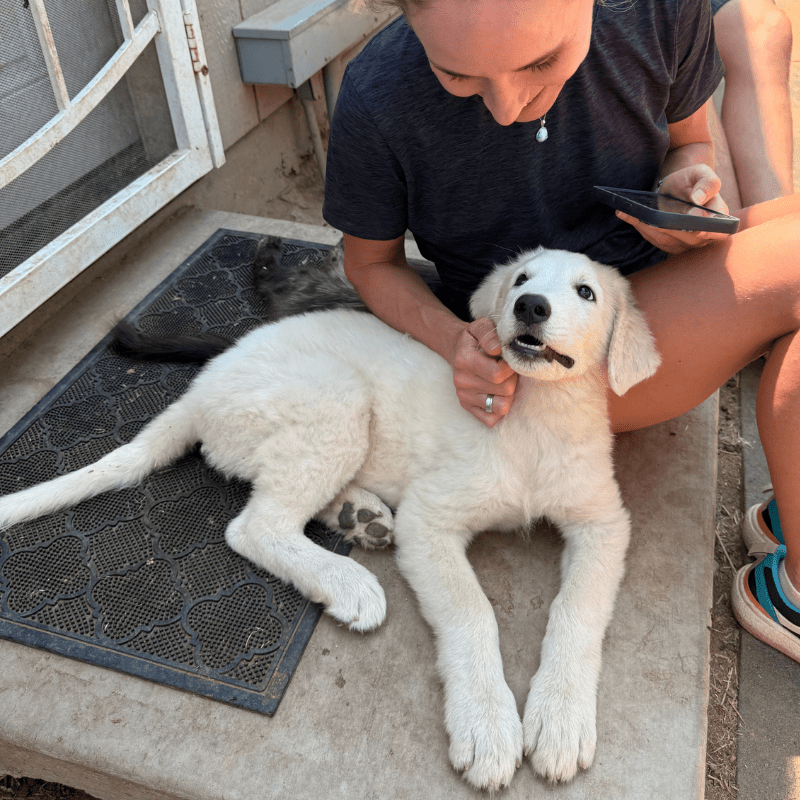
They drove several hours to spend an afternoon with three-month-old Caia, knowing they'd have to leave without her. Sarah later told me that getting to meet her puppy made the whole surgery experience a little less scary. Sometimes the best medicine really is puppy snuggles.
Tuesday: Pickup Day!
After months of paperwork, vet visits, and planning, Sarah and Casey flew back to California Tuesday to finally bring Caia home. They stayed overnight near the farm and arrived bright and early, buzzing with excitement.
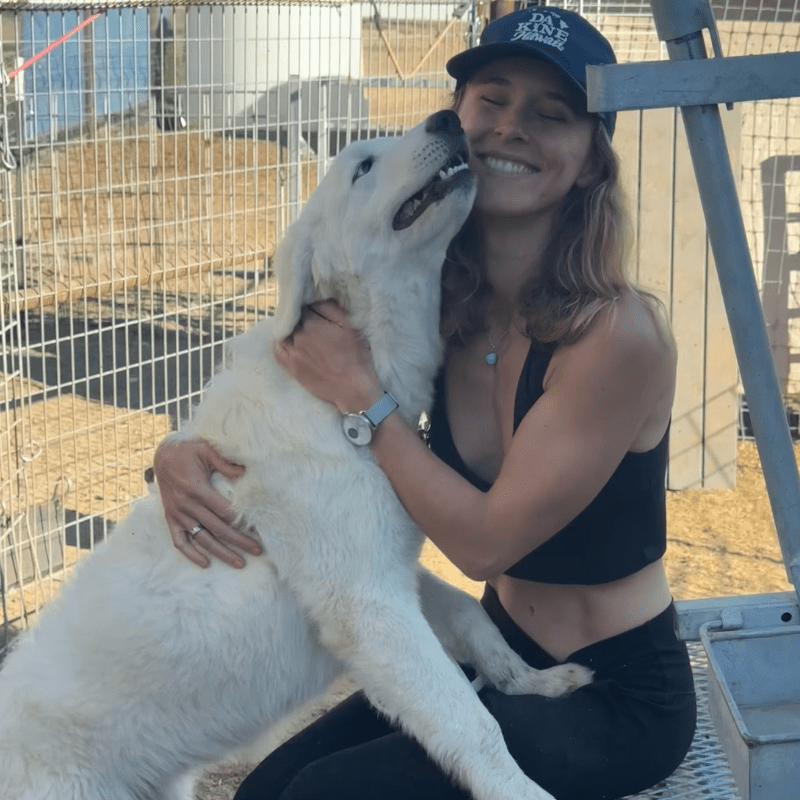
Caia—now just shy of six months old—was thrilled to see them again. We had a wonderful visit, lots of photos, and plenty of puppy kisses before they loaded up and headed to San Diego to visit family before their flight.
Here's what surprised me most: This is Sarah and Casey's first dog as adults. Sarah is 36, Casey is 40, and they waited until they were truly ready—until they had the time, resources, and commitment a dog deserves.
A Maremma as a first dog? Some people would say that's ambitious. I say it's perfect when you have the right mindset, the right puppy and a breeder who can support you and your dog on your journey from adorable puppy to trustworthy and loyal livestock guardian dog and companion.
The Real Test: From Farm to Airbnb Without Missing a Beat
Here's where Caia's story really showcases something I'm deeply committed to: raising livestock guardian dogs that can adapt to ANY situation.
The texts started rolling in as soon as they hit San Diego:
"We made it!! Caia was such a good sport.."
"Everyone was so in love with how gentle she is."
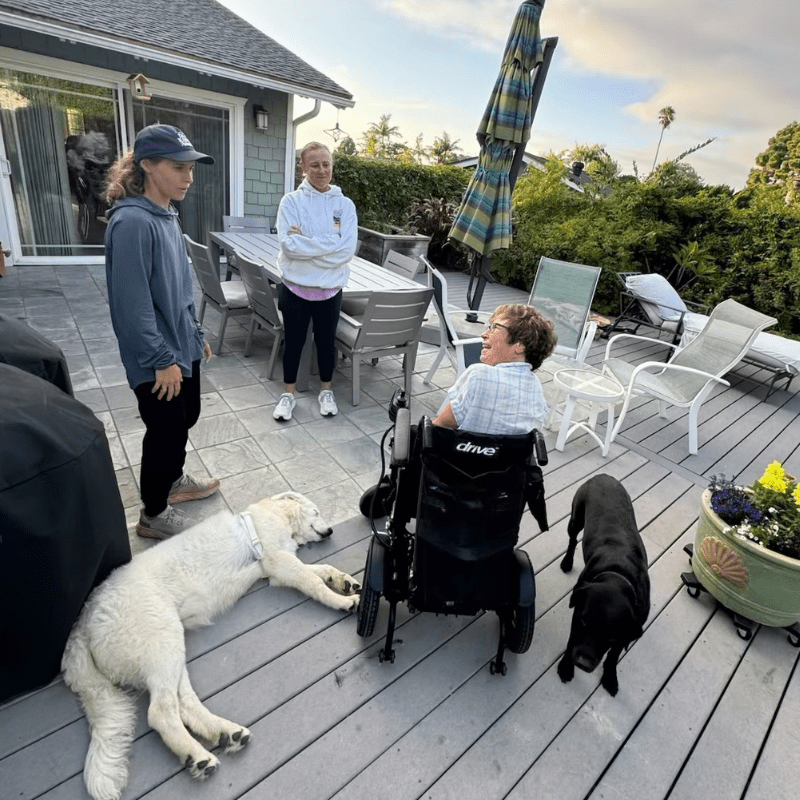
"She played with their little lab..she was so polite. She never even barked once."
"She got to relax...and sleep at the feet of Casey's aunt's wheelchair."
And then this one, which absolutely melted my heart:
"It was such a special day, I cried out of joy. 🥹"
Think about this for a second: Caia spent nearly six months of her life living outdoors with goats, chickens, and other Maremmas on a working farm. Then suddenly she's in a car for hours, staying in an Airbnb in a residential neighborhood, meeting new people of all ages and abilities, encountering unfamiliar dogs, and navigating completely new environments.
And she just... adapted. Like it was no big deal.
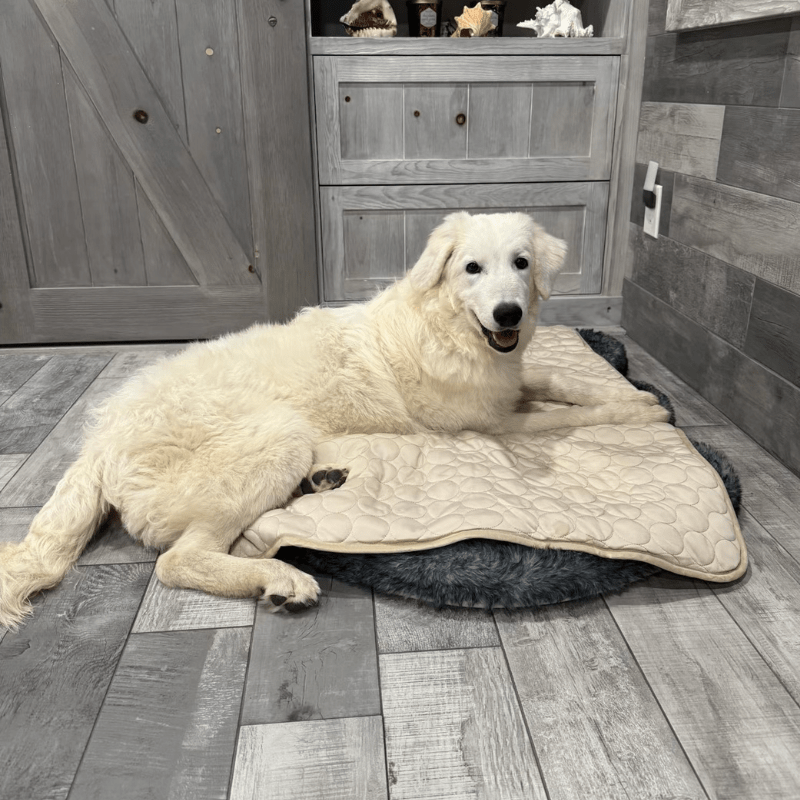
Today, she's sleeping at the foot of their bed, playing with toys, taking walks in the neighborhood, going out to potty on cue, and charming everyone she meets.
This doesn't happen by accident.
Why Socialization Makes All the Difference
A lot of livestock guardian dog breeders take one of two approaches:
Approach 1: Raise puppies in the house or backyard like companion dogs. These puppies are great with people and adaptable to home life, but they often lack the instincts and skills to actually guard livestock effectively.
Approach 2: Raise puppies exclusively with livestock in the barn or pasture. These puppies develop strong livestock guardian dog instincts, but they're often nervous or overwhelmed in everyday situations—vet visits, car rides, meeting new people, or adapting to life changes.
I believe both approaches leave dogs and families unprepared for real life.
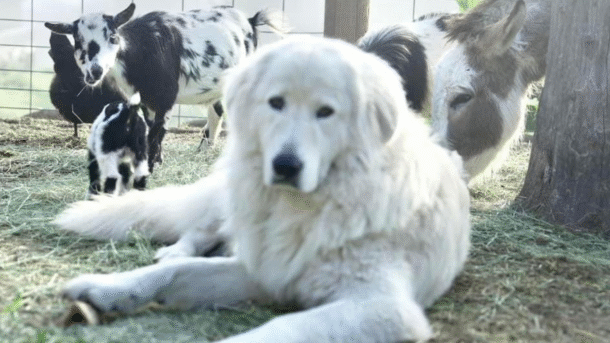
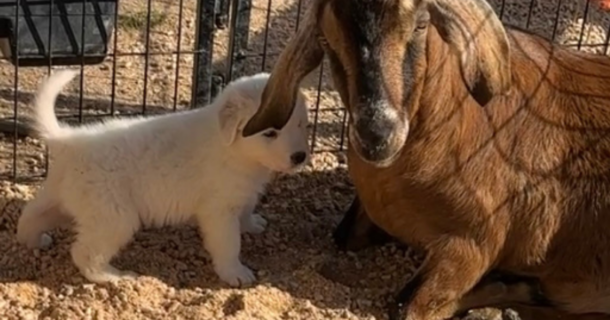
My approach is different. My puppies live with livestock from birth—they're out there with the goats and chickens, learning their job, developing their instincts. But they also spend significant time in what I call the "puppy parlor"—a specially designed puppy rearing facility with solid floors, walls, kitchen cabinets and appliances, dog grooming equipment and house-like surroundings. They meet people of all ages. (My grandkids, clients, farm visitors, adult family members.) They experience different sounds, textures, and environments. (Including TV, music and sound effects on the puppy parlor TV.) They watch cars, fire trucks, garbage trucks, delivery trucks and farm vehicles driving by on our busy country road. They interact with dogs of other breeds (My 3 companion dogs and family members' dogs) barn cats, and of course a variety of livestock and several different adult Maremmas.
They learn that the world is a safe, interesting place—whether that world is a pasture, a living room, or an Airbnb in San Diego.
Why This Matters (Beyond Caia's Story)
Here's something I've seen happen too many times: A family gets a farm. They get a livestock guardian dog. Life happens—job changes, health issues, family circumstances—and they have to sell the farm.
And they think they have no choice but to rehome their dog.
I've watched families agonize over this decision. I've seen dogs get rehomed when their families desperately wanted to keep them, but didn't think it was fair to keep a "farm dog" in a non-farm setting.
It's not only fair, it might be the right choice because a well-loved Maremma bonds just as deeply with their family as they do with the livestock and the farm. And I believe if you give many of them a choice, they would prefer to stay with their human family, even if it means leaving the farm.
I decided I didn't want rehoming to be the only option for my puppy families.
So I raise puppies who can absolutely thrive as livestock guardians—that's their primary purpose, and they're excellent at it. But if life circumstances change, these dogs can transition to companion life without falling apart.
I've had families from my earliest litters who ended up selling their farms and converting their Maremmas into full-time pets. (I have a full-time "house Maremma" of my own.) The dogs adapted beautifully—and that was before I was even intentionally breeding and raising for this kind of flexibility.
Now that I'm deliberately socializing for adaptability, I'm even more confident that my dogs can handle whatever life throws at them.
No shade if someone does choose to rehome their livestock guardian dog when circumstances change—sometimes that really is the best choice. But I want my puppy families to know they have options. Your Prancing Pony Farm Maremma Sheepdog can be a working livestock guardian AND a beloved family member. And if the farm part goes away, the family member part can absolutely stand on its own.
What's Next for Caia
Today, Caia flies home to Hawaii. It's about a five-hour flight, no different than the countless puppies I've sent to the East Coast. Because she met all the pre-arrival requirements, she'll be cleared by the quarantine vet at the airport and go straight home—no facility stay required.
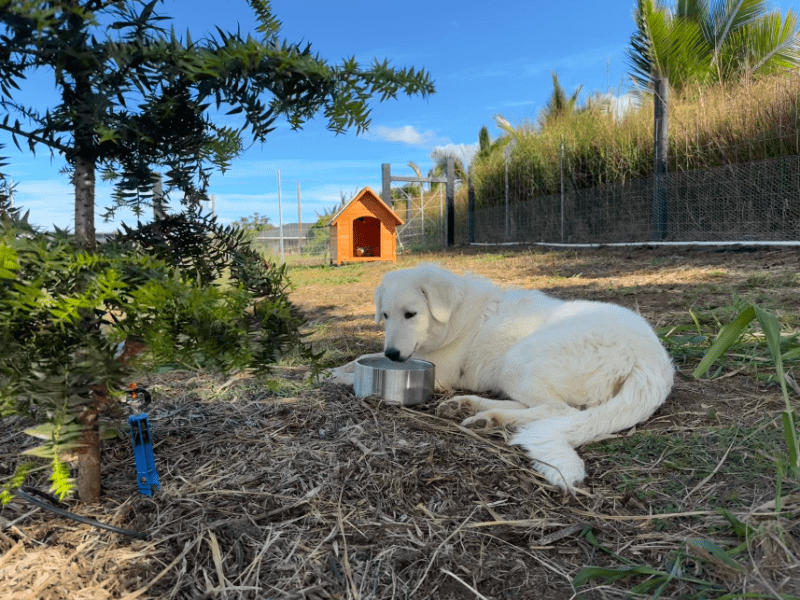
Sarah has set up a beautiful space for Caia to guard their chickens (and maybe someday, goats). But Caia will also be a beloved family member—what I call a "family farm dog." These dogs thrive when they have a job and a family to love.
Sarah has already enrolled in a positive reinforcement training course (Susan Garrett's program—excellent choice!), and she's even offered to write a guest blog post about the Hawaii import process to help others who might want to bring a dog to the islands.
Caia’s new mom gives us a tour of her future home in Hawaii — a sunny, tropical pasture where she’ll live with chickens and eventually roam the whole property once the fencing is complete. You can practically feel the island breeze and her bright future.
This Story Started With One Smart Decision.
Getting on the Master Reservation List before you're ready isn't just about securing a spot — it's about starting the relationship, the preparation, and the process at the right time. For $500 applied toward your purchase, you'll hold your place in line and have direct access to Kim while you get ready to bring home your Prancing Pony Maremma.
Why This Story Matters
This isn't just a cute puppy story (though it definitely is that). It's a reminder that:
- The right dog is worth the wait. Six months of paperwork and planning didn't dampen Sarah and Casey's excitement—it deepened it.
- First-time dog owners can absolutely handle Maremmas. When you're committed, educated, open-minded, and choose the right breeder, you can succeed with any breed.
- Geography doesn't have to be a barrier. With the right support and guidance, you can find your perfect dog—even if that dog is 2,500 miles away.
- Proper socialization creates dogs who can handle anything. From pastures to Airbnbs, from livestock to Labs, from farms to flights—these dogs are ready for real life.
I can't wait to follow Caia's island adventures. And I'm so grateful to Sarah and Casey for trusting me with their first-ever dog and even more for giving one of my Maremma puppies a wonderful home and an exciting new life. 💜
Want to follow your own Maremma puppy journey? Whether you're next door or across the ocean, whether you need a livestock guardian or a family companion (or both!), I'm here to help you find the right Maremma for your life. Browse our available puppies or contact me to learn more.
Caia Lands in Paradise
The flight went beautifully. Sarah was a bit nervous about the five-hour journey, but Caia took it completely in stride—just like she'd handled everything else. She was cleared by the quarantine veterinarian at the airport without any issues, and thanks to meeting all the pre-arrival requirements, she went straight home with Sarah and Casey. No quarantine facility, no delays—just a smooth transition from California farm life to her new island home.
And then? The real adventure began.
FAQs
Q: Can you really import a dog to Hawaii?
A: Yes! It requires advance planning (about 6 months), rabies vaccinations, titer testing, and veterinary paperwork, but dogs that meet all requirements can go straight home without facility quarantine.
Q: Are Maremmas good for first-time dog owners?
A: With the right commitment, mindset, and breeder, absolutely. First-time owners often do wonderfully because they don't have preconceived expectations—they accept the dog as they are and approach training with fresh eyes.
Q: Can a livestock guardian dog adapt to life without livestock?
A: When raised with proper socialization (both livestock work AND varied life experiences), absolutely. My dogs are bred and raised to be excellent livestock guardians first, but also adaptable to life changes. I've had families successfully transition their dogs to companion-only life after selling farms and I have families who have thrived with companion Maremmas from the start.
Q: What is a "family farm dog"?
A: It's a livestock guardian dog that has a job (guarding chickens, goats, etc.) but is also integrated into family life. Many Maremmas thrive in this role, especially on small farms or homesteads where they can be both working dogs and beloved family members.
Update: Caia's First Week in Paradise
Added 10/15/25
I have the most wonderful update to share about Caia's first week in Hawaii—and honestly, it's unfolding even better than I could have imagined.
After her successful California adventures (the Airbnb, meeting family, encountering new dogs and people), Caia flew home to Hawaii without a hitch. Sarah was a little nervous about the flight, but Caia? She took it completely in stride.
And then the real magic started.
Since arriving home, Caia has been living her absolute best life. The updates Sarah sends me are pure joy—and they keep proving everything I believe about proper socialization.
Meeting the Neighbors
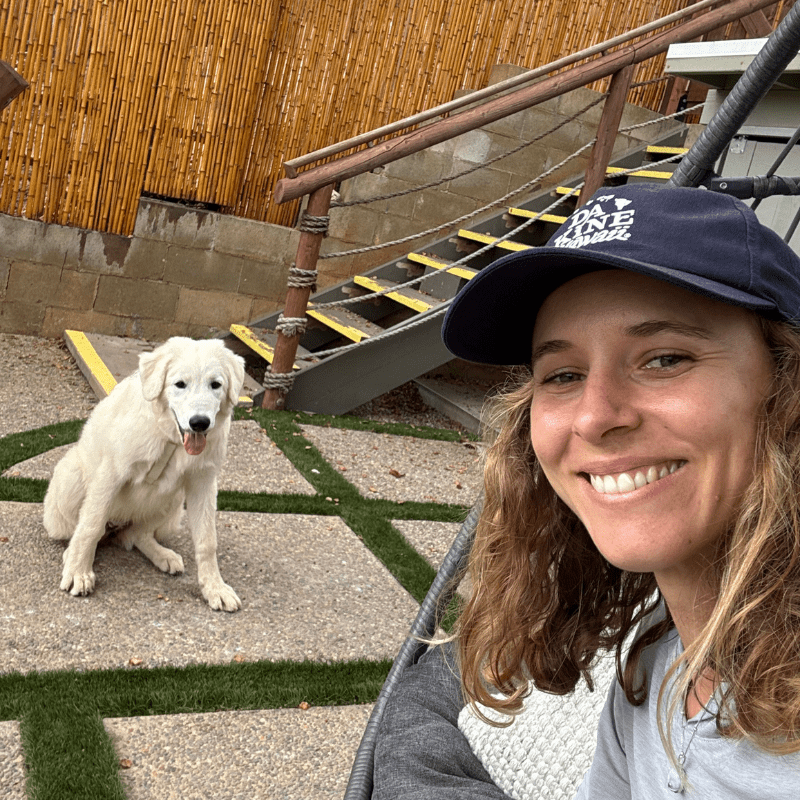
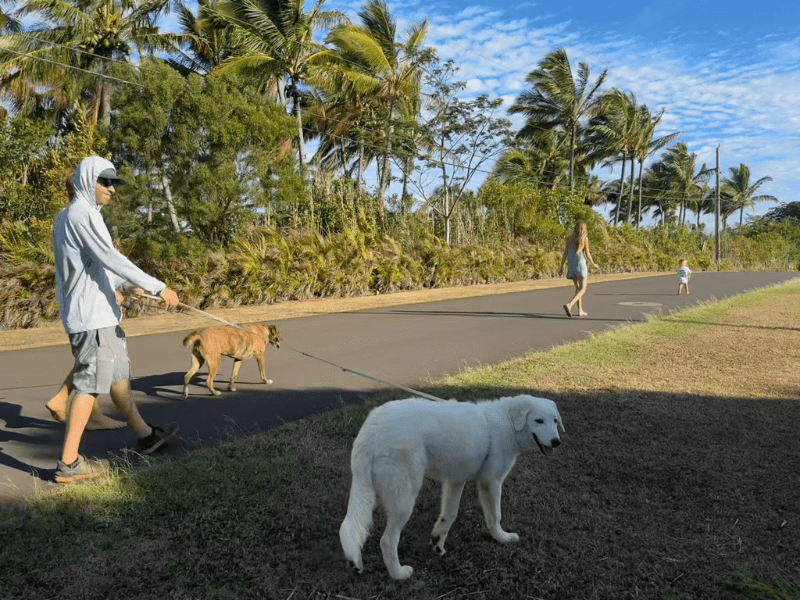
Caia has been making friends with the neighborhood dogs, and her social skills are shining through. She met their neighbors' Golden Retriever, and Sarah thinks they're going to become best friends. There's also an older dog who can be a bit territorial at his house, so Sarah and Casey are being thoughtfully careful about introductions without the fence barrier.
She also met an Australian Kelpie—a dog who's more interested in humans than other dogs and didn't really want to play. After a few attempts, Caia read the situation perfectly and left her be. This is the kind of social intelligence that comes from proper early socialization.
Adapting to Island Life
Sarah's messages paint the most charming picture of Caia's daily life:
"She's so funny in our tiny house. There are places she can't turn around and has to back out of!"
Even with the 5-hour time difference and possible jet lag, Caia's adapting beautifully. When she got a little restless around 4:30 AM one morning, Sarah took her out to her pasture—and the neighbors' dog came by and barked. But once they recognized each other, they got quiet and wagged their tails. Such a sweet early-morning moment.
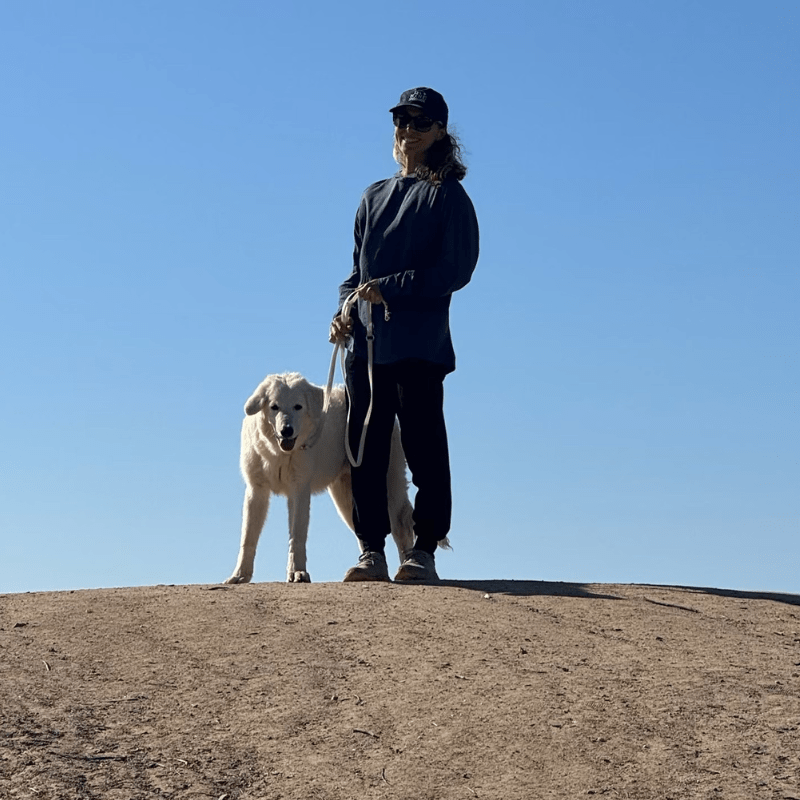
She's been on countless walks through the stunning Hawaiian countryside, meeting people along the way. One of my favorite updates? She met an adorable little child on a walk and was so gentle and sweet with the toddler. The child gave her treats, and she accepted them with perfect manners. (Sarah says that being loved on by my grandkids paid off!)
The Livestock Guardian Dog Instinct Emerges
Here's where things get really interesting: Sarah noticed Caia staring intently at pigeons. She's hoping this means Caia will be okay with the chickens, and she's planning to let her see them in the coop first (not let them out immediately) so Caia can get used to their presence.
This is exactly the right approach. Caia is showing natural interest in birds—a great sign for a future chicken guardian—but she's young and needs time to learn what's hers to protect versus what's a squeaky toy to play with!
Sarah also mentioned there are dogs barking in the neighborhood almost constantly (in the distance or closer), which hopefully helps Caia feel less alone while she's learning it's safe on her property.
Training and Enrichment
Sarah is working through Susan Garrett's "Home School the Dog" course with Caia, and I'm fascinated to see how this program works with a livestock guardian dog. She's already learning what treats motivate Caia and which ones she ignores—that classic "true Italian" personality where food has to be amazing or it's just not that interesting!
Caia spends time inside the house with Sarah, Casey, and their cat (who was initially skeptical but is warming up). Then she heads outside to her pasture with enrichment like toys and long-lasting chews to keep her comfortable and occupied.
The Best Part
When I asked Sarah how things were going, her response made my heart full:
"She is such a gentle dog! None of our friends can believe how gentle she is!"
And then: "Thank you so much for all these exchanges. I really appreciate your guidance!"
This is what success looks like. It's not just a well-bred, well-socialized puppy. It's a partnership between breeder and client, where communication flows freely and support is genuinely welcomed.
"She is such a gentle dog! None of our friends can believe how gentle she is!"
And then: "Thank you so much for all these exchanges. I really appreciate your guidance!"
Adapting Traditional Dog Training Programs with a Livestock Guardian Dog
One of the most interesting aspects of watching Sarah work with Caia has been seeing how she's adapting positive reinforcement training methods designed for high-drive dogs to work with a Maremma's mellower temperament.
Sarah enrolled in Susan Garrett's "Home School the Dog" course and also read "Decoding Your Dog" to understand behavior science basics. But as she's discovering, games designed for high-energy herding dogs need some modification for livestock guardian dogs.
"Baked chicken it is then," Sarah joked when I explained that Maremmas often need short training bursts with really motivating treats (often human food, because they're discerning Italians). "The 'It's Your Choice' game has been able to work, but I just have to do 1 minute at a time."
This is exactly the right approach. Sarah's learning that Caia is "so mellow, it's hard to get her into an aroused state, she is just content no matter what 😄" —which is wonderful for a livestock guardian dog, but means training sessions need to be short, simple, and highly reinforcing.
She's also discovering that regular dog training games need adjustment. As I told her: "Susan Garrett competes in agility with very high-drive herding dogs, so lots of the games are designed for those kinds of dogs. Which means a Maremma may just yawn and walk away."
But Sarah and Caia will be the great experiment! And Sarah's keeping sessions short and simple, which is the key to success with this breed.
Caia knows the treat-toss game (I play "find it" with my puppies every night after they eat before letting them back outside), and she's working on impulse control exercises. The basic version might be boring for an LGD, Sarah noted, but with treats on the floor covered by her hand, it's more enticing.
The fact that Sarah is thoughtfully adapting training methods rather than just giving up or assuming Caia is "untrainable" shows exactly the kind of commitment that leads to success with this breed.

Build a Better Foundation With Your LGD
The DIAL Method® is a short, science-based program that teaches you how to truly understand your livestock guardian dog as an individual and how to set them up for success — before you ever start formal training. Four video modules, under 40 minutes, and a framework you'll come back to for the life of your dog.
I'm a certified Dial Guide and available for individual consultations if you want personalized support applying it to your specific dog and situation.
Get the DIAL Method® → | Learn about our puppies →
Read Sarah's review of the Dial Method and two other dog training programs in this post.
Why This Matters (Beyond One Happy Puppy)
Watching Caia thrive in Hawaii reinforces something I've always believed but that many people in the livestock guardian dog world push back against: these dogs are incredibly versatile and can thrive in situations that go far beyond what most people consider "ideal."
Too many people gatekeep this breed. They insist these dogs can't be pets, shouldn't go on walks (because it might make them want to run away—what a ridiculous idea!), and shouldn't have fun outside their pasture.
I strongly disagree.
These dogs can live wonderful, happy lives in whatever situation their family creates for them—as long as they're given love, humane treatment, respect for their breed traits, and understanding of their instincts. They can be full-time livestock guardians. They can be part-time guardians and part-time companions. They can even transition to full-time pet life if circumstances change.
What matters most is that each dog gets what they individually need, not what some arbitrary rulebook says all livestock guardian dogs must have.
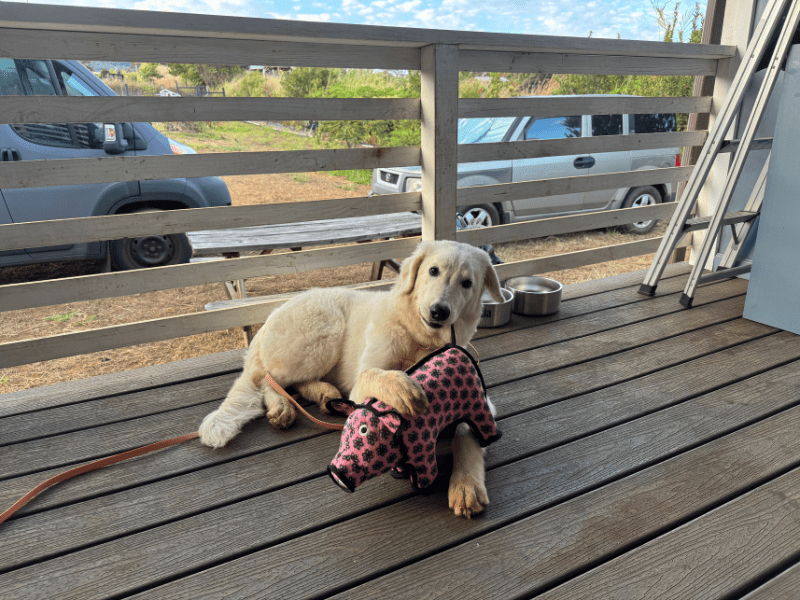
Look at Caia: She's meeting neighbors' dogs over fences and on walks. She's reading canine body language and backing off when another dog isn't interested in play. She's gentle with children. She's calm around construction equipment and cranes. She's navigating a tiny house with grace (and some amusing backing-up maneuvers). She's watching birds with interest, showing her guardian instincts are developing naturally. And she's sleeping peacefully next to her people at night before heading out to her pasture during the day.
She's becoming exactly what she's meant to be: a well-rounded, confident, adaptable livestock guardian dog.
The Vital Role of Communication Between Breeder and Dog Owner
Sarah and Casey are doing everything right, and a big part of that is our ongoing communication. They've read the books I recommended (including the calming signals book—and they're actually noticing Caia's signals in different situations!). They're taking a positive reinforcement training course. They're providing enrichment. They're giving Caia time to adjust. They're not rushing her into chicken-guarding duty before she's ready.
And most importantly? They're asking questions and sharing what's happening.
This is what I want everyone to know: When you buy a puppy from me, you're not just getting a dog—you're getting a partner in raising that dog. I'm here for questions, troubleshooting, celebration, and guidance. I don't tell people what to do; I share what I know will maximize their chances of success based on my experience and education.
But I can only help if clients reach out. Some puppy families give me constant updates, photos, and questions. Others, I rarely hear from. I don't force myself on anyone because I know people are busy, but I want everyone to know: I'm here. Always.
The difference ongoing support makes is clear when you look at Caia's success. Sarah reaches out regularly. She shares concerns (like Caia's interest in pigeons and how to introduce her to chickens). She asks for advice. She implements suggestions. And the result? A confident, happy puppy thriving in a completely new environment.
This is what breeder support should look like.
Looking Forward to Caia's Wonderful Life
I couldn't have drawn up a better home for one of my puppies if I'd created a wishlist myself. I never expected to send a dog to Hawaii. I never imagined the adventures this puppy would have. But watching it unfold has been one of the most rewarding experiences of my breeding career.
Caia is going to be a wonderful chicken guardian (once she's old enough and properly introduced). She's going to continue being a beloved family member. She's going to live a rich, full life with people who adore her and are committed to her success.
And she's going to prove—every single day—that livestock guardian dogs can be so much more than the narrow boxes some people try to put them in.
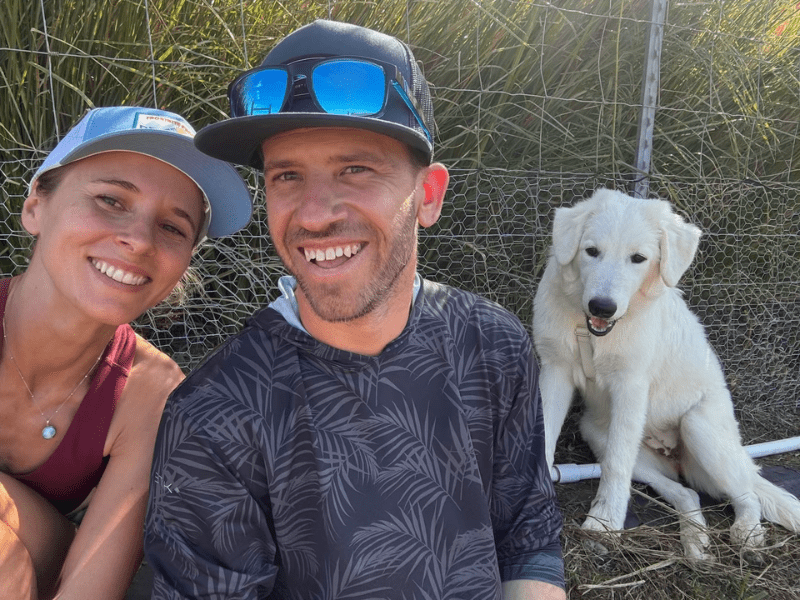
Welcome home, Caia. You're exactly where you're meant to be. 🌺
Sarah's Recommended Reading List
| Product Image | Product Name / Our Rating / Price | Primary Button |
|---|---|---|
Best Dog Behavior Book |
| |



This is Why I Do What I Do
Six months of planning. Countless emails and texts. Mountains of paperwork. Multiple vet visits. A 2,500-mile journey.
And the result? "Another sweet and easy night ☺️"
This is what it's all about—not just breeding dogs, but building relationships. Supporting families. Creating matches that work. Being there when it matters.
I'll keep sharing Caia's updates as she settles into her role as a Hawaiian chicken guardian and family companion. Sign up for my email list if you want to take the journey with Caia.
And if you're dreaming about your own Maremma—whether for livestock protection, companionship, or both—I'd love to chat. No pressure, no sales pitch. Just honest conversation about whether this breed is right for you and how I can help make it work.
Because the right dog is always worth the wait. ✈️🌺