Last Updated on June 6, 2026 by Kim Crawmer, KPA CTP, LFDM
If you've spent any time in dog communities online, you've probably seen the 3-3-3 rule mentioned for rescue dogs. The idea is simple: it takes roughly 3 days, 3 weeks, and 3 months for a dog to fully settle into a new home. And while it was popularized in the rescue world, I want to talk about why it applies just as much — sometimes more — to your new livestock guardian dog.
Because one of the most common calls I get from new Maremma owners comes in those first few weeks goes something along the lines of: "I thought he'd be settled in by now, but he just seems shut down." Or: "She won't eat. Is something wrong with her?" "Why is she barking at my farm hands and visitors?" Or even: "This is not what I expected at all."
Usually, nothing is wrong. The dog is just going through one of the most disorienting experiences of his life. Understanding the 3-3-3 rule won't make the adjustment period disappear — but it will help you stop panicking and start supporting your dog the way he actually needs.
Why is Adjusting to a New Farm So Hard for LGDs?
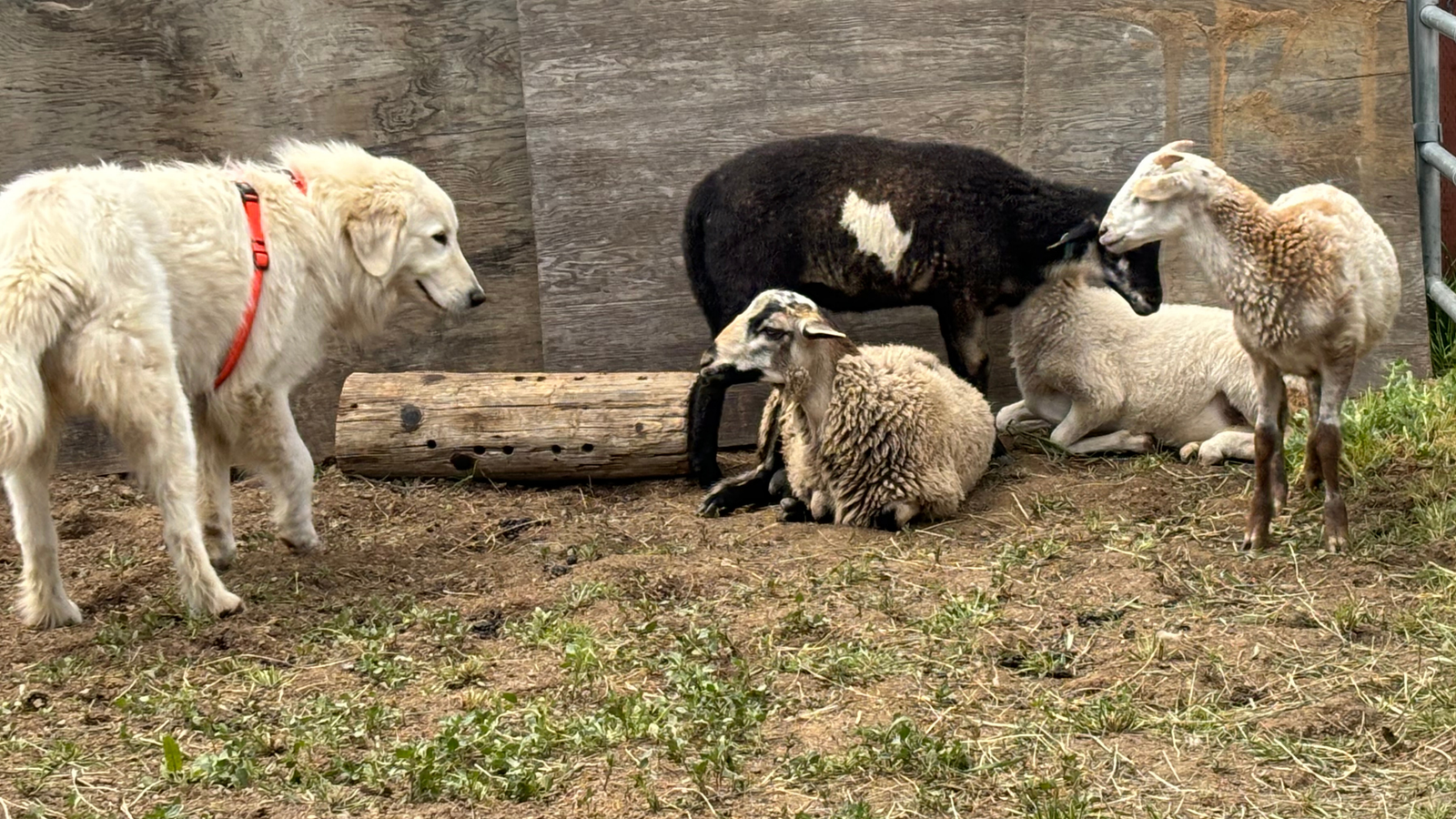
Most dog content online is written with companion dogs in mind. But livestock guardian dogs — Maremmas, Great Pyrenees, Anatolians — are a different animal in more ways than one.
These dogs are bred to bond deeply to a place, a flock, the people they know, and a way of life. They develop what I describe as a sense of territory and belonging that goes much deeper than a typical family dog's attachment to a home. When you move a livestock guardian dog — especially an older juvenile or an adult — you are not just moving a dog. You are uprooting everything that dog has organized its whole internal world around.
That's not dramatic. That's just the reality of what these dogs were bred to do.
Which is why I always tell new owners: the older the dog, the more patience you will need to give them. A puppy coming to your farm at 12 weeks is a blank slate. An adolescent at 8 months has already started building his identity around a specific place and pack. An adult Maremma who has been guarding a farm for 3 years? That dog's entire world just disappeared. Give them time. Give them grace.
Bringing home a new Maremma Sheepdog and want to make sure you're set up for success? Reach out to schedule a Discovery Call if you have questions before your puppy comes home.
The First 3 Days: Survival Mode
In the first 72 hours, your new Maremma is not being himself. He is in pure survival mode — trying to figure out if he is safe, where the threats are, where the food comes from, and whether the humans around him can be trusted.
During this window, you may see:
- Shutdown behavior — the dog barely moves, doesn't explore, seems flat or dull
- Refusal to eat — extremely common, especially in adults; stress suppresses appetite
- Hiding or pressing against a fence/wall — self-soothing behavior
- Excessive alertness — scanning constantly, reacting to everything
- Unusual vocalization — whining, howling, or unusual barking
What you should NOT do during this window is try to flood your dog with new experiences, introductions, or training. Keep things calm and predictable. Let him observe. Give him space to decompress. Resist the urge to "show him everything" on day one.
What you SHOULD do is establish routine immediately. Same feeding time, same feeding location, same path for any movement. Routine is safety for a stressed dog.

One of the most important books you can read to effectively understand your dog.

The First 3 Weeks: Testing the Water
By the end of week one, you'll start to see more of your dog's actual personality emerge. By week three, you should be seeing consistent behavior — though not necessarily the behavior you were hoping for yet.
This is the window where owners often get concerned, because this is when some of the harder behaviors start to show up:
- Fence-testing and escape attempts — the dog is looking for its old home, its former owners, its flock, or its pack
- Increased reactivity — now that he's come out of shutdown, the world feels very new and scary. He's trying to figure out what's ok and what's not
- Chasing or pestering livestock — not aggression; this is boredom, stress, and improper integration
- Excessive barking, especially at night
- Attachment to one person - some dogs quickly attach themselves to one new person at their new farm while being suspicious of everyone else. This is normal. Give them time and patience and they will gradually accept other family members or staff
These behaviors are not signs that you got a bad dog or that something is fundamentally broken. They are stress behaviors. They are telling you that your dog is still adjusting, still processing, still not quite sure this is home.
This is also the window where having a second LGD matters enormously. A dog who has a bonded partner has someone familiar — someone safe — to anchor to while everything else is new. A single LGD faces all of this alone. That is one of the core reasons I advocate so strongly for placing LGDs in pairs.
During weeks one through three, focus on:
- Calm, positive interactions at feeding time to build trust
- Controlled, gradual introduction to livestock (not just "throw them in together")
- Maintaining that consistent routine
- Letting the dog set the pace for closeness with you
The First 3 Months: Finding His Footing
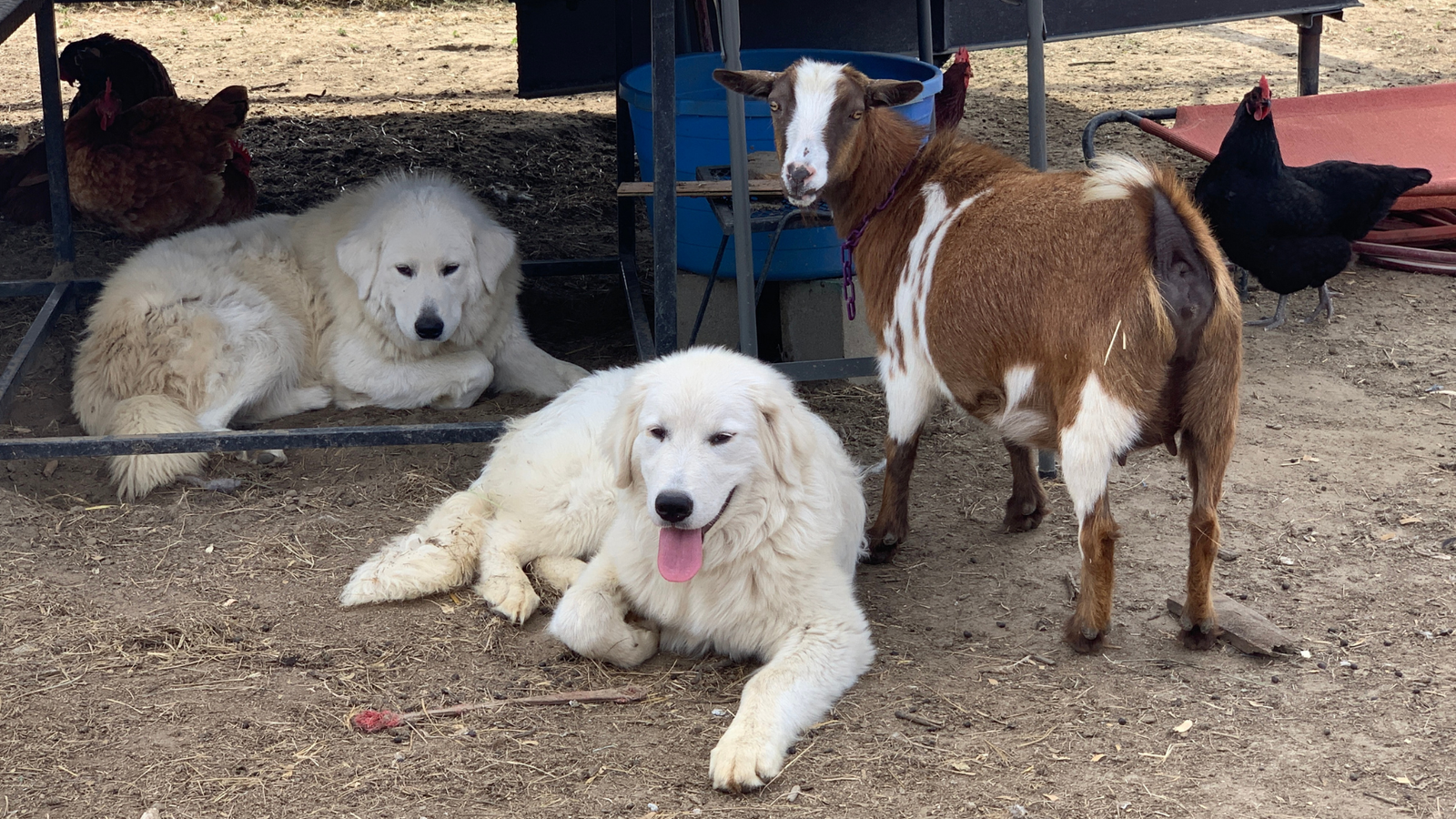
By the three-month mark, a well-matched dog in a supportive environment should be starting to feel genuinely at home. You'll see him begin to:
- Relax into a daily routine that feels like his
- Accept your livestock as charges worth protecting
- Seek out your company with genuine interest rather than anxiety
- Settle at night rather than vocalizing continually through the dark hours
- Eat consistently and maintain healthy weight
This is the phase where all your patience starts to pay off. The dog who seemed shut down in week one, reactive in week three, is now starting to actually become your working partner.
But I want to be direct about something: for adult dogs, especially those with a long history in one place, three months may just be the beginning. Some adult Maremmas take more time to fully decompress. This is not failure. This is a deep-bonding breed doing what deep-bonding breeds do.
If you adopted an adult LGD or purchased an older dog from a breeder or another working farm, please recalibrate your expectations accordingly. The more established a dog was in their previous life, the longer this process takes. Your job is not to rush it. Your job is to create the conditions where it can happen.
A Note on Behavior During Adjustment
Something I see regularly is owners interpreting decompression behaviors as permanent personality traits. The dog who hides for the first week gets labeled as "fearful." The dog who barks at everything in week two gets labeled as "reactive." The dog who charges the fence gets labeled as "aggressive."
Before you draw any conclusions about your dog's long-term temperament, give him three full months. What you're seeing in the early weeks is stress, not personality.
That said — if you are seeing behaviors that concern you, please reach out. I provide lifetime support to every family that brings home a Prancing Pony Farm Maremma, and "I don't know if this is normal" is always a valid reason to call. I would rather troubleshoot early than have a family give up on a dog who was just still finding his feet.
Key Takeaways
- The 3-3-3 rule — 3 days, 3 weeks, 3 months — applies to well-bred, properly socialized Maremma Sheepdogs and other livestock guardian dogs just as much as it does to rescue dogs
- The older the dog, the longer the adjustment, and the more patience they need
- Shutdown, stress behaviors, and slow-to-warm responses are normal, not red flags
- Consistent routine, calm introductions, and a bonded partner dramatically shorten the decompression curve
- Three months is a starting point for adults — not a finish line

Every dog owner knows that along with the joy can come the stress and frustration of behavioral problems, which are expensive to diagnose and treat. Enter Kim Brophey, award-winning canine behavior consultant. Using cutting-edge research, Brophey has developed a groundbreaking system that allows owners to identify what their dog is struggling with, why, and how they can fix it. Brophey's approach is unlike anything published before and will give dog owners a new understanding of what motivates and affects their dog's behavior. Brophey's innovative technique rethinks how we categorize dogs and distills information from over twenty scientific disciplines into four comprehensive elements: learning, environment, genetics, and self. With revolutionary tips for specific dog breeds, this book will change every dog owner's life and lead to happier human-canine relationships.
Build a Better Foundation With Your LGD
The DIAL Method® is a short, science-based program that teaches you how to truly understand your livestock guardian dog as an individual and how to set them up for success — before you ever start formal training. Four video modules, under 40 minutes, and a framework you'll come back to for the life of your dog.
This program is great for helping your dog make a smooth adjustment to their new home.
I'm a certified Dial Guide and available for individual consultations if you want personalized support applying it to your specific dog and situation. (Consultations are free for Prancing Pony Maremma clients.)
FAQs
Q: My new Maremma won't eat. Should I be worried?
A: Appetite suppression is very common in the first few days, especially in adults. As long as your dog is drinking water and isn't showing signs of illness, this typically resolves within a few days as stress decreases. If it continues past a week, contact your vet and reach out to your breeder.
Q: My puppy seems fine — does the 3-3-3 rule still apply?
A: Young puppies (8–12 weeks) tend to adapt more quickly than older dogs, but they still go through an adjustment period. Don't mistake a puppy's resilience for a sign that no settling-in time is needed.
Q: My adult LGD is still not settled after three months. Is something wrong?
A: Not necessarily. Adult dogs with established working histories often need longer to completely decompress and settle in. If you have specific concerns about behavior, reach out — that's what lifetime support is for.
Q: Can I start training during the adjustment period?
A: Keep it simple during the first few weeks. Focus on relationship-building — feeding, calm interaction, routine. You can introduce gentle, positive-reinforcement training once your dog is eating consistently and beginning to relax.
Q: My new LGD is being reactive toward my livestock. Is this normal?
A: During decompression, yes — stress can increase reactivity. This is why controlled, gradual introductions are so important. Never just place a new LGD unsupervised with livestock and expect everything to work itself out.
A Fantastic Free Video for Understanding Your Dog
This one hour free video will change how you see your dog. Highly recommended!
Helpful Resources for Understanding Your LGD
Understand Your Livestock Guardian Dog
Understanding Calming Signals in LGDs

About the Author
Kim has been breeding and training Maremma Sheepdogs since 2016 at Prancing Pony Farm in Central California. As a certified dog trainer and licensed family dog mediator (KPA CTP, LFDM), she specializes in helping livestock guardian dog owners develop well-balanced, effective working dogs.
Have questions or Experiences to Share?
Leave a comment below or reach out directly - I love hearing from fellow farmers and LGD owners!