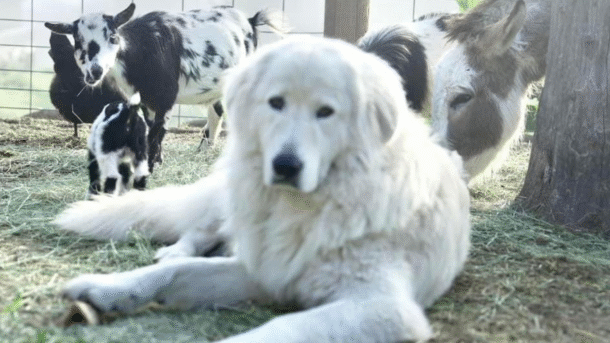
Hi Reader,
Last Saturday was a big day on the farm — four puppies loaded up and headed off to their forever homes, and the stories behind these placements are exactly why I do what I do.
Two of them went to Alabama, to a client who’d been on my list for nine months before she finally reached out. The final straw came the same day one of my emails landed in her inbox — she’d just lost her favorite duck to a predator, on top of months of losses to her poultry flock. That email was the nudge she needed. She’d reserved a puppy from my February litter and one from my March litter, and now both of them are settling in and getting to work.
The other two pups headed to New Mexico, to a client with a small flock of sheep on two acres. She was referred to me by Kim Brophey of the L.E.G.S. Applied Behavior program, and after a great conversation, she reserved my last two puppies from last November’s litter. She named them Thelma and Louise, which are great names for these sisters.
All four traveled together via ground transport, which has become my go-to option for summer placements. With temperatures here climbing past 100° every single day, airlines won’t fly dogs out of our area — it has to stay under 85° for them to allow it, and that’s just not happening in Central California right now. Ground transport has been a great solution, and I’m grateful to have a reliable option for families who can’t wait out the heat.
The 3-3-3 Rule for Acclimating Your New Maremma
Now — onto something everyone of my puppy families needs to understand, whether your pup just got home or has been with you for months.
If you haven’t heard of the 3-3-3 rule, here’s the short version: it takes roughly 3 days, 3 weeks, and 3 months for a dog to truly settle into a new home. It started as a framework for rescue dogs, but I want you to understand why it applies to every livestock guardian dog you’ll ever bring to your farm — whether that’s a puppy or an adult.
Here’s what each phase tends to look like for an LGD:
The first 3 days are survival mode. Your dog is figuring out whether she’s safe. She may not eat. She may hide. She may seem completely shut down. This is normal. Keep things calm, keep a consistent routine, and resist the urge to show her everything at once.
The first 3 weeks are when the harder behaviors show up. Fence-testing. Barking. Pestering the livestock out of boredom or stress. This is the phase where people start to panic — but this is also stress, not permanent personality. Don’t draw conclusions yet.
The first 3 months are when you’ll finally start to see your dog settle into who she actually is. Patrol routines, calm nights, genuine connection with her stock and her people.
One thing I want you to really hold onto: the older the dog, the longer this takes. A puppy is adaptable in ways an adult simply isn’t. An adult LGD who has been working a property for years has just had her entire world erased. It’s bewildering and scary for a dog. She needs time. She needs patience. She deserves both.
For some adults, three months is just the beginning of settling in — and that’s okay.
I wrote the full breakdown on the blog recently, including what each phase actually looks like, what to do (and not do) during each window, and the questions I get most often from families in those first nerve-wracking weeks.
→ Read the full post here
And as always — if your dog is going through something and you’re not sure if it’s normal, reach out. That’s what I’m here for.
Kim
P.S. If you’re still in the planning stages and wondering whether to bring home a puppy or an adult dog, this post pairs well with my article on how many LGDs you actually need. Spoiler: the answer affects the adjustment period, too.
Ready to find out if a Prancing Pony Farm Maremma is right for you? Book a free Maremma Discovery Call. |