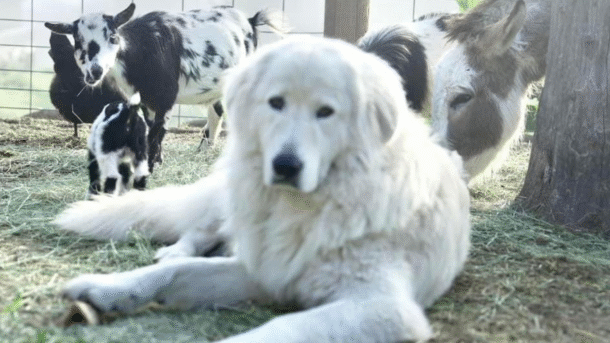
I had two conversations this week about littermate syndrome. Back to back. One person telling me it’s not real (correct), one person asking me about it like it’s a legitimate concern (also fair — they didn’t know).
I’ve written about this before. It’s in my “why two dogs are better than one” page and mentioned in multiple blog posts. I’ve said it on Maremma Discovery calls and LGD training consultations more times than I can count. And I still get asked constantly, because everyone reaching out is walking into the middle of a conversation they haven’t heard yet. So today, I’m putting it all in one place, for good.
Littermate Syndrome is Not a Real Condition
No peer-reviewed, scientific research supports it. What gets blamed on it is almost always ordinary stuff — poorly matched dogs, improper socialization and training, resource guarding, adolescent hormones. Things that can happen between any two dogs of any age, related or not.
Here’s the part I don’t say enough, though: some breeders know this and use the myth anyway. They tell clients littermate syndrome is real, refuse to sell two puppies together, telling the client that LGDs don’t need another dog, since they have livestock to bond with, which is not true at all. Once that single dog is grown, they may suggest the client come back for a second dog. Either scenario is a real problem, and the article linked below will tell you exactly why.
Siblings Penny and Pedro on their way to their beautiful Oregon sheep farm
The Real Reason Many Breeders Promote Litter Mate Syndrome
Placing two dogs well takes skill. It means properly socializing an entire litter, knowing which puppies actually complement each other, and being available to support the client through two dogs’ worth of questions for life. A breeder who doesn’t have the confidence to do that has a choice: build the skill, or find a reason to avoid the problem. “Littermate syndrome” is a very convenient reason.
I don’t guess at pairs. I watch every litter closely enough to know which puppies genuinely compliment each other, and I don’t put two mismatched puppies together. That’s the whole reason my process takes the time it does.
Some of the pairs it’s produced: Bear and Chief, 3-year-old brothers guarding 300 free-range chickens and a small herd of cattle on 55 Texas acres — Bear patrols nonstop, Chief holds the high ground, and together they’ve solved Dave’s huge chicken losses due to coyotes since they went full-time at ten months old. Athena and Cassius, now 4-year-old siblings where Athena’s confidence gave shy, gentle Cassius the courage to settle into a brand-new home. And shy and sweet Caitlin and bold and brave Napheesa — almost one-year-old sisters whose owner recently wrote me something I haven’t stopped thinking about: “You can tell they’ve been raised right. I can’t even put my finger on how you can tell, but you can tell.”
I didn’t choose these dogs for their families randomly. I carefully selected not only the right dogs for their families, but the right dogs for each other. That’s the difference between a breeder who understands both her clients’ needs and her puppies’ needs and a breeder who throws up her hands and cites “littermate syndrome” as a reason to not place two puppies in the same home.
One more thing worth saying: every one of those owners was a first-time LGD owner. Most of my clients are first-timers, and most of them have two dogs, and are doing great. If you’ve been told you need experience before you’re “ready” for two dogs — that’s another myth. All it takes is properly socialized puppies, carefully chosen by the right breeder and outstanding breeder support as you raise those pups to maturity and beyond.
If you want to discuss this further you can book a Maremma Discovery Call with me. I love talking about litter mate syndrome, as it’s one of my favorite myths to bust!
Talk soon,
Kim
P.S. If a breeder tells you littermate syndrome is why they won’t sell you two puppies, ask them for the study. There isn’t one. And you should find a breeder who runs their program based on science instead of myths.
For a limited time, come talk Maremmas with other Maremma owners and me — free. Have a different livestock guardian dog breed? You're welcome here too — most of what we cover applies to all LGDs.
These calls and their recordings will become part of the Maremmas Made Easy membership community soon, so signing up now gets you a free sneak peek at the membership, plus first access to founding-member pricing when it launches.
For a limited time, come talk Maremmas with other Maremma owners and me — free. Have a different livestock guardian dog breed? You're welcome here too — most of what we cover applies to all LGDs.
These calls and their recordings will become part of the Maremmas Made Easy membership community soon, so signing up now gets you a free sneak peek at the membership, plus first access to founding-member pricing when it launches.