Last Updated on October 6, 2026 by Kim Crawmer, KPA CTP, LFDM
This Is What a Properly Raised Livestock Guardian Dog Looks Like
A visual walk through our complete Maremma puppy development program — from the first hours of life through the moment they step onto their new farm.
Most breeders tell you their puppies are "farm-raised" and "well-socialized." I'd rather show you what that actually means.
These photos represent over a decade of litters — hundreds of puppies raised using the same deliberate, science-based program we've refined year after year. Every stage you'll see here happens with every litter we raise. Every single one.
This is the proof behind the promise.
See our Puppy Development Series to learn how our puppies are raised & socialized from birth.
Ten Years of Litters. One Consistent Program.
When you scroll through these photos, I want you to notice something: the puppies change, but the stages don't. Different litters, different seasons, different faces — but the same careful handling, the same deliberate exposures, the same commitment to giving every puppy the richest possible start.
That's not an accident. It's a system that's been refined over more than a decade and hundreds of placements.
Everything you're about to see is organized by developmental stage — from the neonatal period, when puppies can't yet see or hear, all the way through the moment they go home. Each section explains what's happening and why it matters, then shows you the photos to prove it.
No current litter photos yet? That's okay. Every photo here represents what your puppy will experience too. This is what we do — with every litter, every year, no exceptions.
This page is growing.
I've been raising and photographing Maremma litters for over ten years. I'm finally getting all of those photos organized into one place. Sections marked with a "Photos Coming Soon" graphic are still being built. Other galleries are still under construction. It takes a while to organize 10 years worth of photos! Check back often to see new pics, or join the email list to be notified when new content is added.
Every Puppy Comes With Me — and a Whole Community
From the day you reserve, you get lifetime one-on-one support: texts, calls, and the same consult calls my training clients pay $100 an hour for, free, for the life of your dog. You also get the Maremmas Made Easy membership, with live group Q&A calls, replays, a growing resource library, and a community of owners who understand your dog.
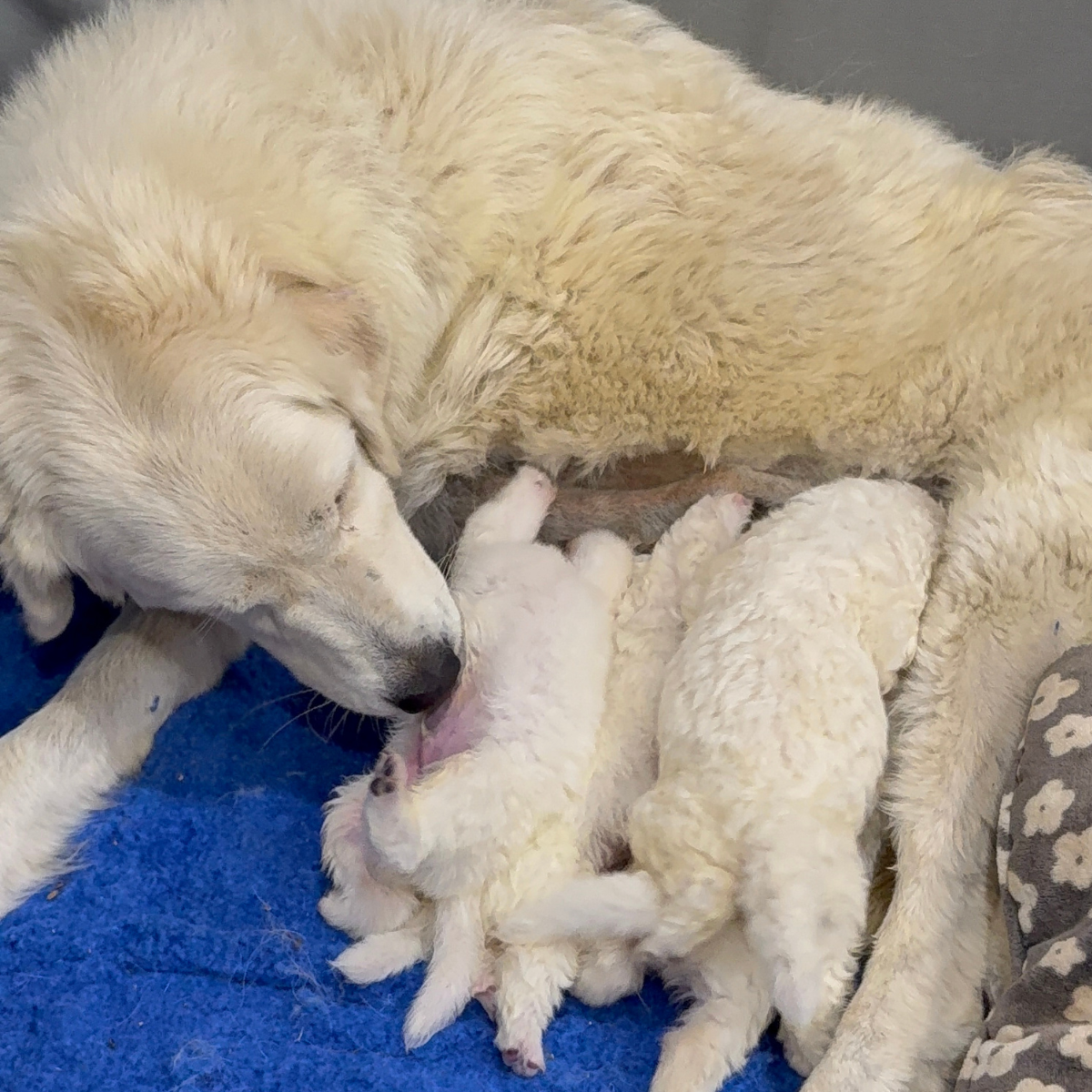
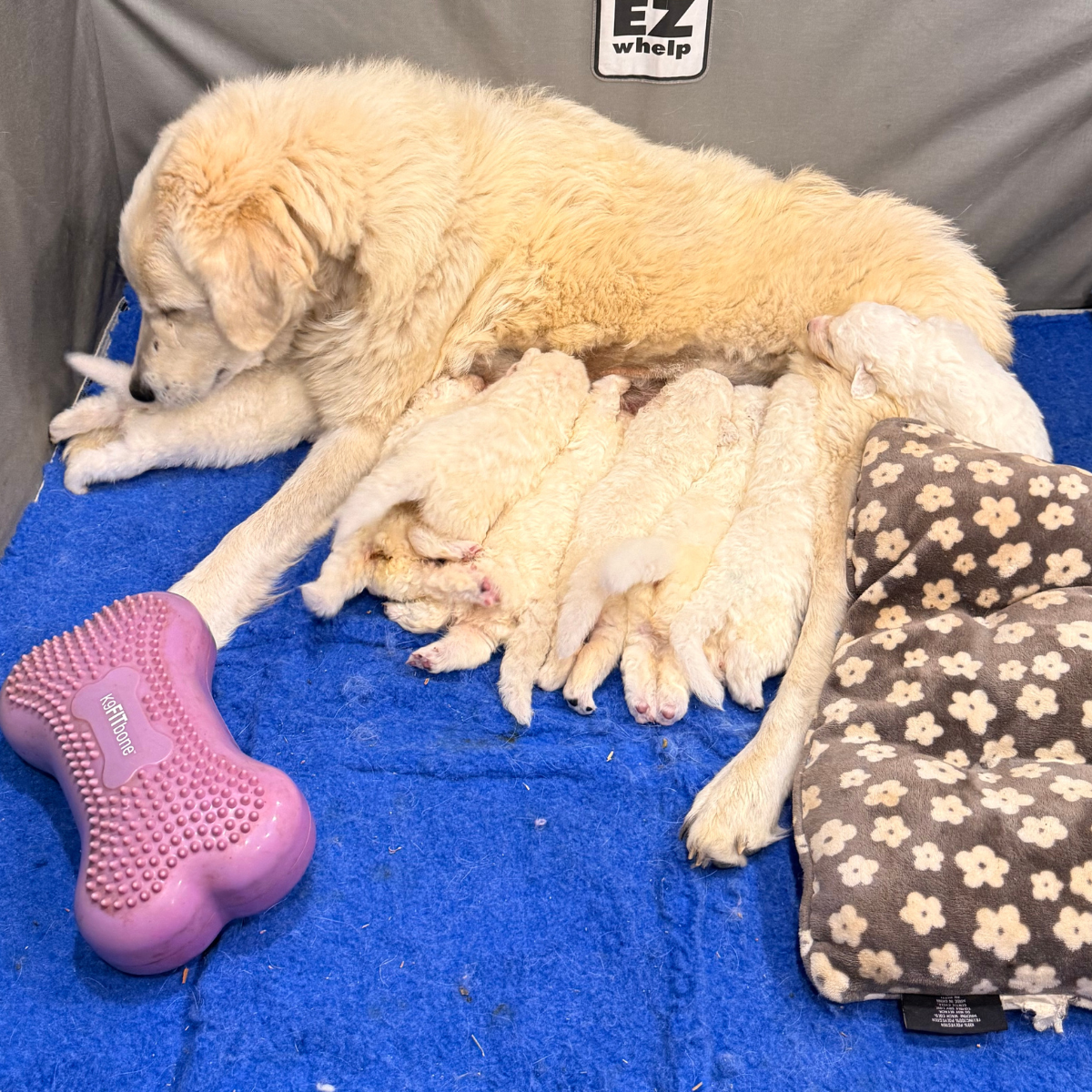
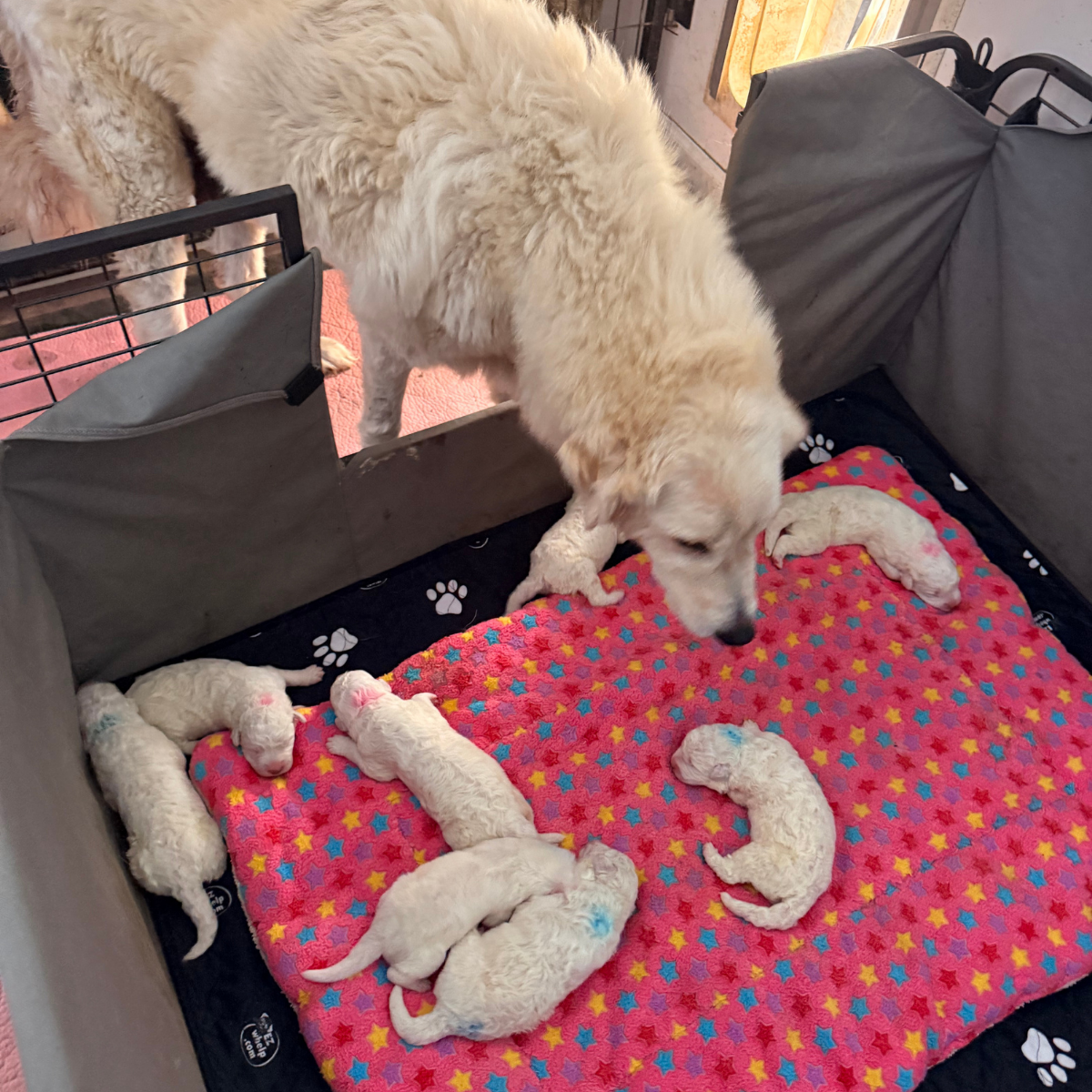
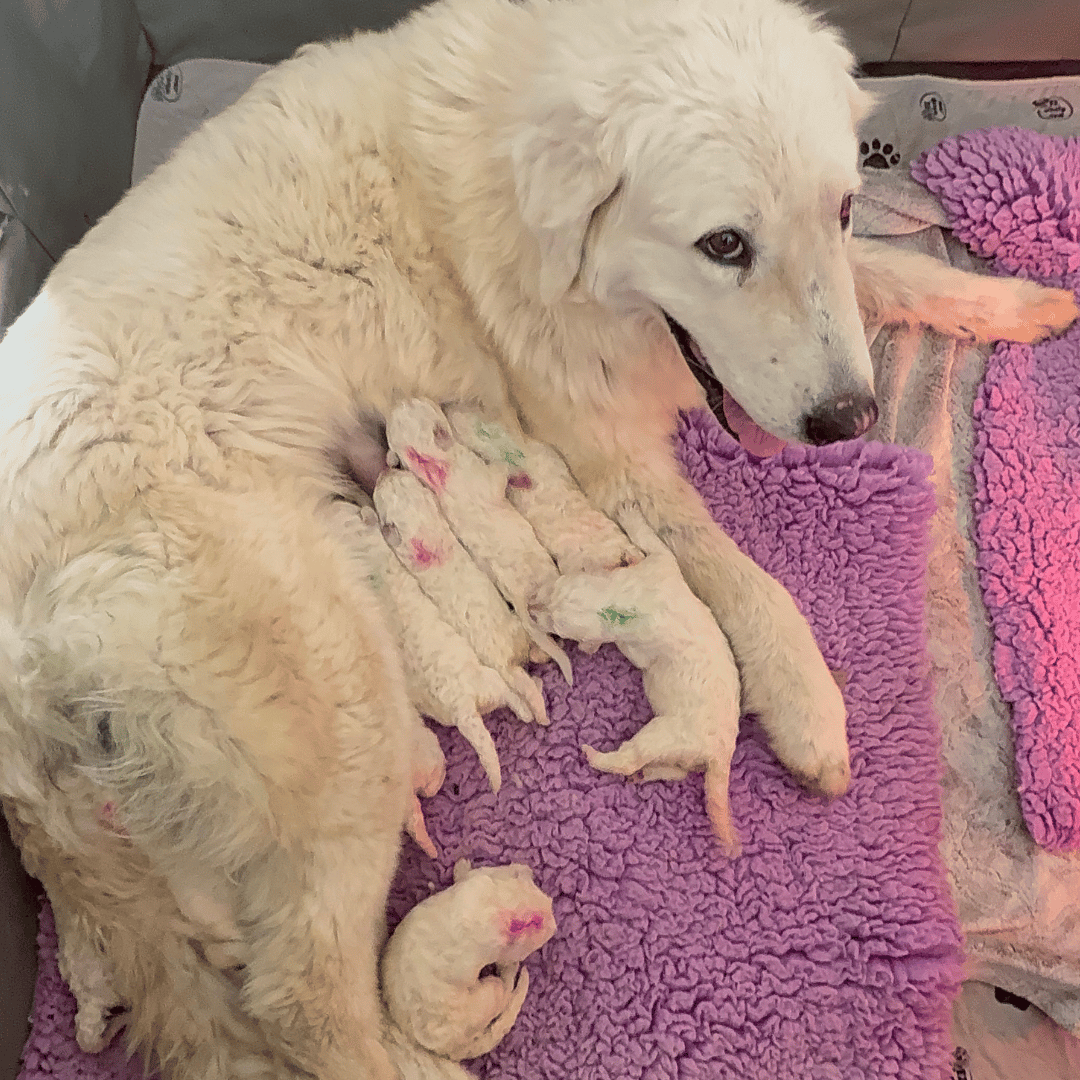
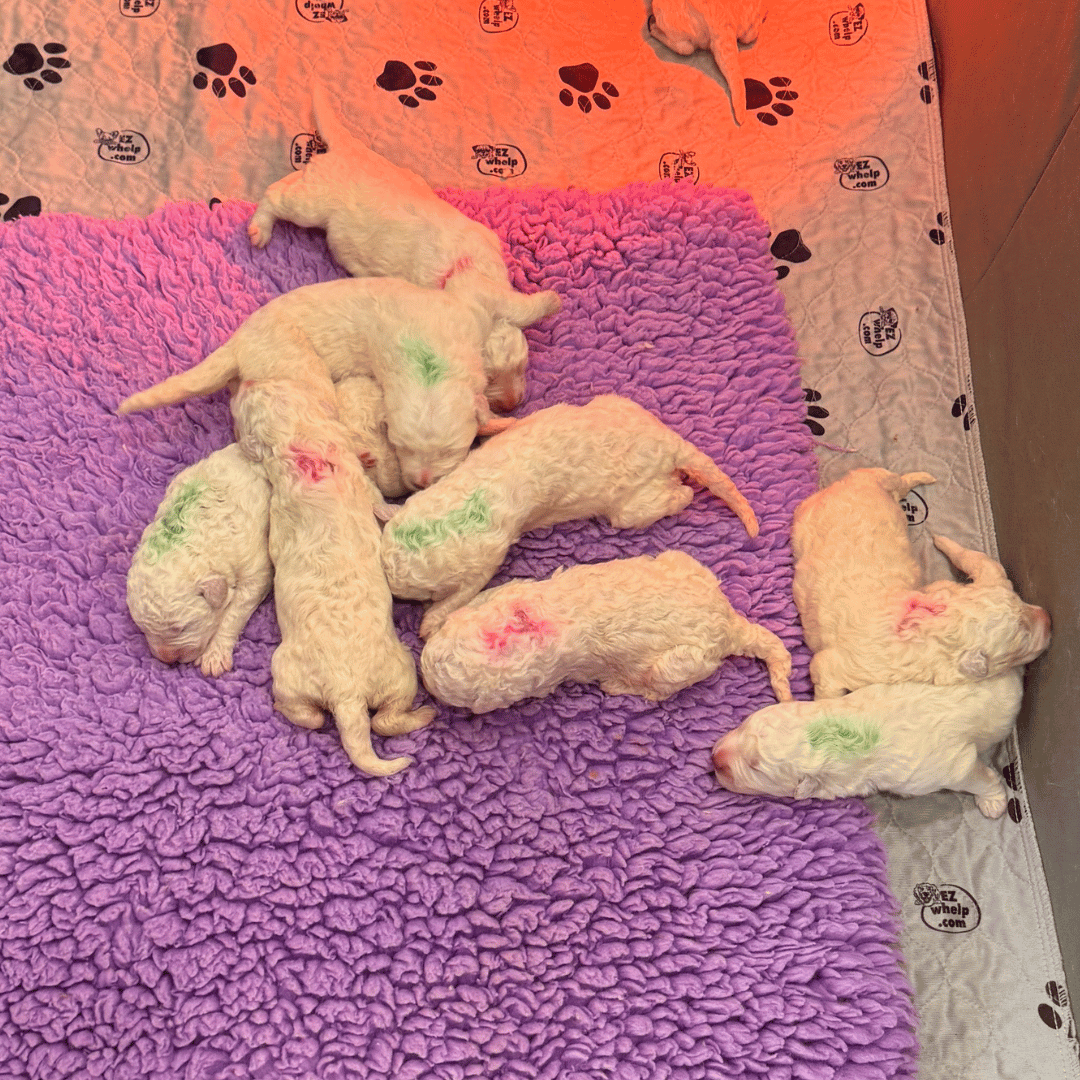
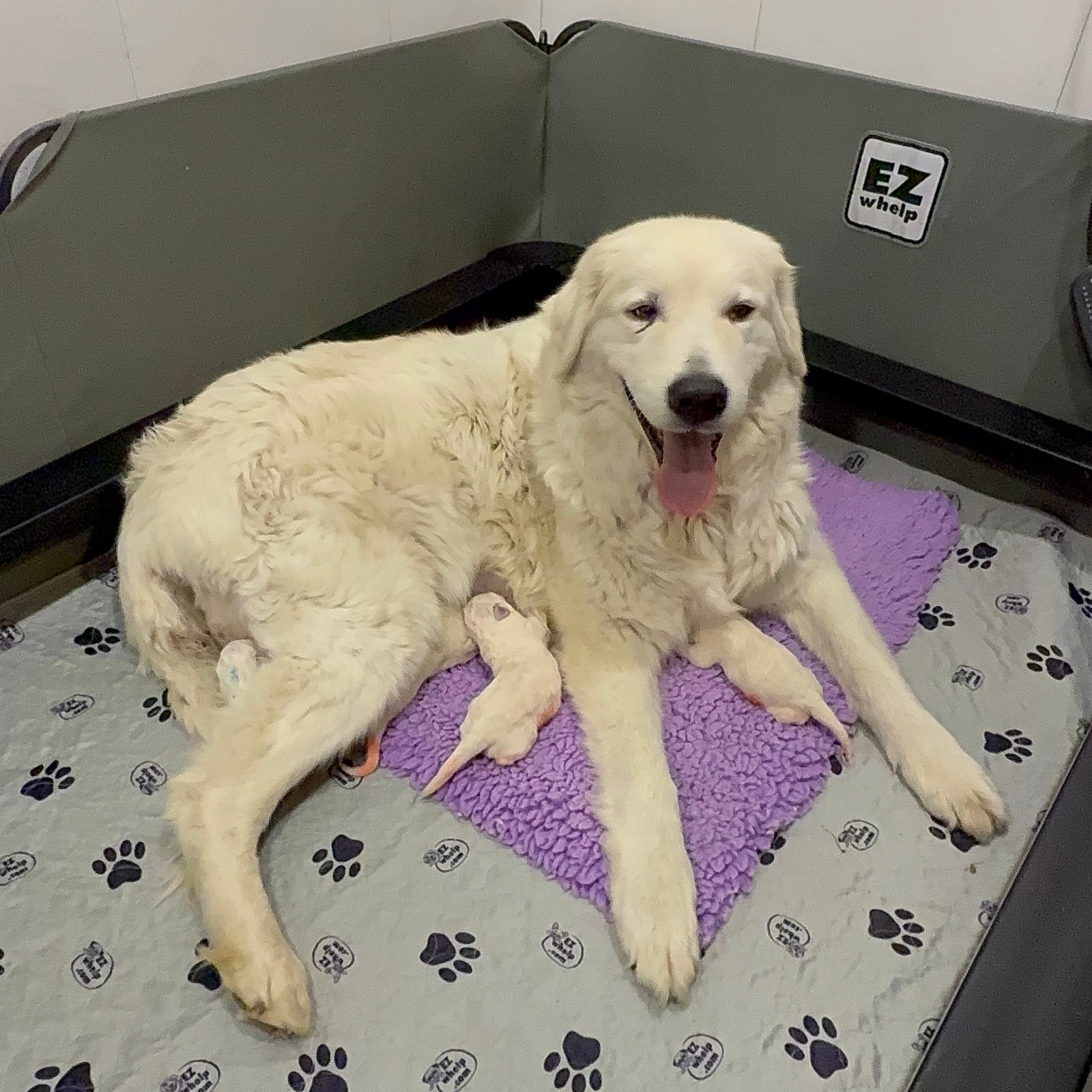
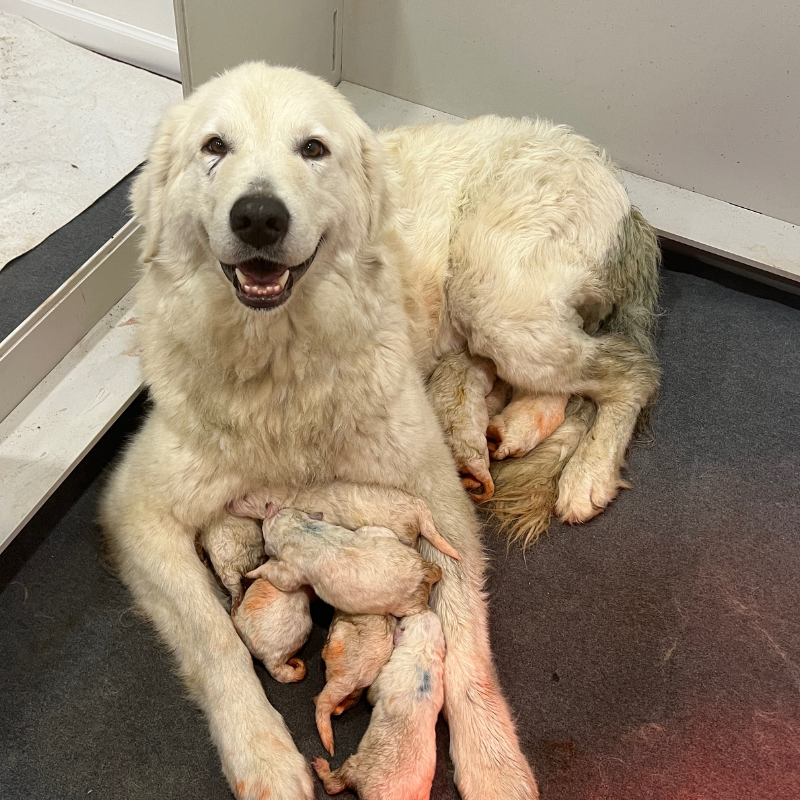
Before the World Begins — Whelping and the First Week
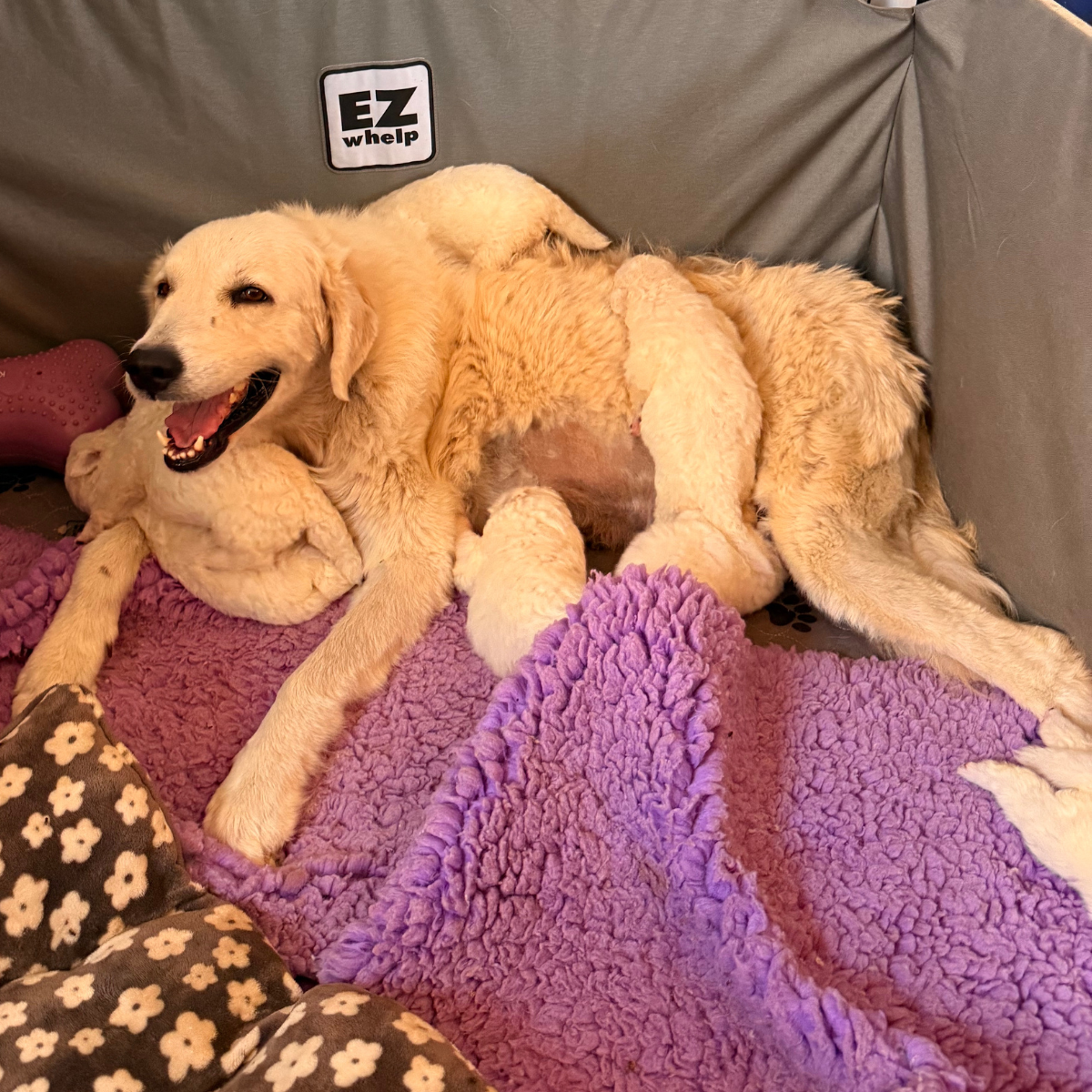
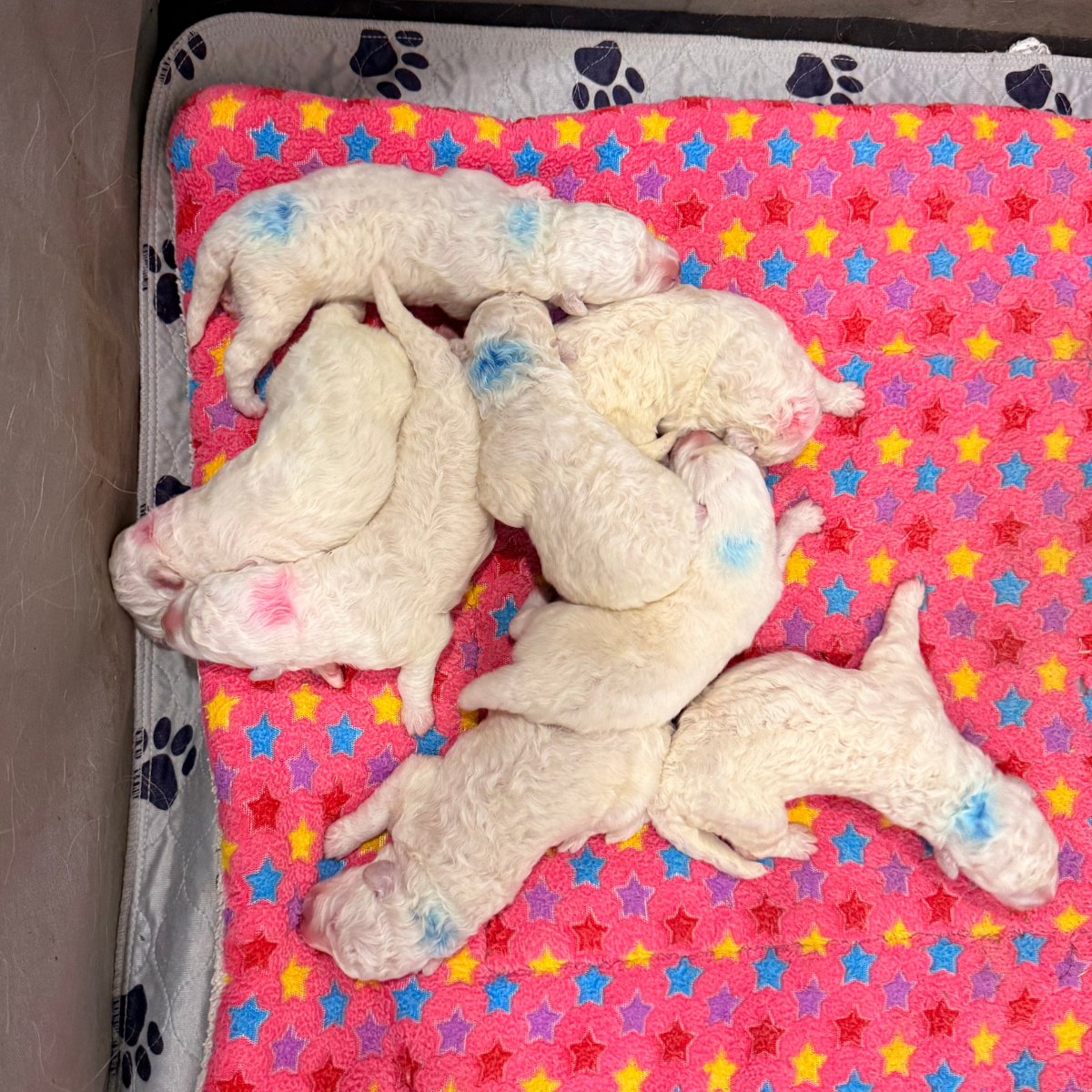
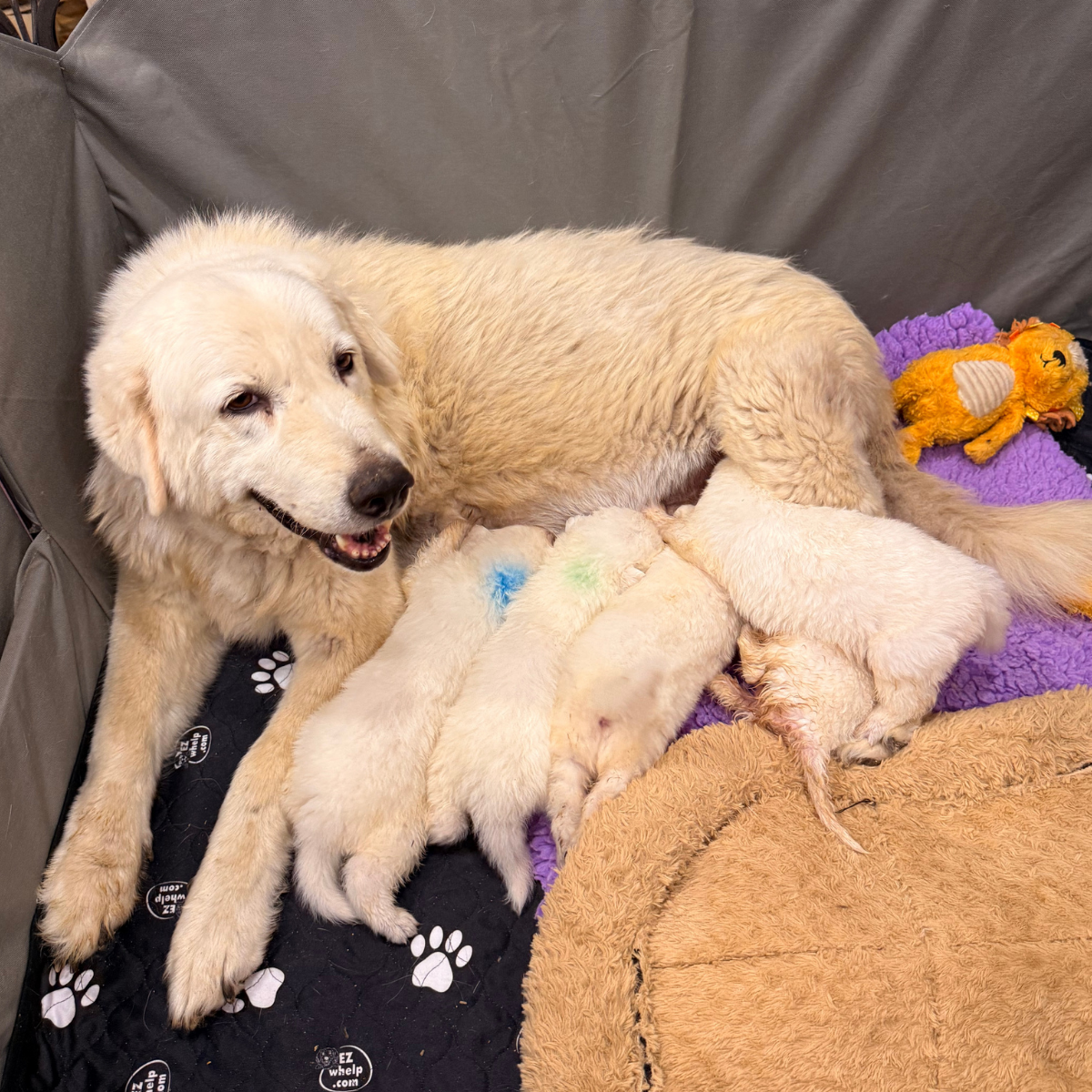
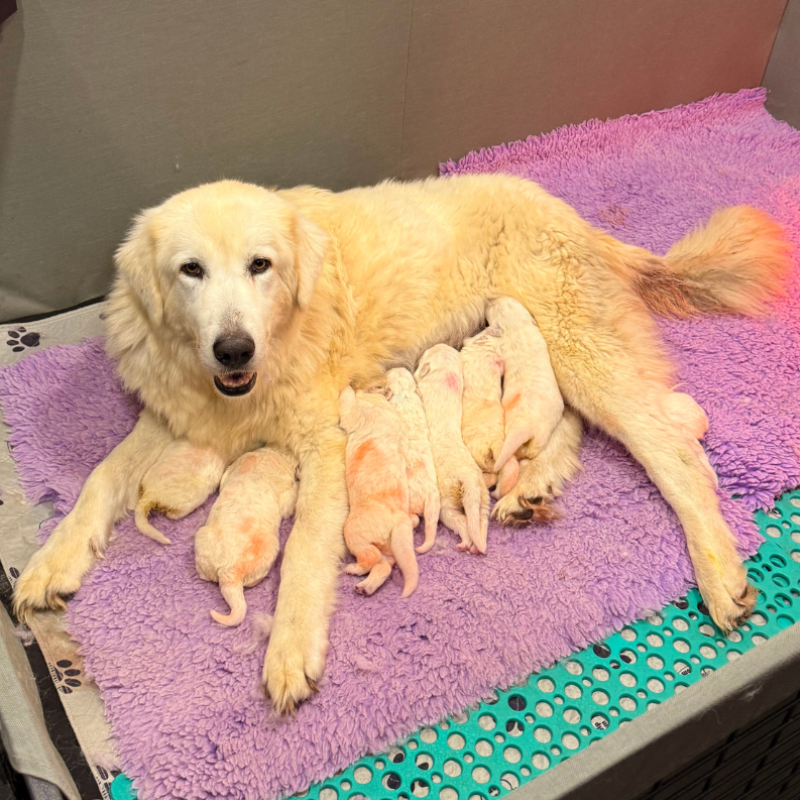
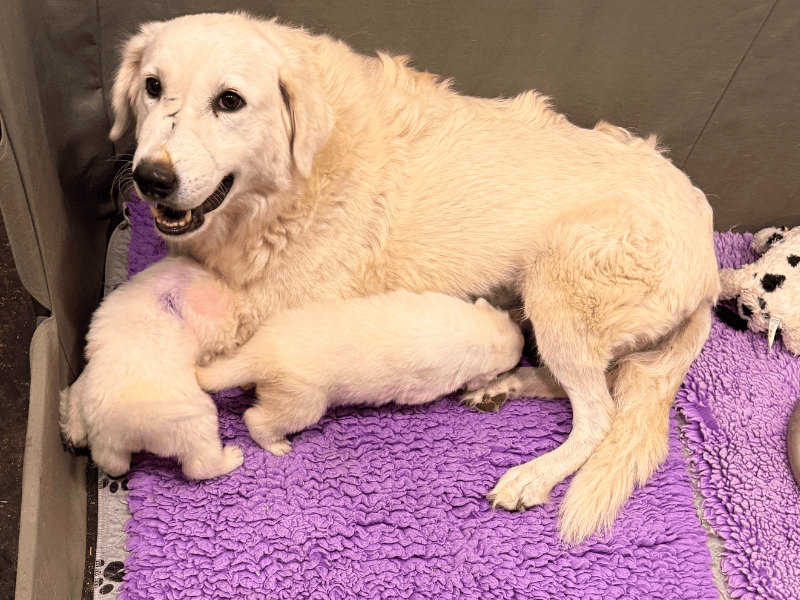
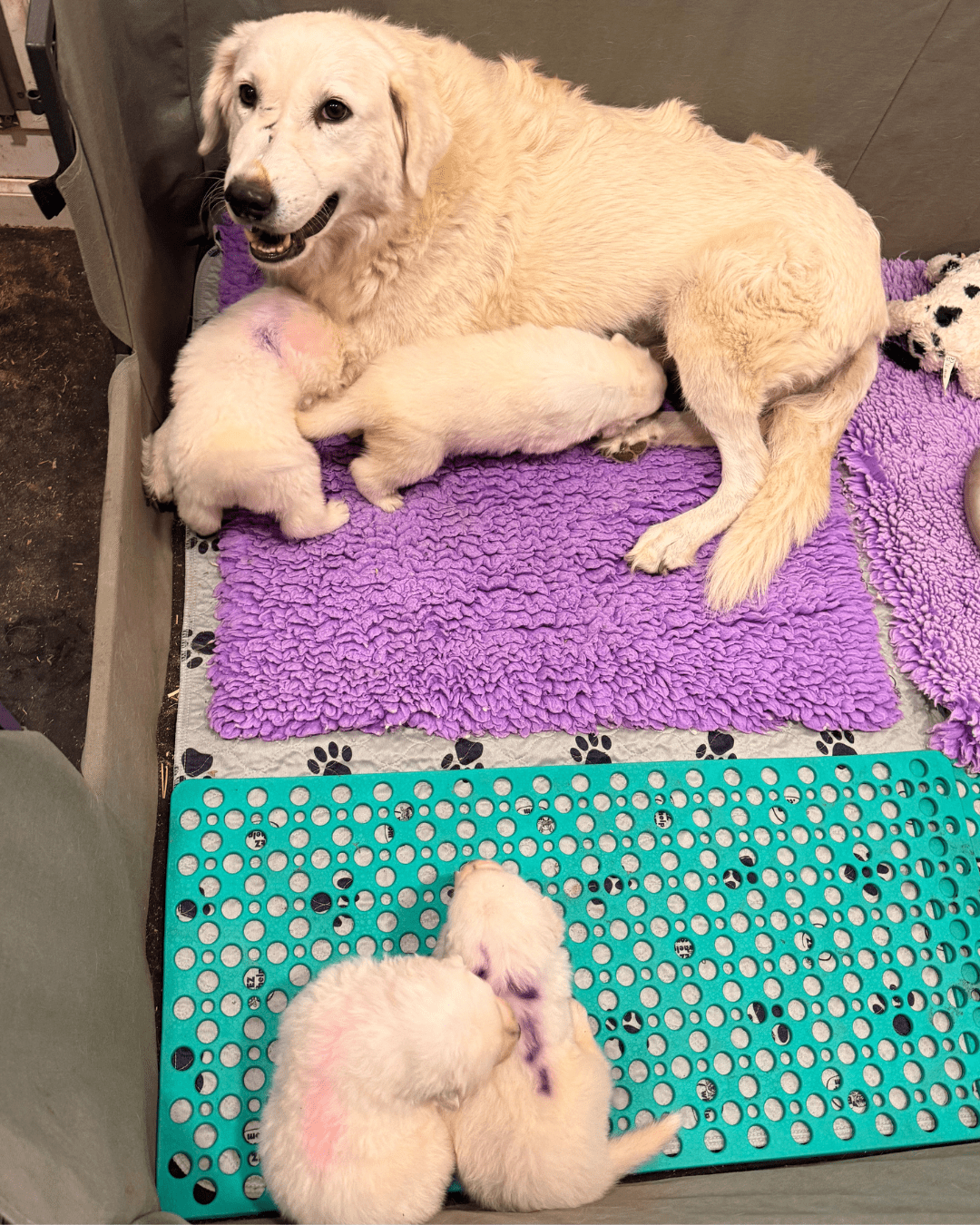
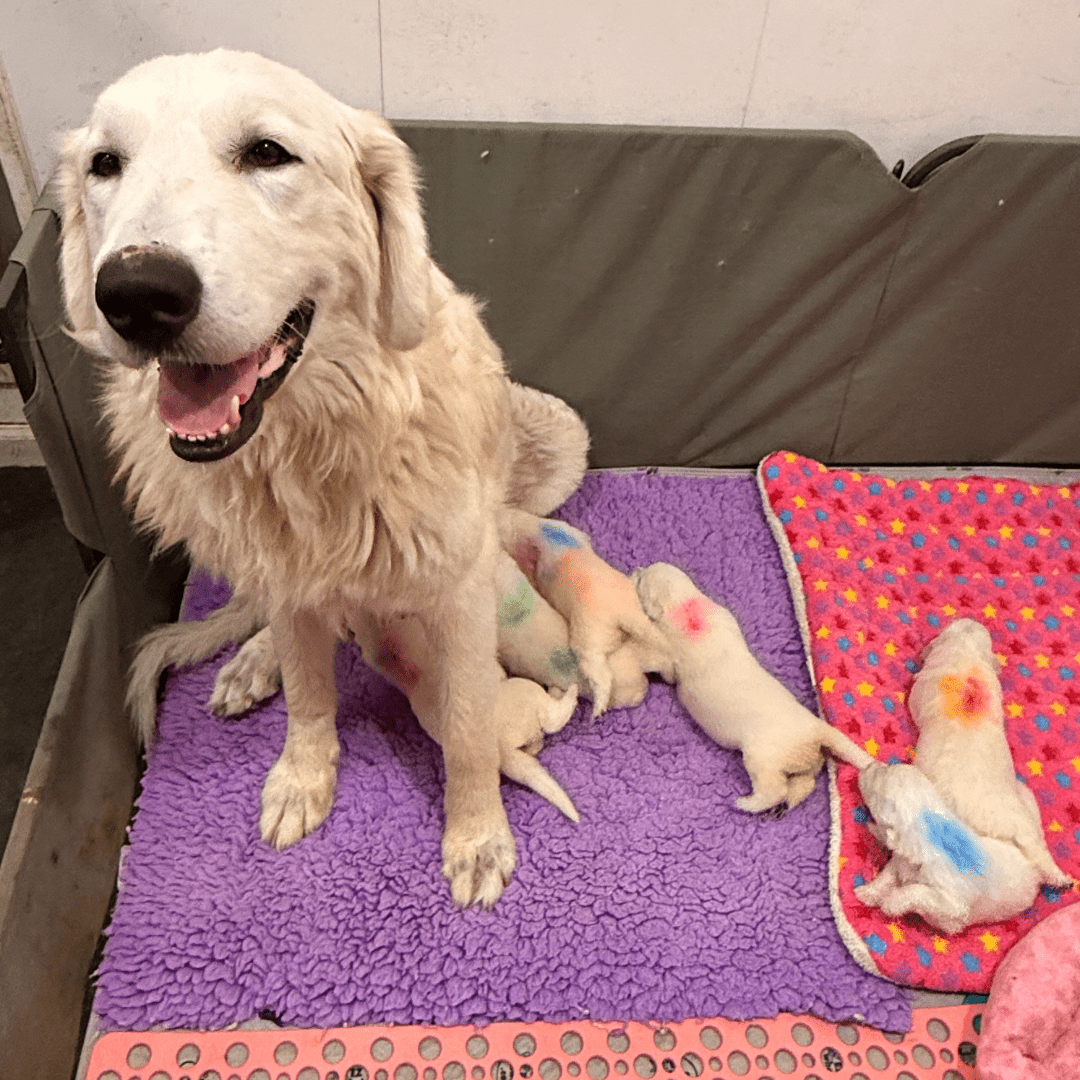
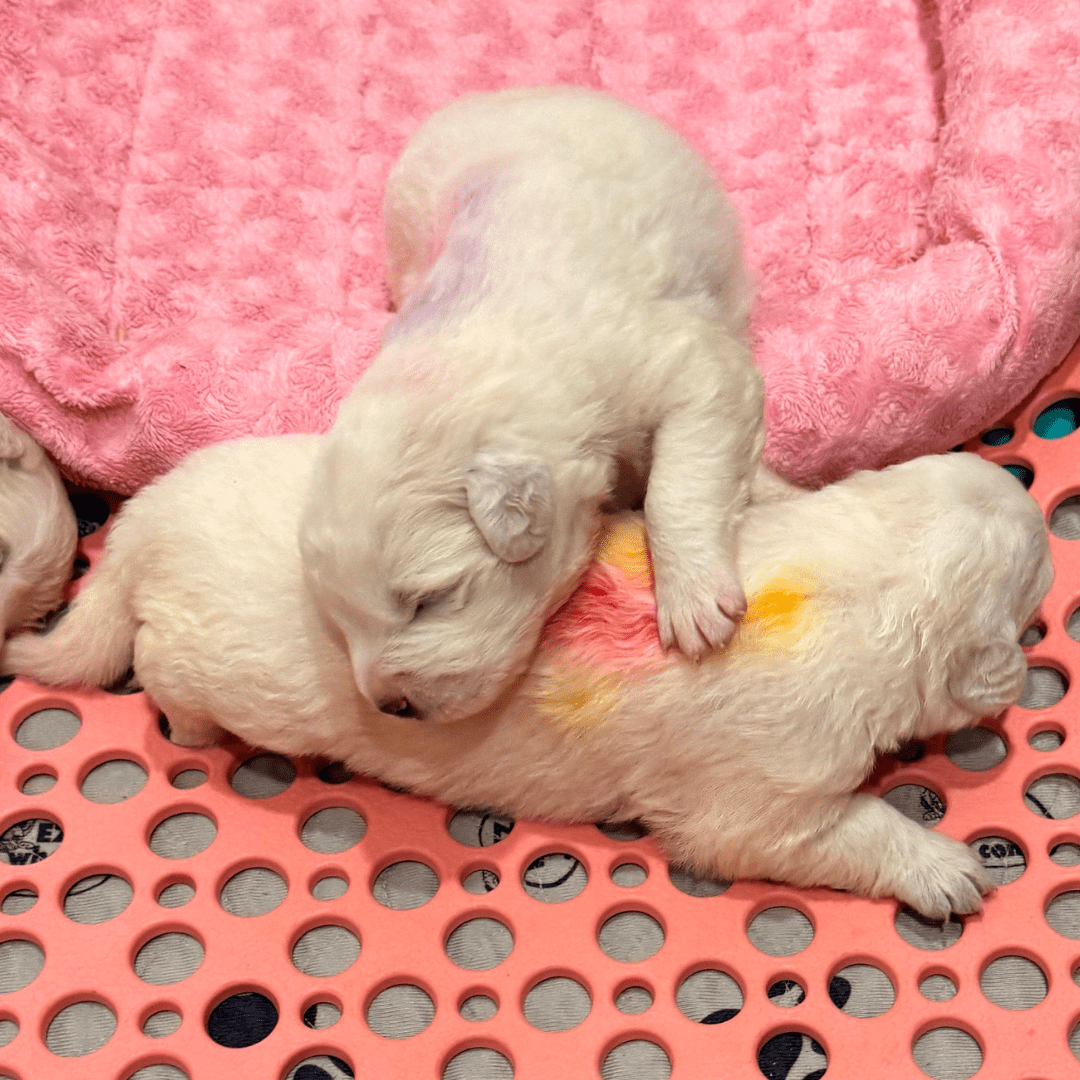
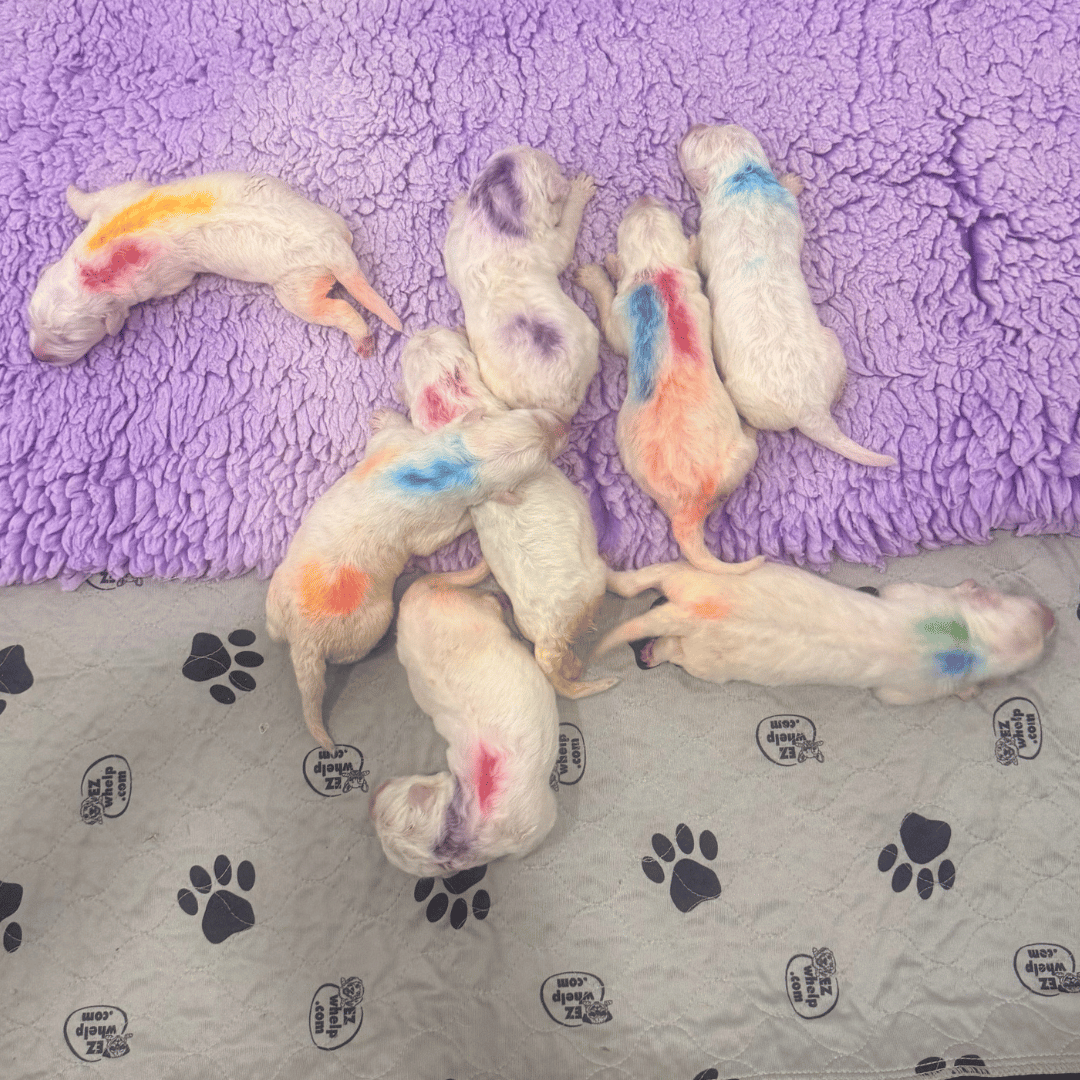
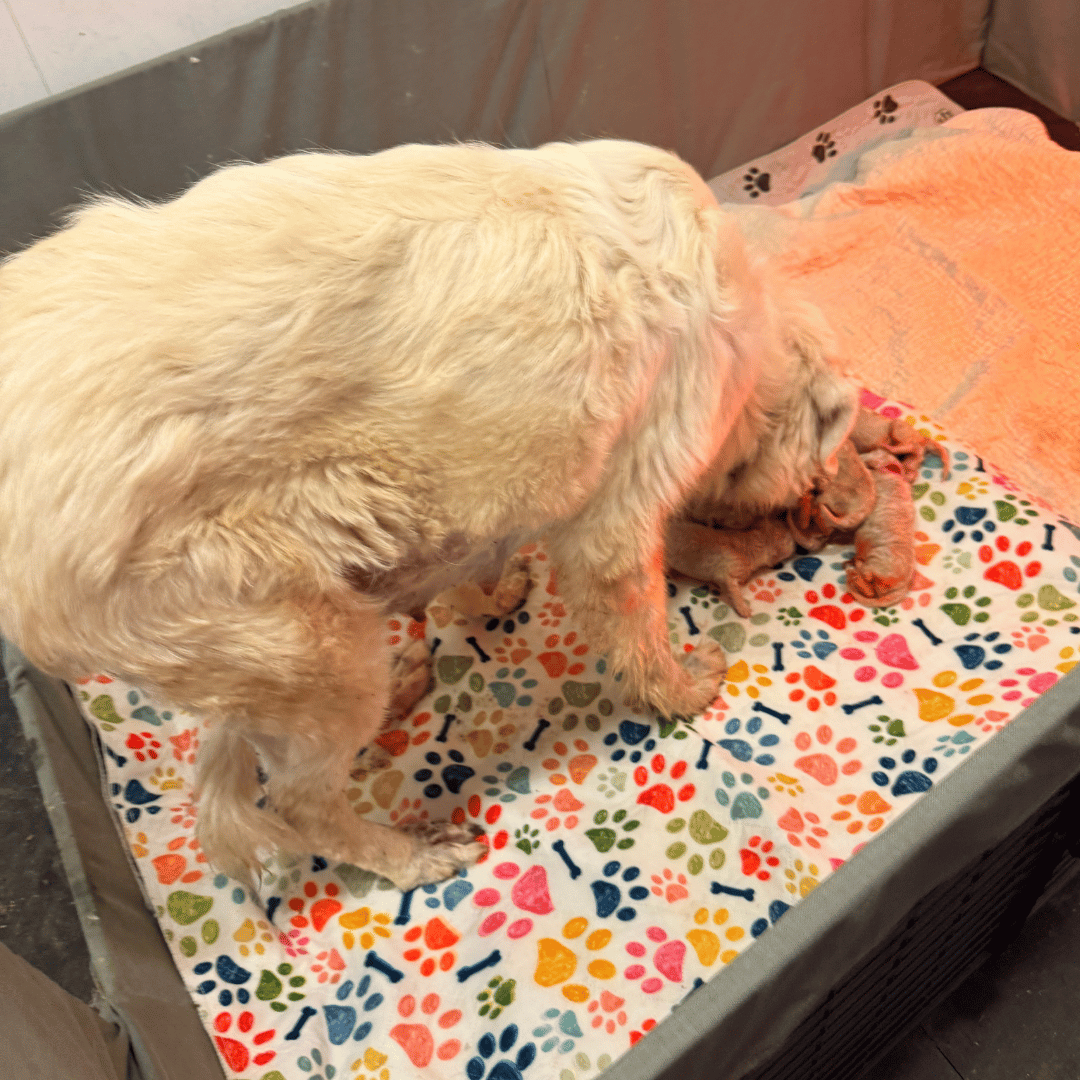
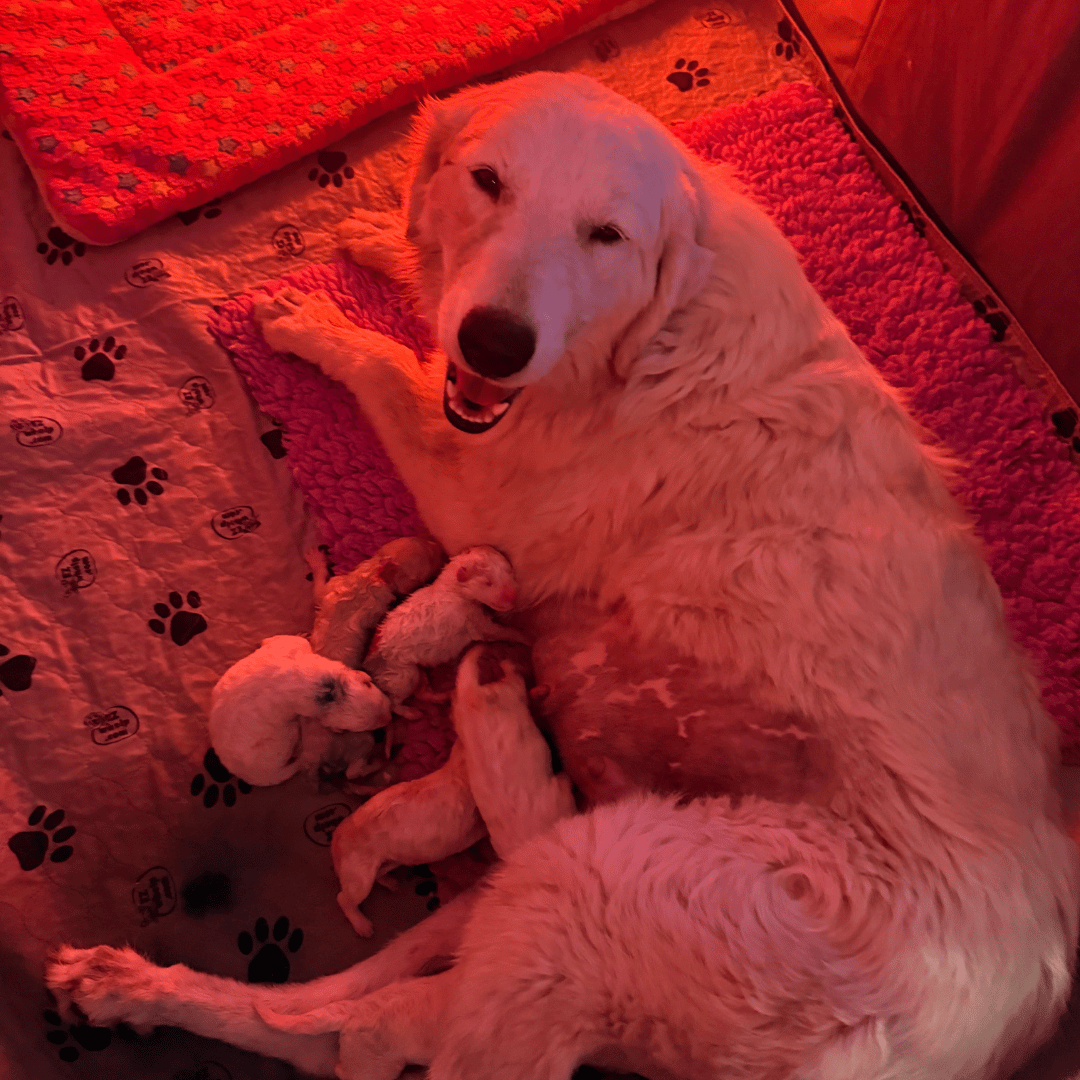
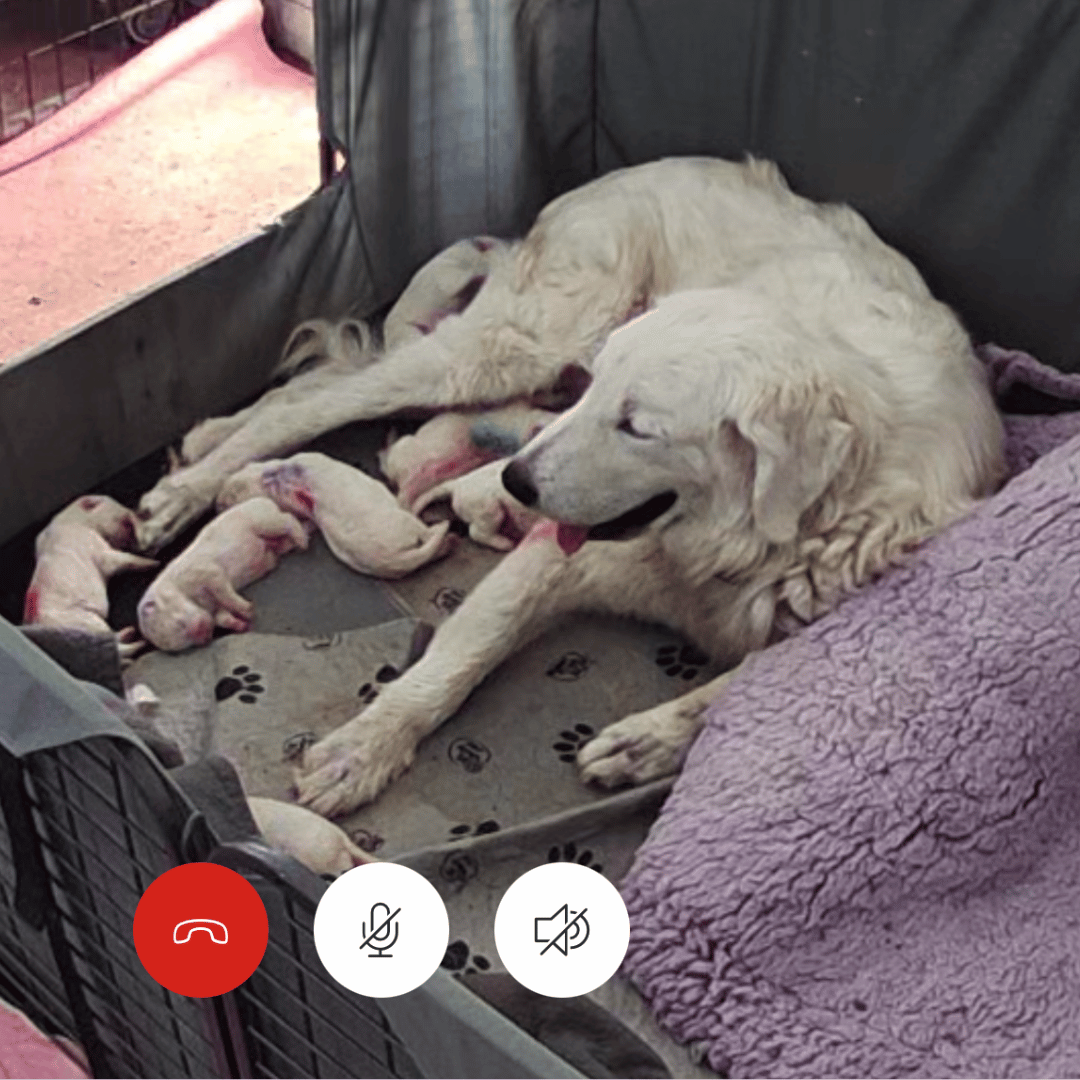
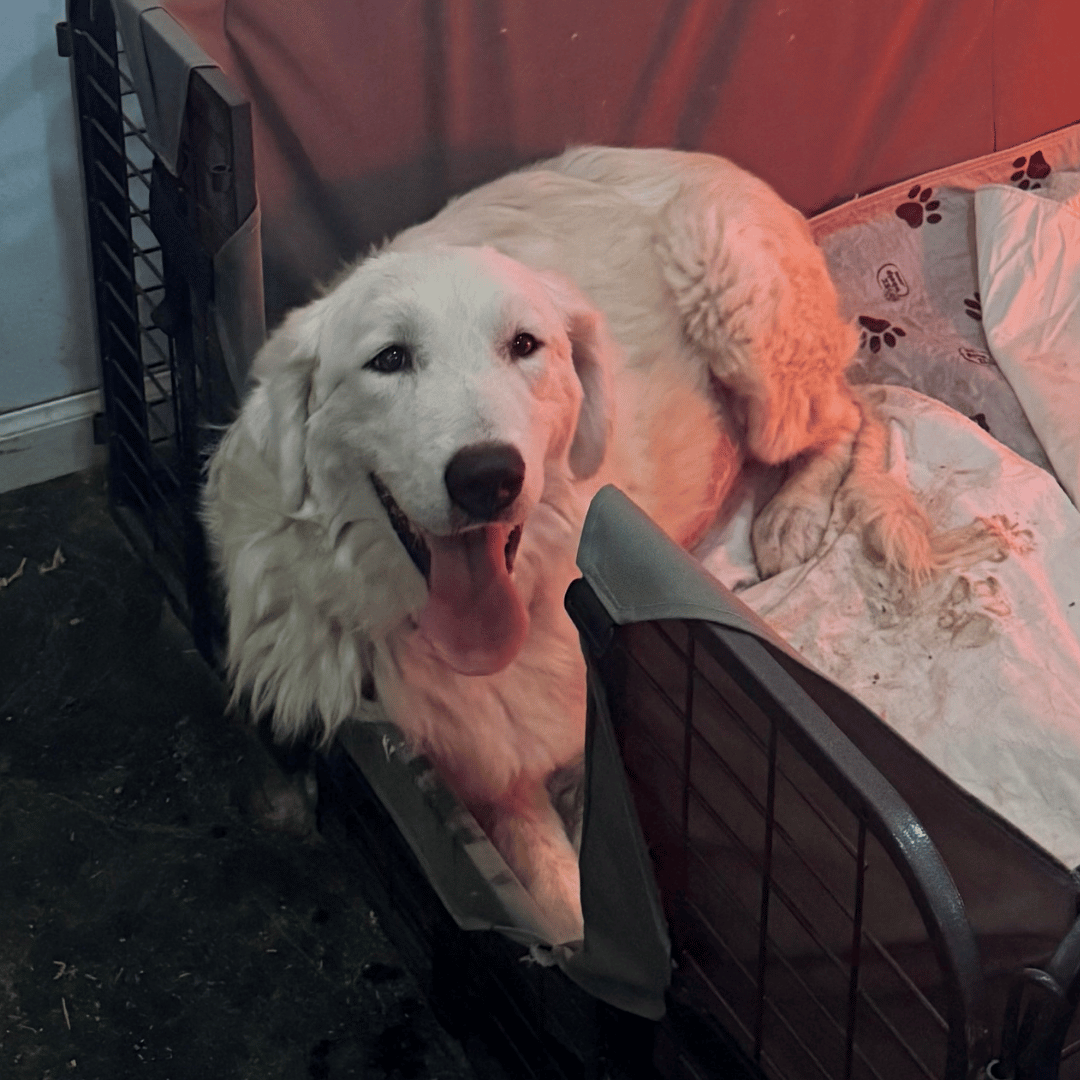
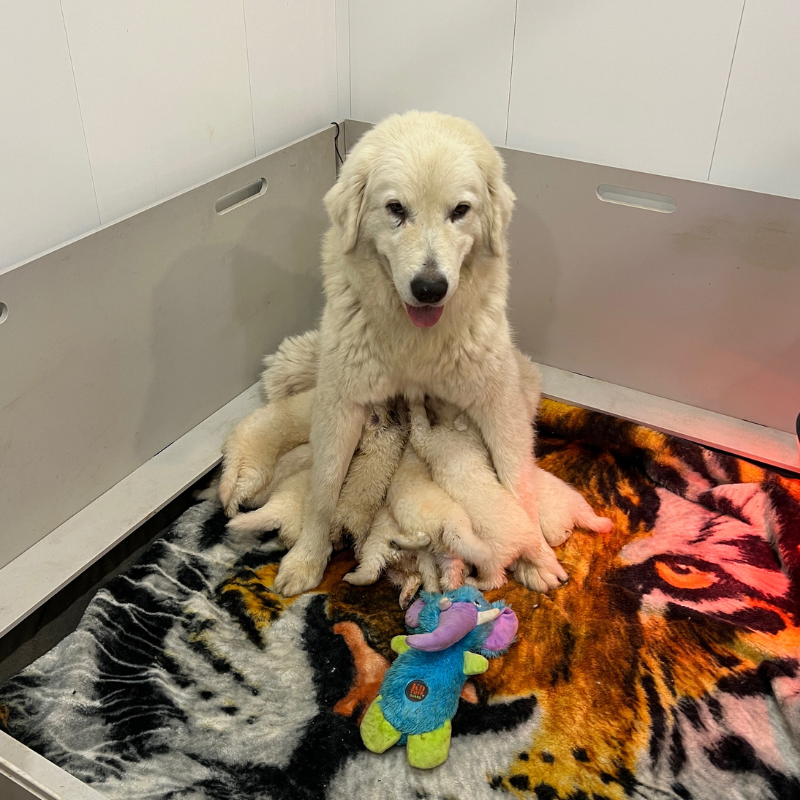
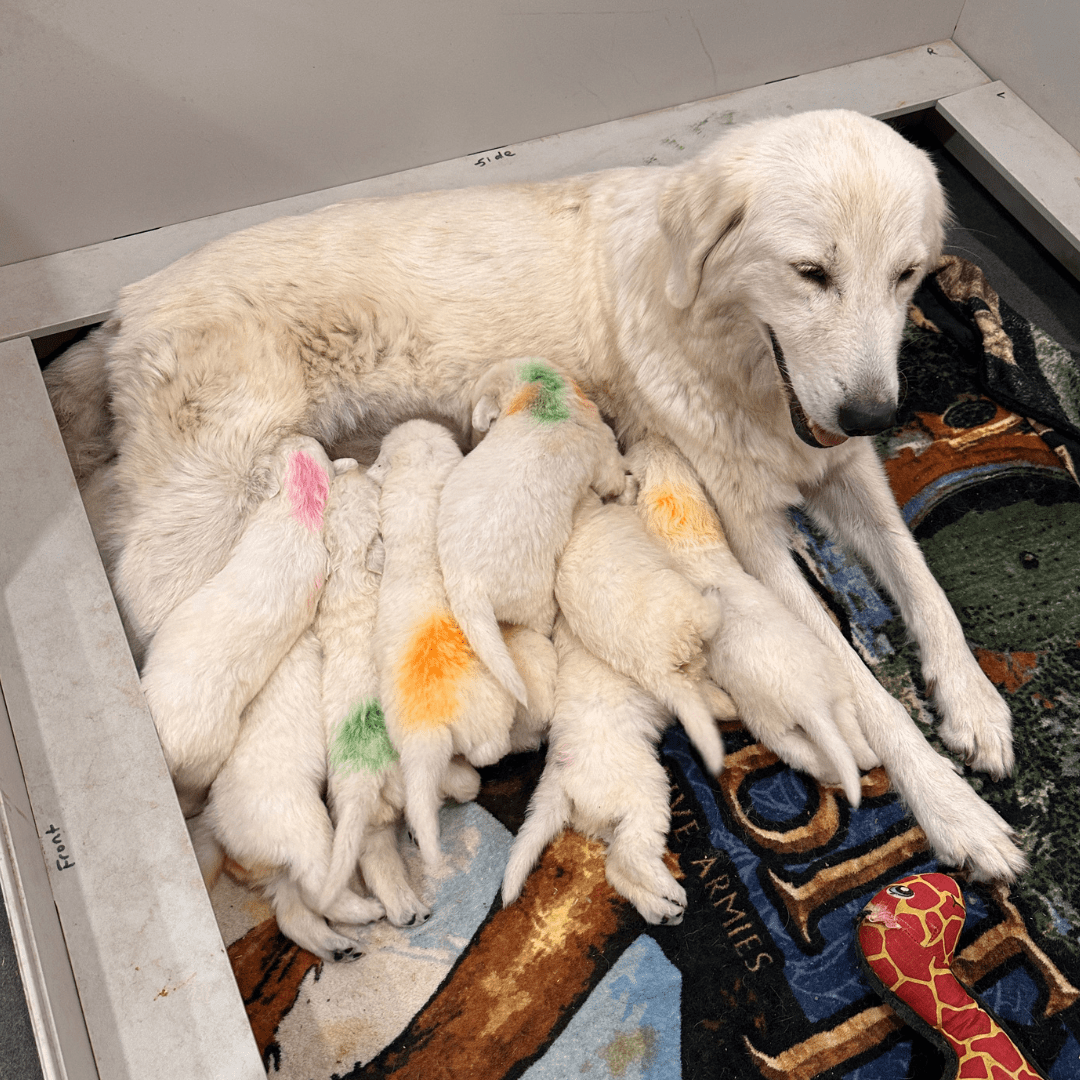
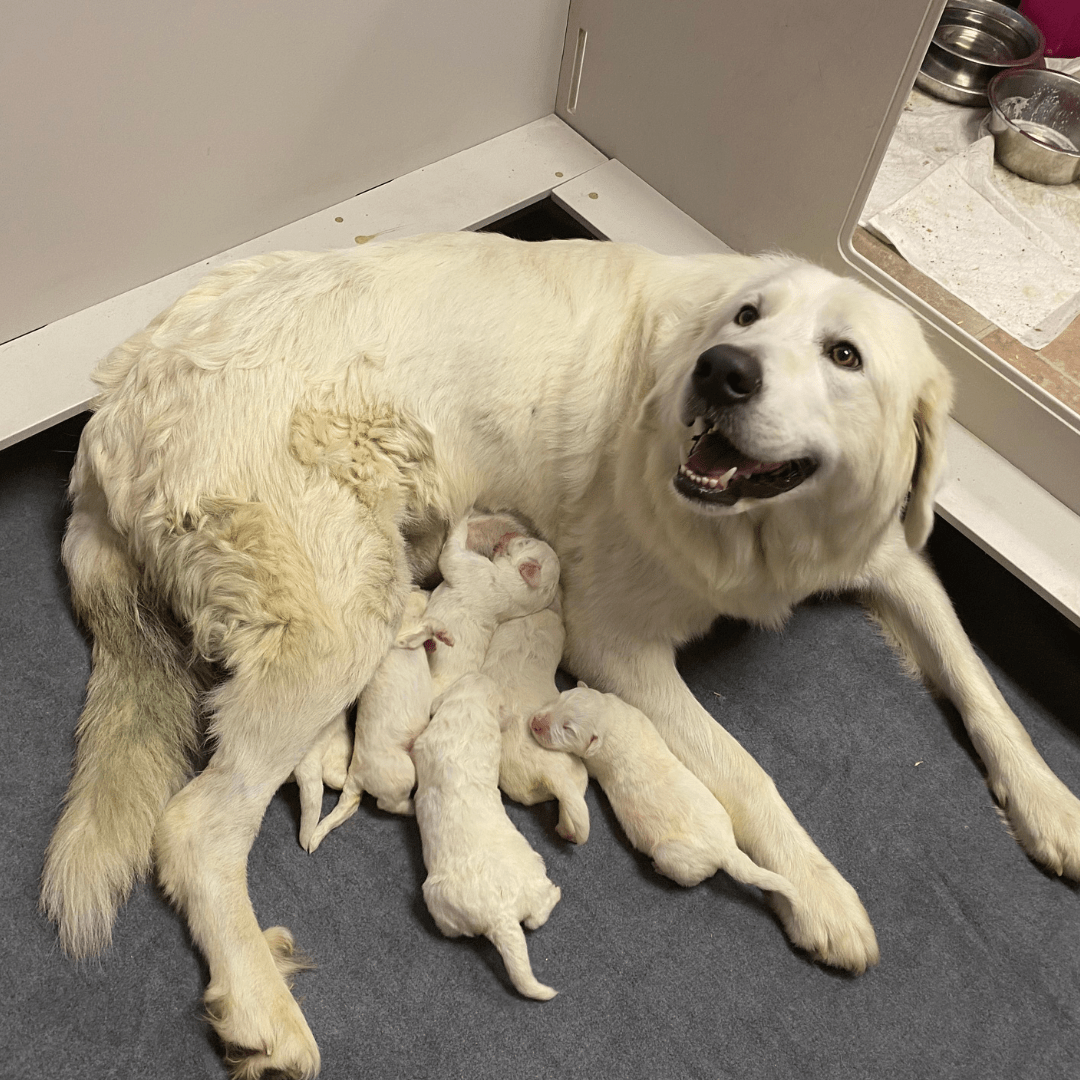
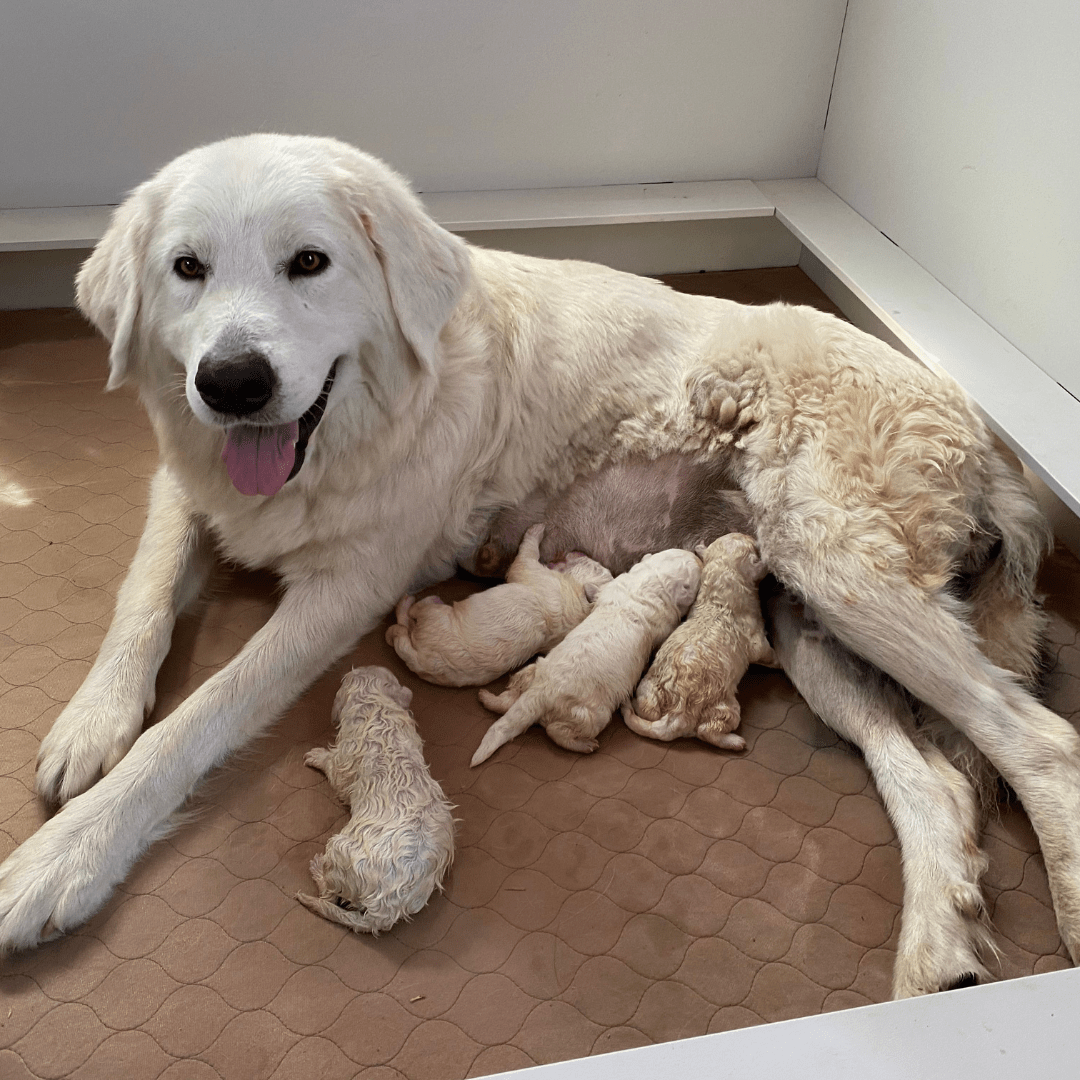
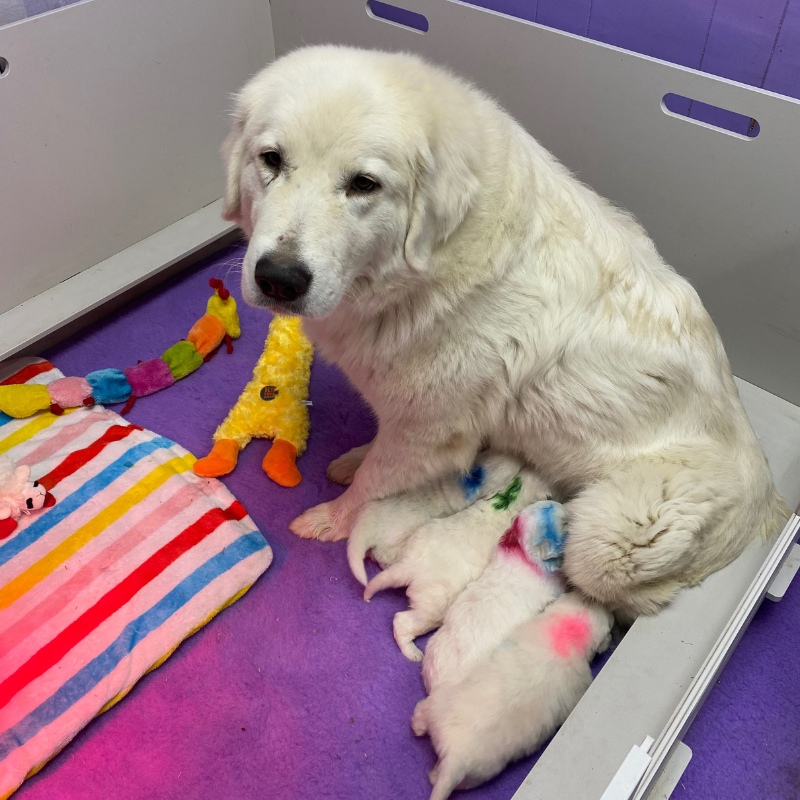
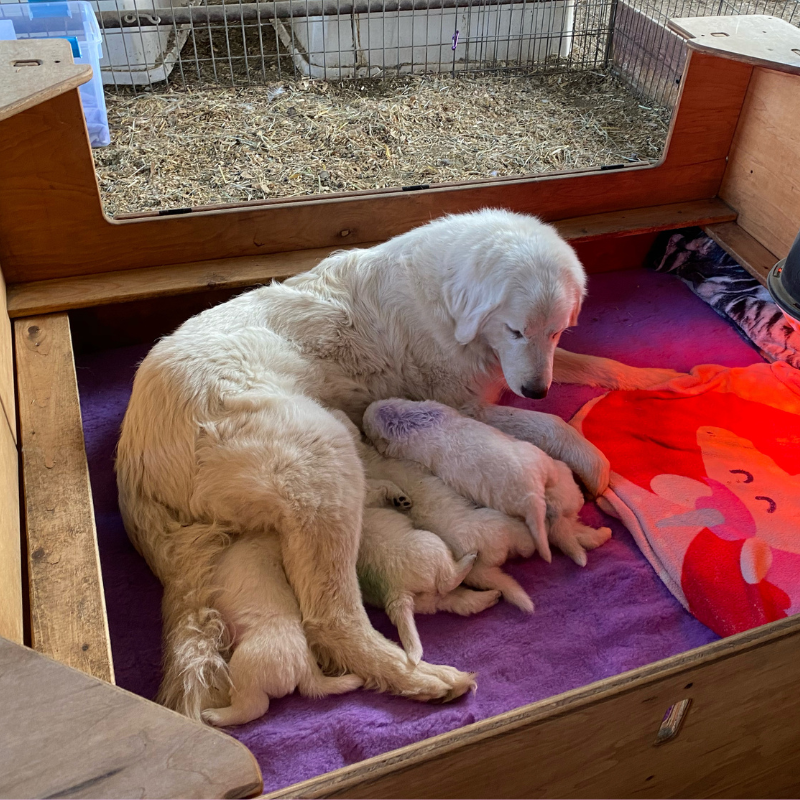
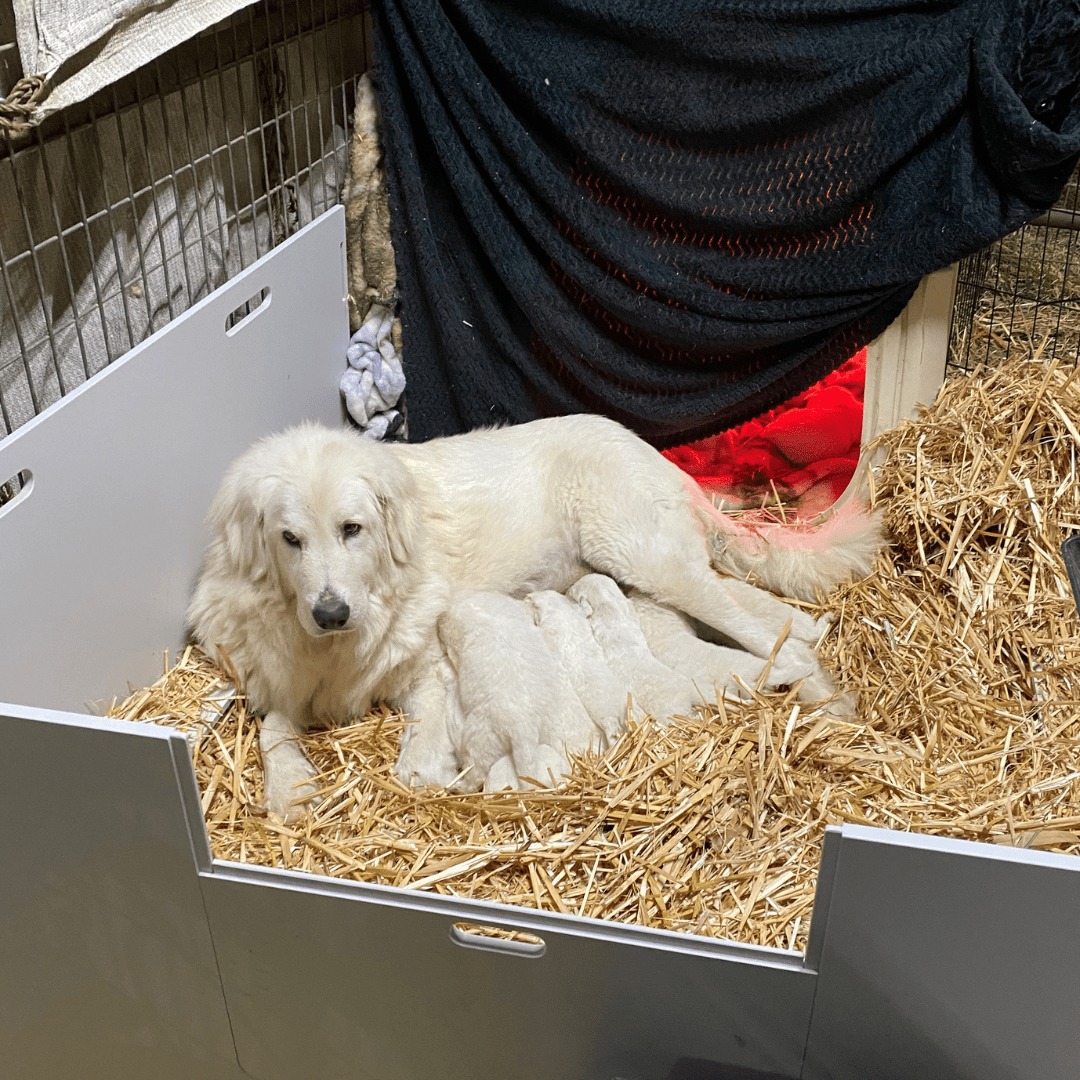
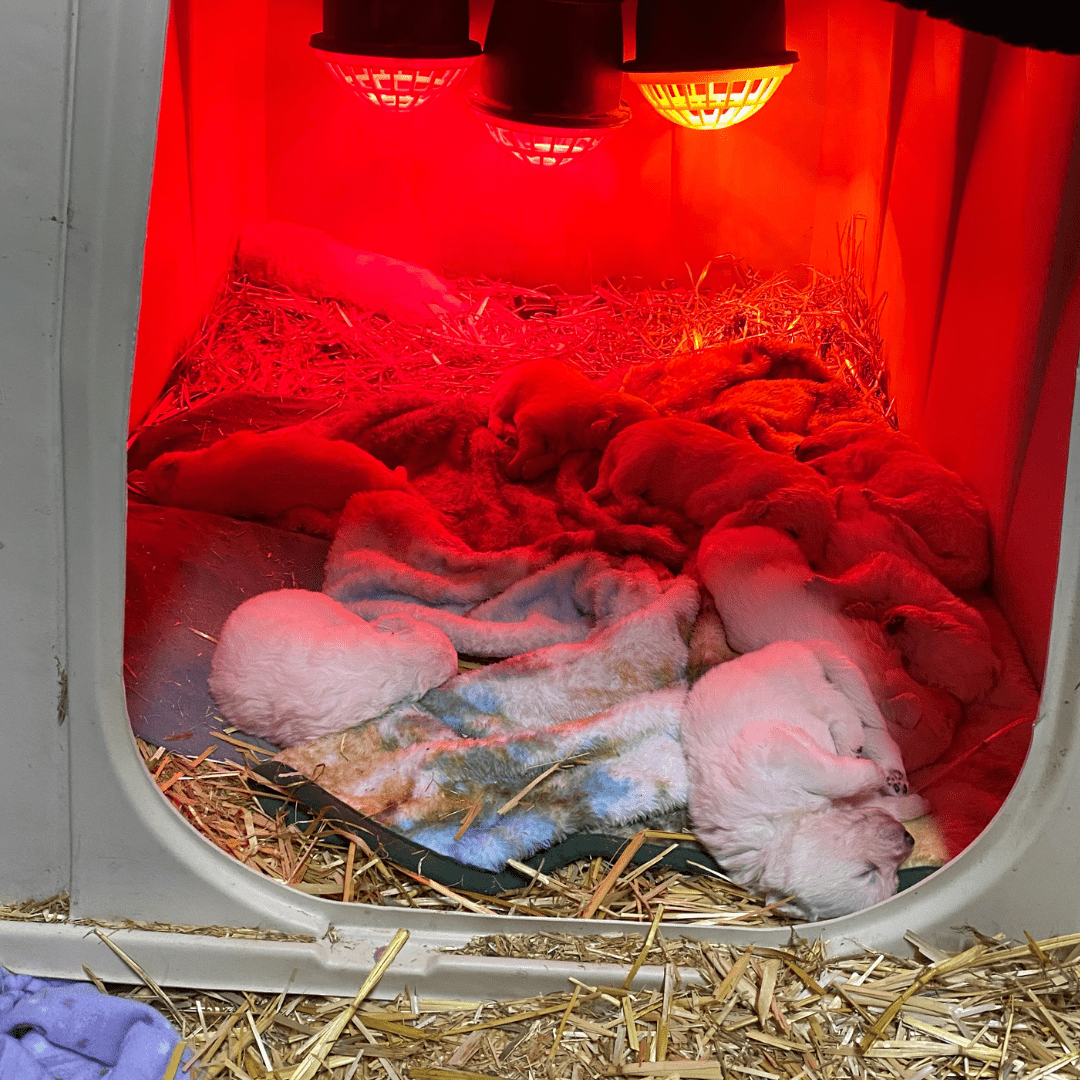
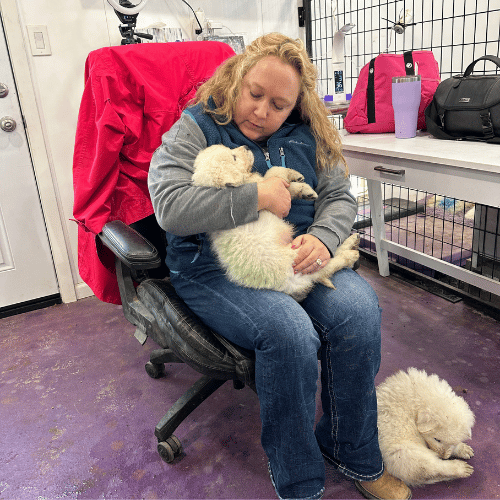
The beginning of a Maremma's life looks quiet from the outside. Mom is doing the work. Puppies are nursing, staying warm, and building the early foundation that every future experience will build on.
But there's a lot happening behind the scenes. The whelping environment is monitored closely in those first days — birth weights, nursing frequency, early movement, and mom's condition are all tracked. A puppy who struggles to gain weight in the first few days faces harder odds in the days ahead. We catch those things early because we're paying attention.
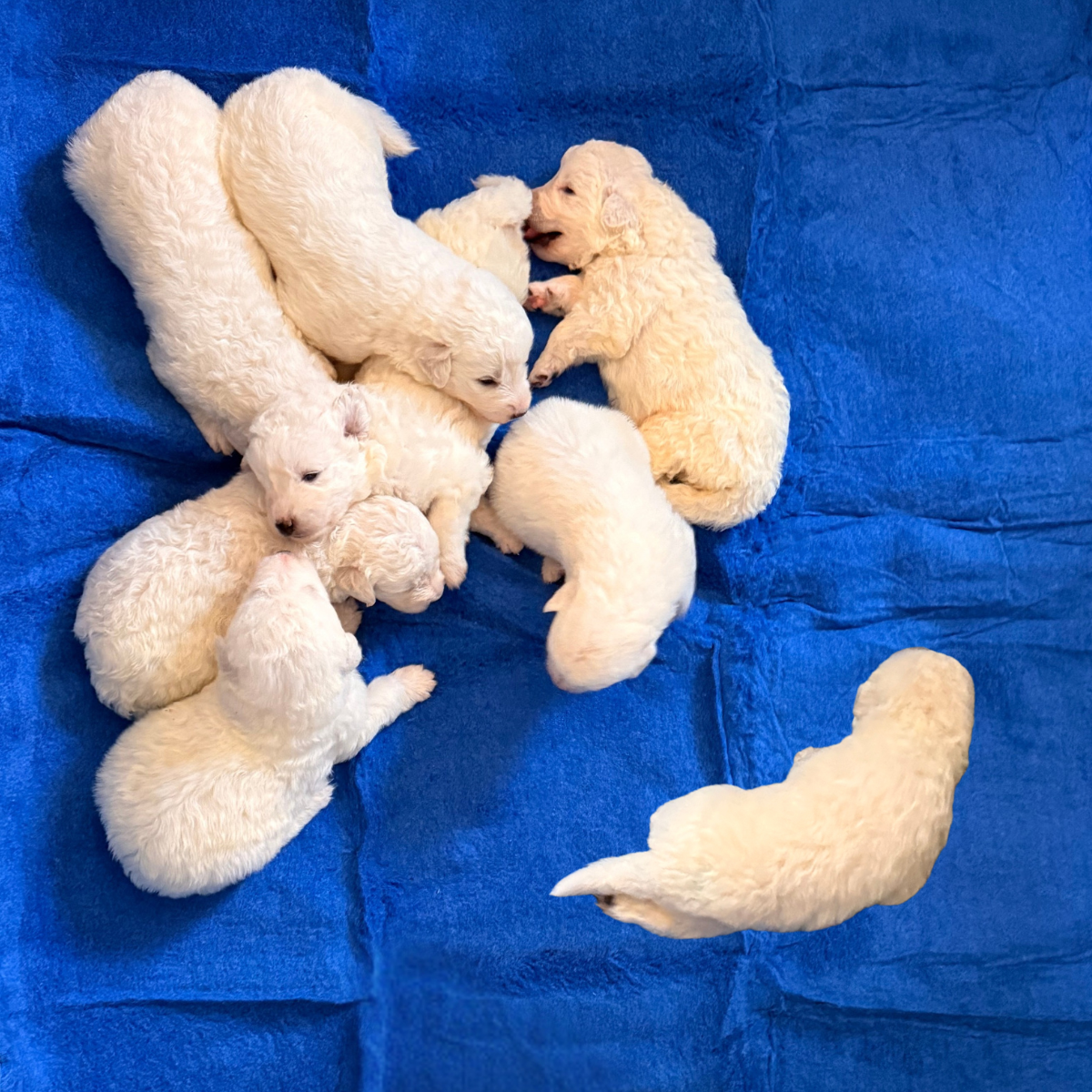
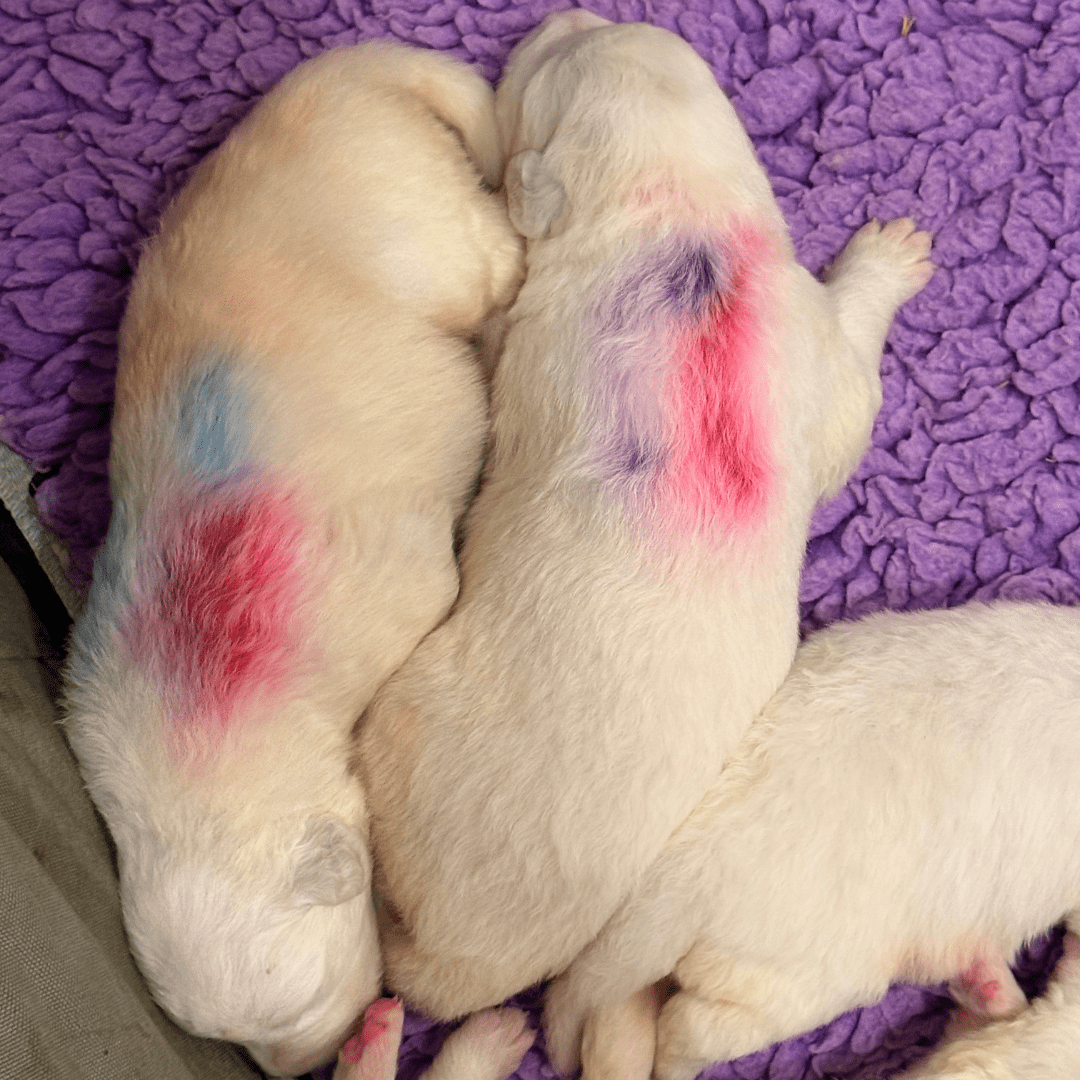
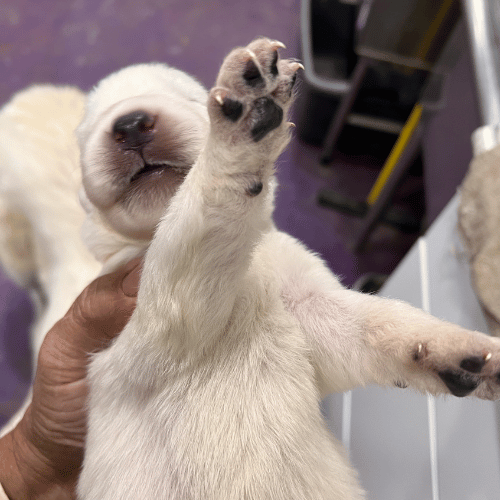
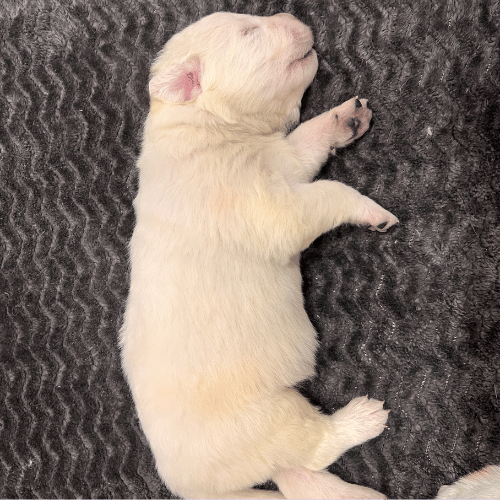
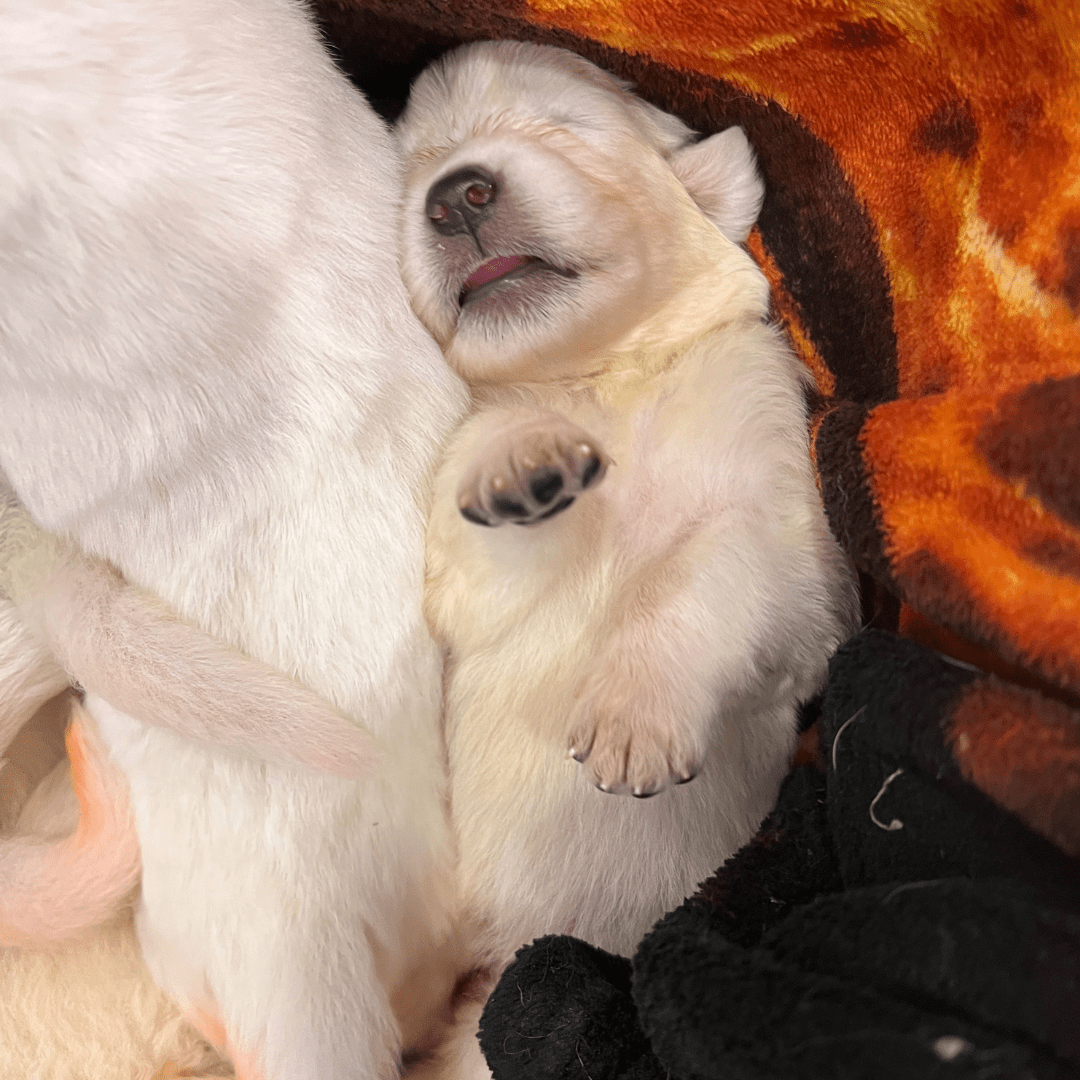
This is also when gentle daily handling begins. Nothing elaborate — just calm, consistent contact that gets puppies accustomed to human hands from the very start. Maremmas are a precocious breed and develop quickly. By the end of the first week, many of our pups are already crawling purposefully and eyes are beginning to open. The neonatal stage is short, but what happens in it matters.






Most people have never heard of the critical socialization window. Most breeders haven't either — or if they have, they're not acting on it. This post explains exactly what it is, why the weeks 3–12 matter more than everything that comes after, and what it means for your dog's future if a breeder misses it.
Eyes Open, Exploring Their World Begins — The Transitional Stage (Weeks 1–3)
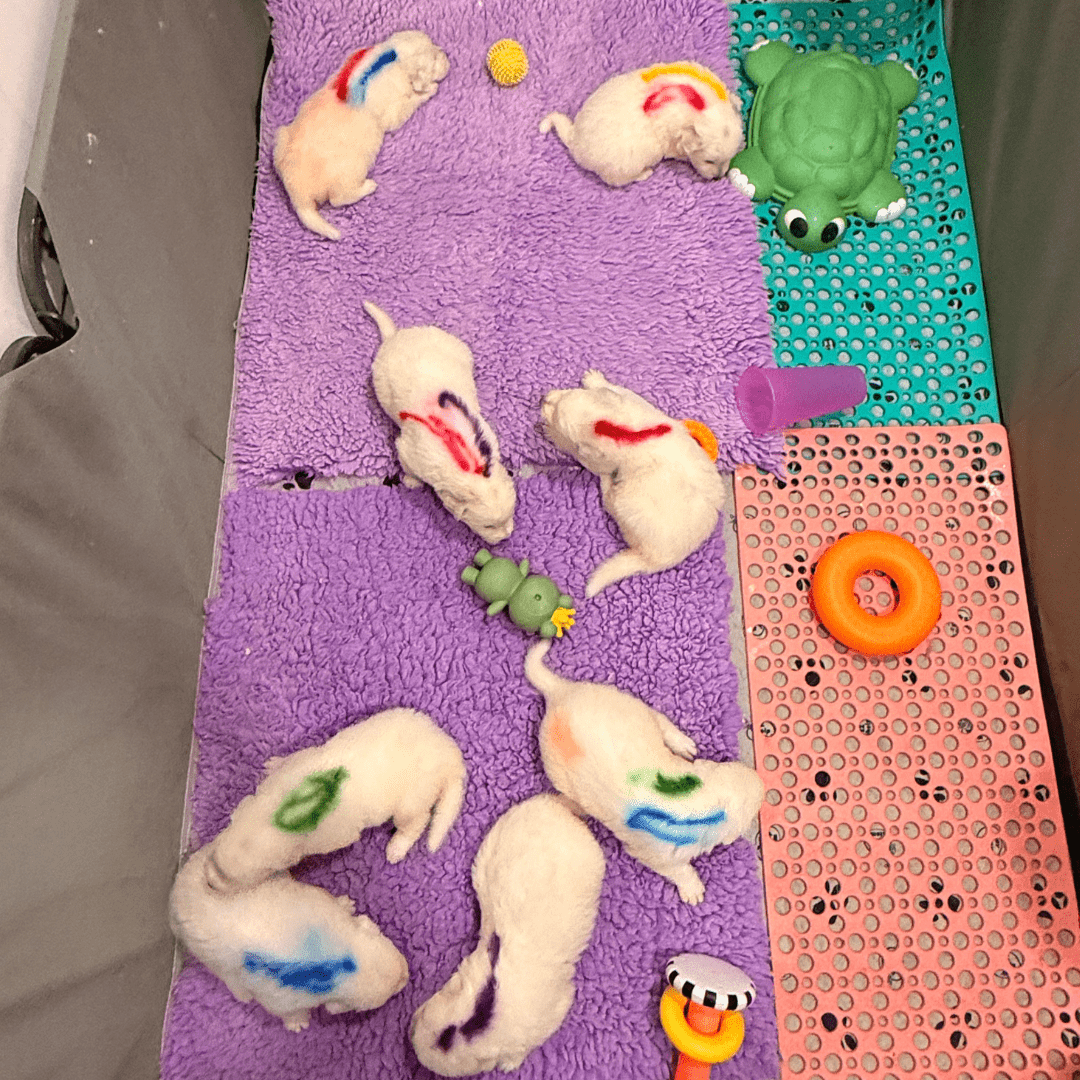
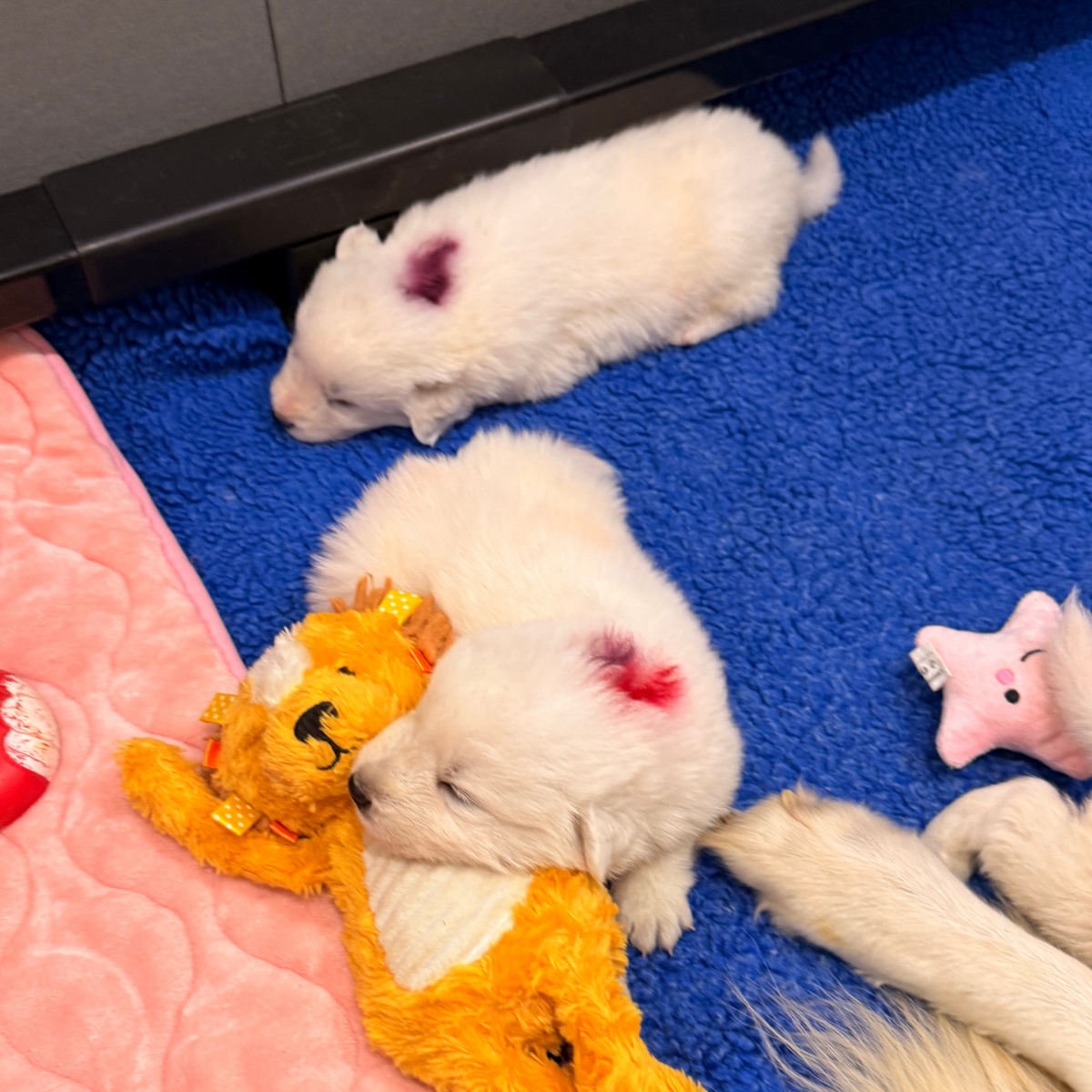
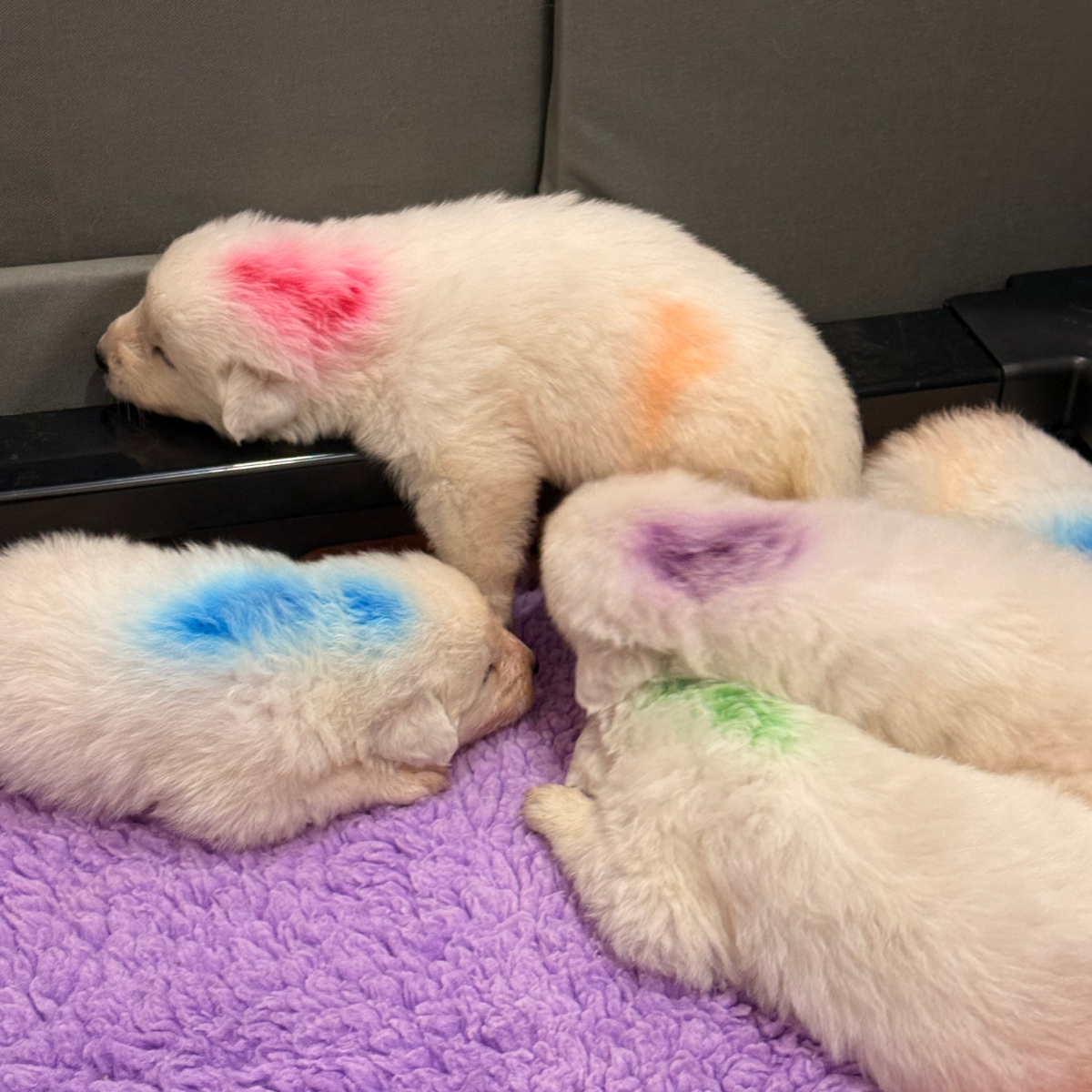
Maremmas develop faster than many breeds. Eyes can start opening as early as the end of the first week, and by weeks two and three the world is coming into focus fast. This is the transitional stage — and it's short, but it's important.
The neurological system is rapidly connecting. Puppies are starting to process sound, light, and movement for the first time. What they experience during this window begins to shape their baseline stress response. They're going from completely dependent newborns to curious, mobile little creatures in what feels like days.
This is why the environment matters so much right now. A calm, warm, consistently monitored space isn't coddling — it's setting the right neurological baseline before the real socialization work begins. By the time the socialization period opens around week three, we want puppies who are already comfortable with gentle human contact and a stable, predictable environment.
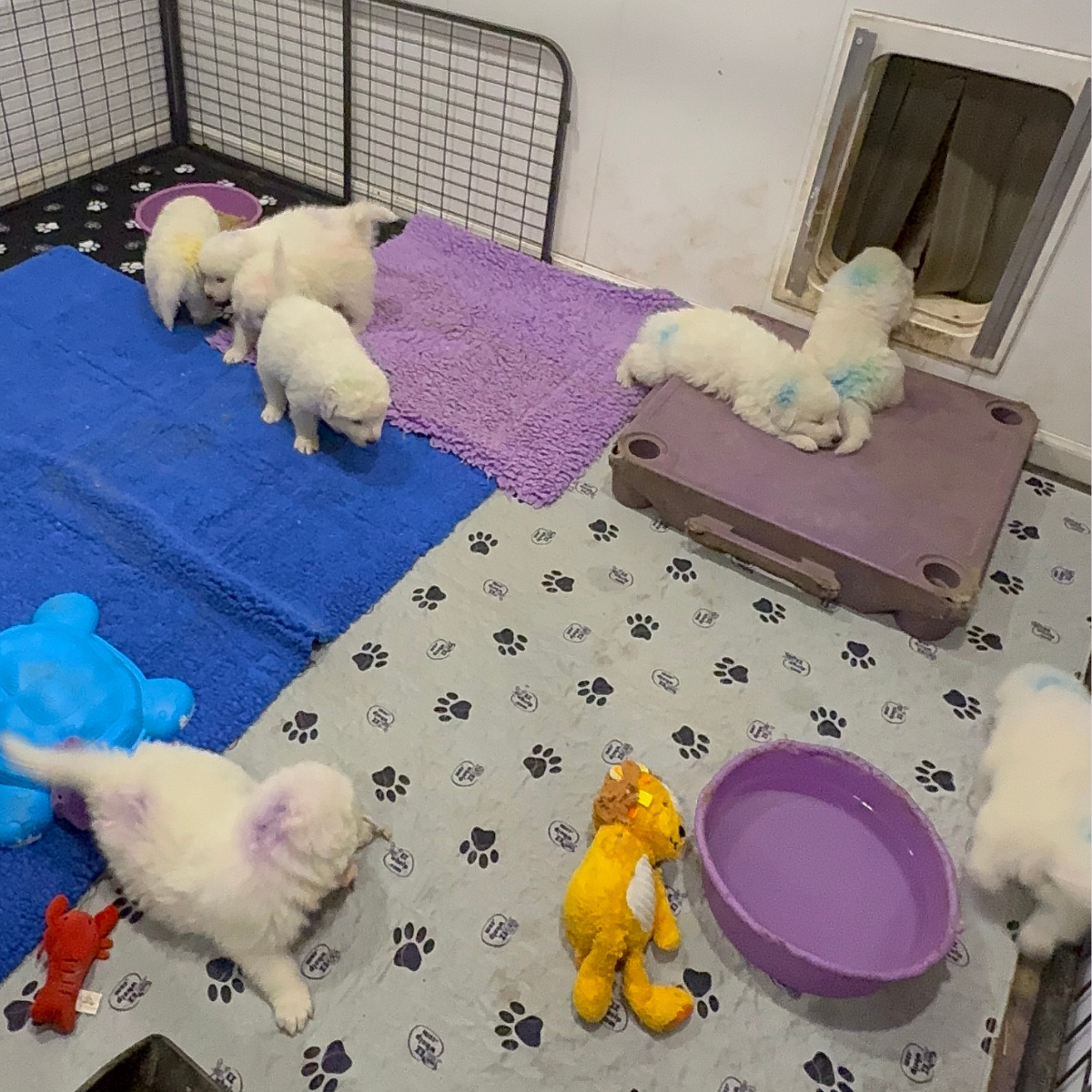
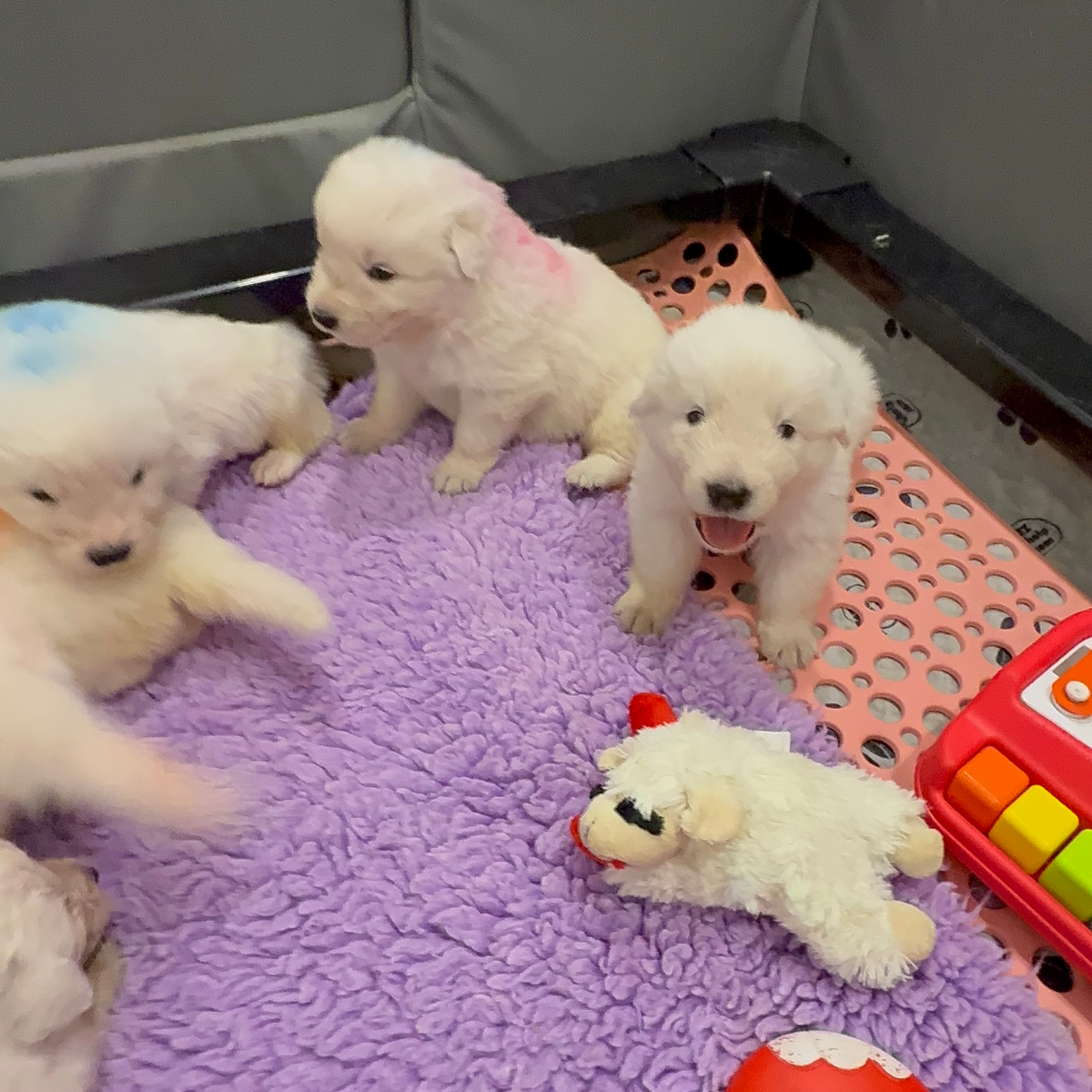
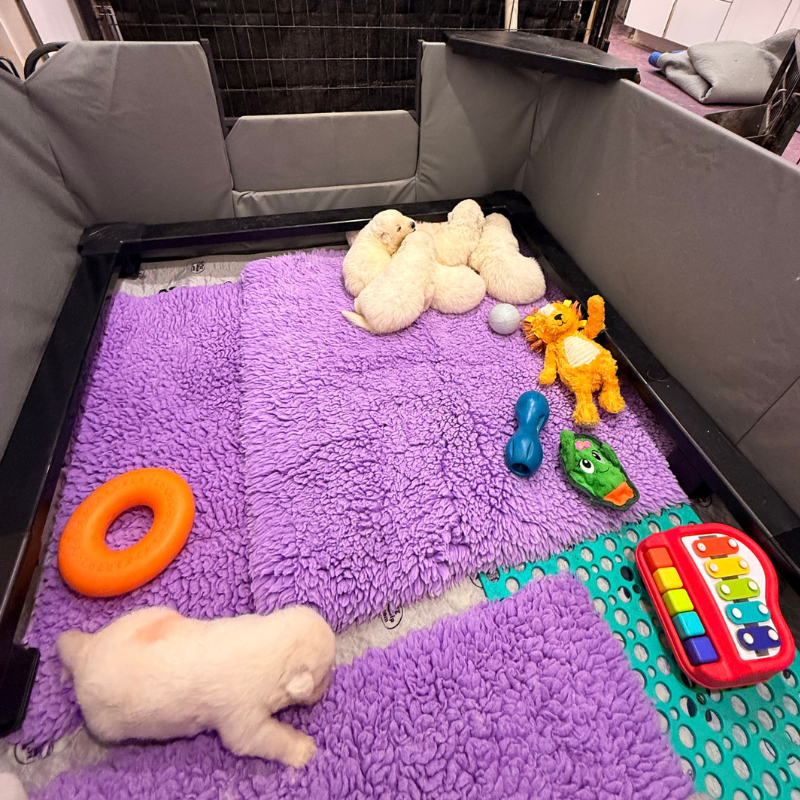
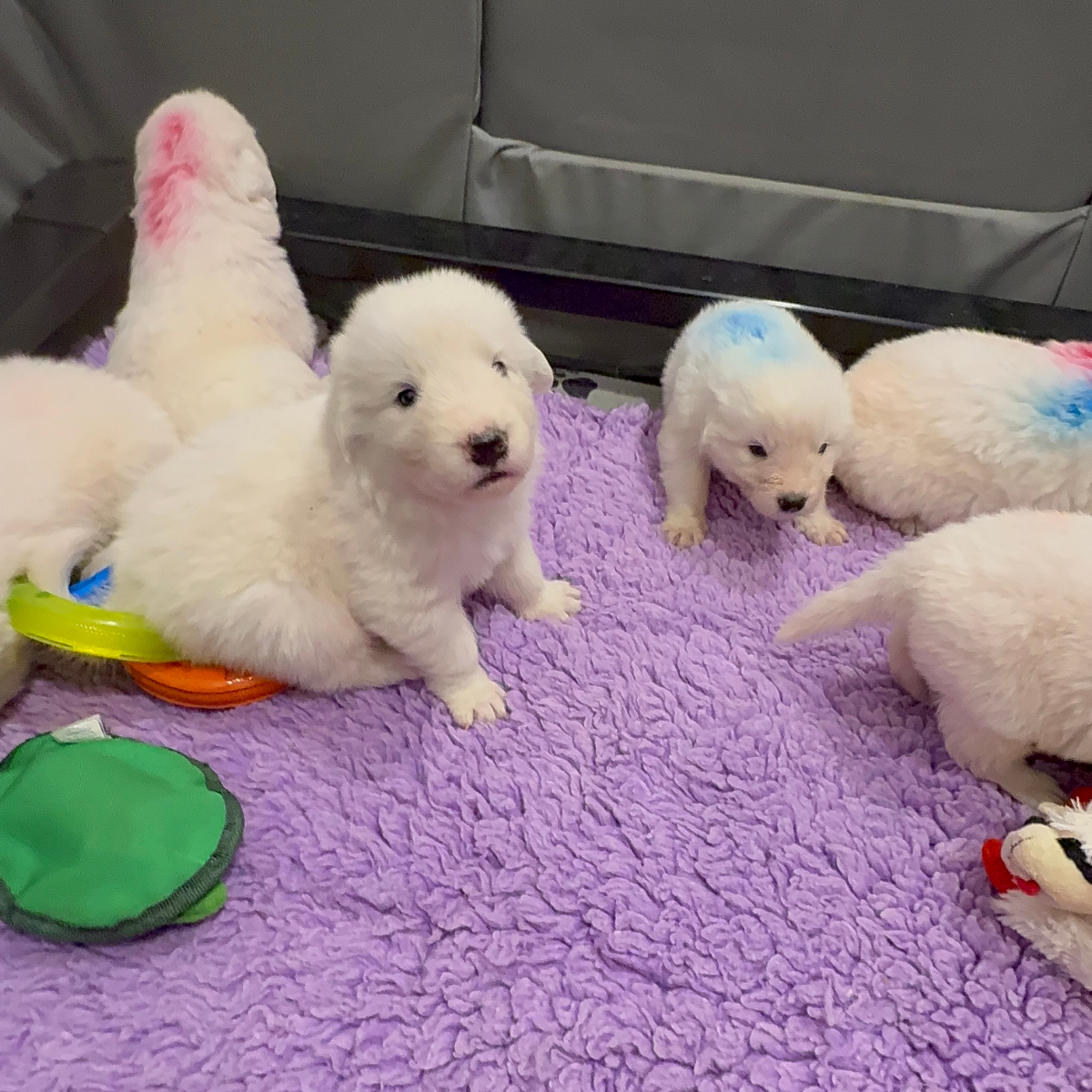
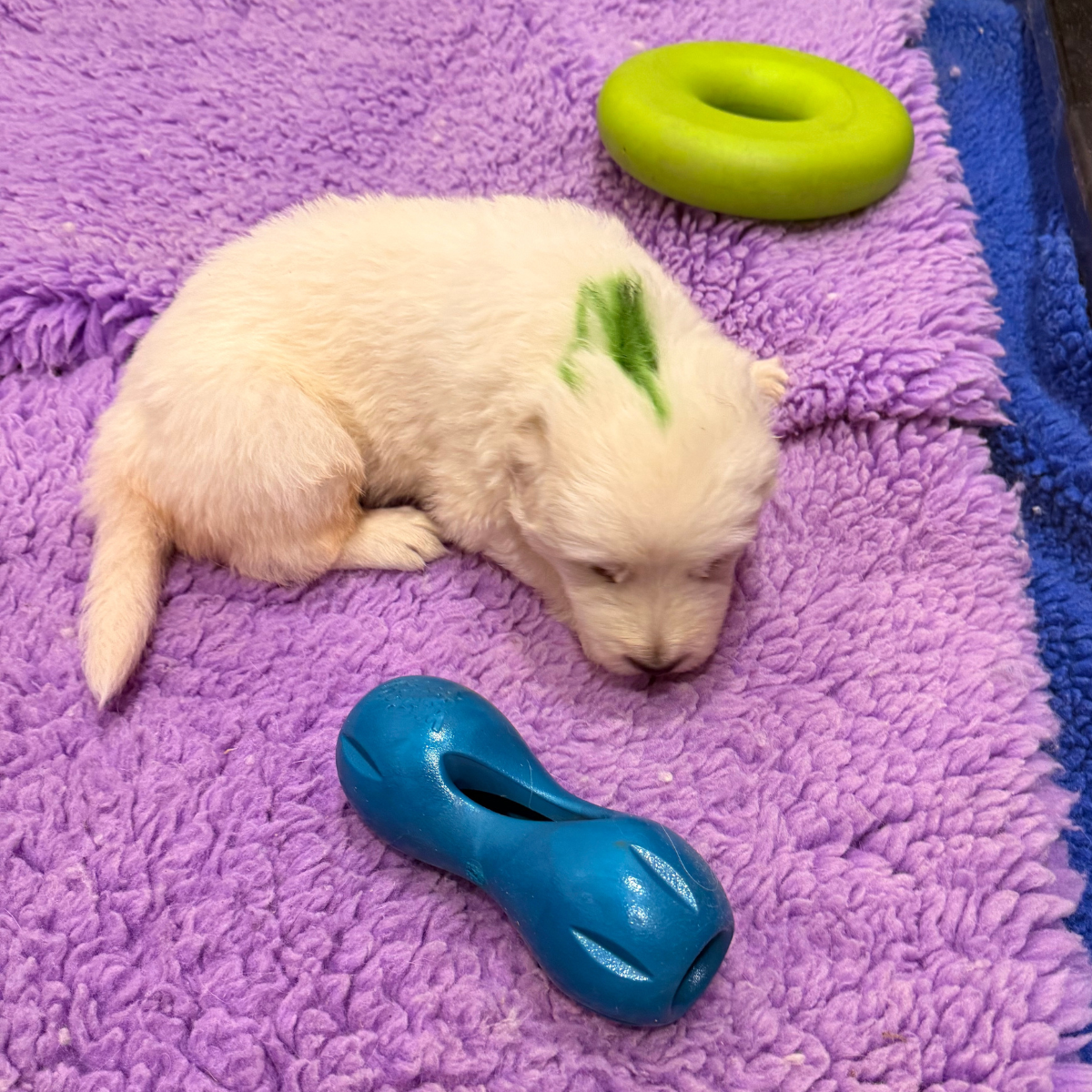
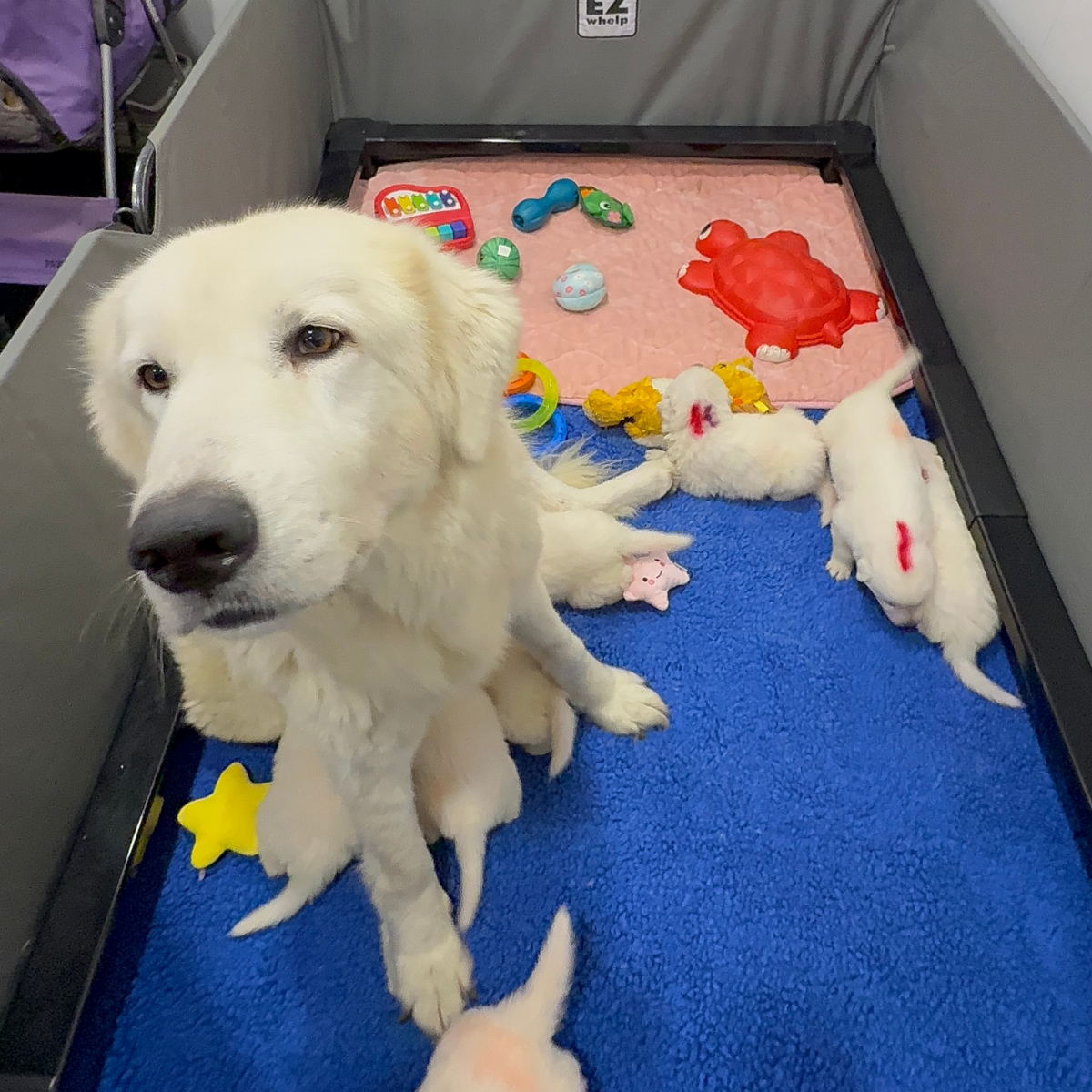
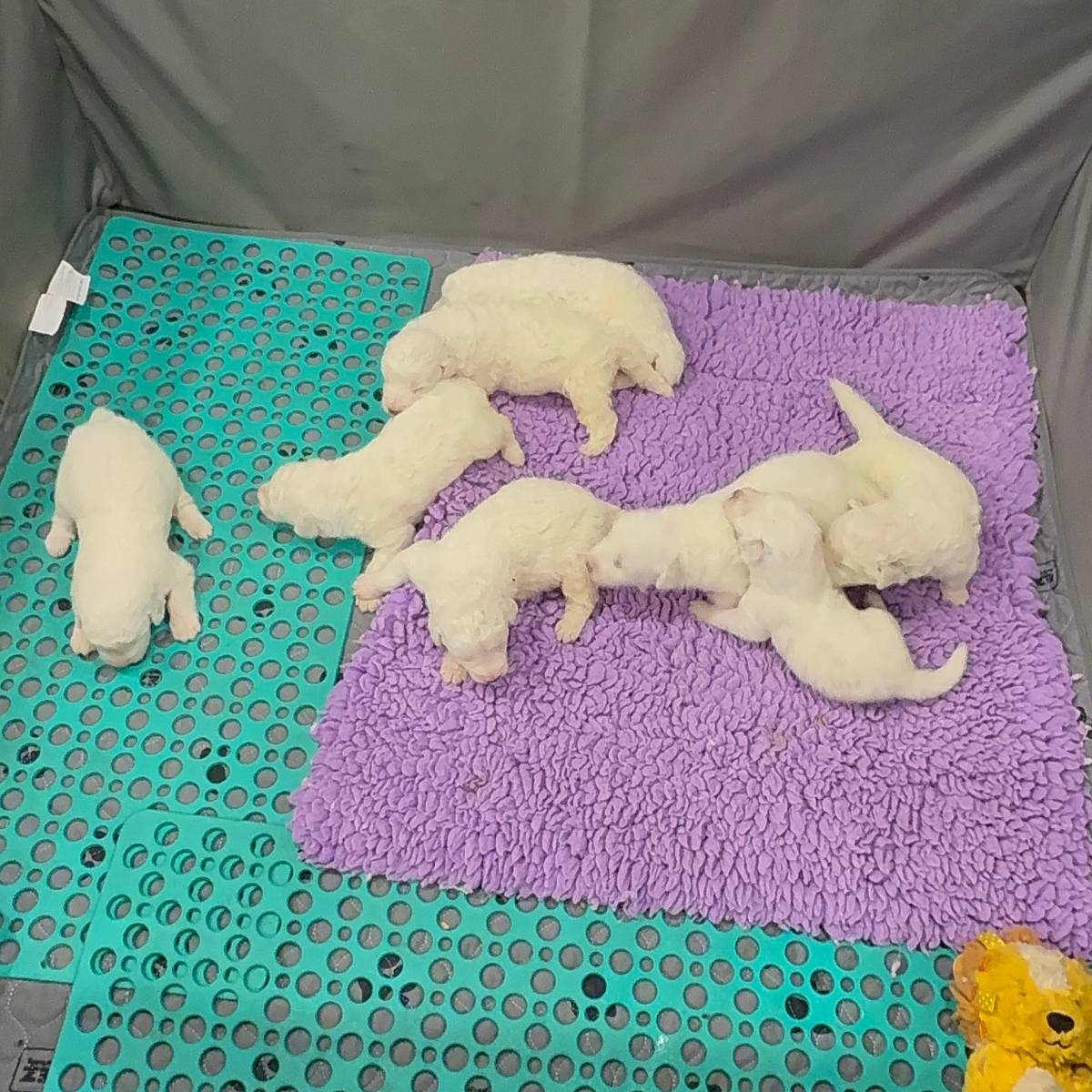
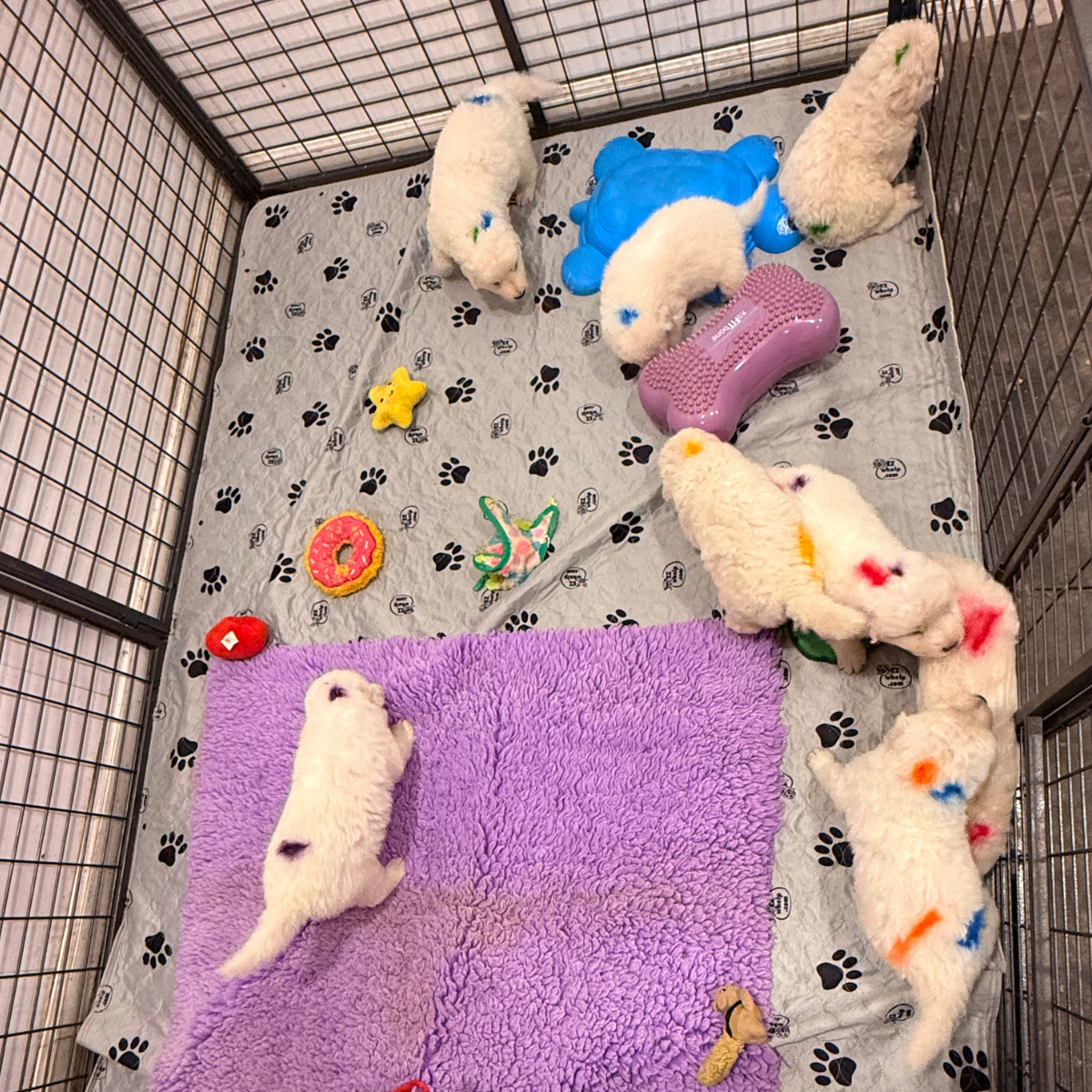
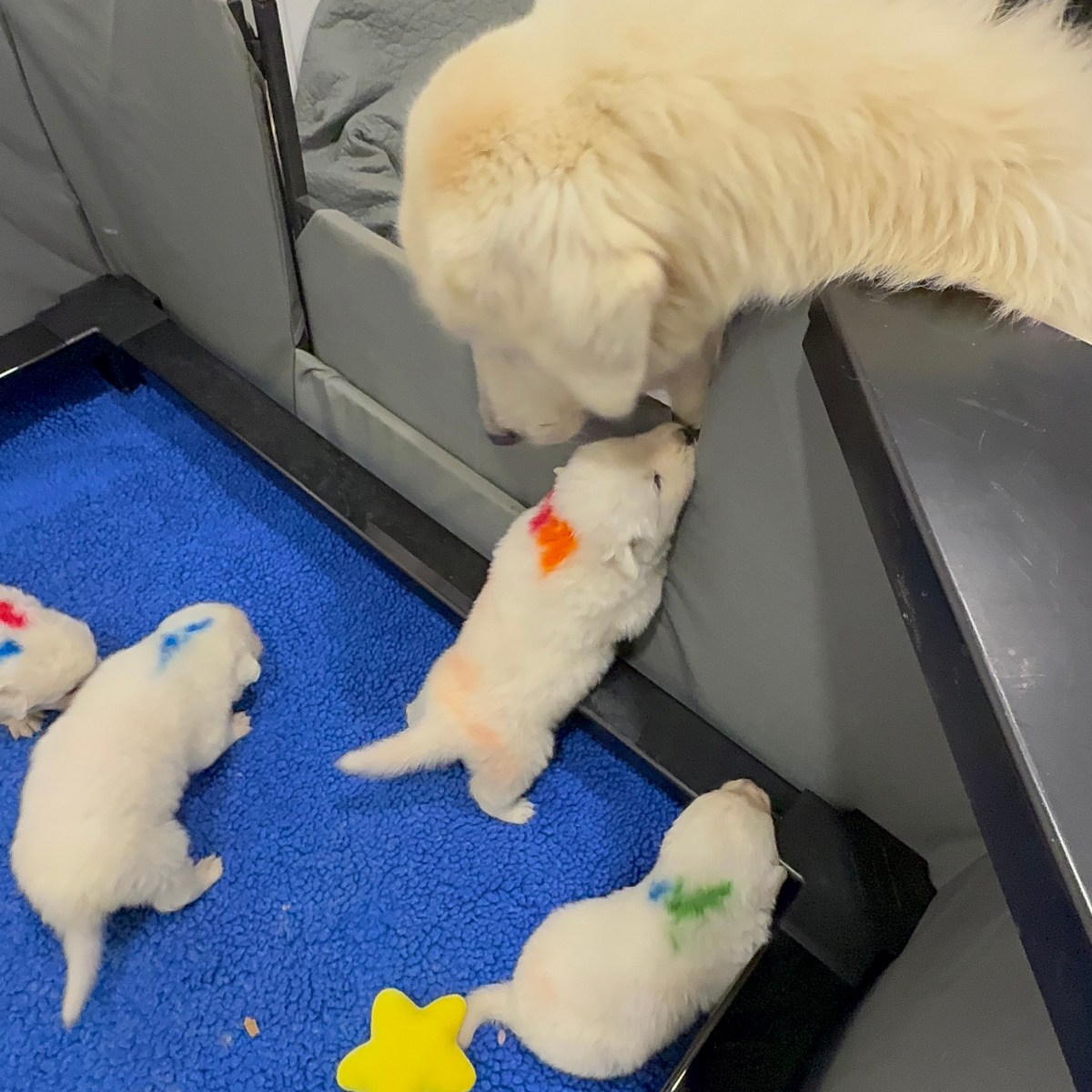
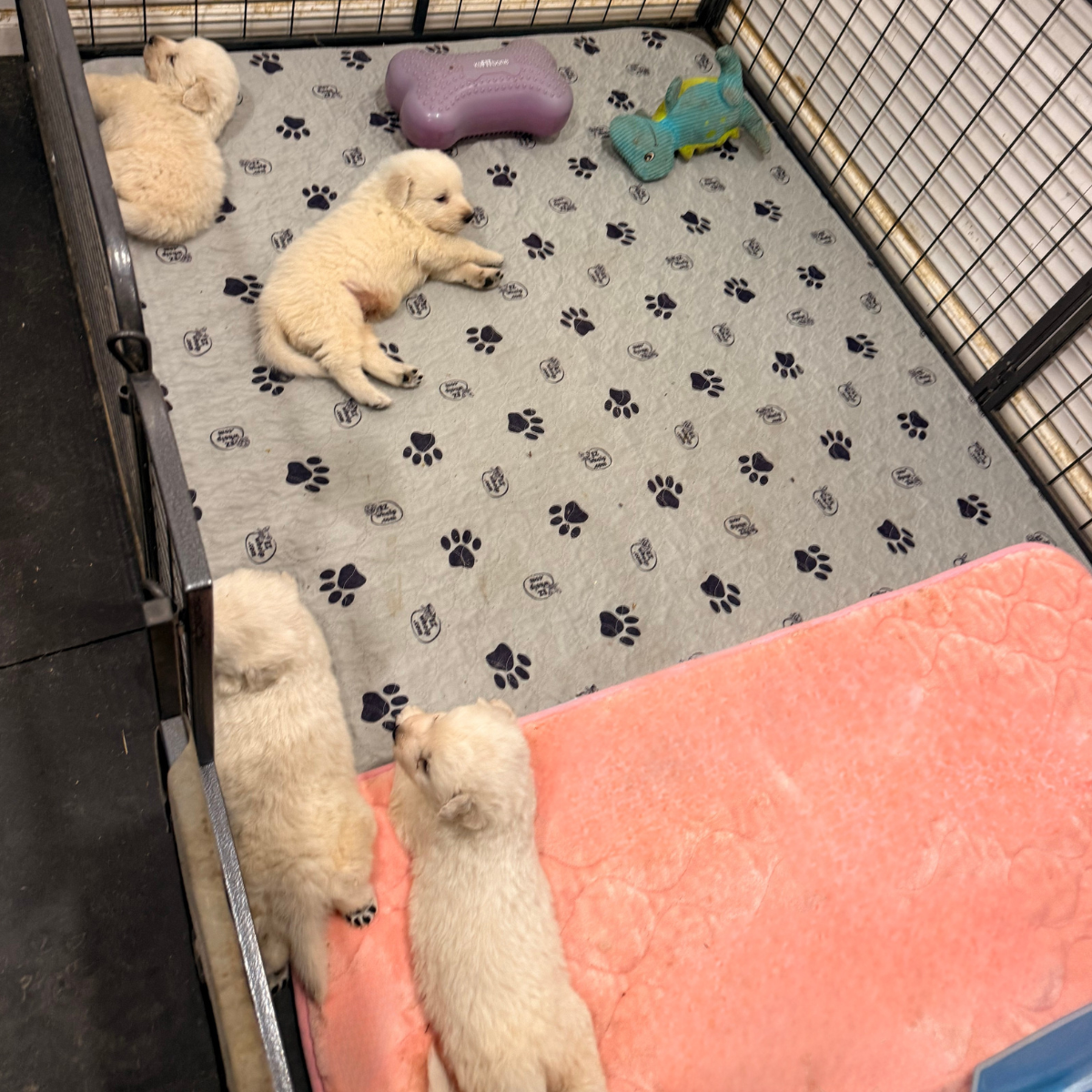
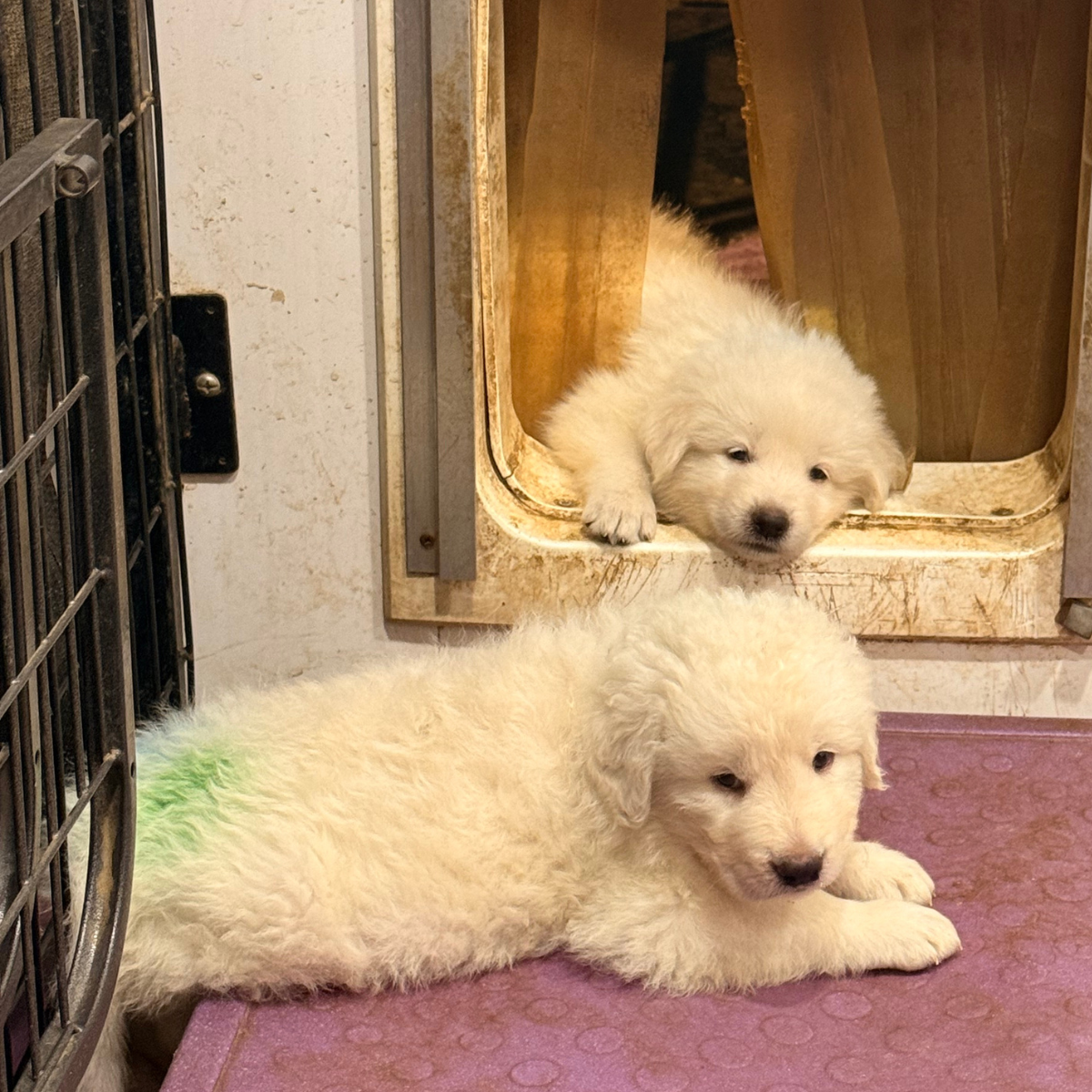
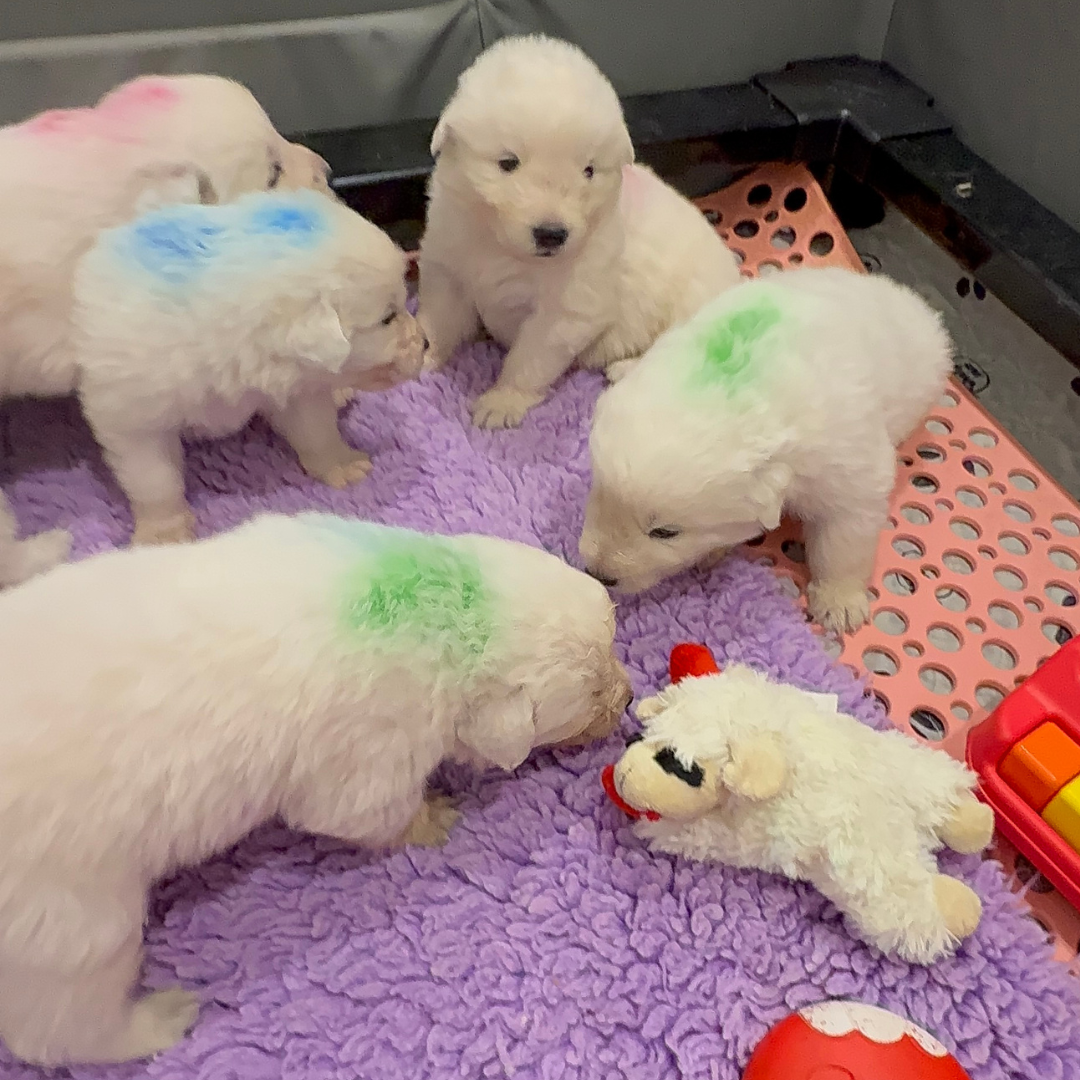
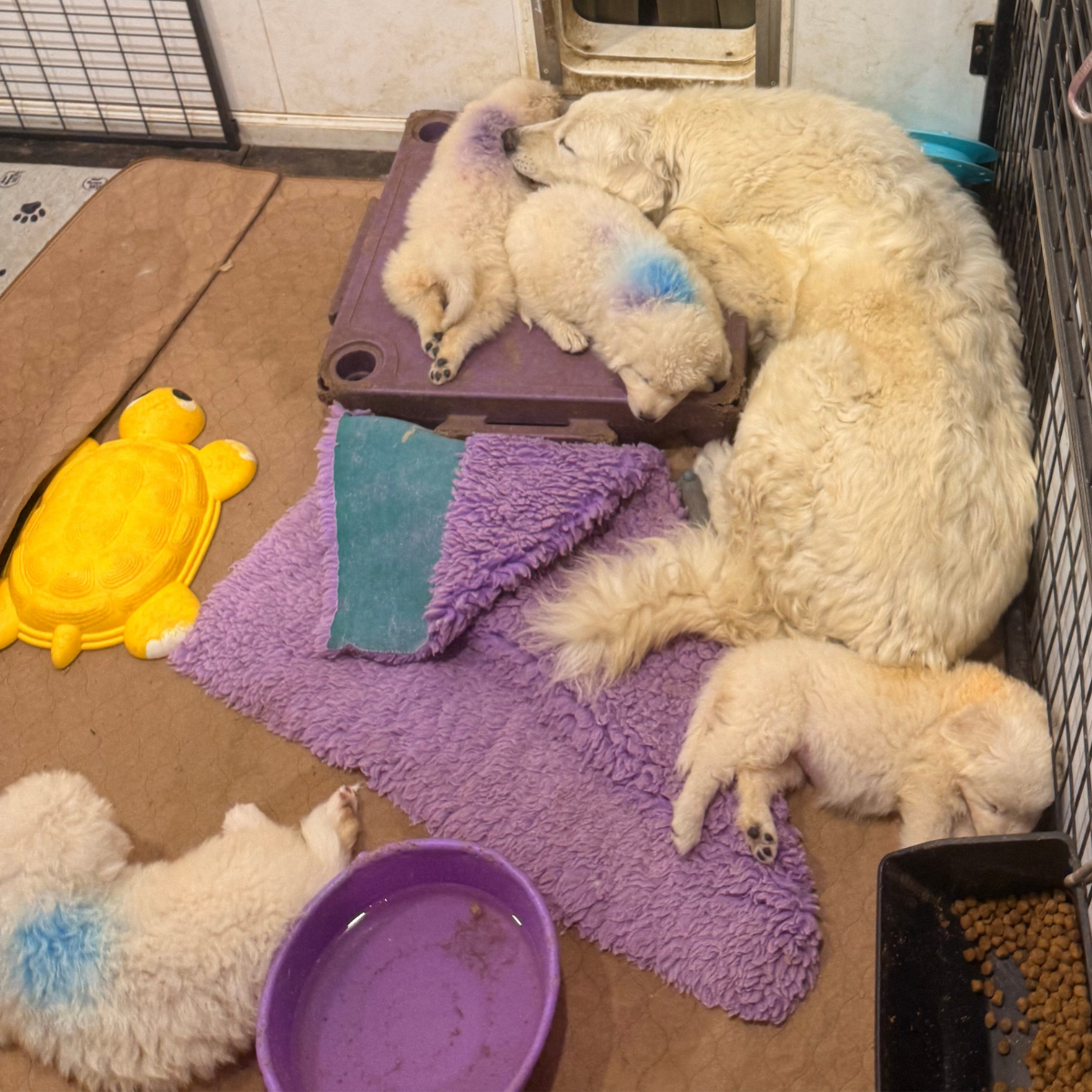
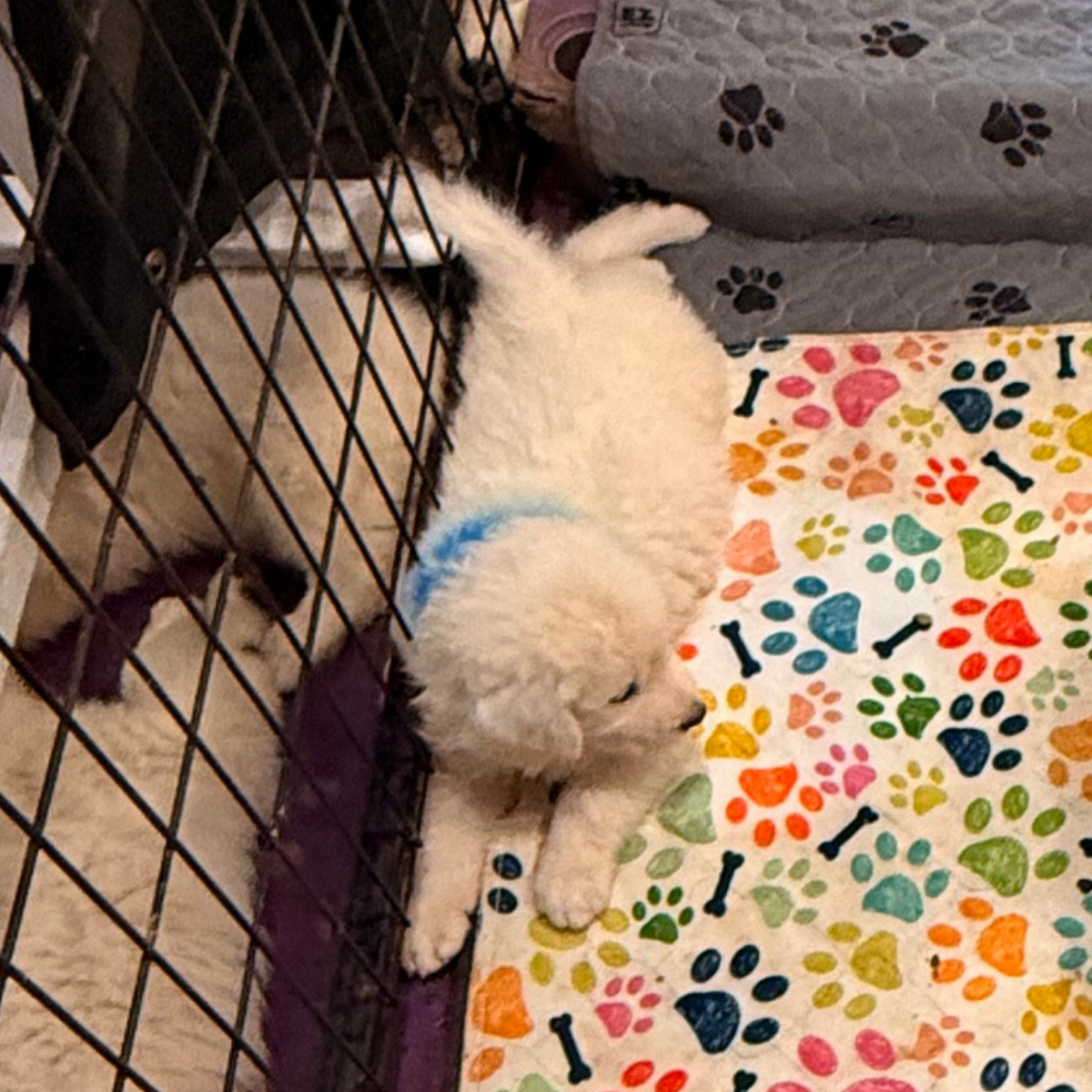
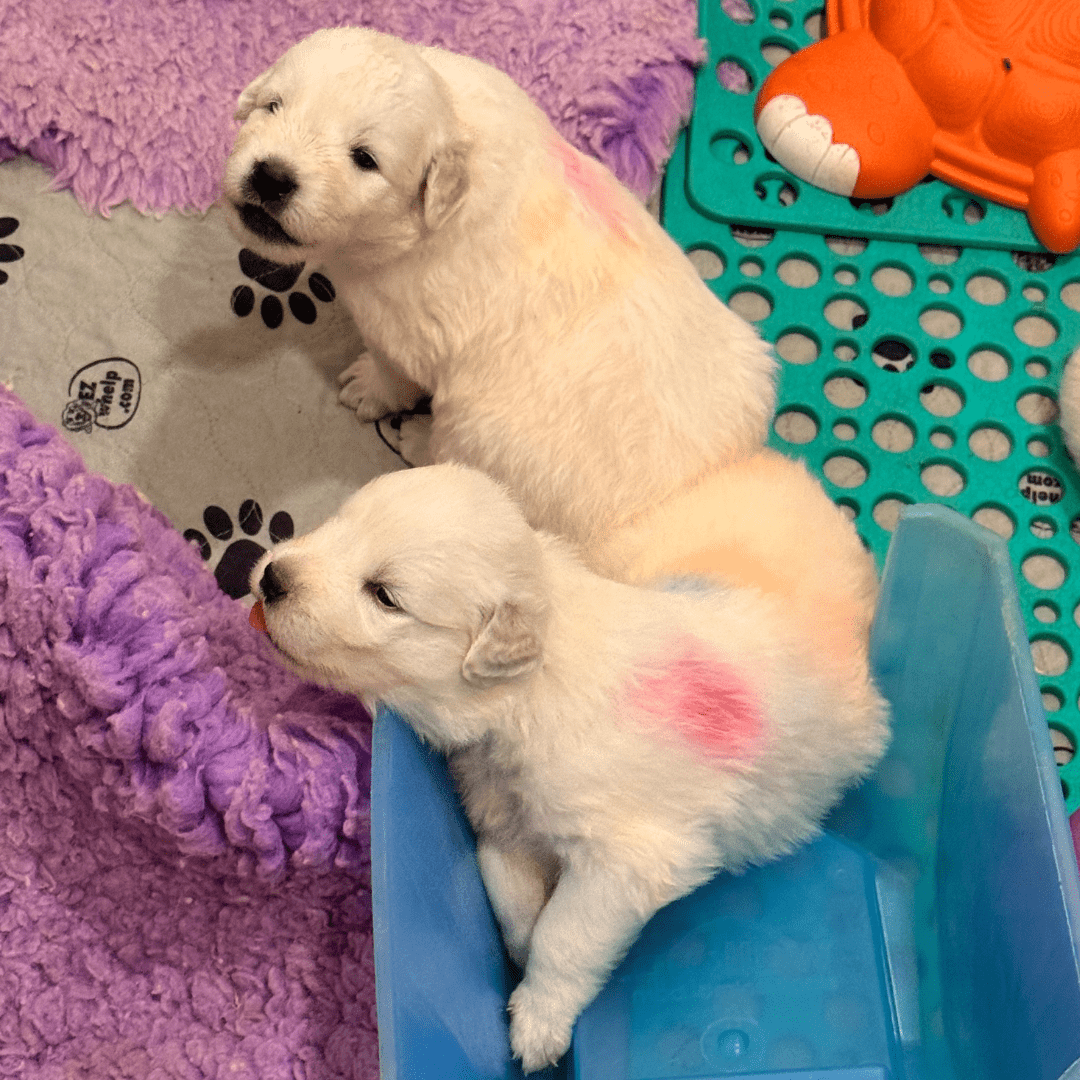
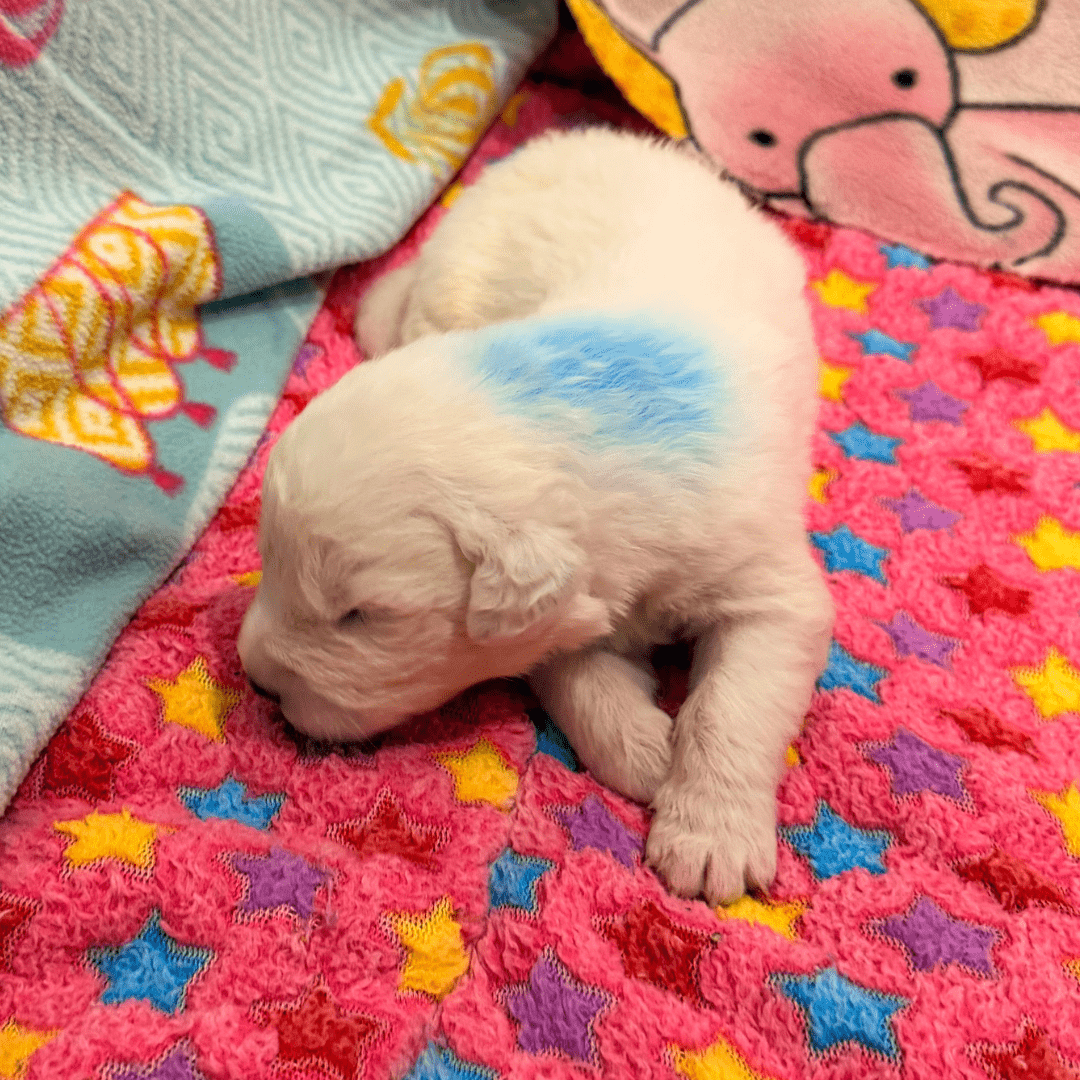
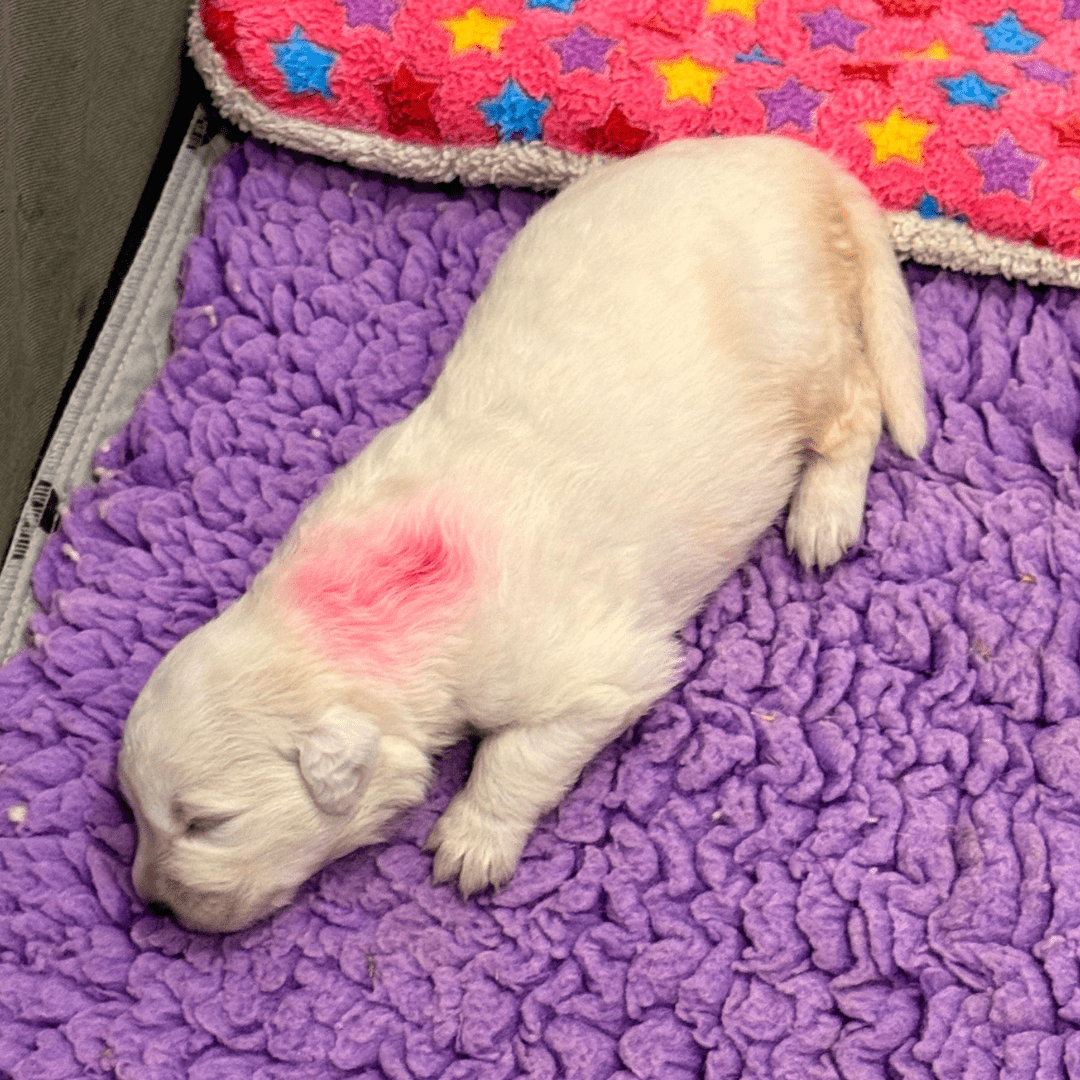
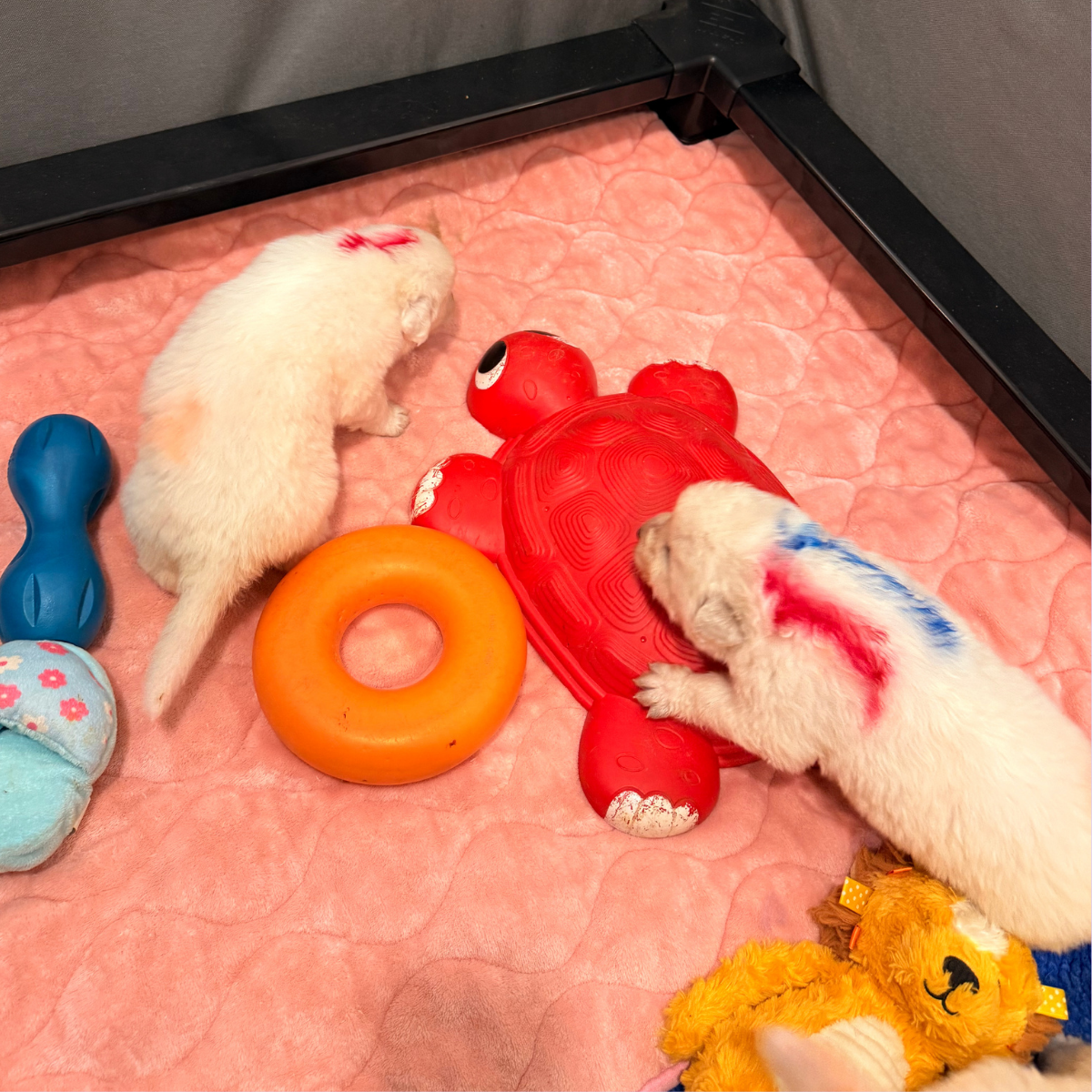
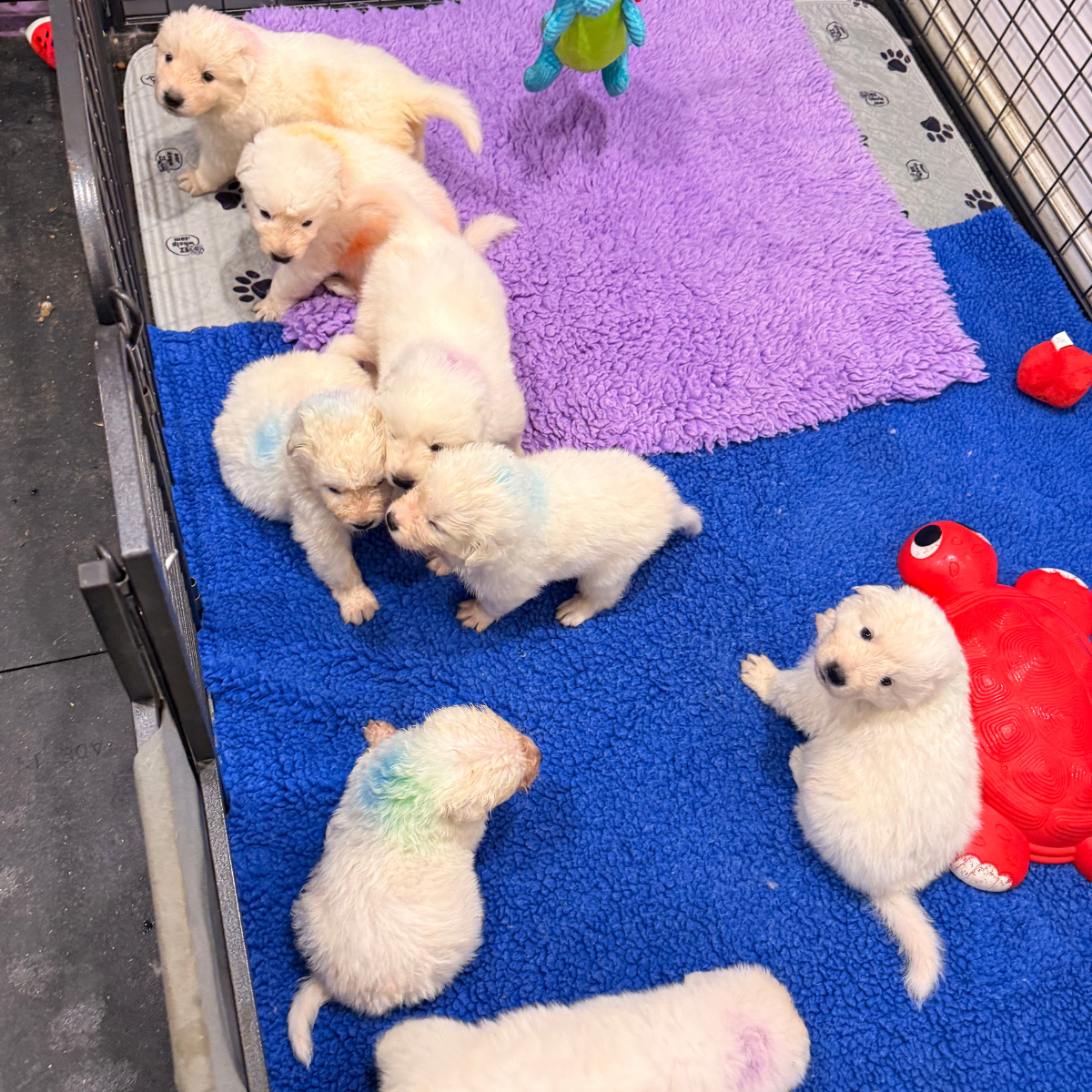
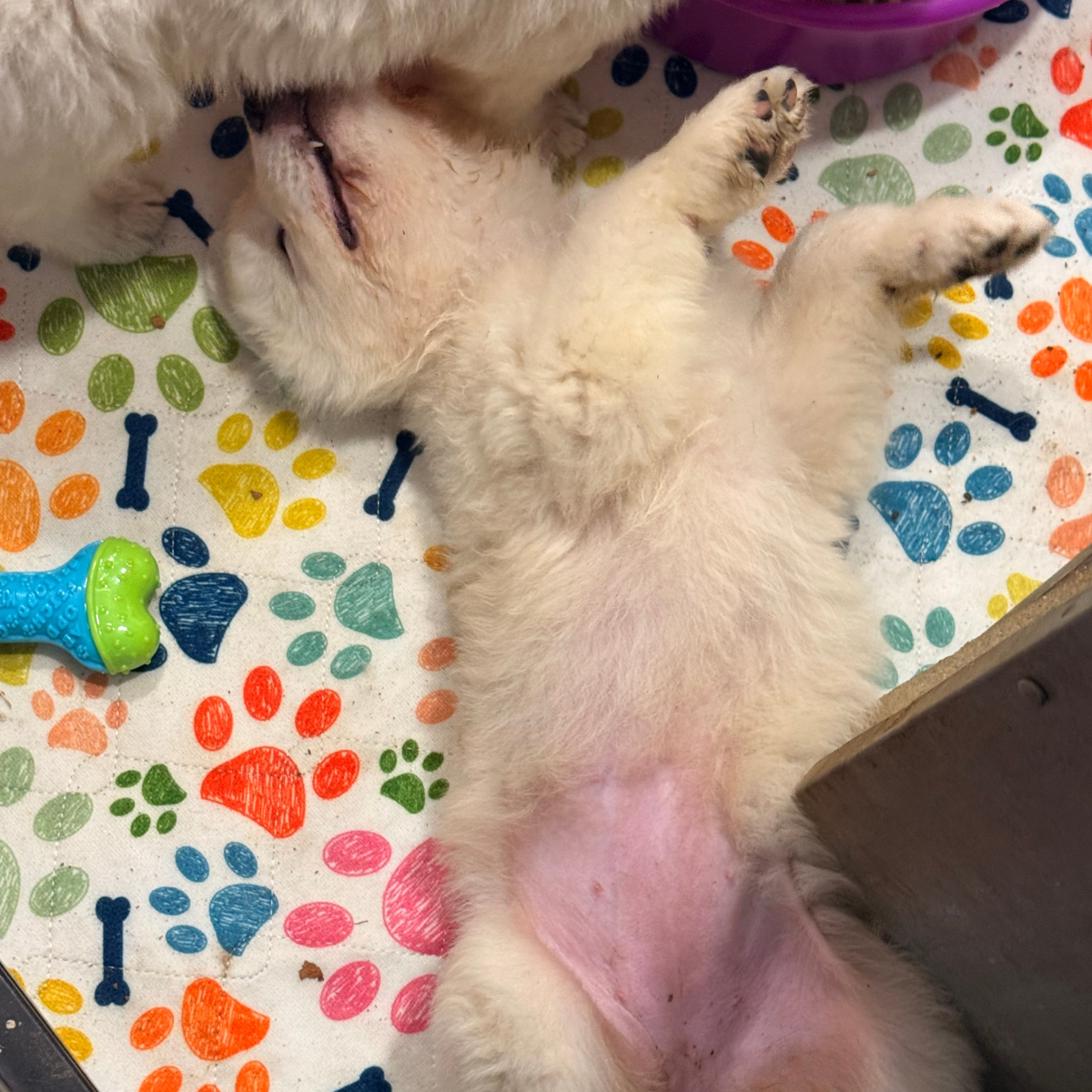
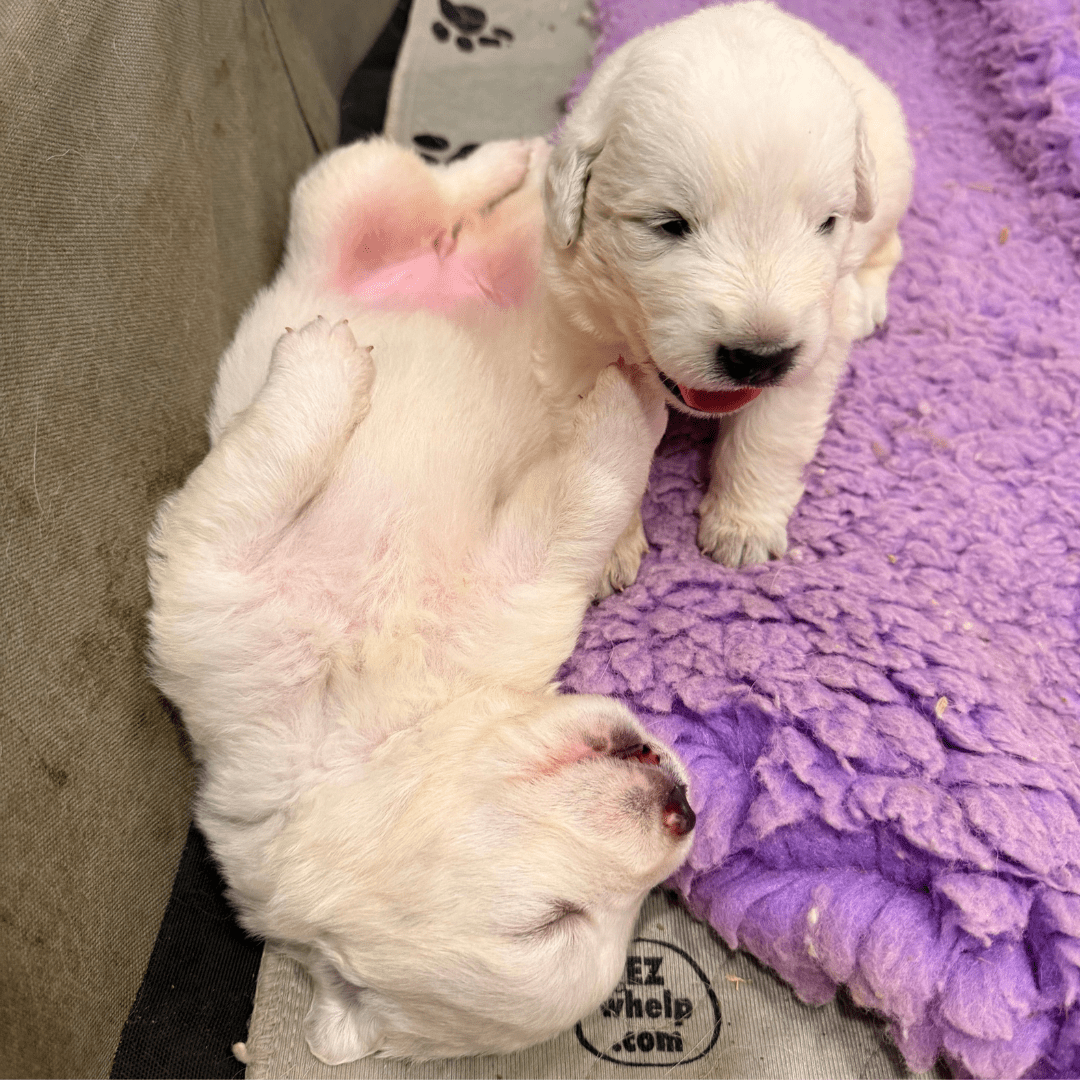
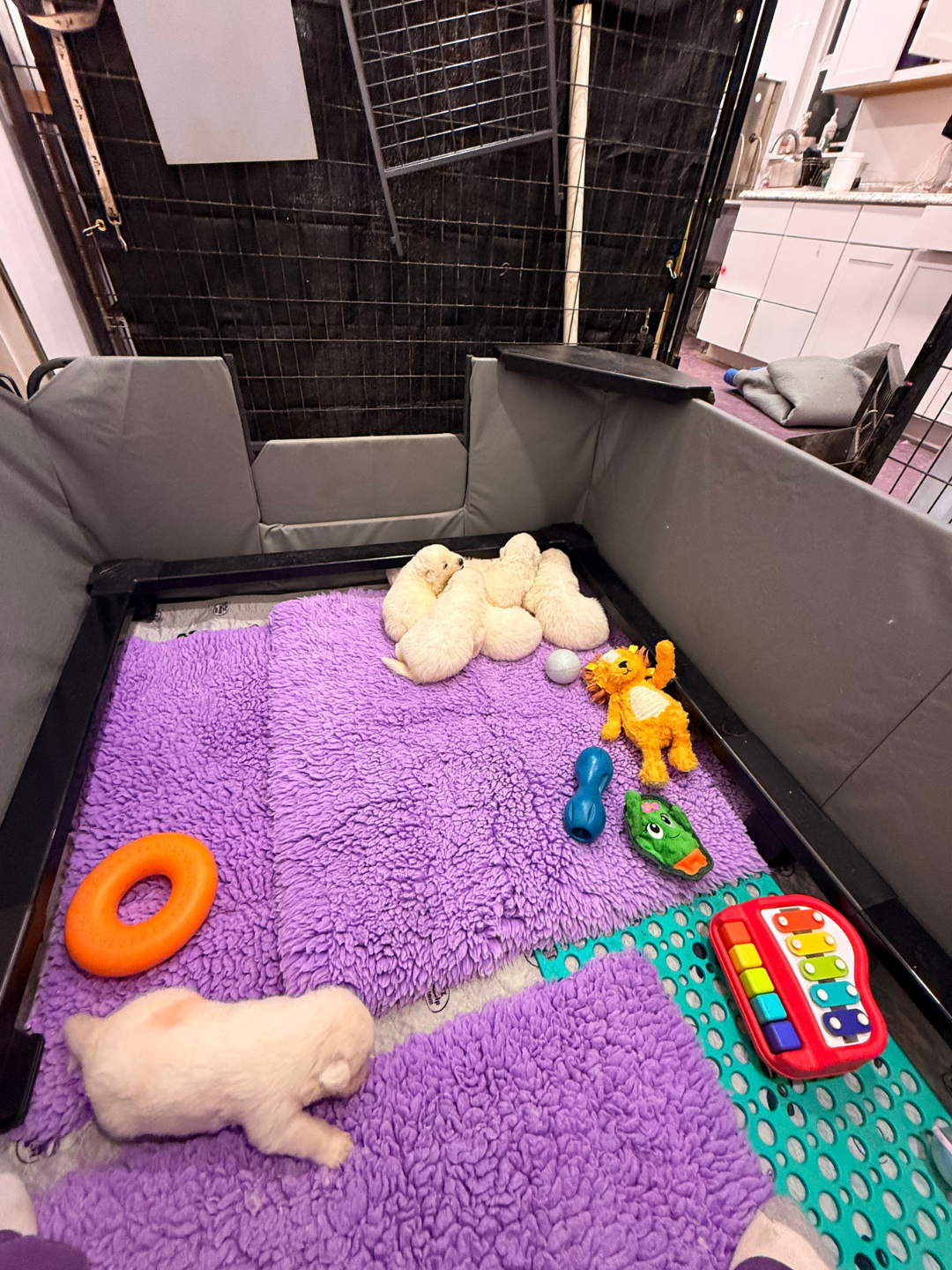
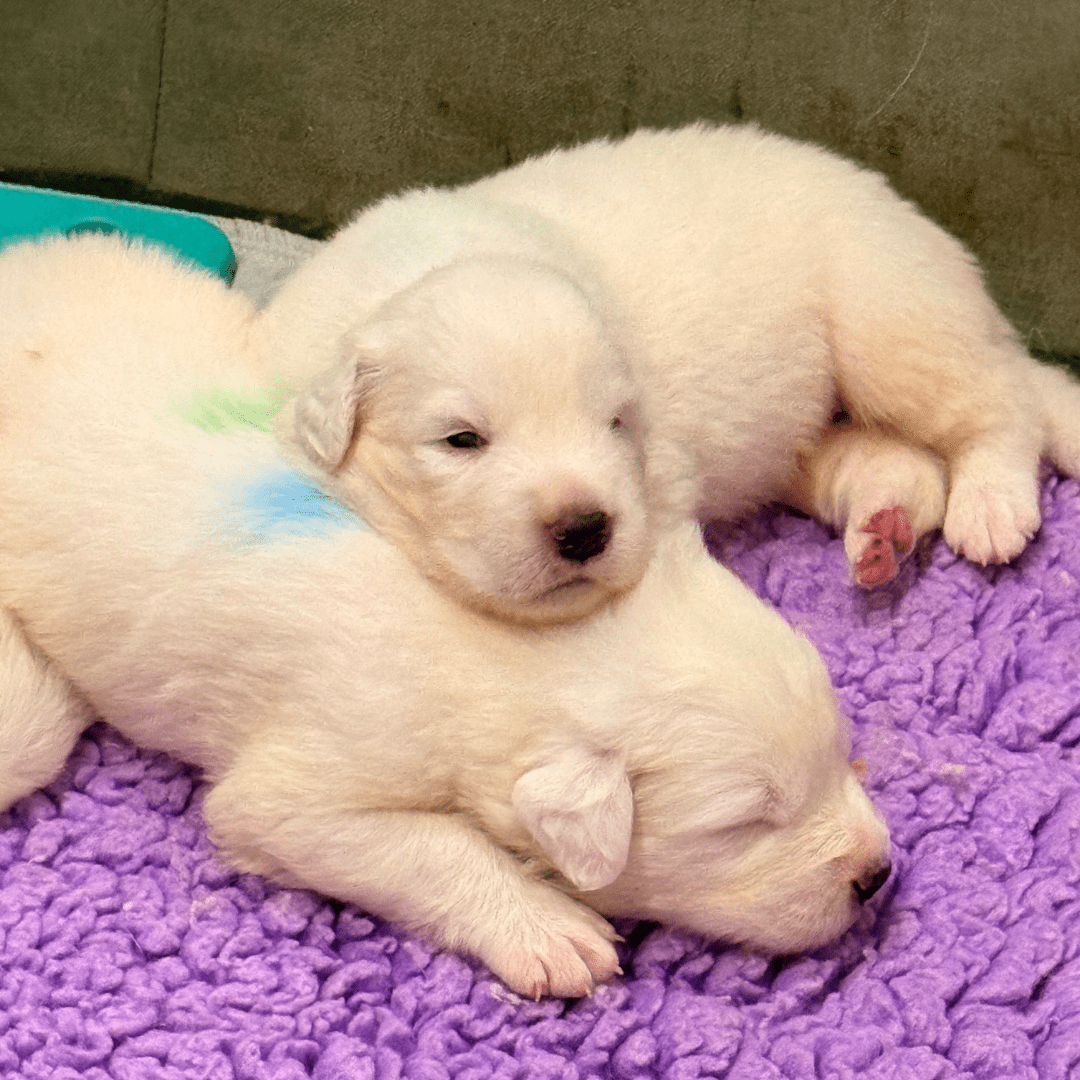

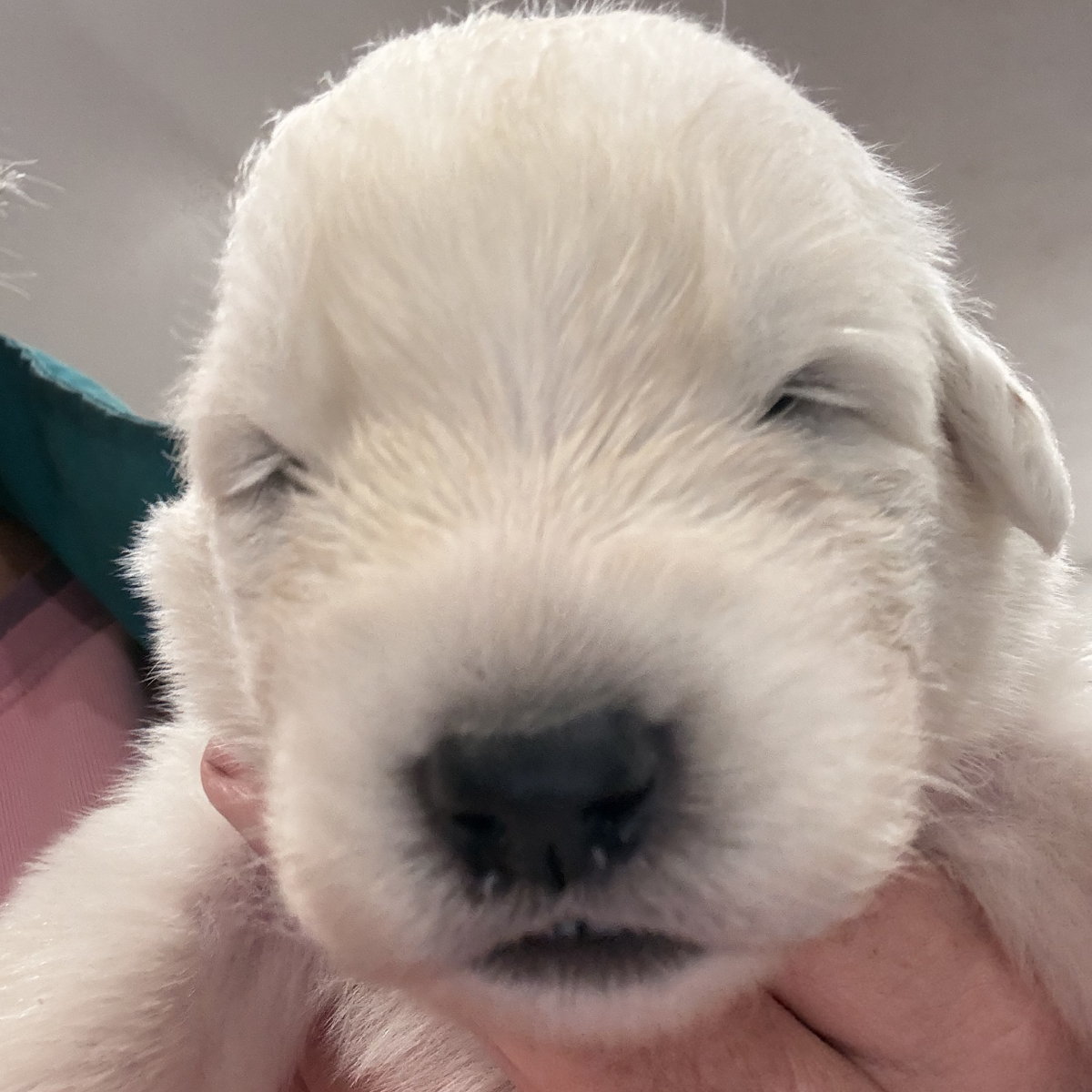
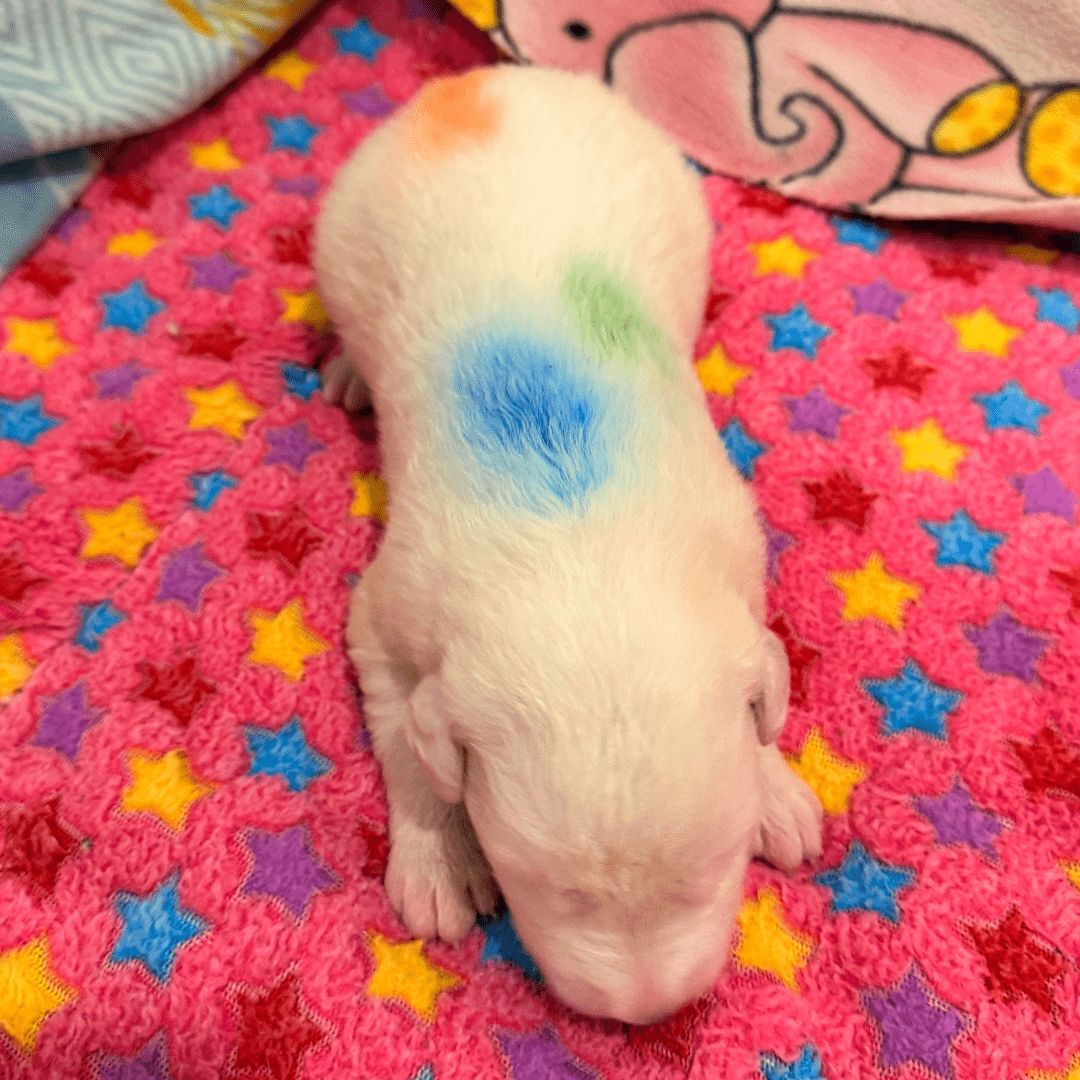
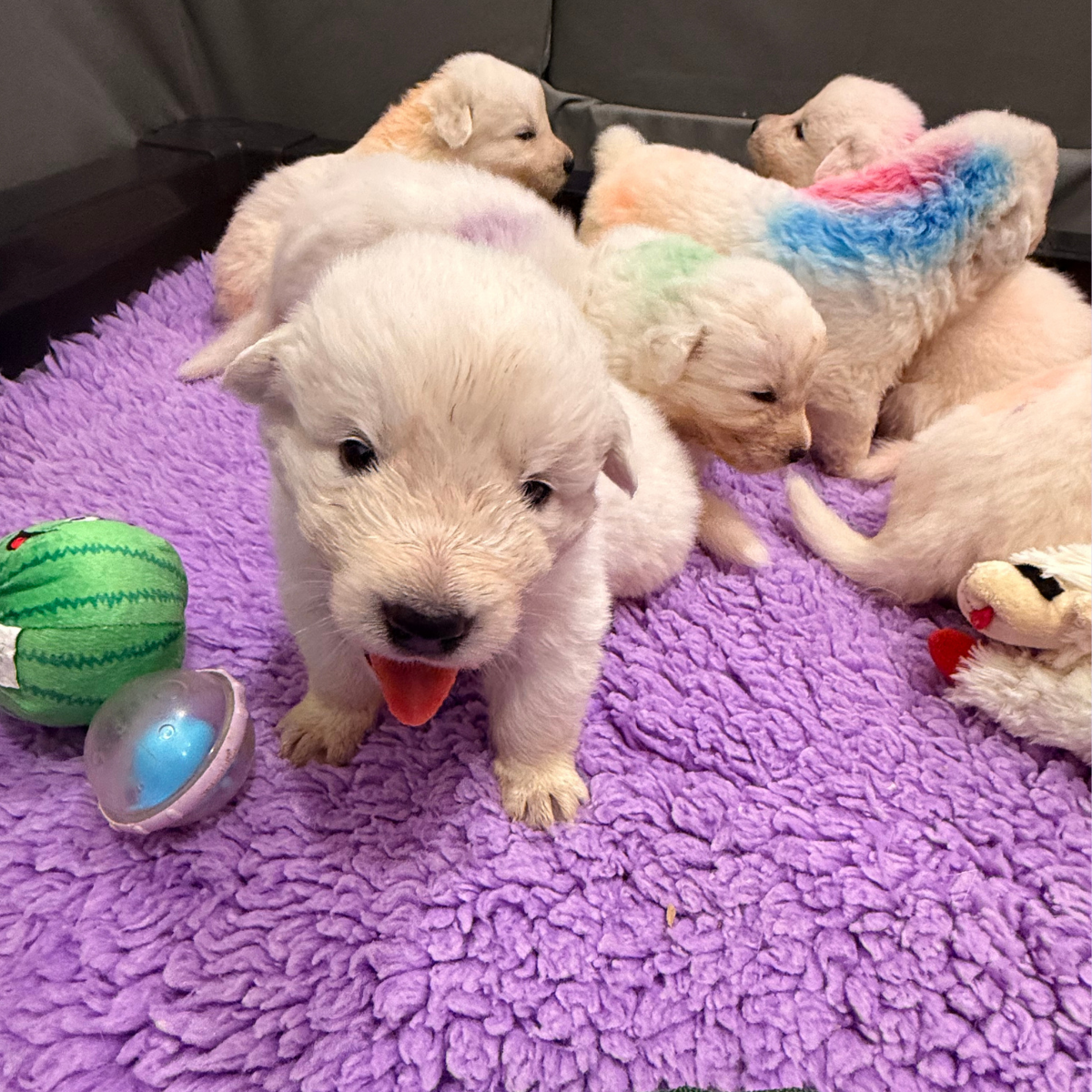
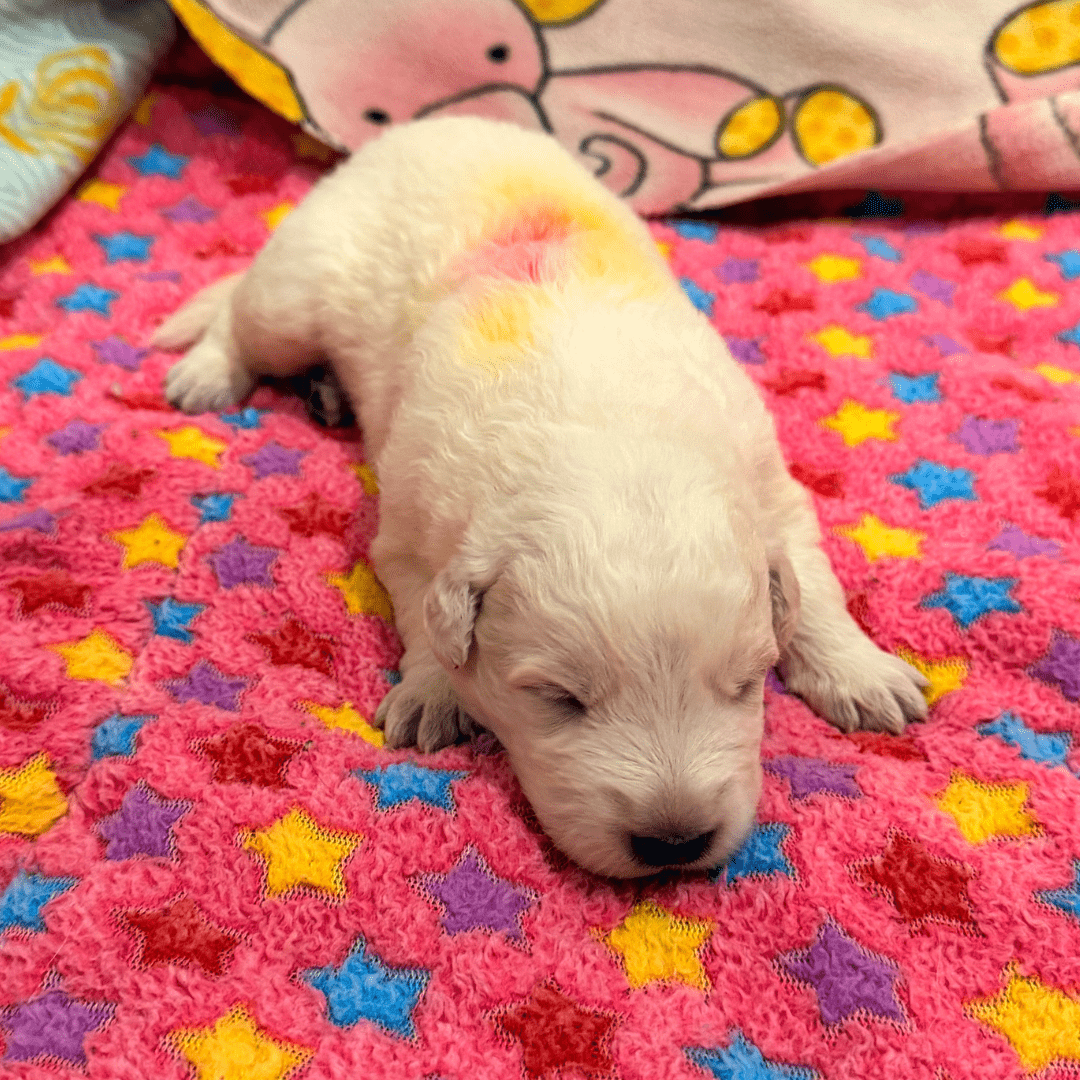
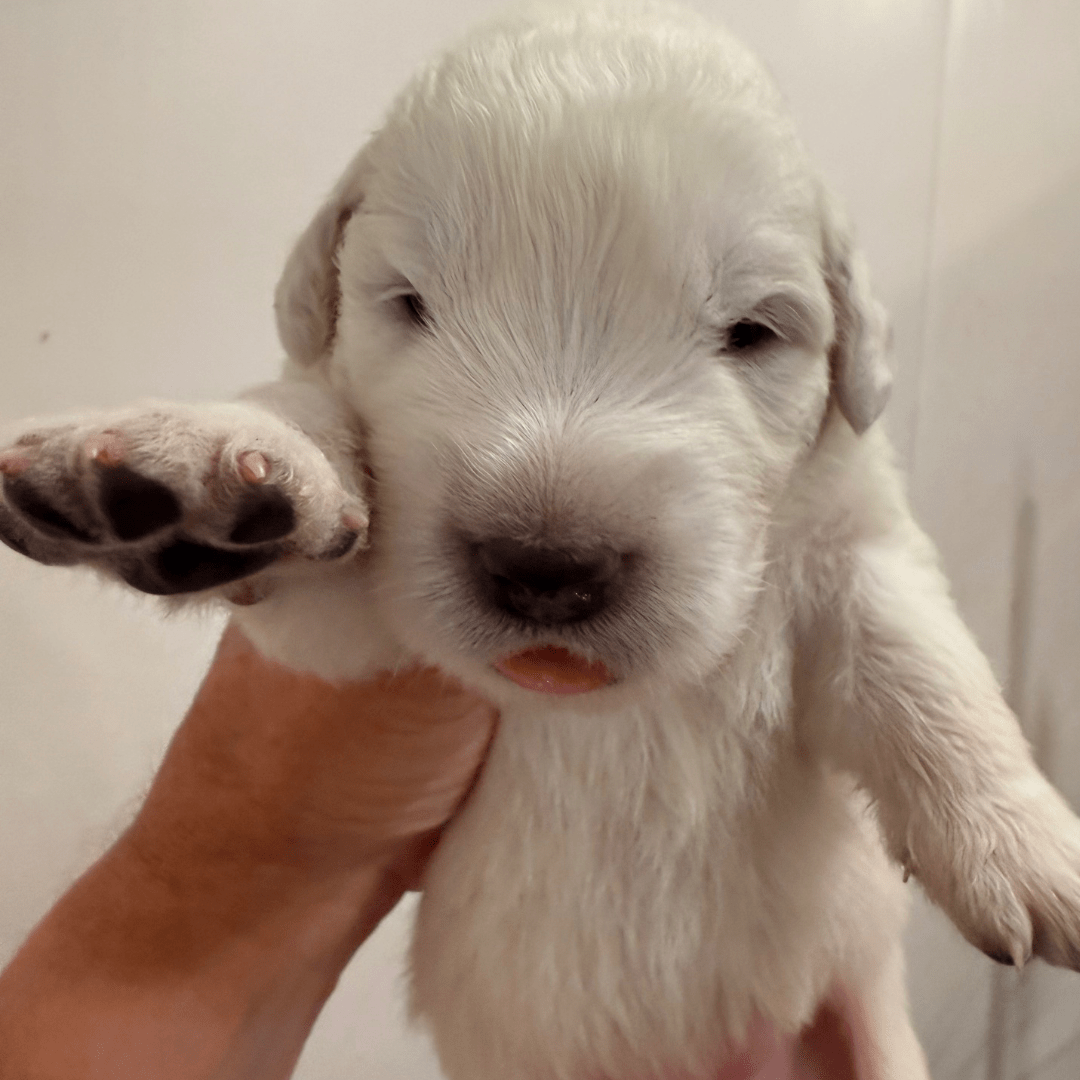
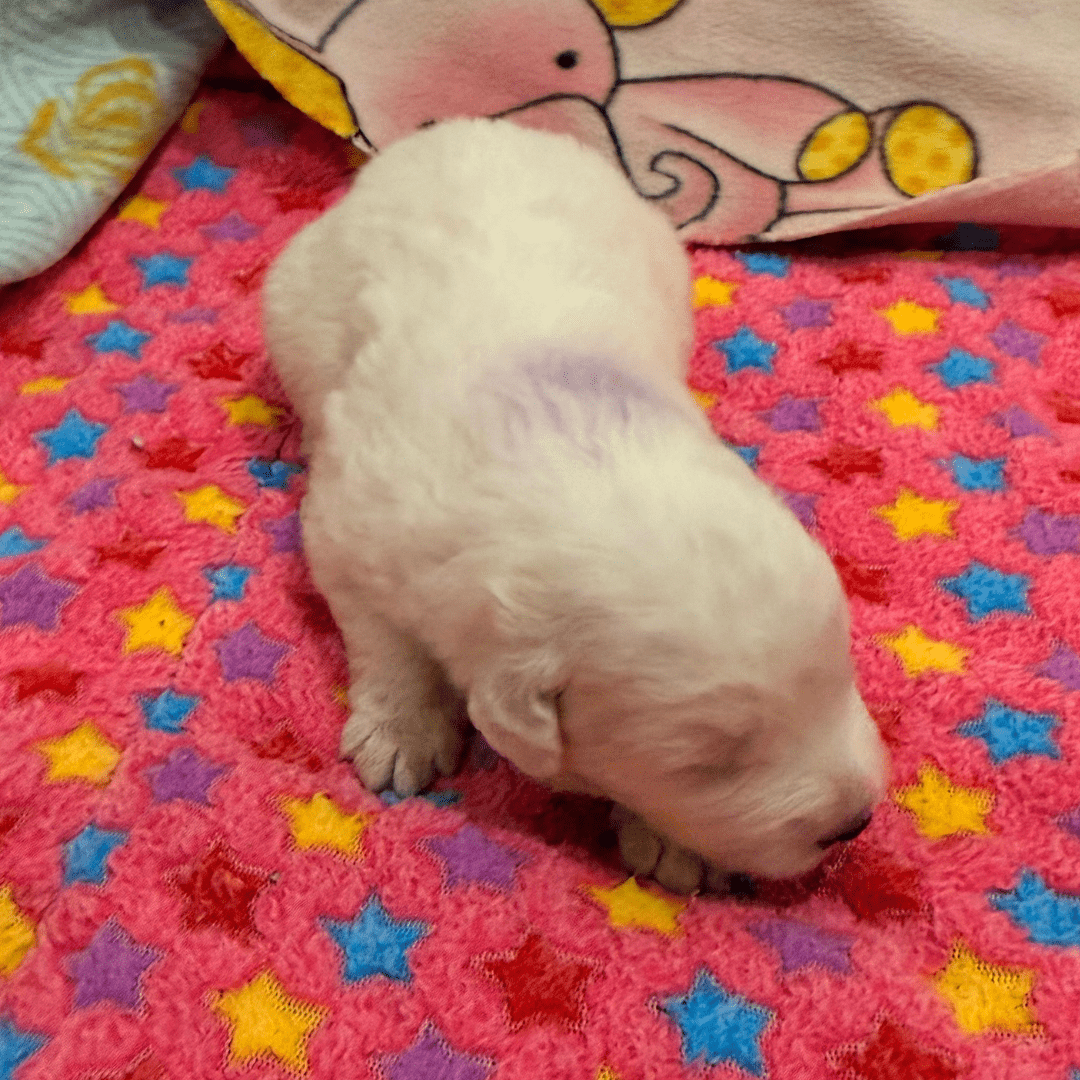
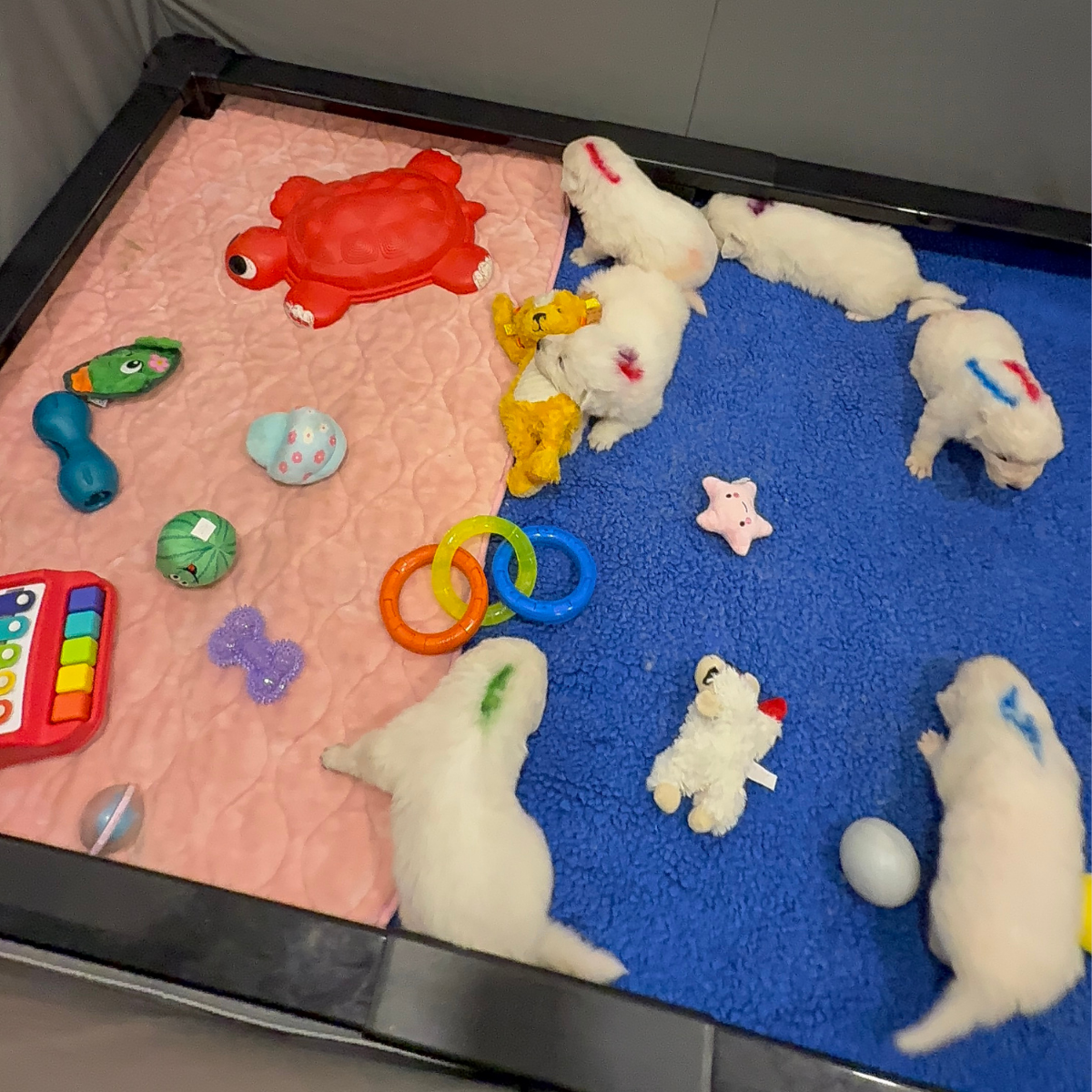
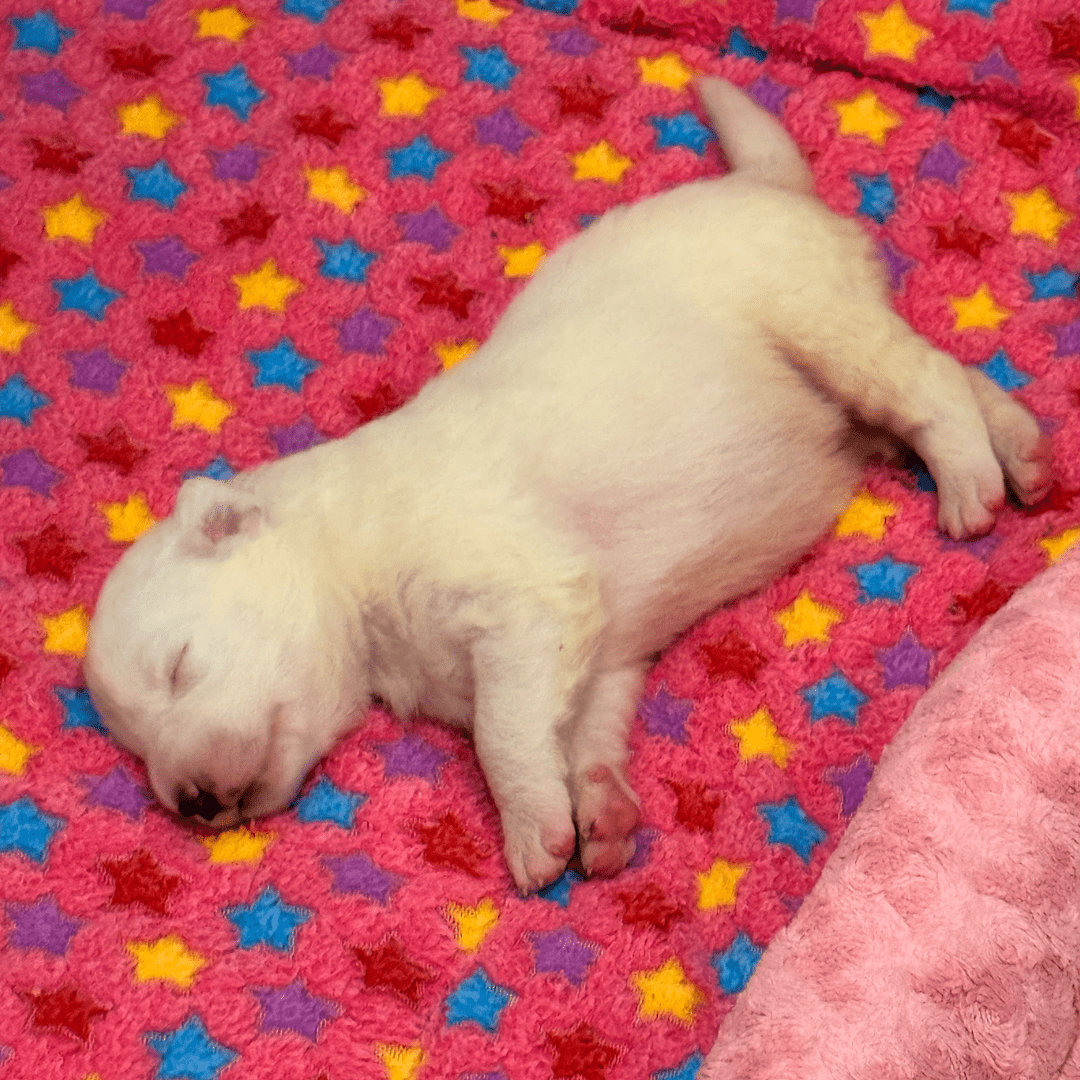
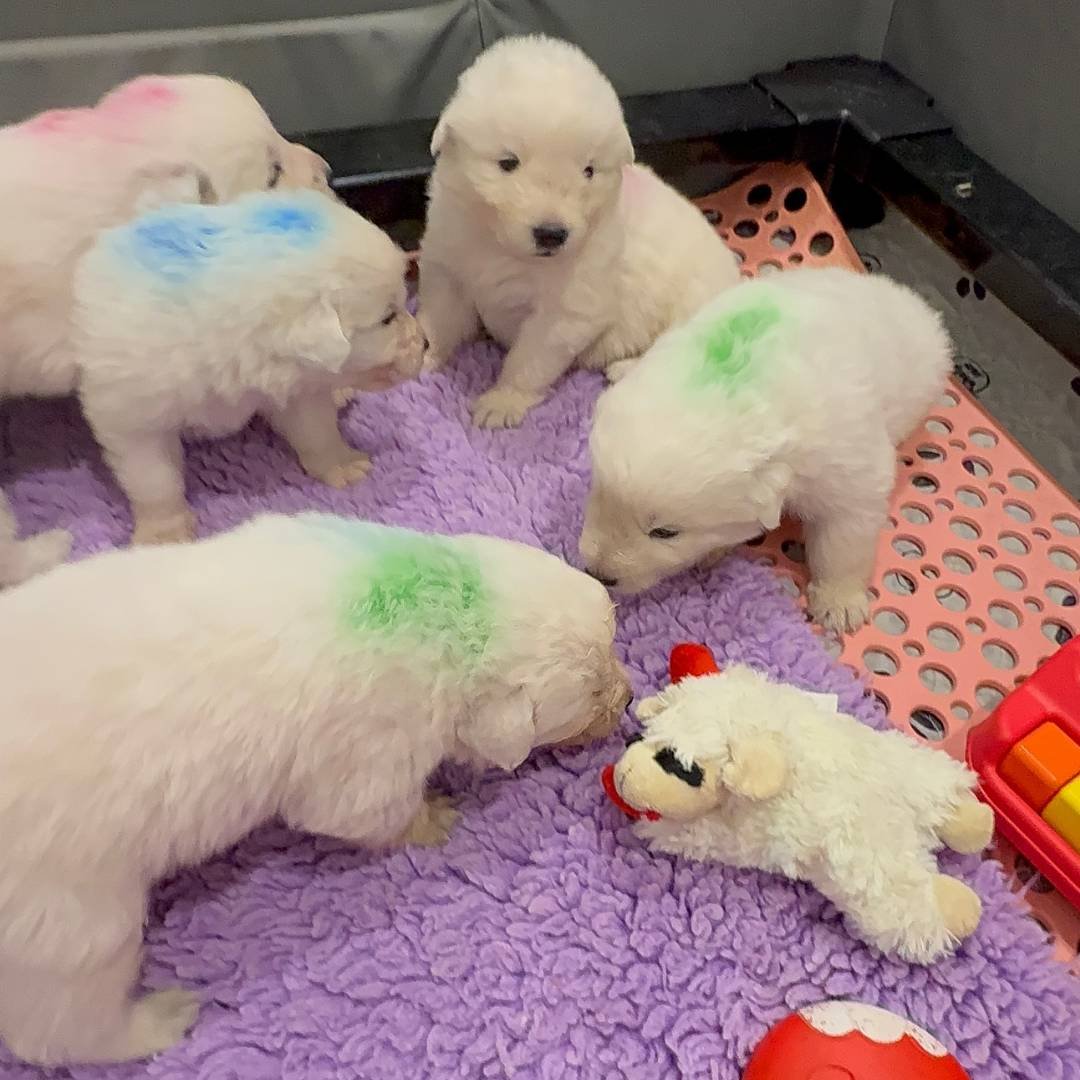
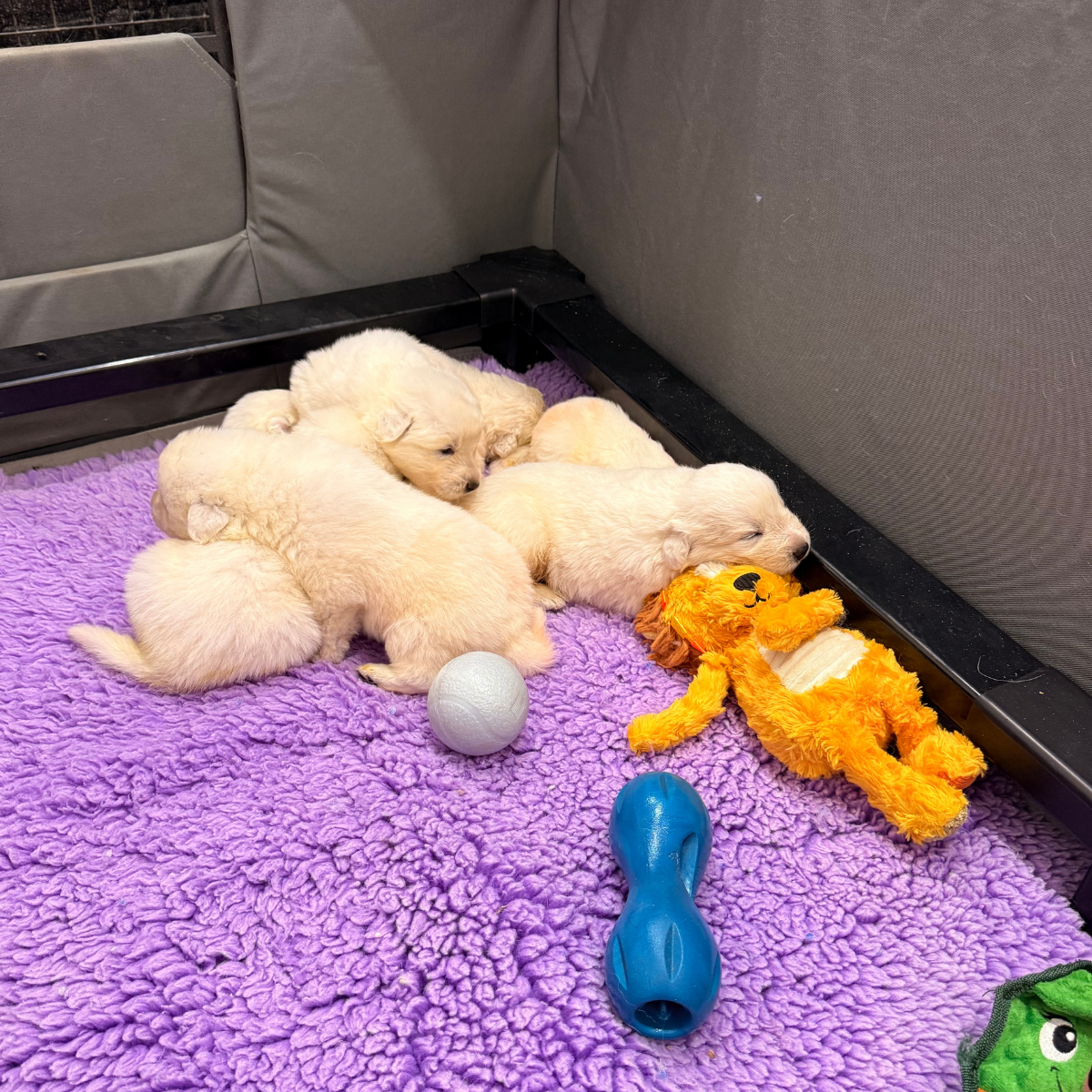
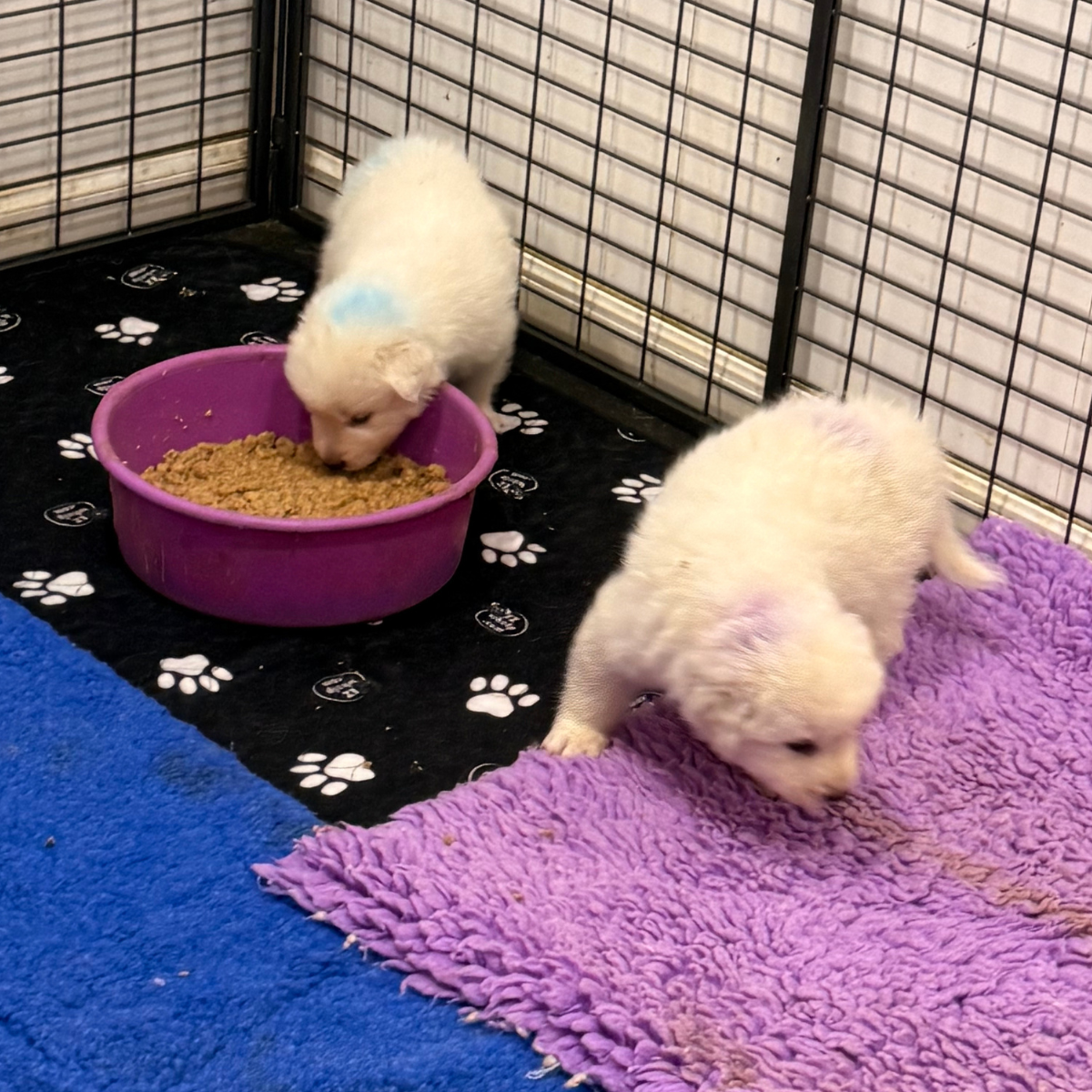
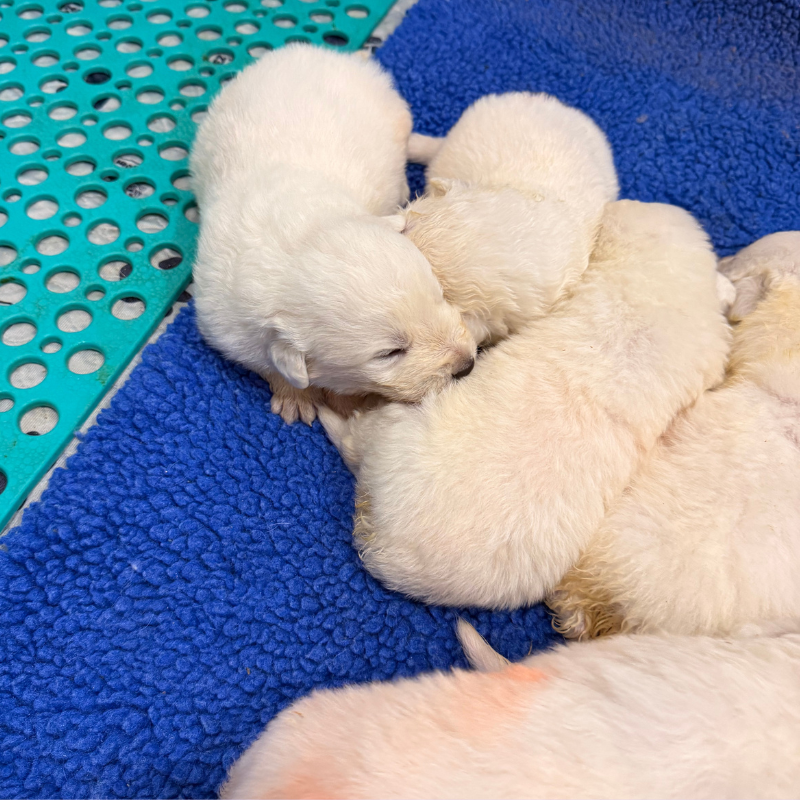
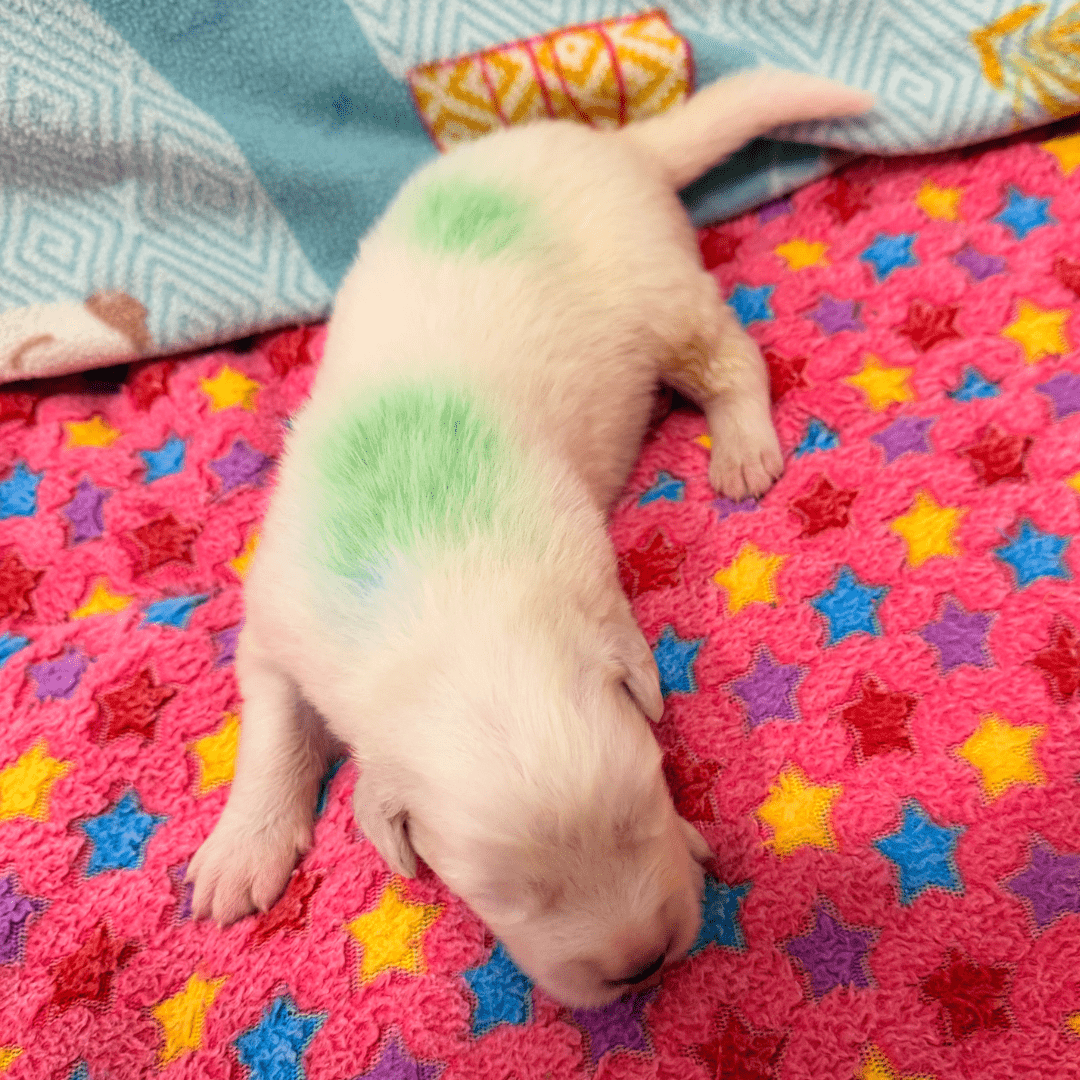
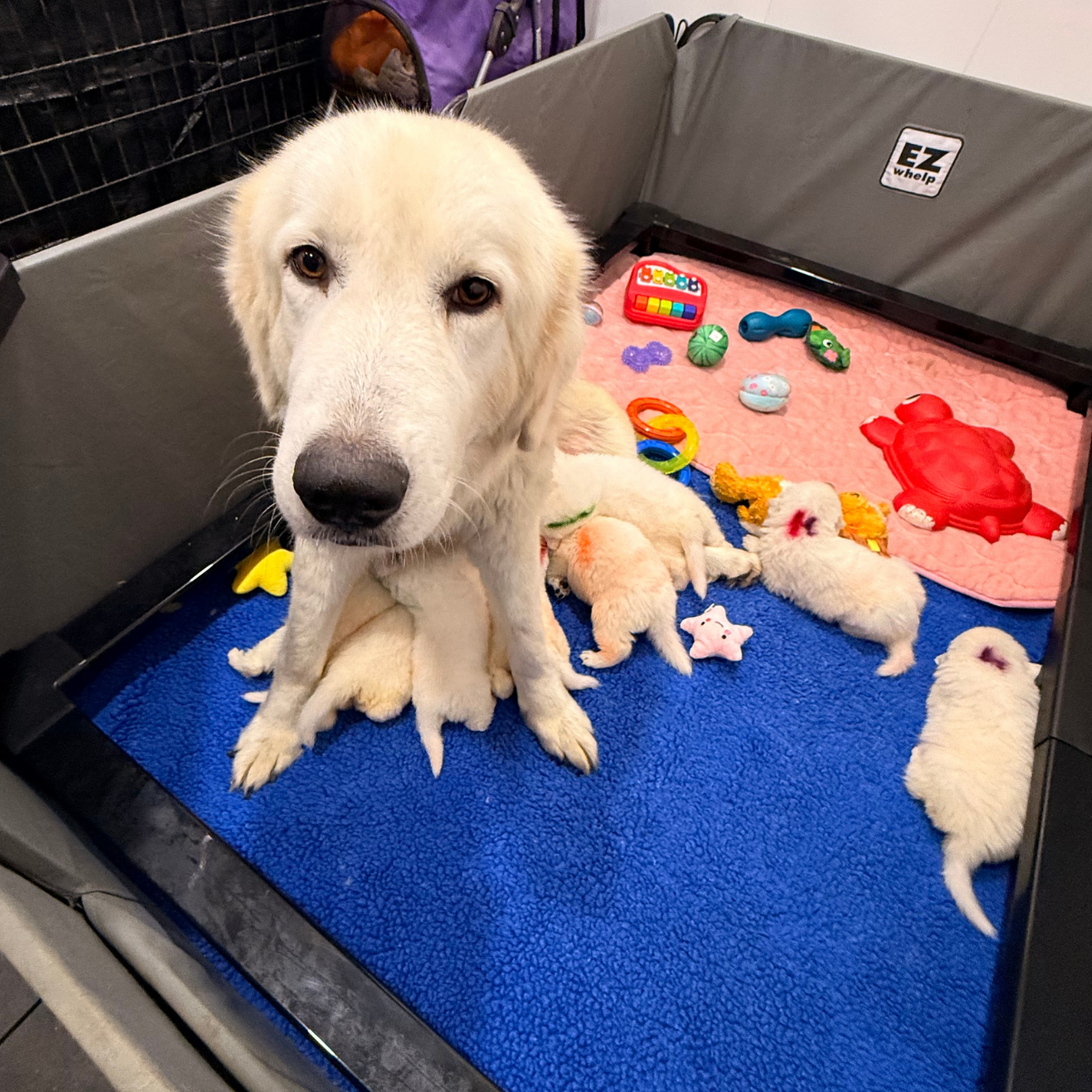
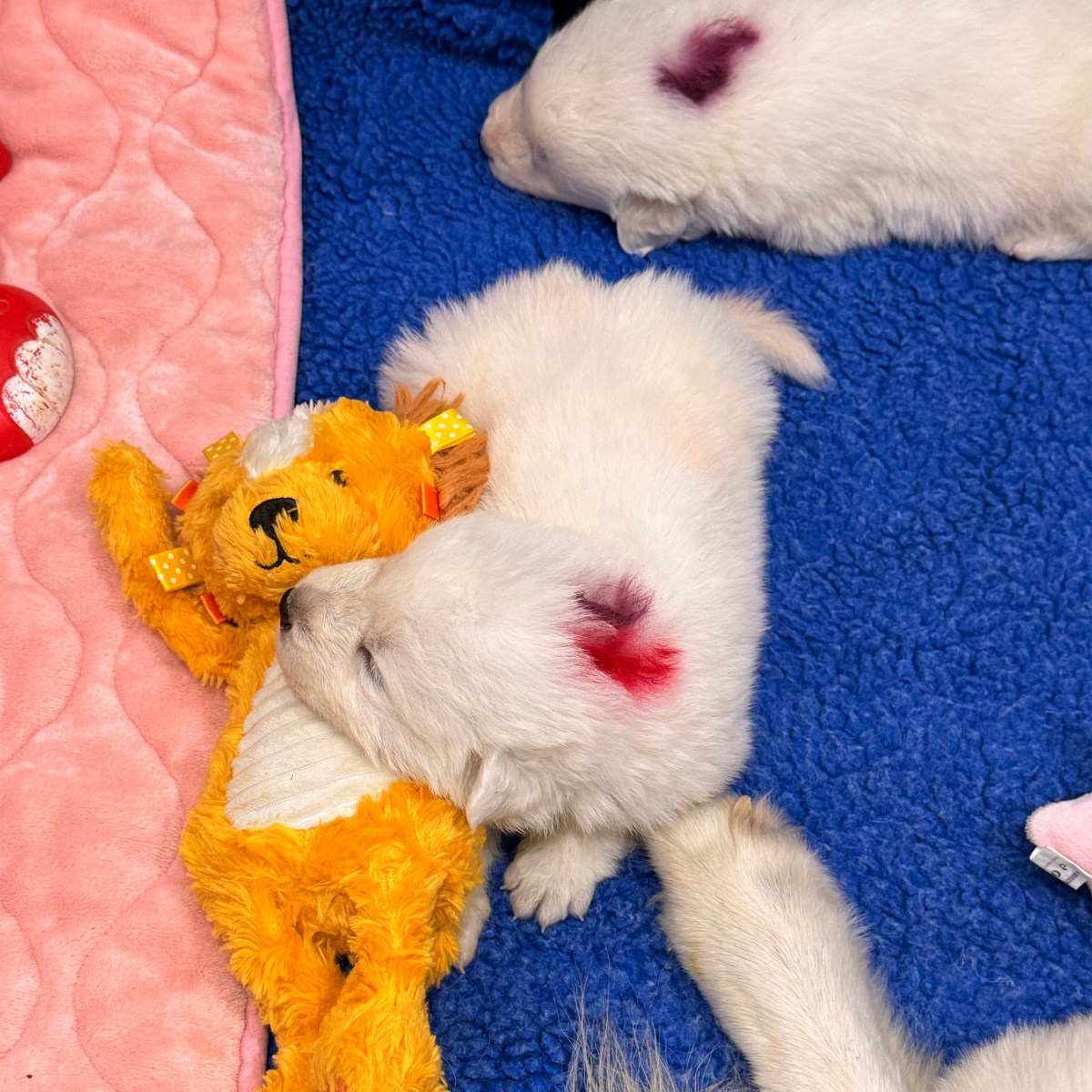
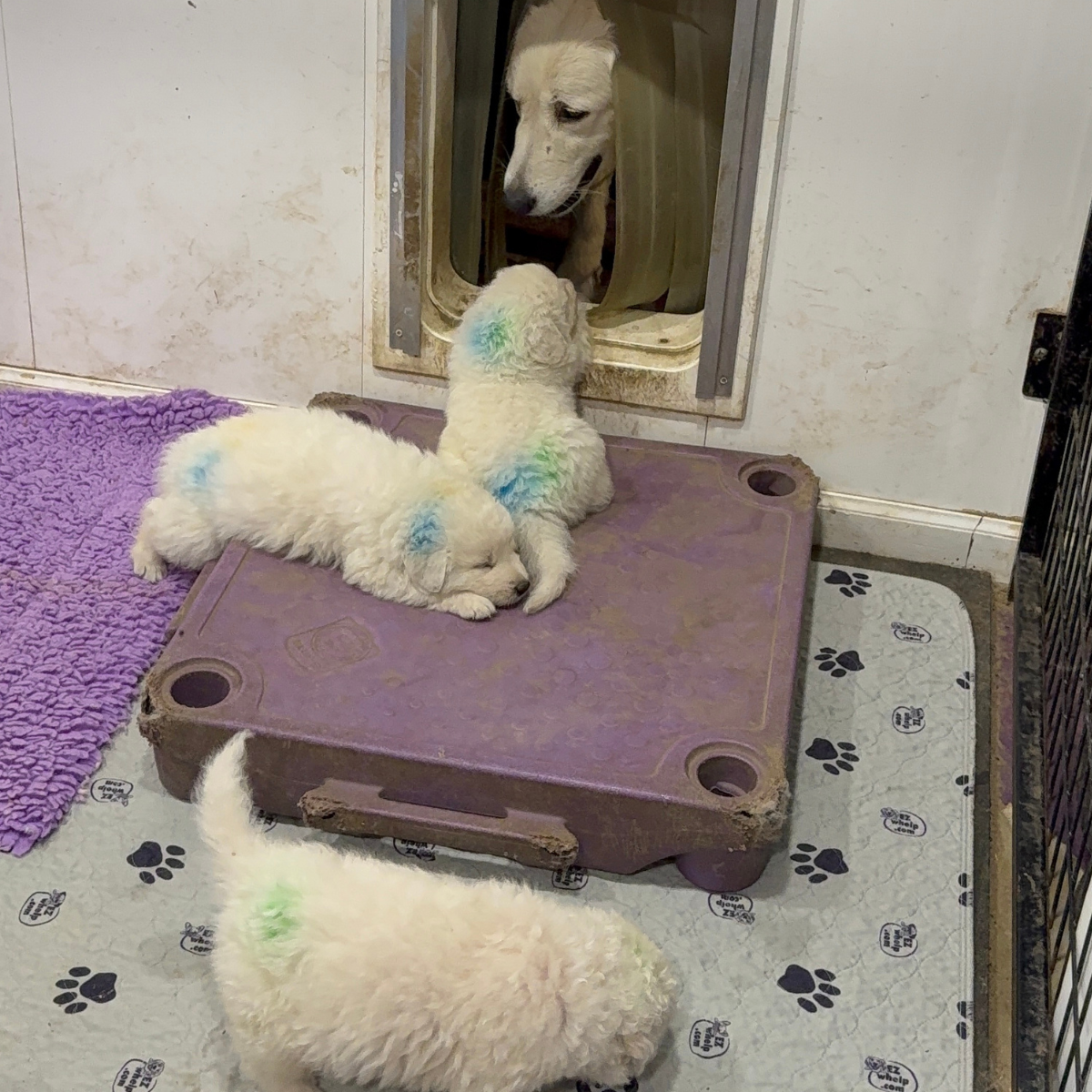
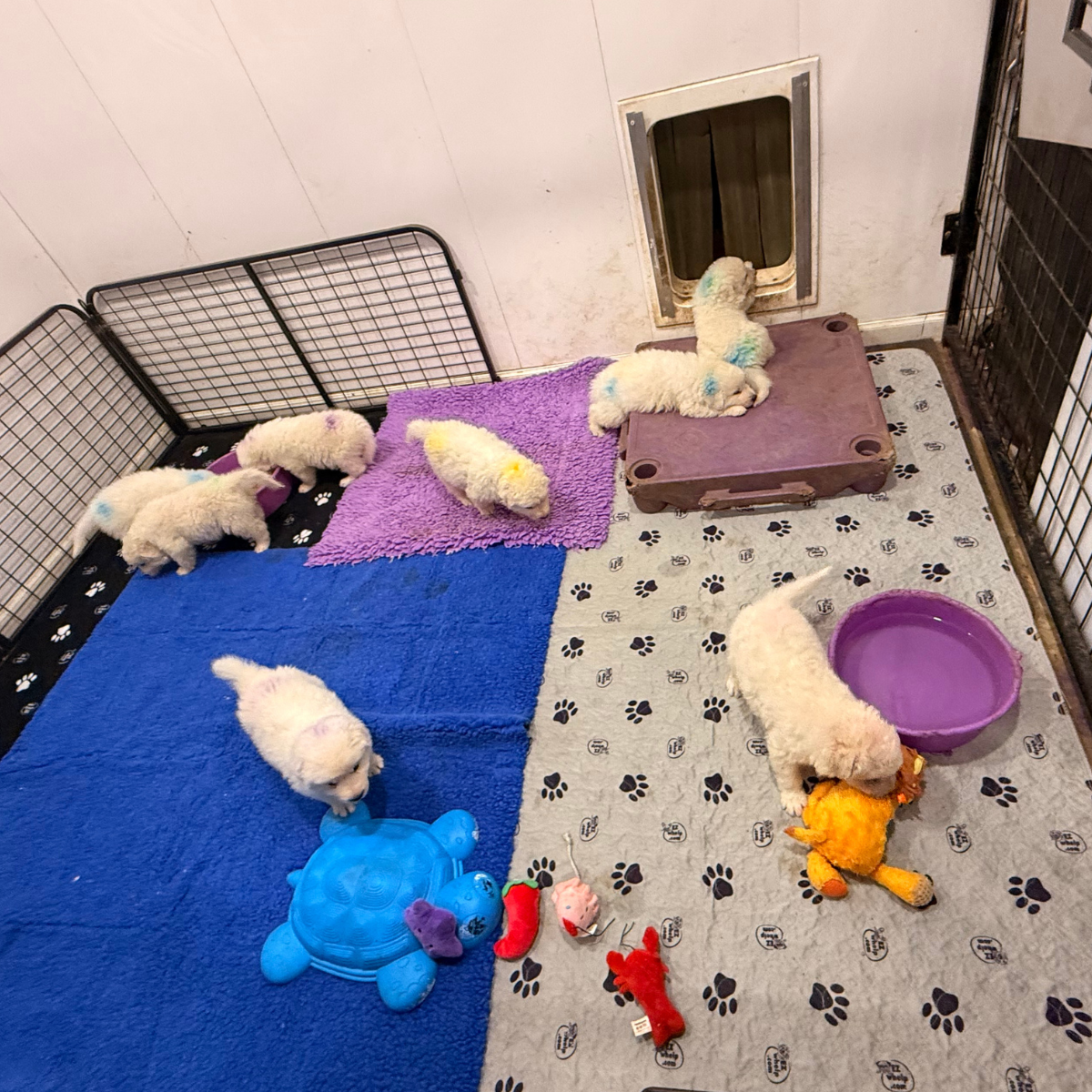
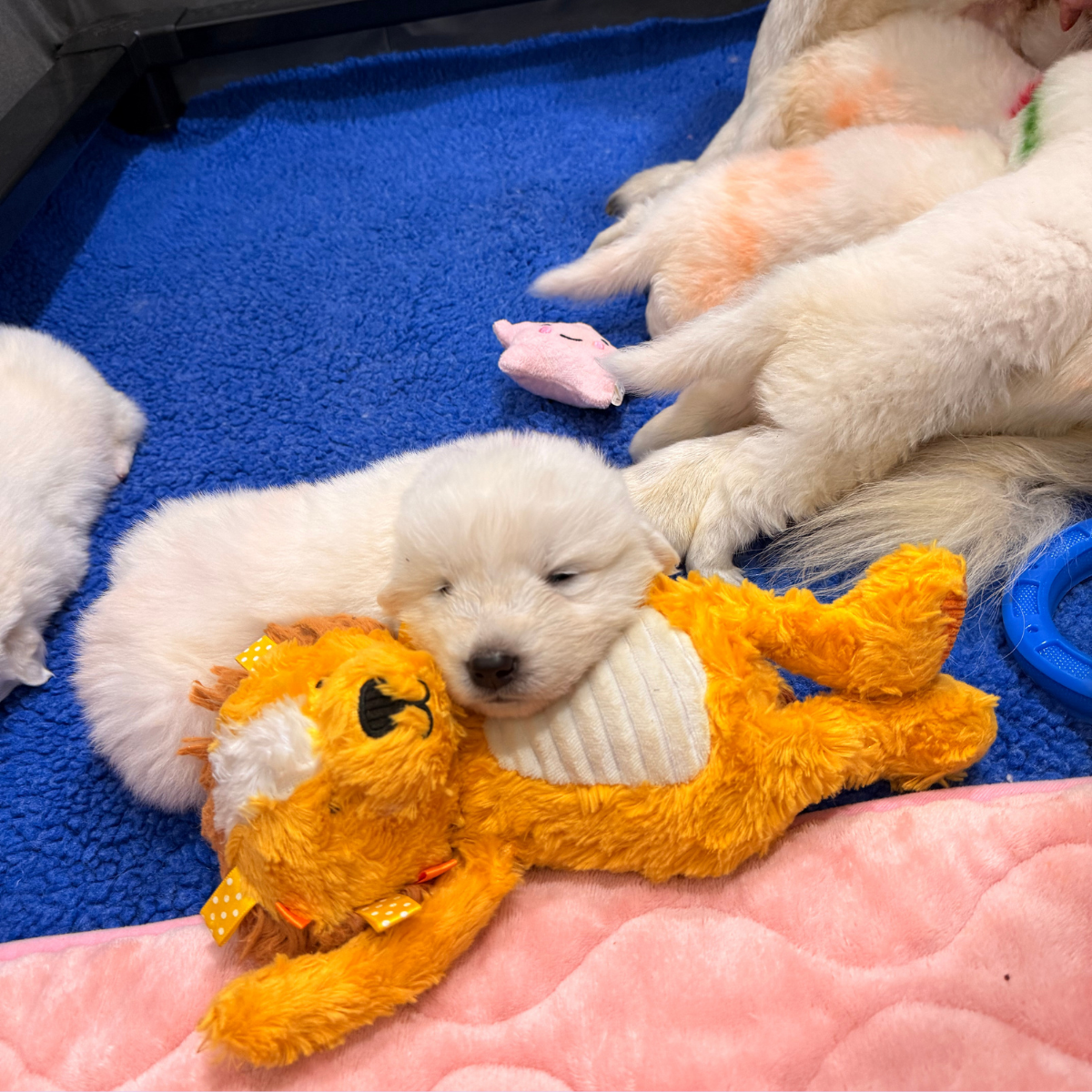
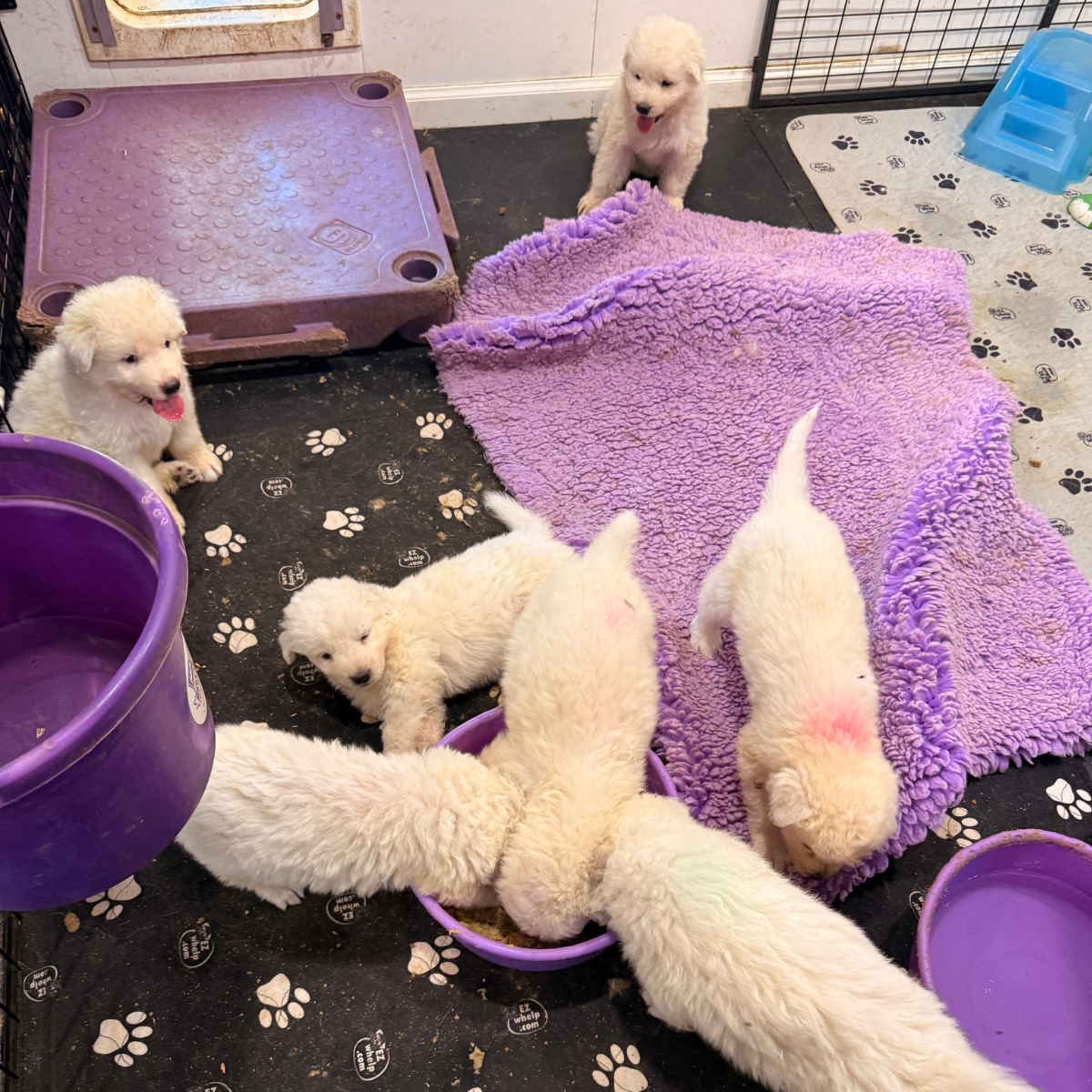
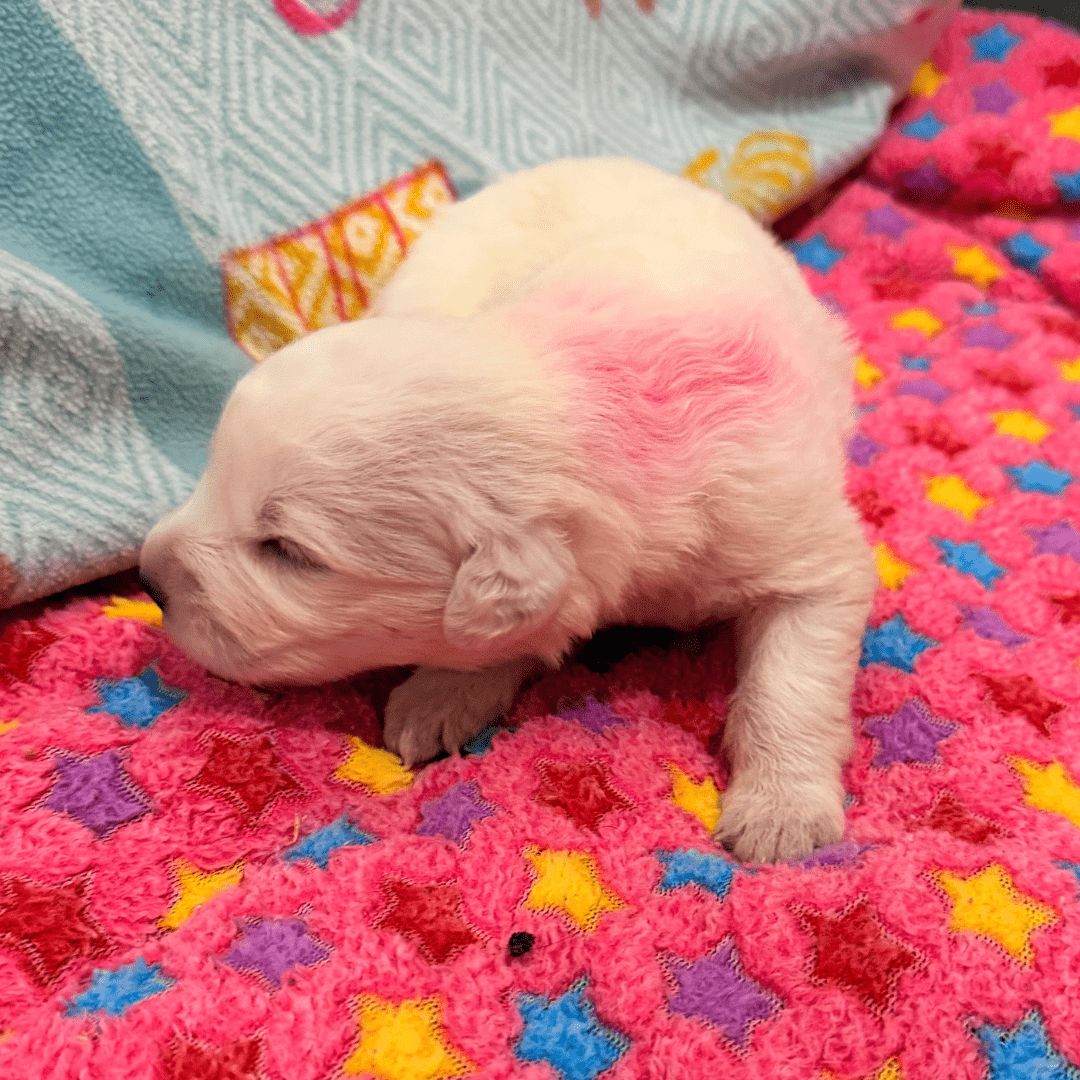
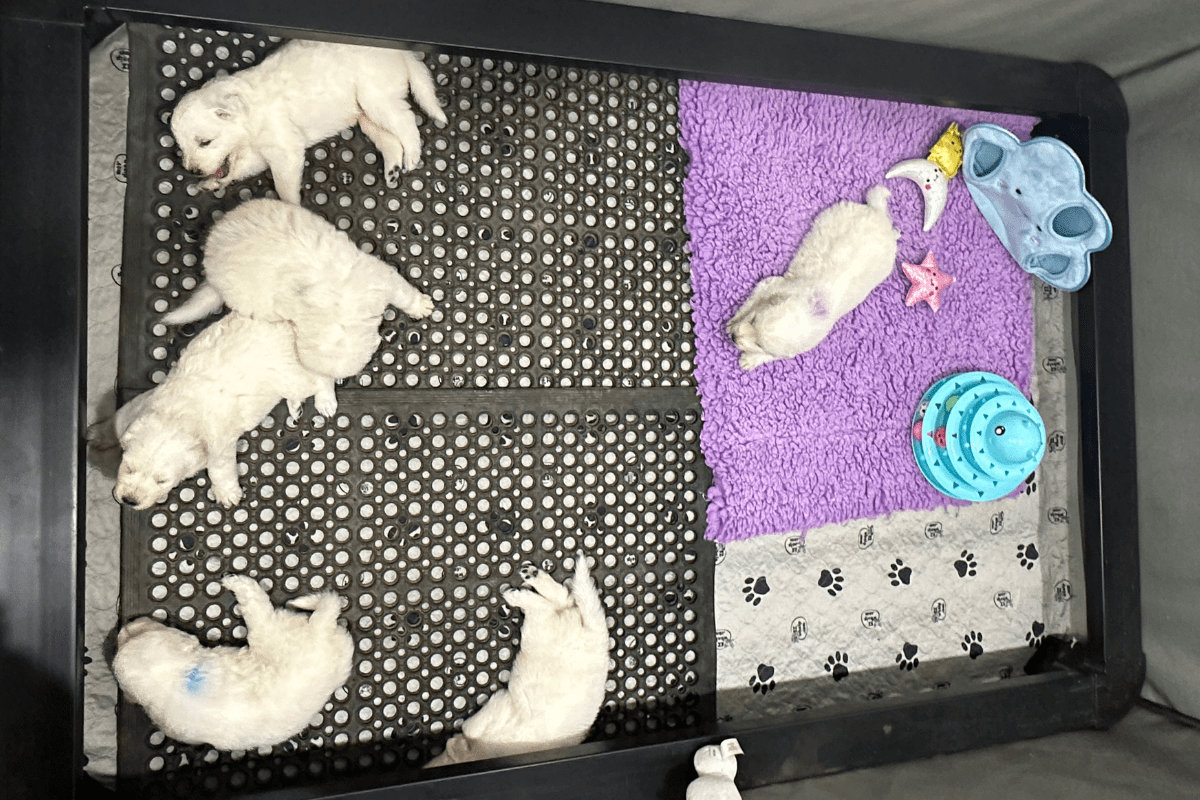
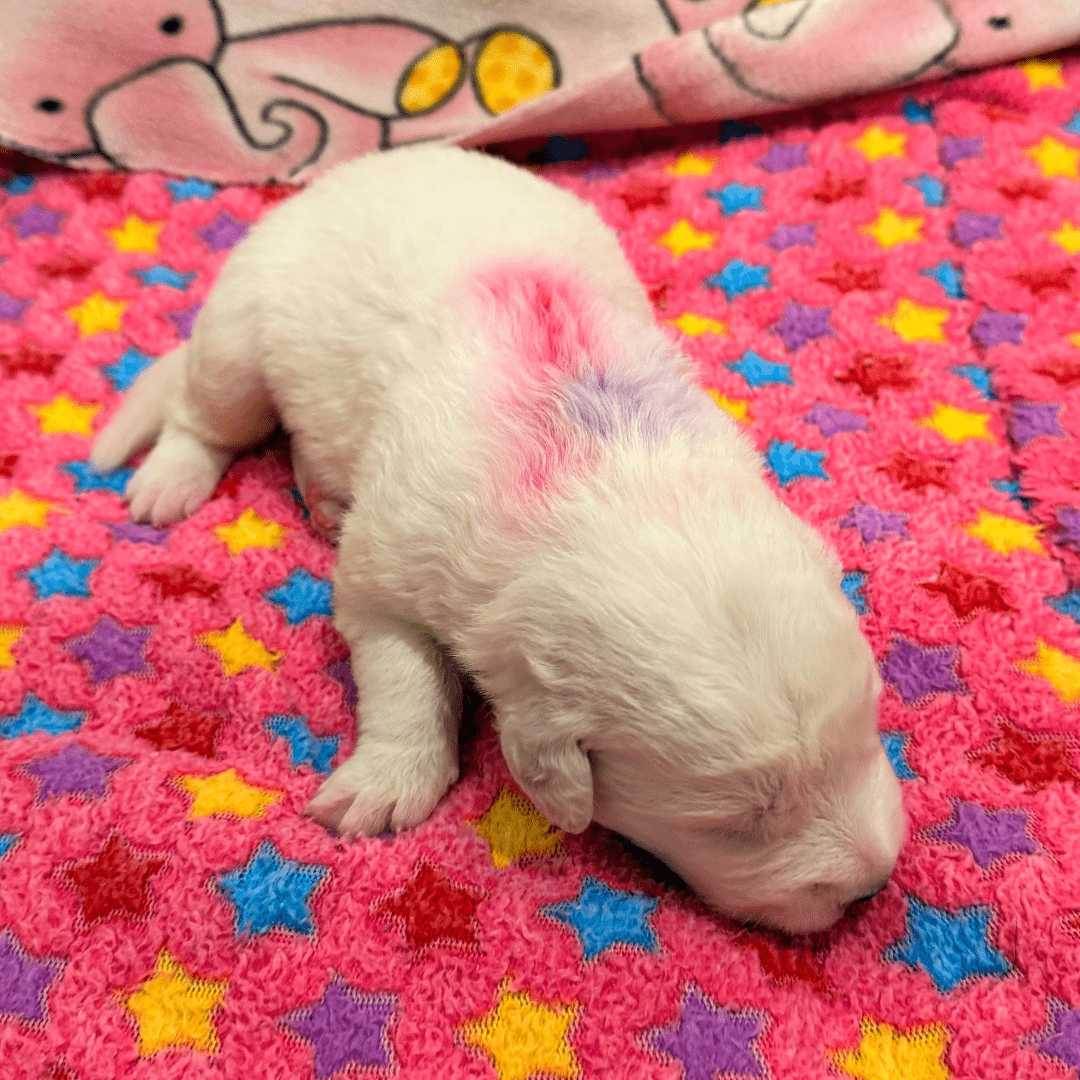
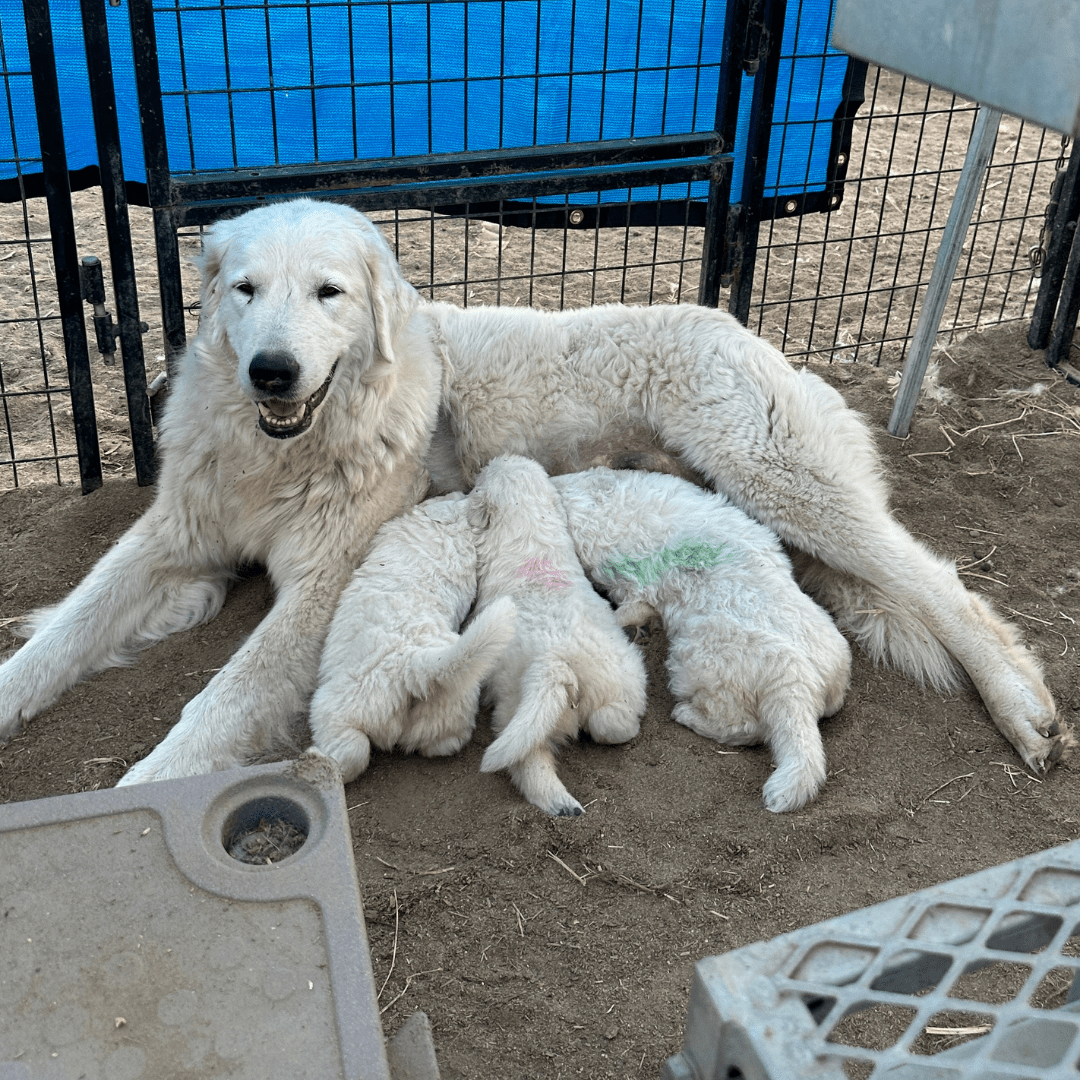
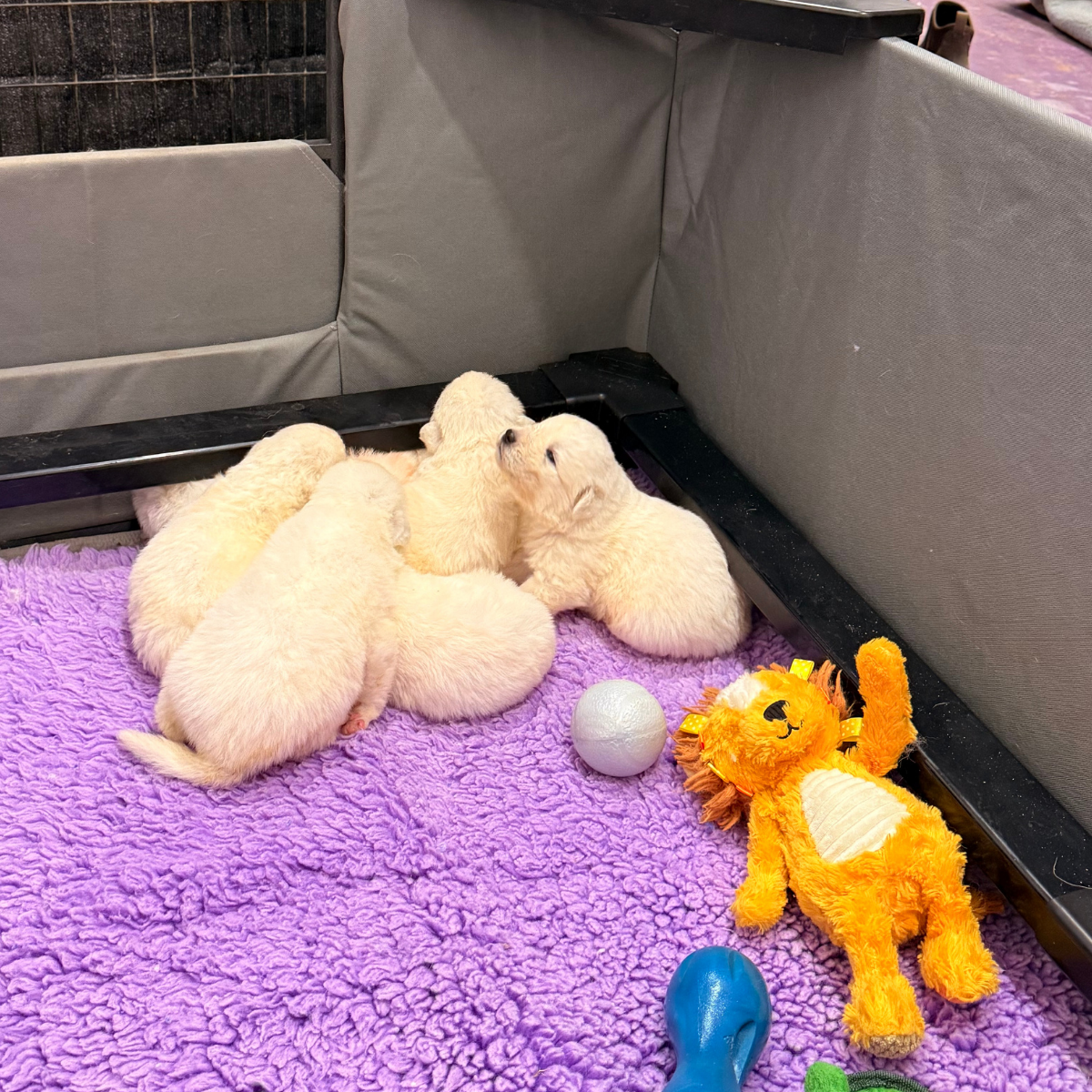
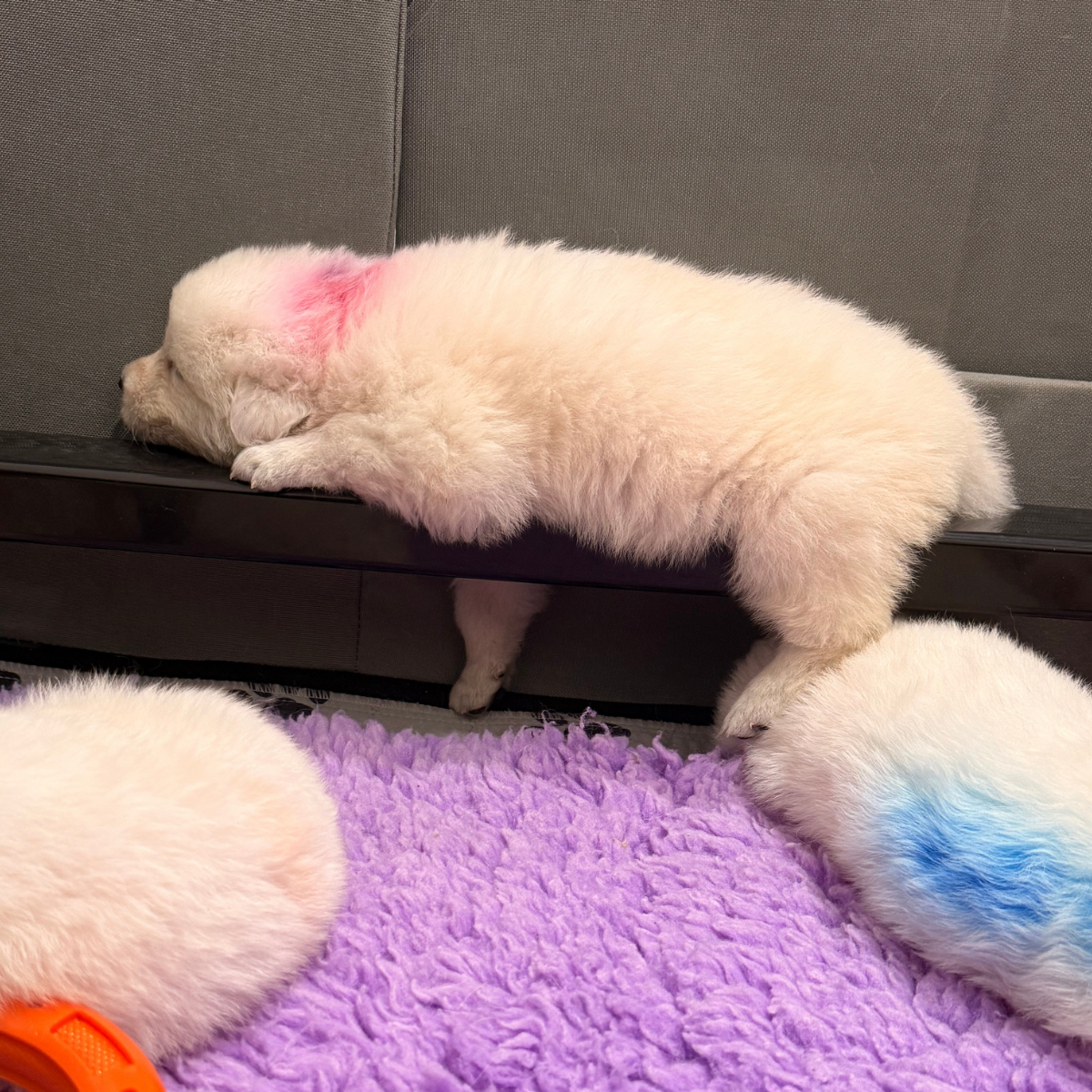
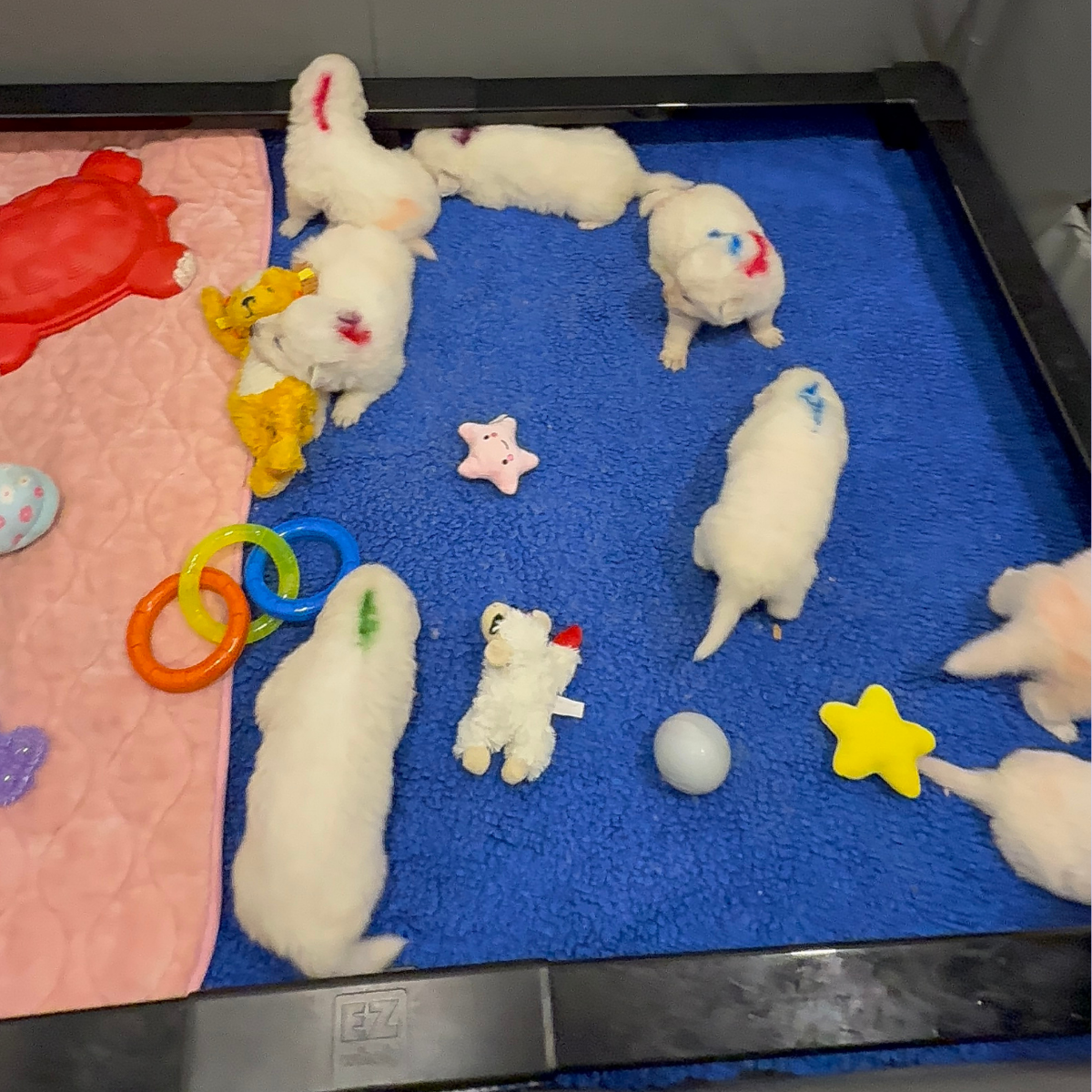
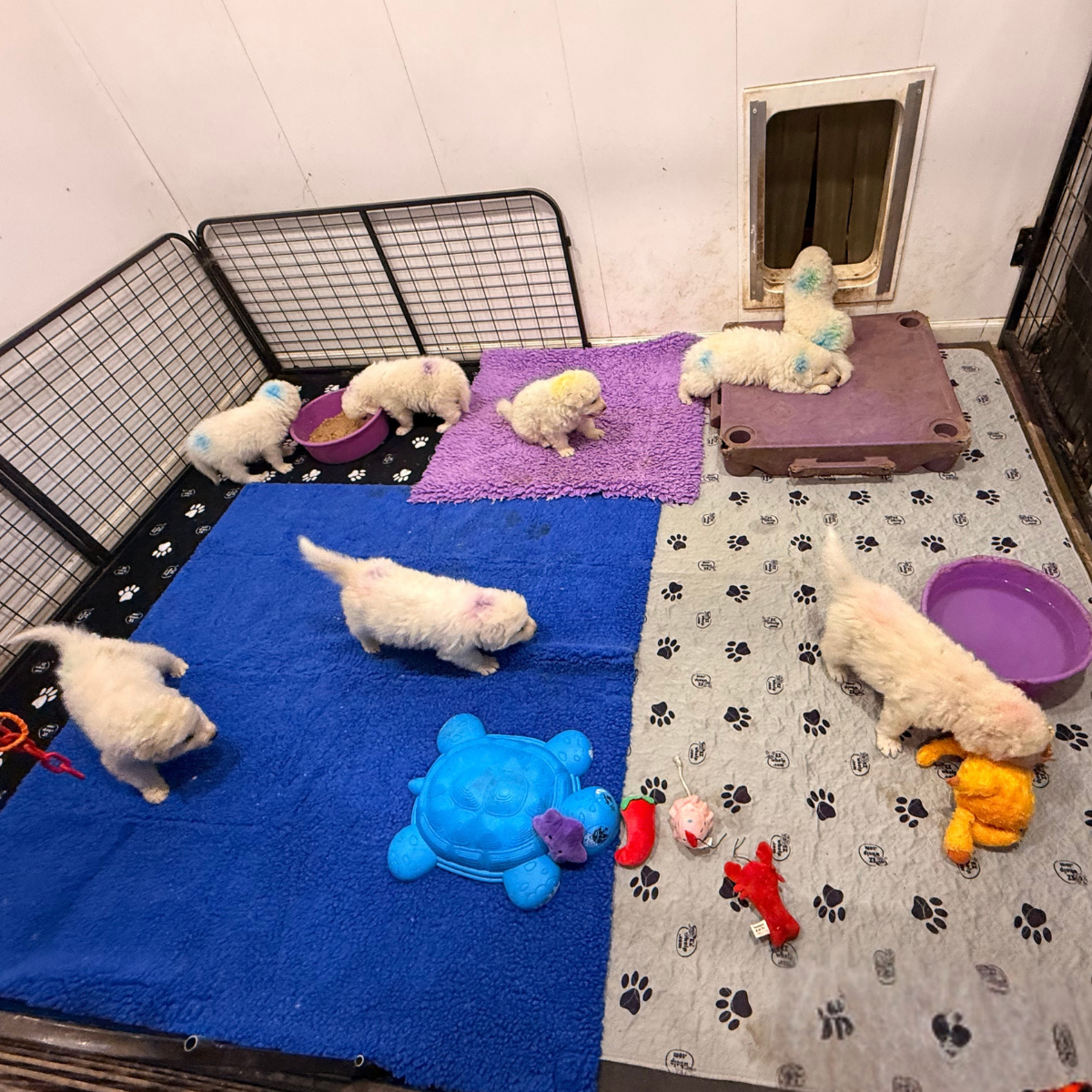
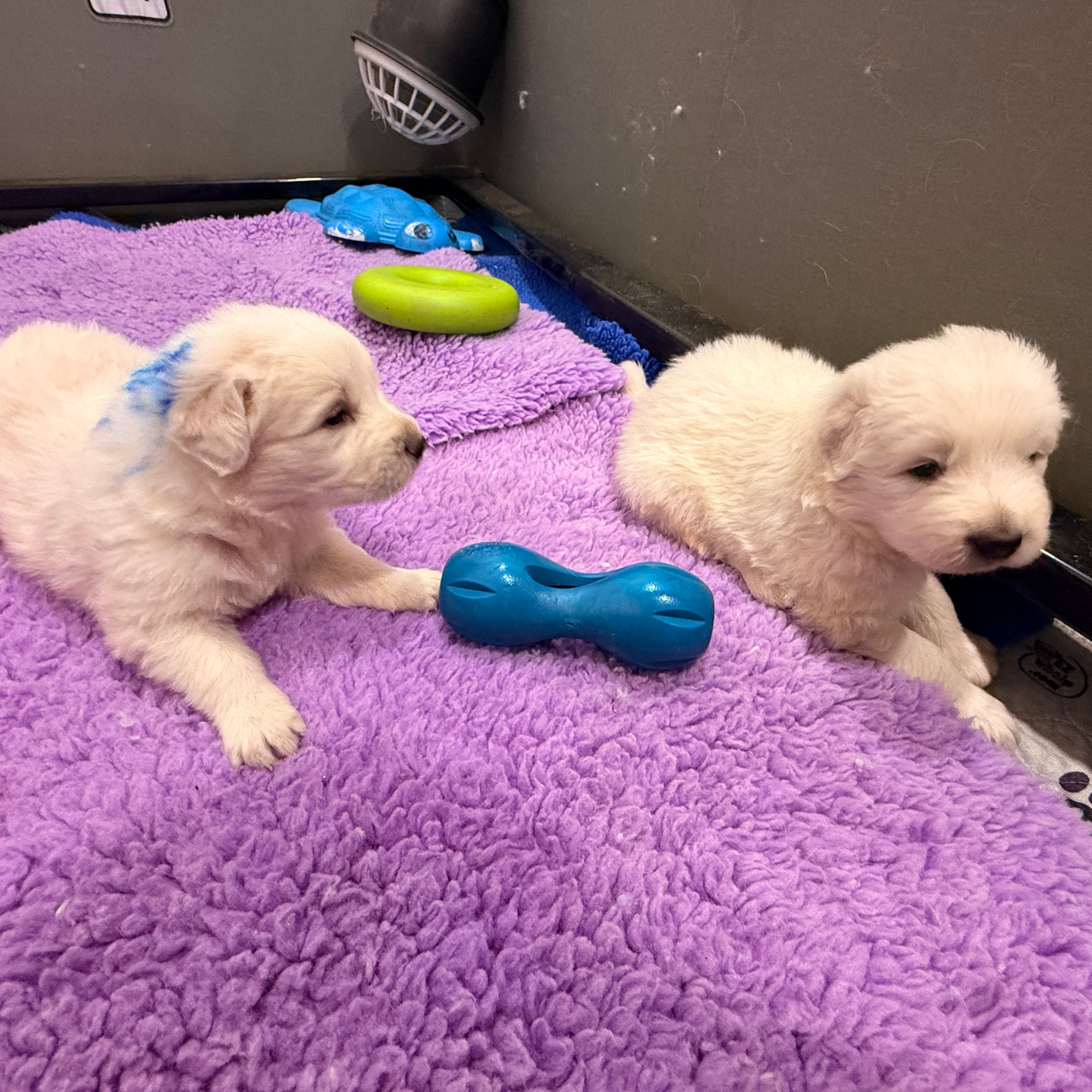
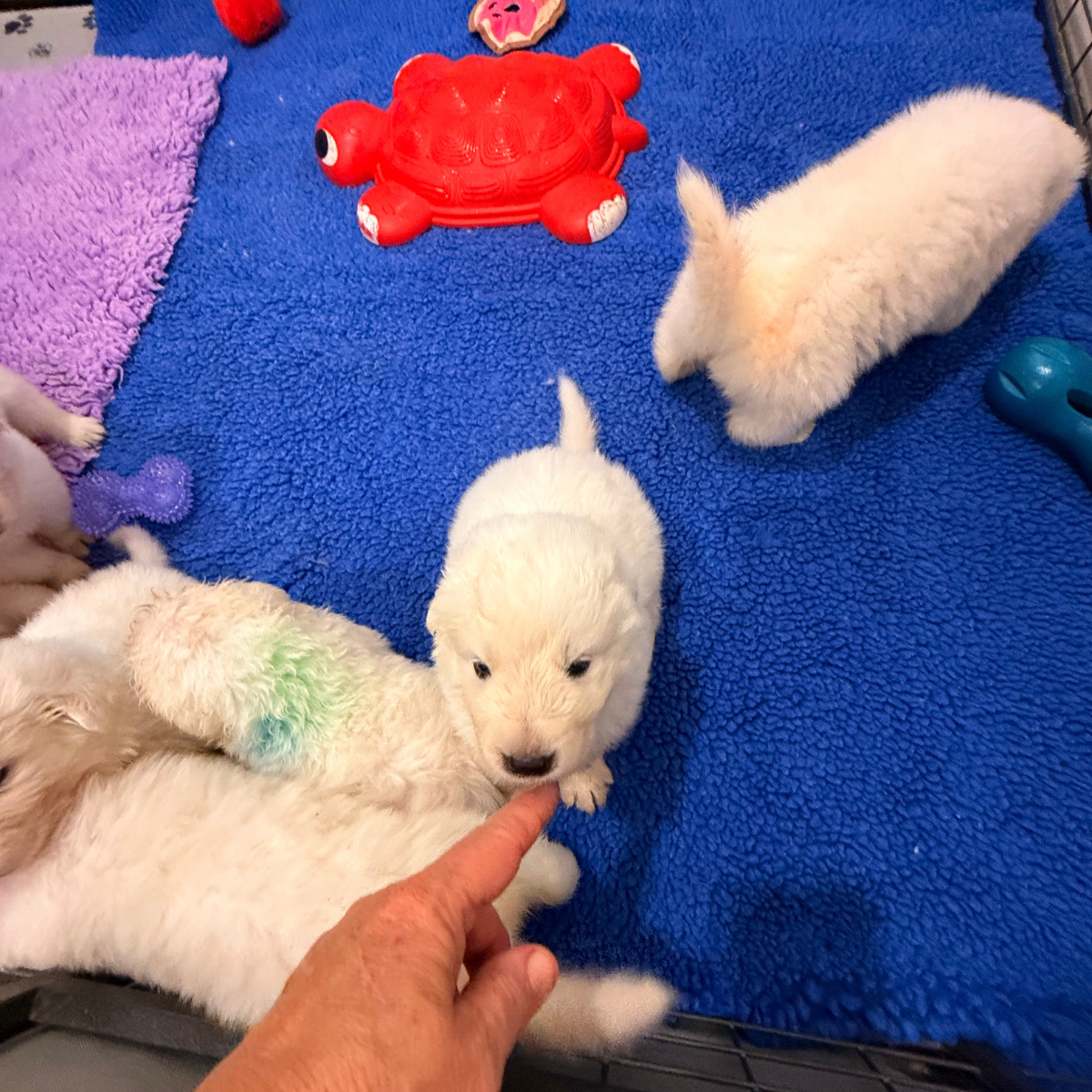
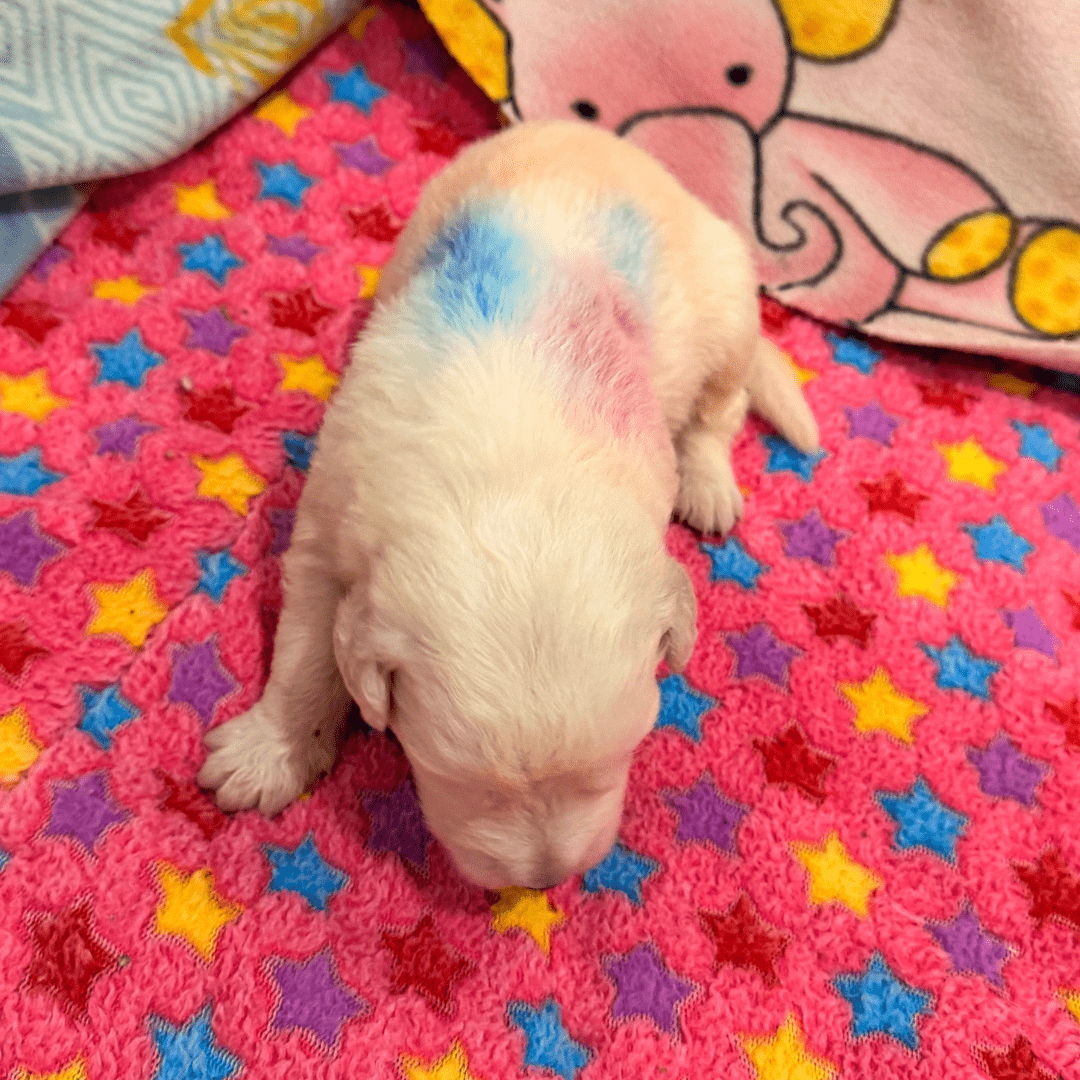
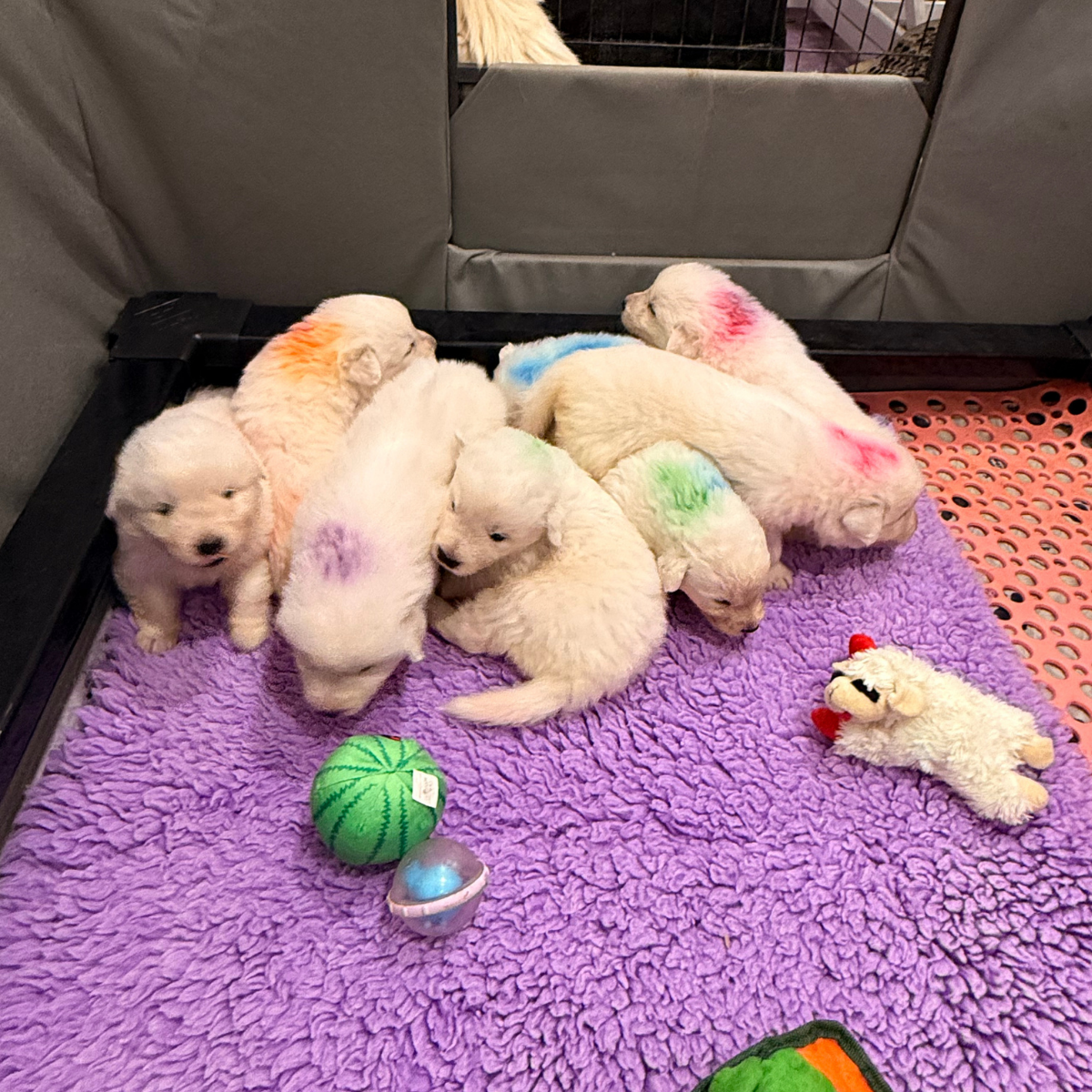
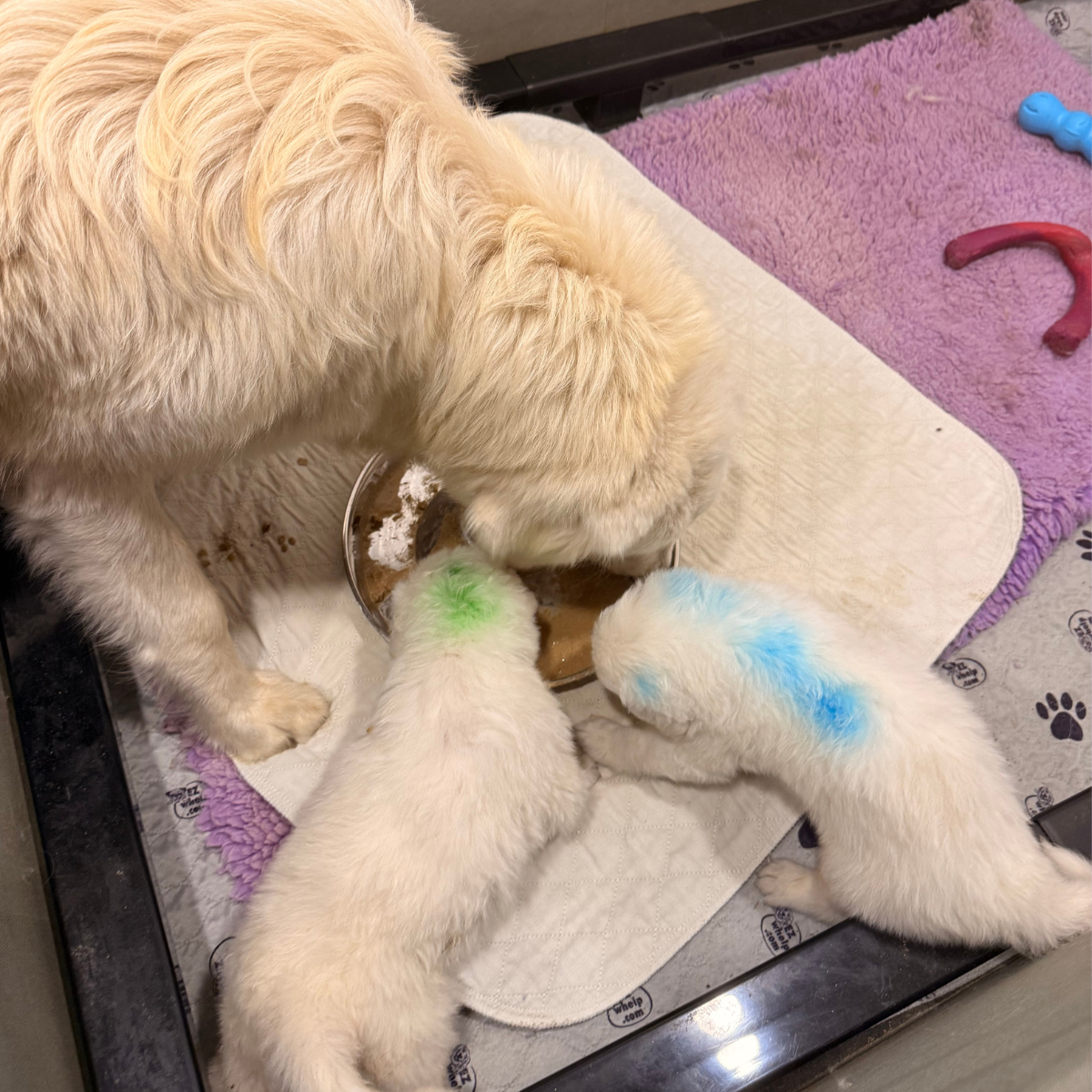
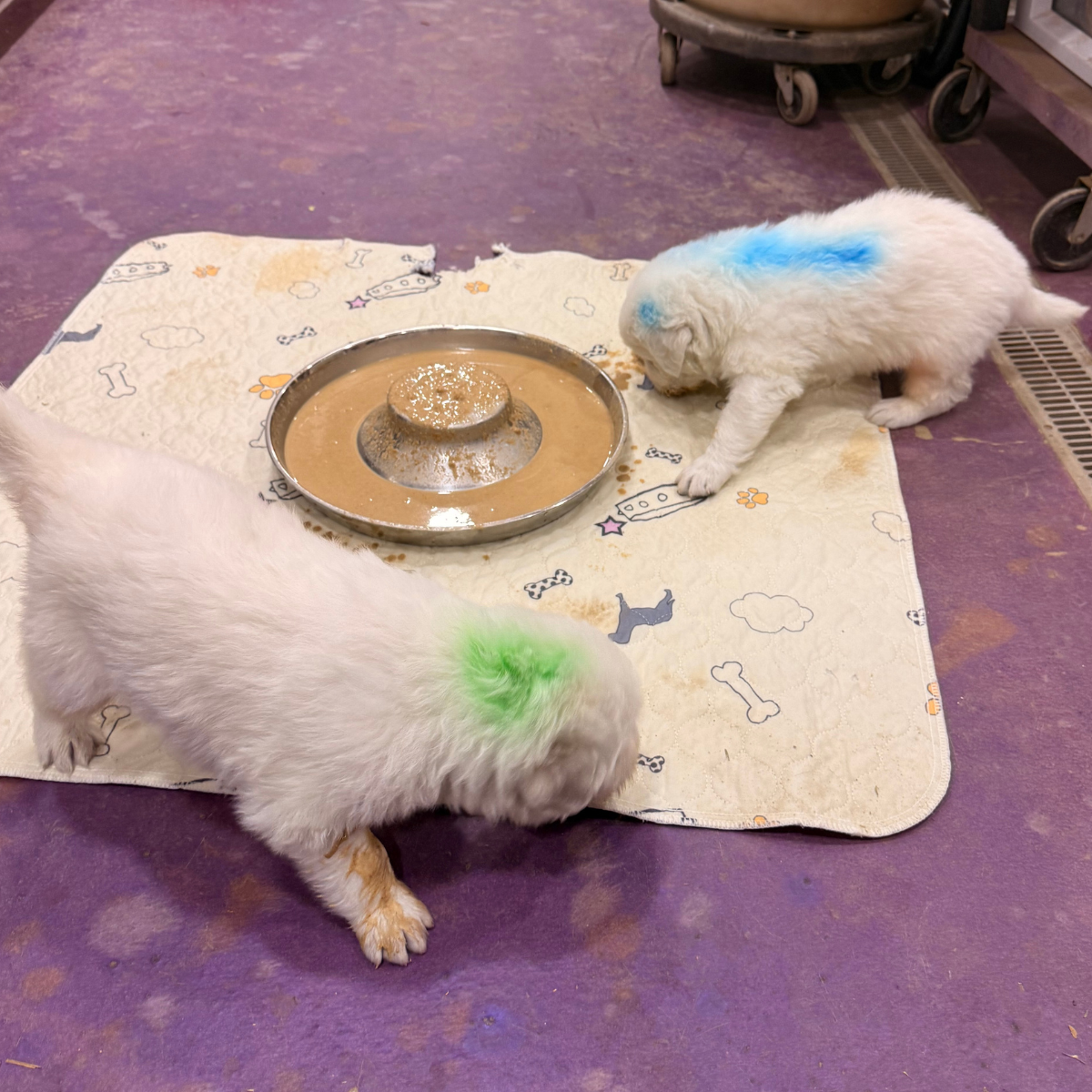
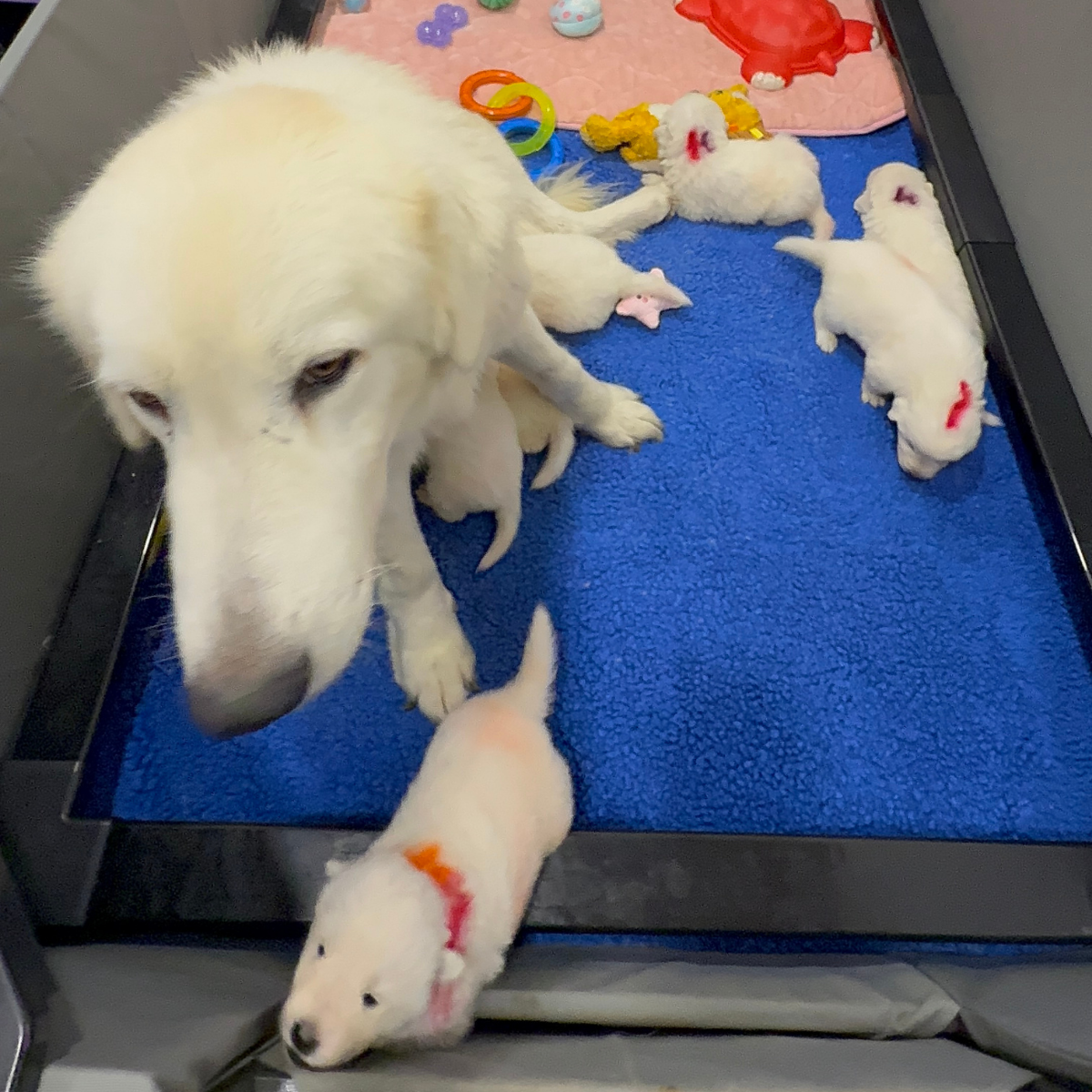
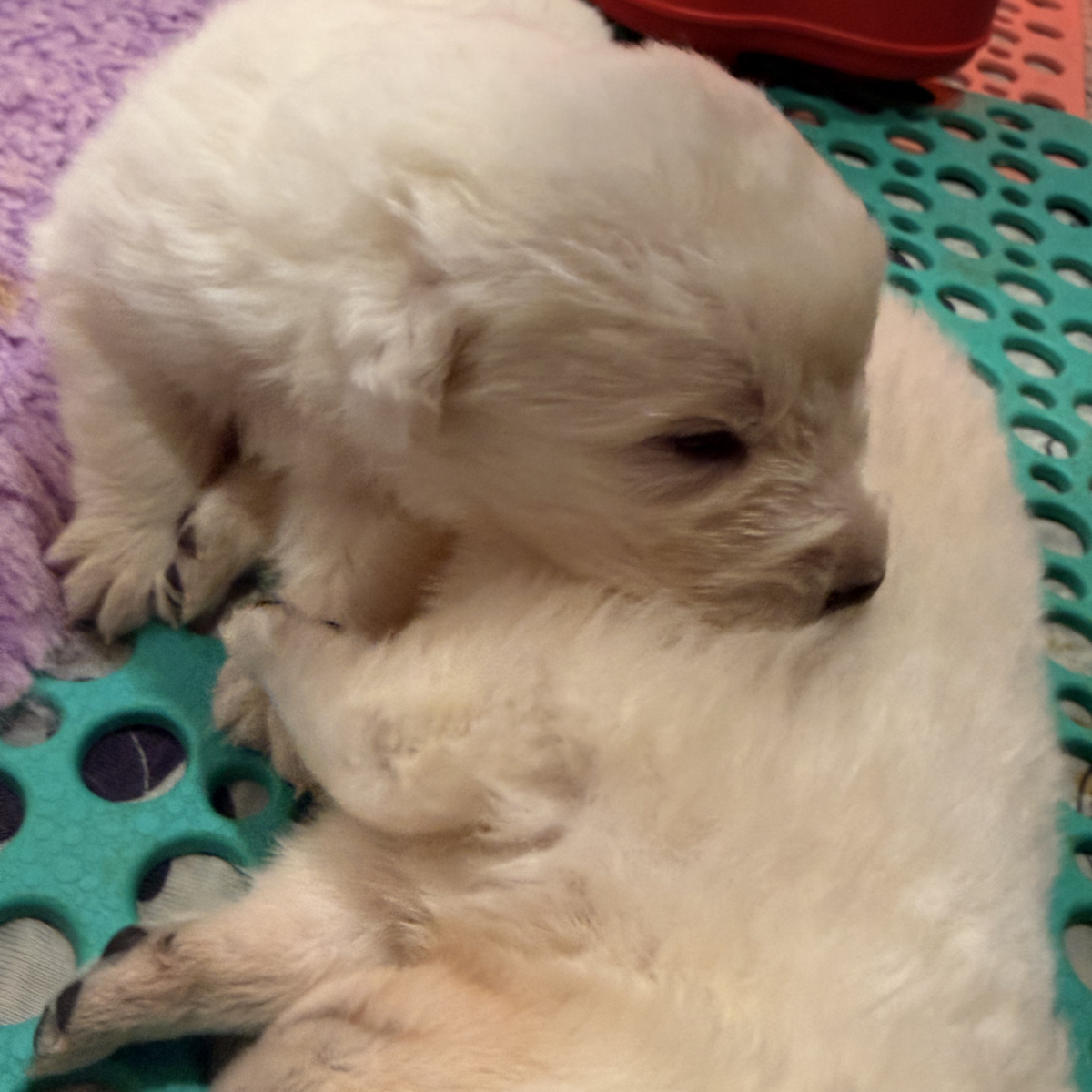
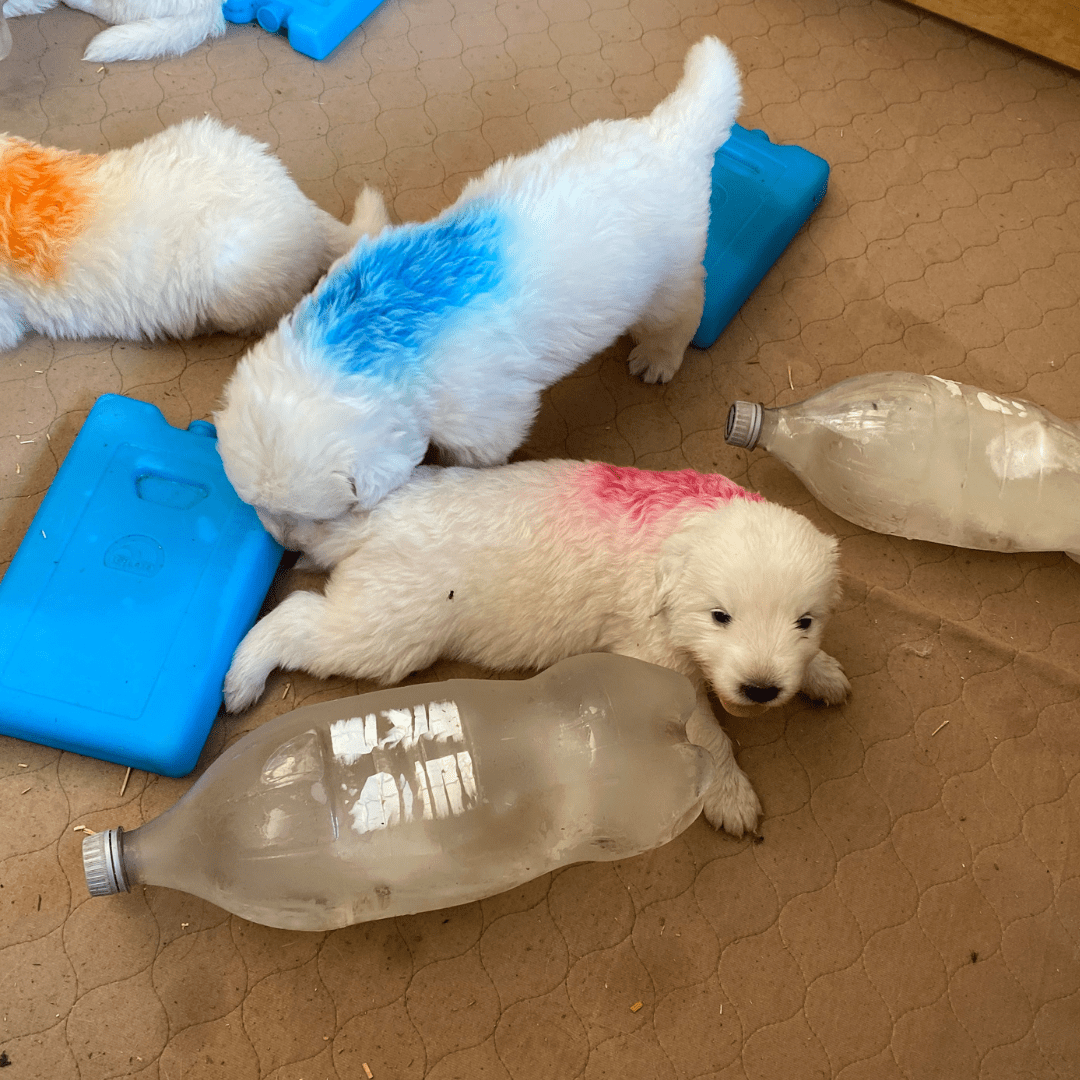
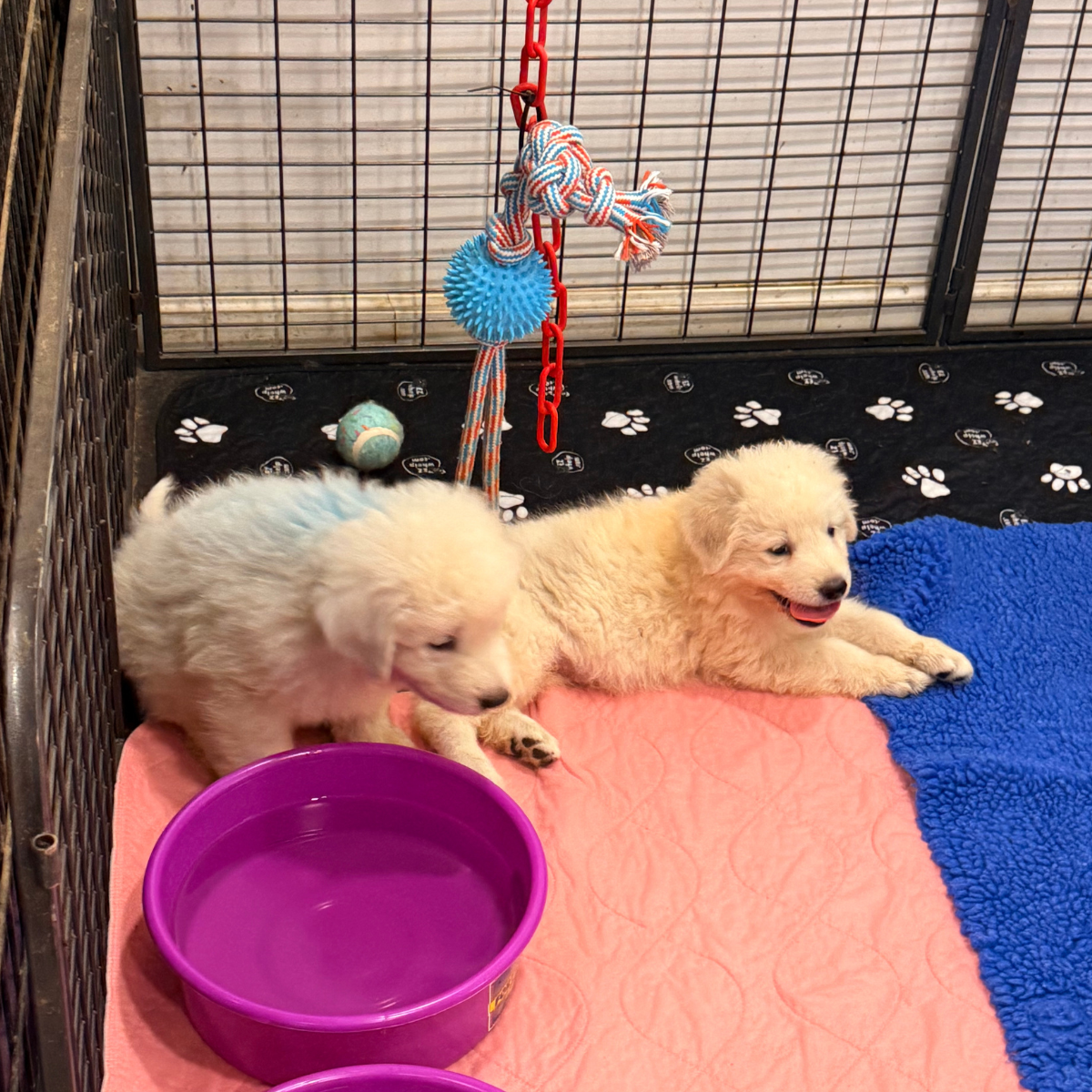
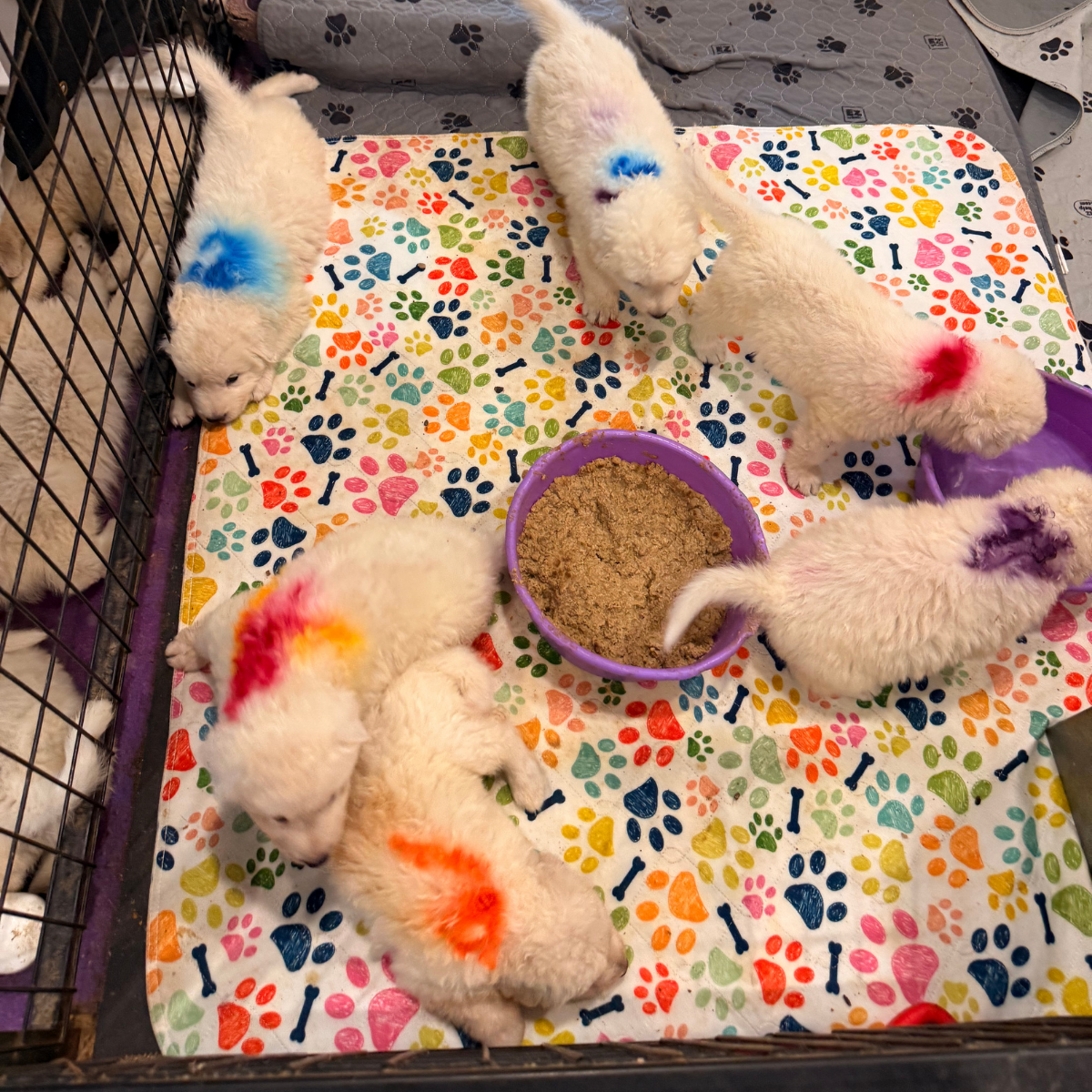
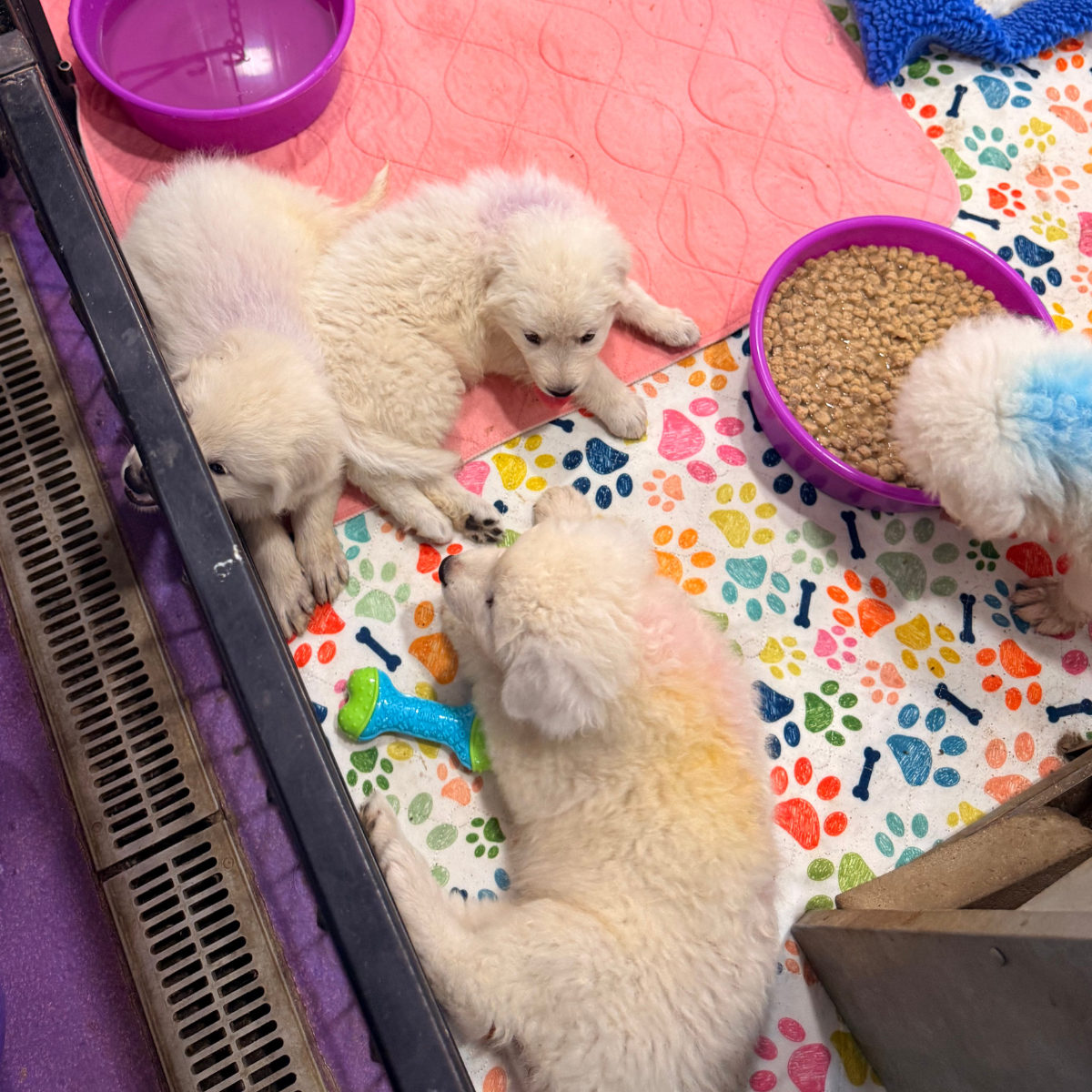


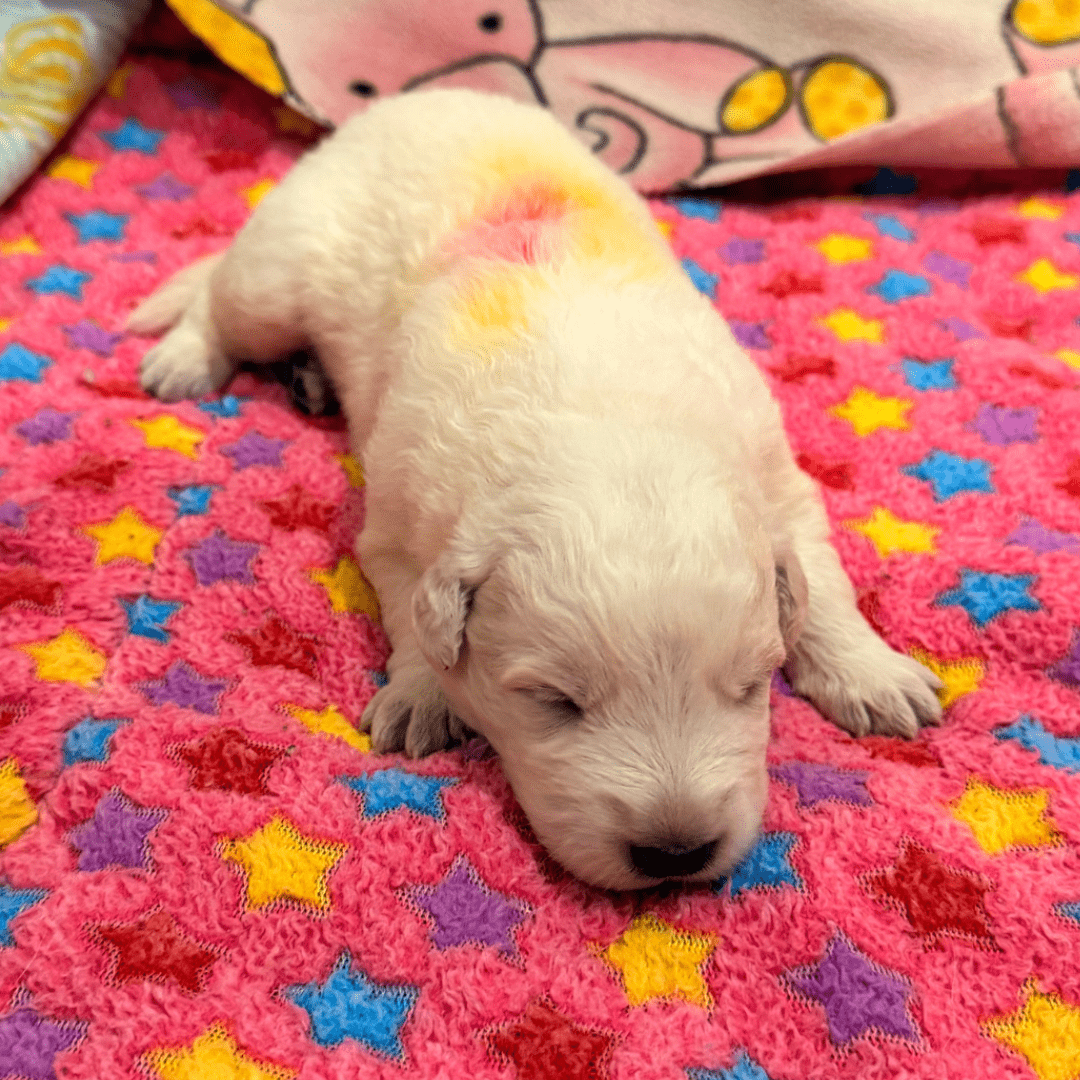
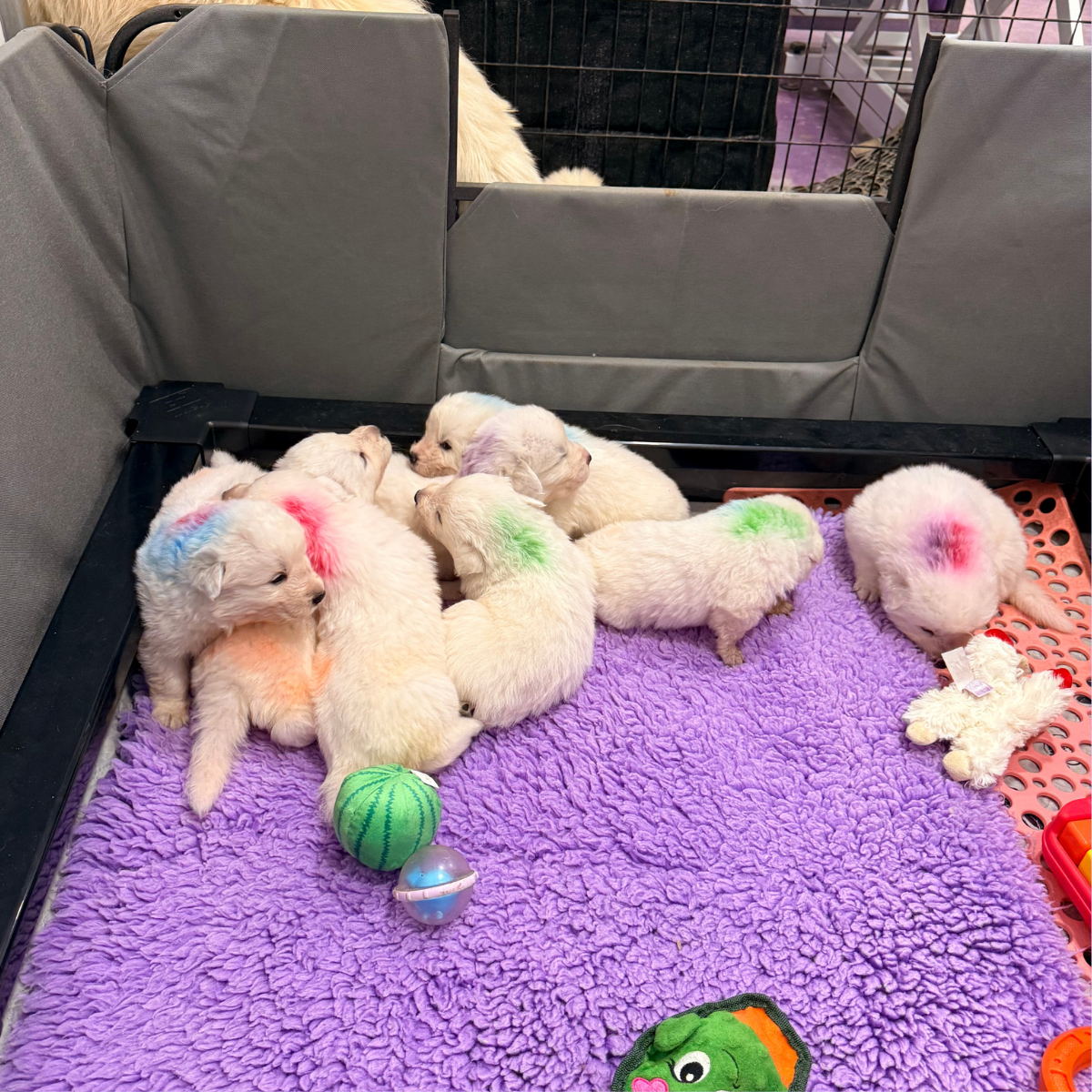
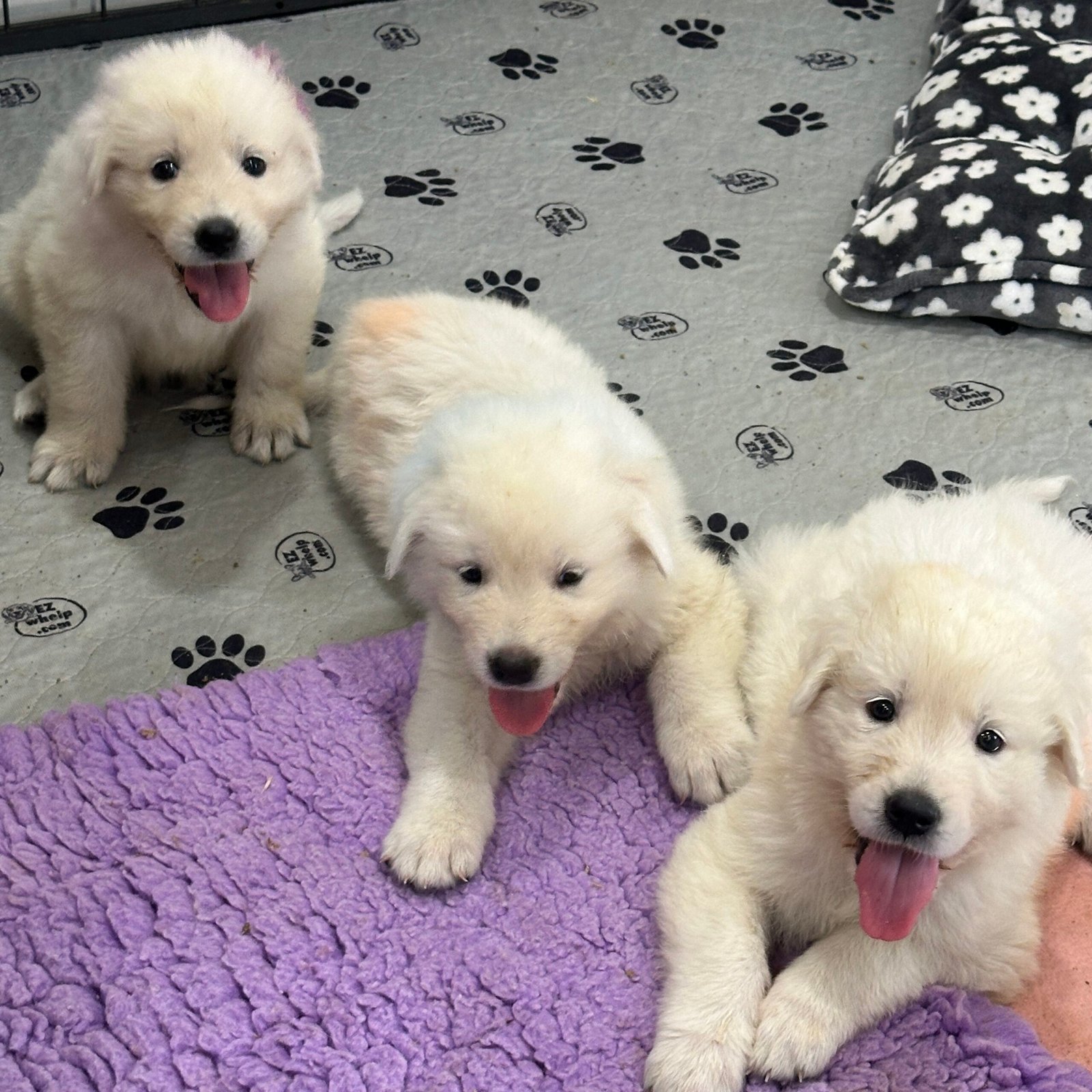
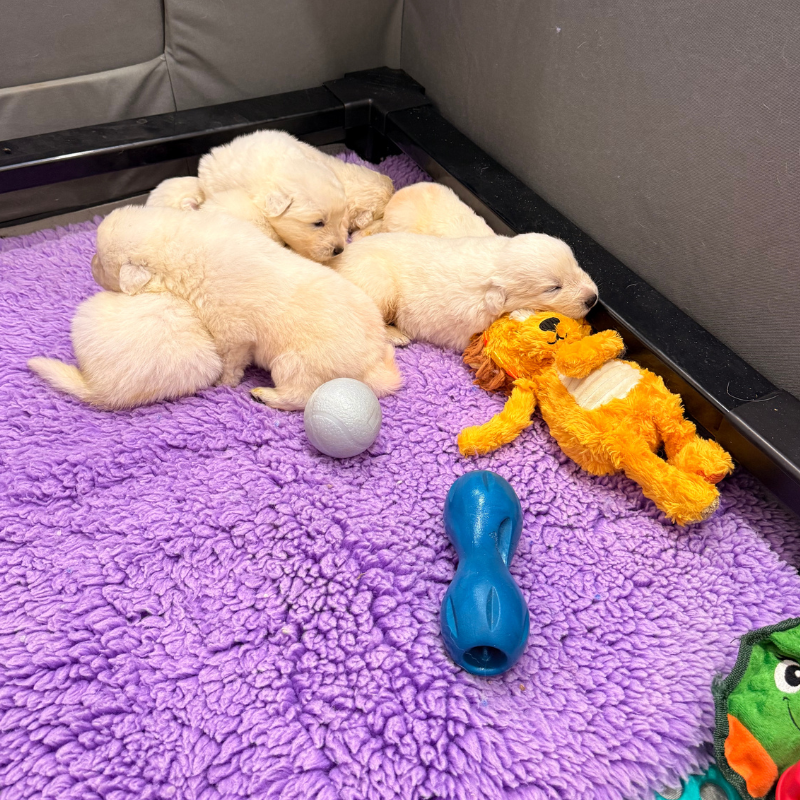
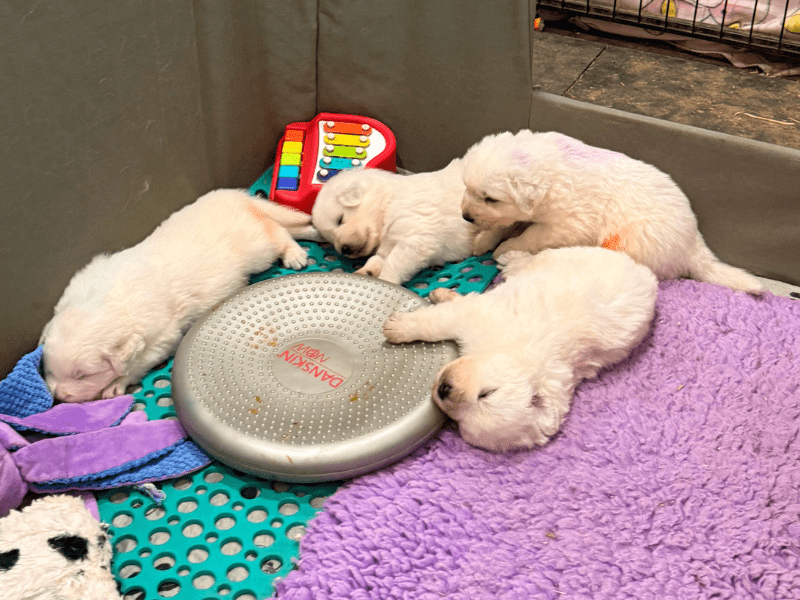
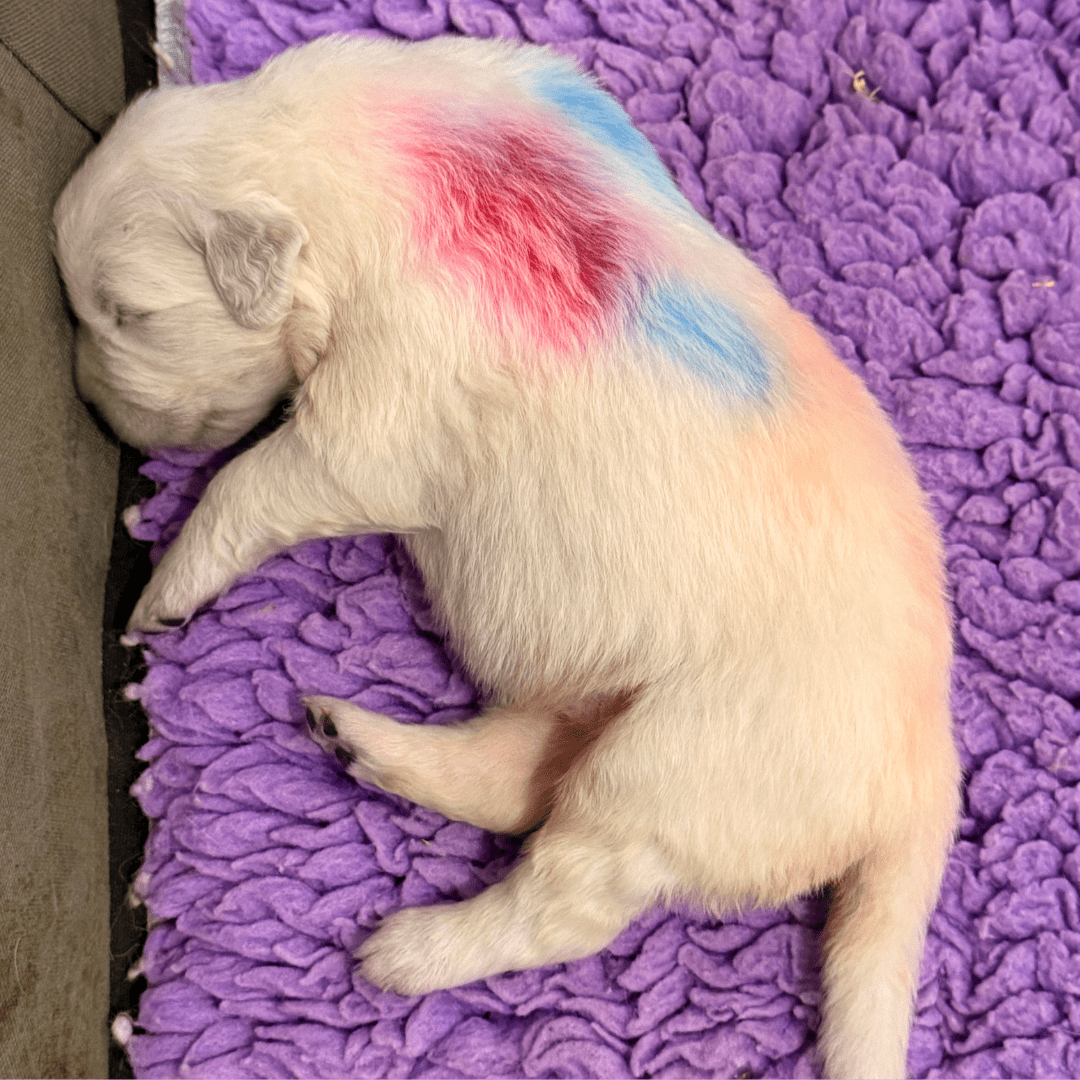
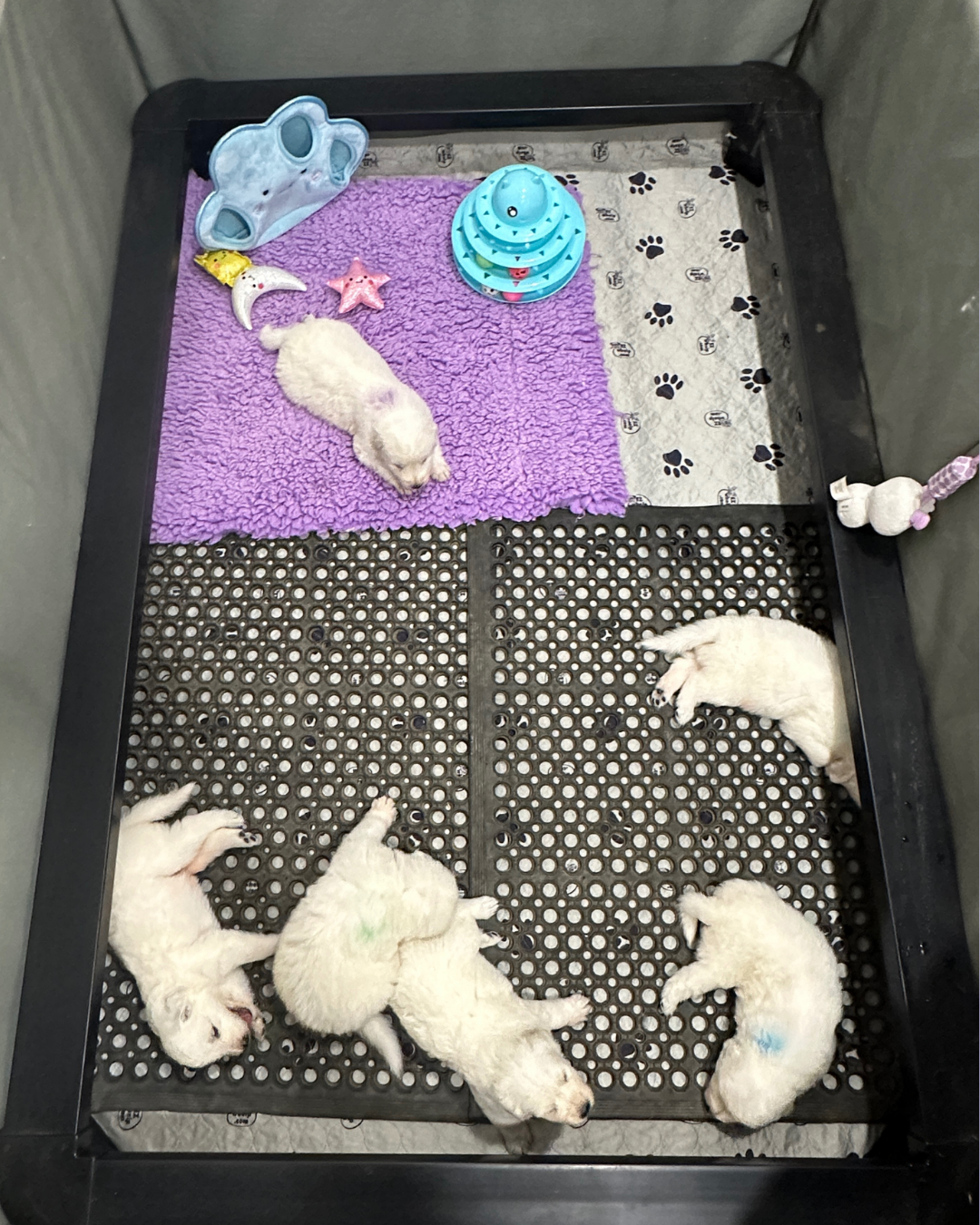
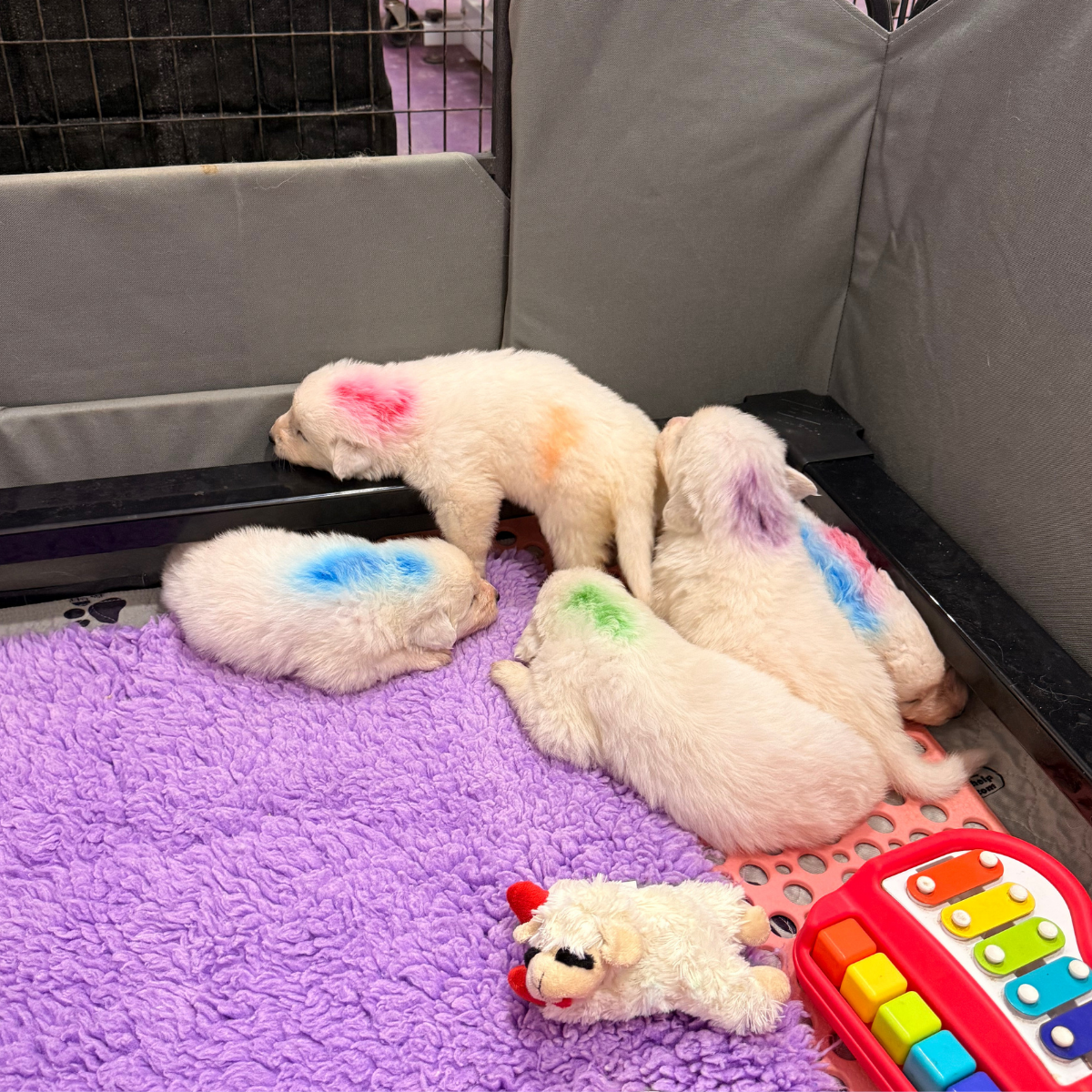
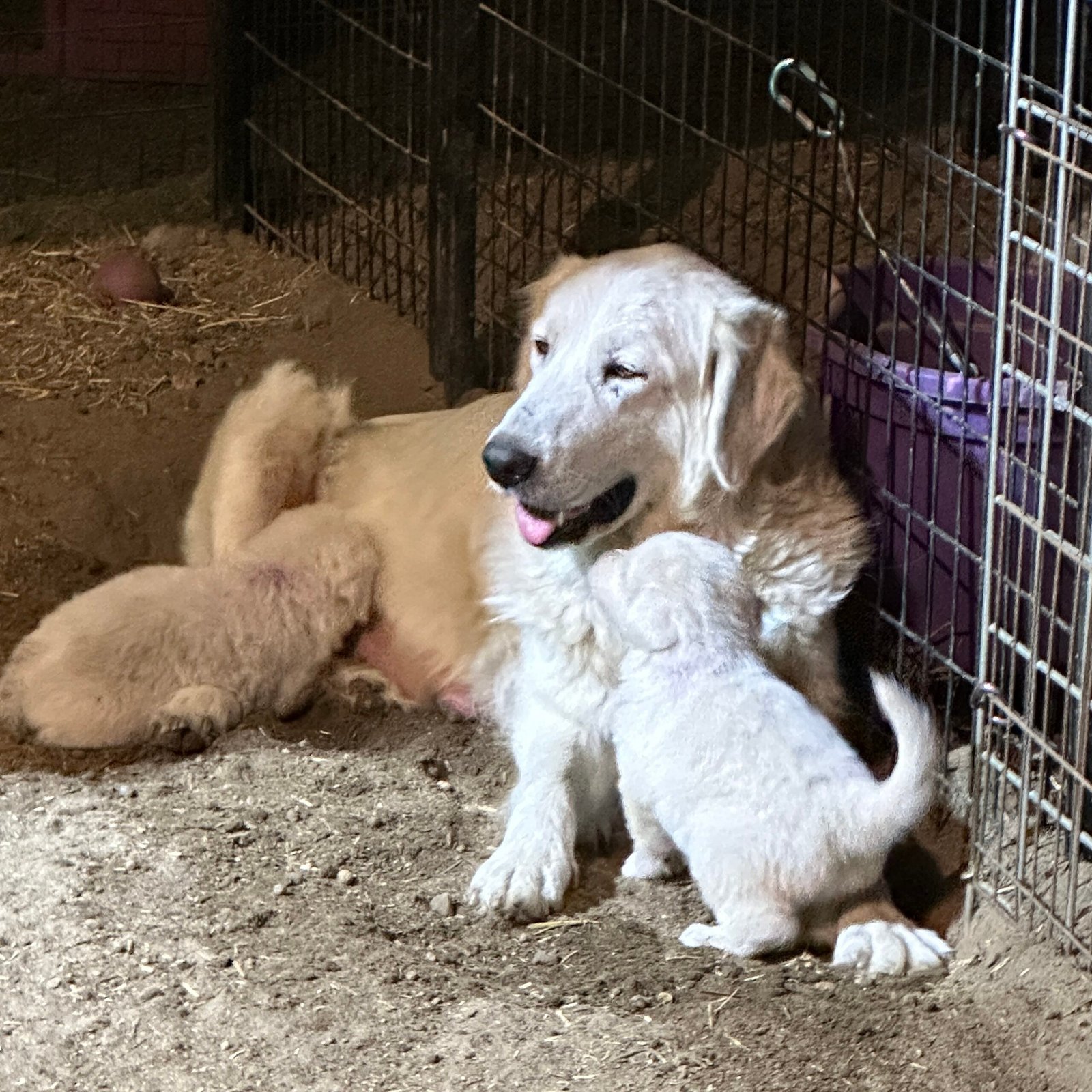
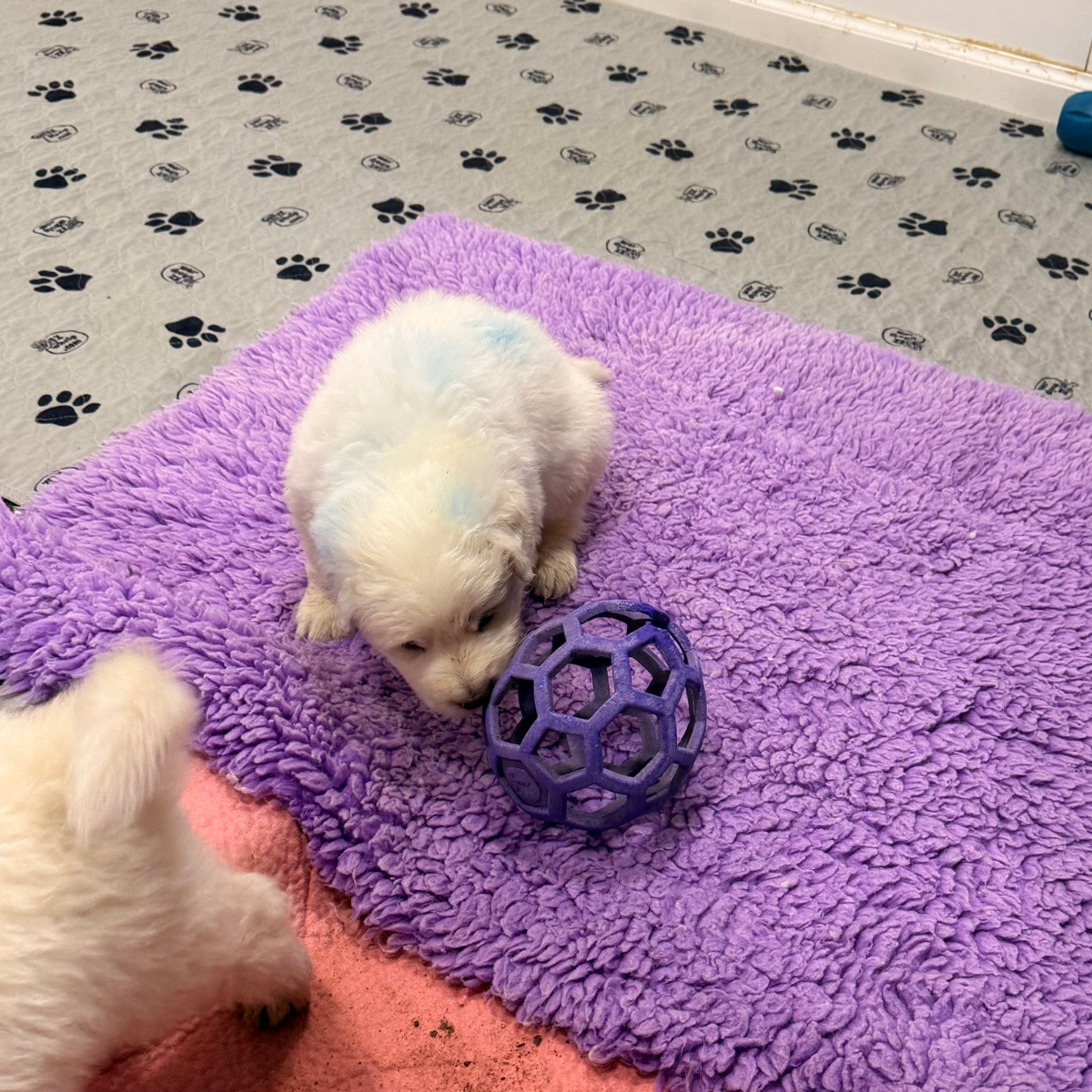
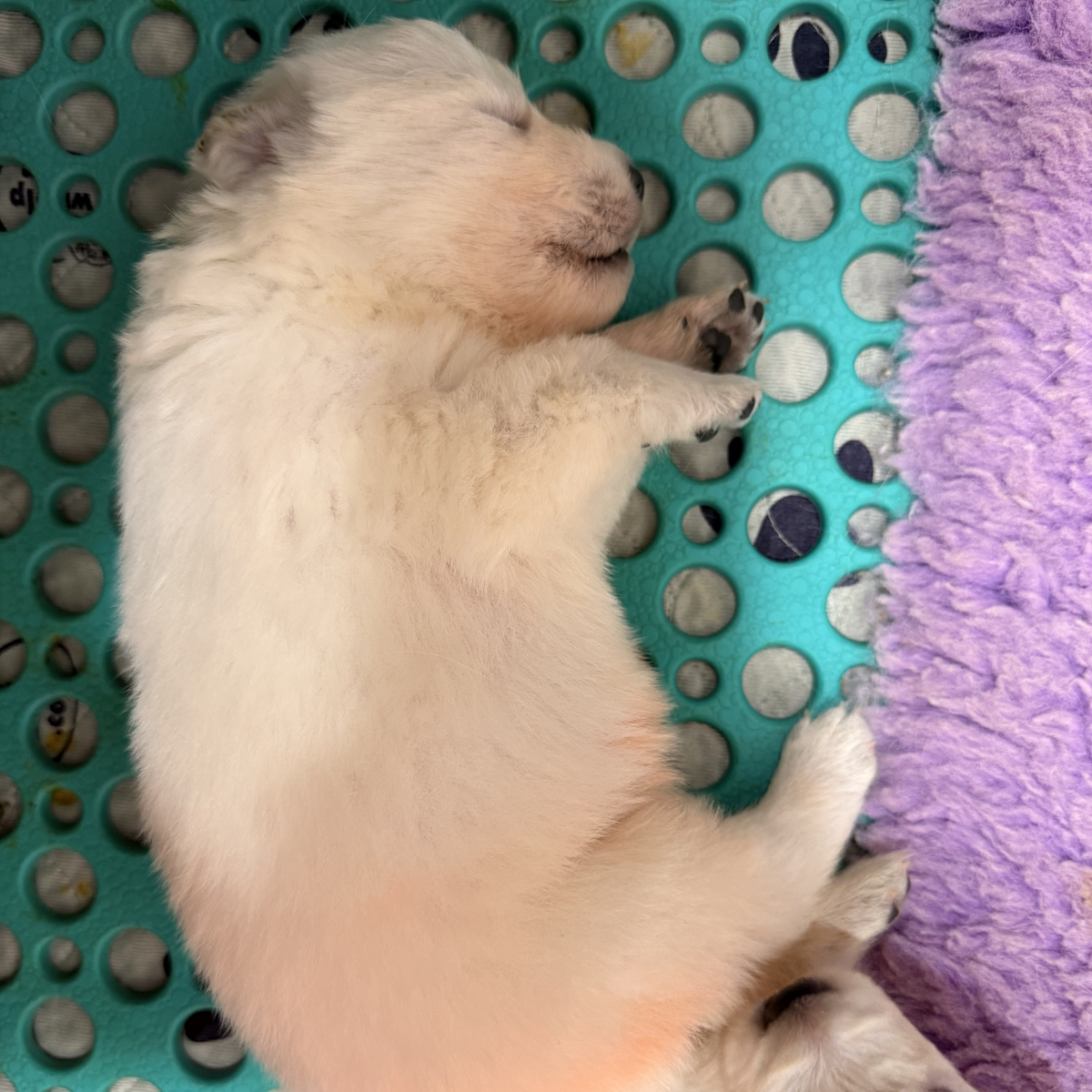
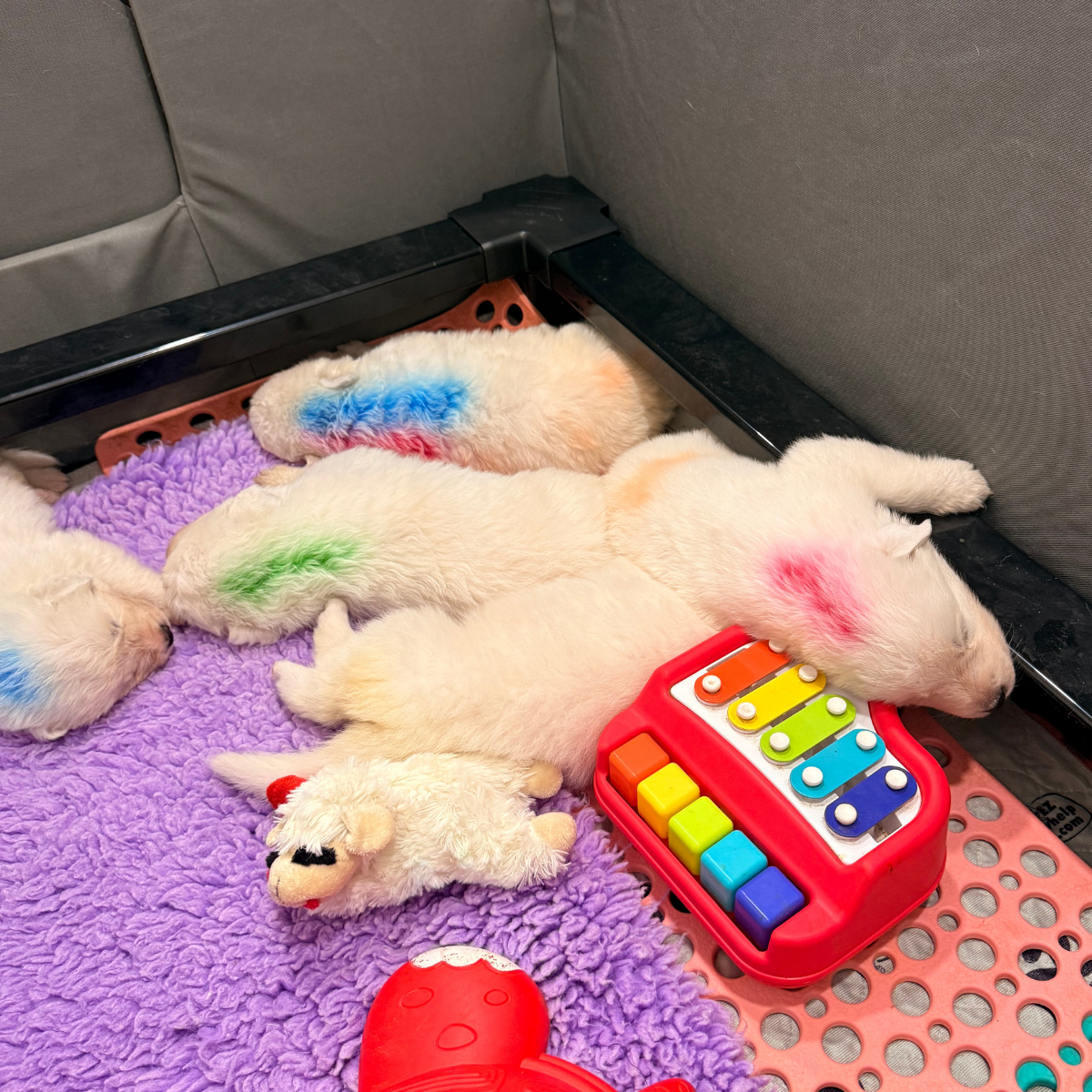
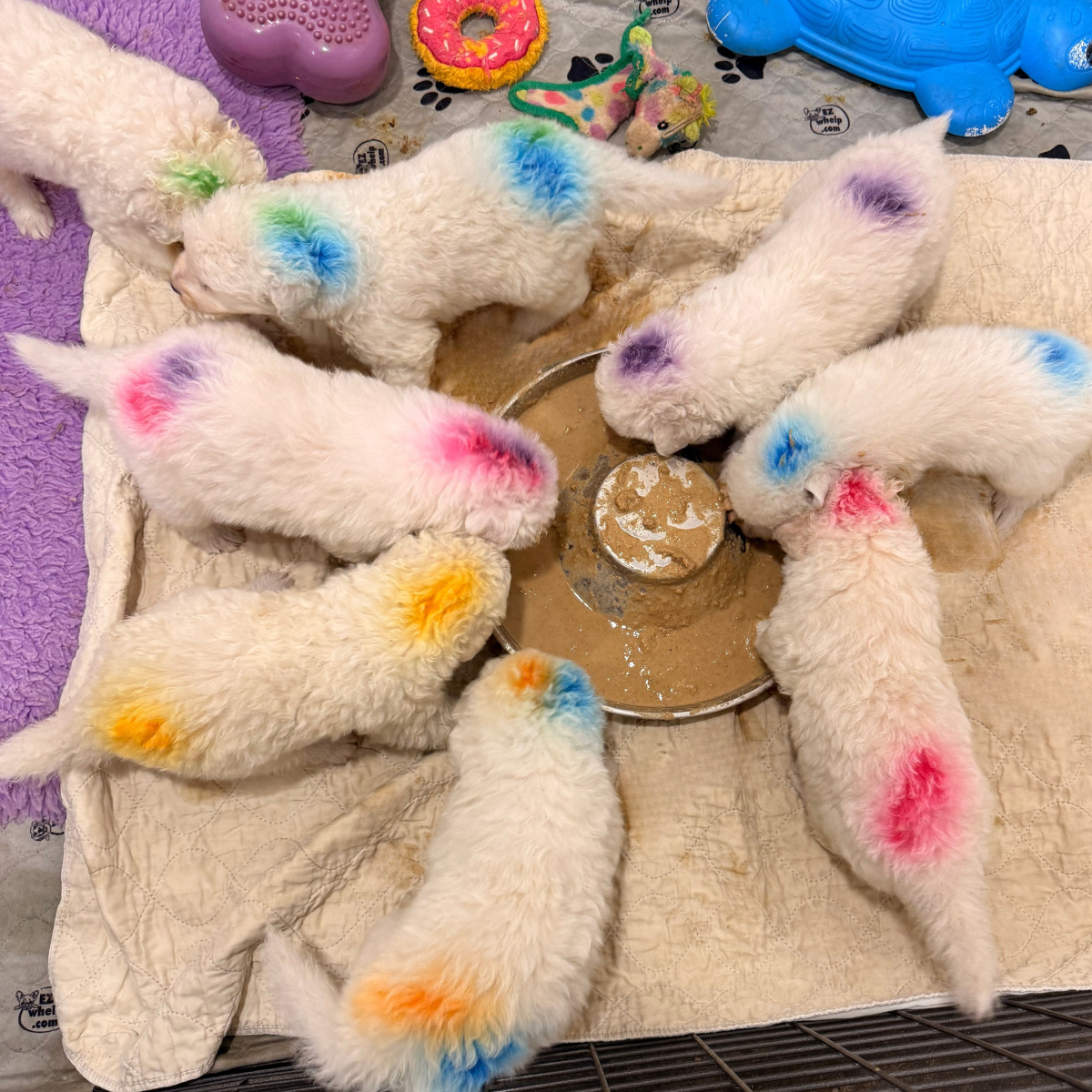
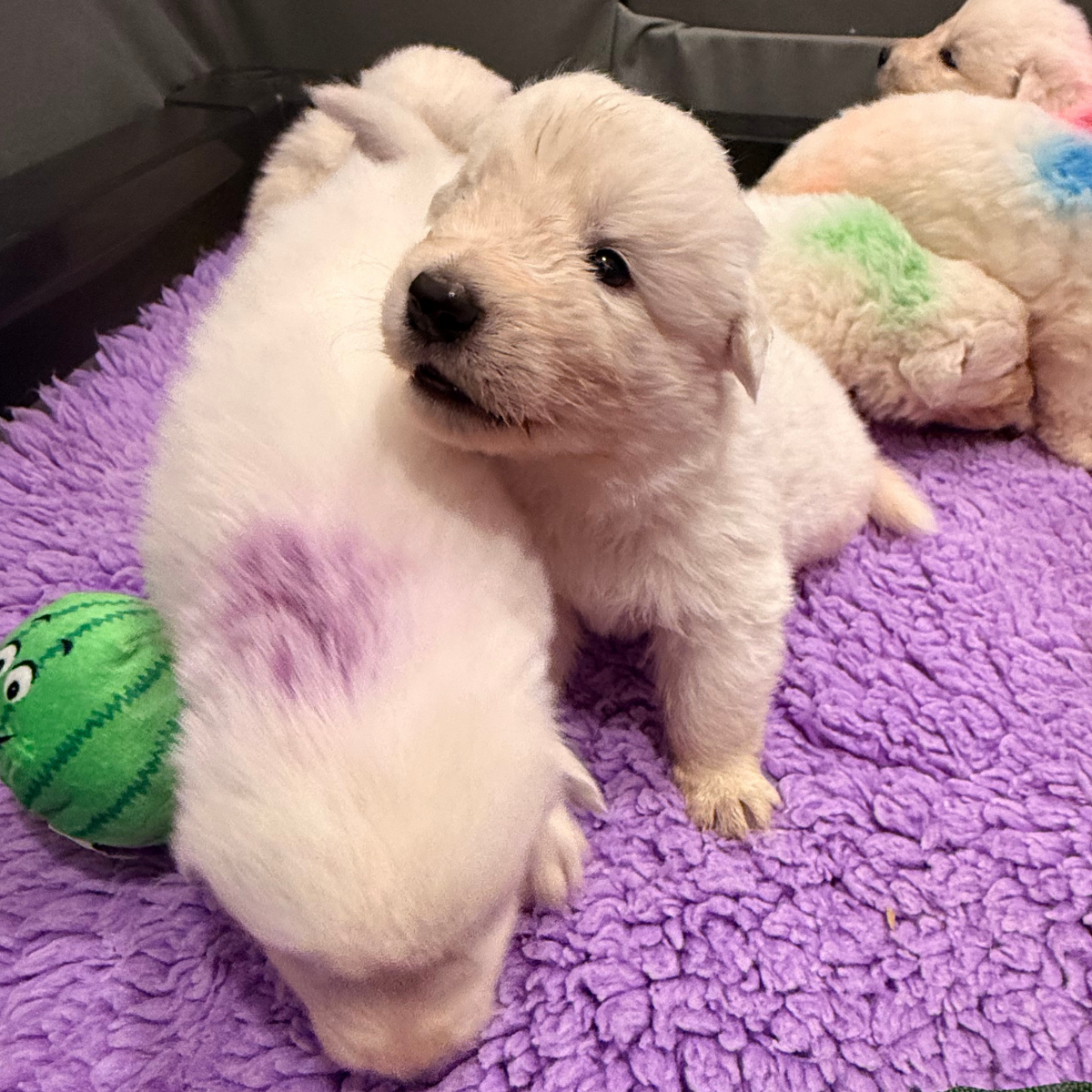
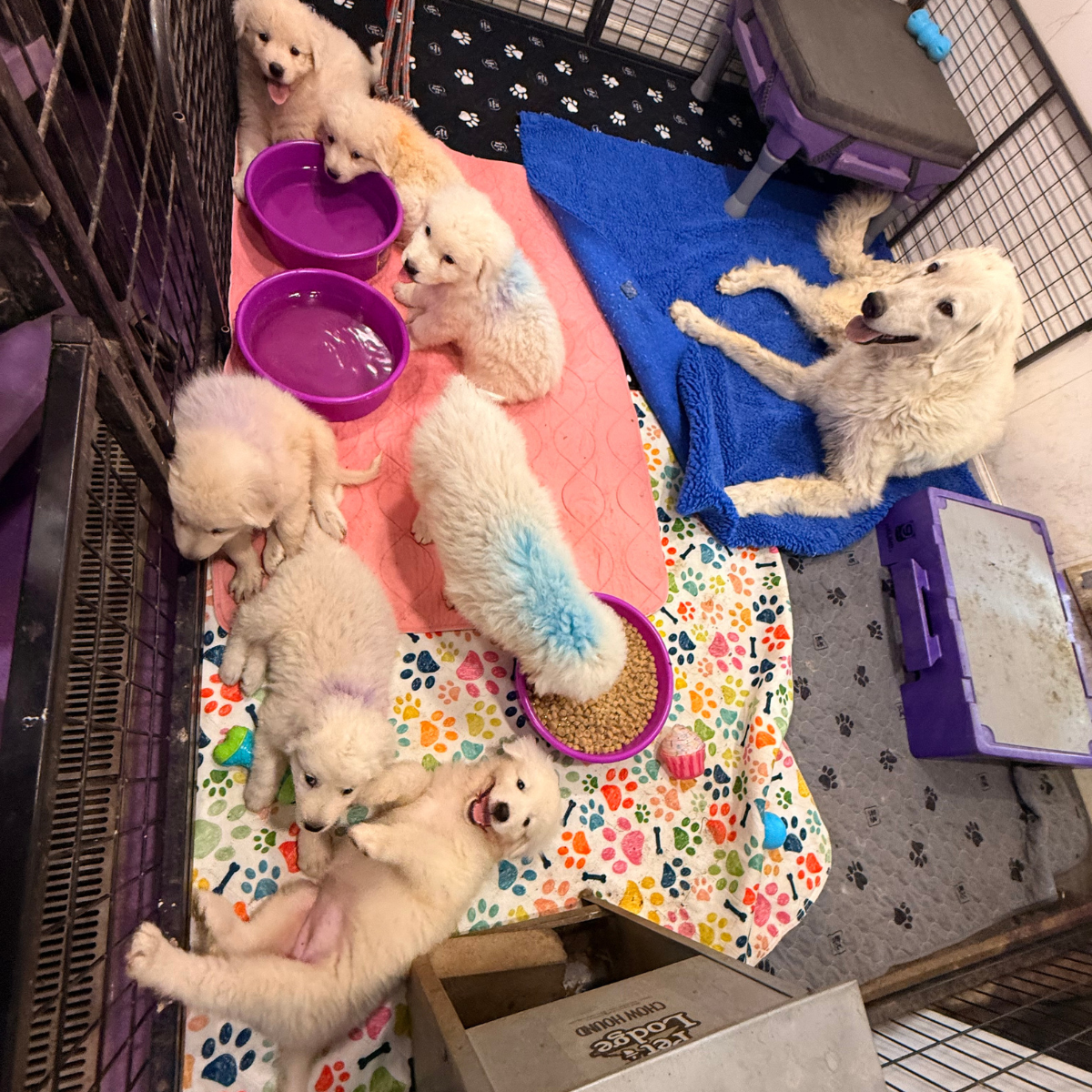
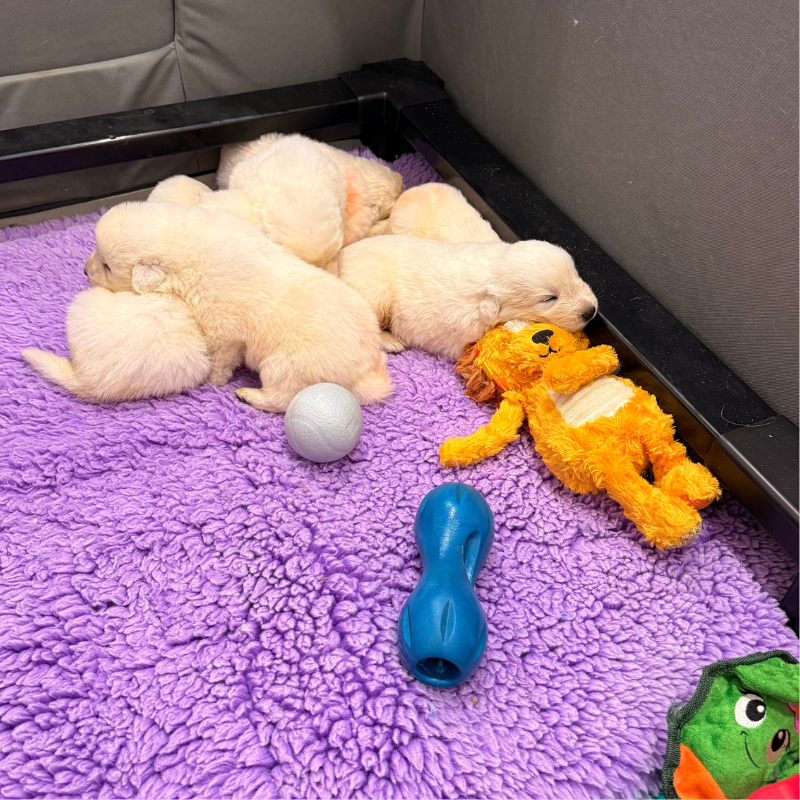
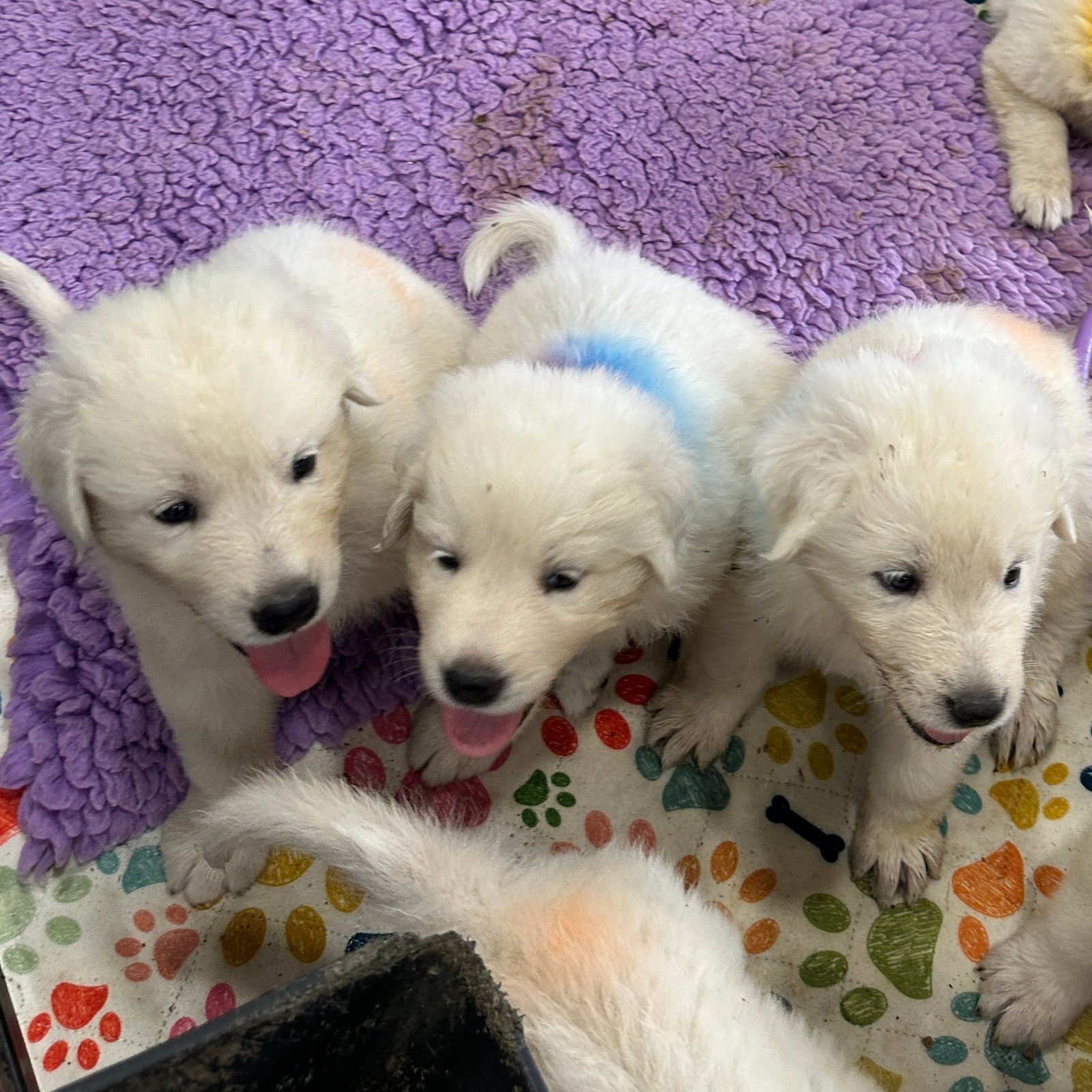
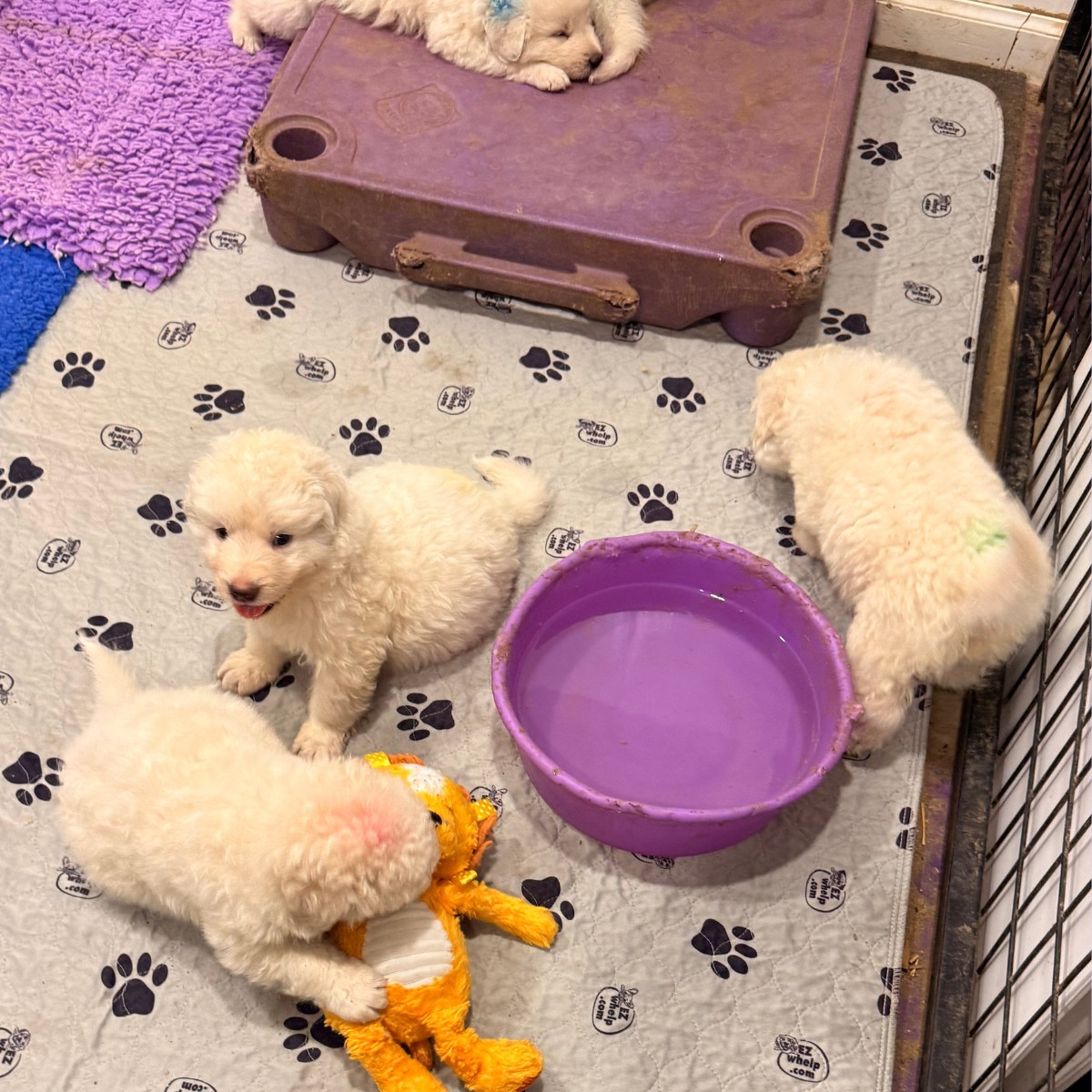
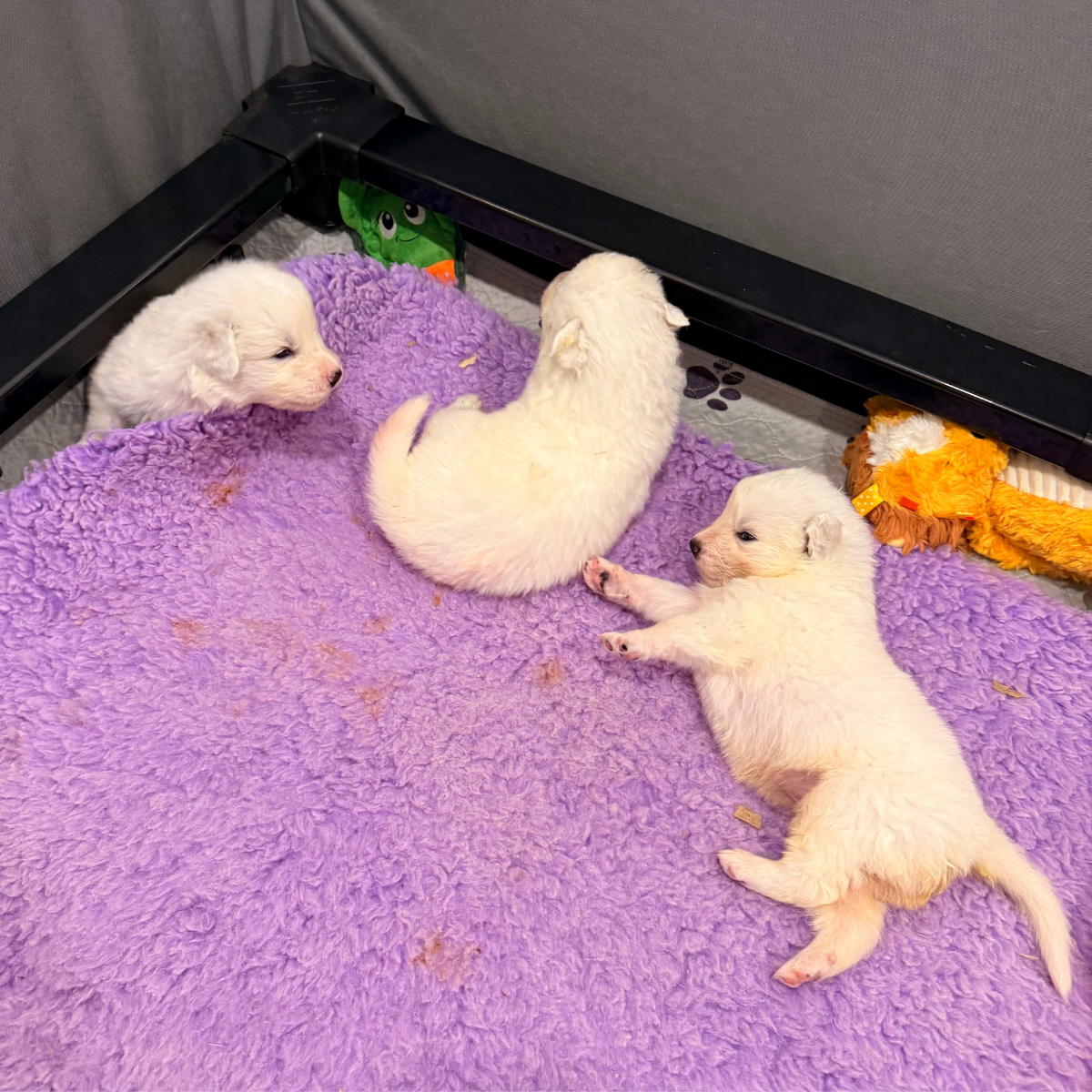
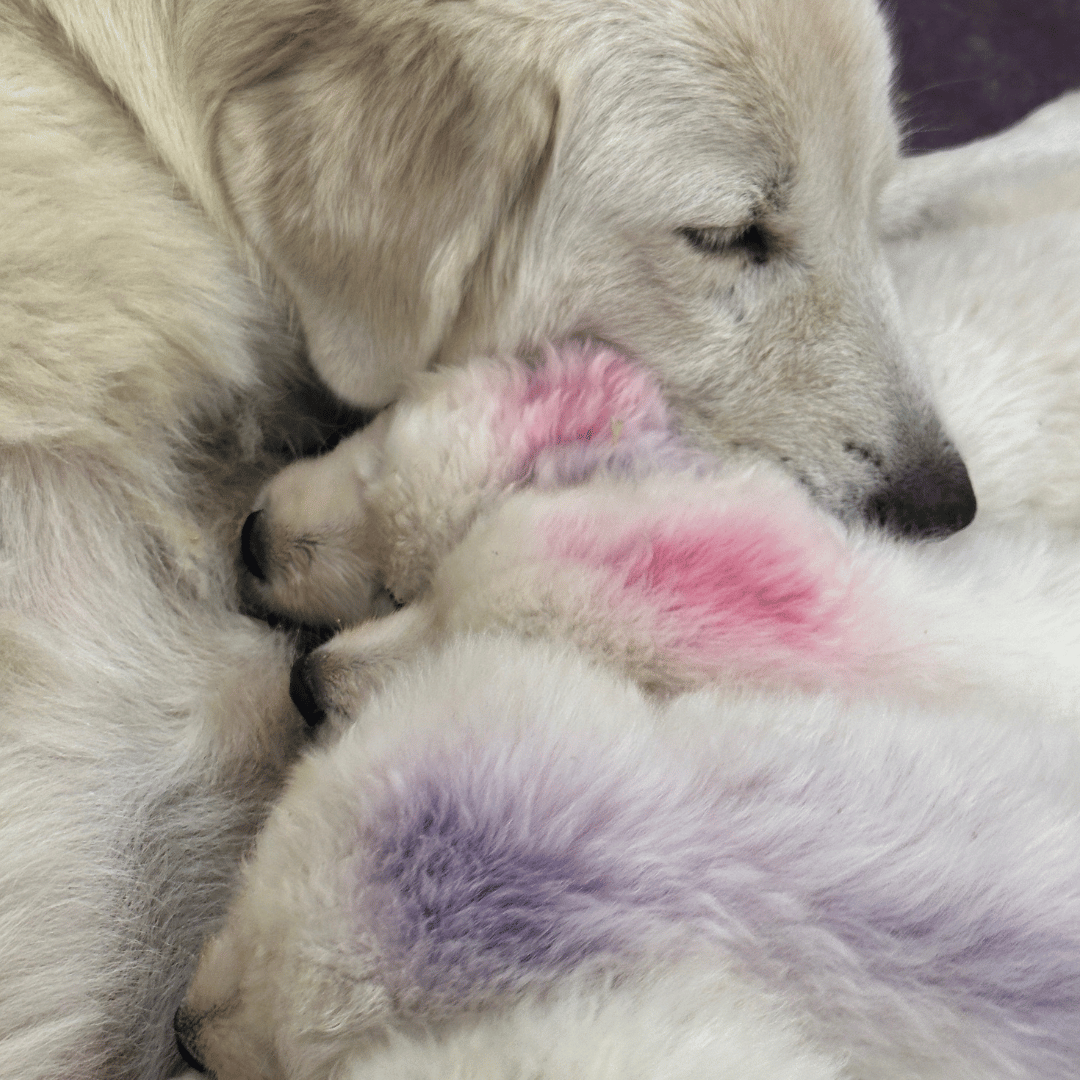
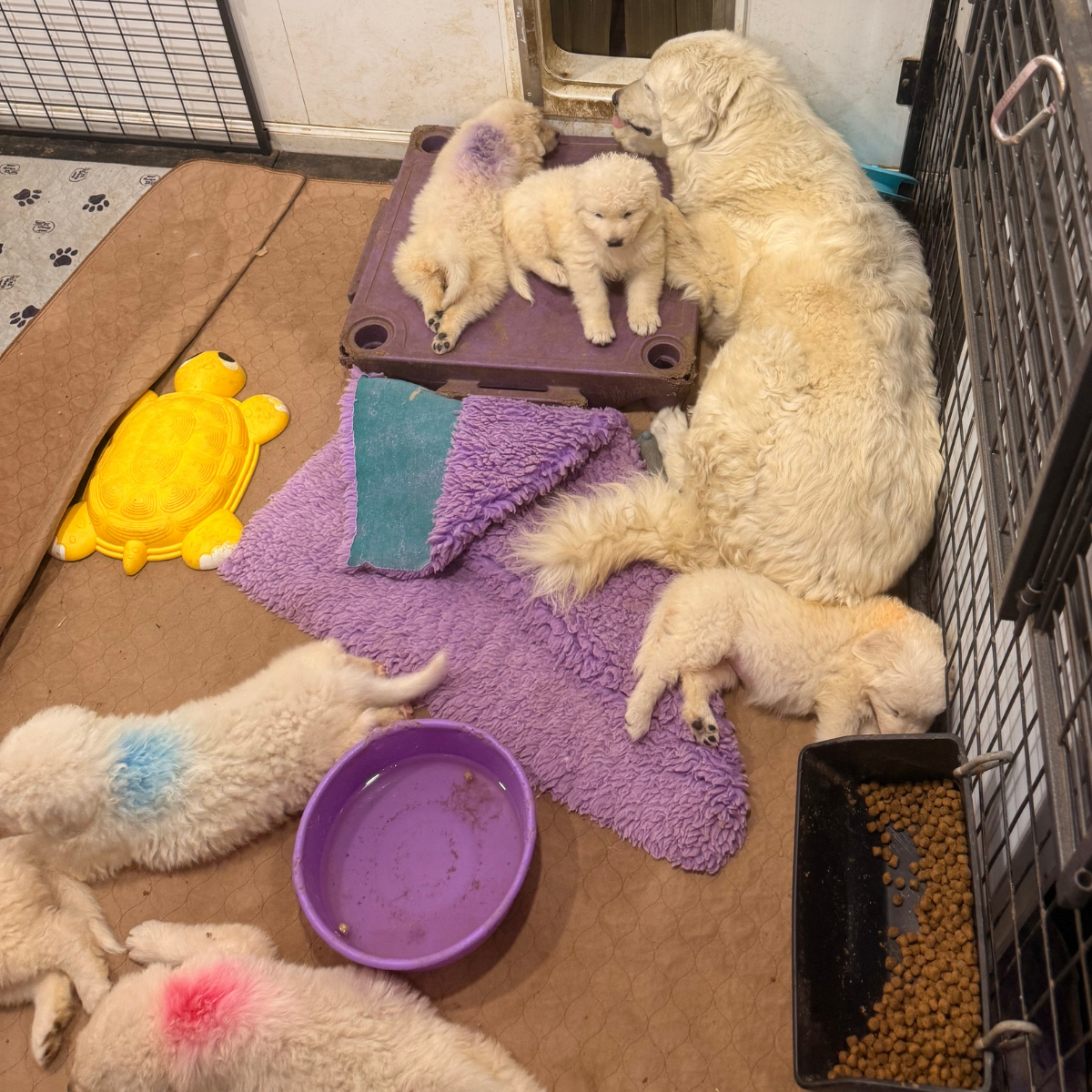
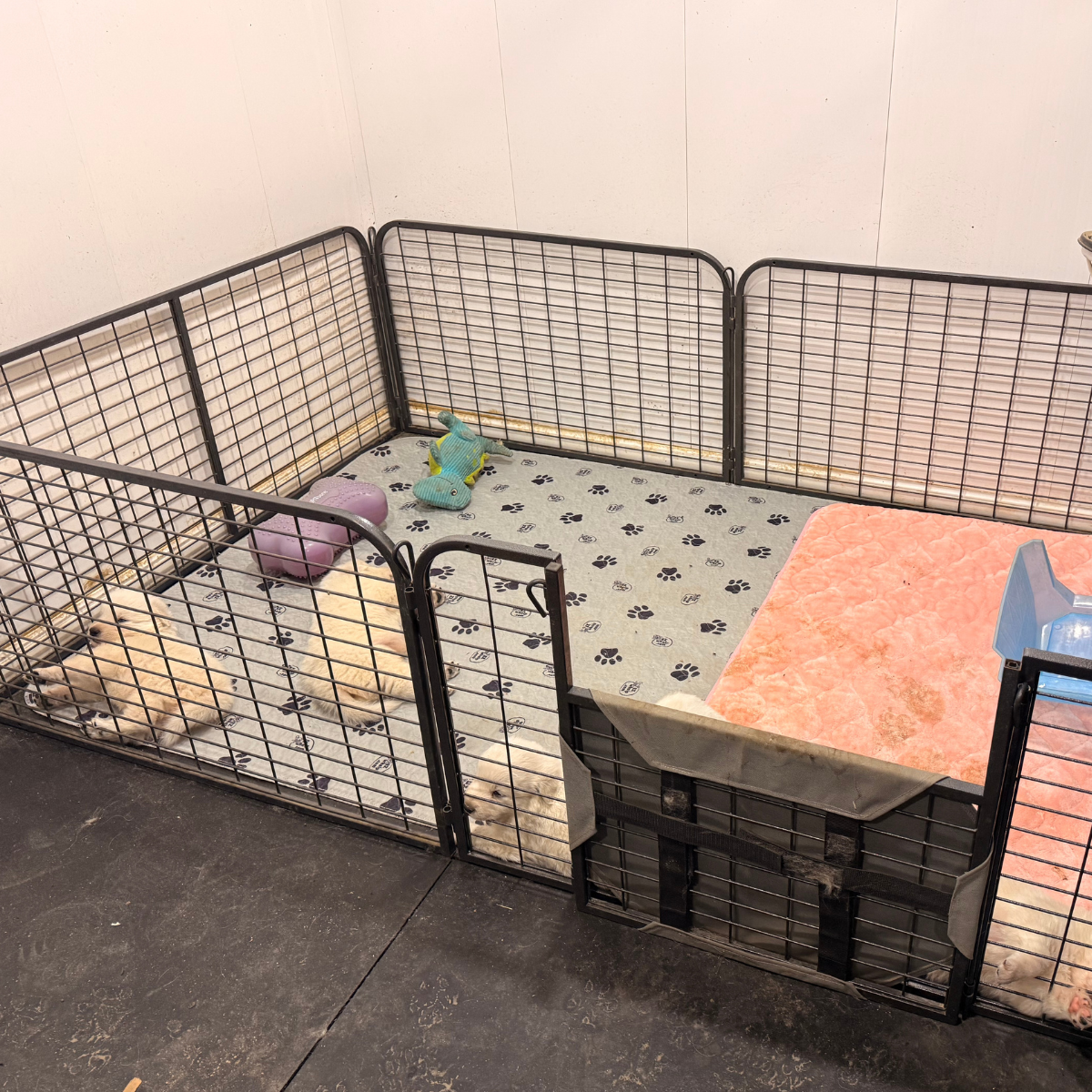
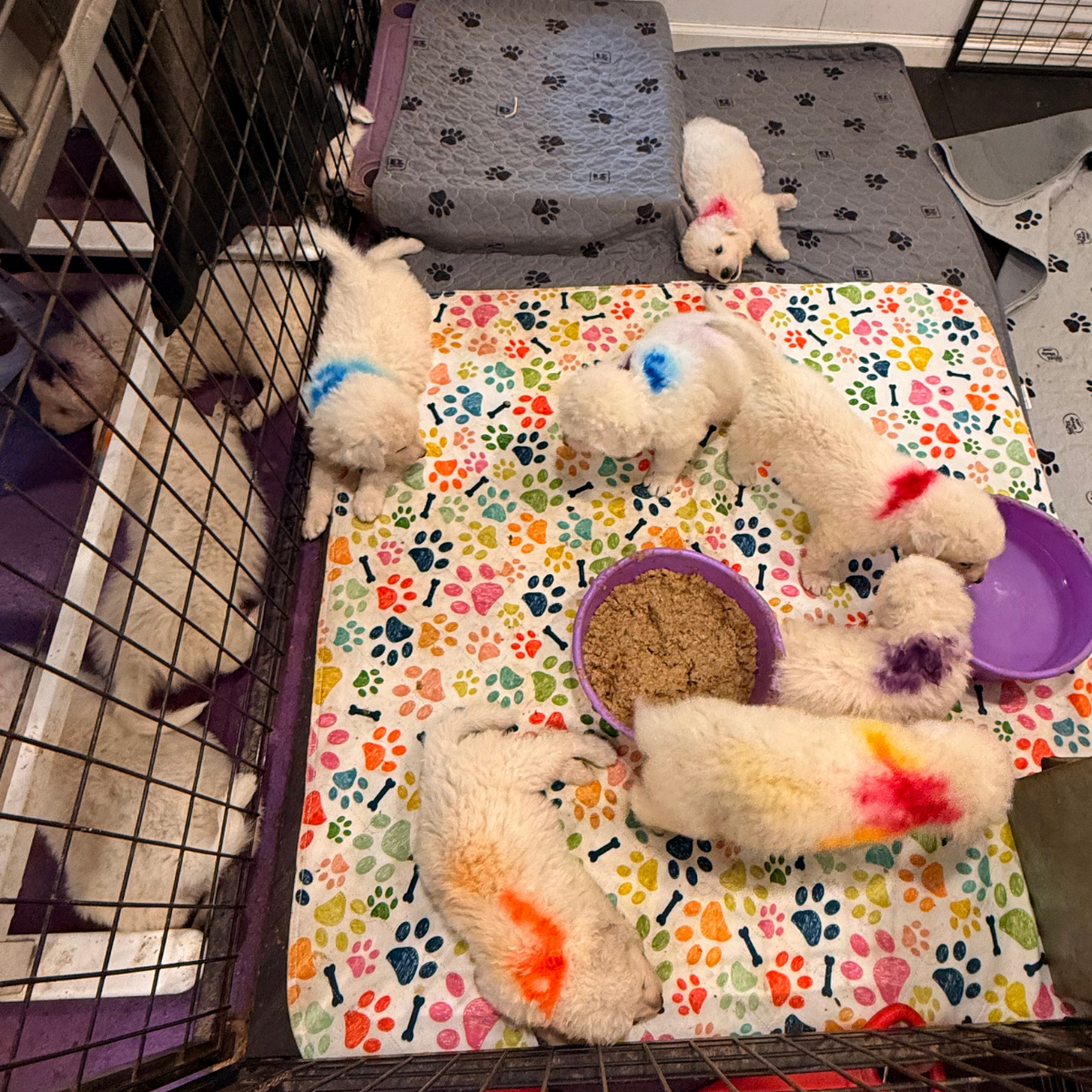
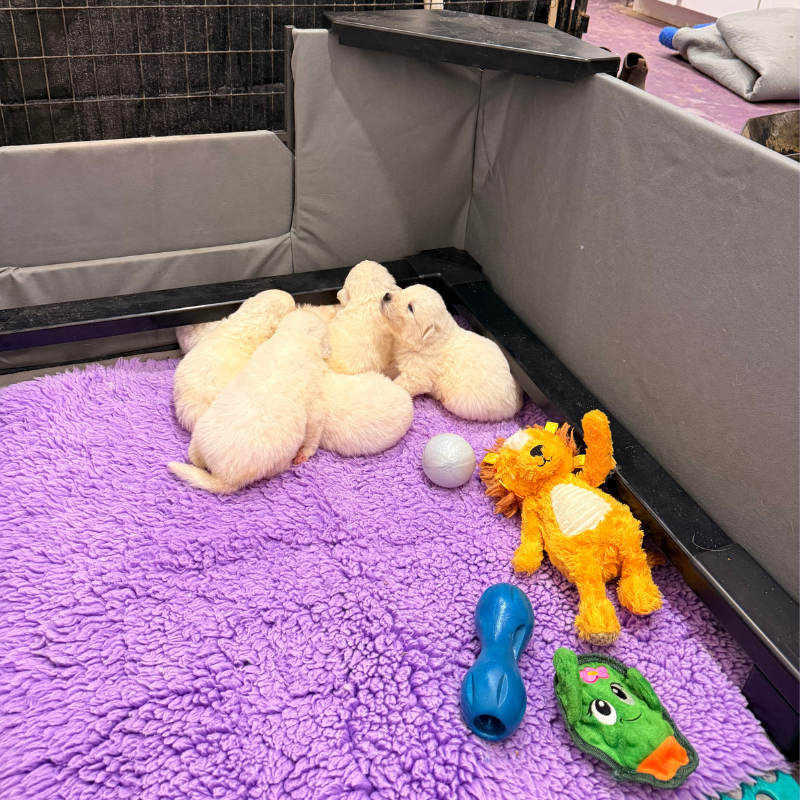
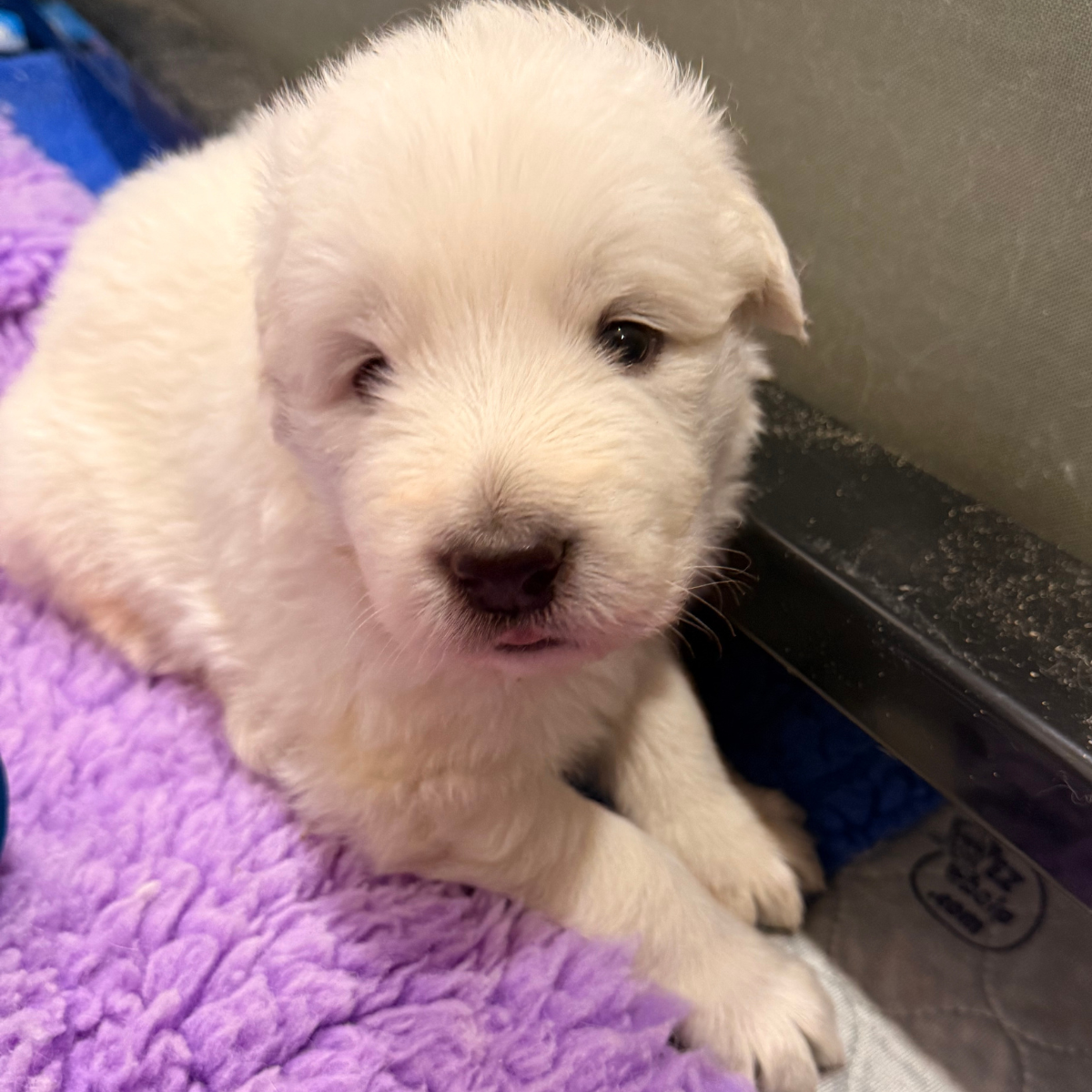
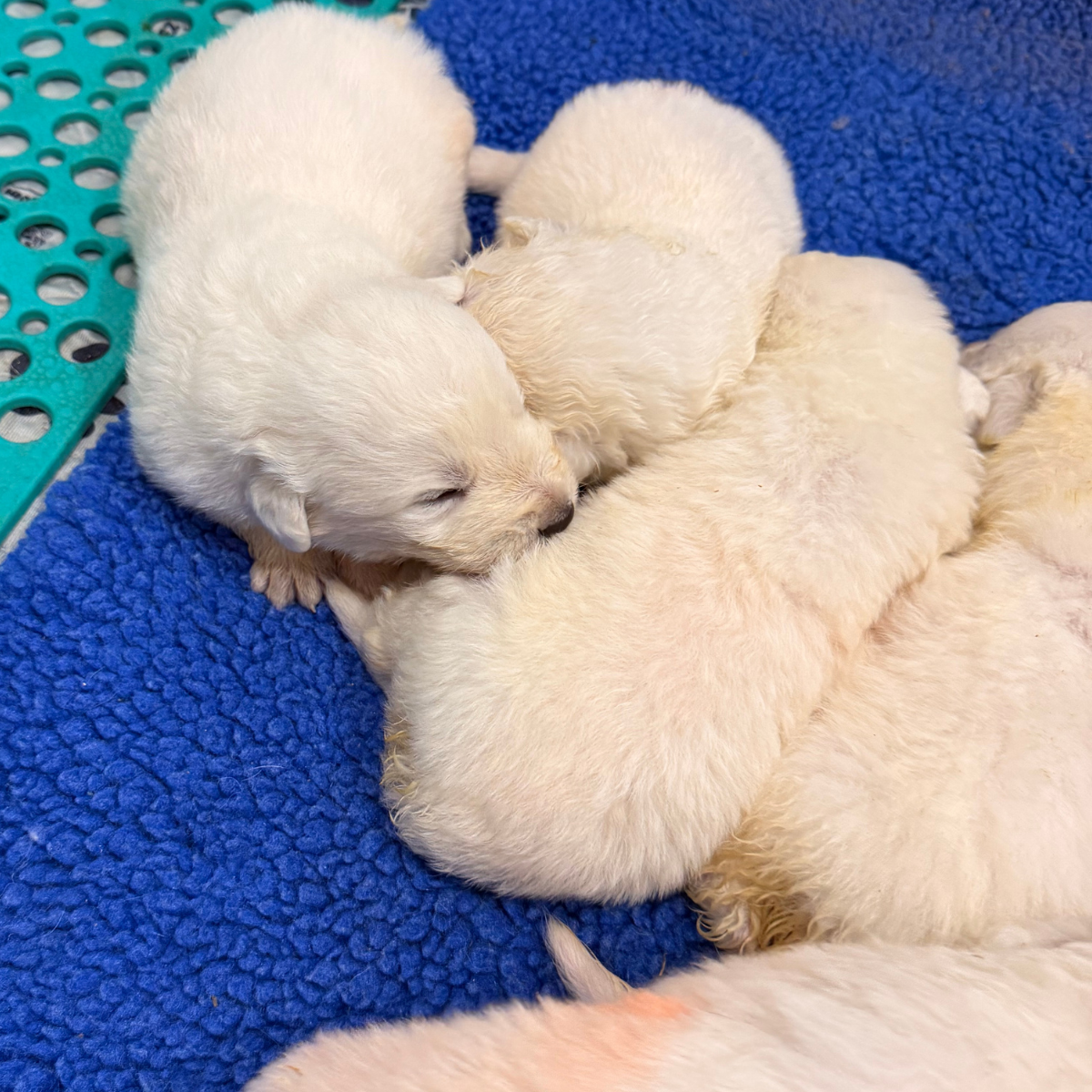
A Maremma puppy is born completely helpless — eyes sealed, ears closed, unable to regulate their own temperature. Within twelve weeks they'll be confidently guarding livestock. This post traces that remarkable transformation and explains what's happening developmentally at every stage.
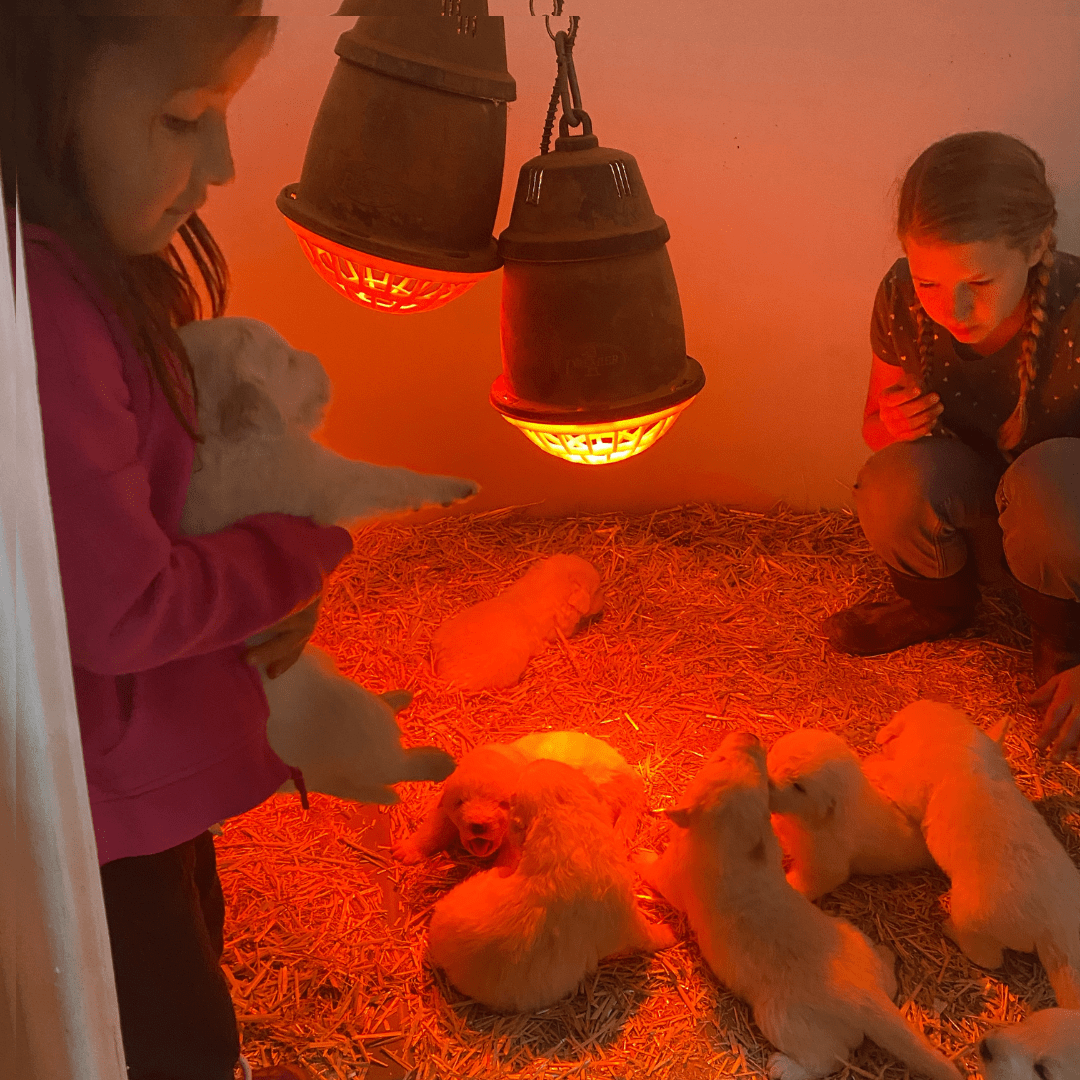
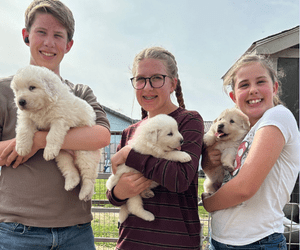
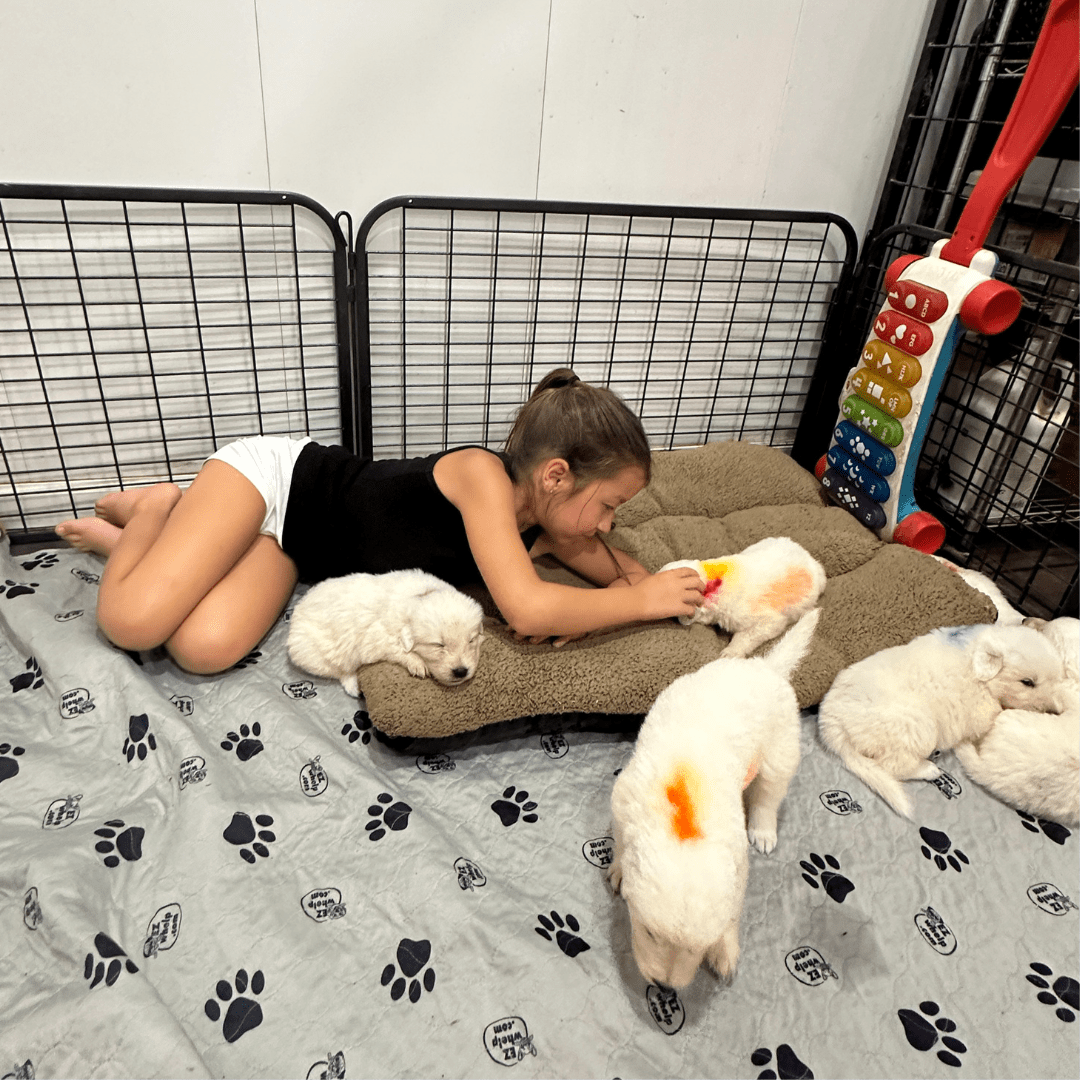
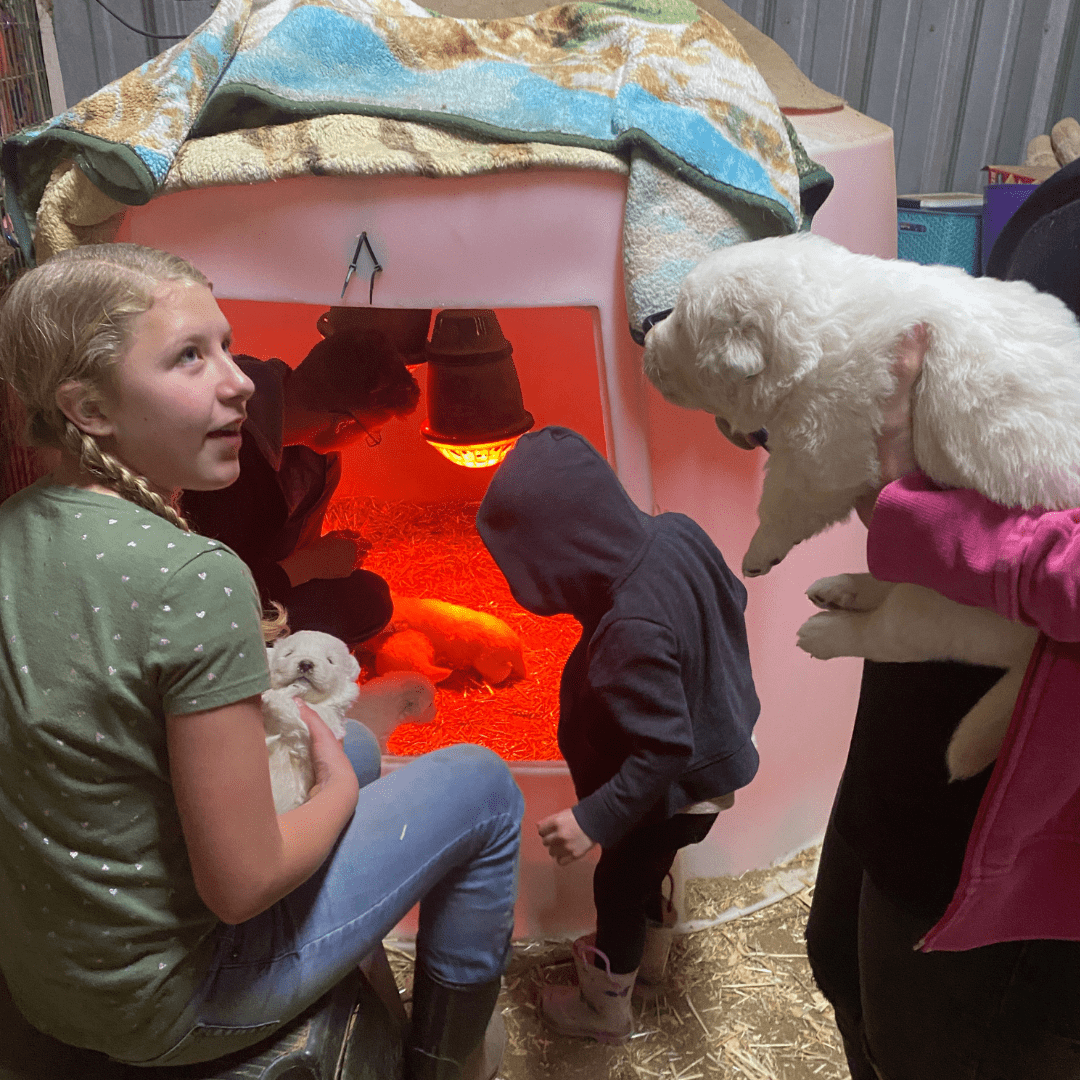
Little Hands, Big Hearts — Family from the Very Beginning
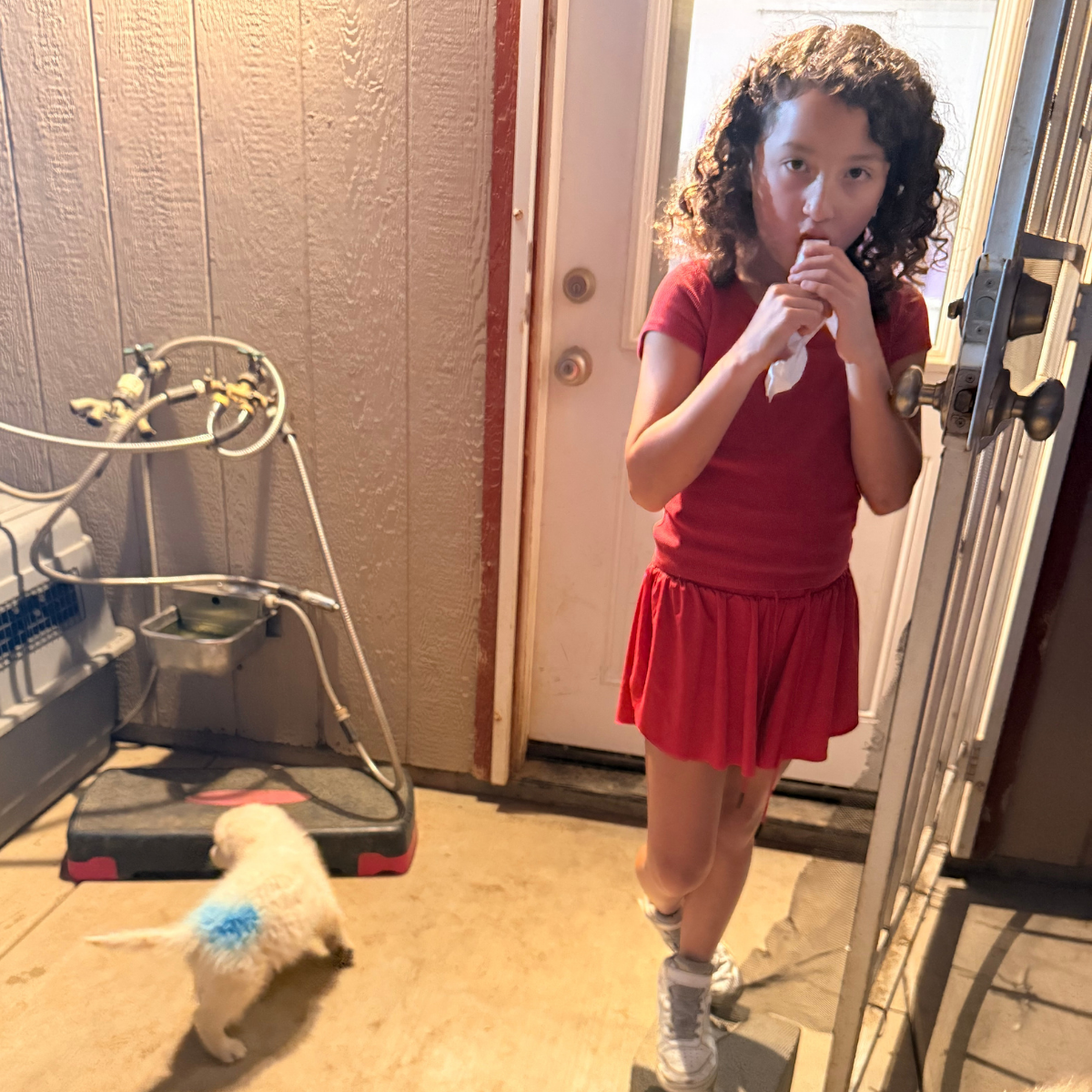
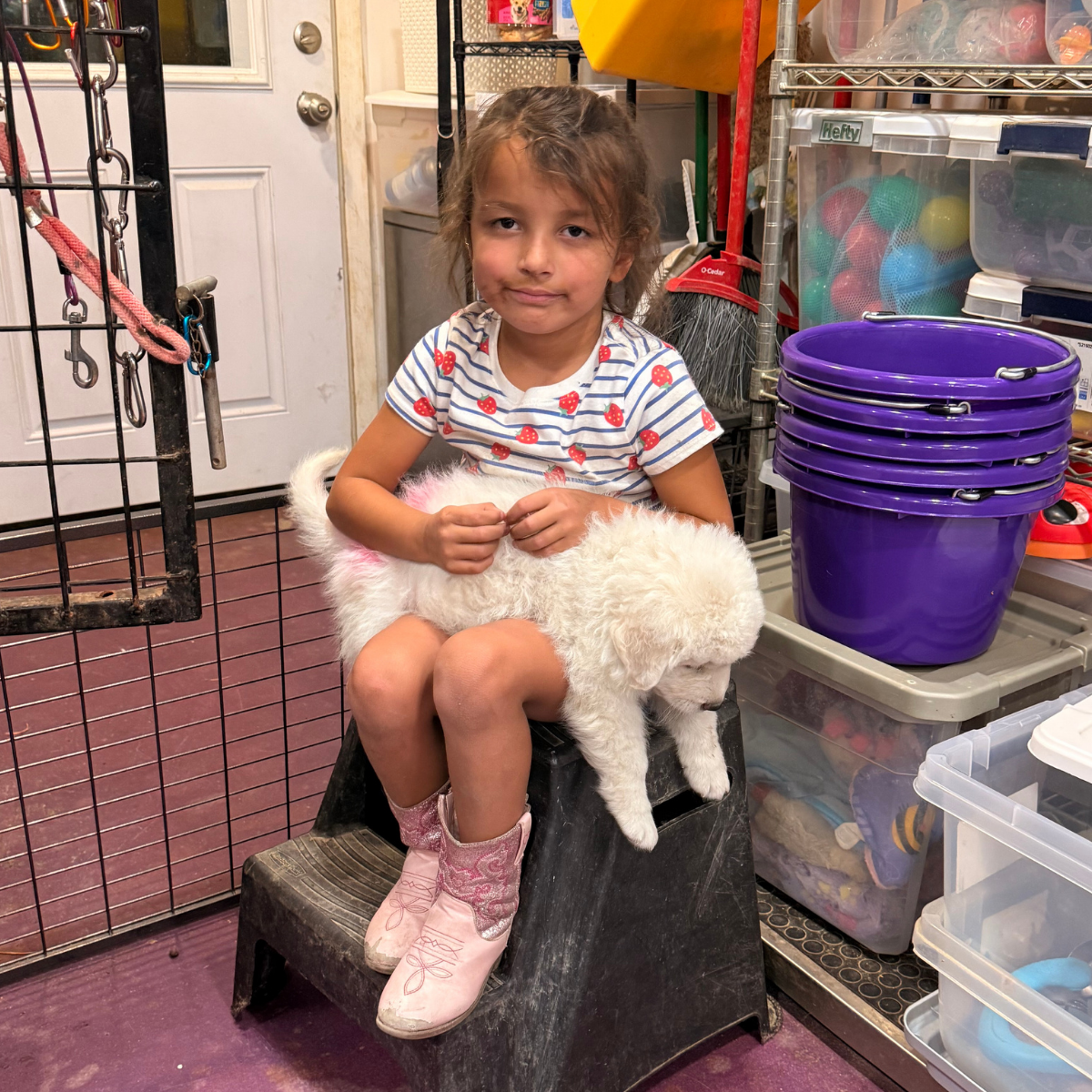
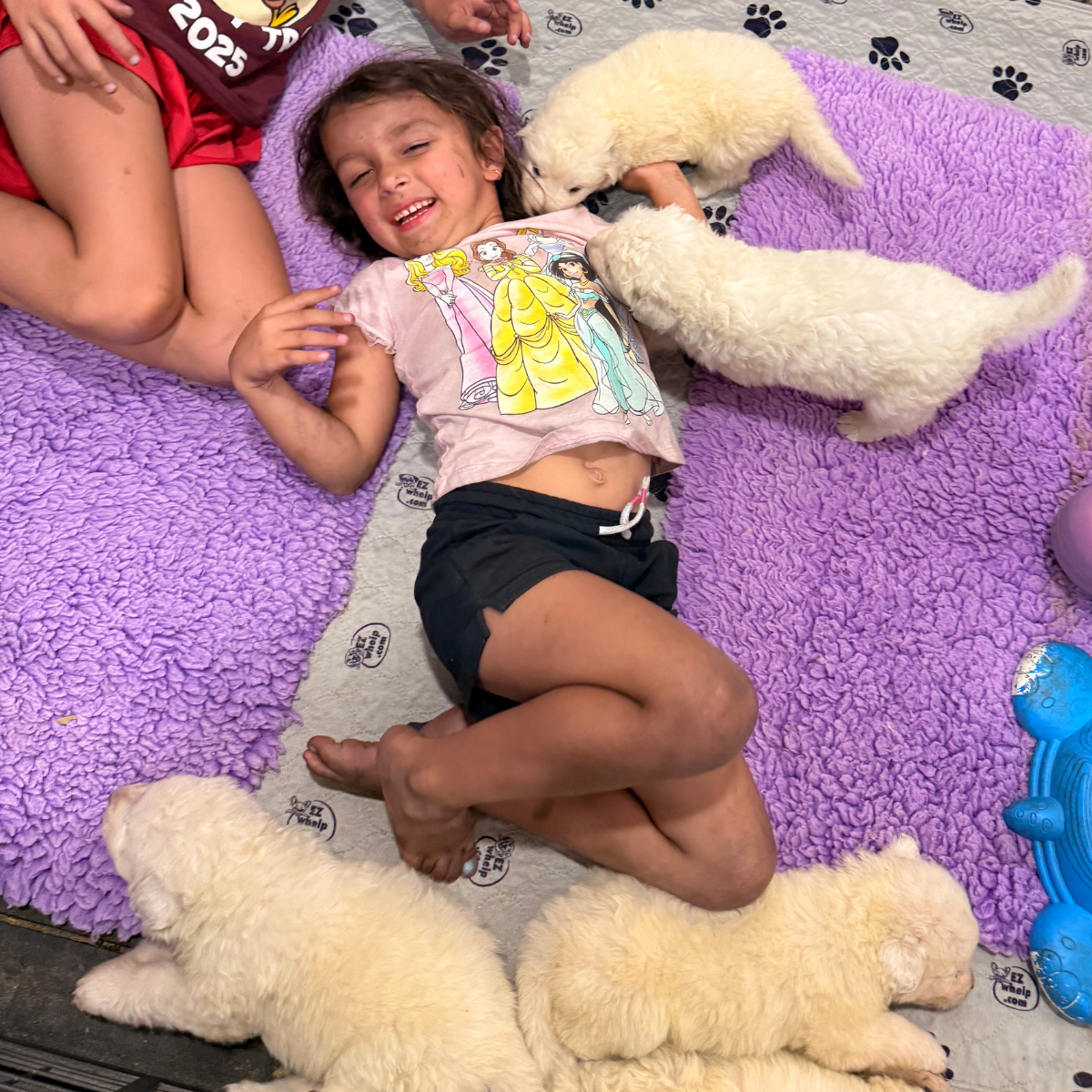
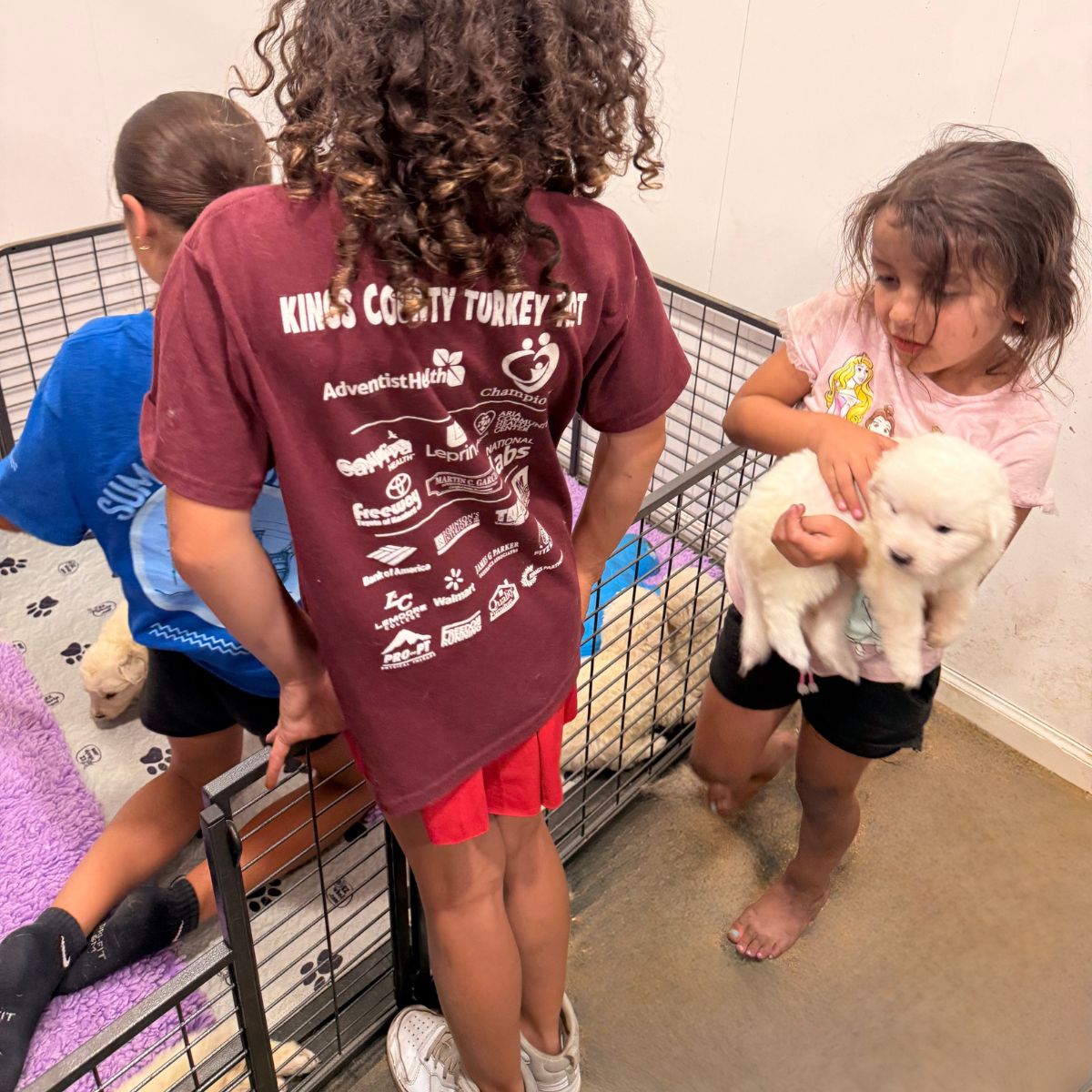
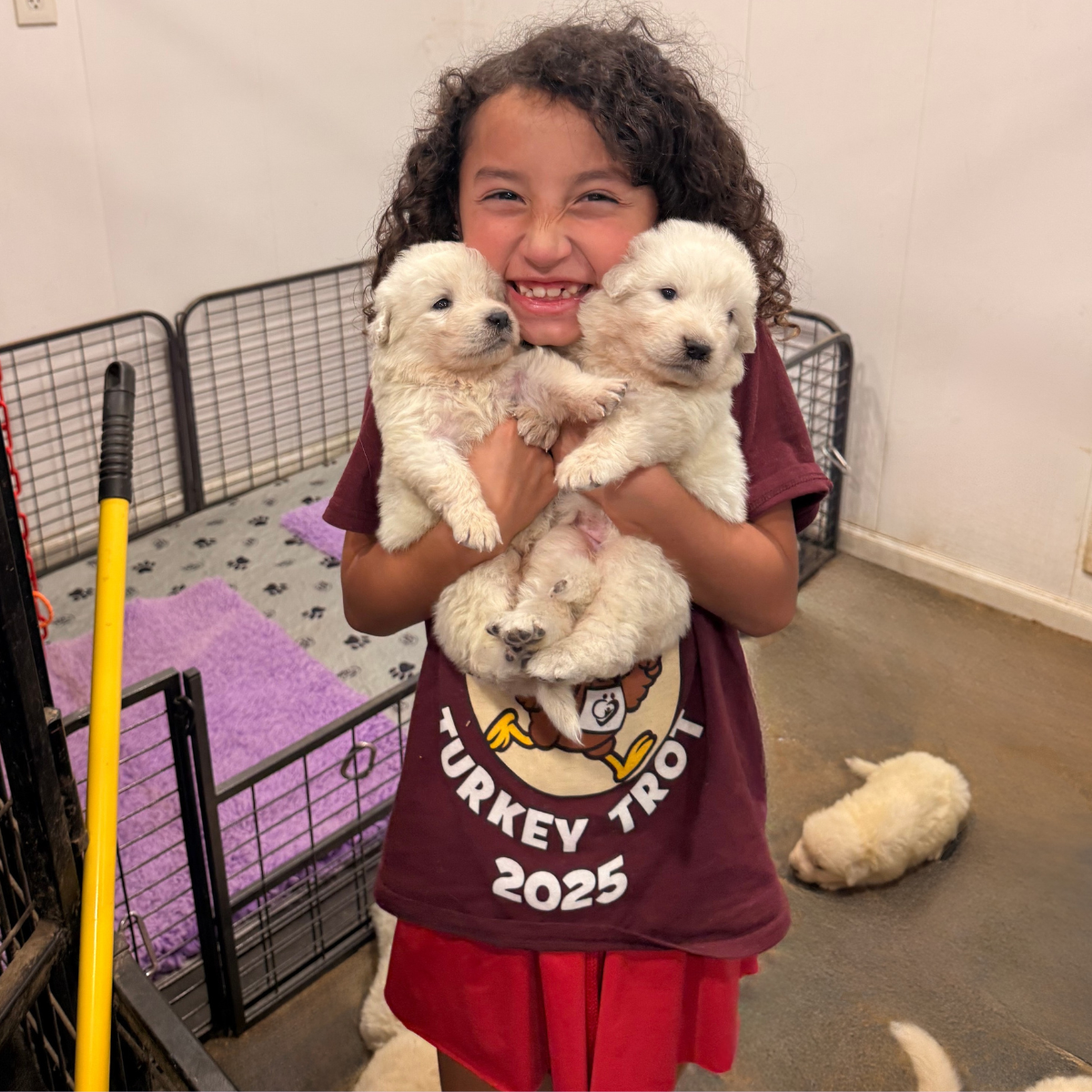
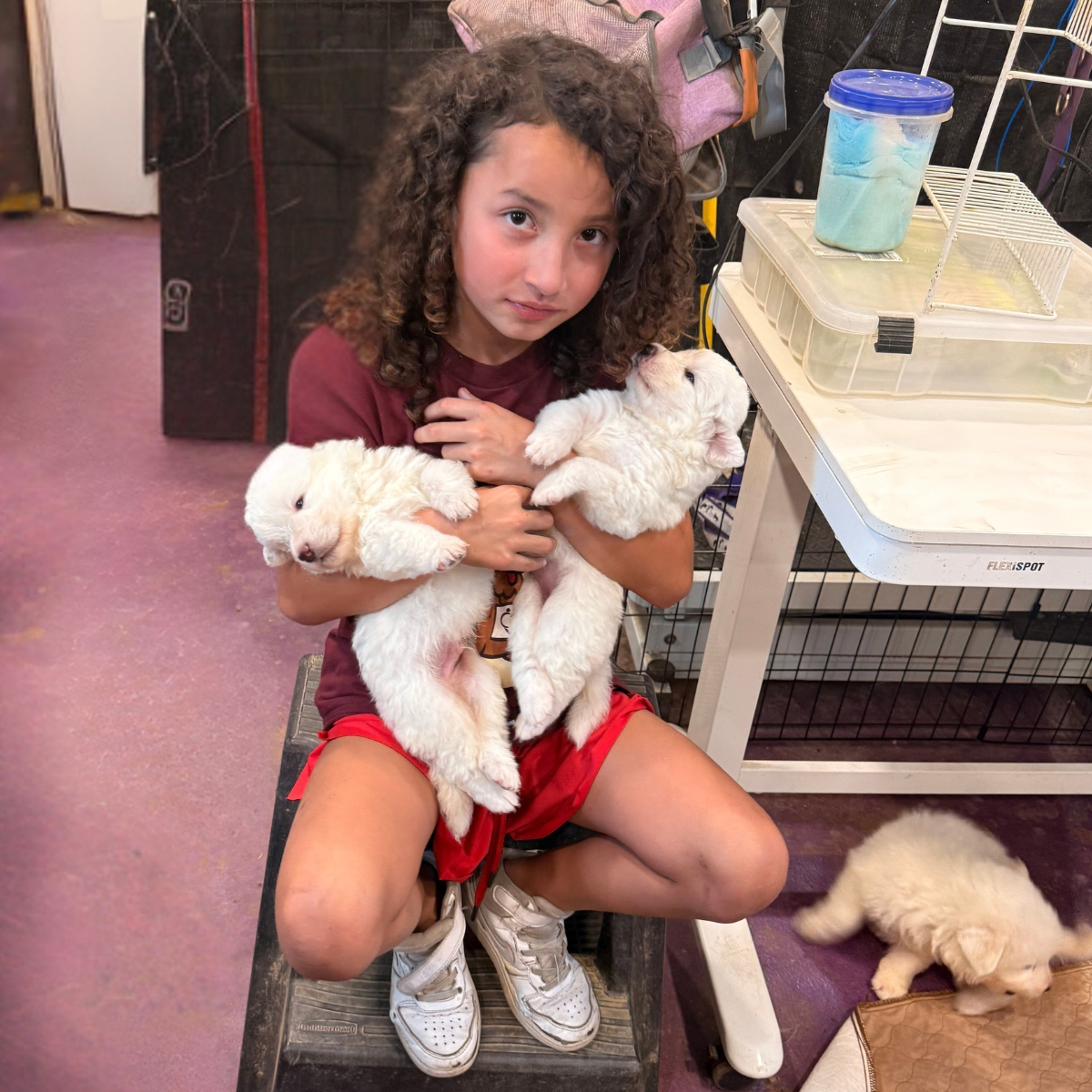
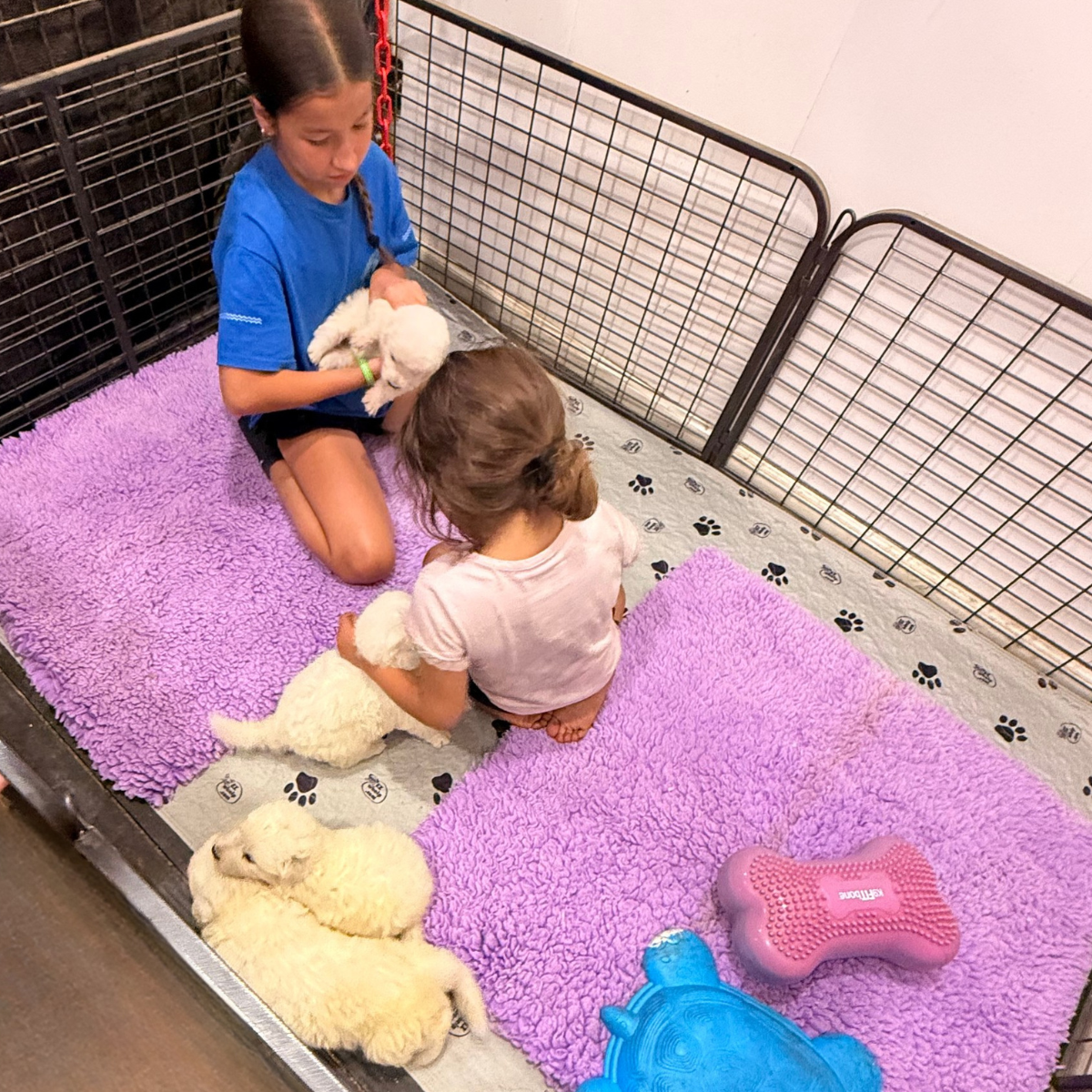
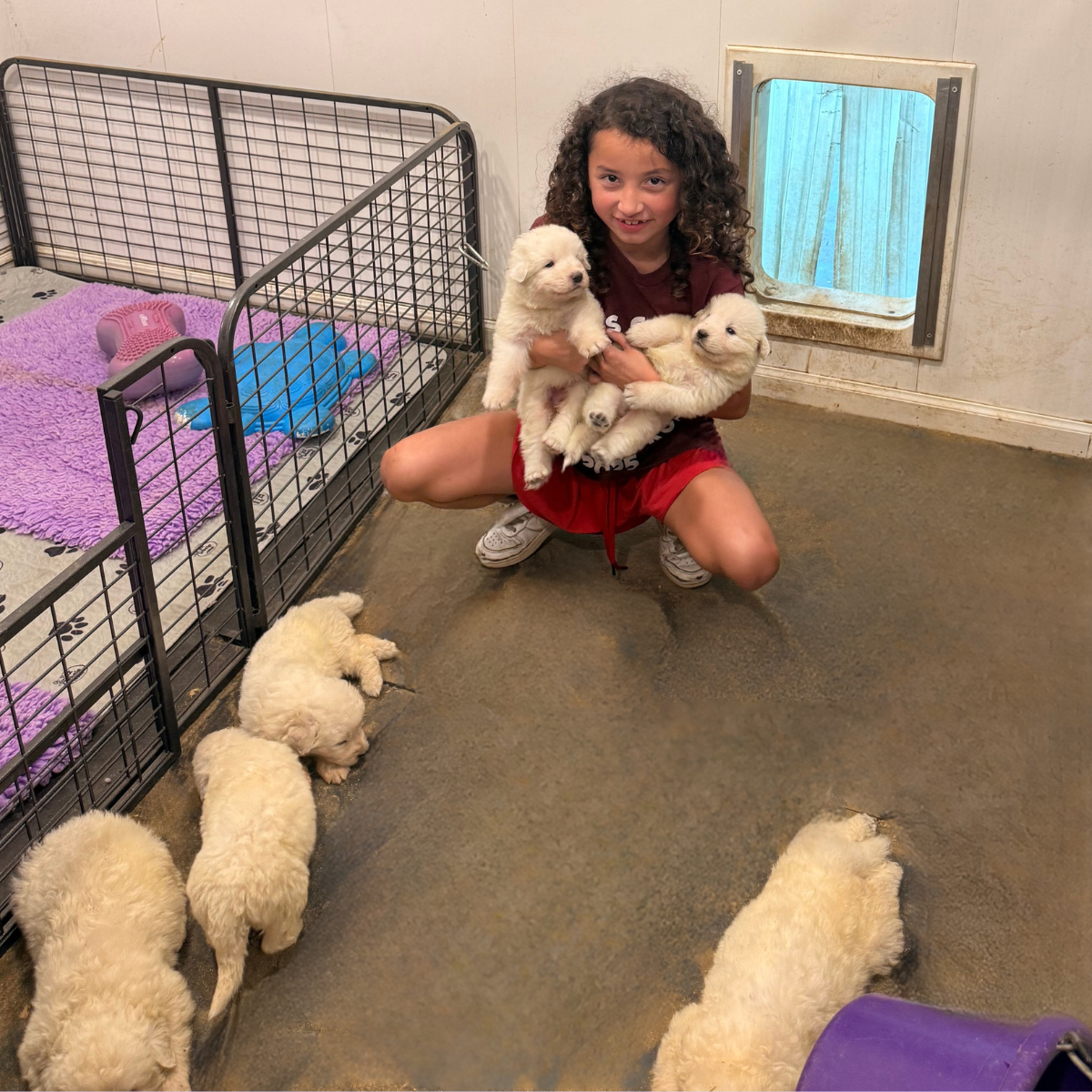
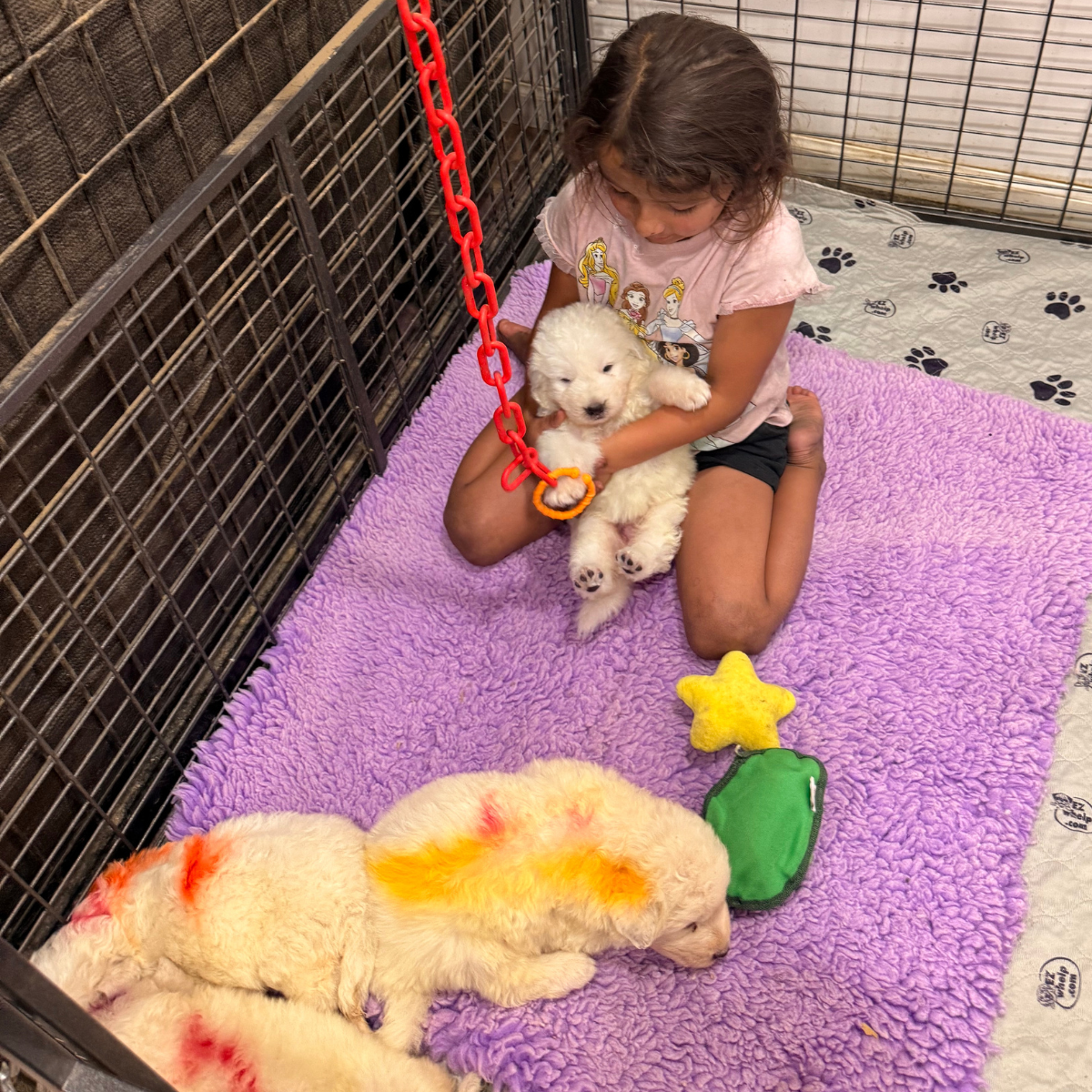
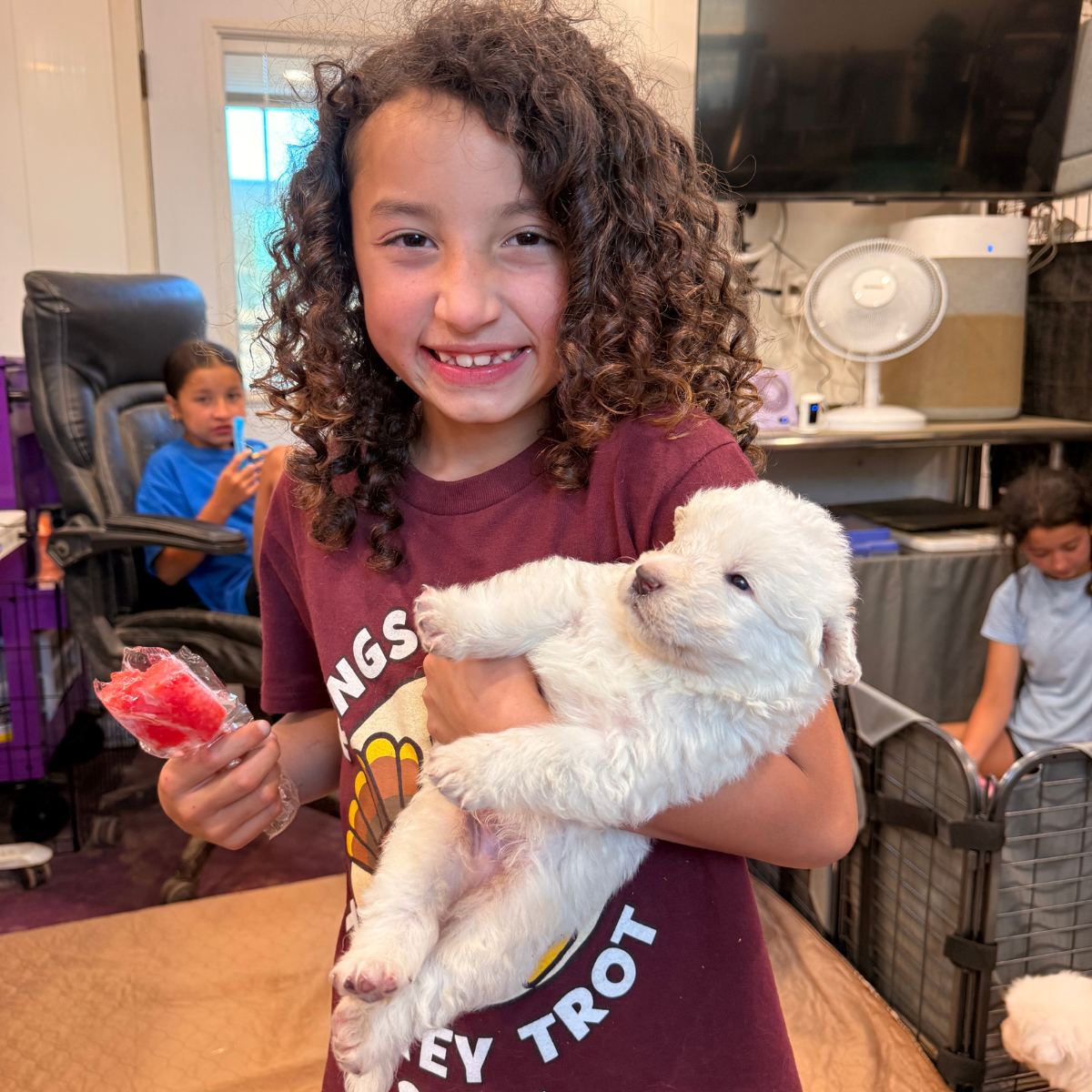
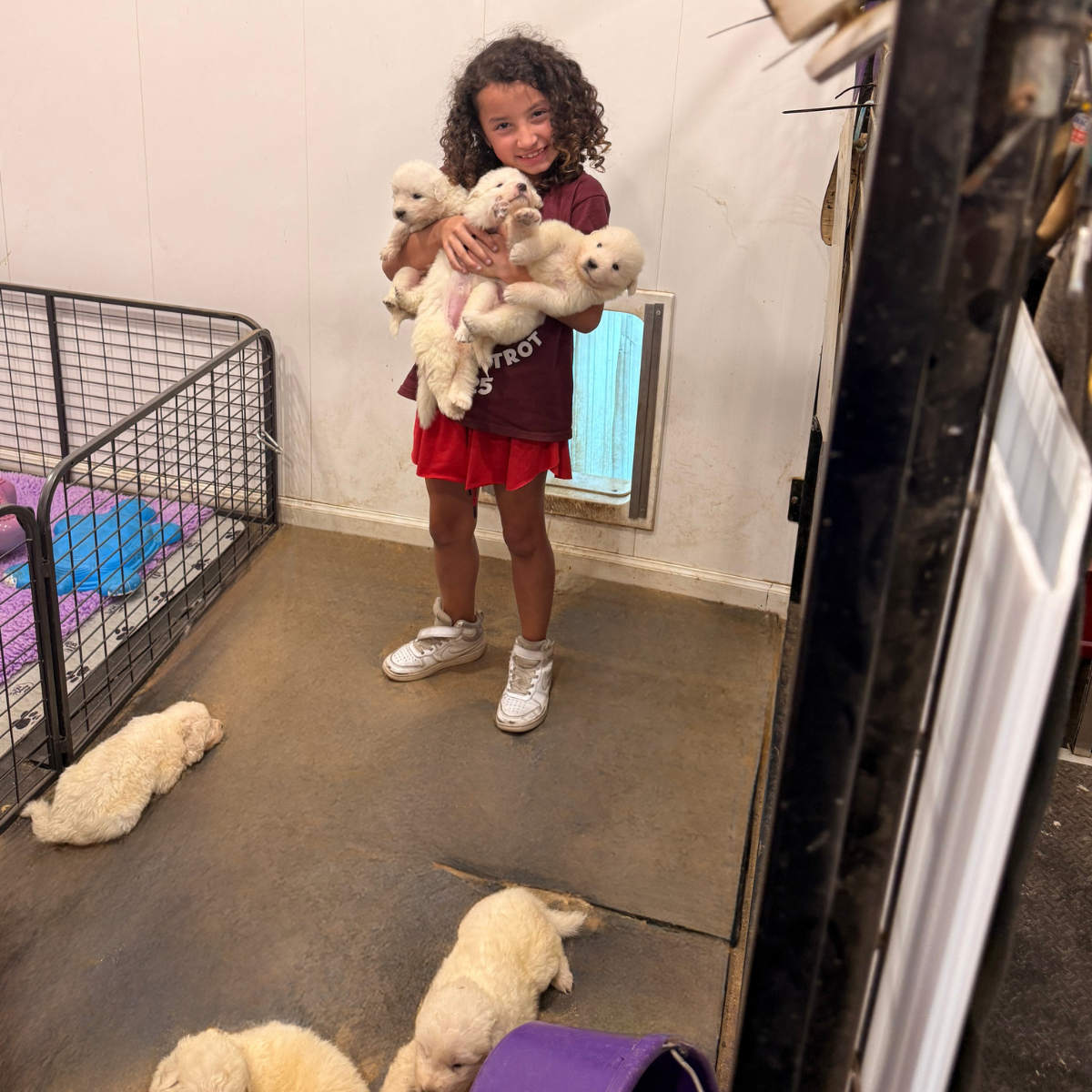
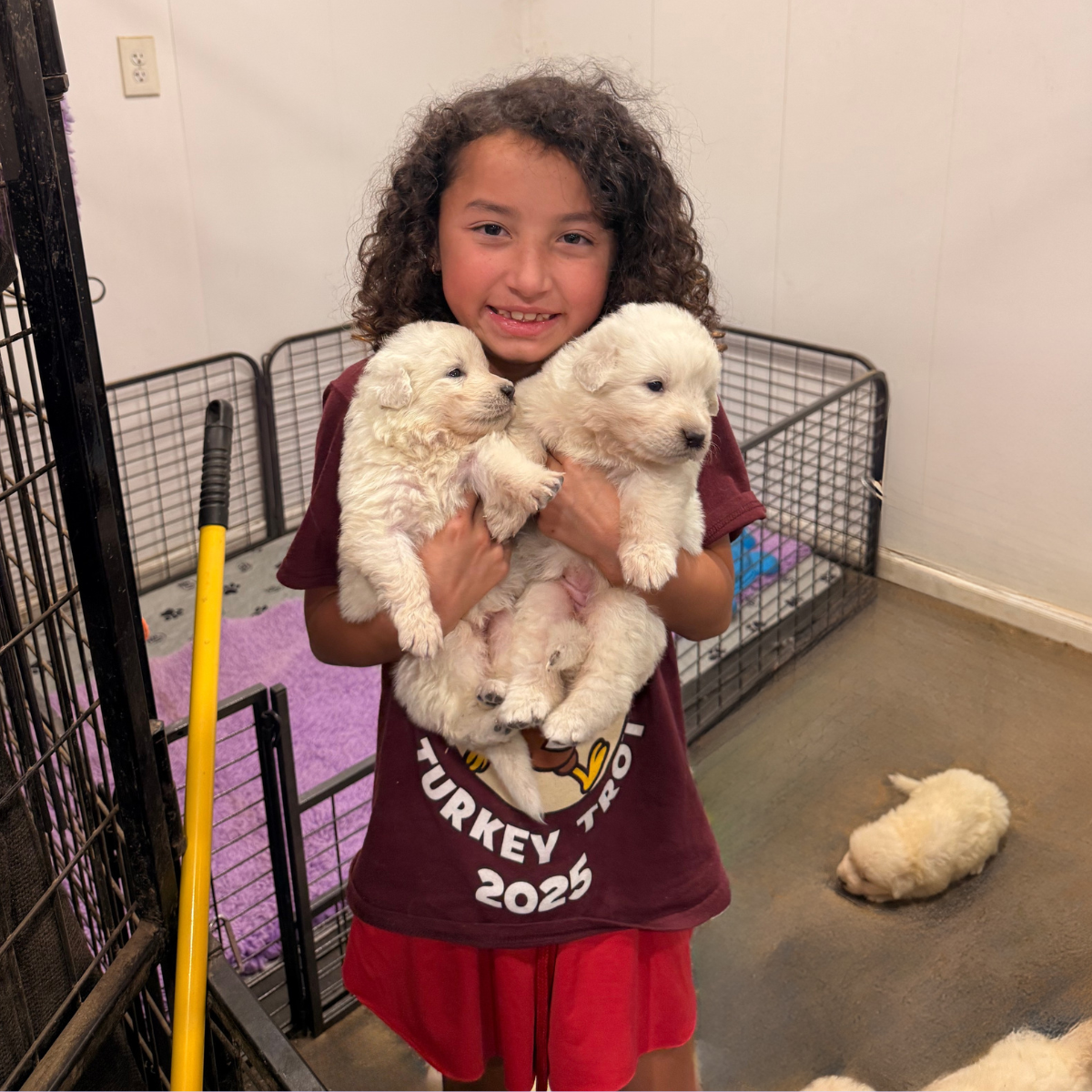
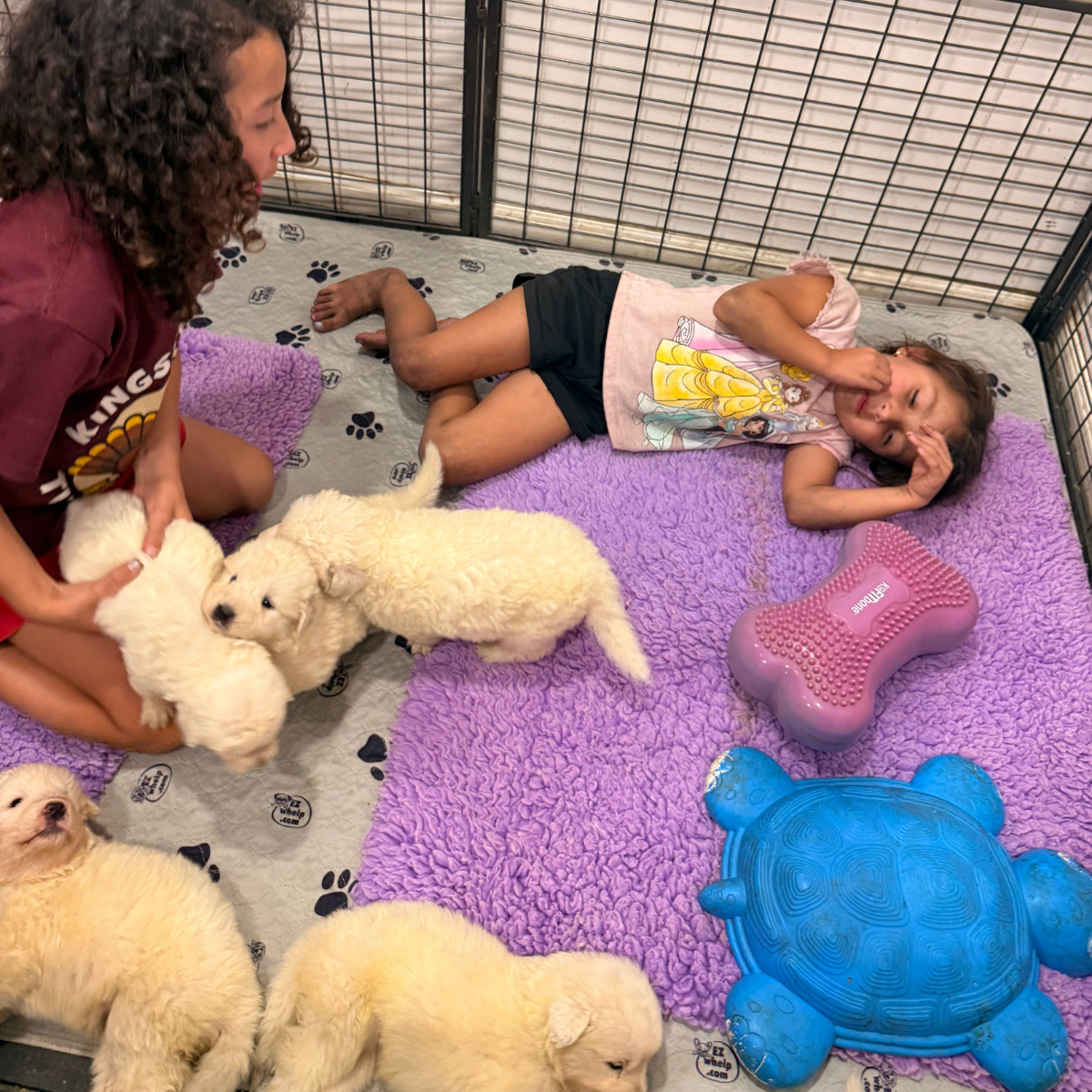
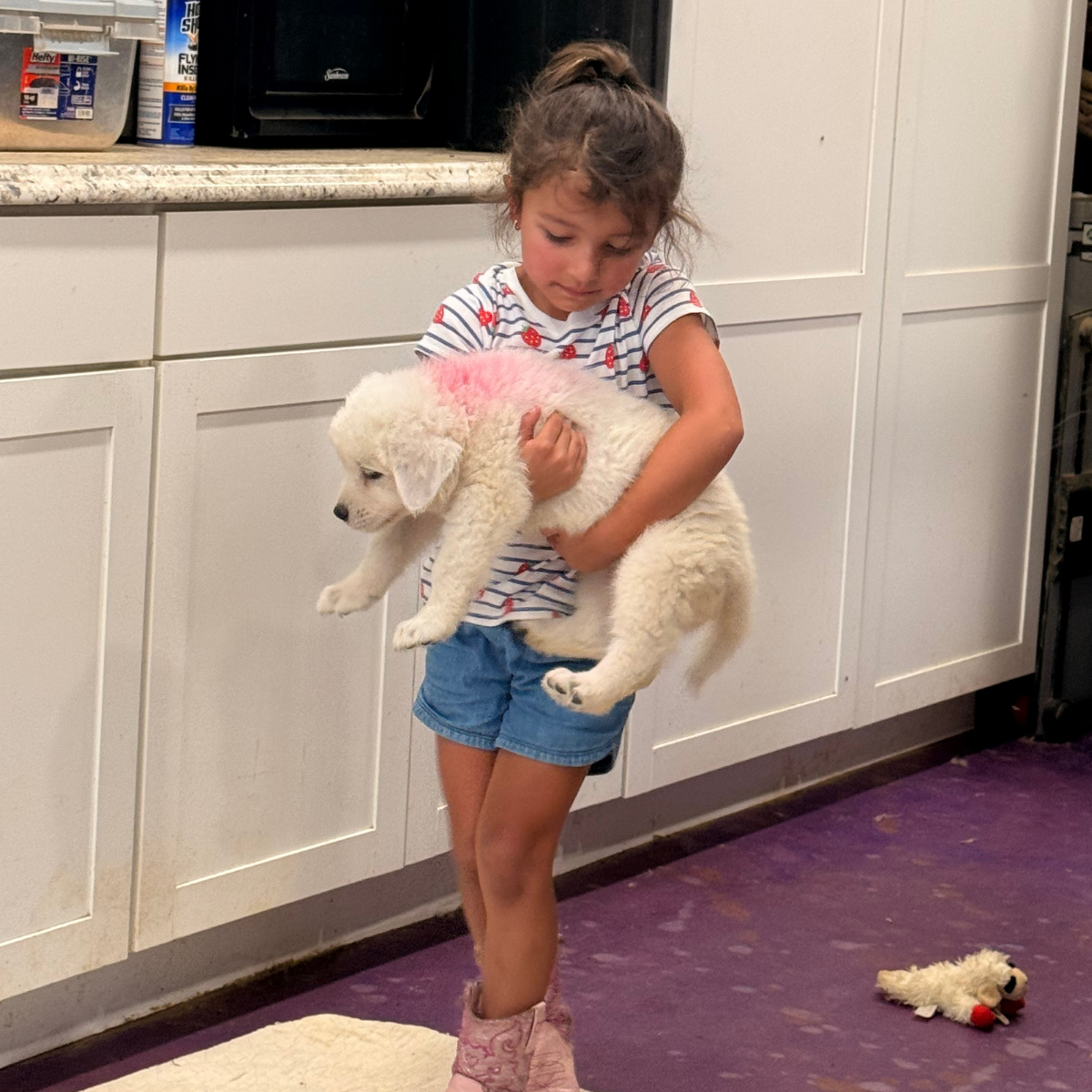
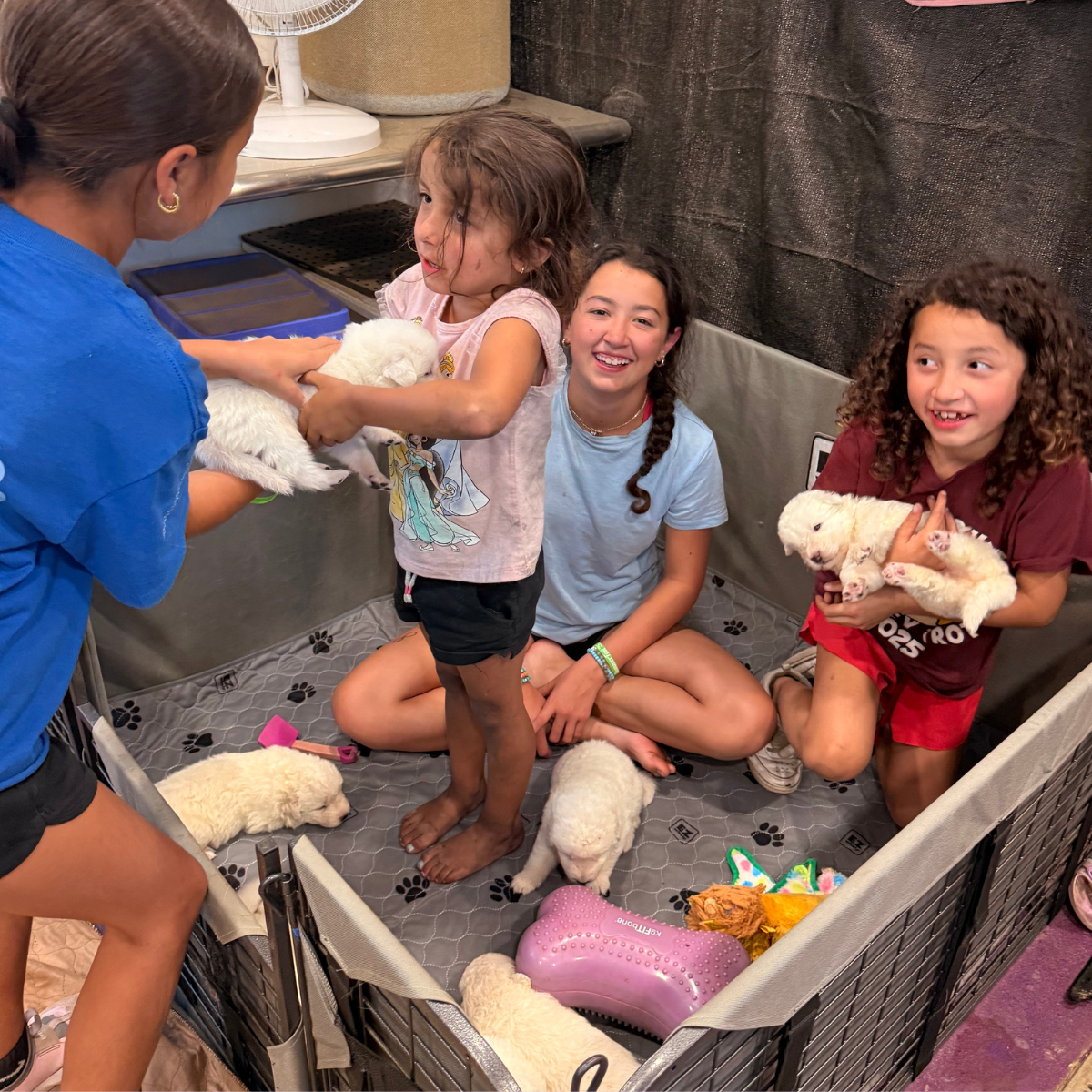
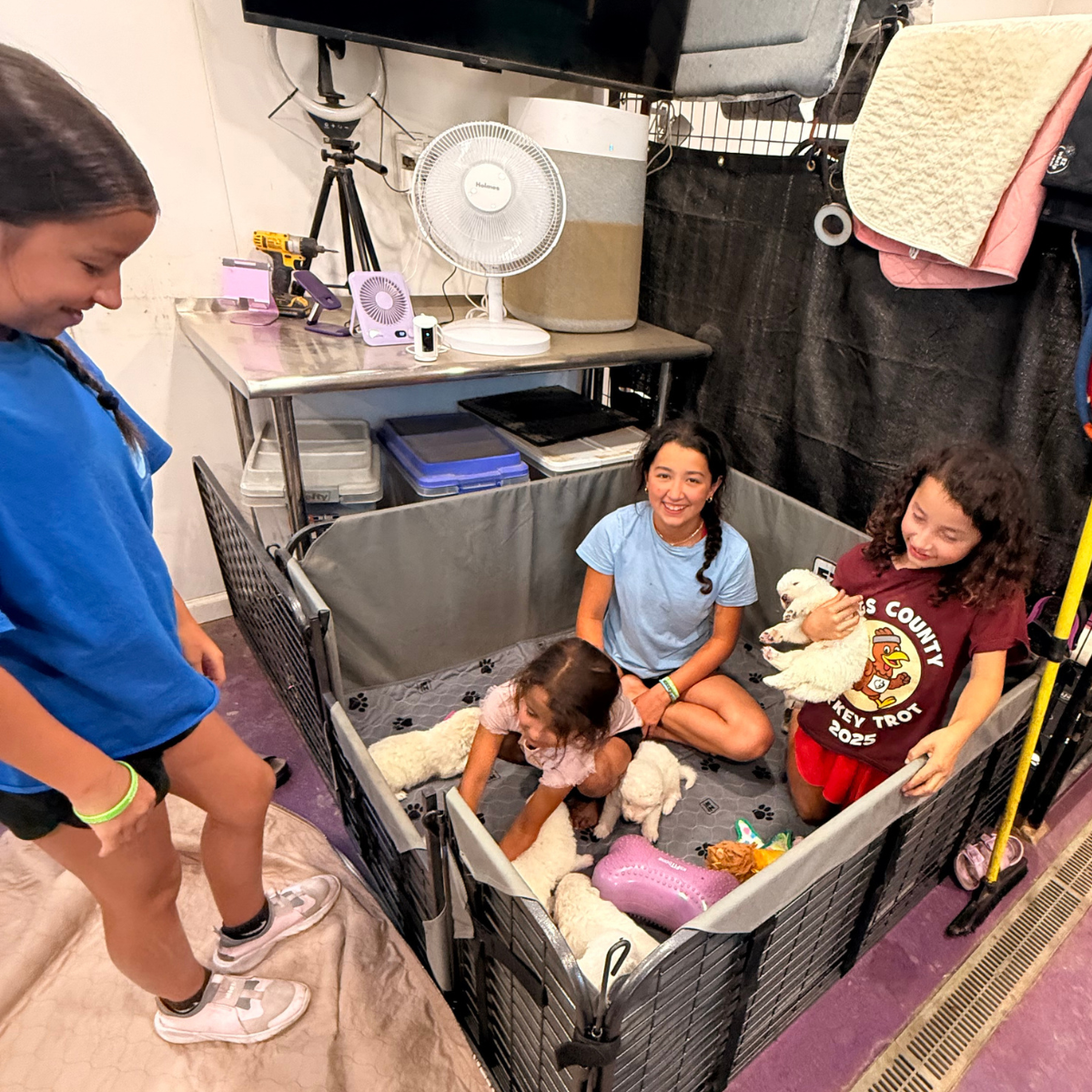
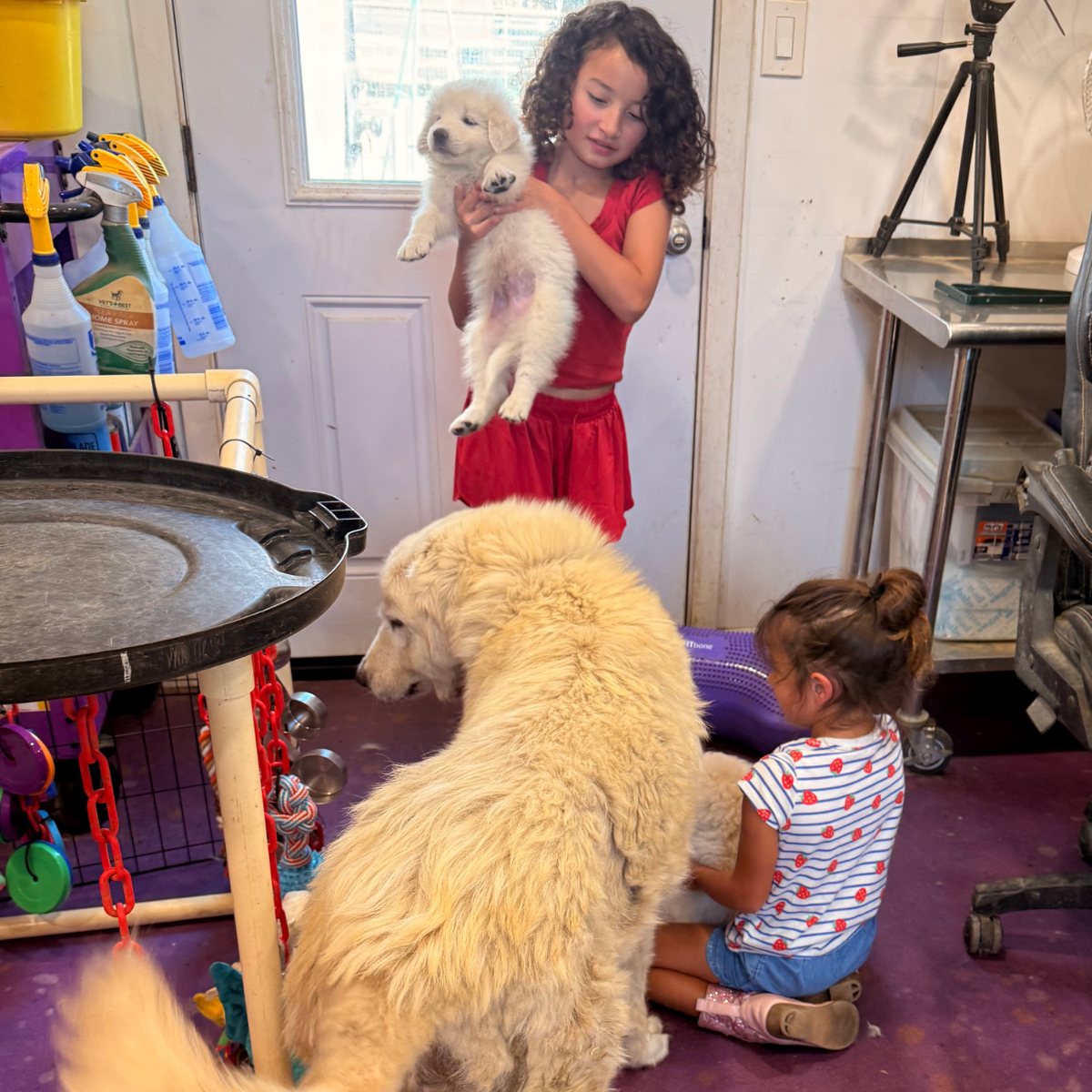
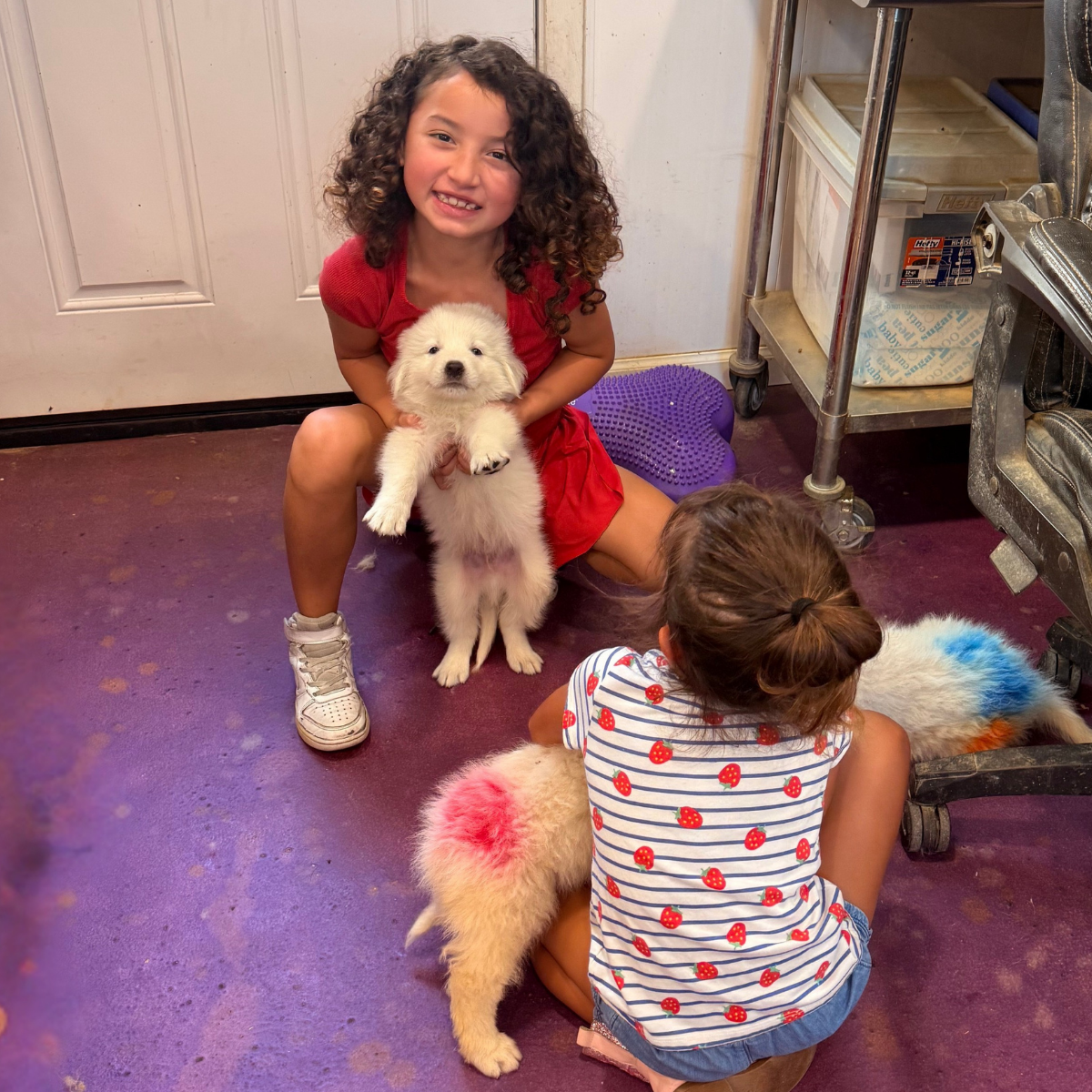
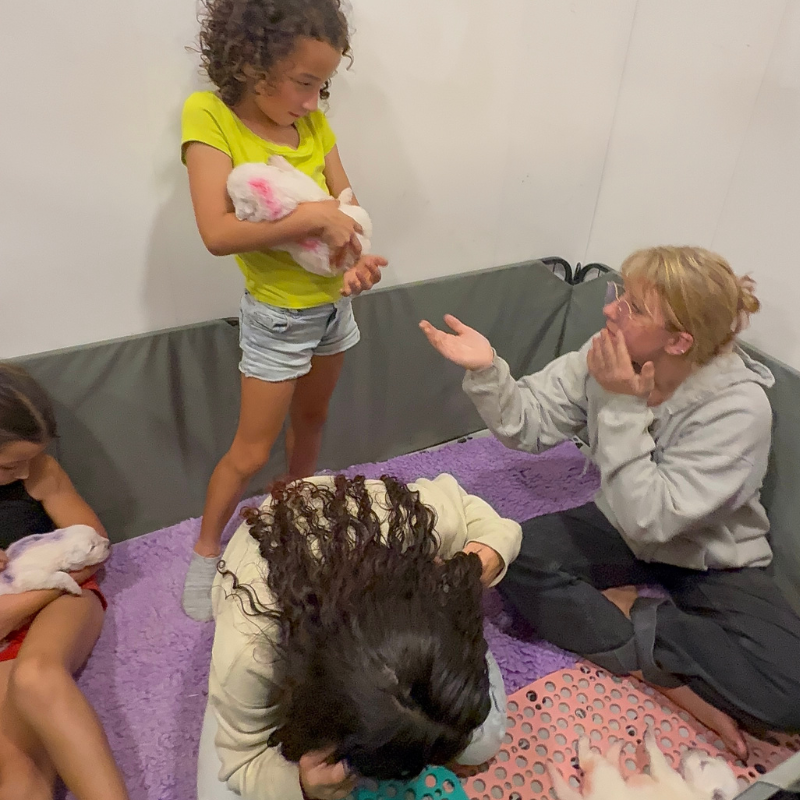
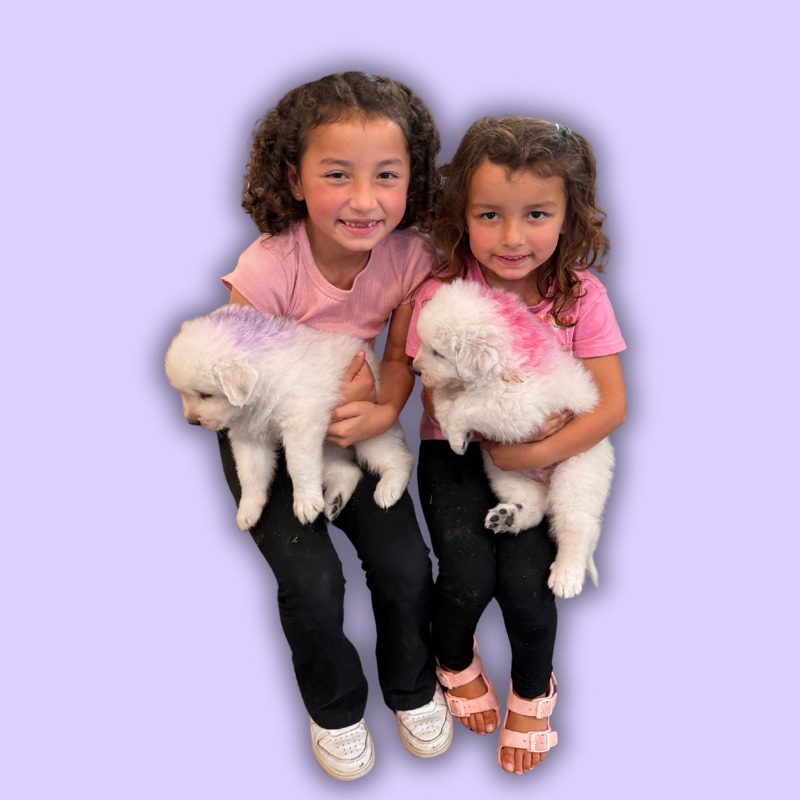
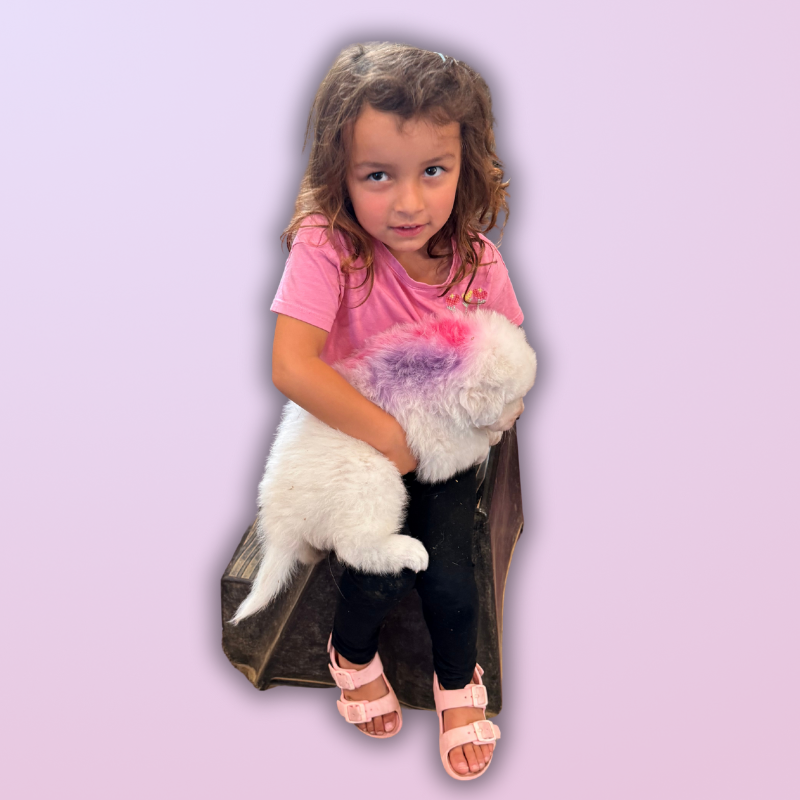
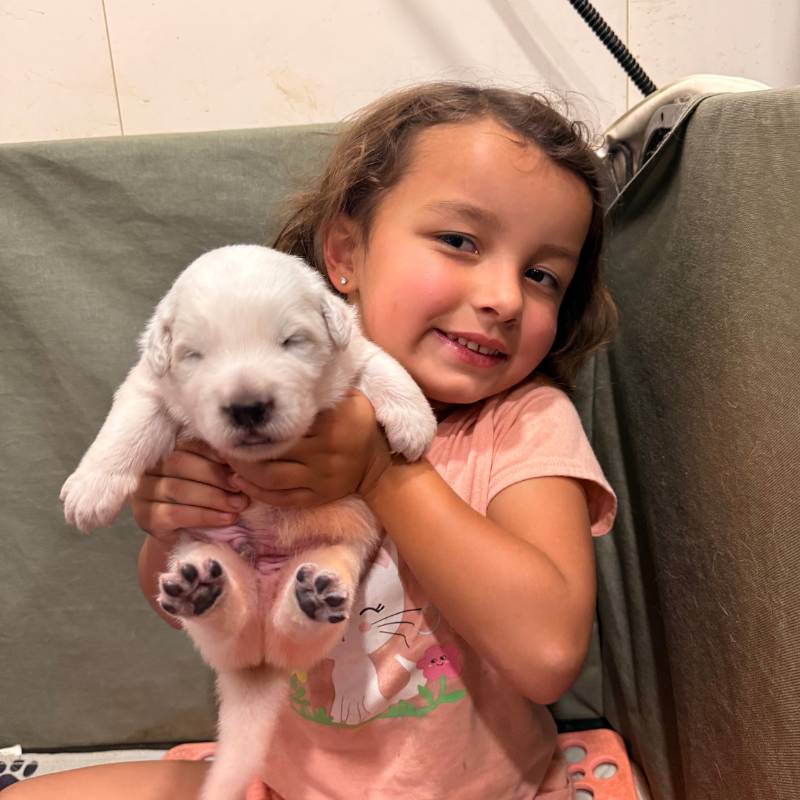
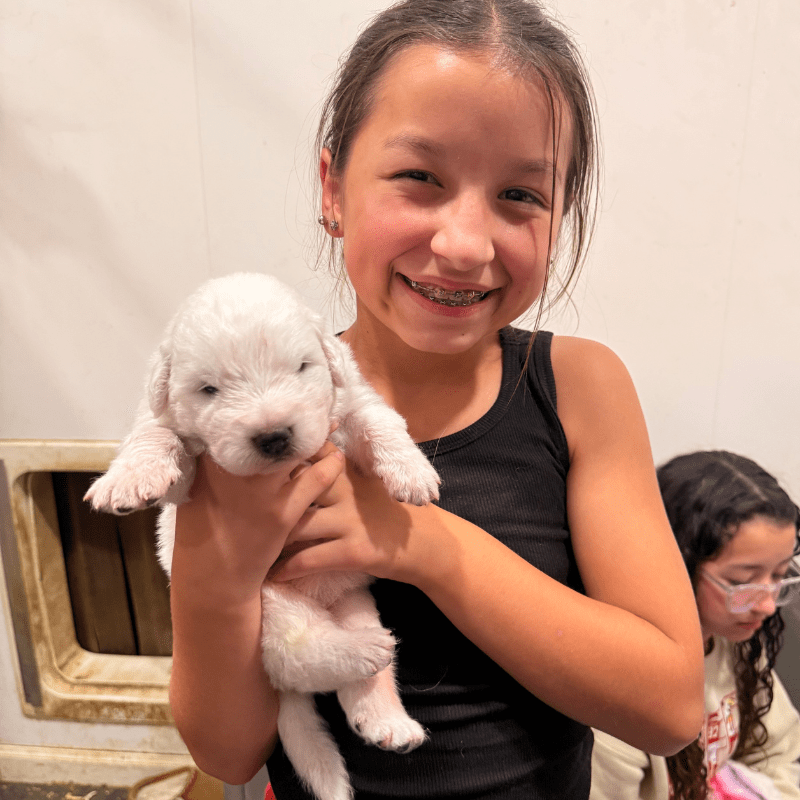
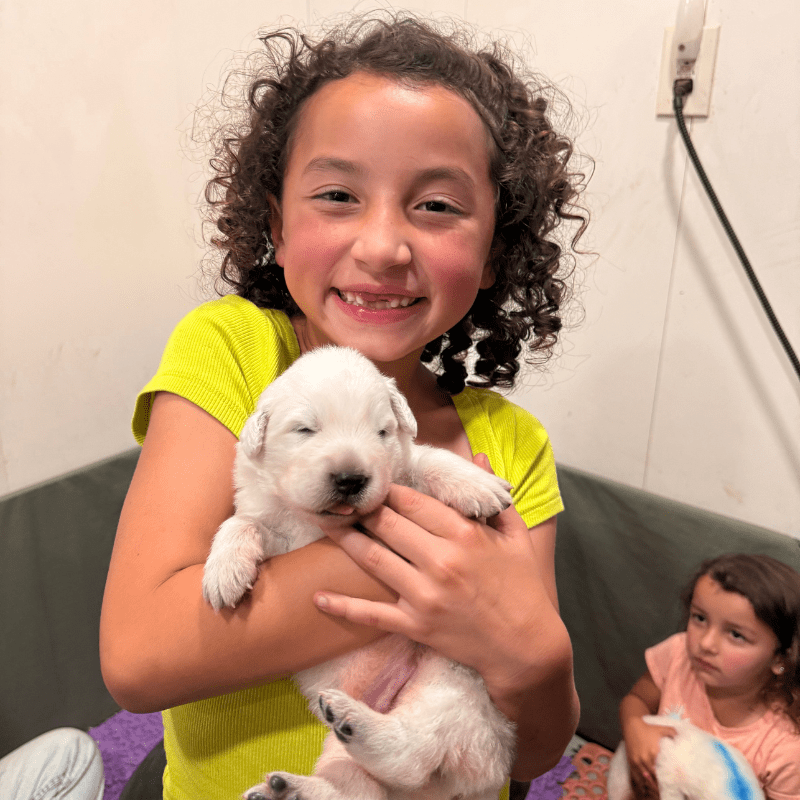
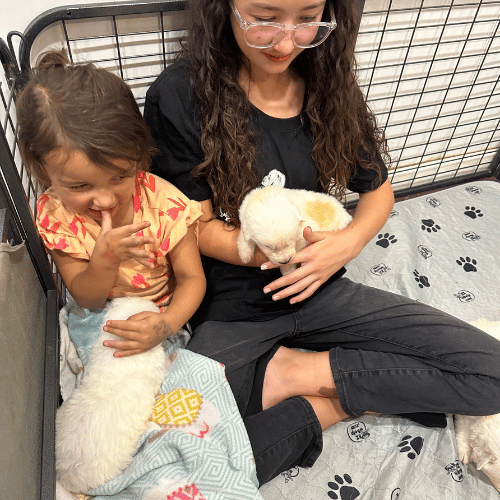
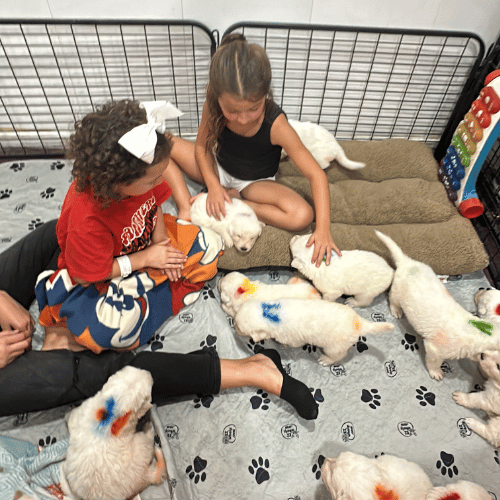
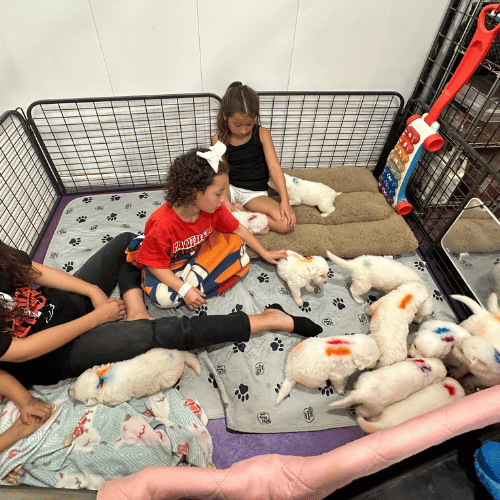
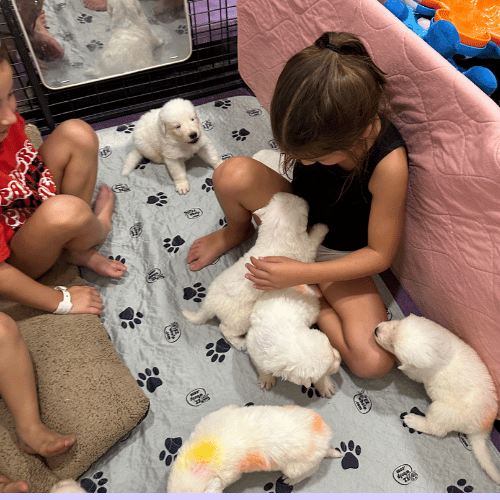
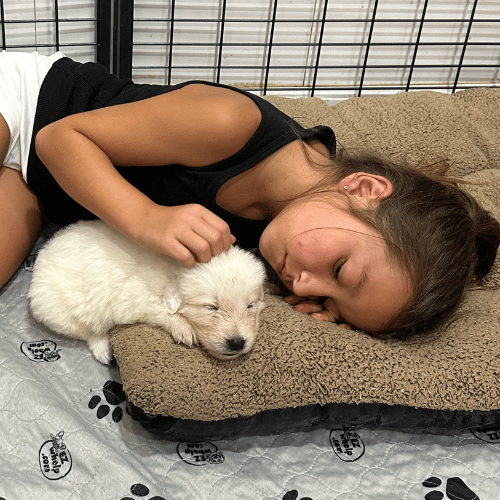
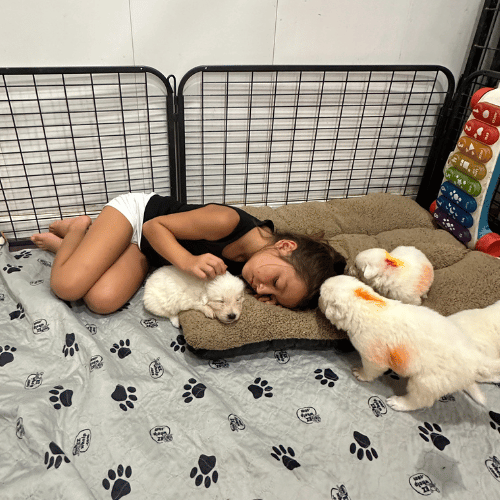
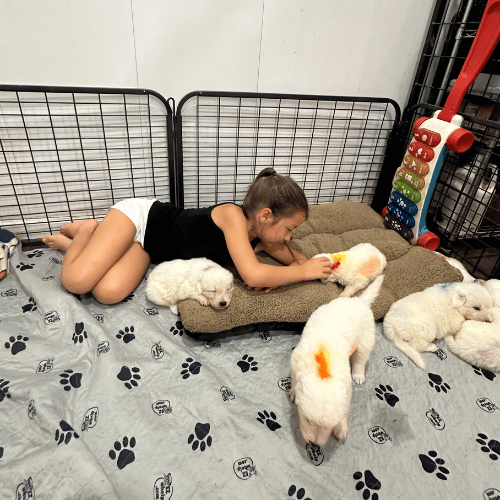
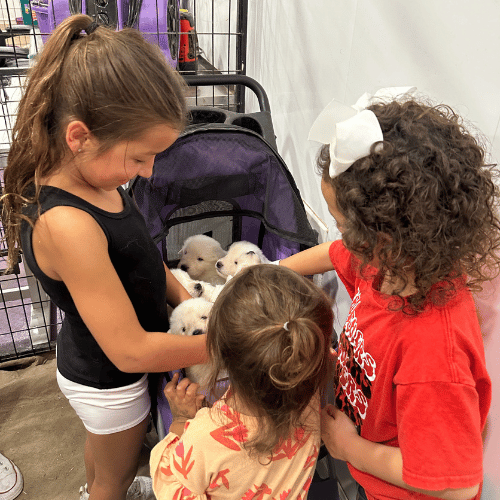
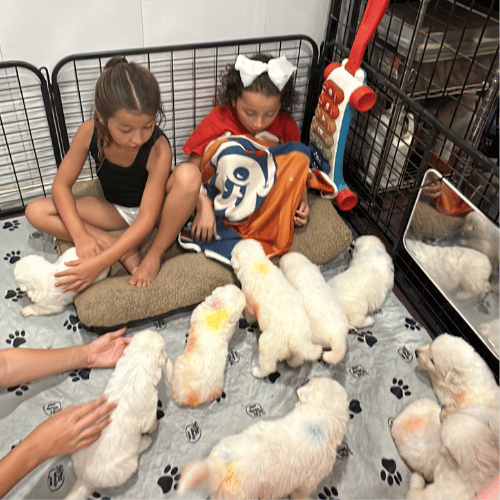
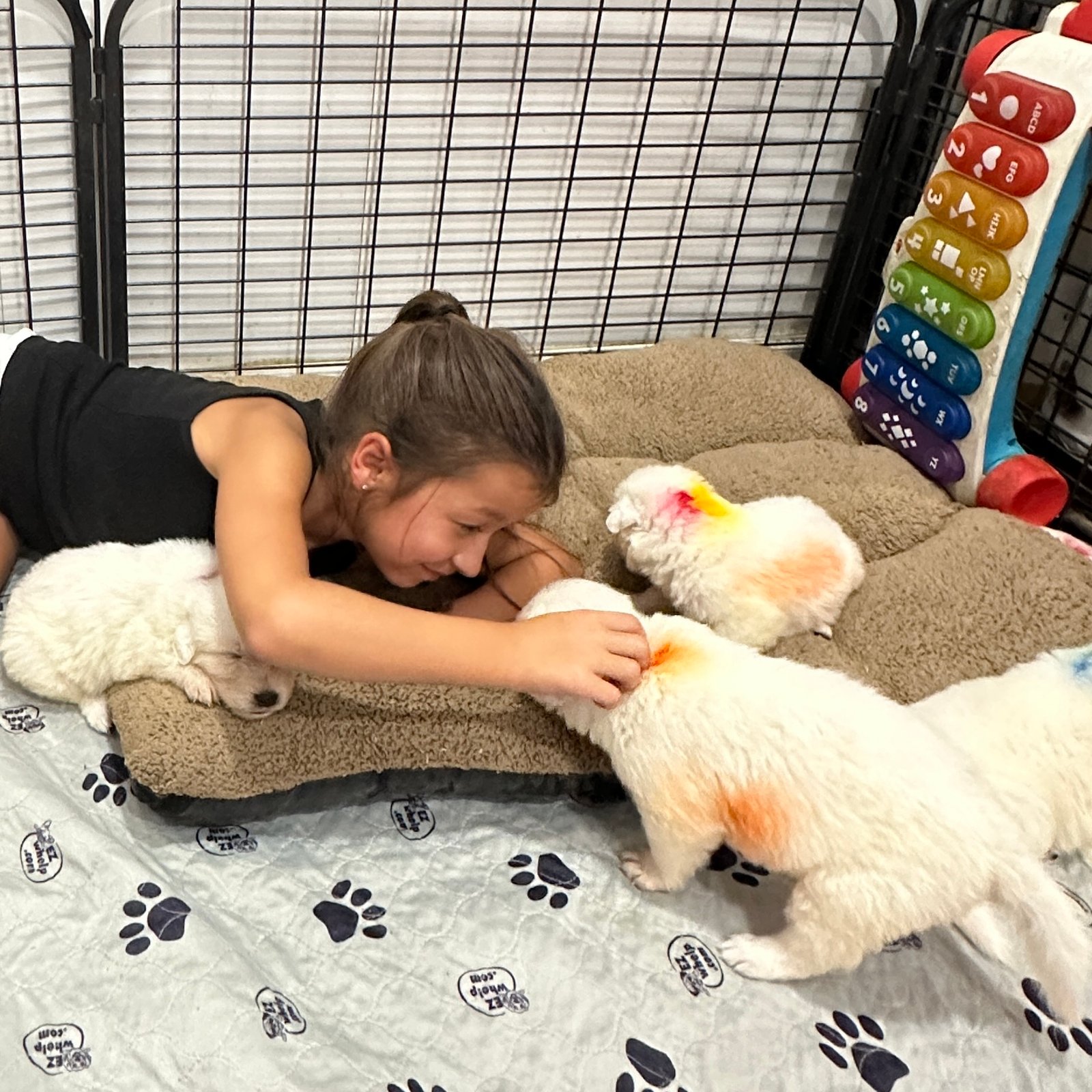
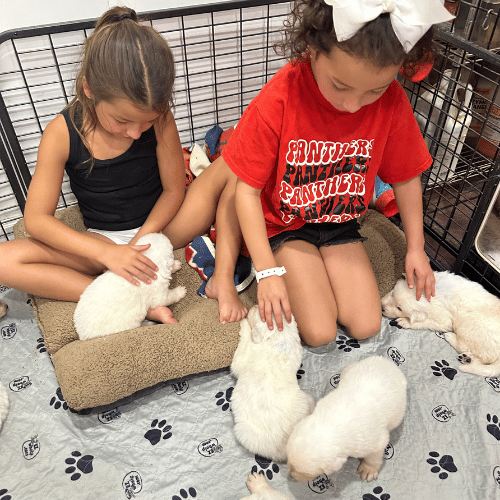
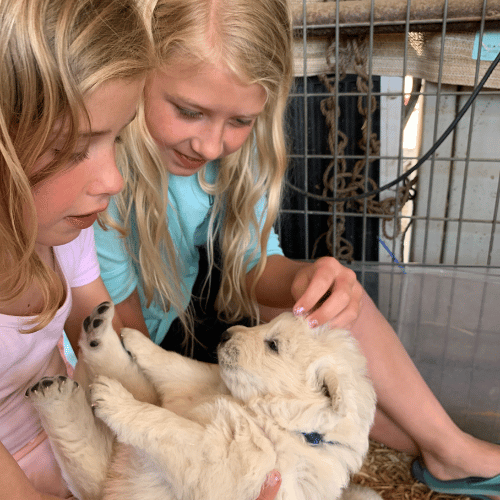
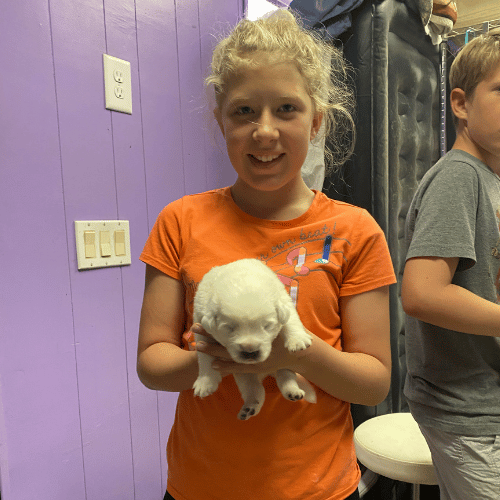
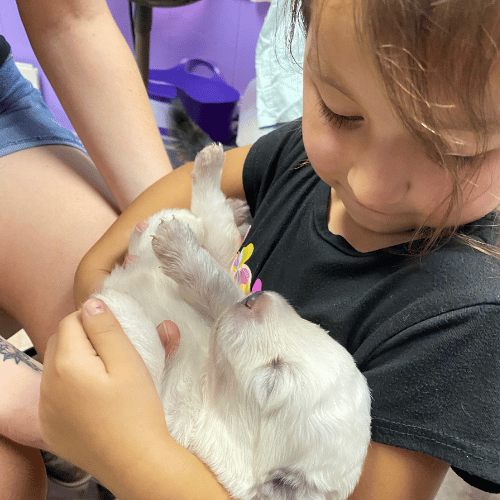
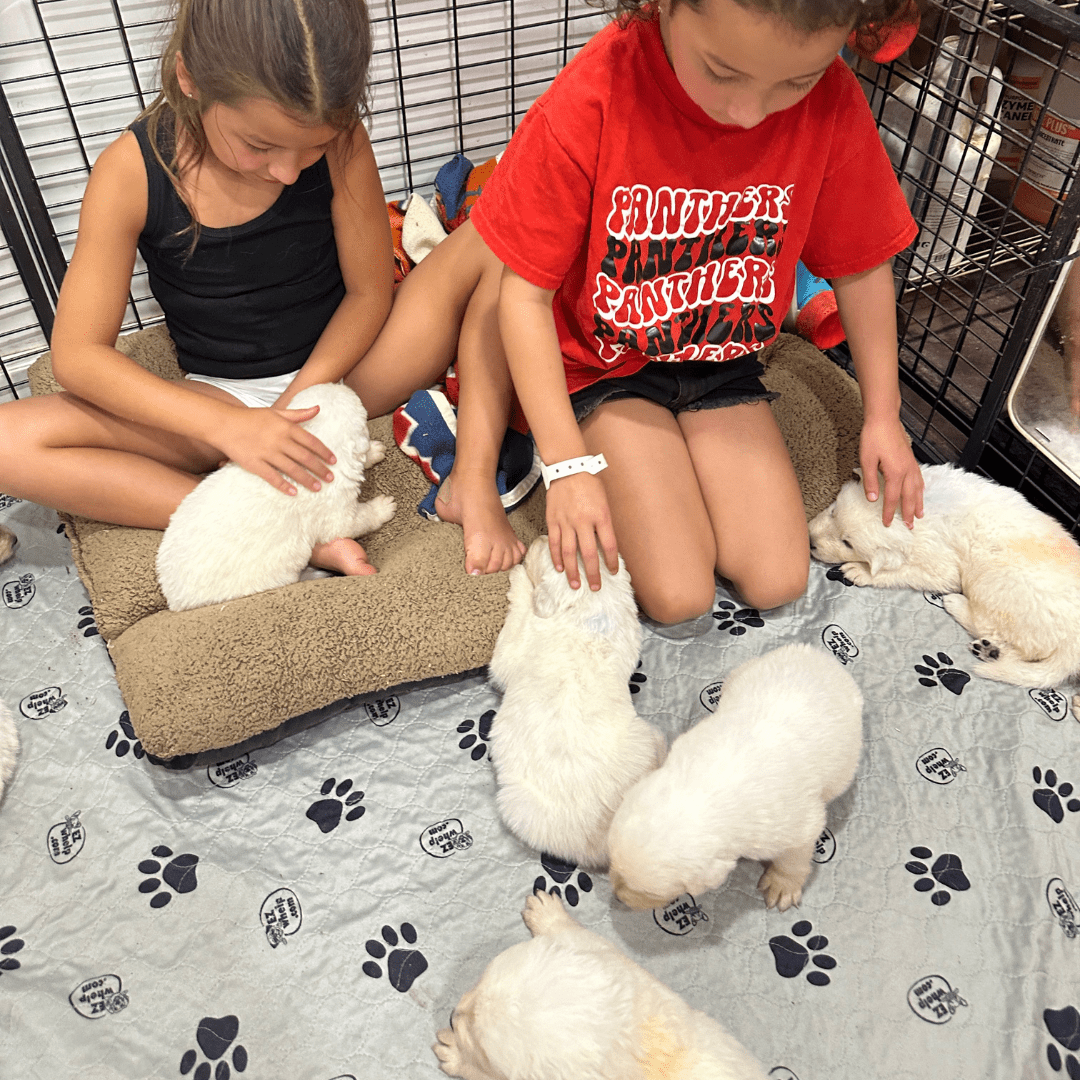
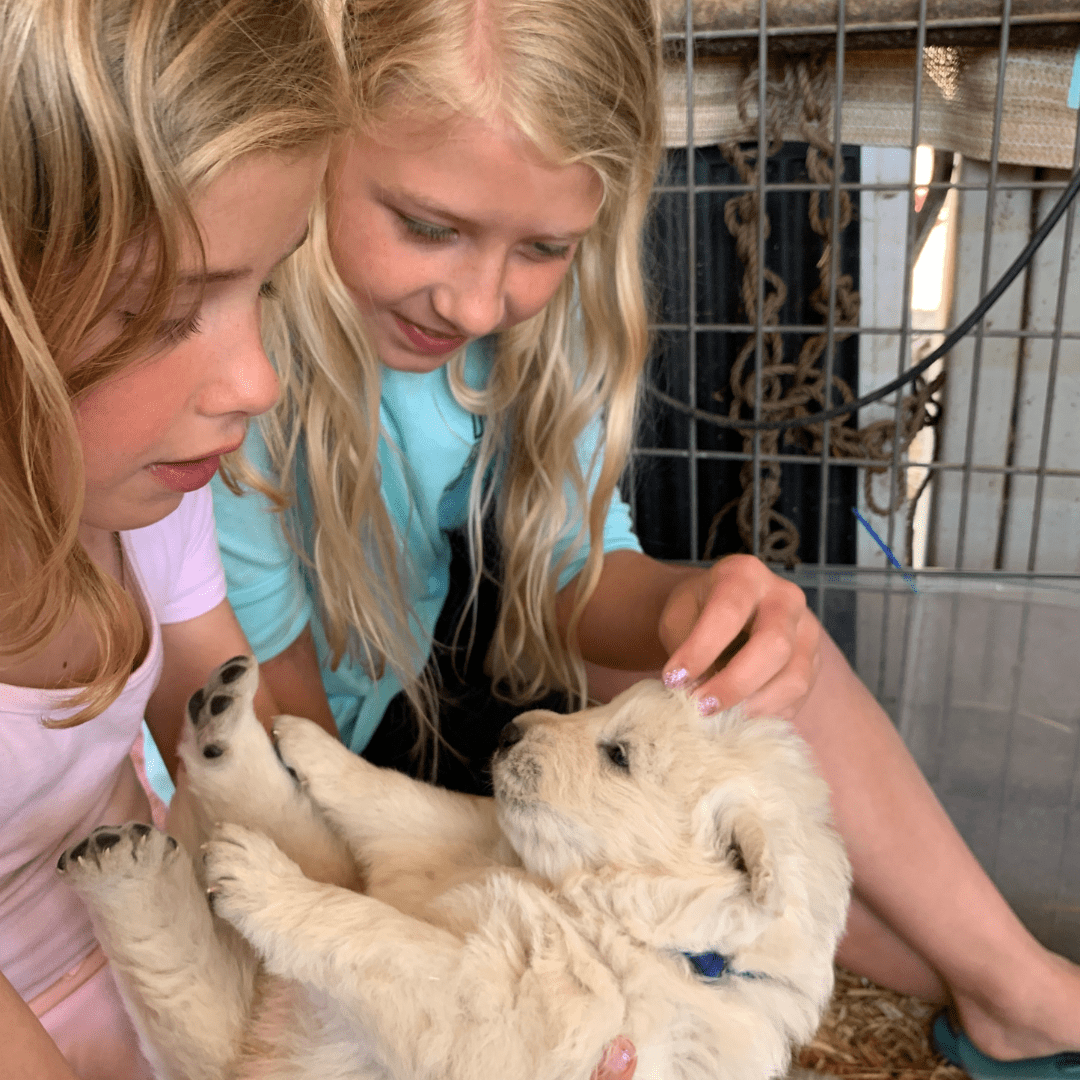
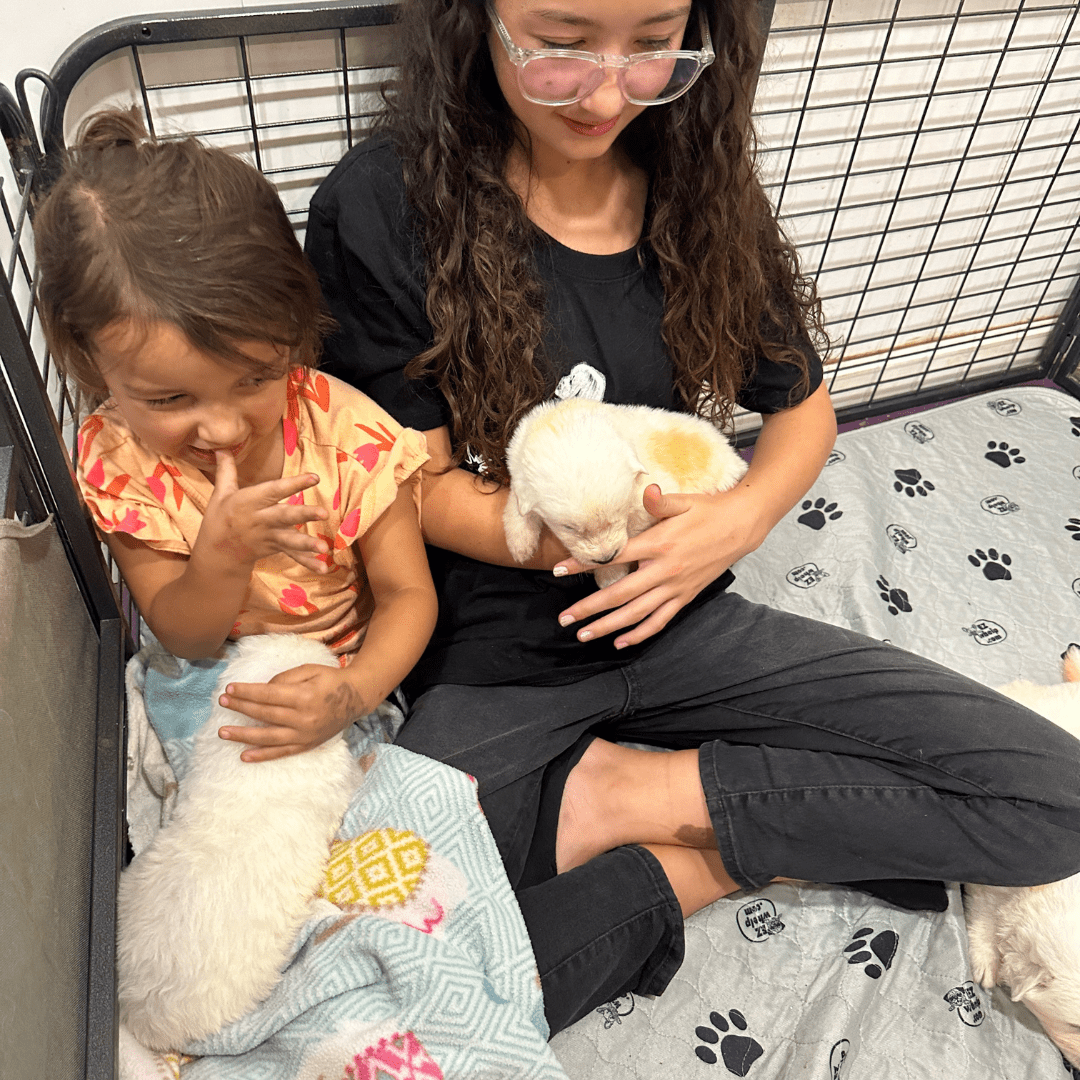
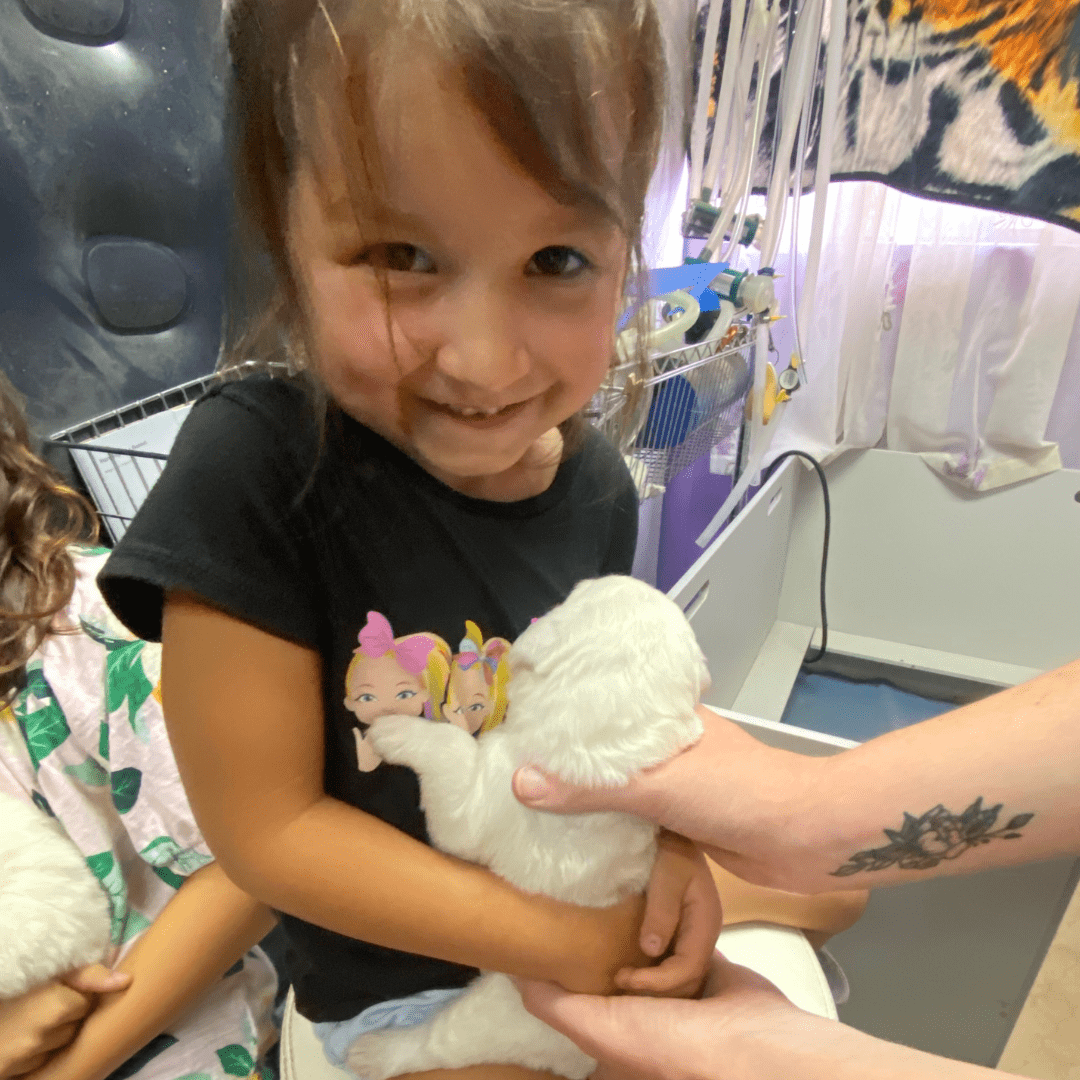
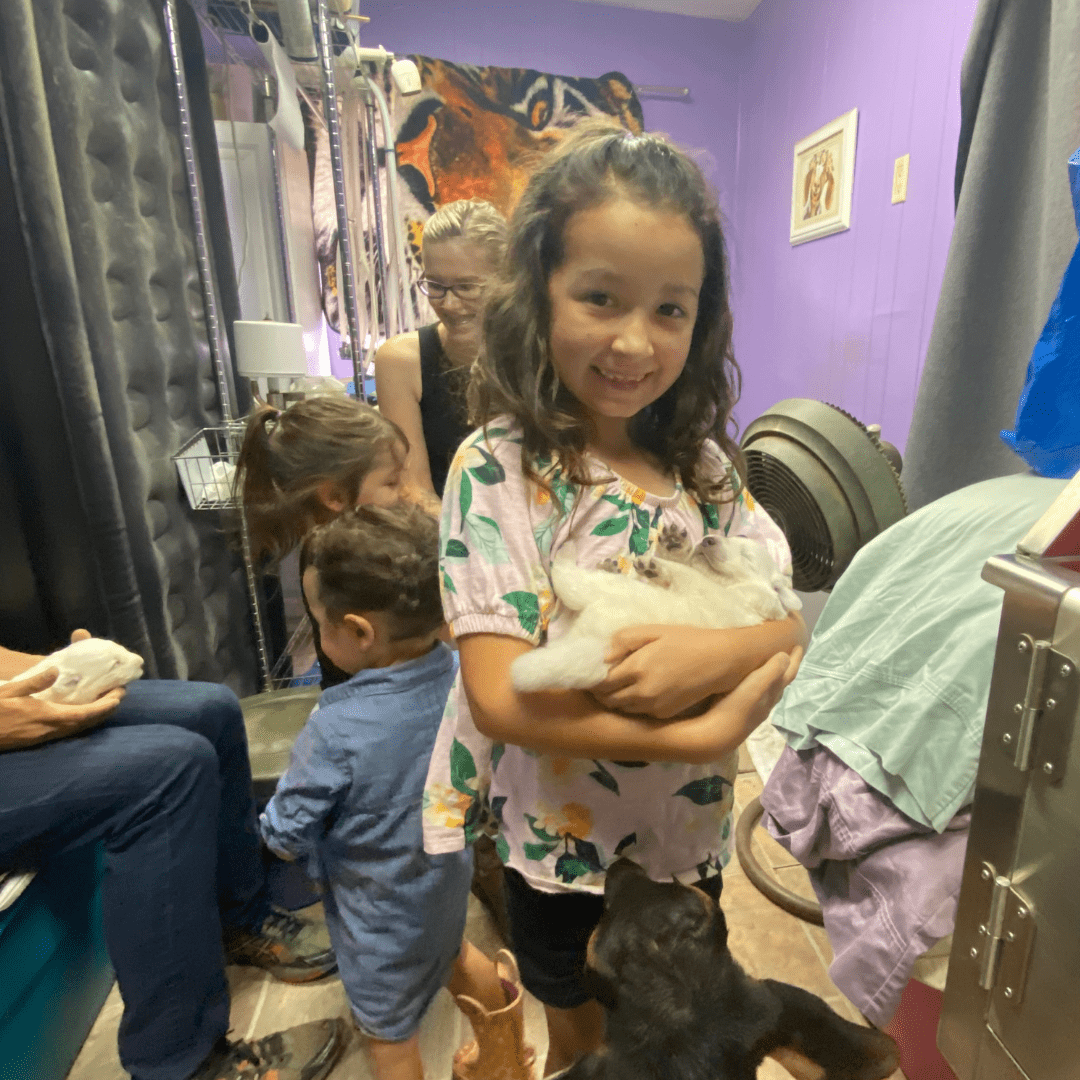
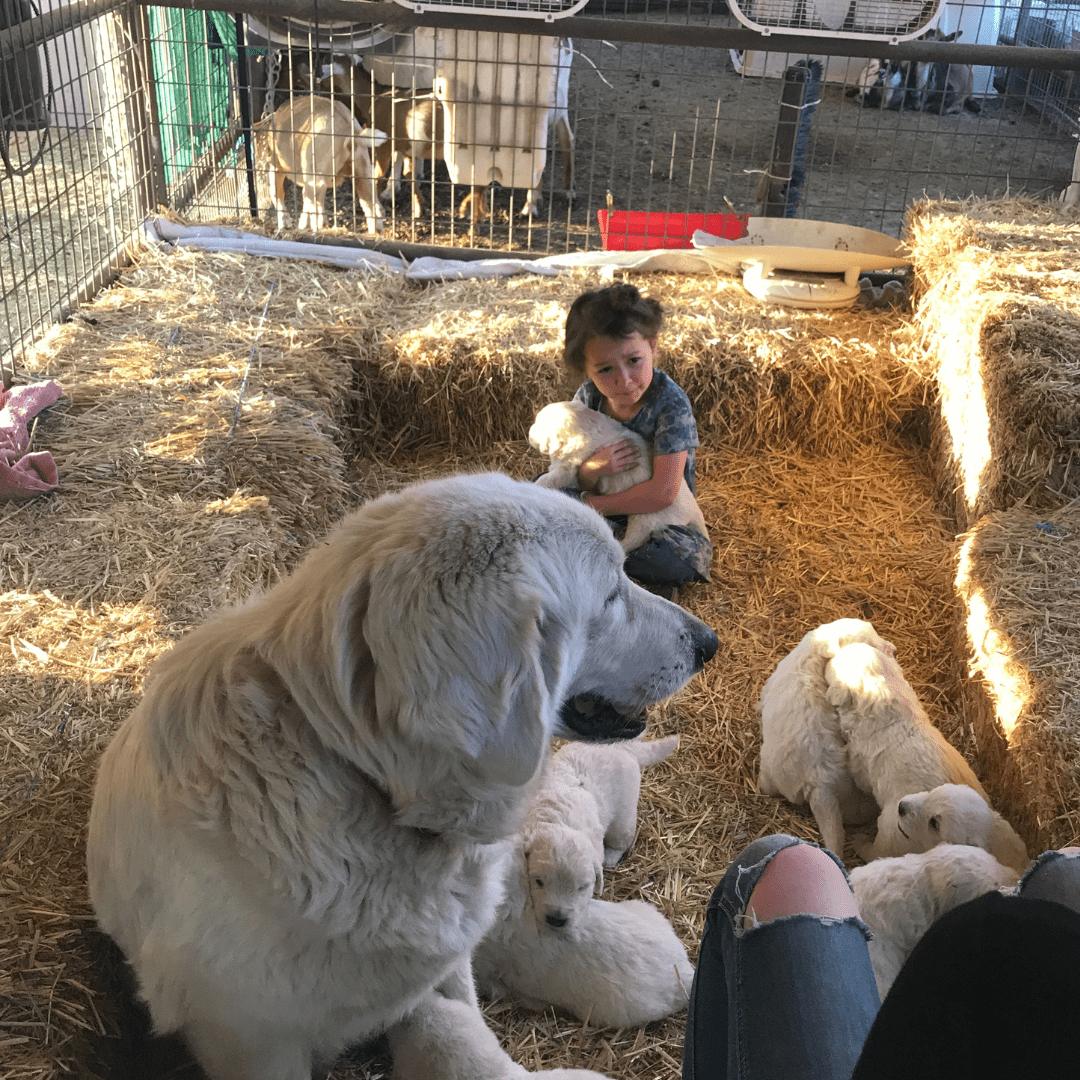
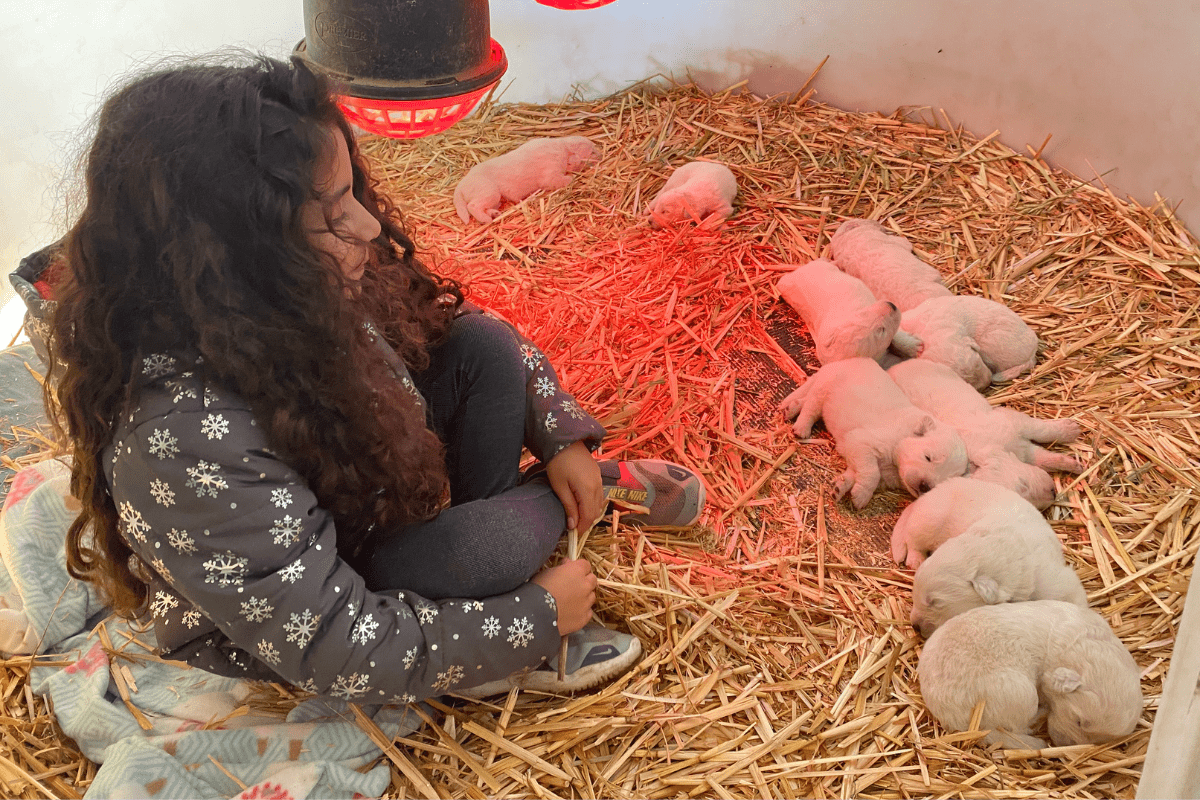
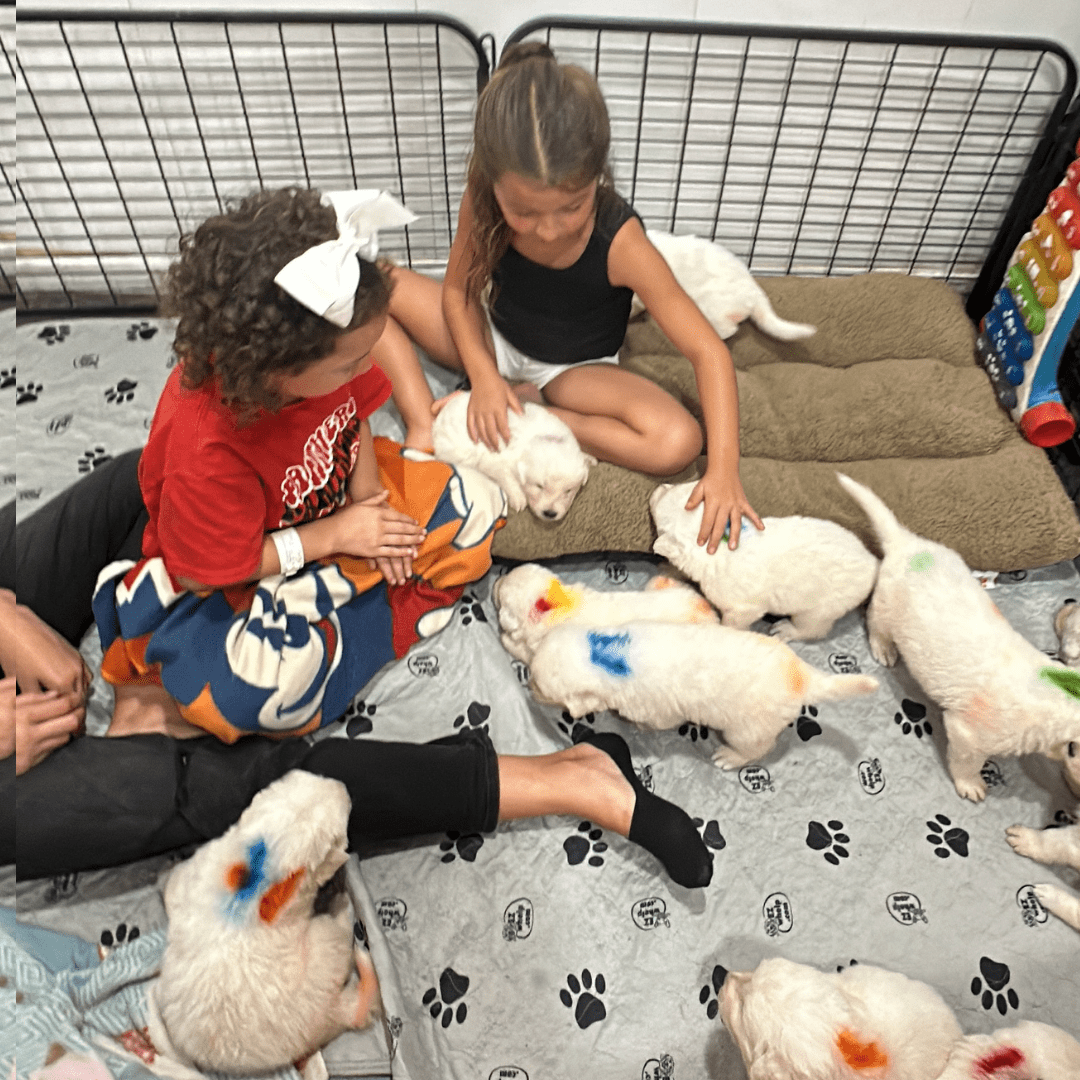
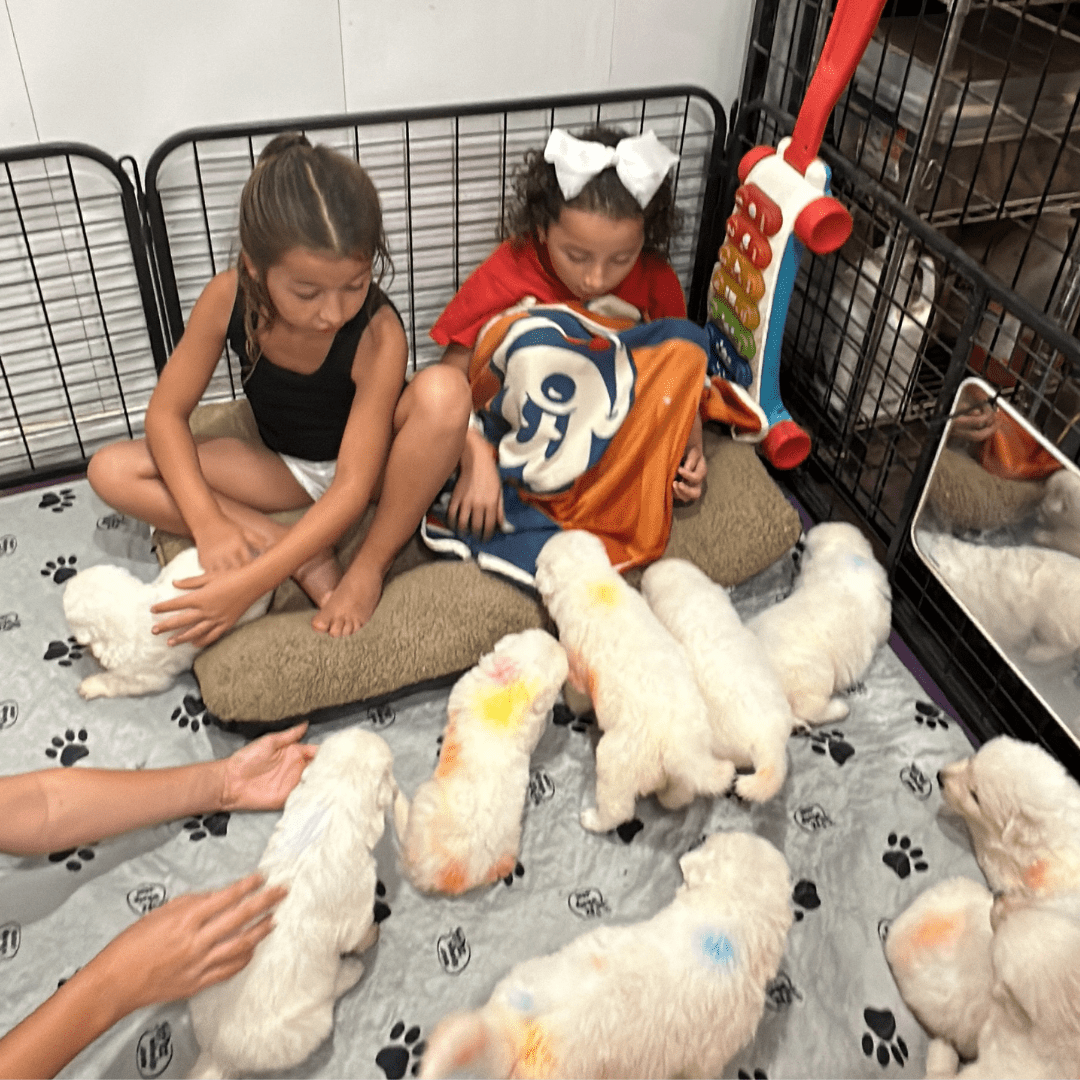
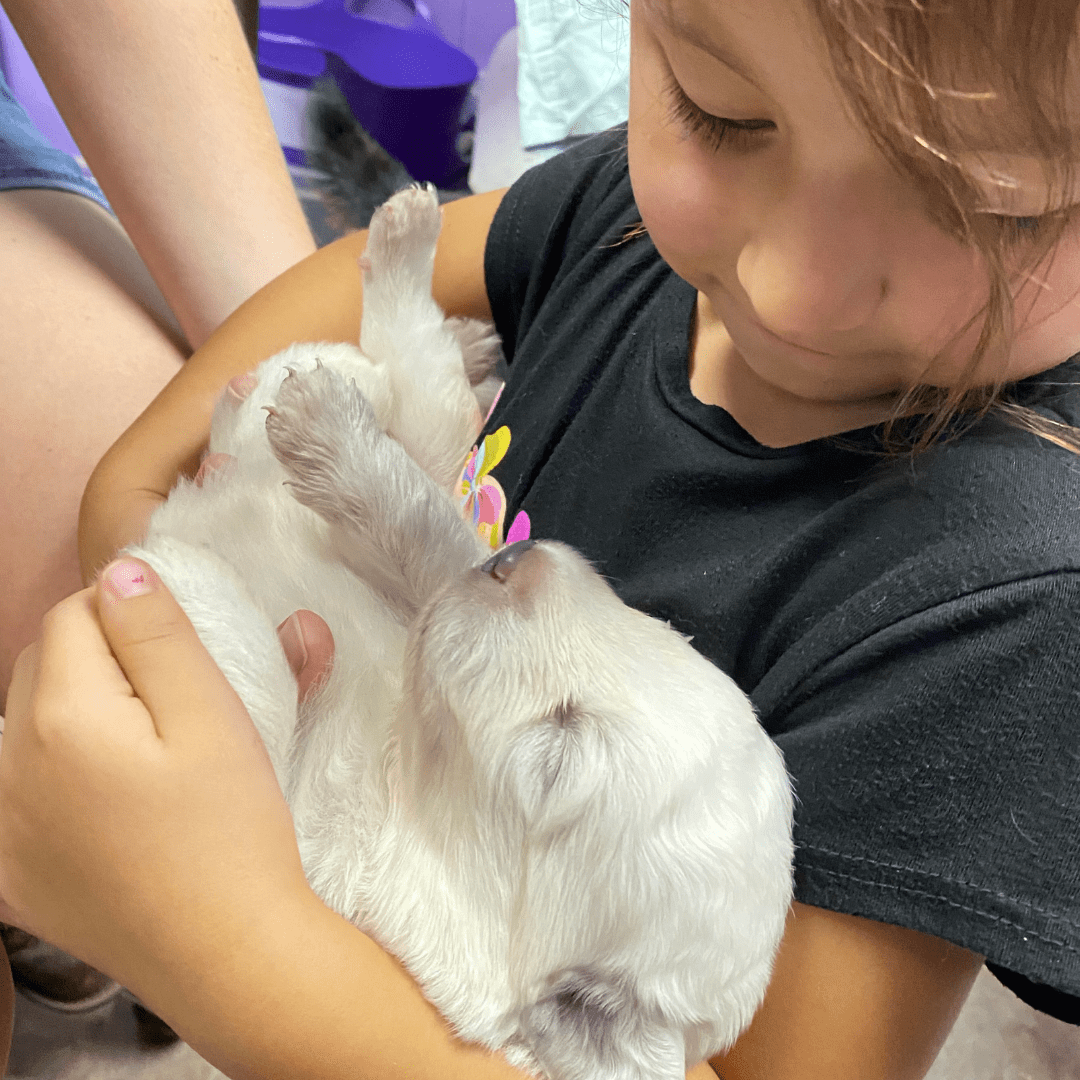
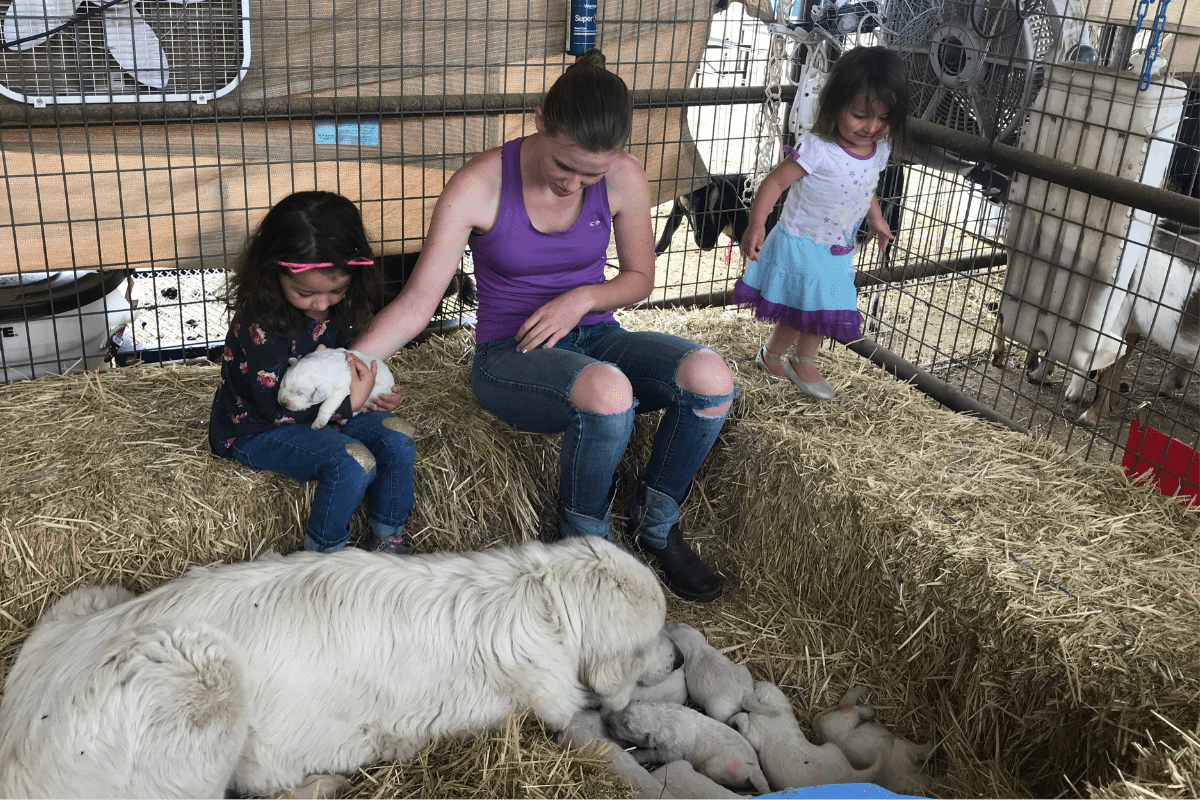
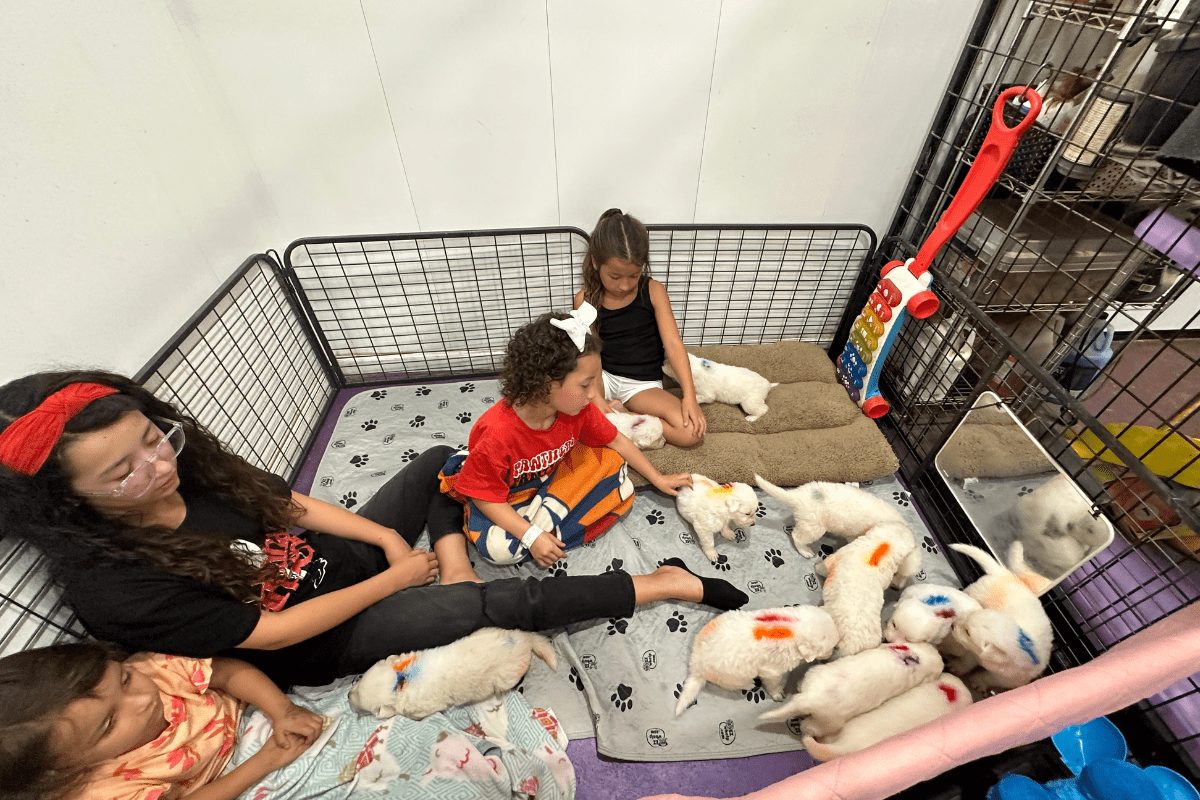
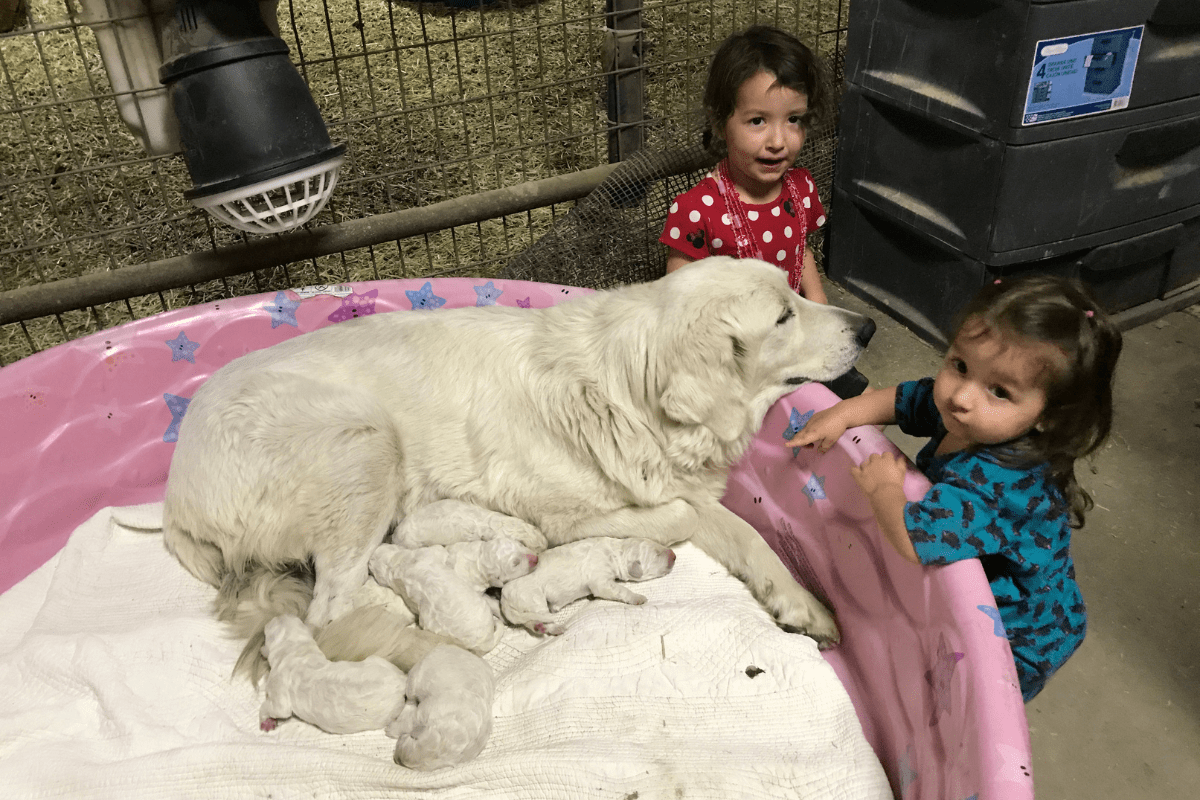
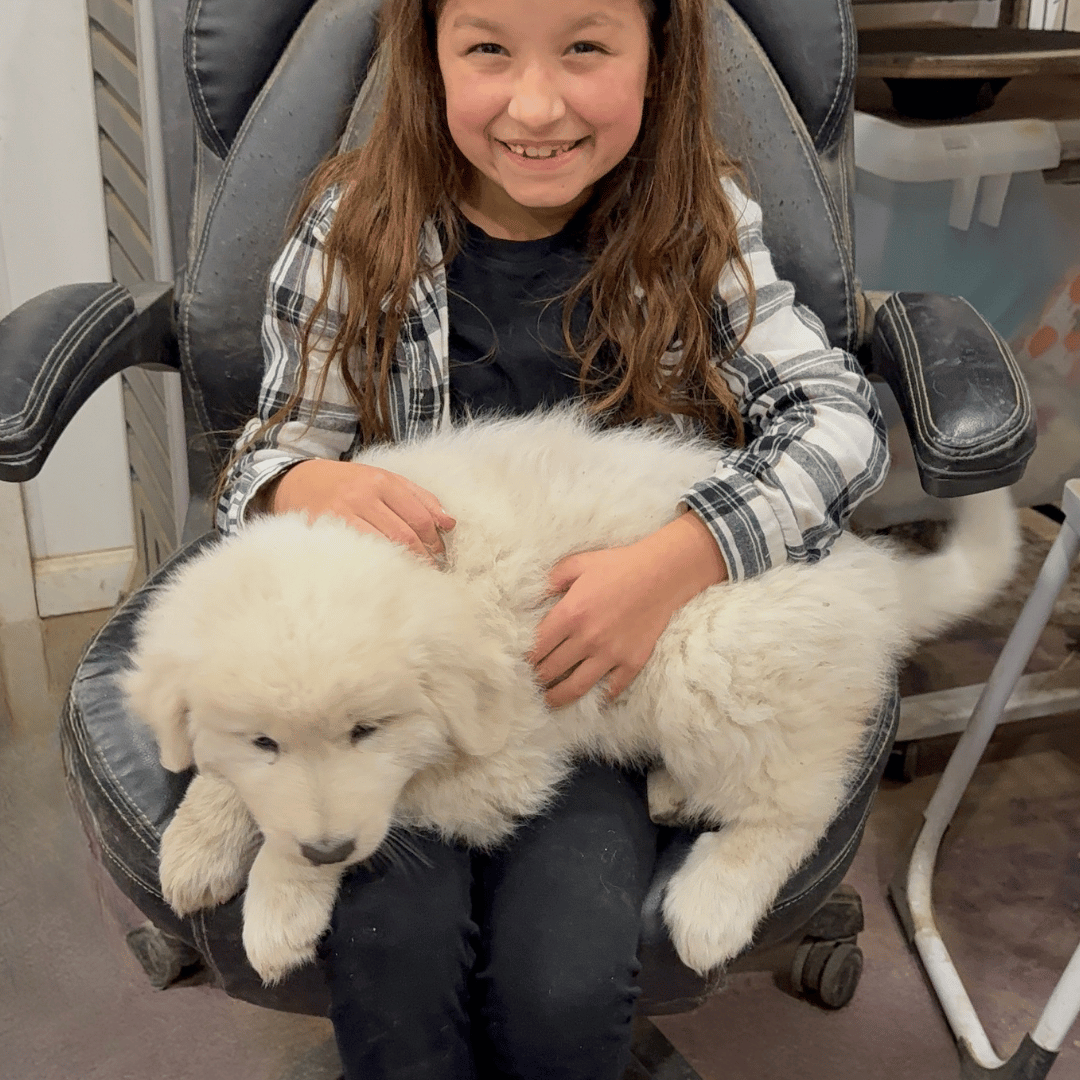
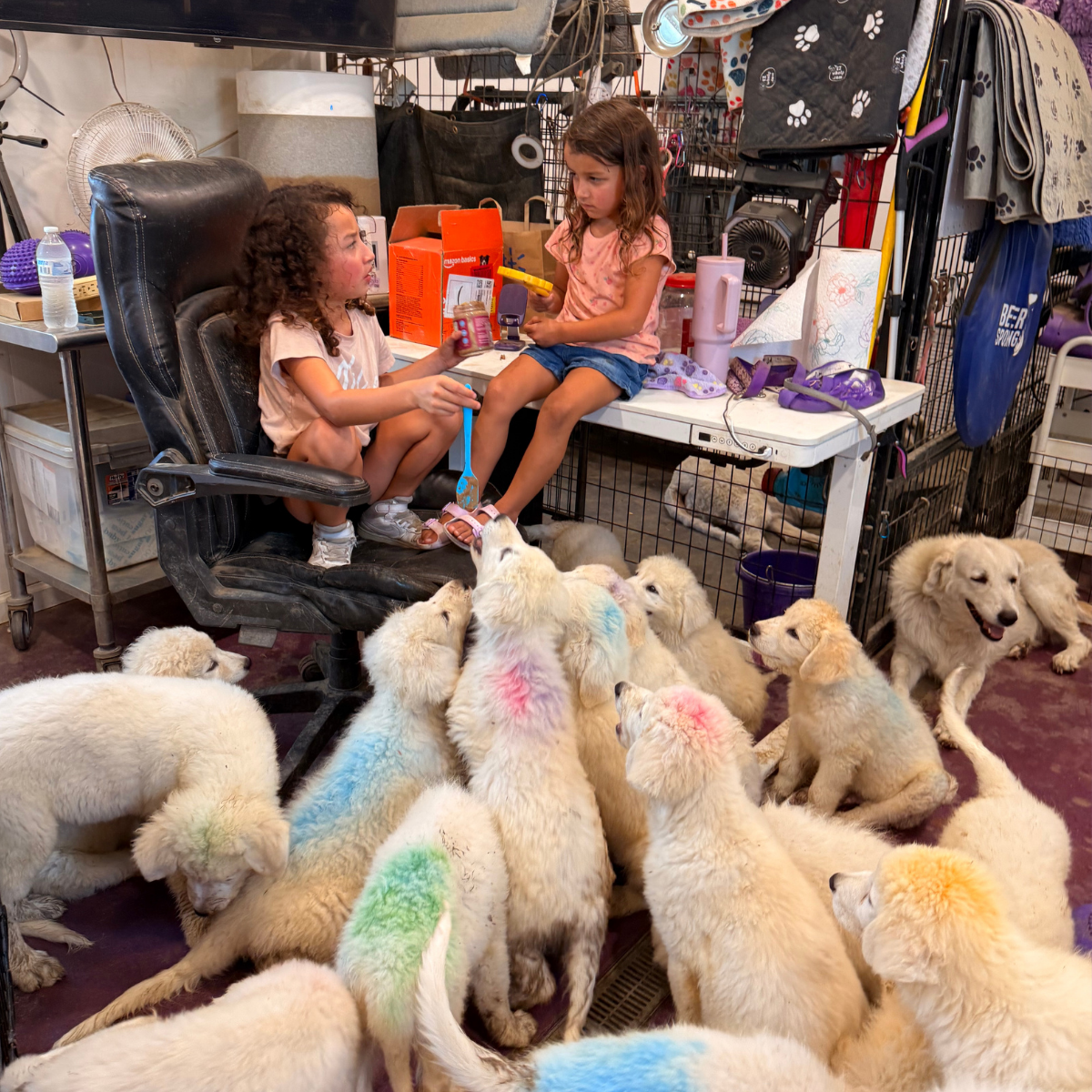
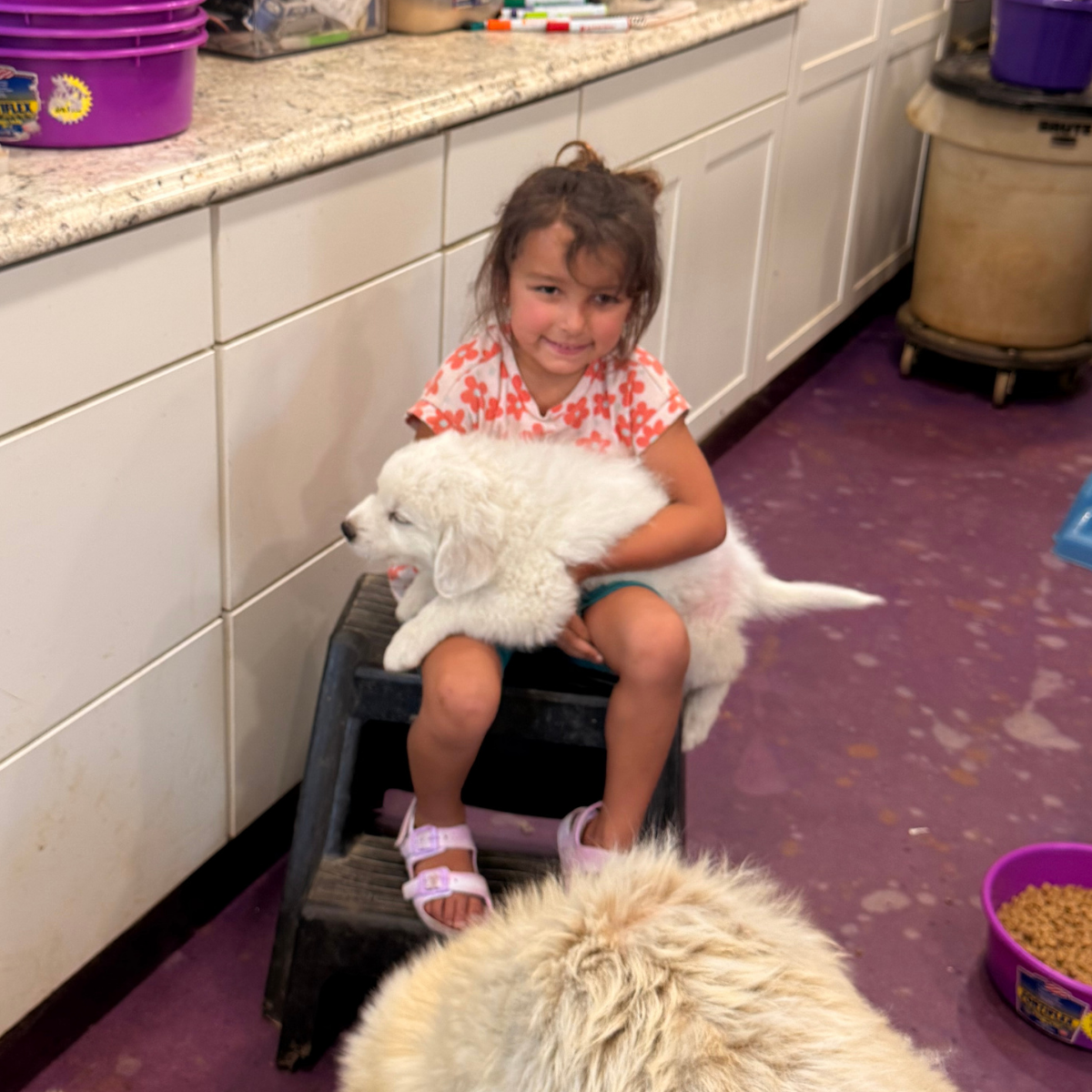
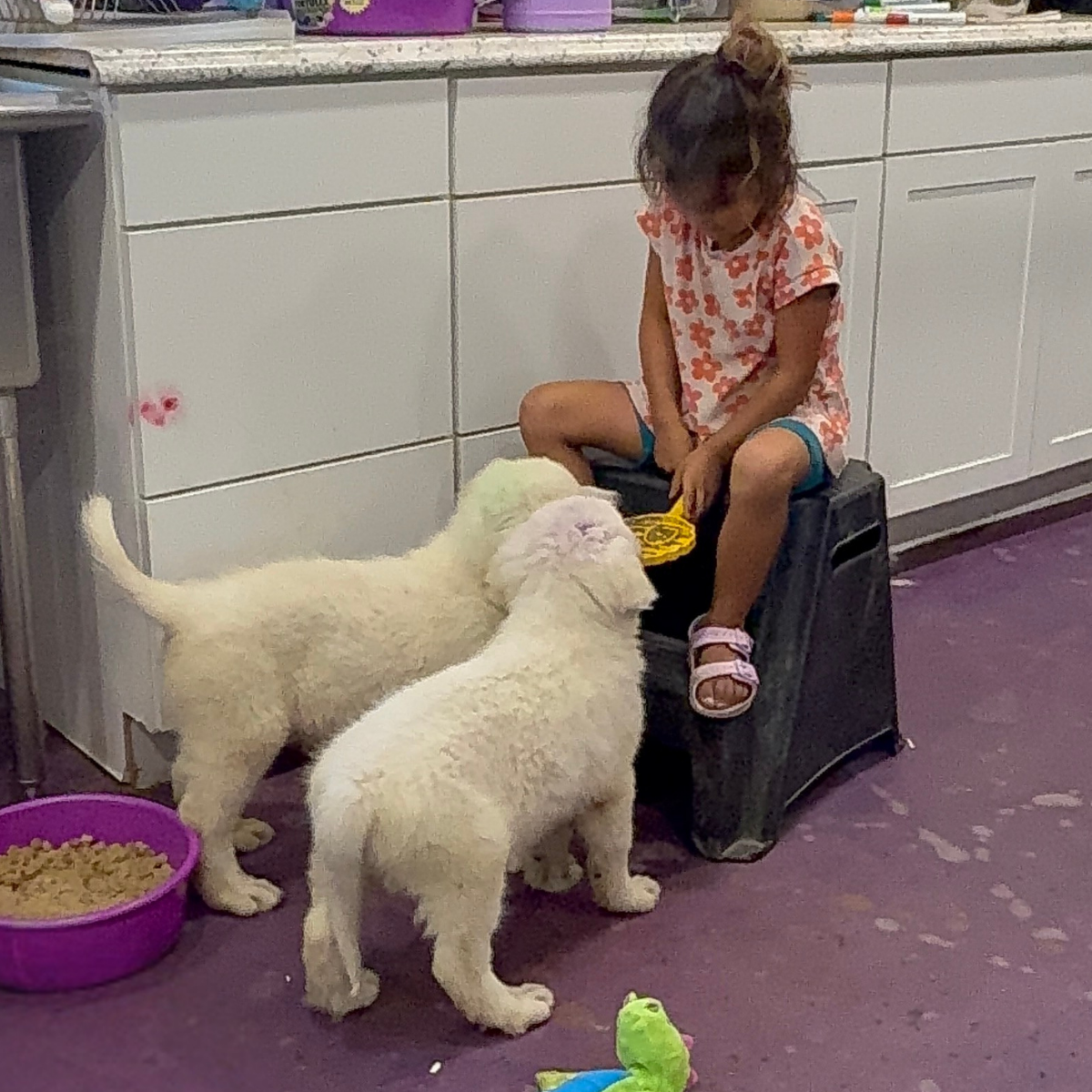
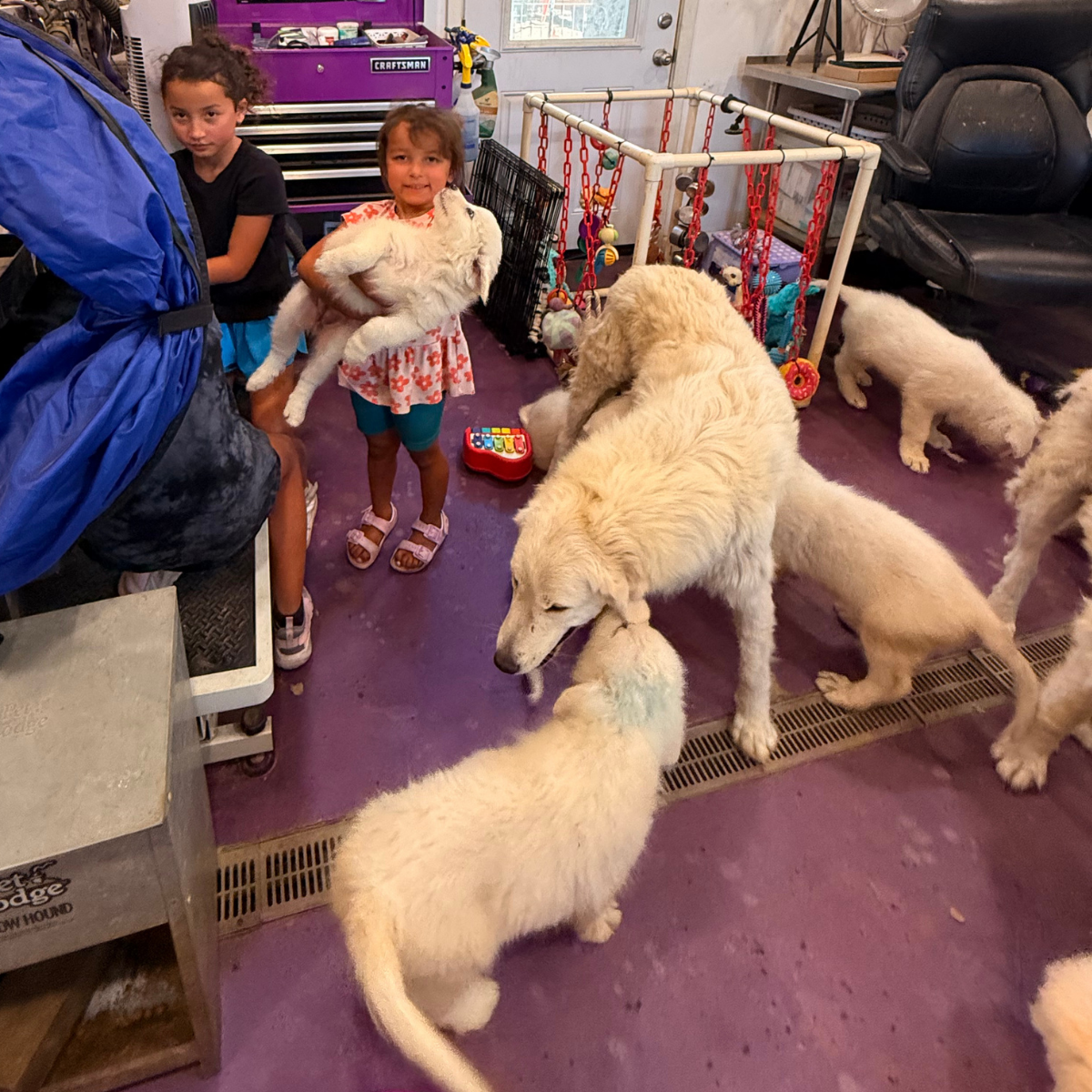
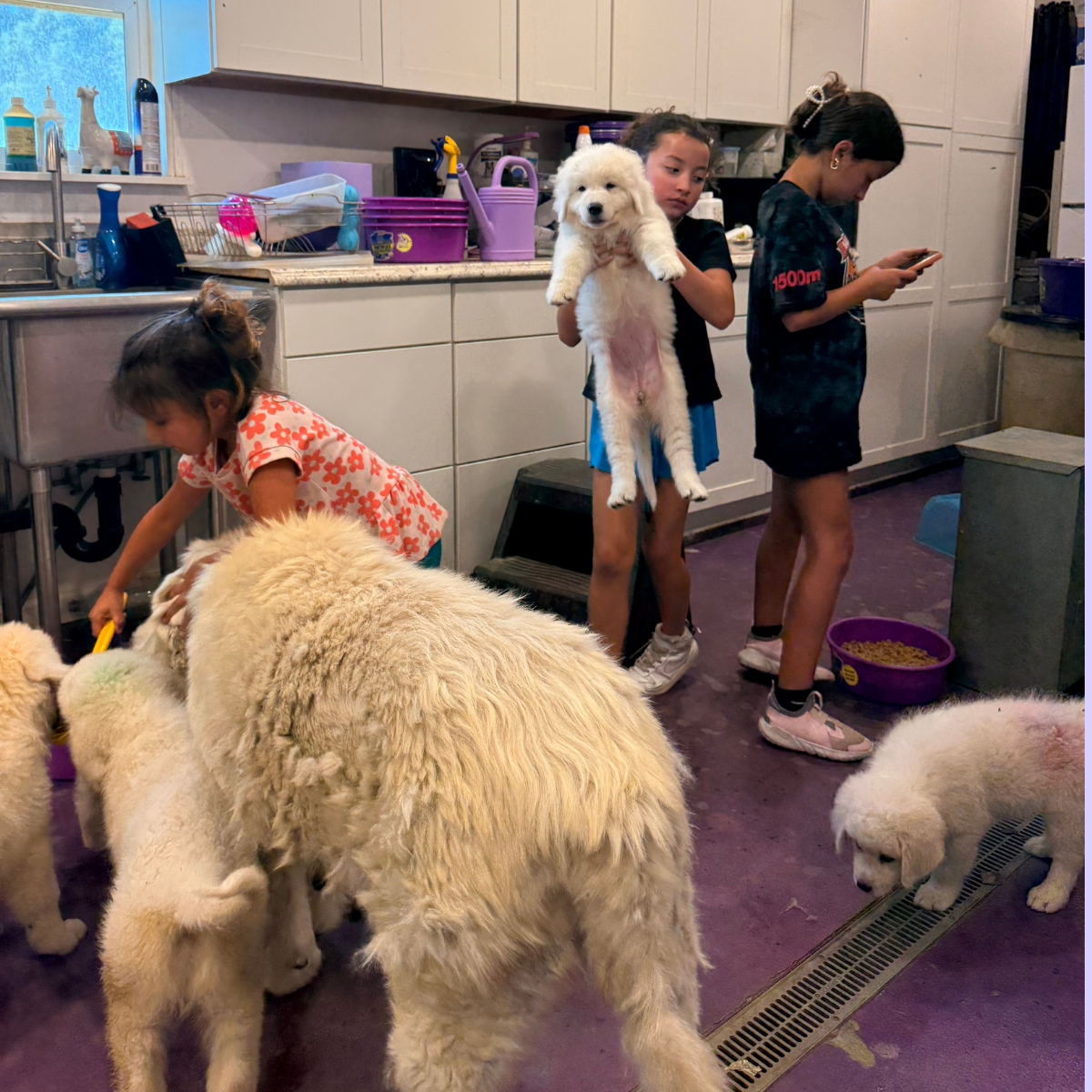
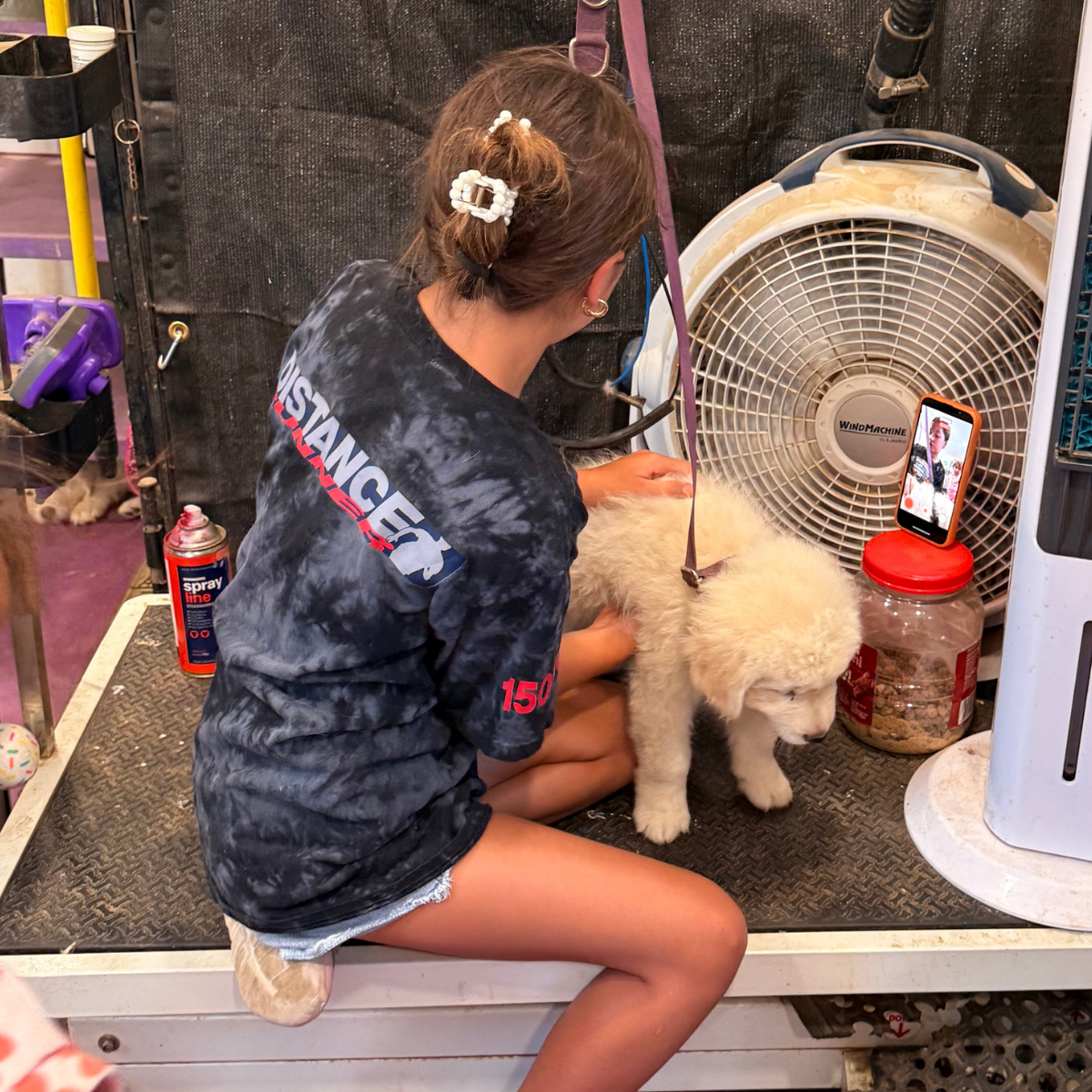
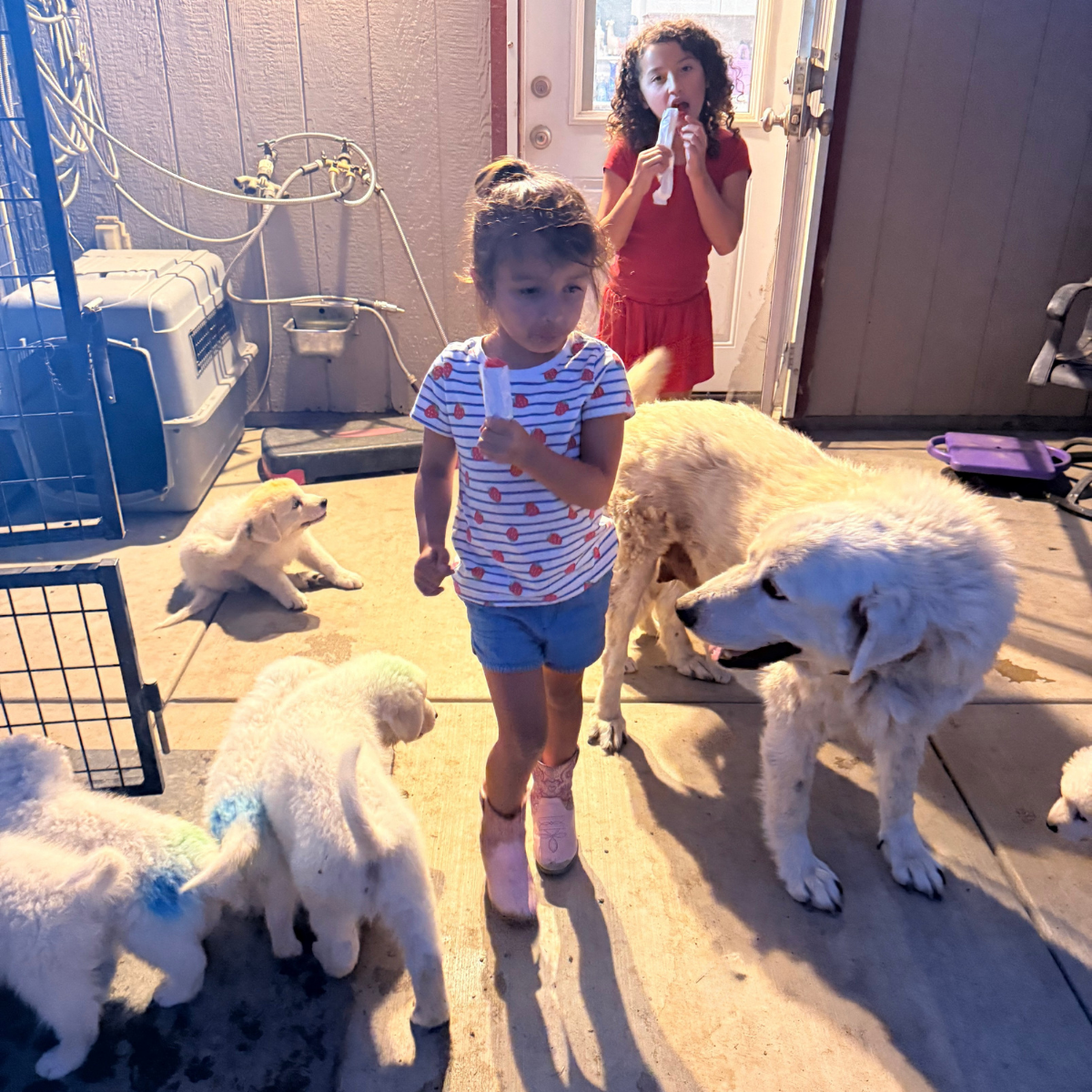
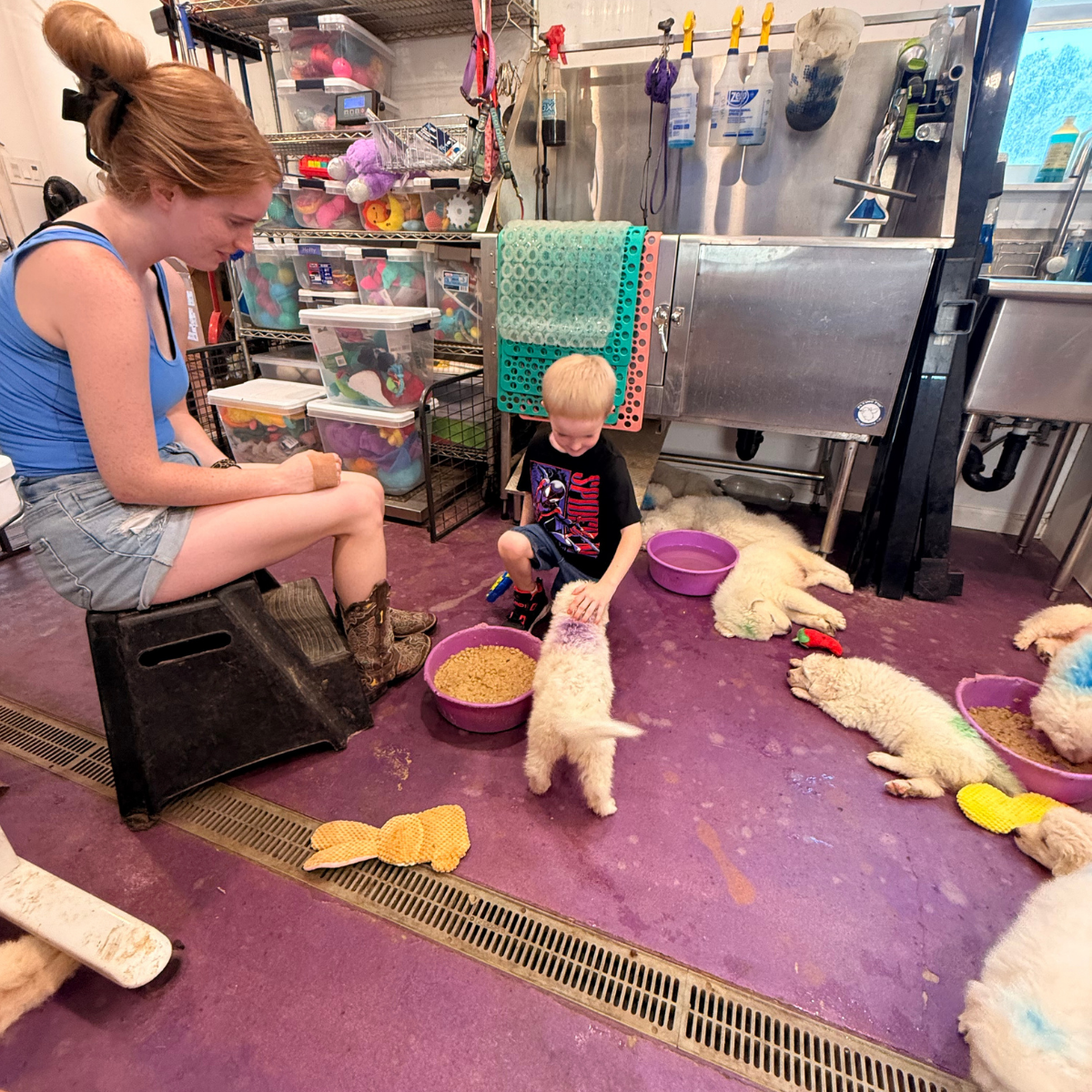
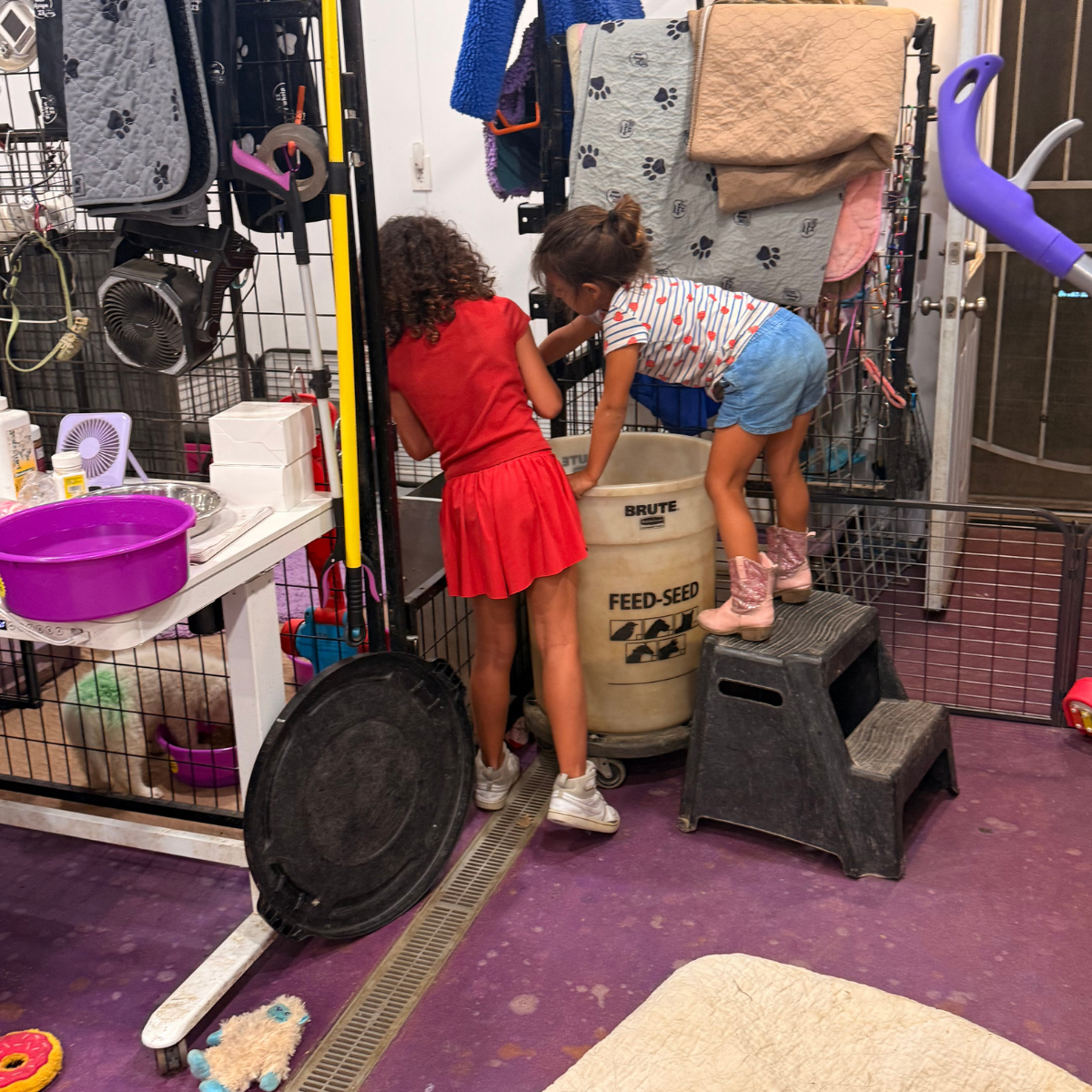
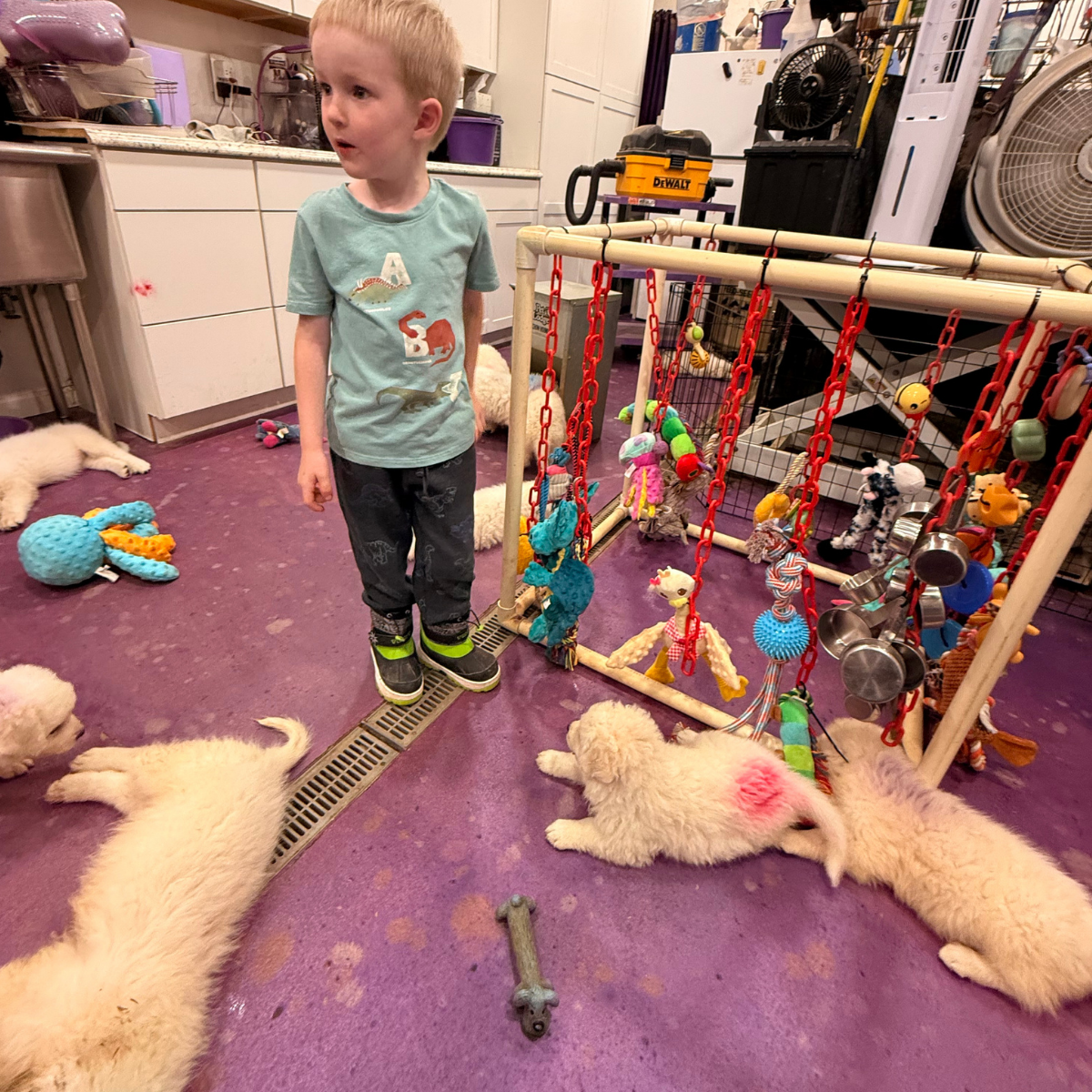
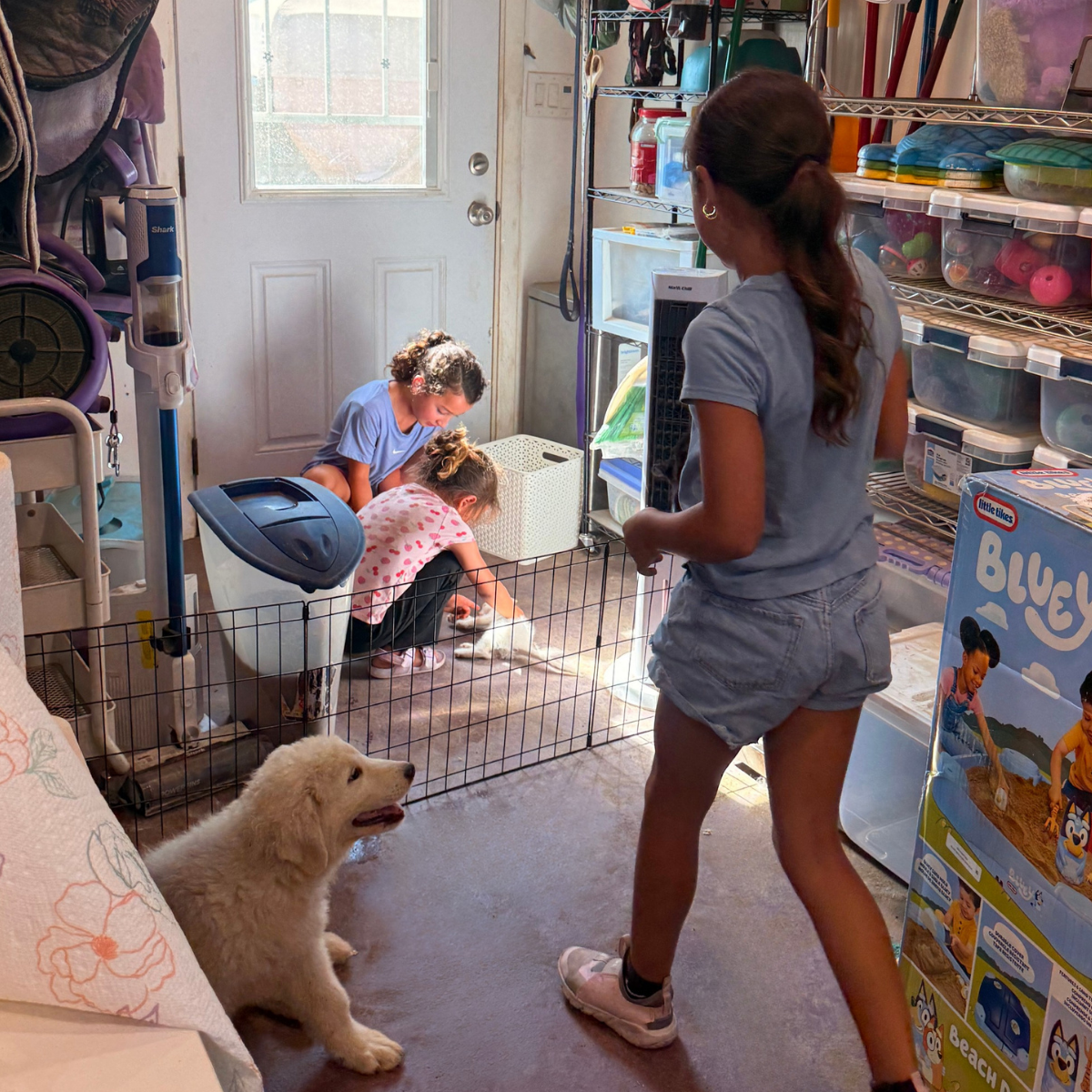
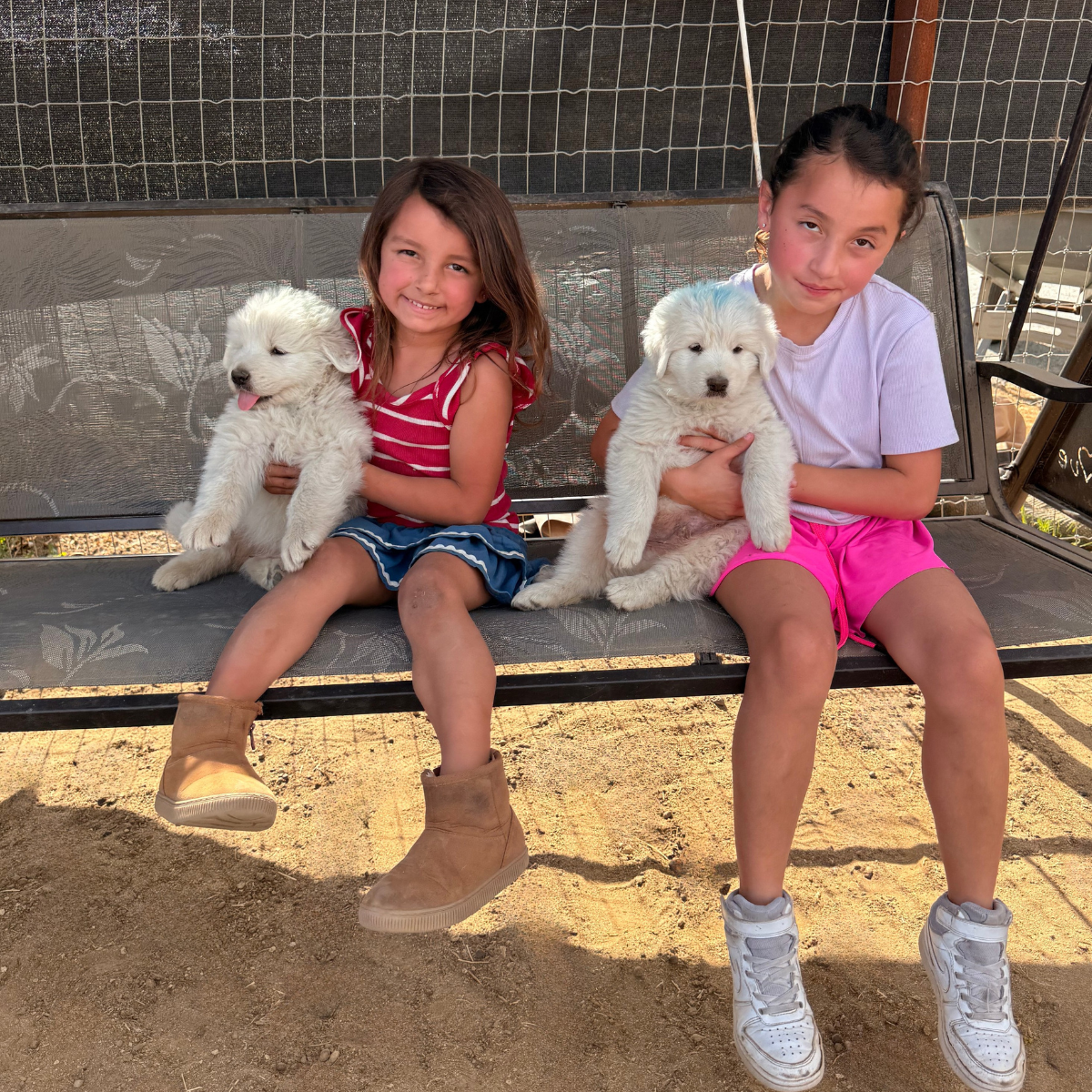
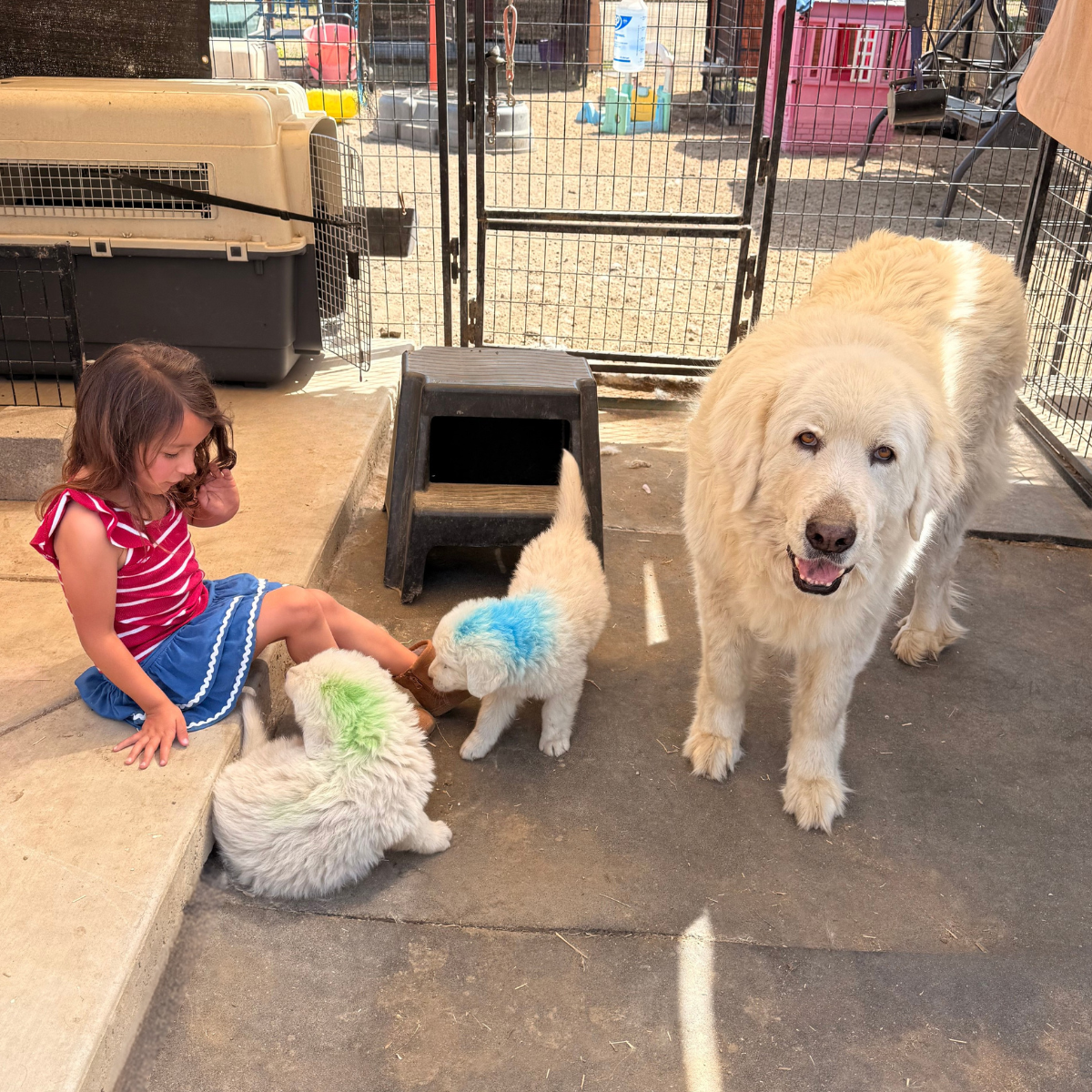
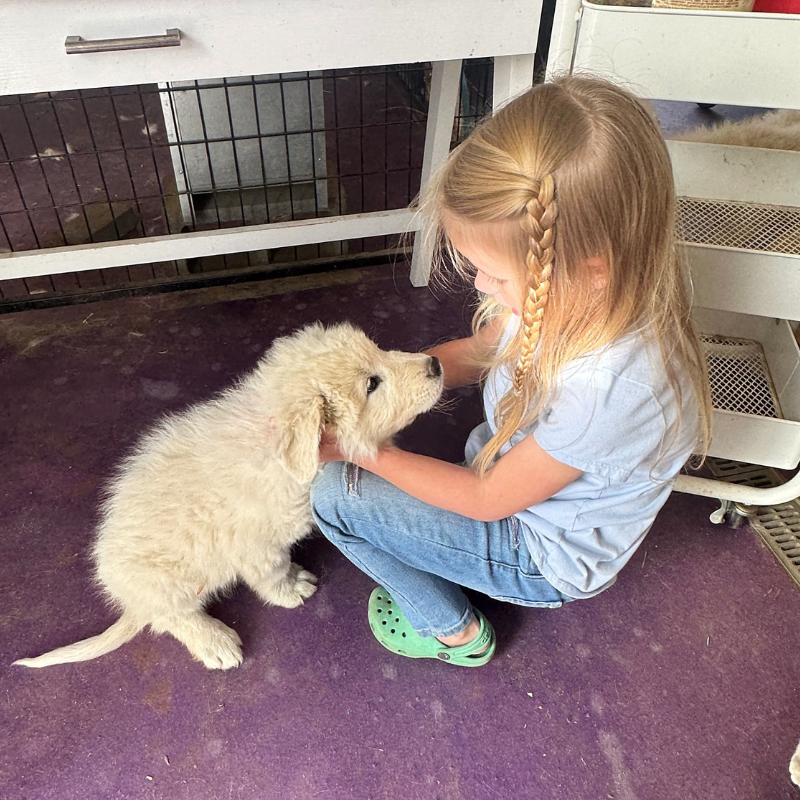
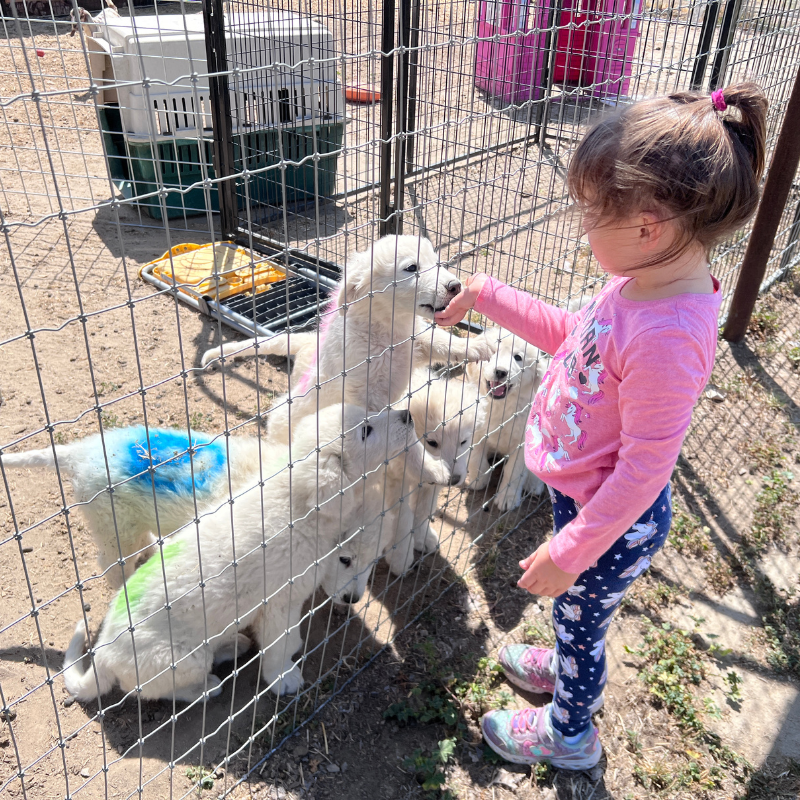
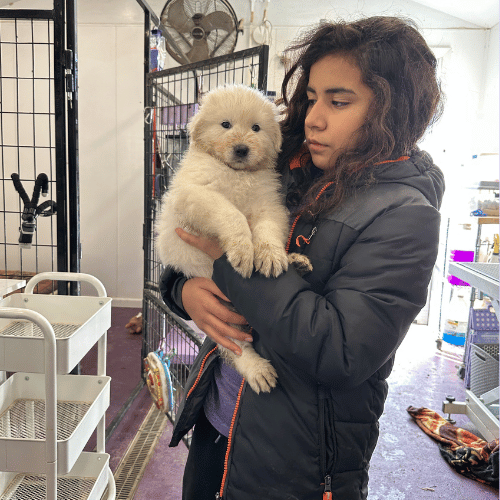
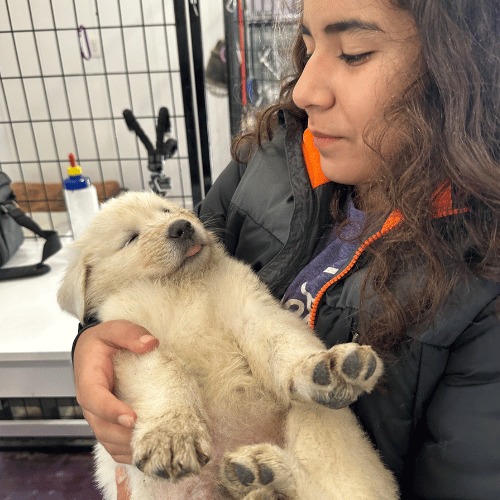
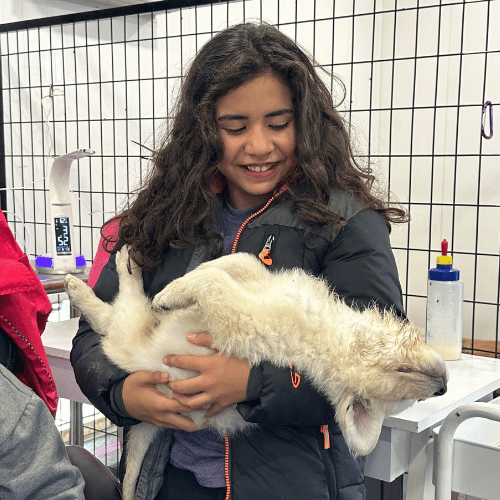
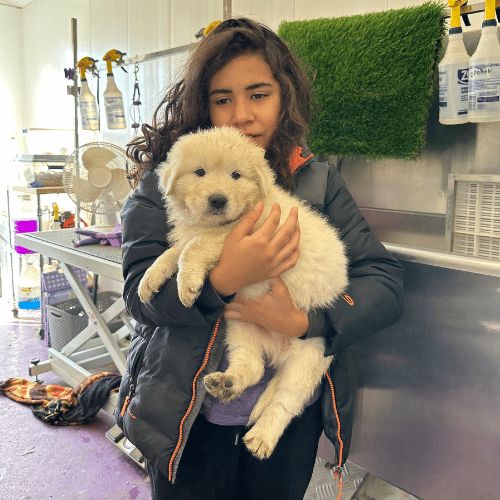
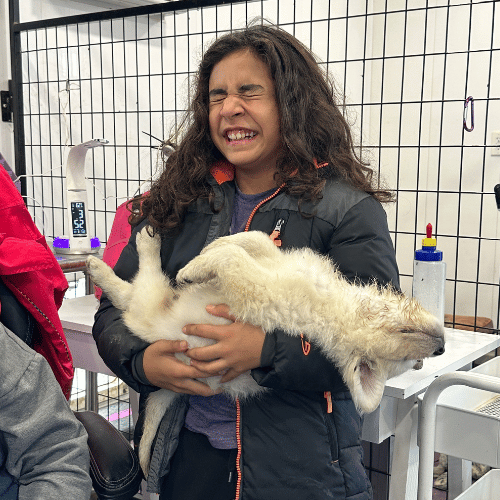
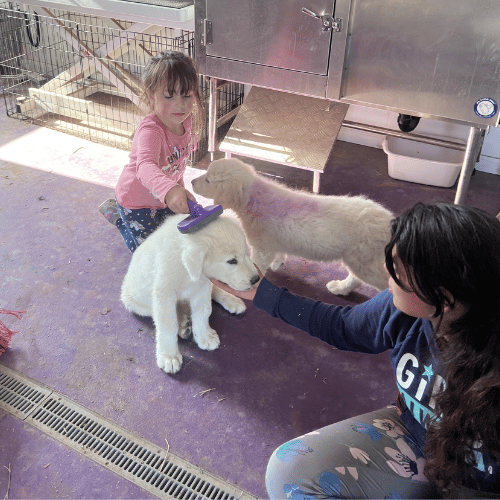
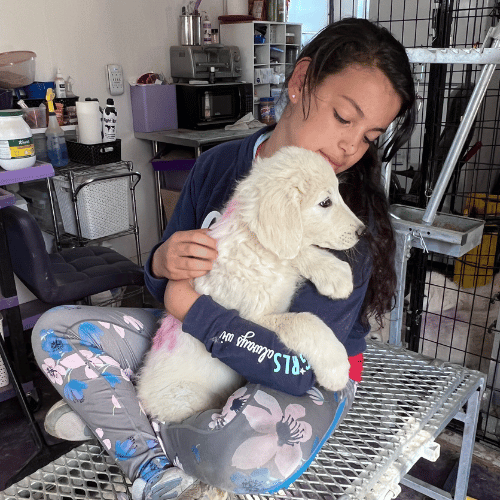
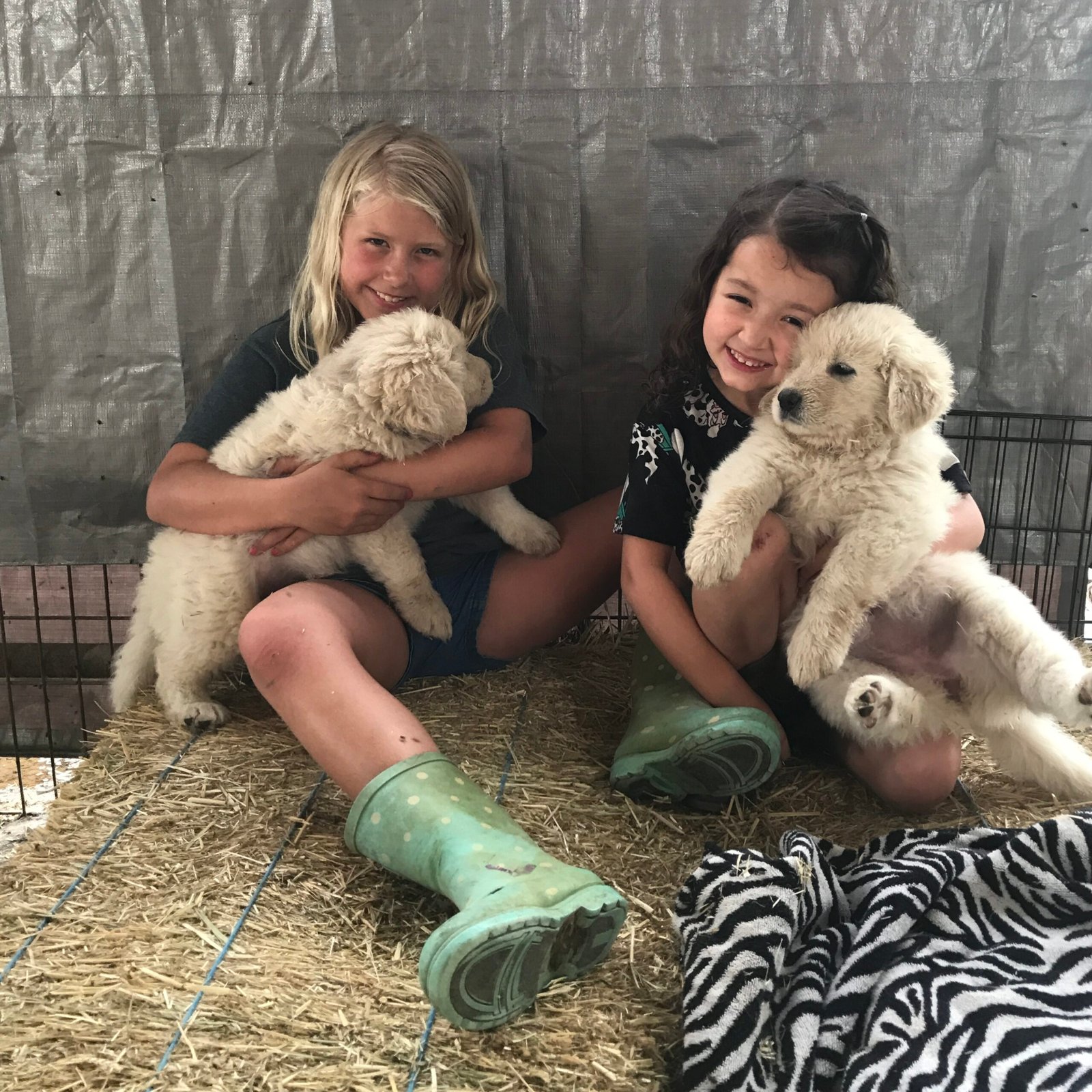
My grandchildren have grown up with these puppies — and these puppies have grown up with my grandchildren. From my very first litter, born in 2016, to the litters born this year. That's not a marketing line. It's just how our farm works. My grandchildren are excellent puppy handlers - better than many adults.
Children are not small adults. They look, smell and move differently than adults. That can be scary for a dog who hasn't had positive experiences with children. Proper socialization with children in the fist weeks is vital if you want adult dogs that are safe and trustworthy with children. I rely on my grandchildren to help me produce exactly that.
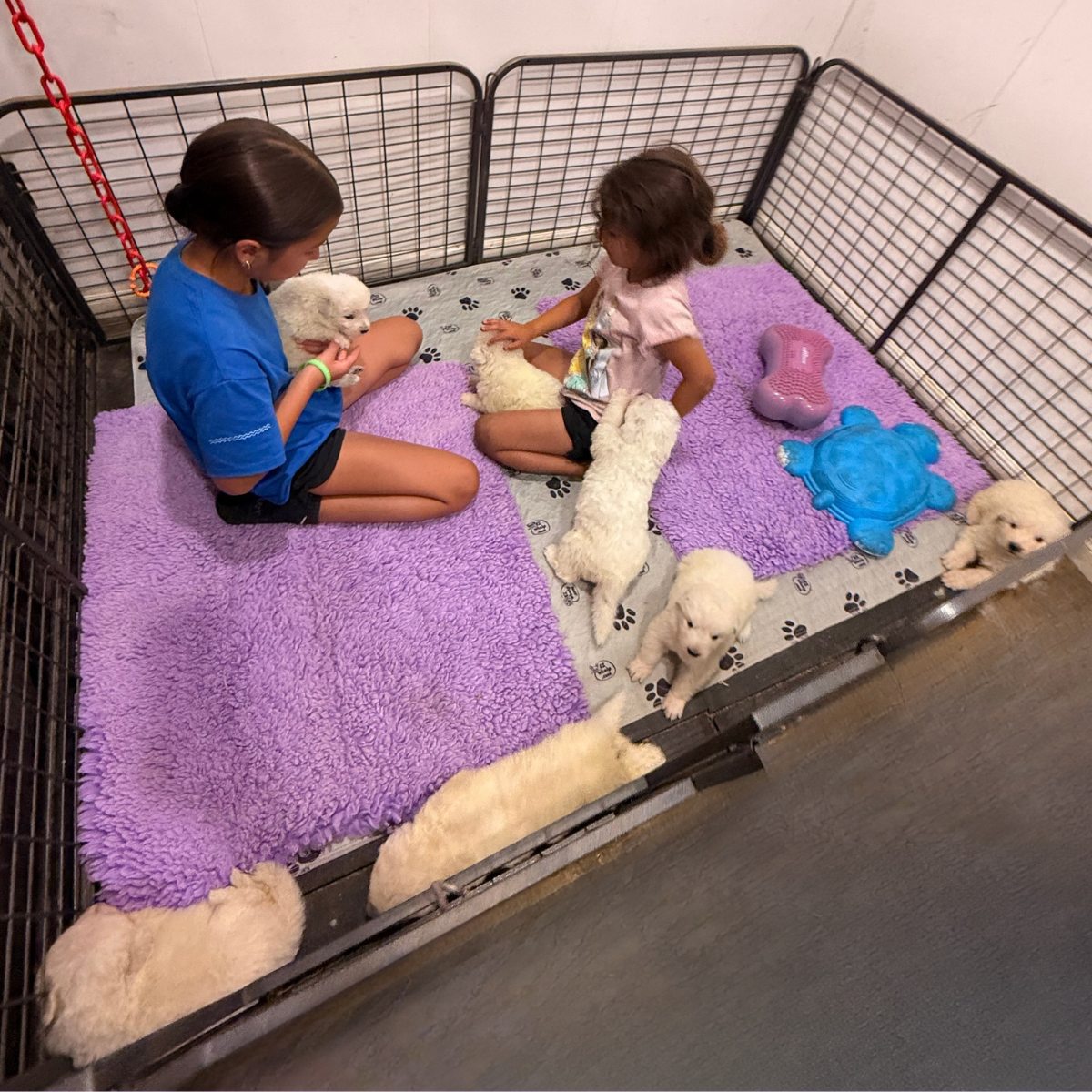
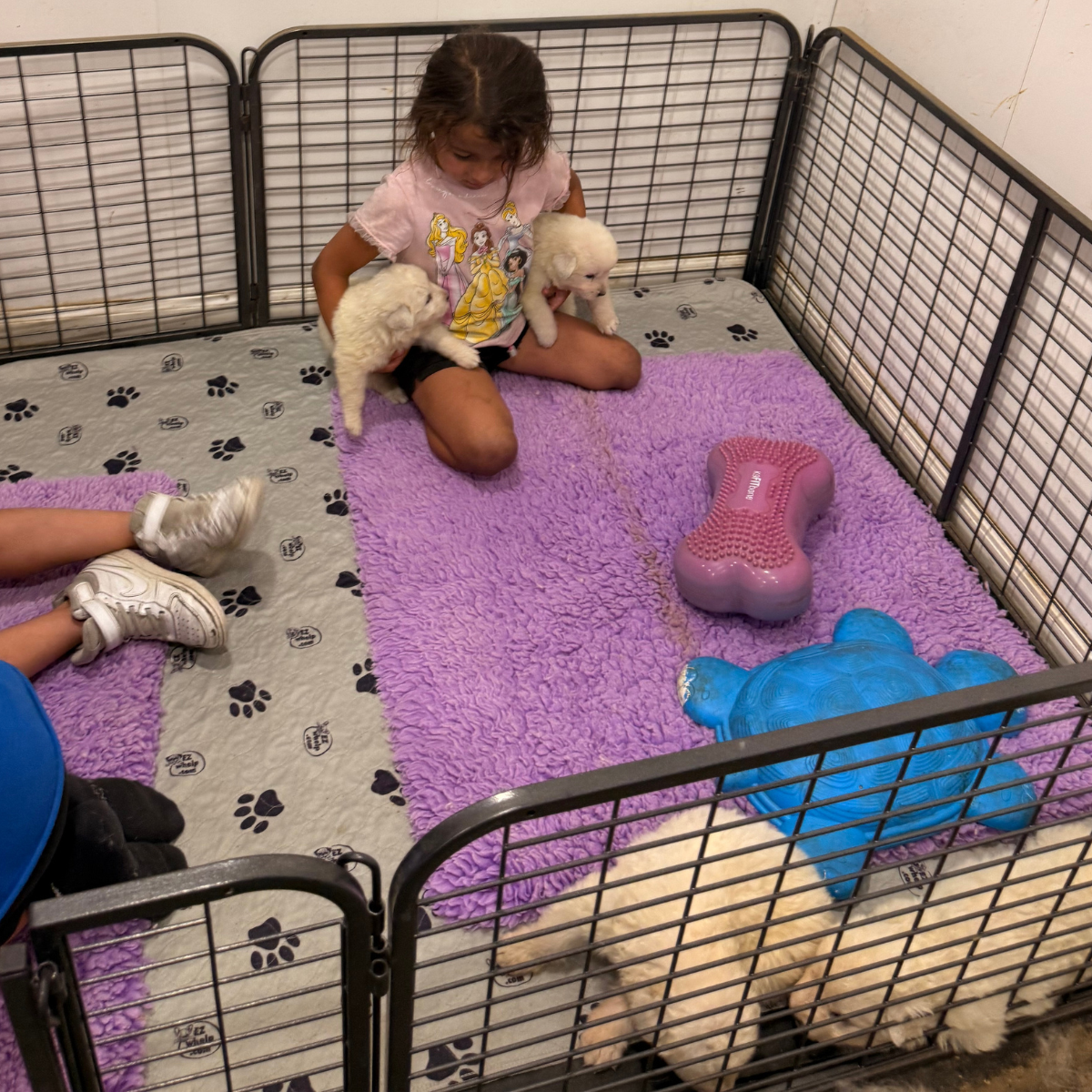
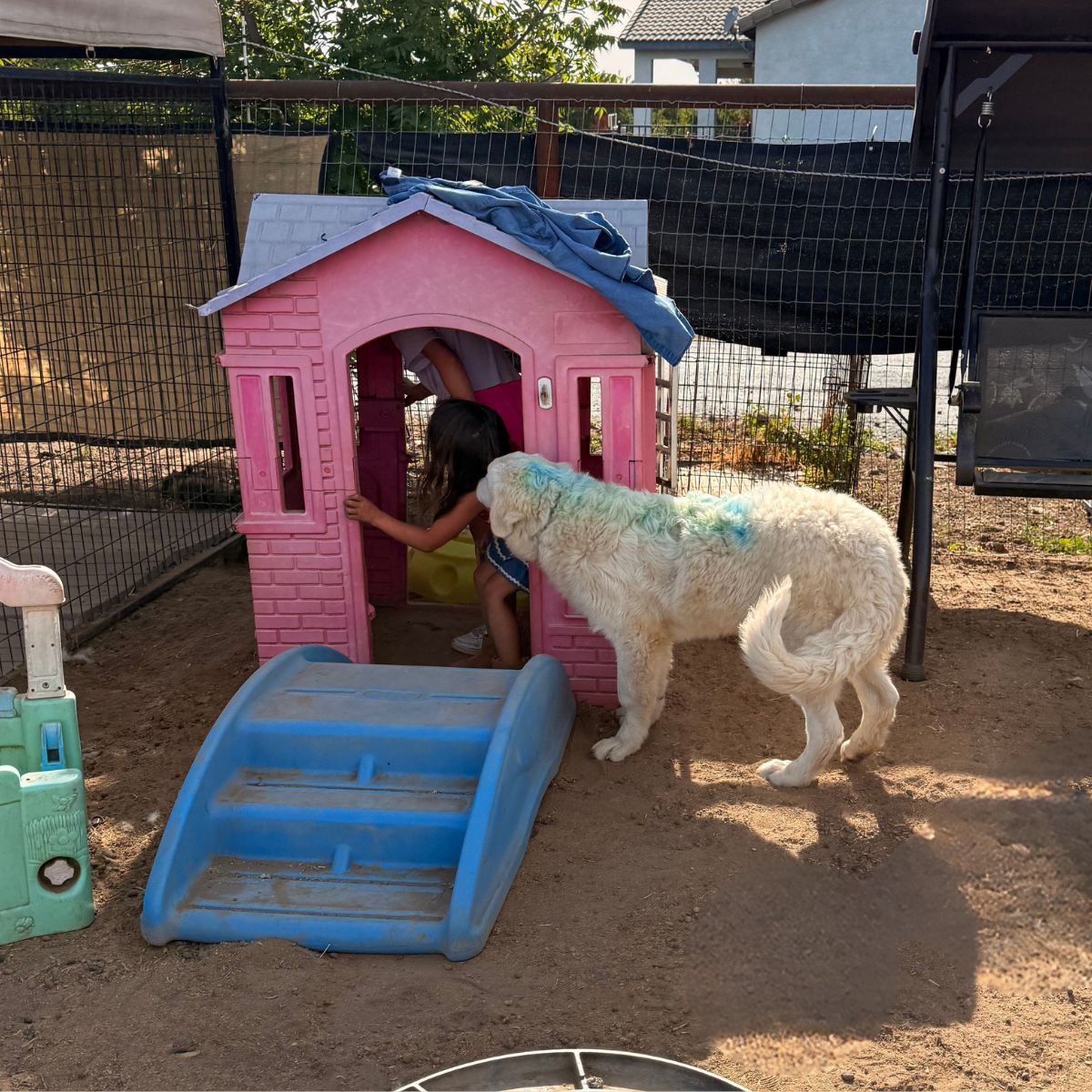
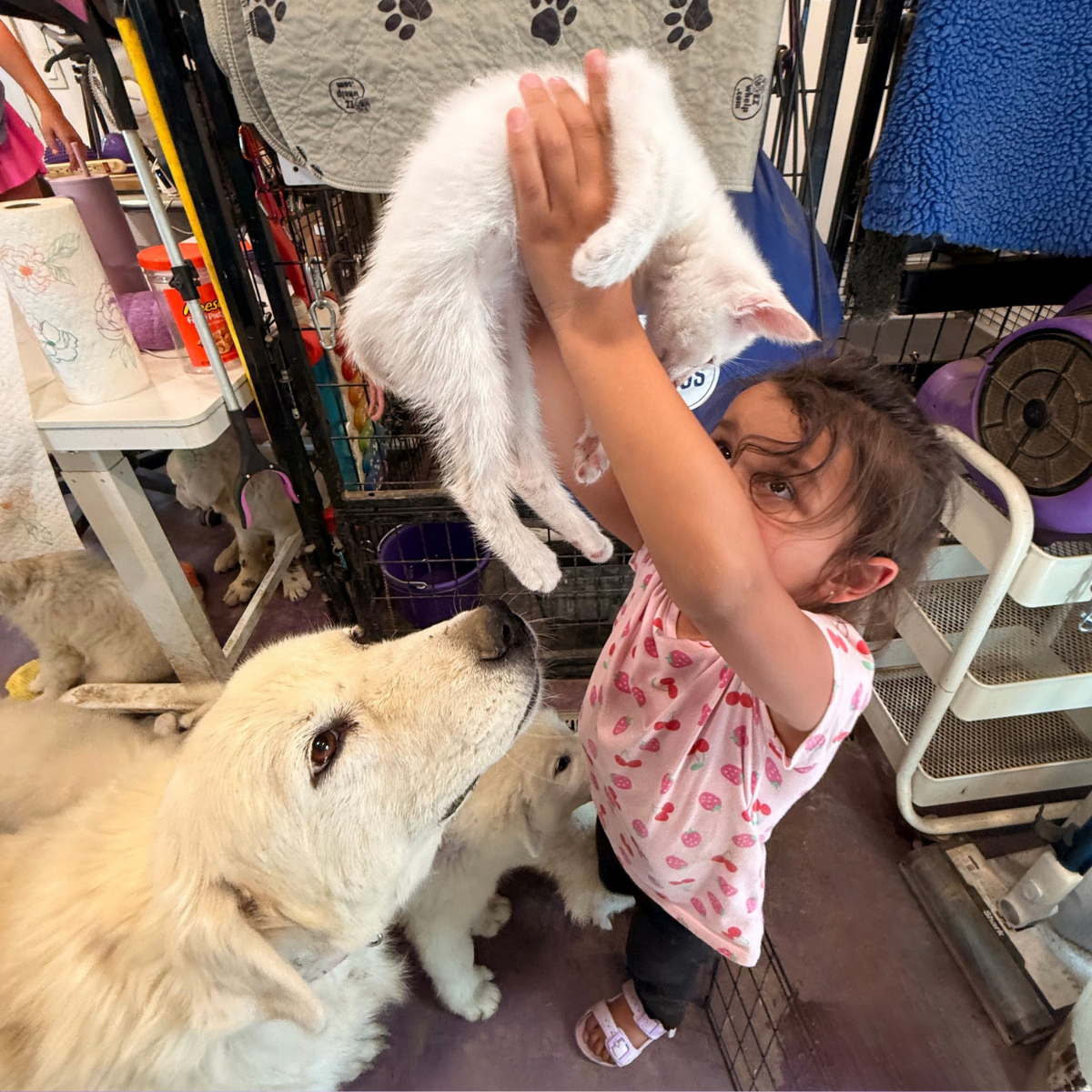
From the very first week, little ones are peeking into the whelping box, learning to be gentle, falling in love with the tiniest creatures. By week two they're in the whelping box with the pups, quietly handling puppies under supervision. By the time those puppies are ready to meet the wider world, children are already part of the fabric of what's normal and safe.
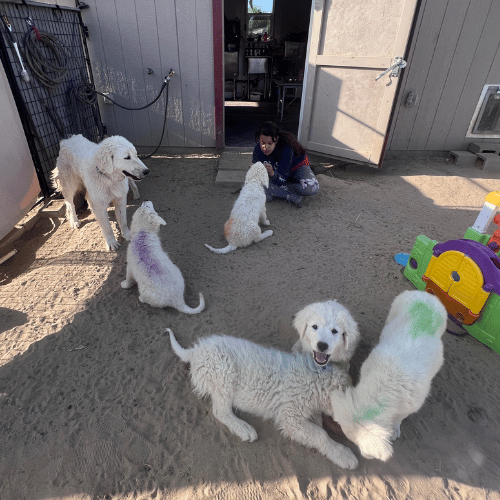
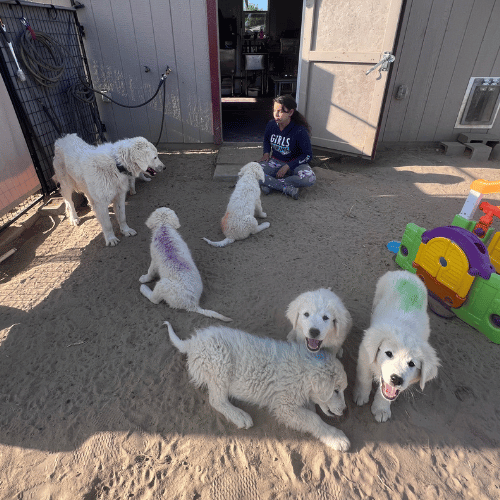
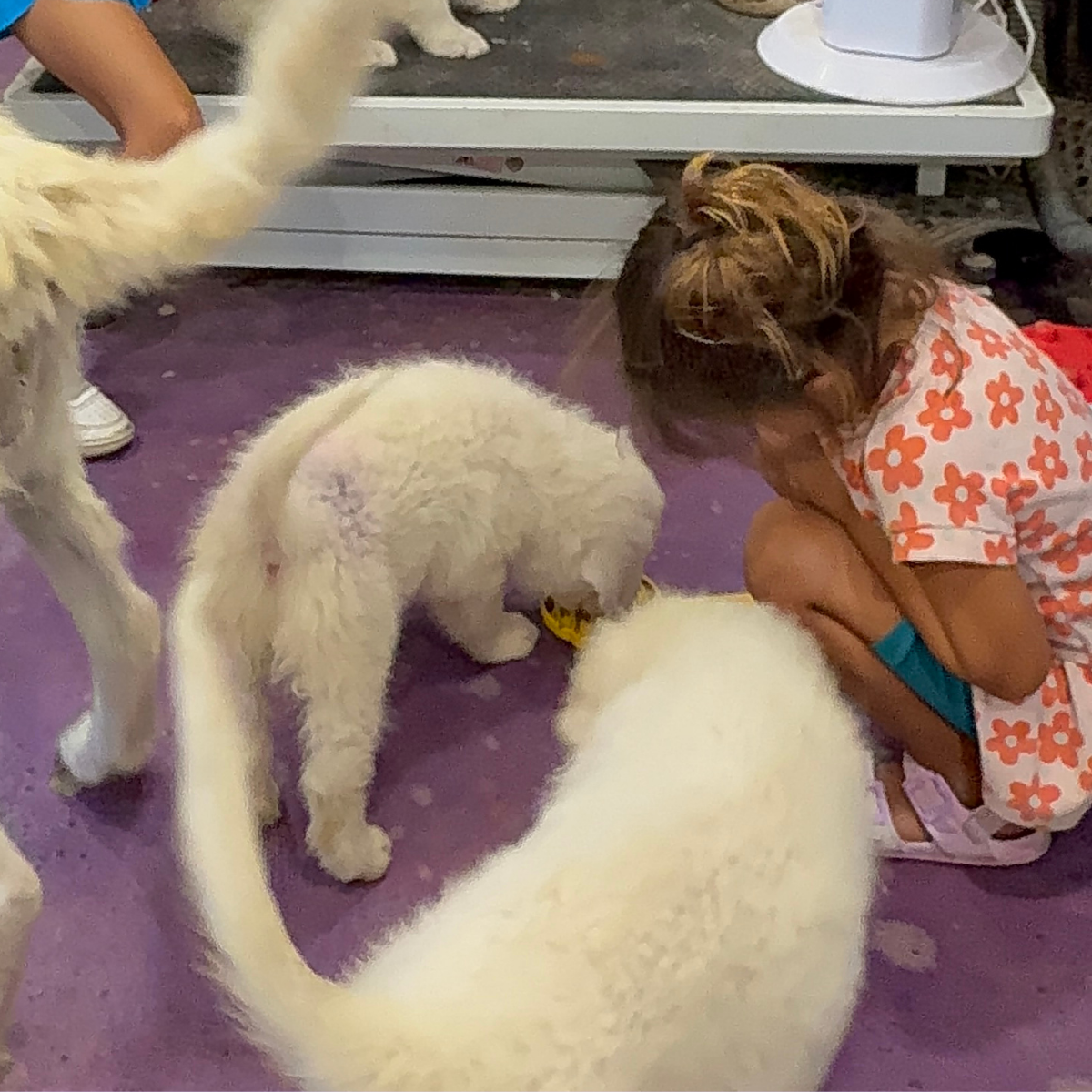
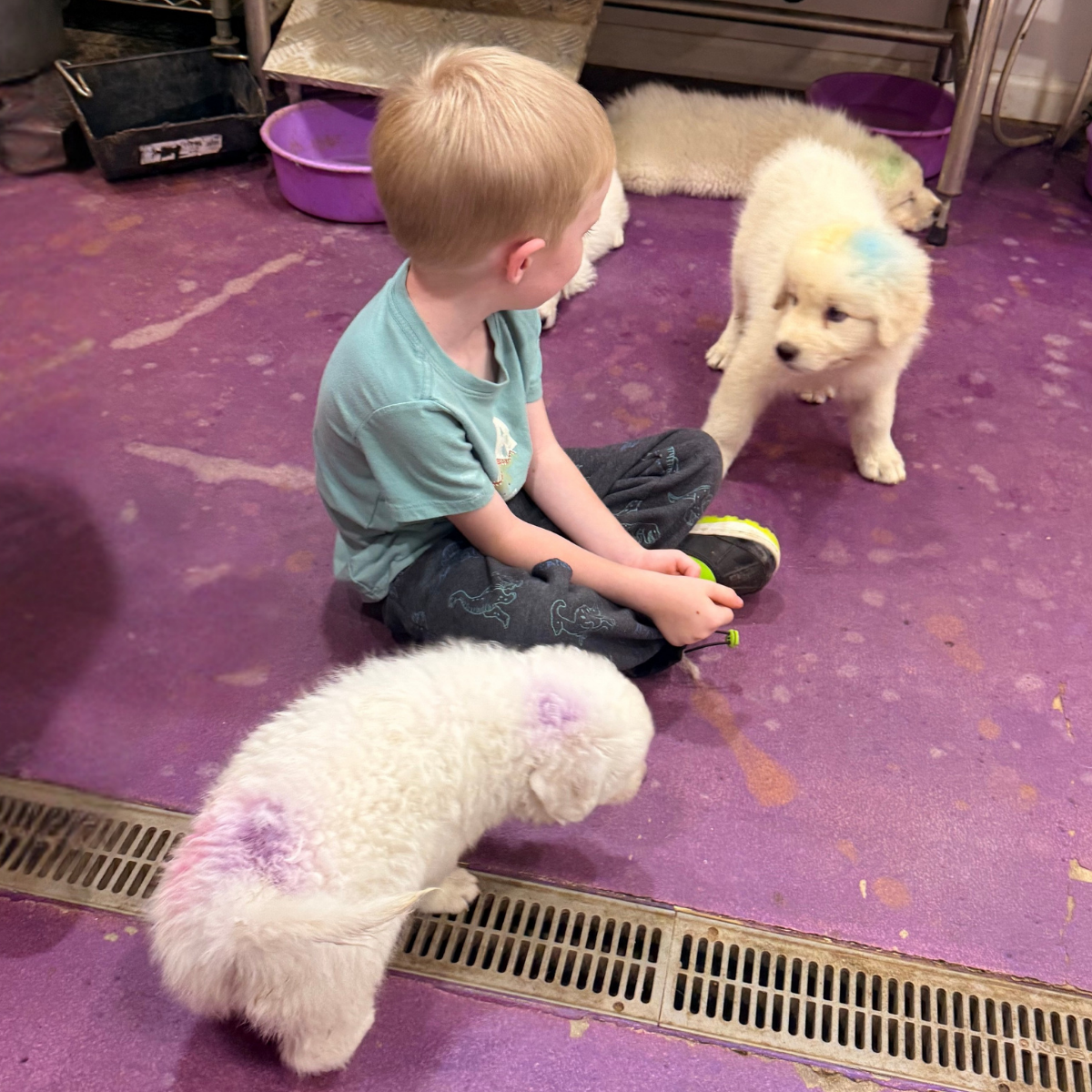
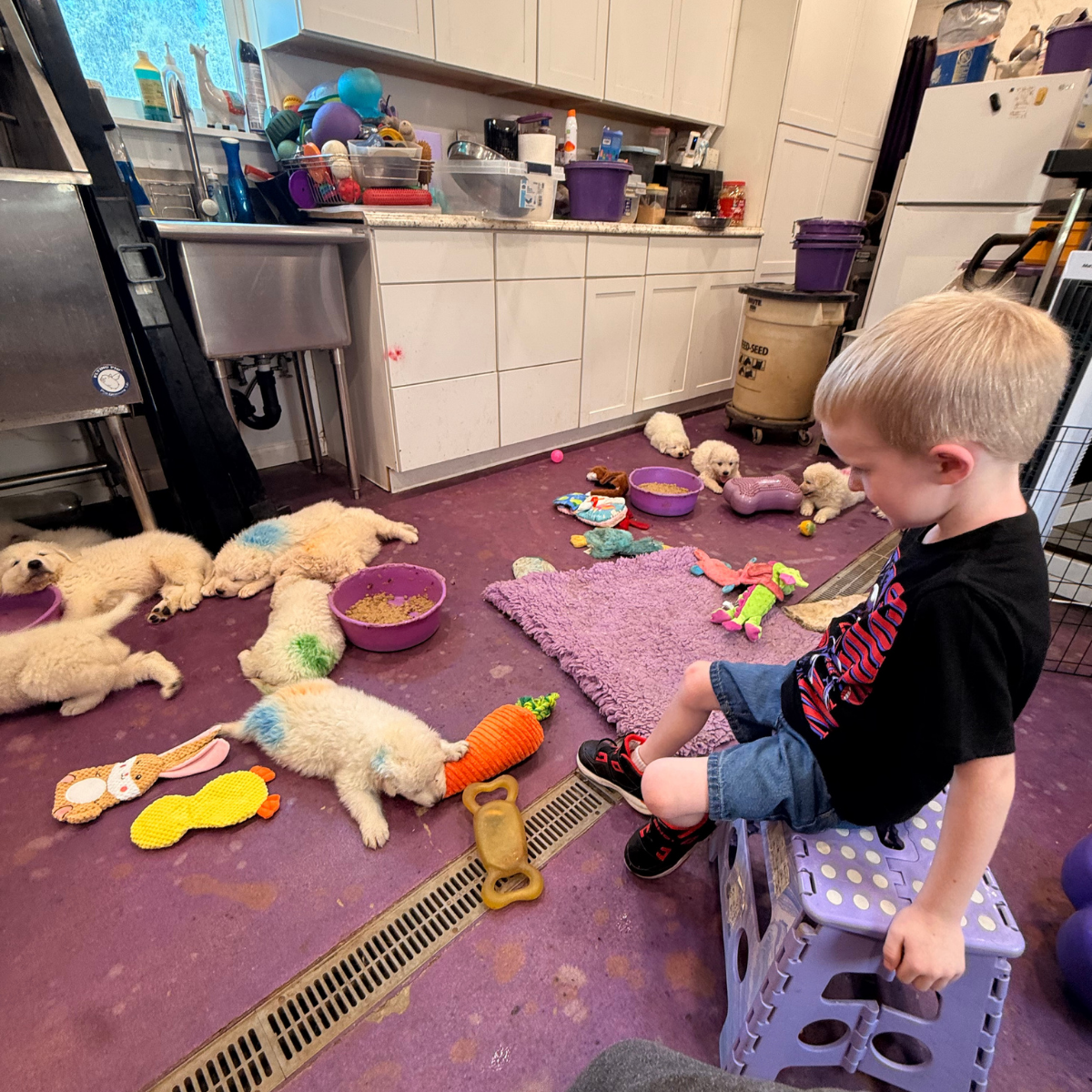
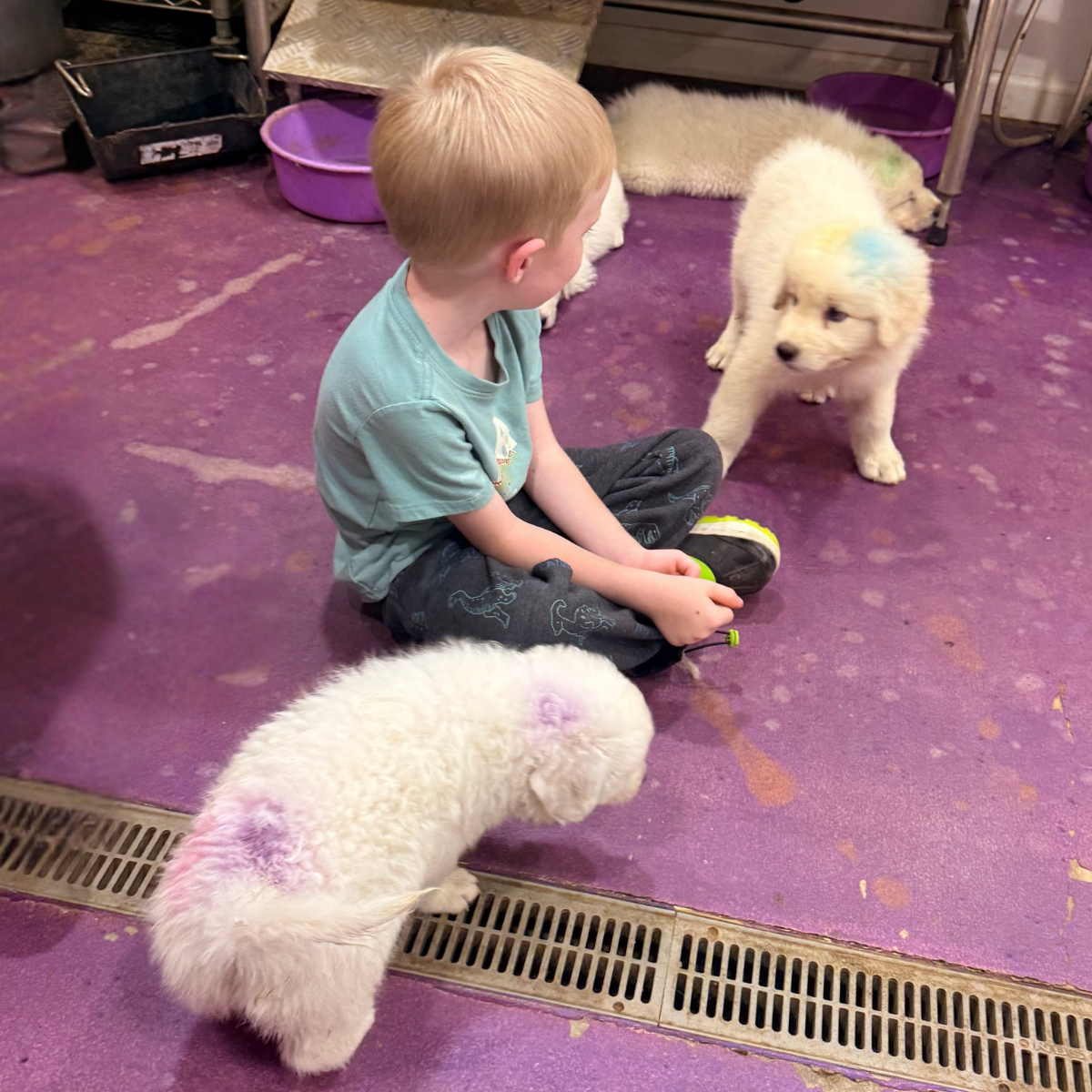
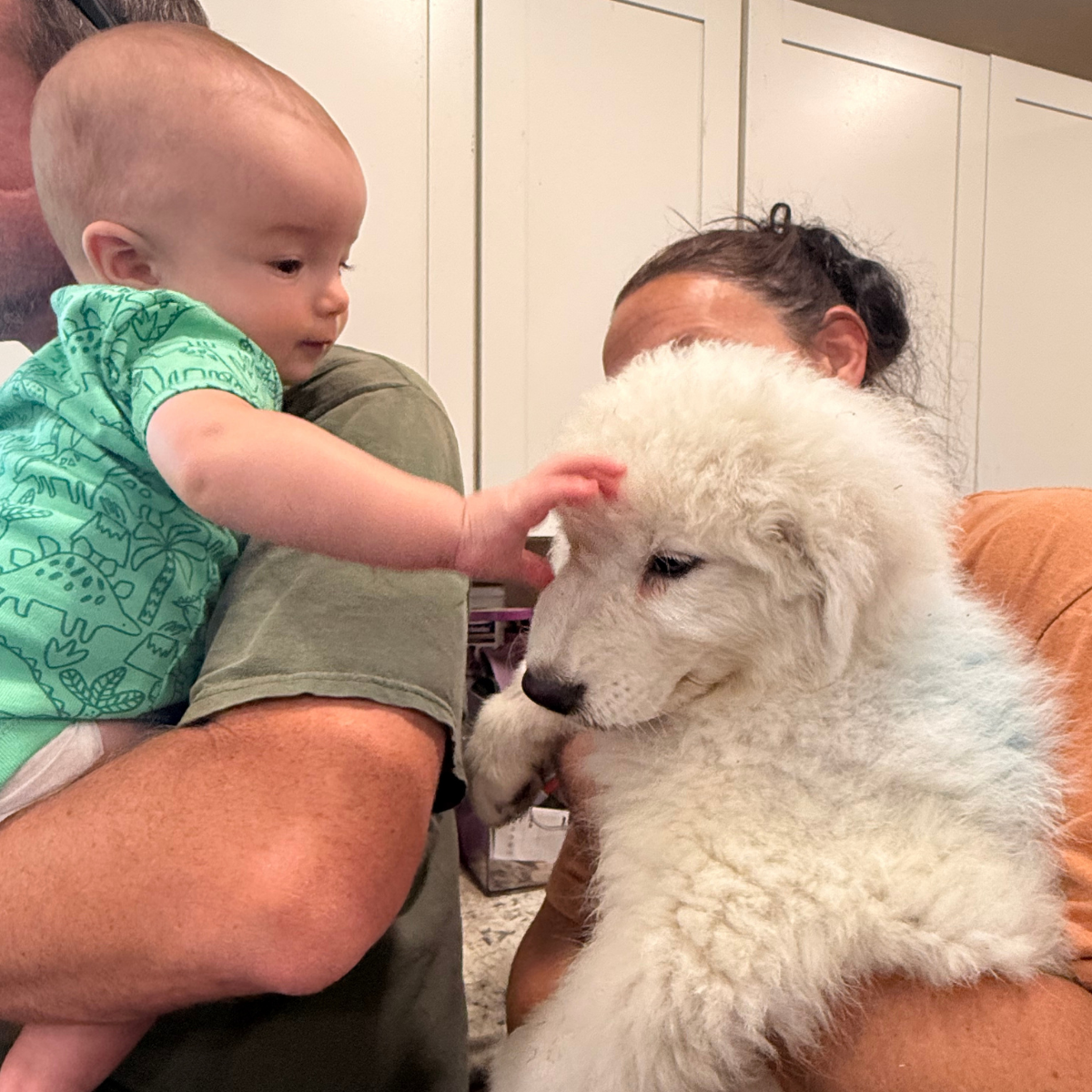
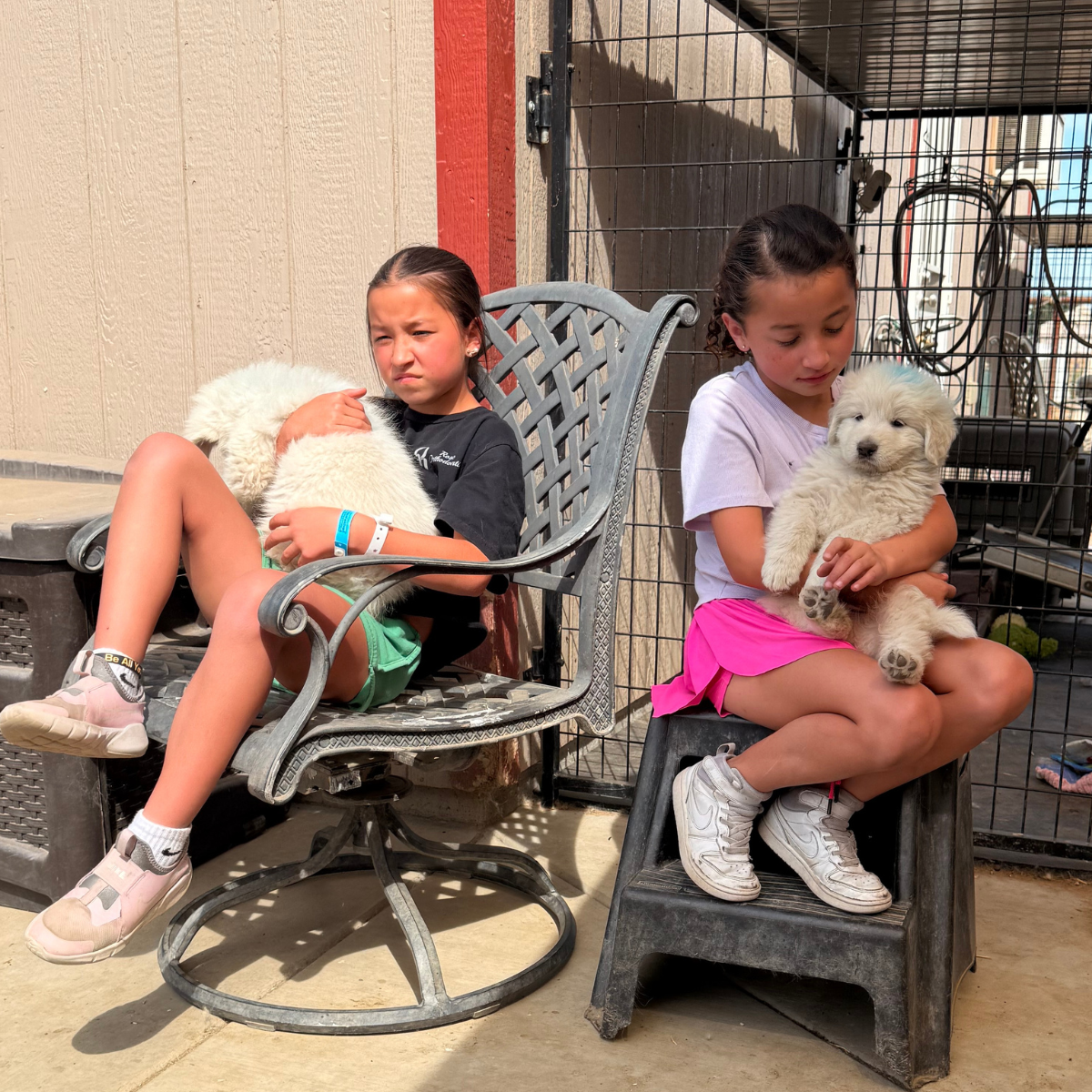
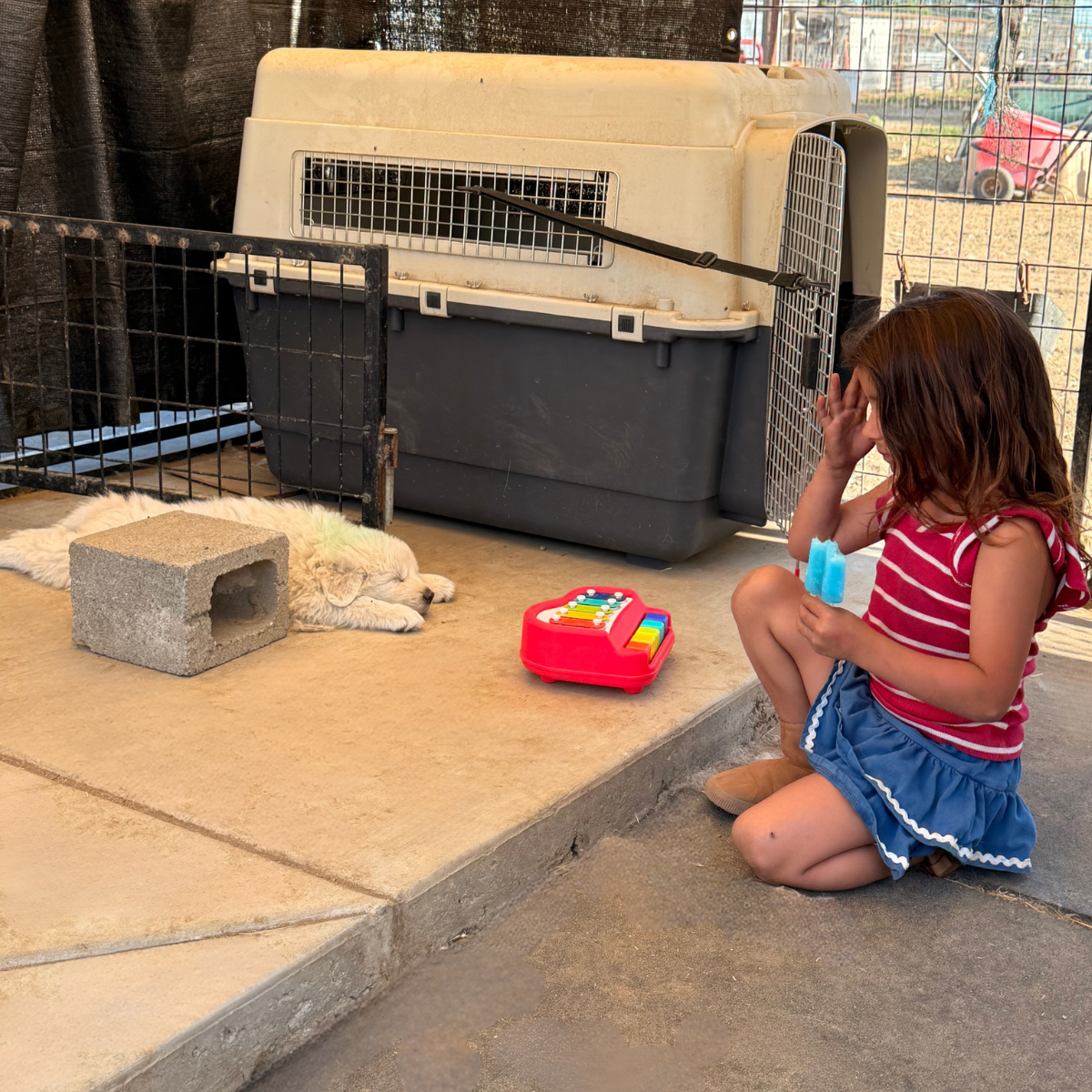
There is something special about the way a puppy responds to a child when they've been handled by children since before their eyes were open. You can see it in these photos — the relaxed body language, the easy comfort, the complete lack of alarm. That's not a coincidence. It's a foundation we build from day one.

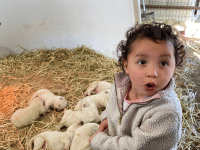
Why does early human socialization matter so much for a working dog? This post makes the case — and it's one of the most important things you can read before choosing an LGD breeder.
Want to see more of our puppies with children at every age and stage?
We have an entire page devoted to photos and videos of Prancing Pony Maremmas growing up alongside children — from newborns in the whelping box to adolescent dogs with families across the country.
Button text: See the Full Children & Maremmas Gallery →
Link: [Maremmas & Children sub-page — link to Children & LGDs safety page temporarily]
The Puppy Parlor — Where the Socialization Period Begins (Weeks 3–5)
In the early years of my program, I raised litters in the barn — right in the thick of the farm, surrounded by goats, chickens and other livestock from day one. And it worked well. One litter a year, timed carefully, with full attention on that single group of puppies. The immersion was excellent.
But as the program grew and I began raising multiple litters throughout the year, the barn environment got harder to control. Weather, parasite pressure, seasonal variables — things that were manageable with one well-timed litter became real challenges with litters born in different seasons. I didn't want to give up the deep livestock immersion that had always been a strength of my program. I just needed a better way to get there.
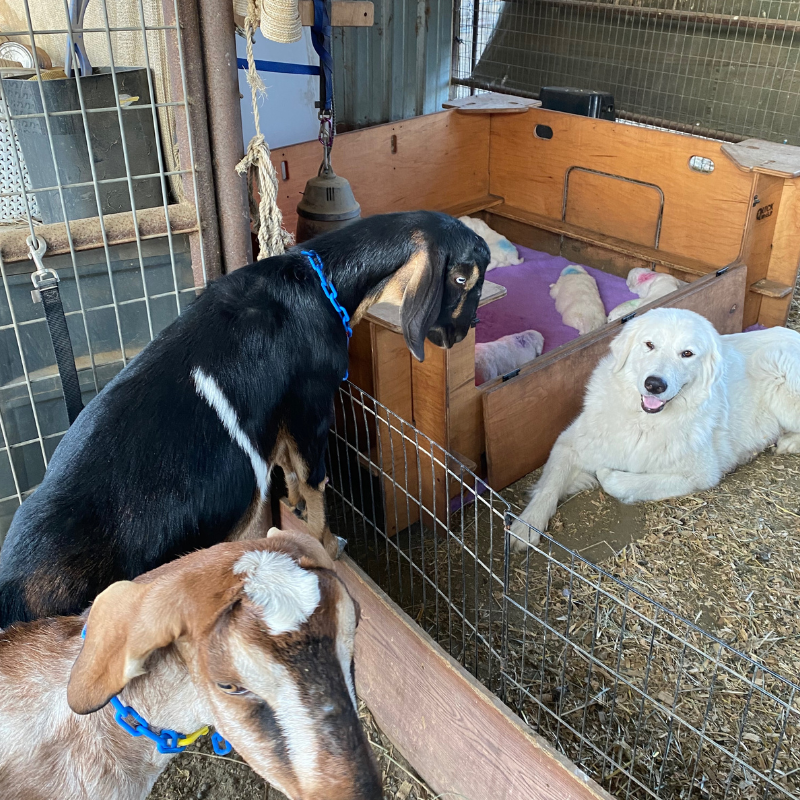
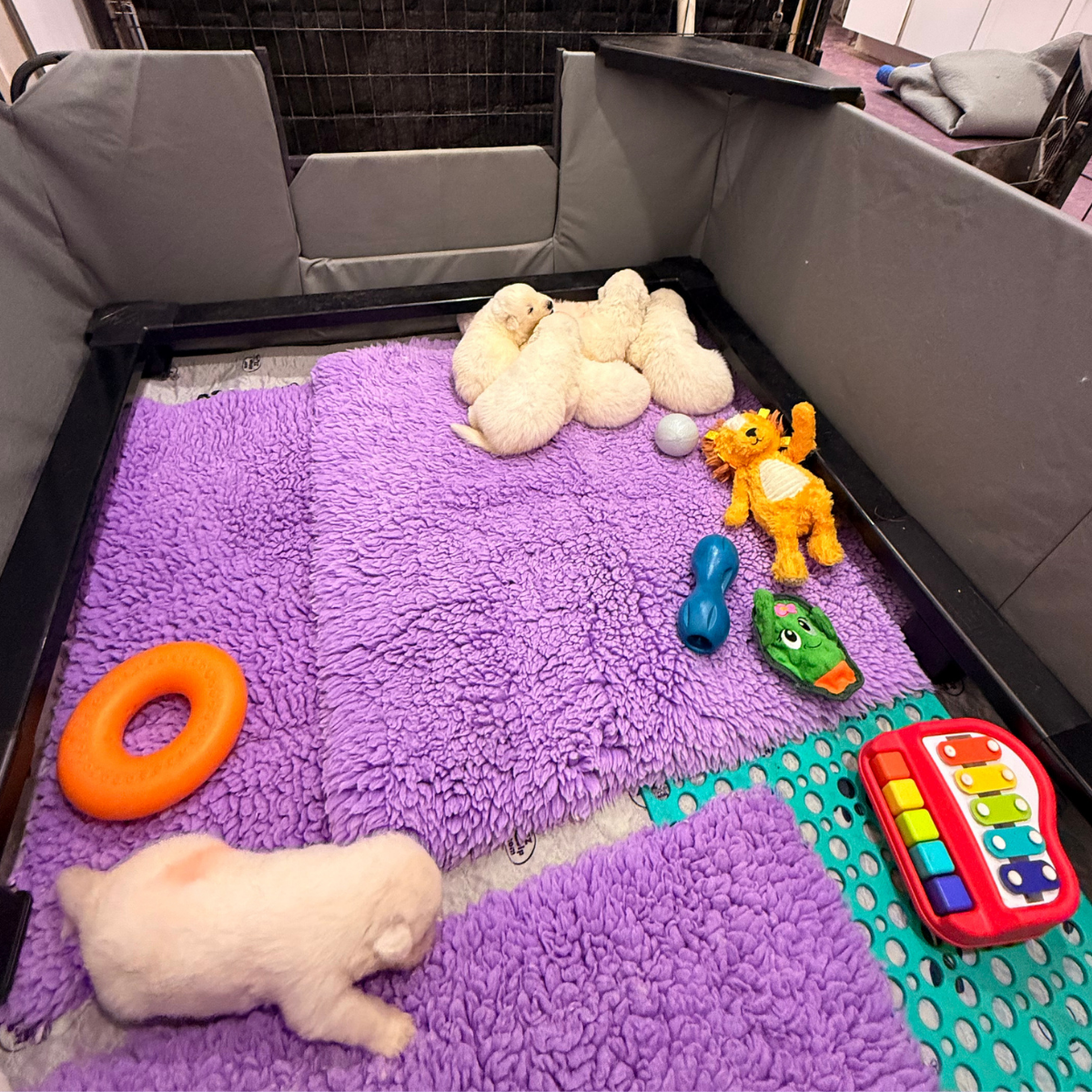
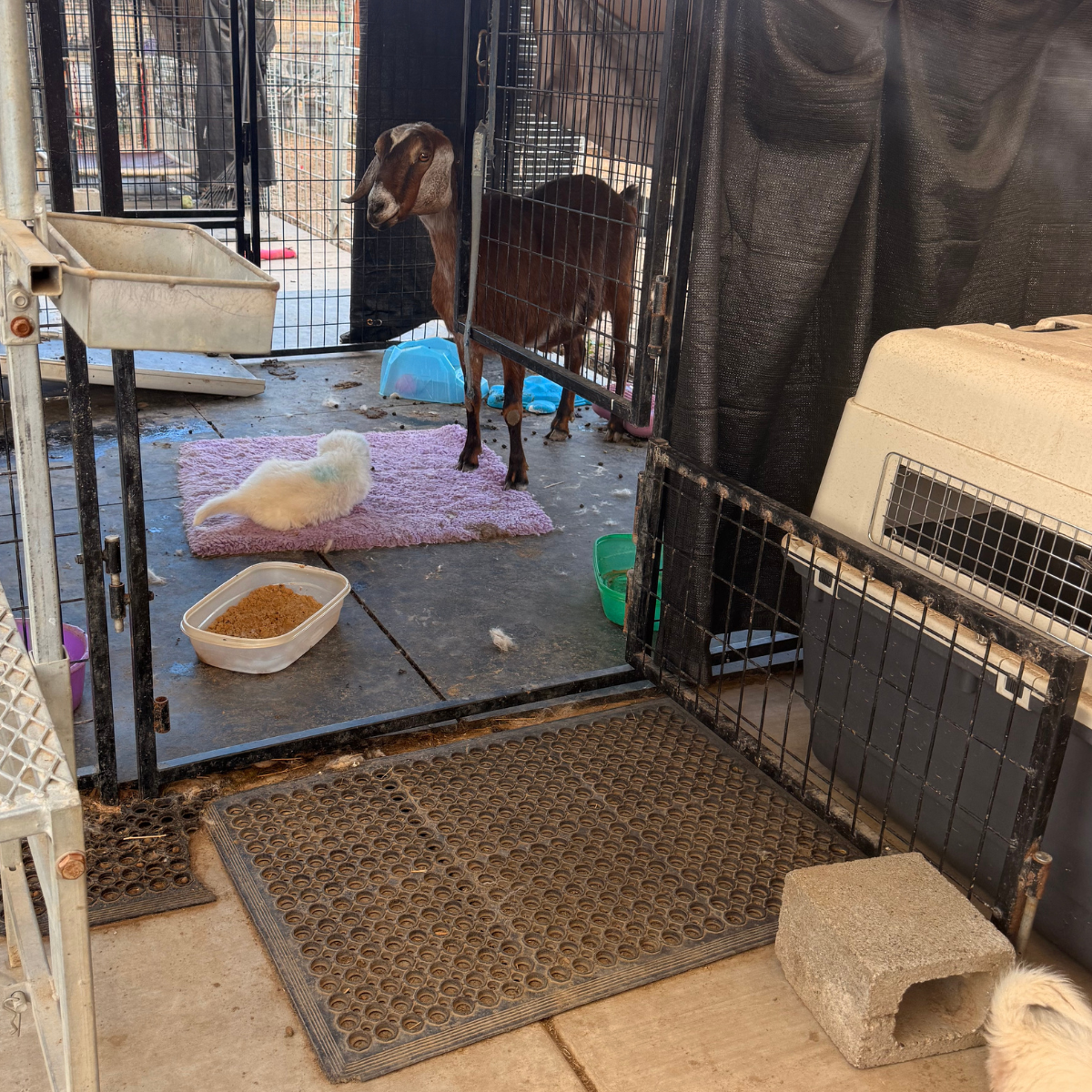
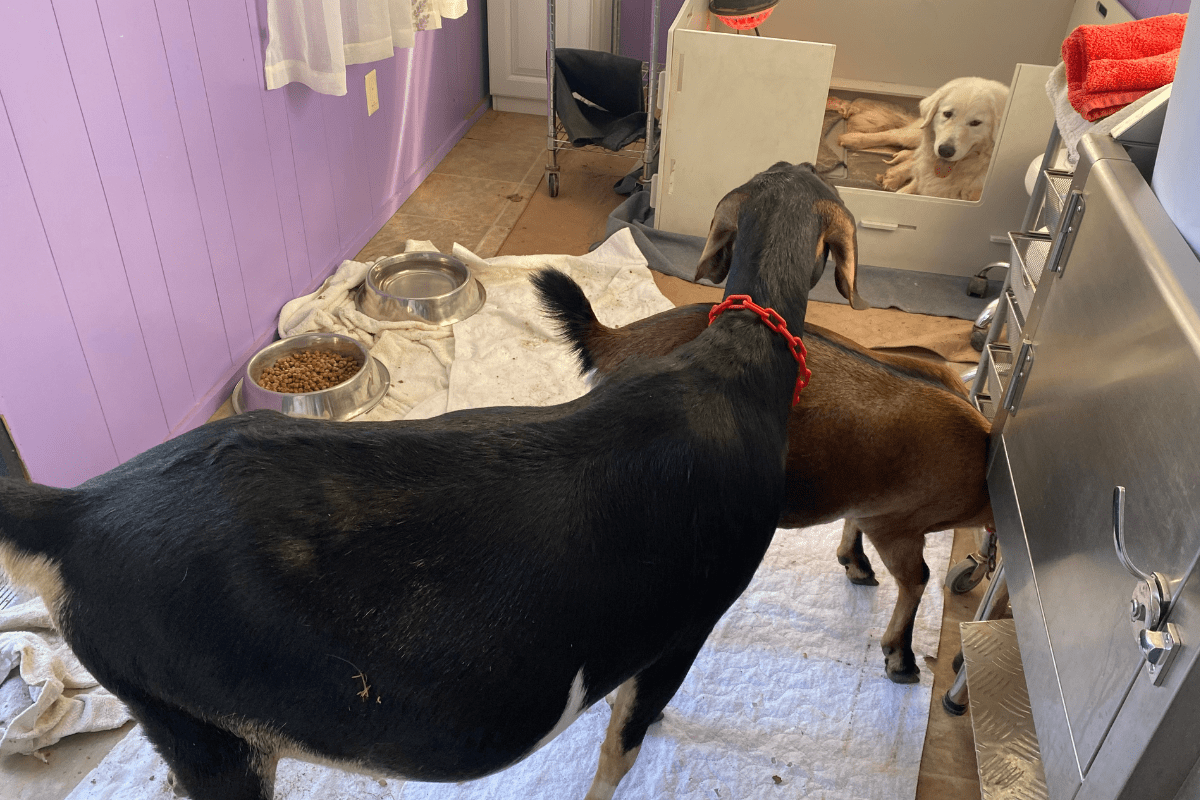
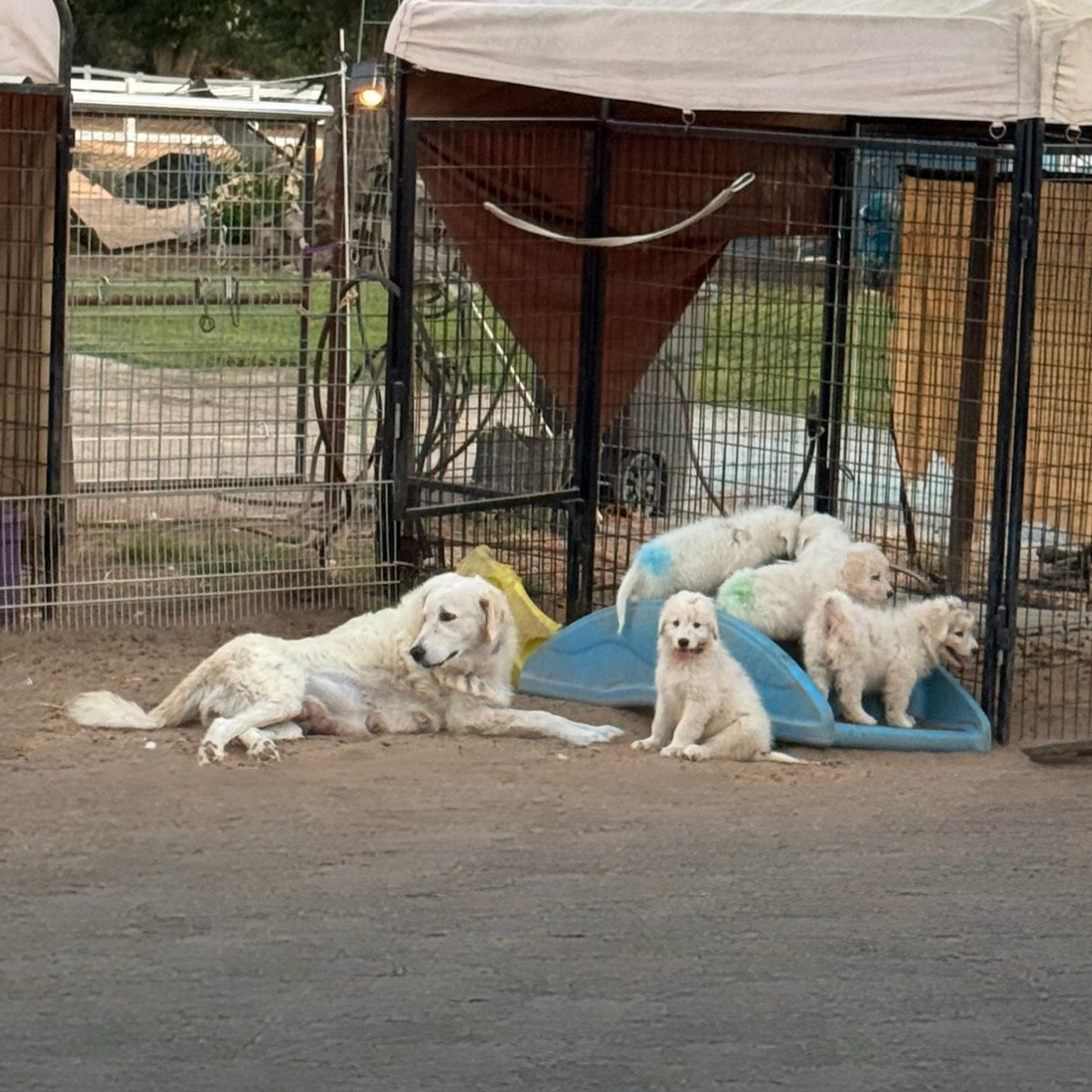
The Puppy Parlor was the solution. It's an indoor whelping and early socialization space we built specifically for raising our puppies. It's situated in a small goat pasture and doubles as the goat milking parlor, so livestock sights, sounds, and smells are still part of daily life from the beginning. It gives me consistent control over temperature, cleanliness, and parasite exposure during the most vulnerable early weeks, while still delivering the sensory-rich environment puppies need. The socialization period opens around three weeks, and that's when the Puppy Parlor really hits its stride — different textures, enrichment that rotates, visitors of all kinds. By the time puppies are ready for direct livestock integration, they're already curious, confident, and comfortable with the world around them.
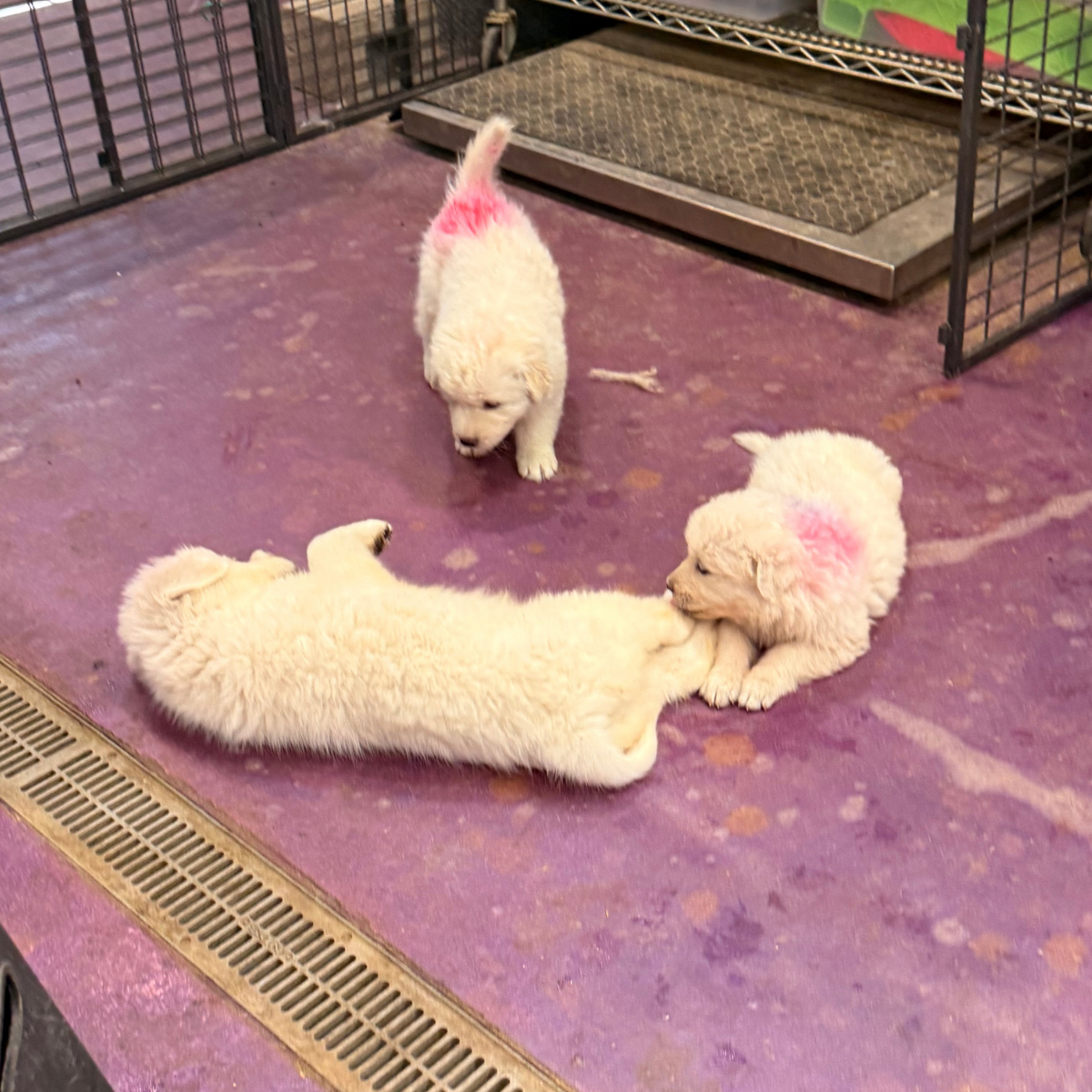
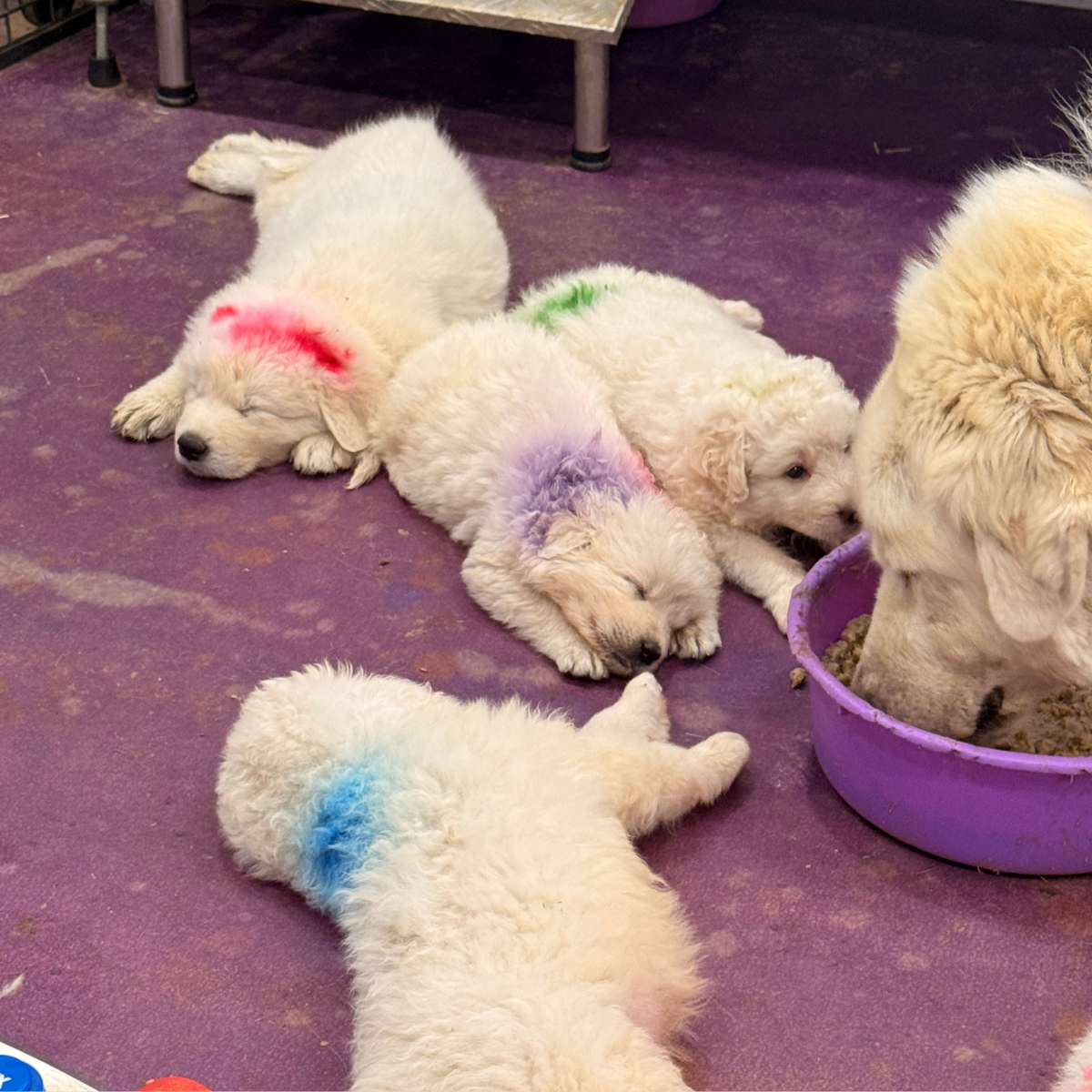
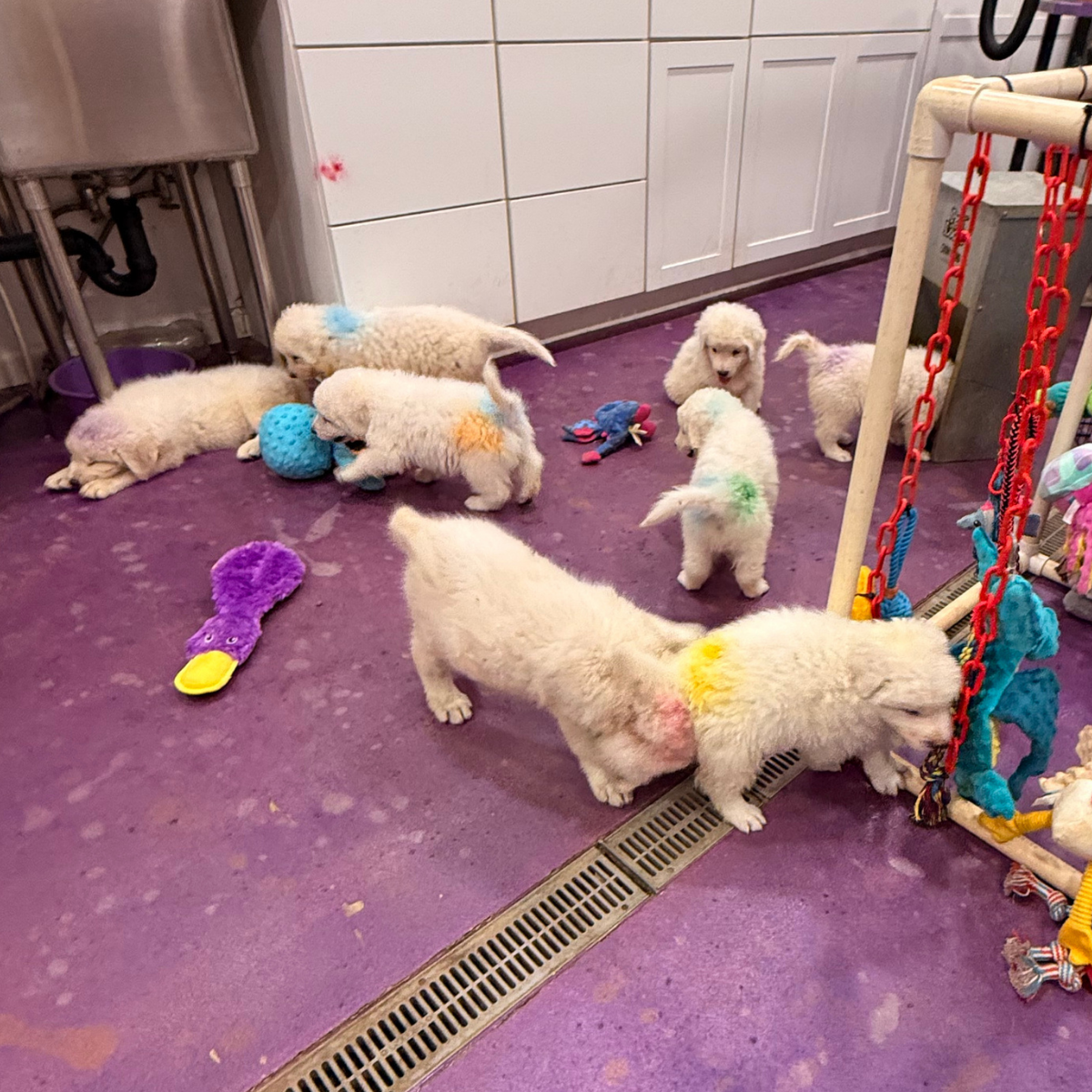
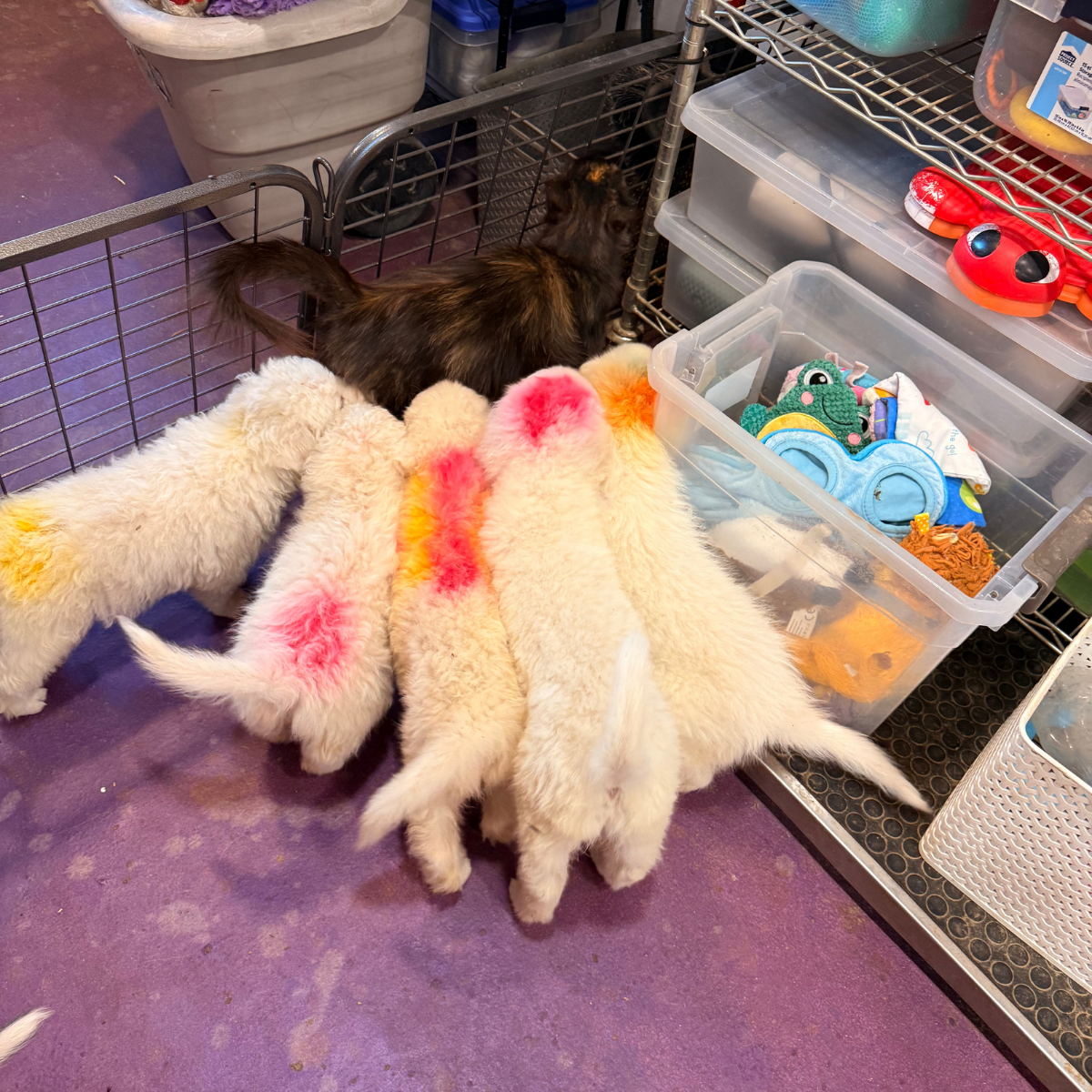
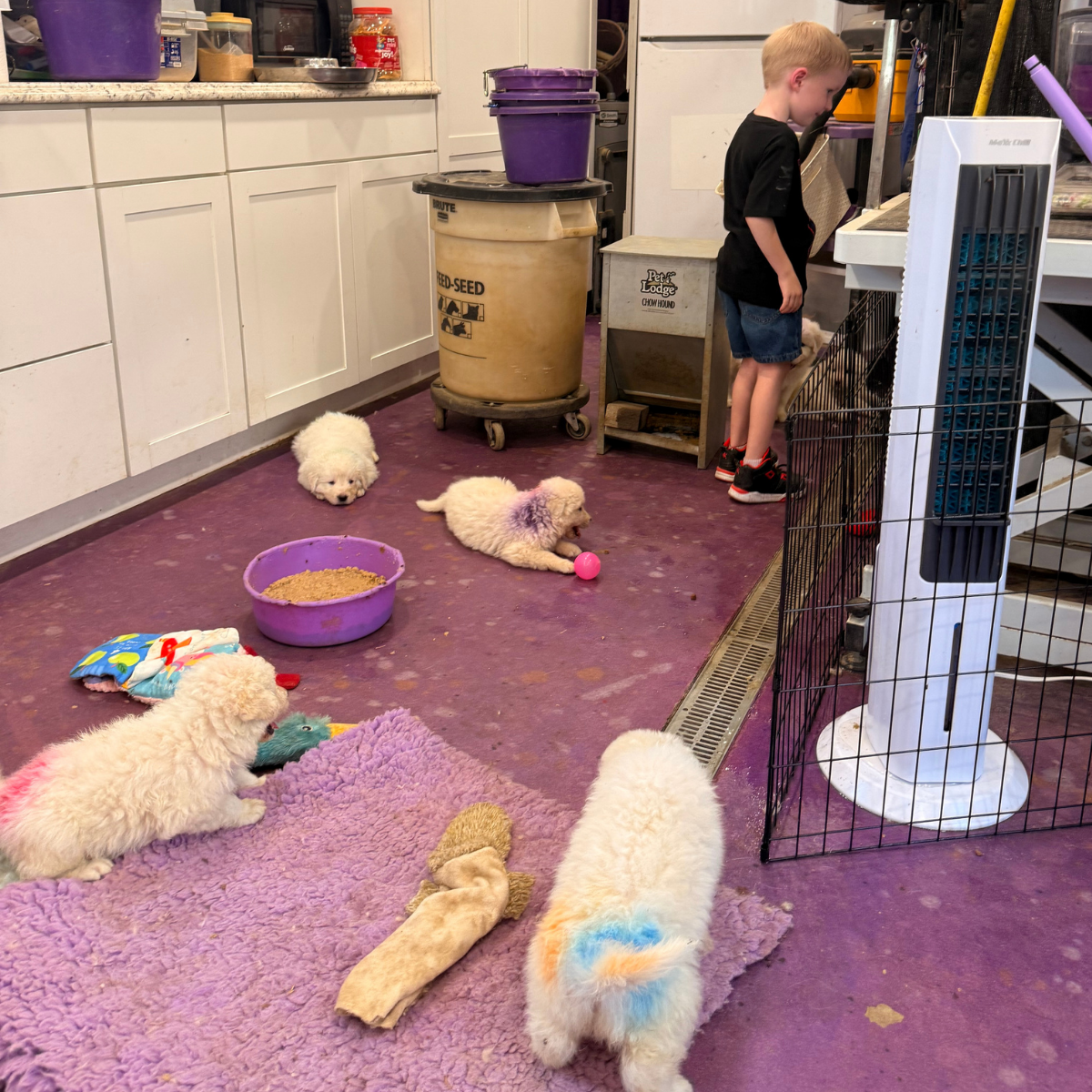
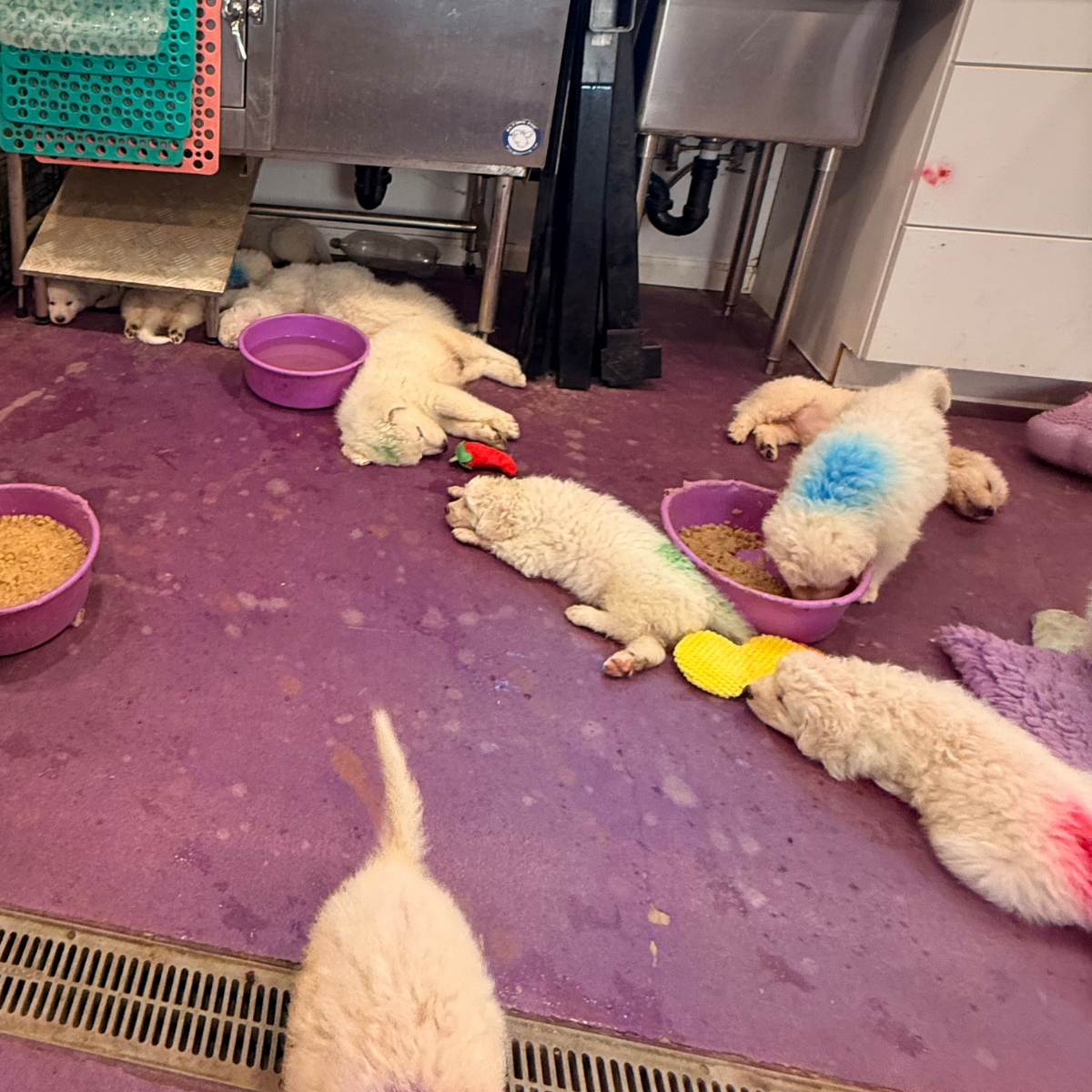
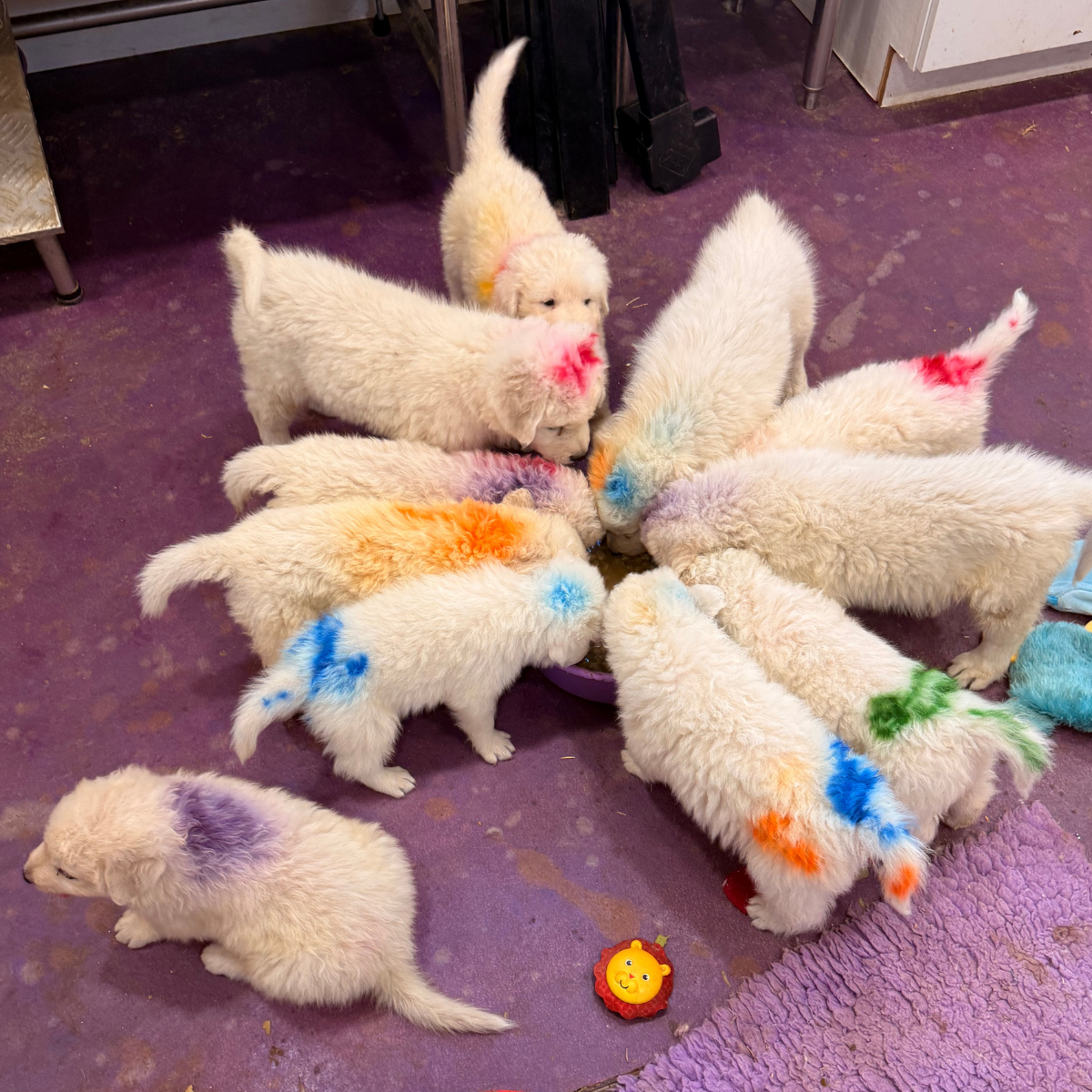
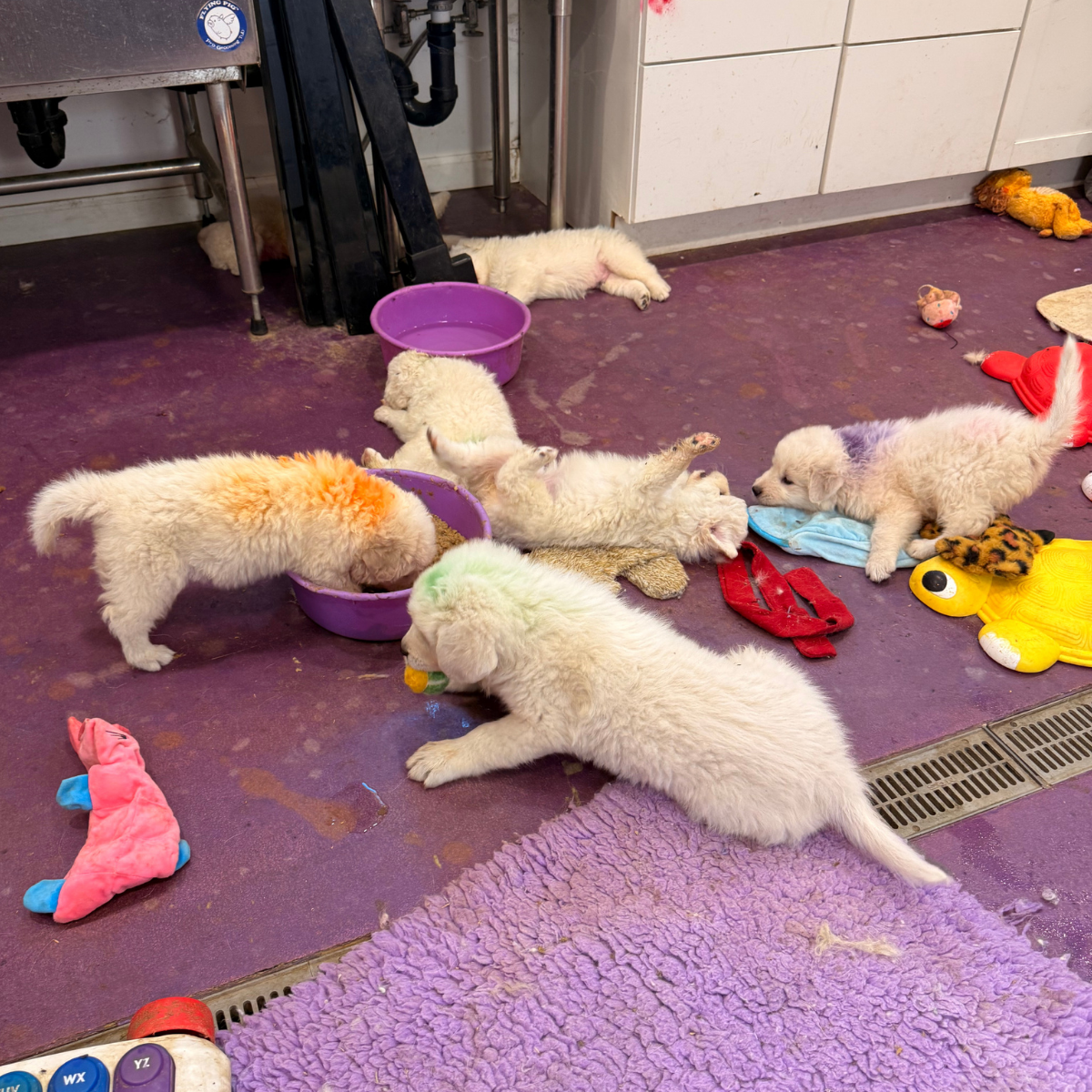
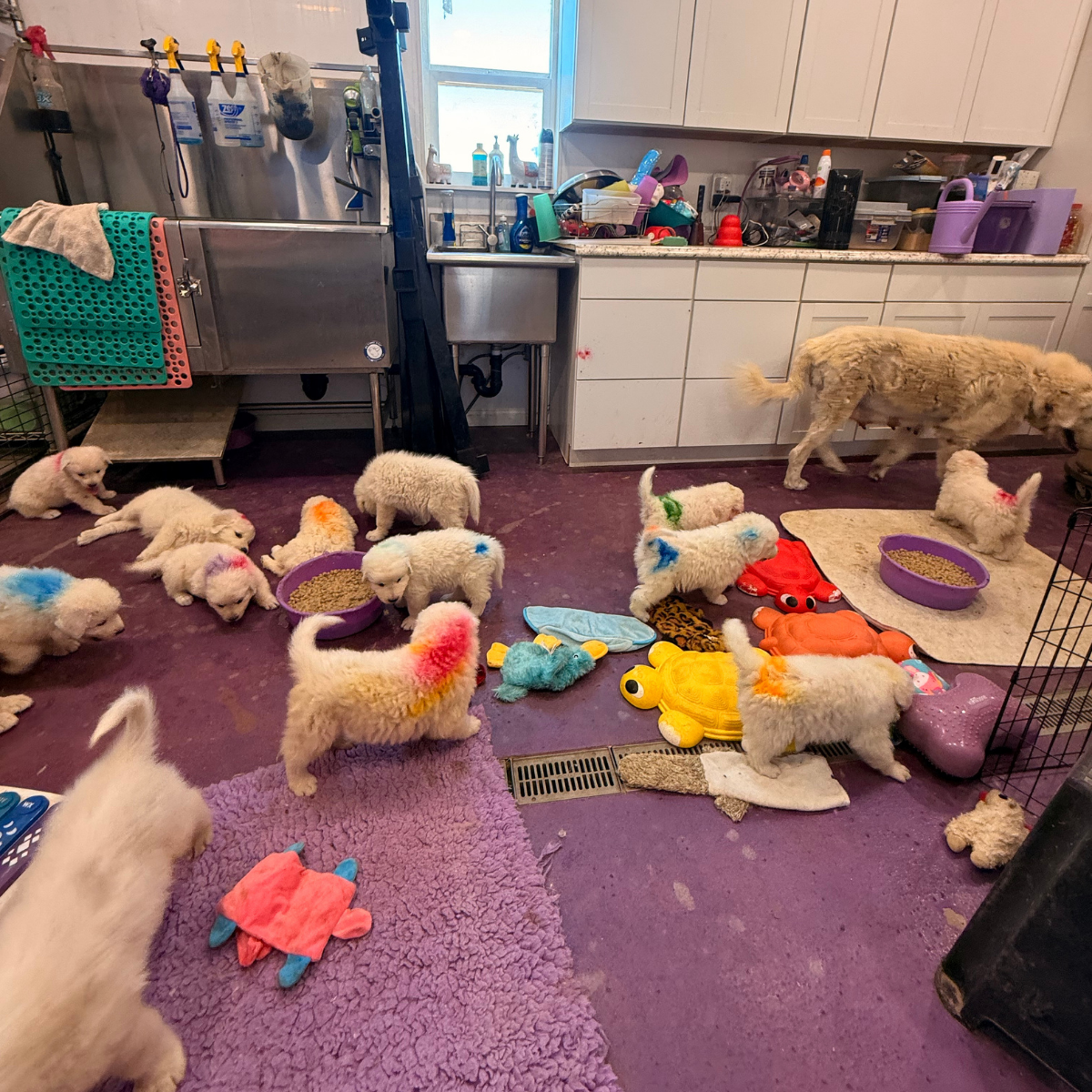
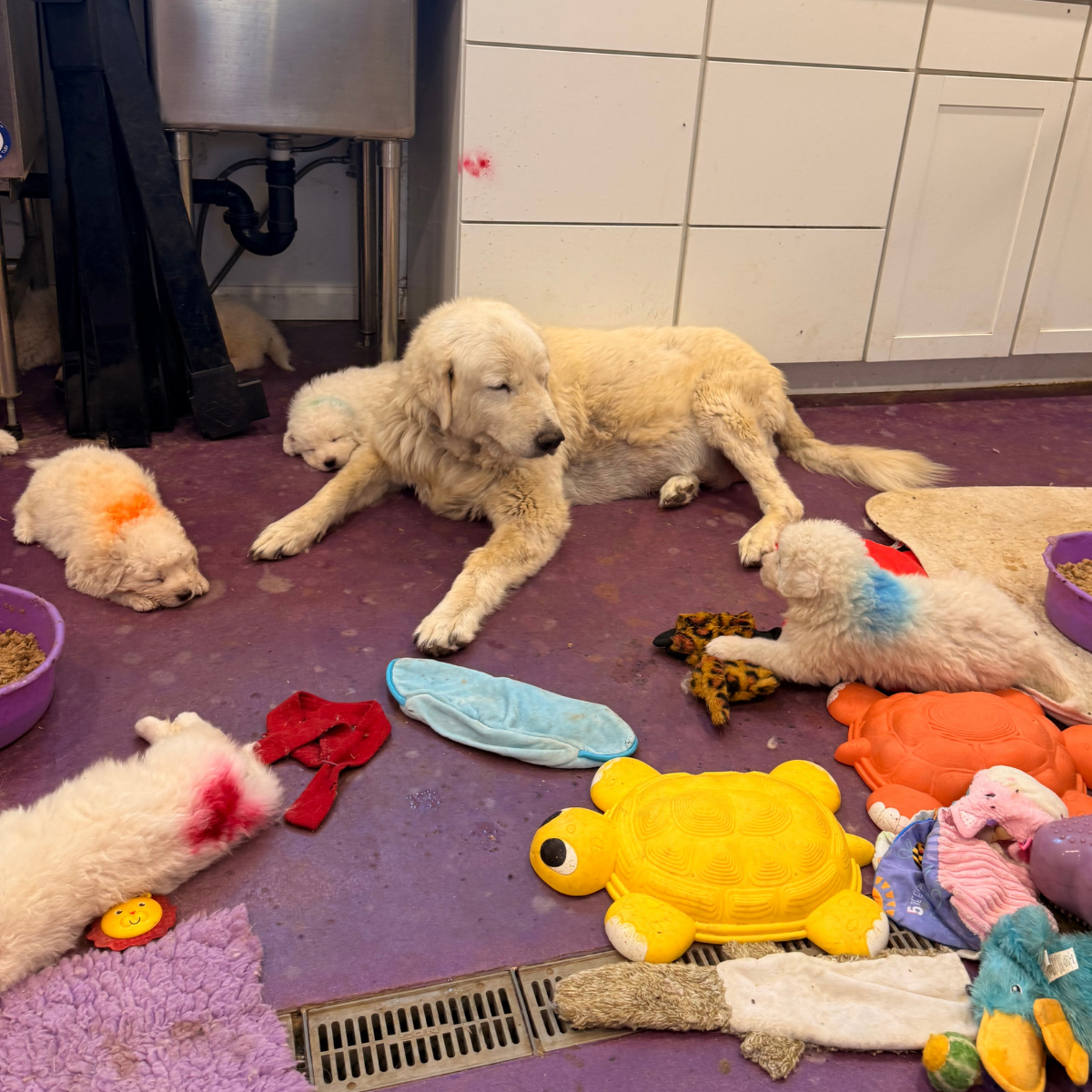
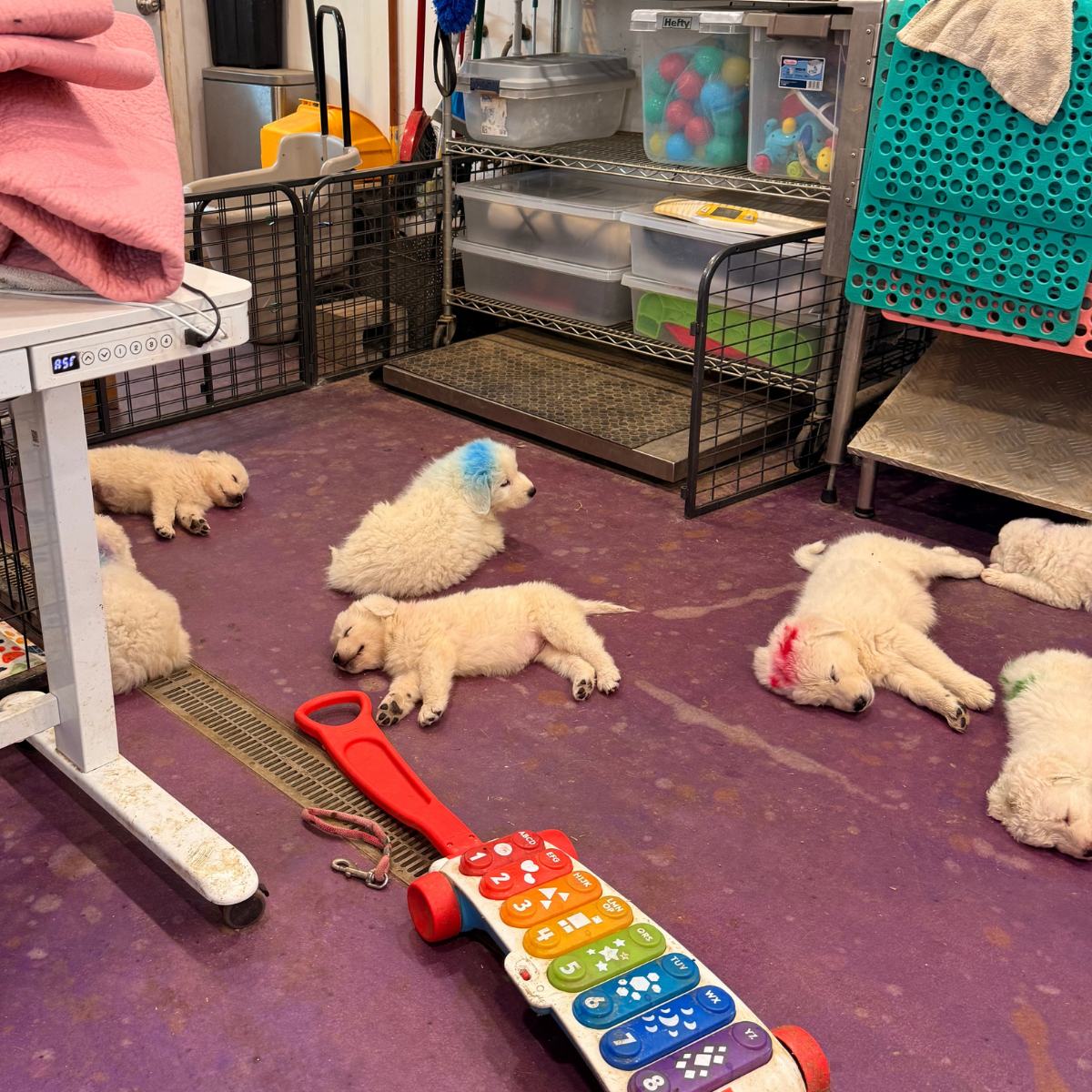
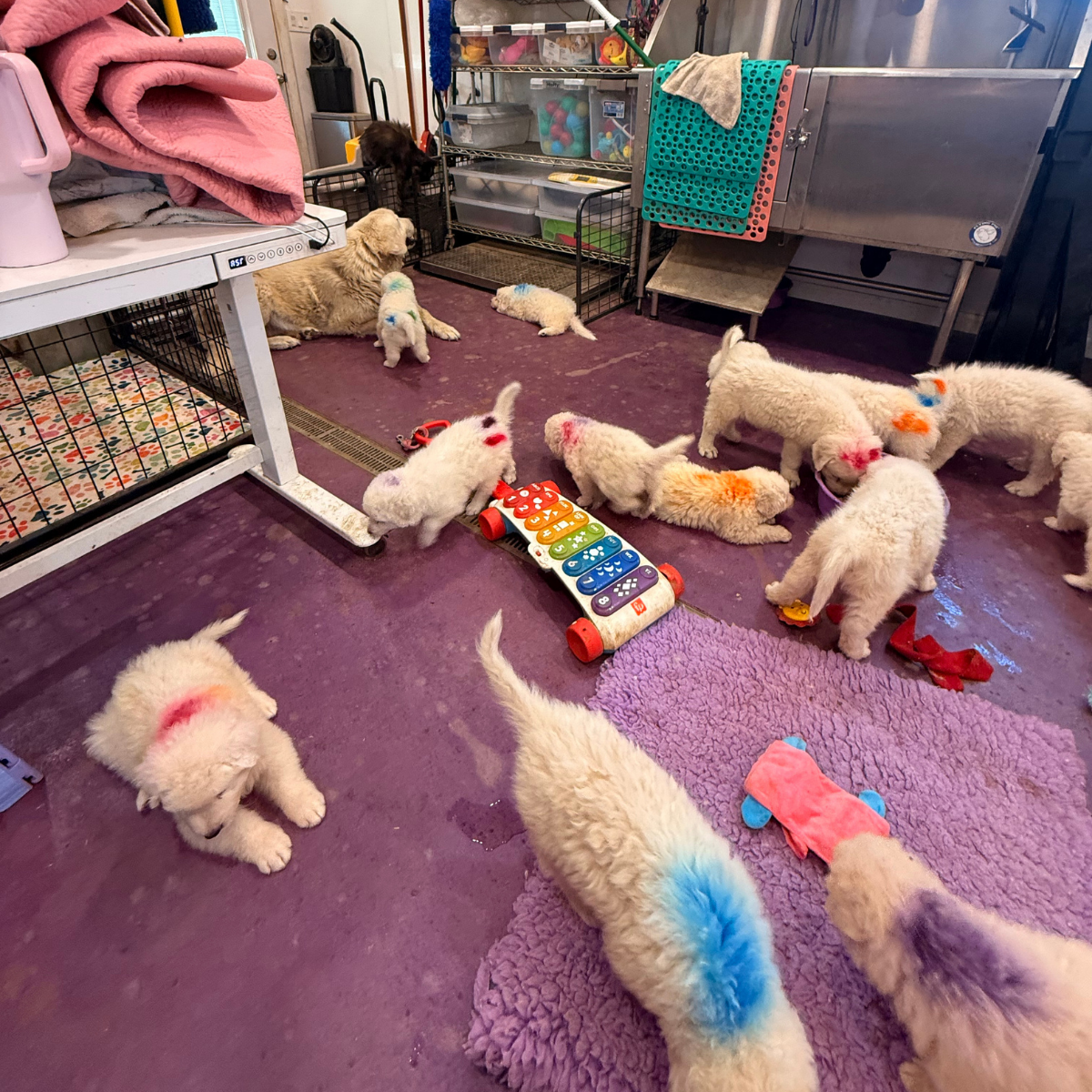
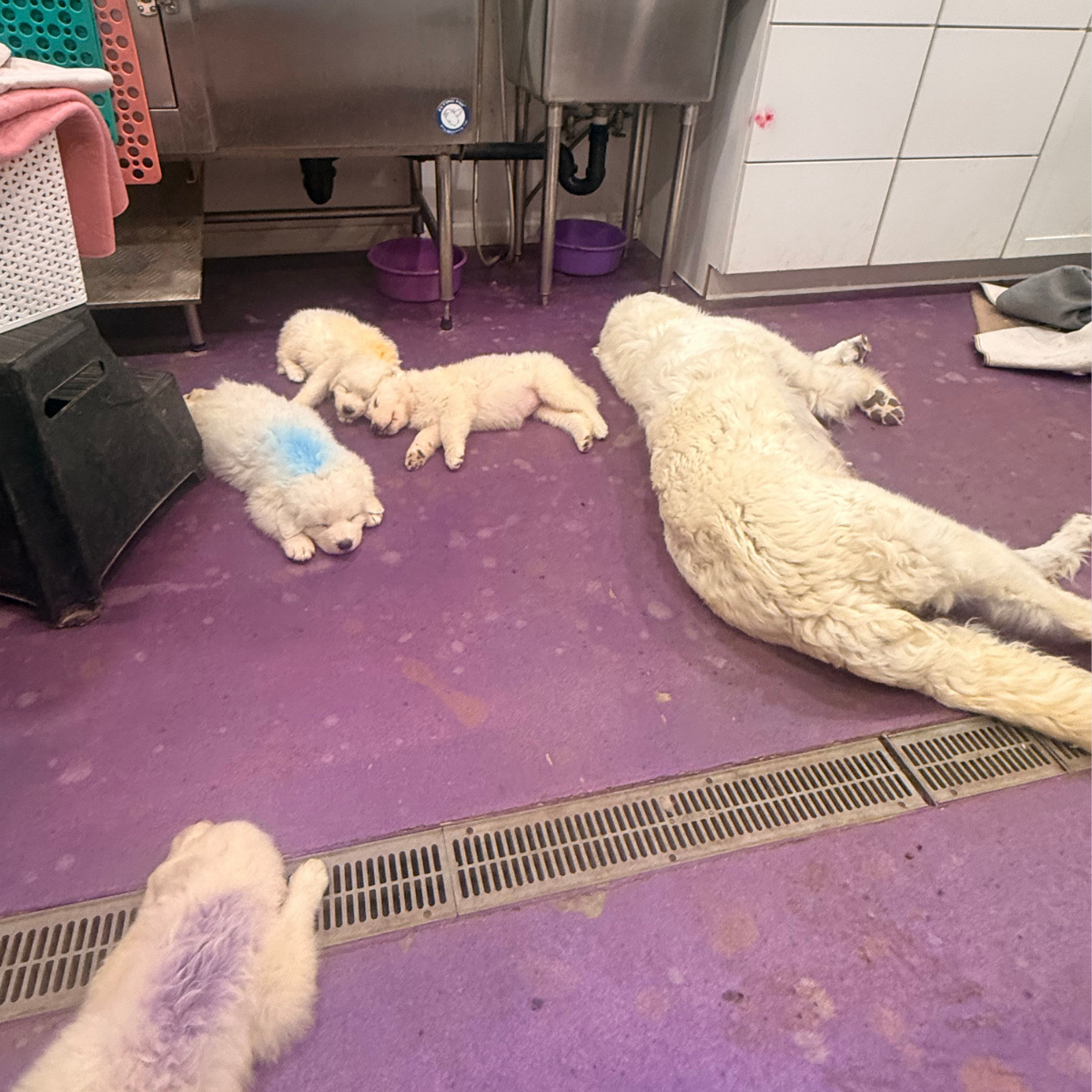
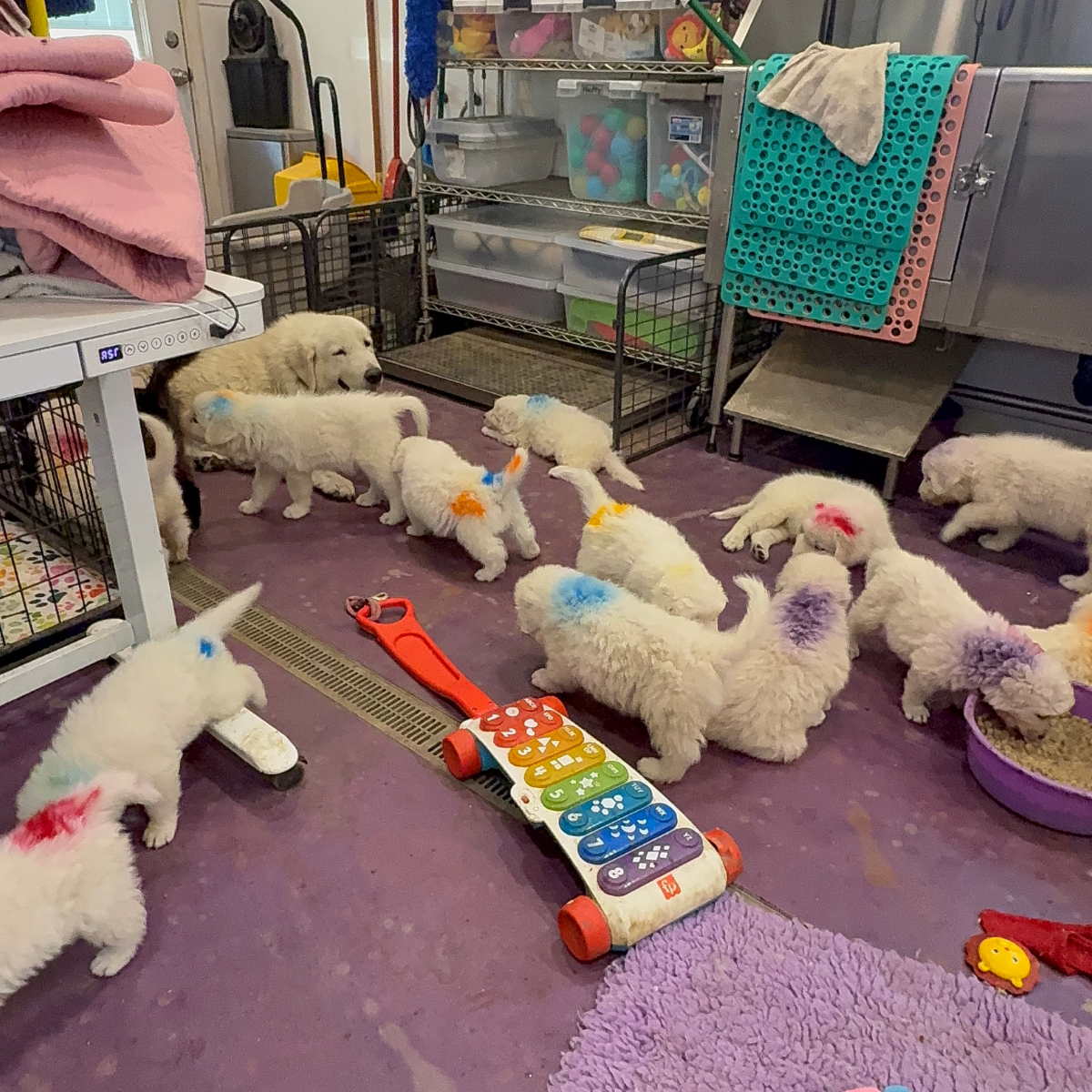
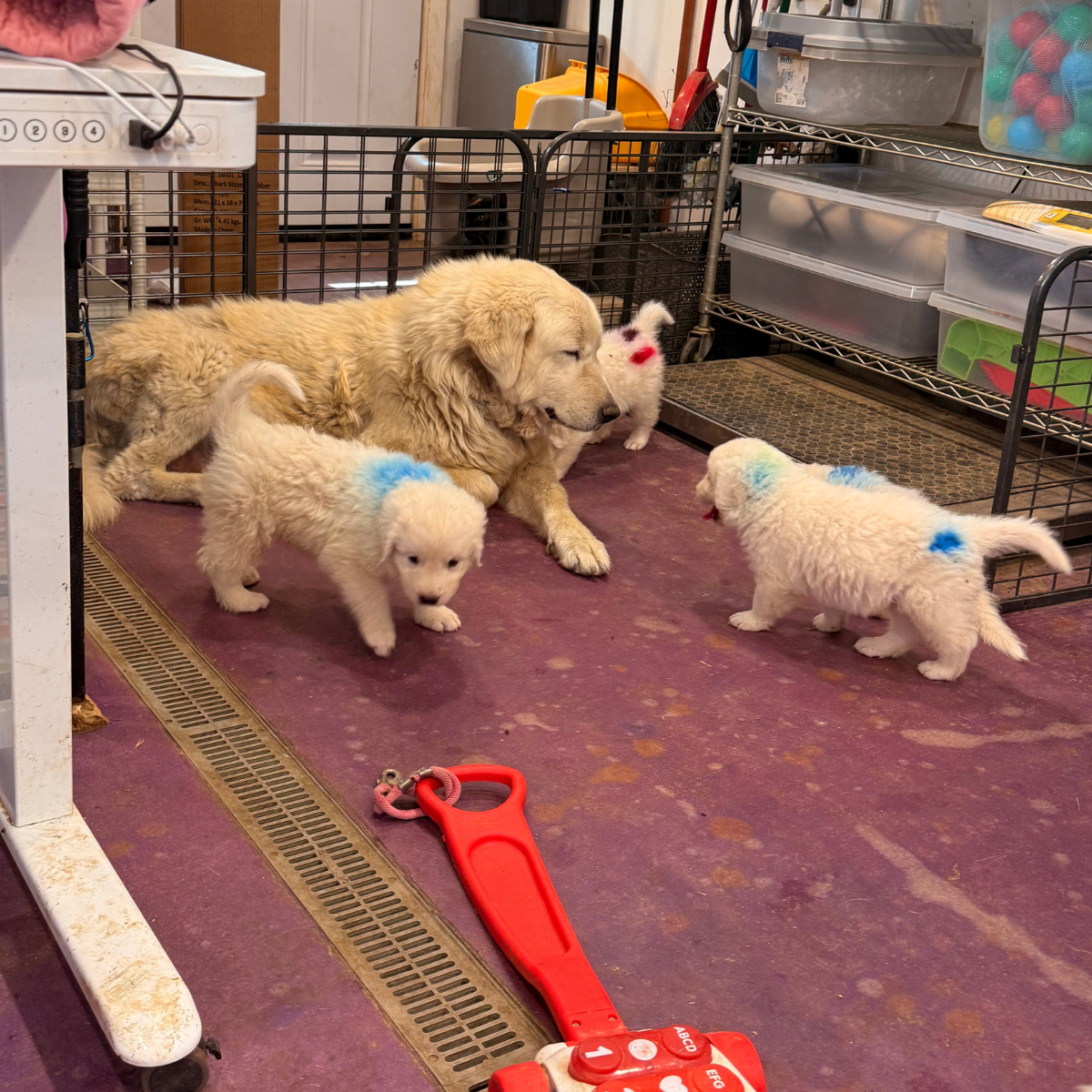
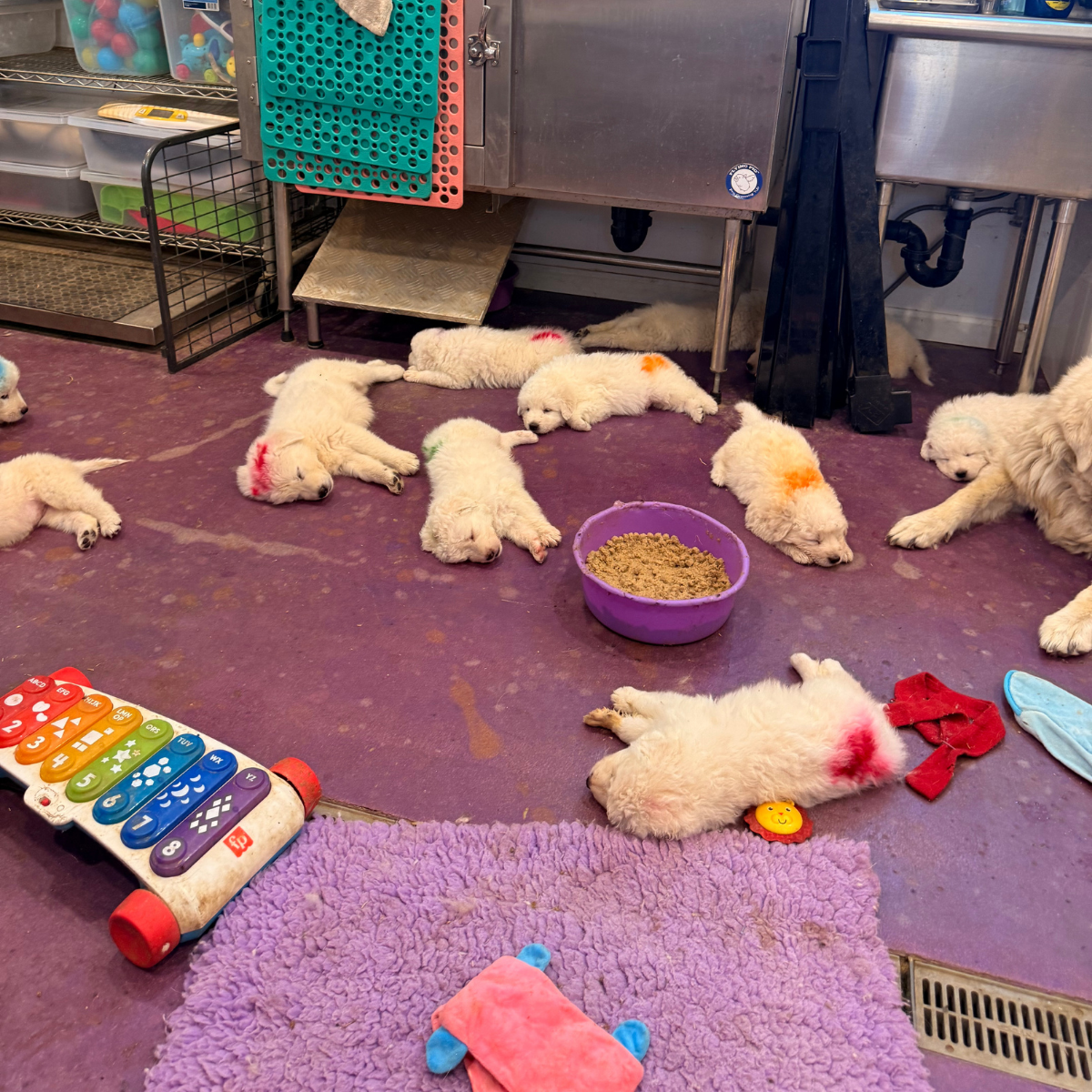
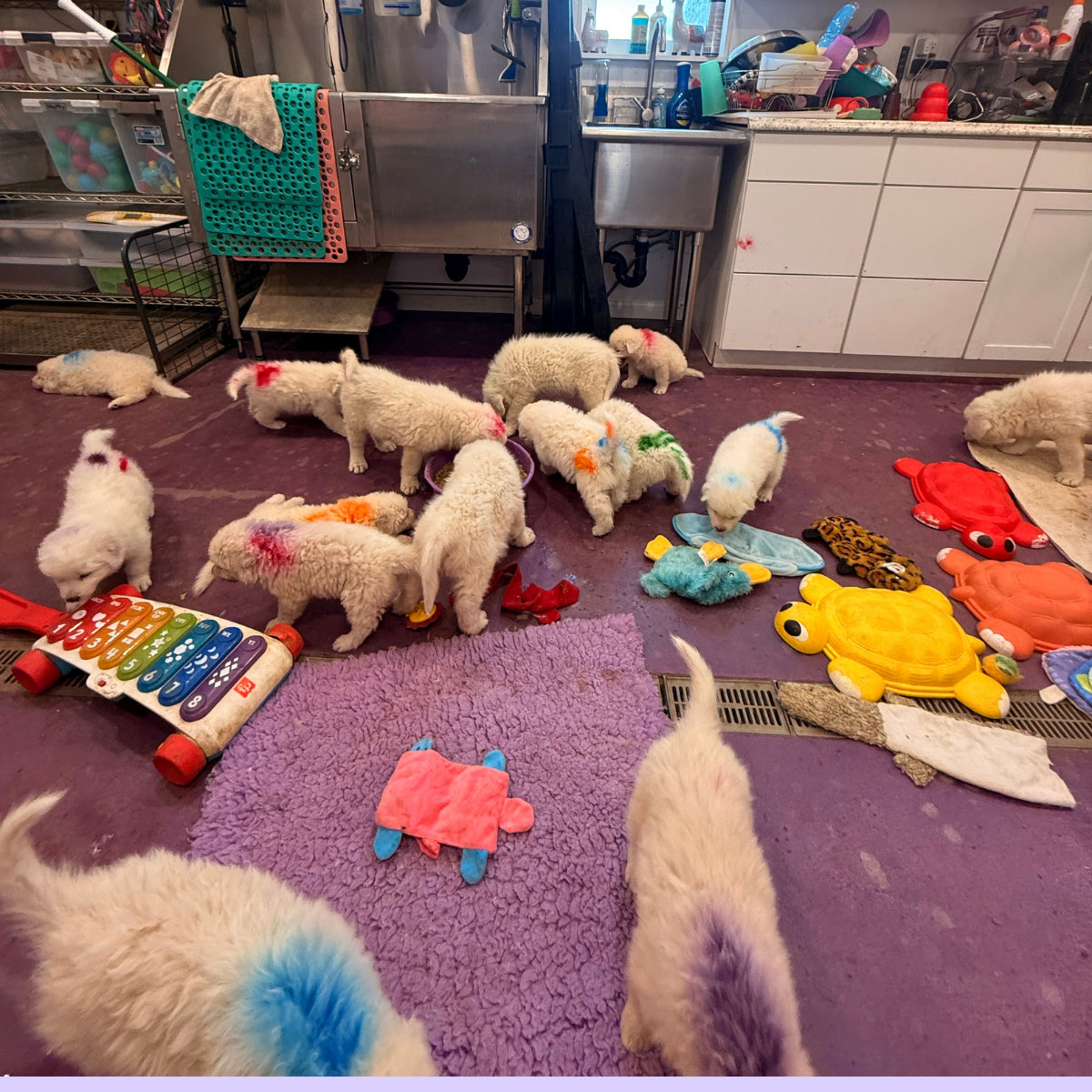
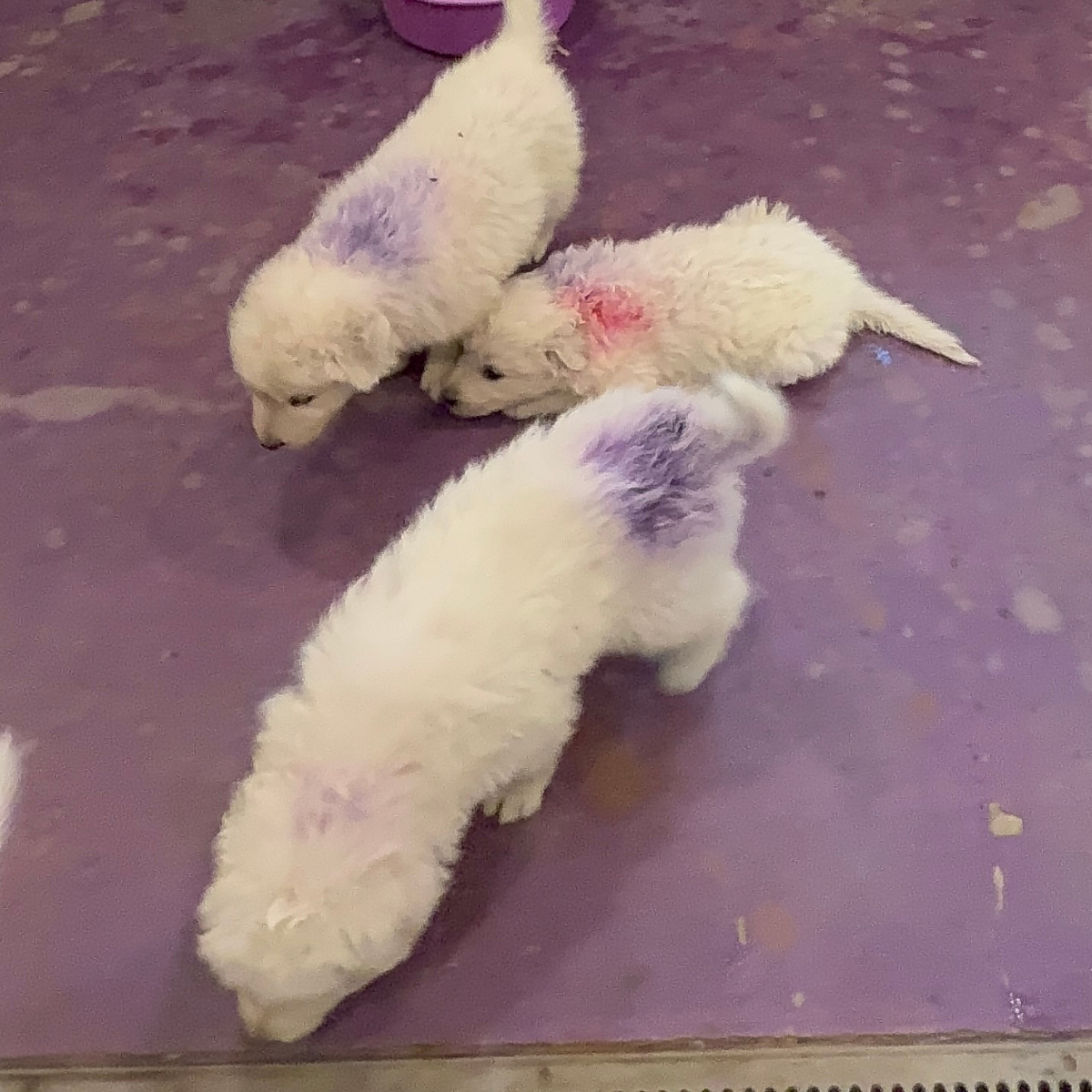
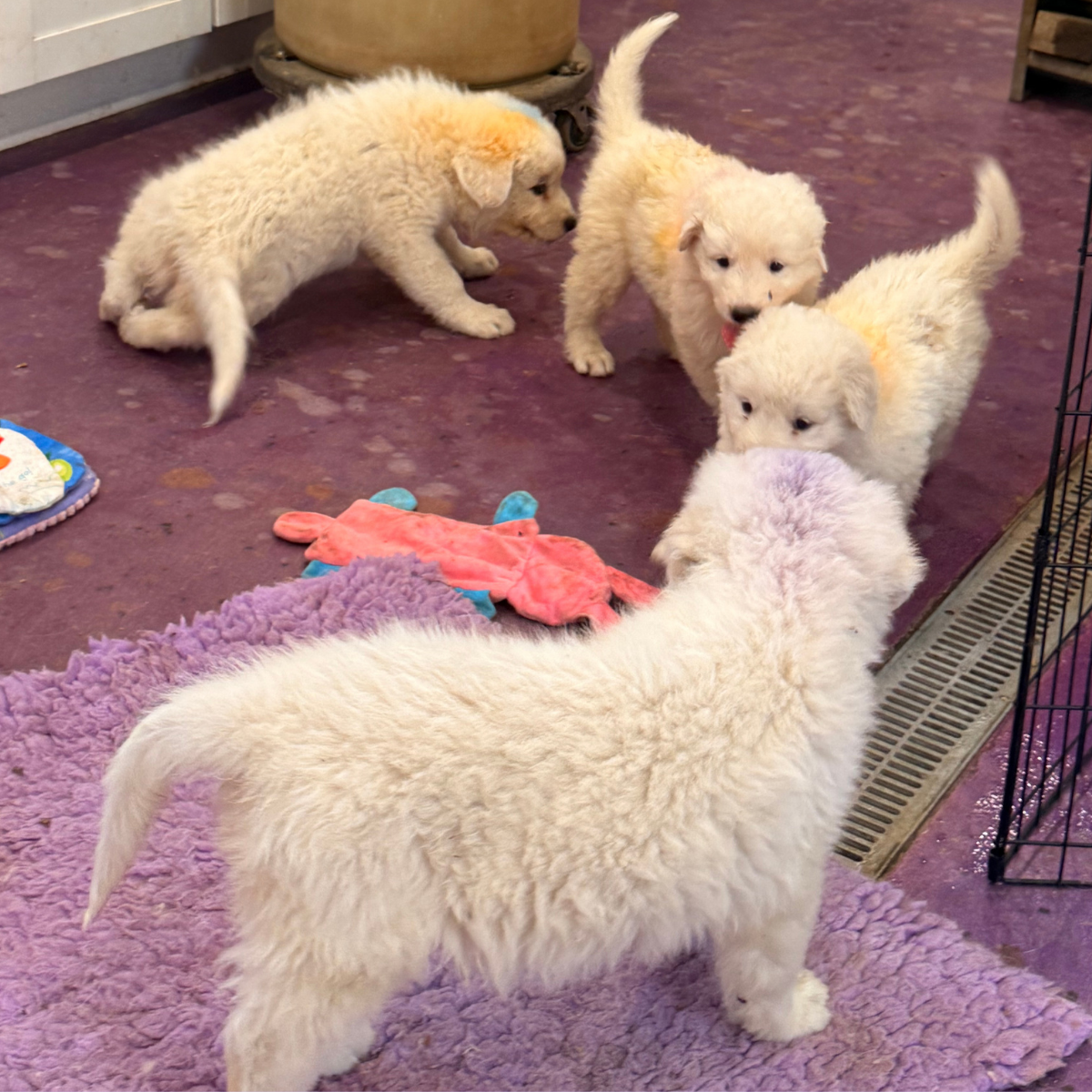
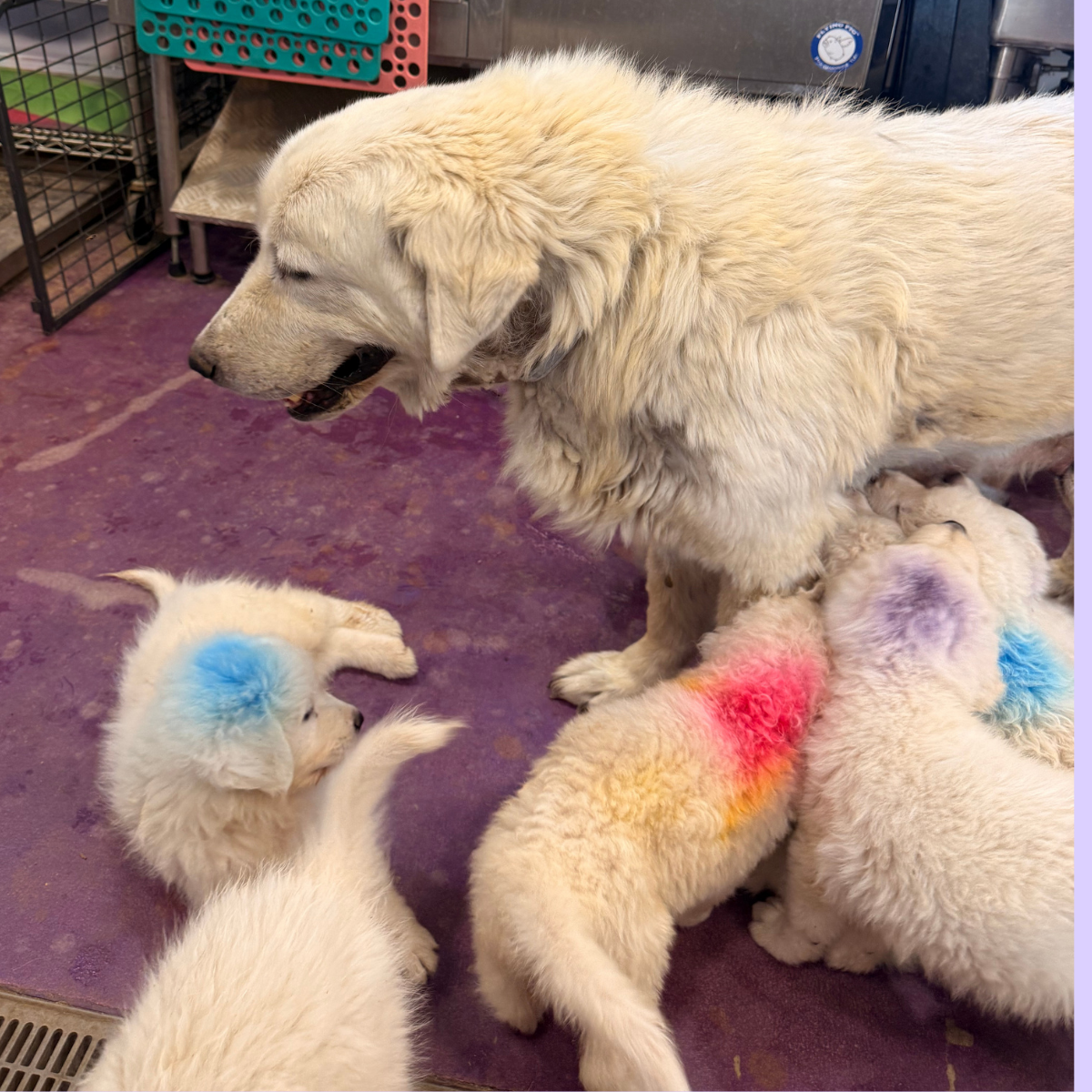
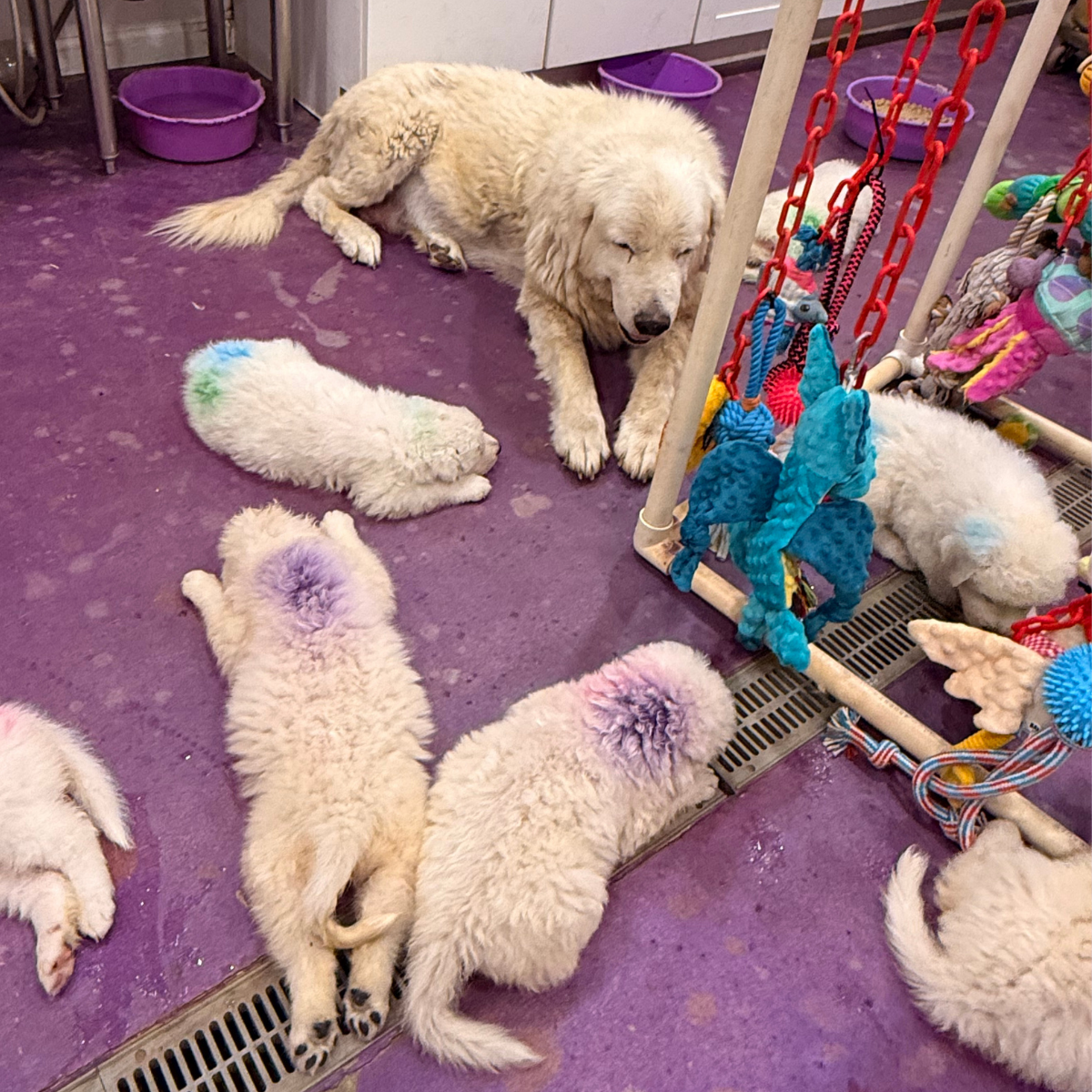
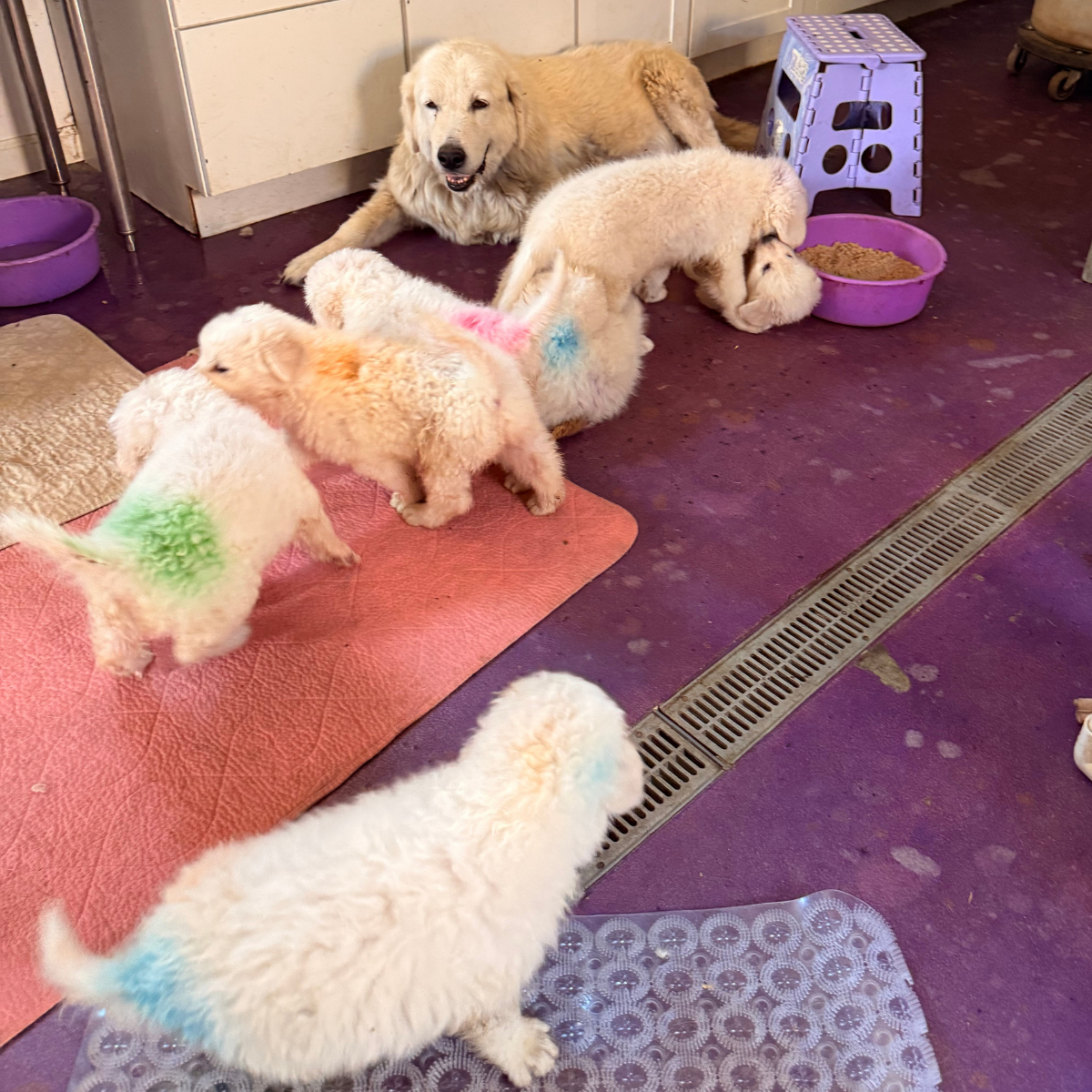
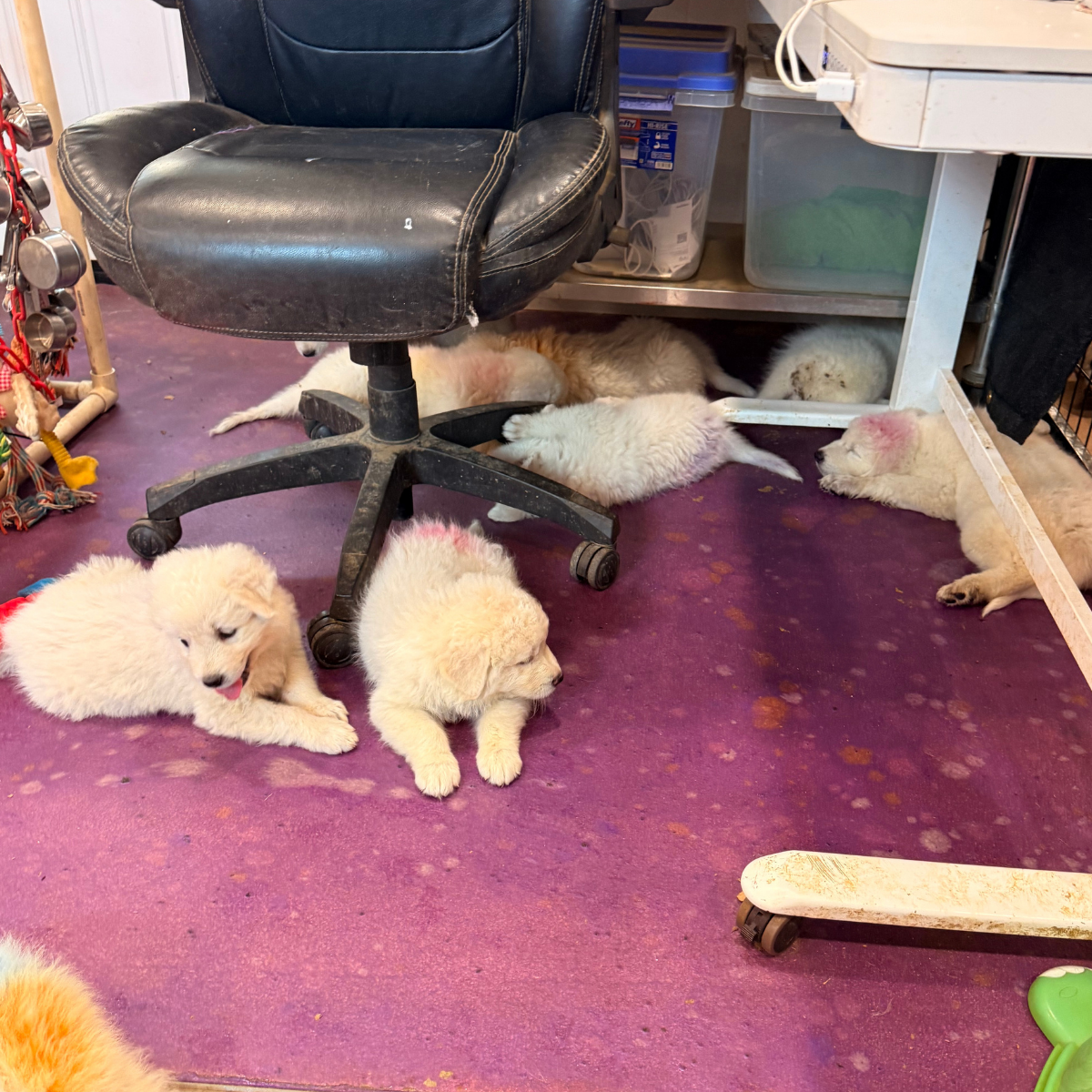
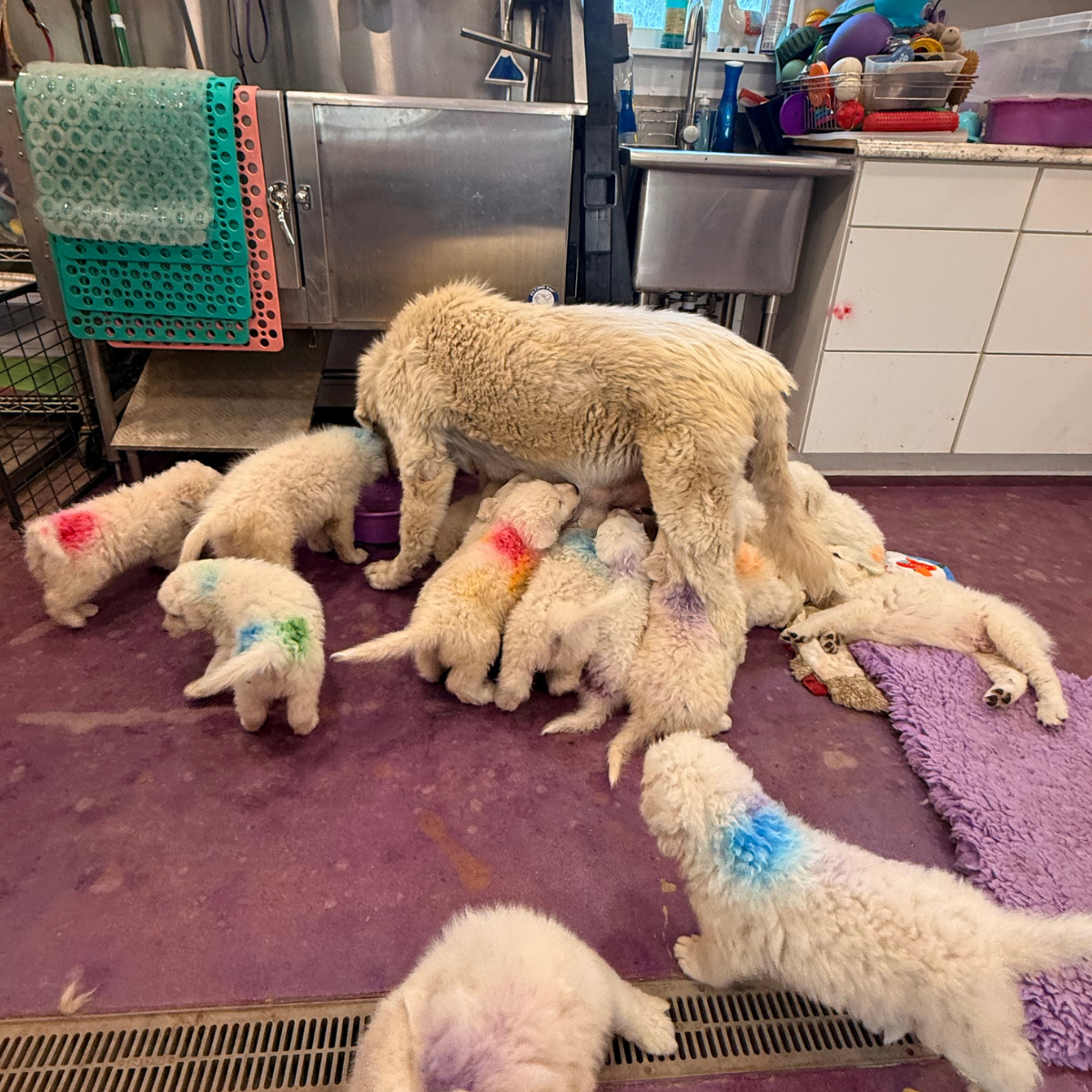
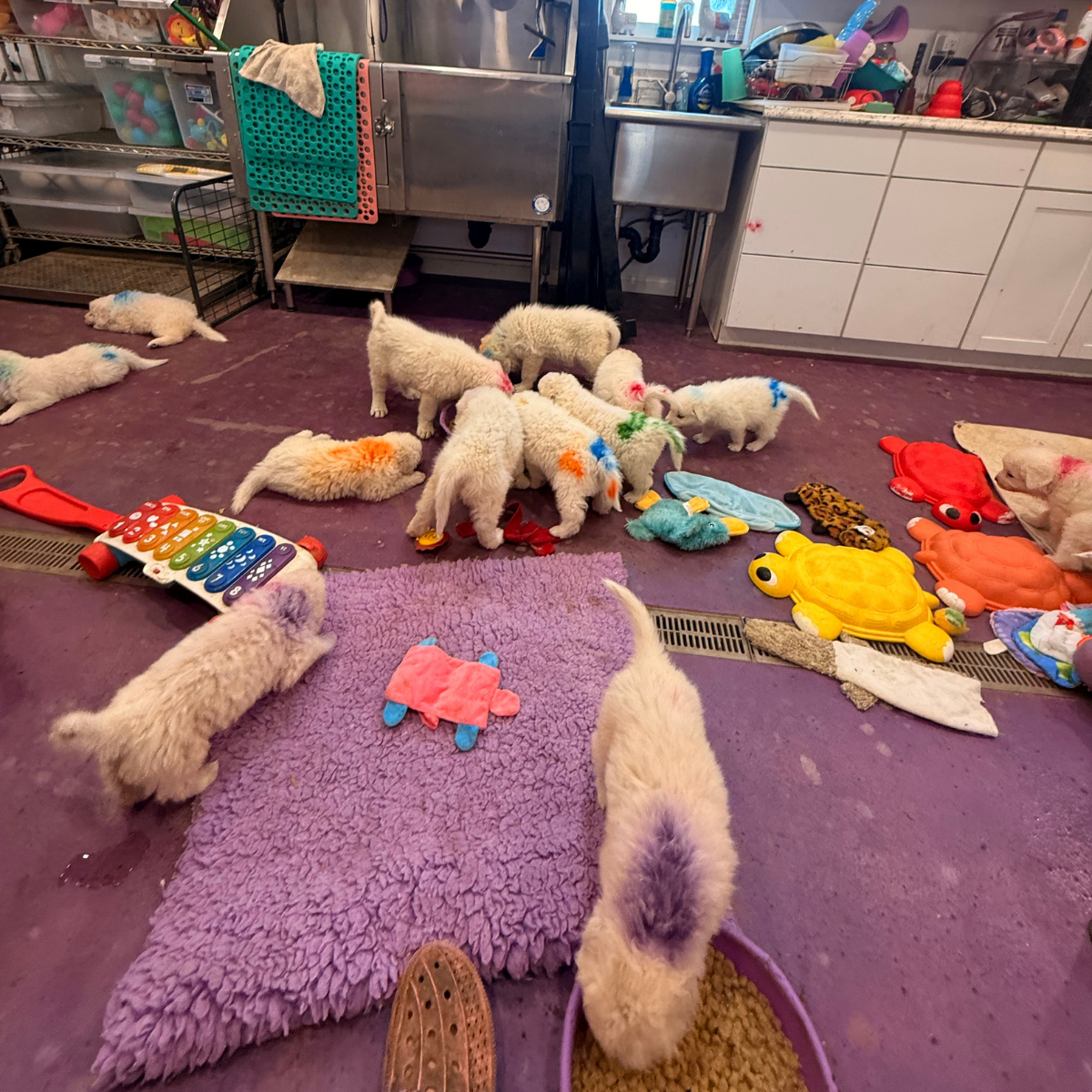
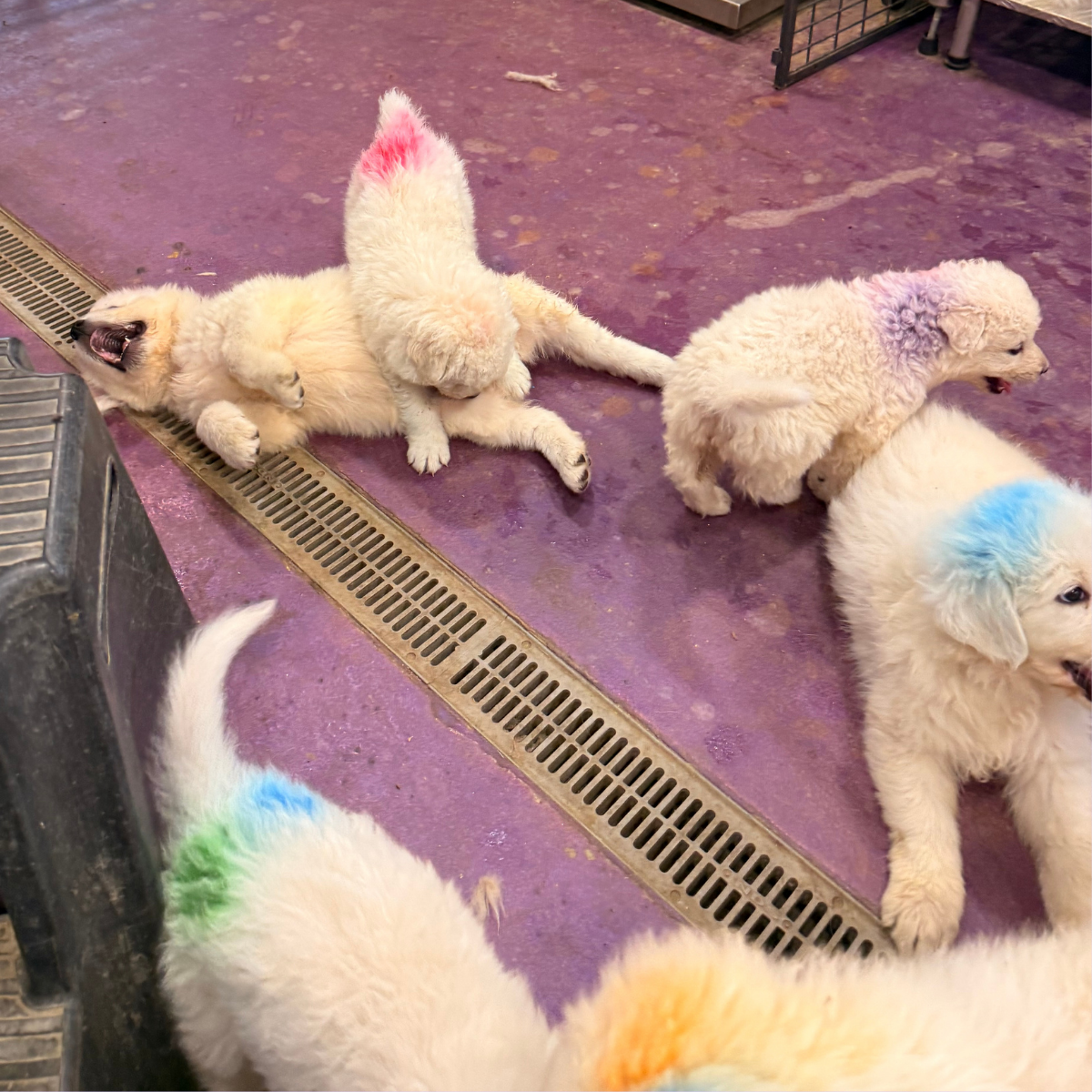
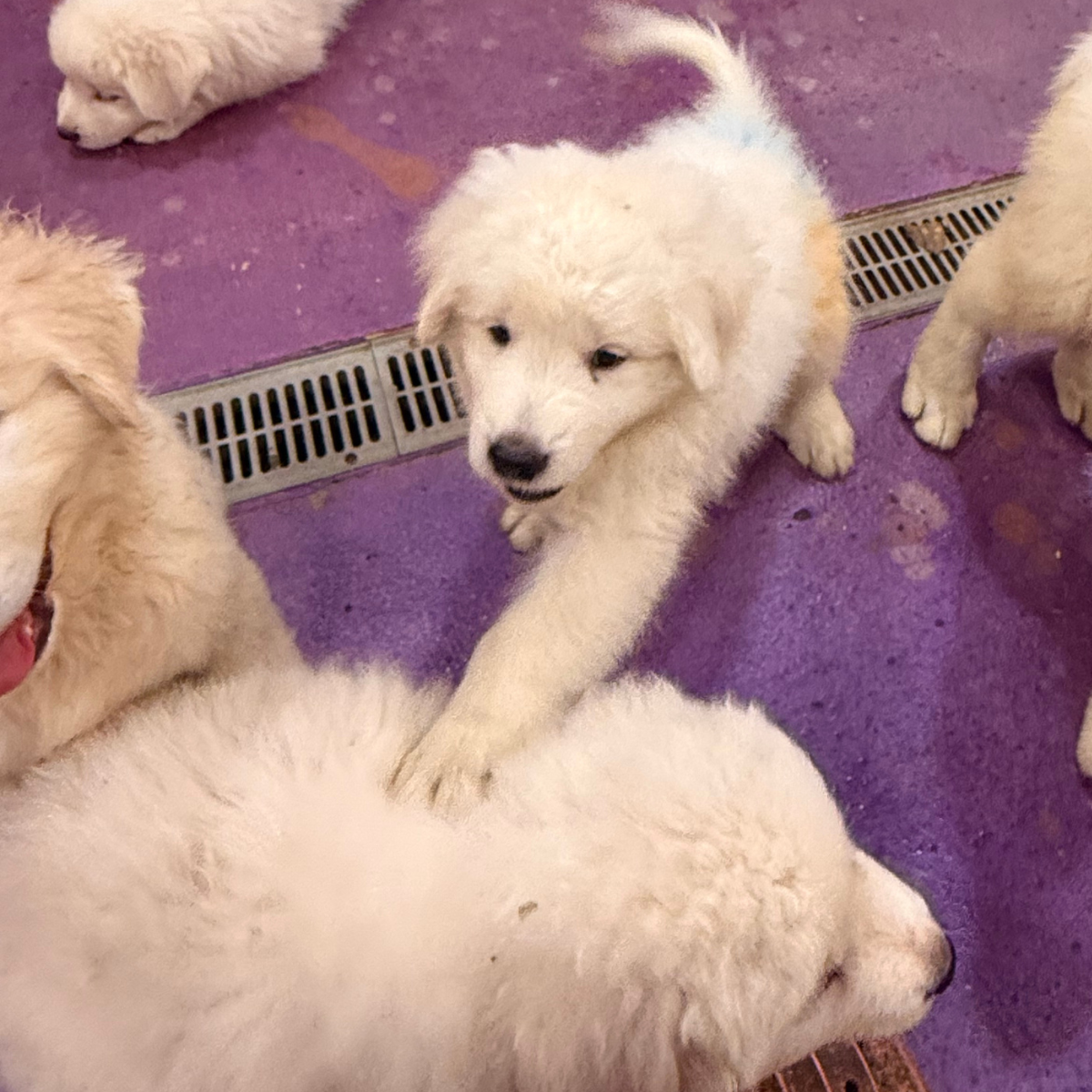
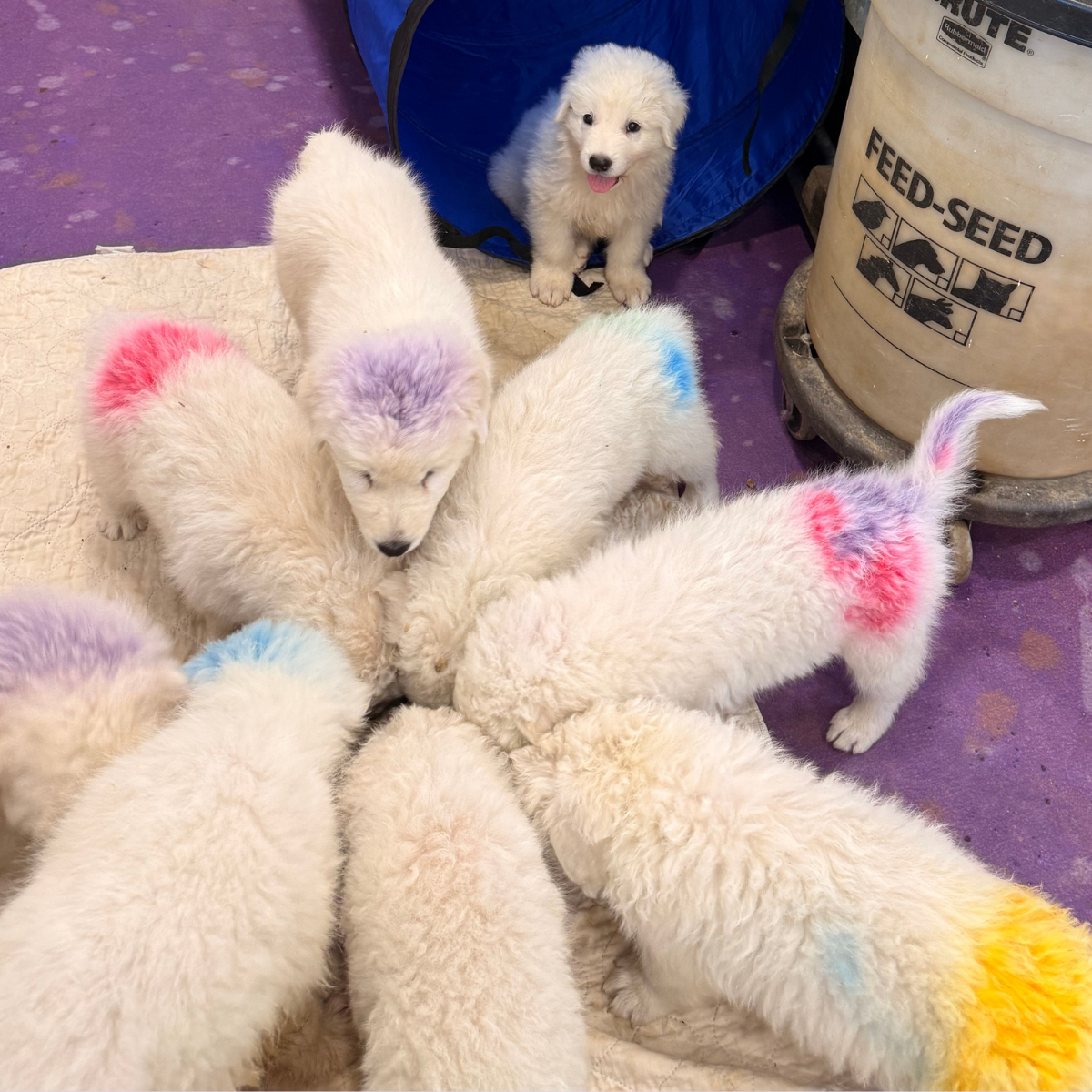
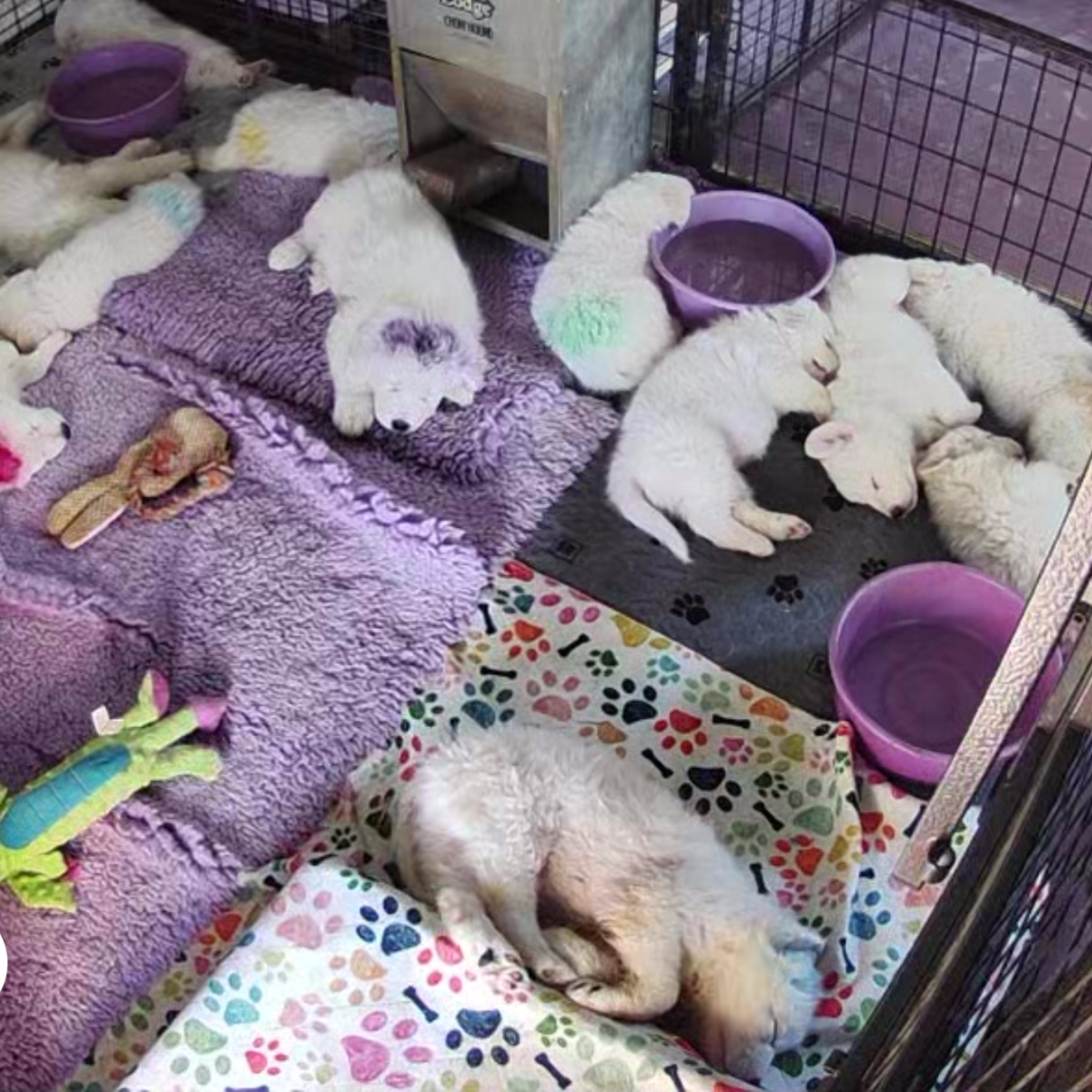
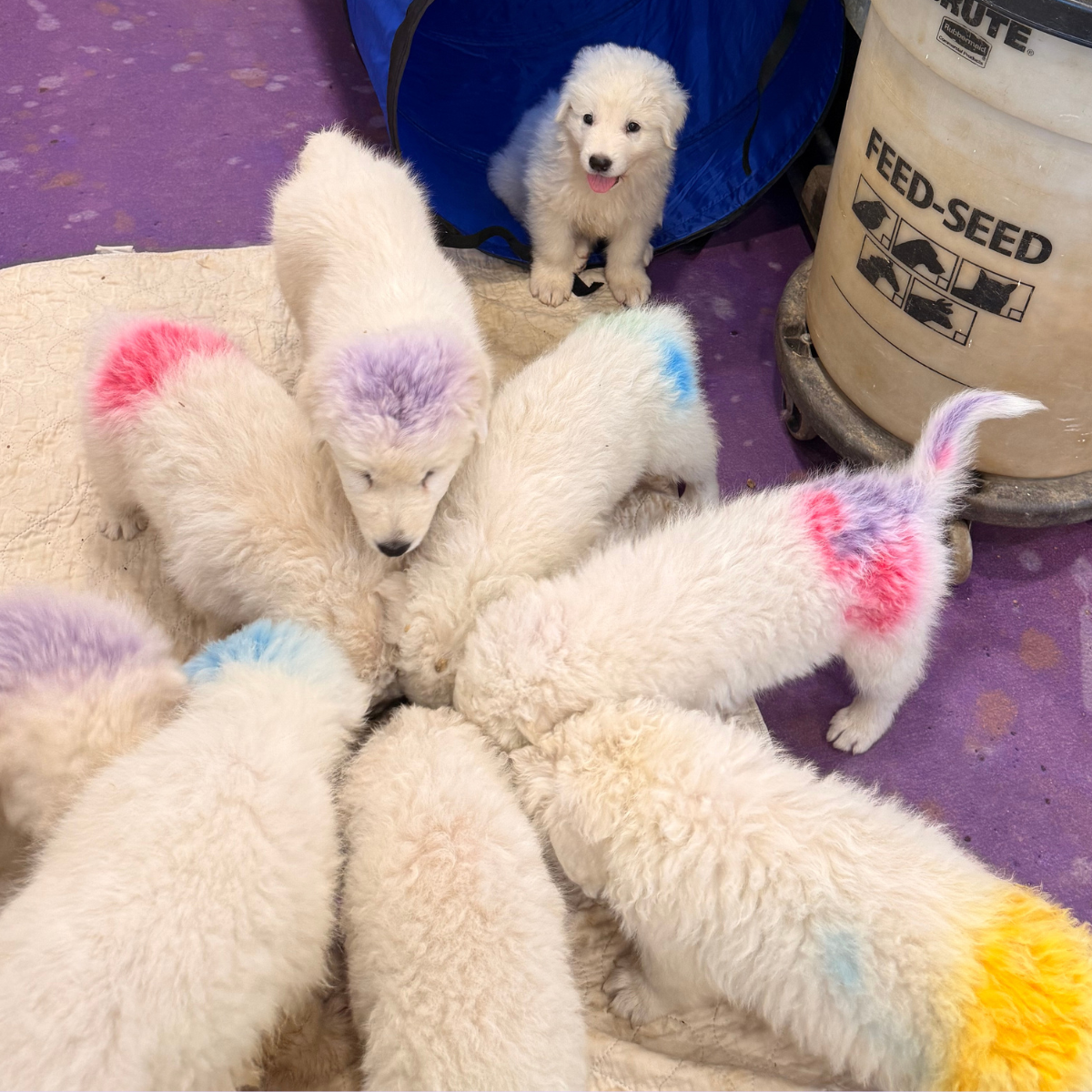
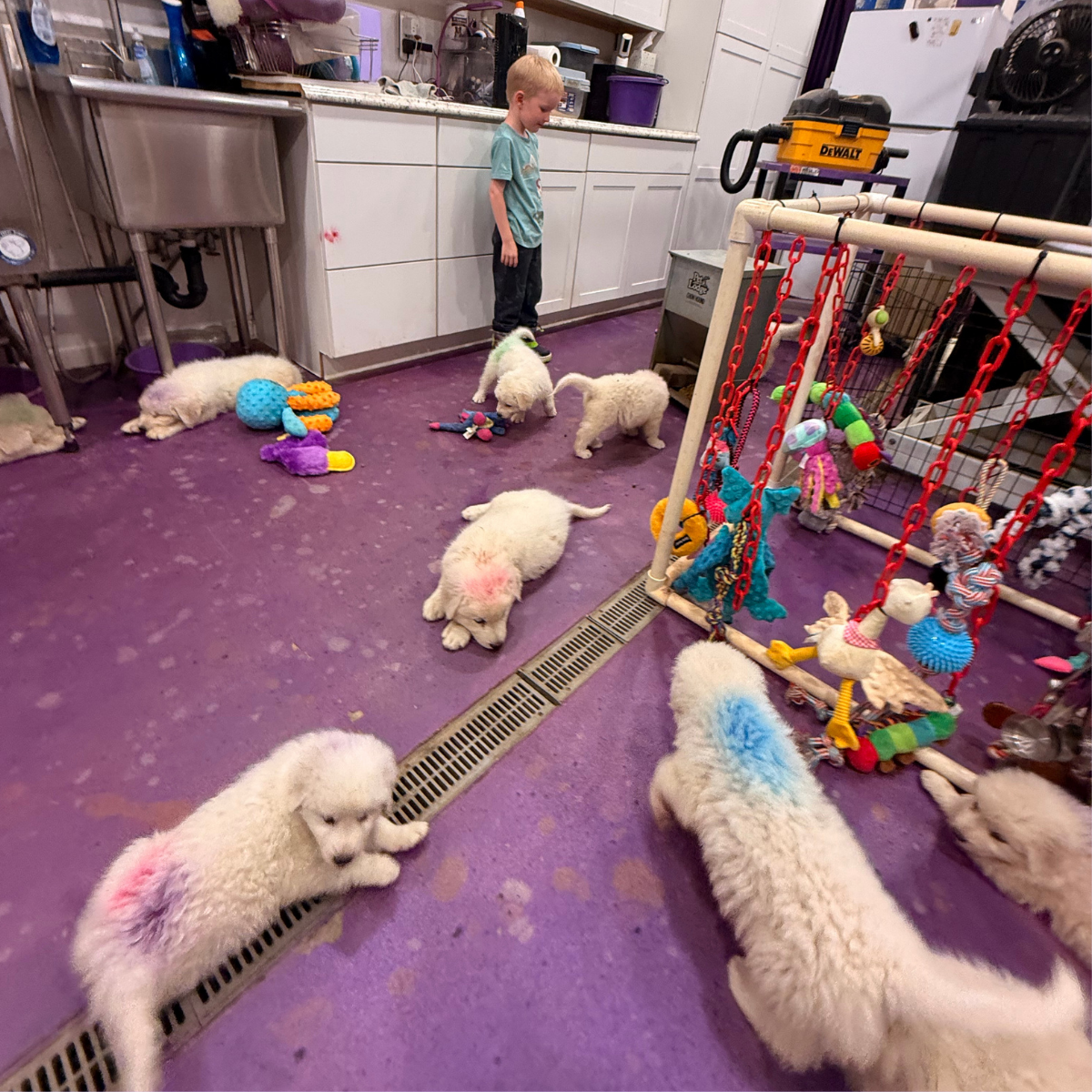
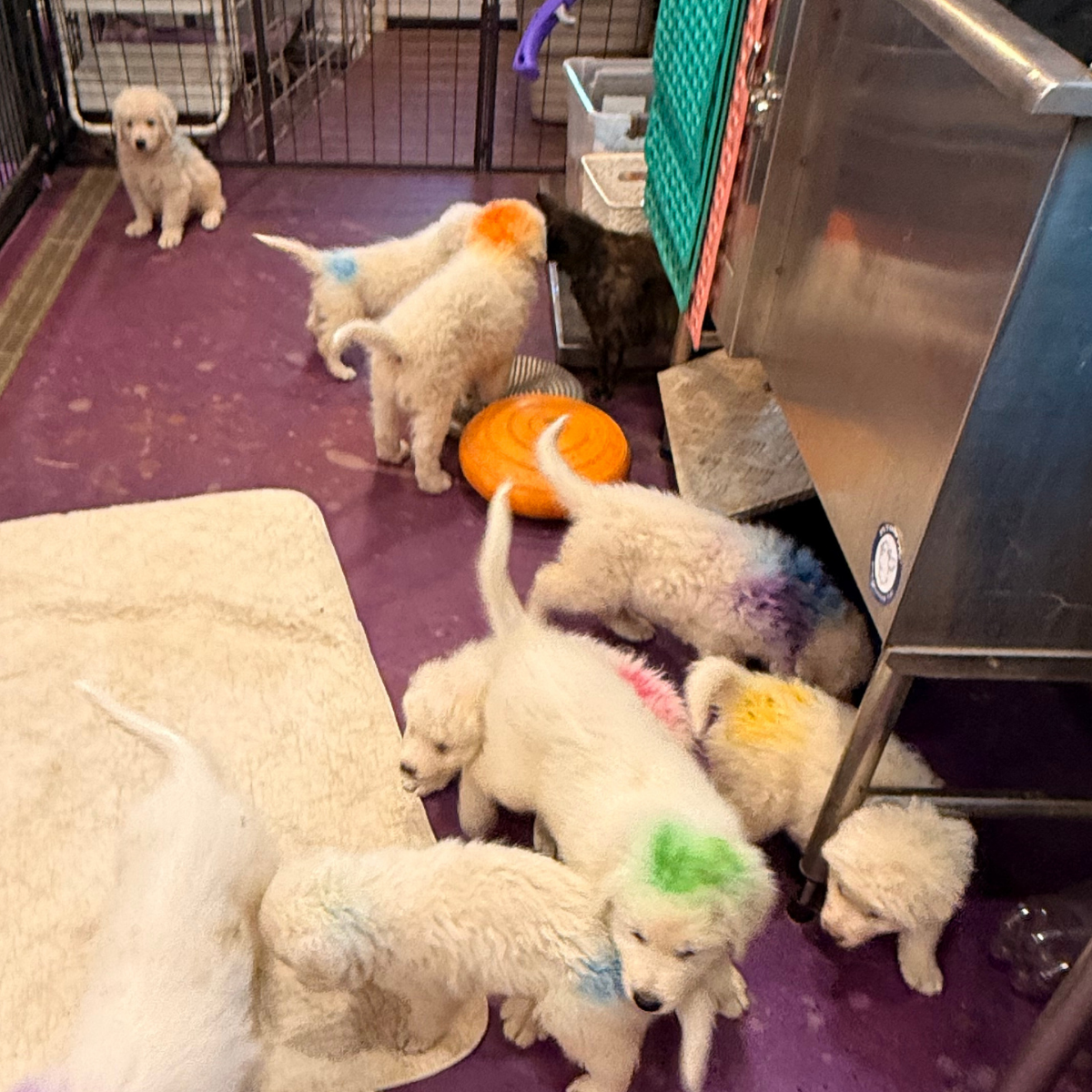
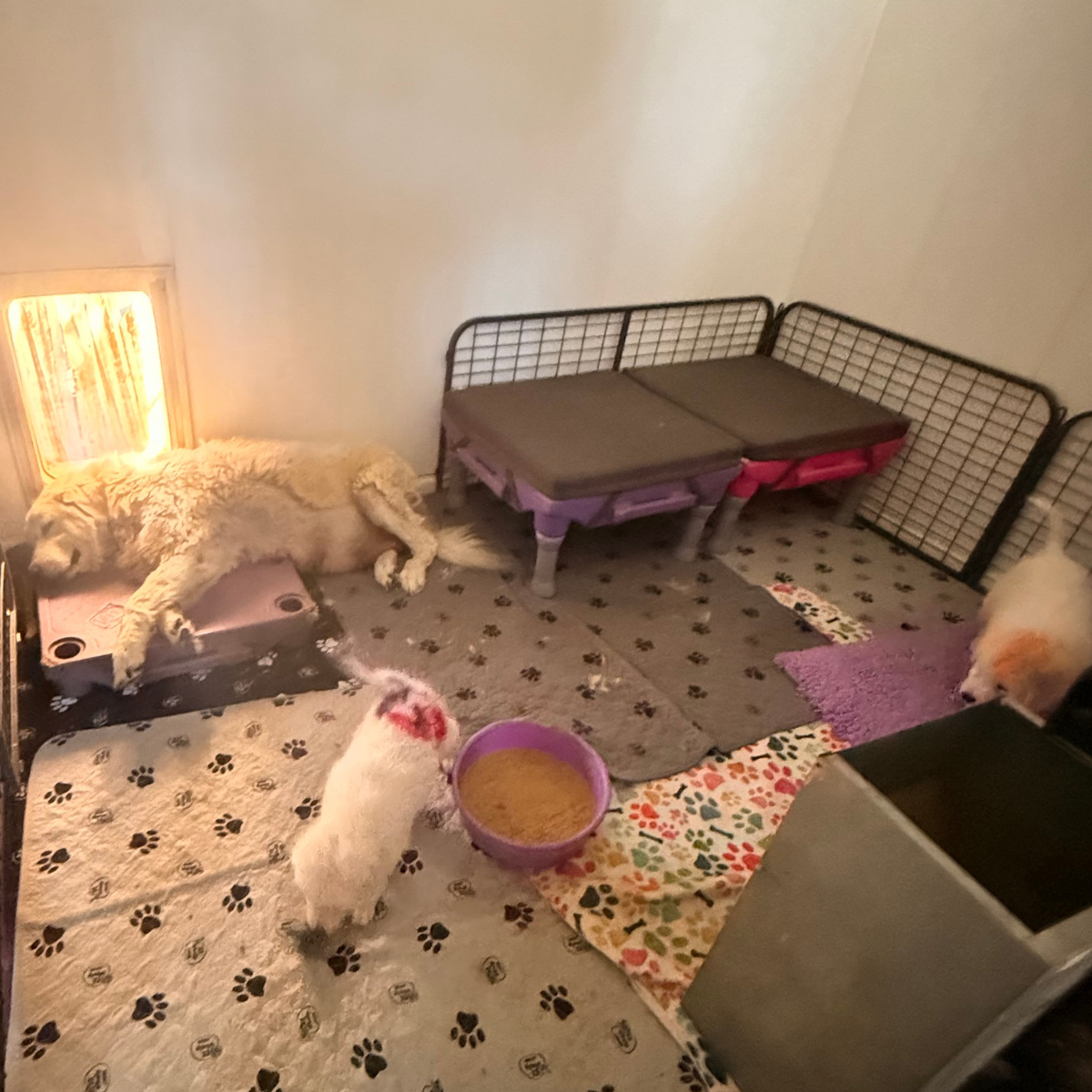
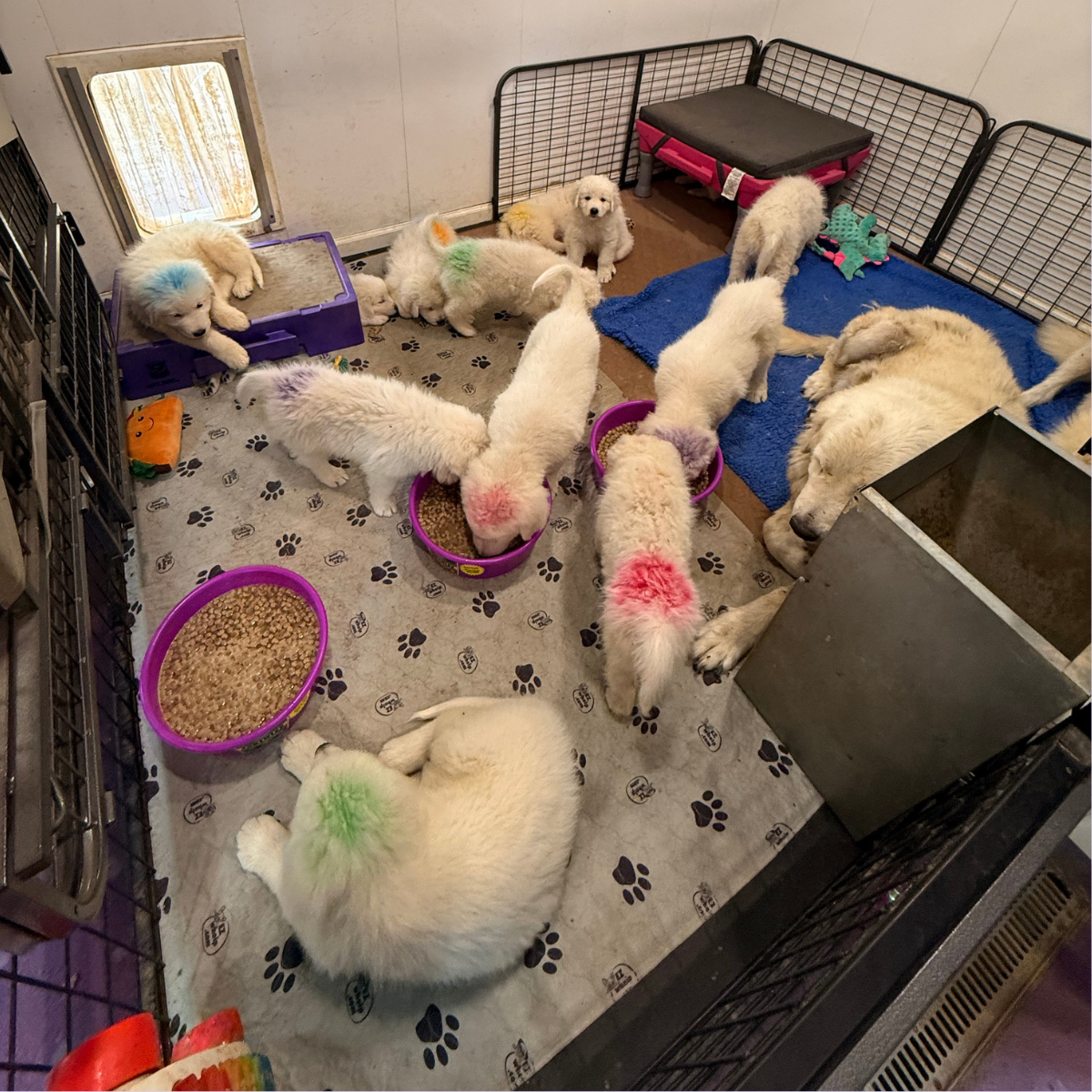
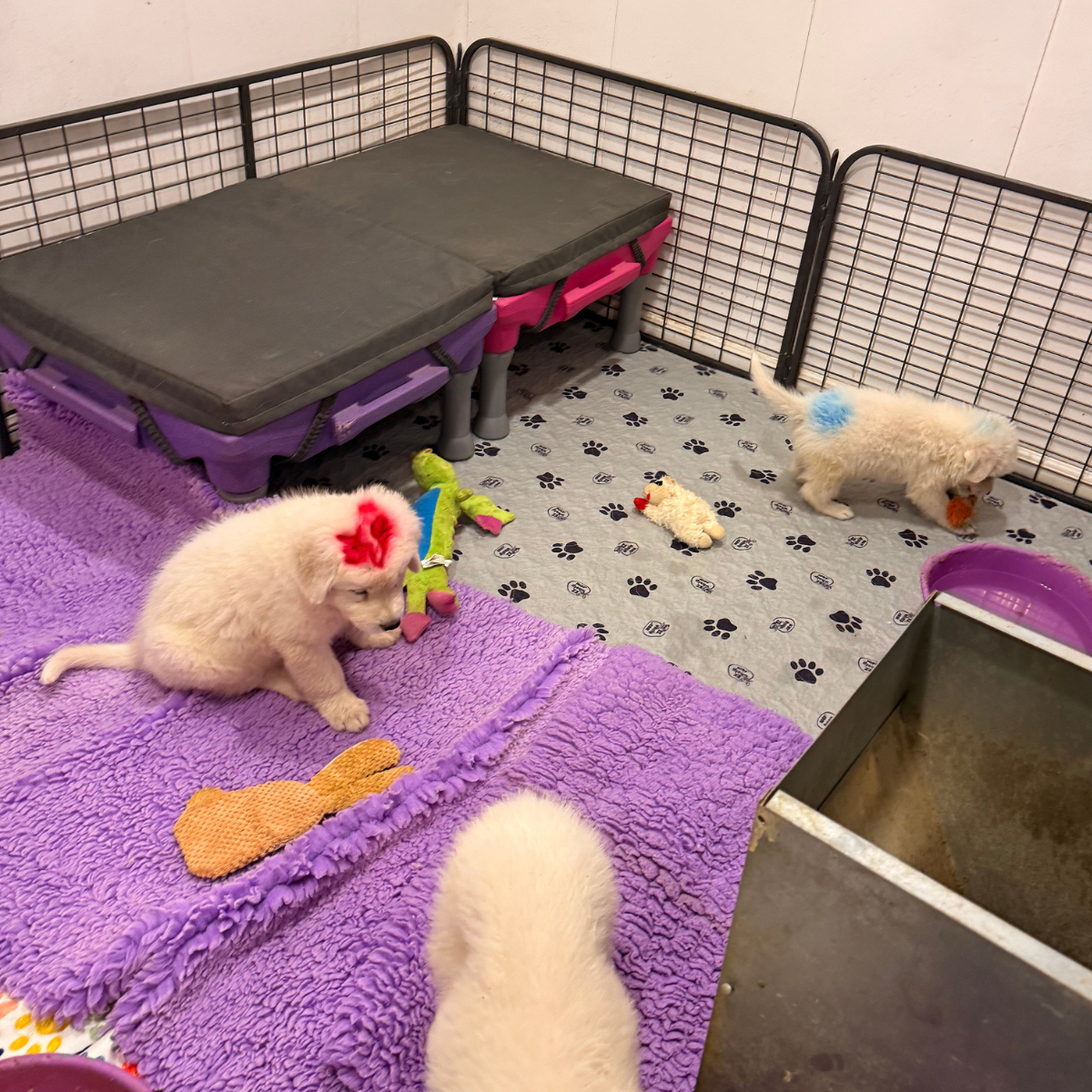
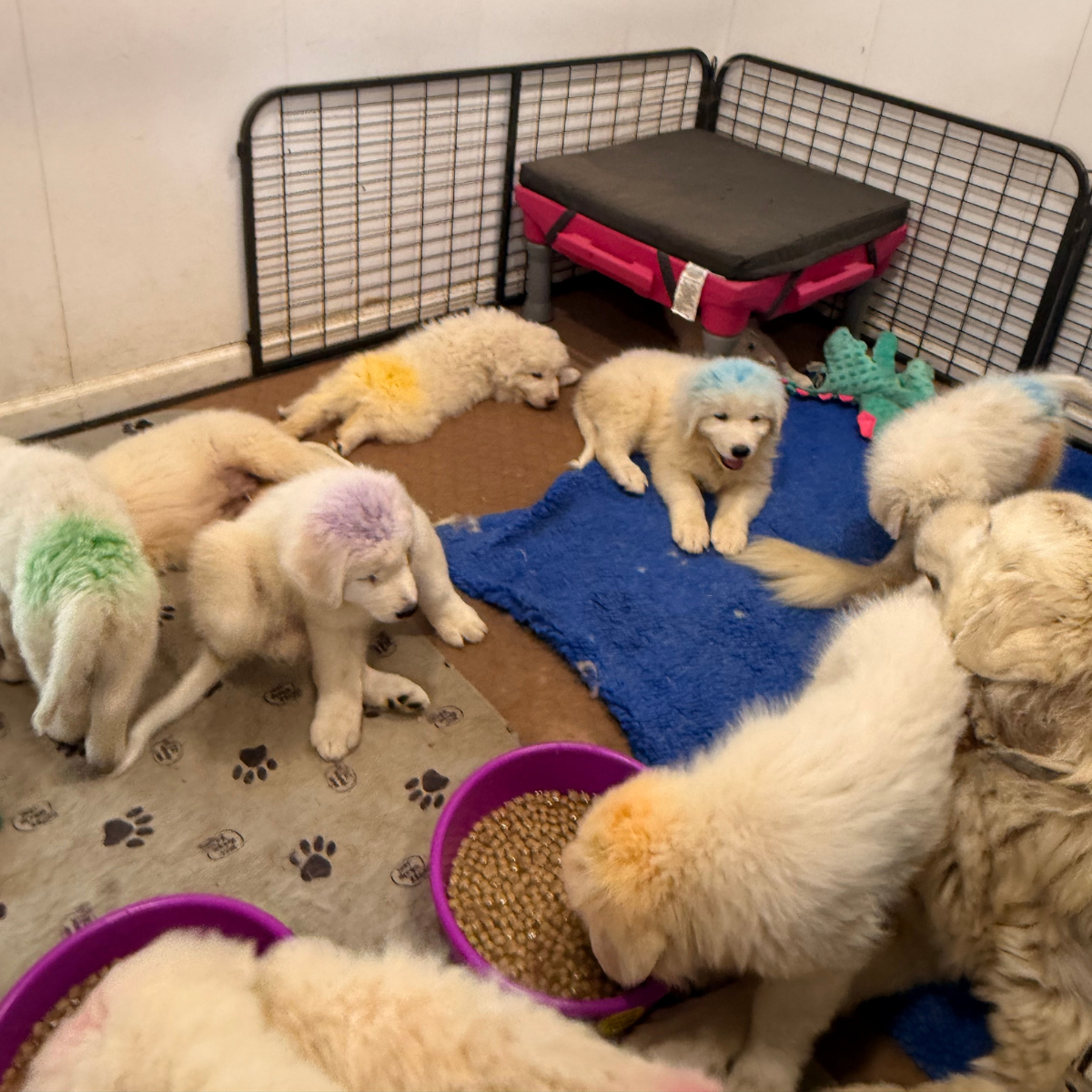
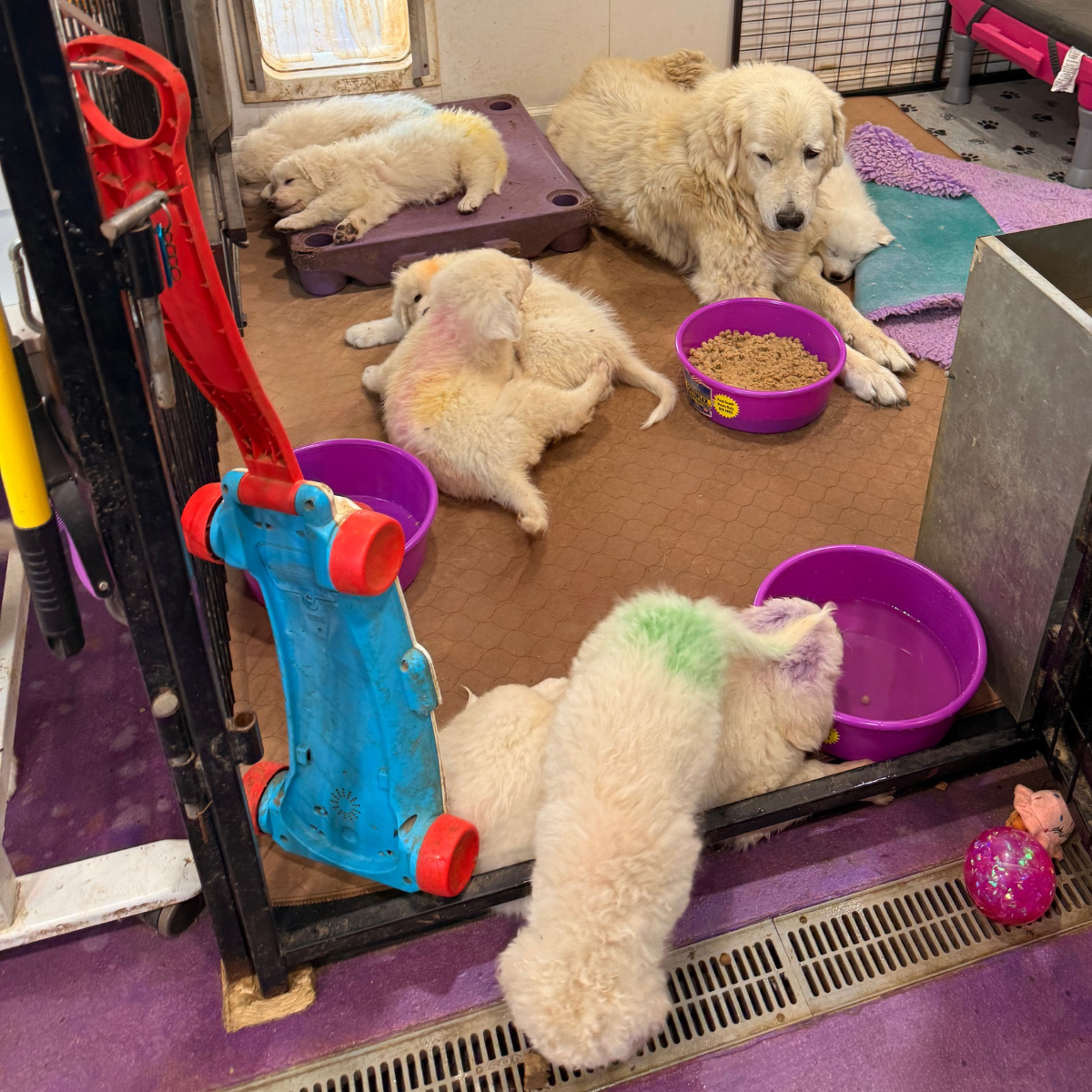
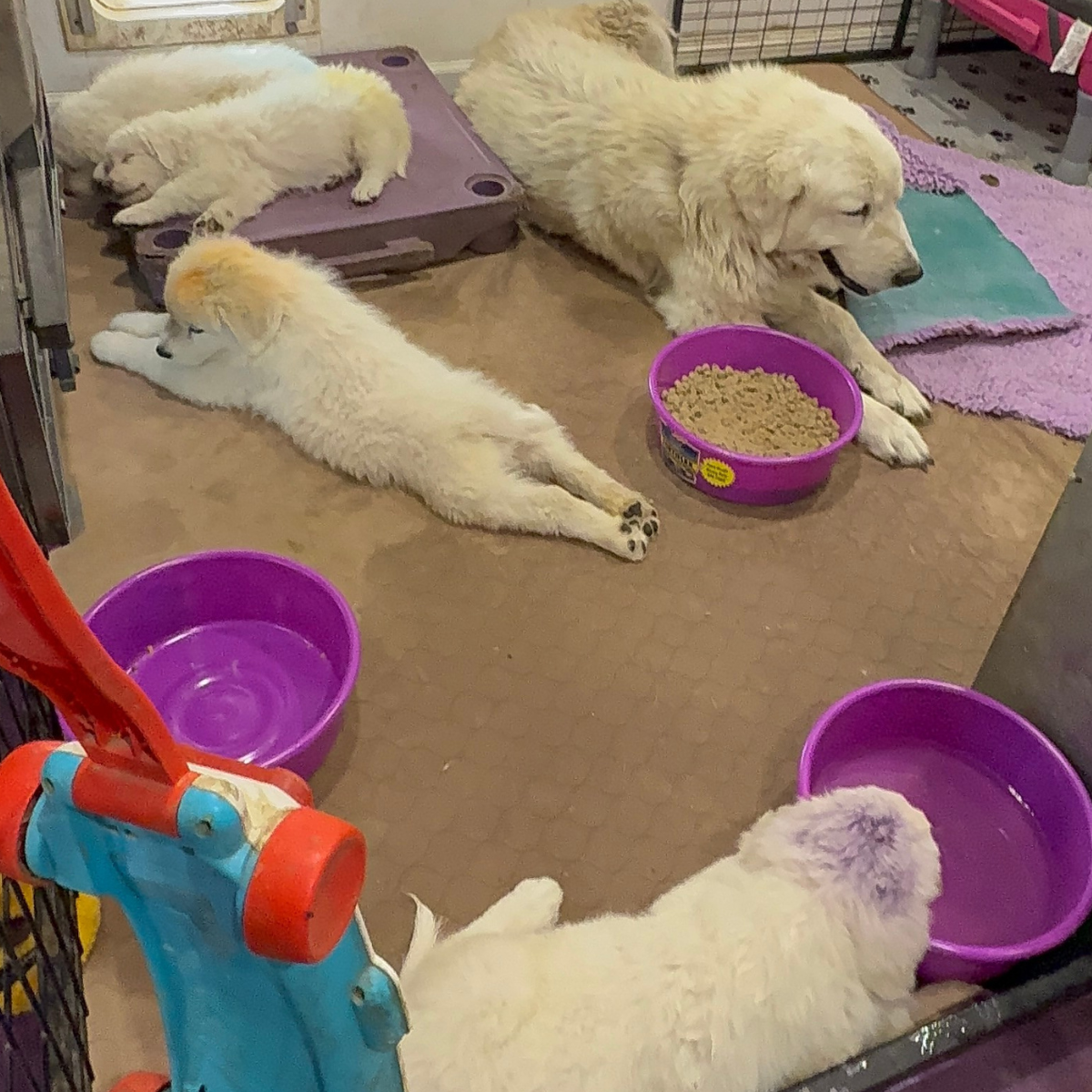
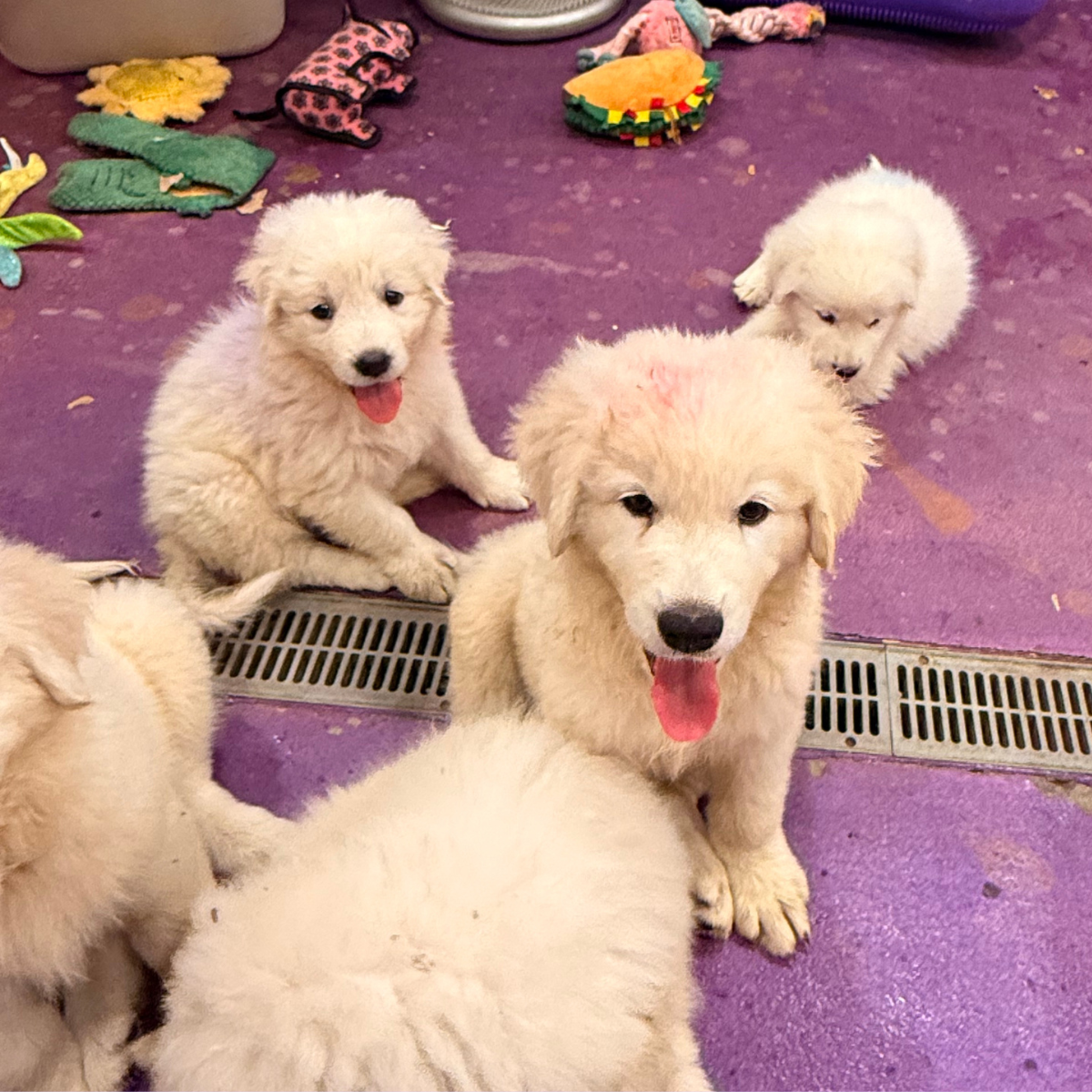
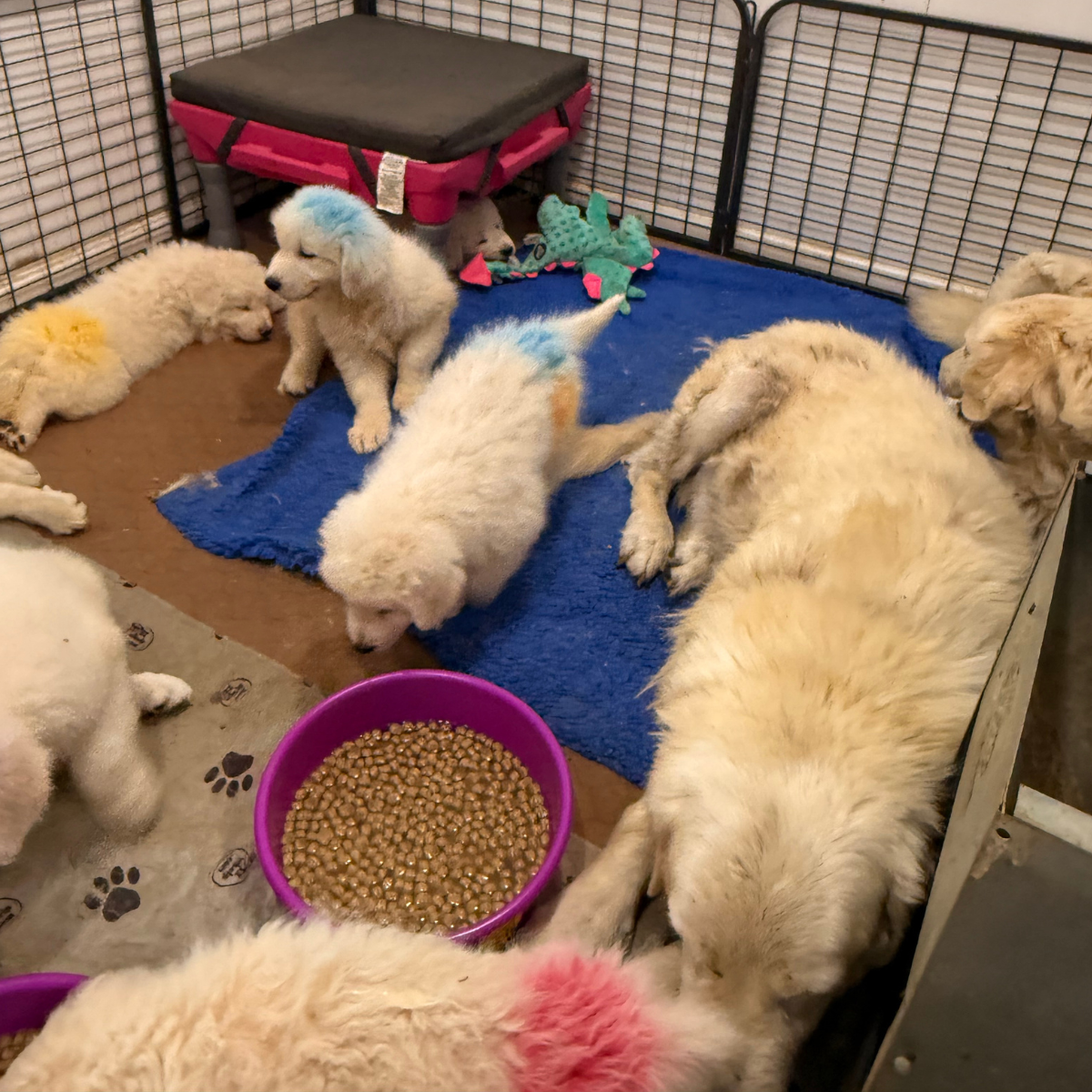
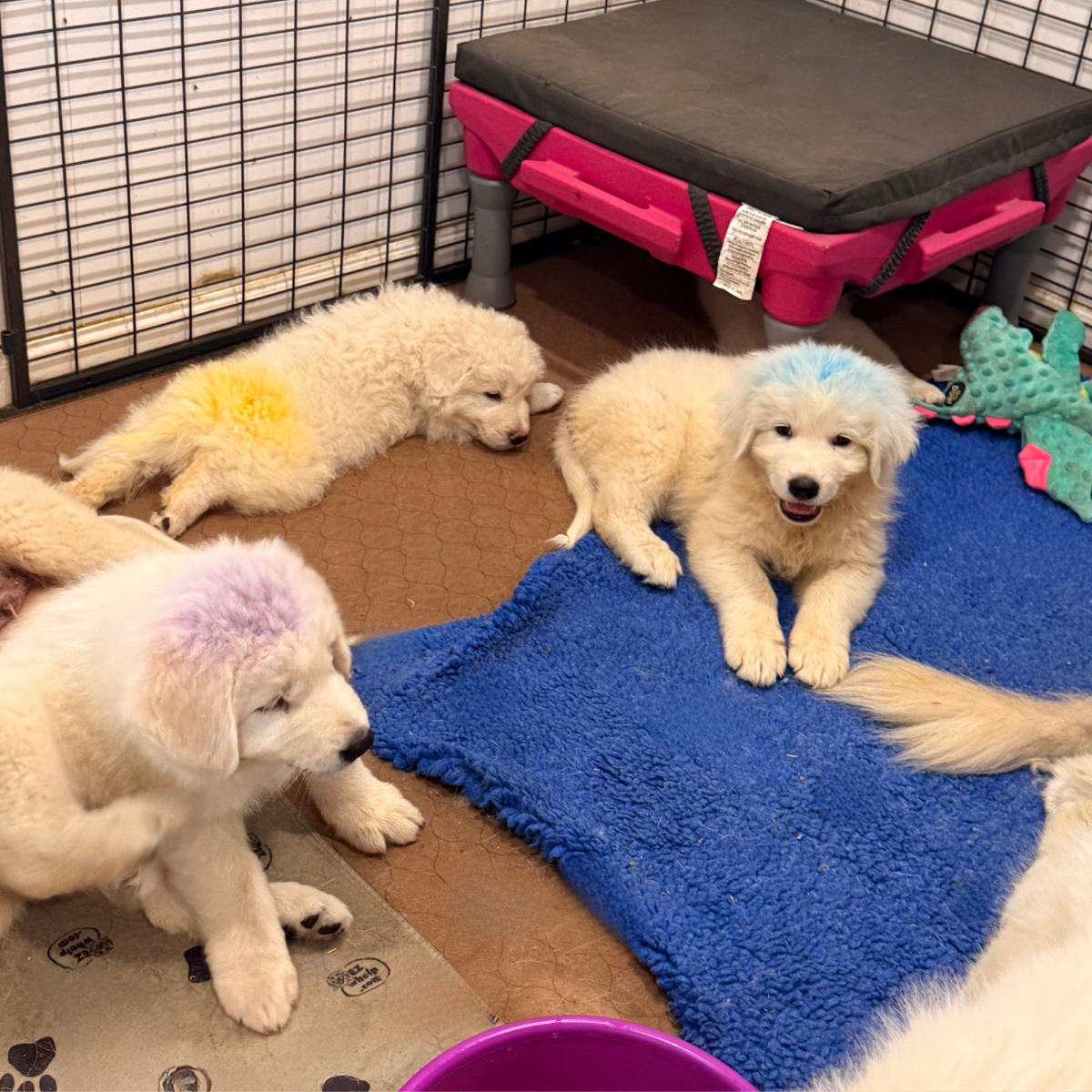
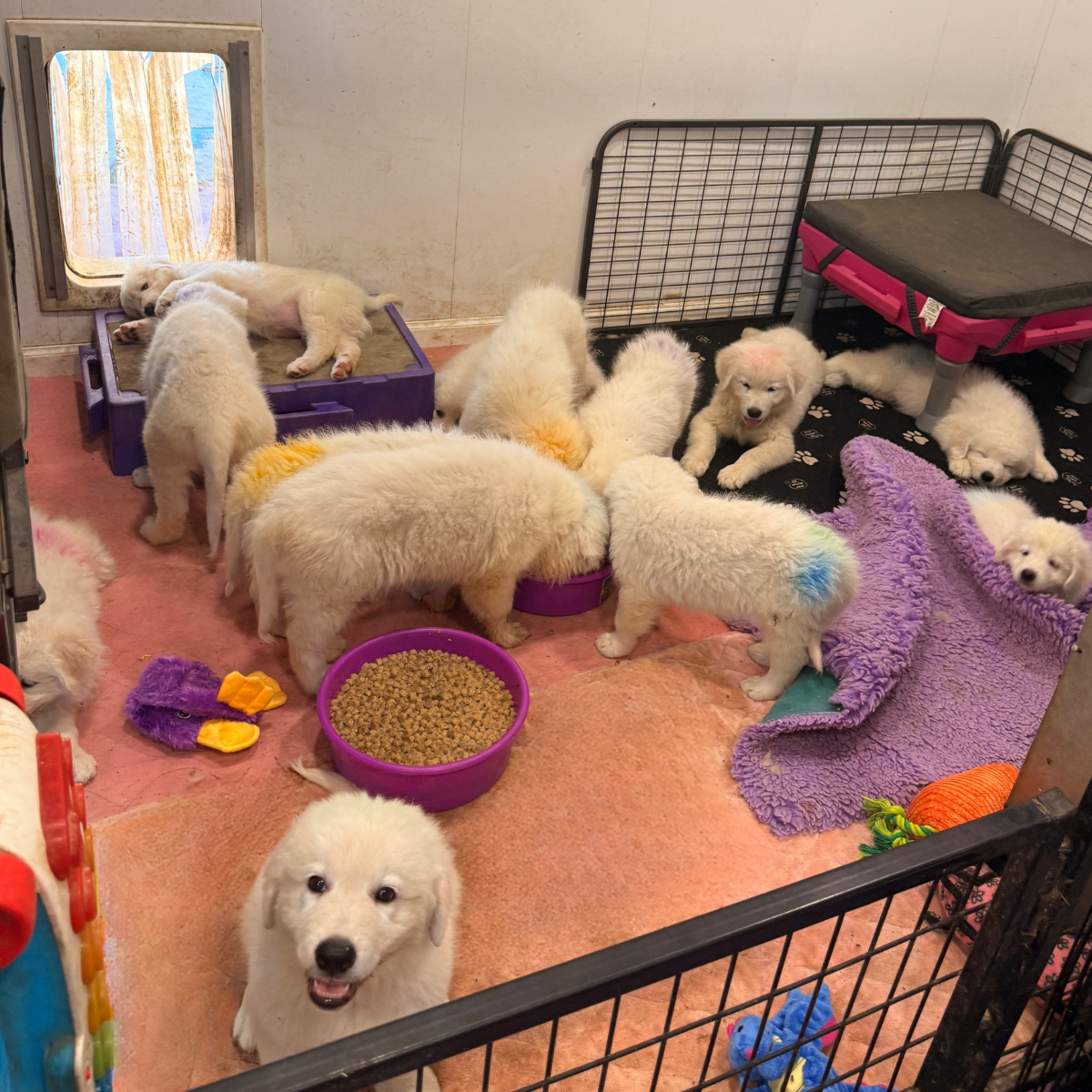
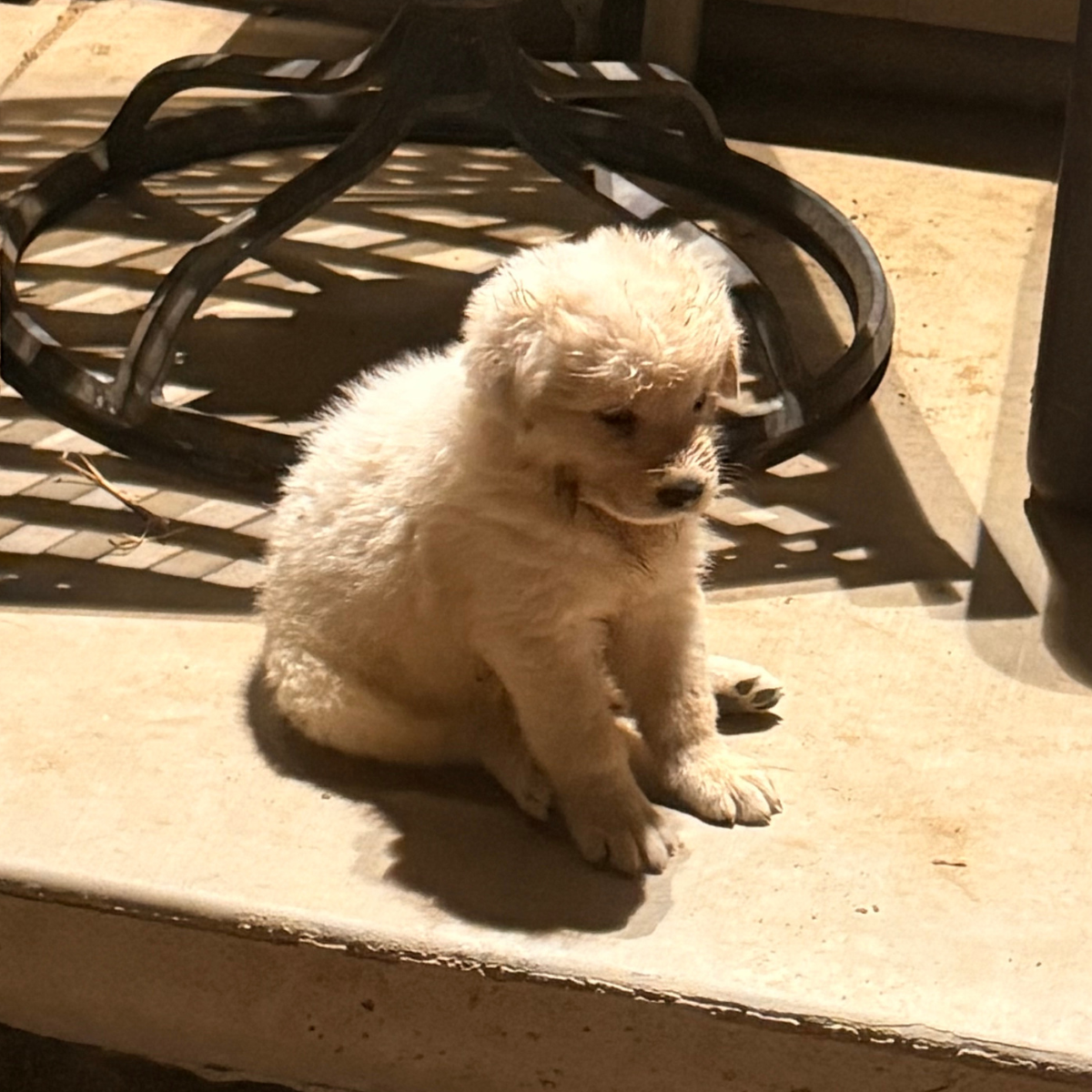
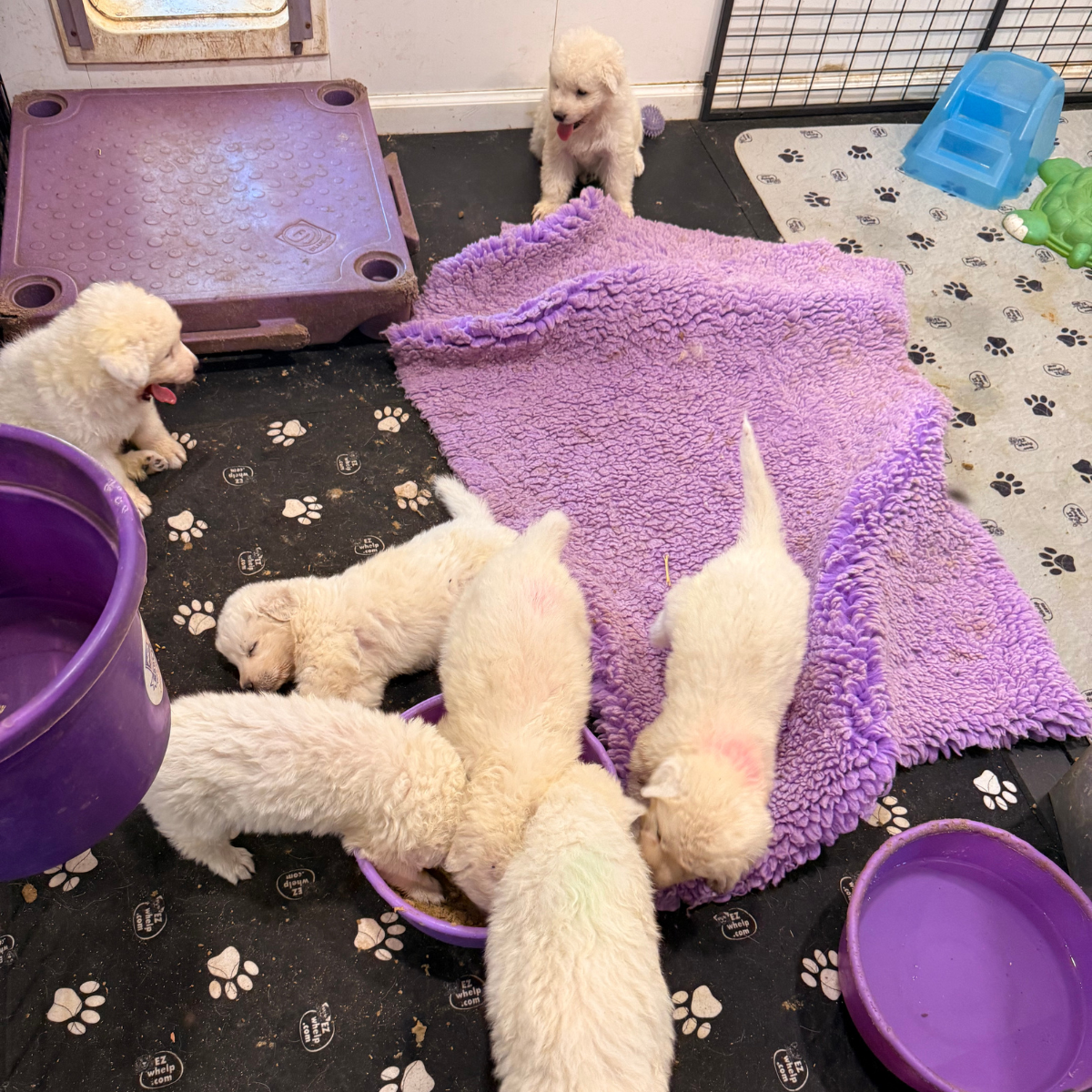
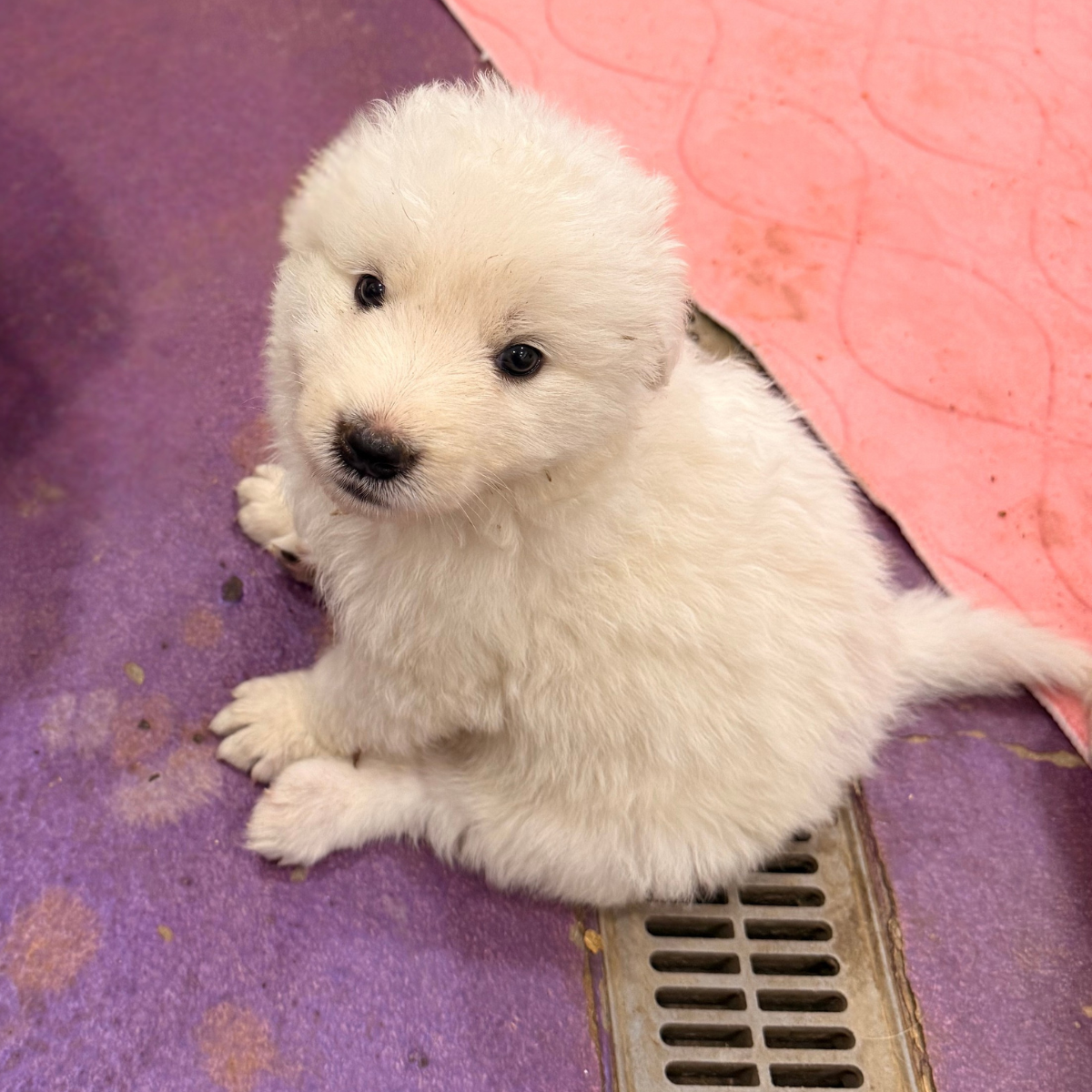
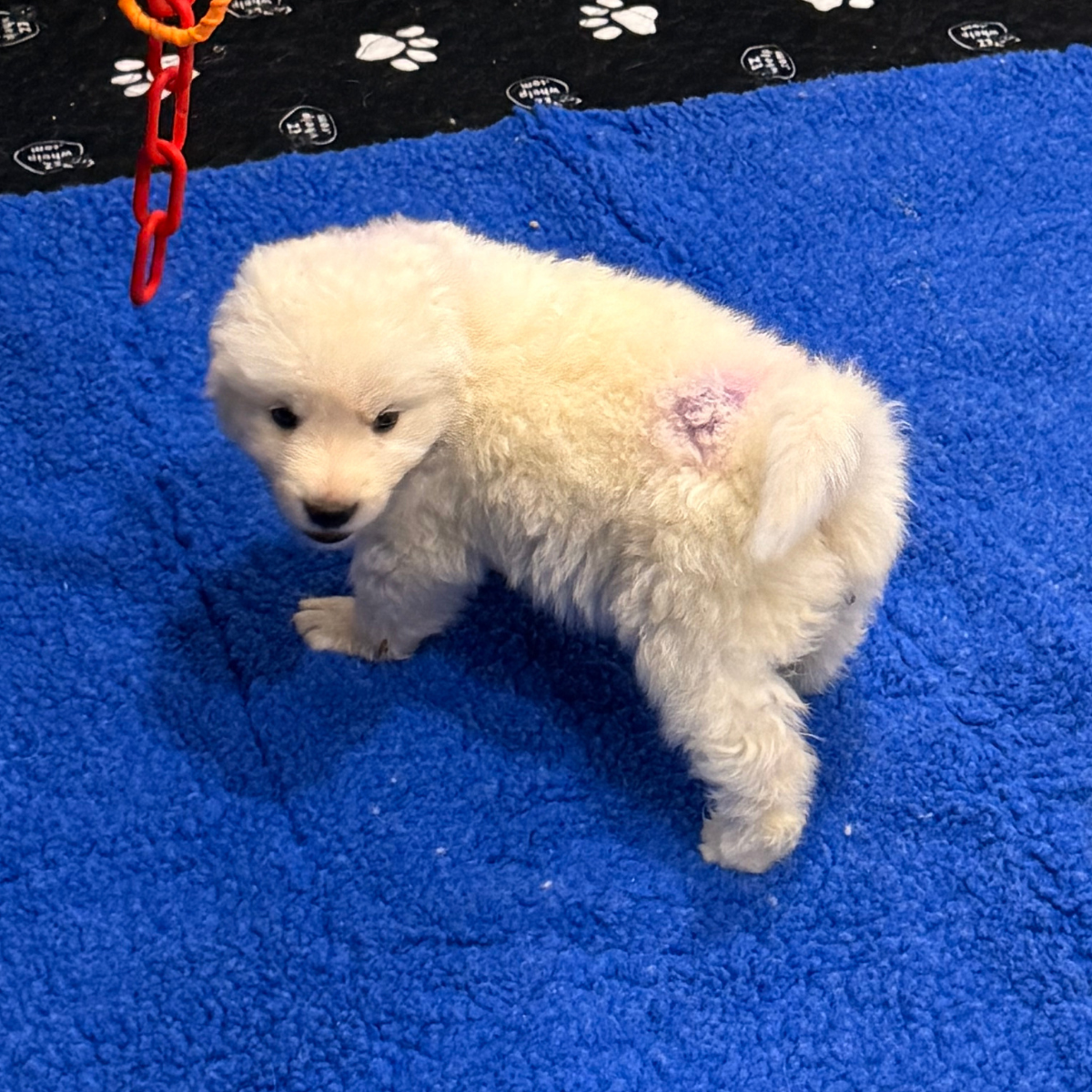
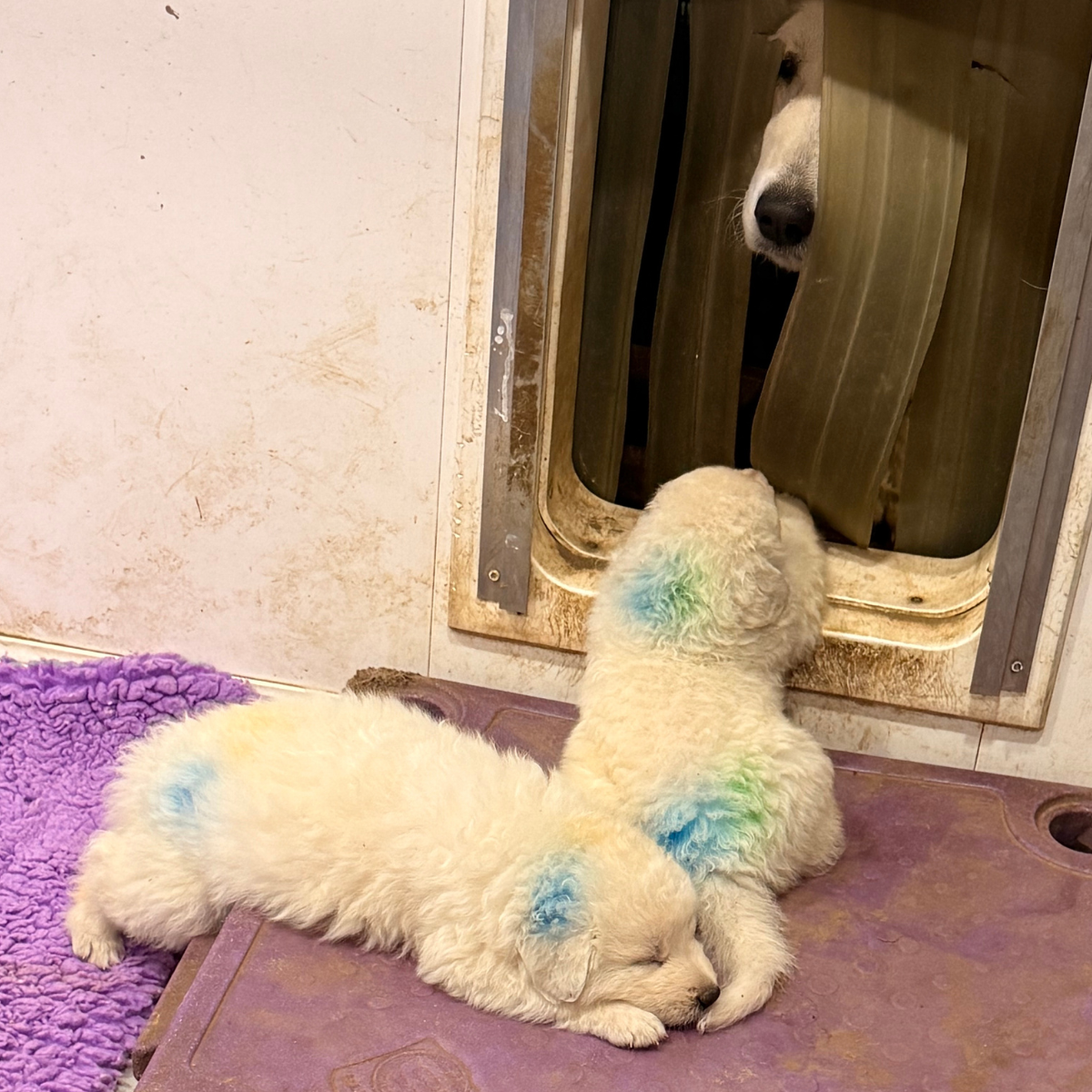
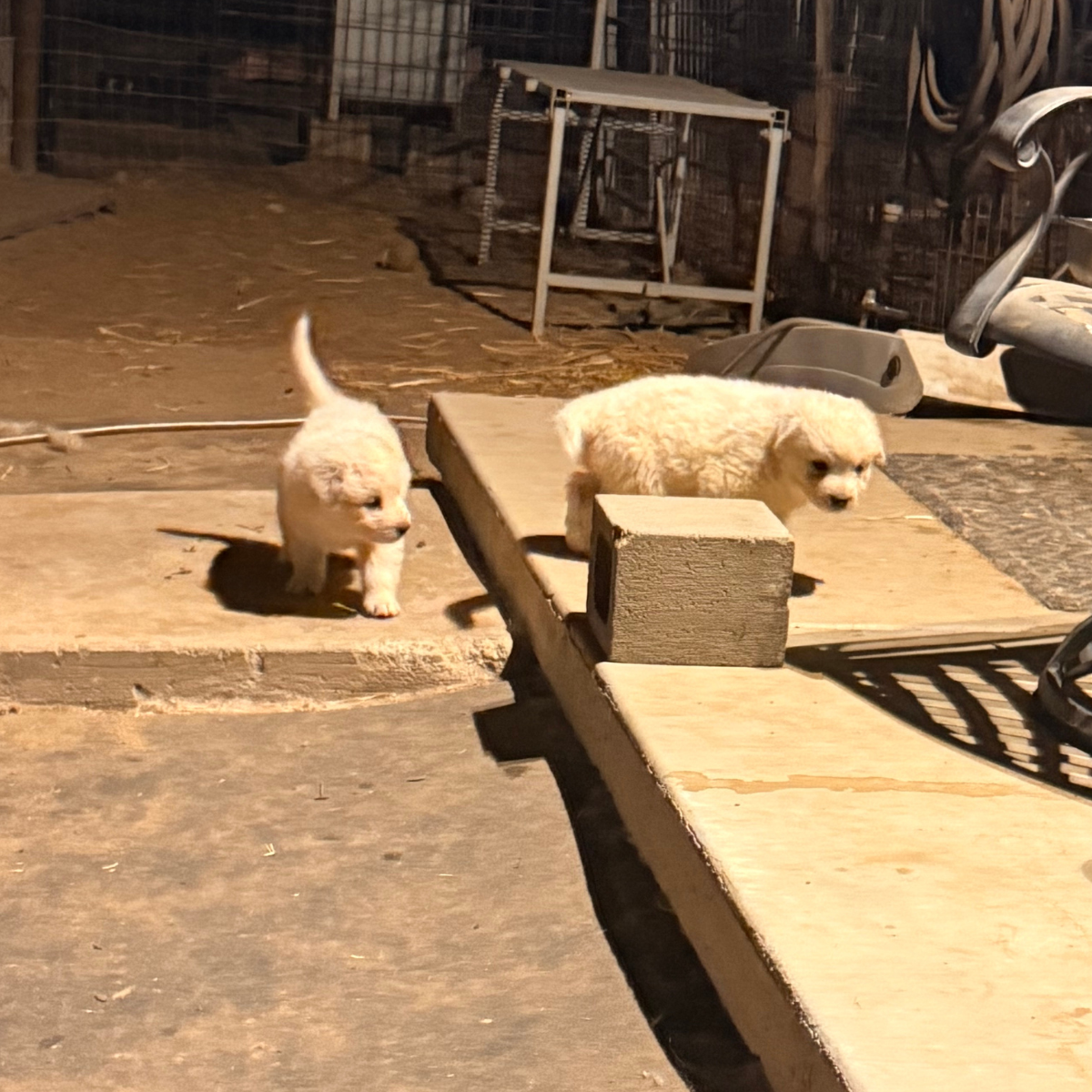
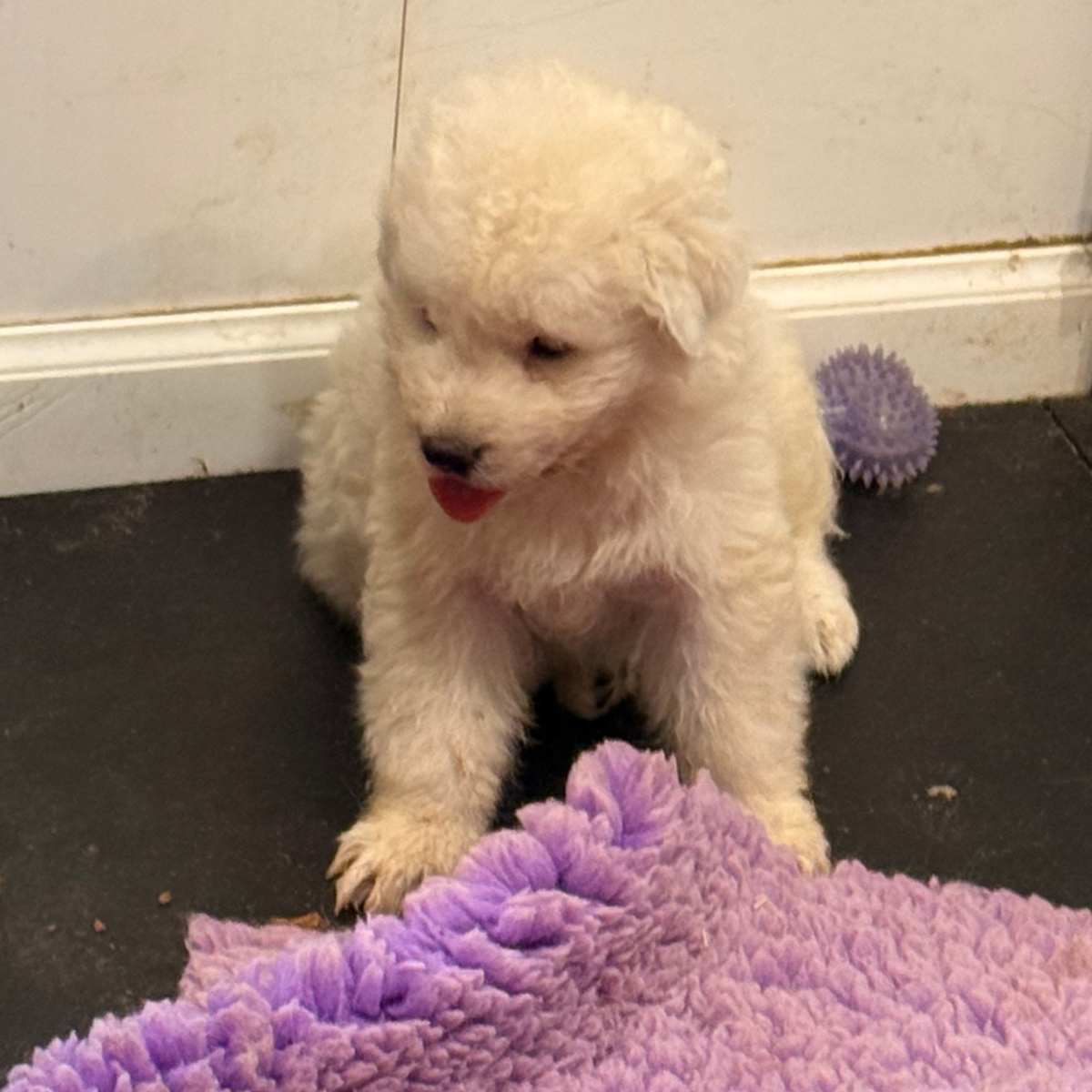
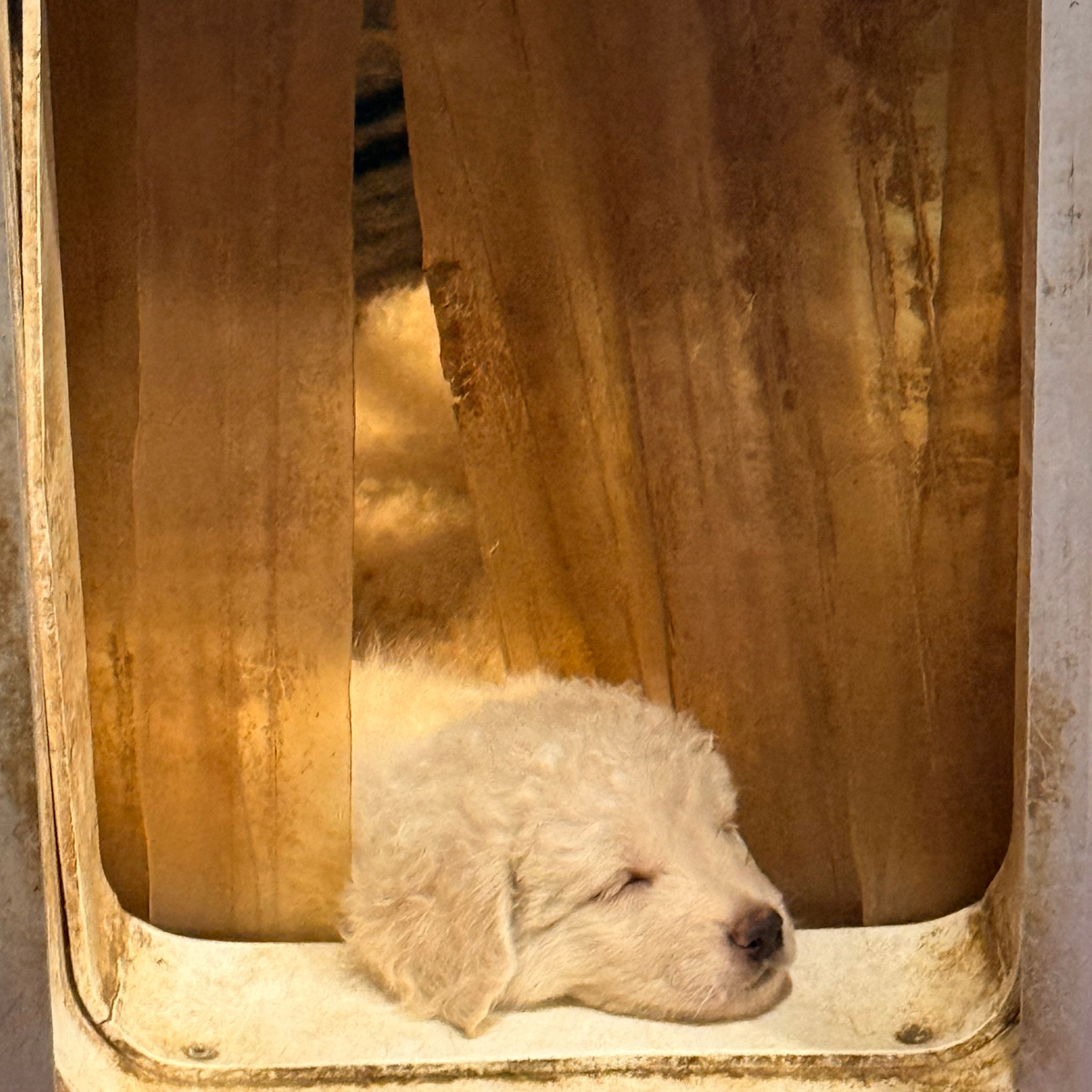
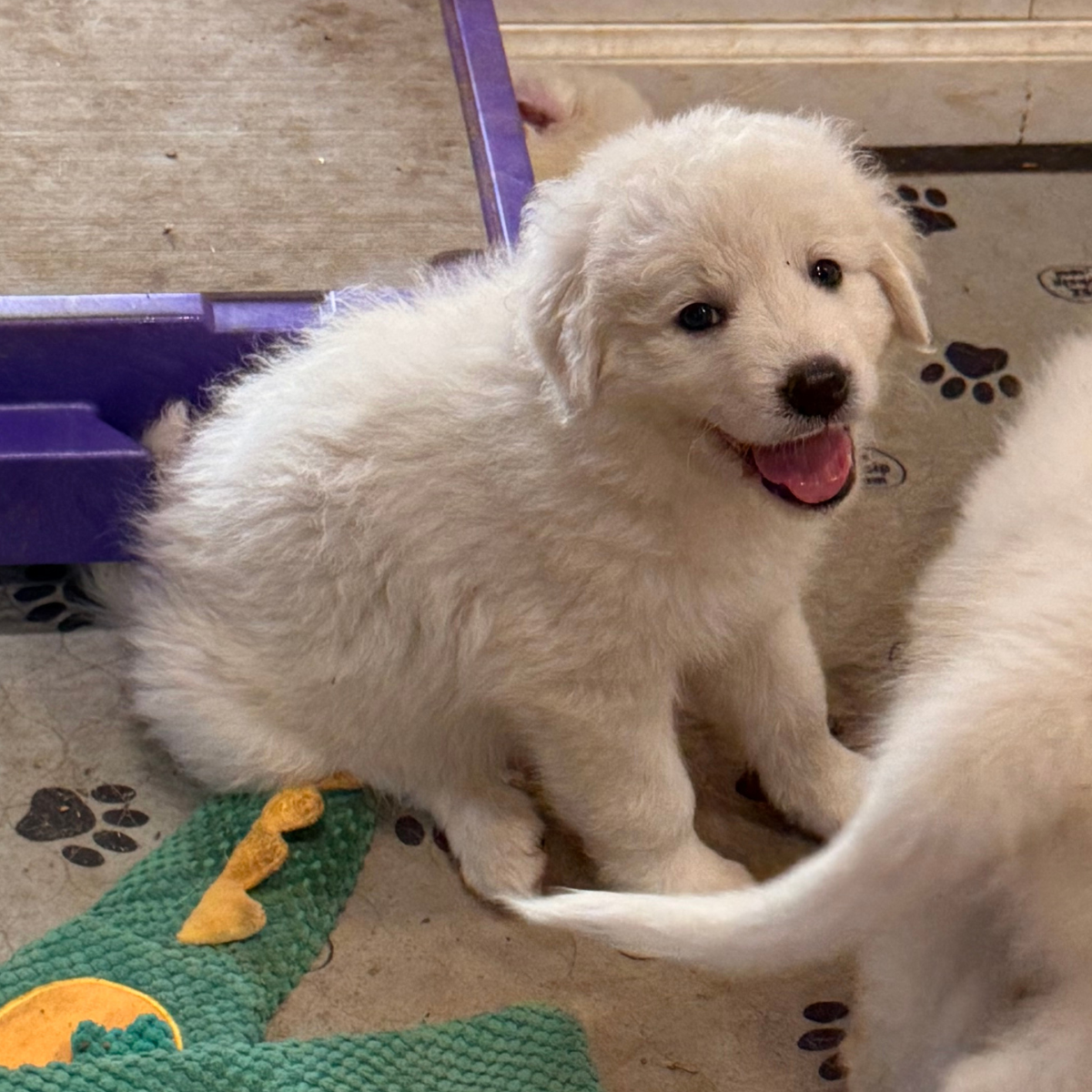
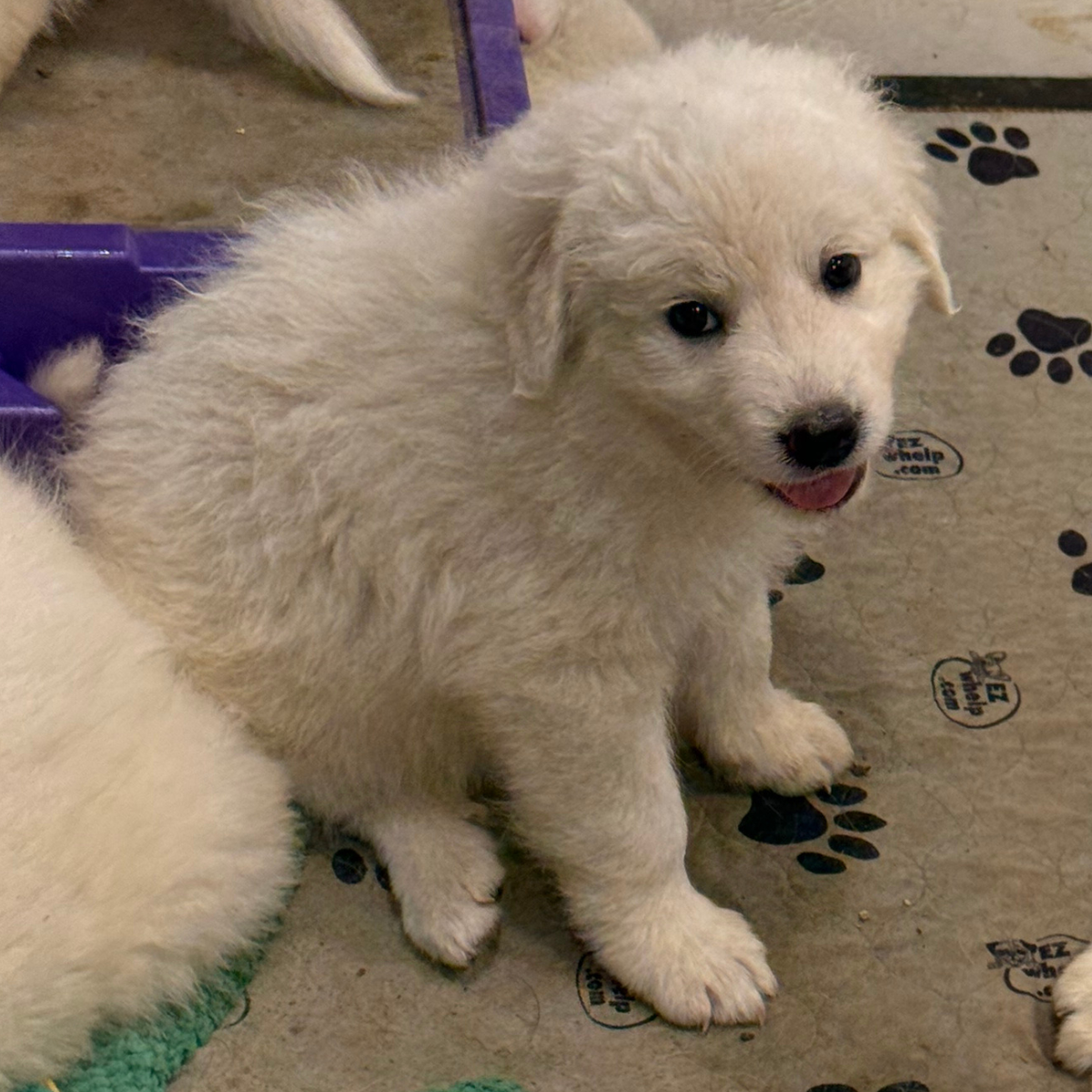
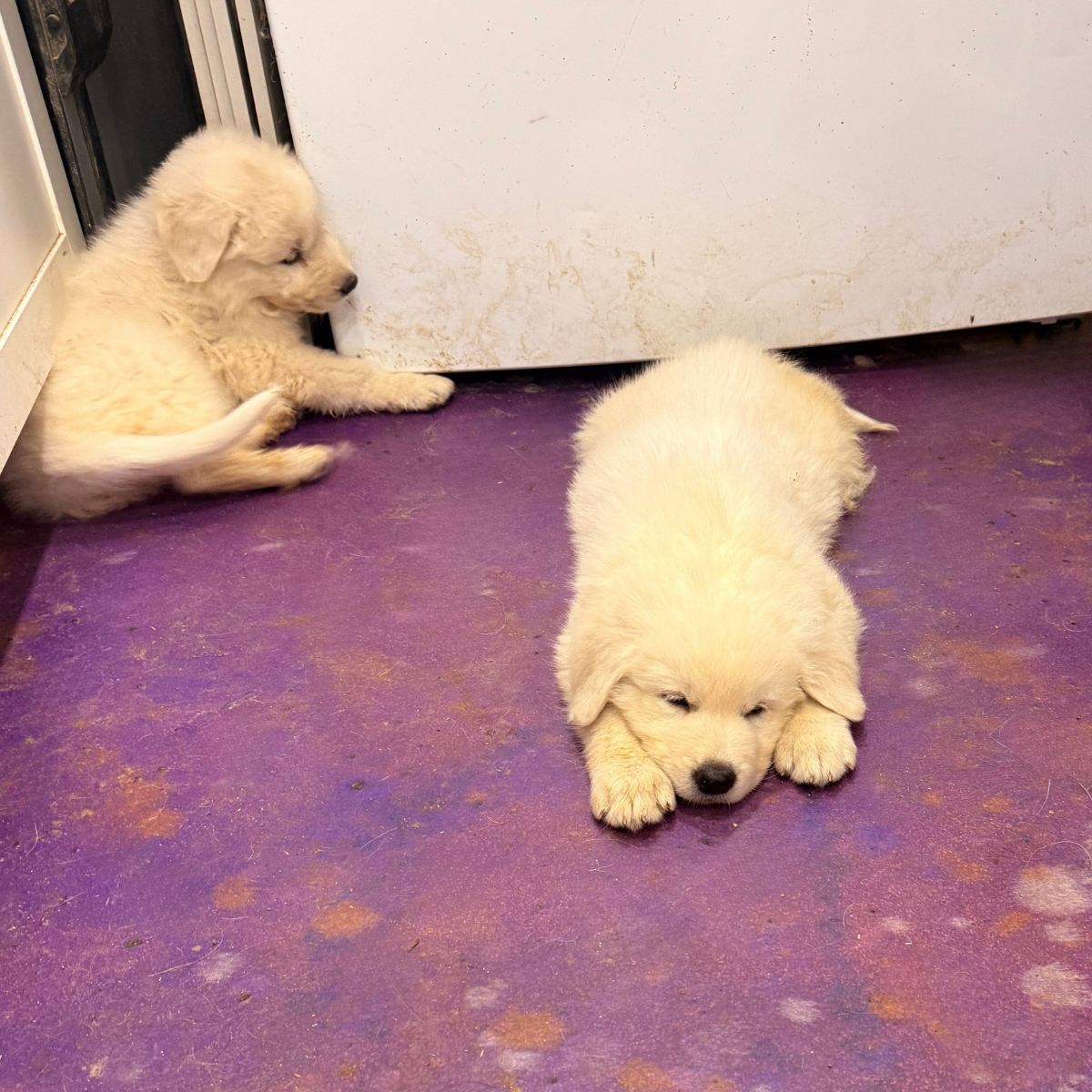
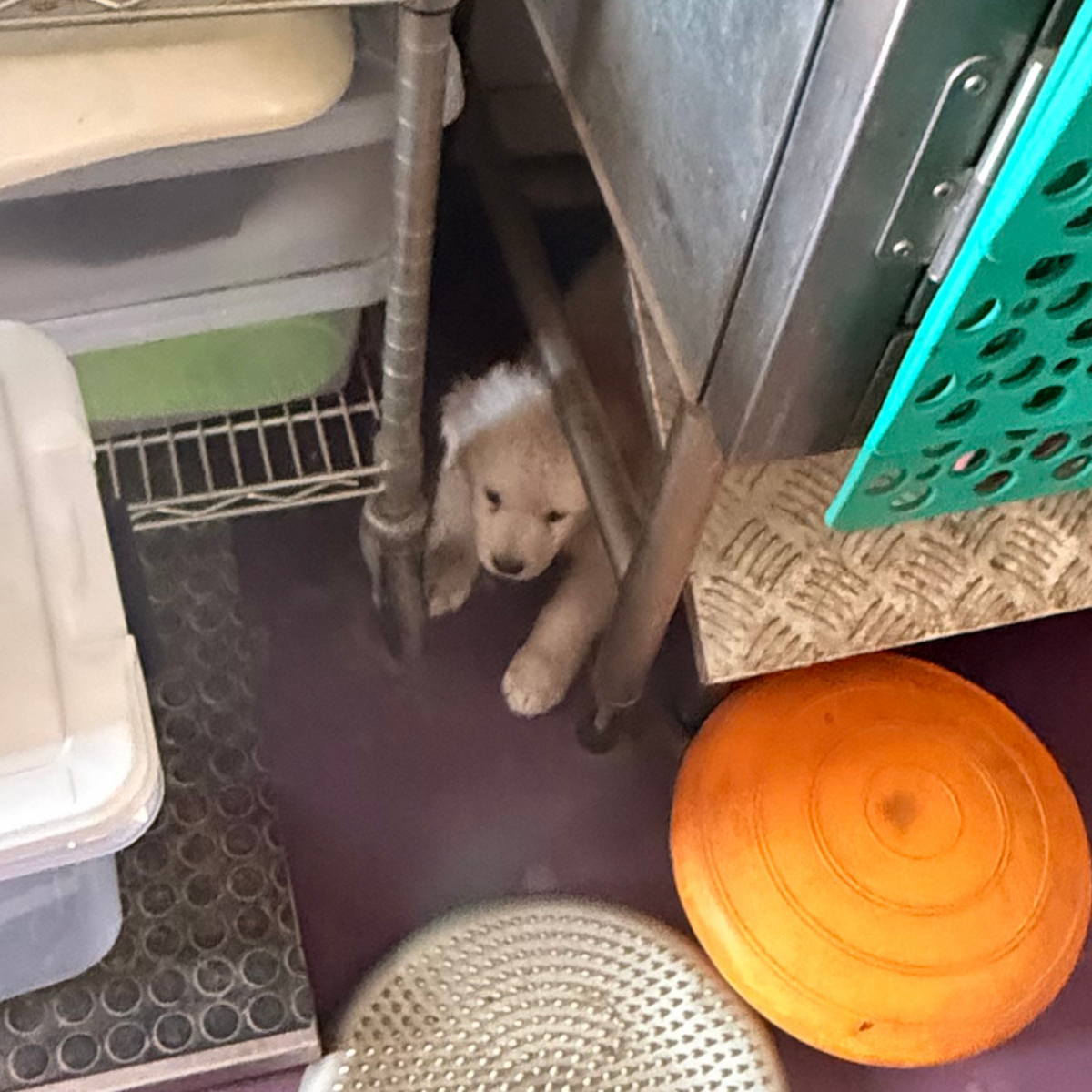
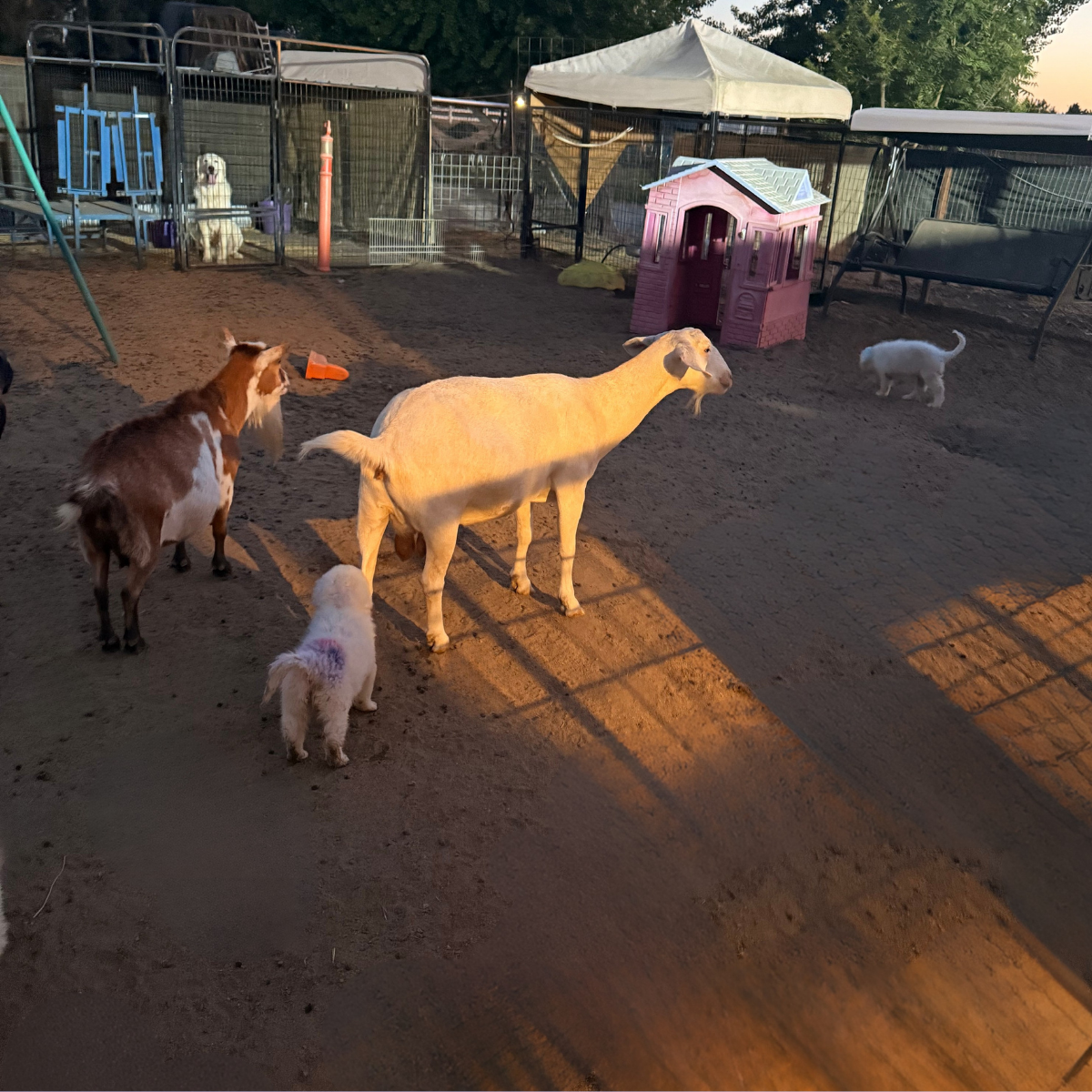
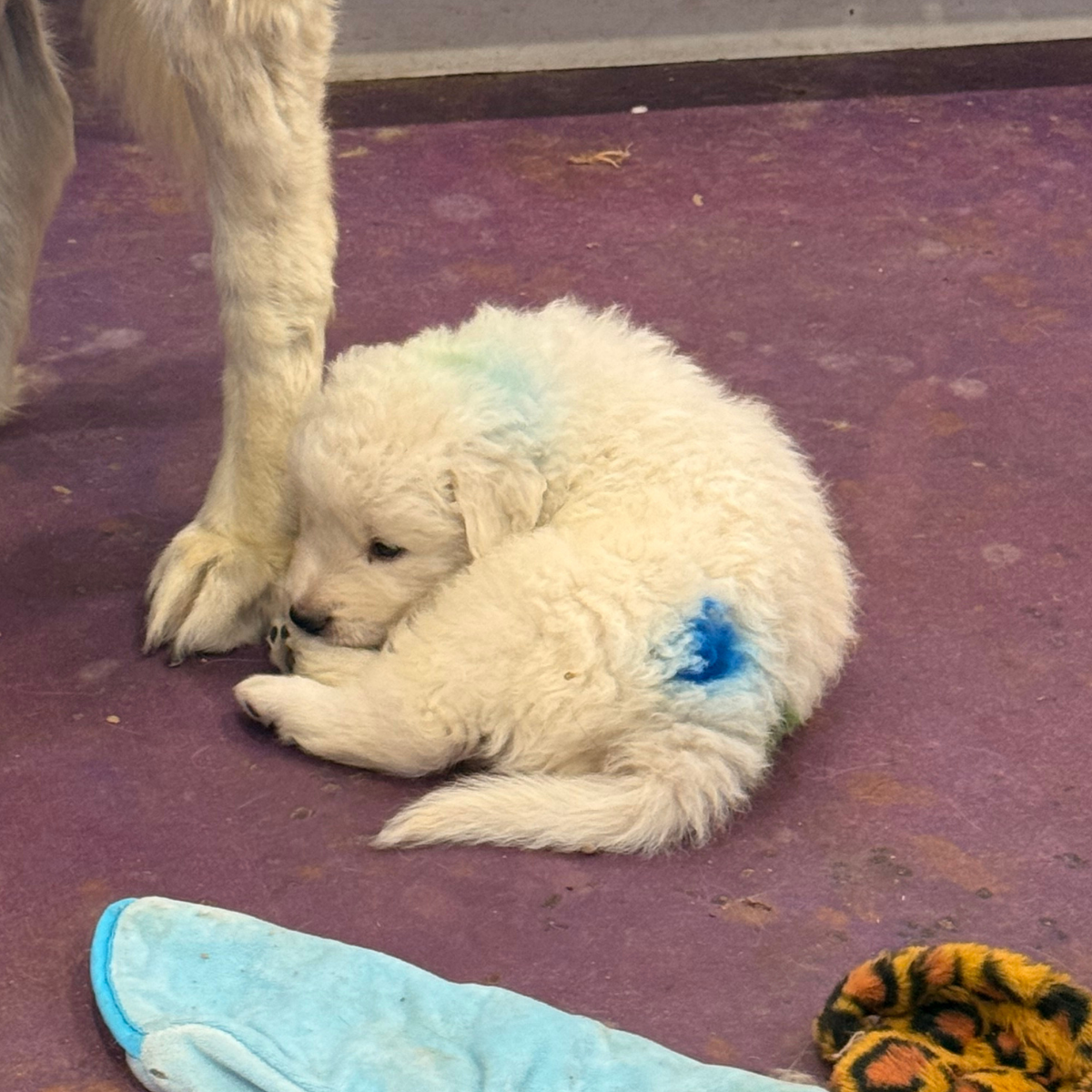
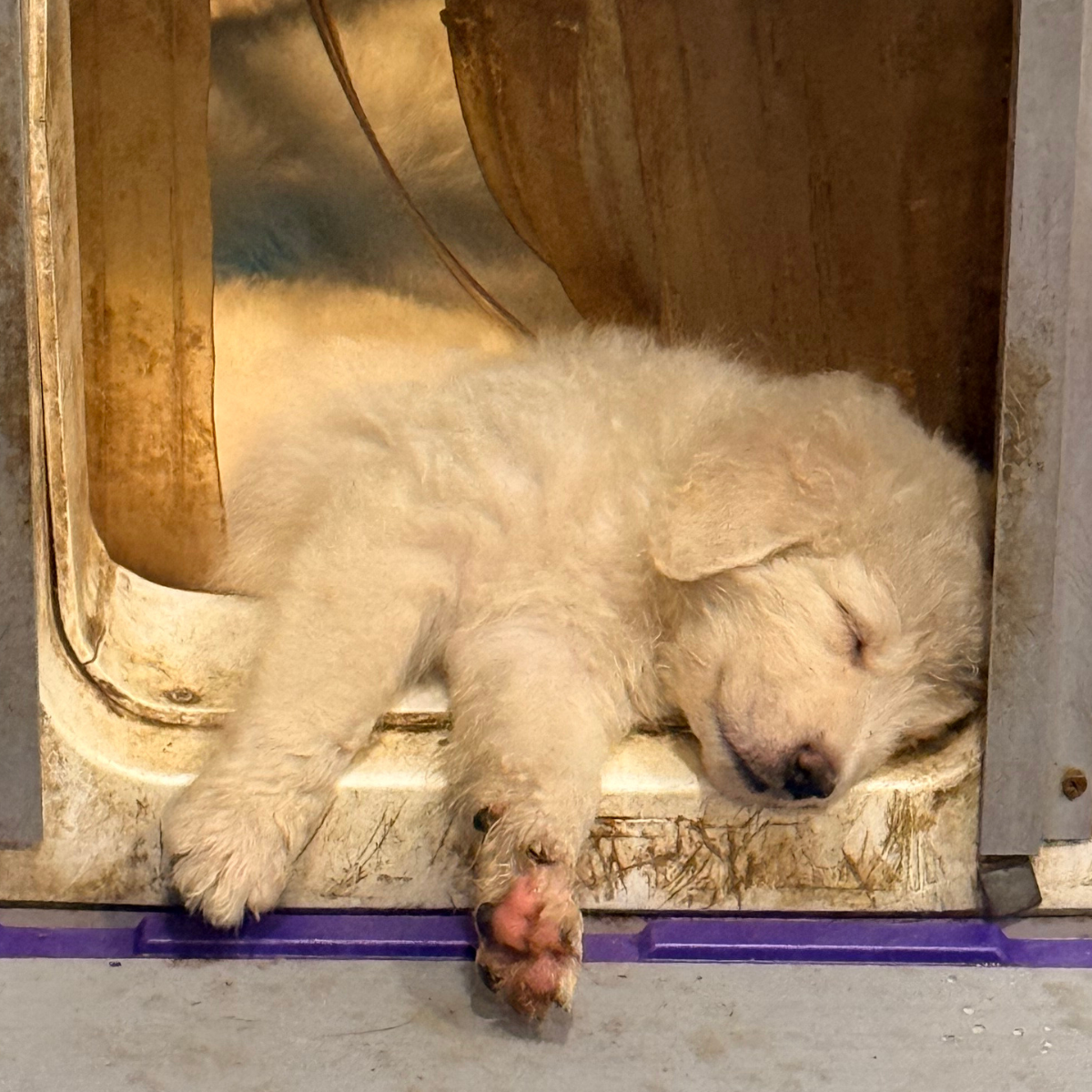
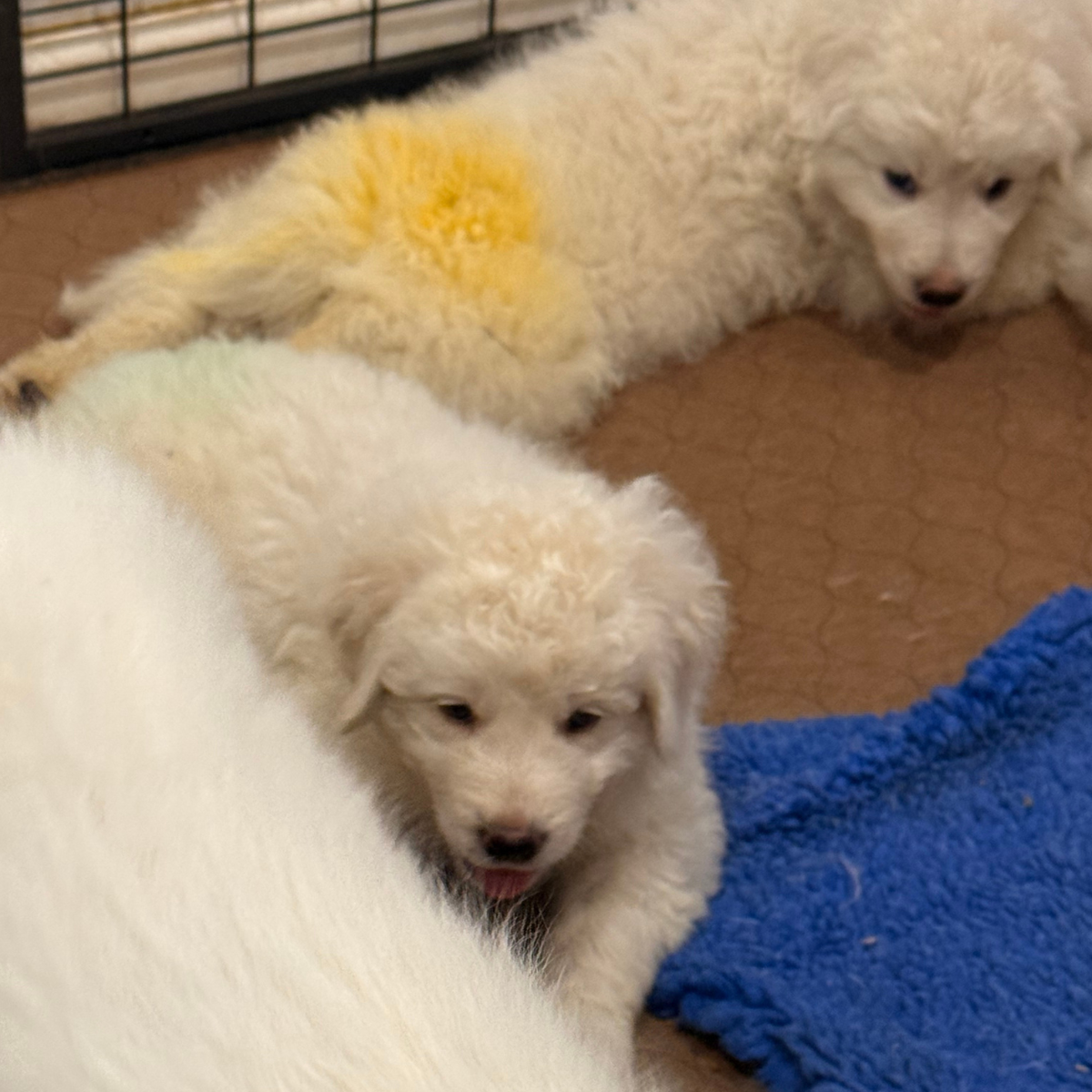
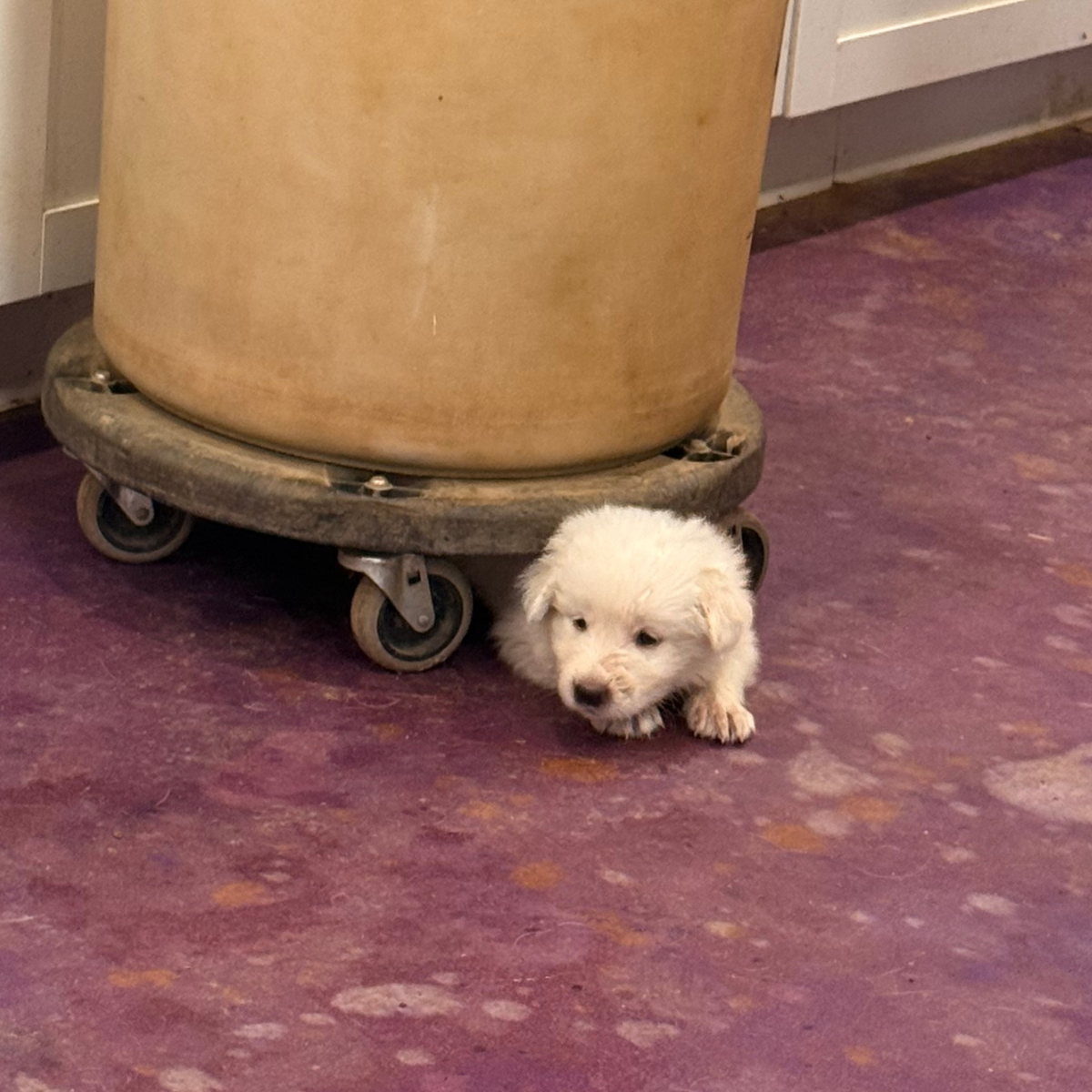
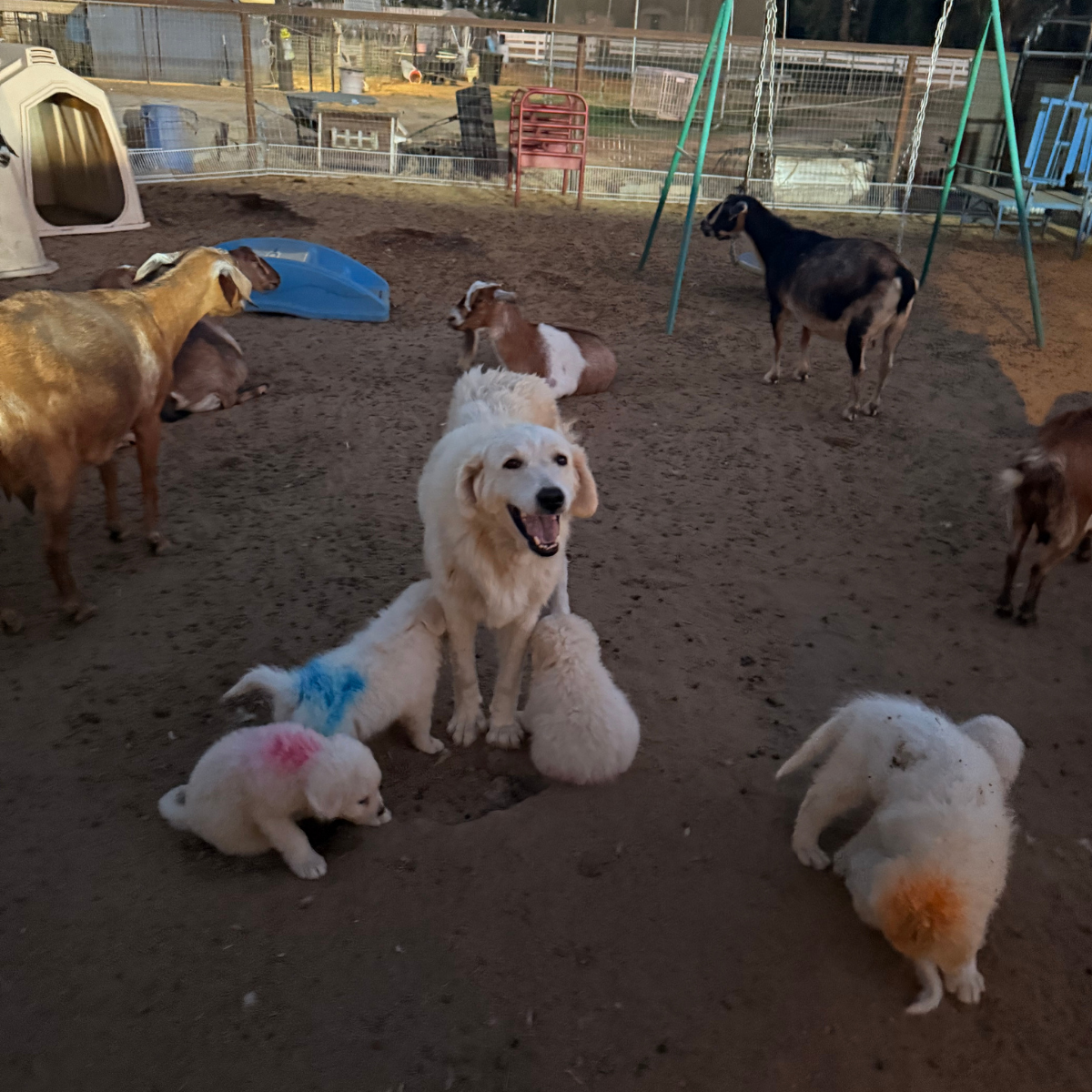
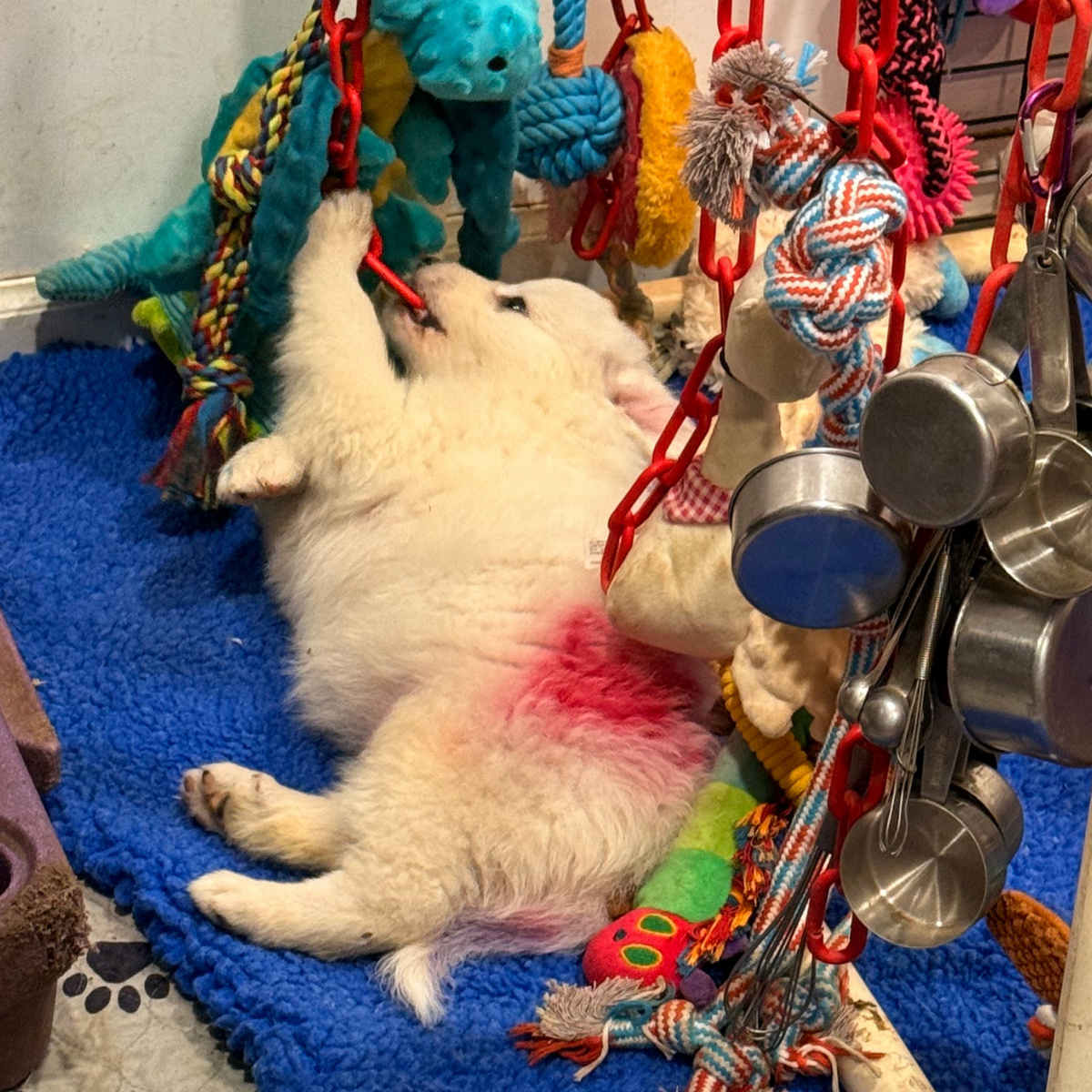
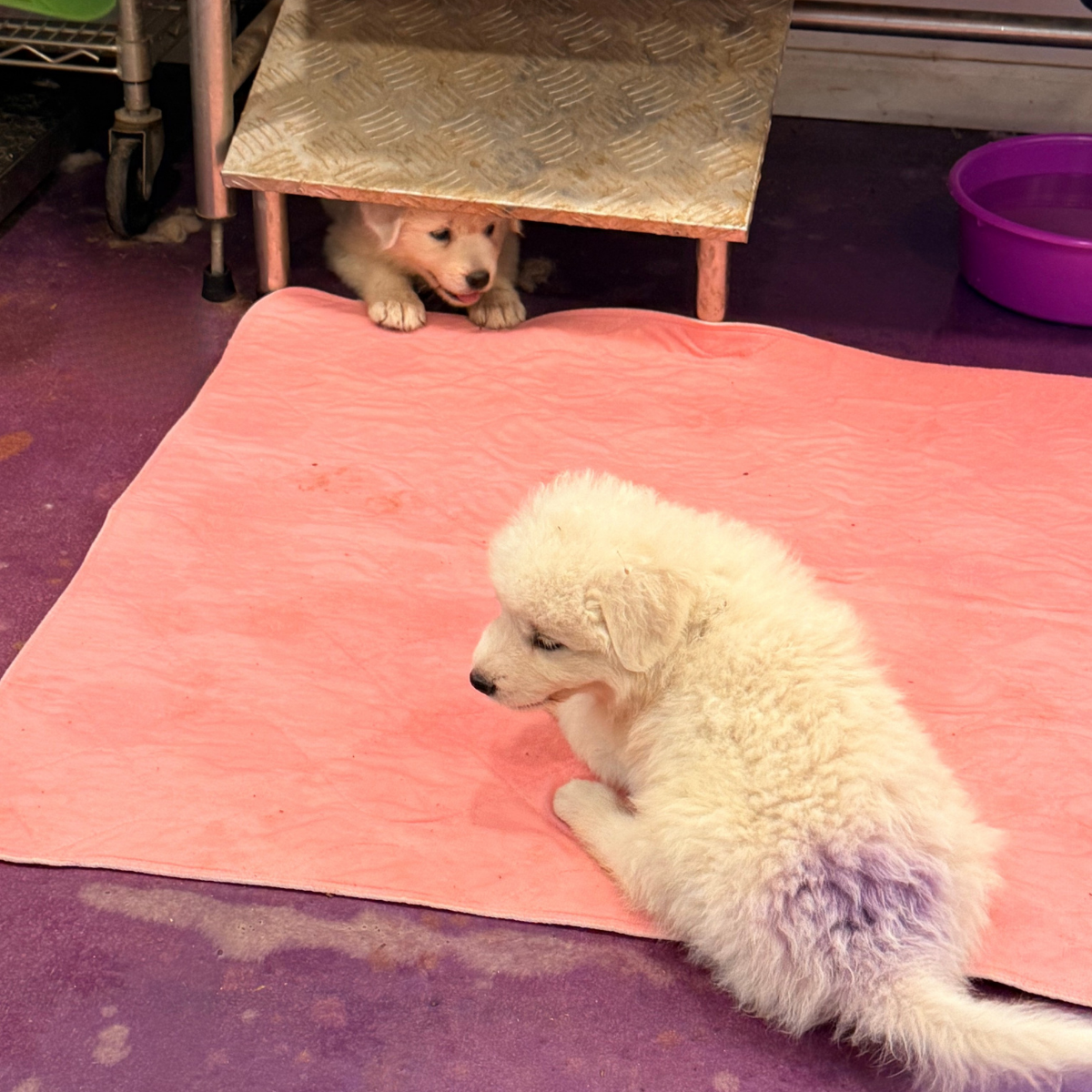
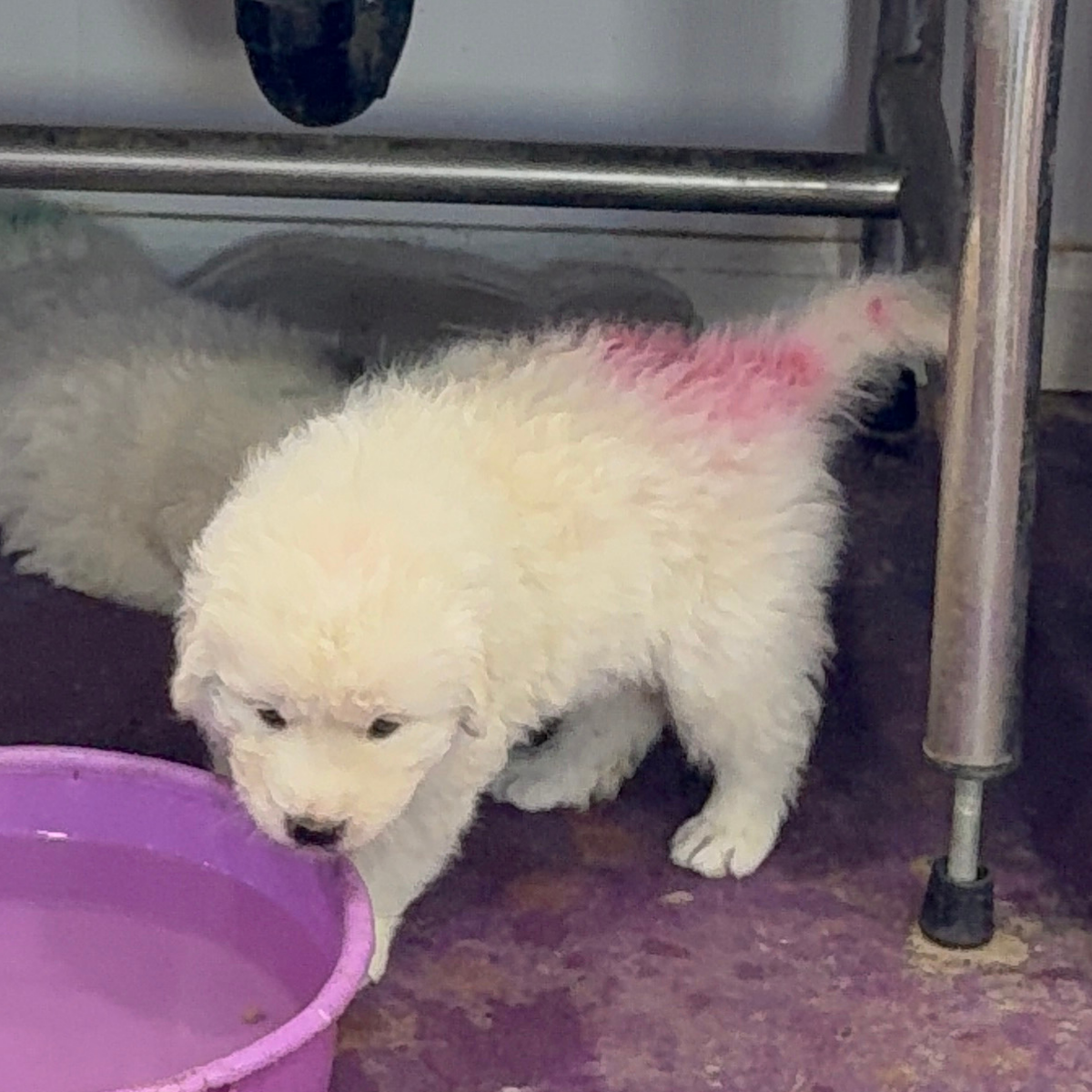
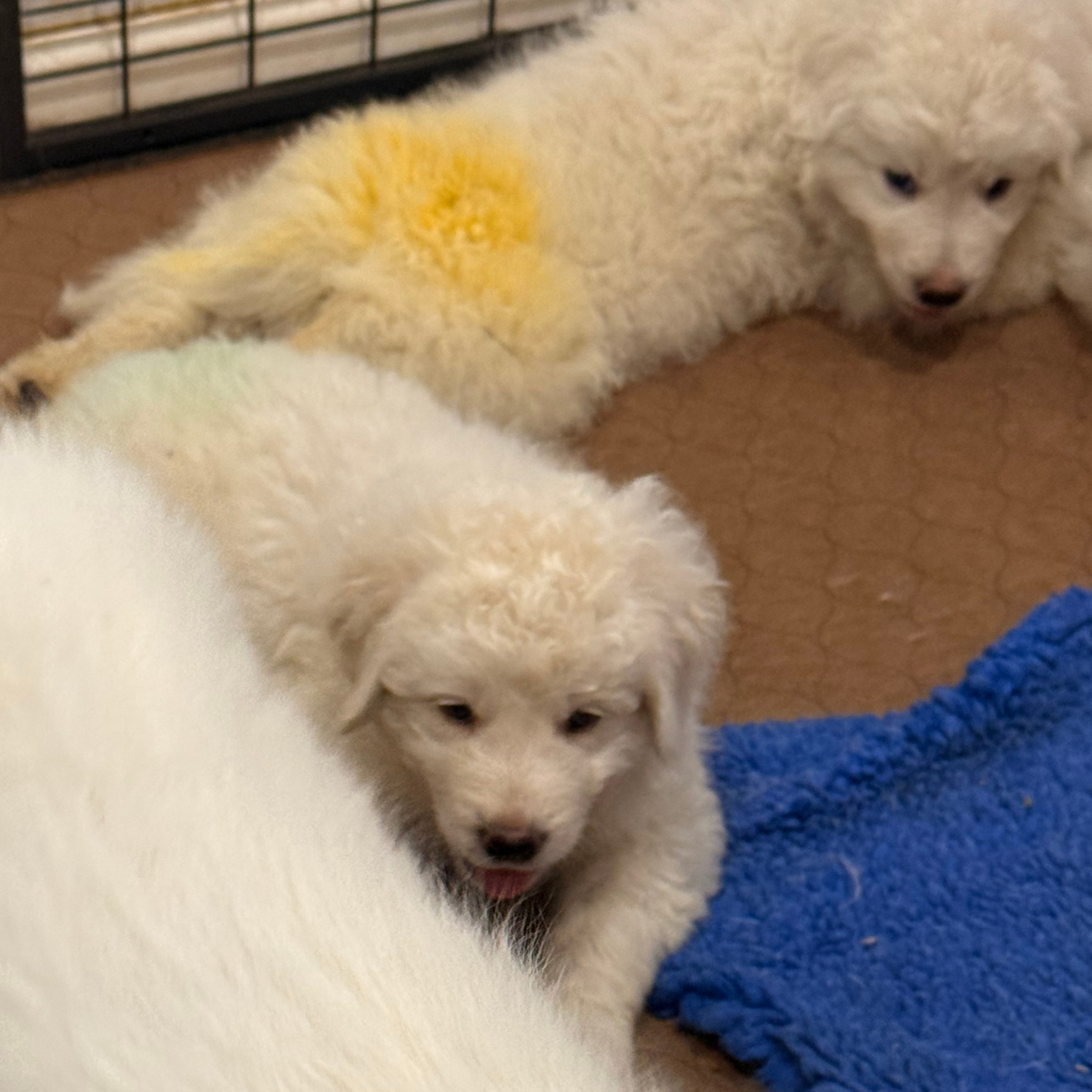
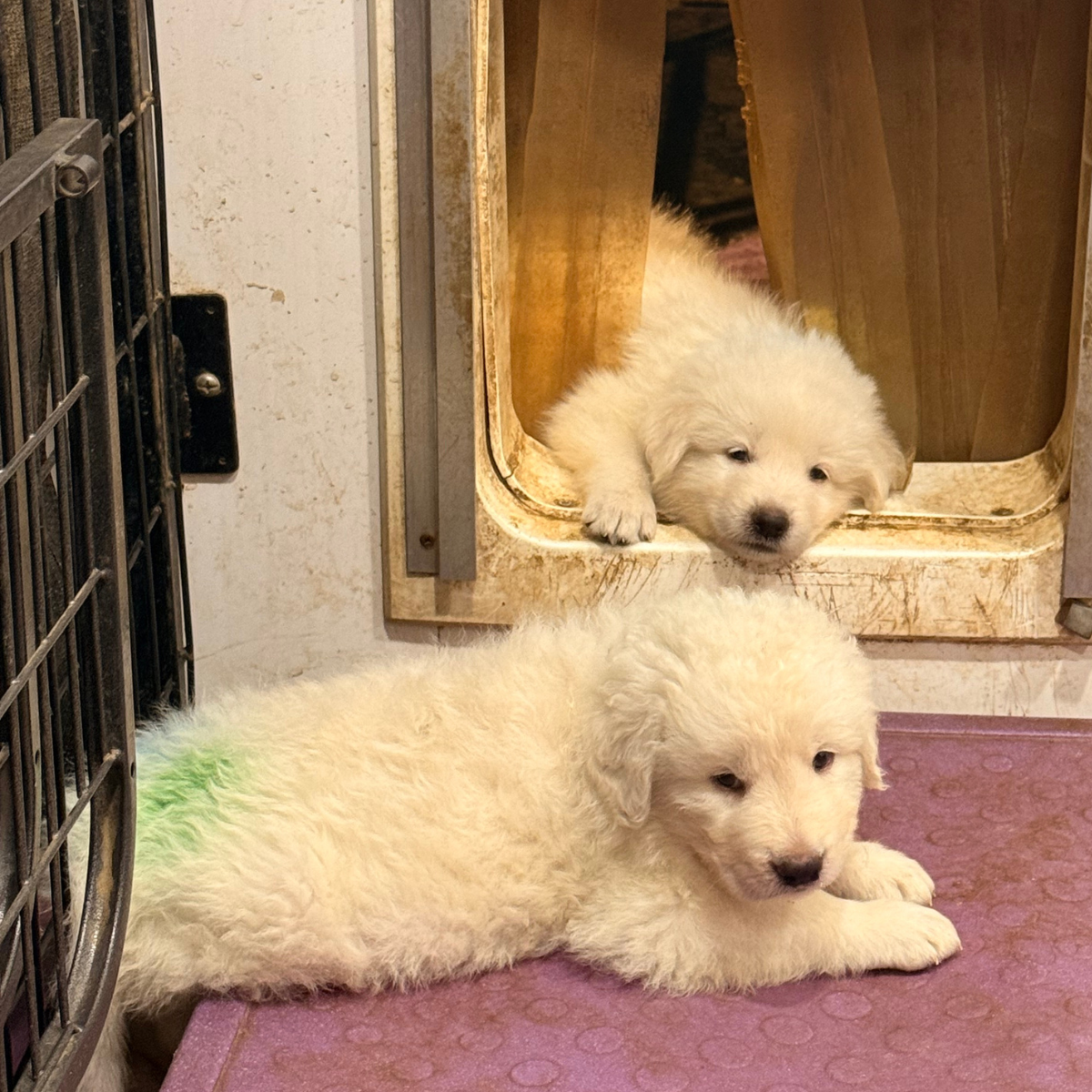
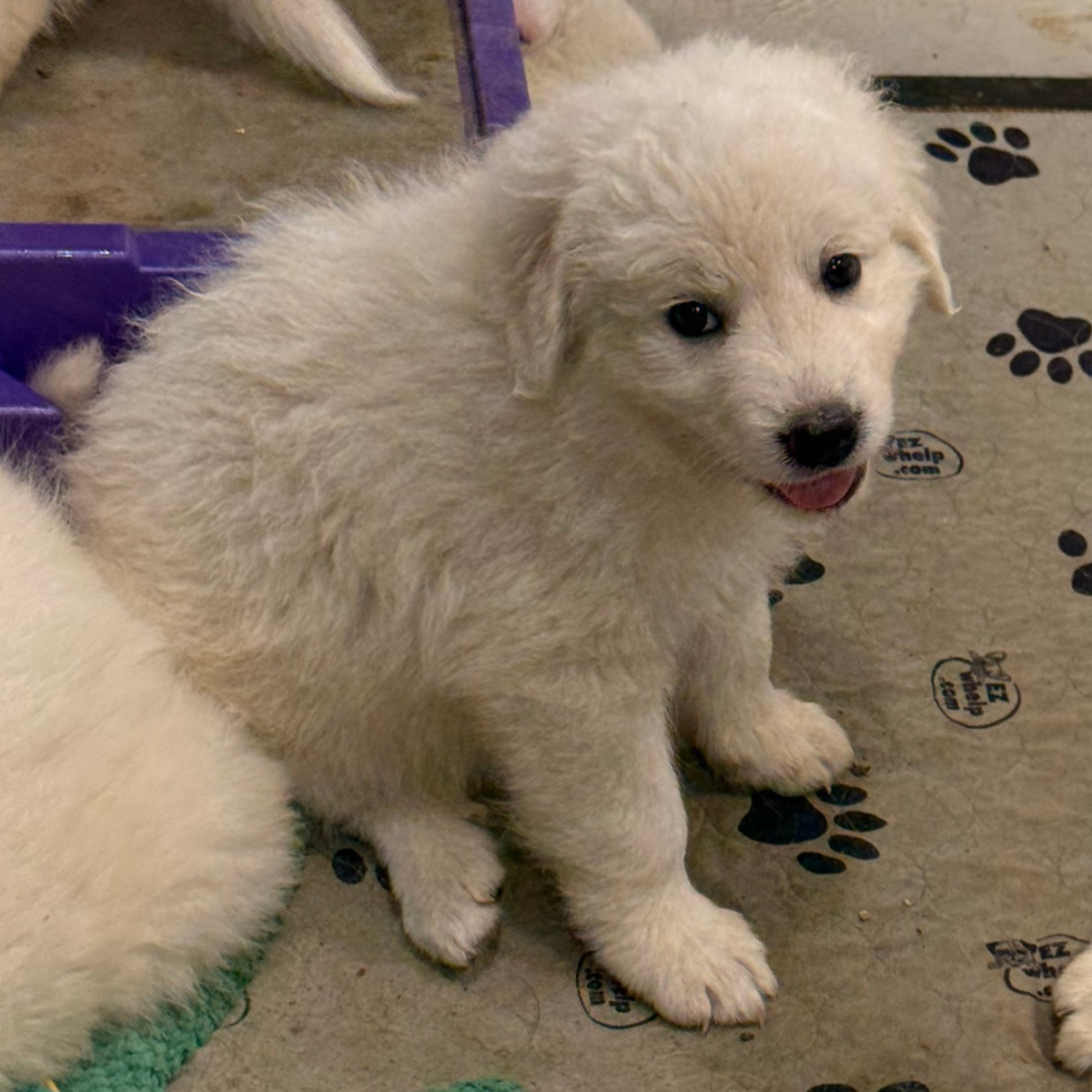
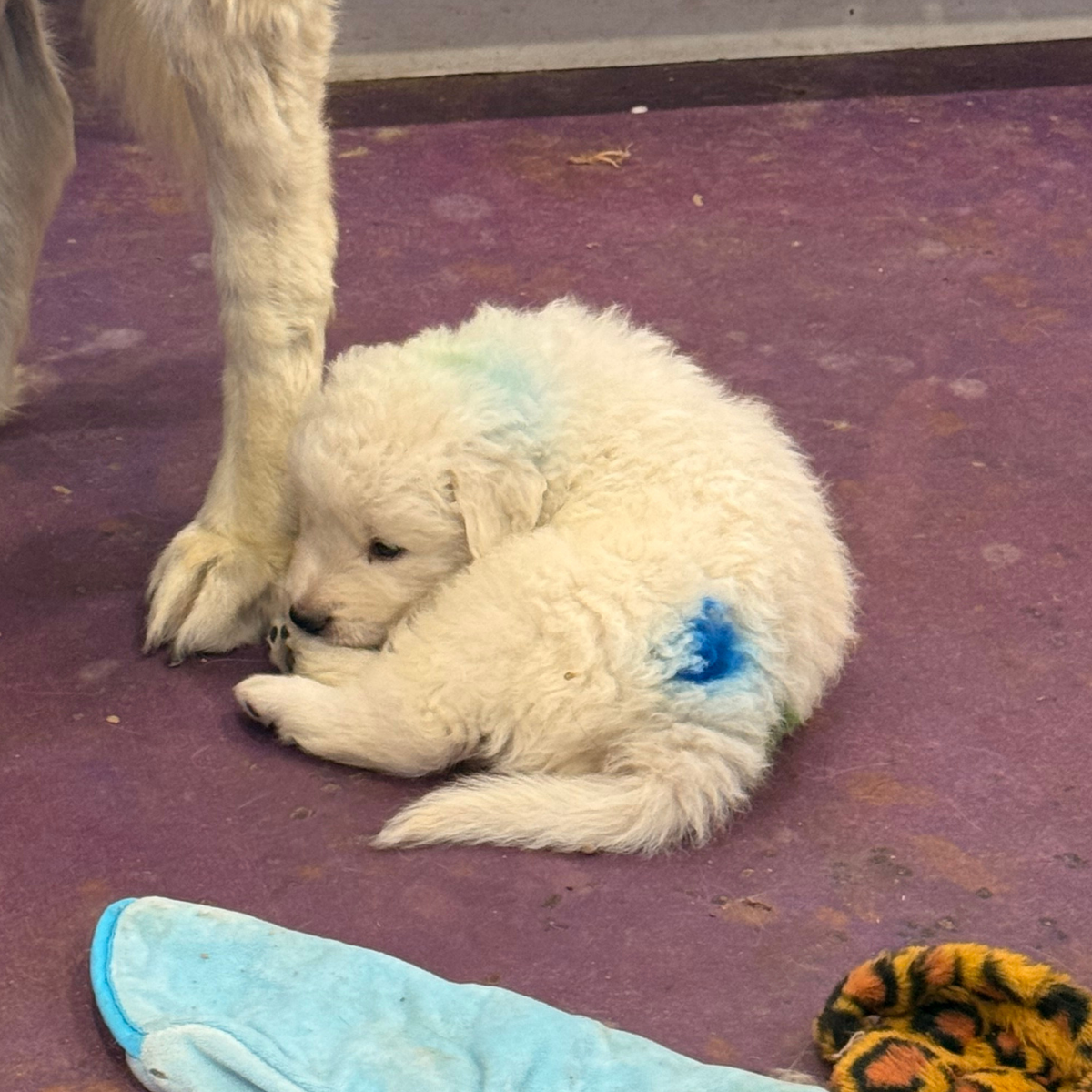
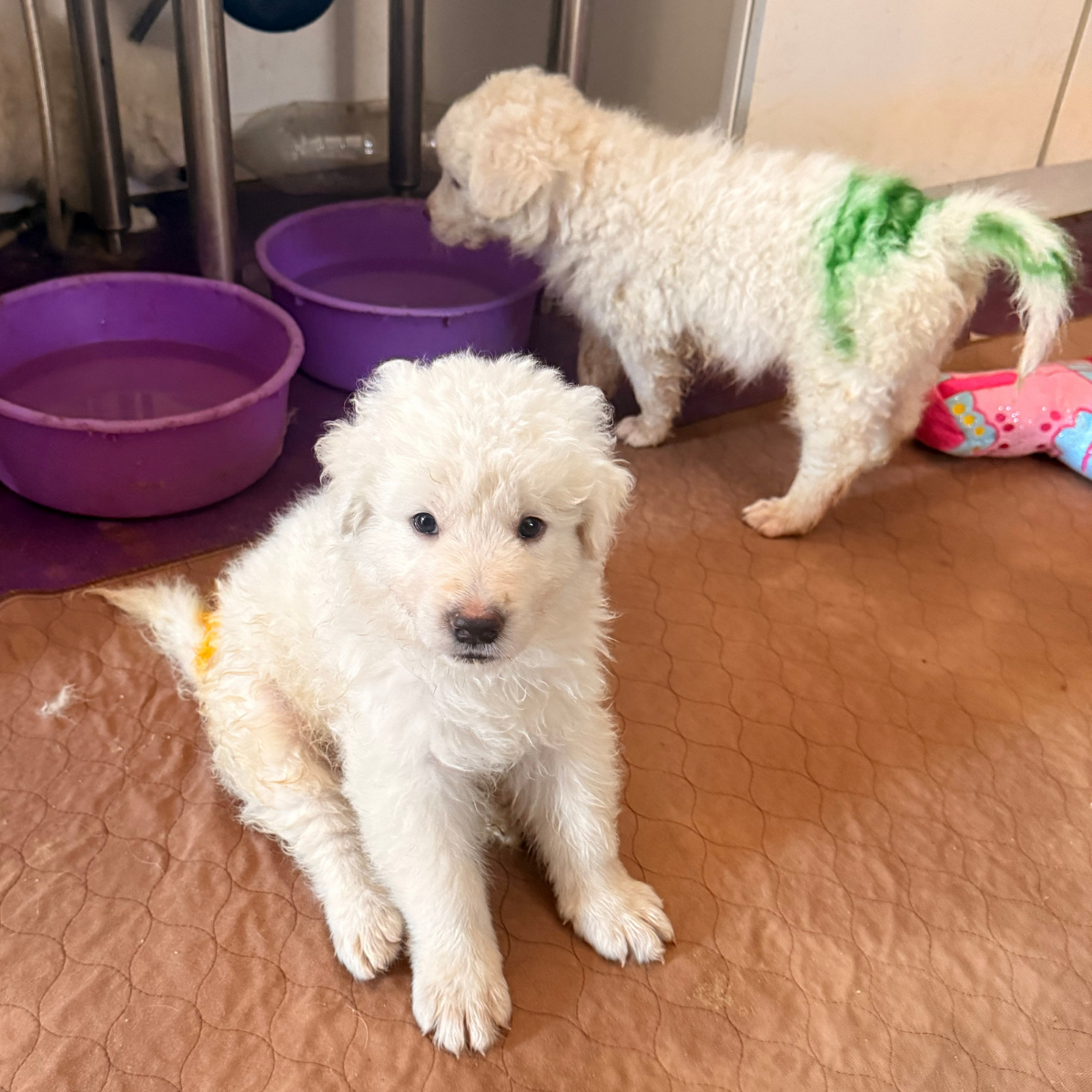
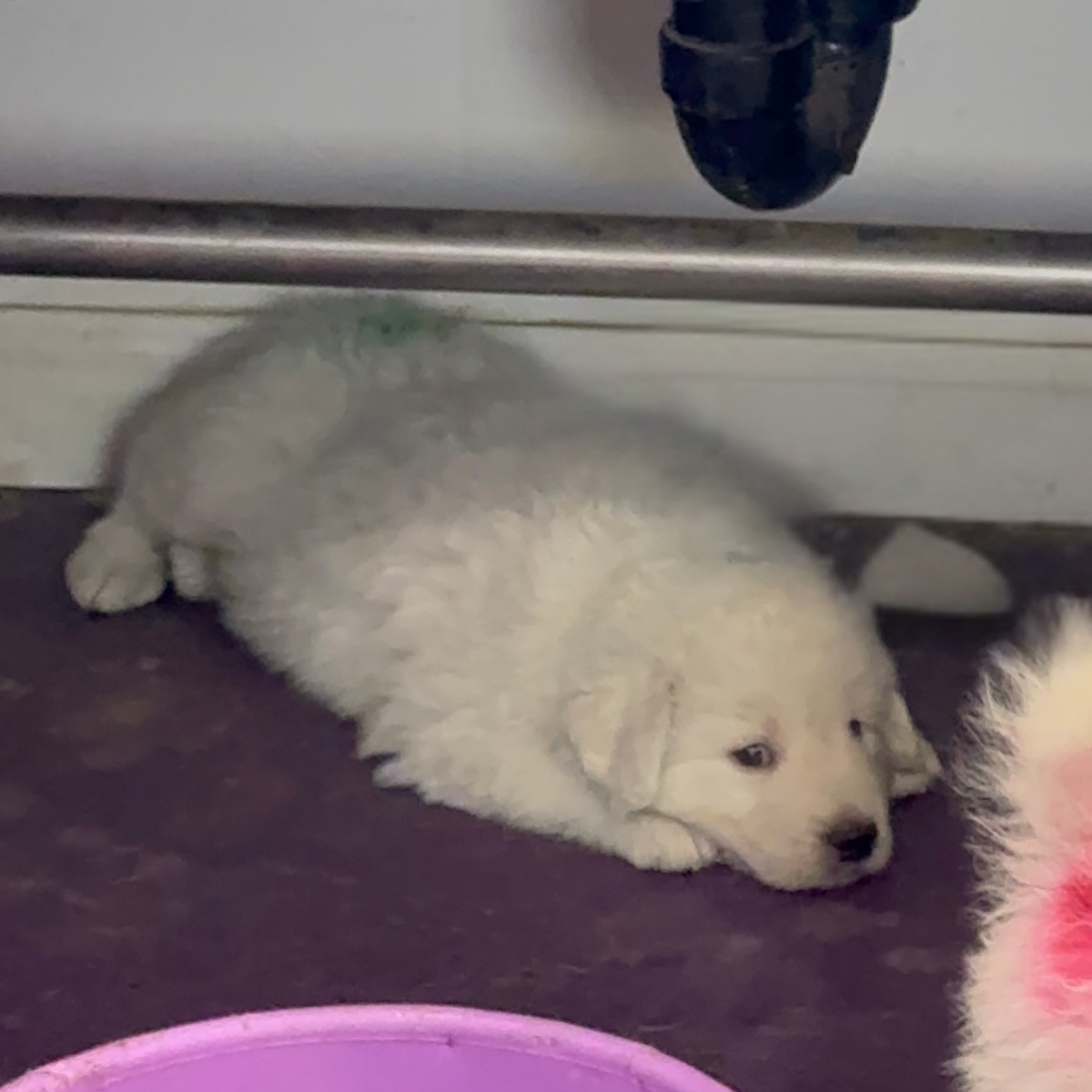
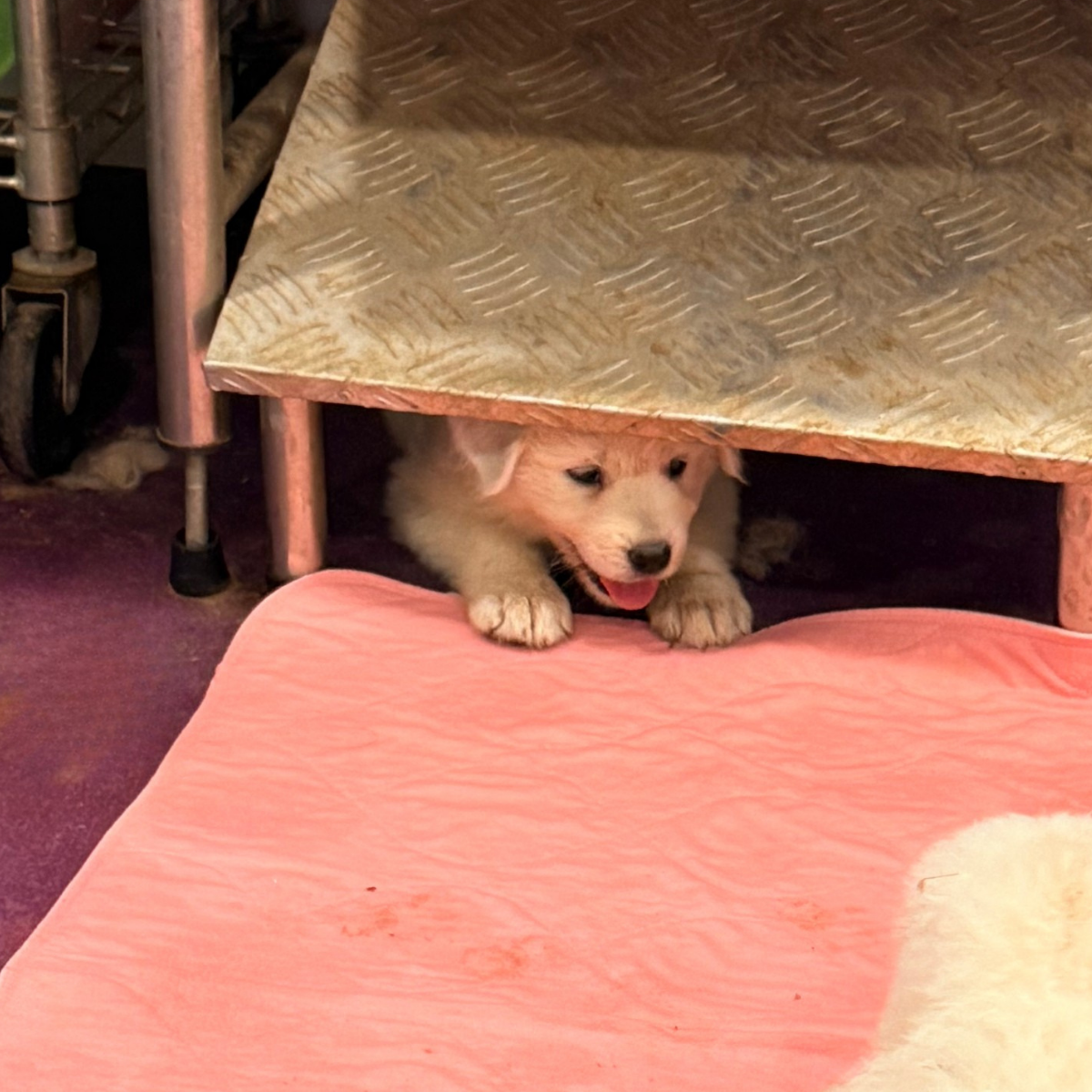
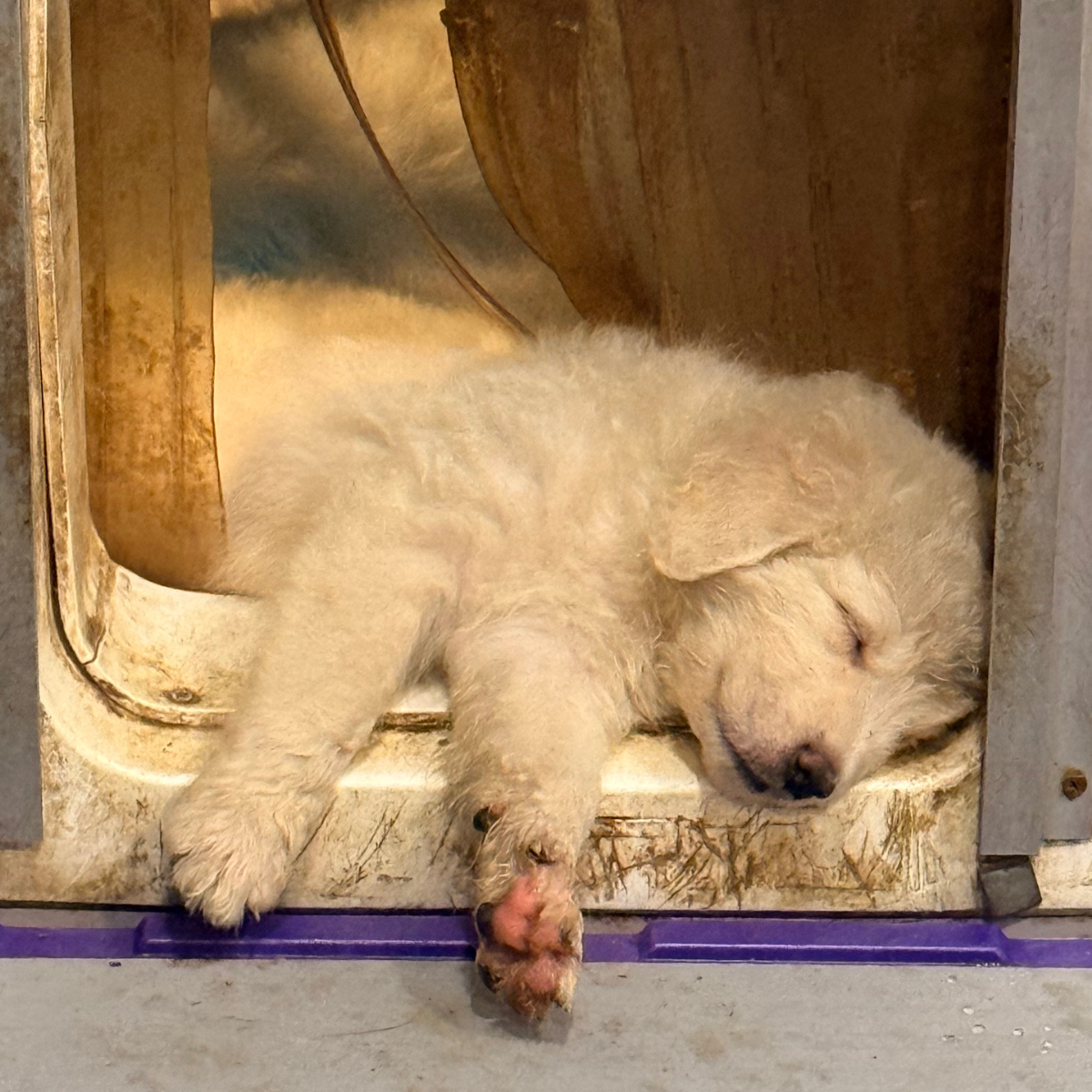
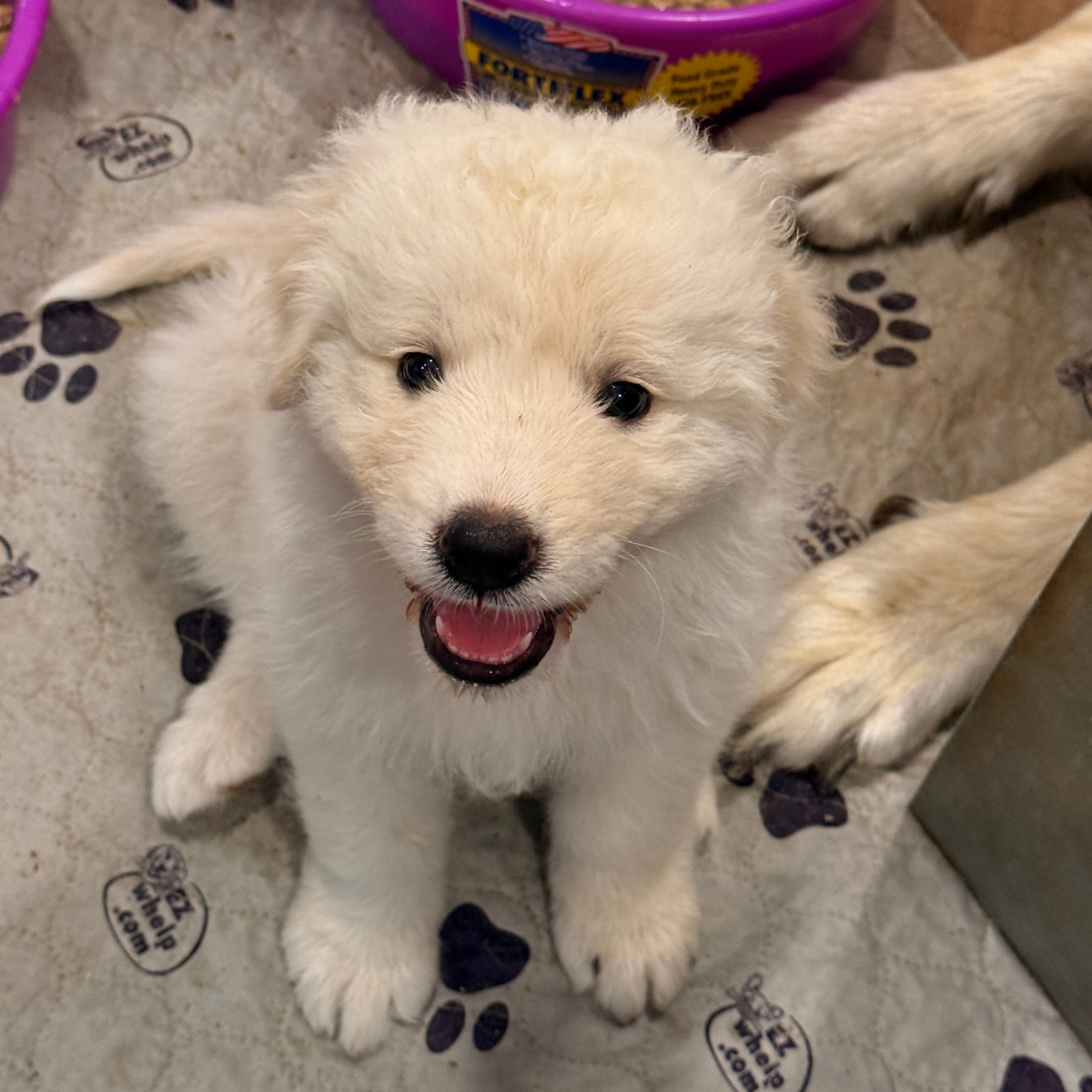
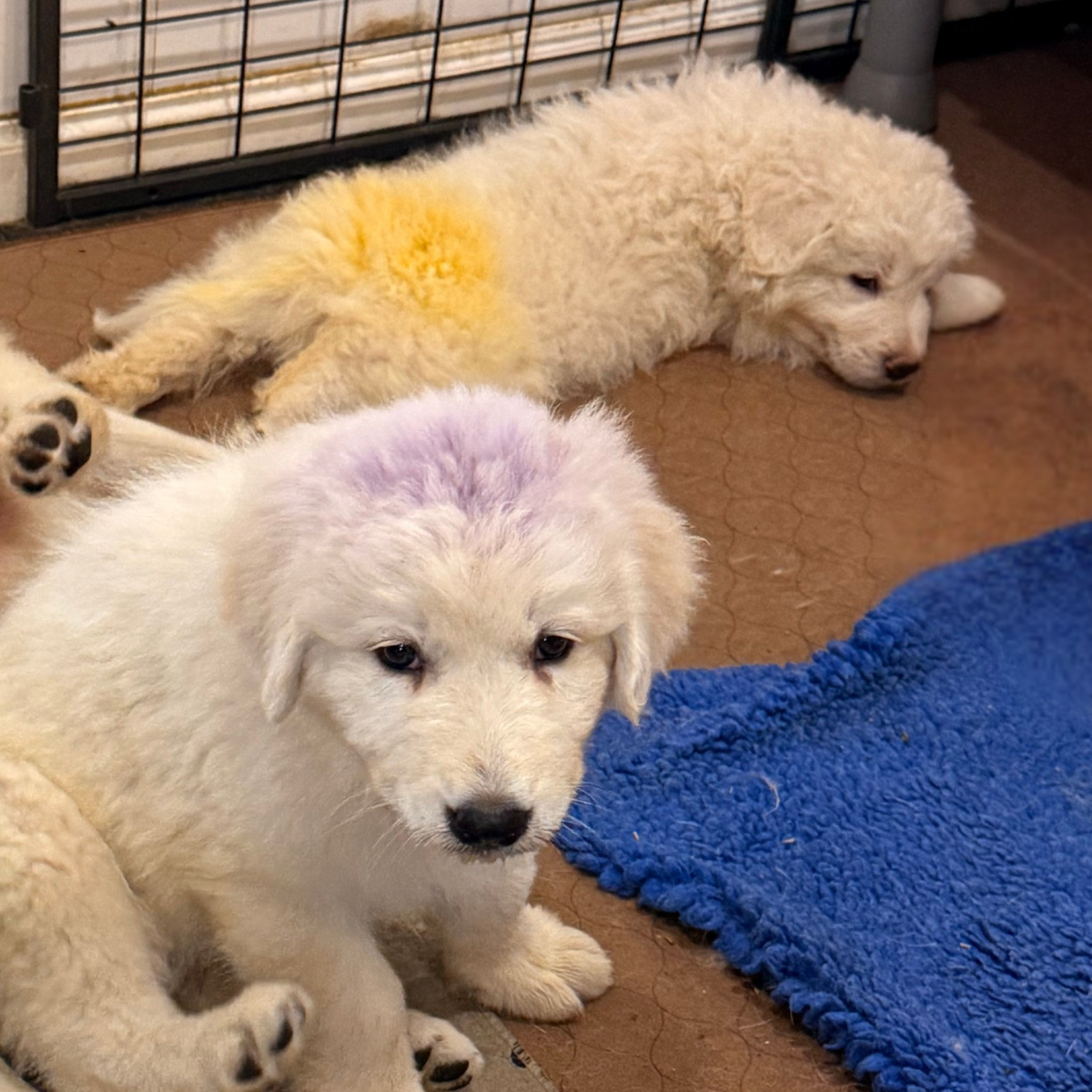
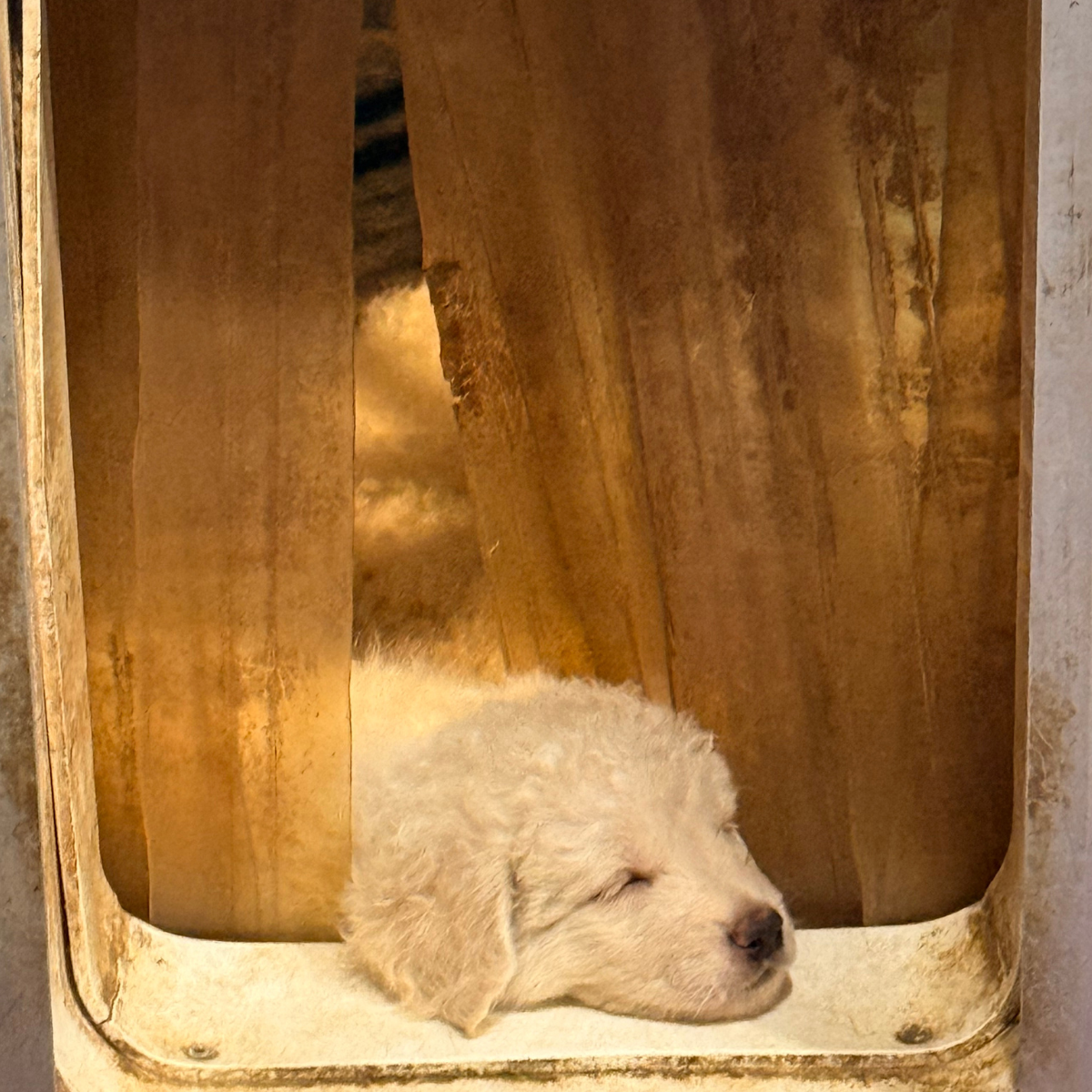
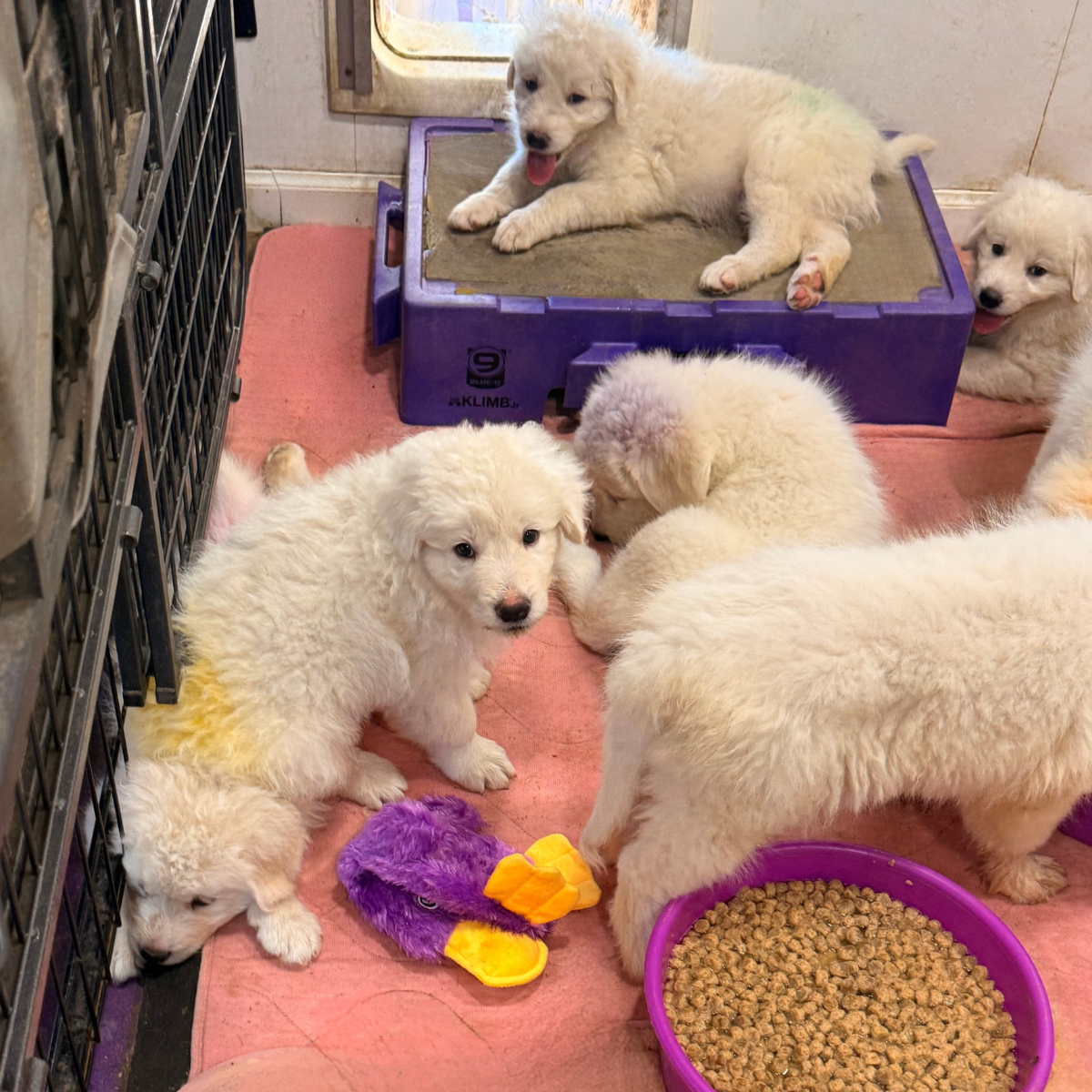
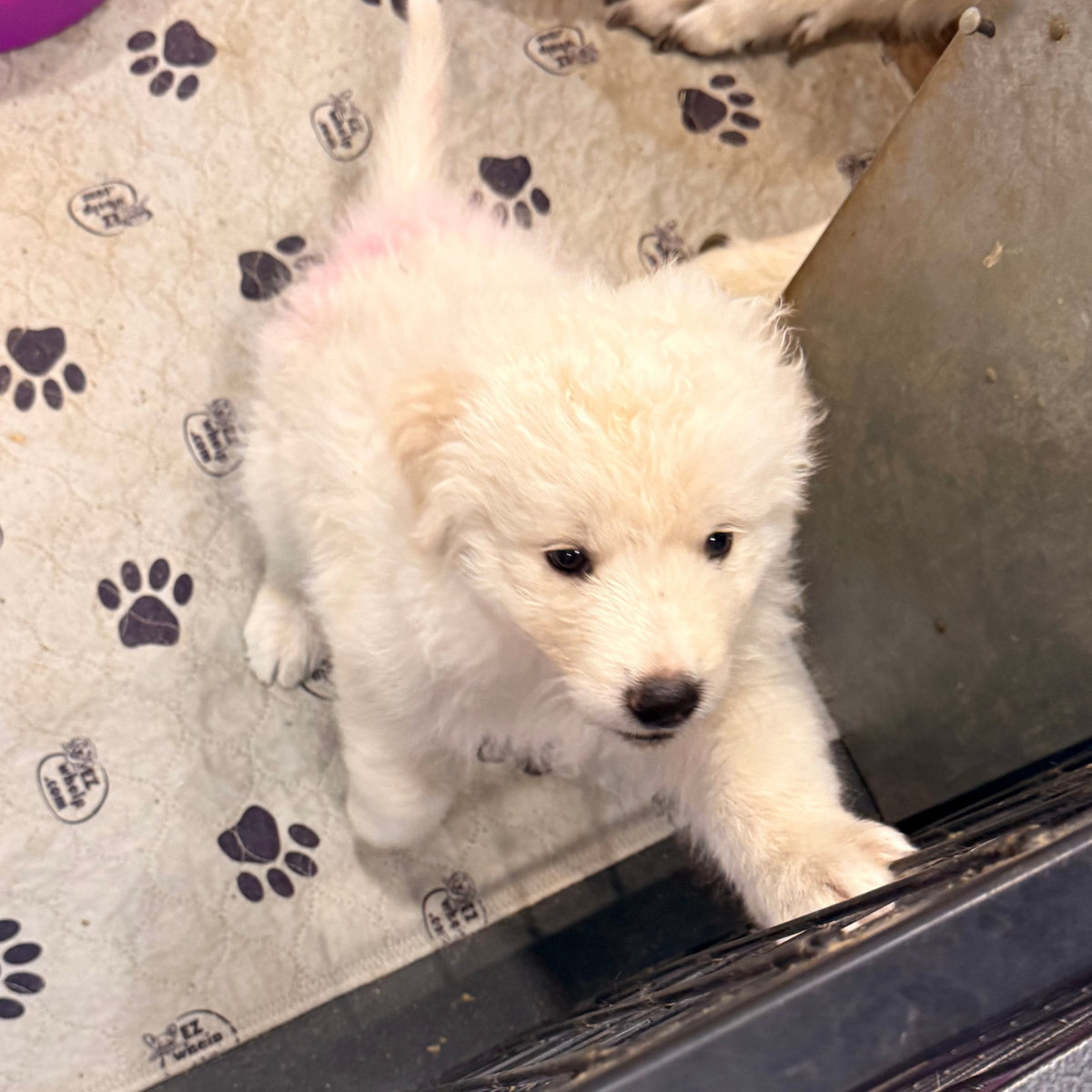
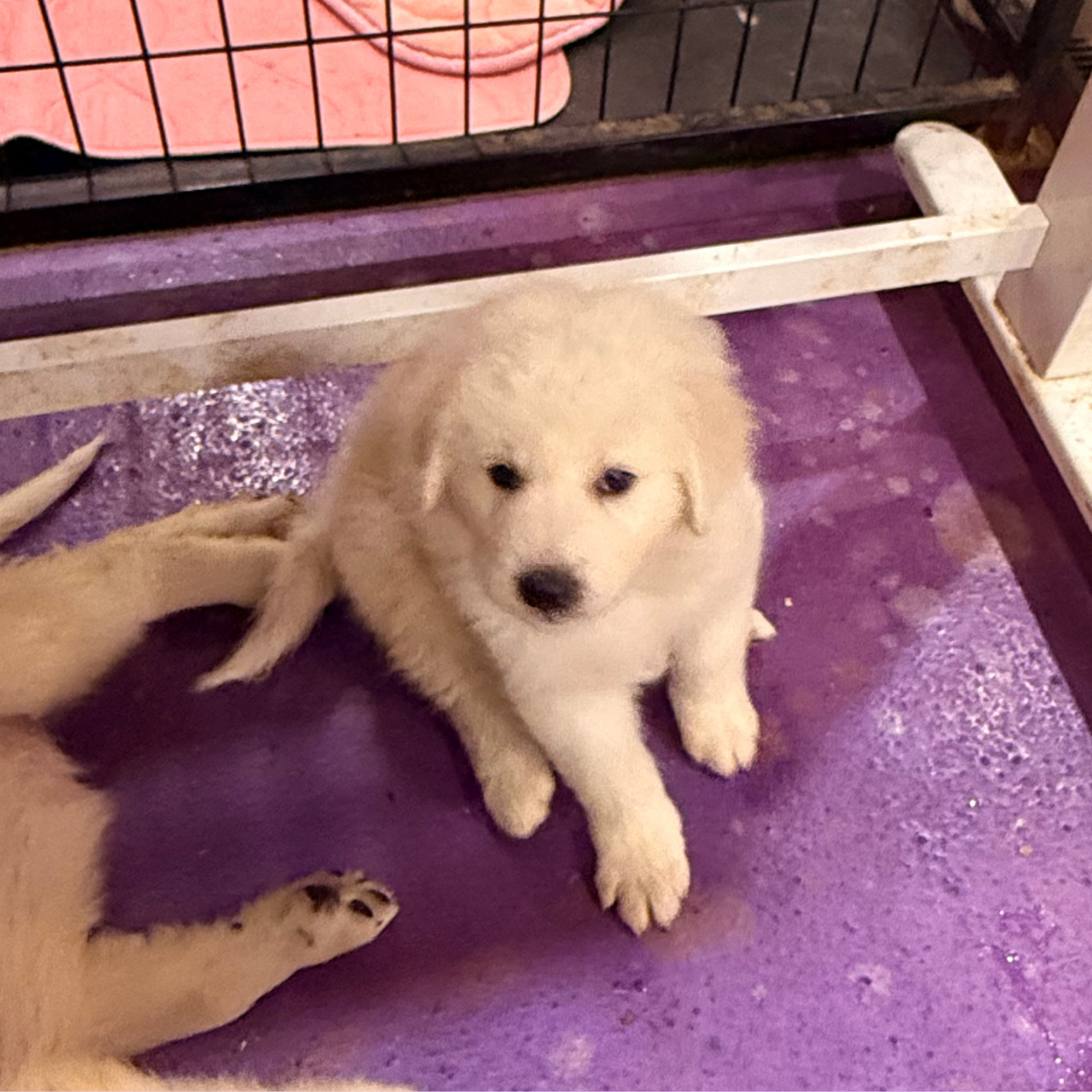
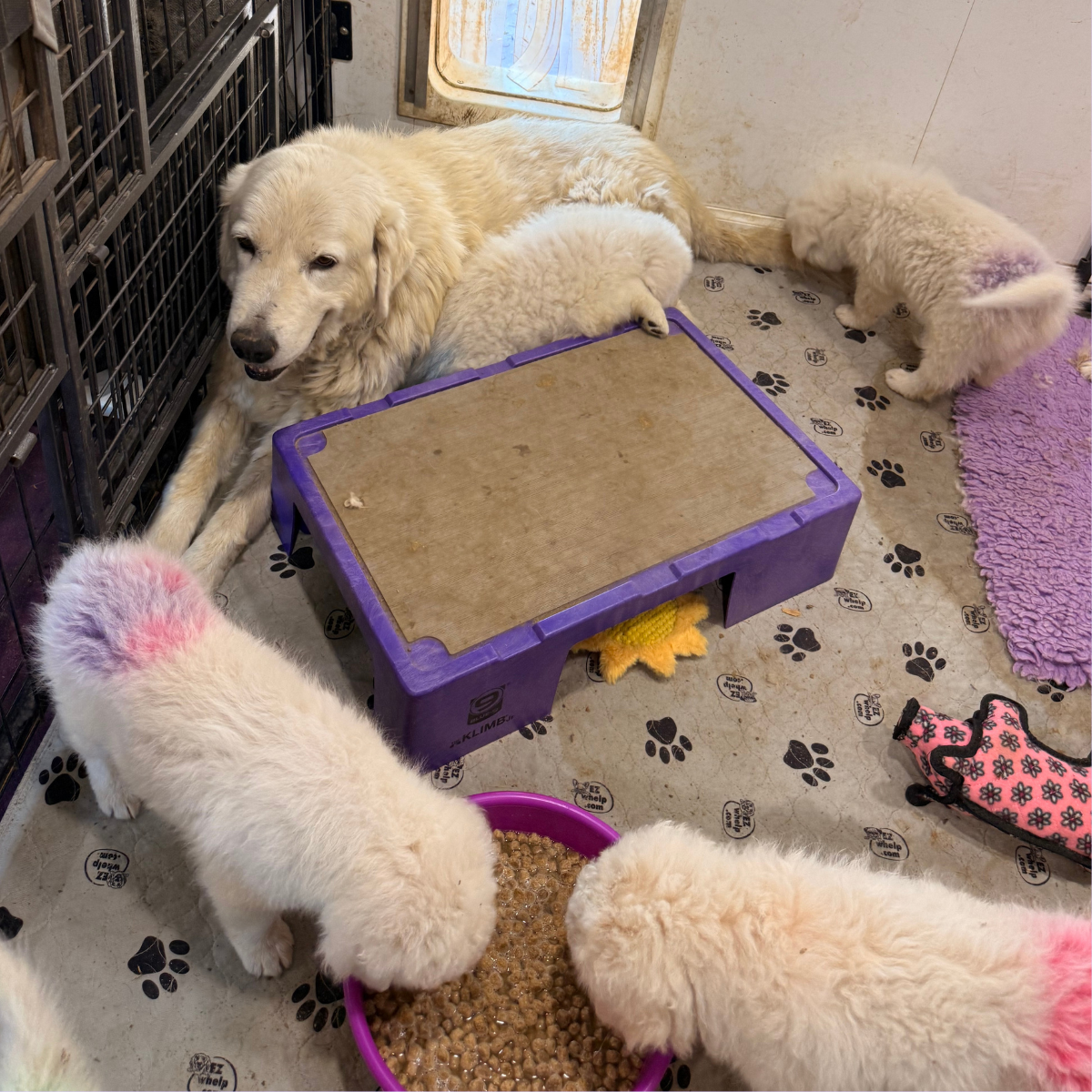
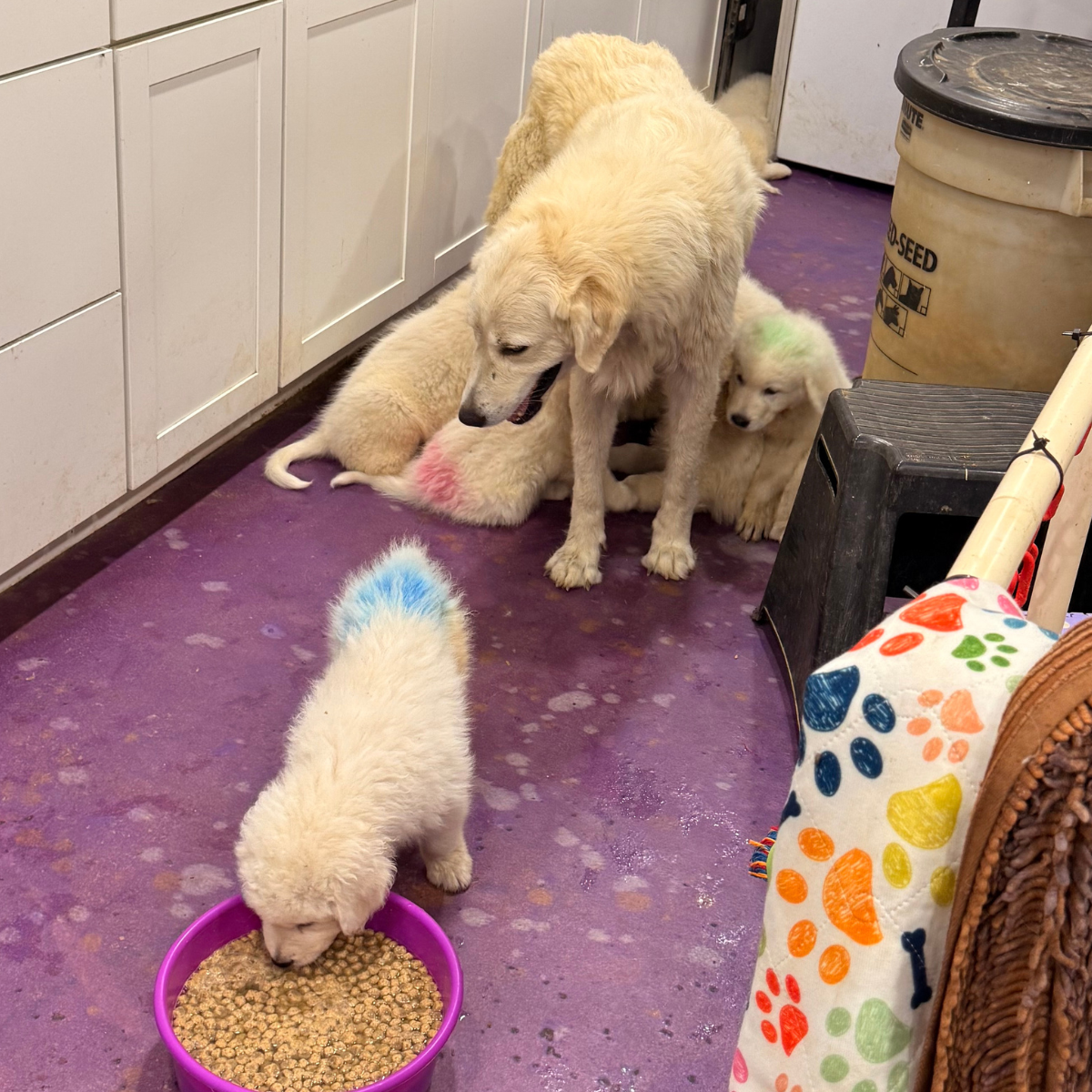
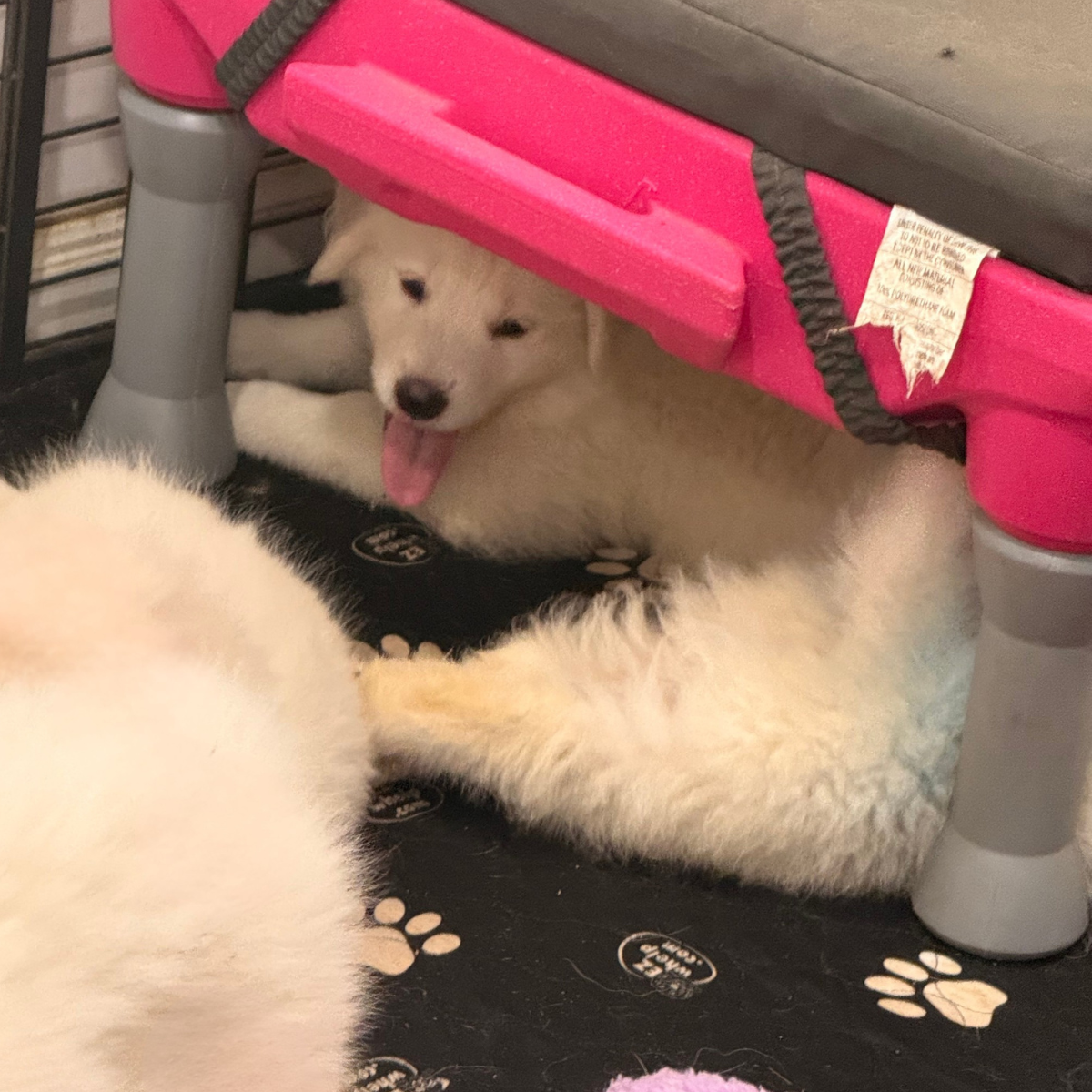
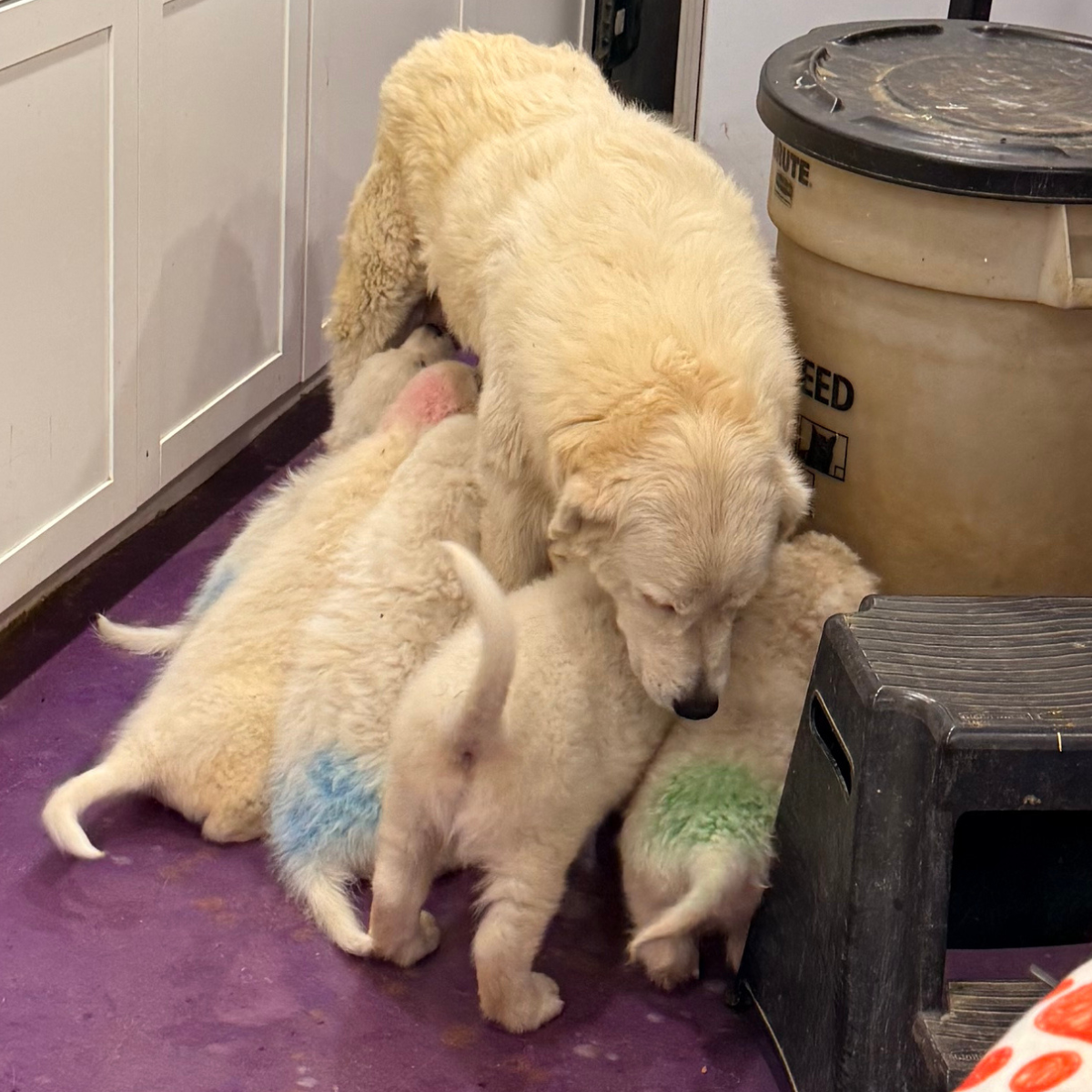
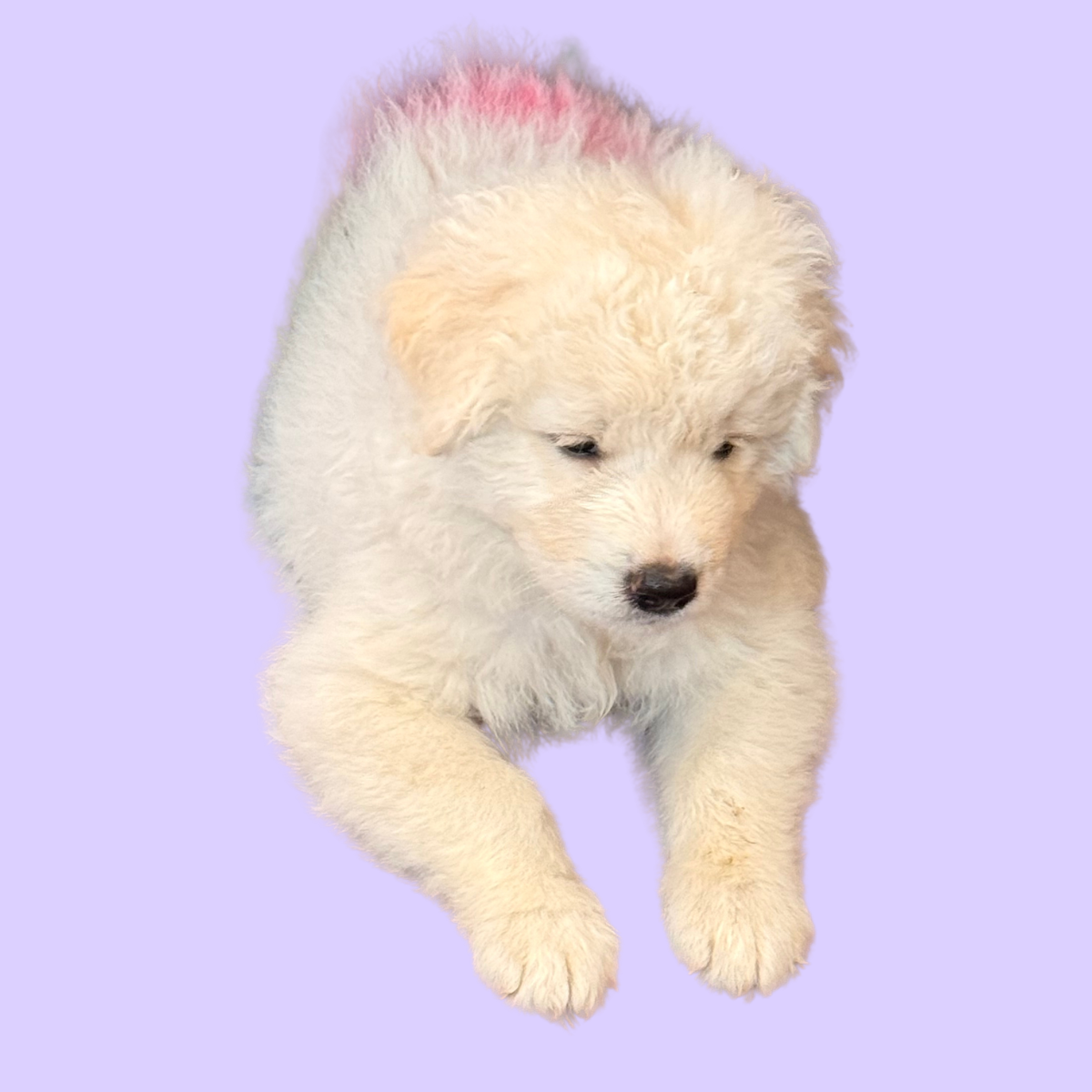
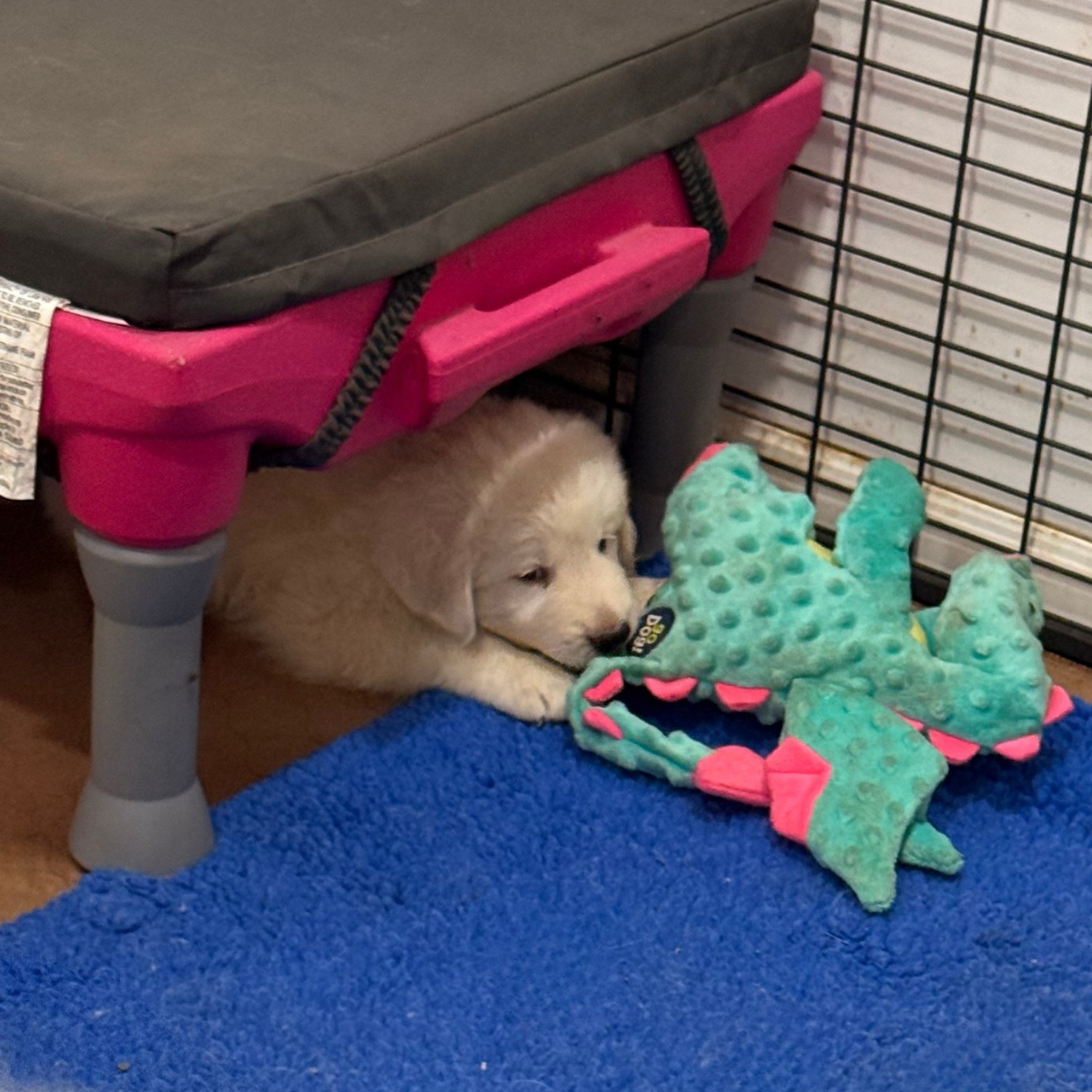
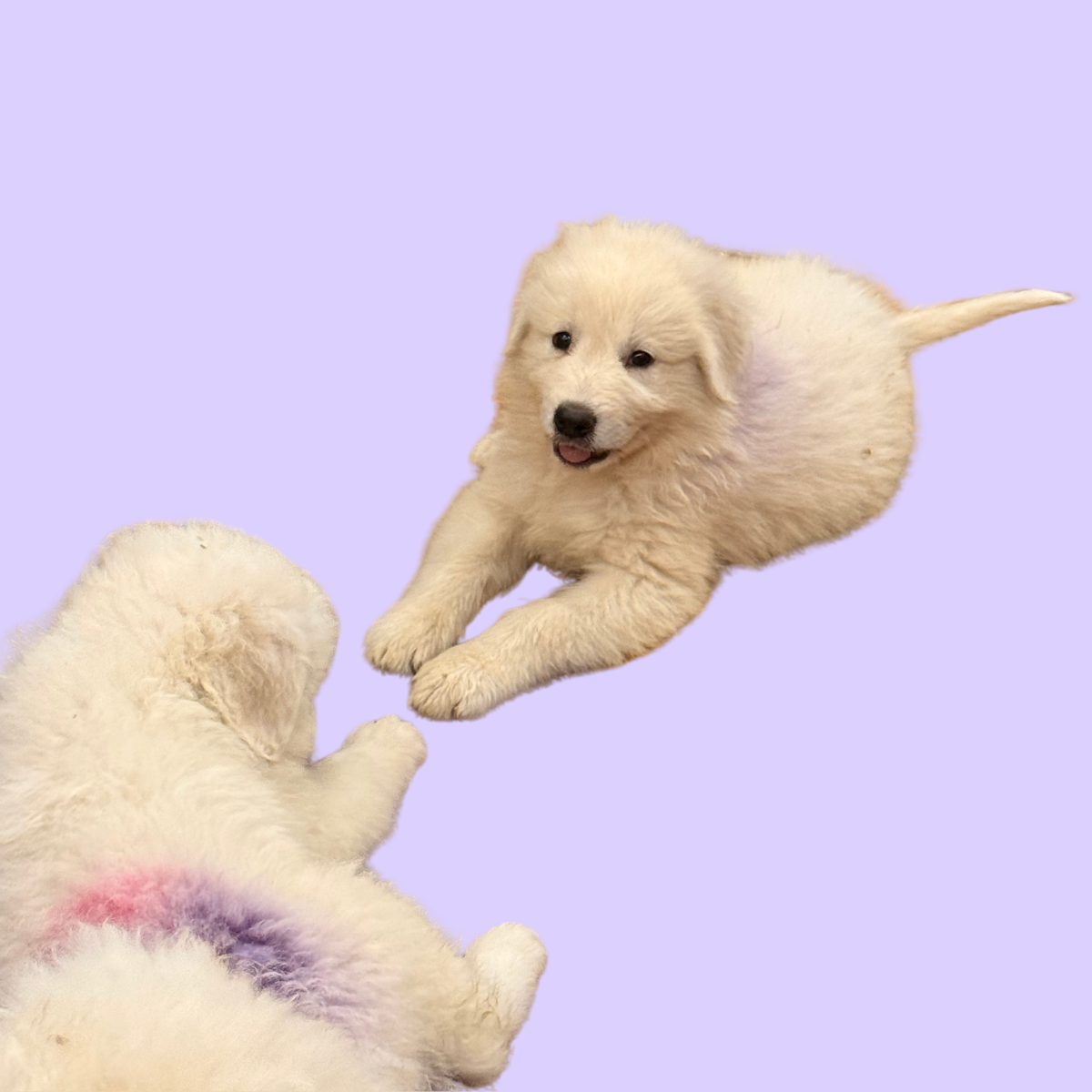
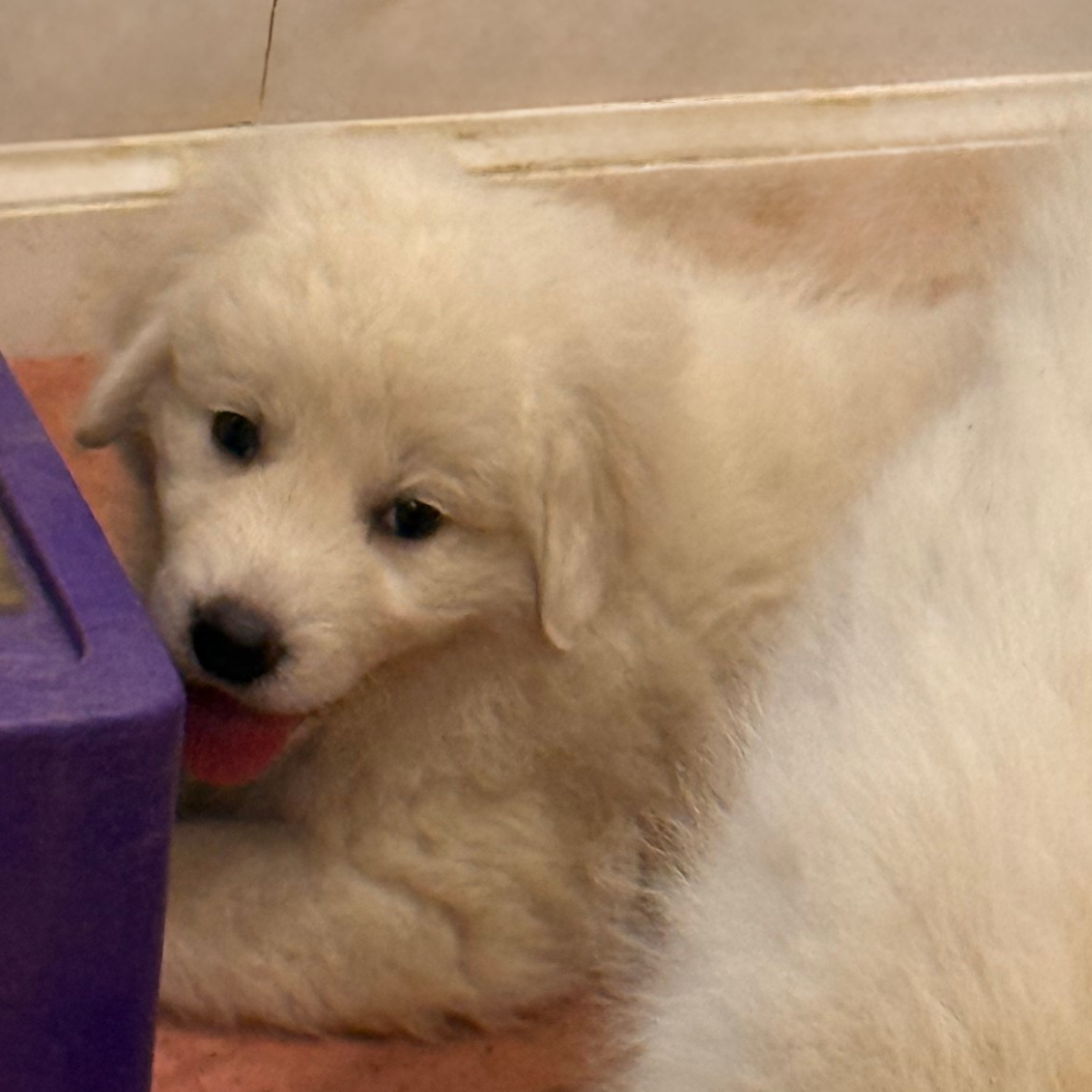
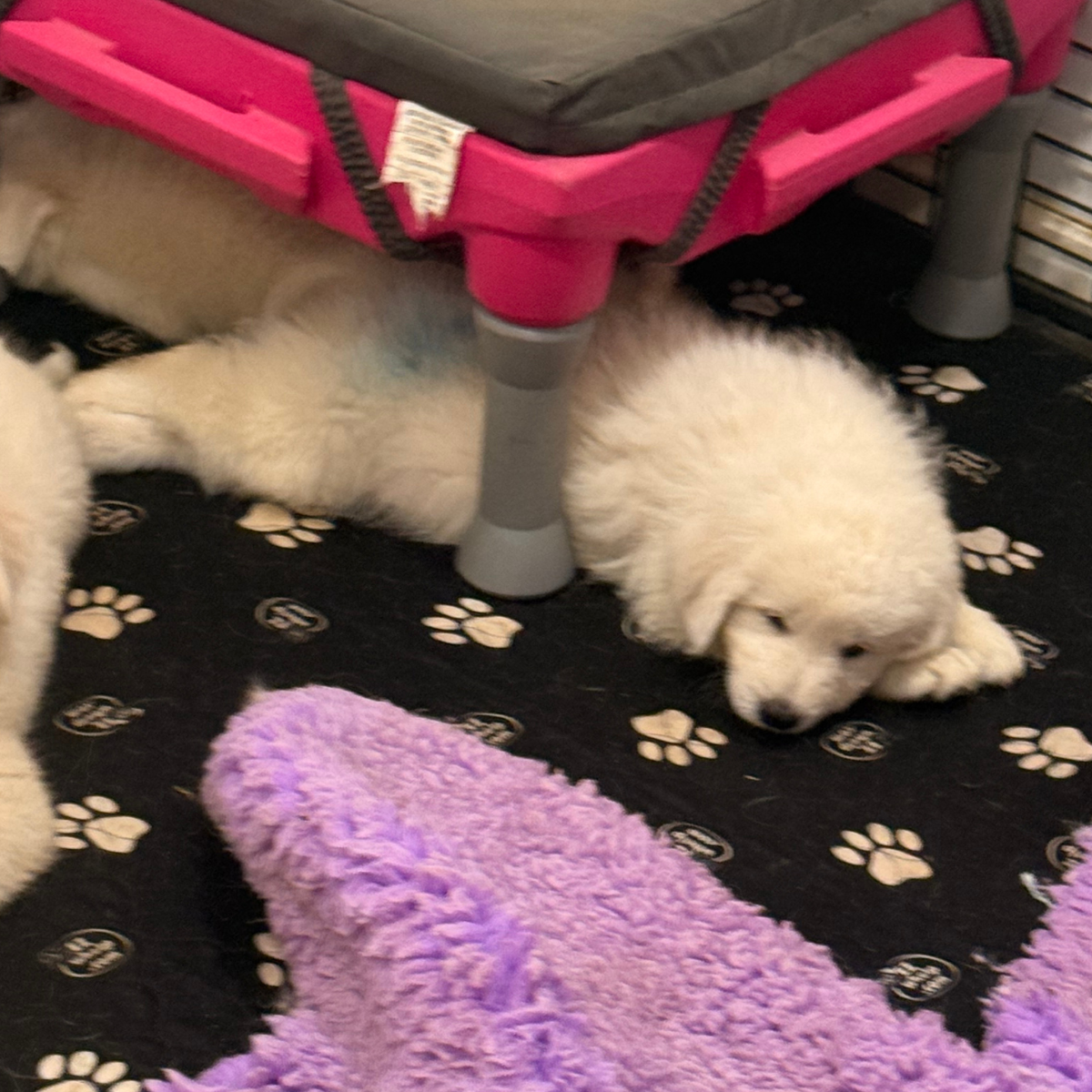
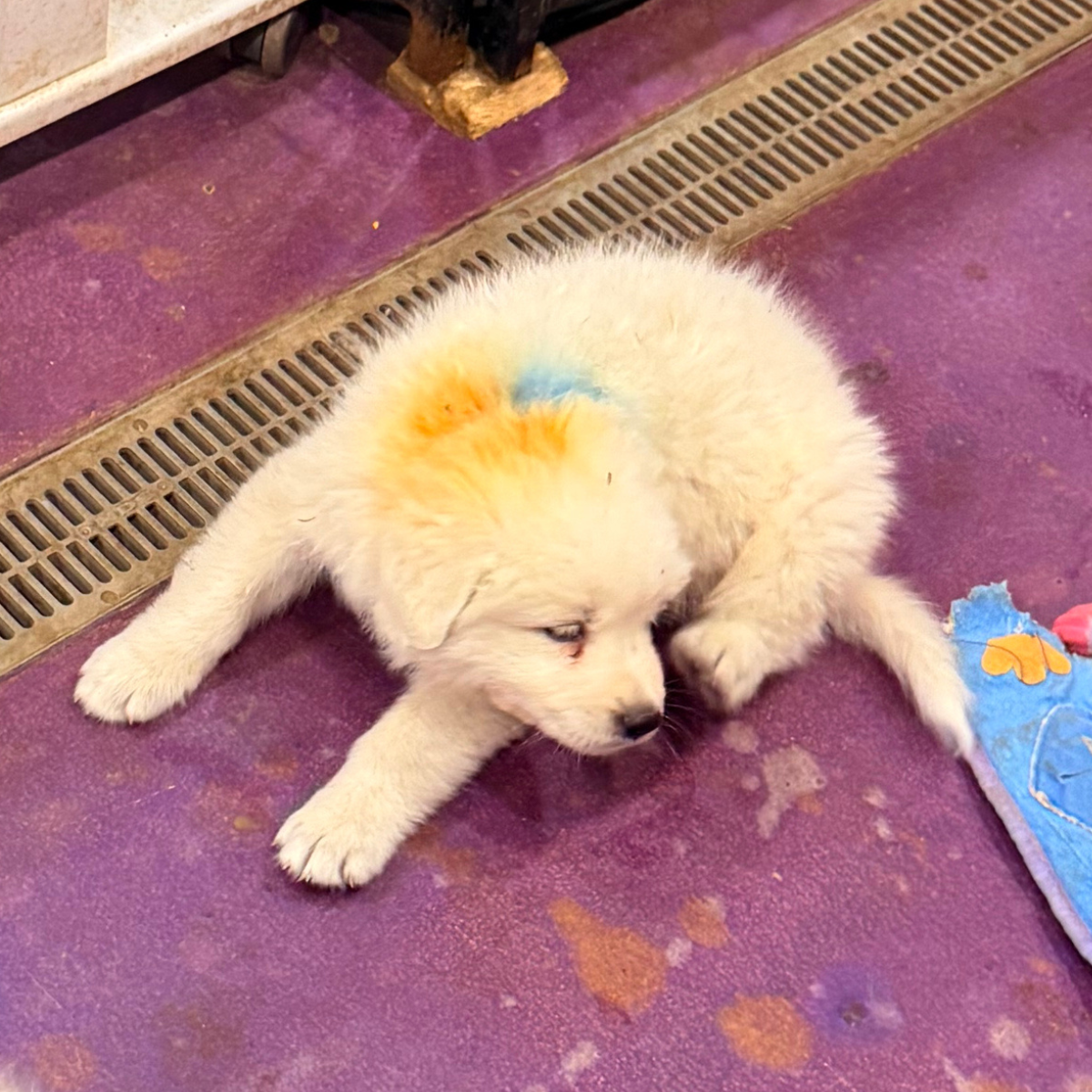
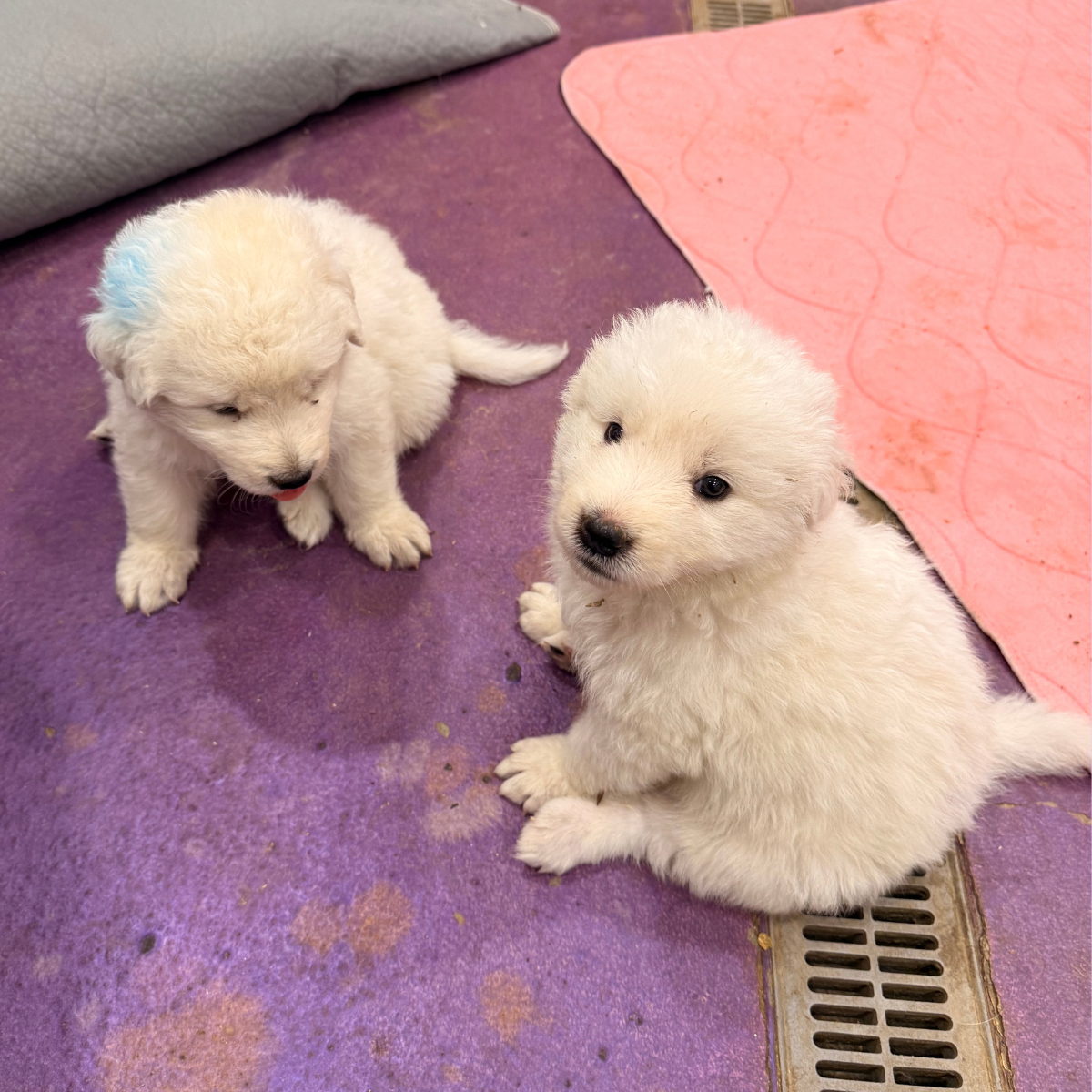
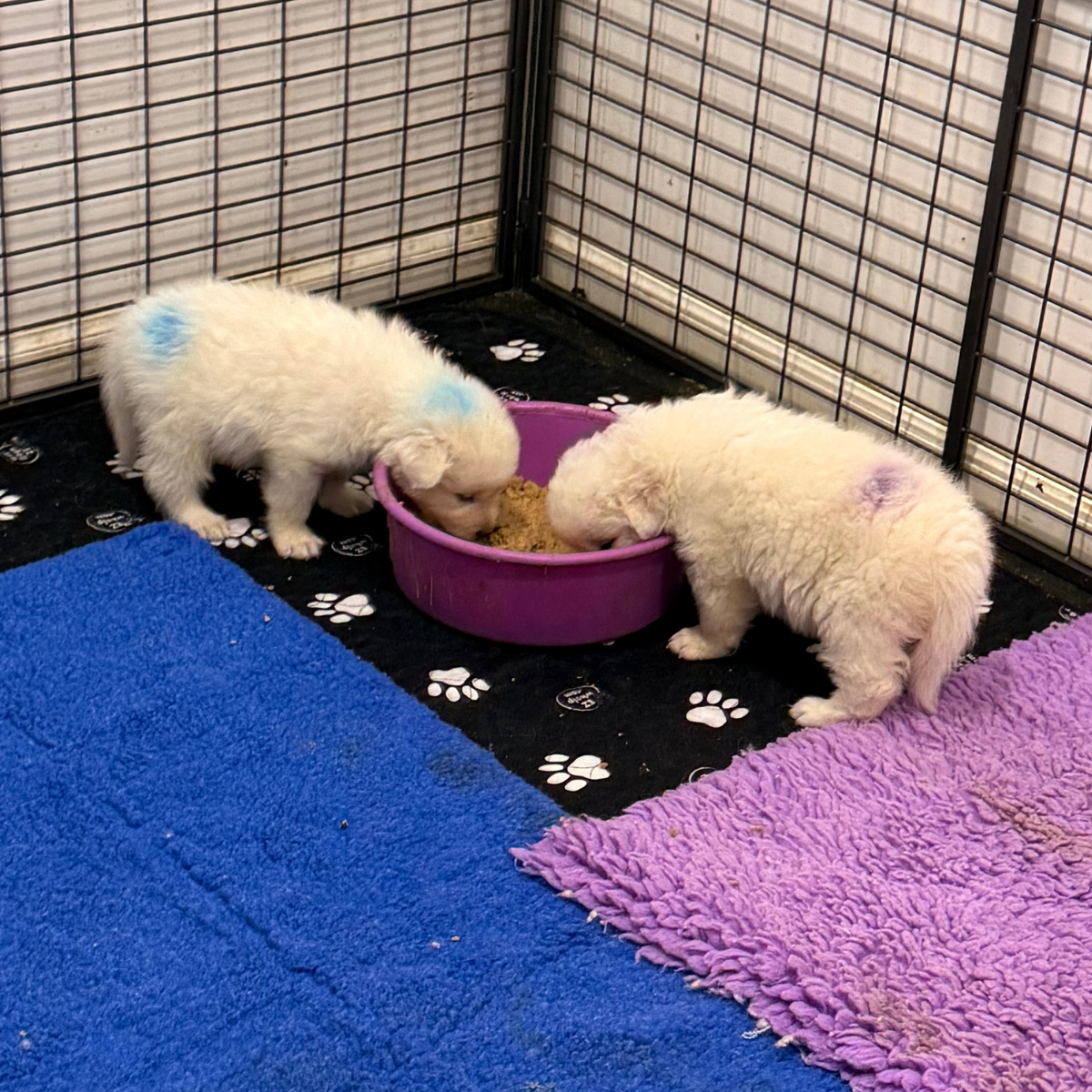
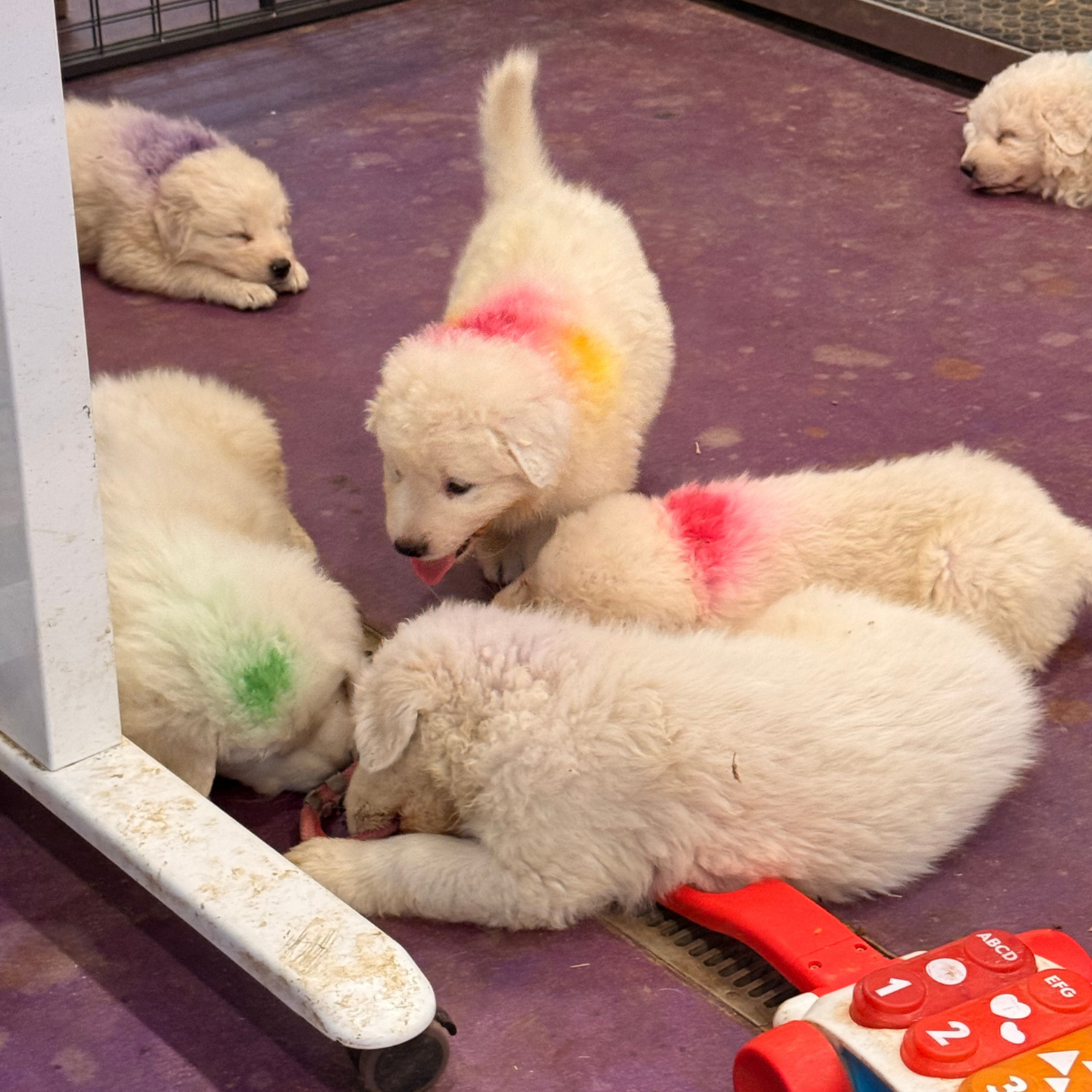
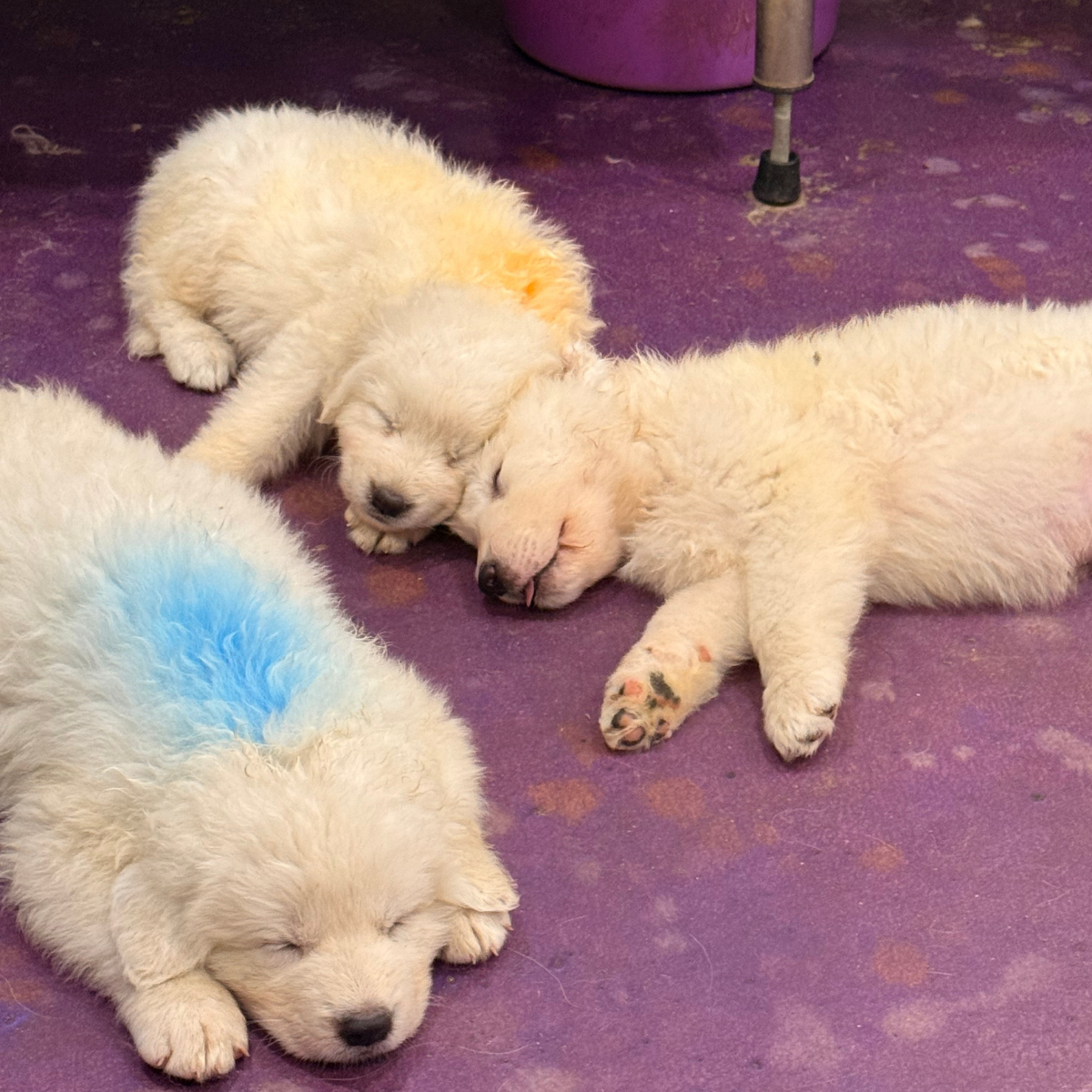
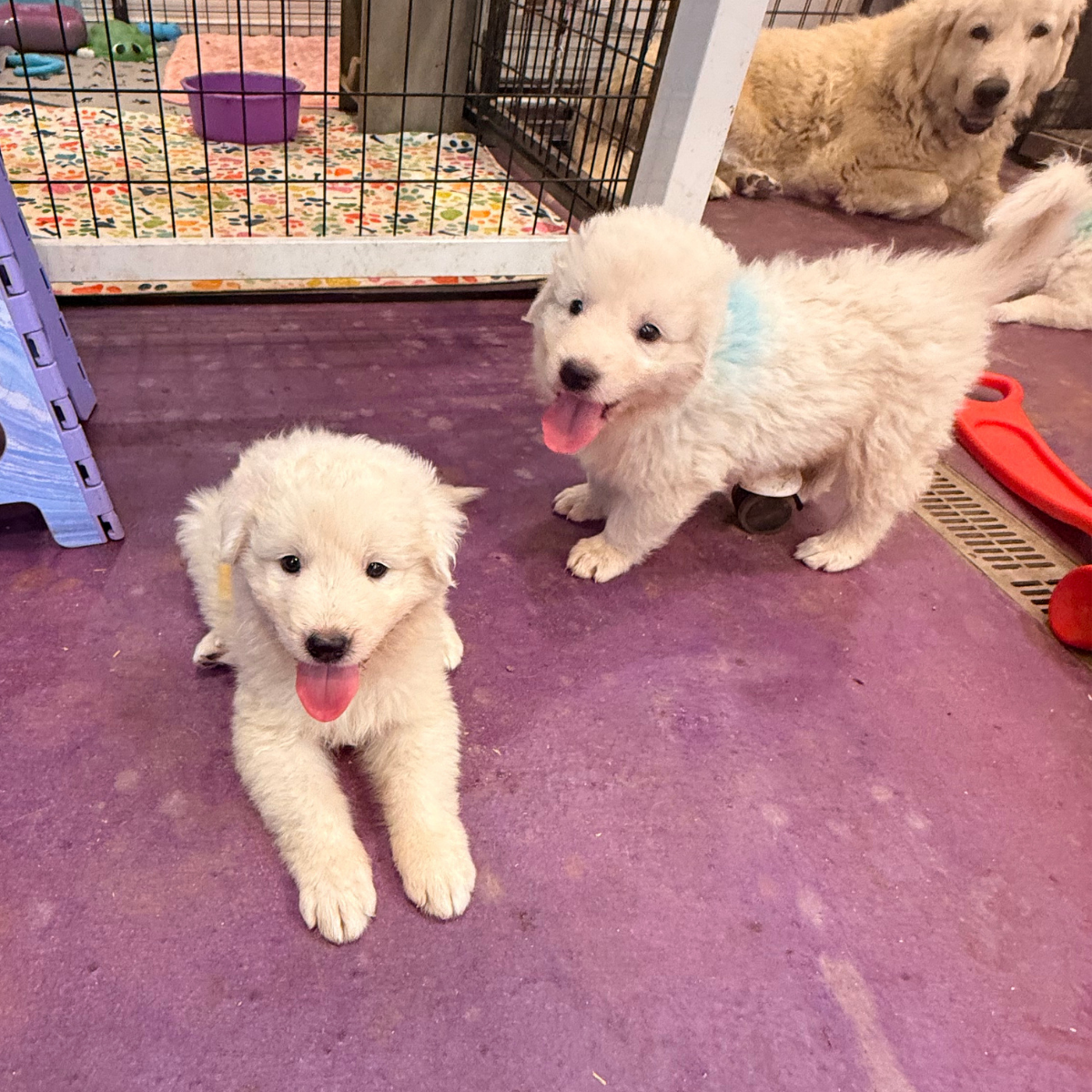
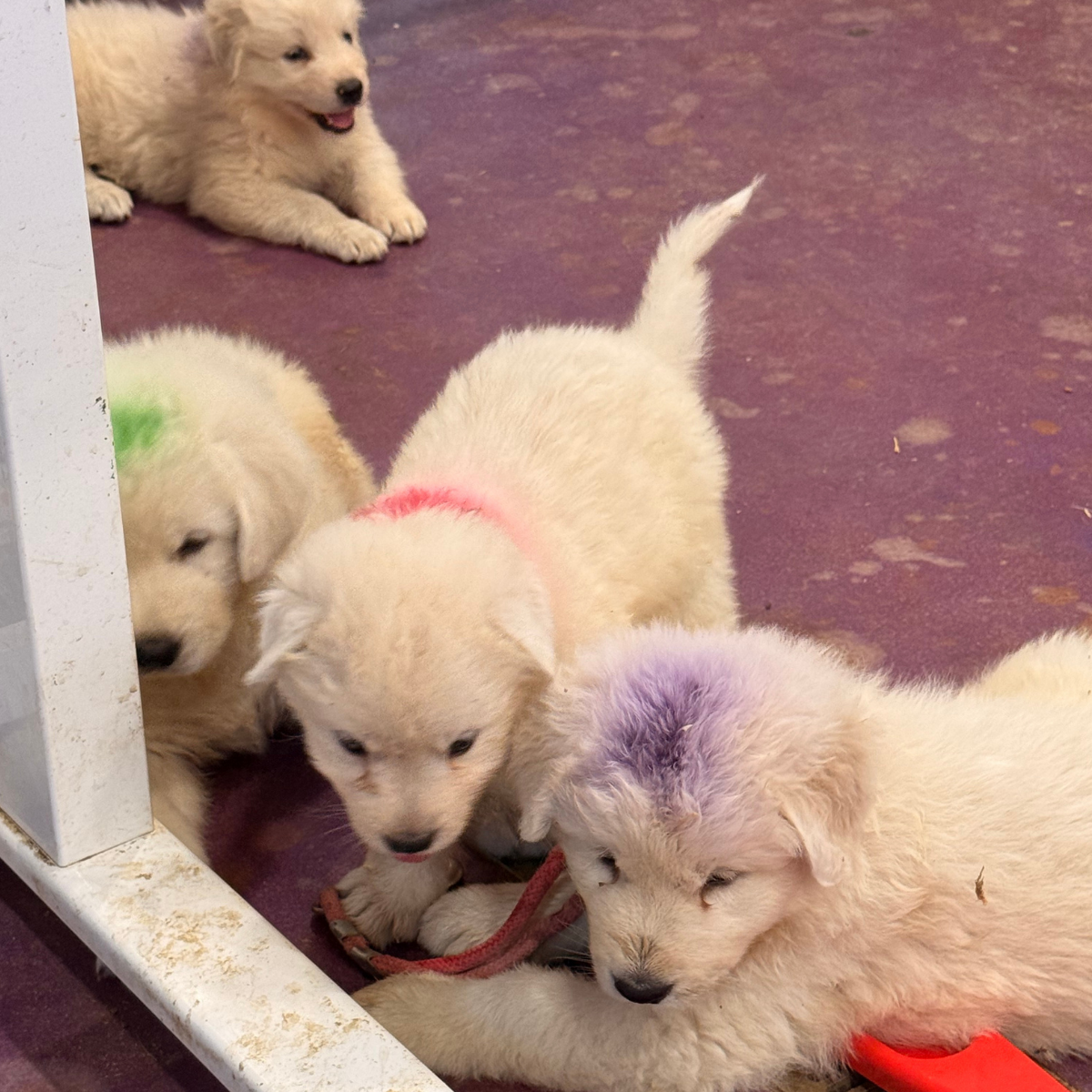
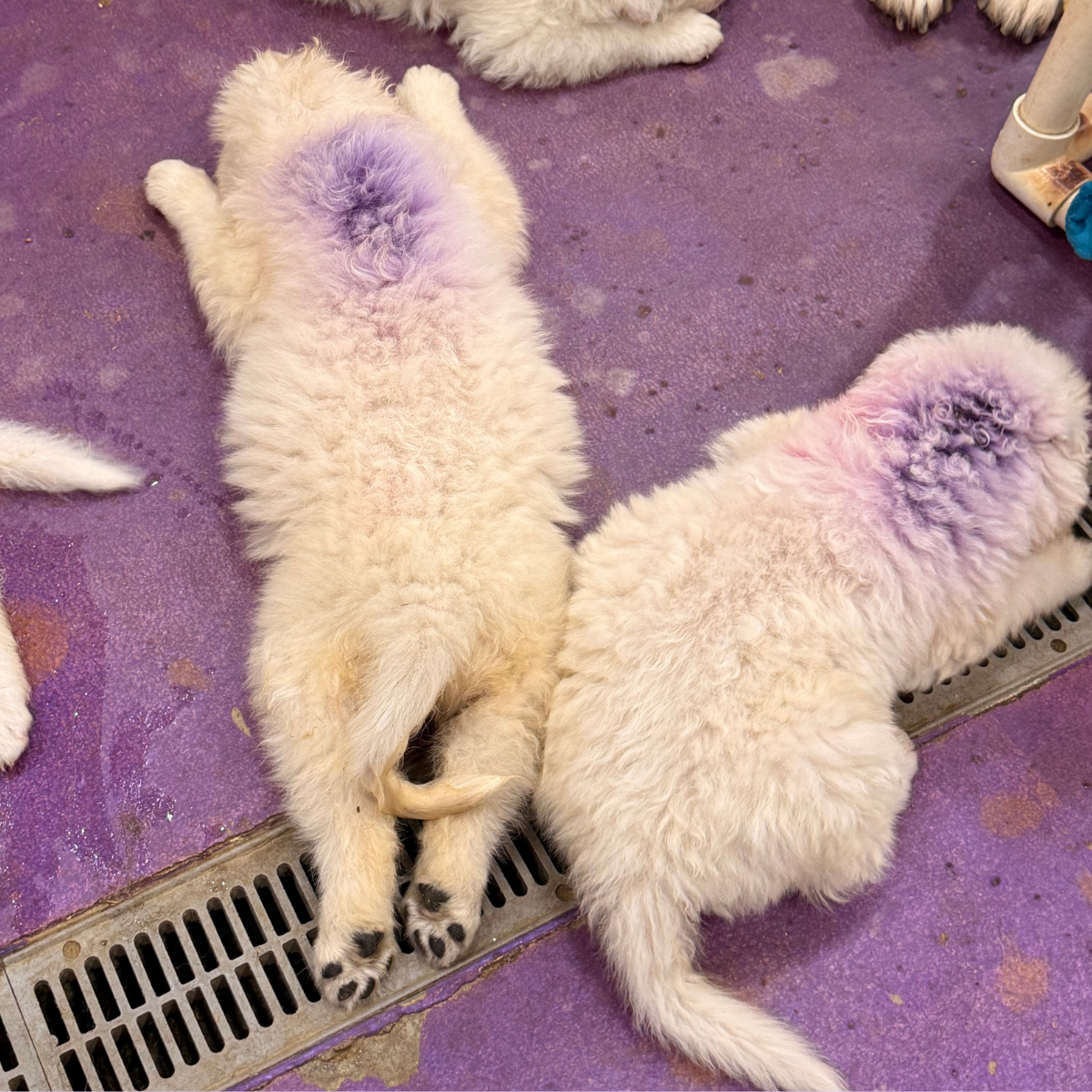
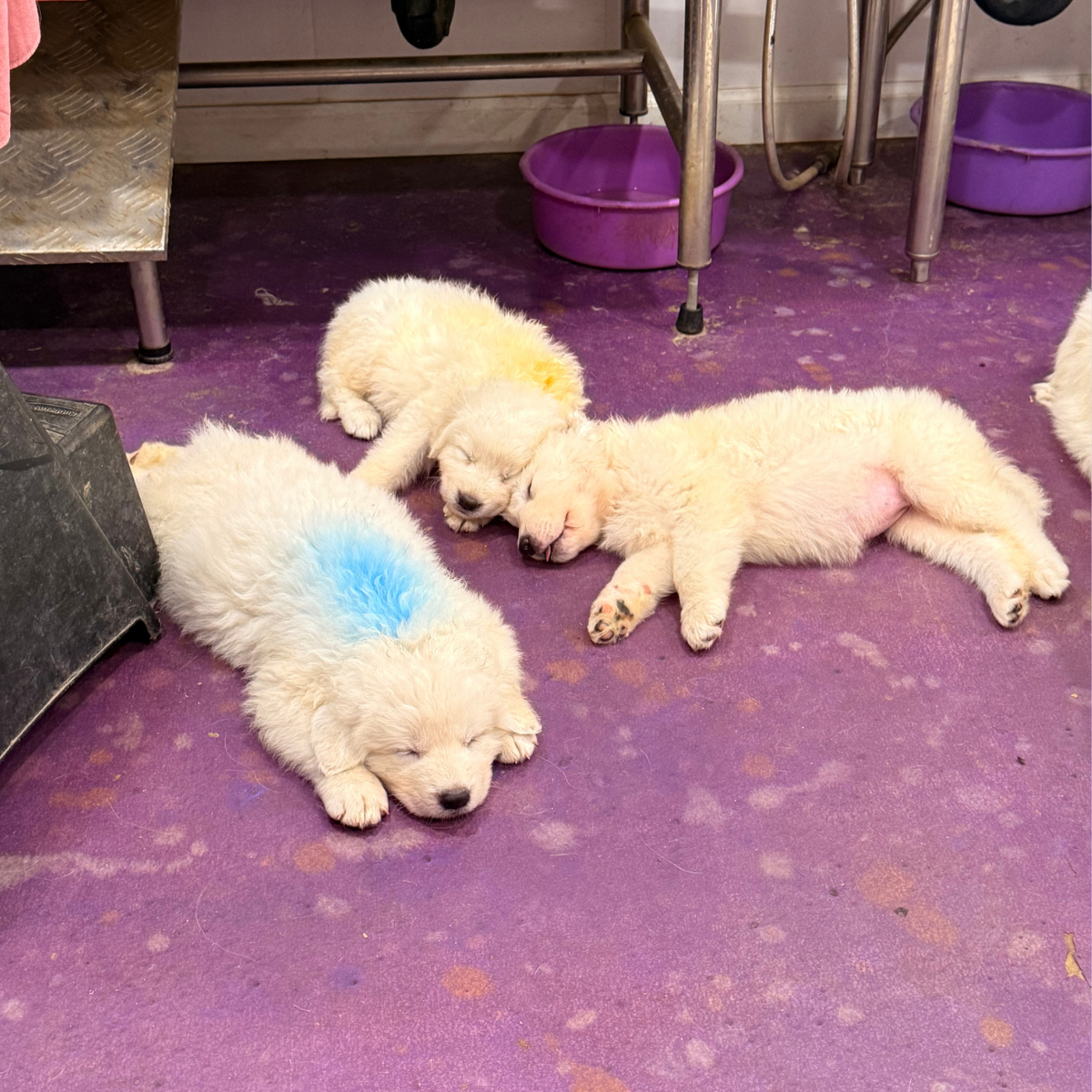
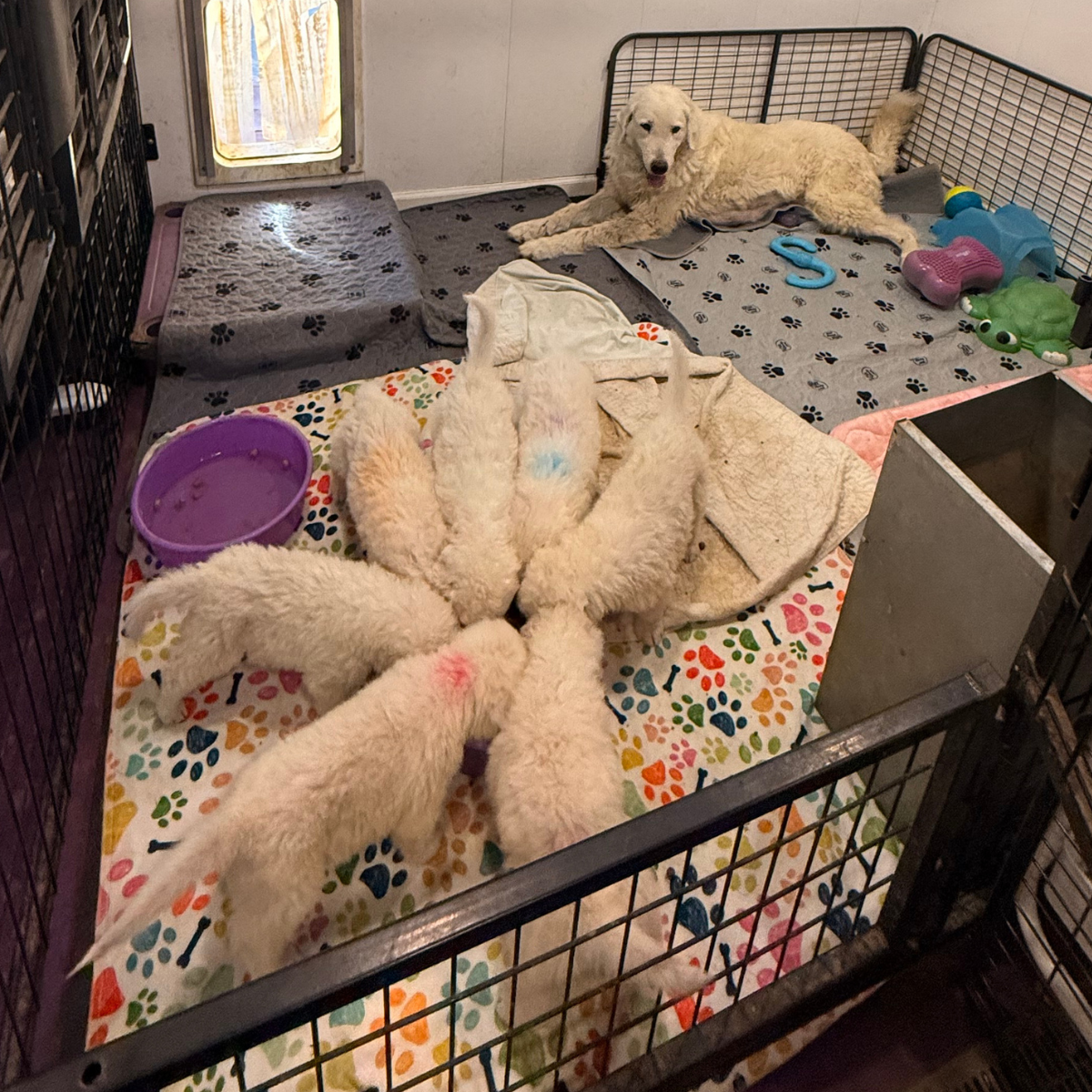
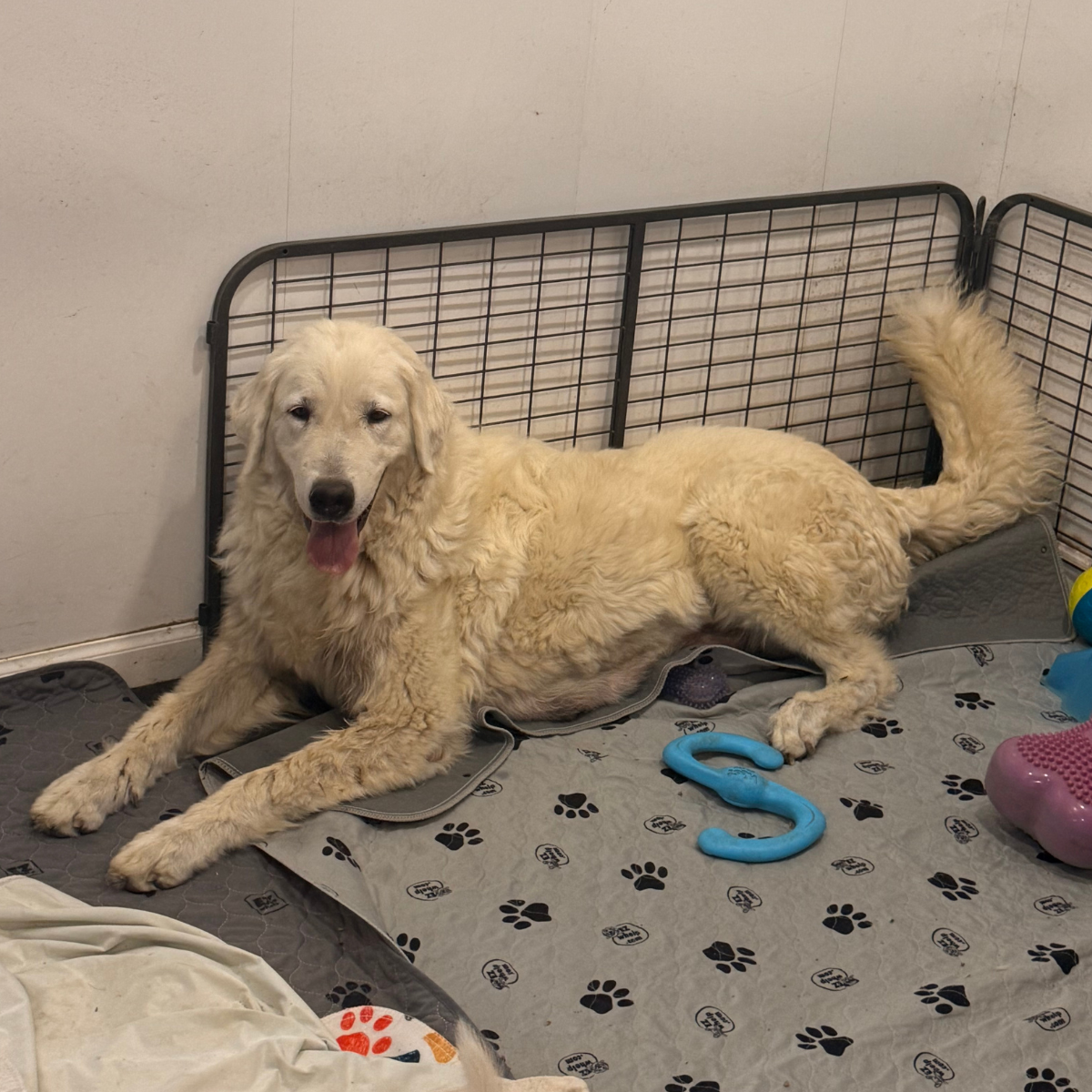
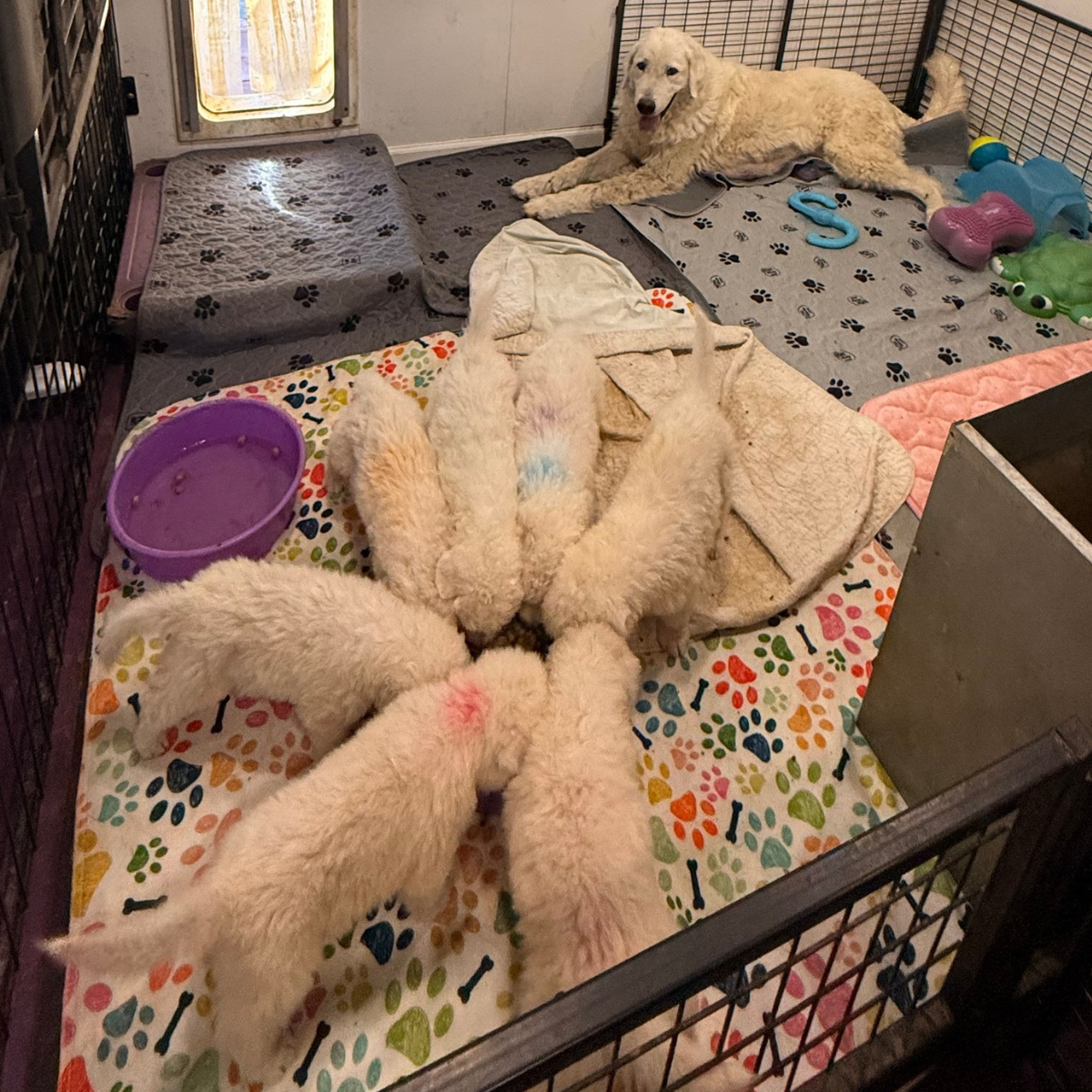
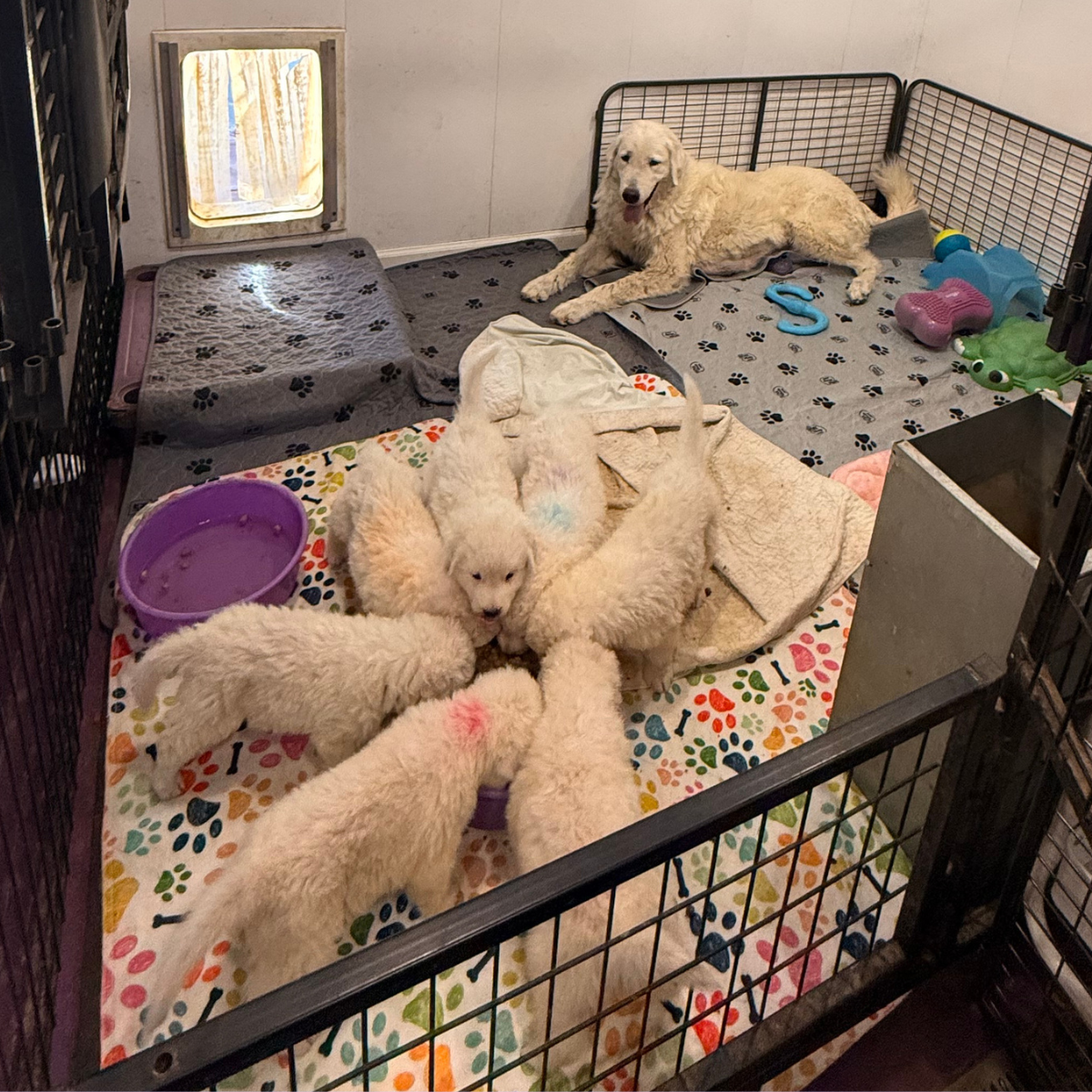
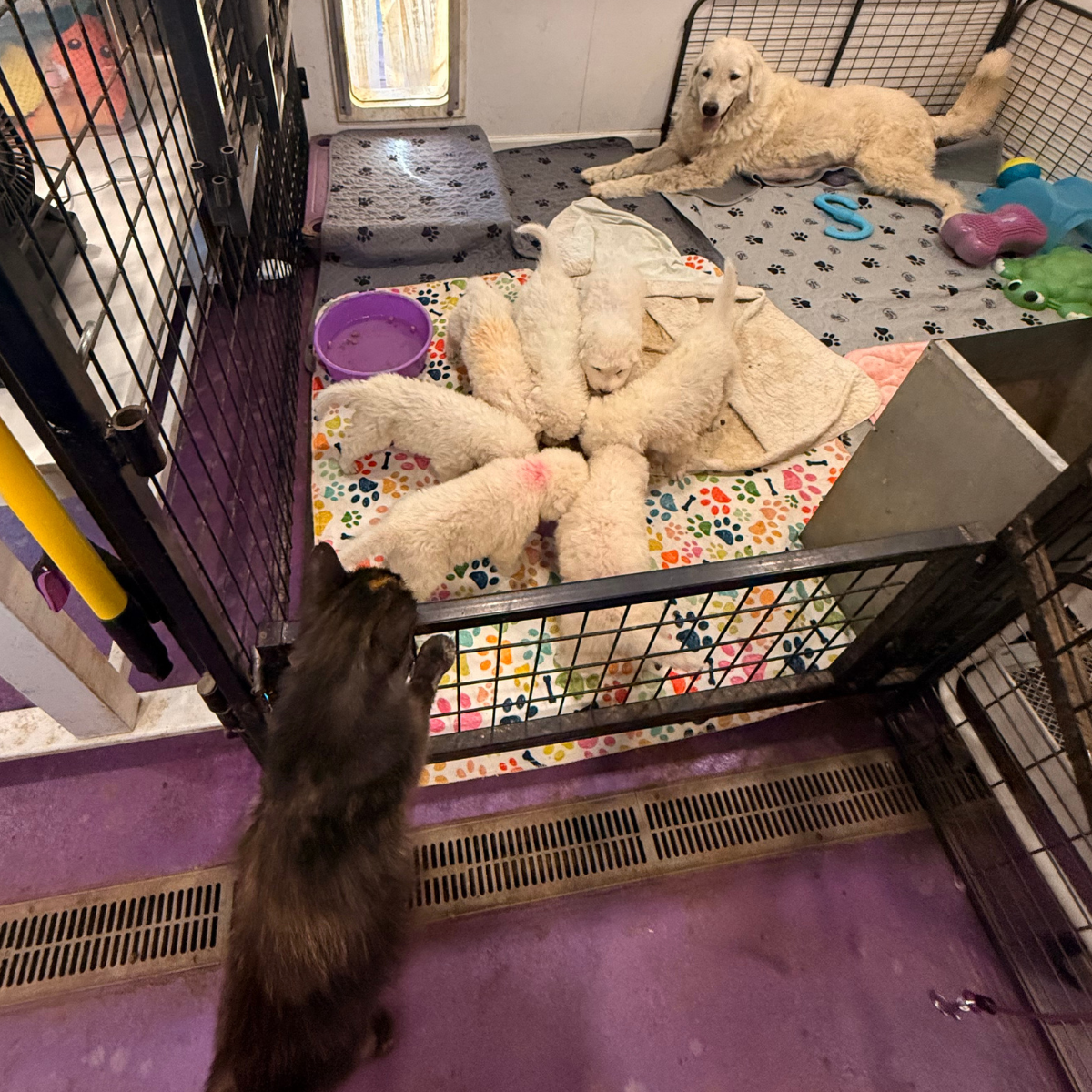
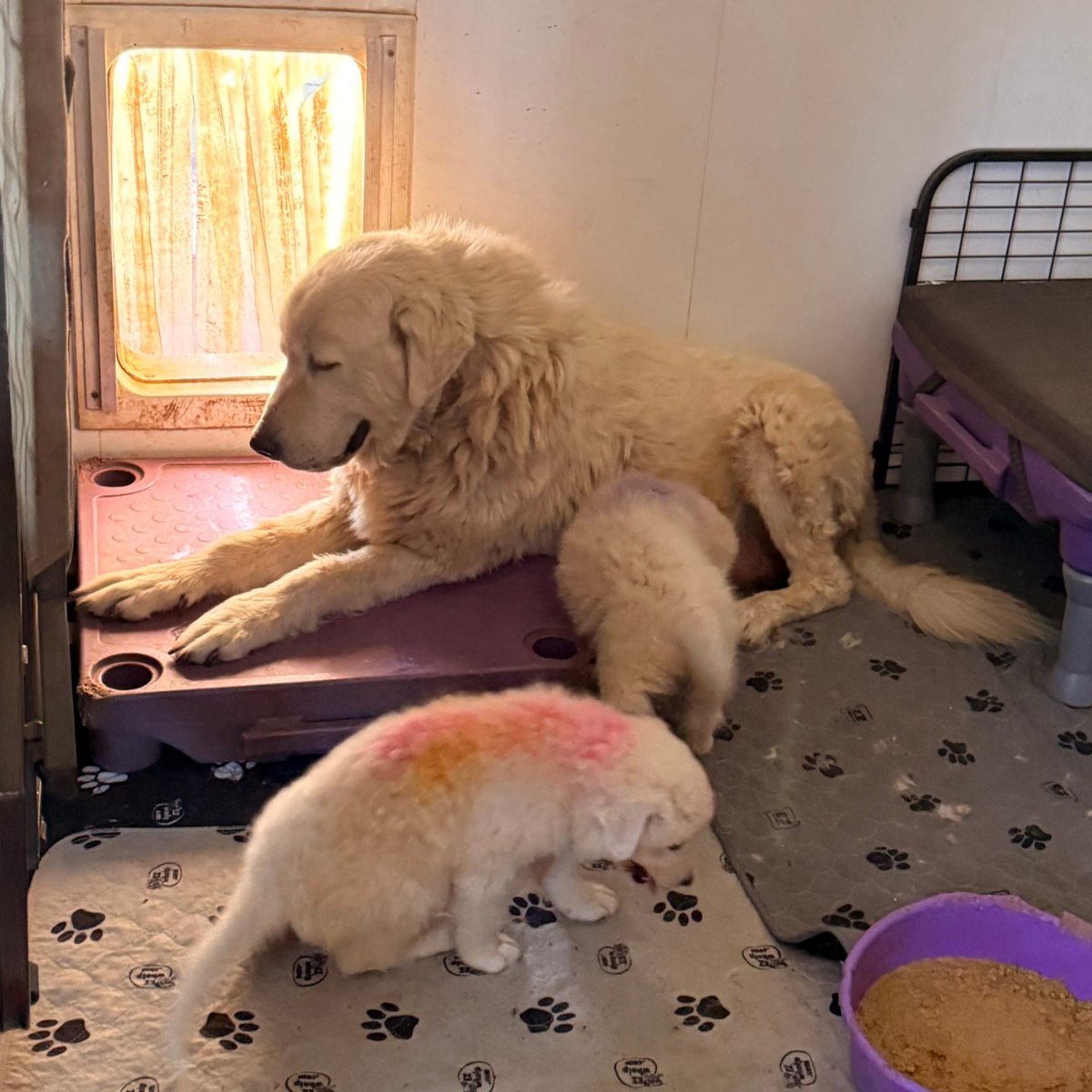
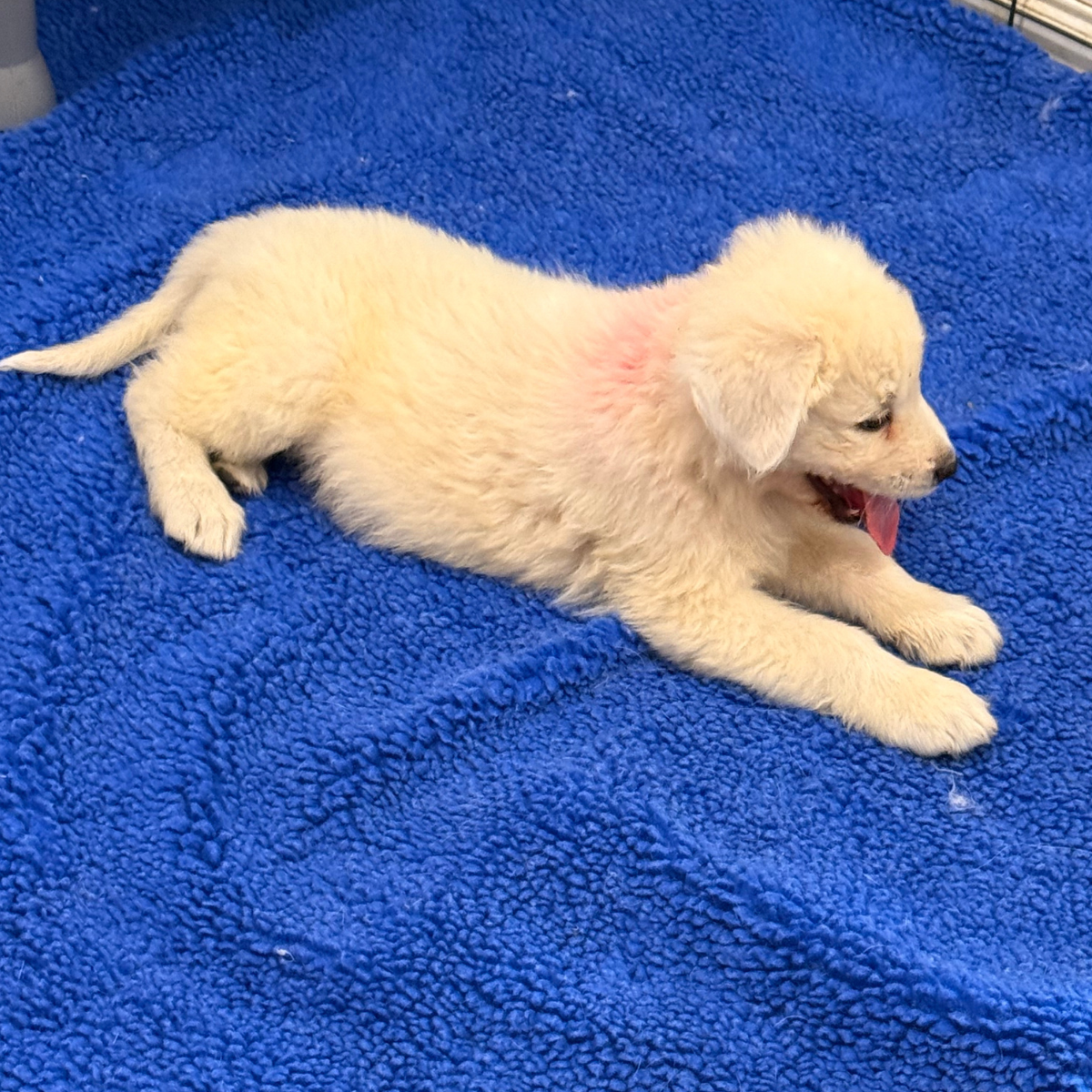
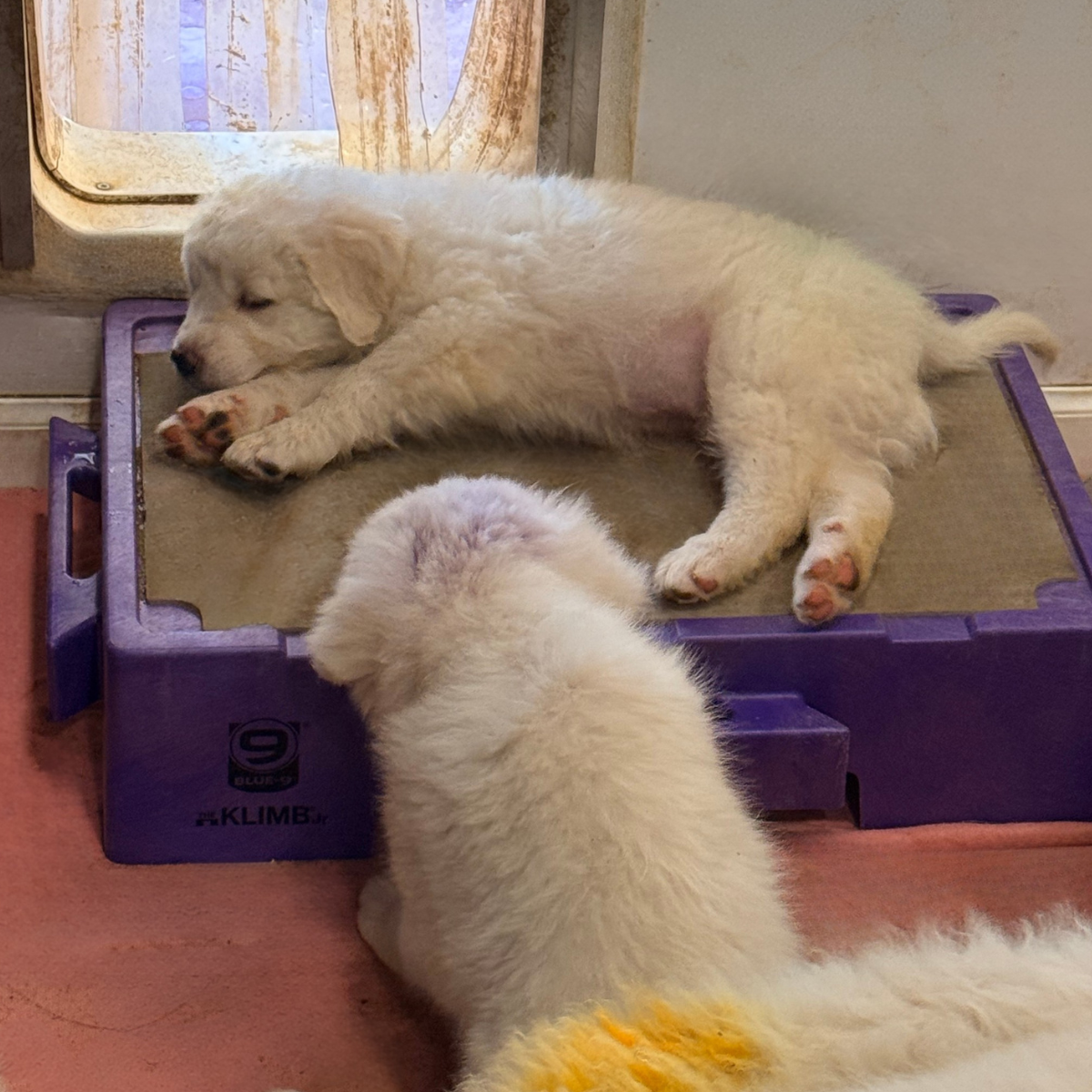
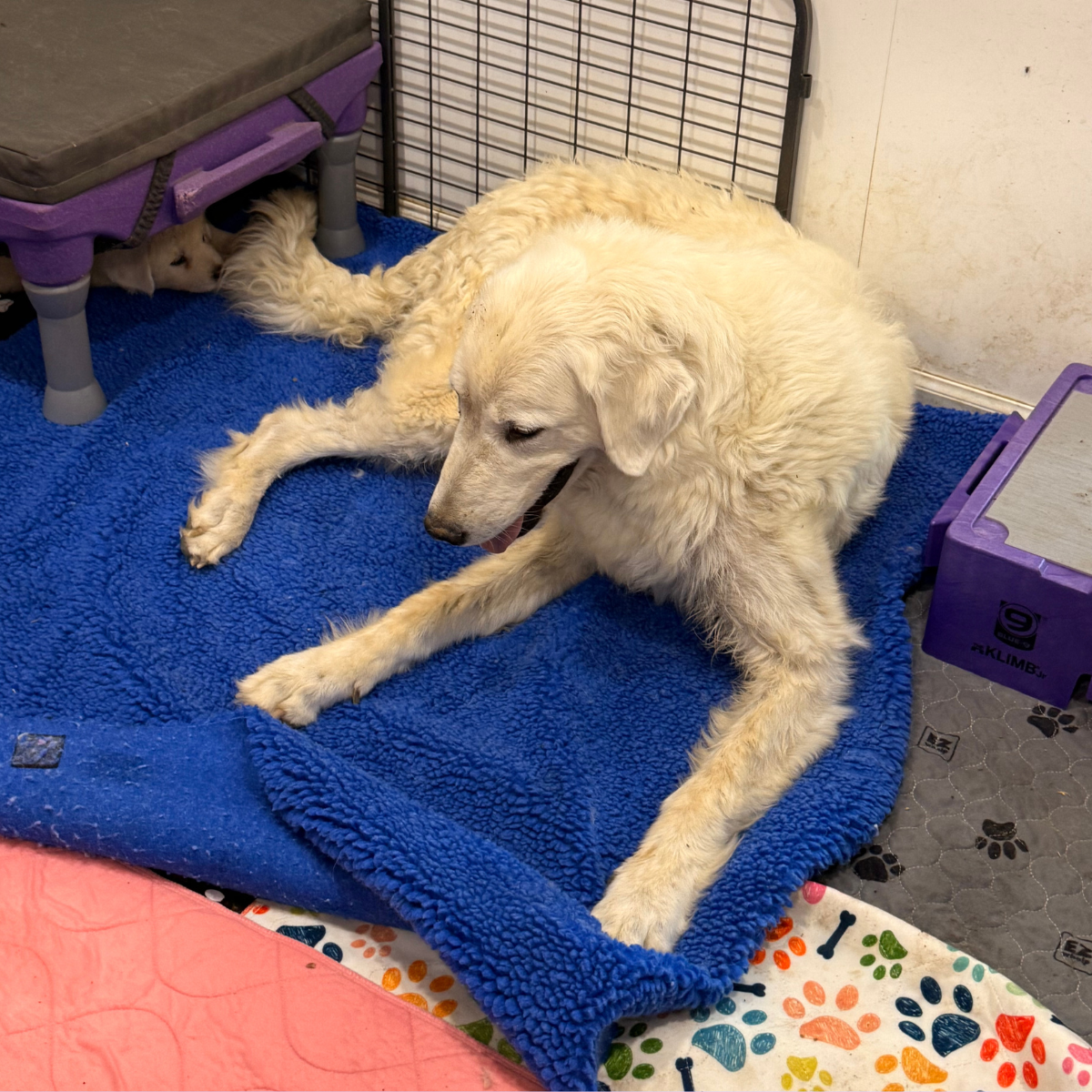
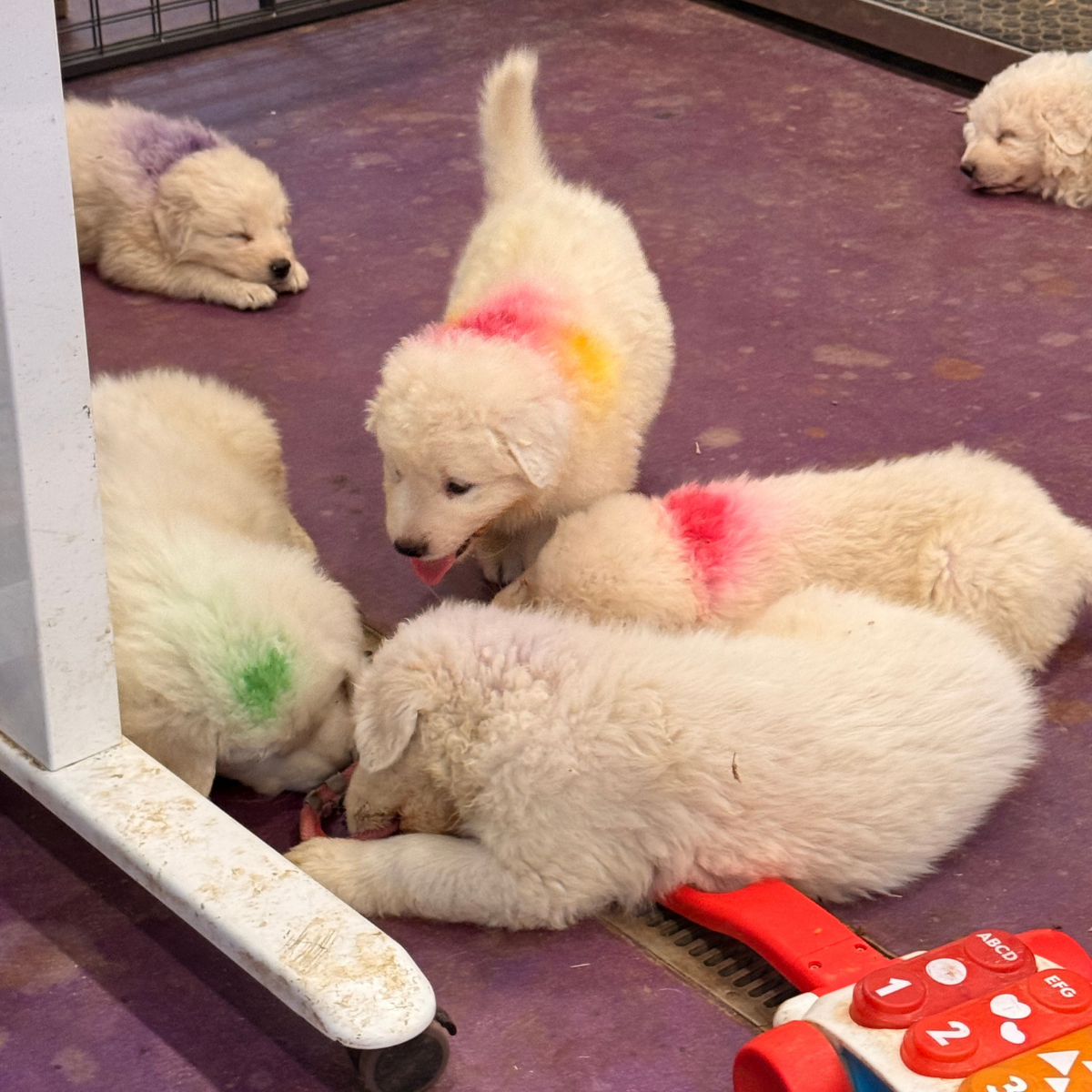
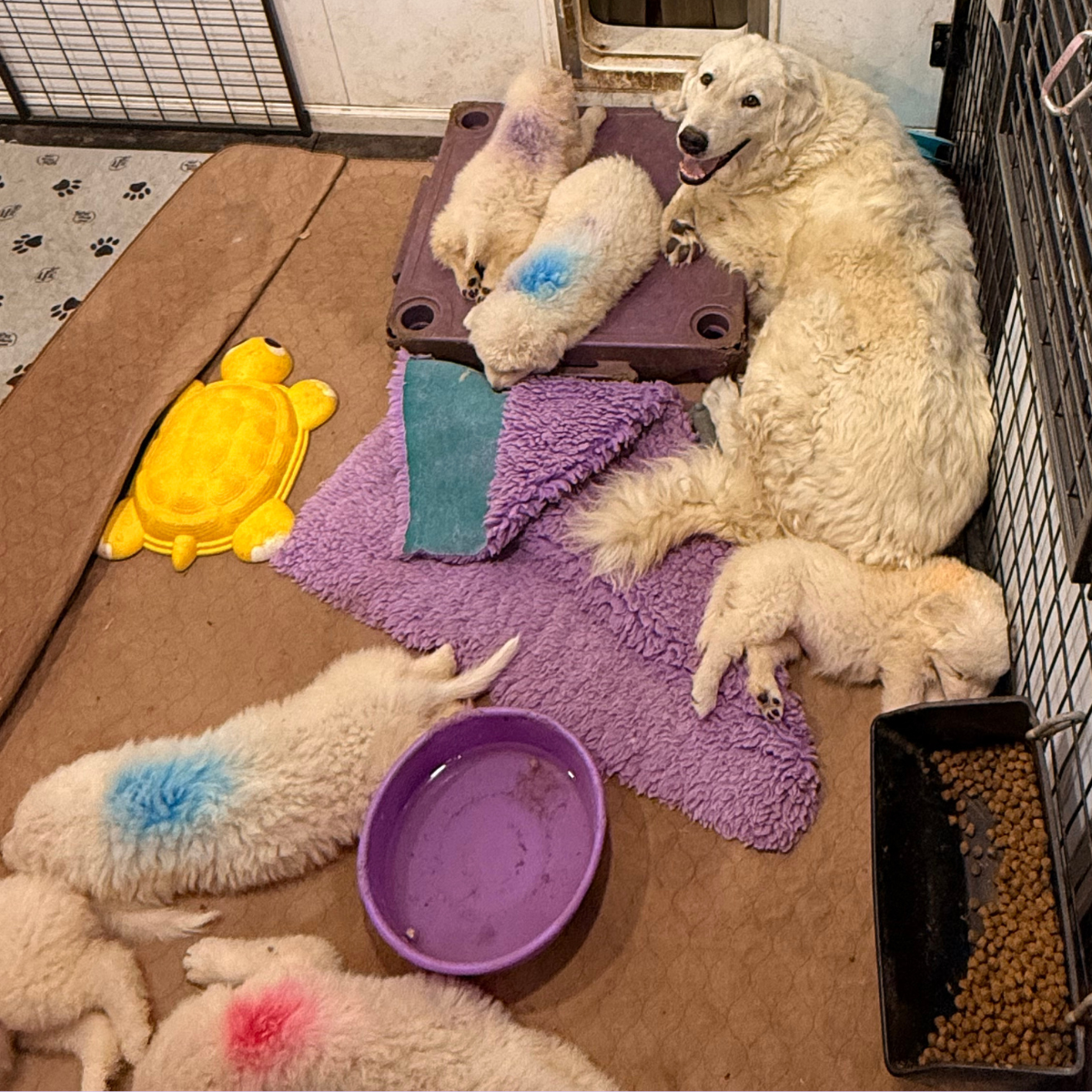
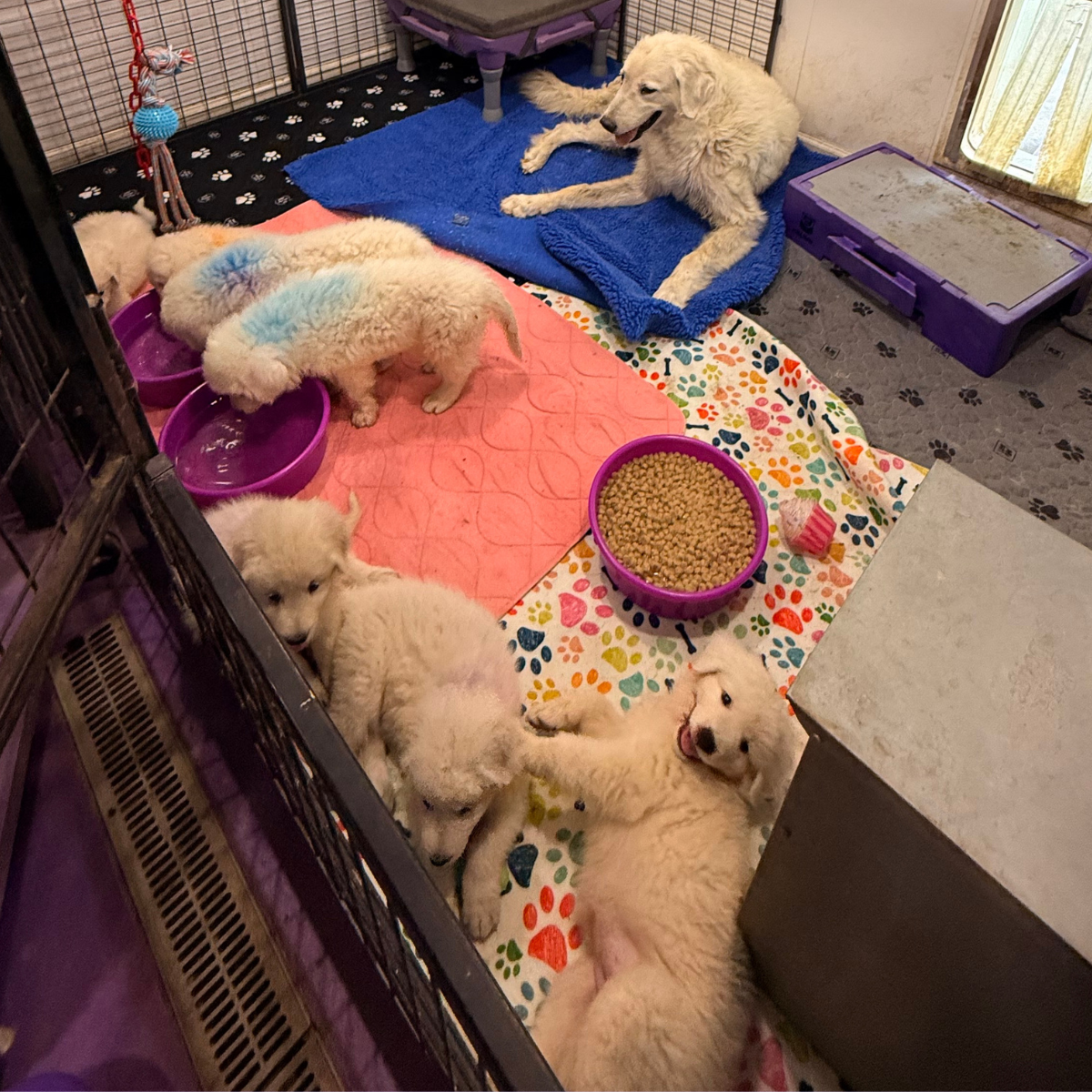
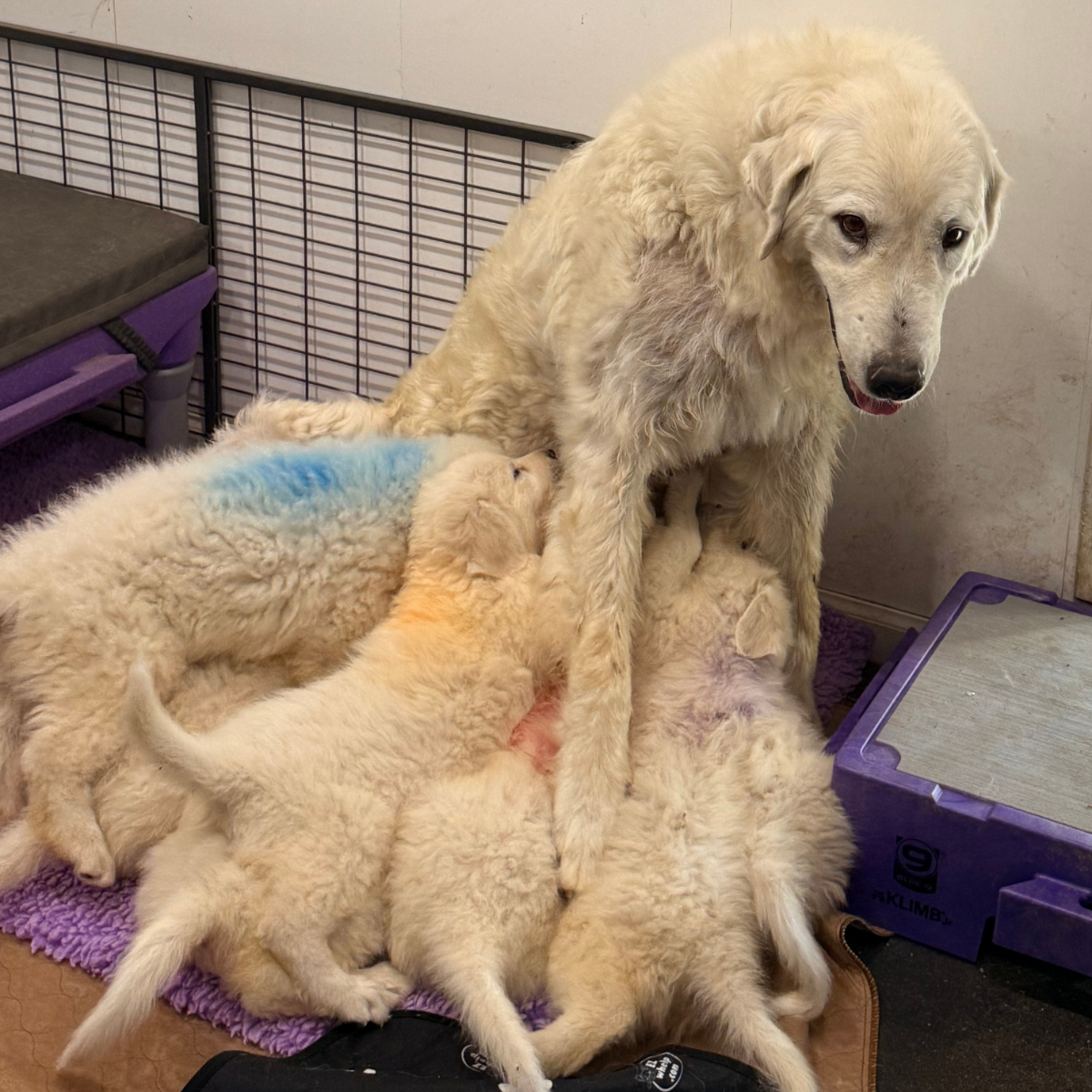
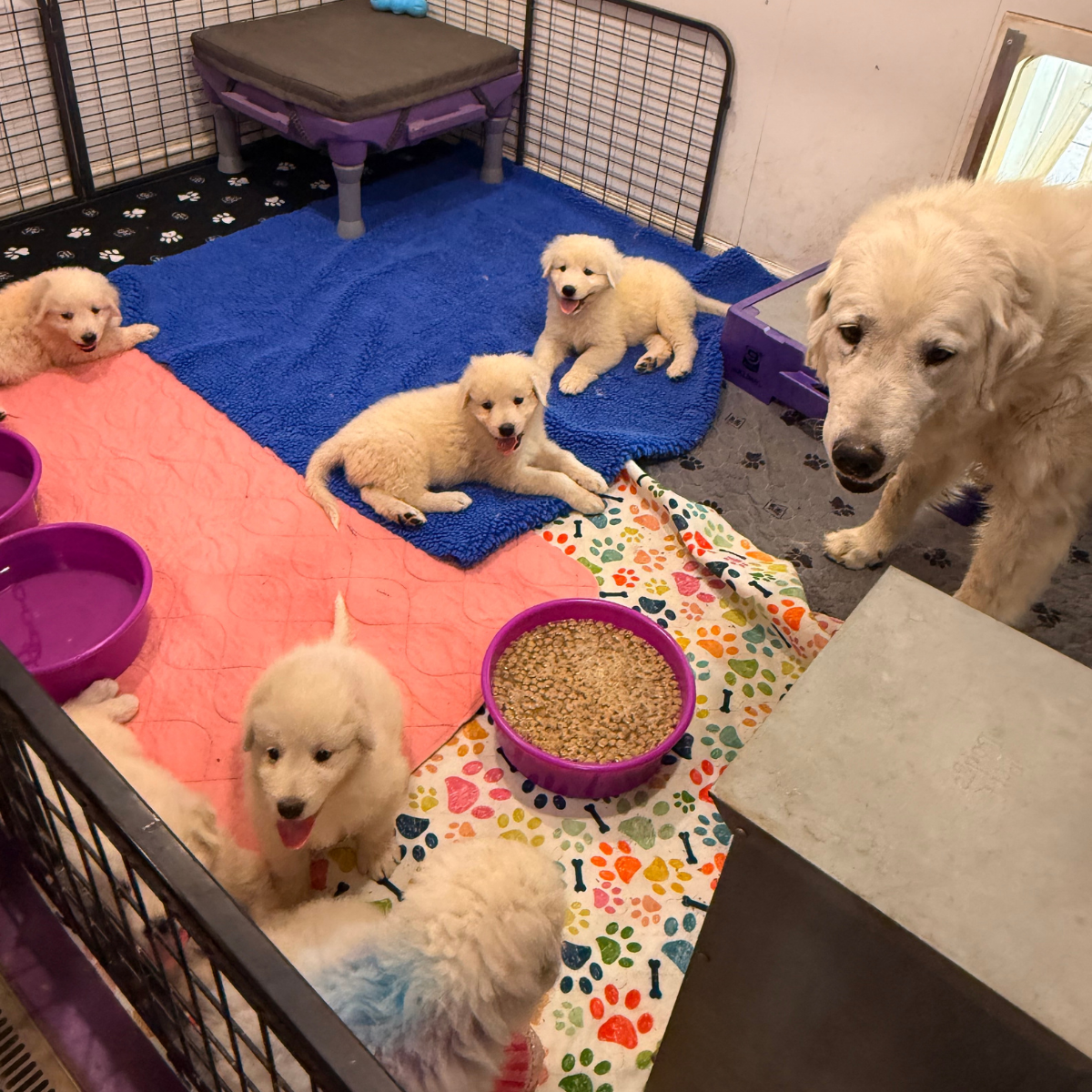
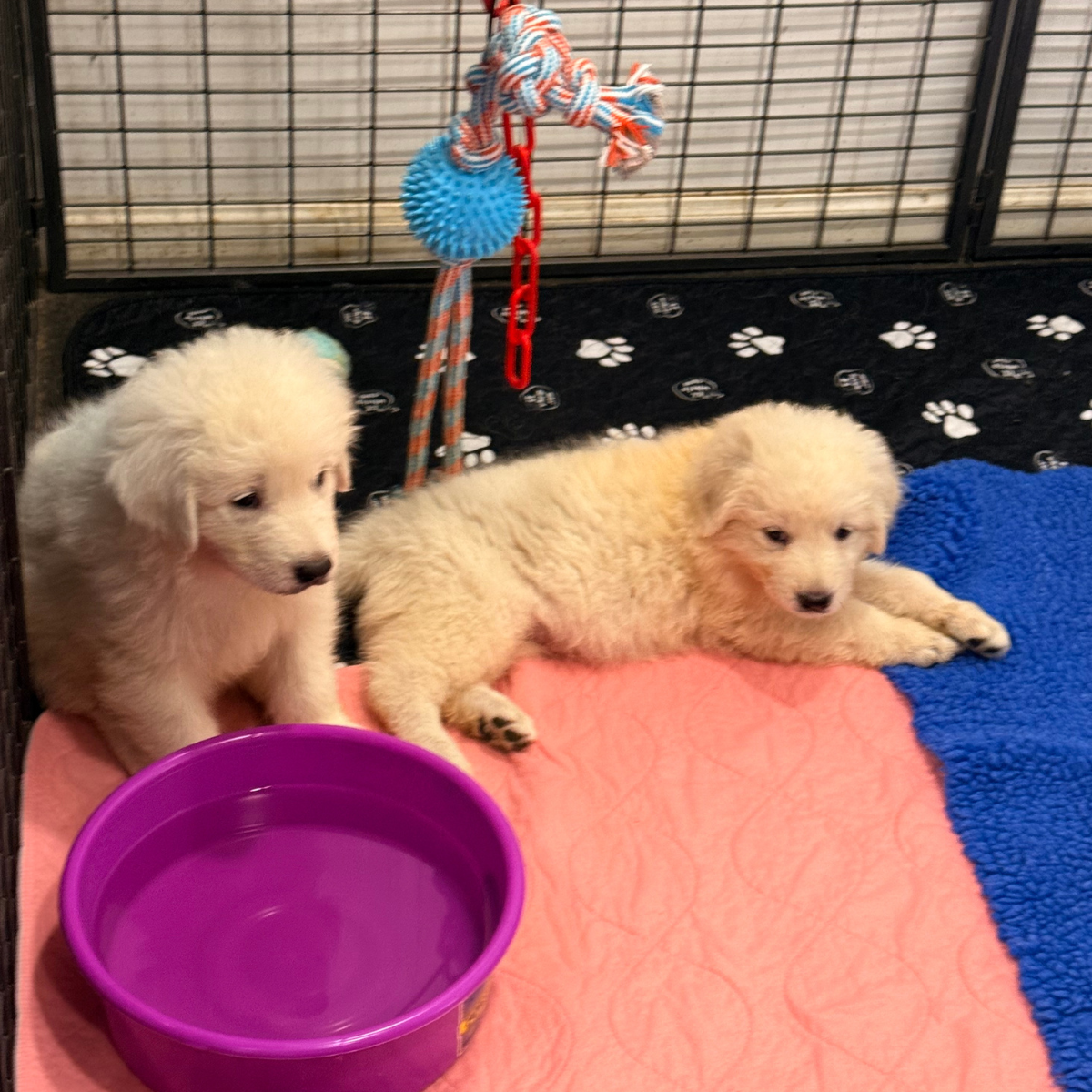
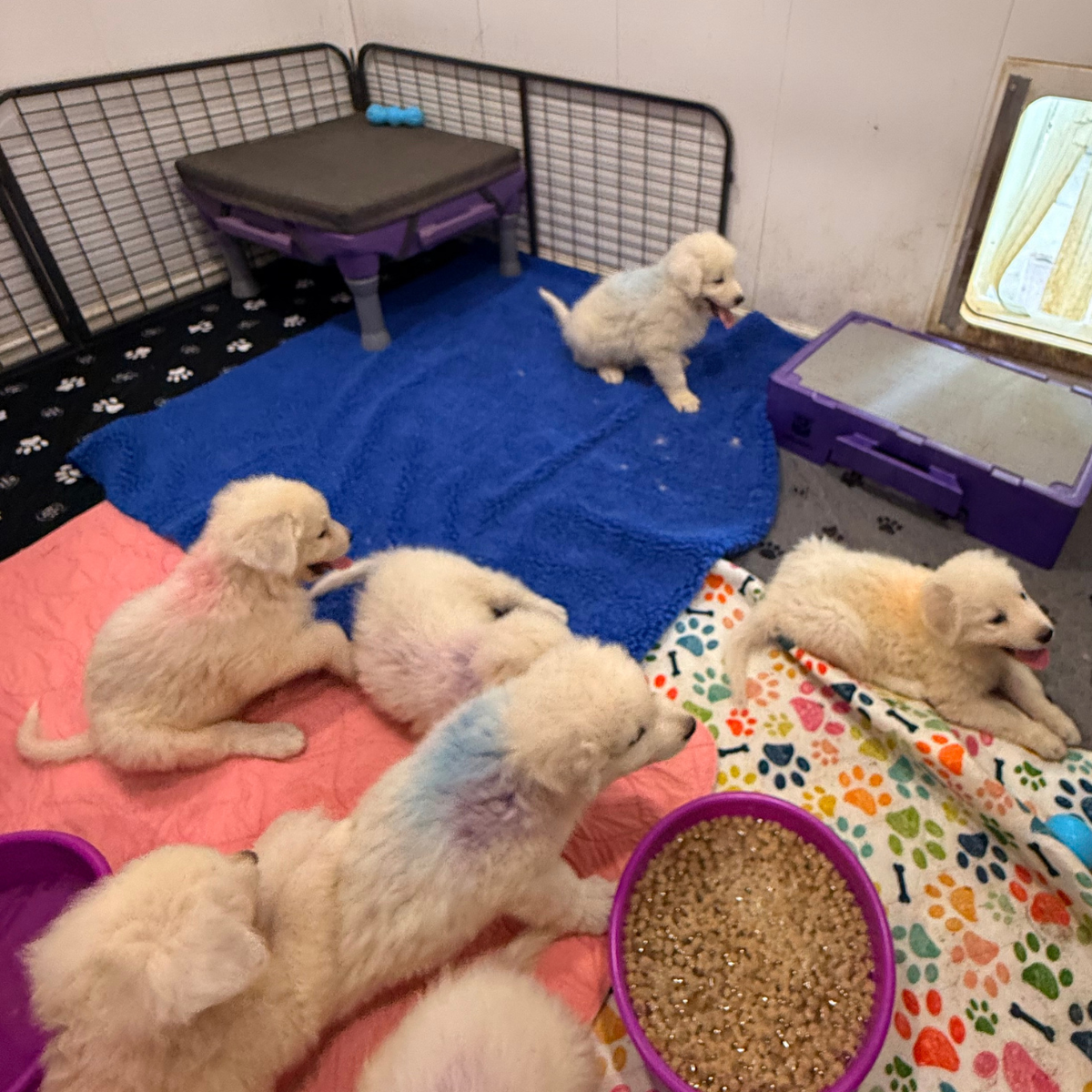
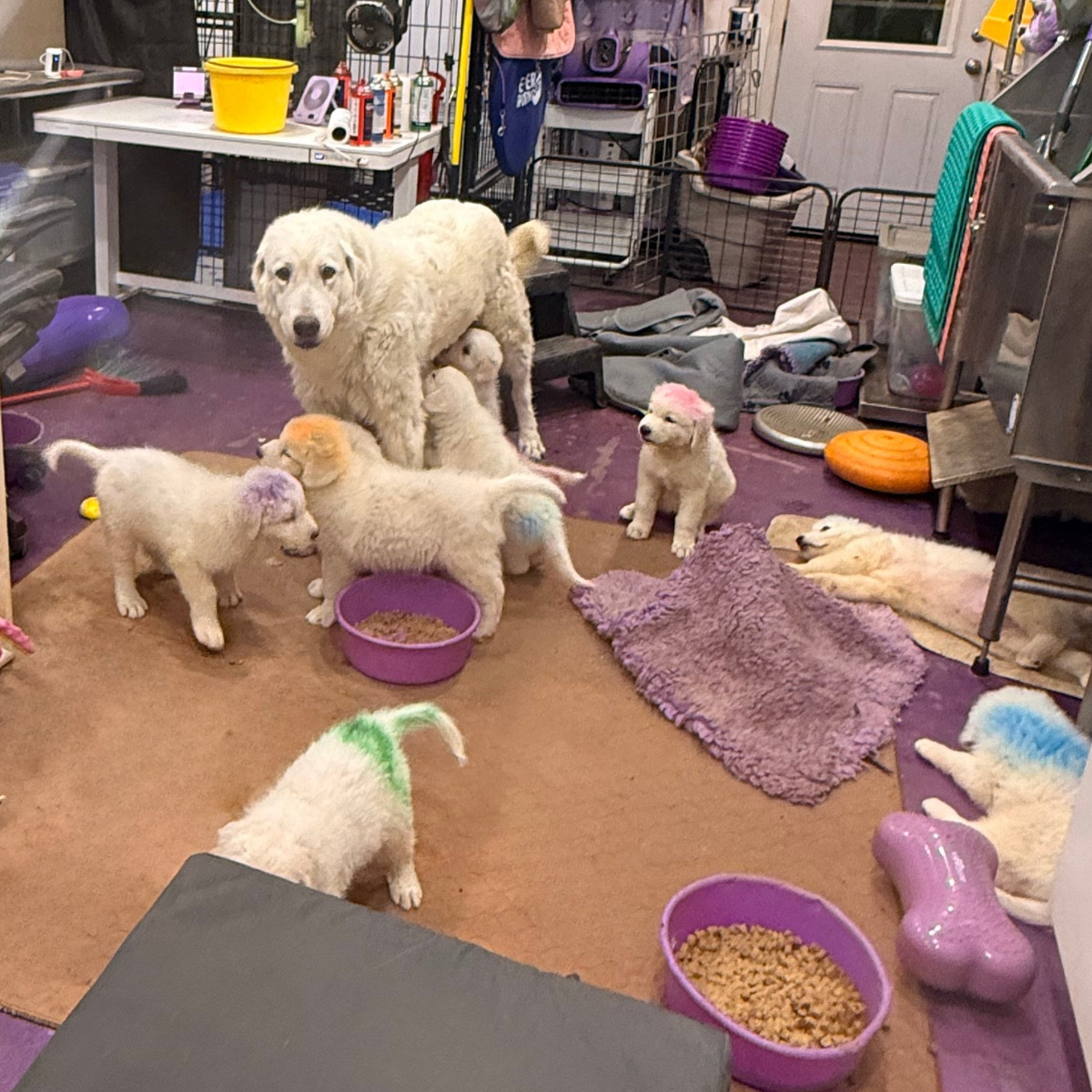
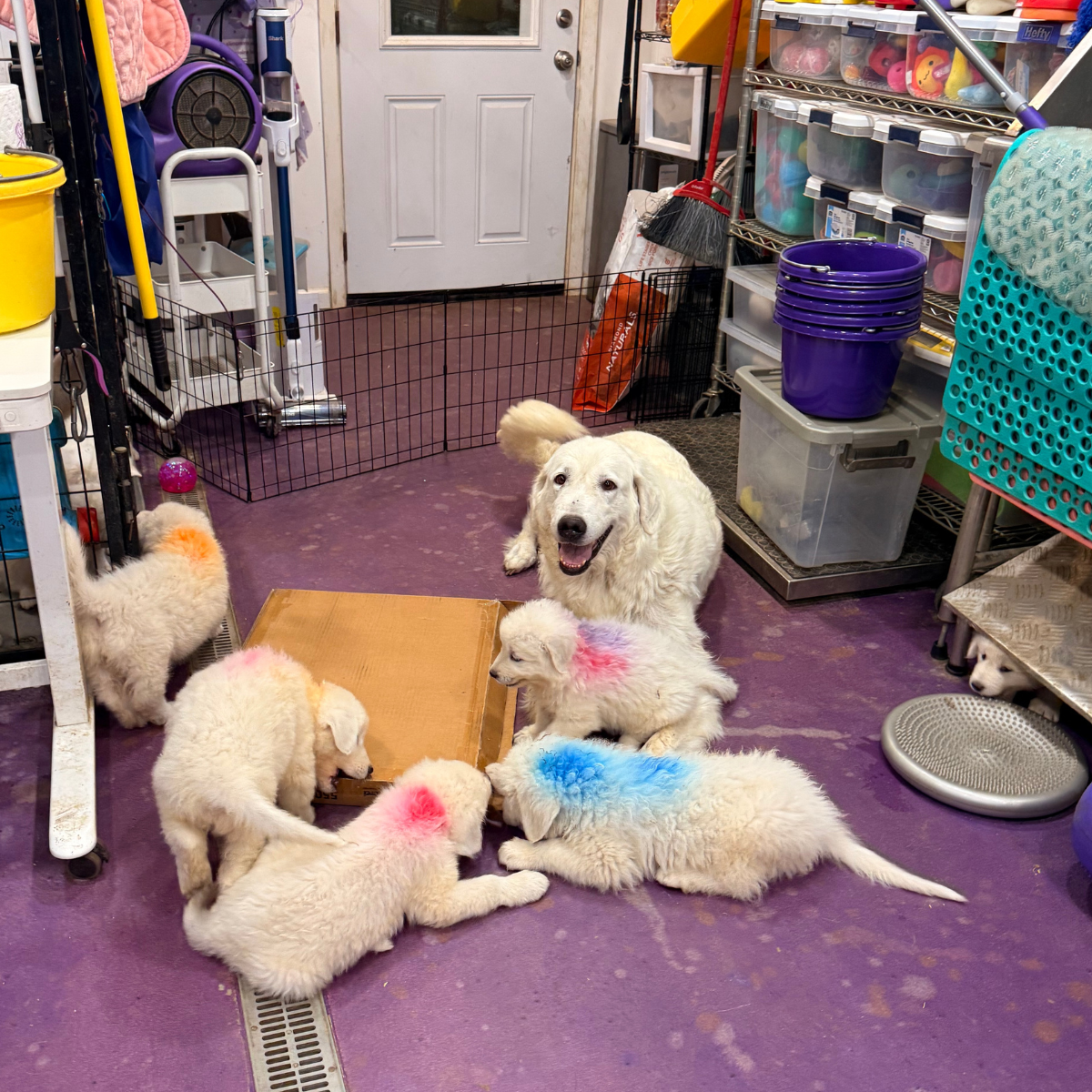
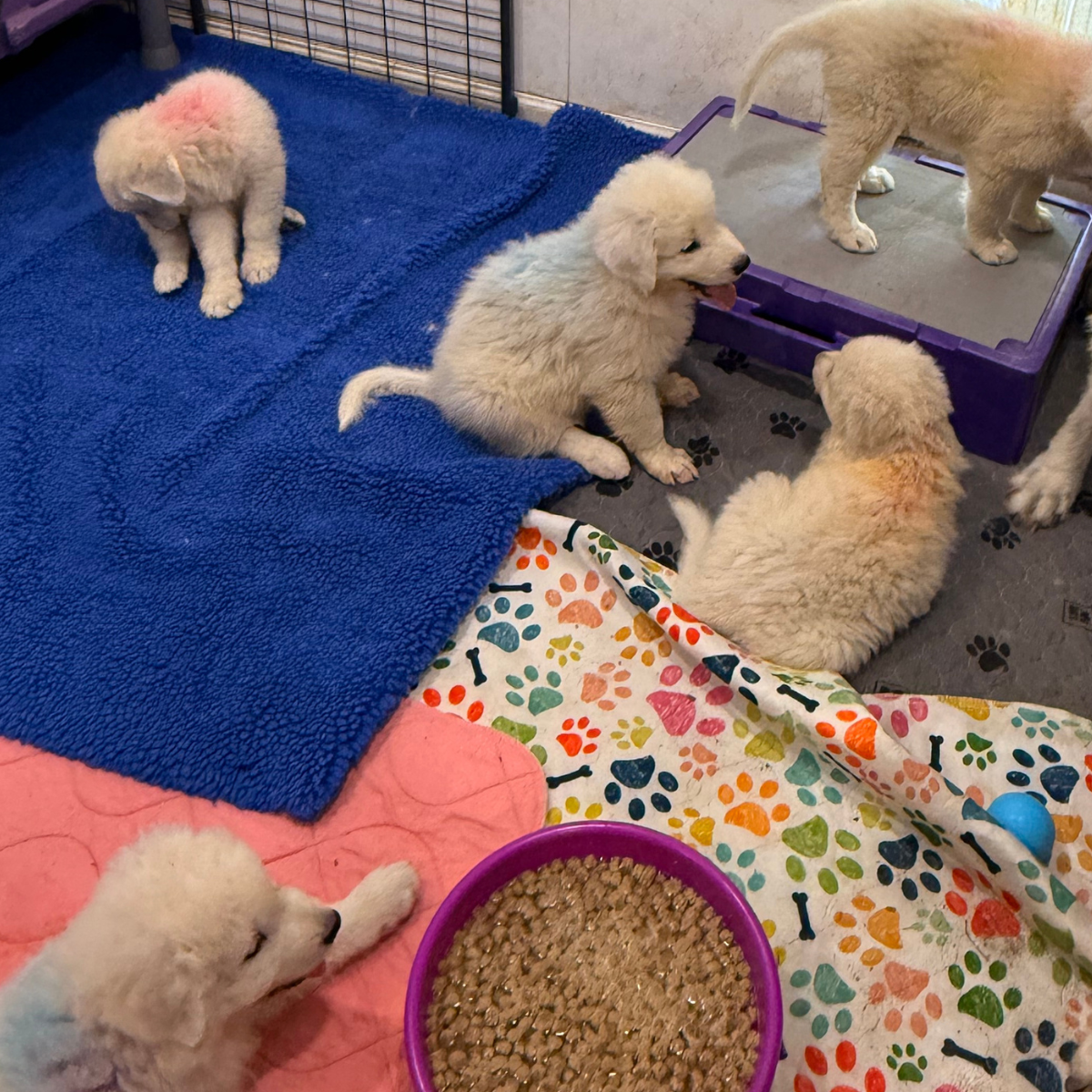
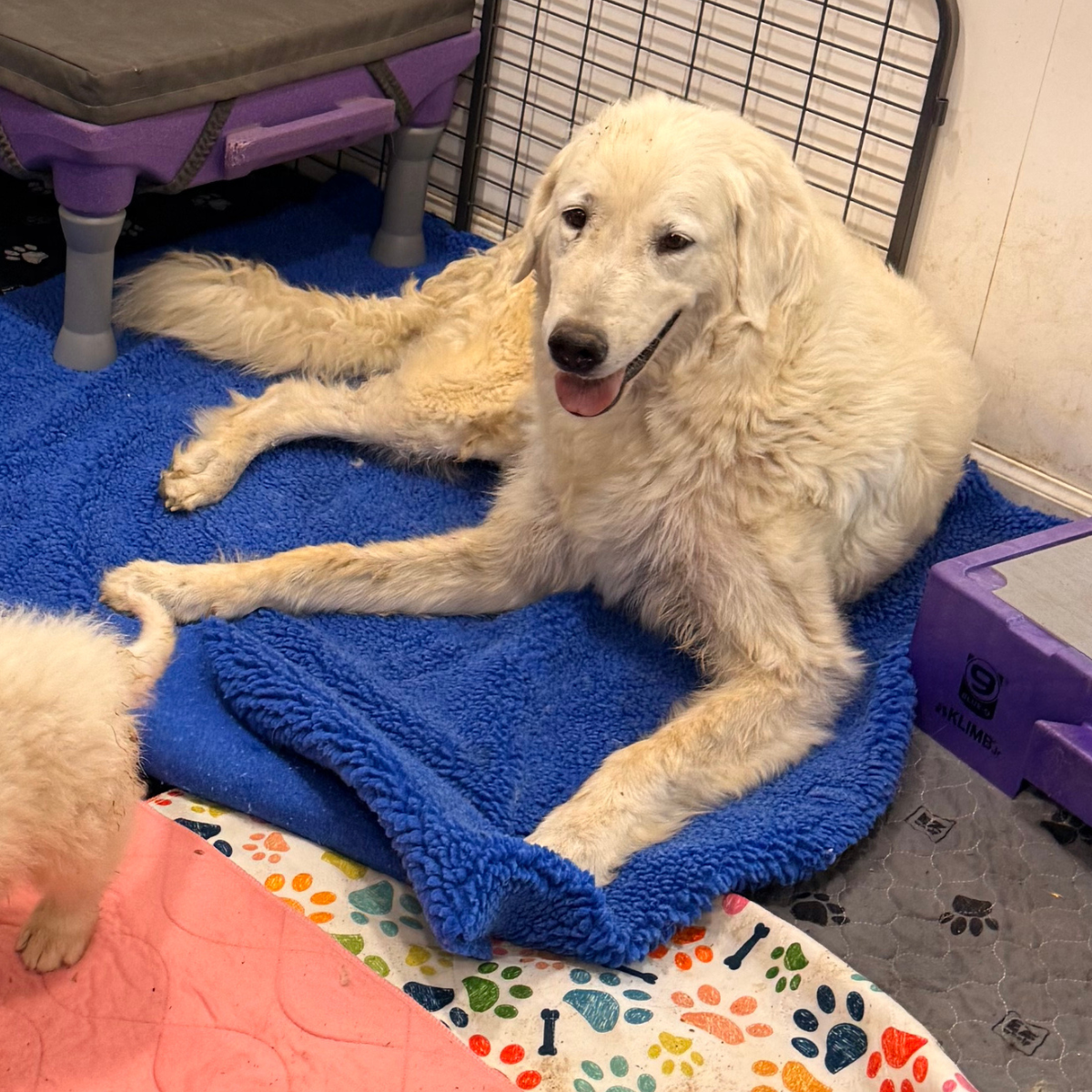
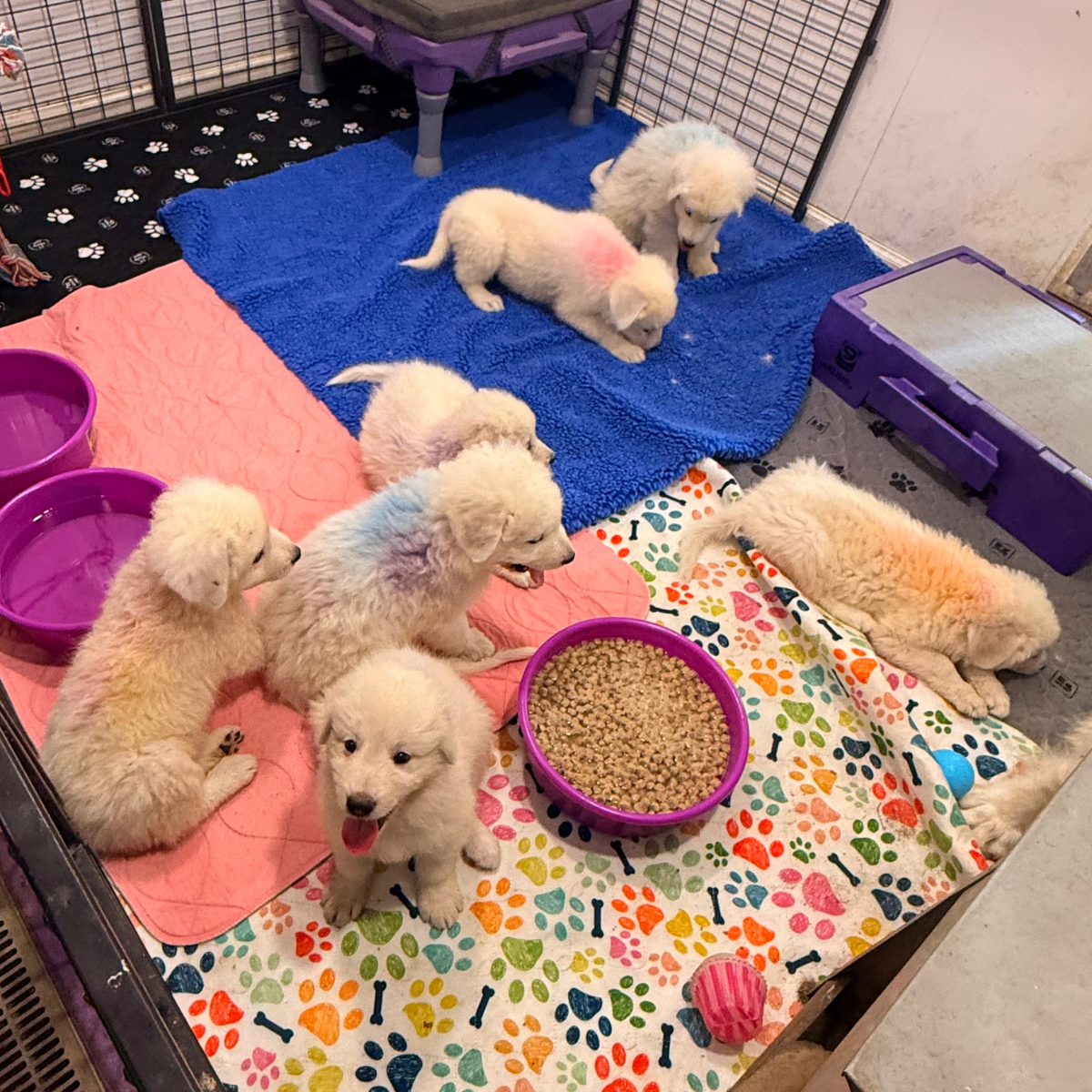
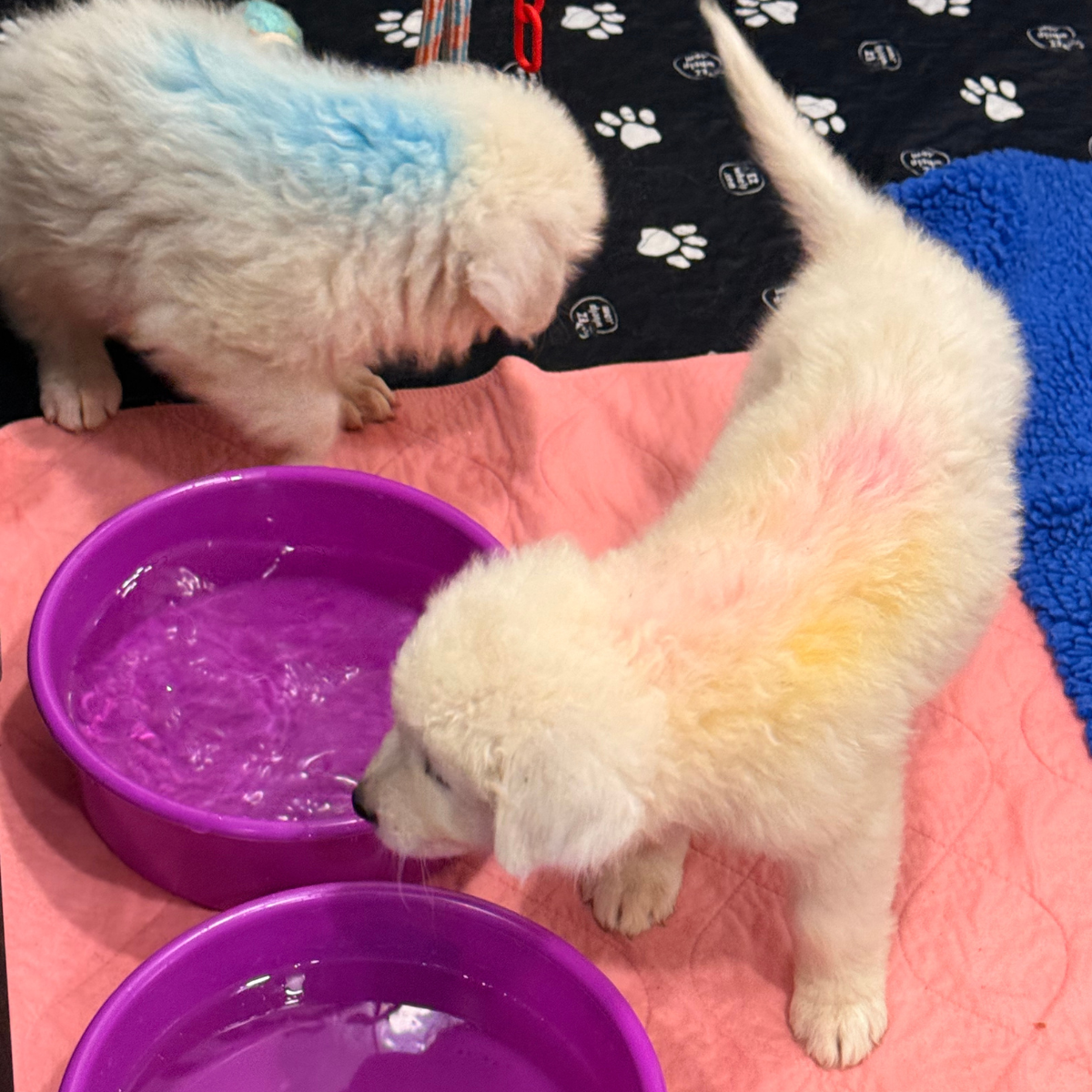
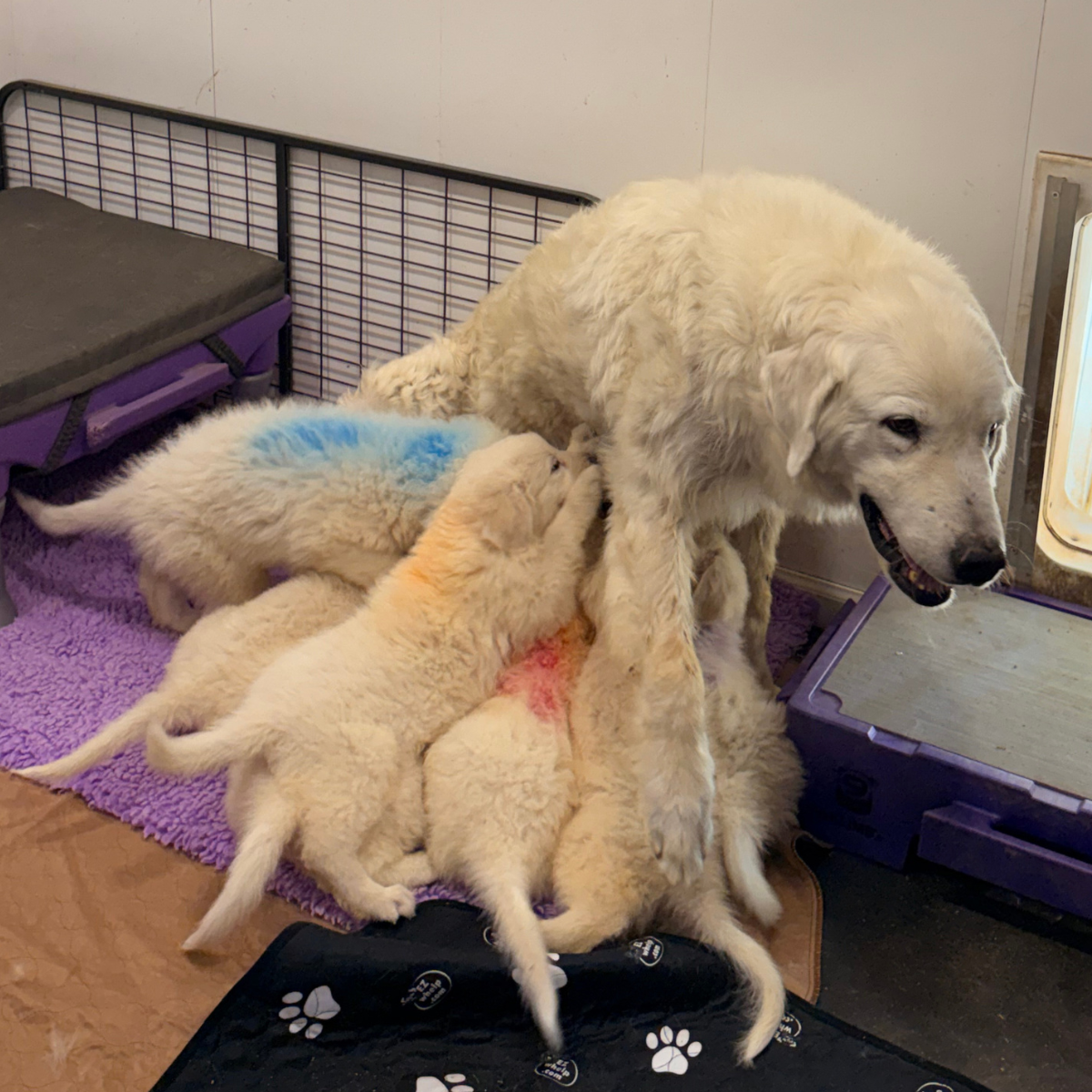
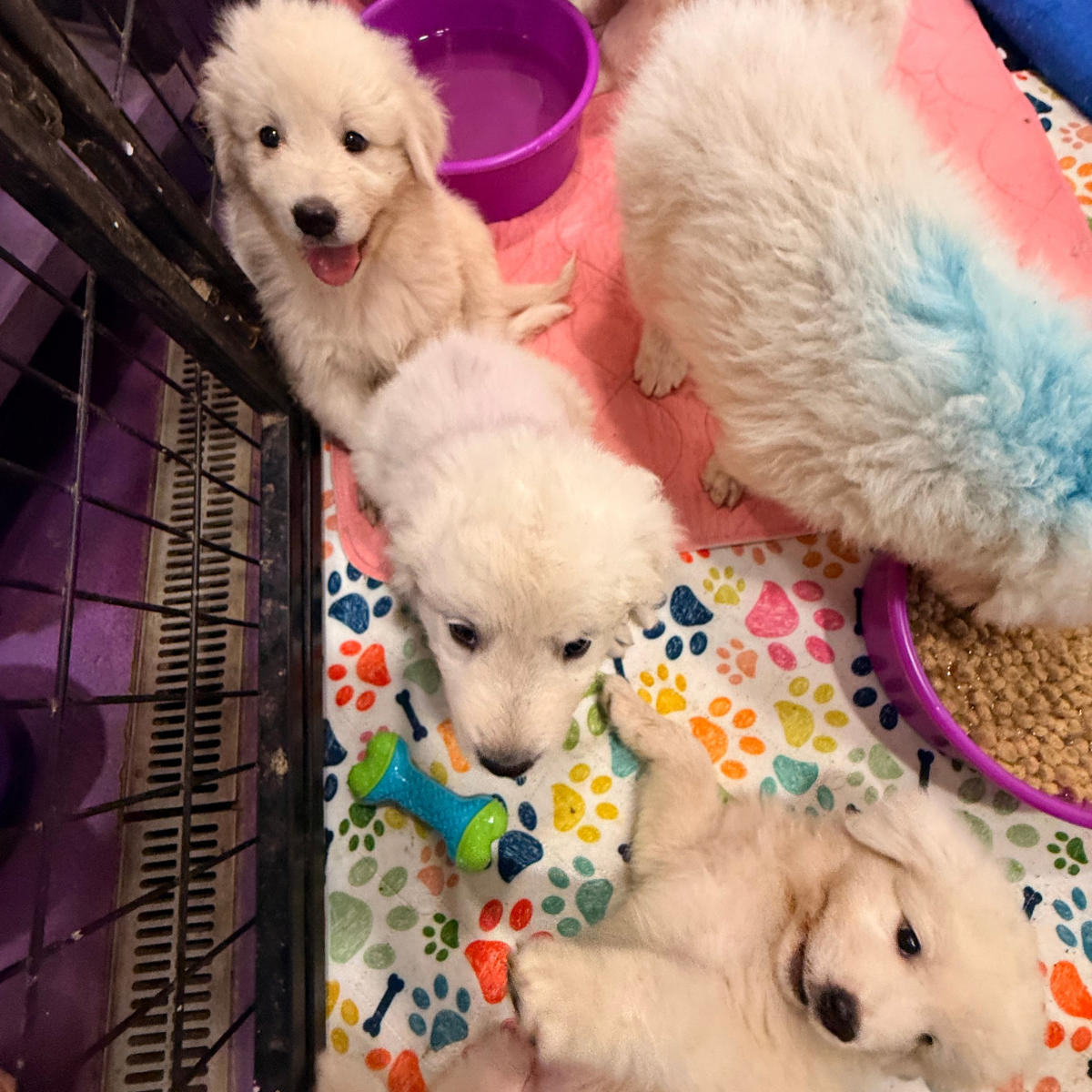
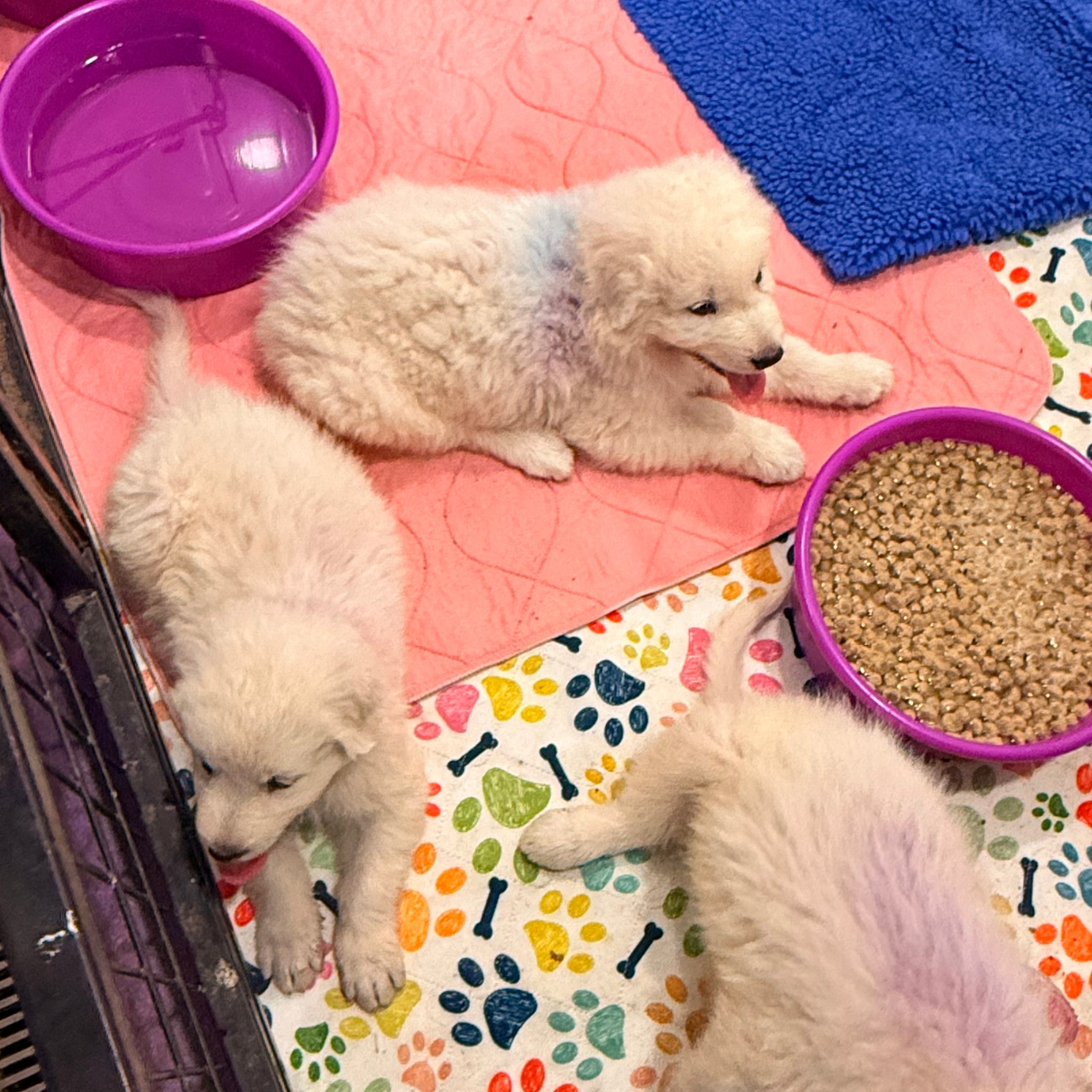
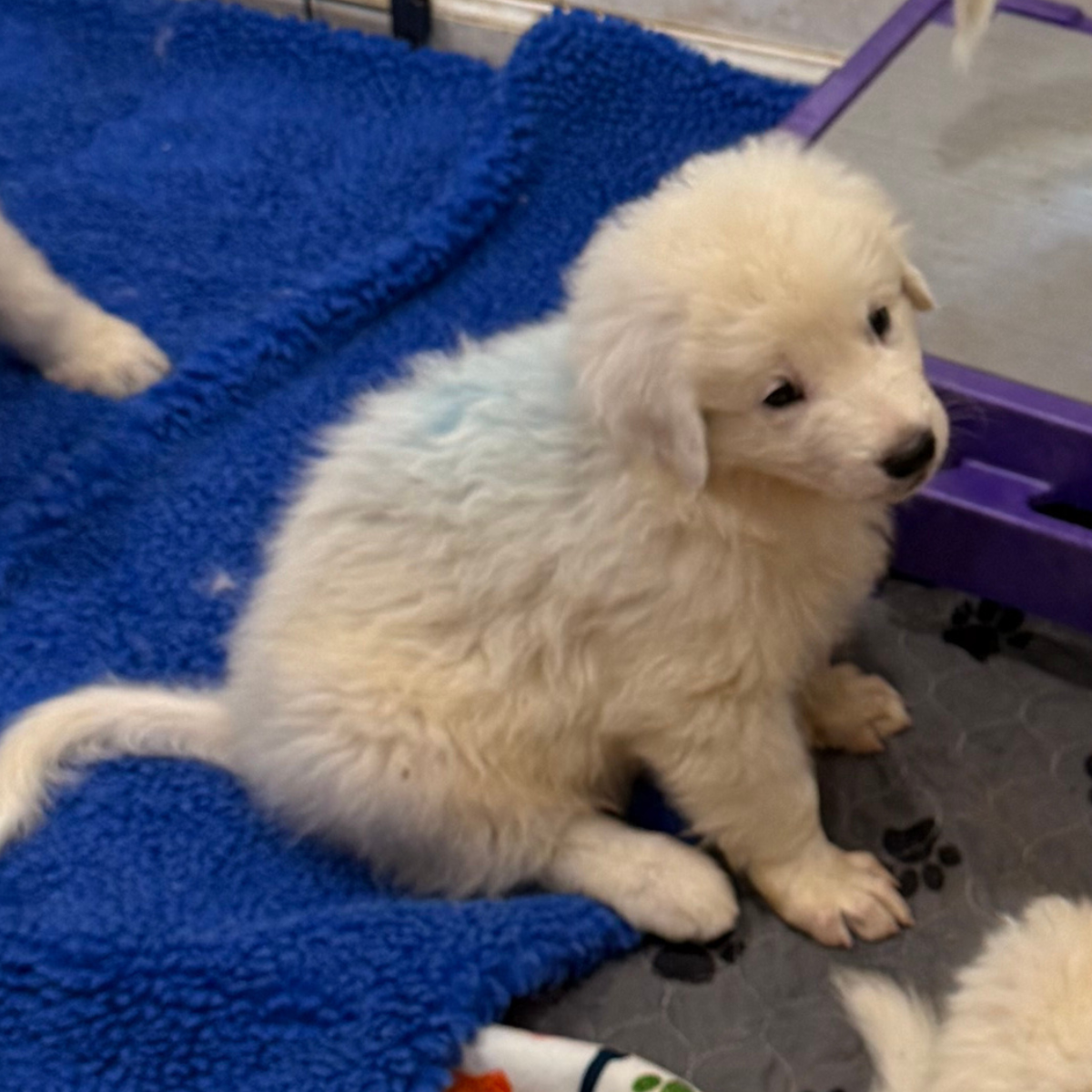
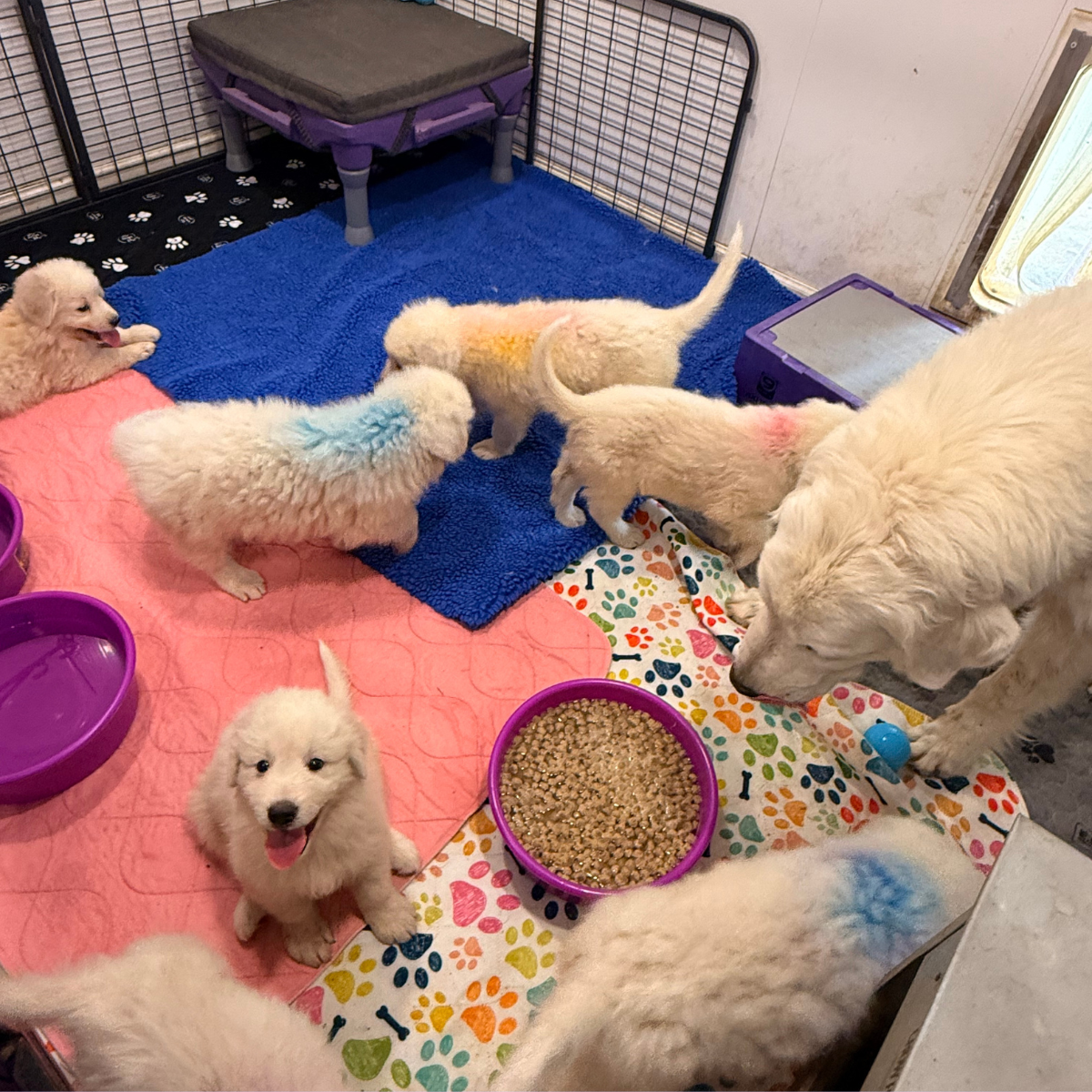
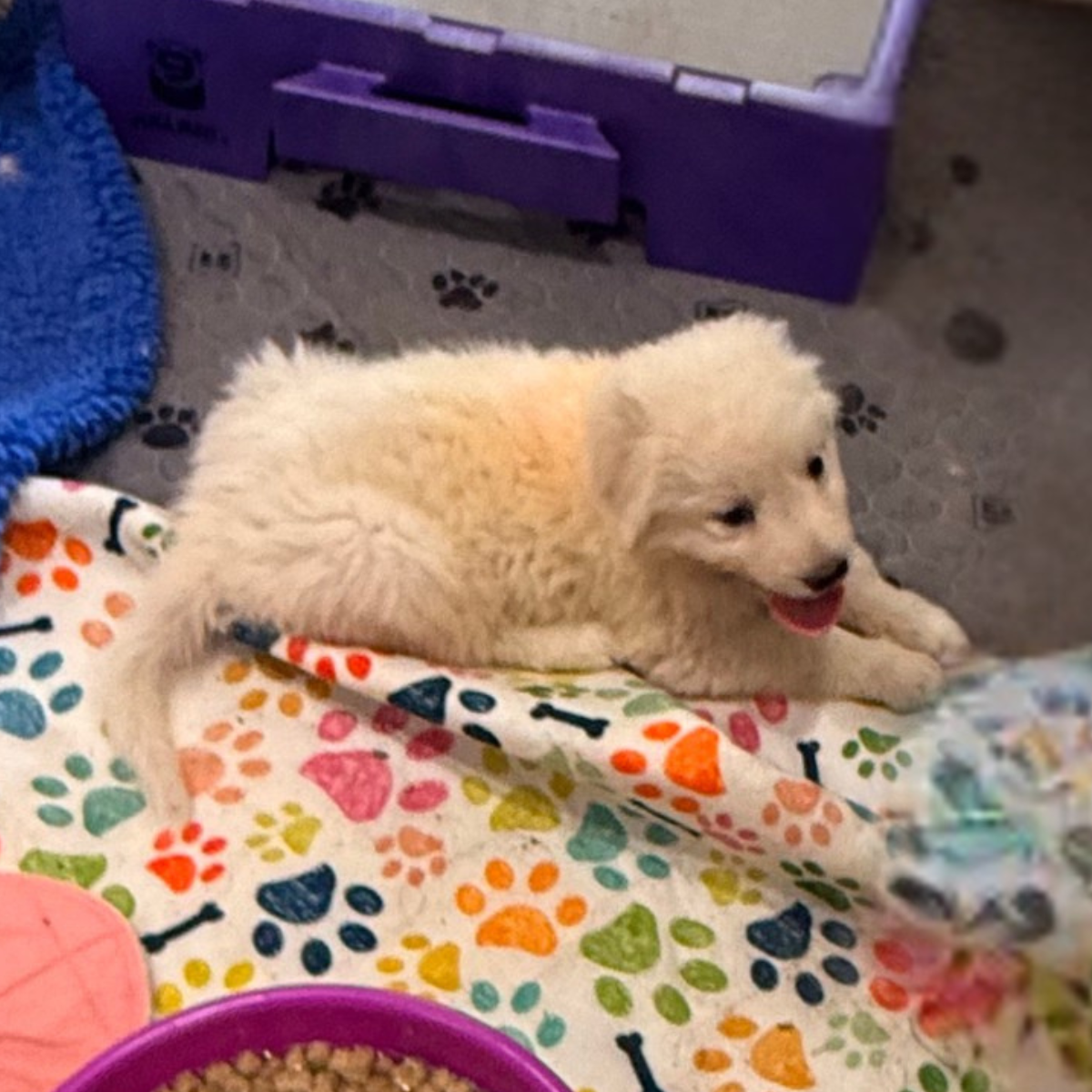
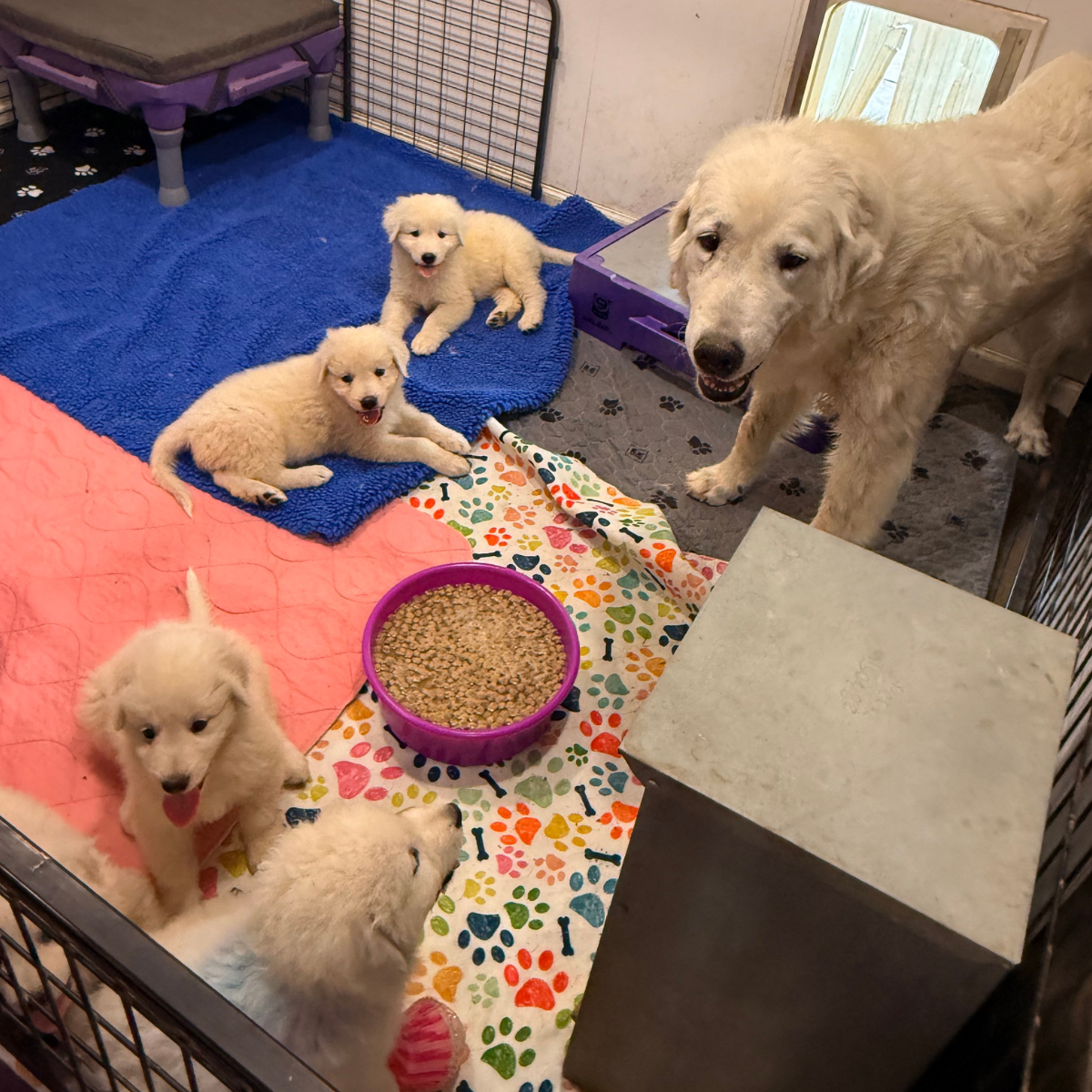
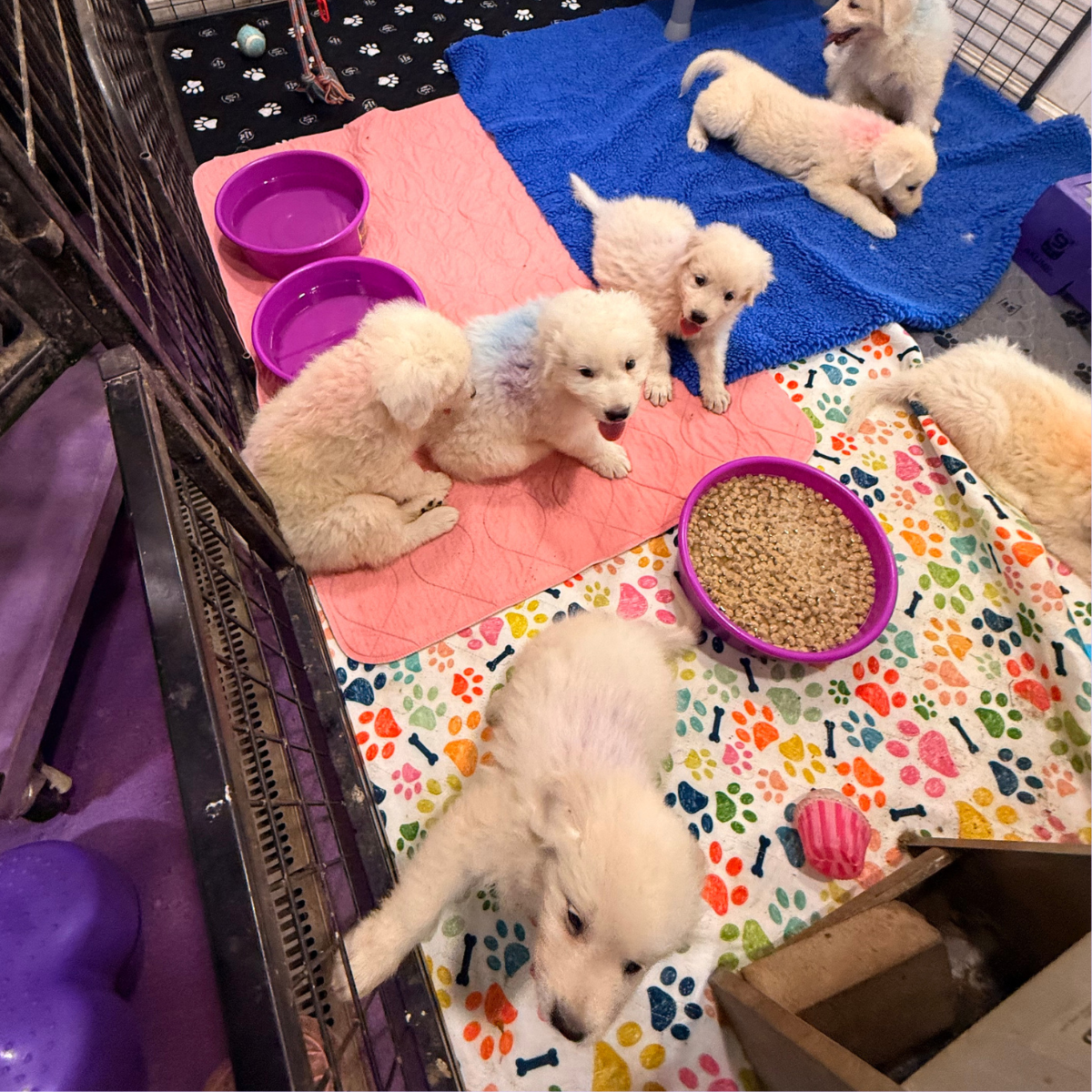
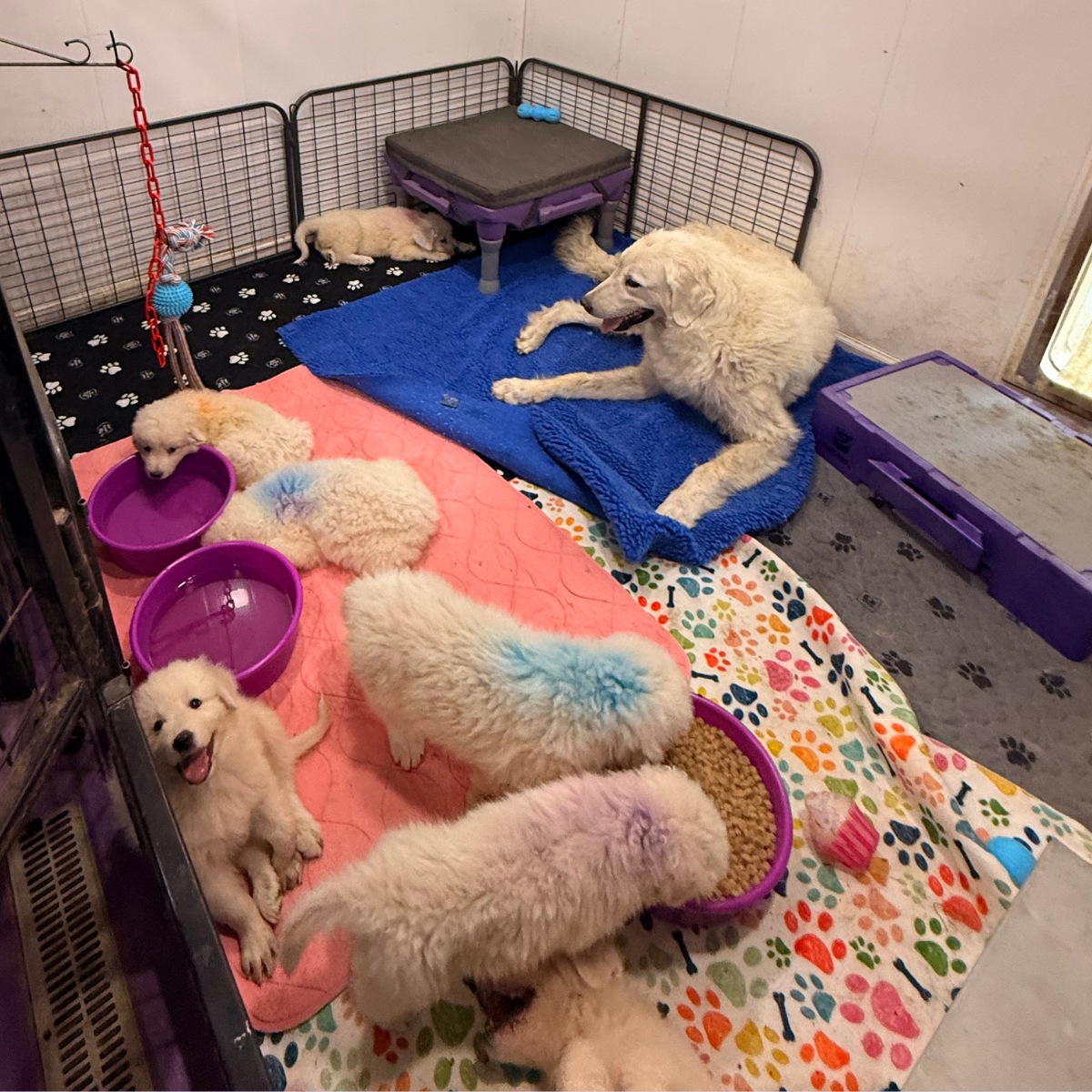
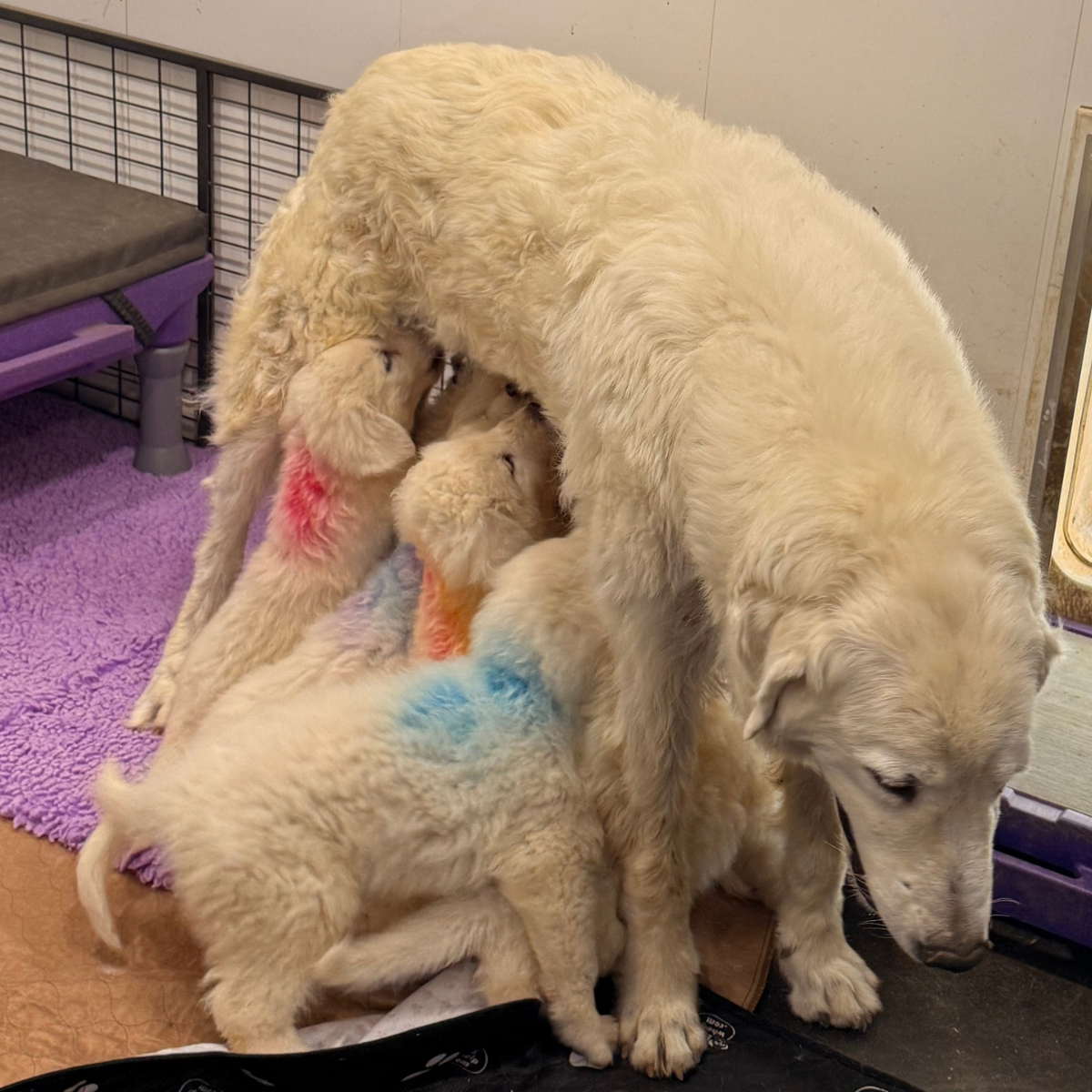
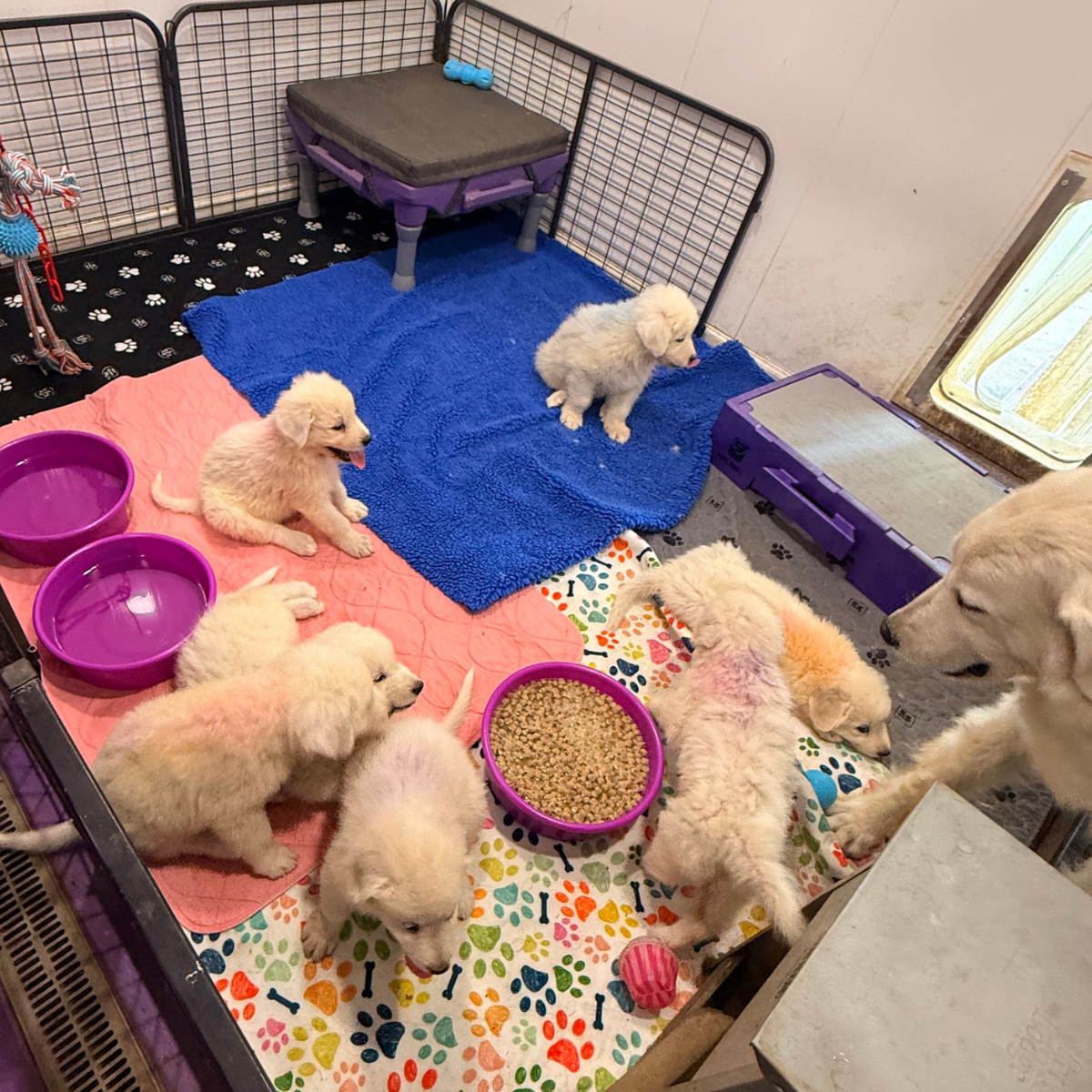
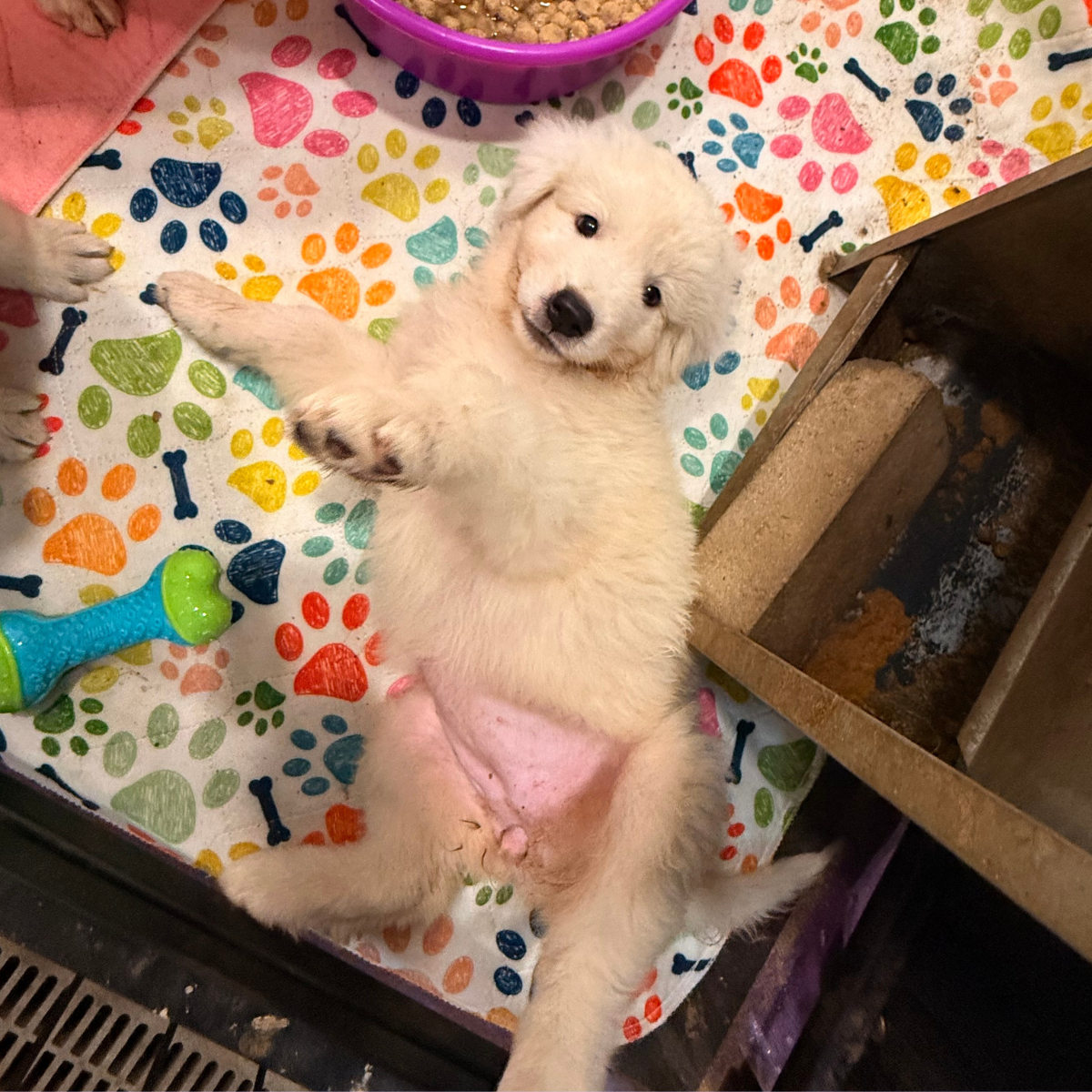
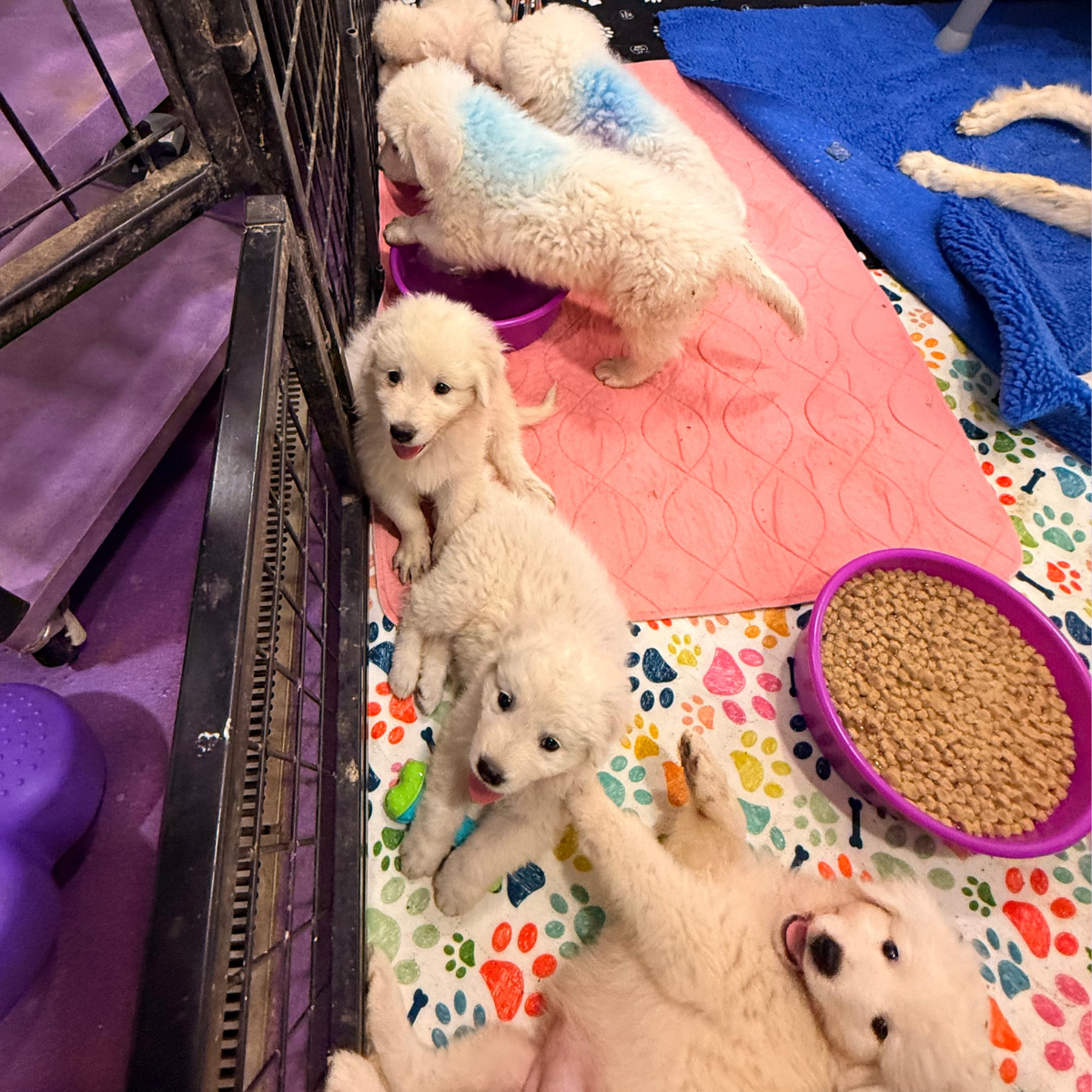
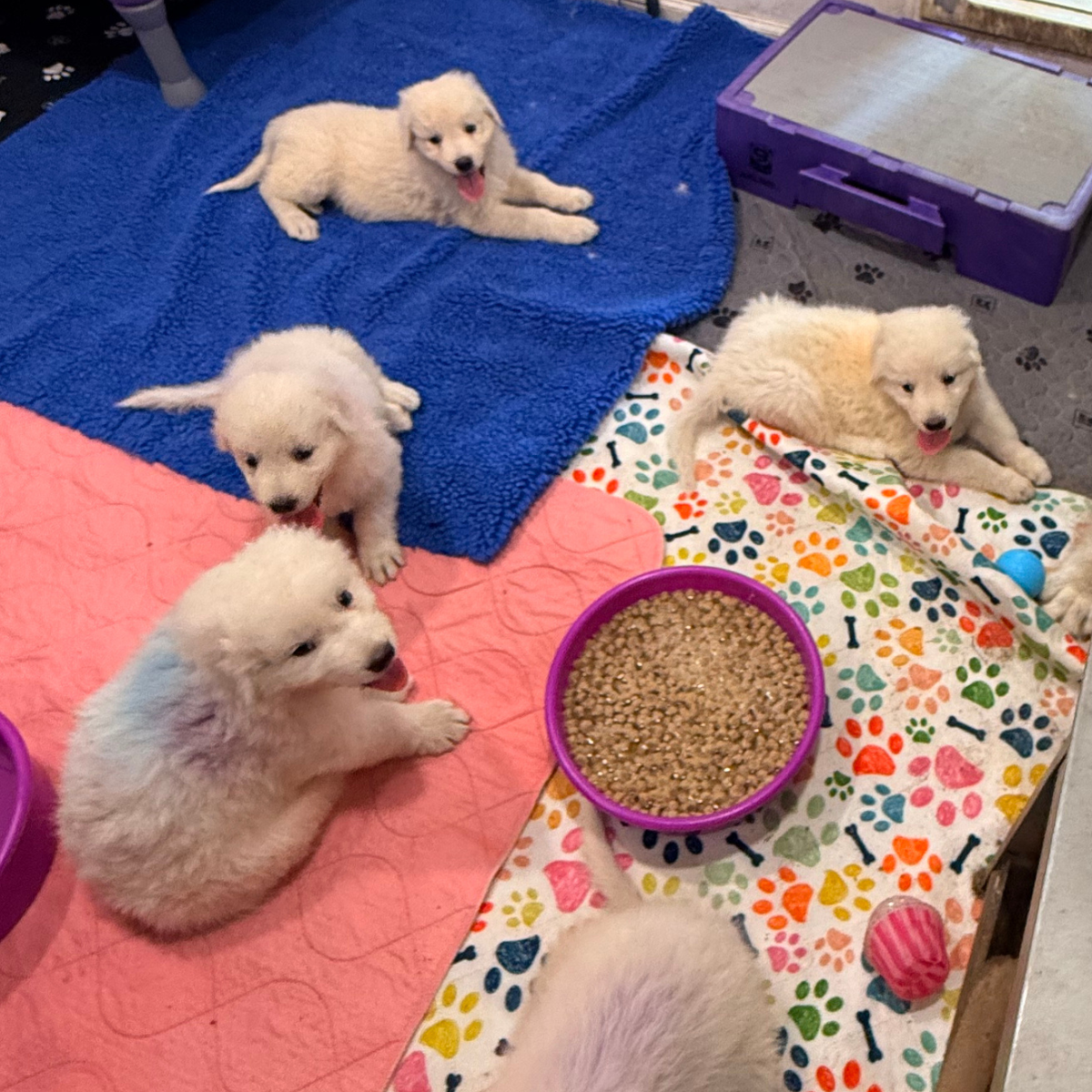
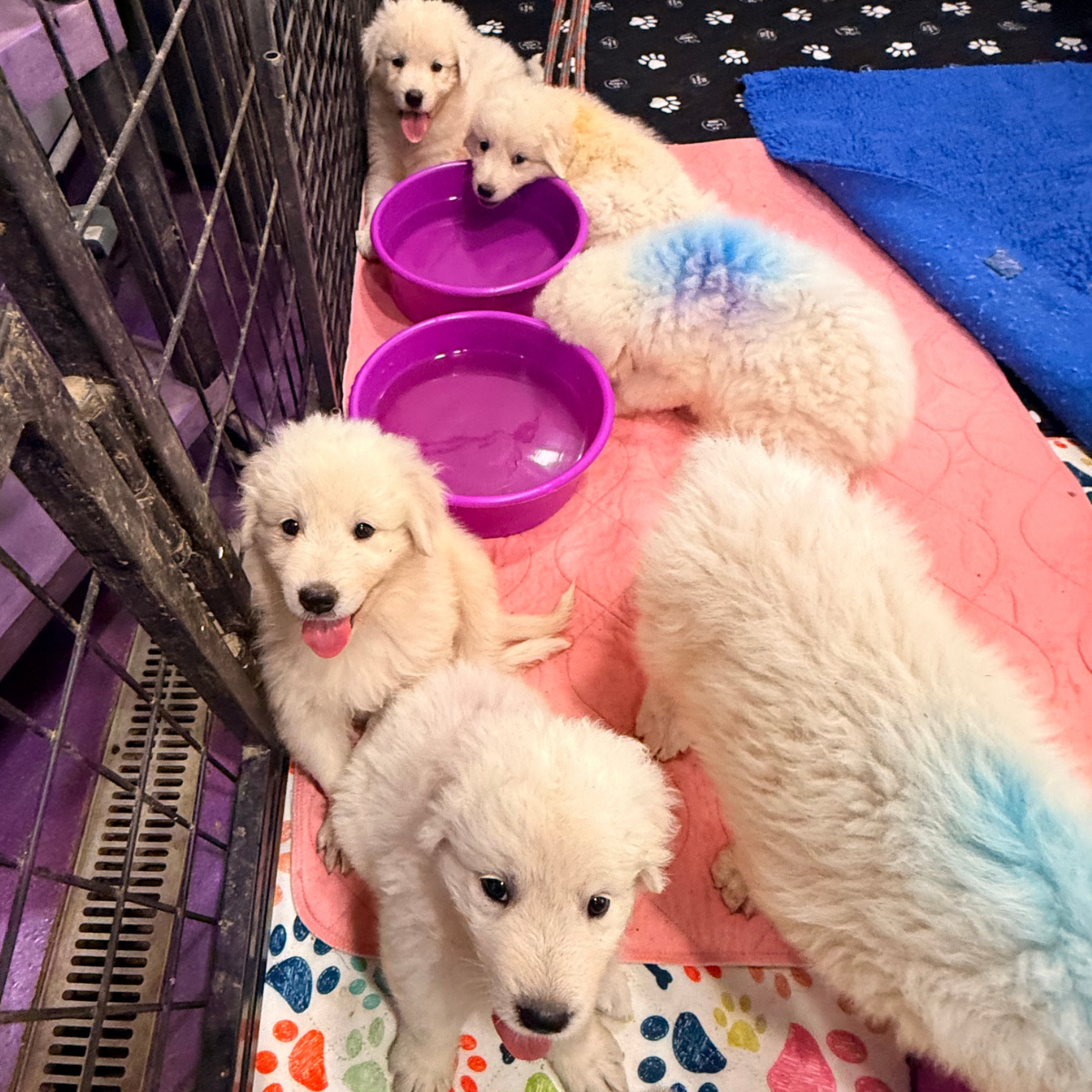
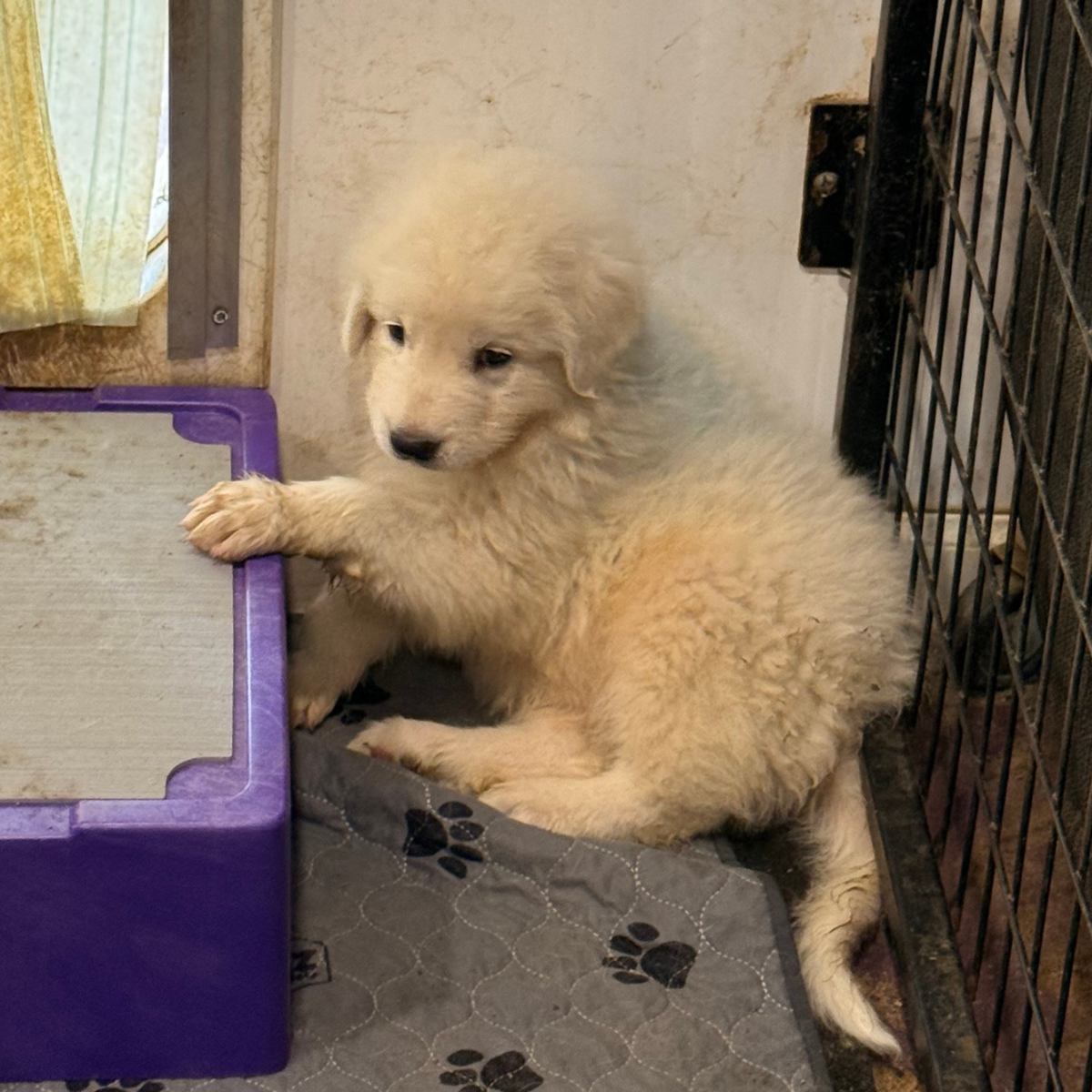
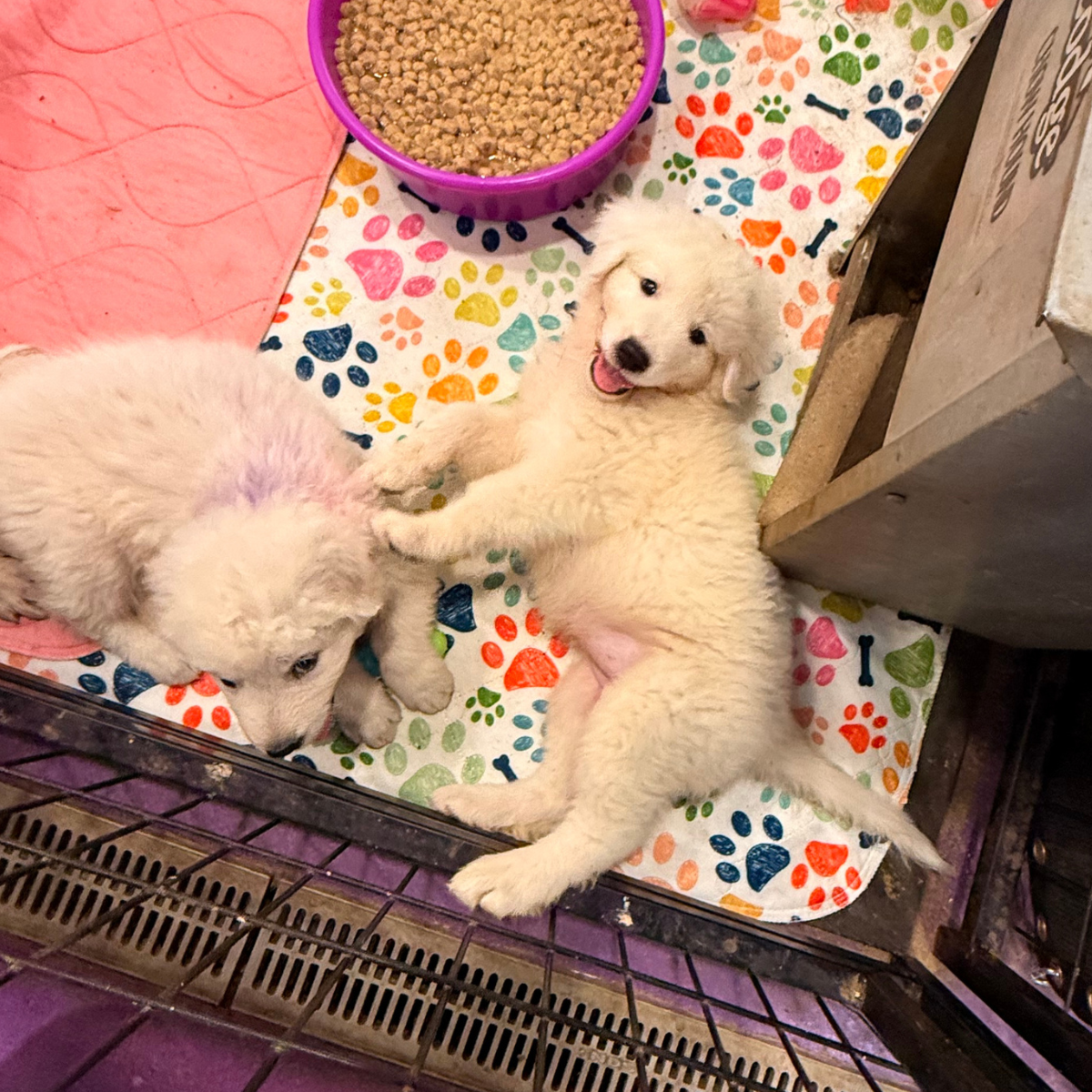
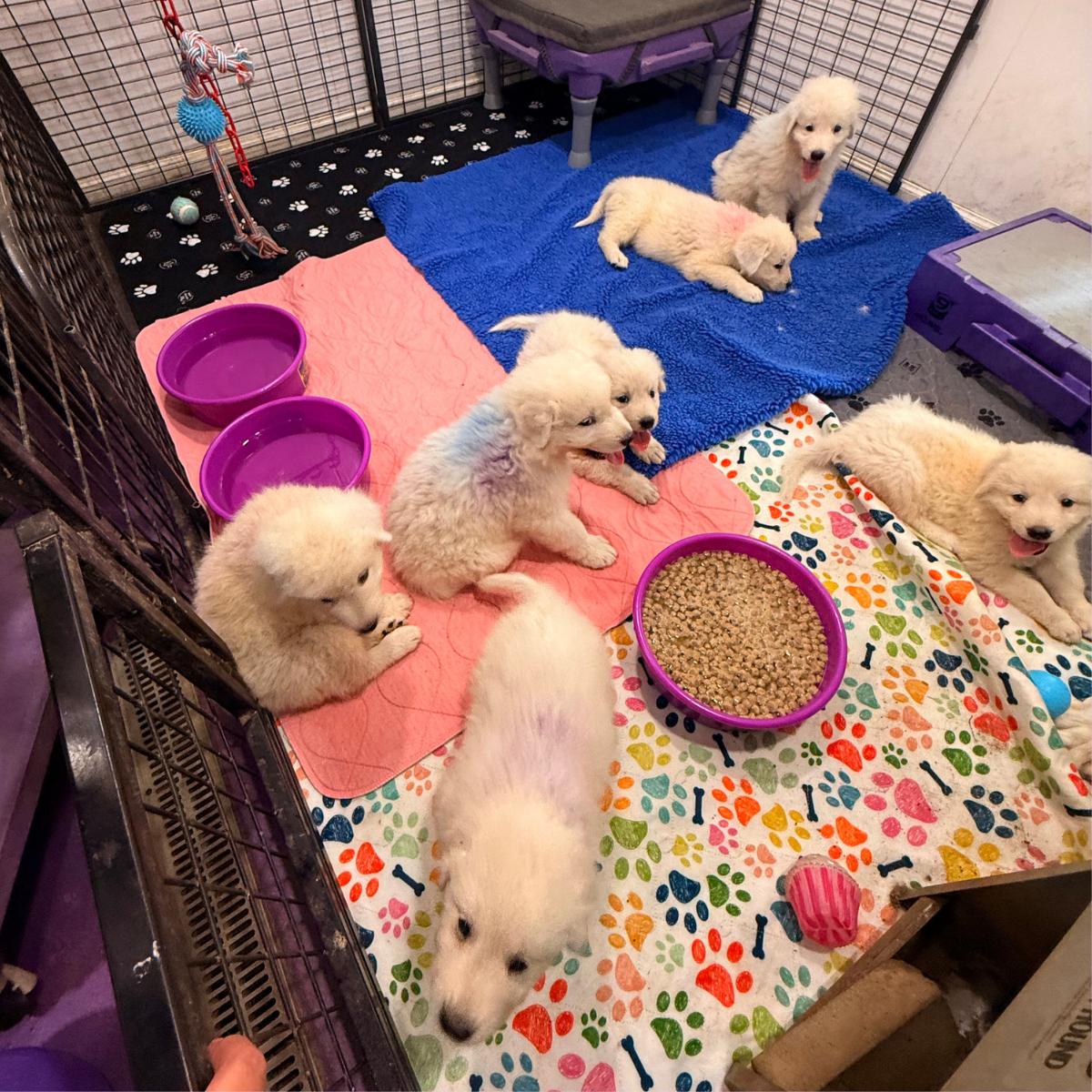
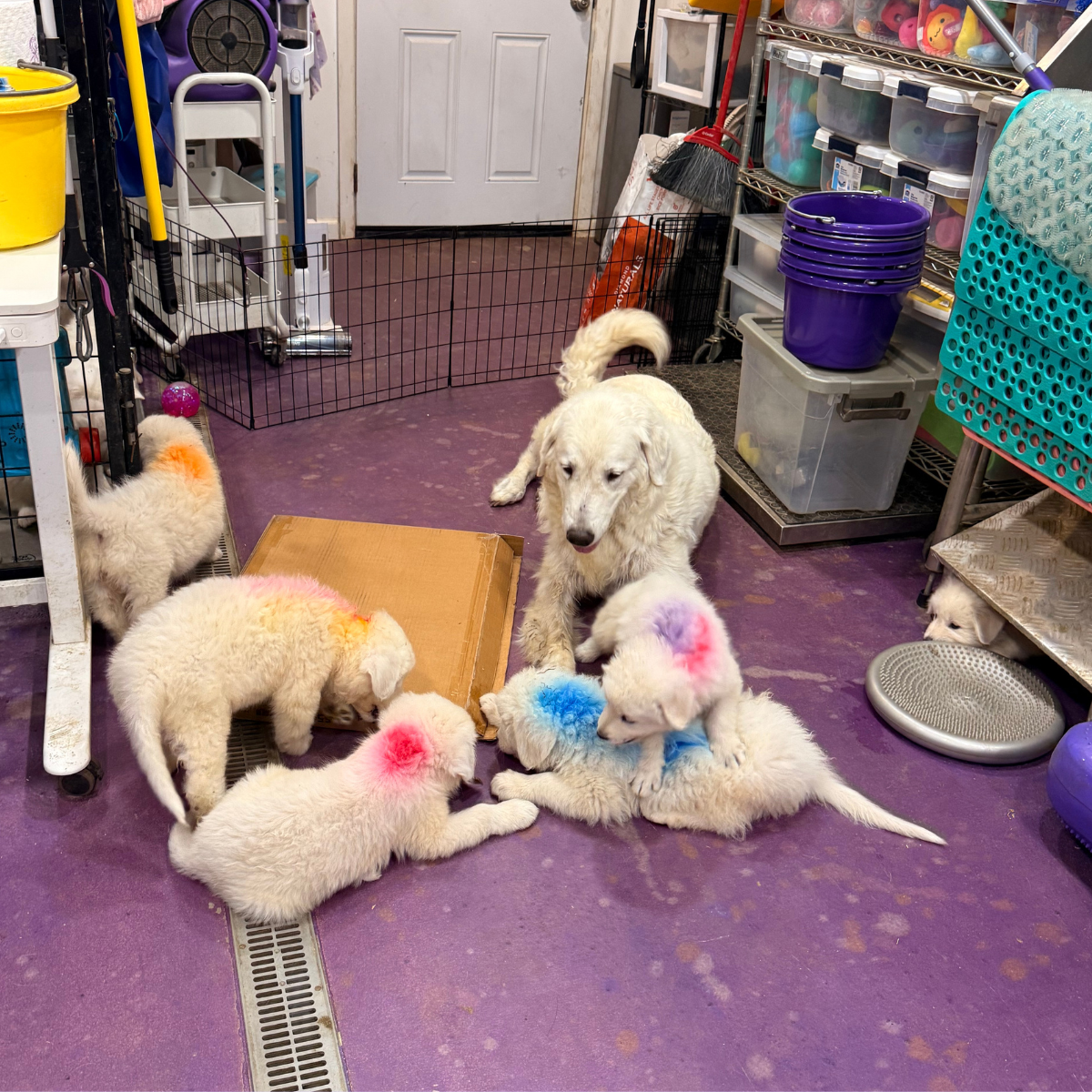
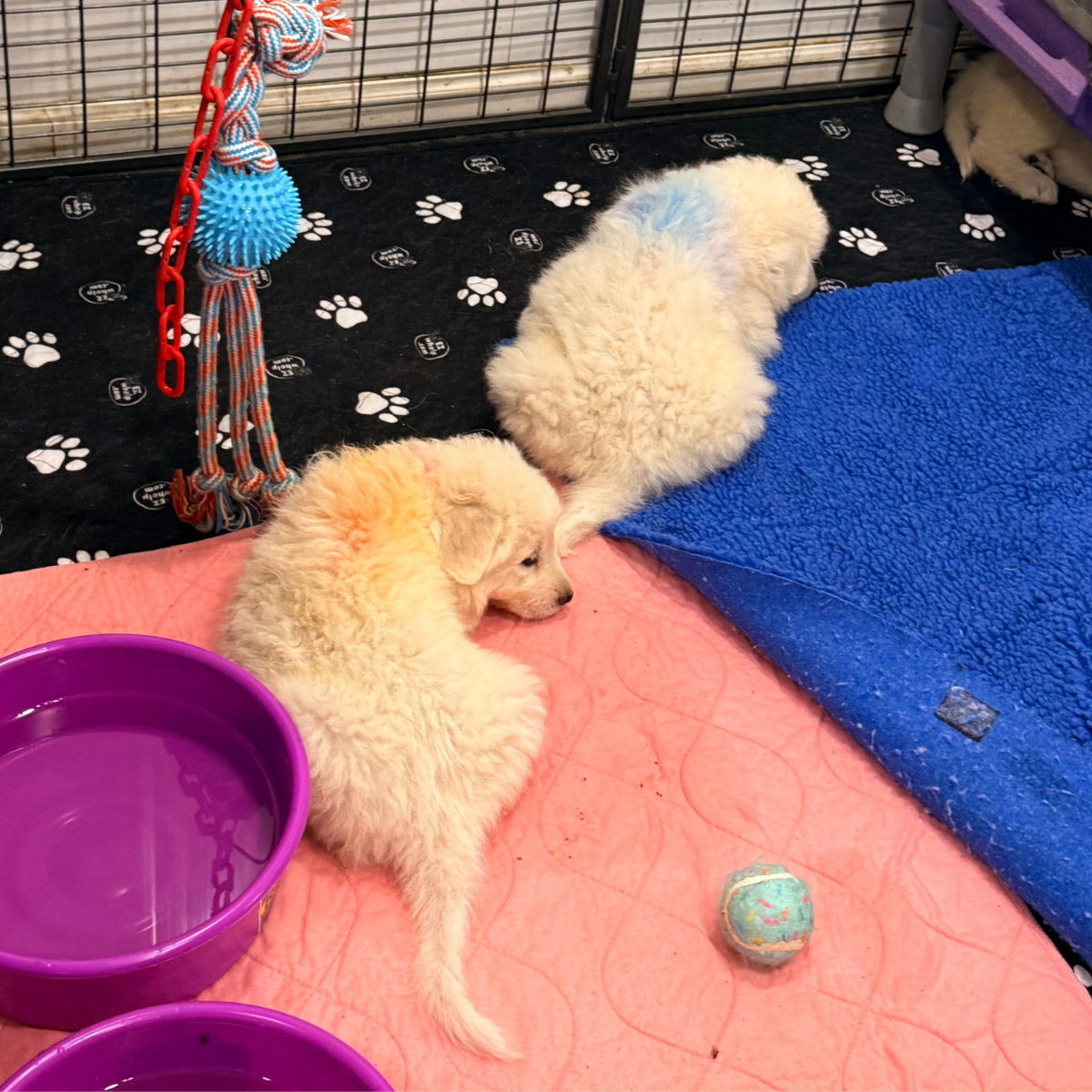
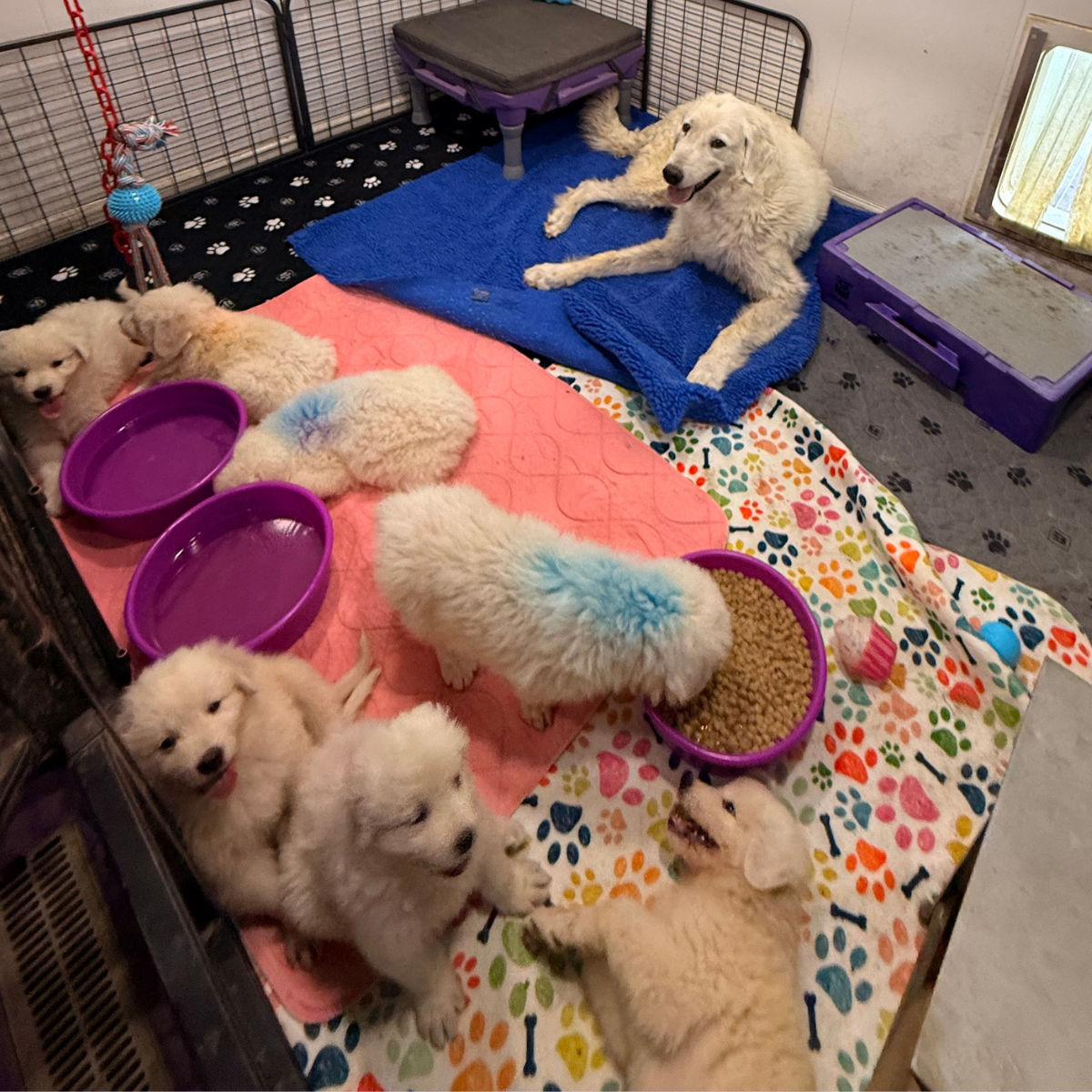
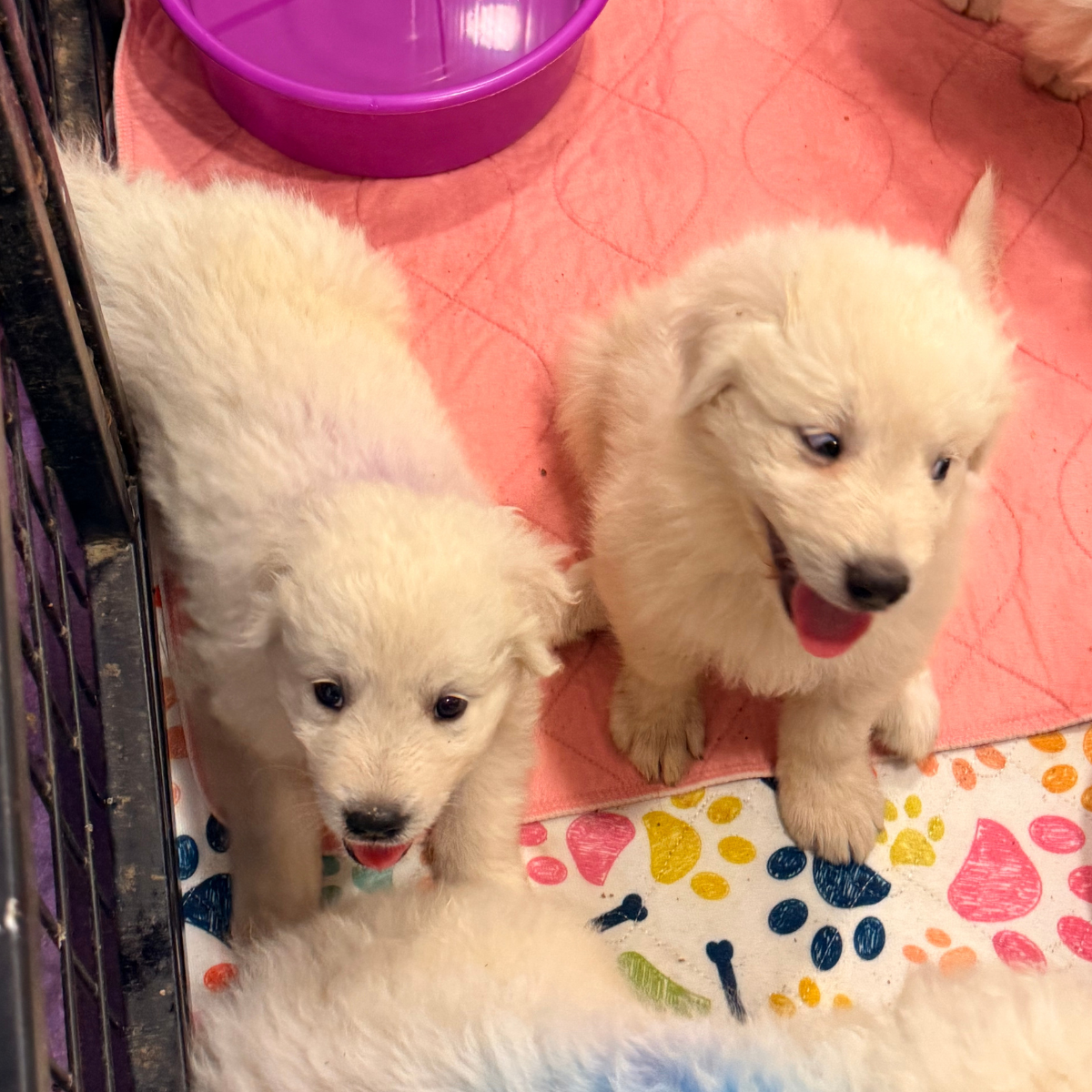
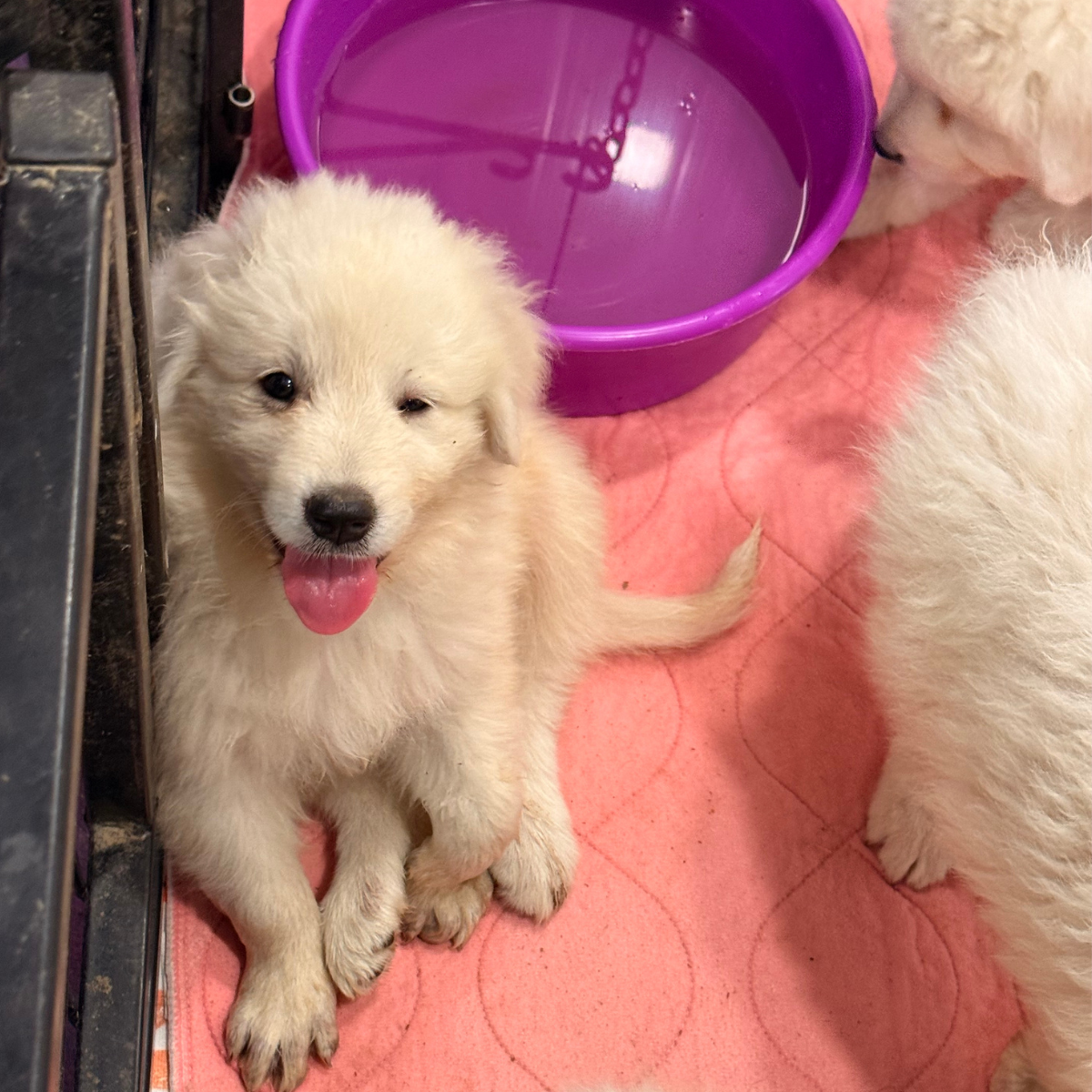
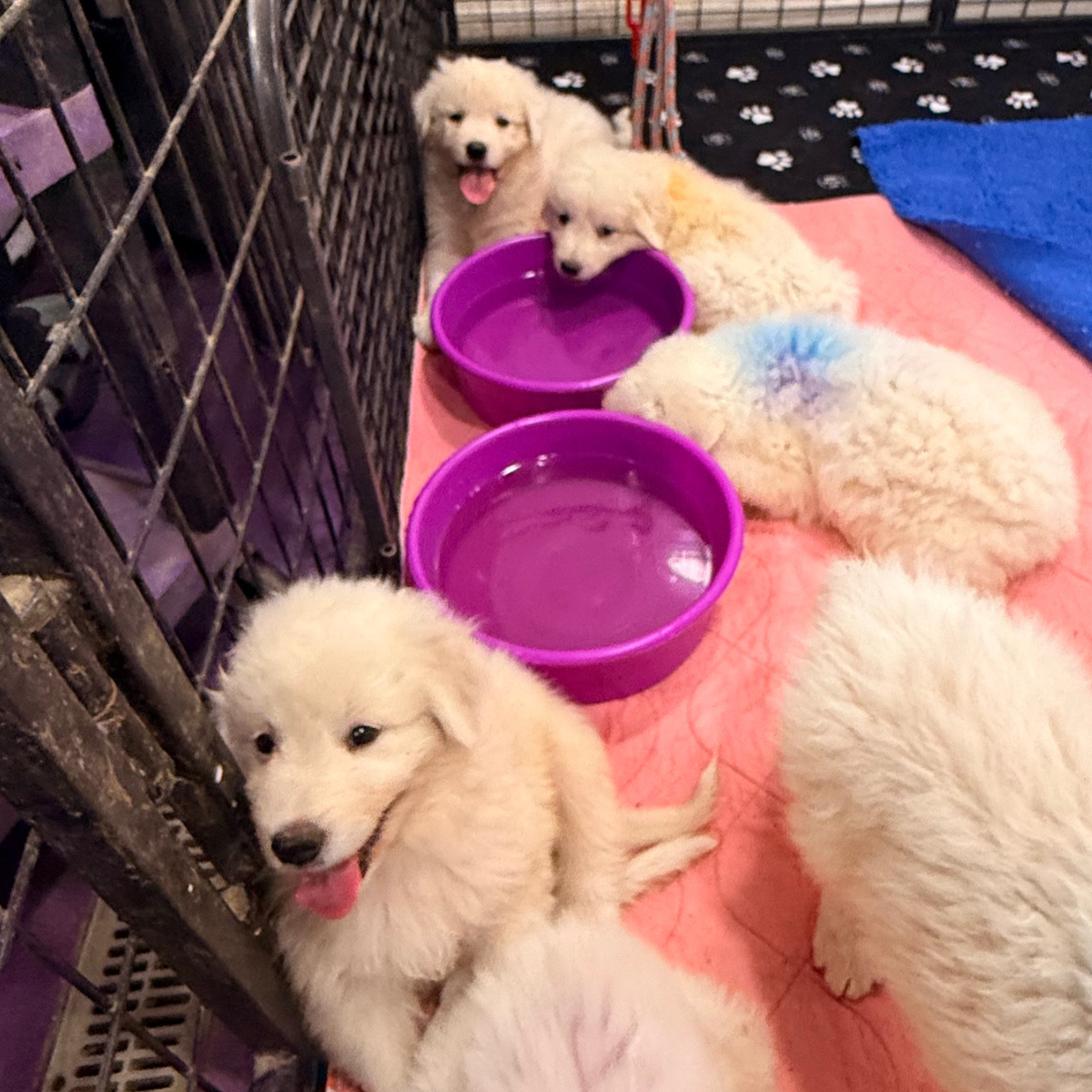
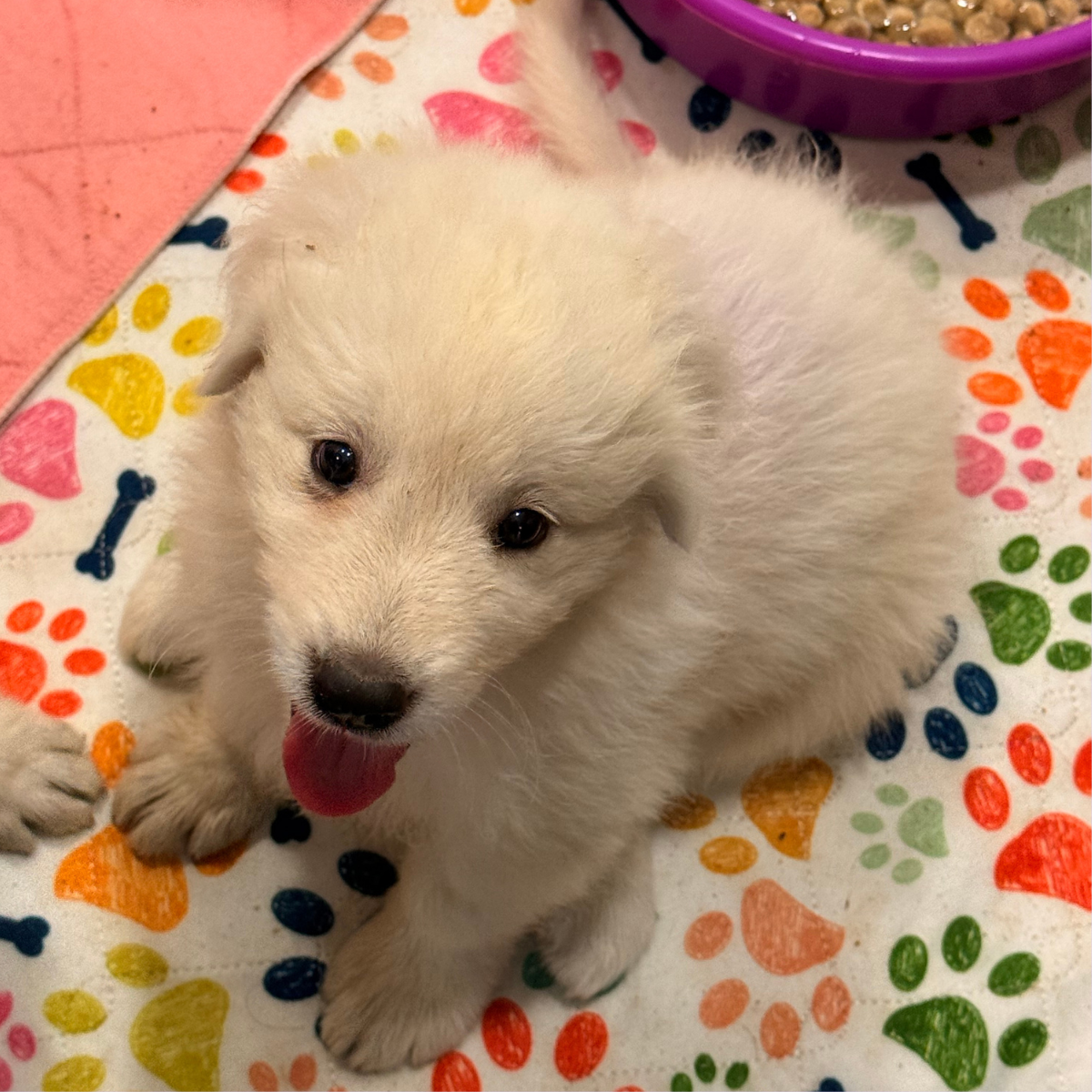
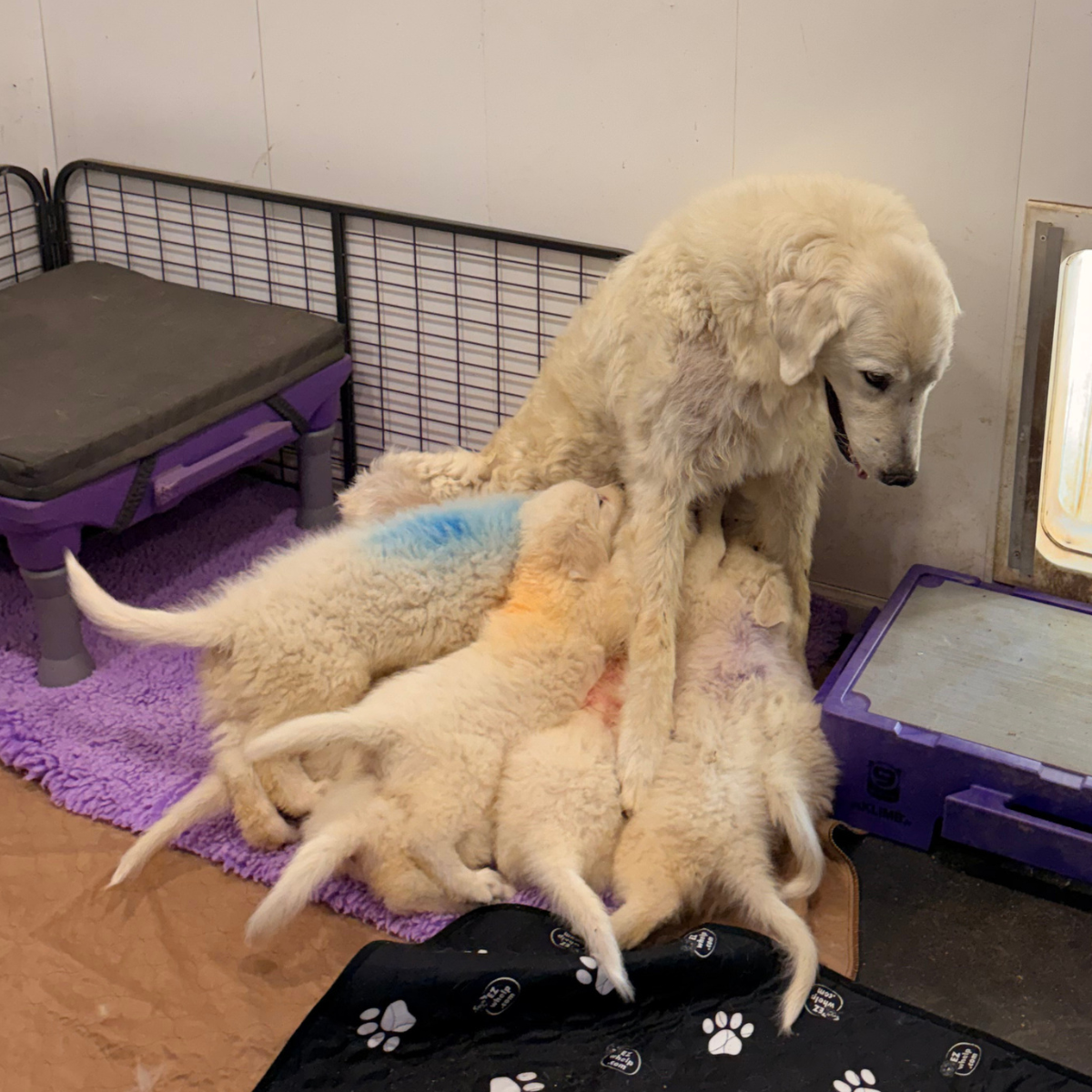
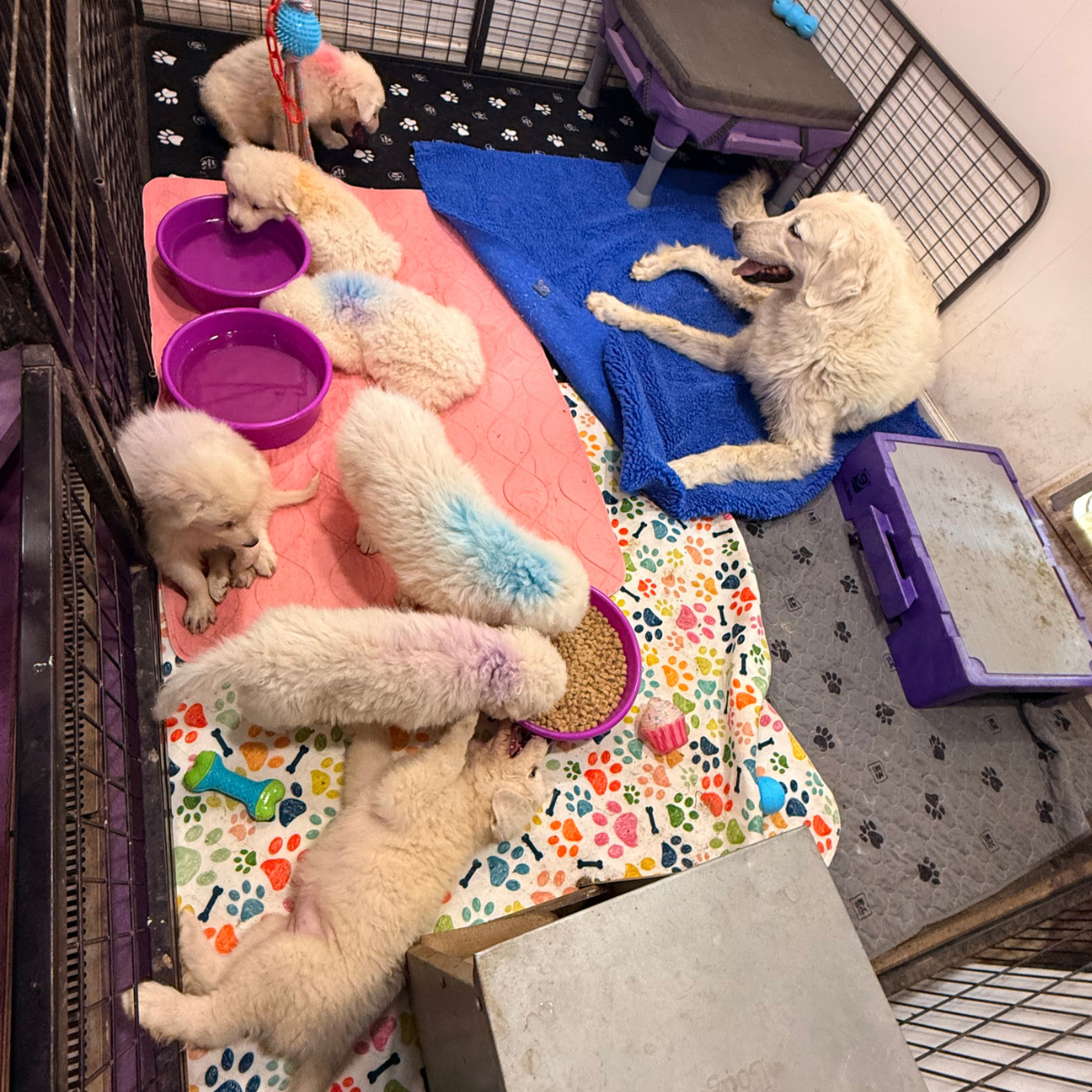
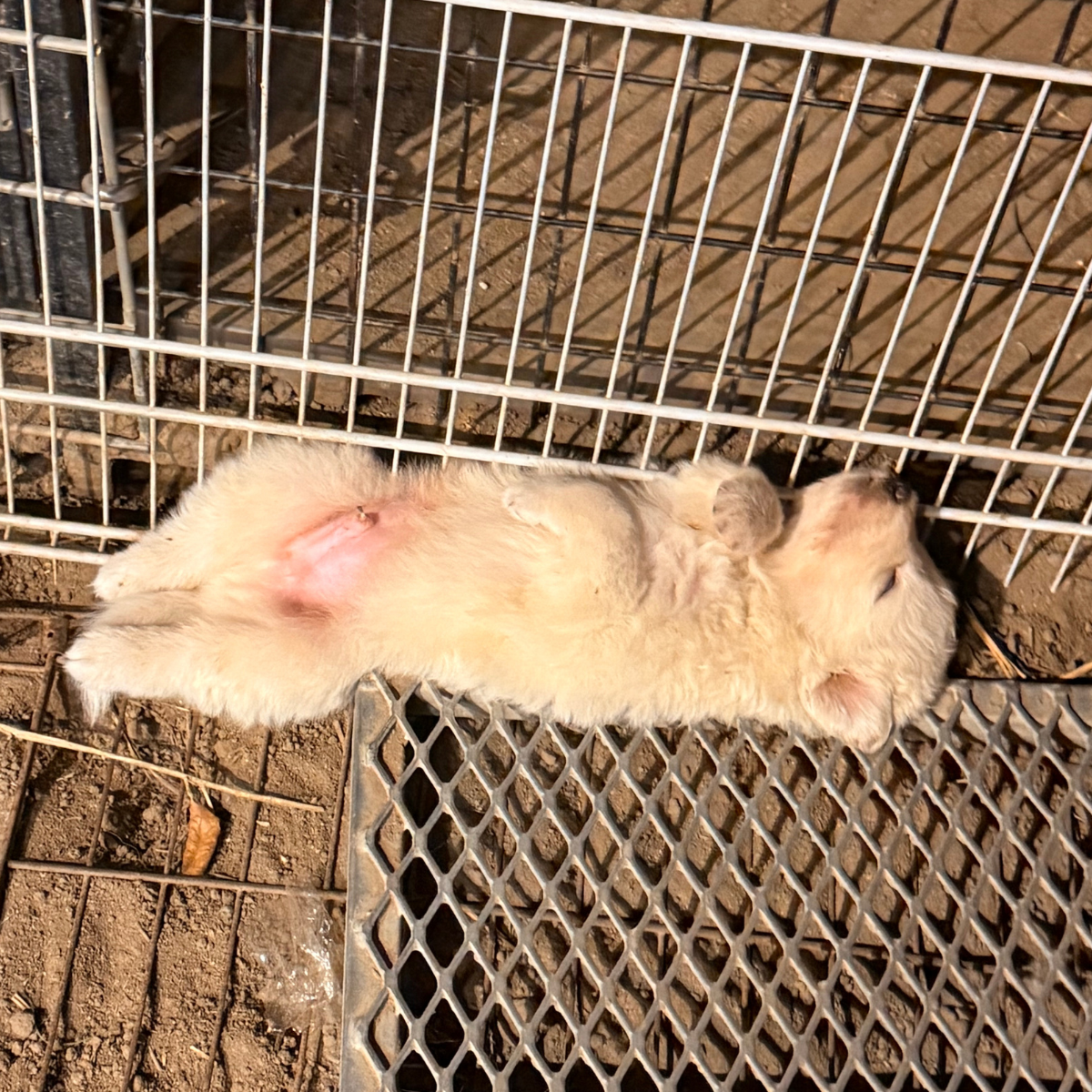
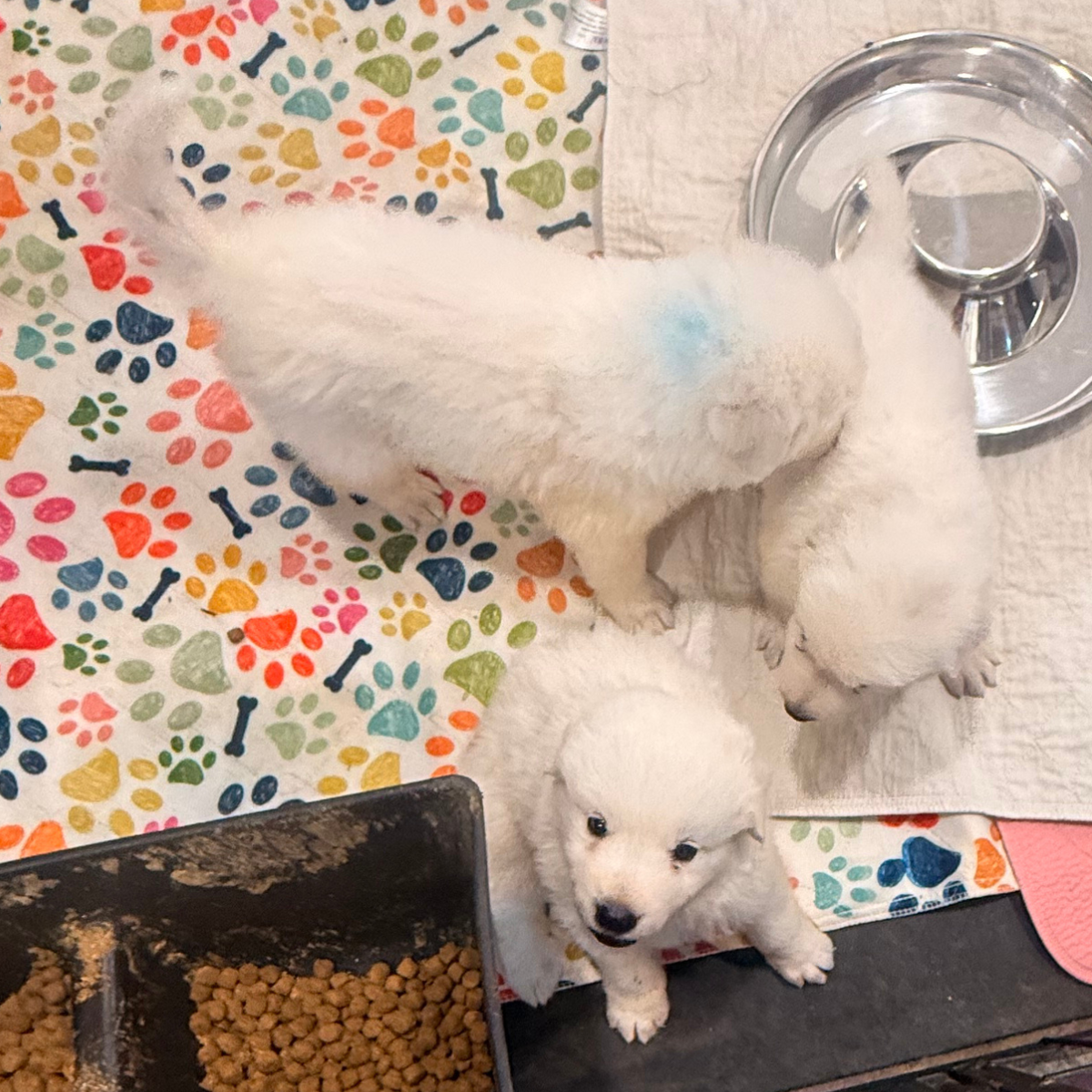
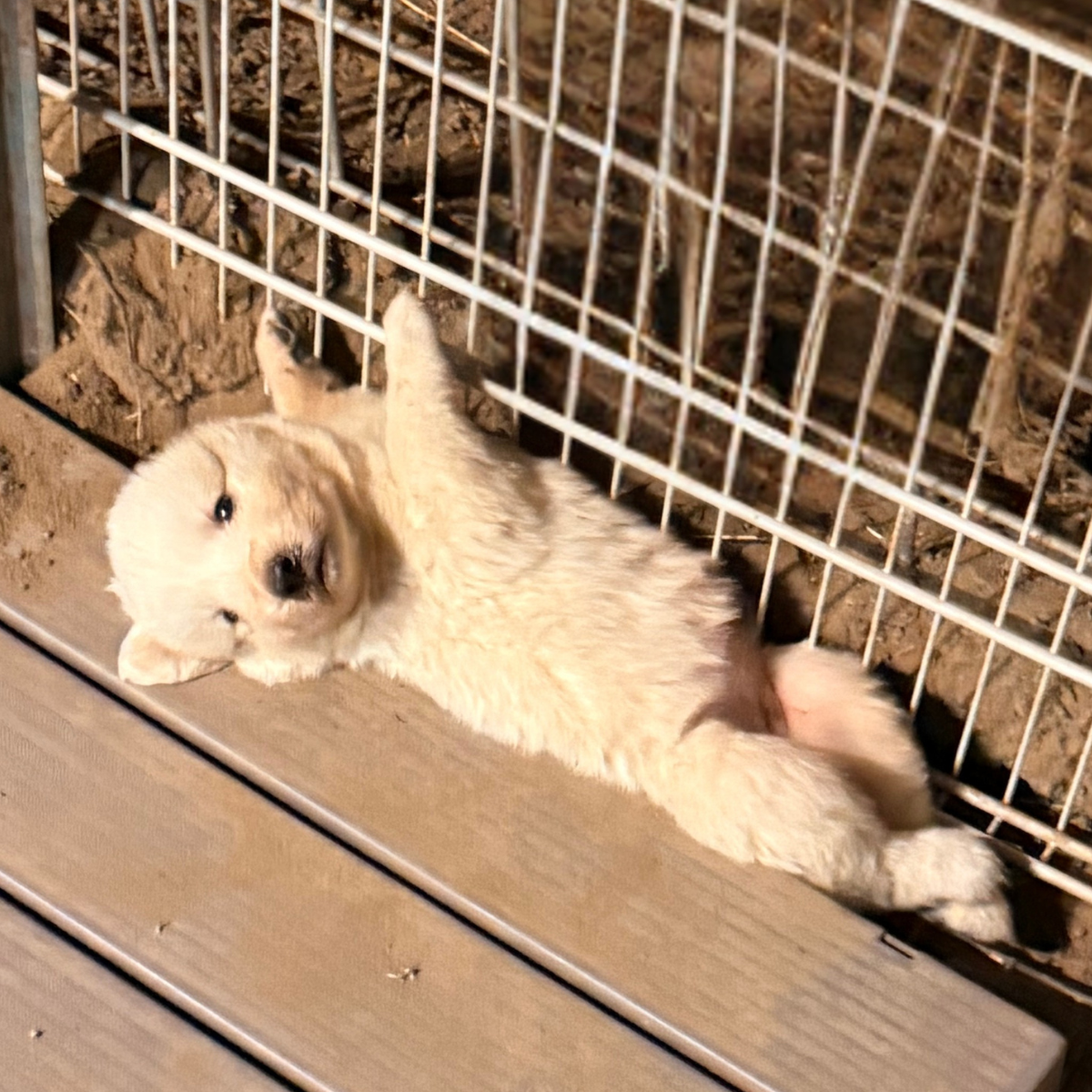
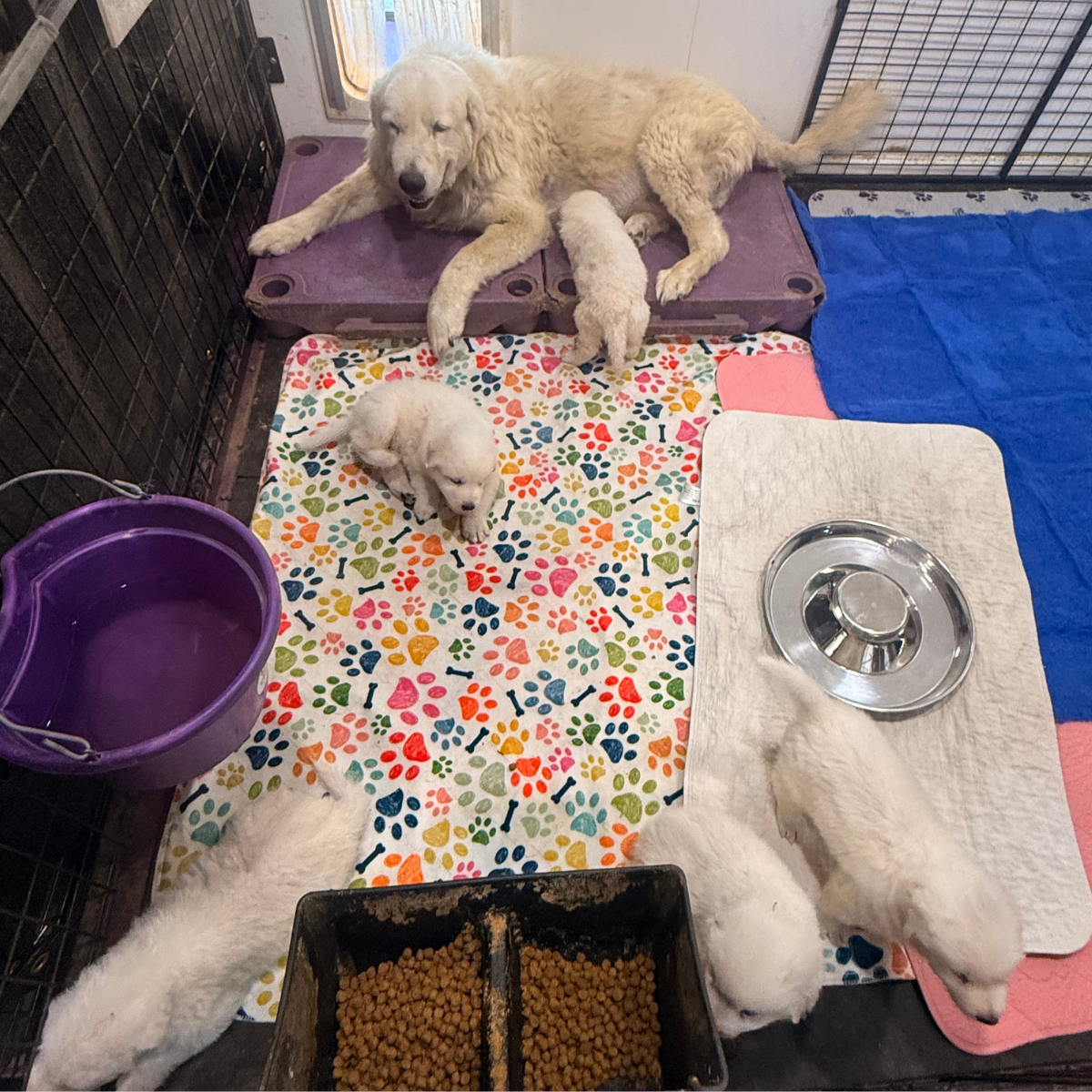
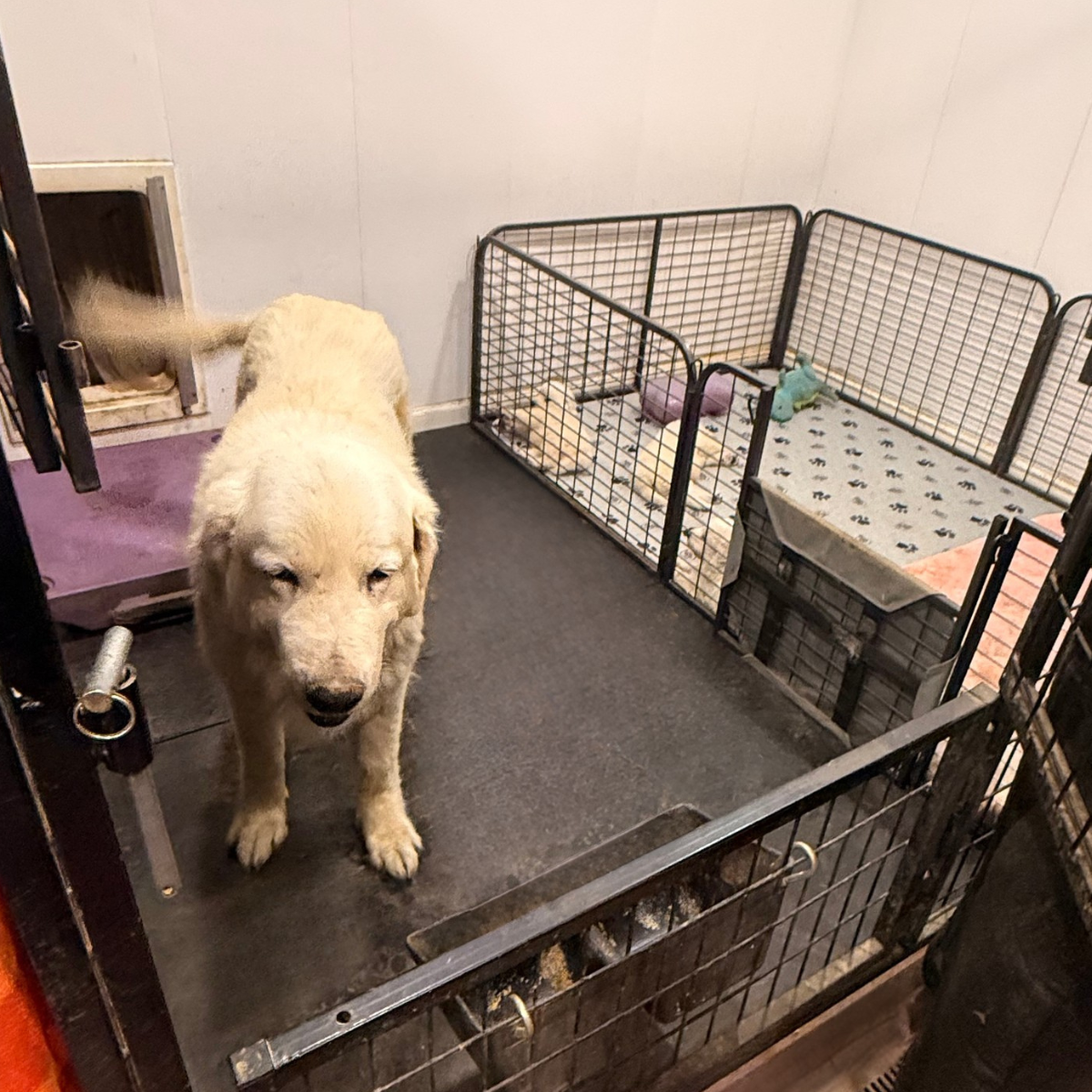
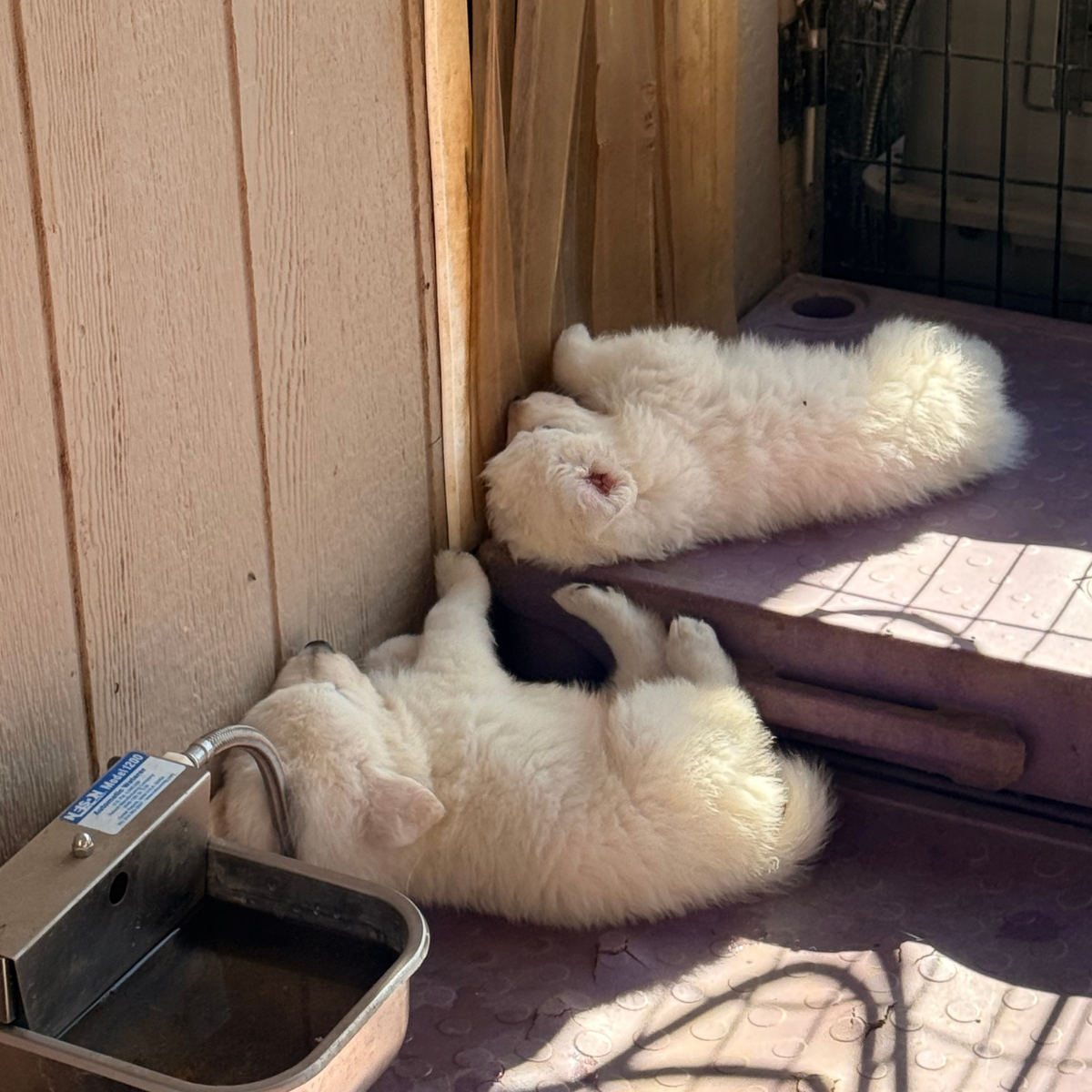
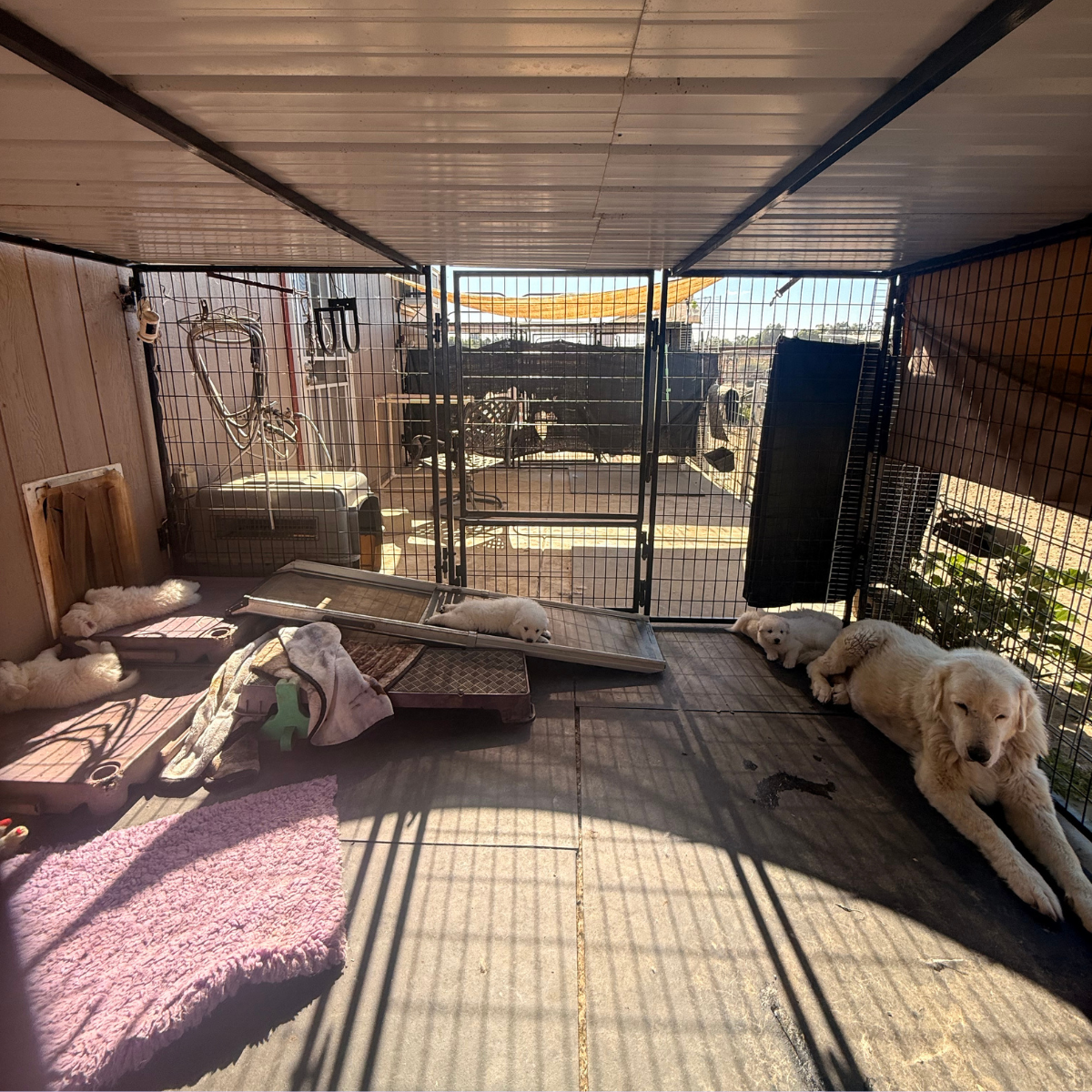
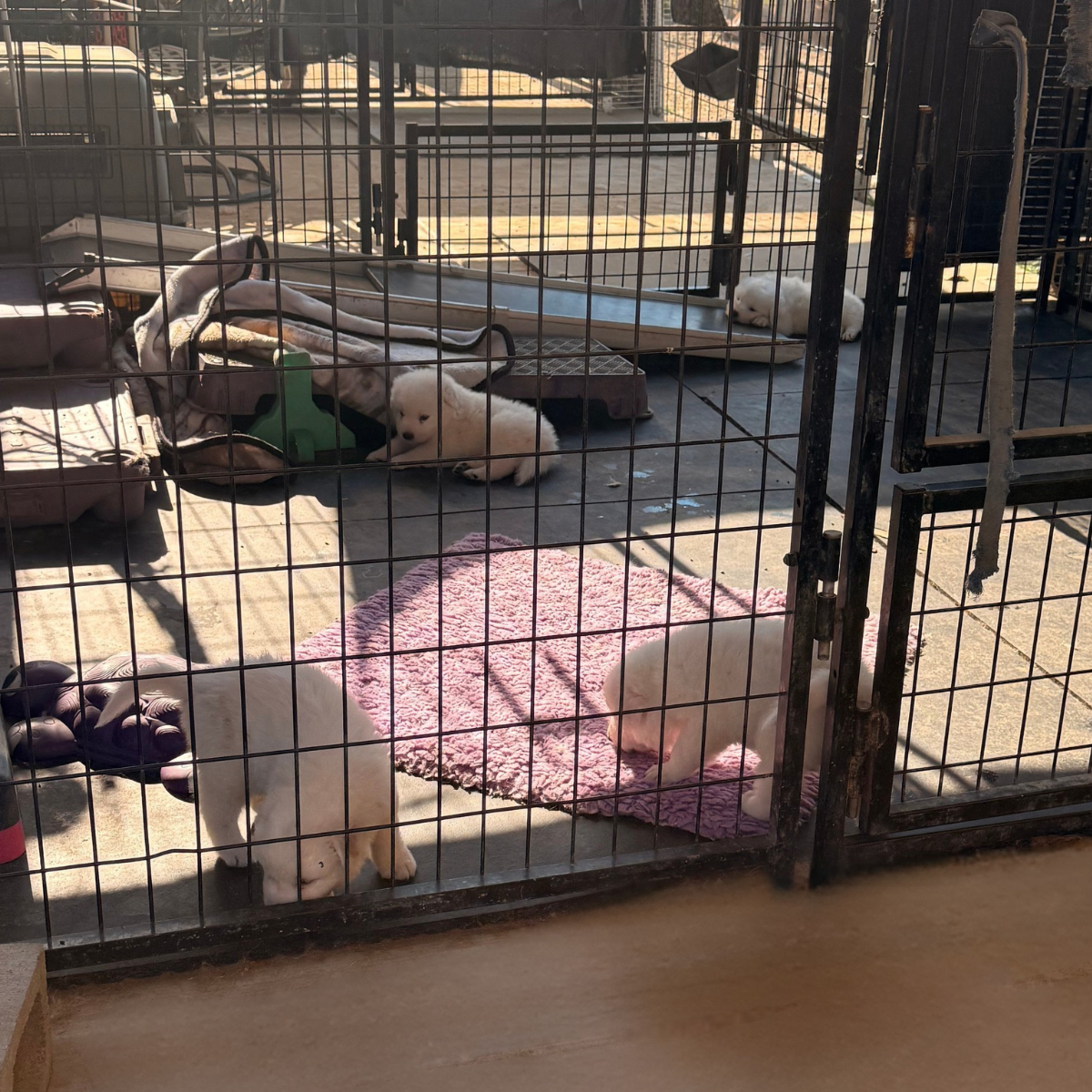
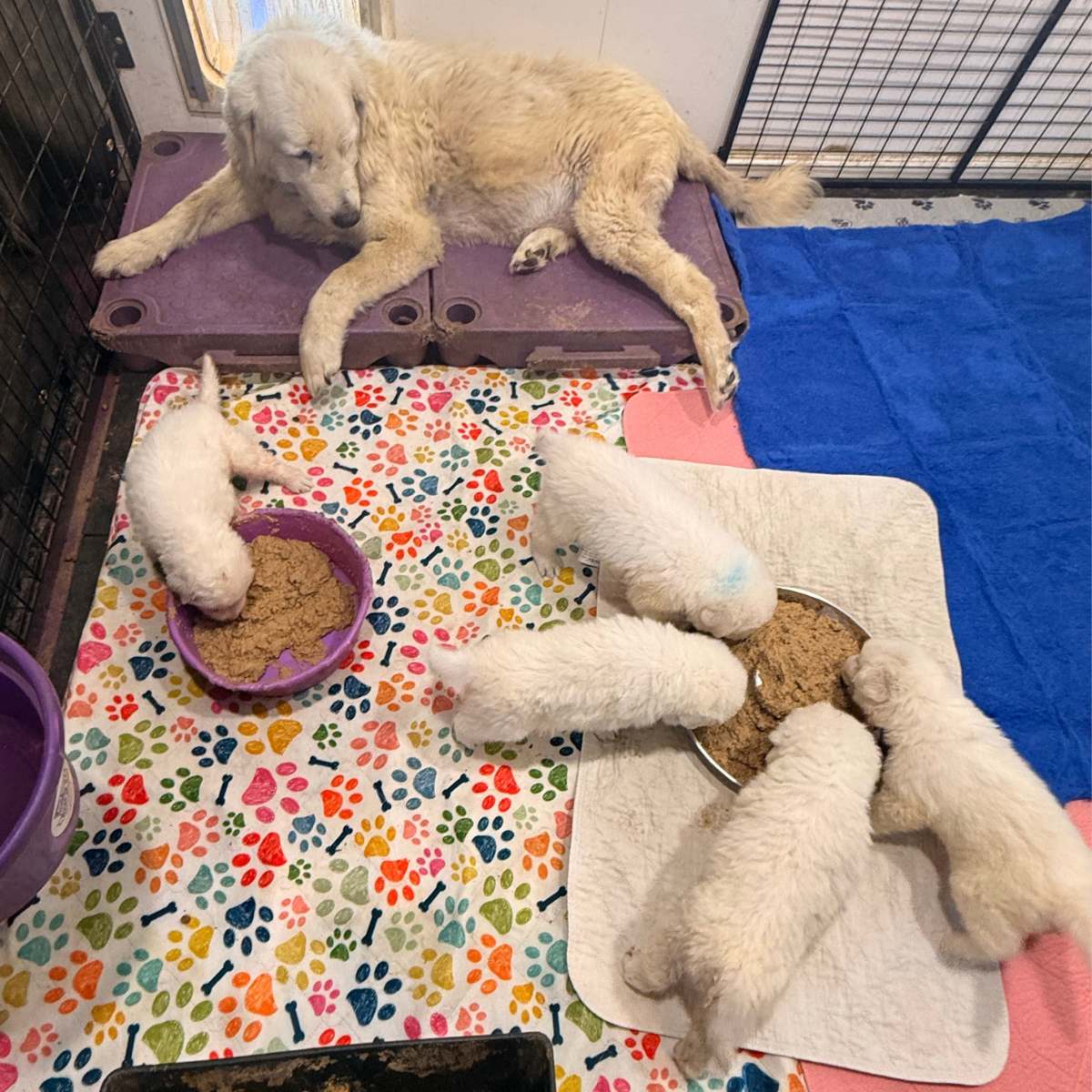
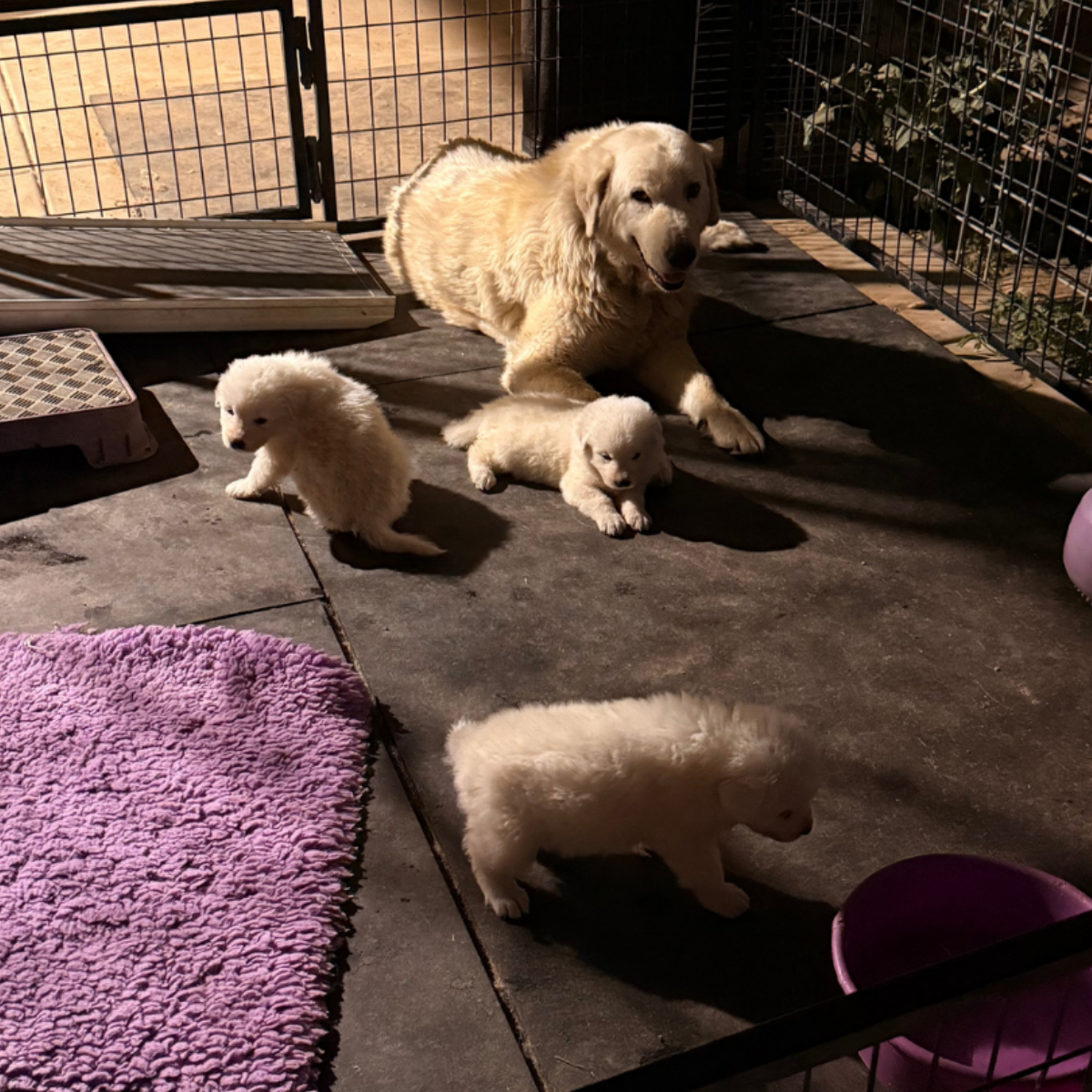
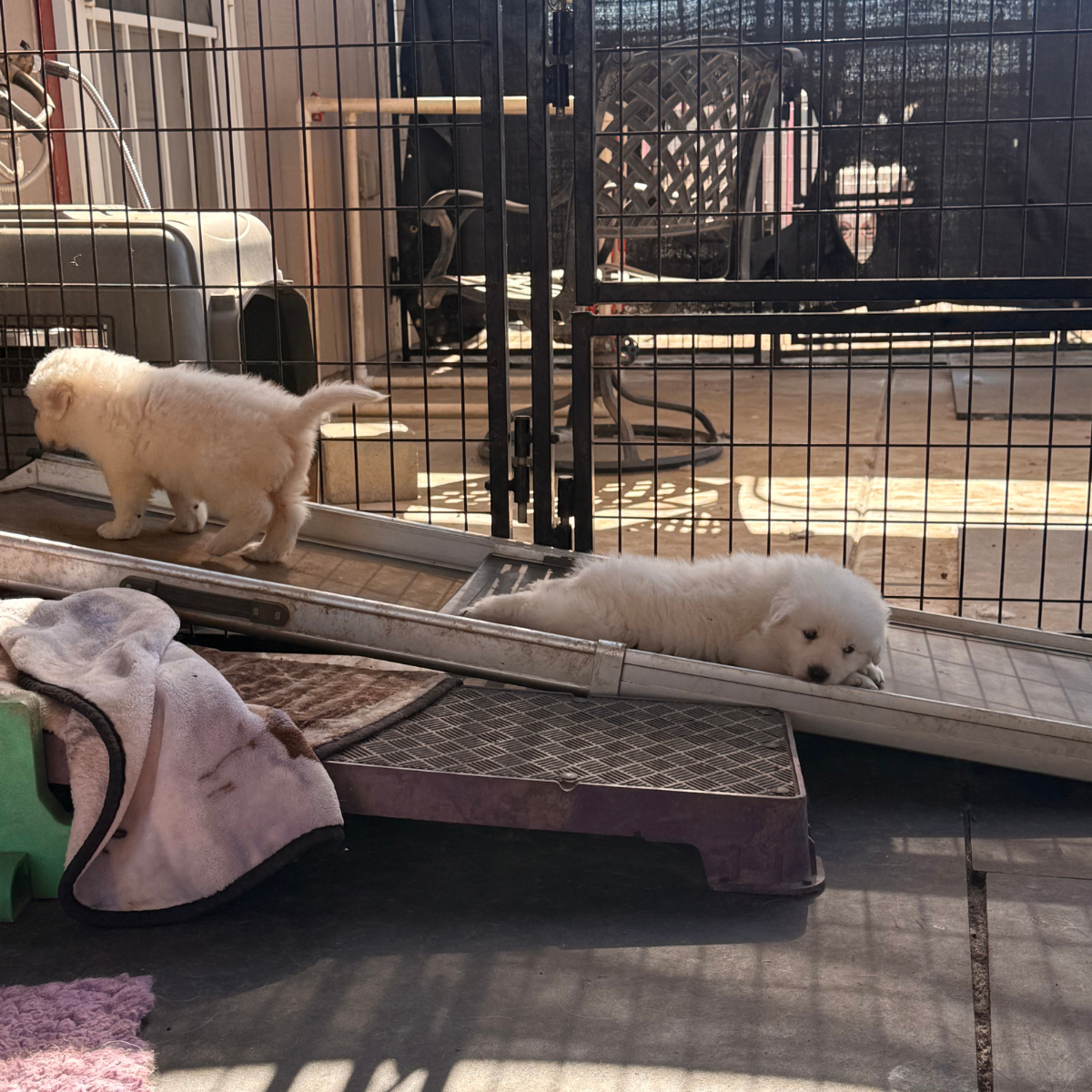
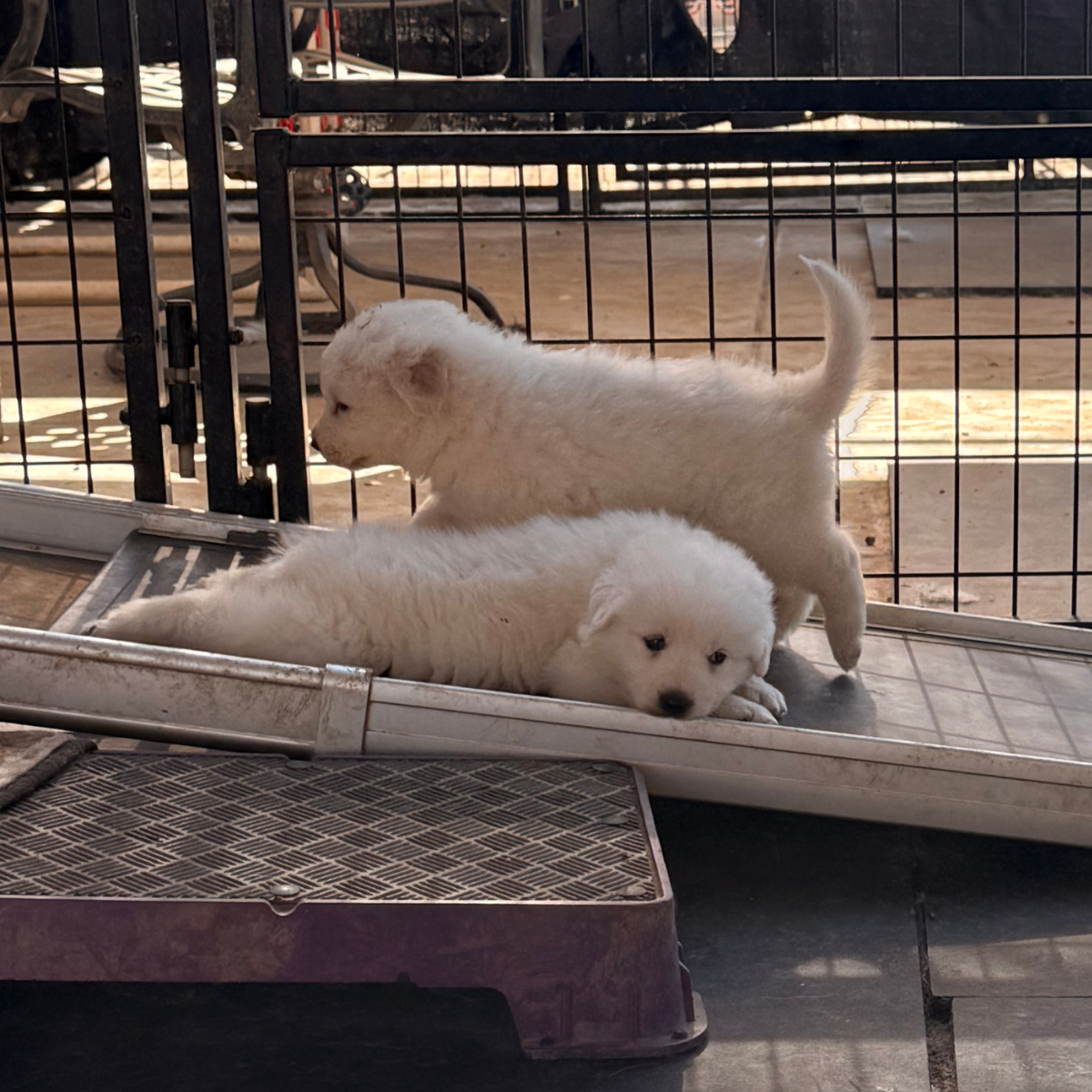
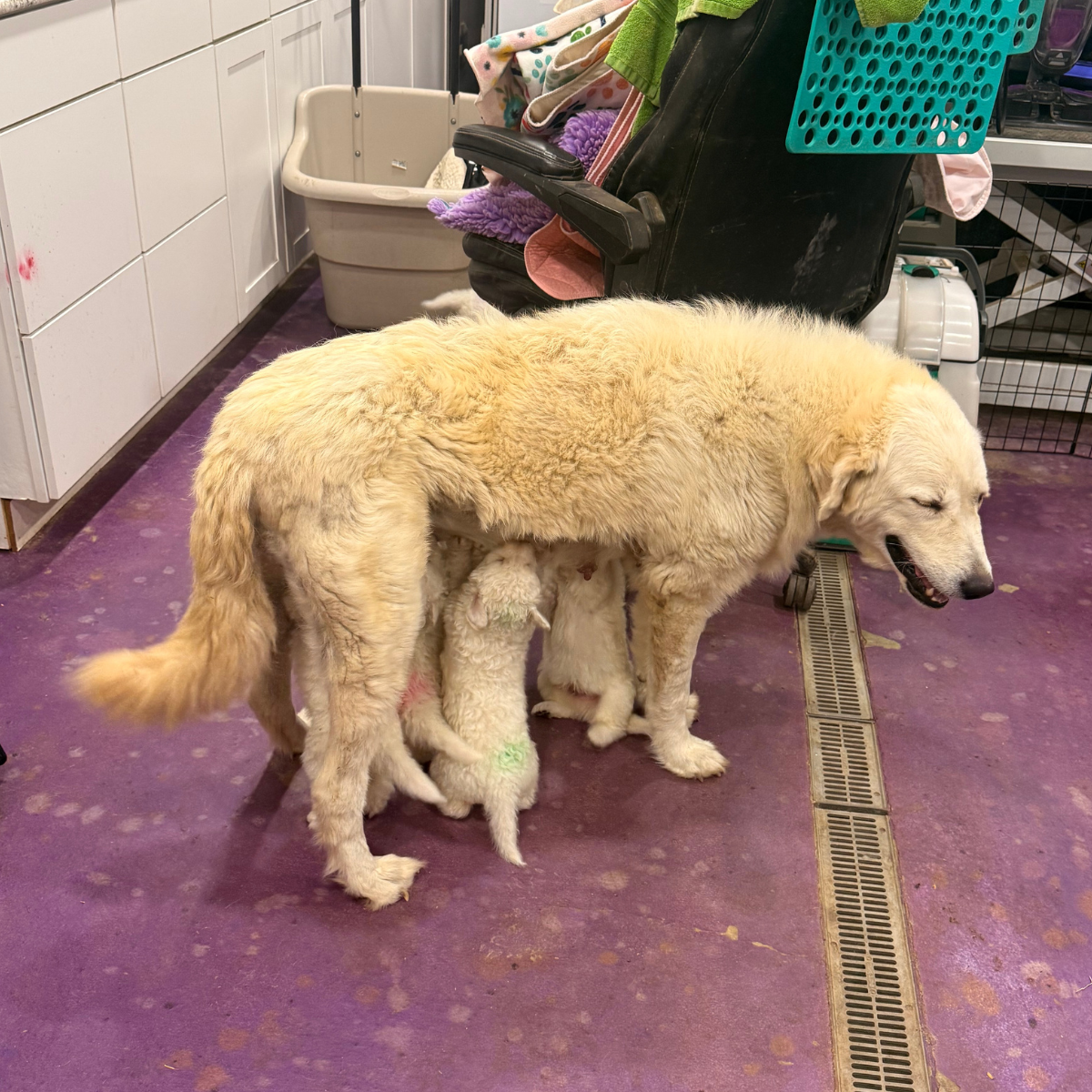
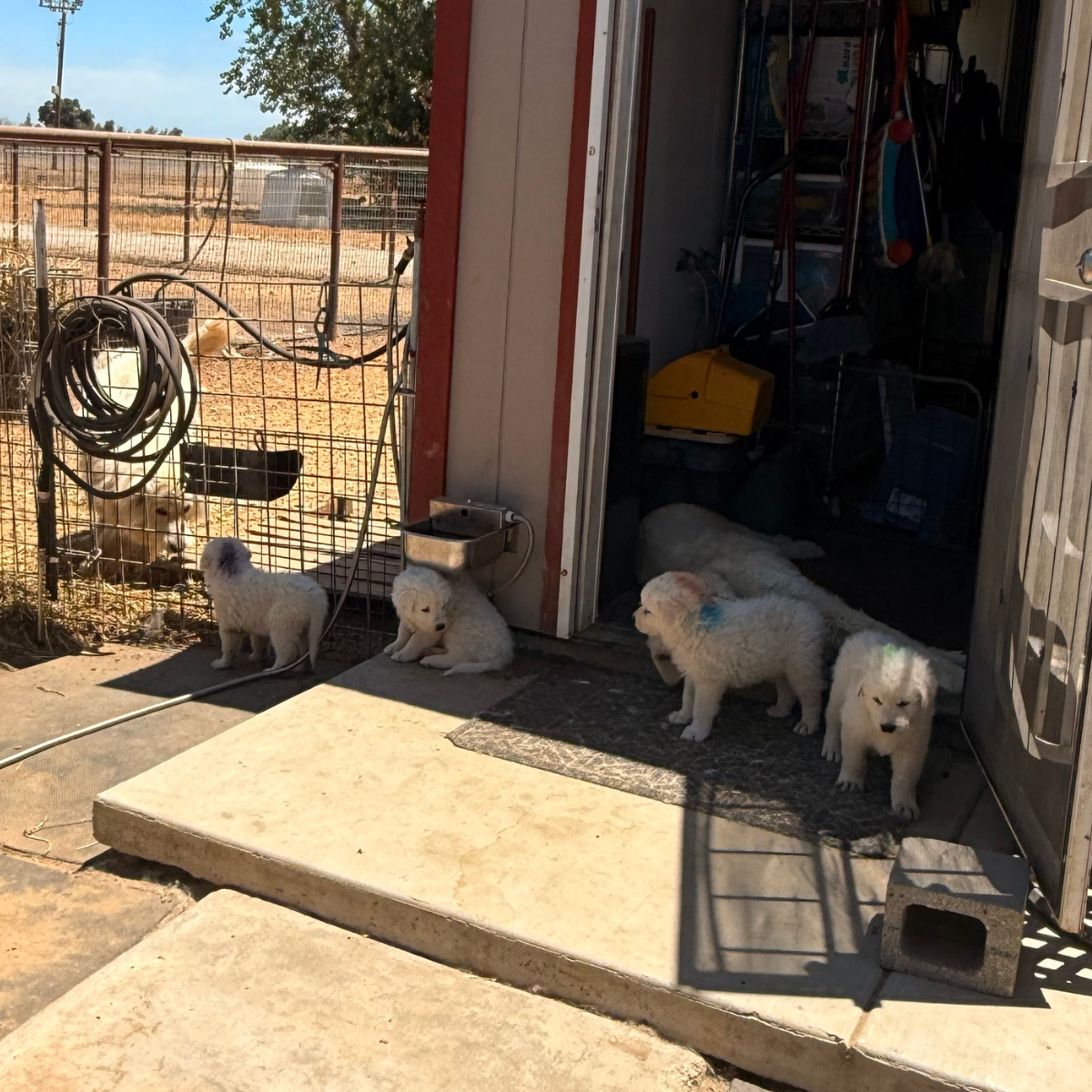
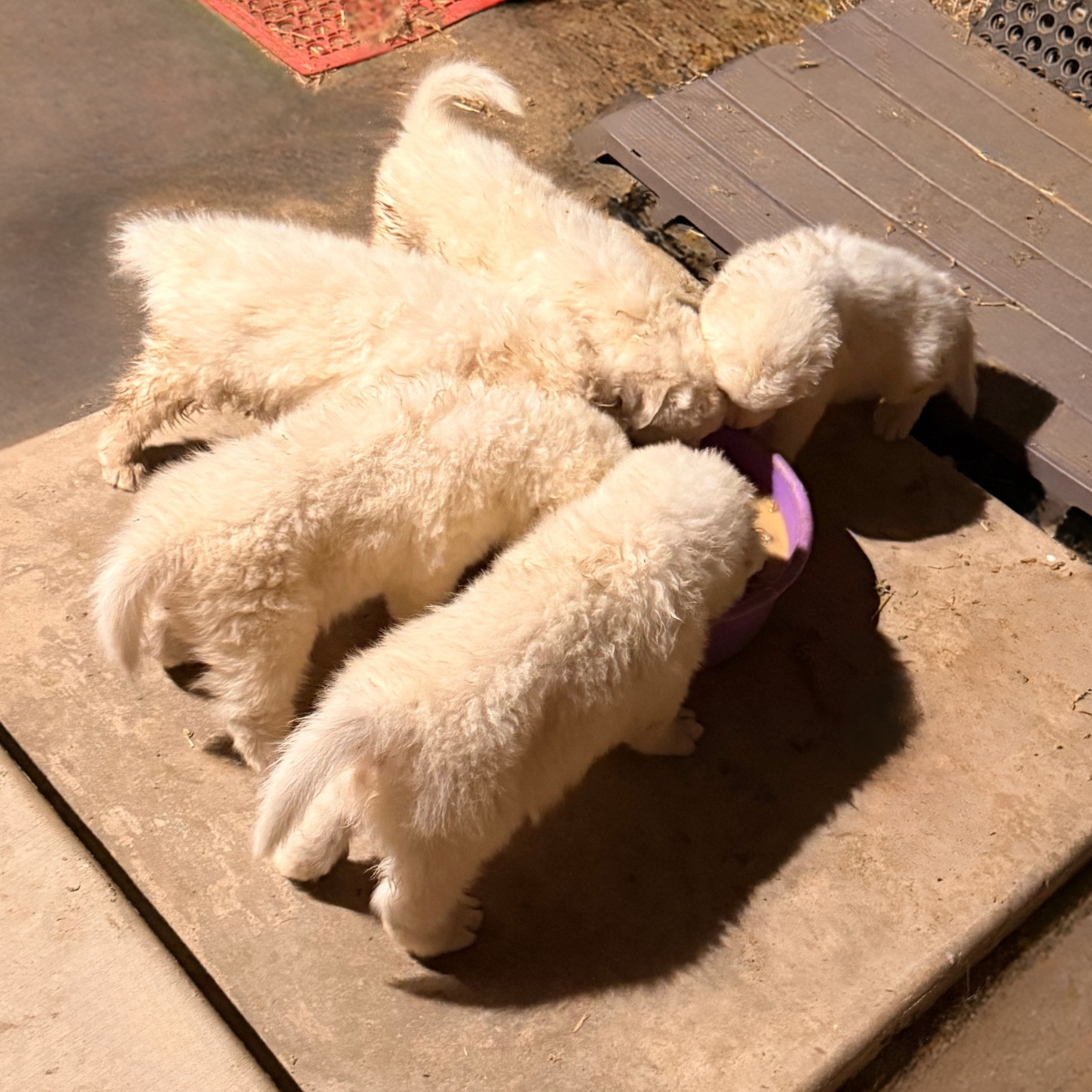
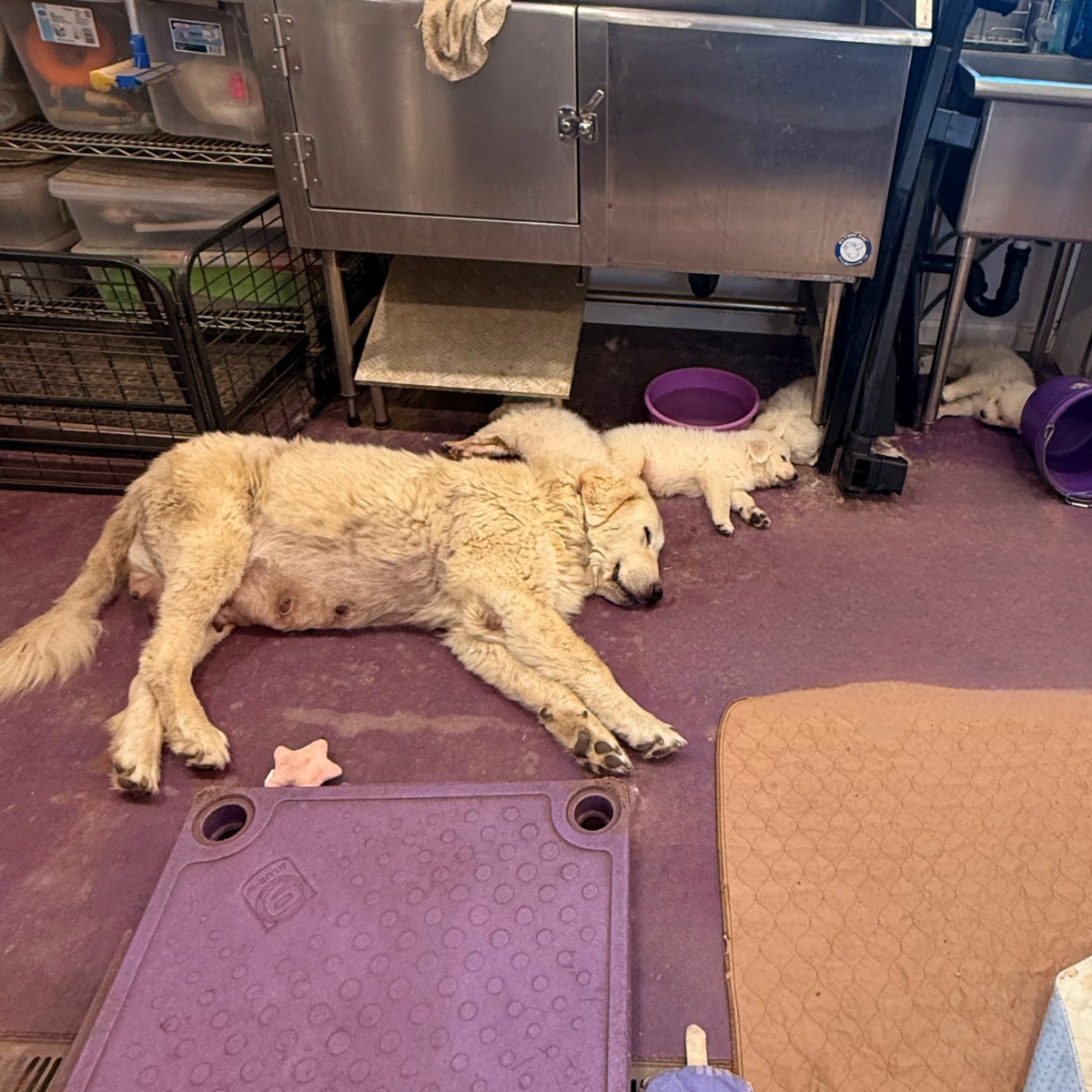
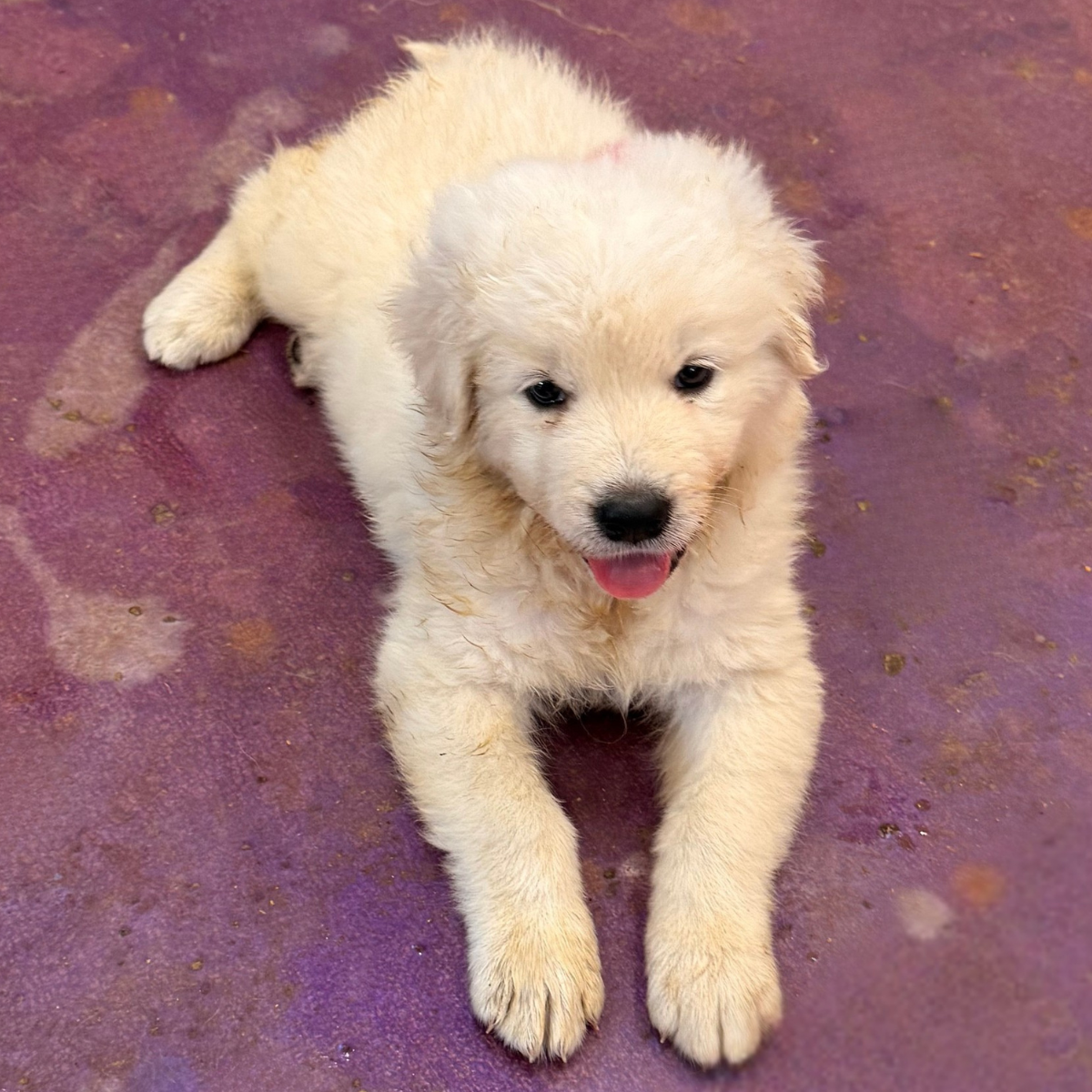
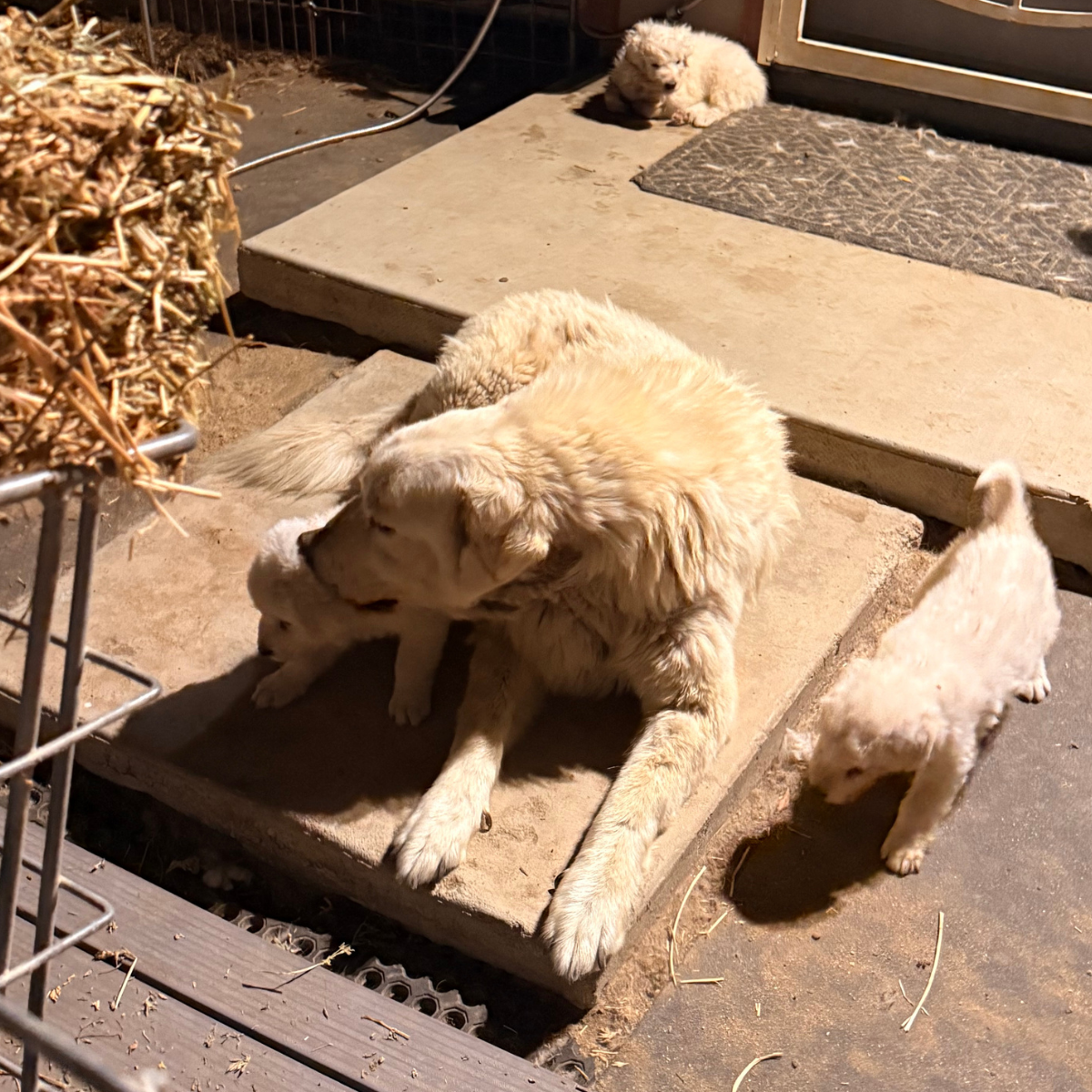
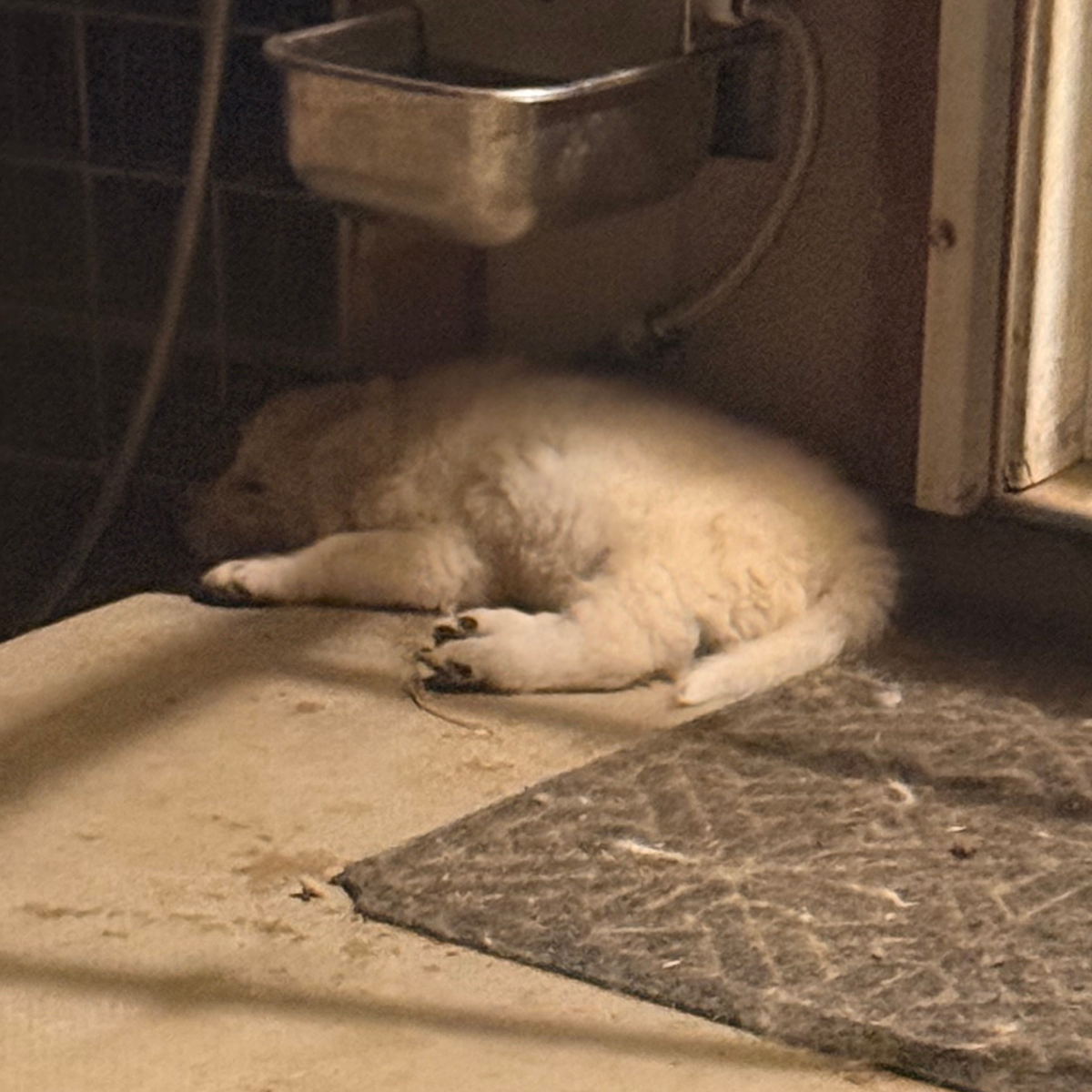
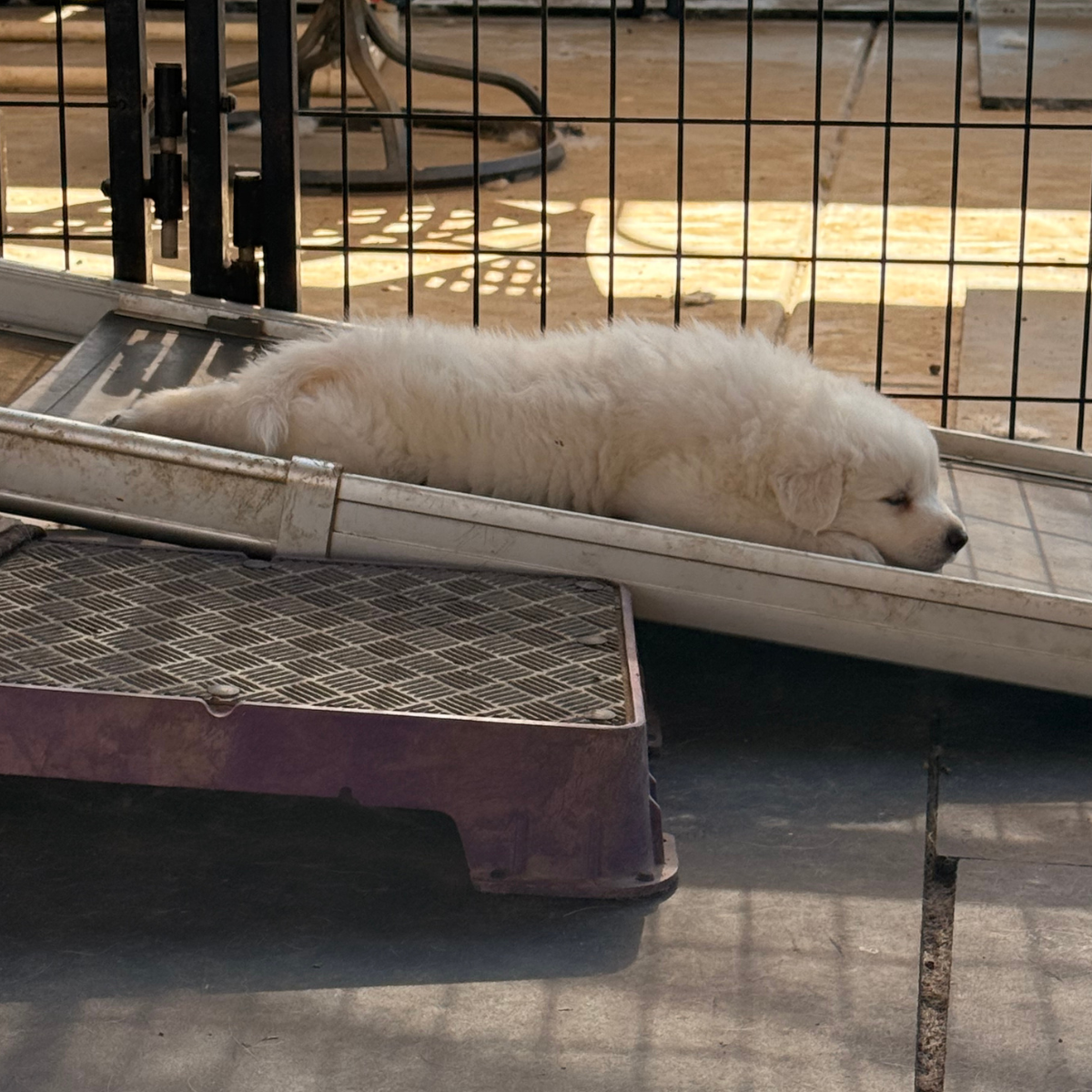
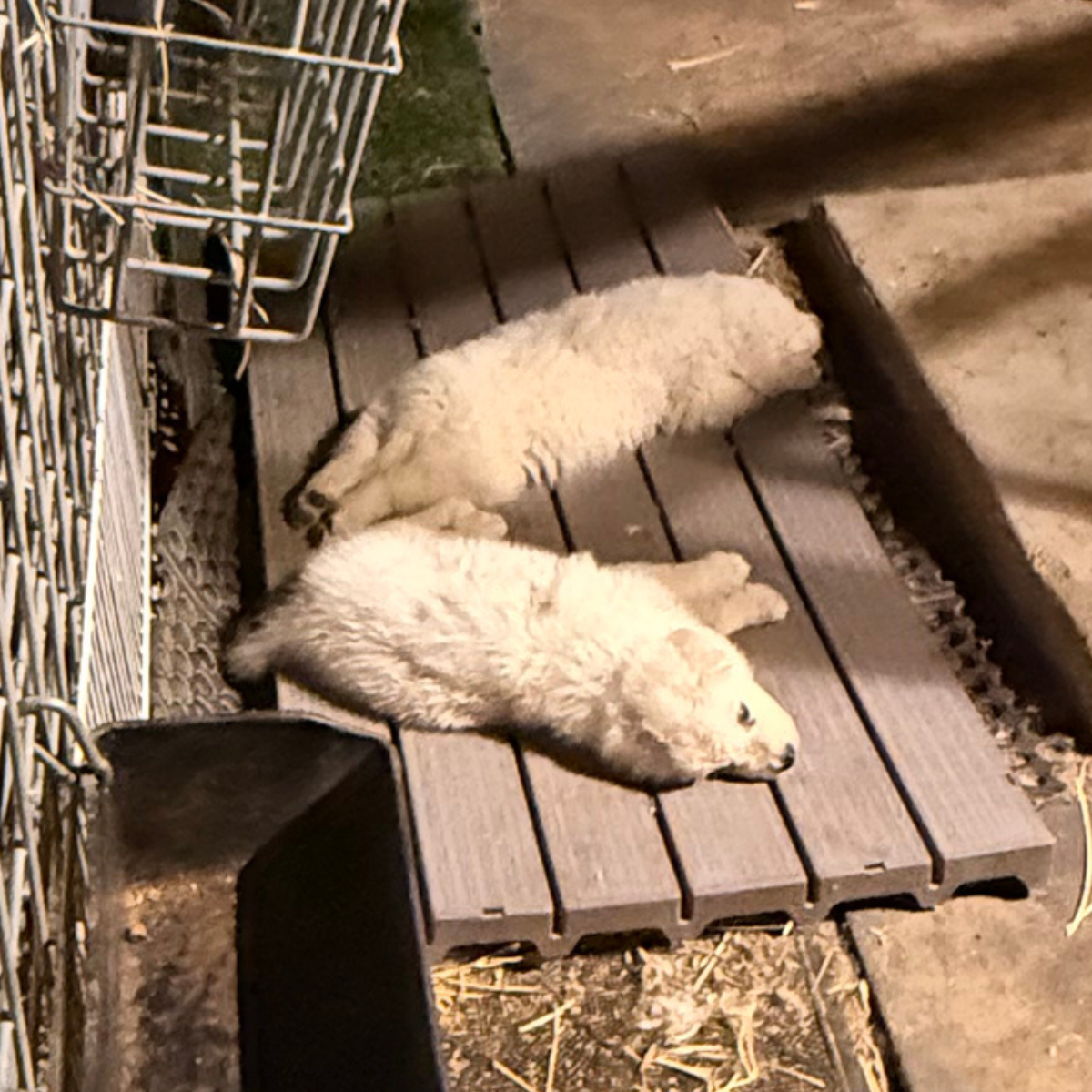
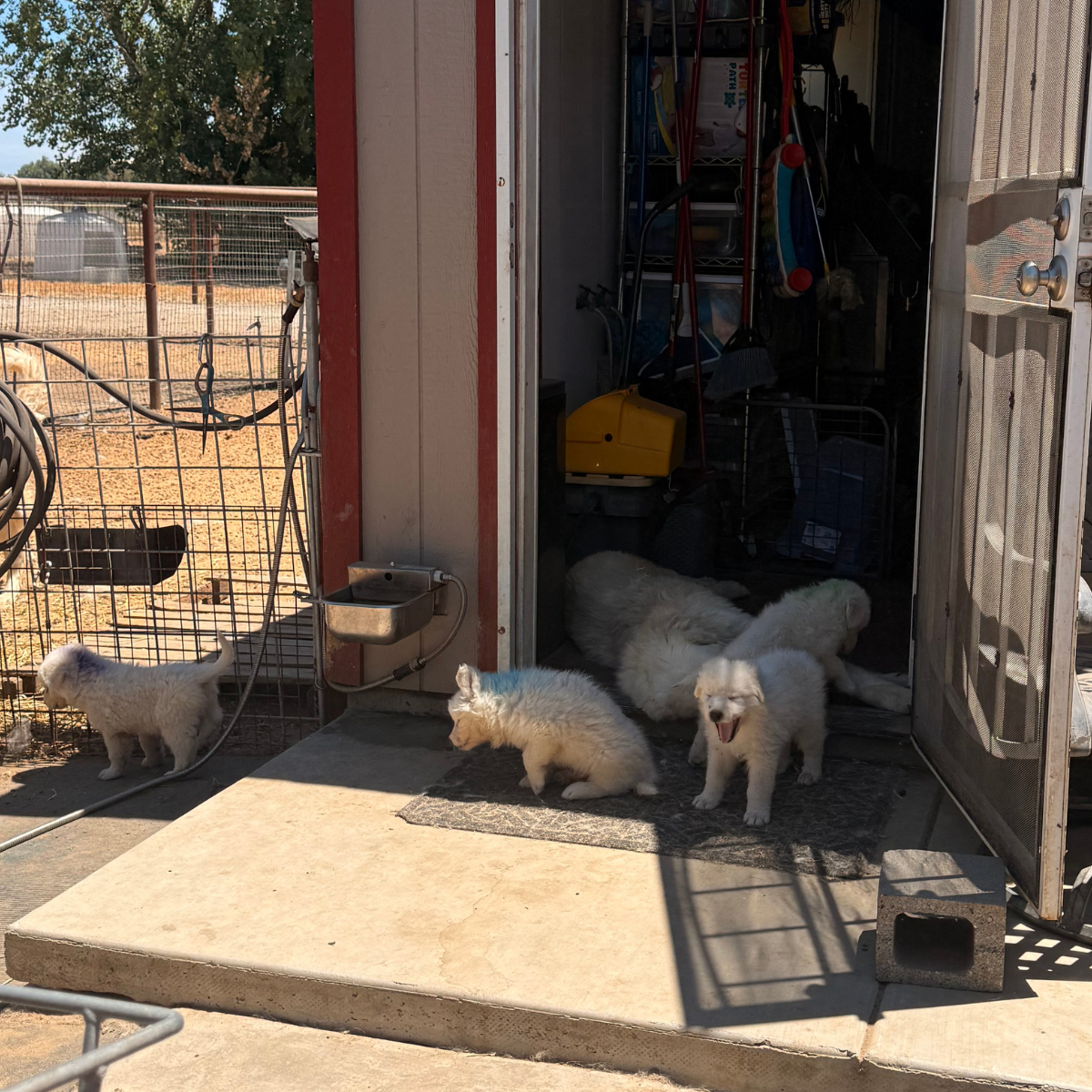
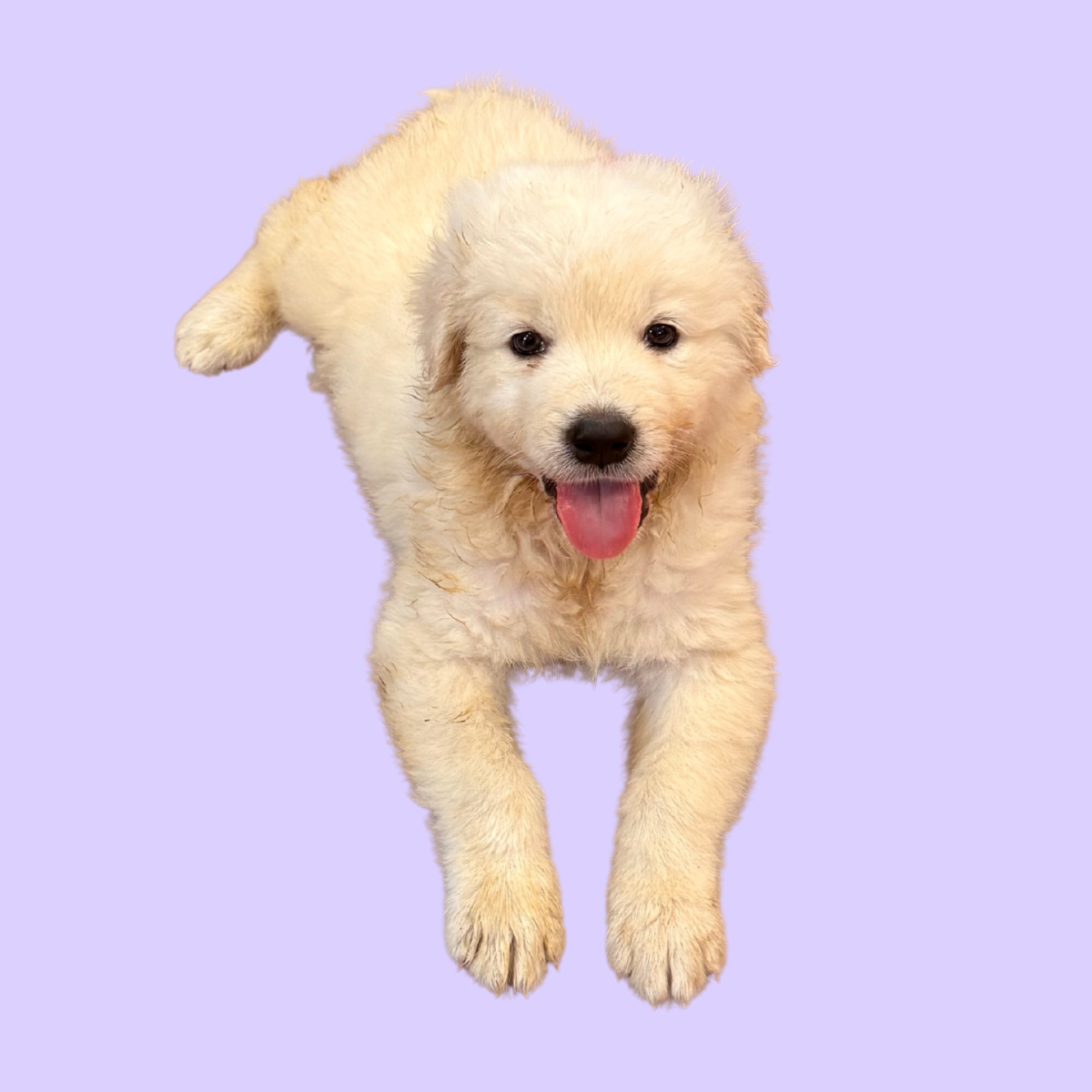
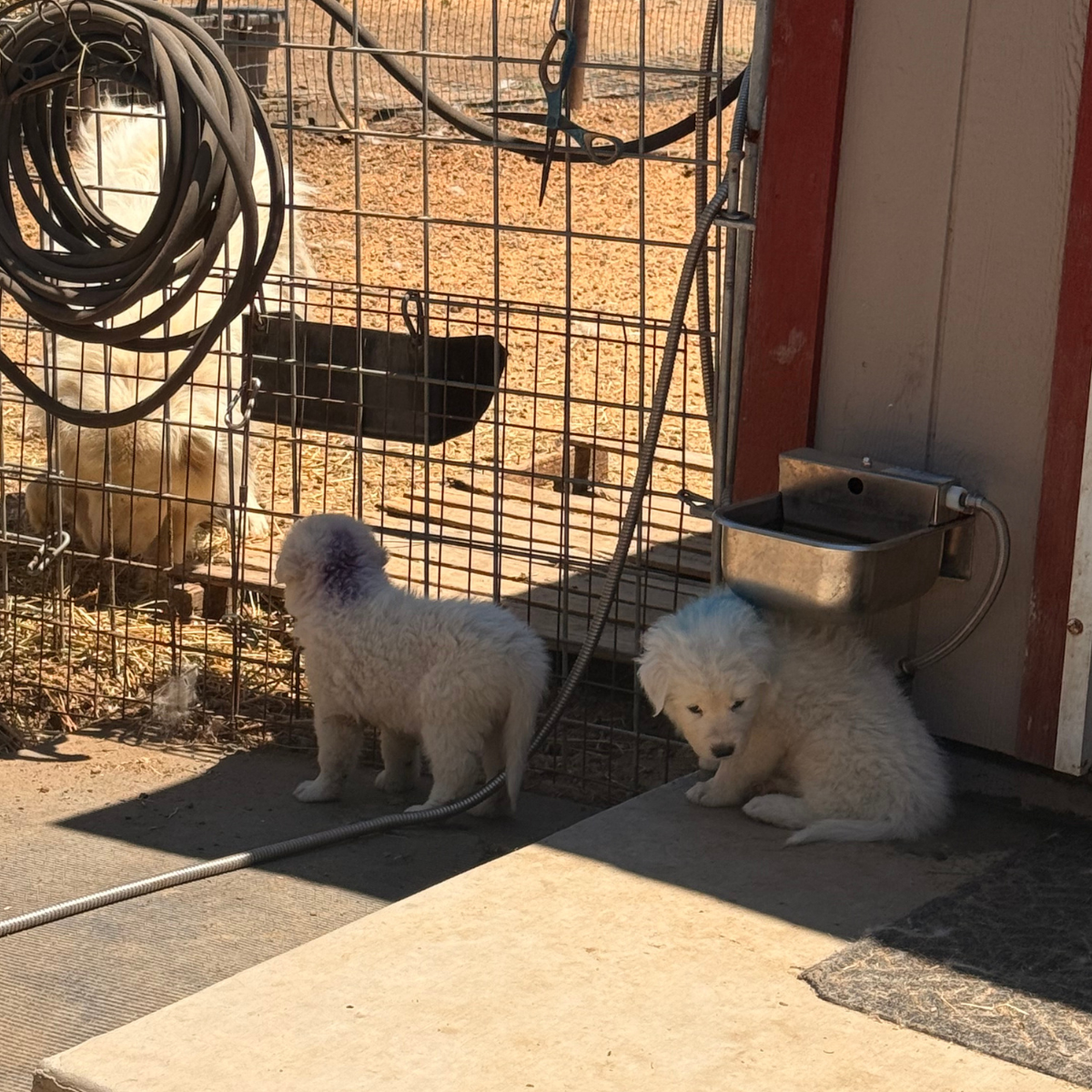
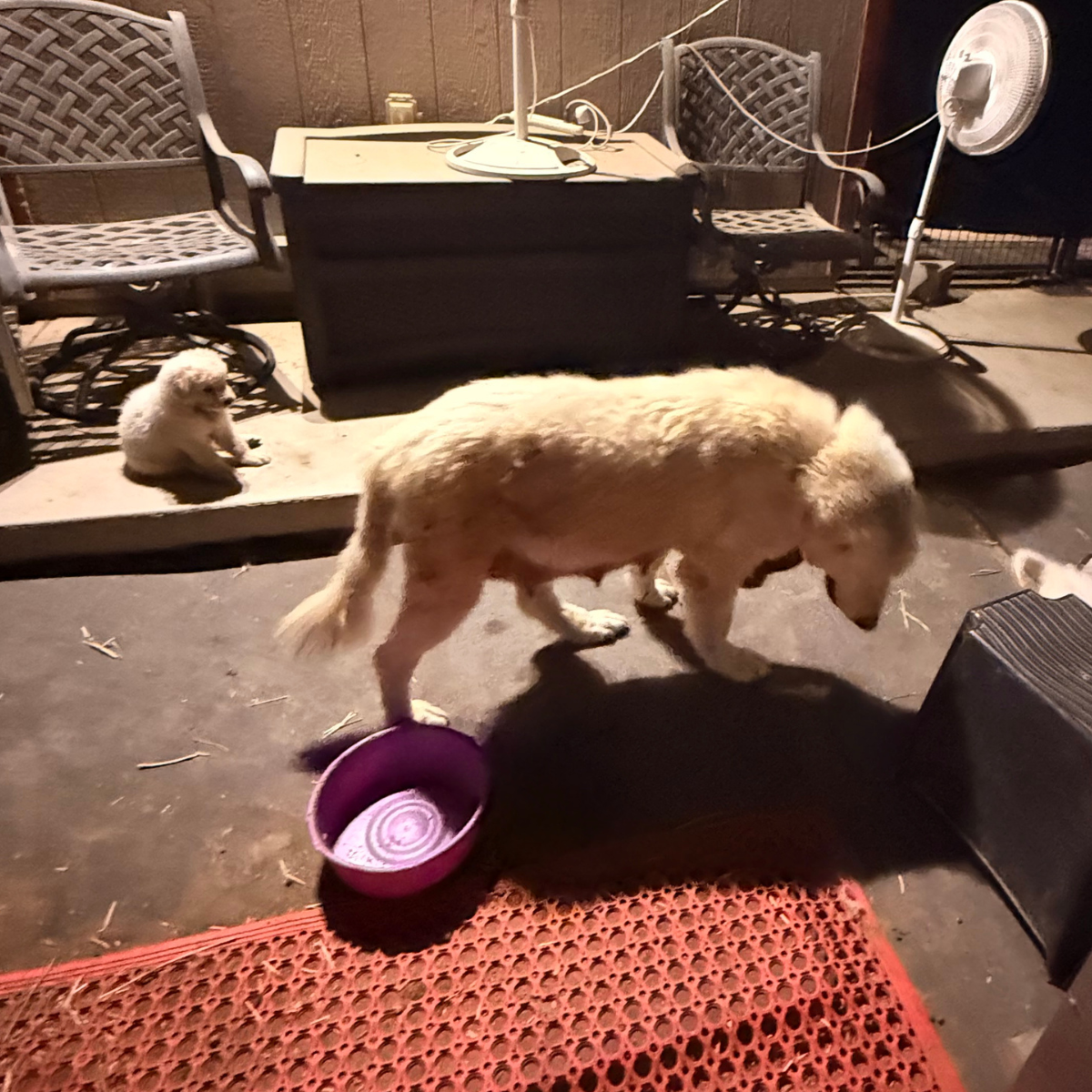
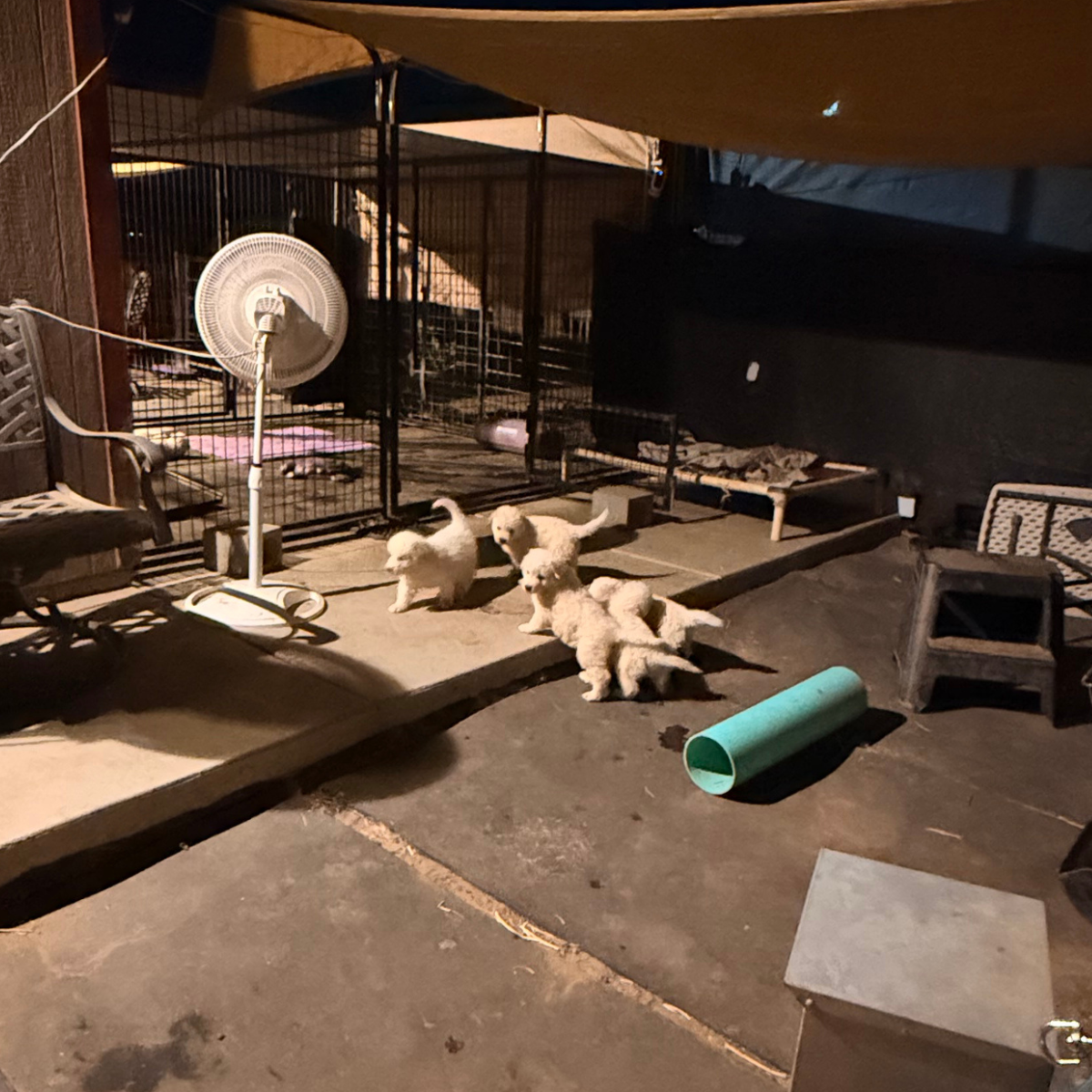
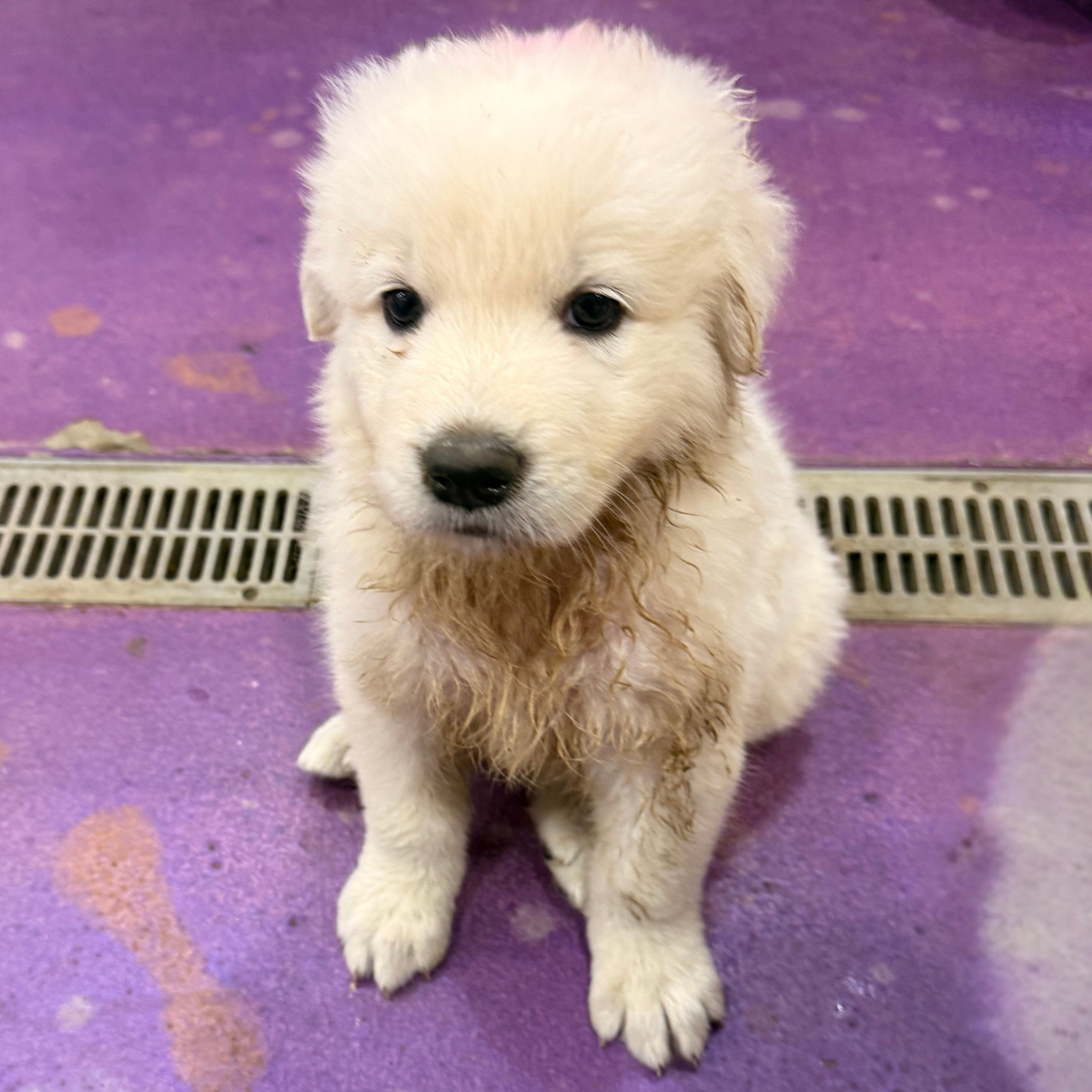
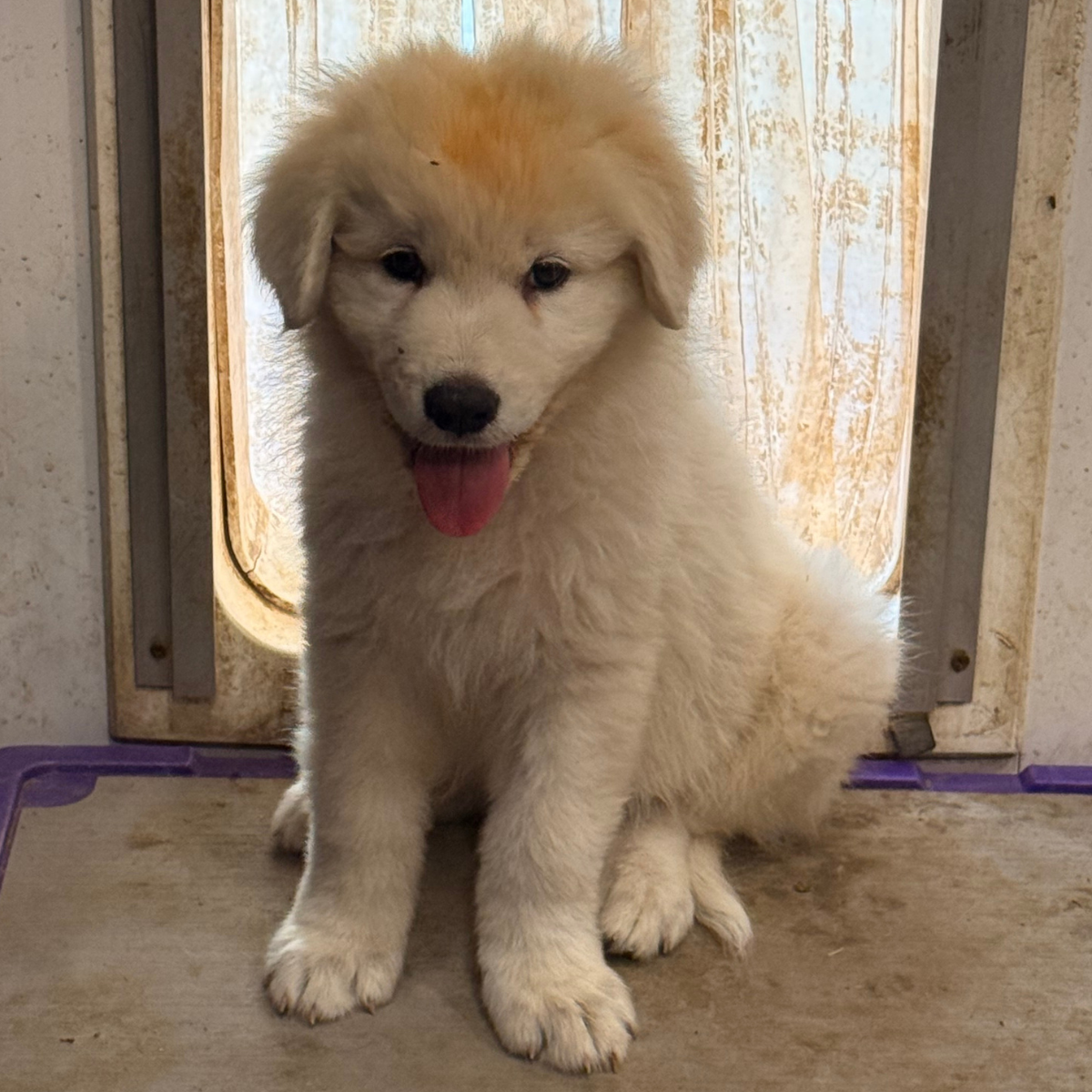
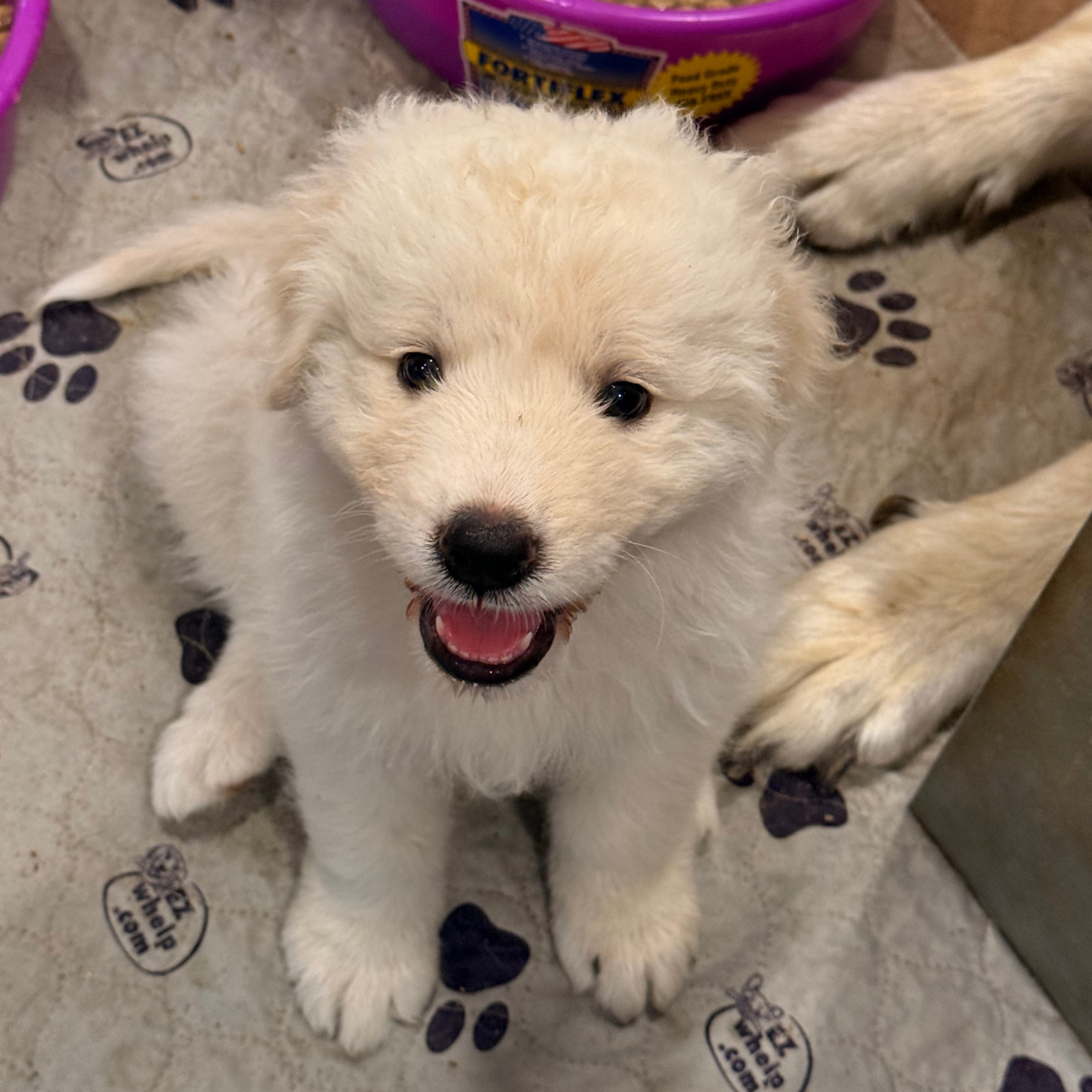
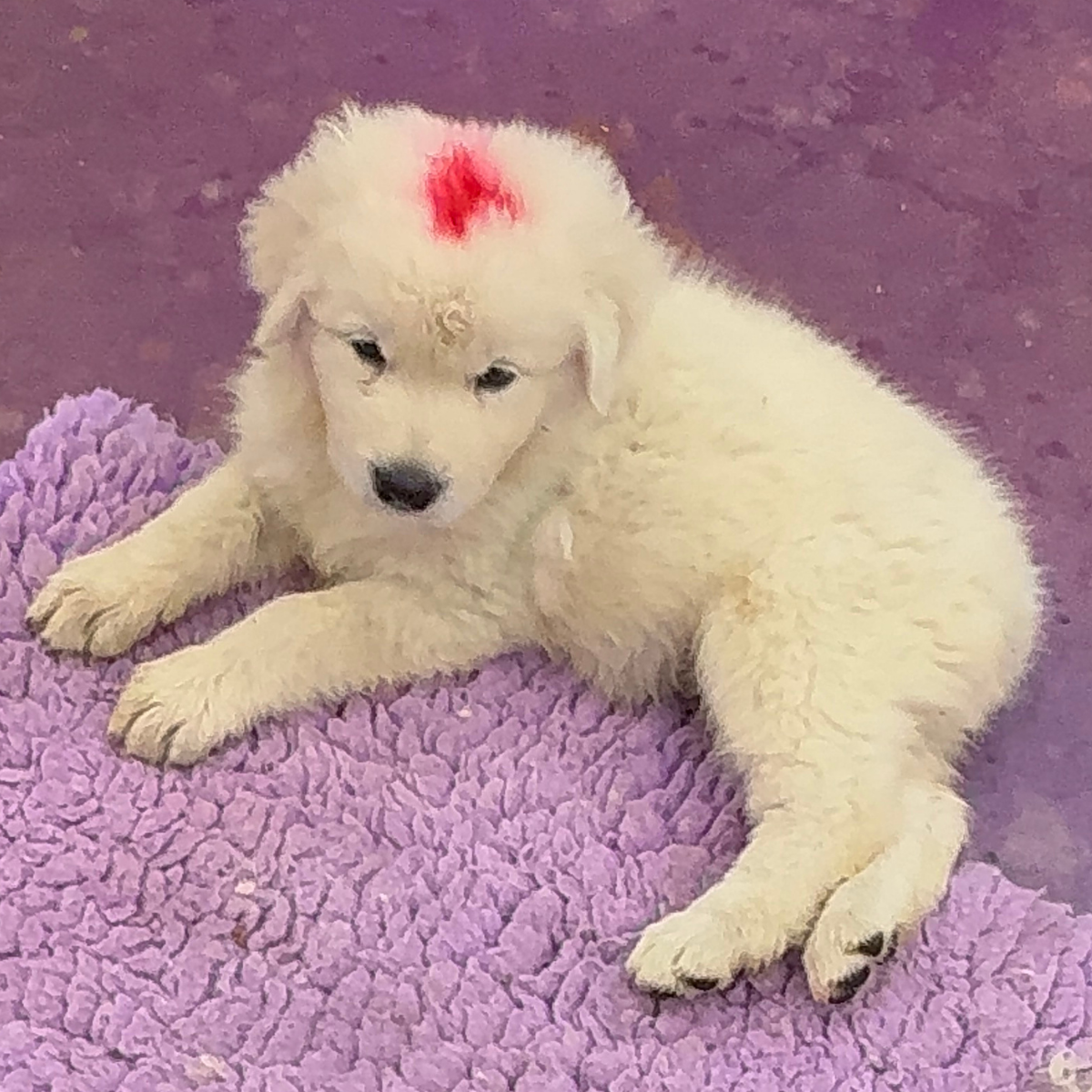
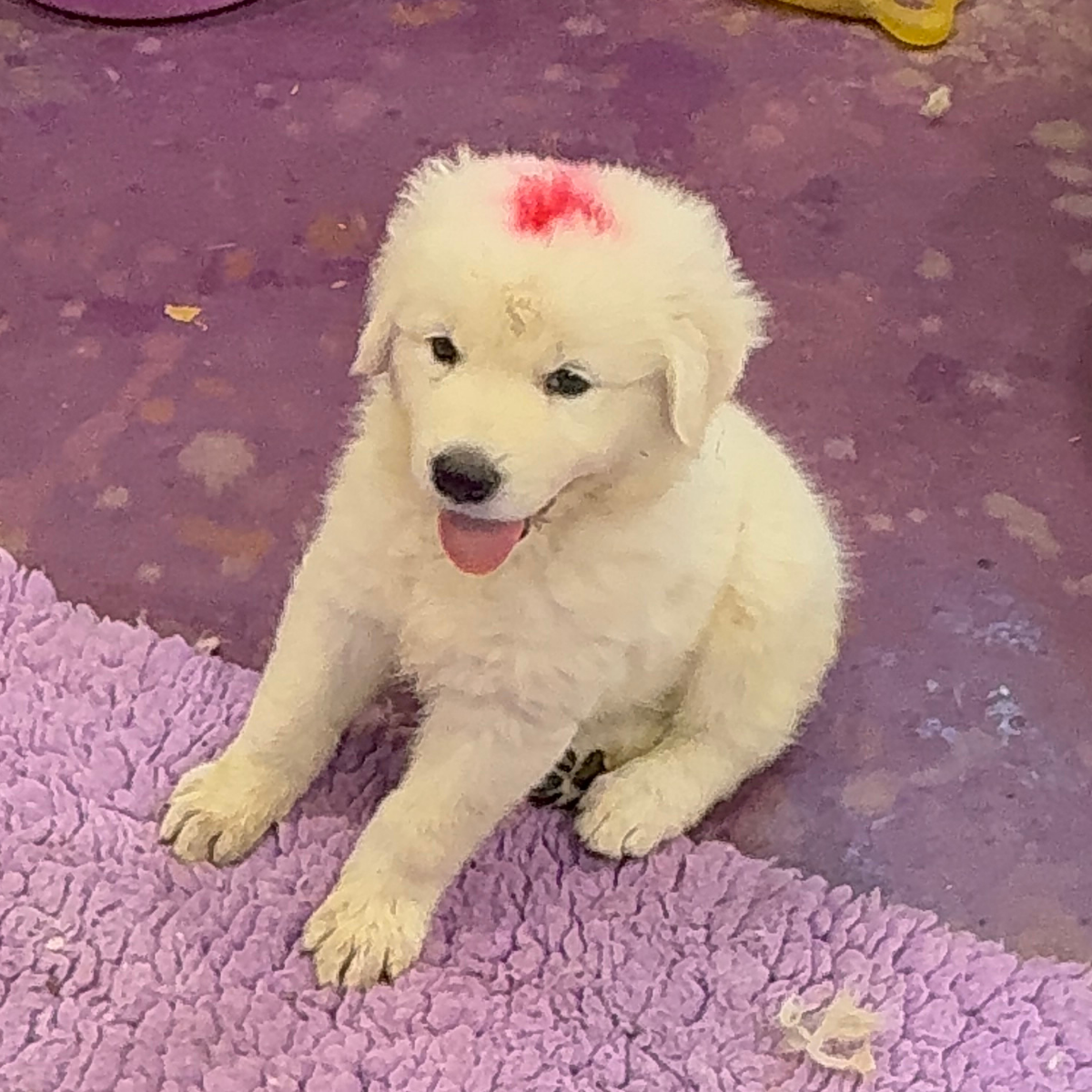
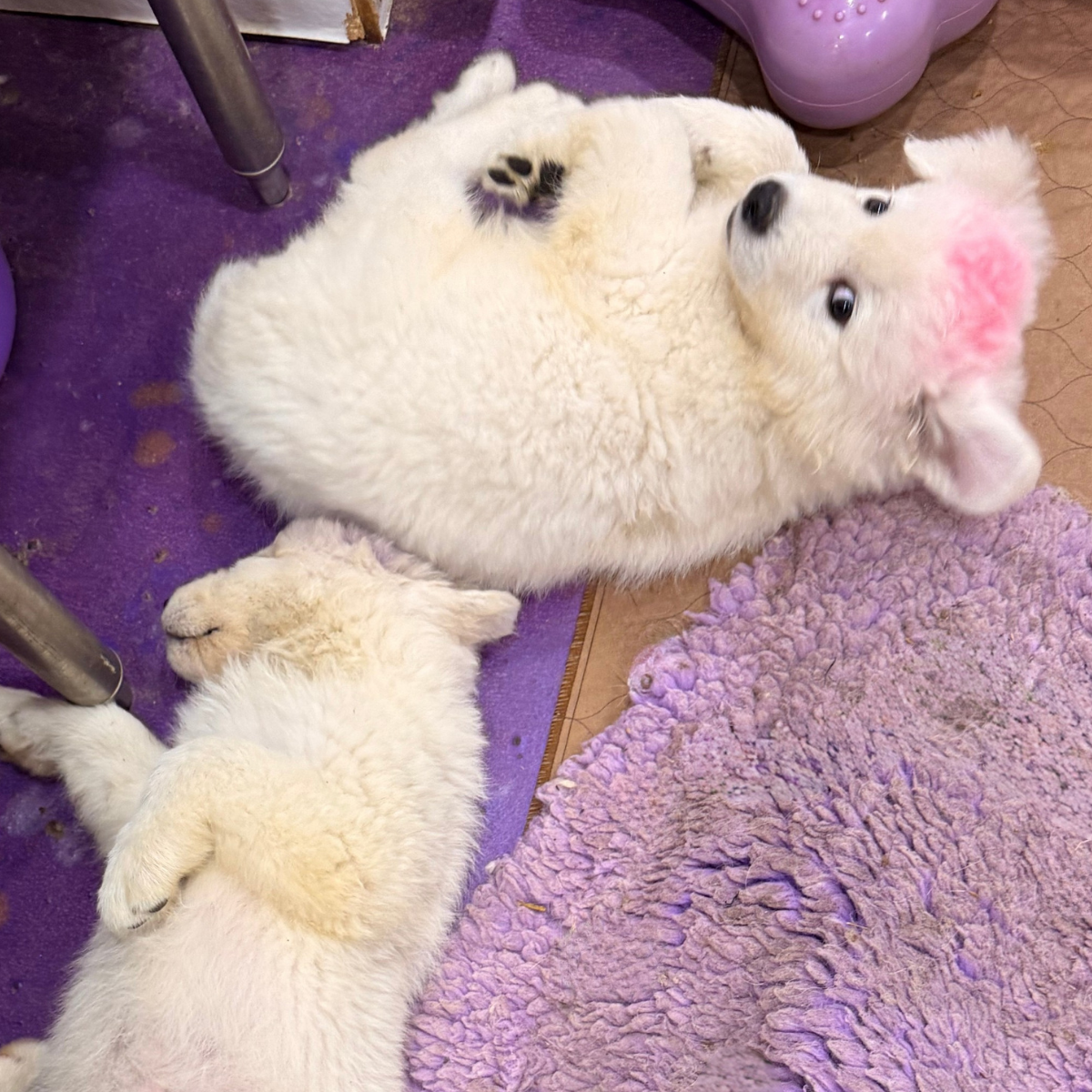
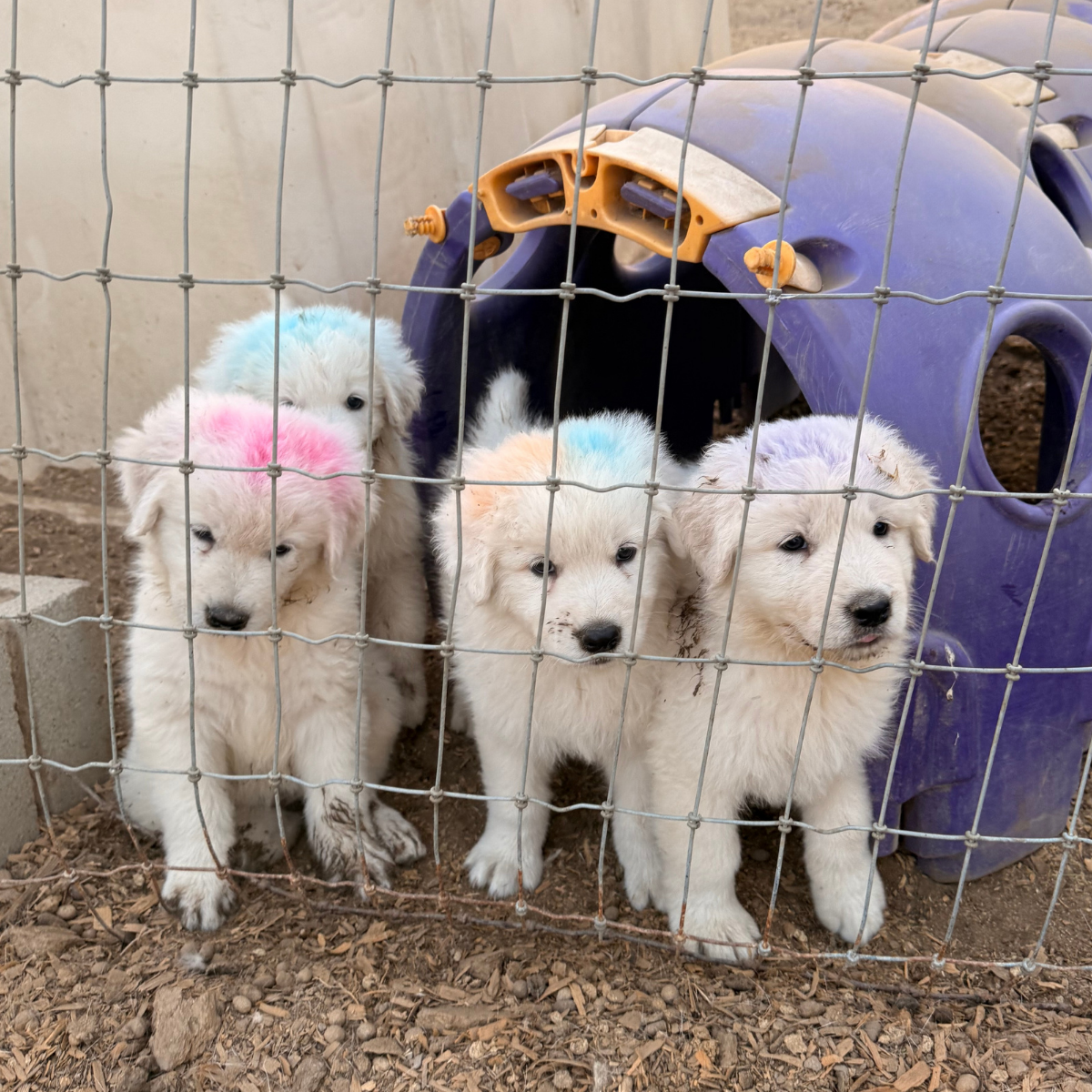
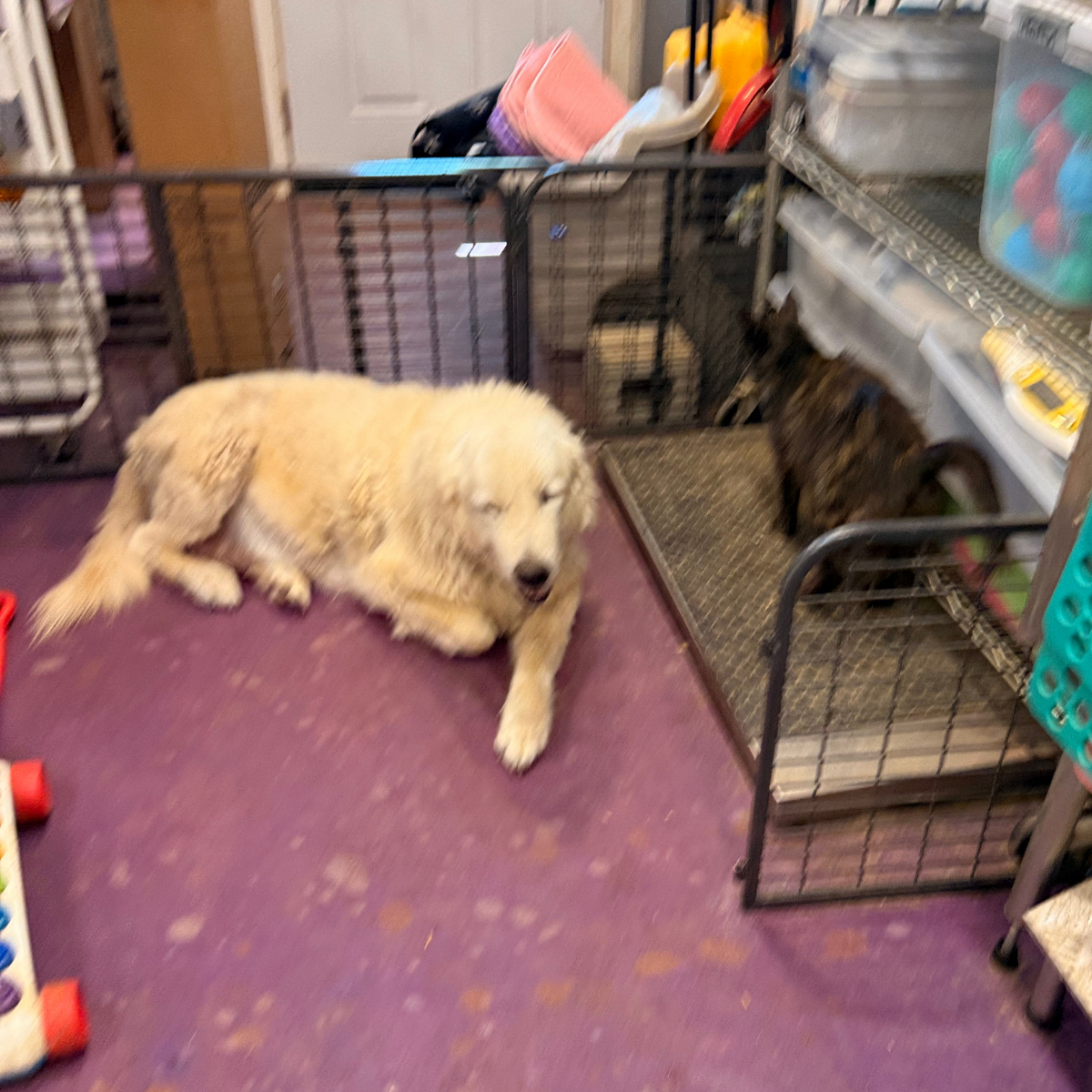
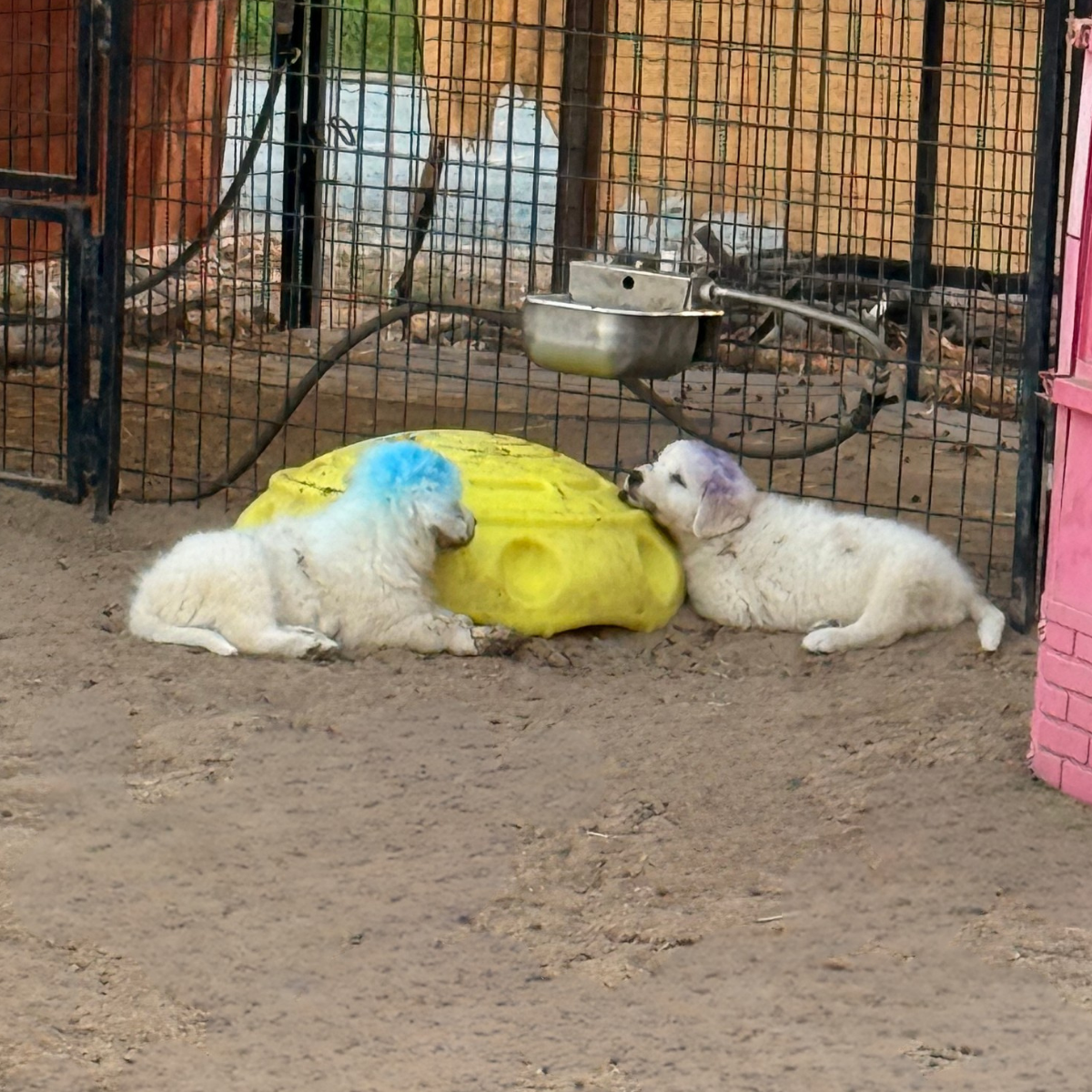
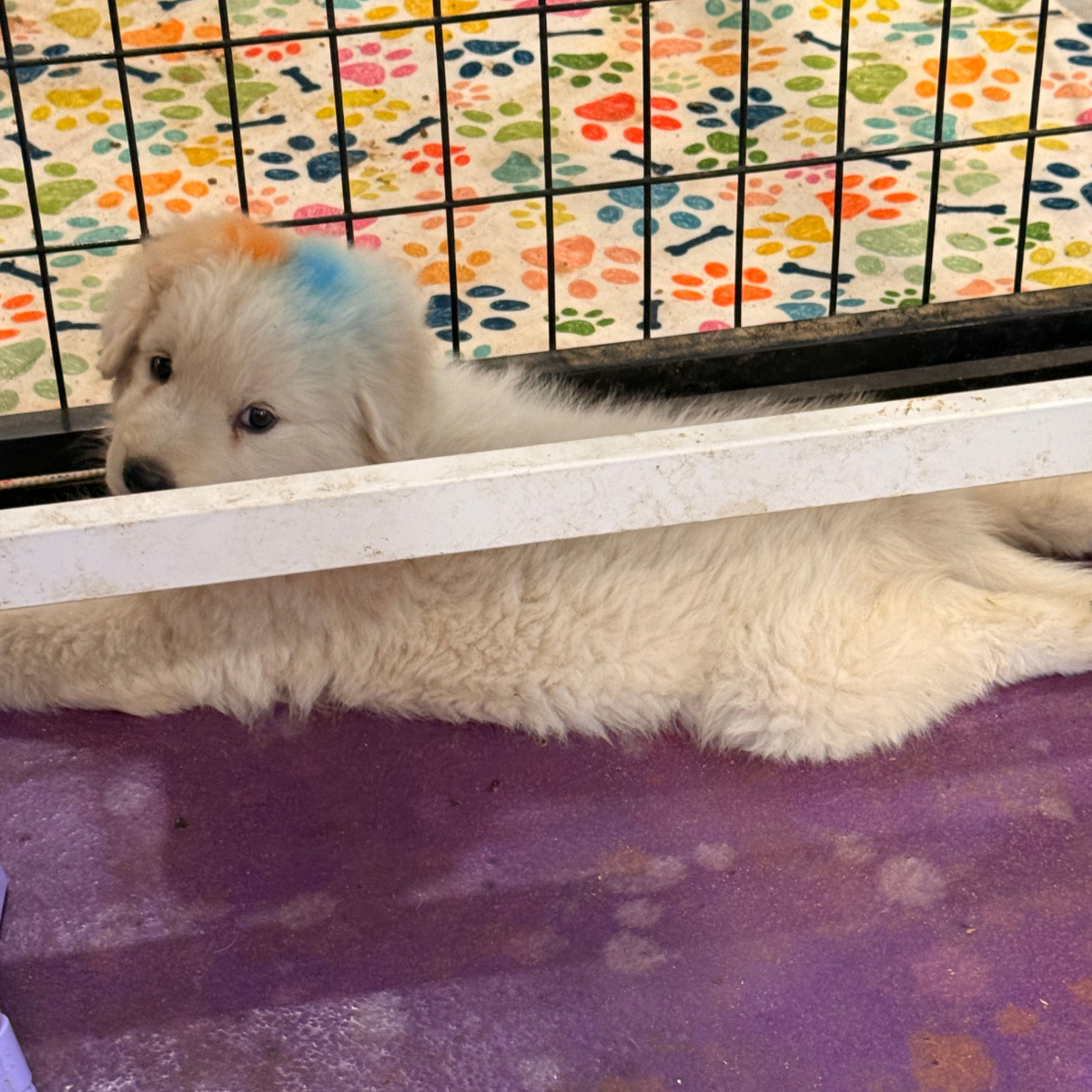
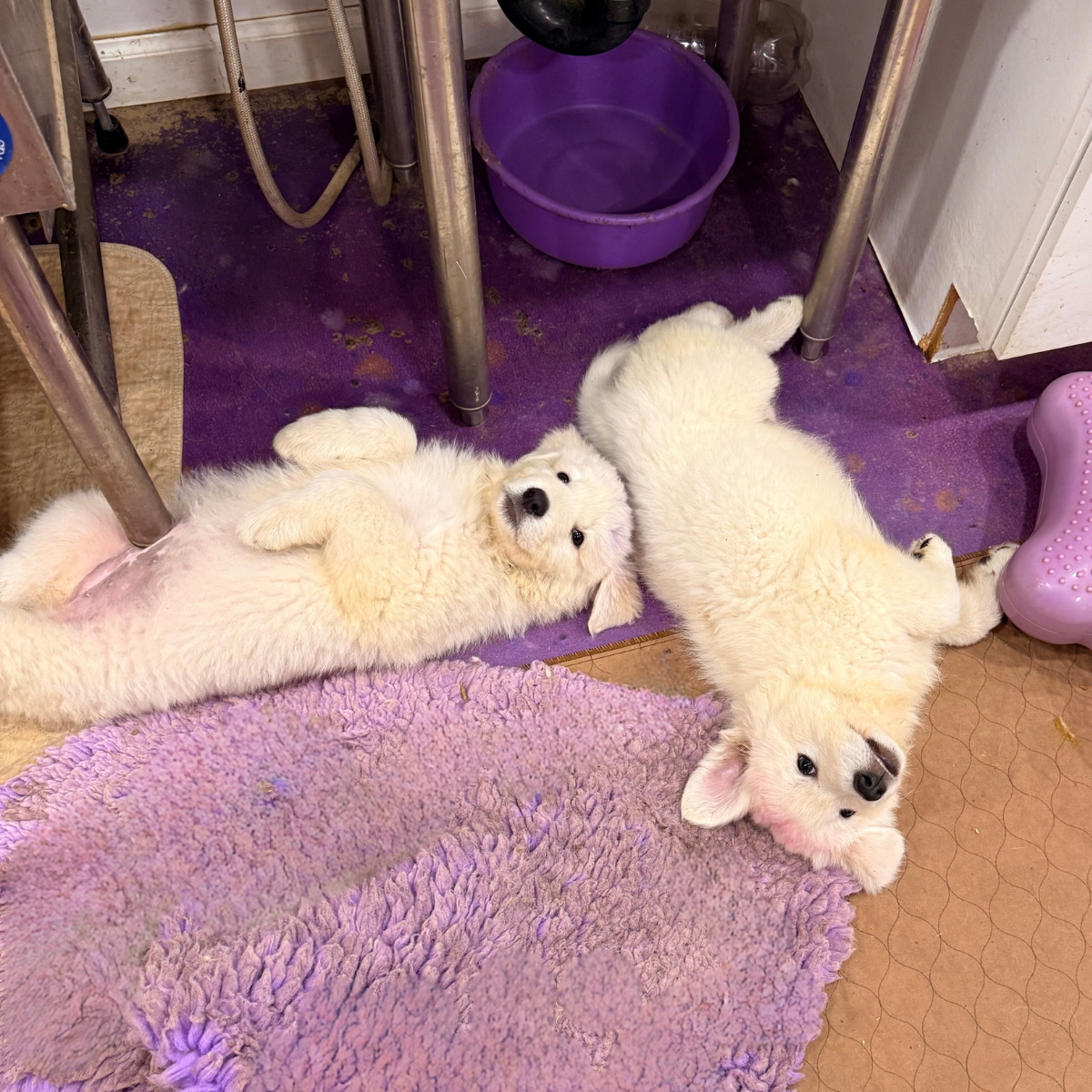
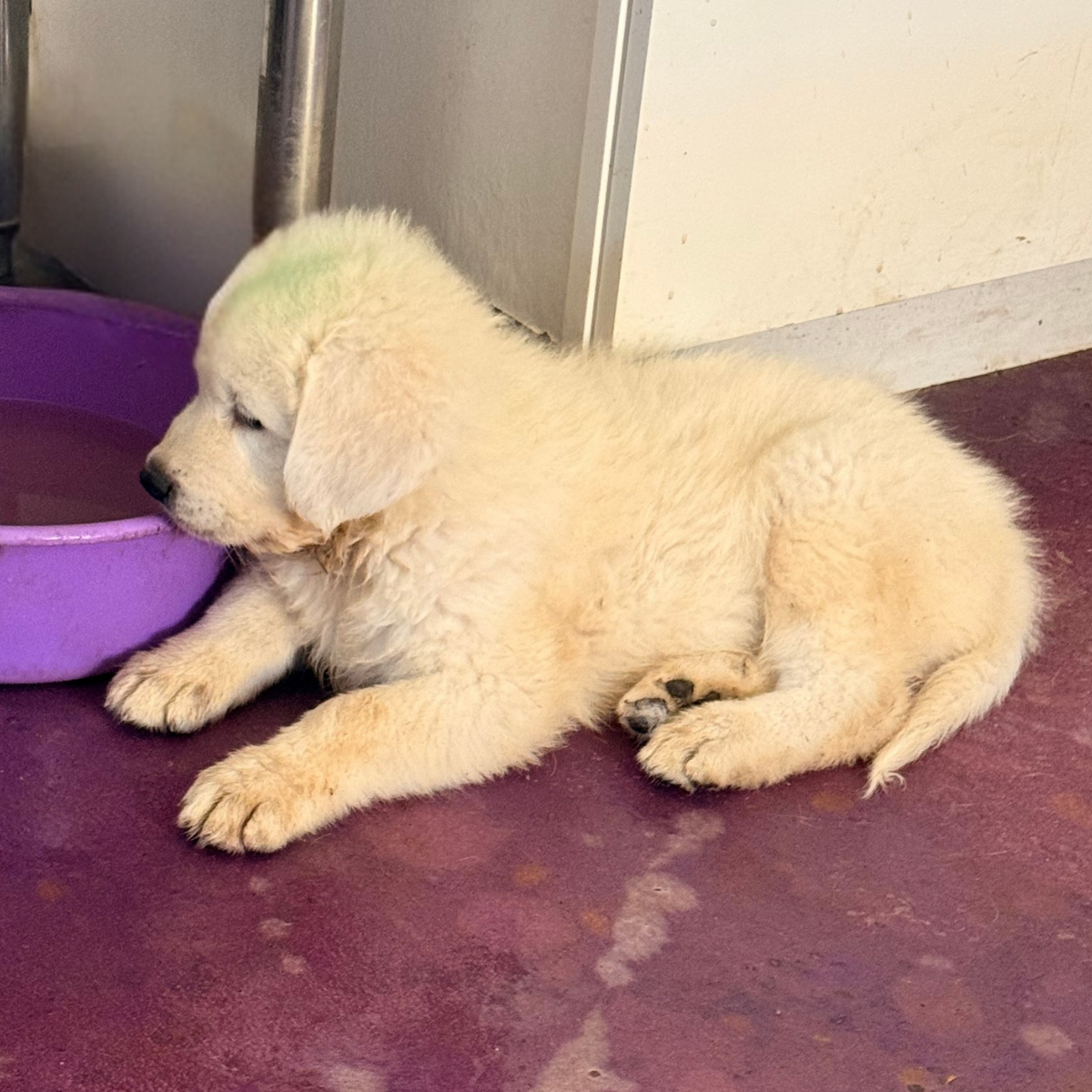
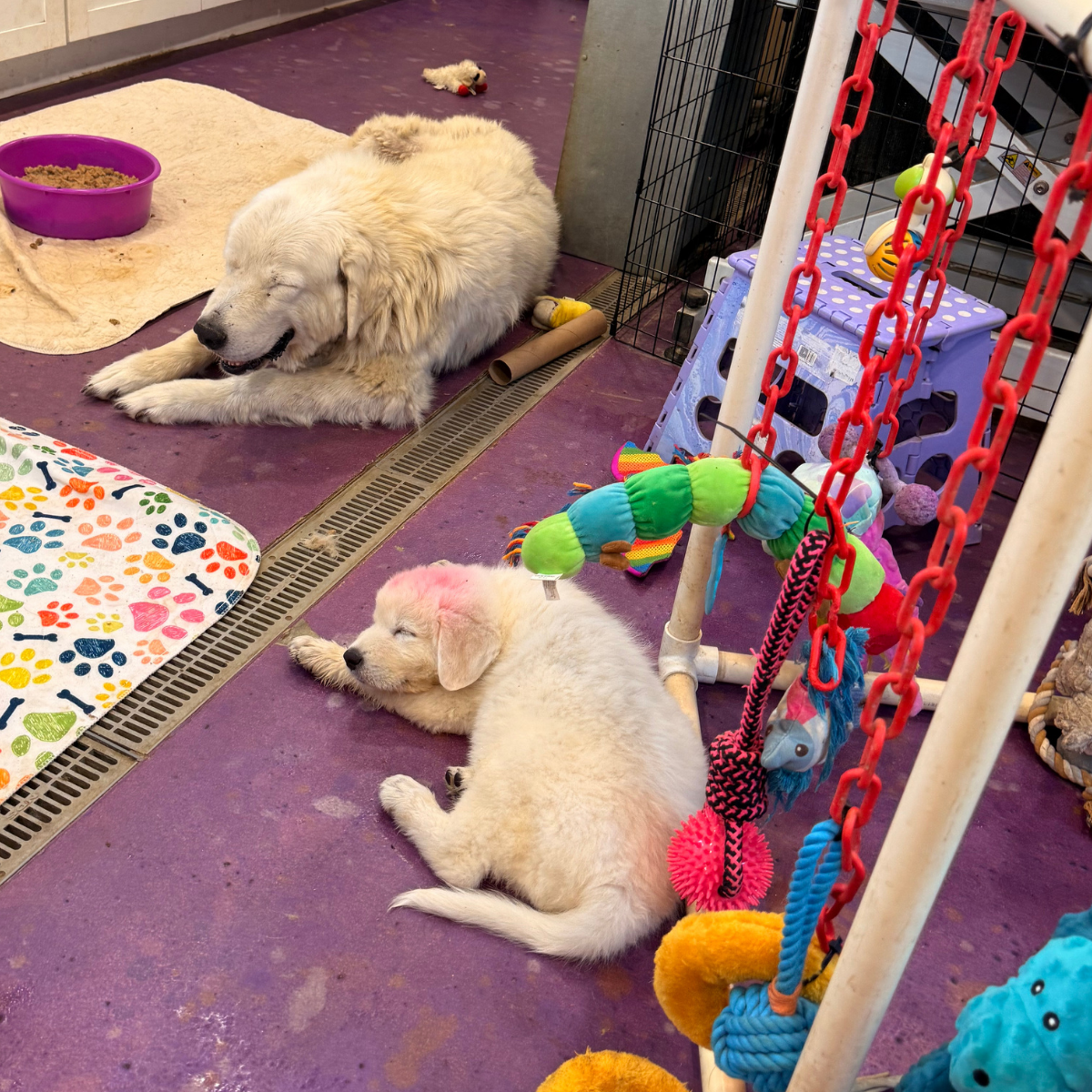
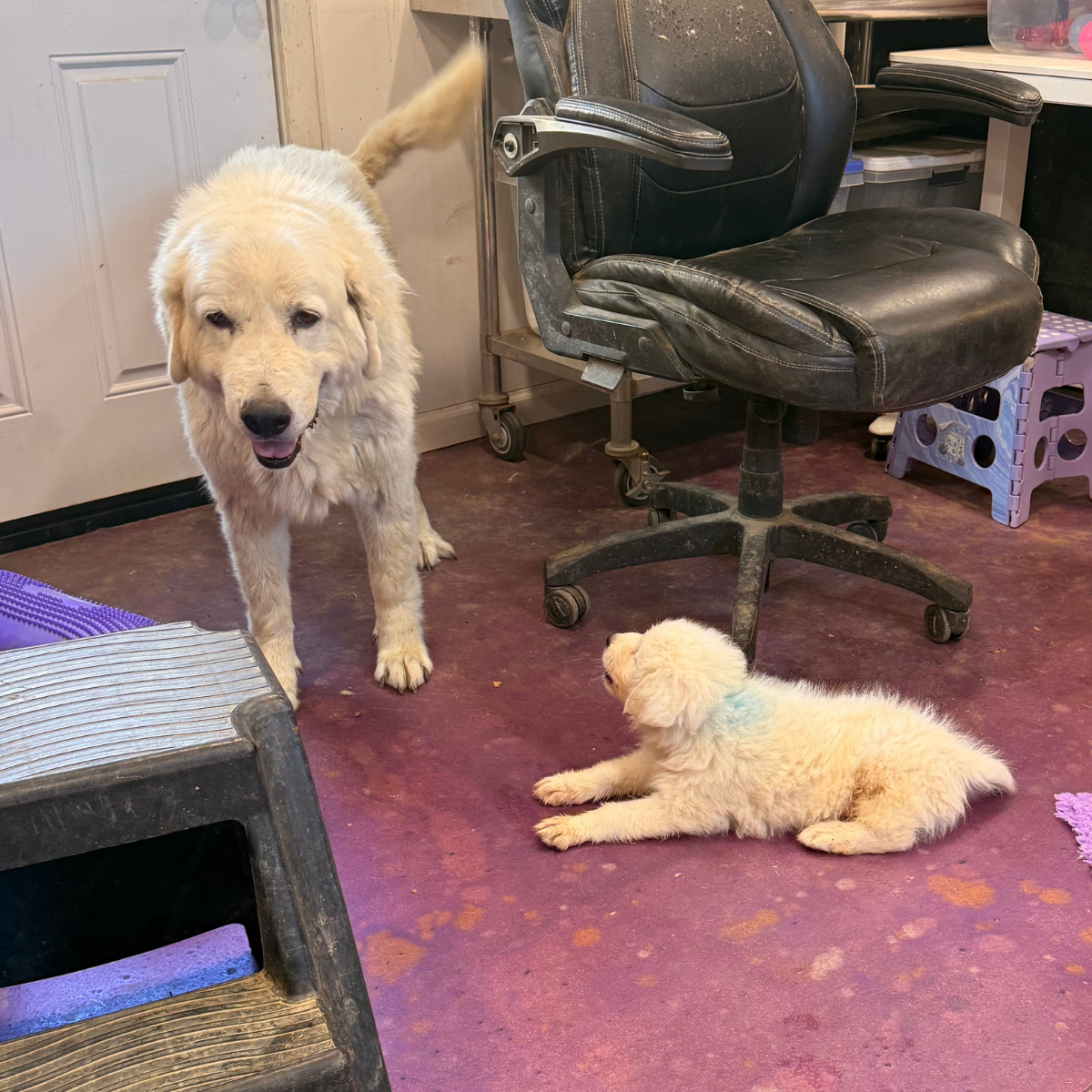
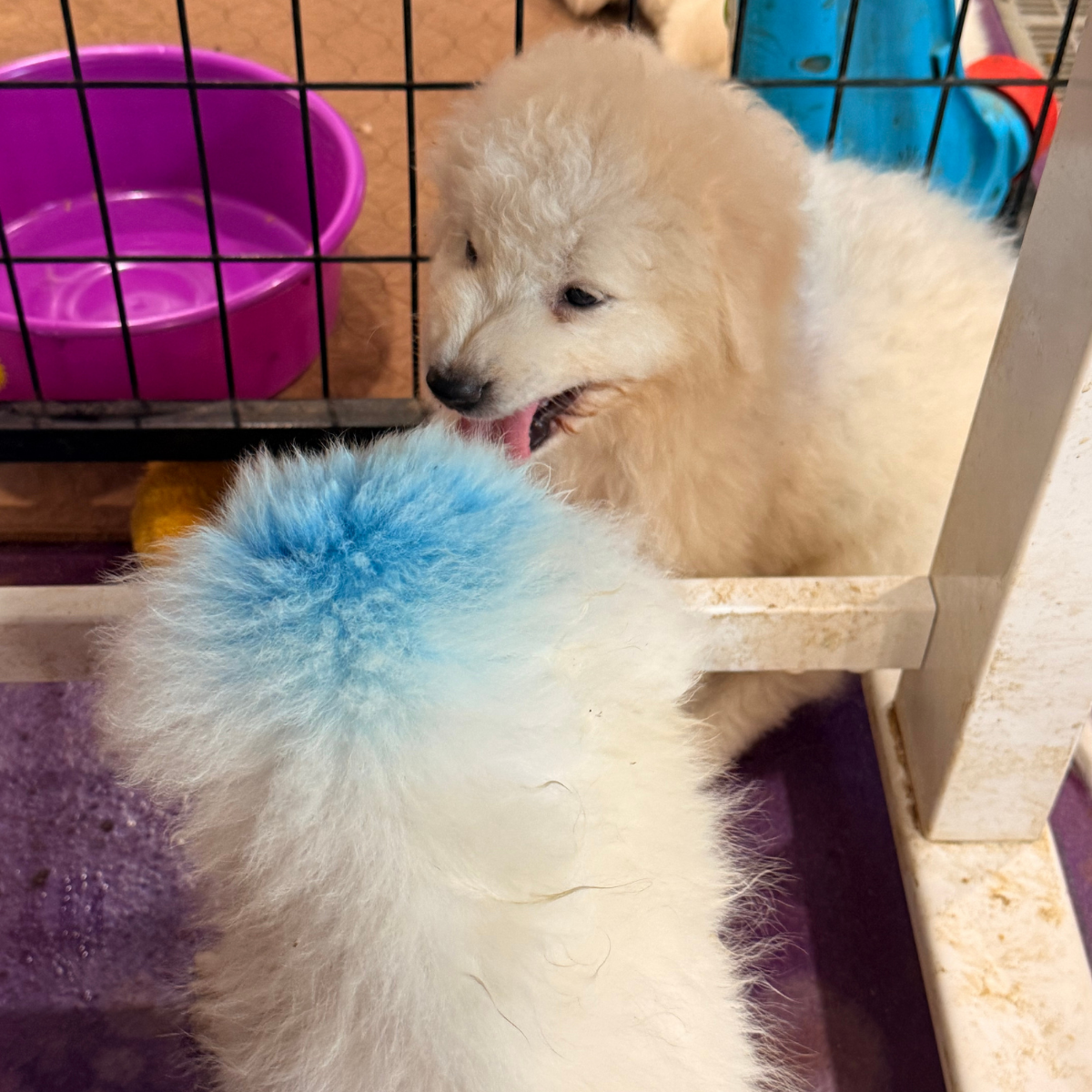
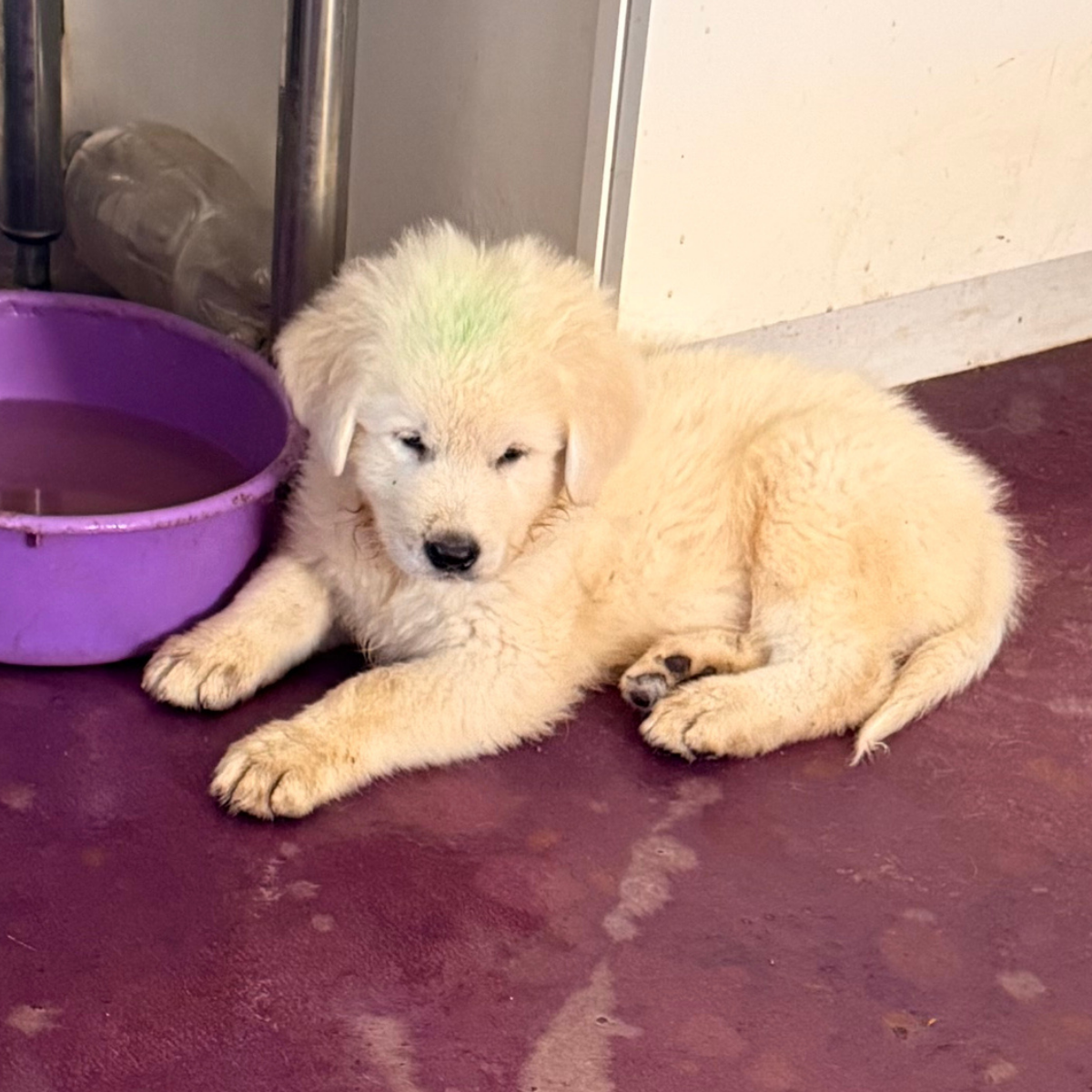
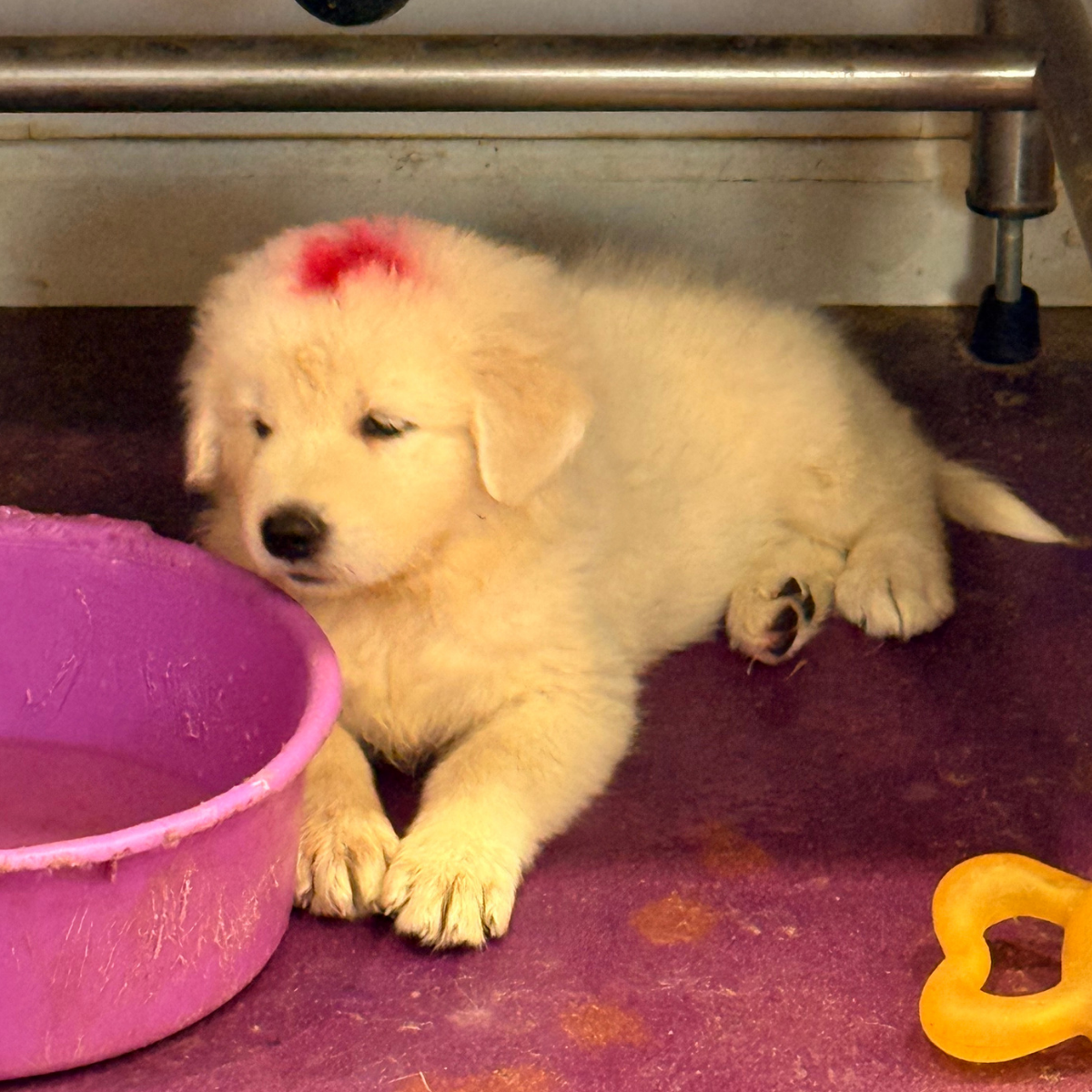
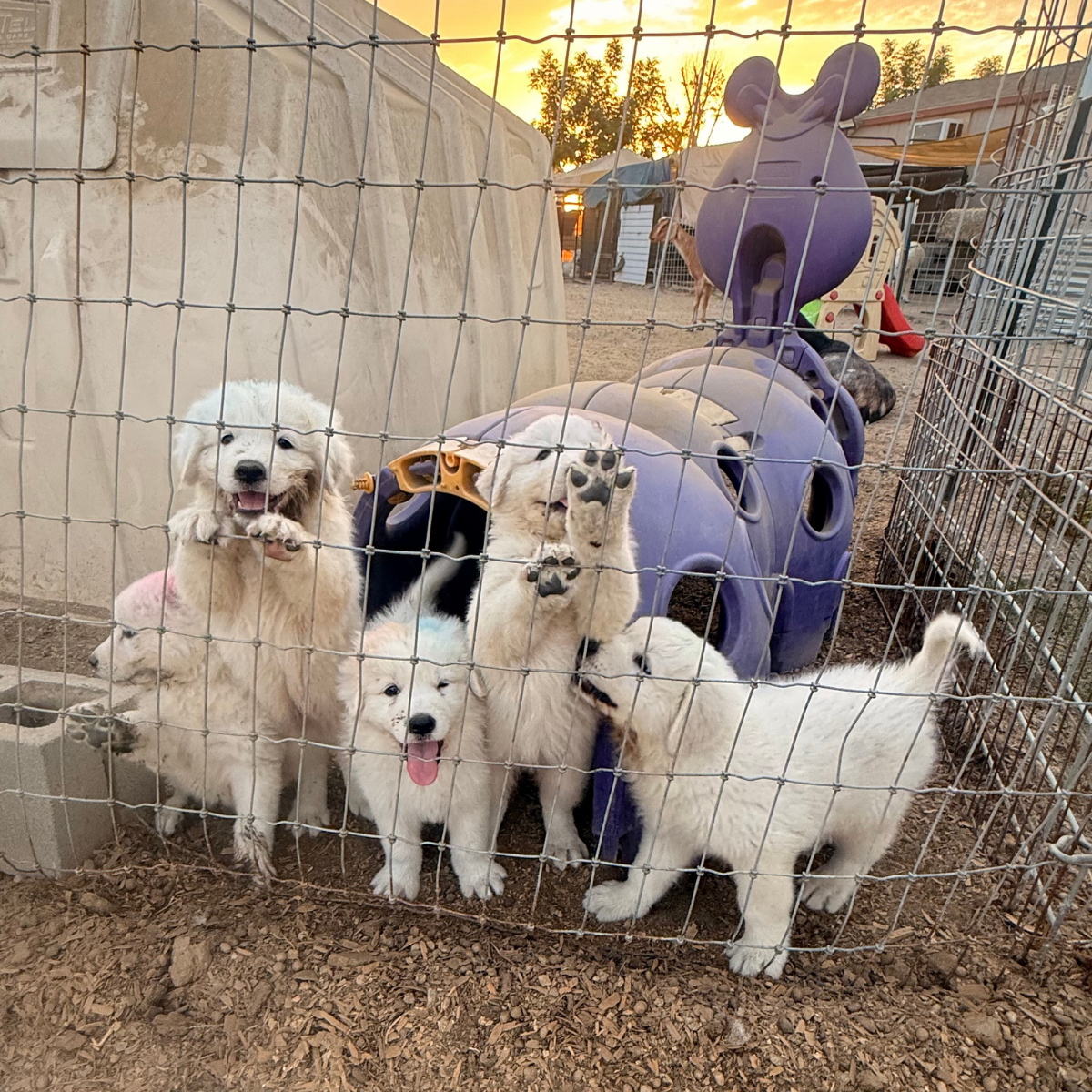
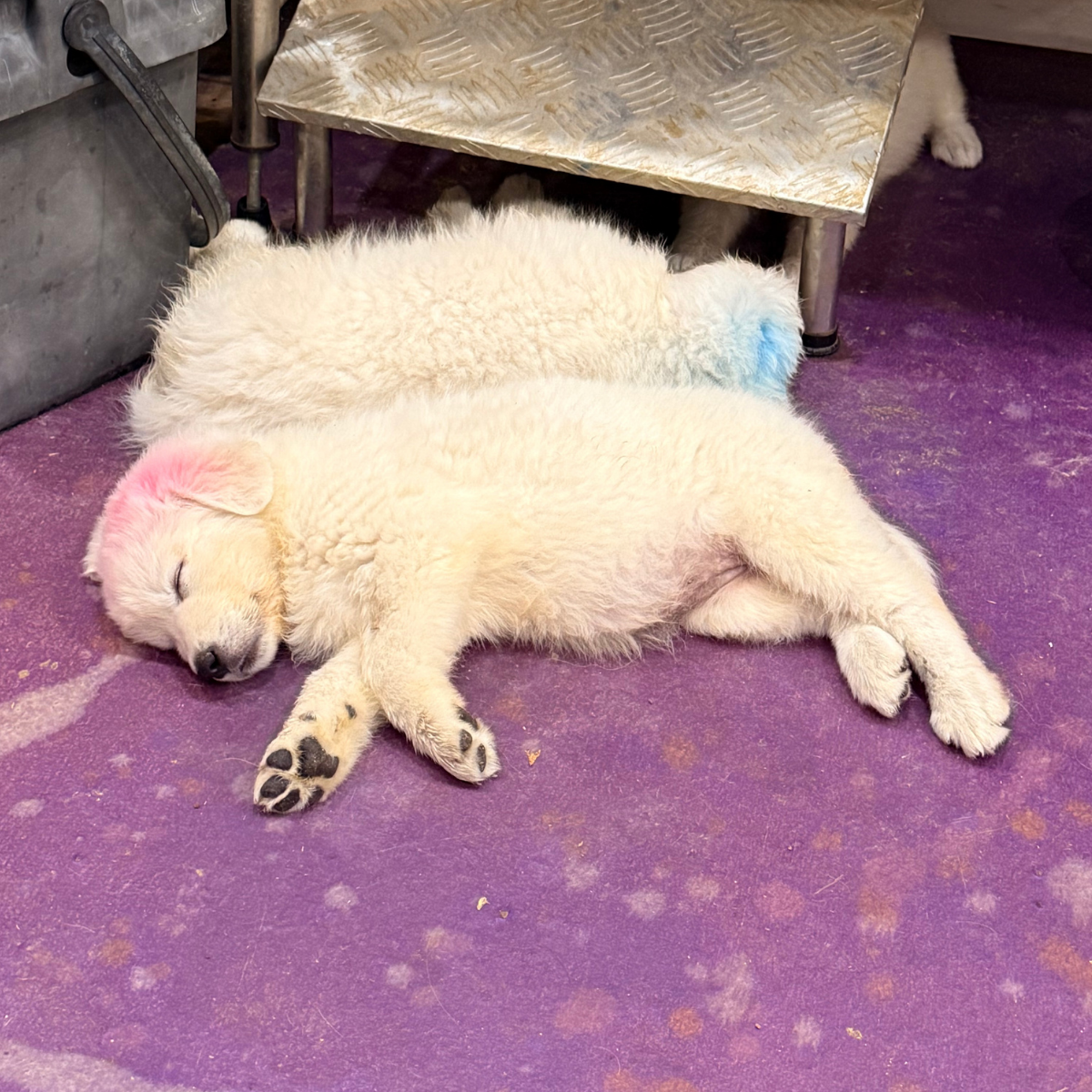
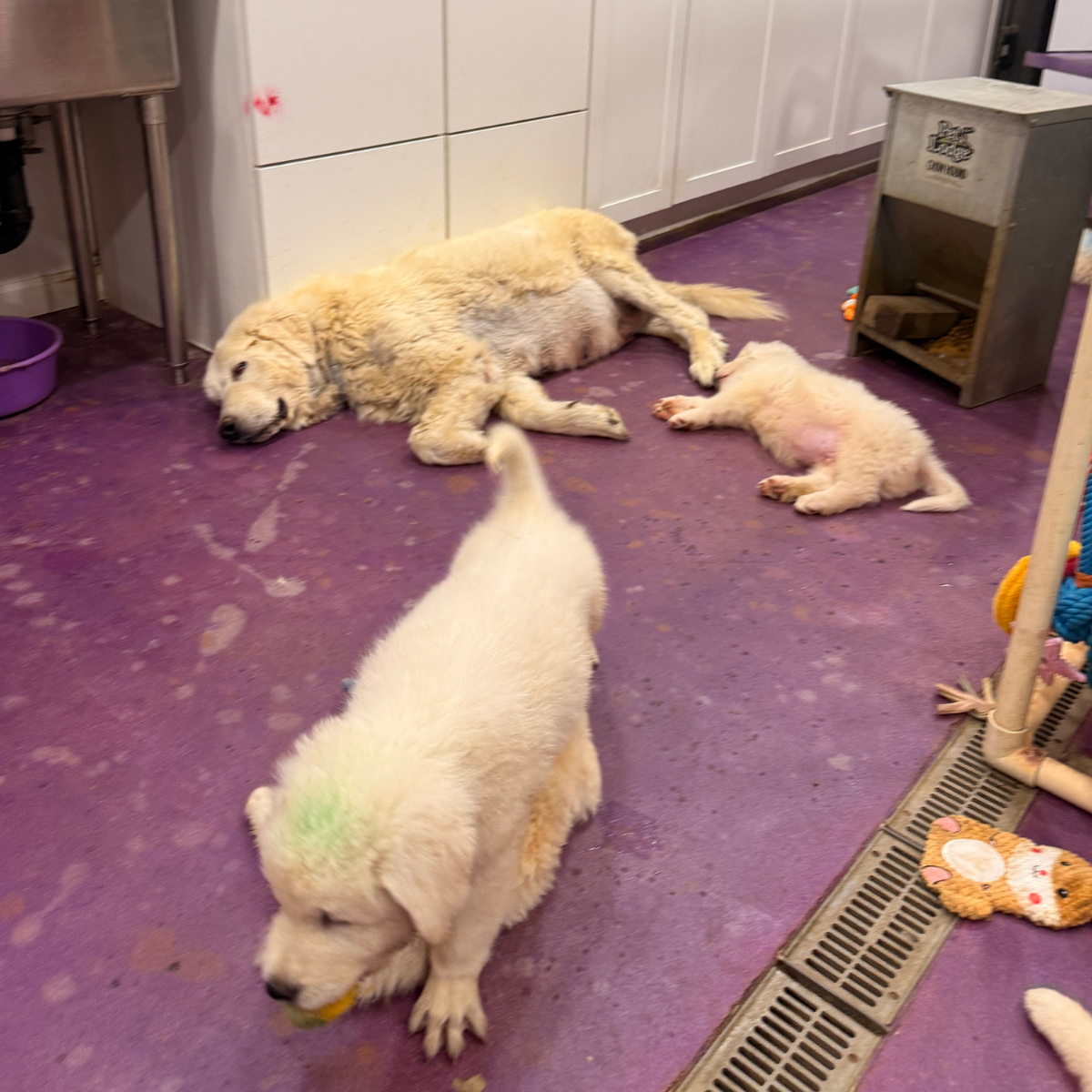
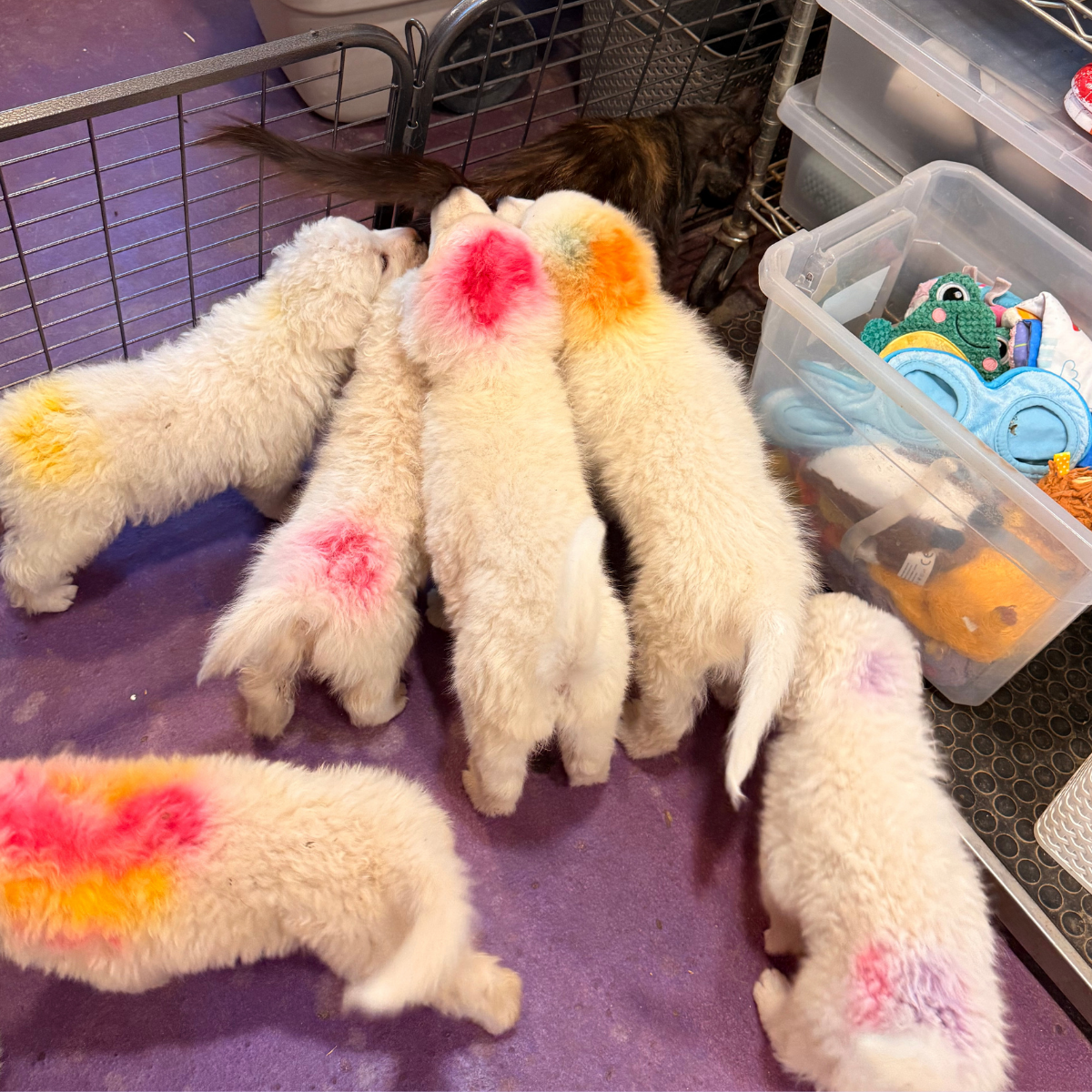
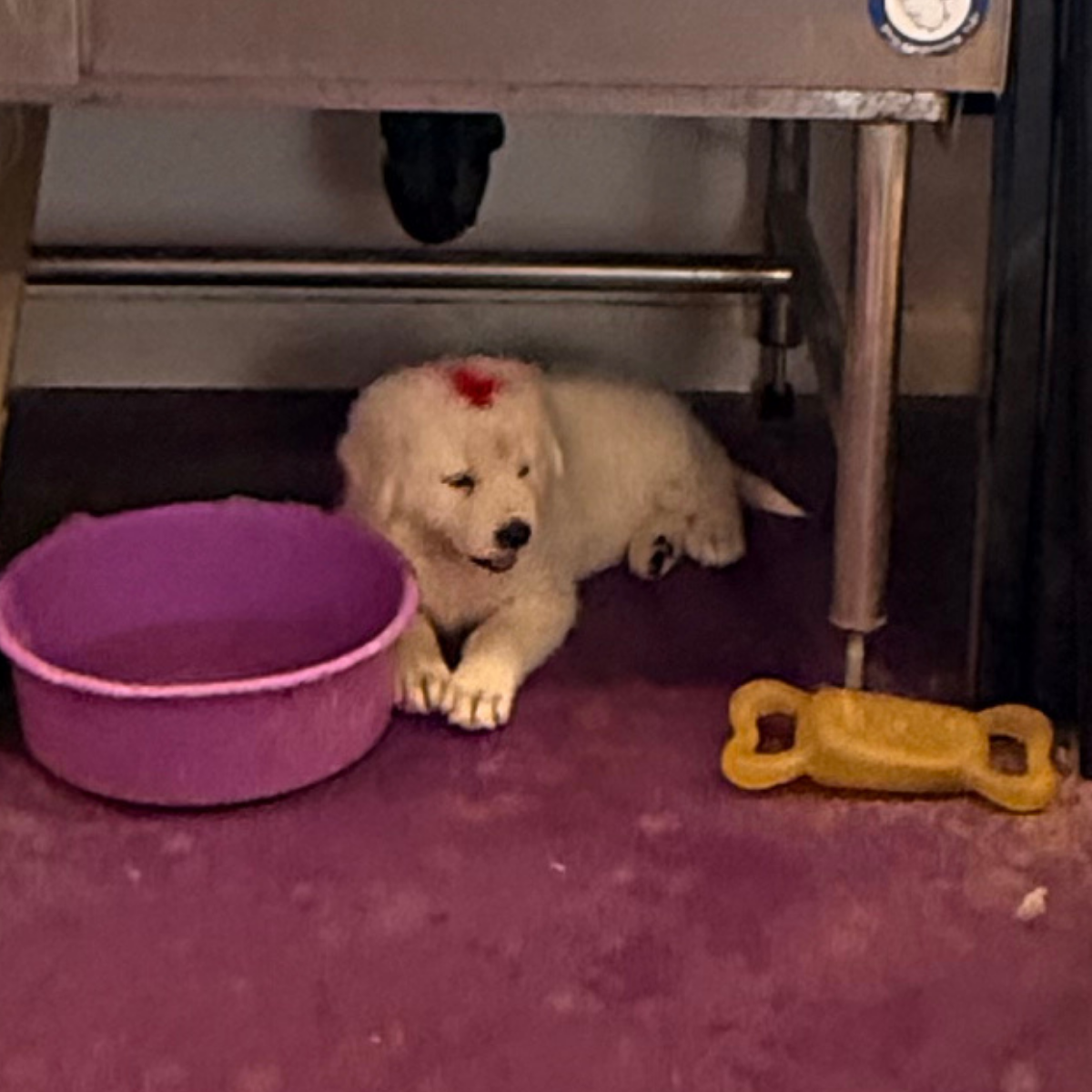
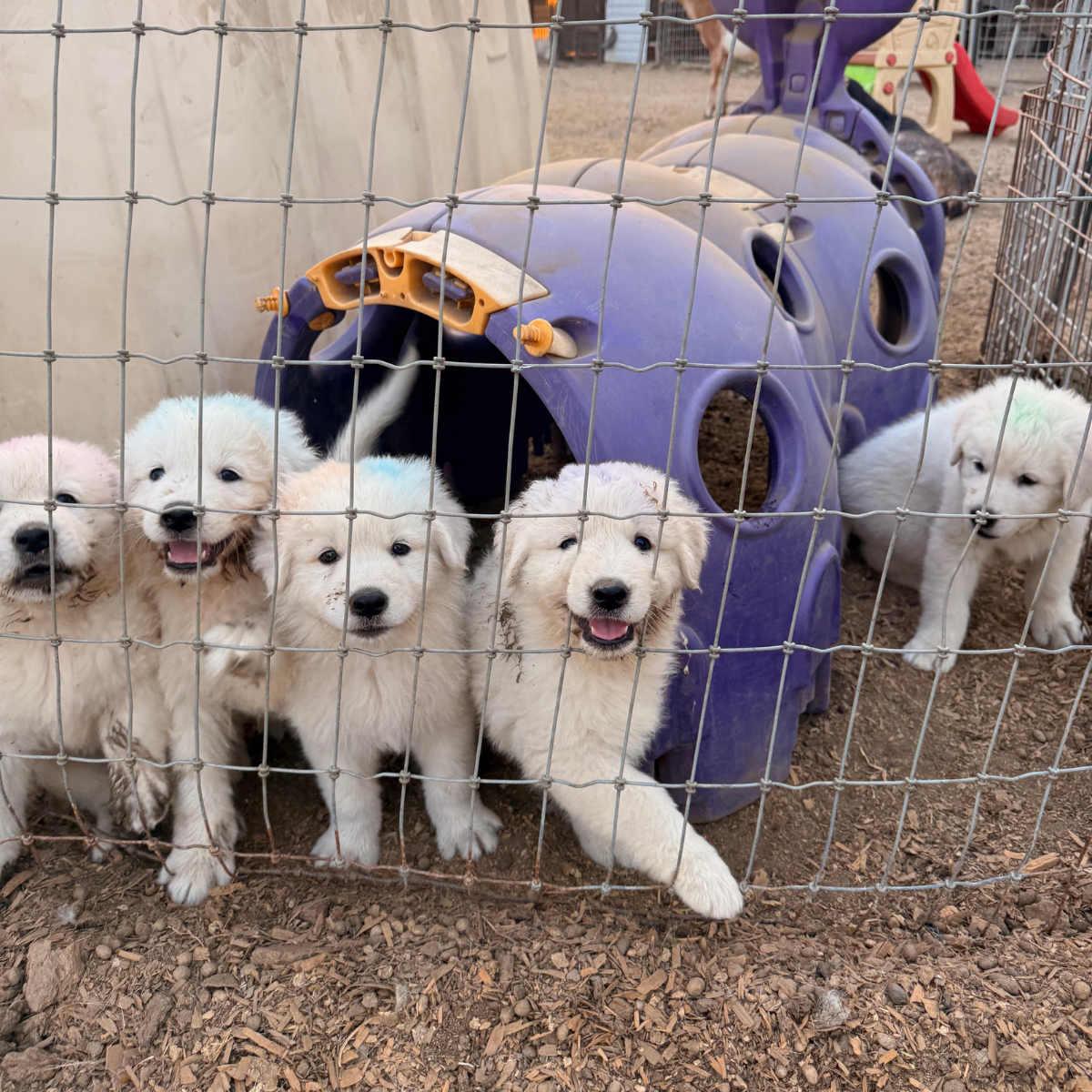
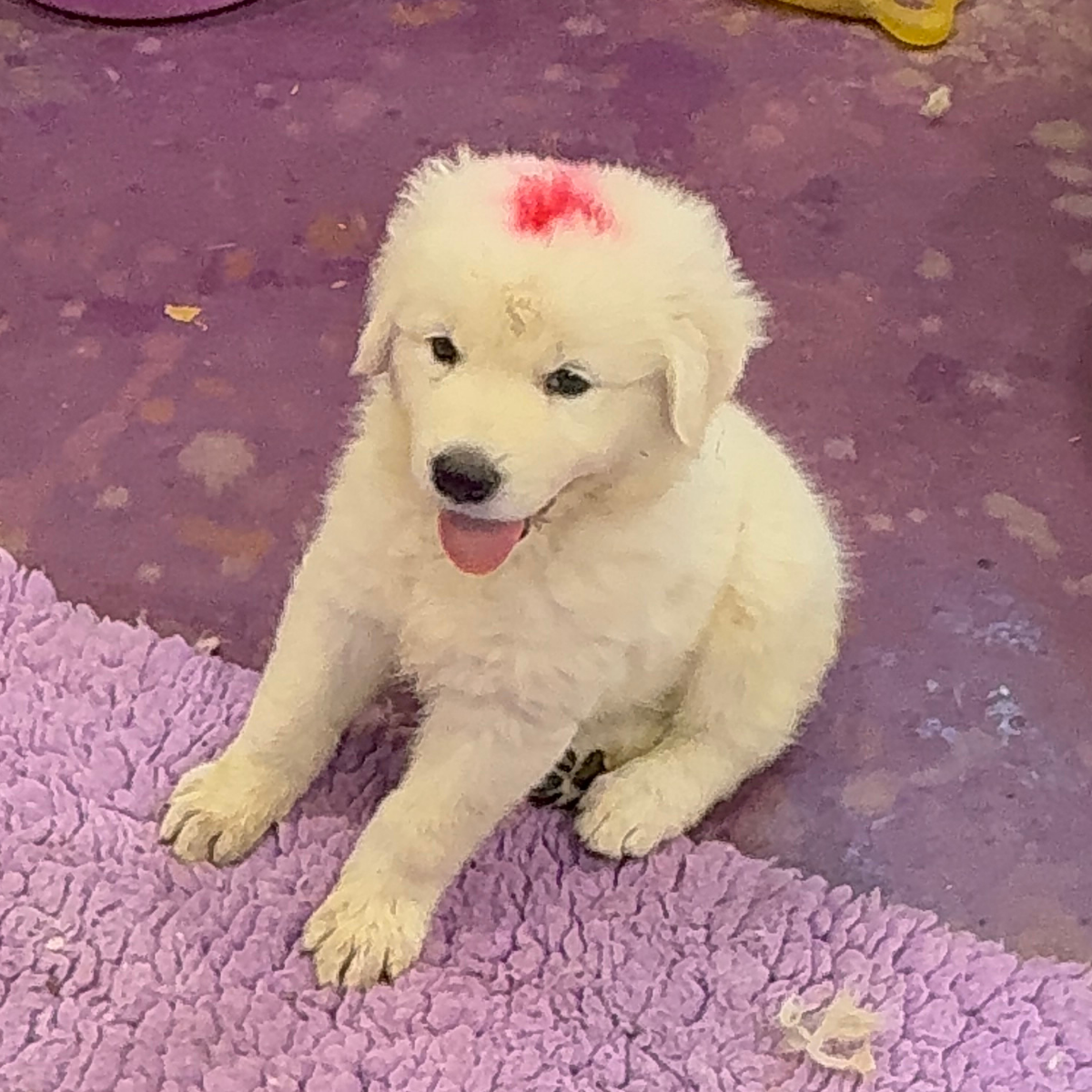
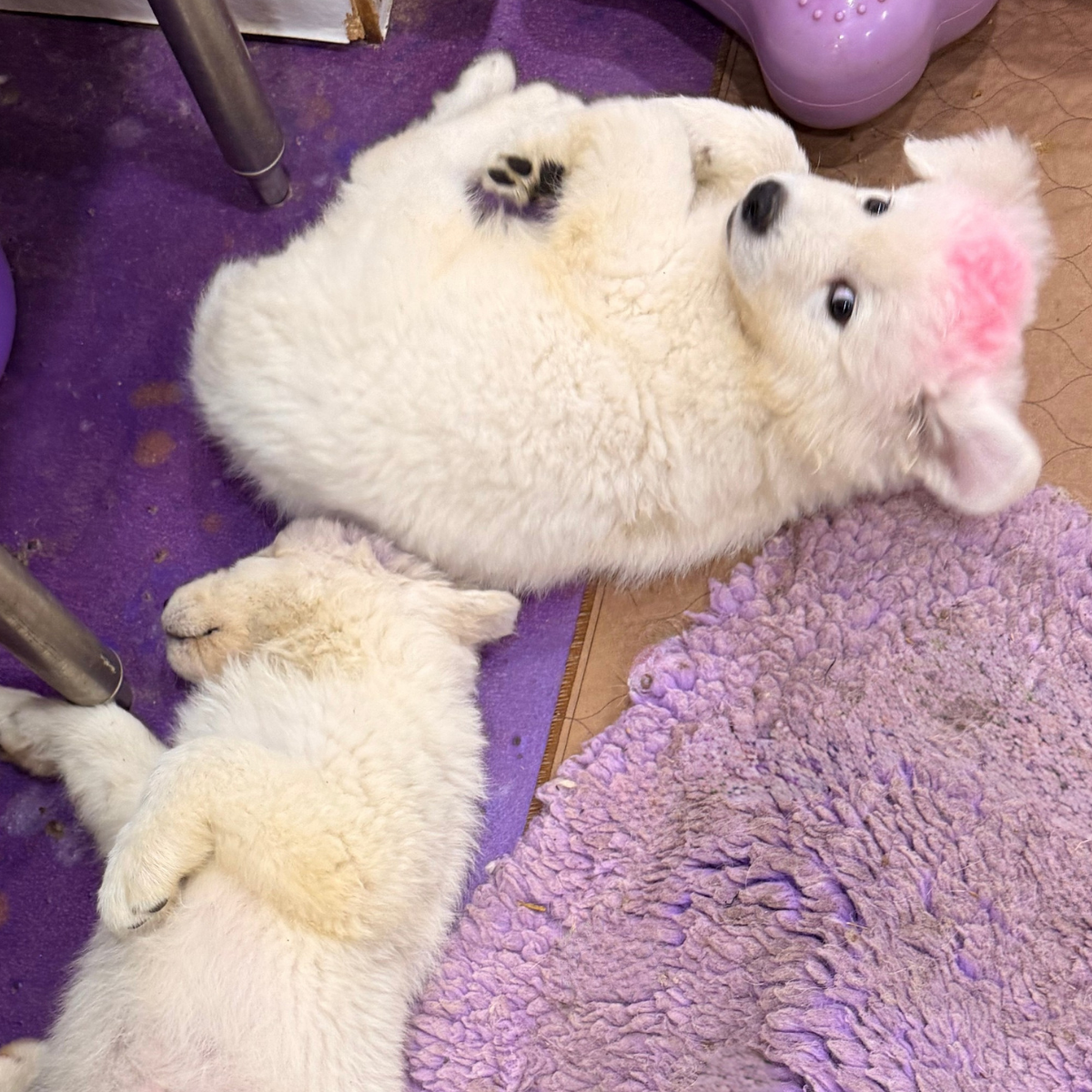
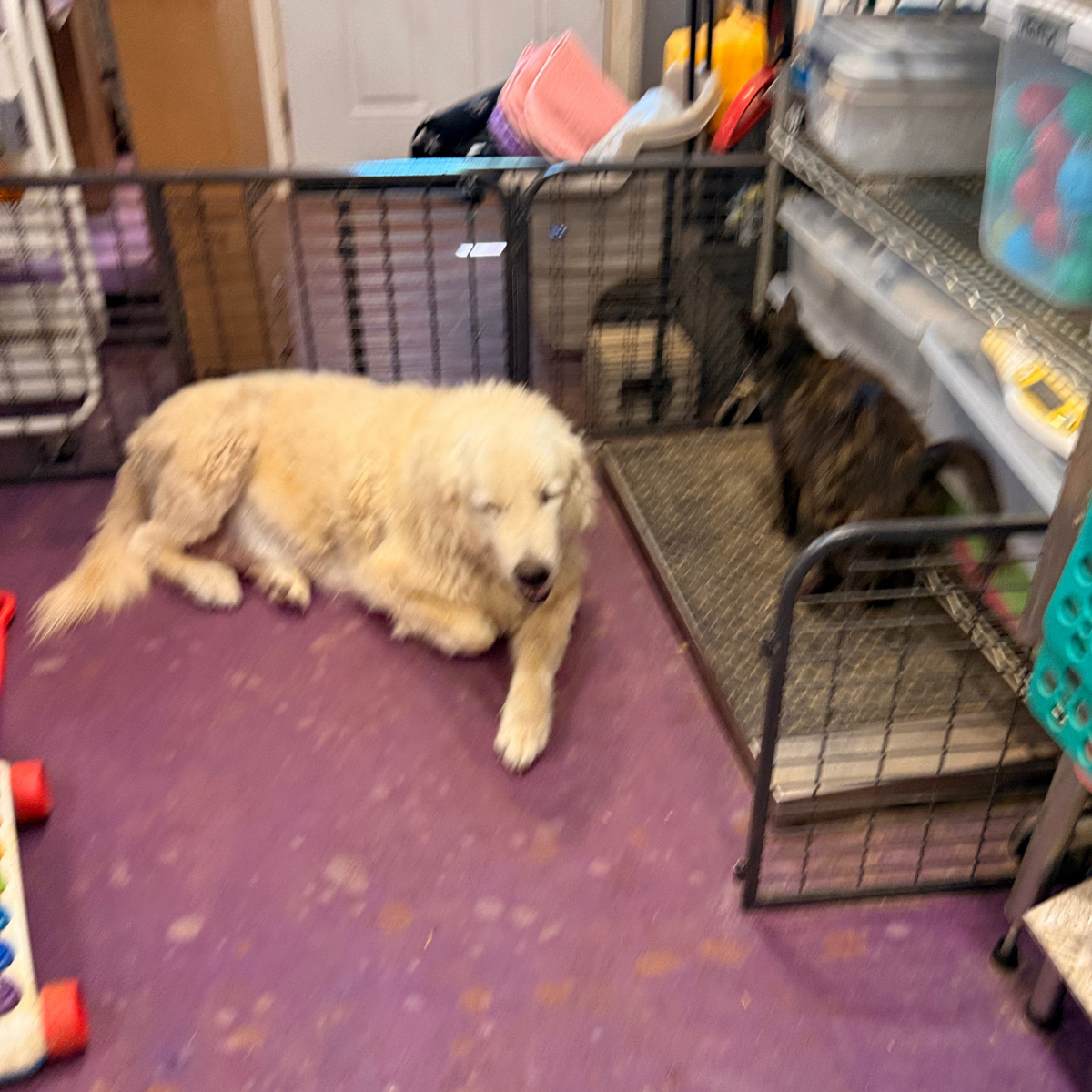
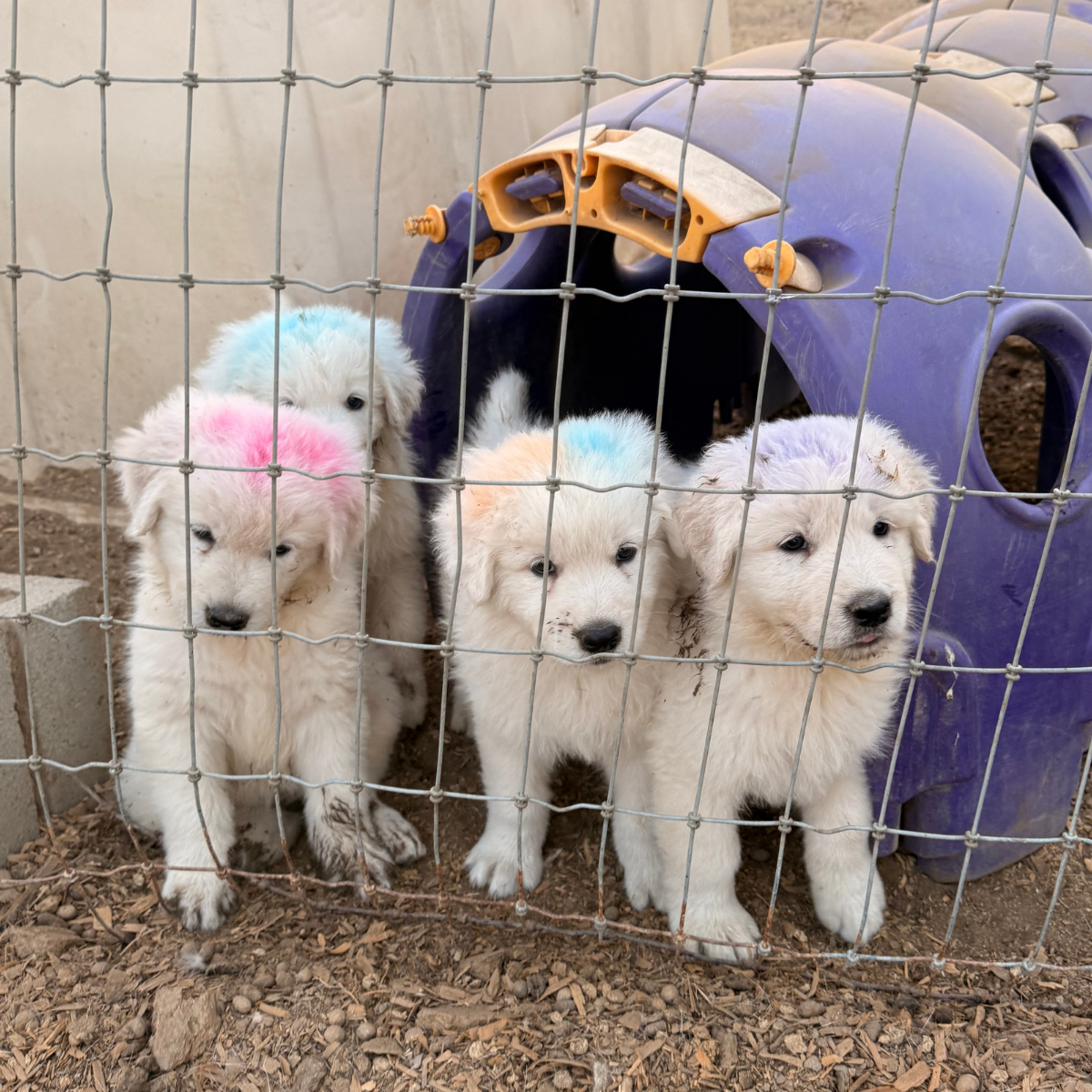
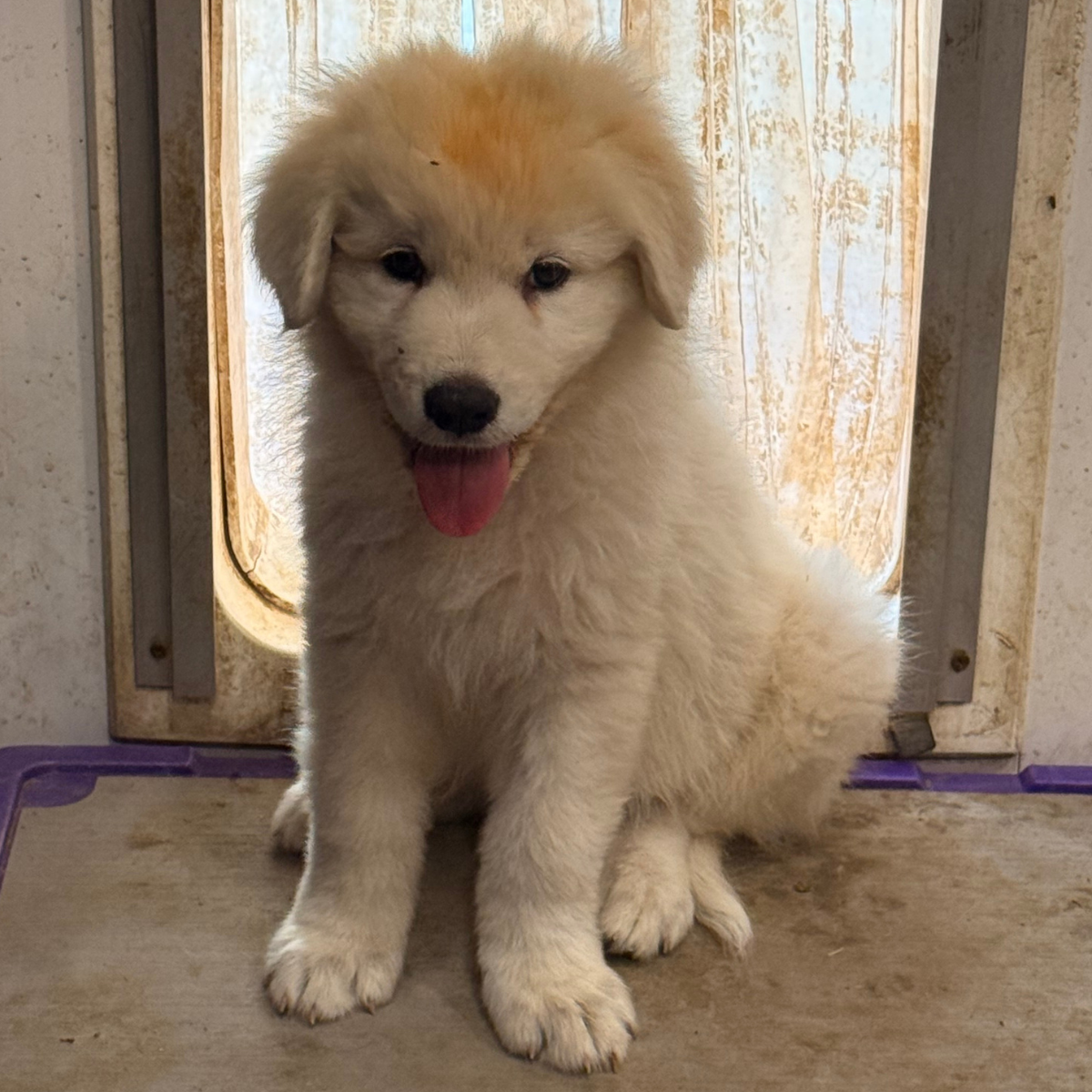
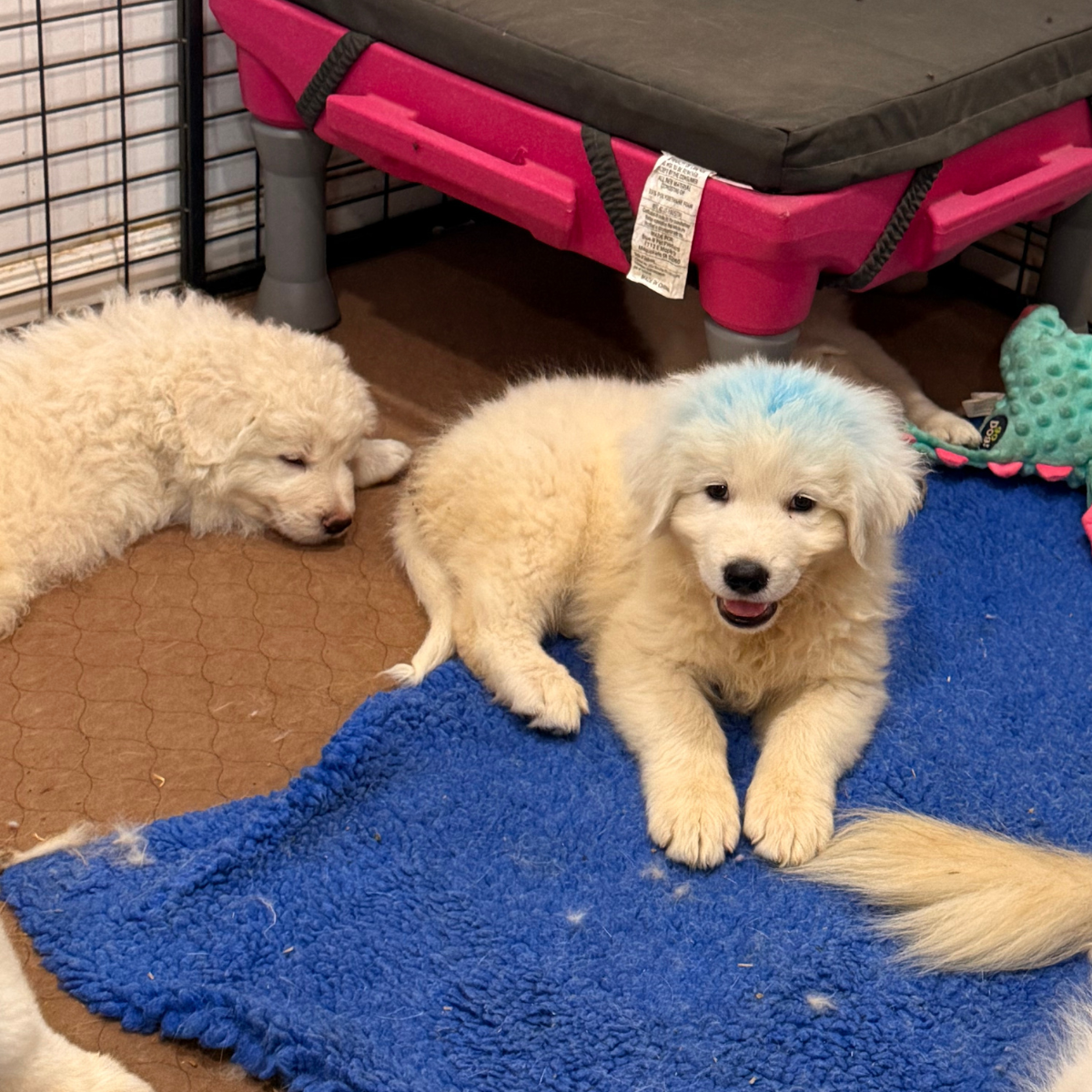
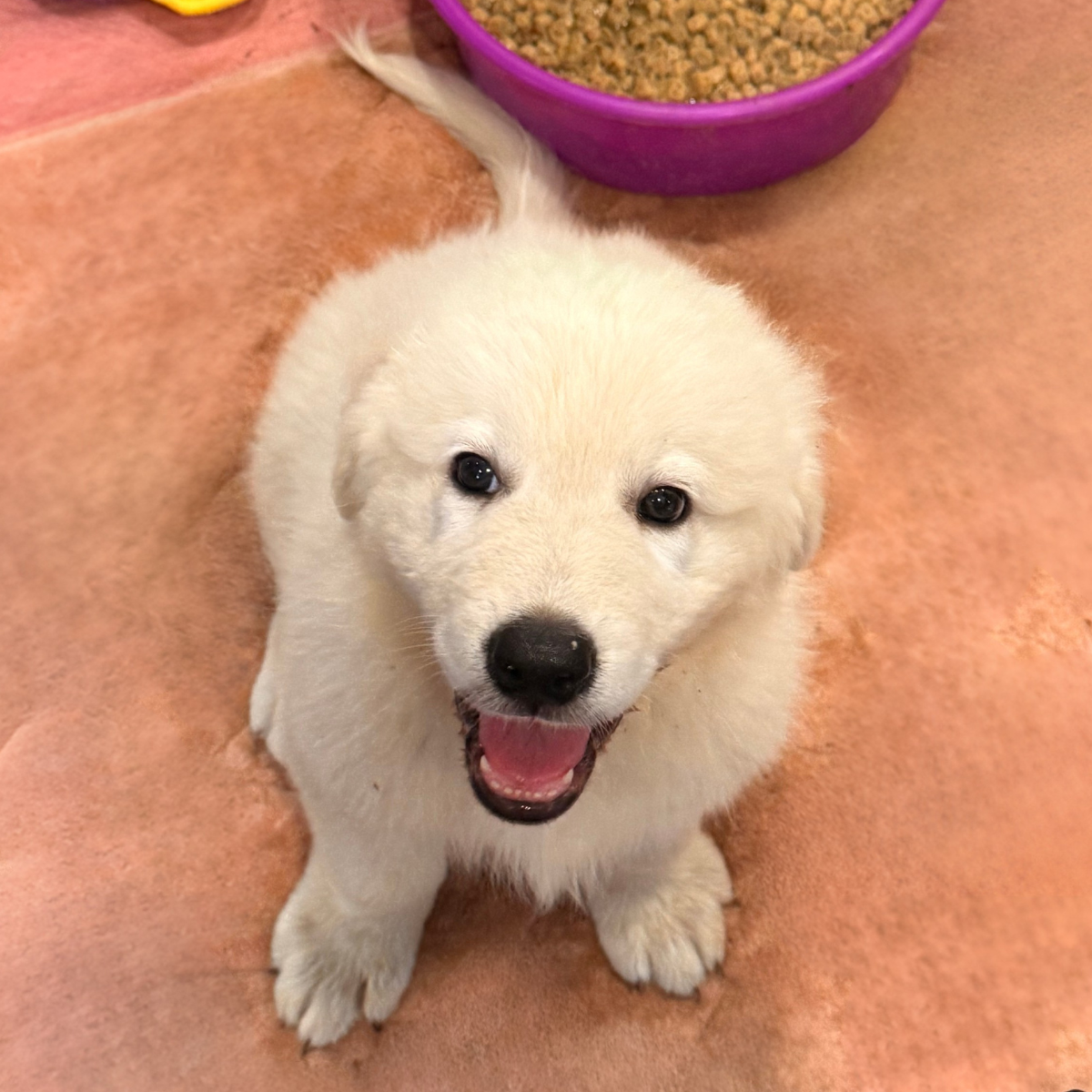
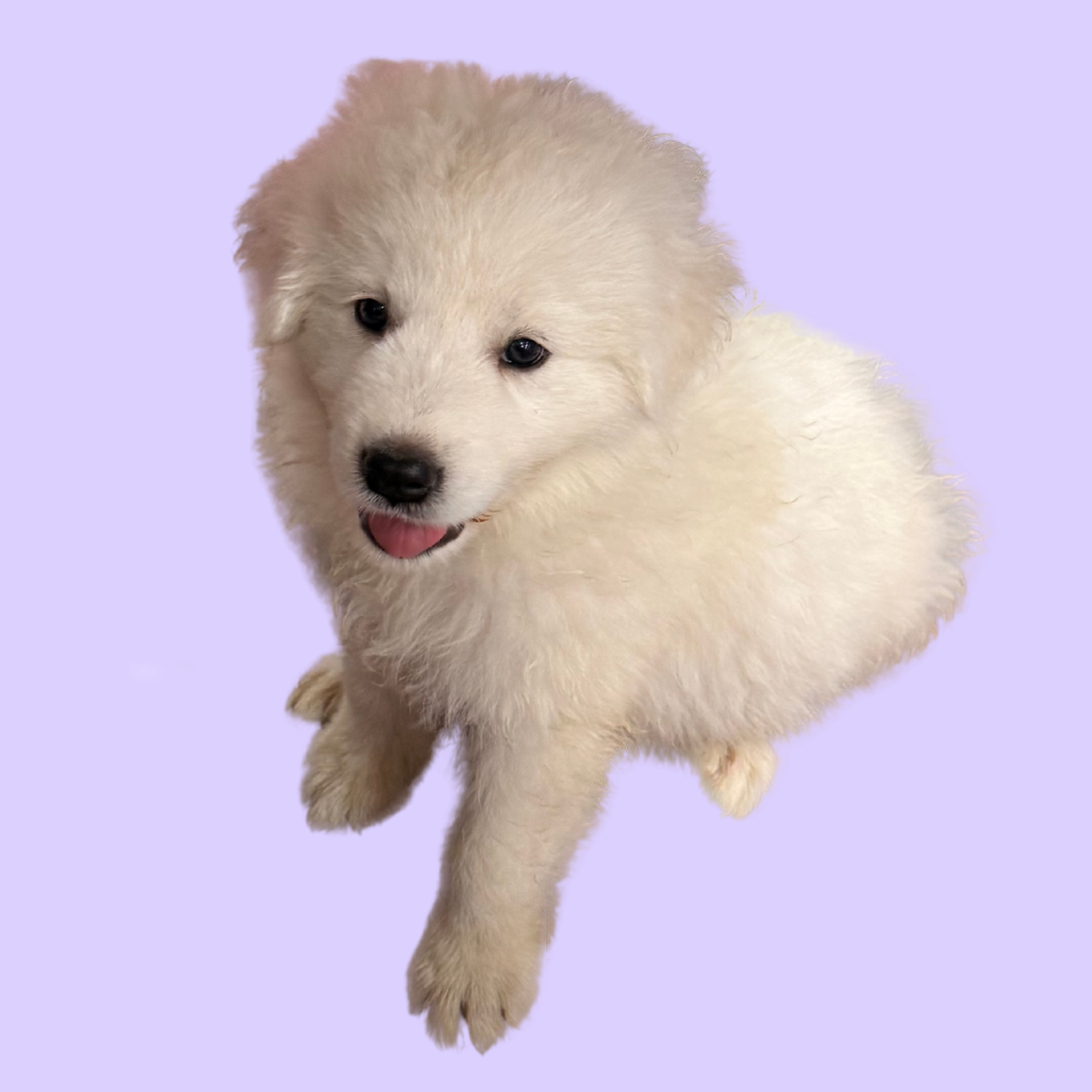
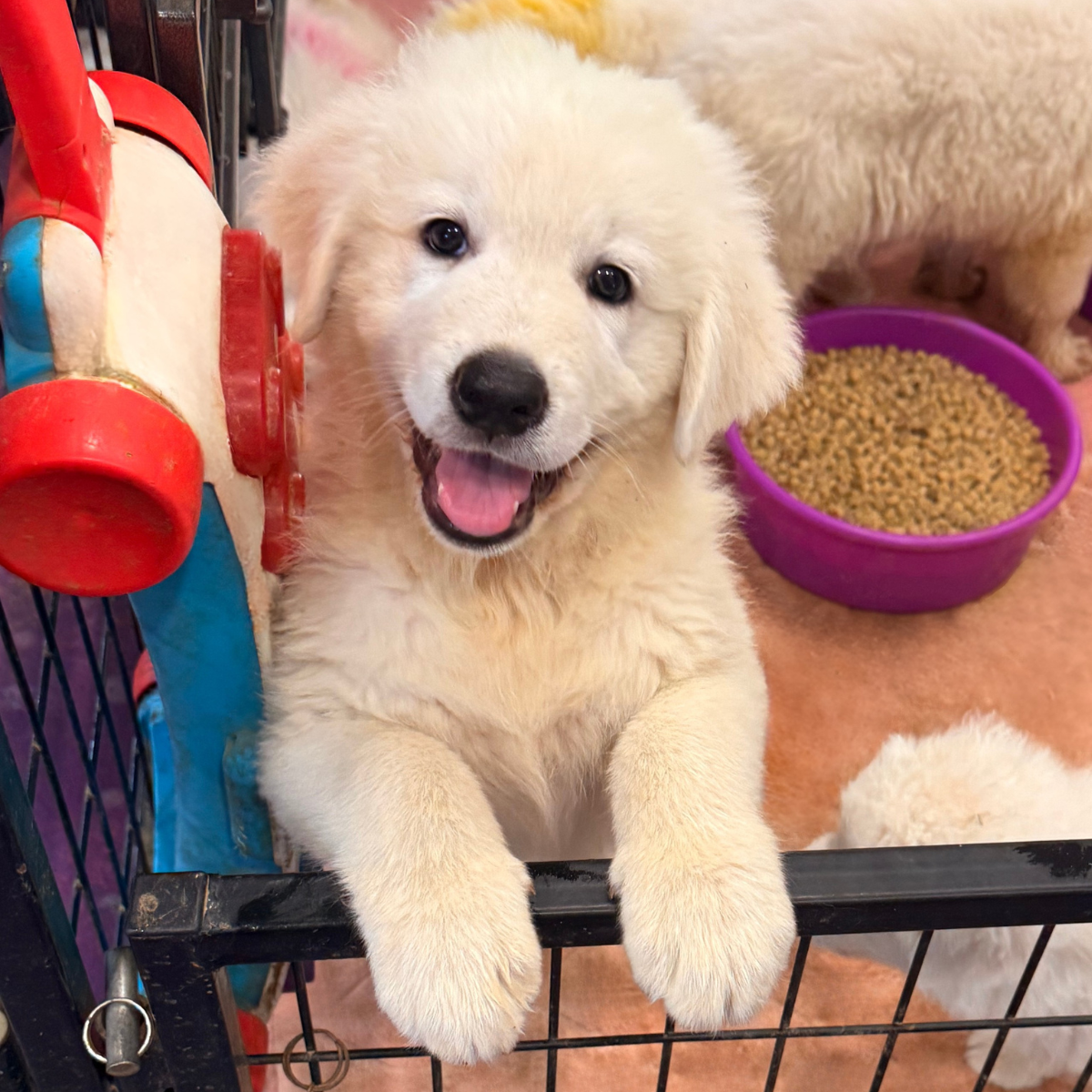
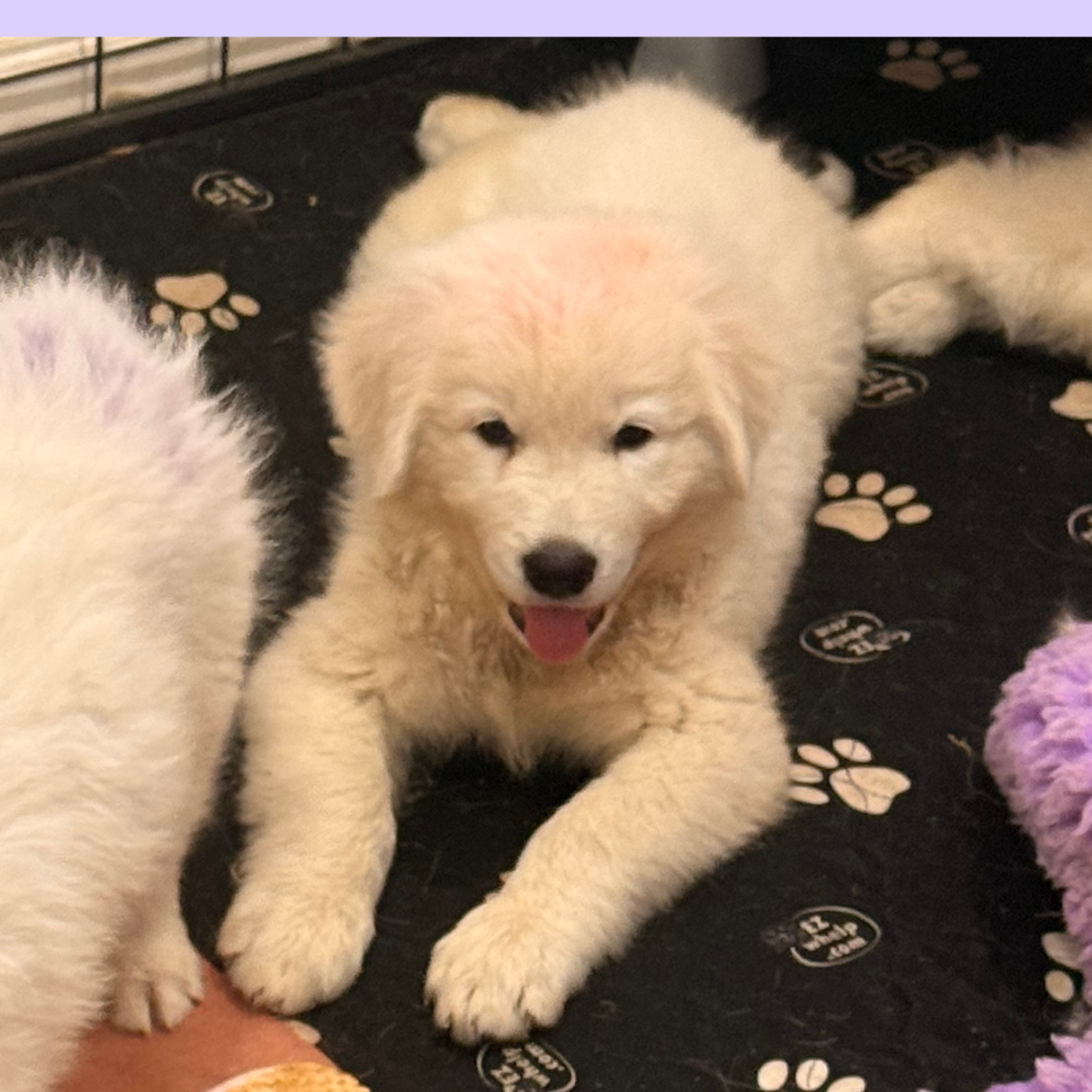
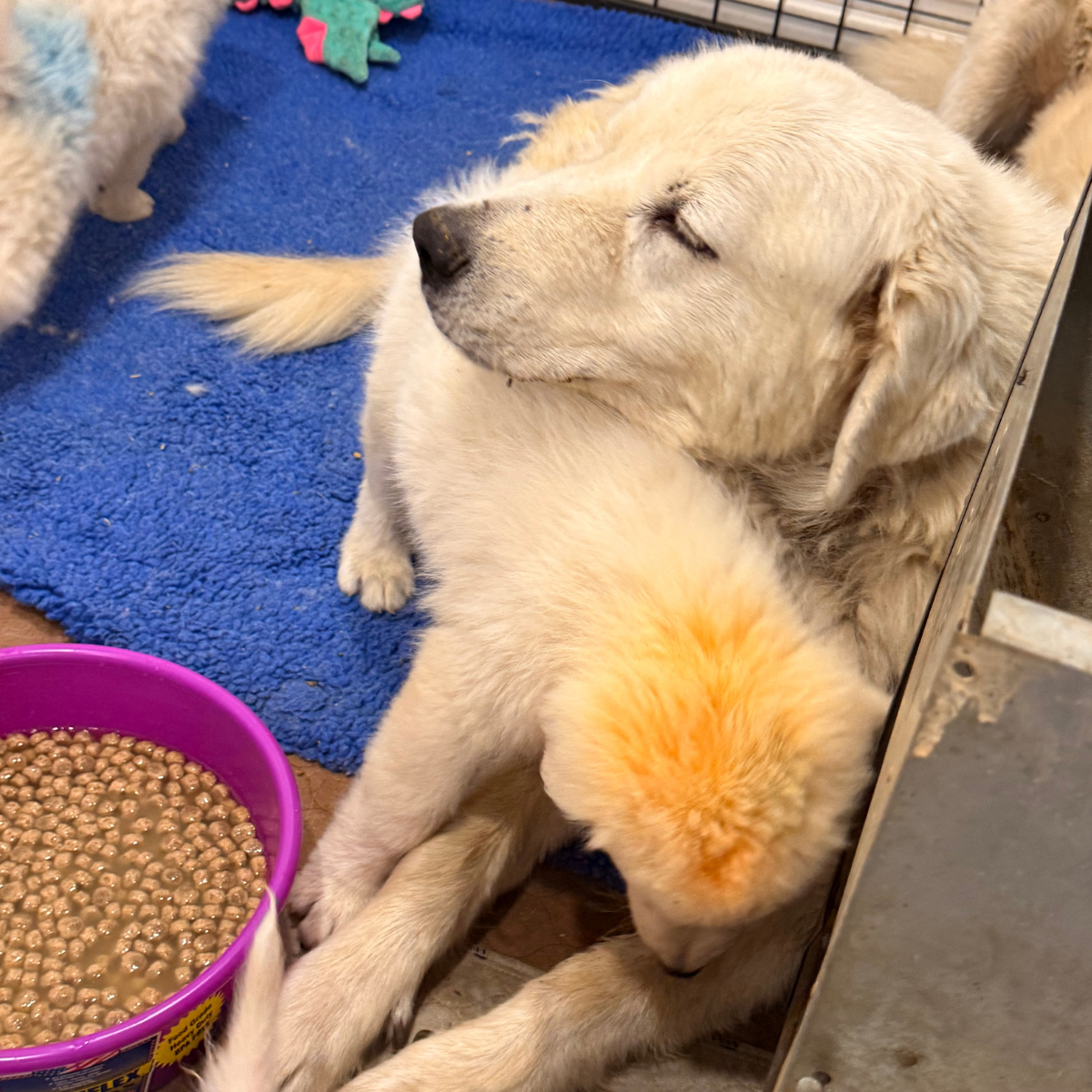
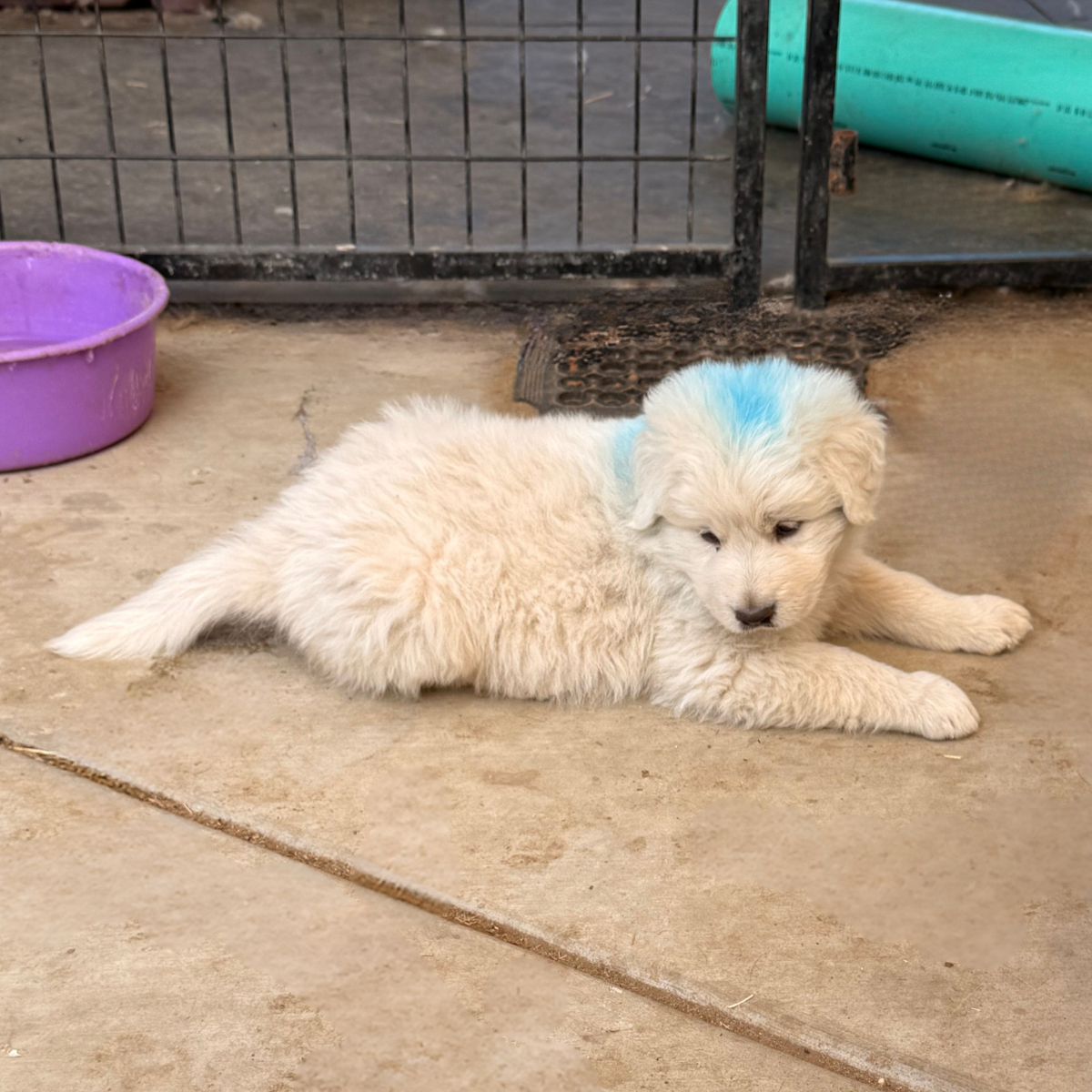
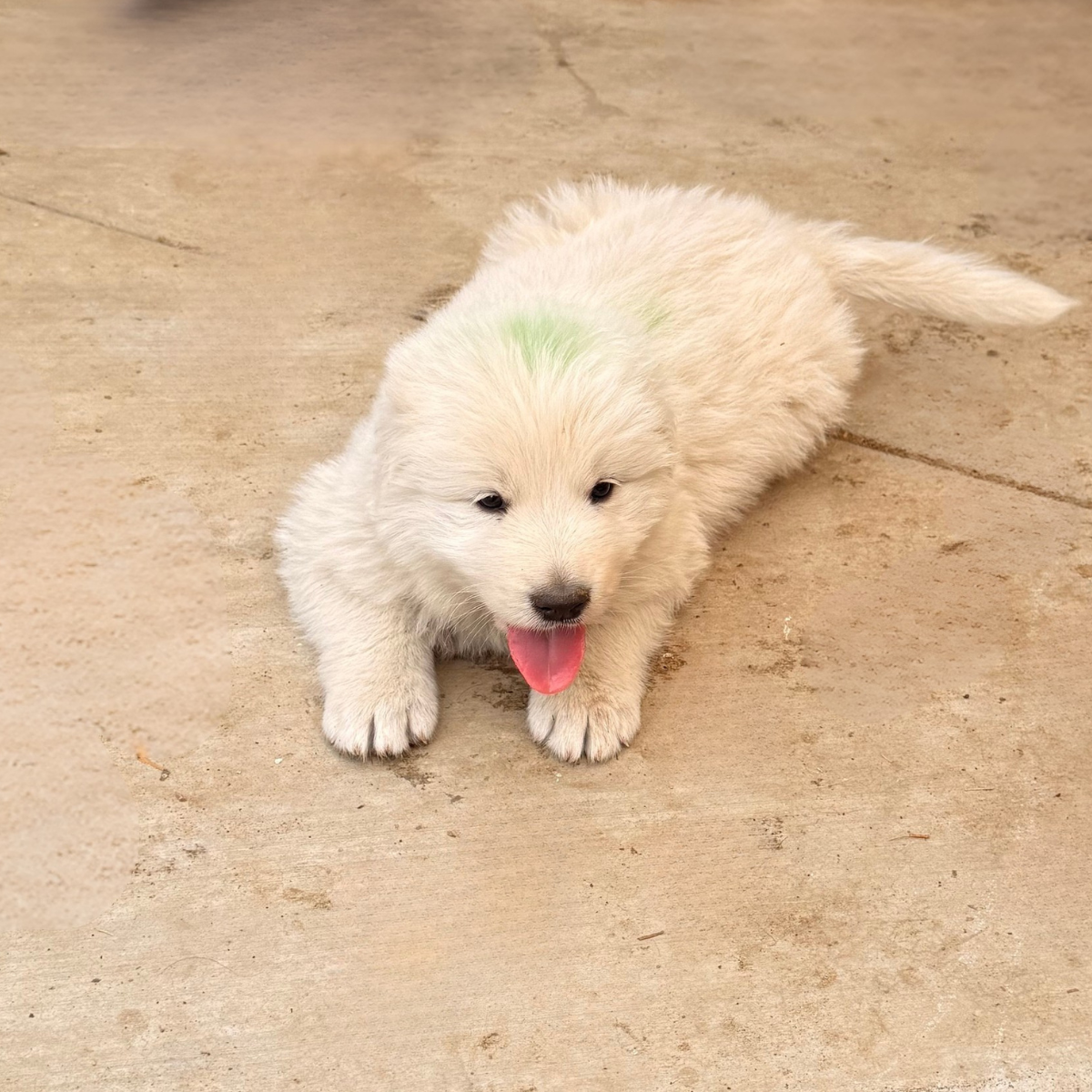
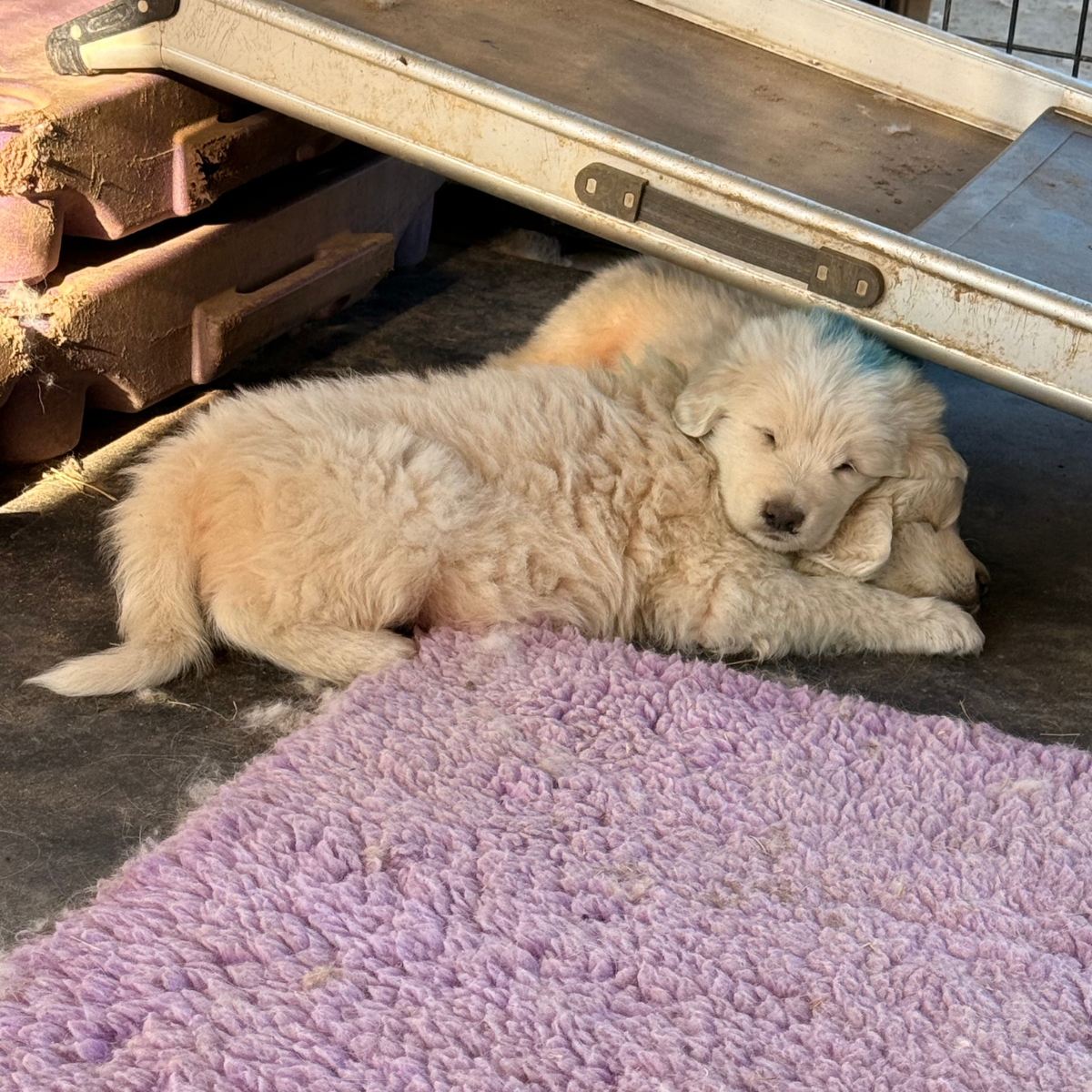
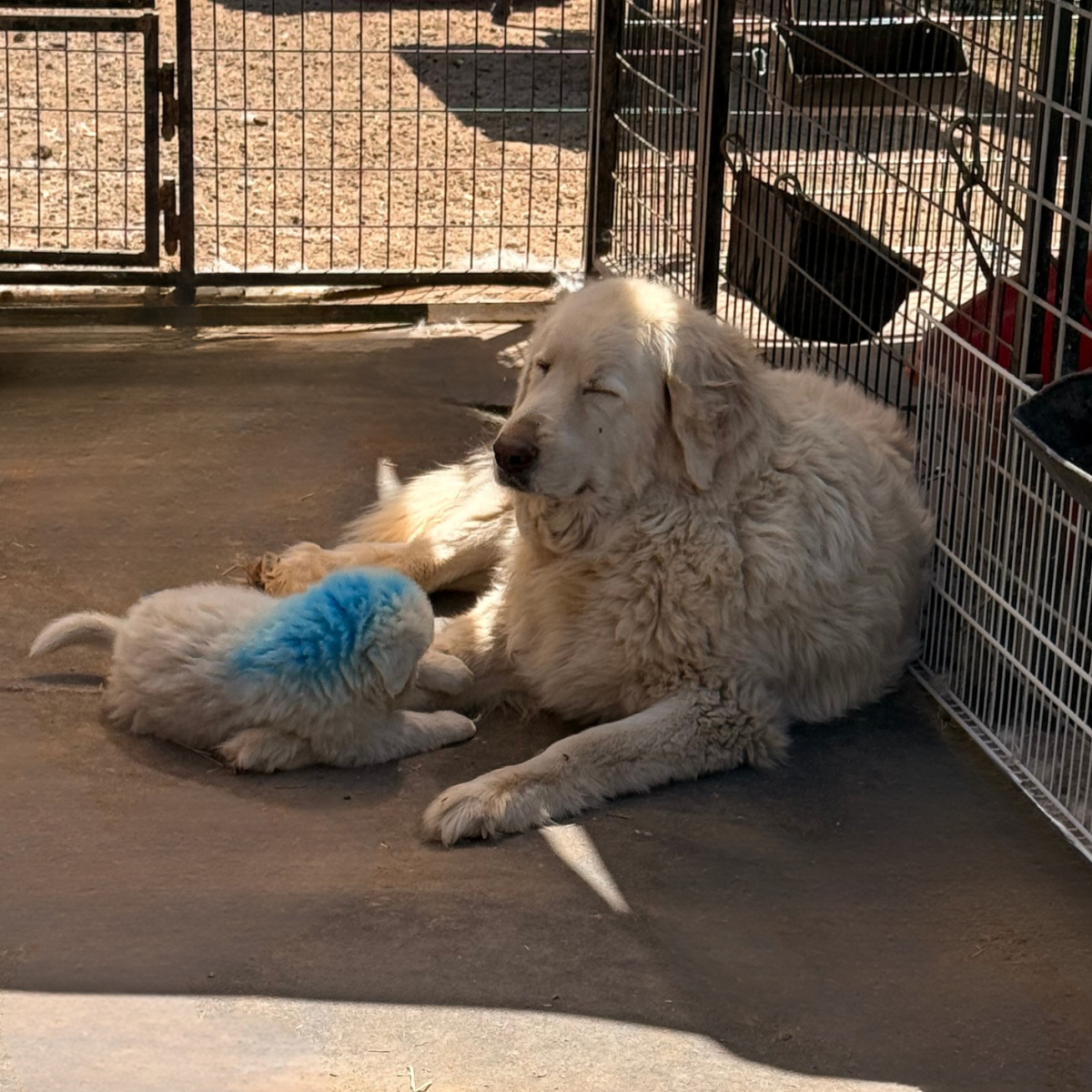
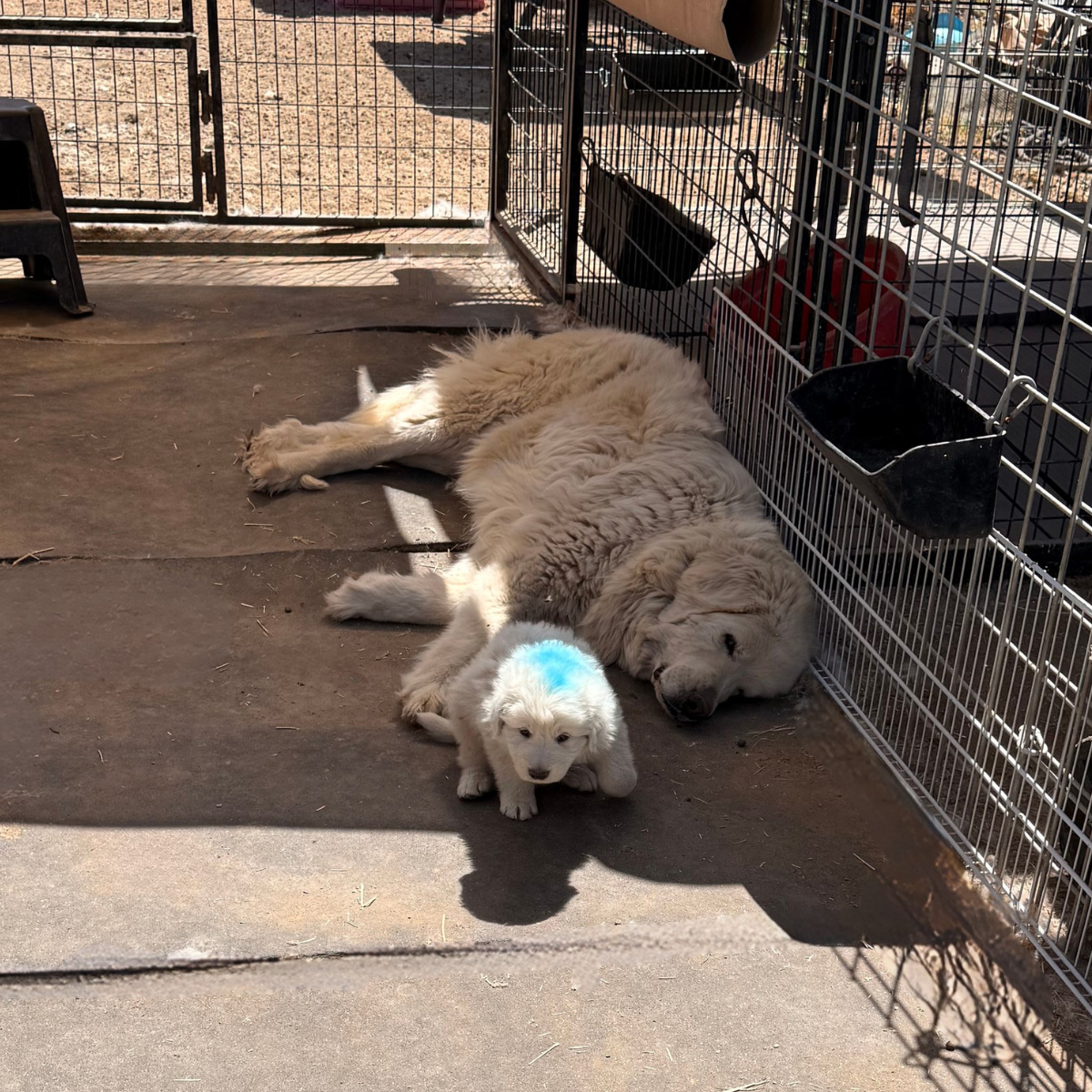
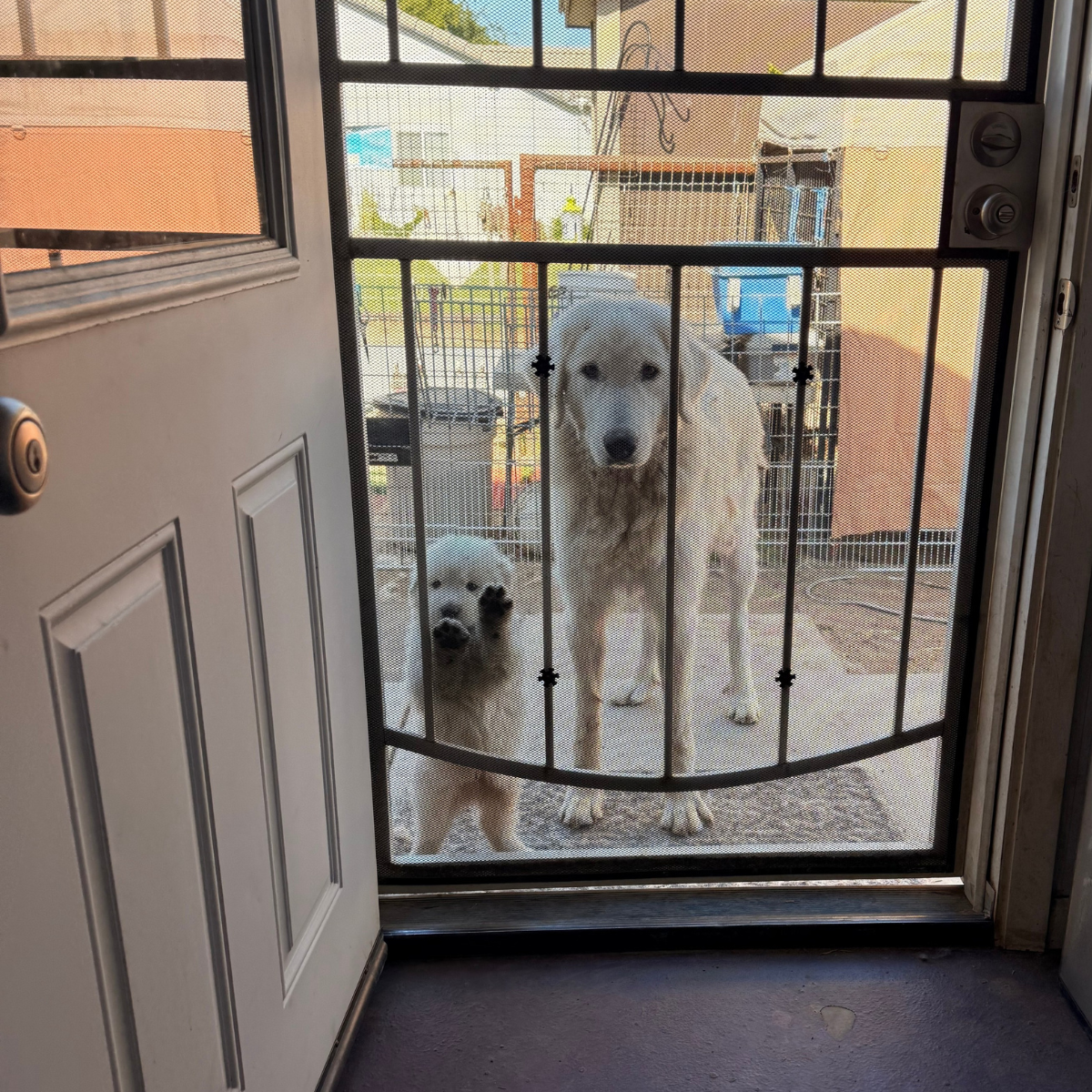
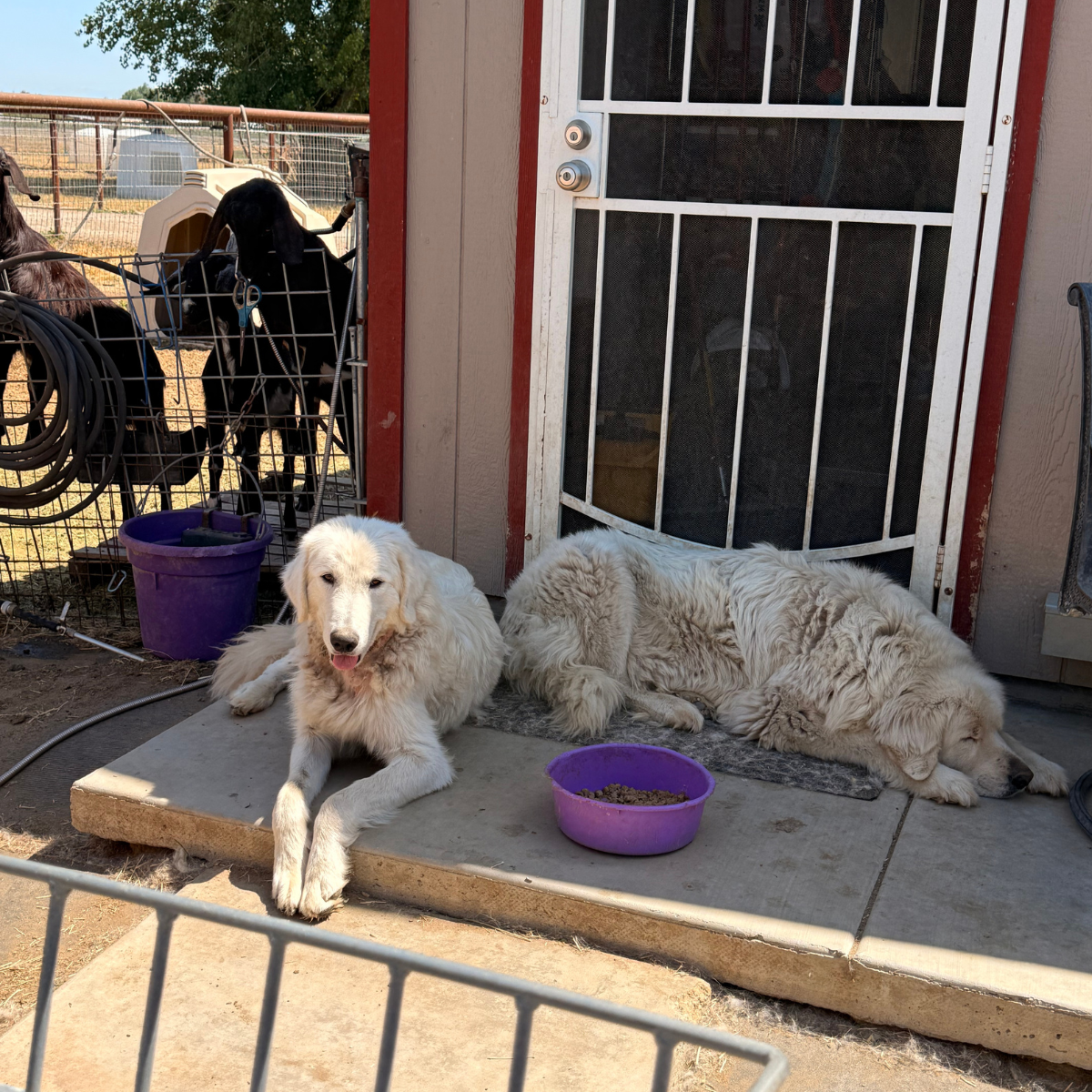
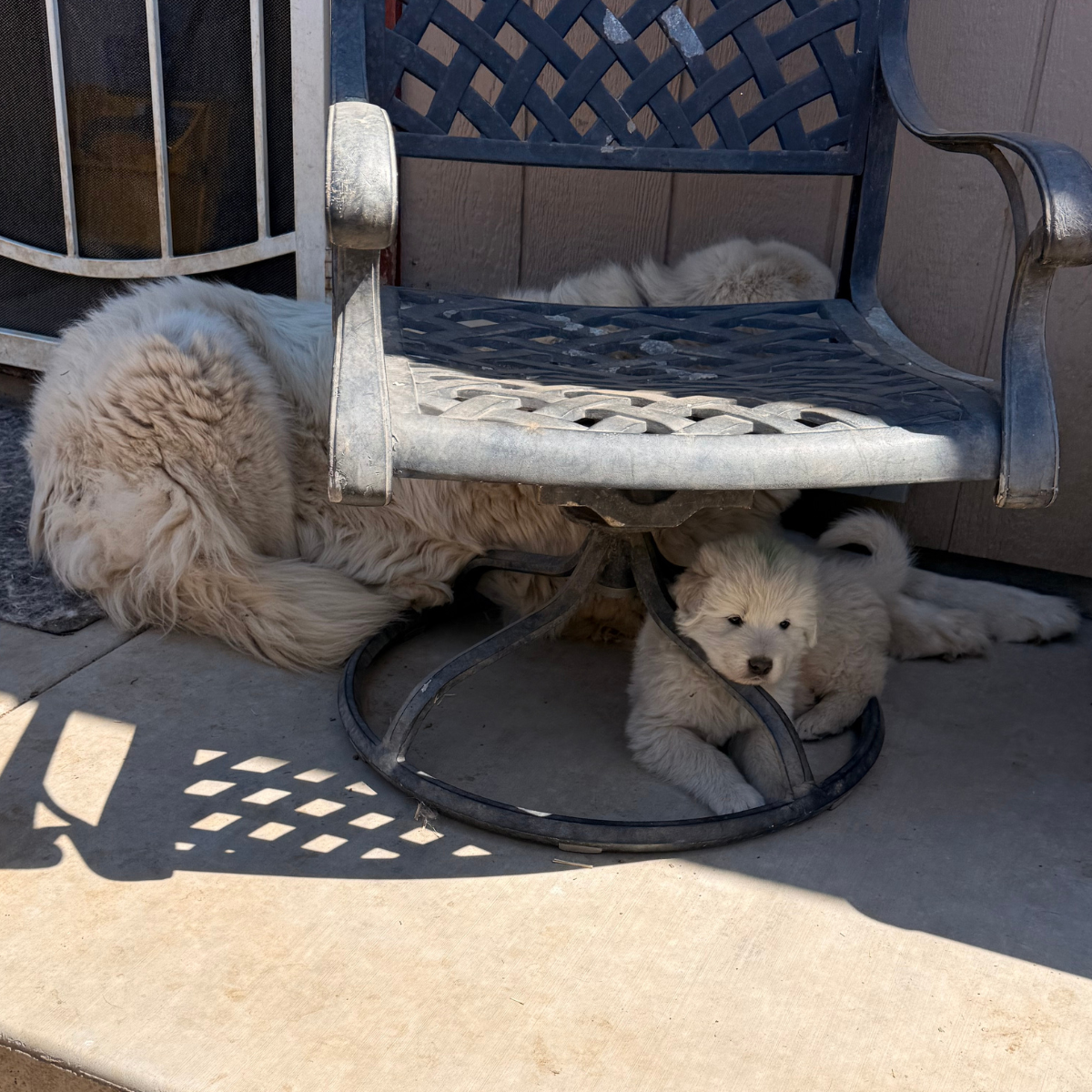
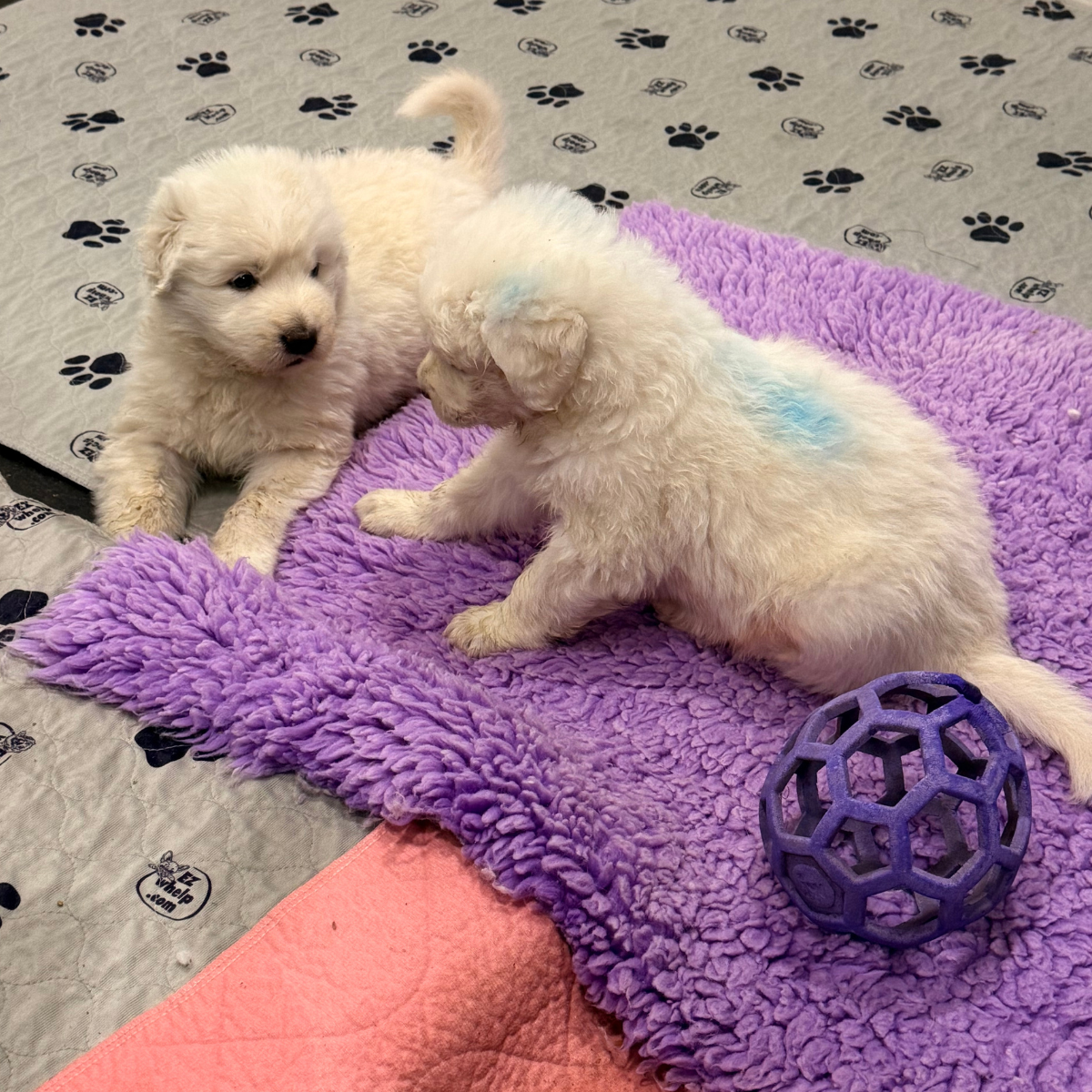
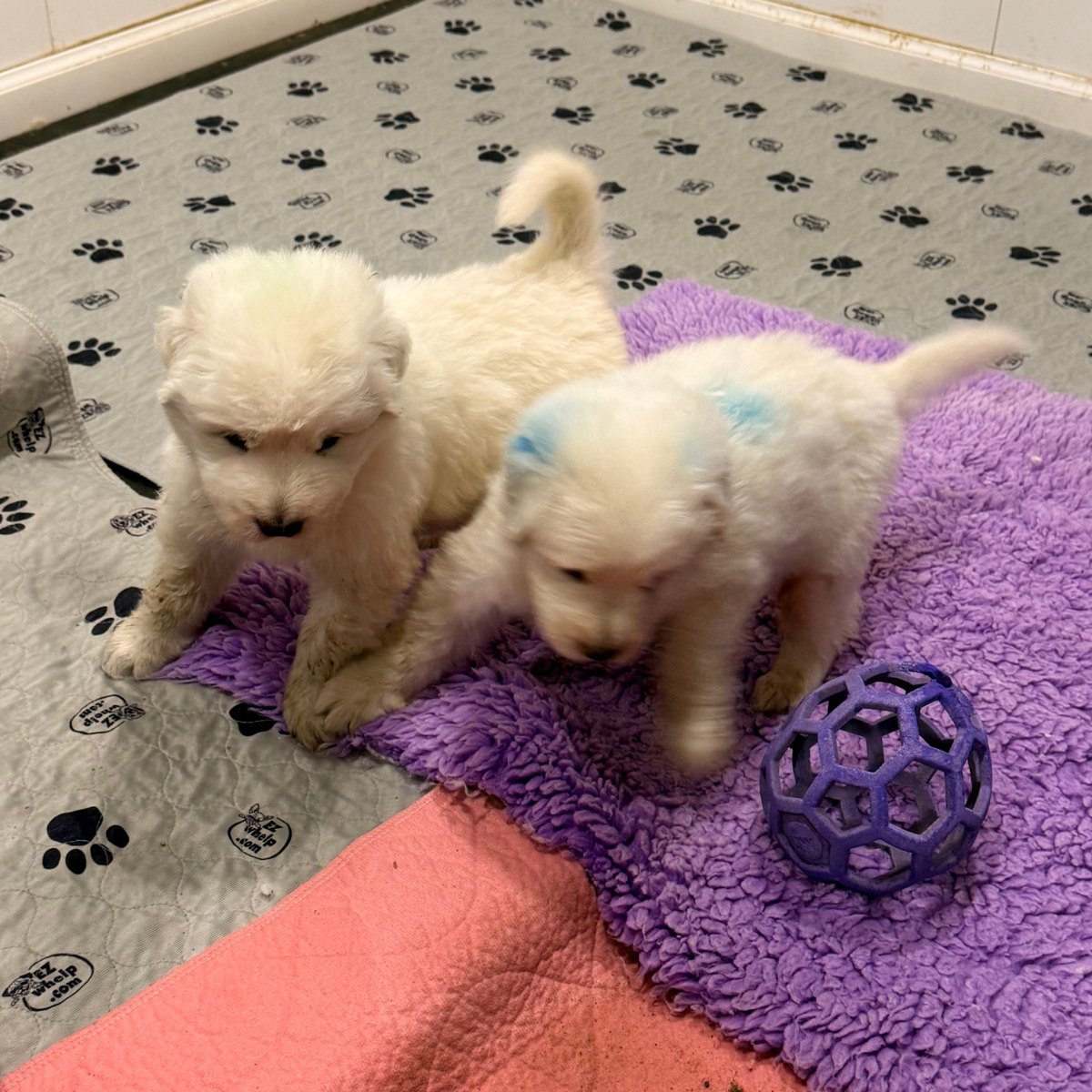
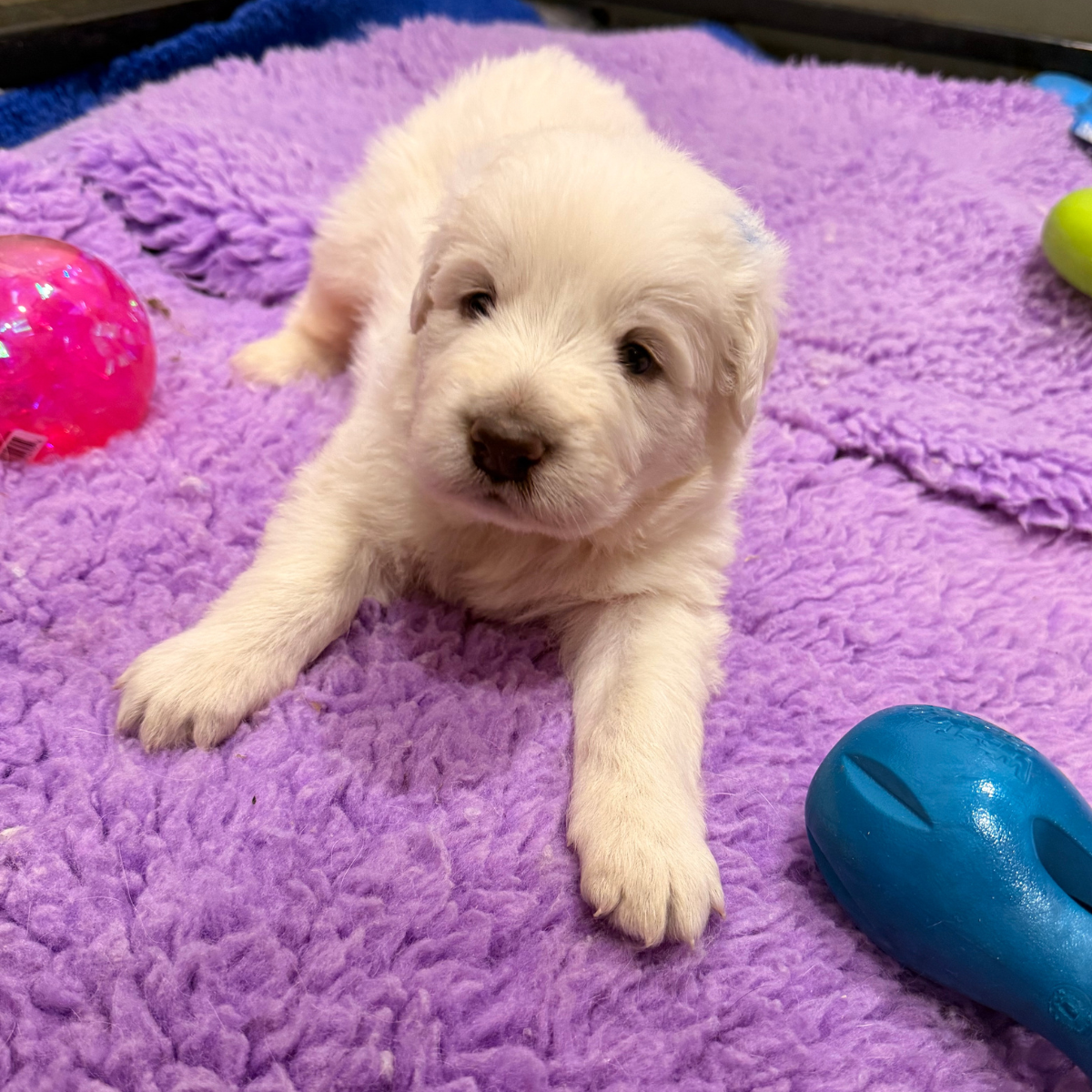
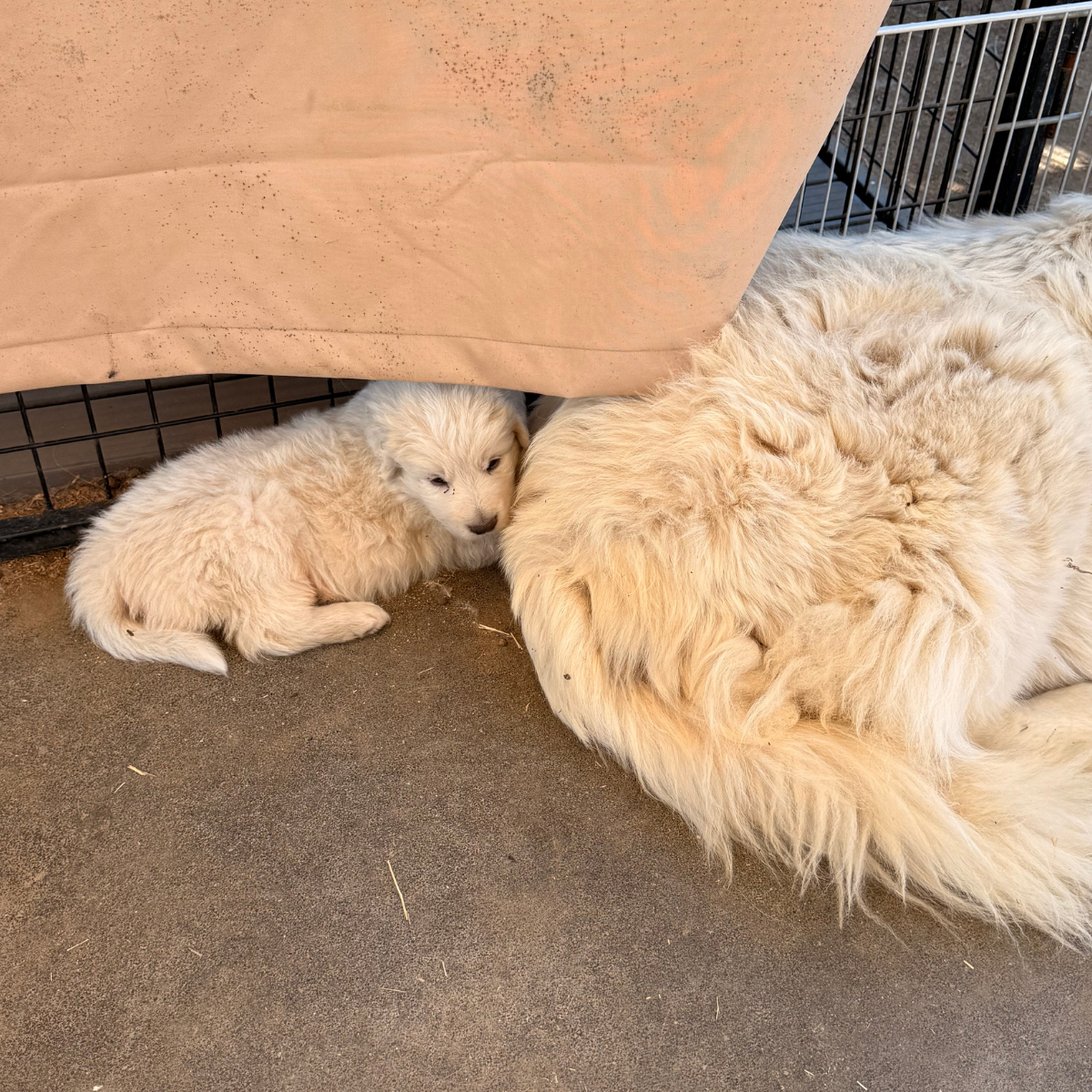
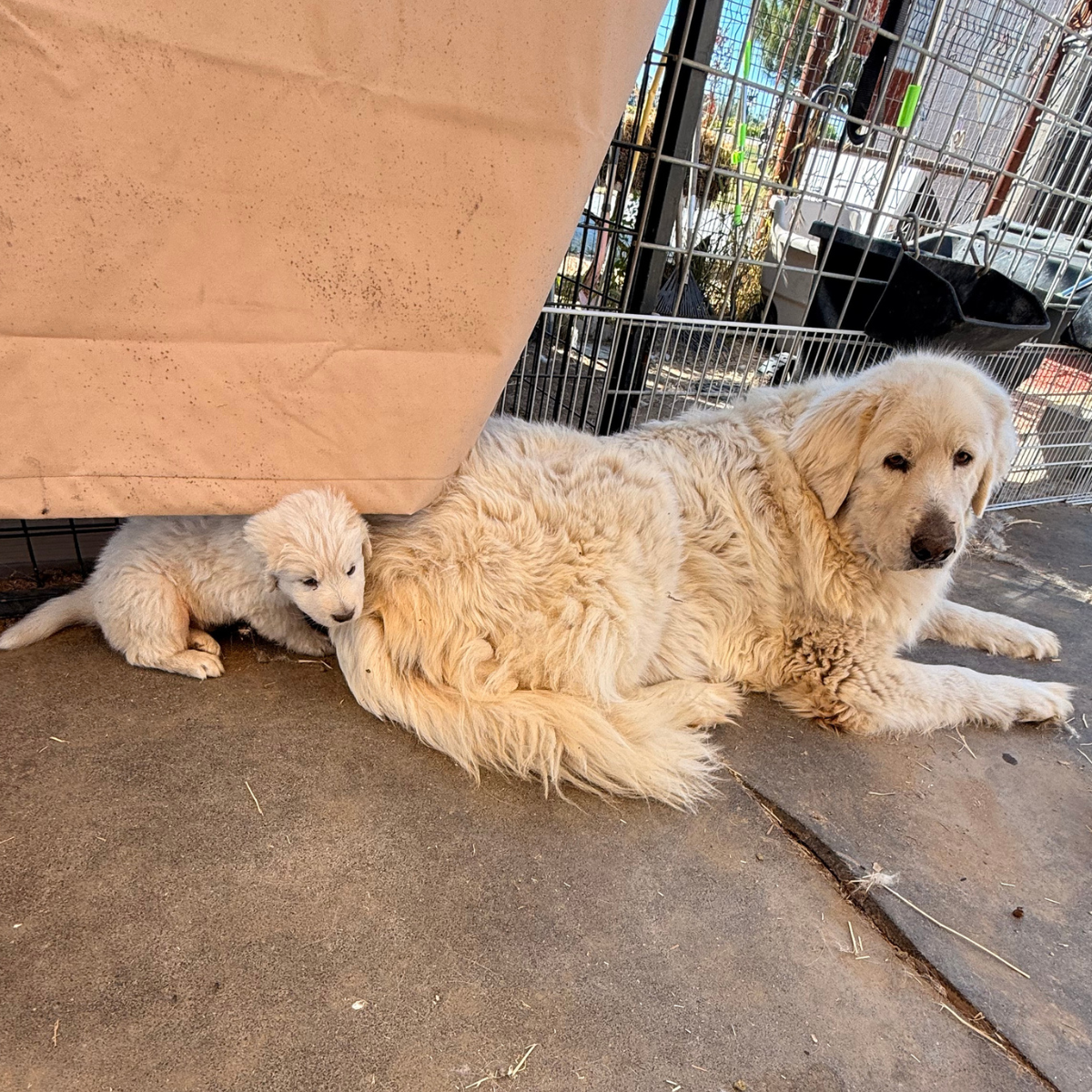
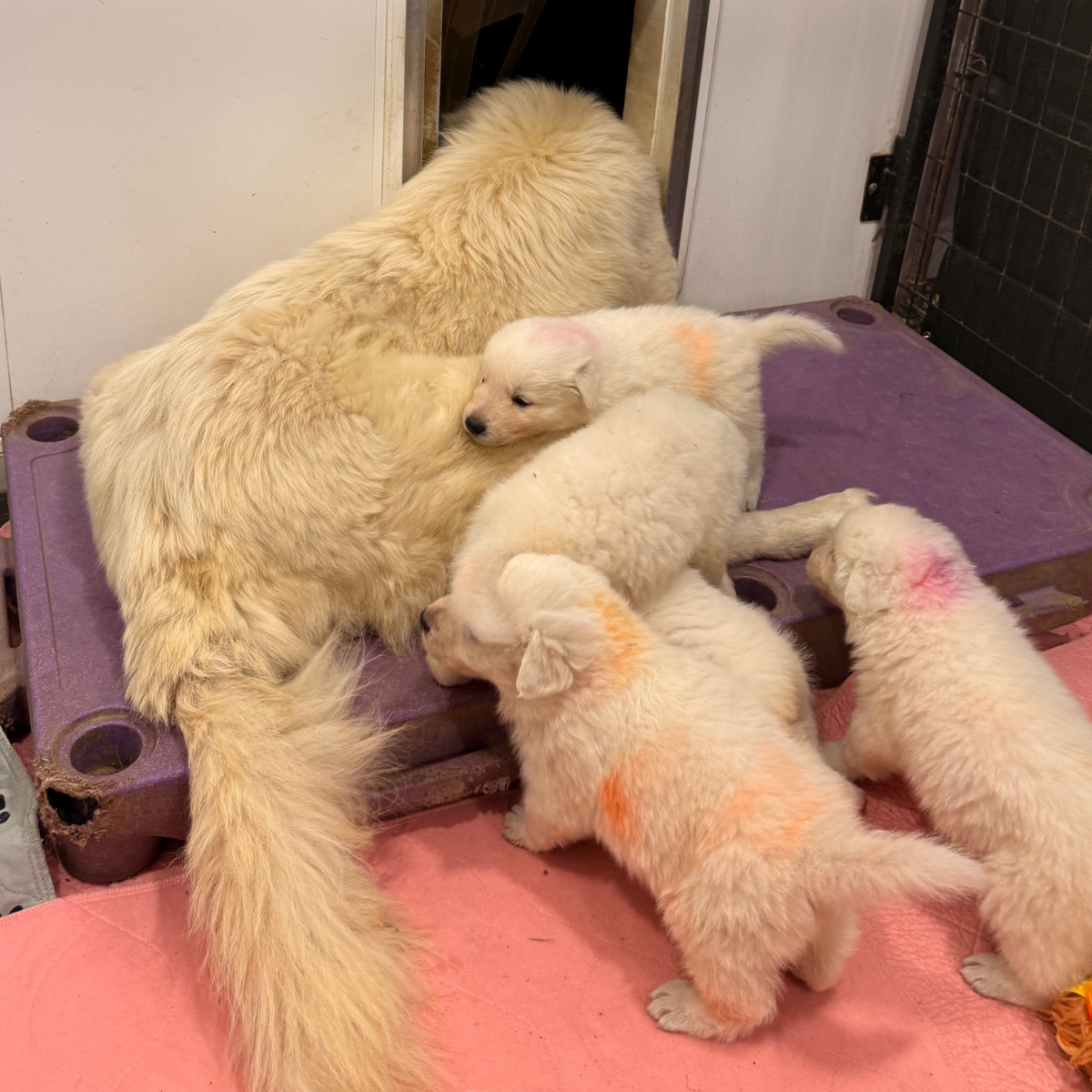
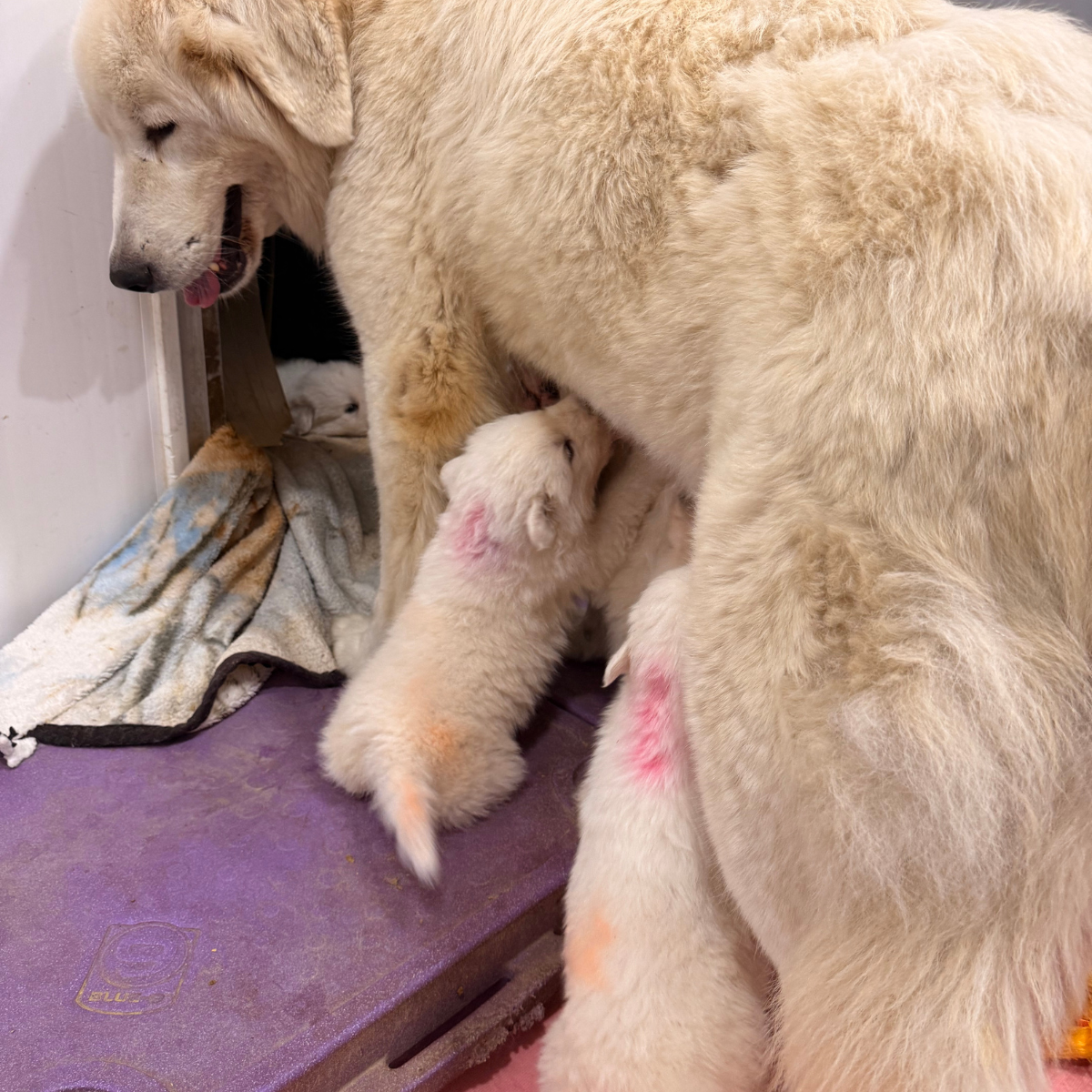
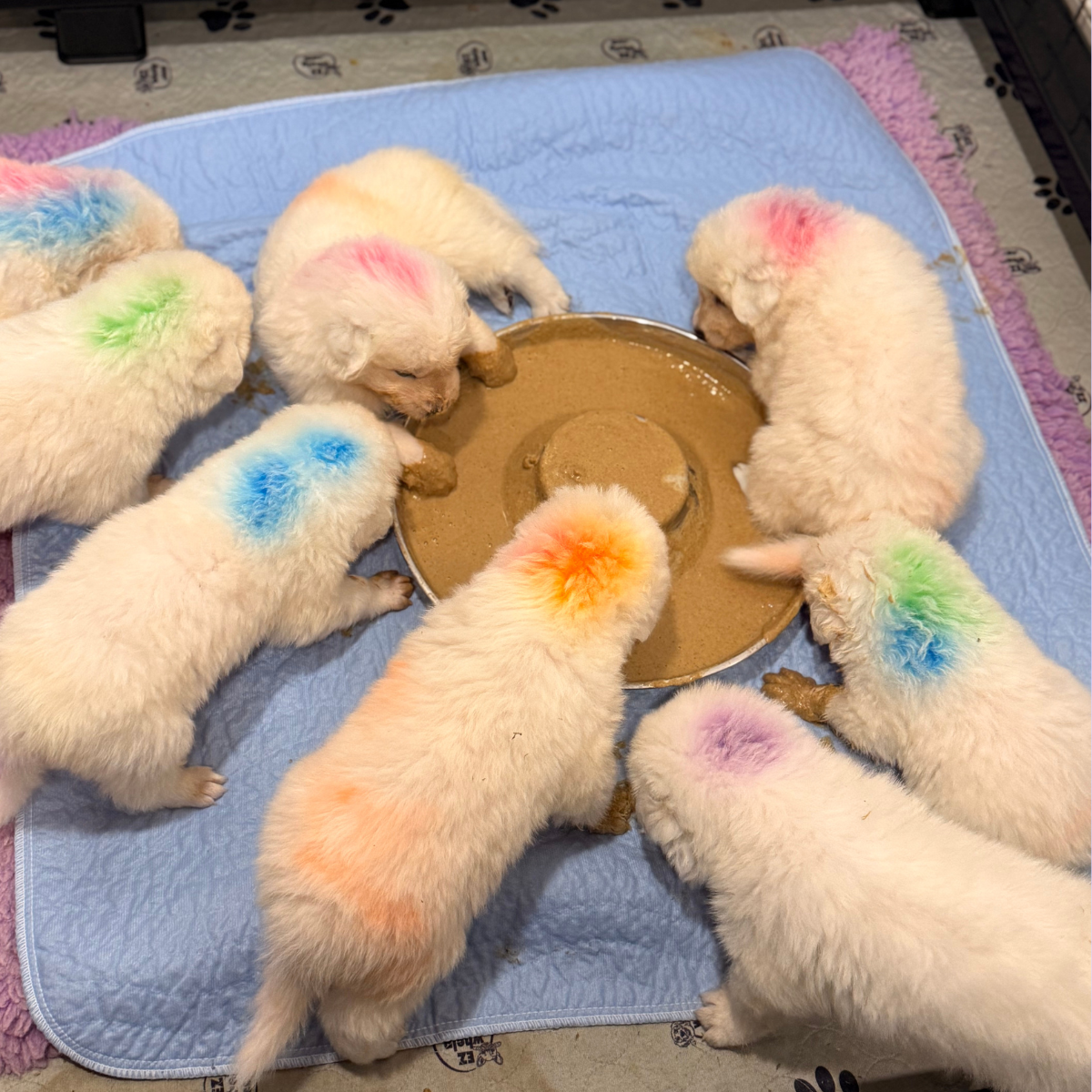
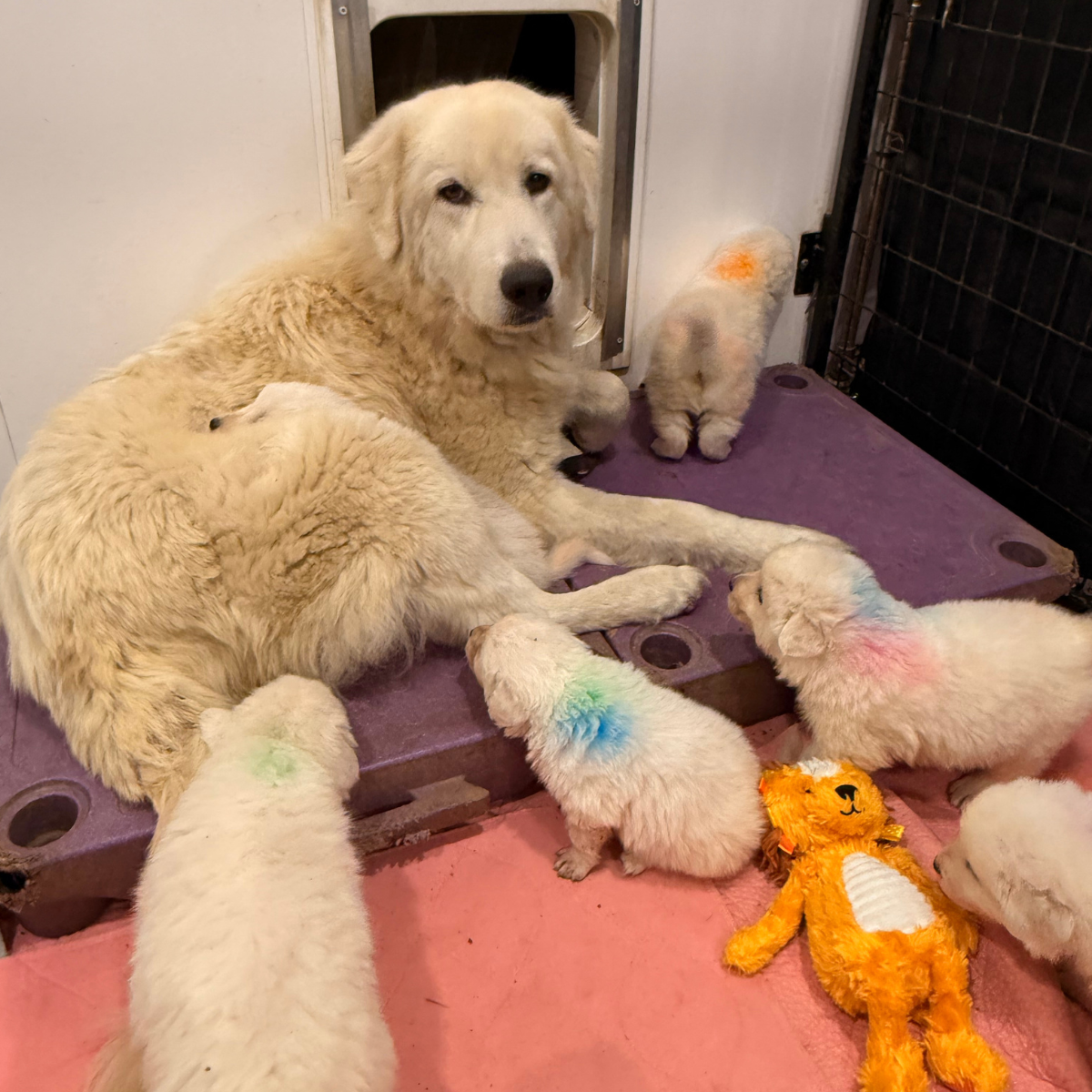
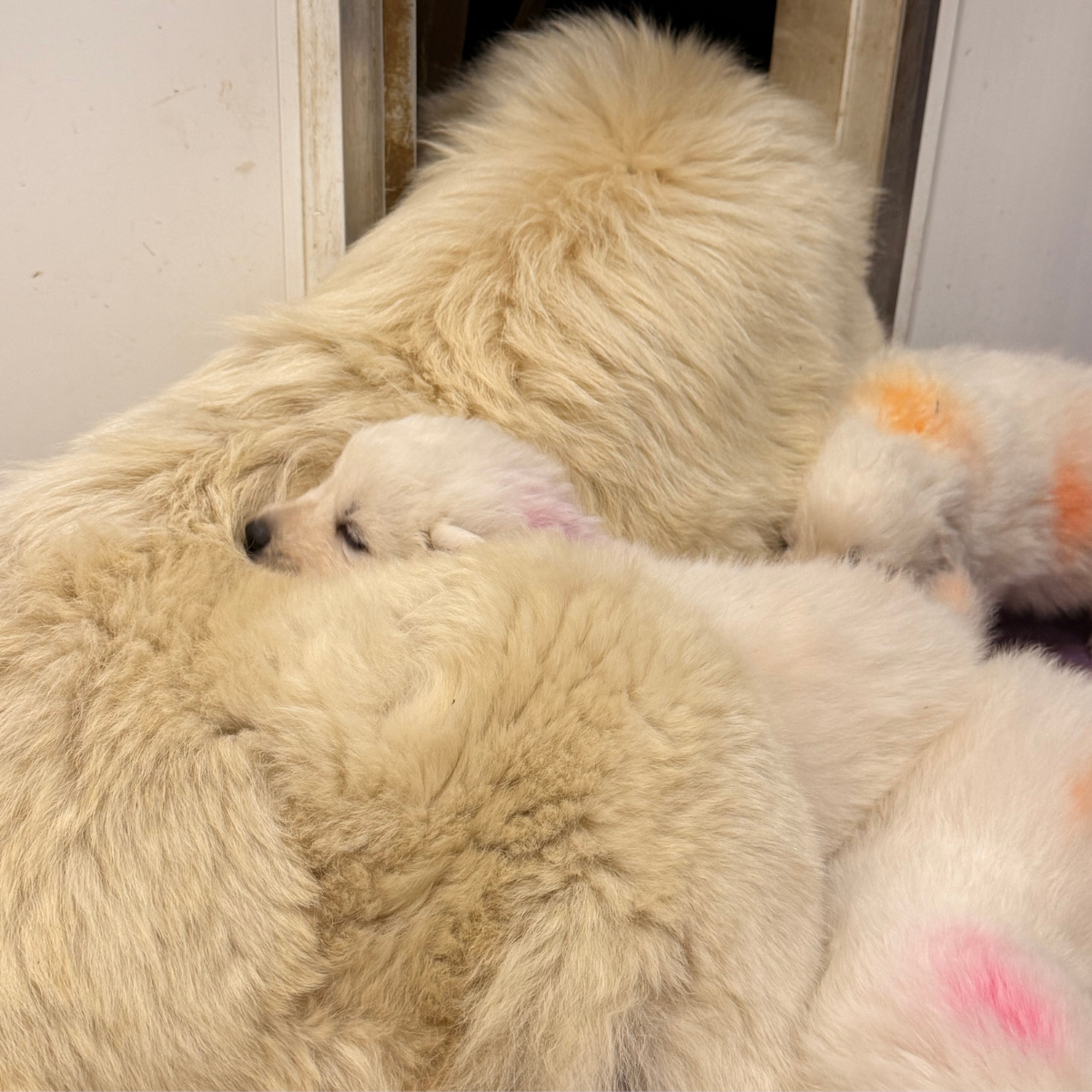
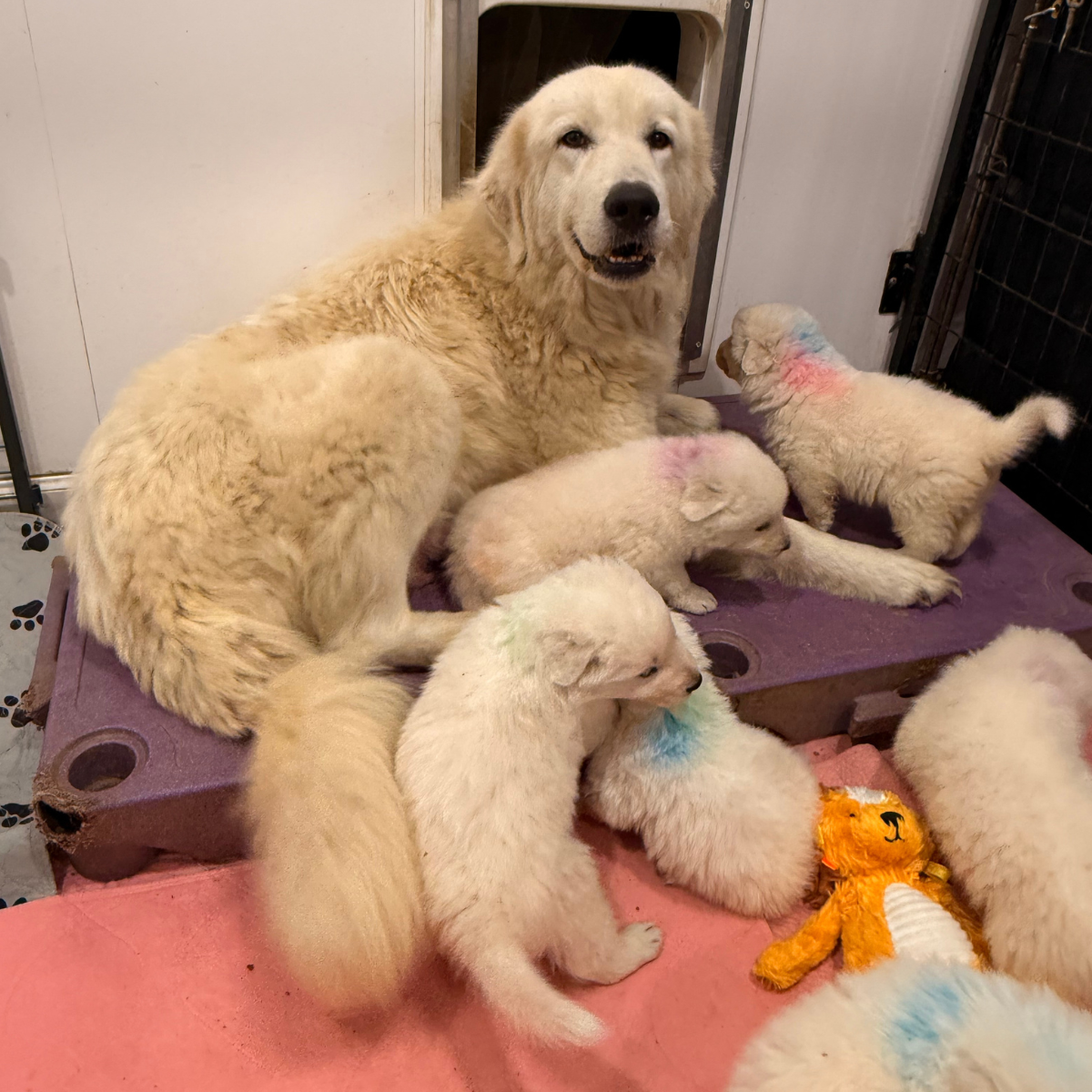
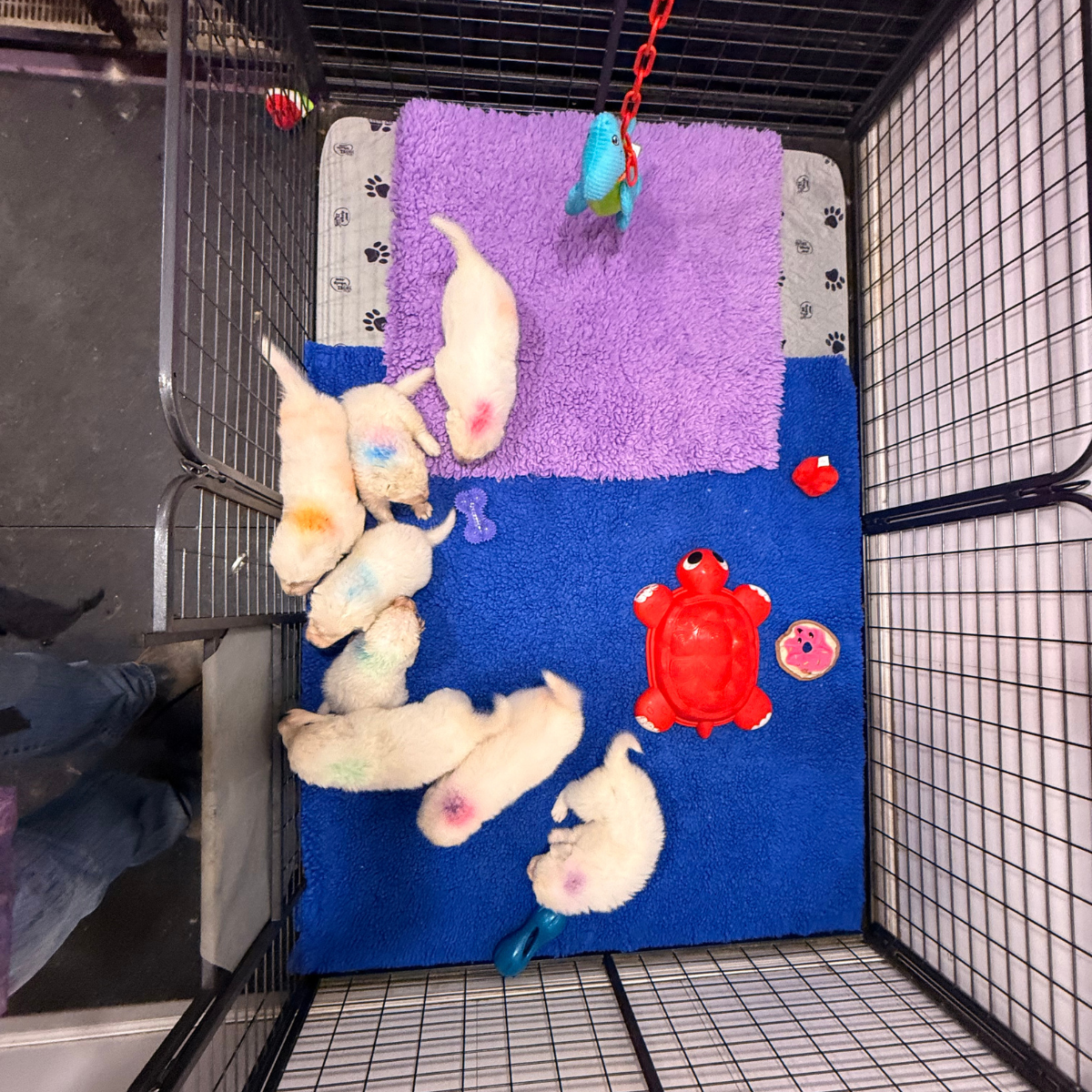
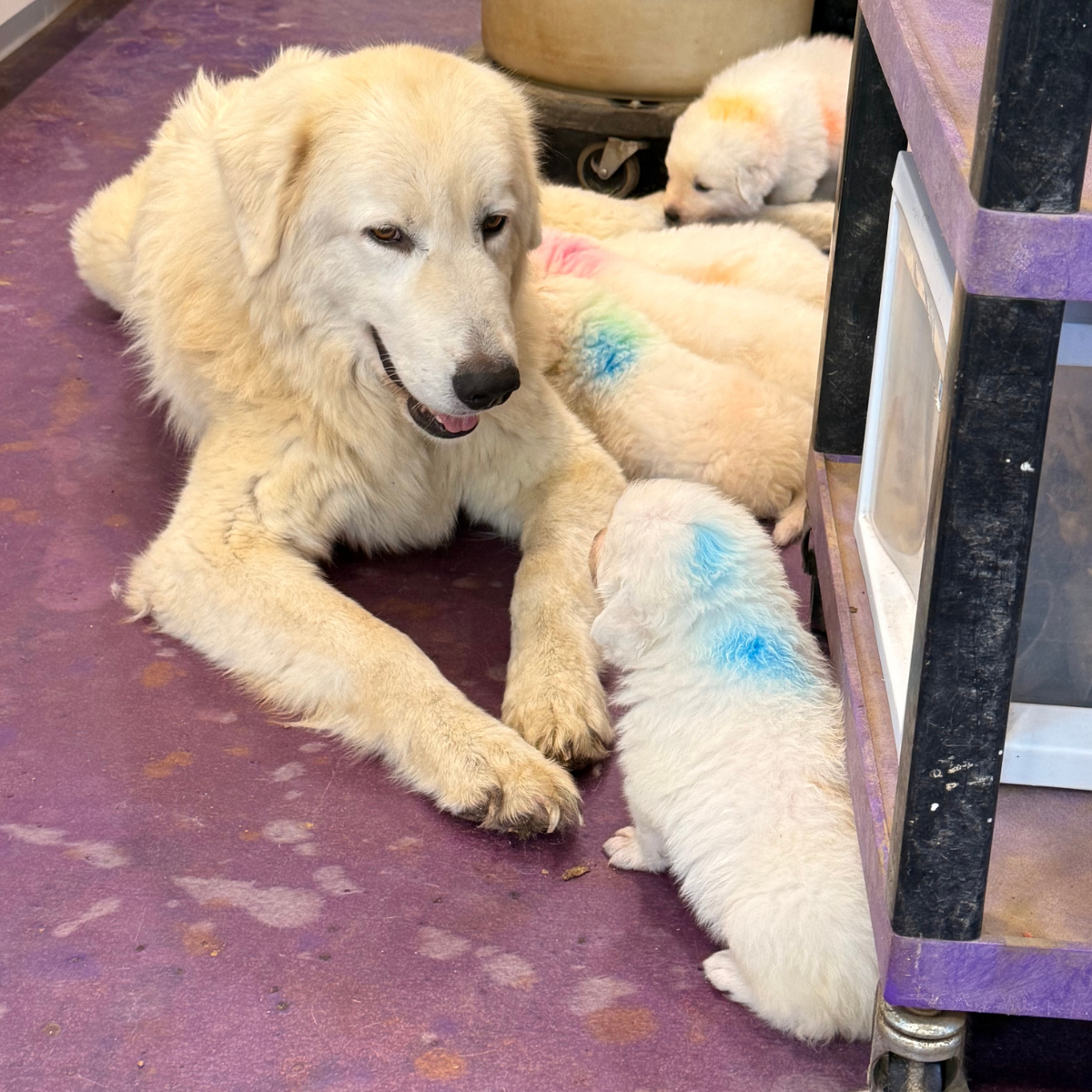
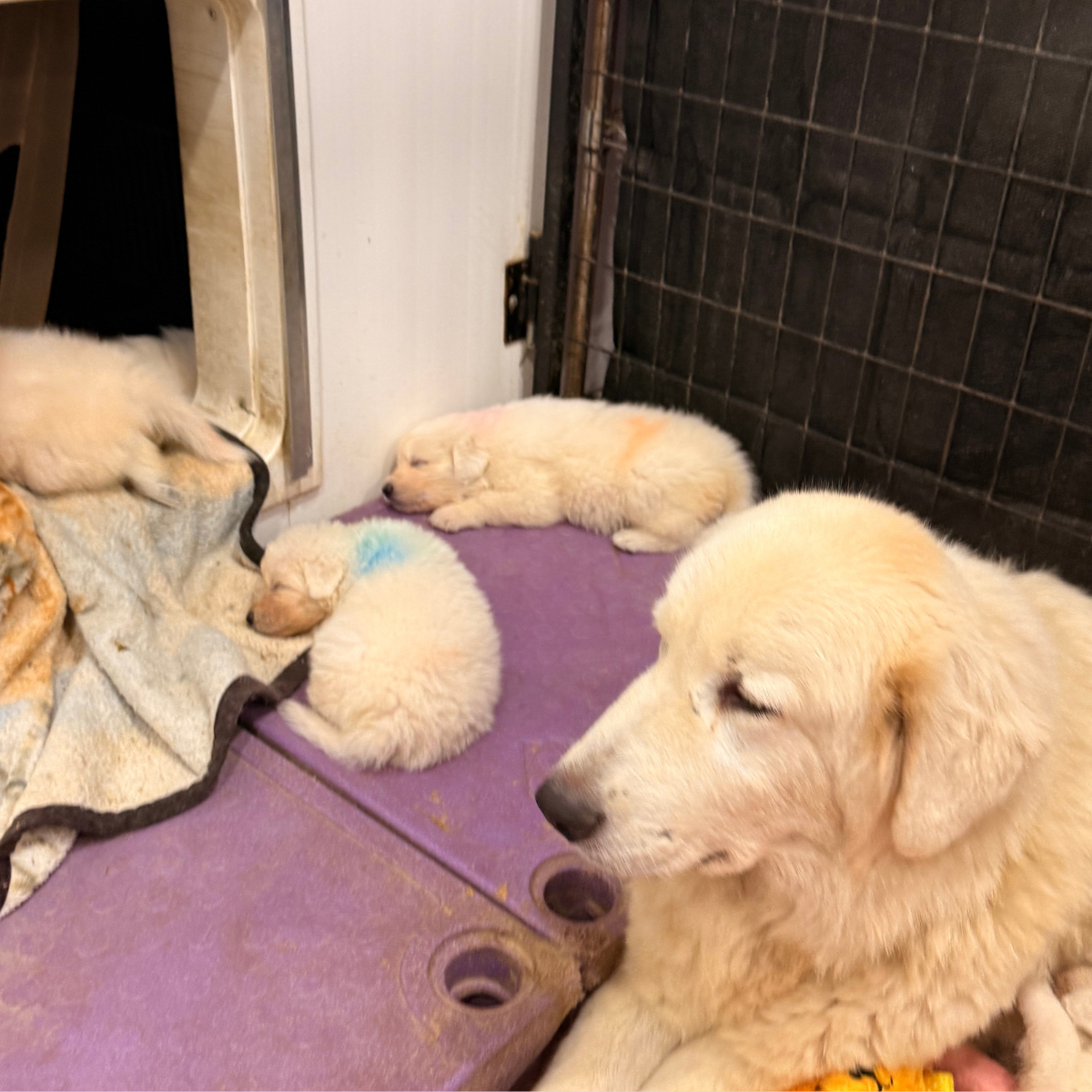
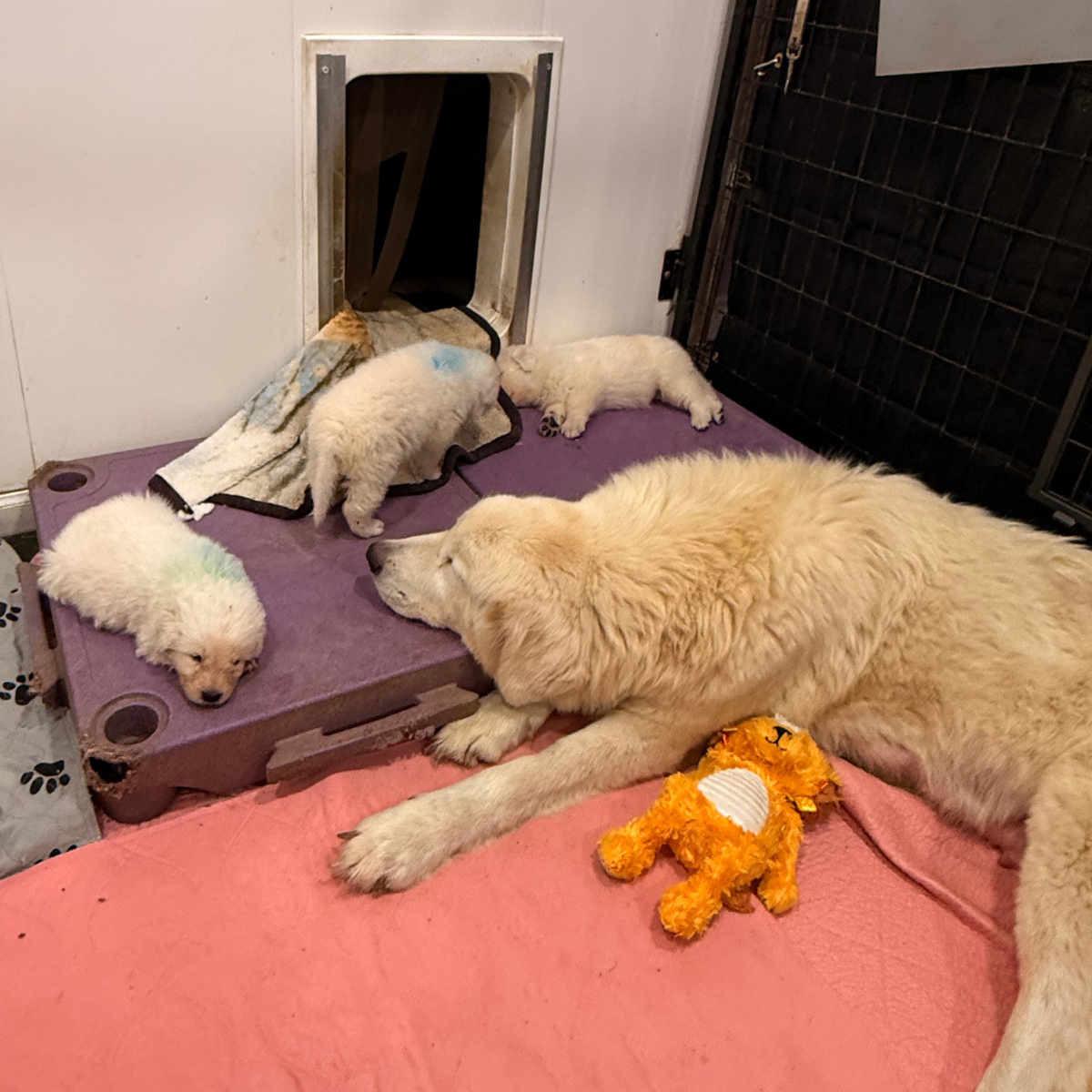
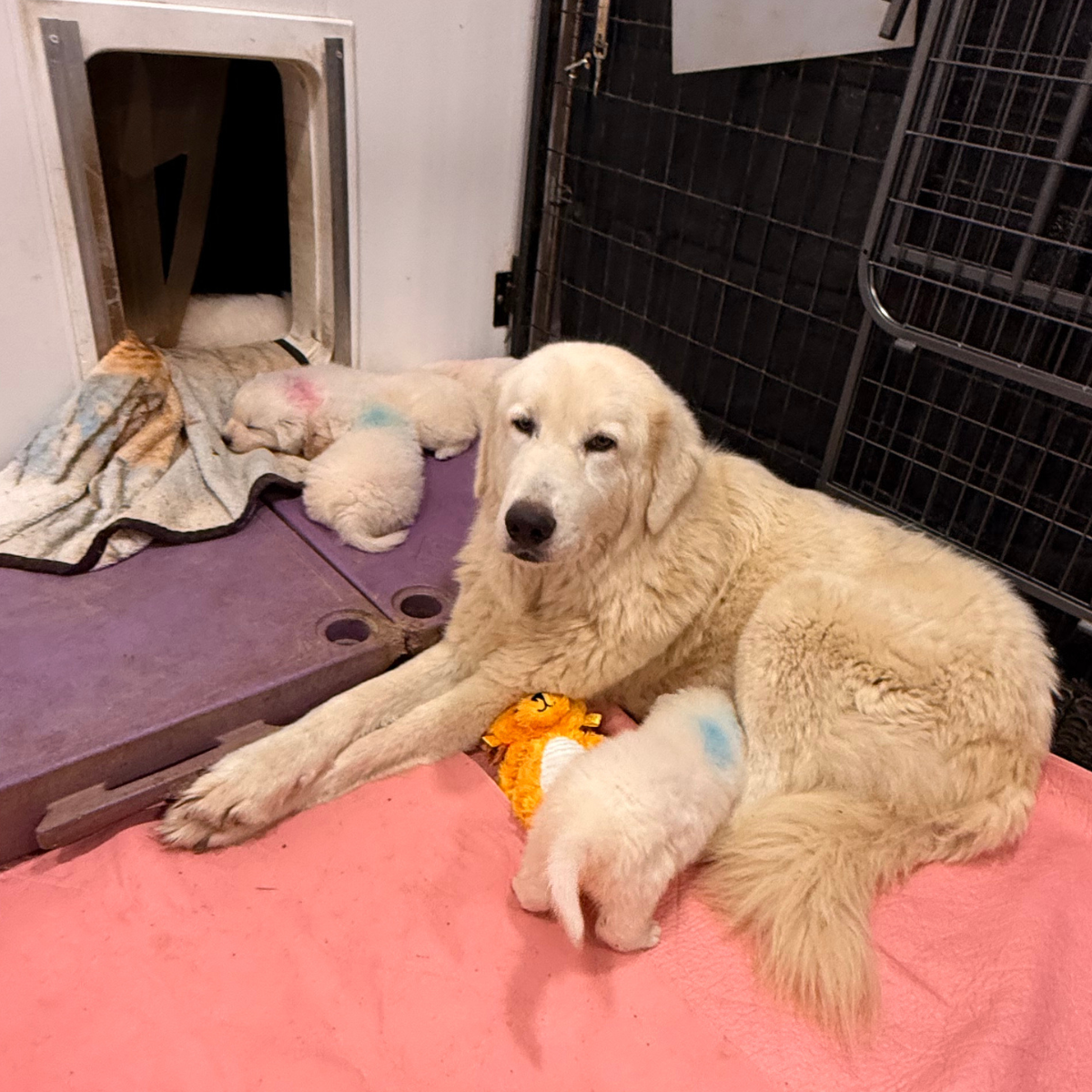
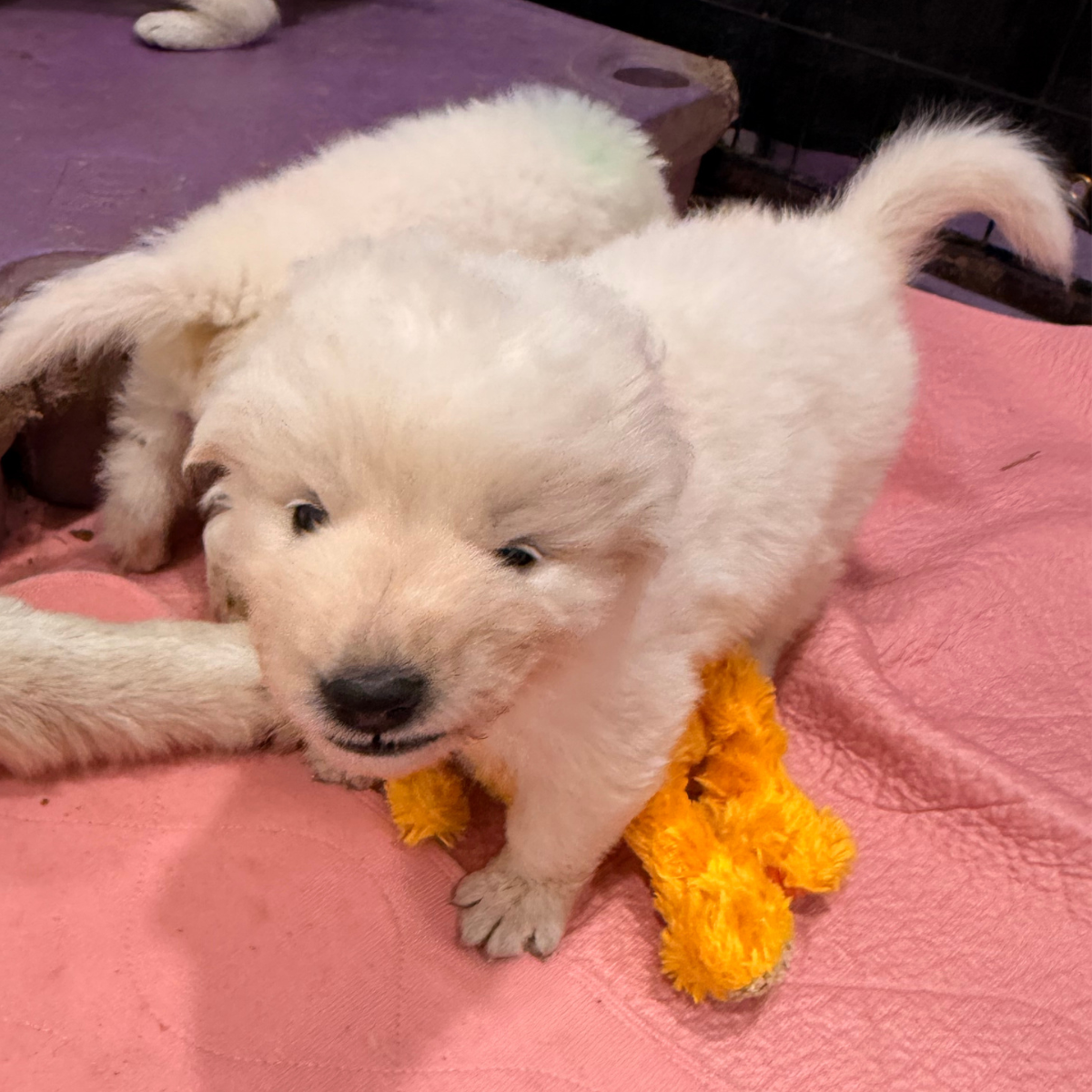
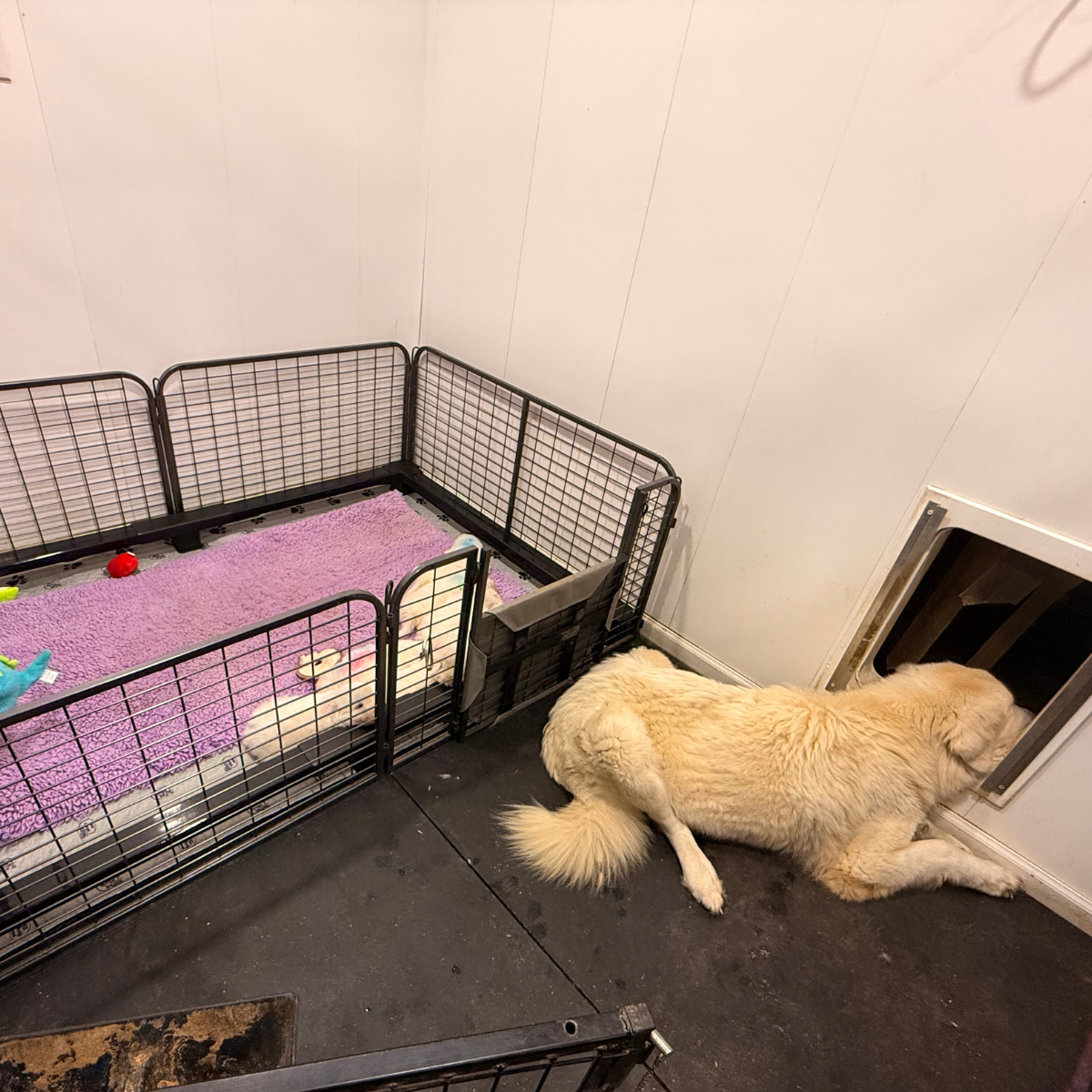
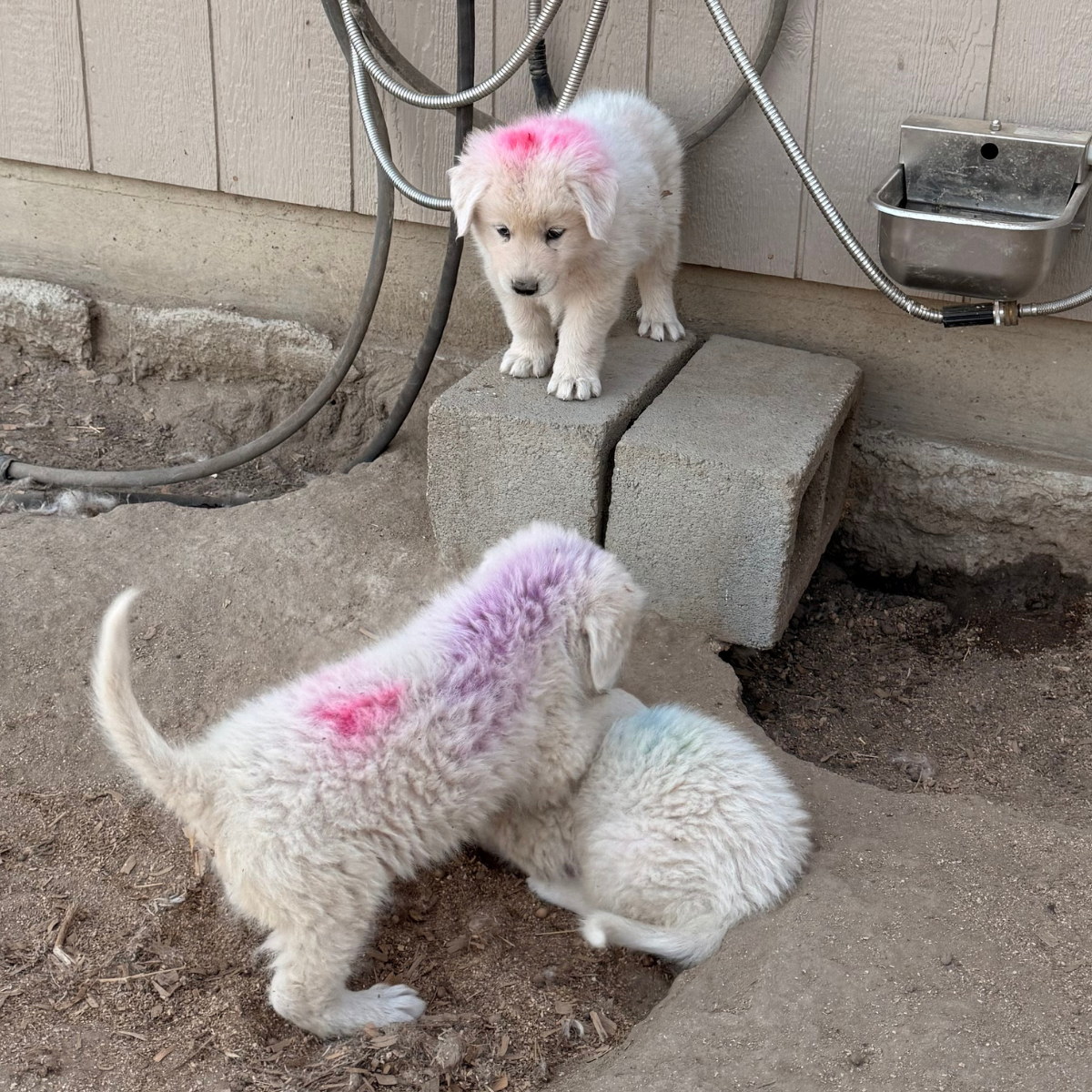
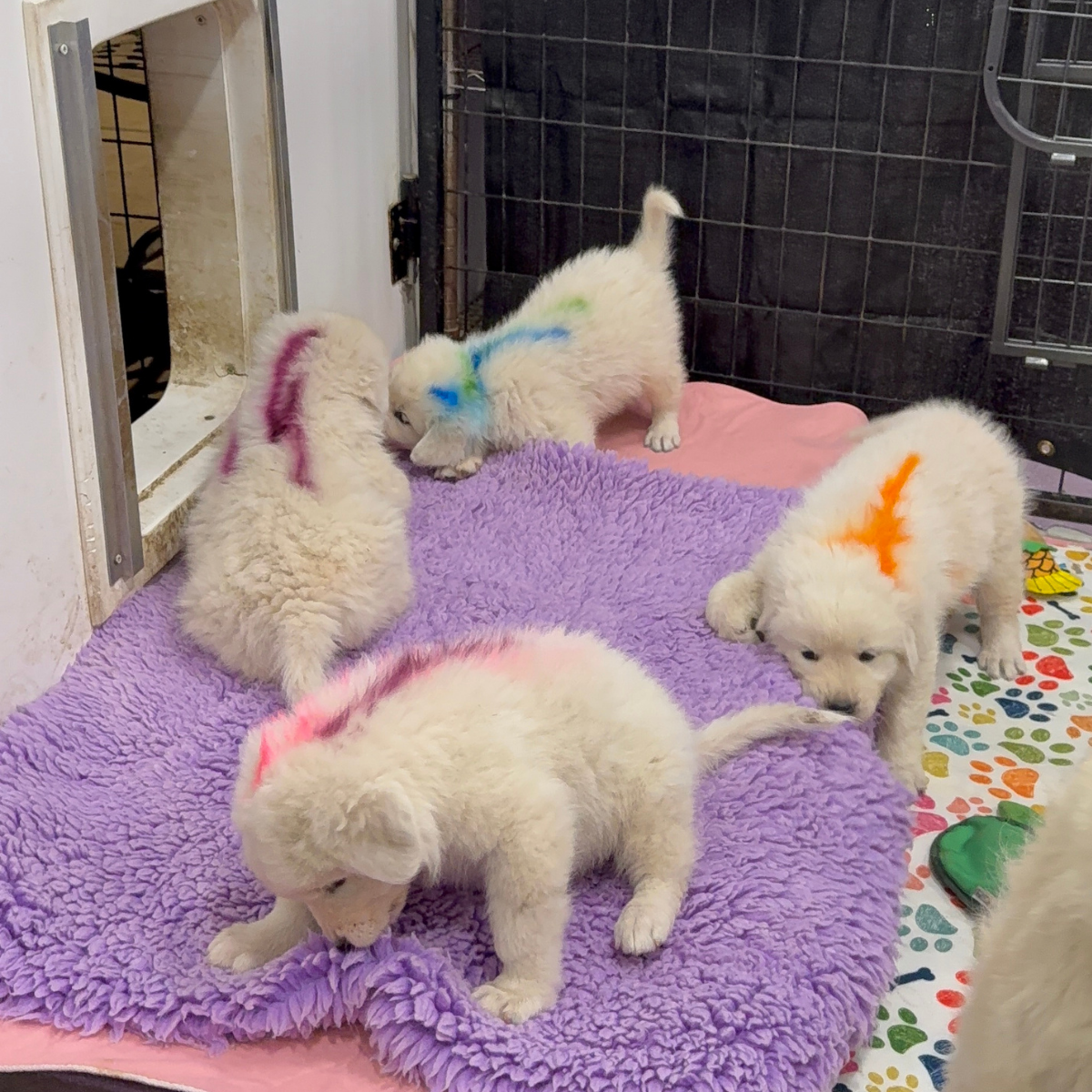
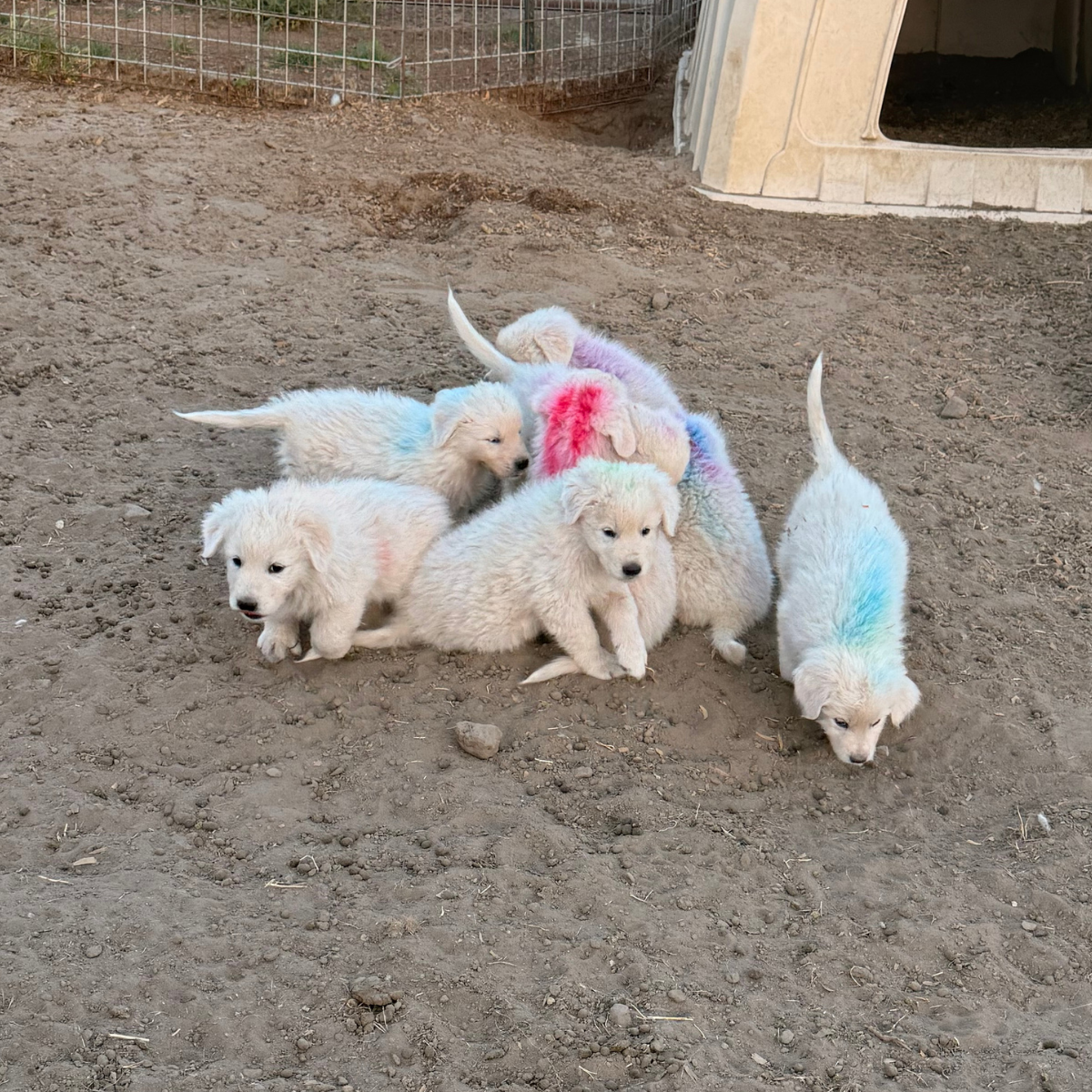
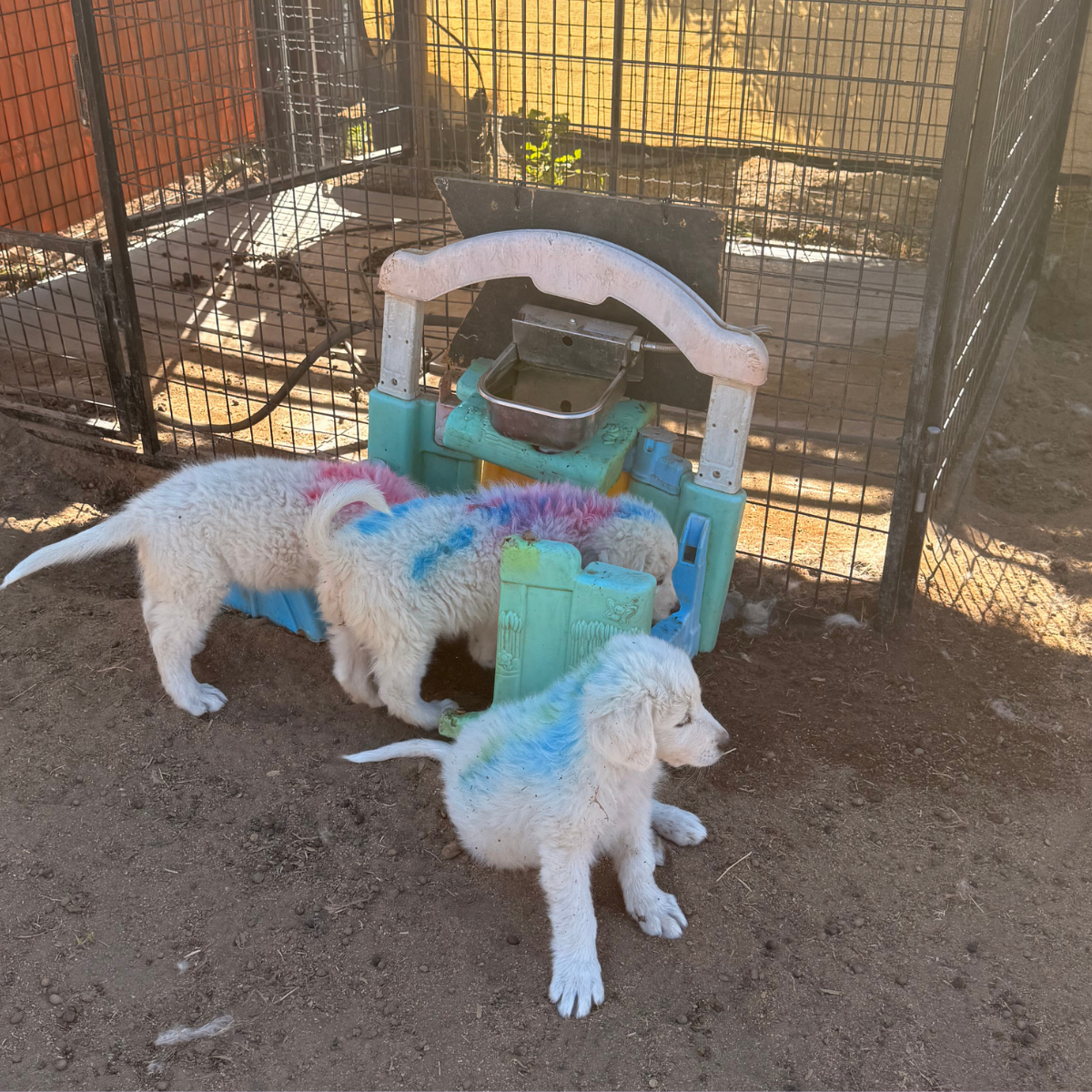
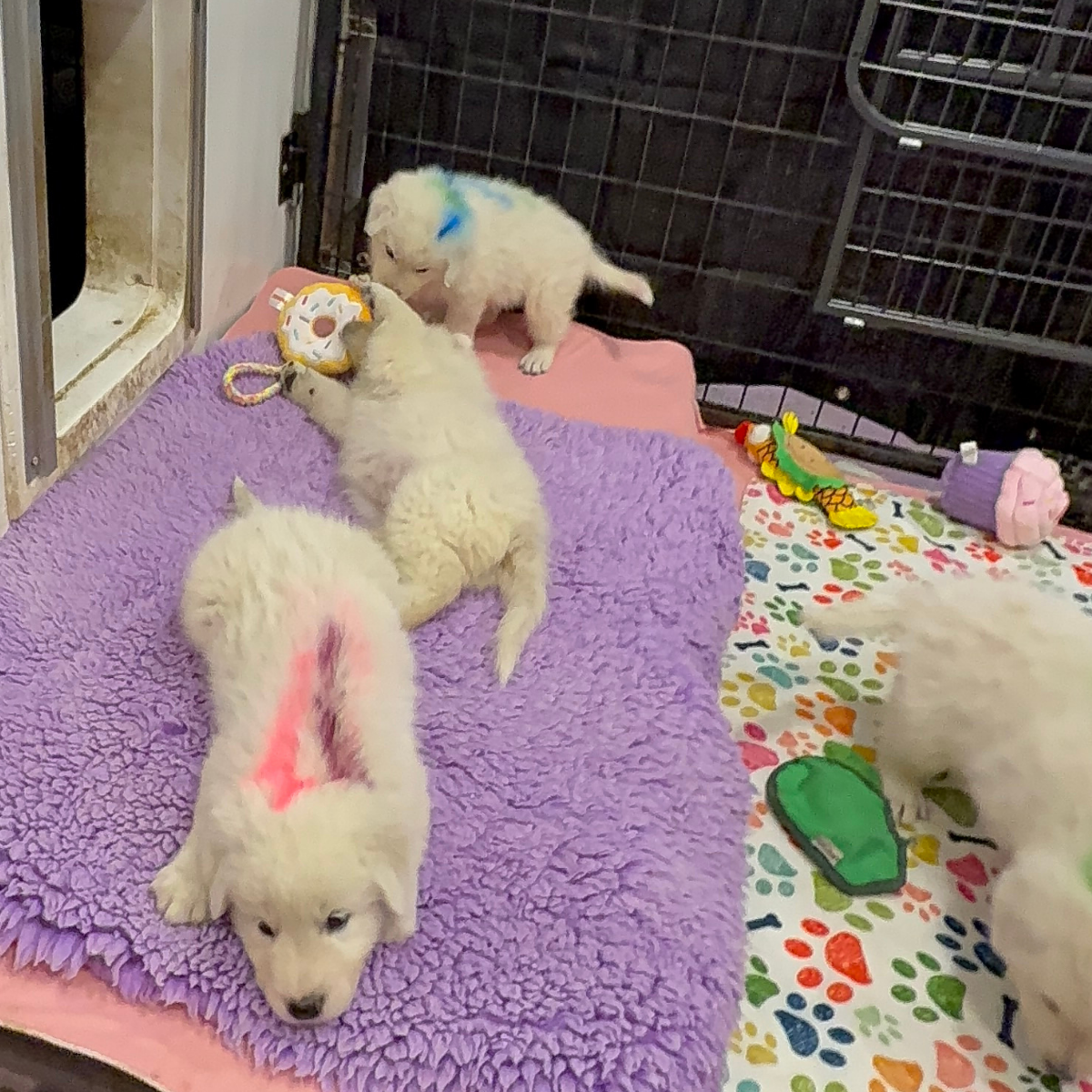
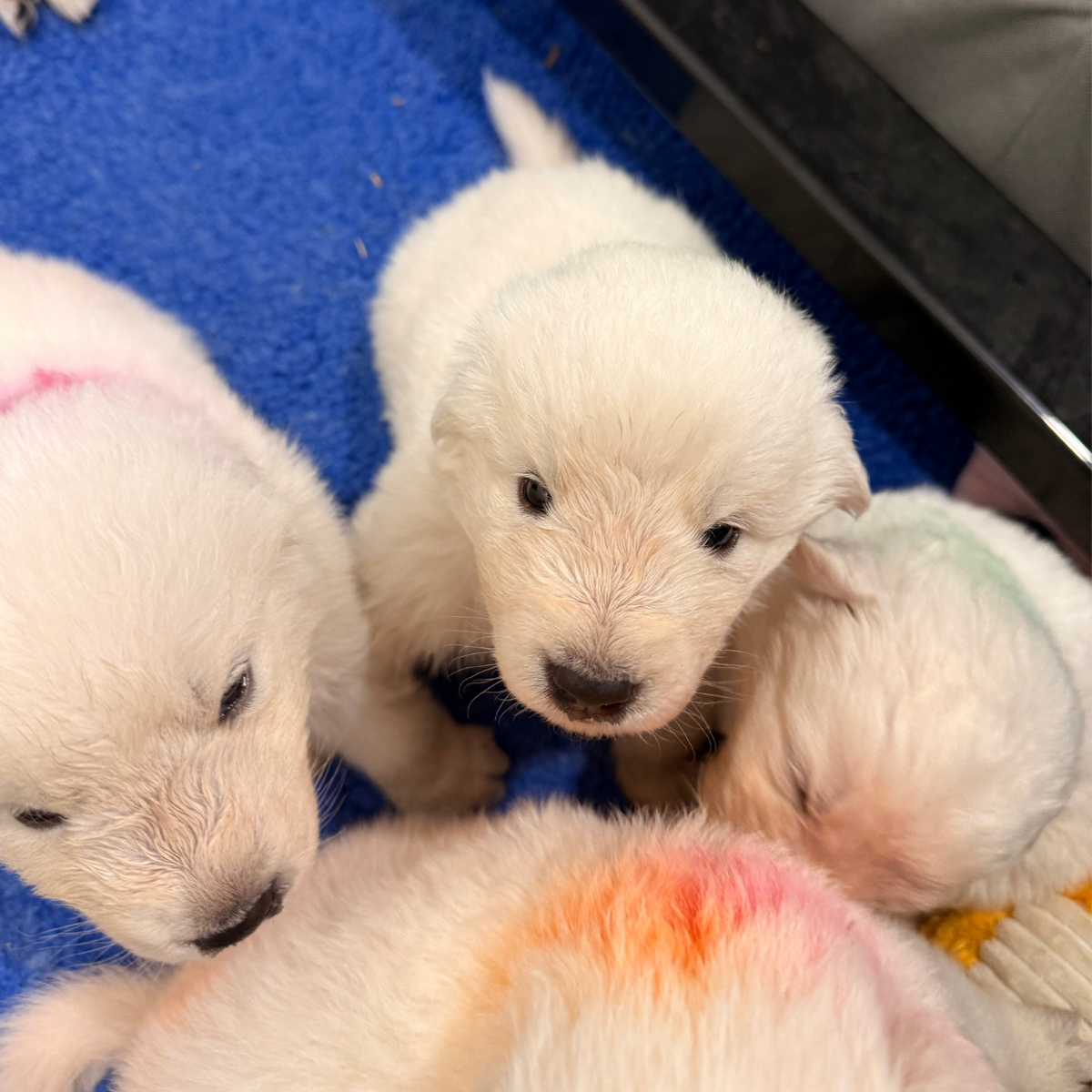
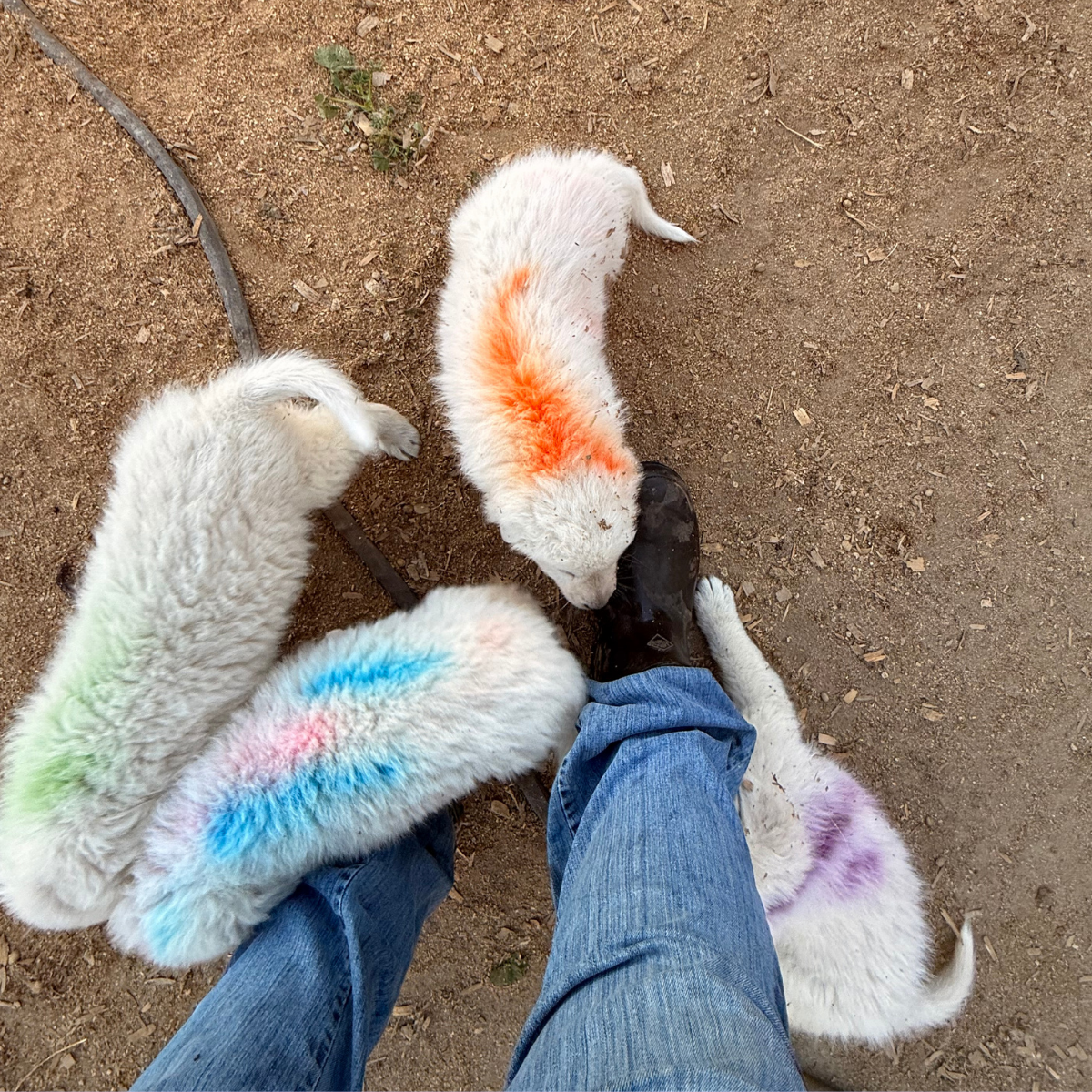
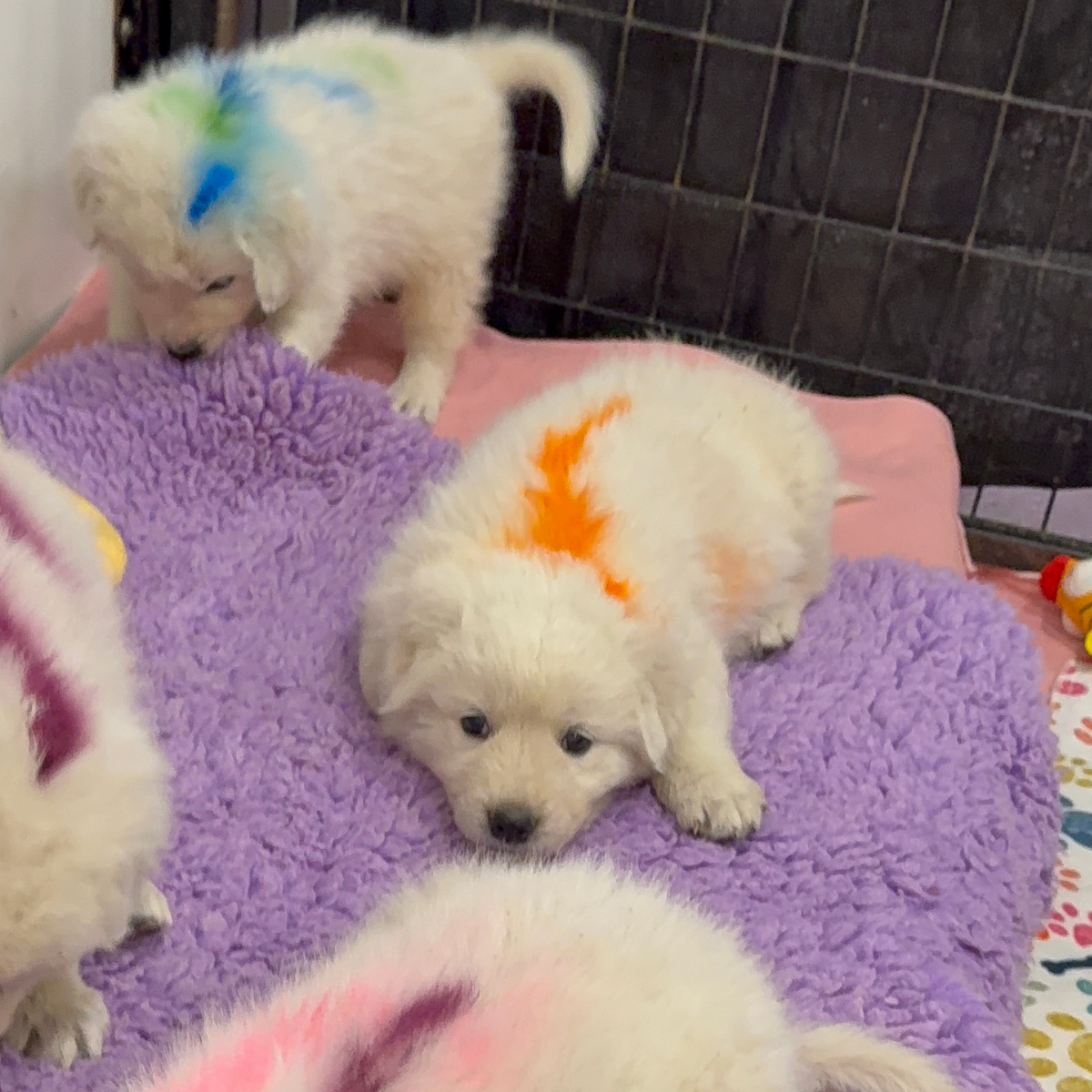
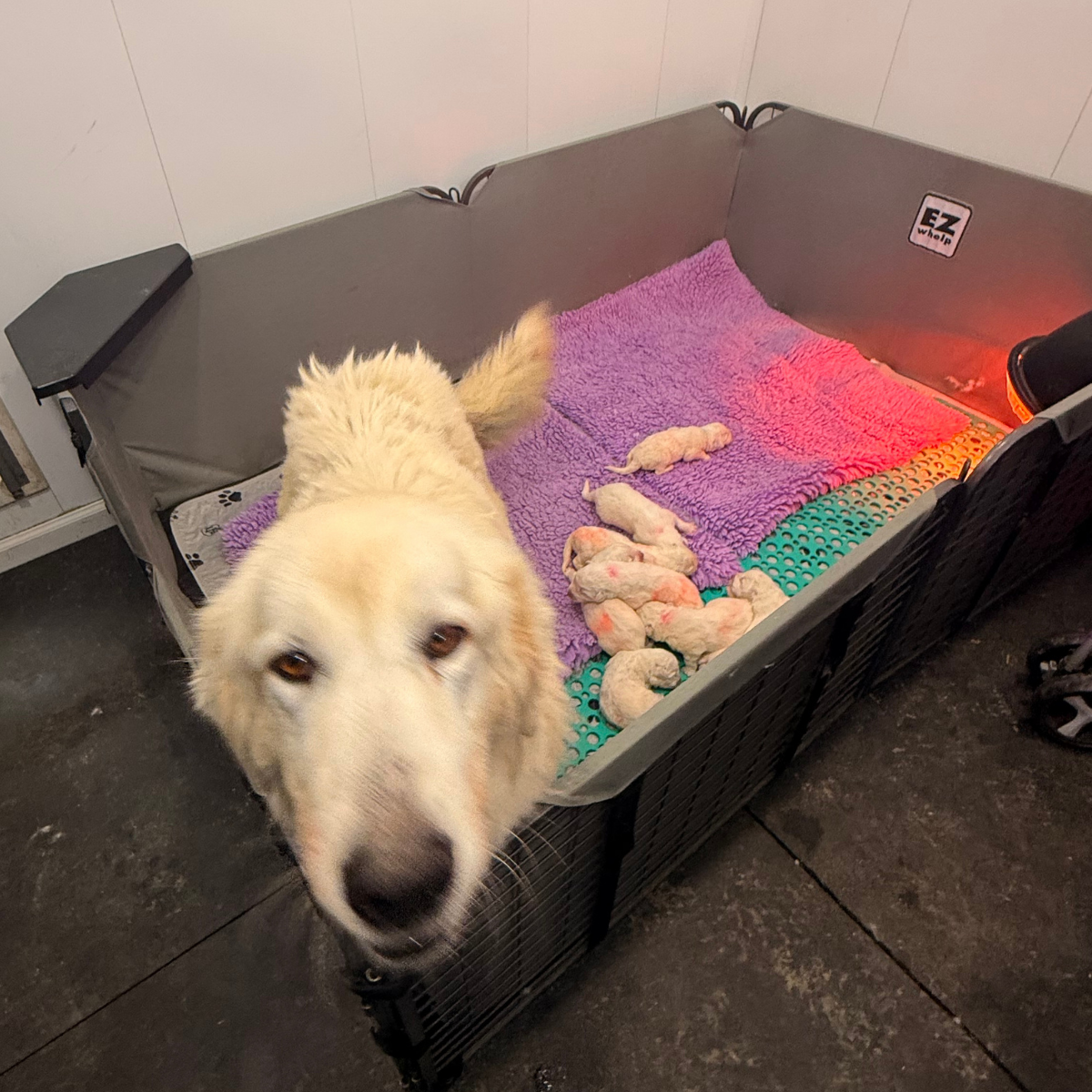
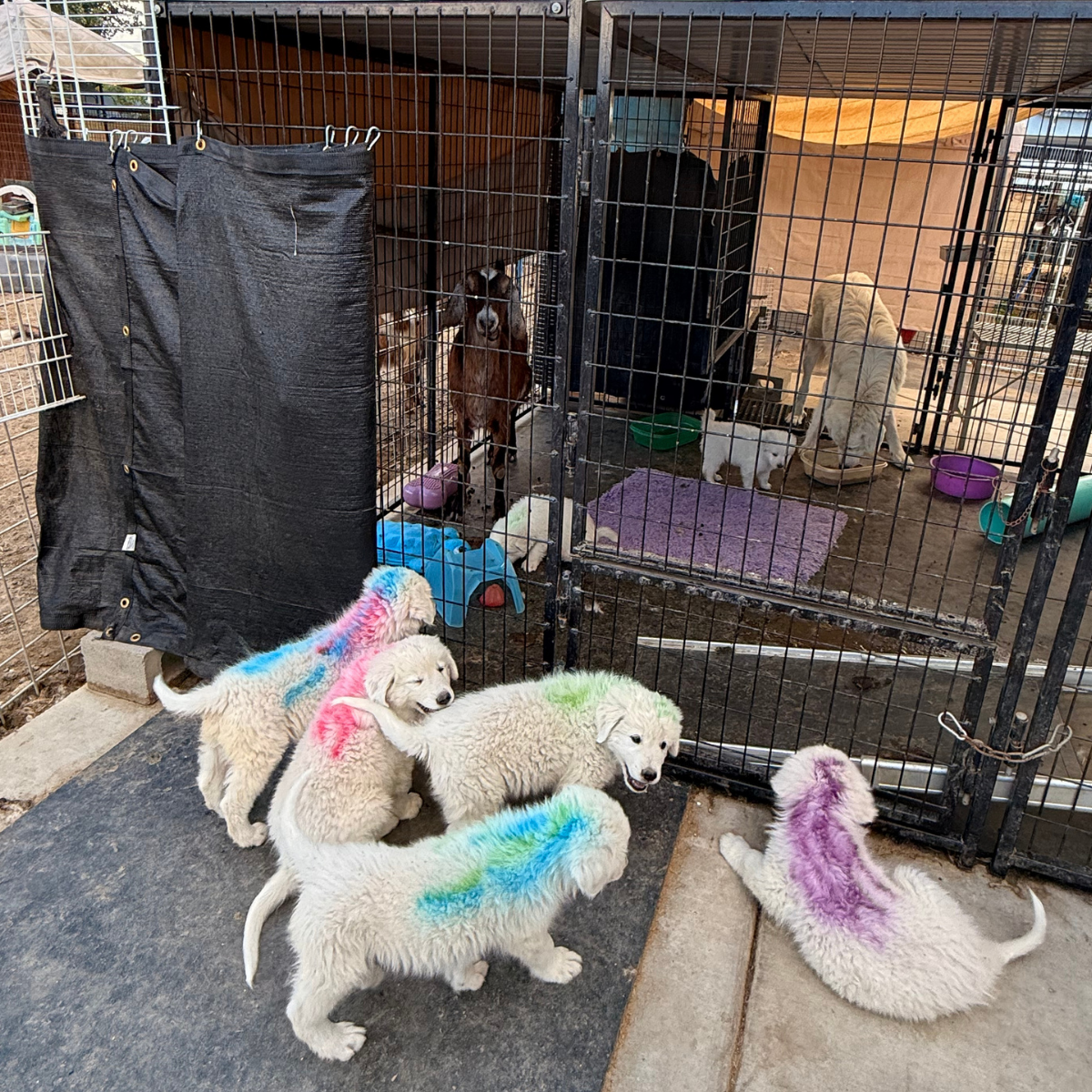
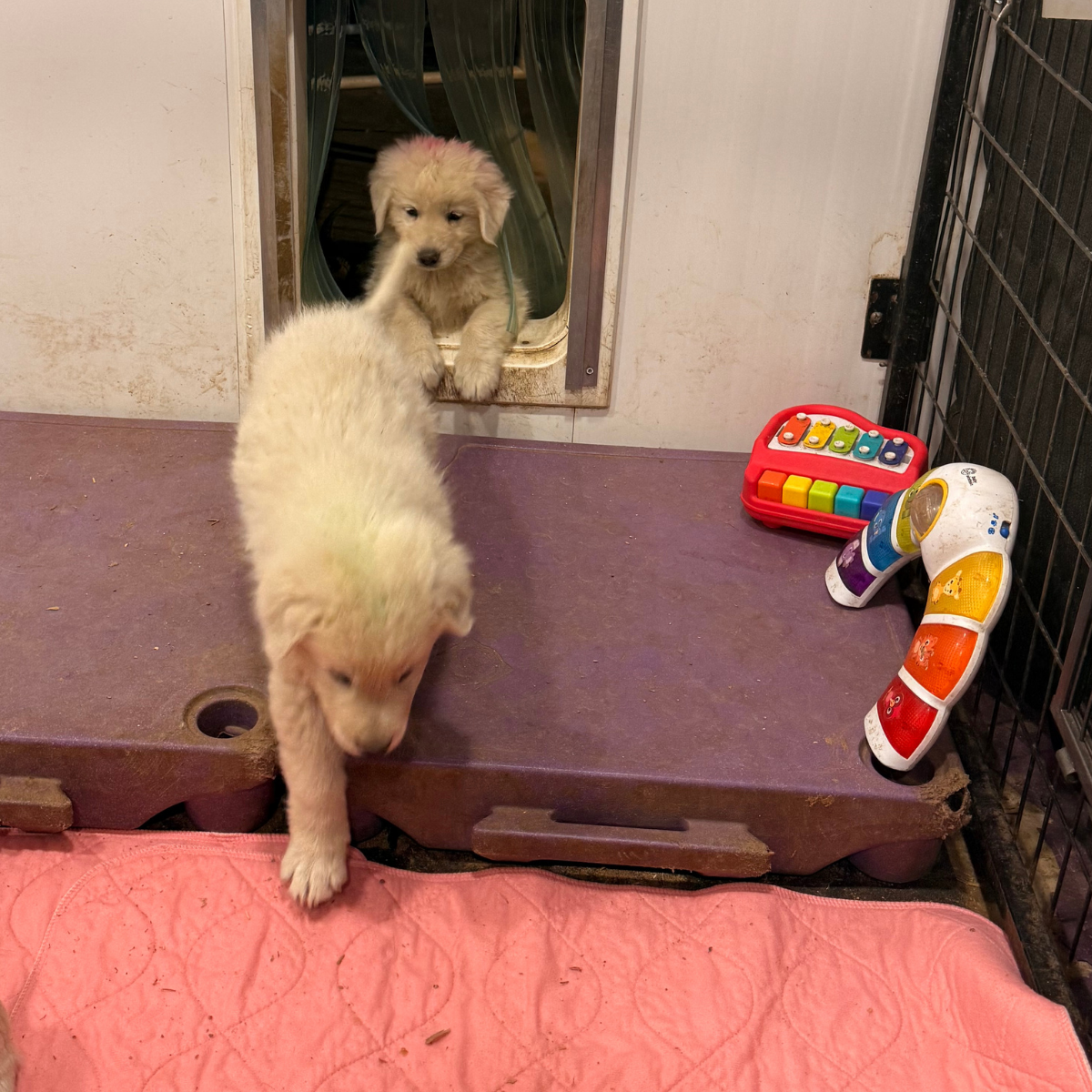
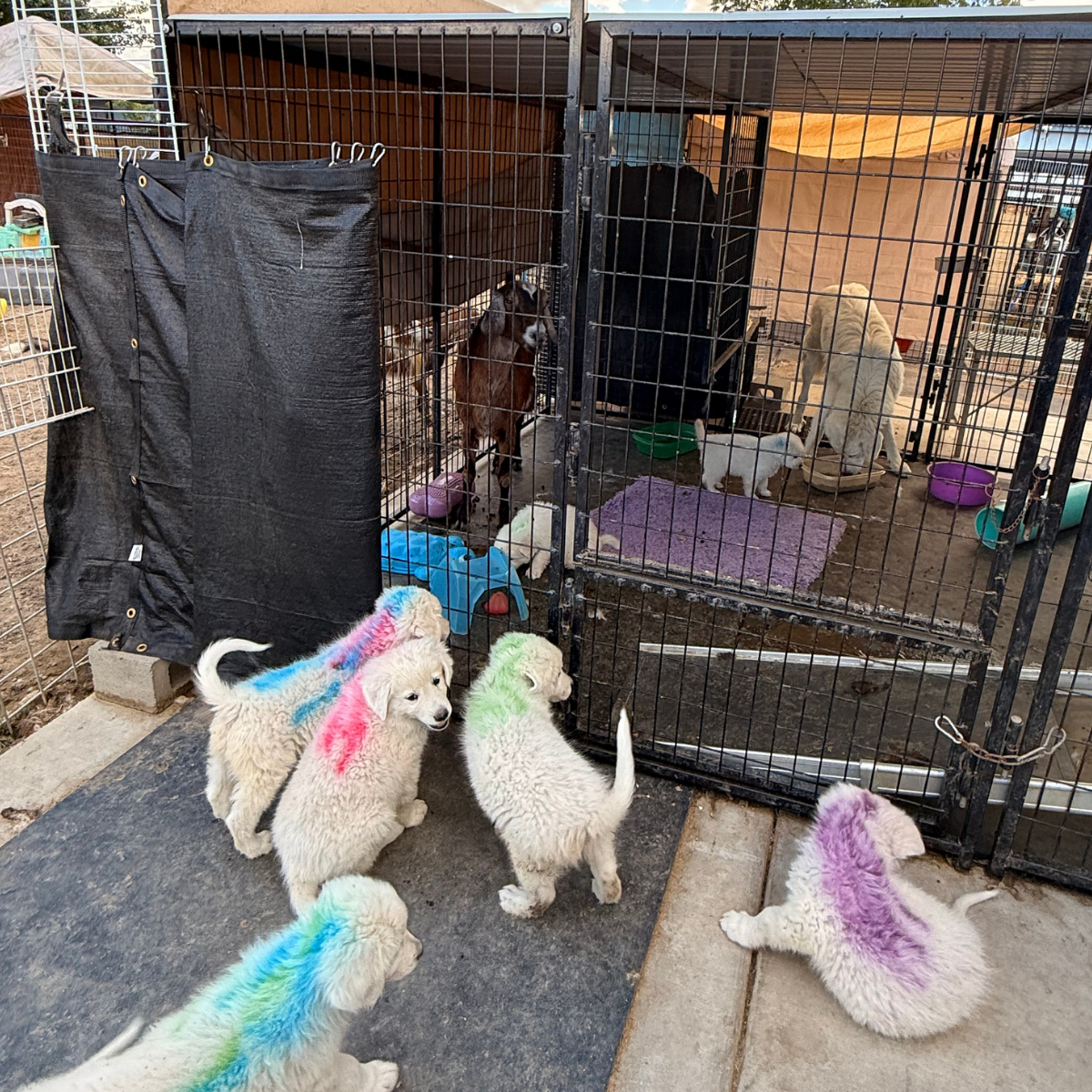
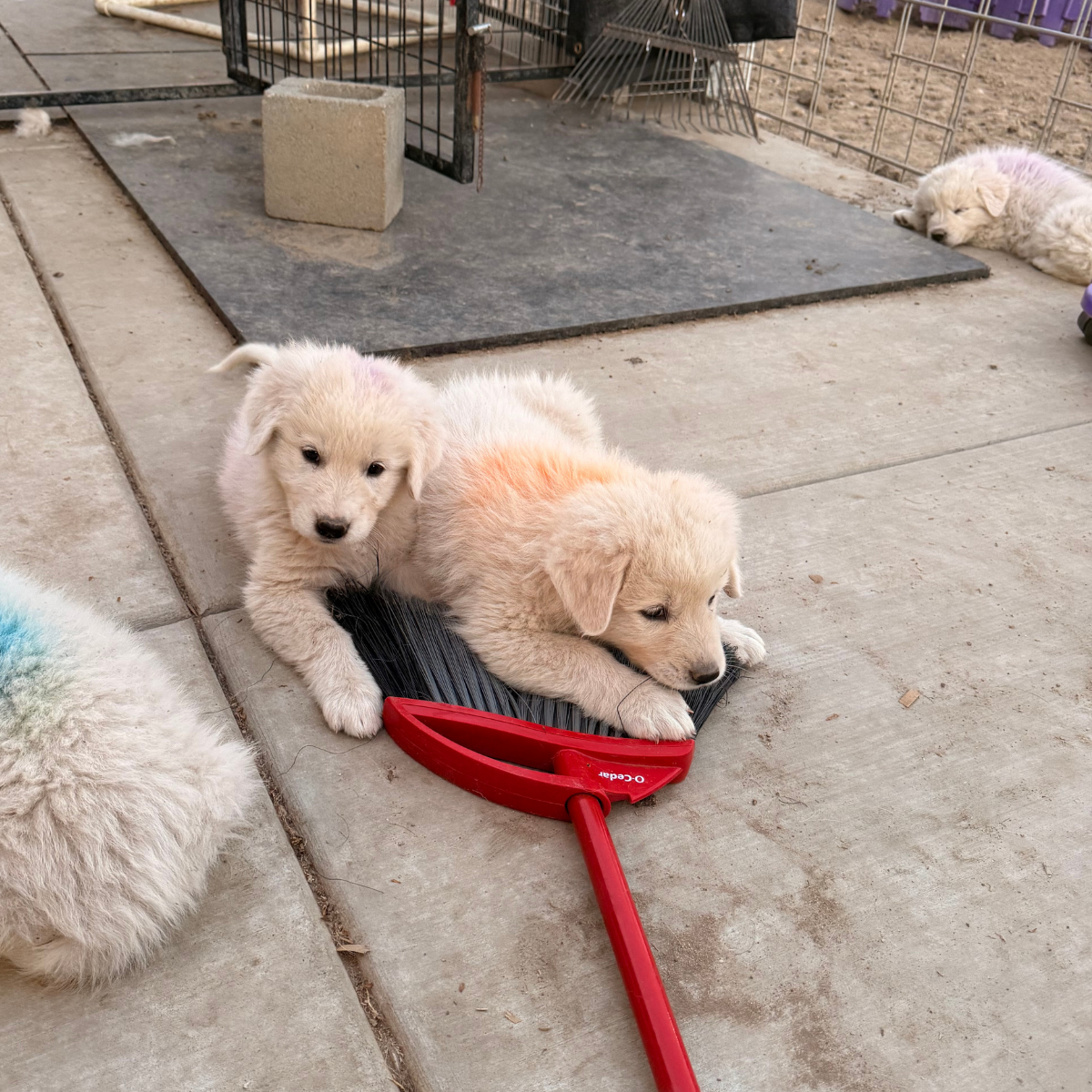
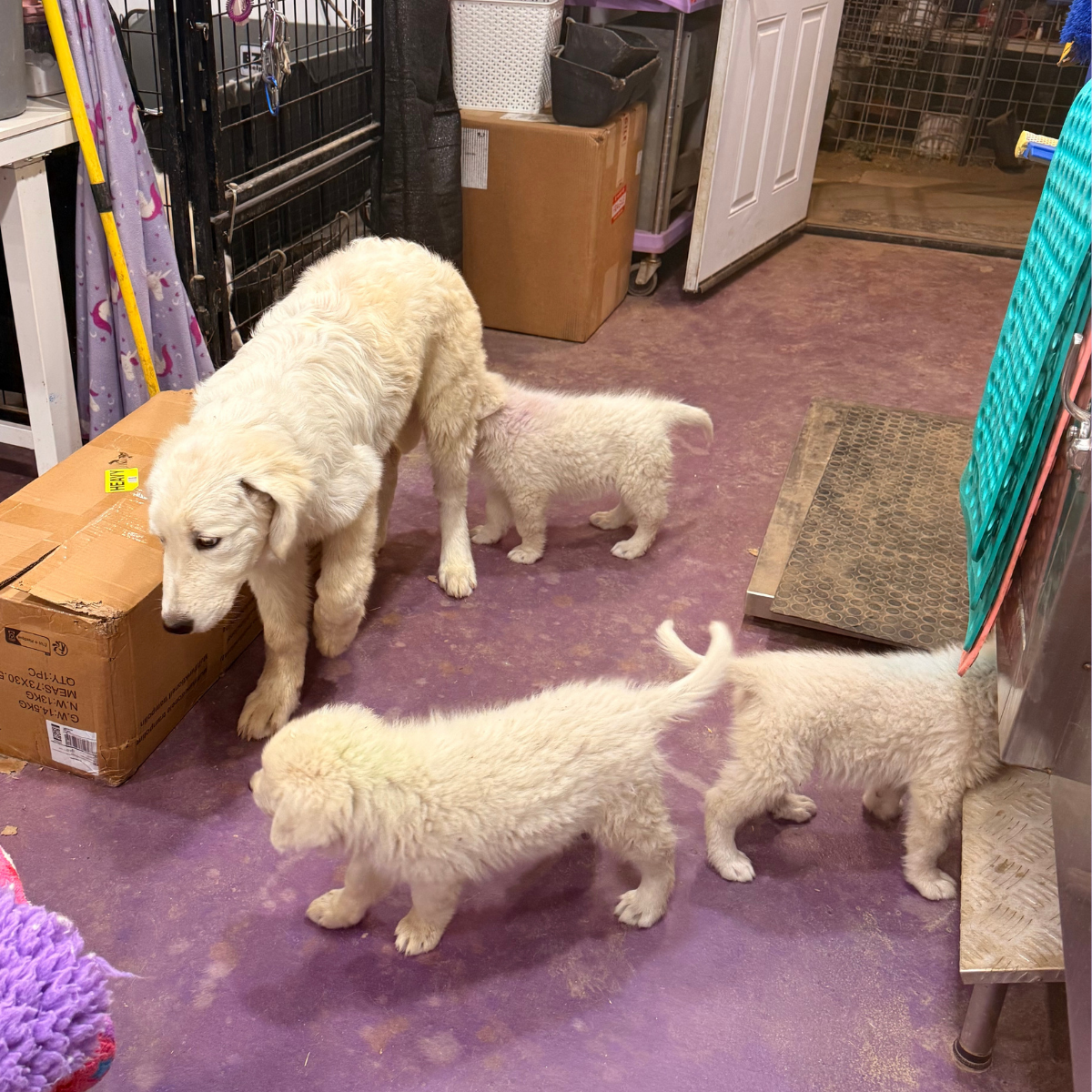
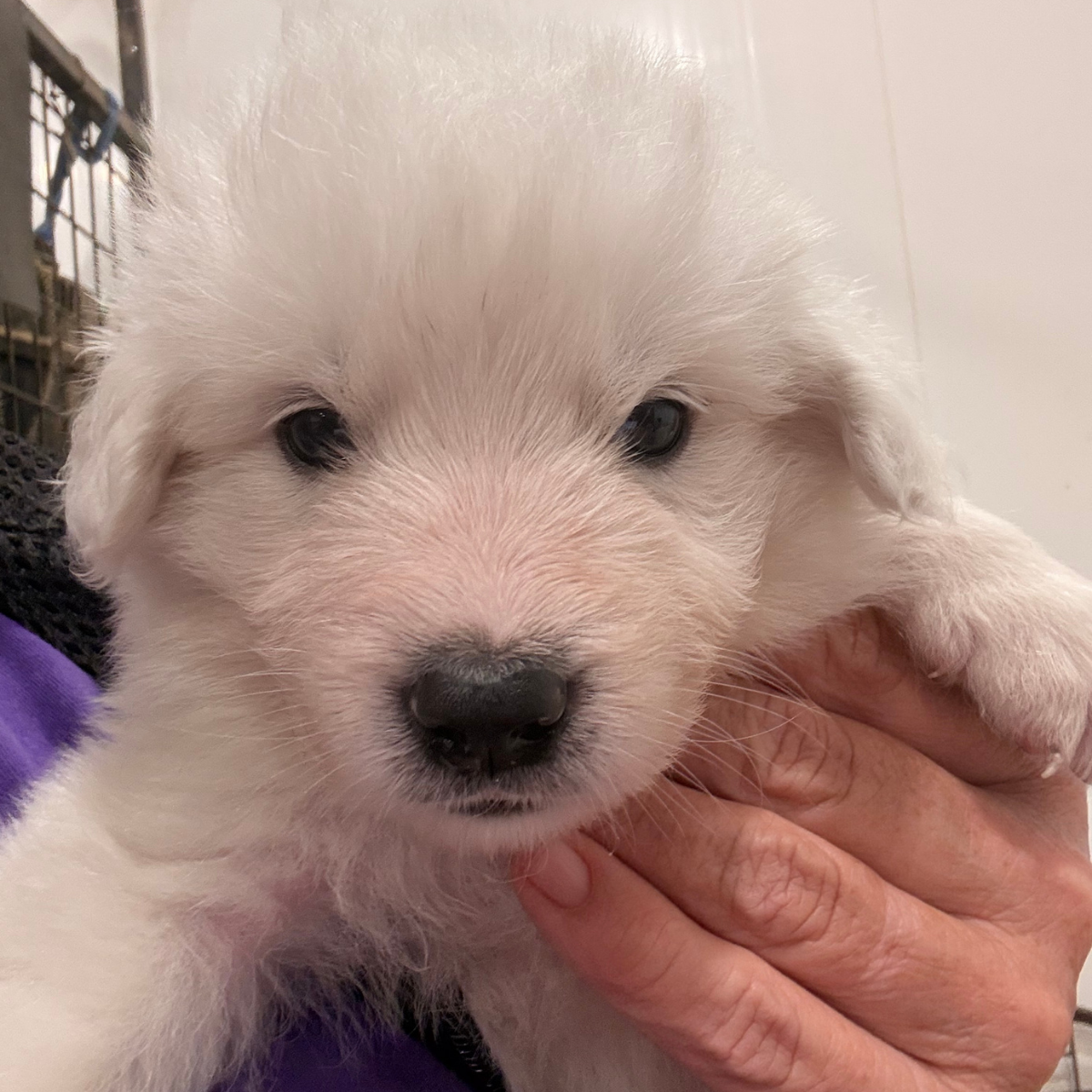
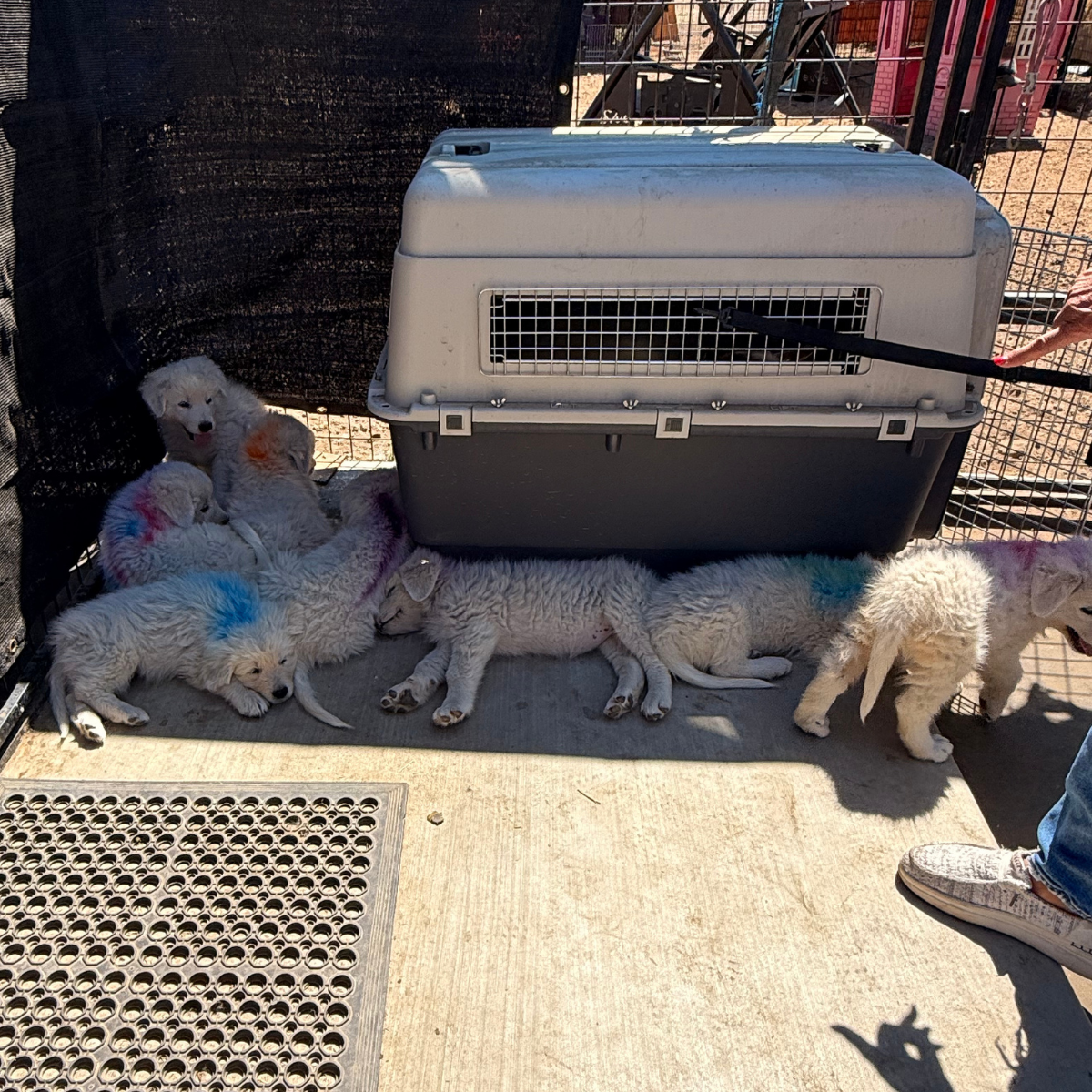
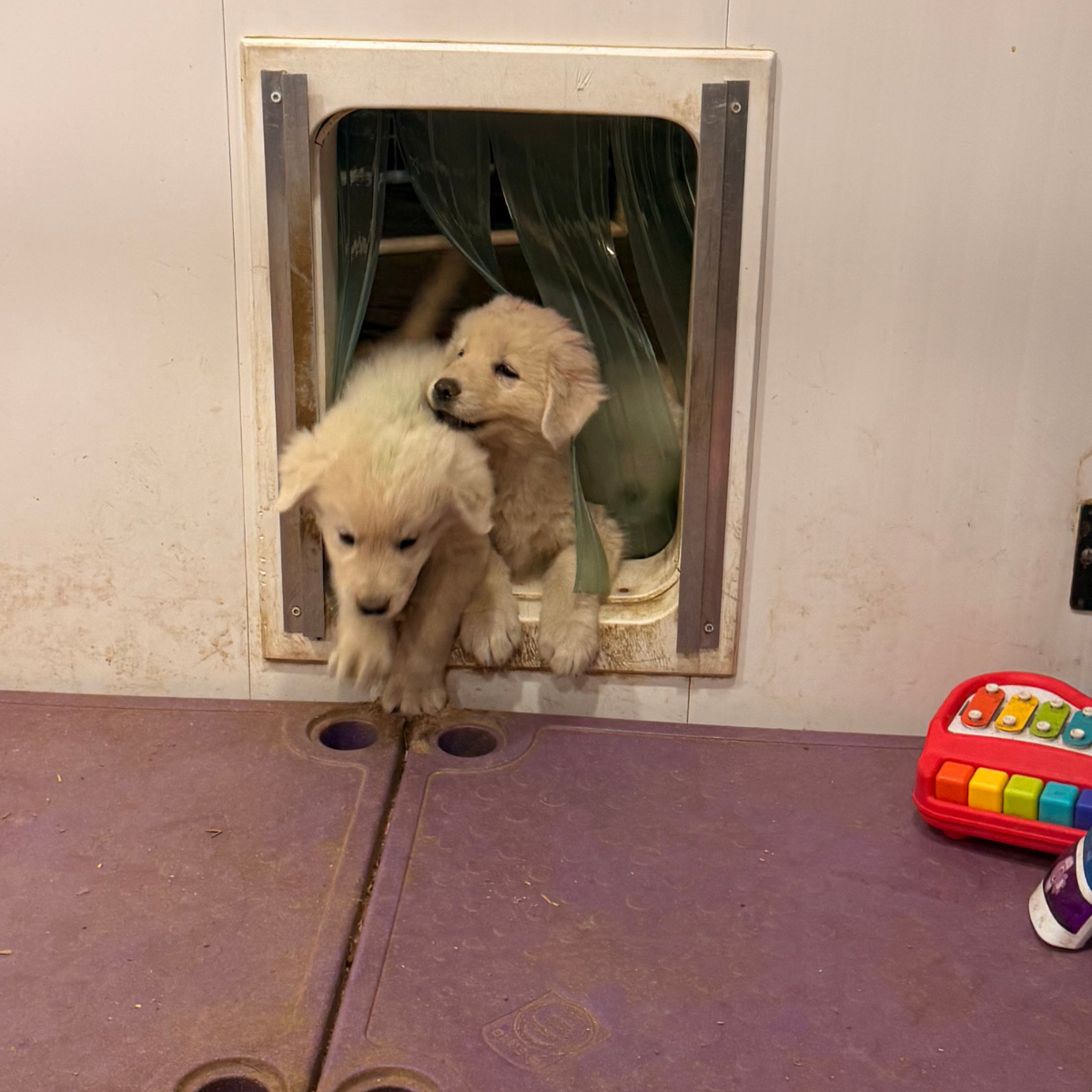
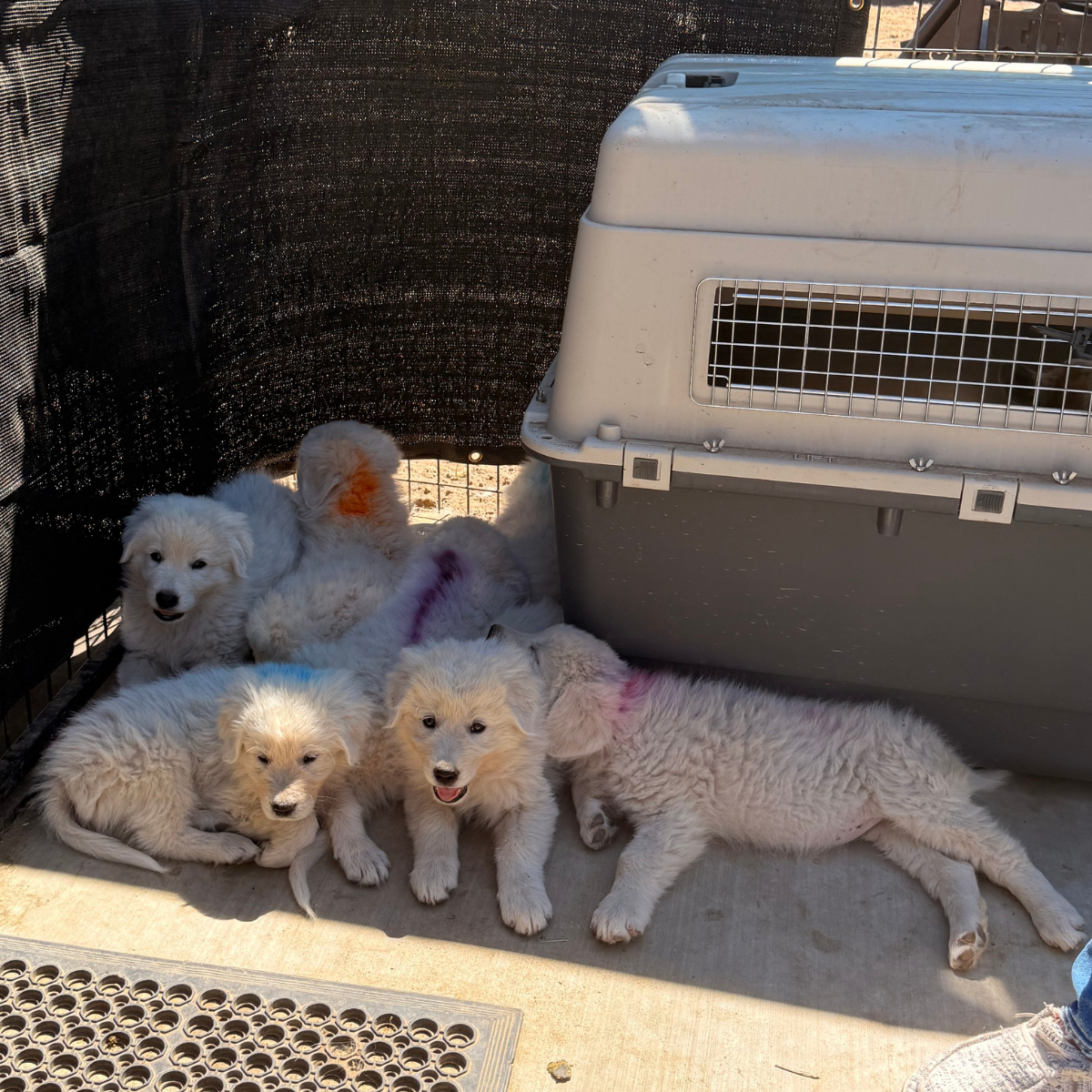
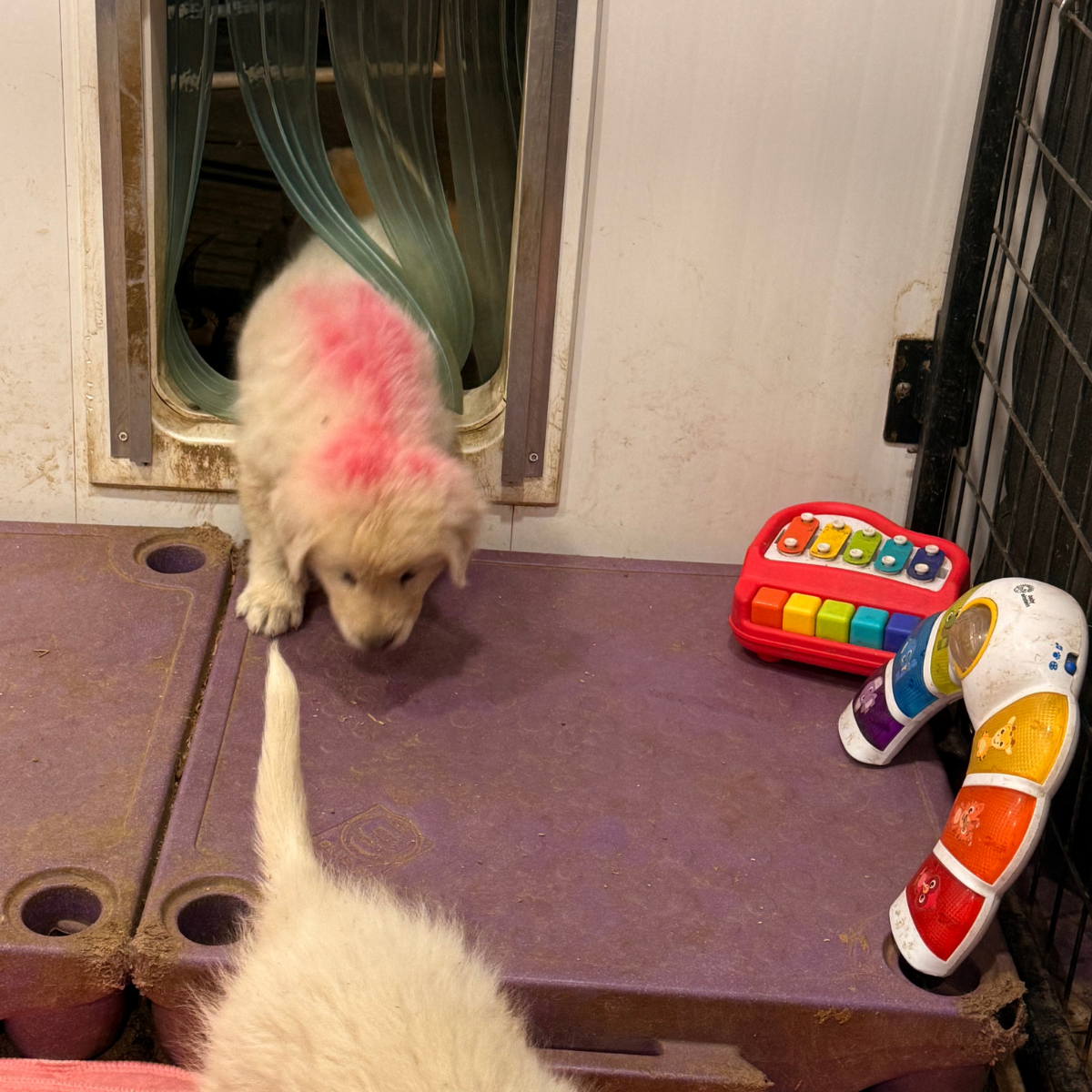
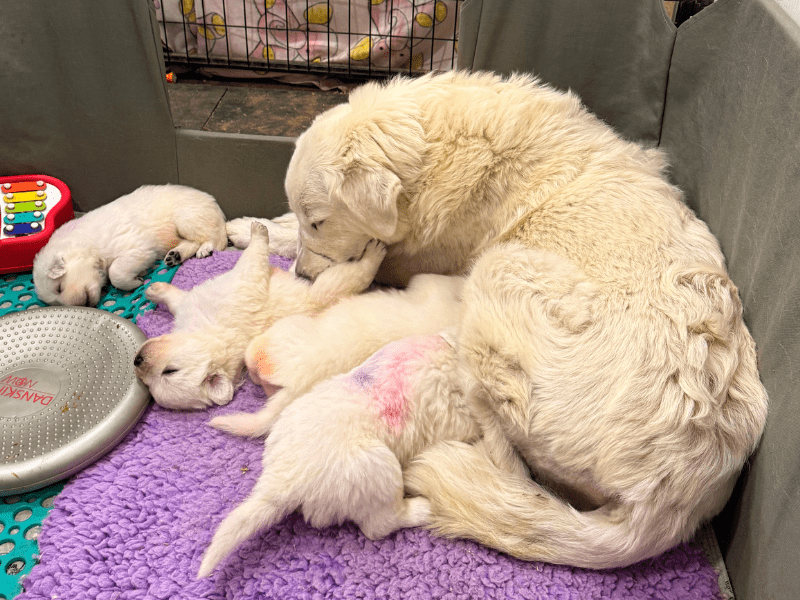
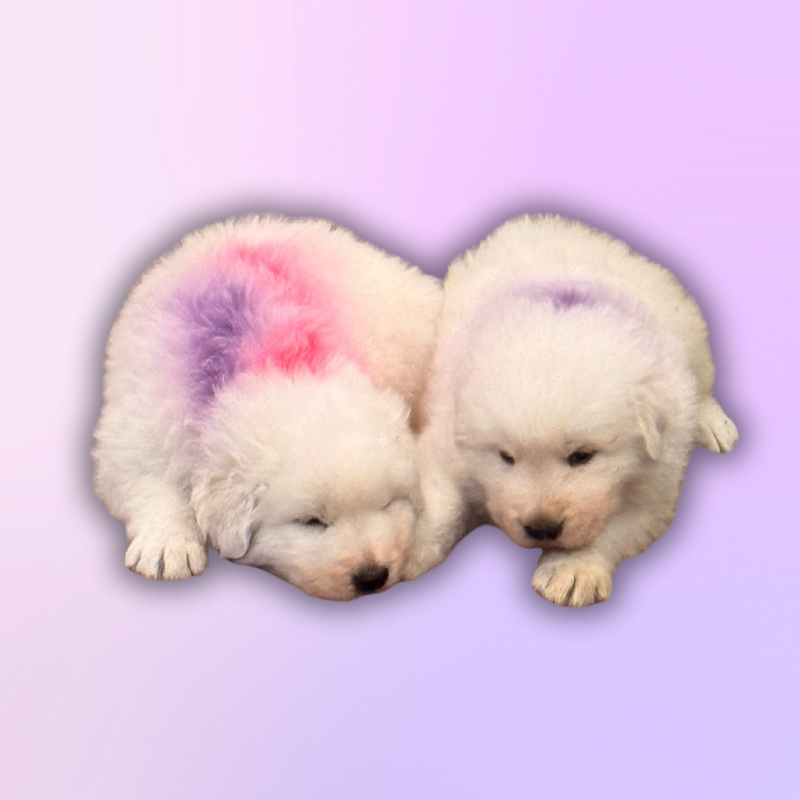
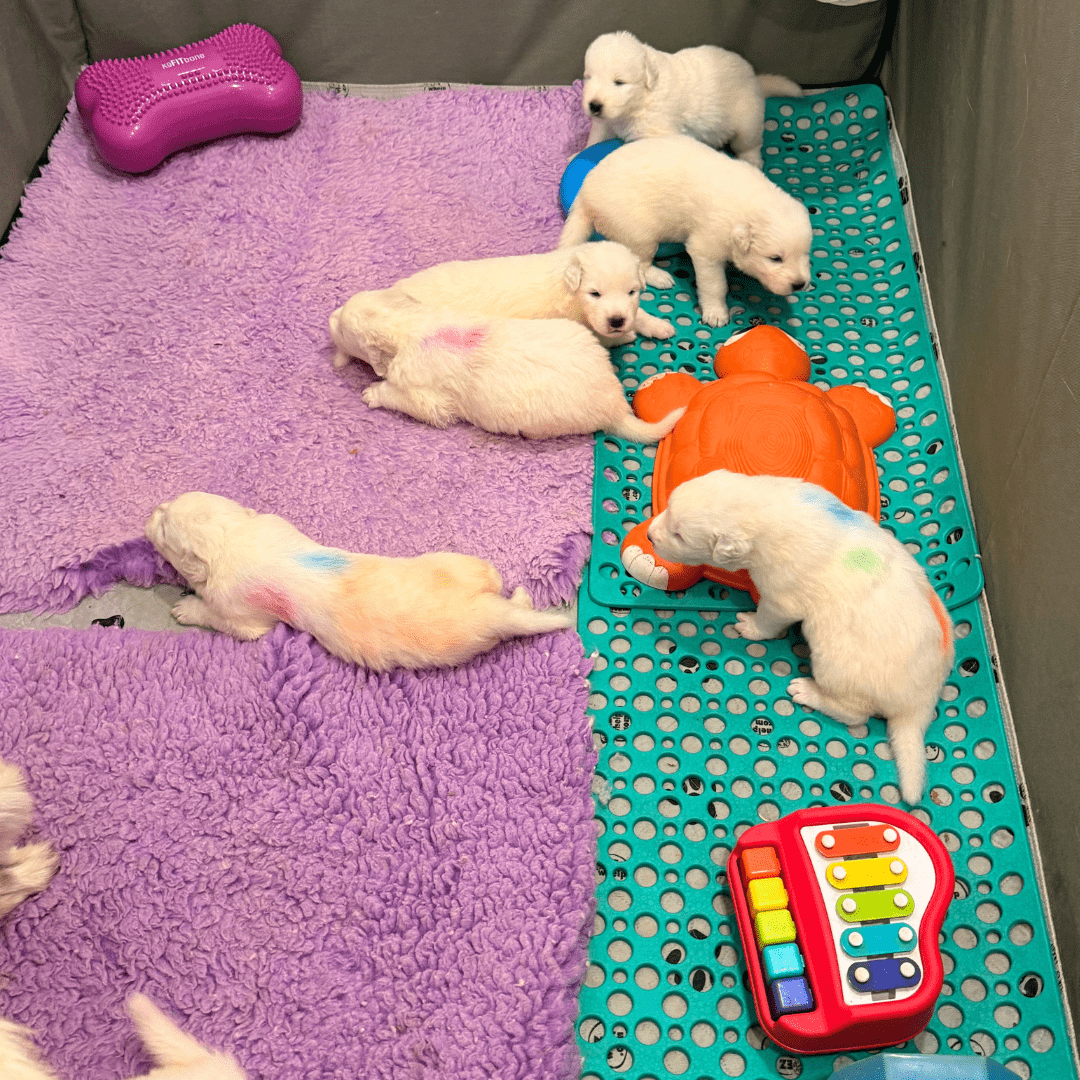
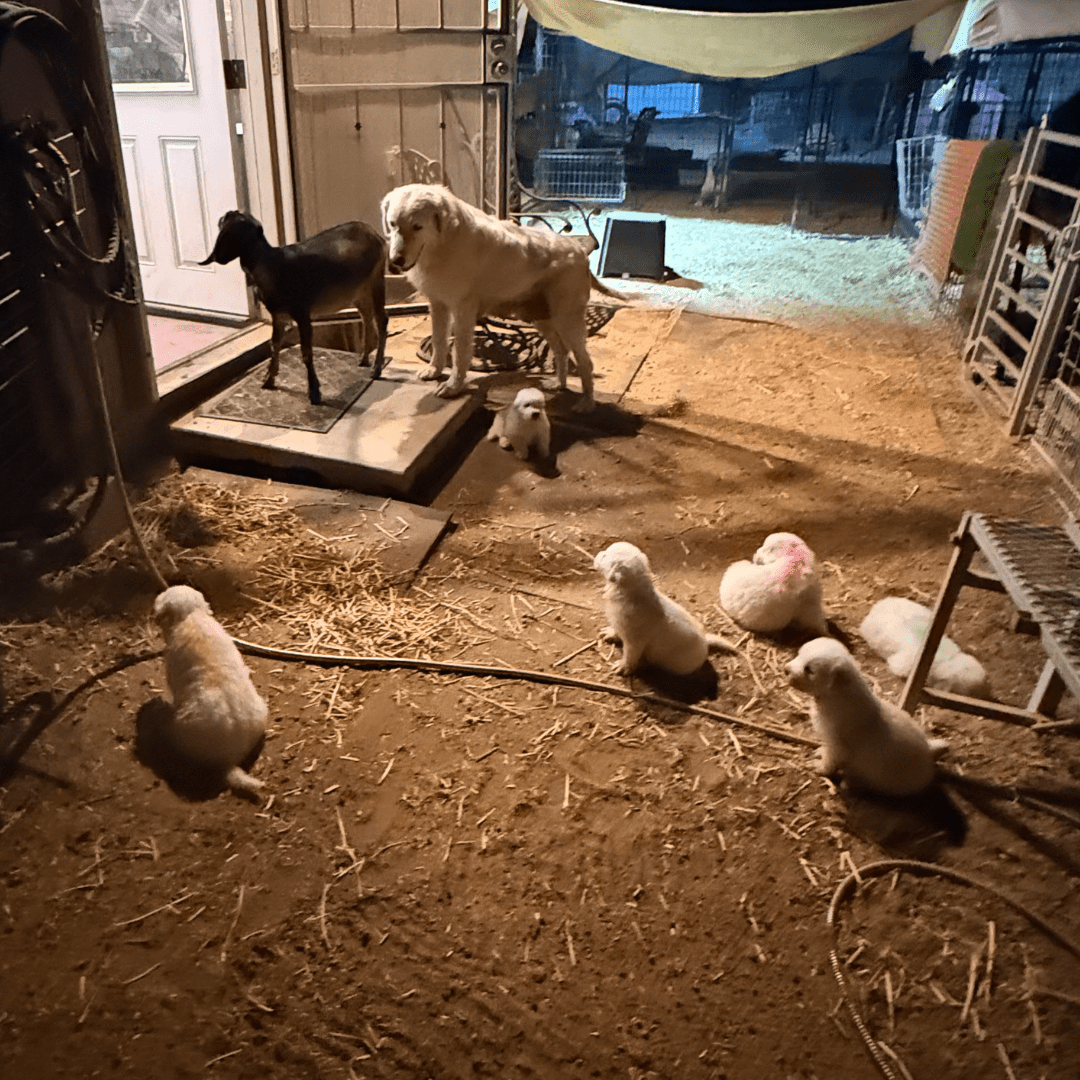
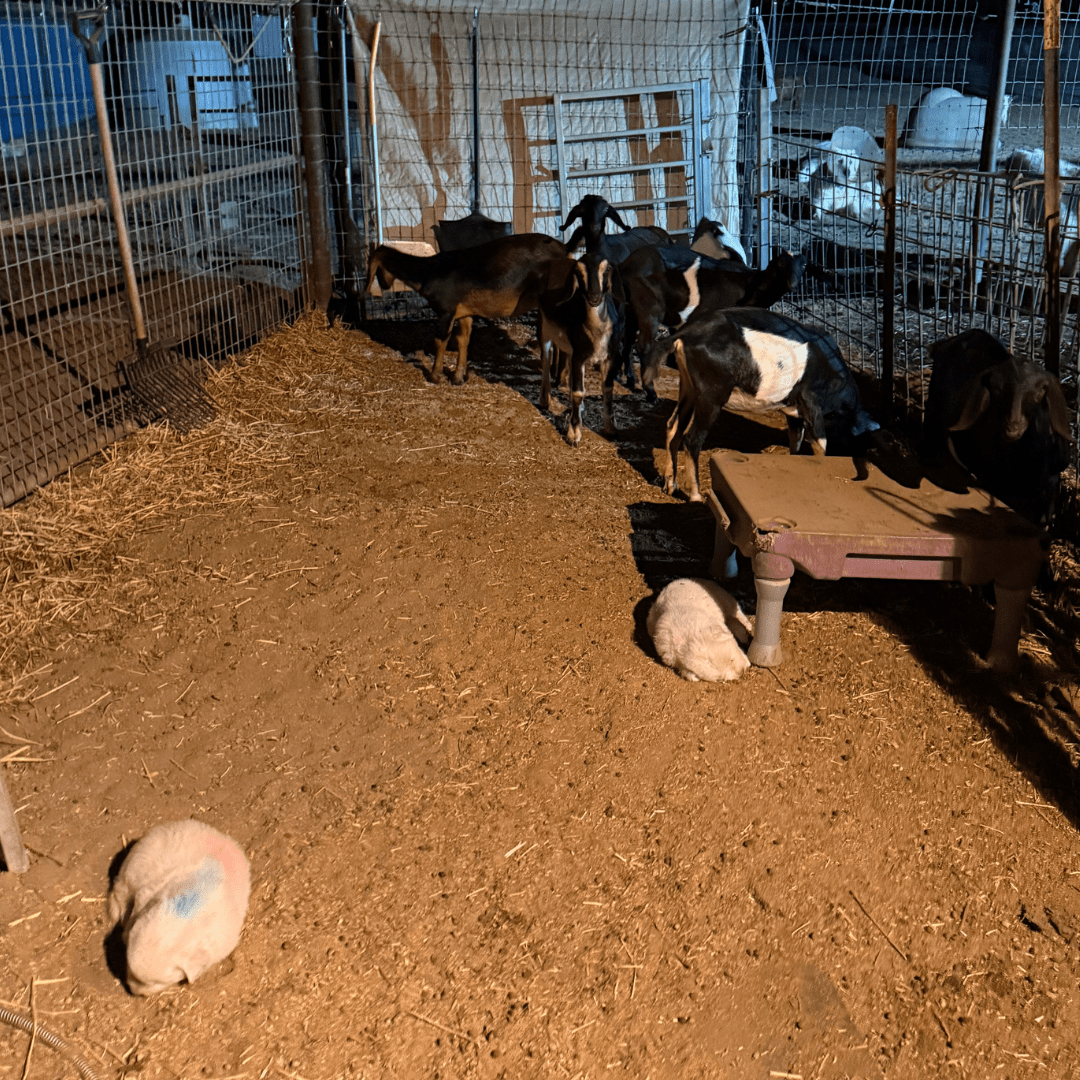
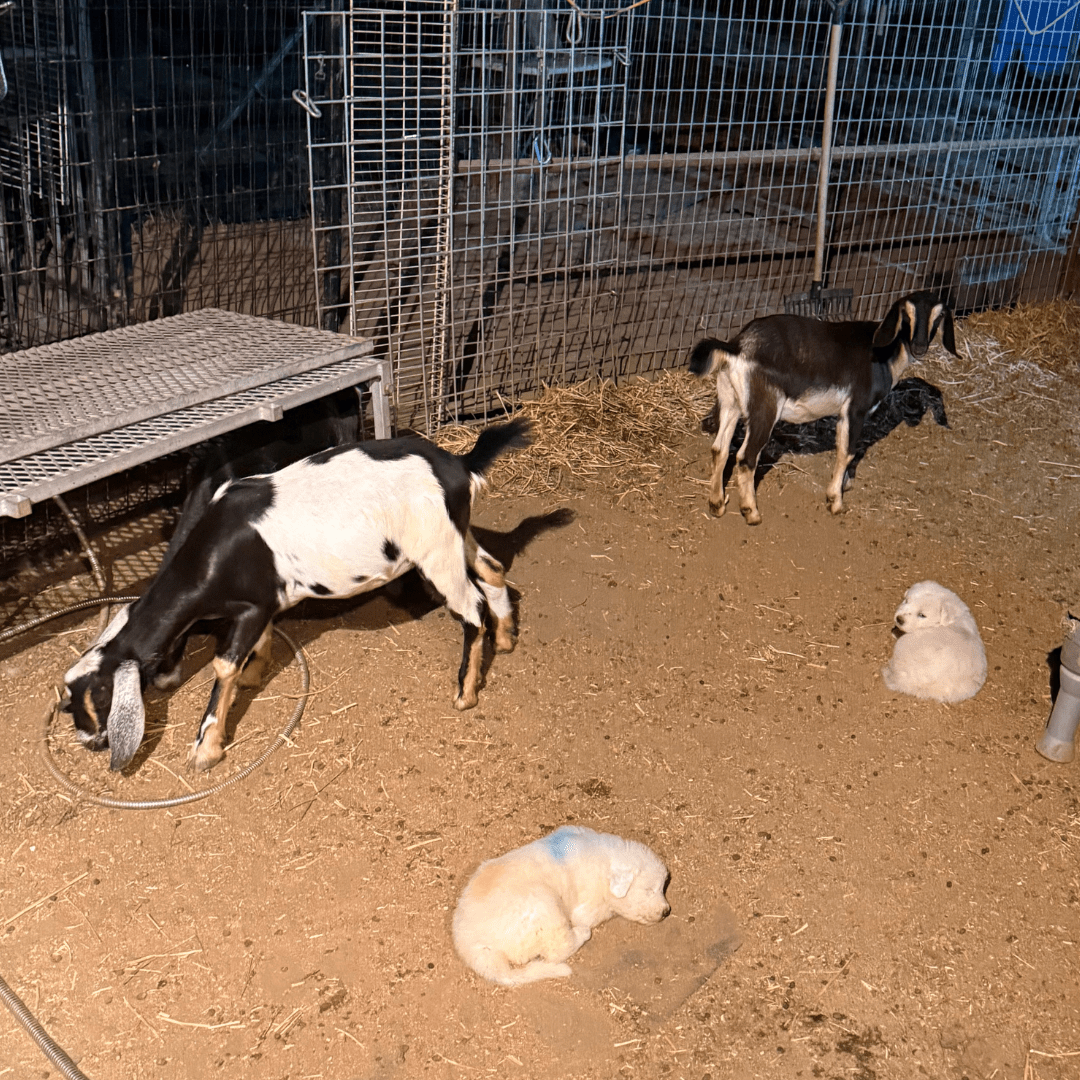
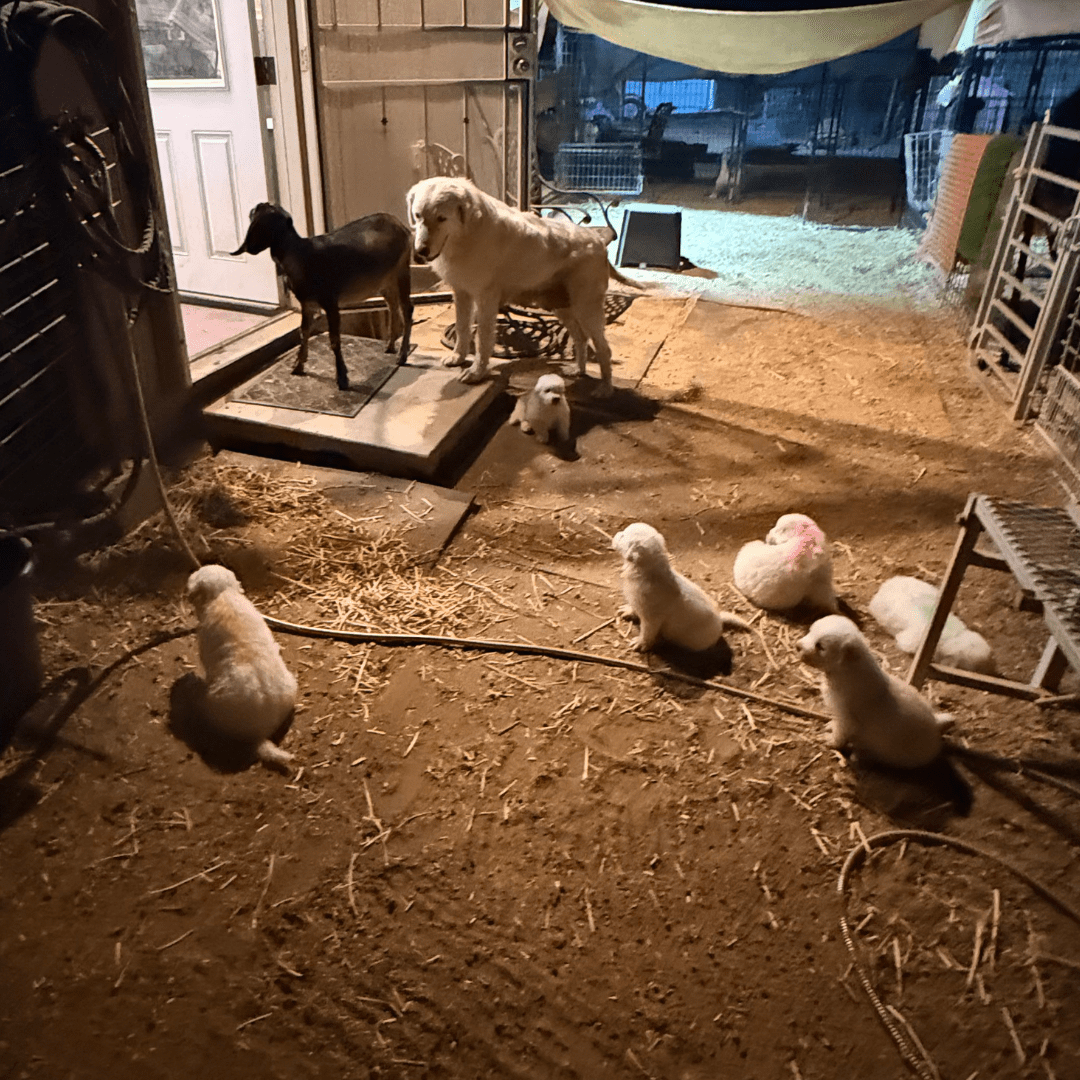
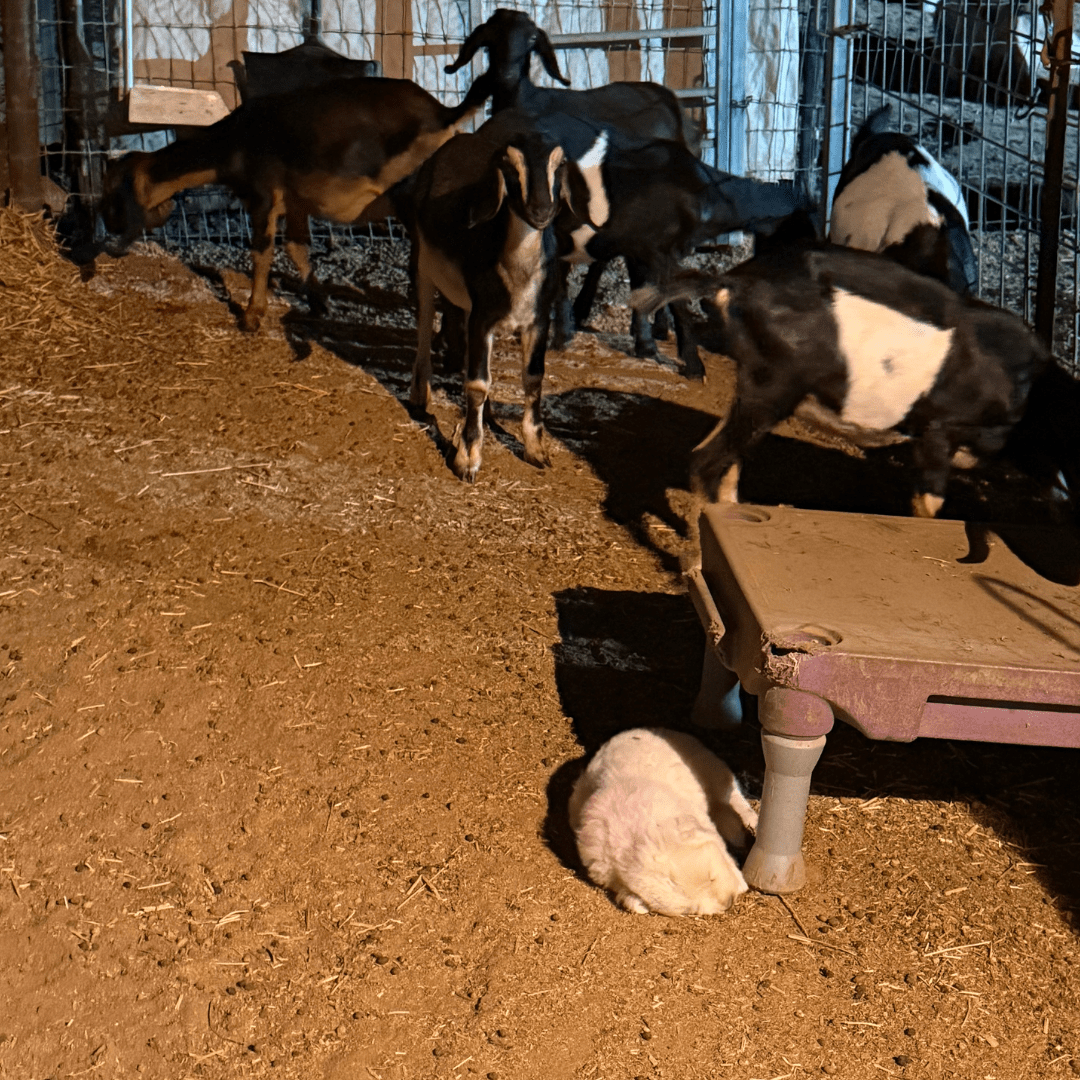
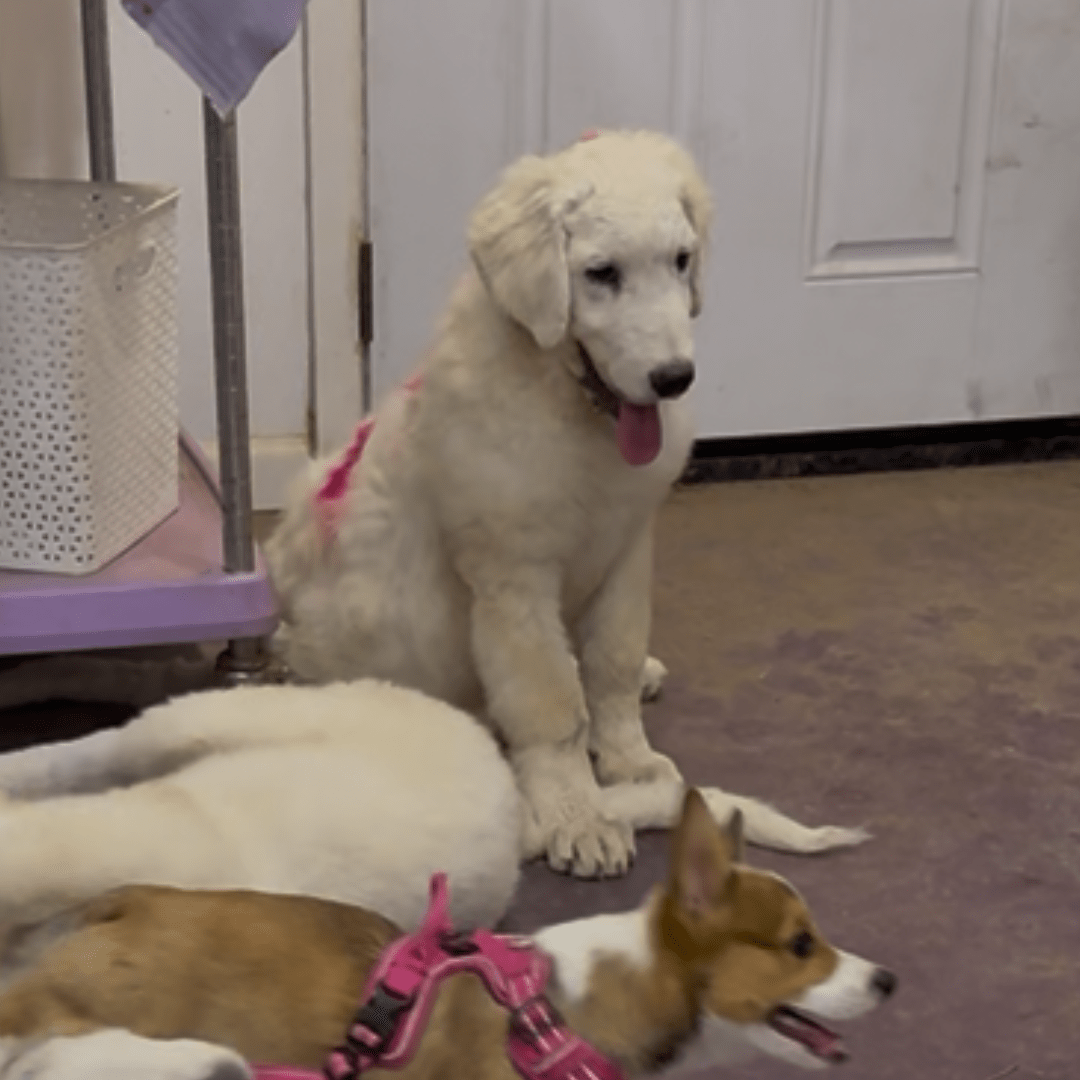
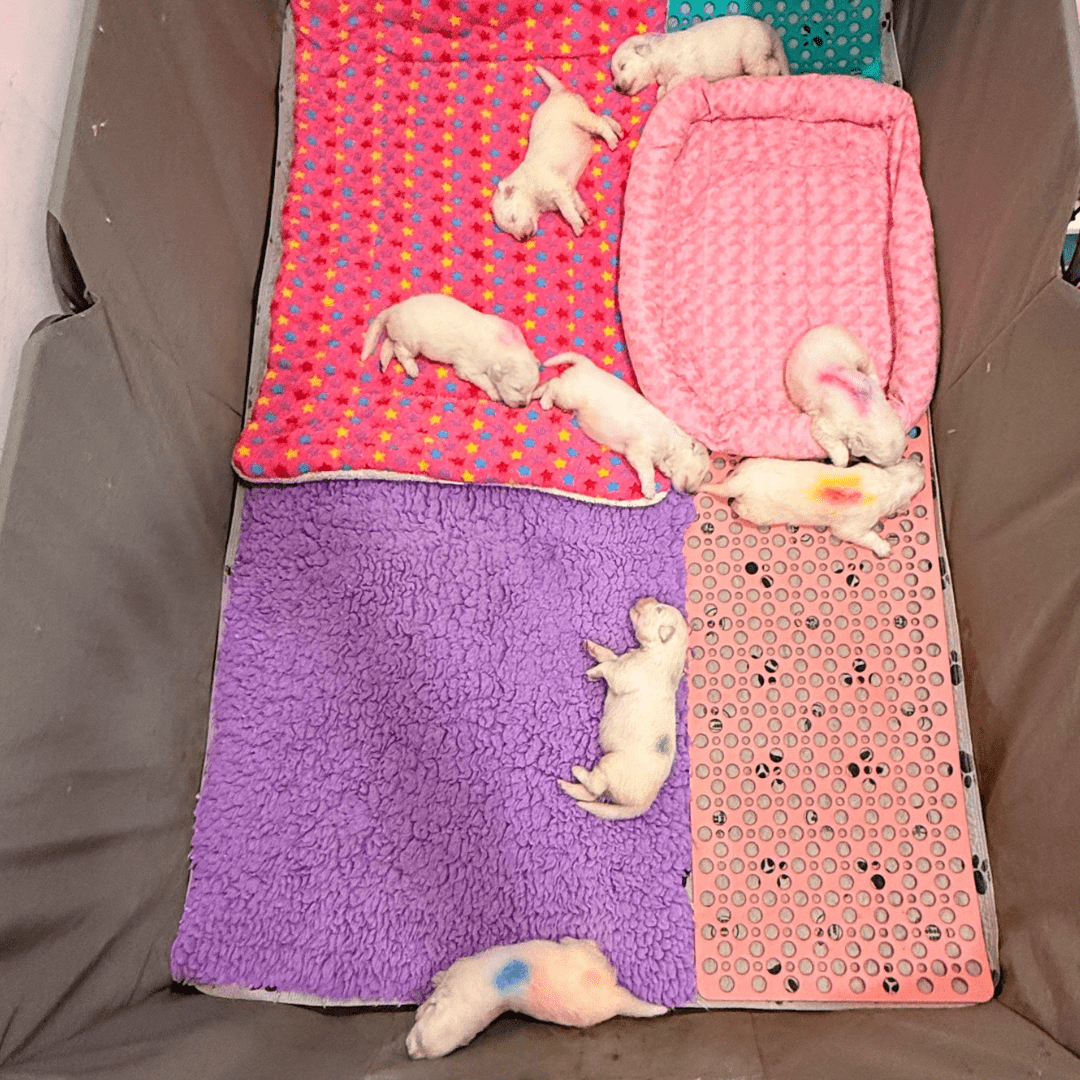
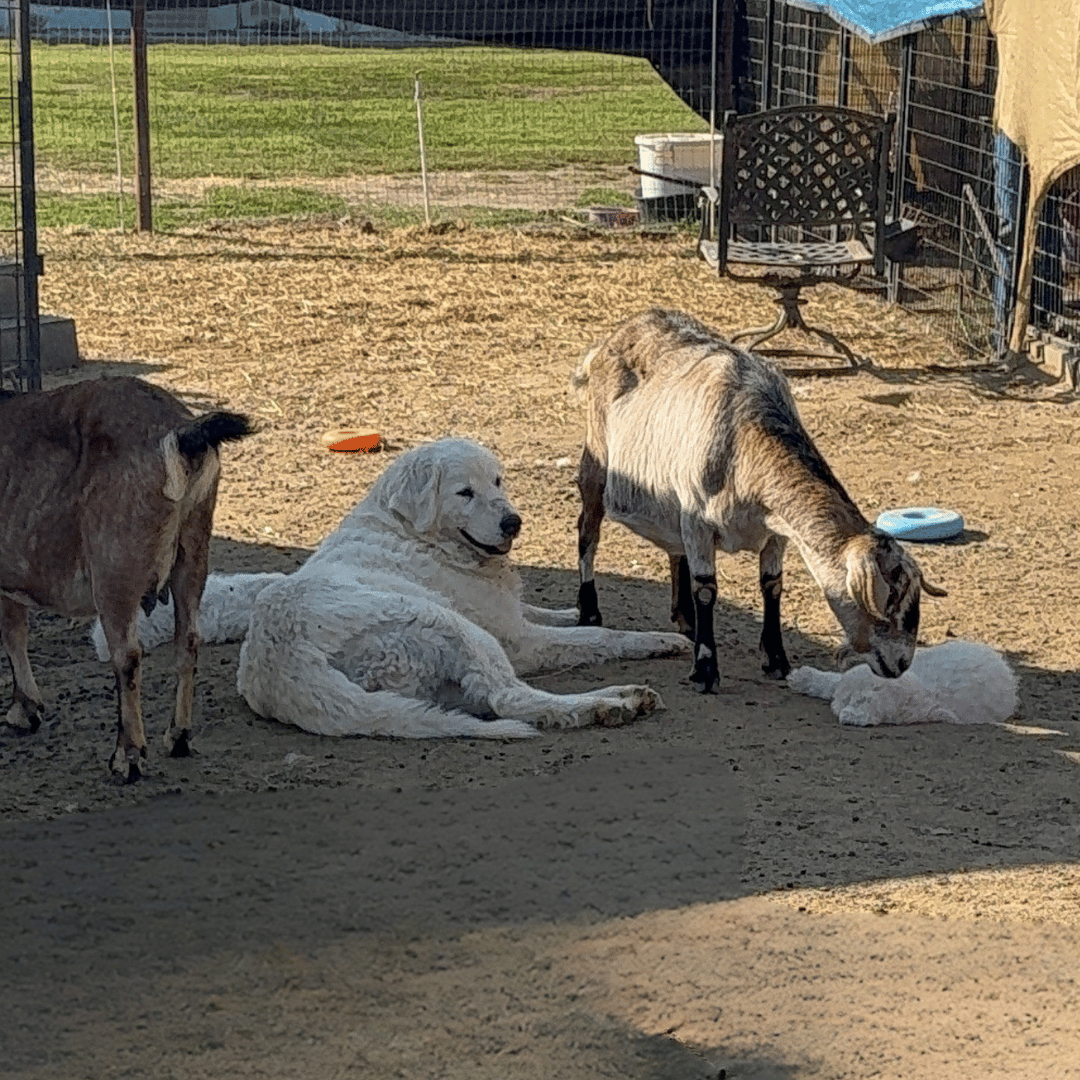
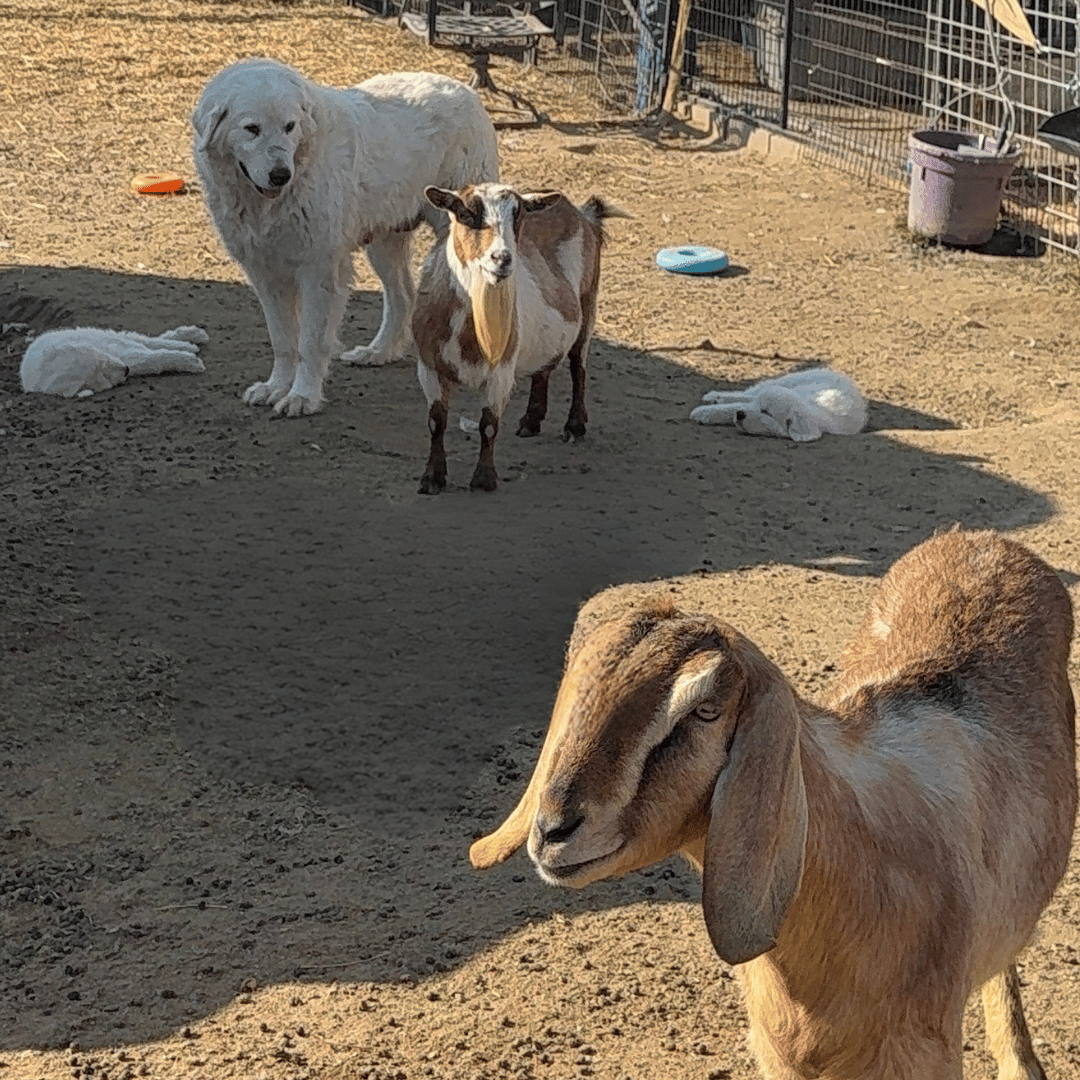
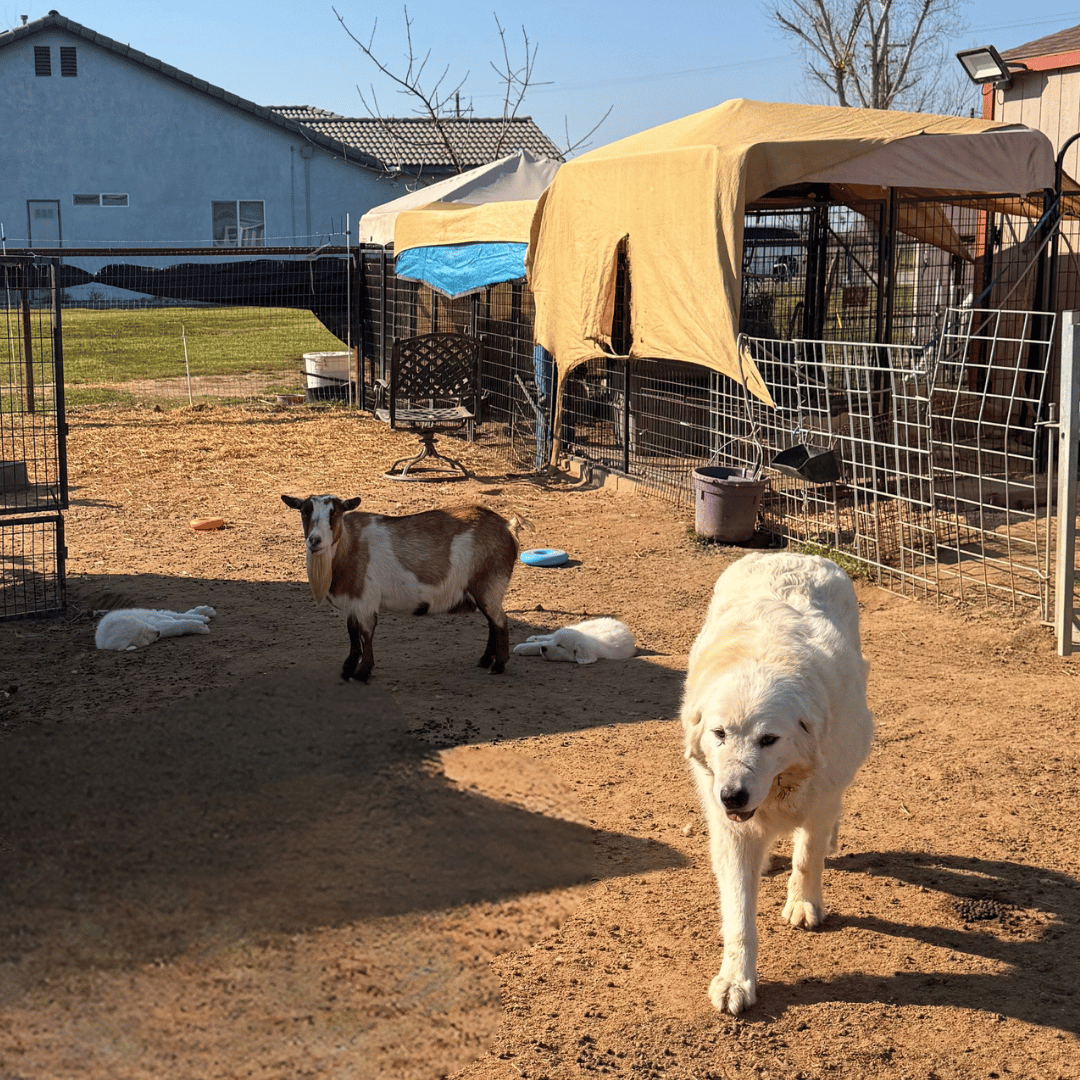
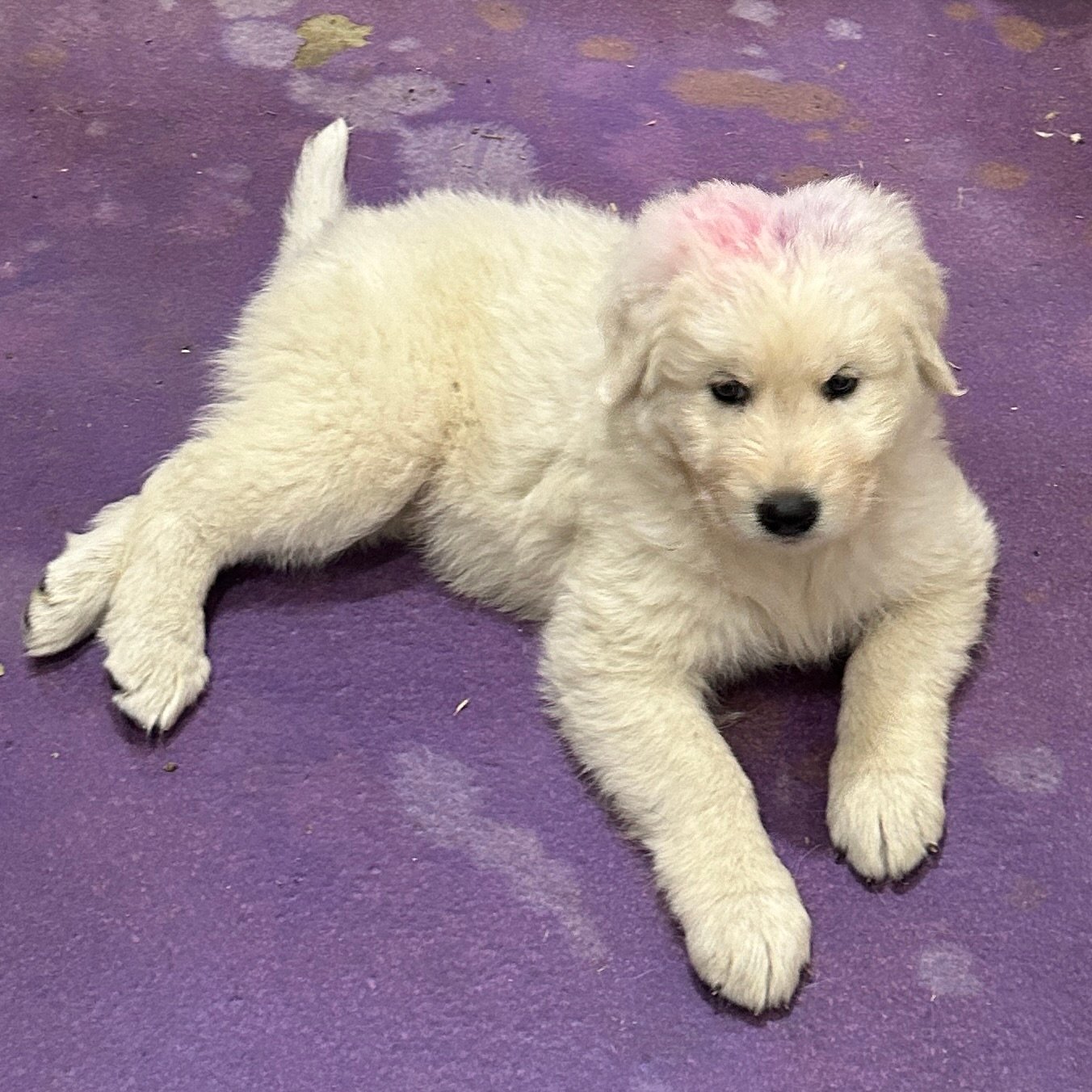
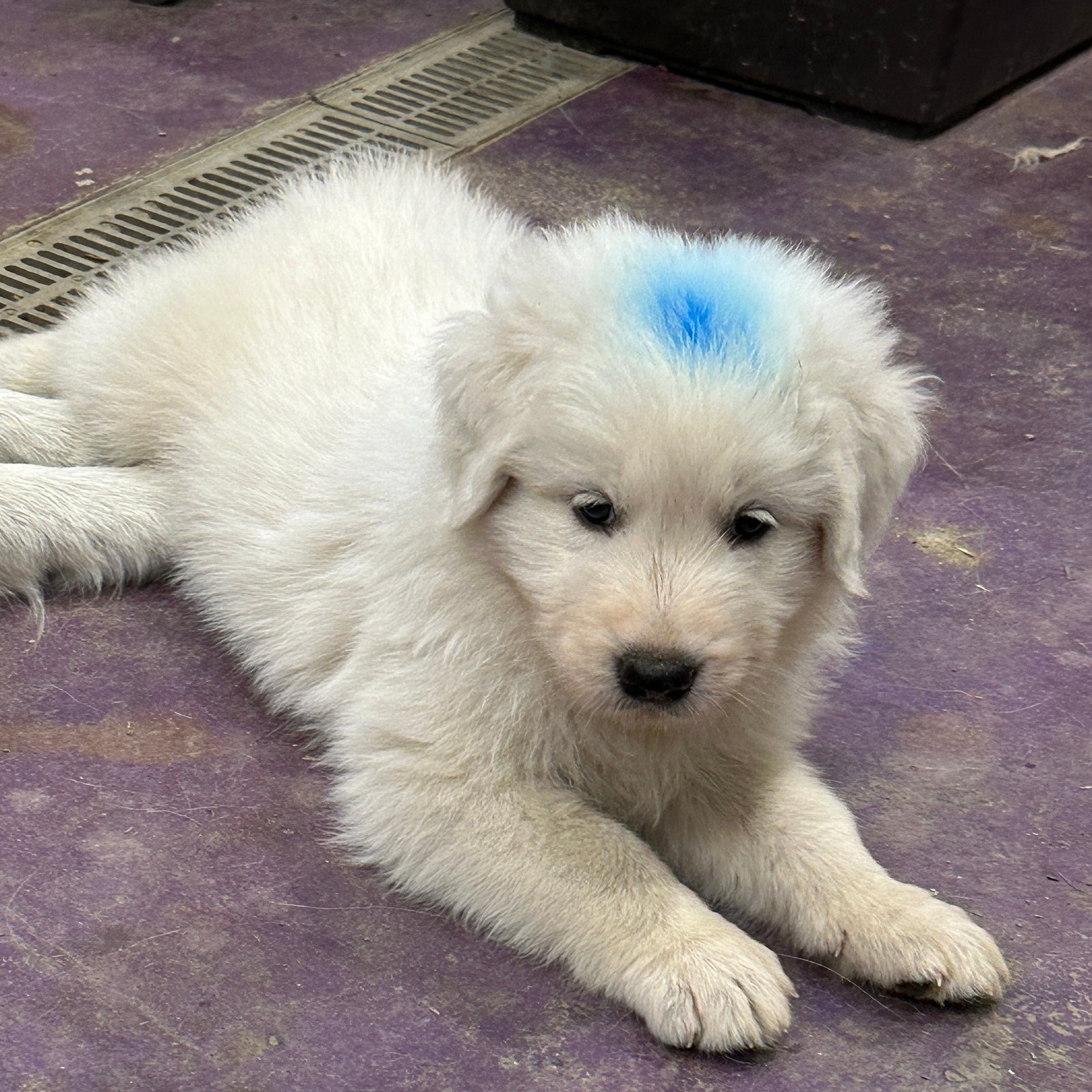
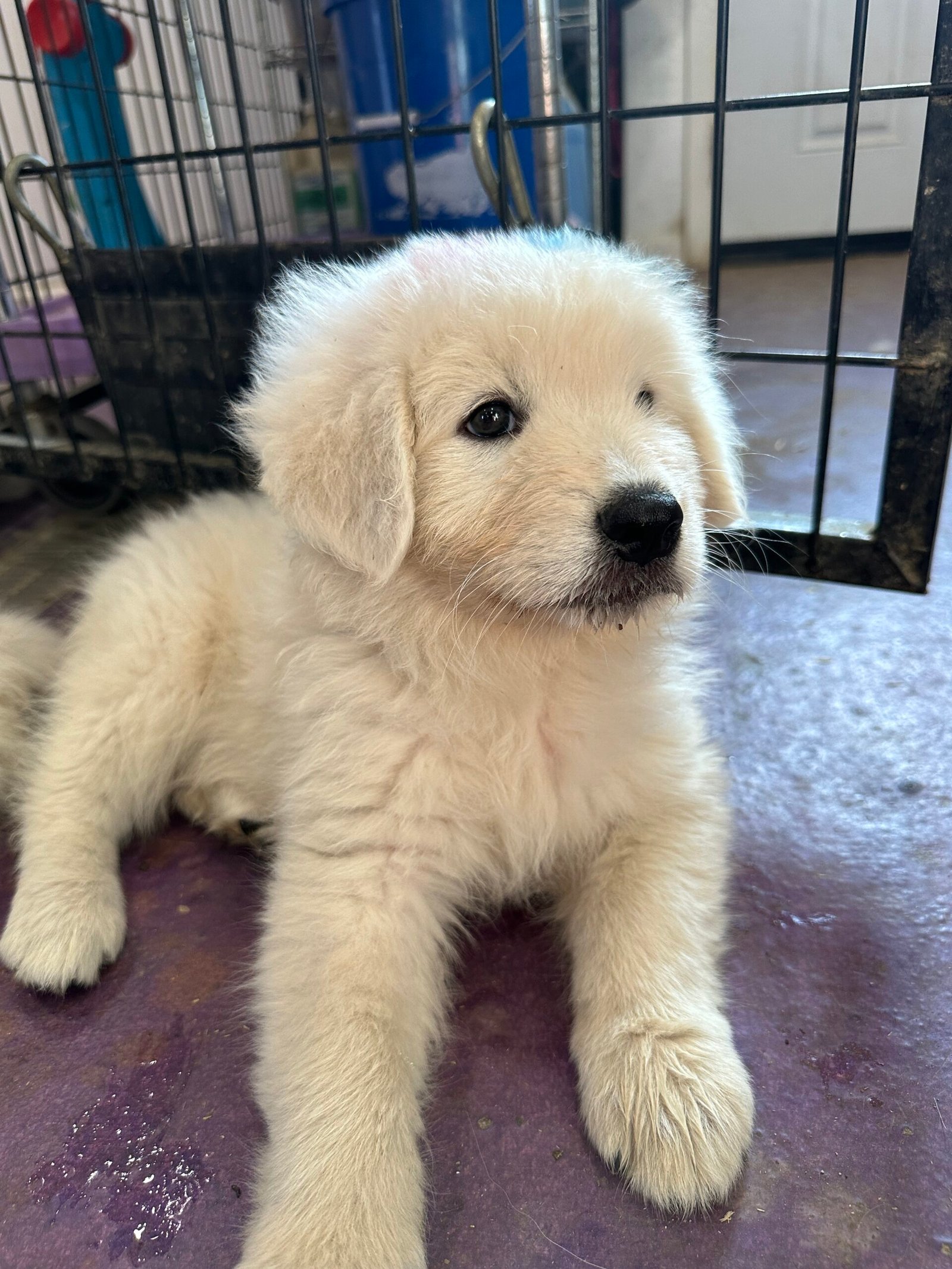

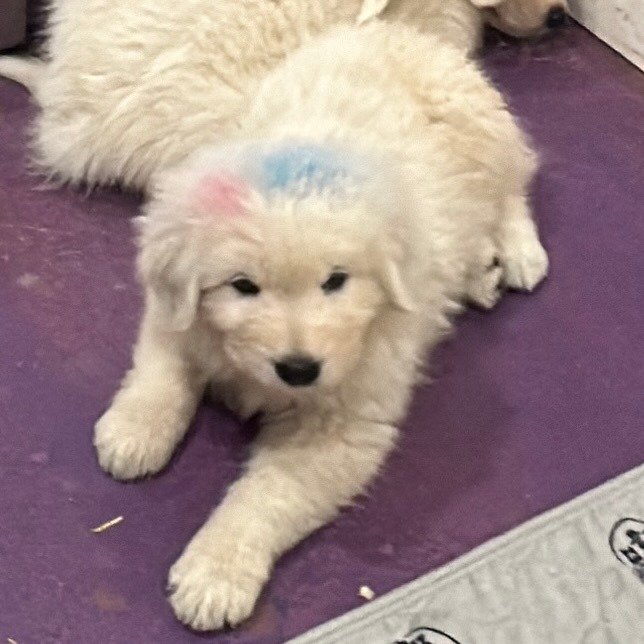
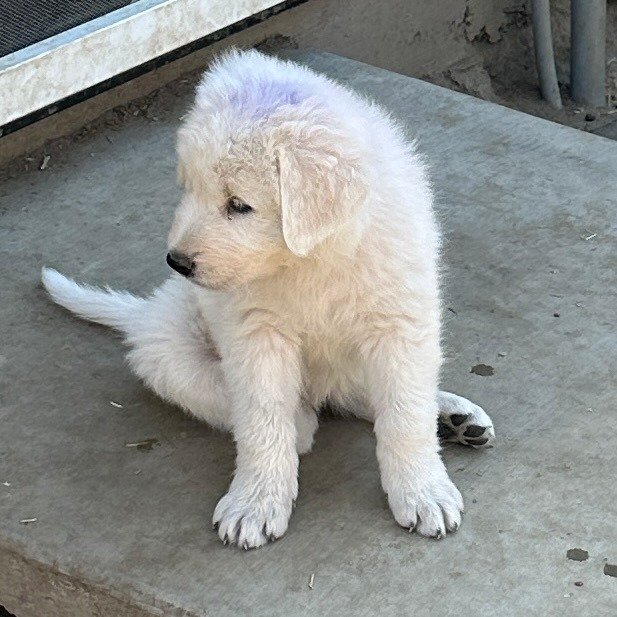
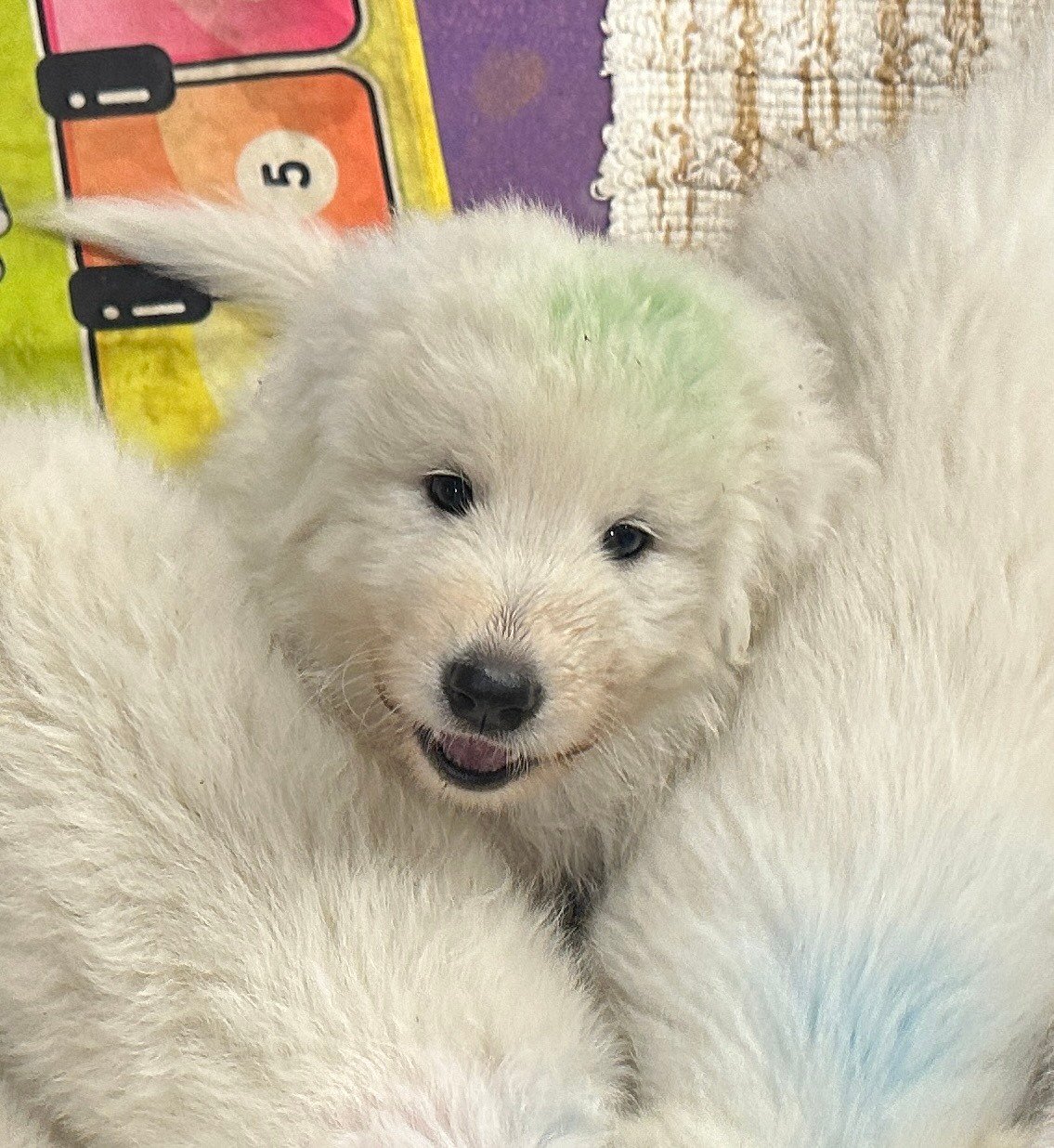
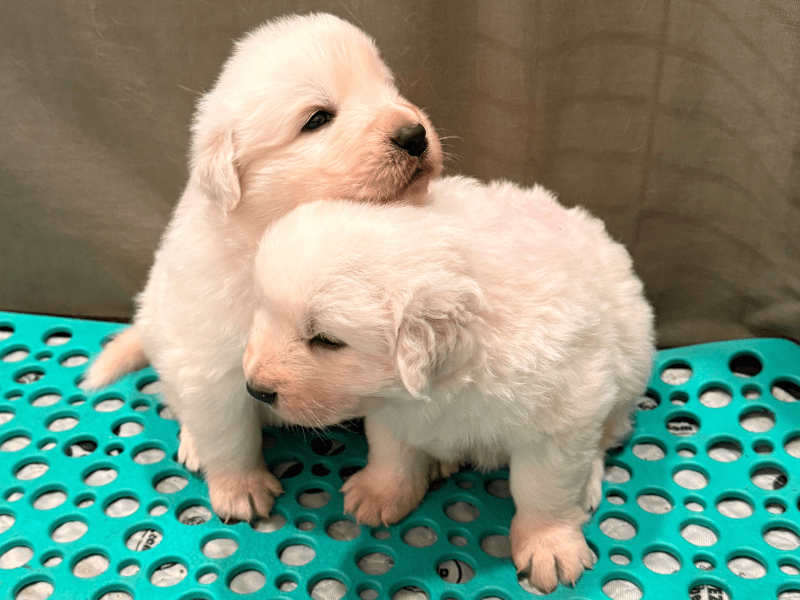

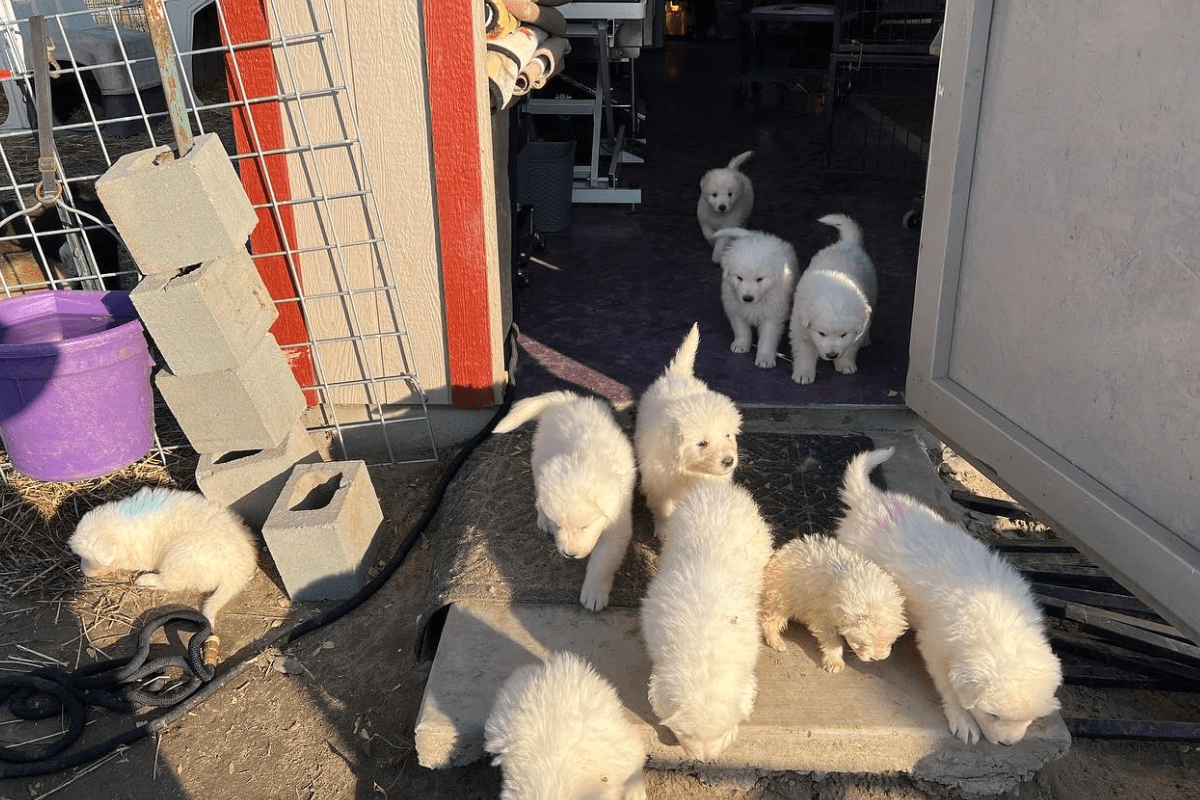
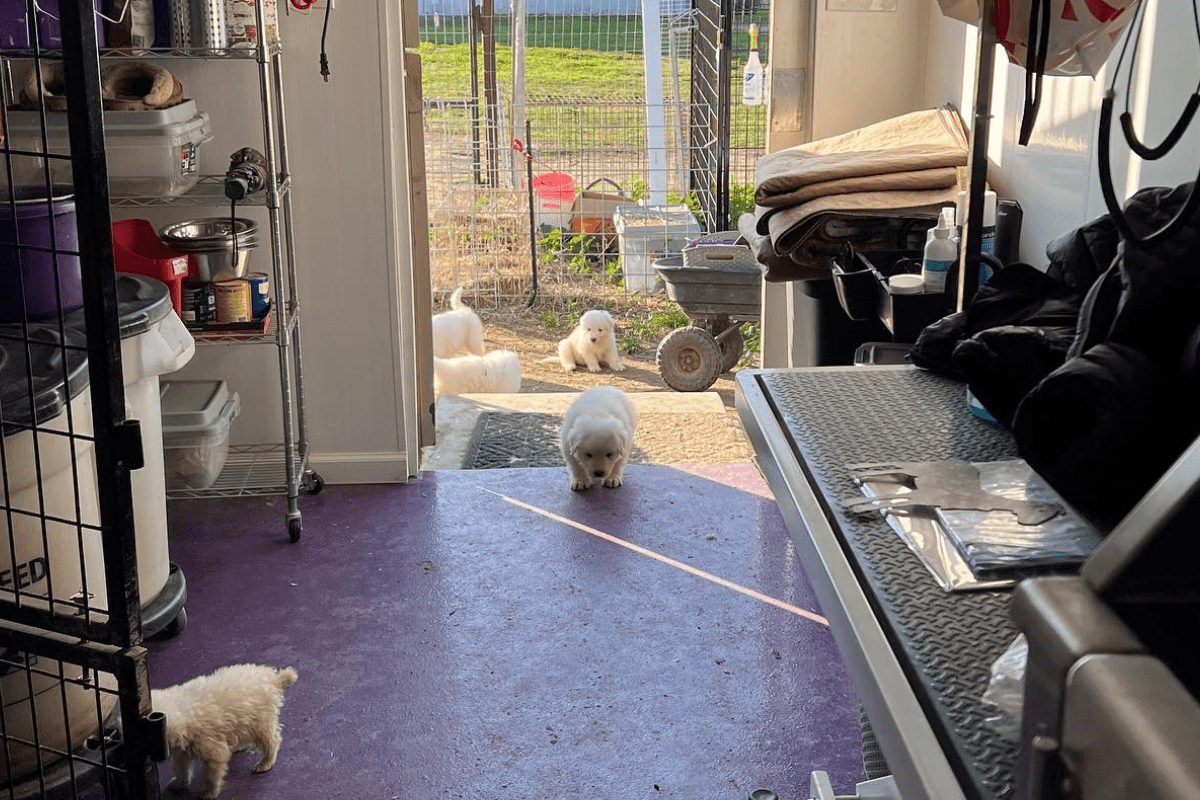

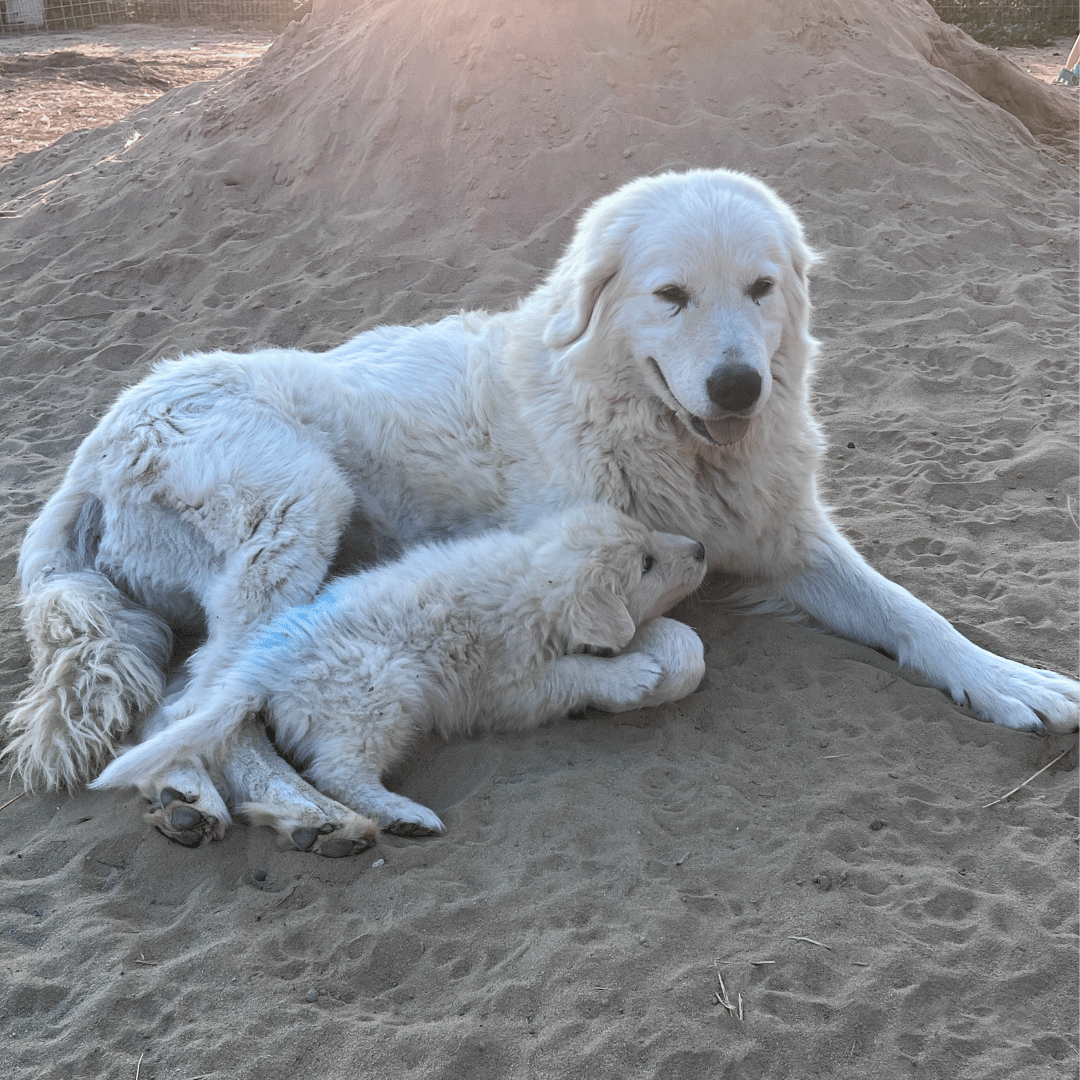
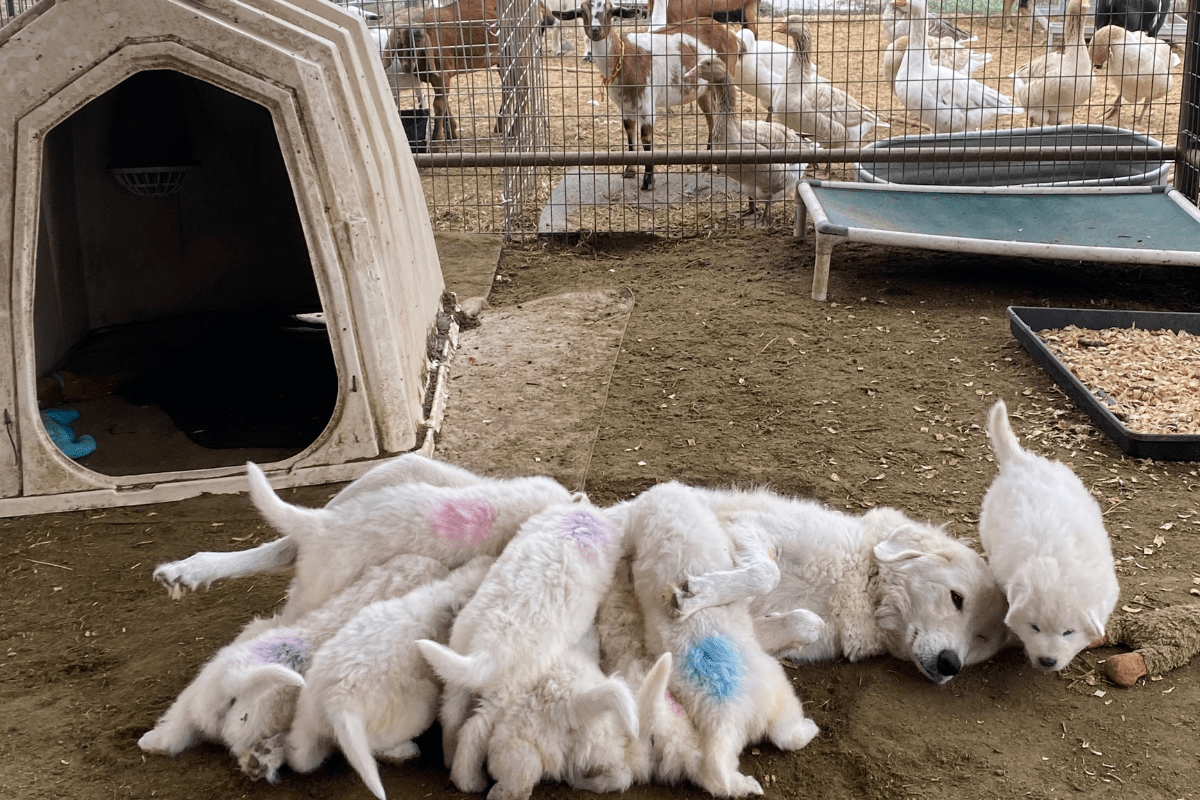
The Puppy Parlor didn't start as a brilliant idea. It started as a promise I made to a mother dog after the worst day of my breeding career. Read the full story — including what went wrong before, how the Puppy Parlor was built, and why it's now the heart of everything we do here.
First Look at Livestock — Observation and Curiosity (Week 3)
Before puppies are ever put in direct contact with livestock, they watch. And that watching is purposeful.
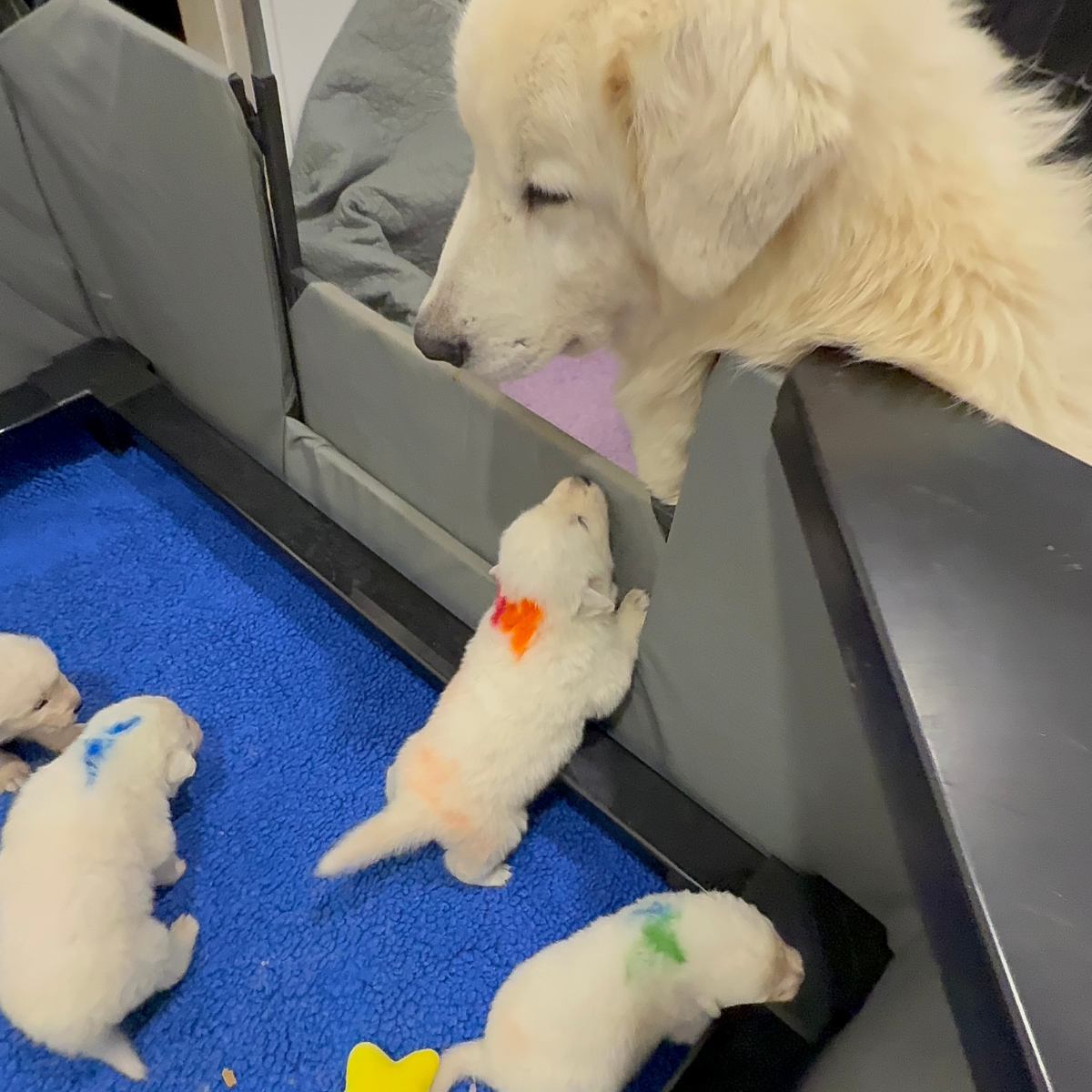
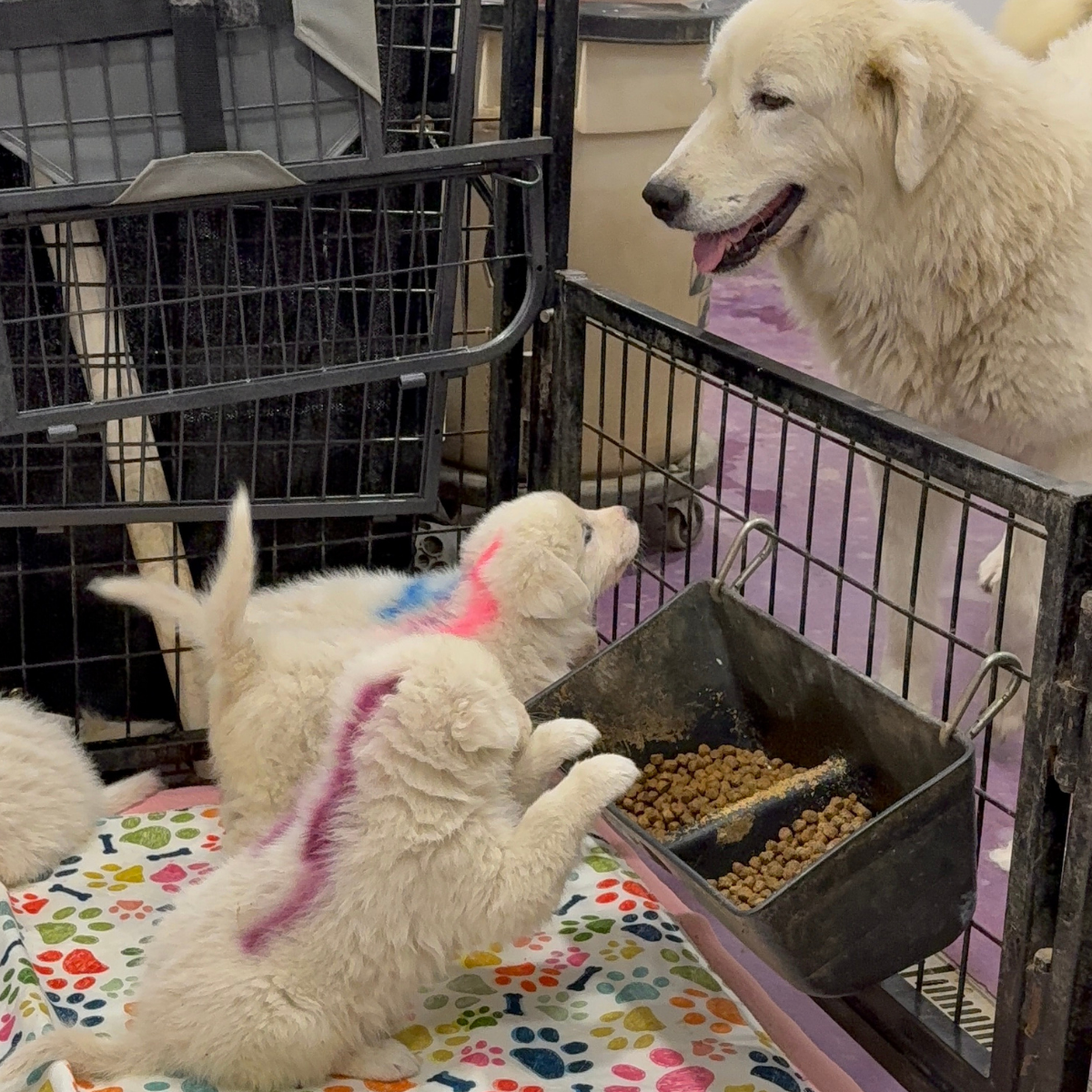
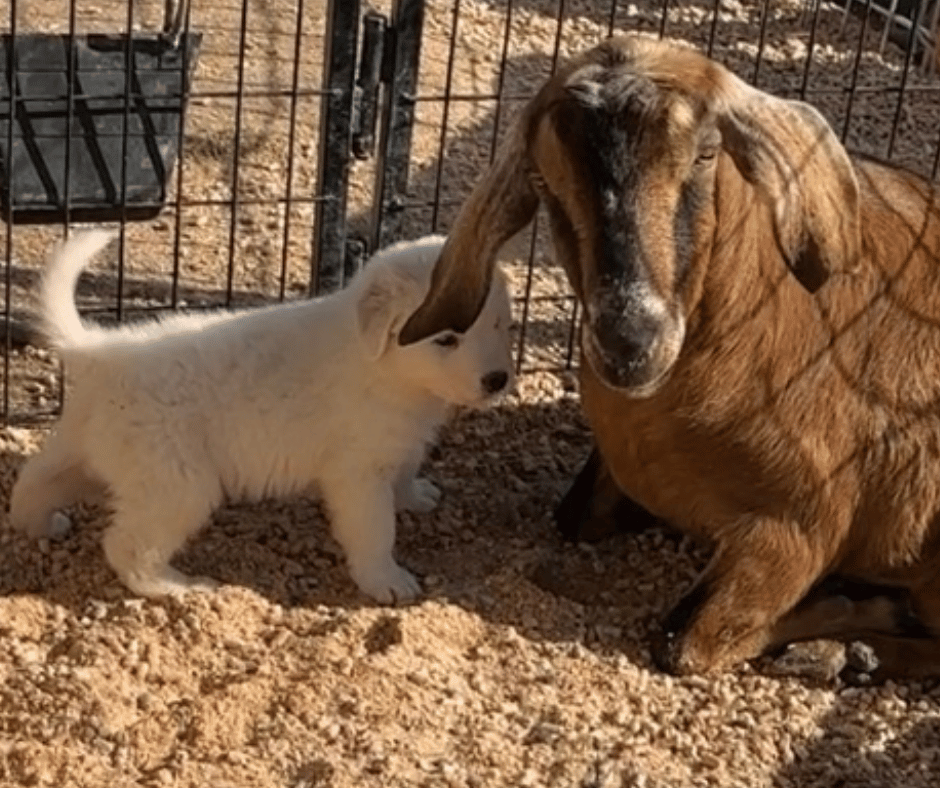
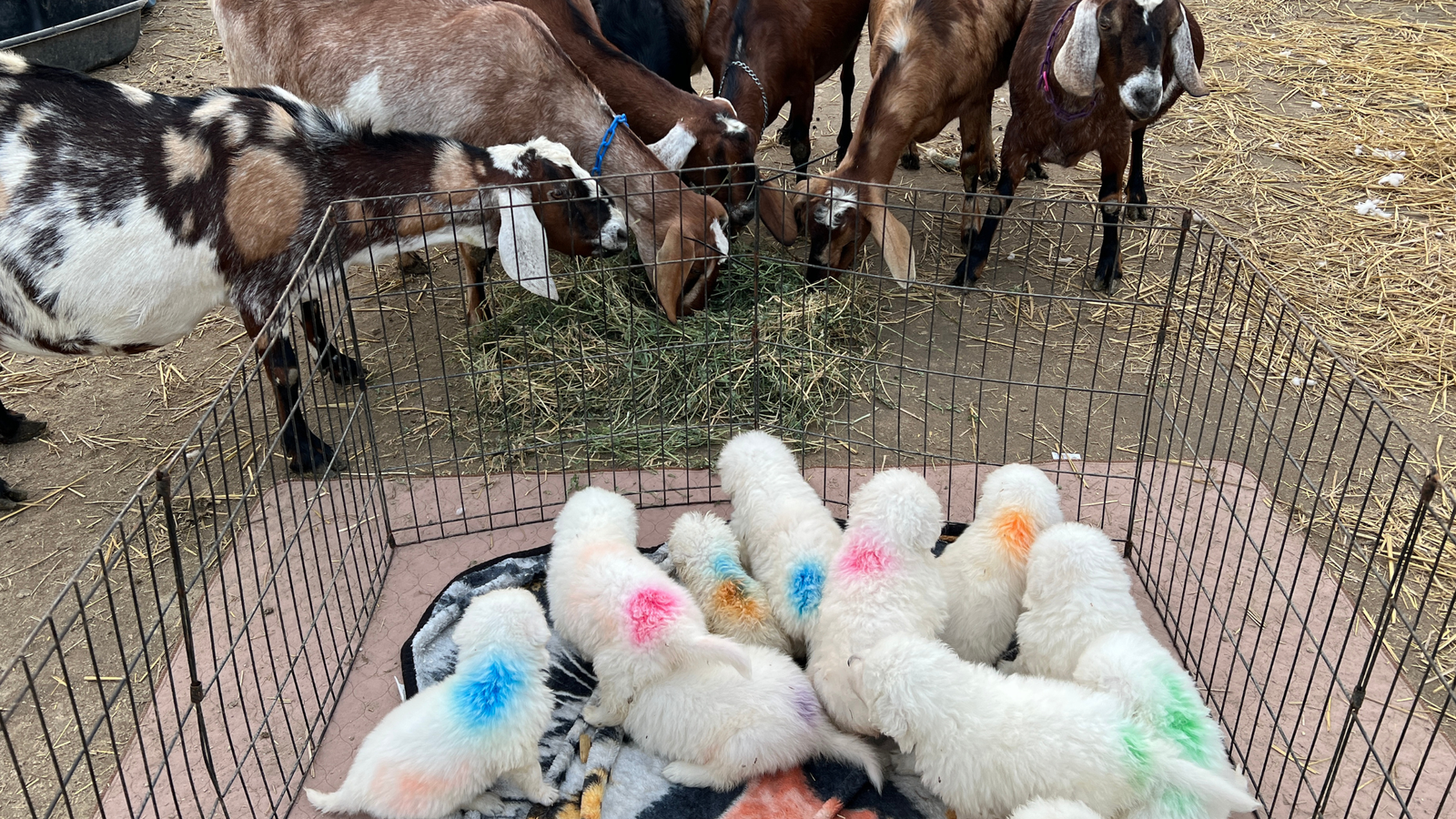
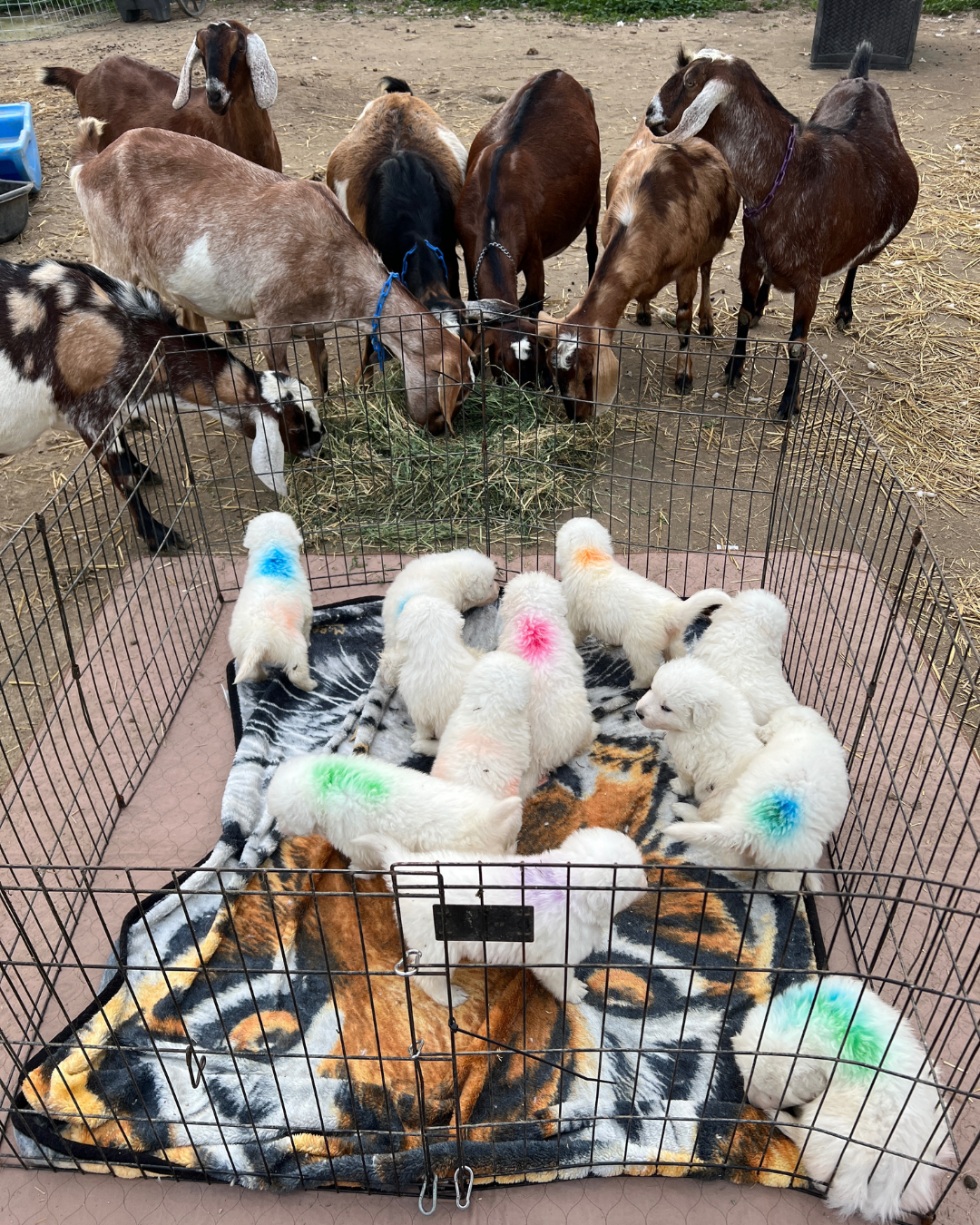
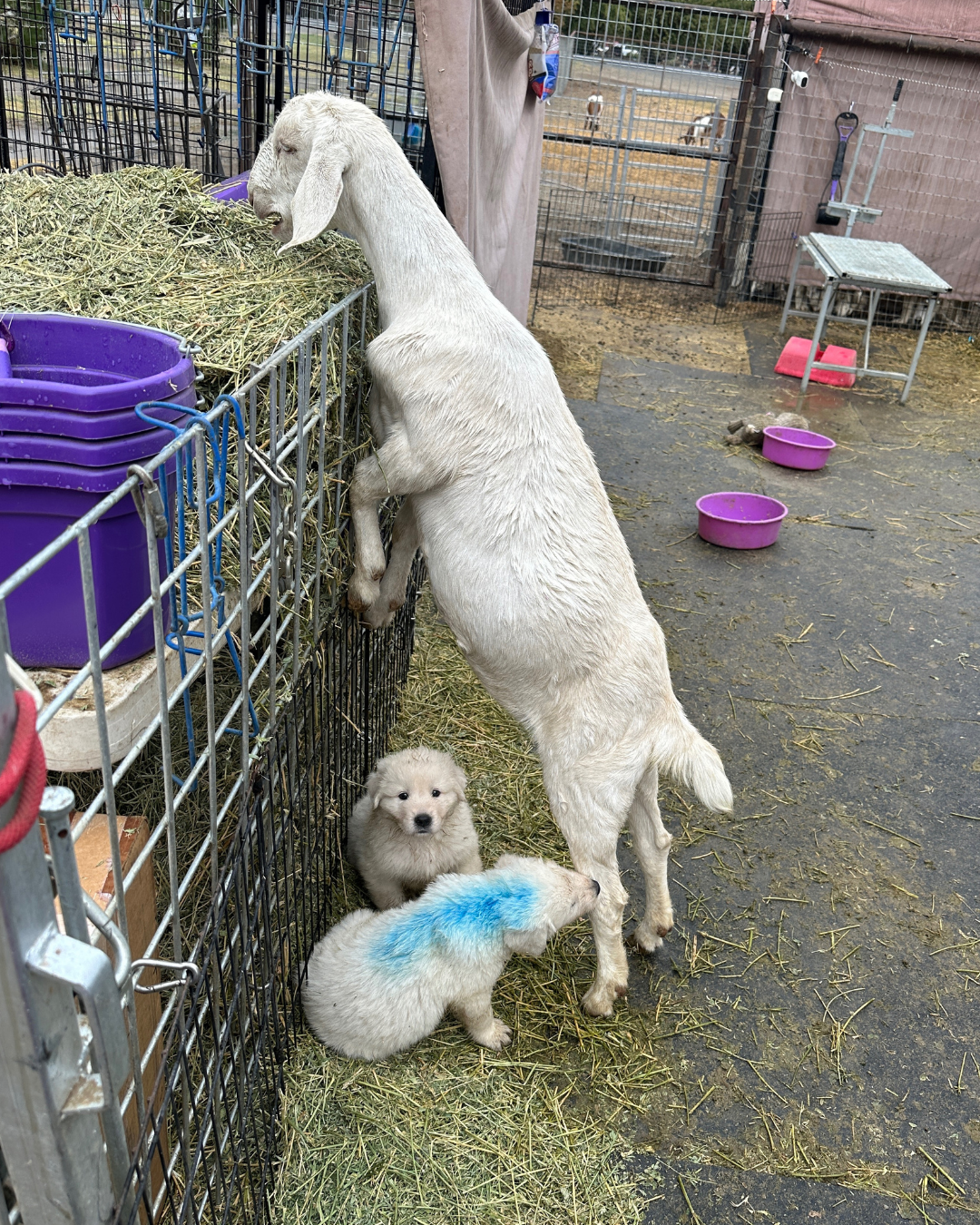
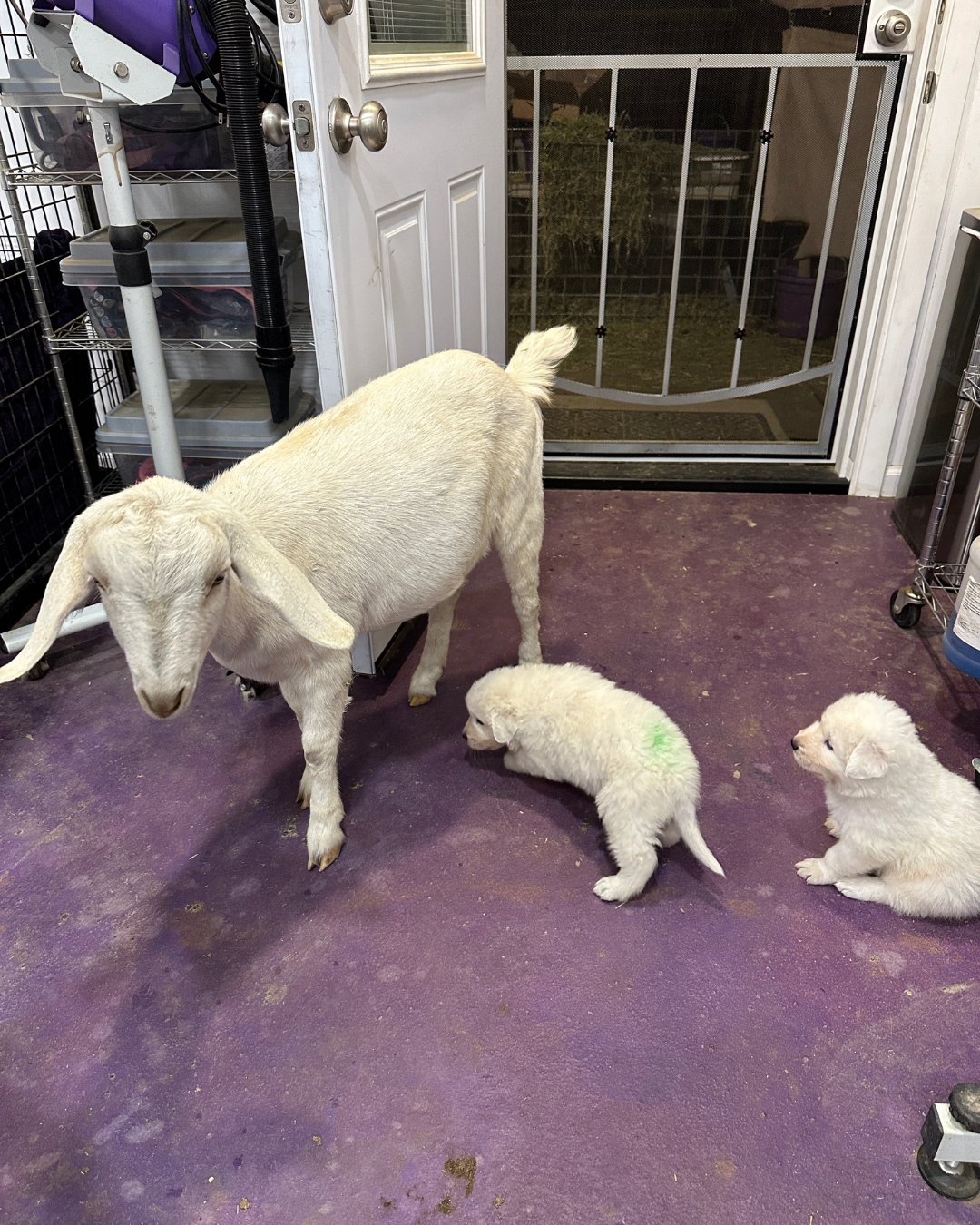
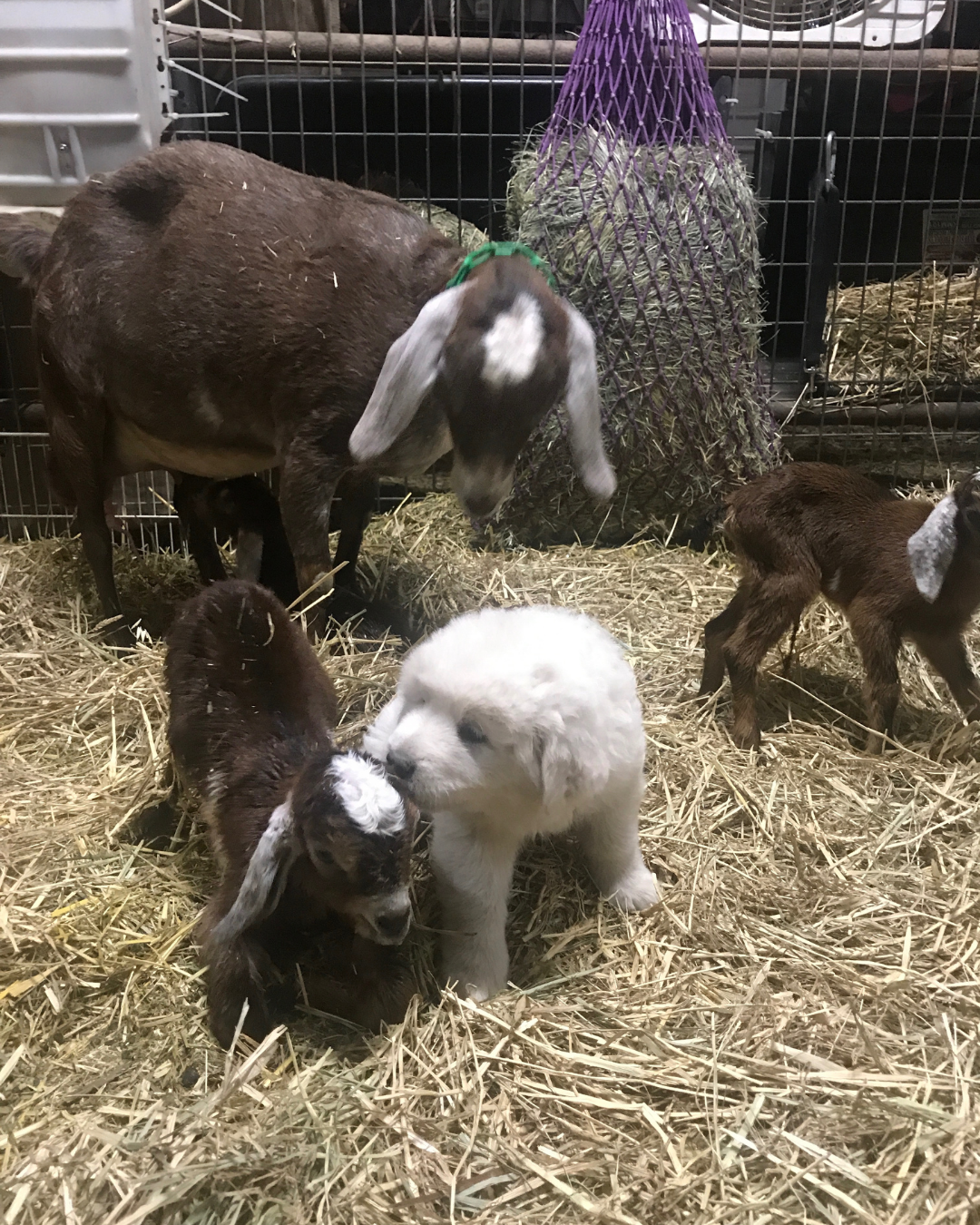
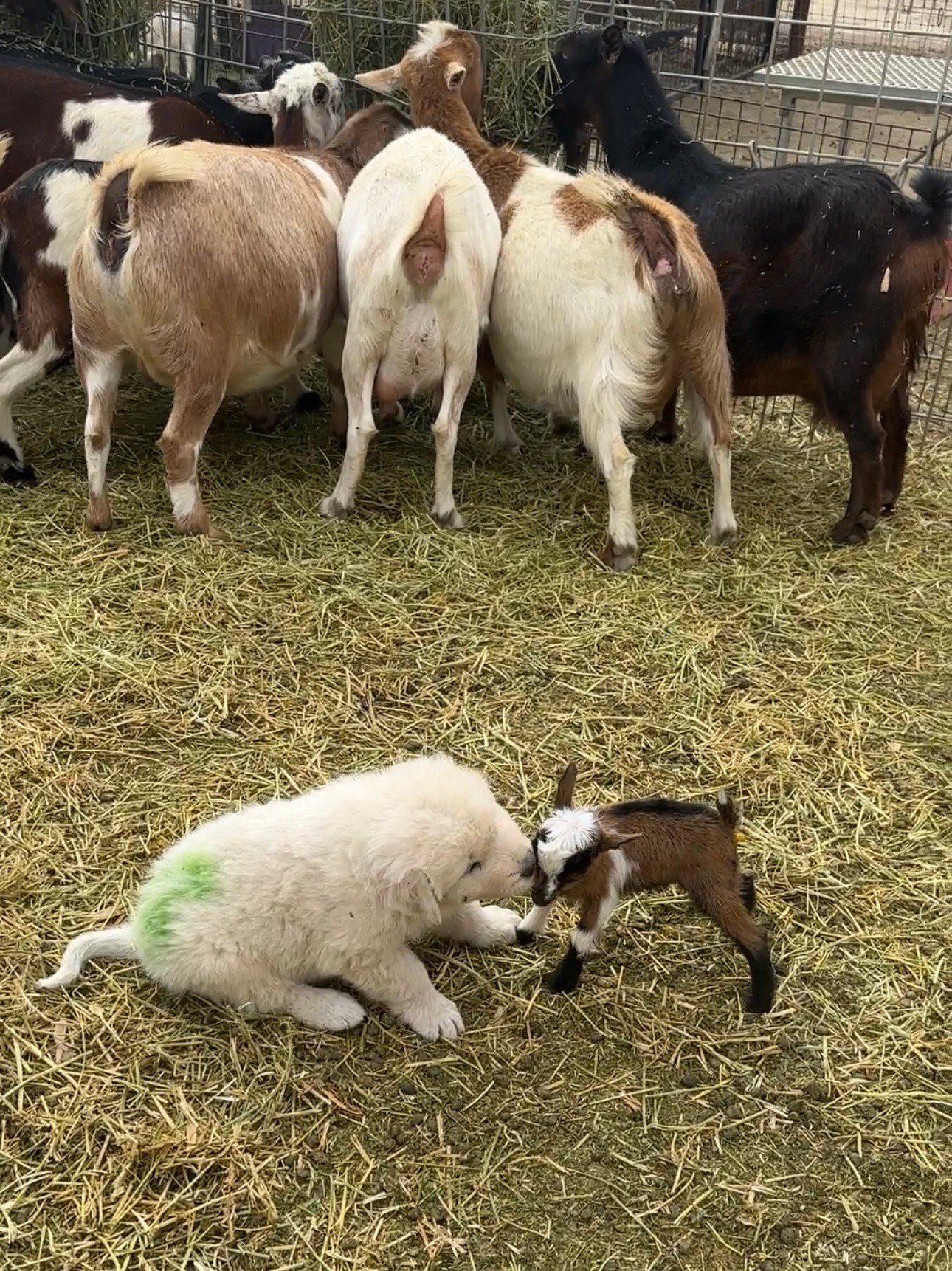
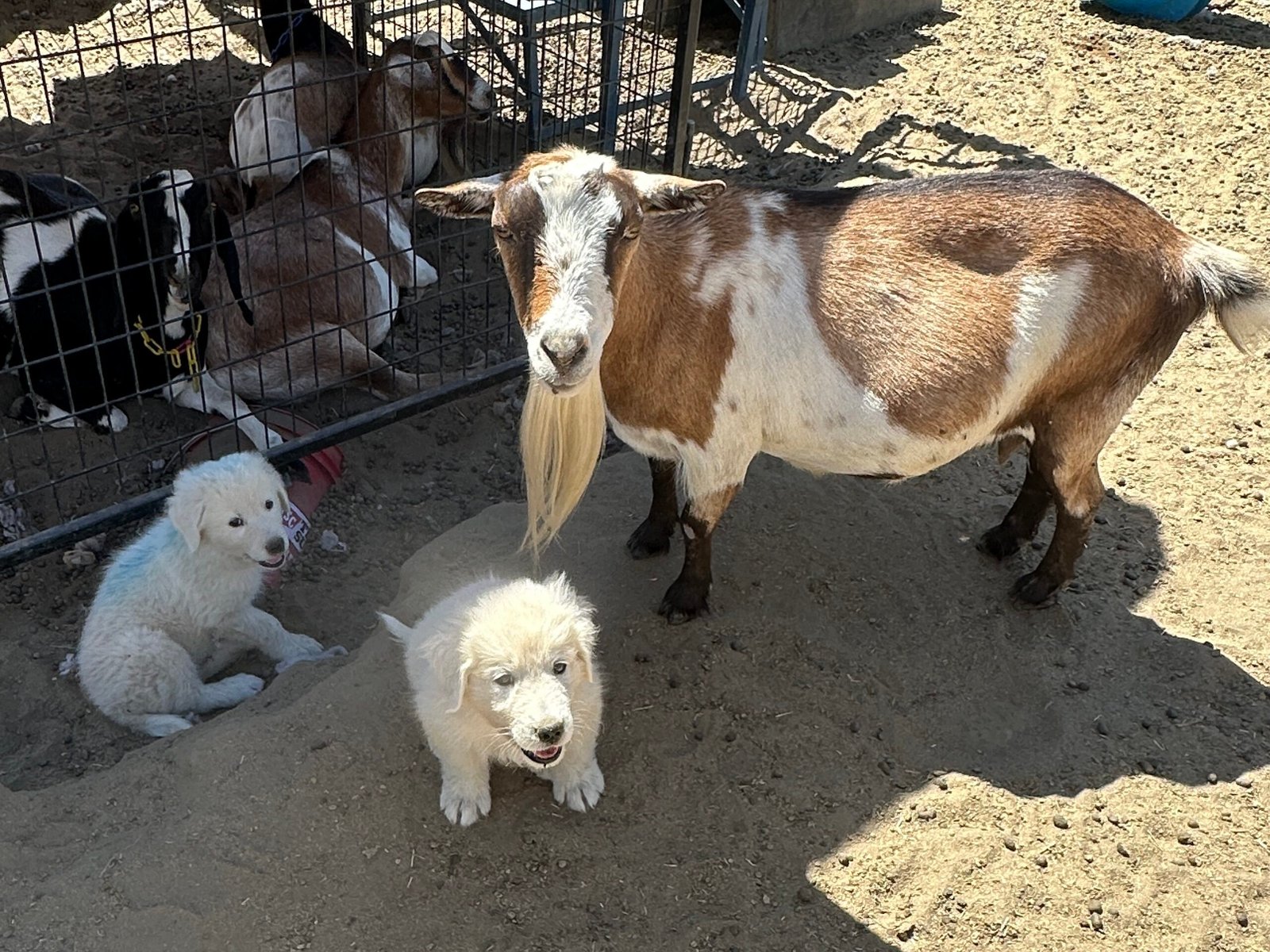
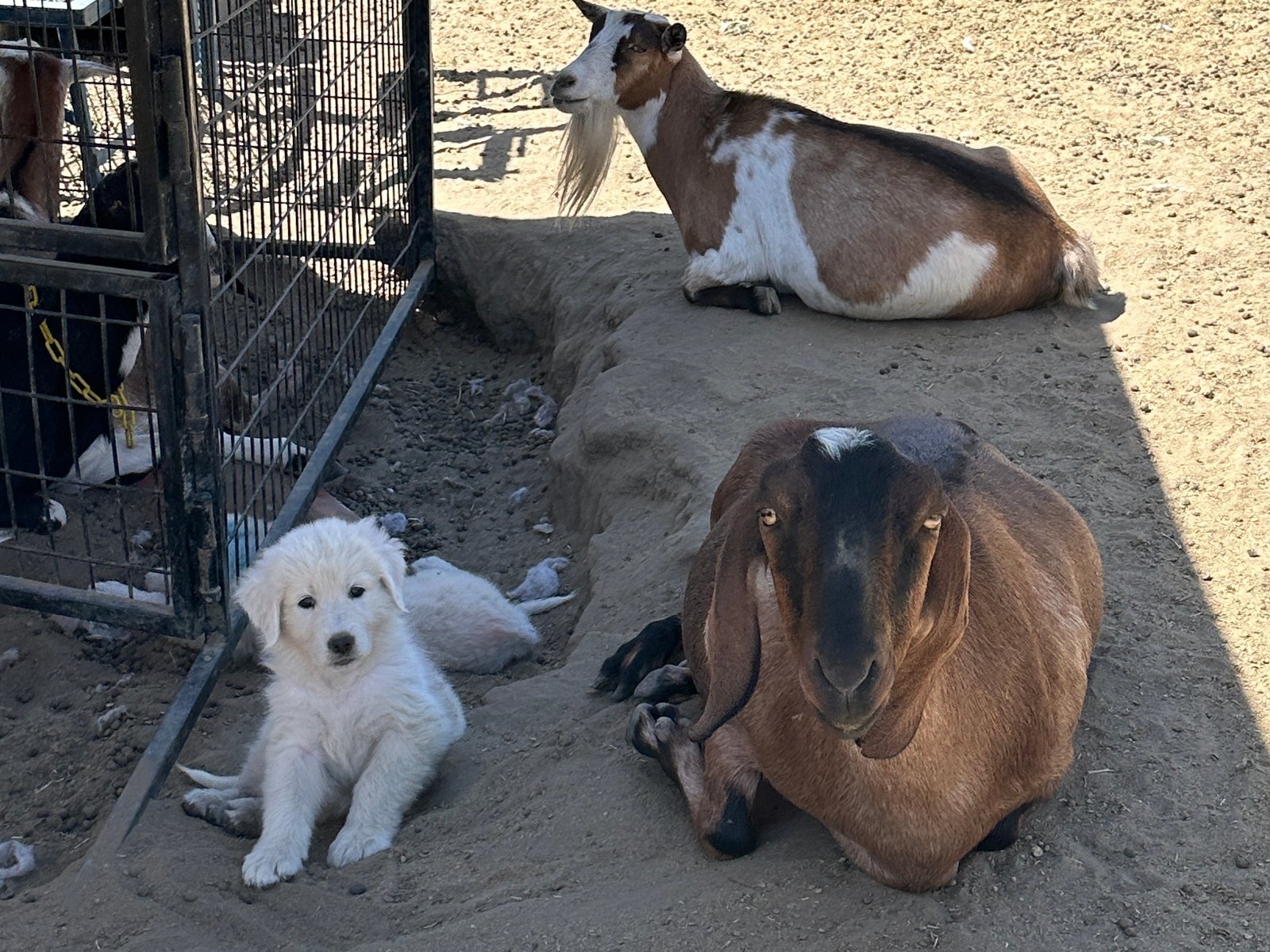
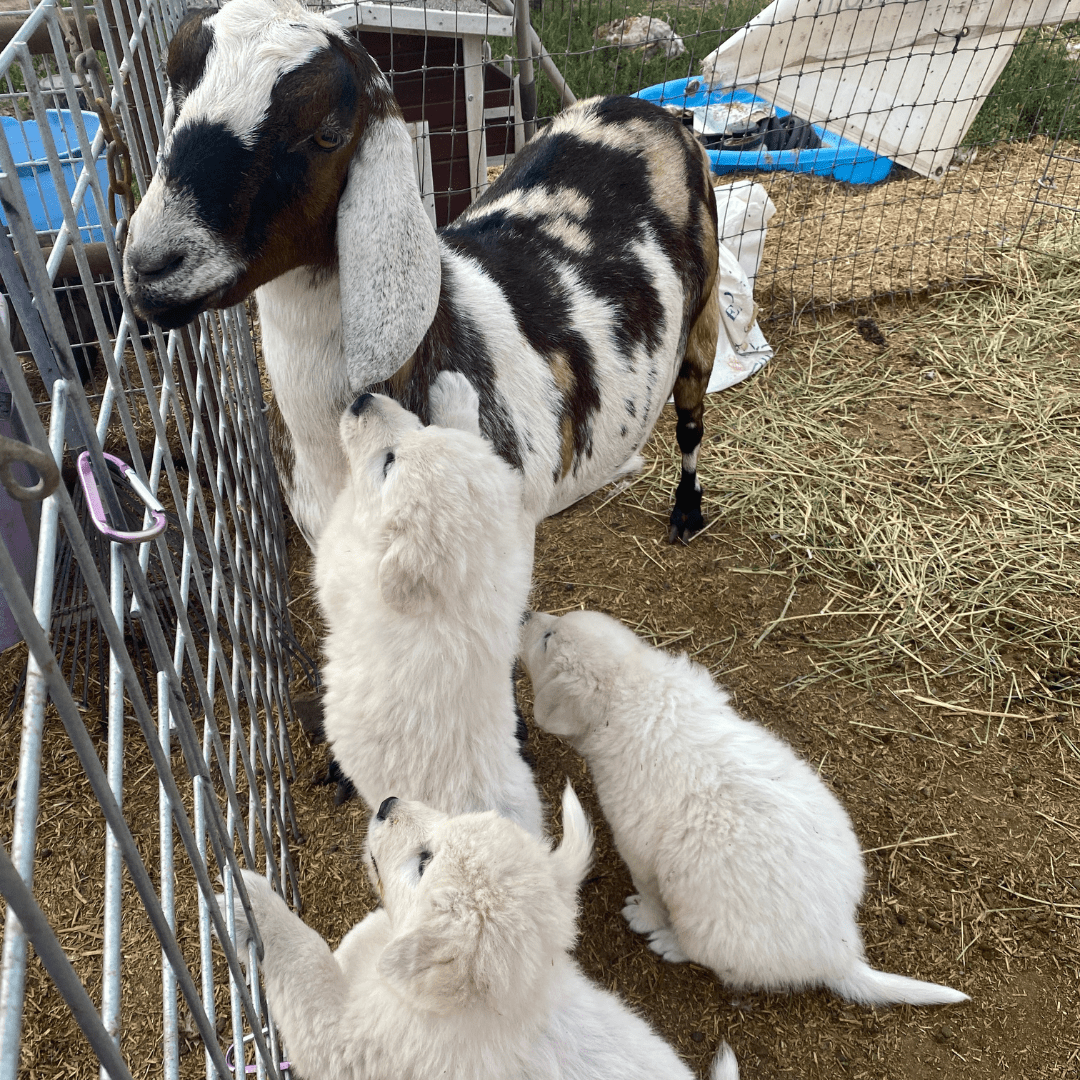
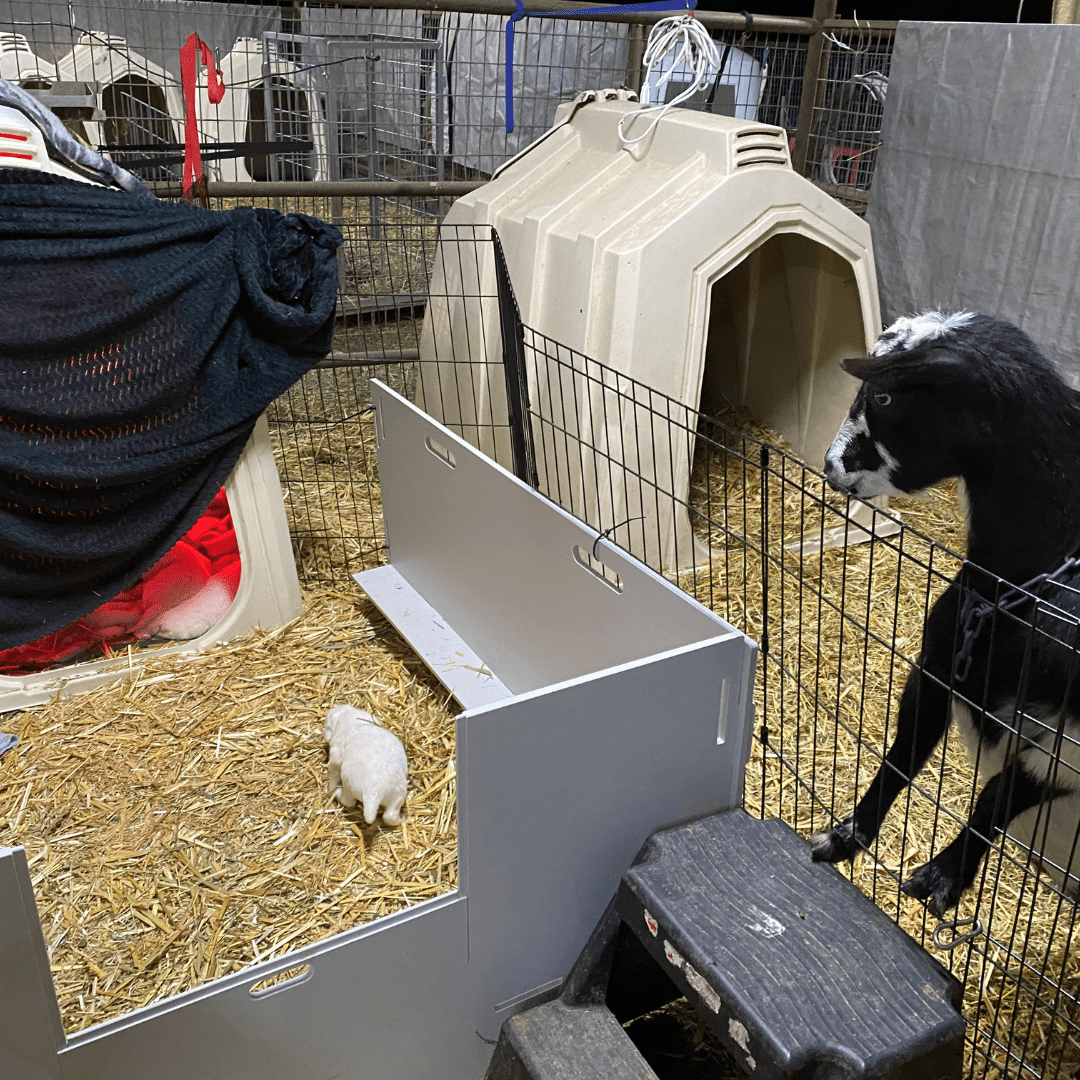
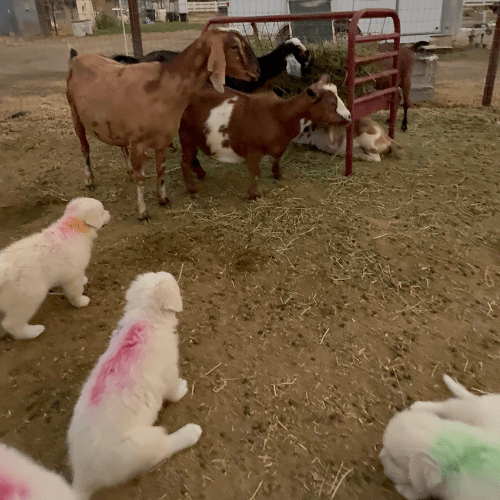
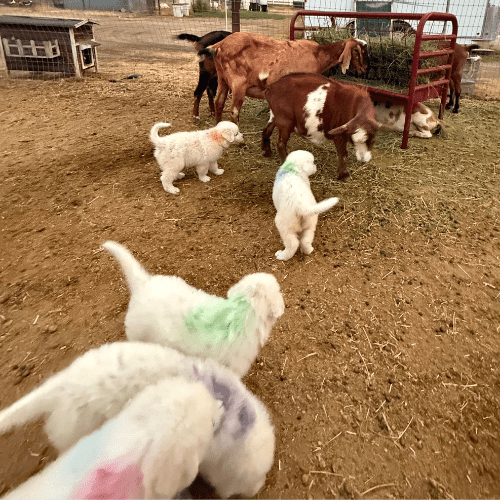
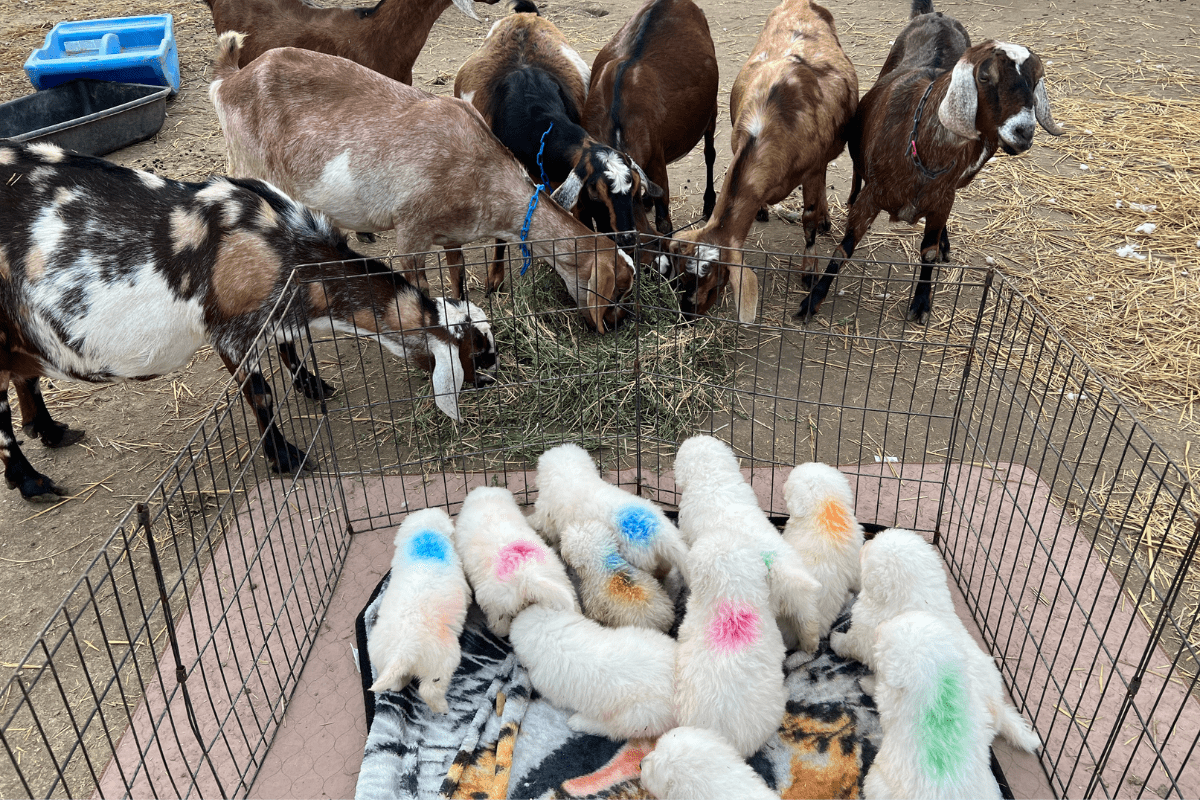
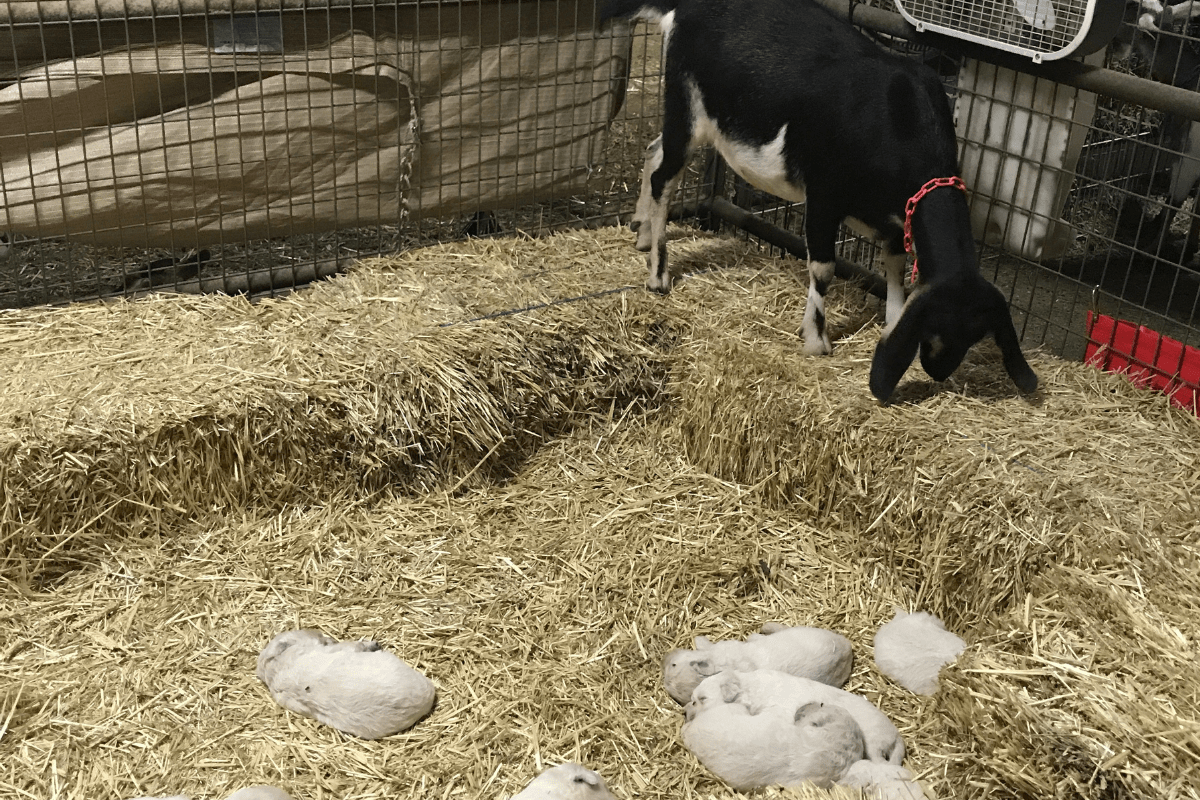
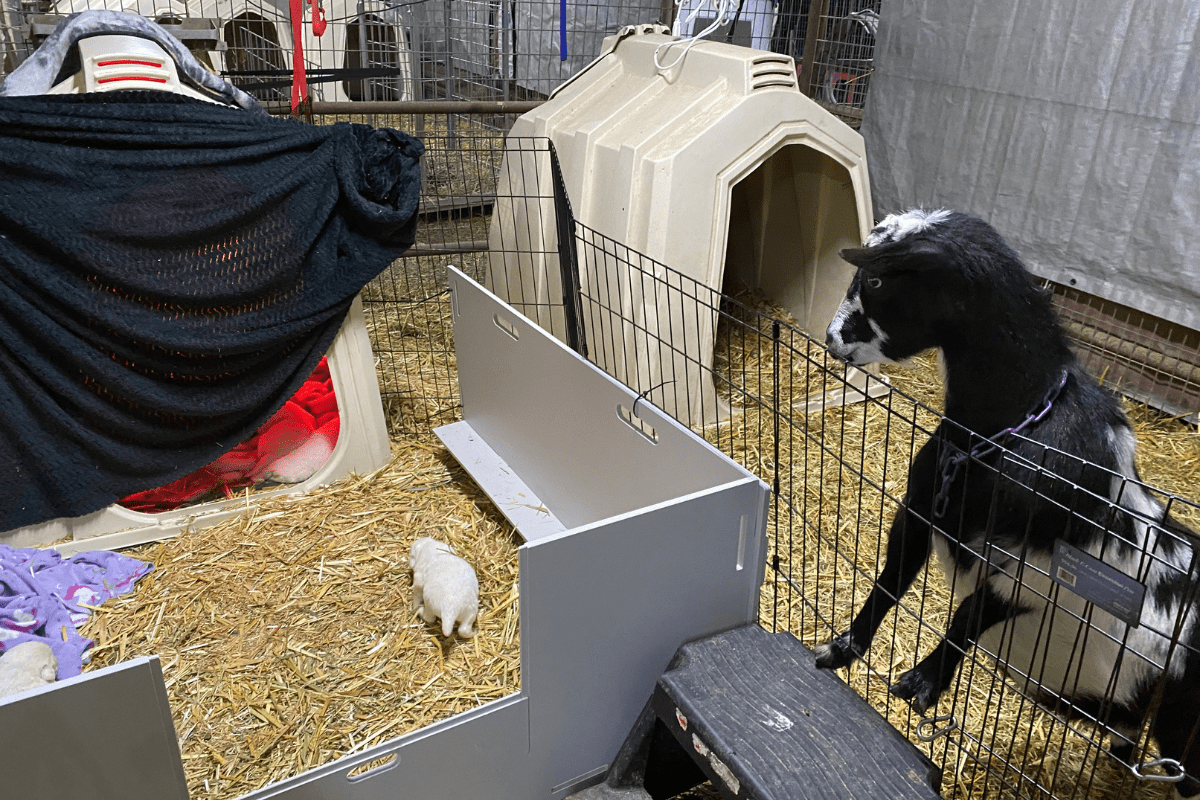
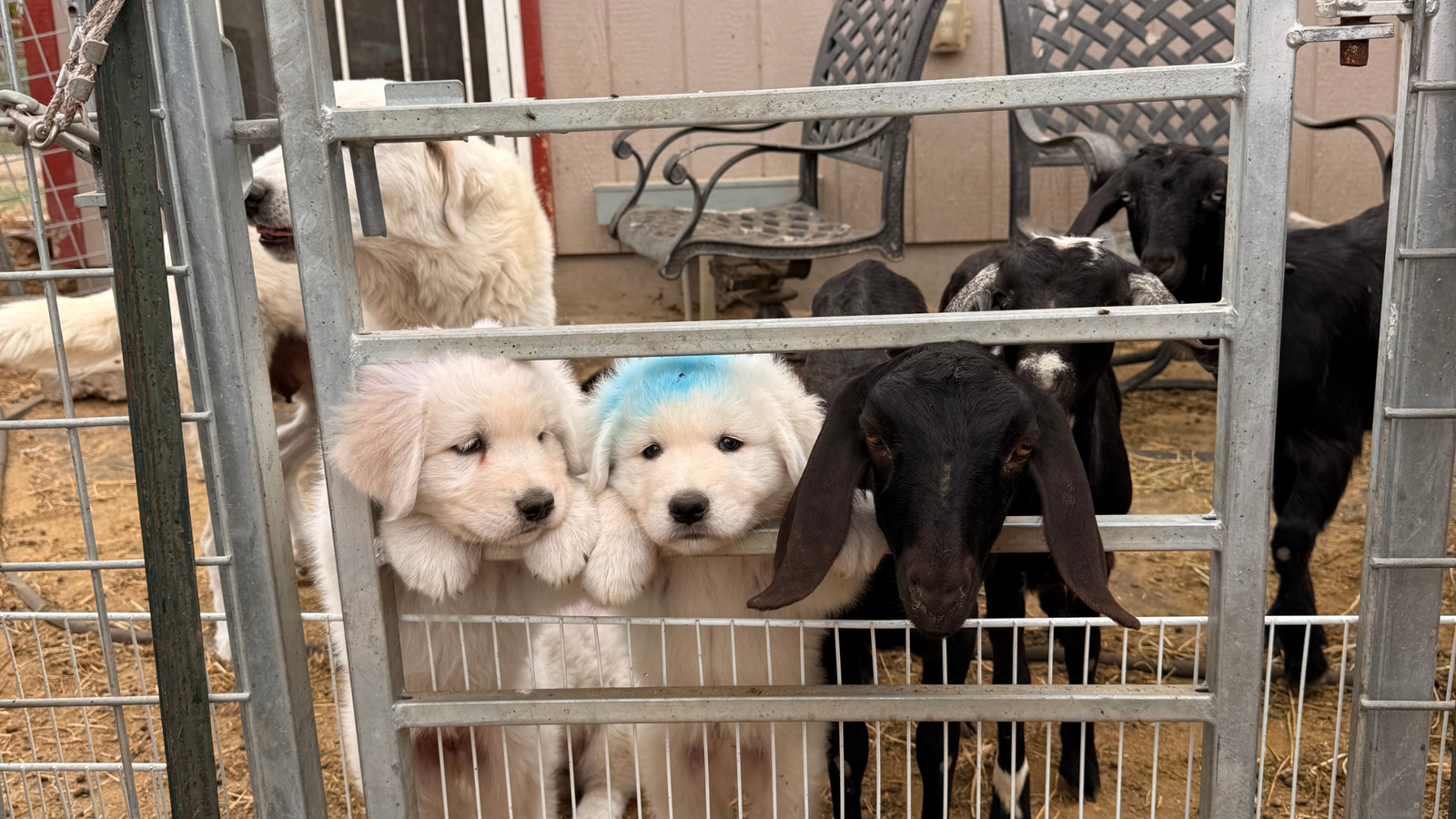
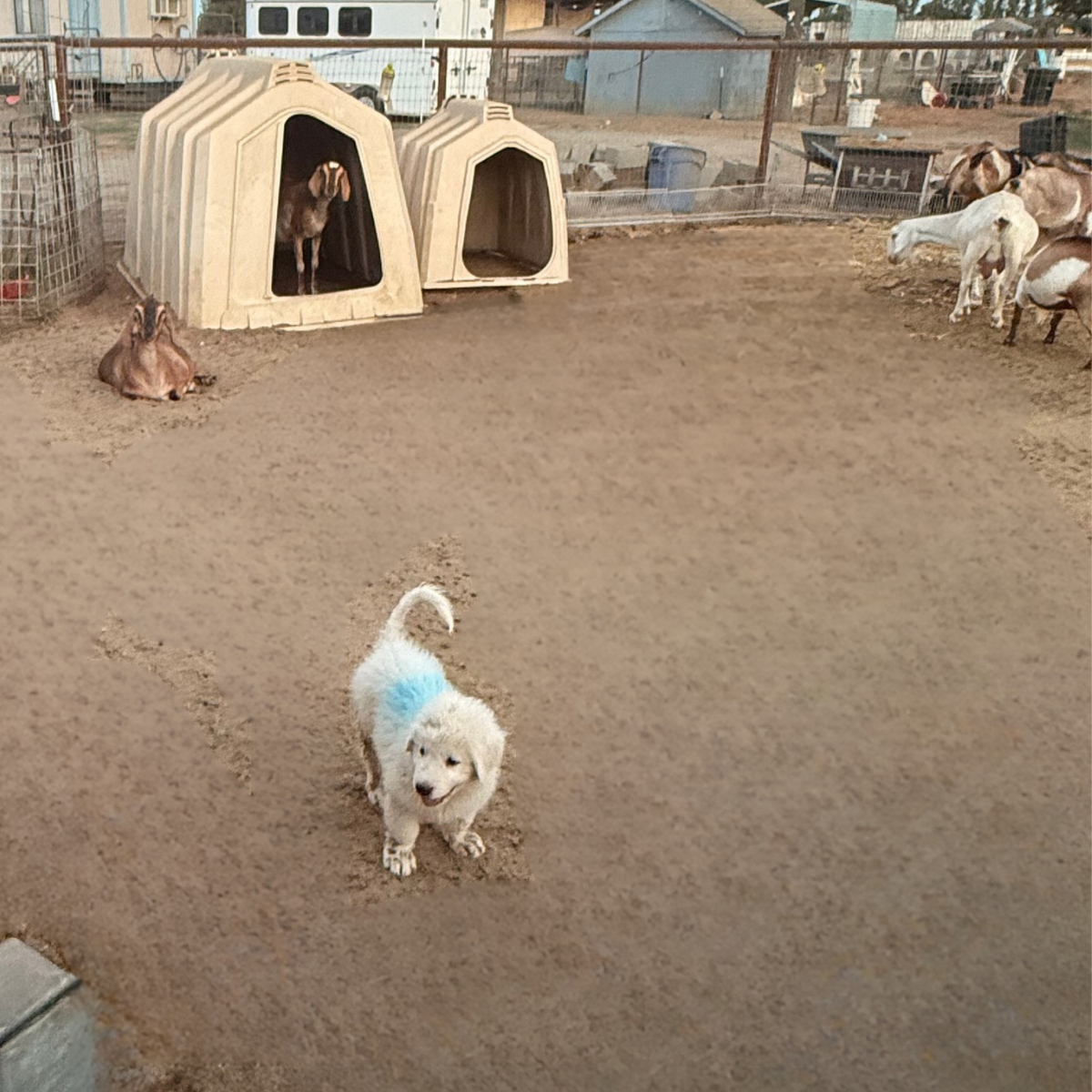
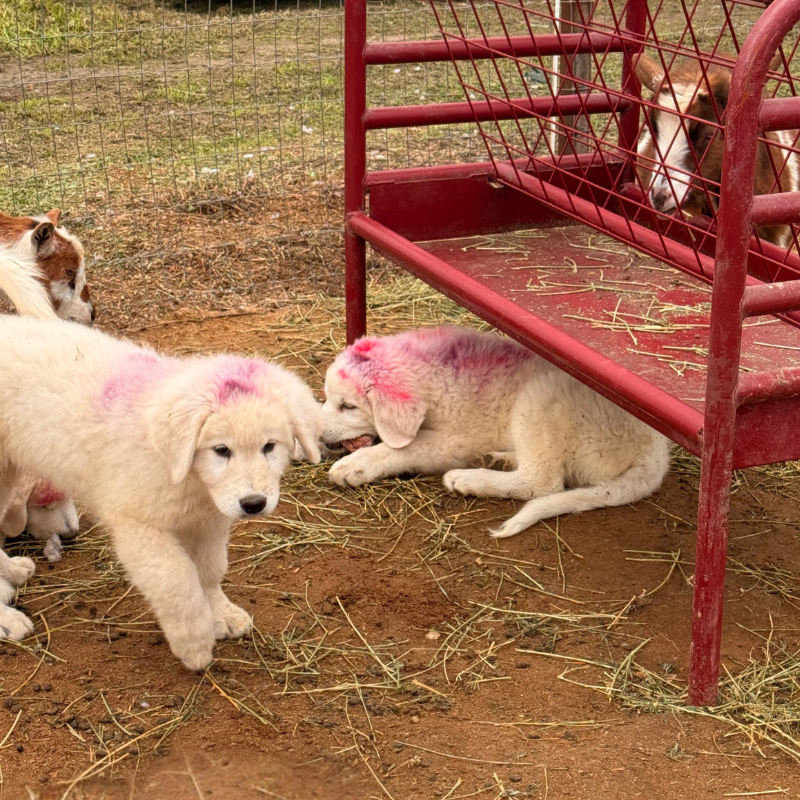
We start bringing puppies near the goats — safely, through barriers — as soon as they're mobile enough to be interested, which is usually at around 3 weeks, when they start climbing out of the whelping box. This introduction is the first step in livestock imprinting: the puppy begins to associate the smell, sound, and movement of animals with safety and familiarity, not alarm.
Timing matters here. Too early, and the puppy isn't neurologically ready to process the experience in a useful way. Too late, and the critical window for livestock imprinting starts to close. We're watching the individual puppy, not just the calendar.
What we're looking for in these early observations: calm curiosity. A puppy who toddles toward the fence rather than backing away. That orientation — toward the livestock, not away from them — is what we want to see and encourage.
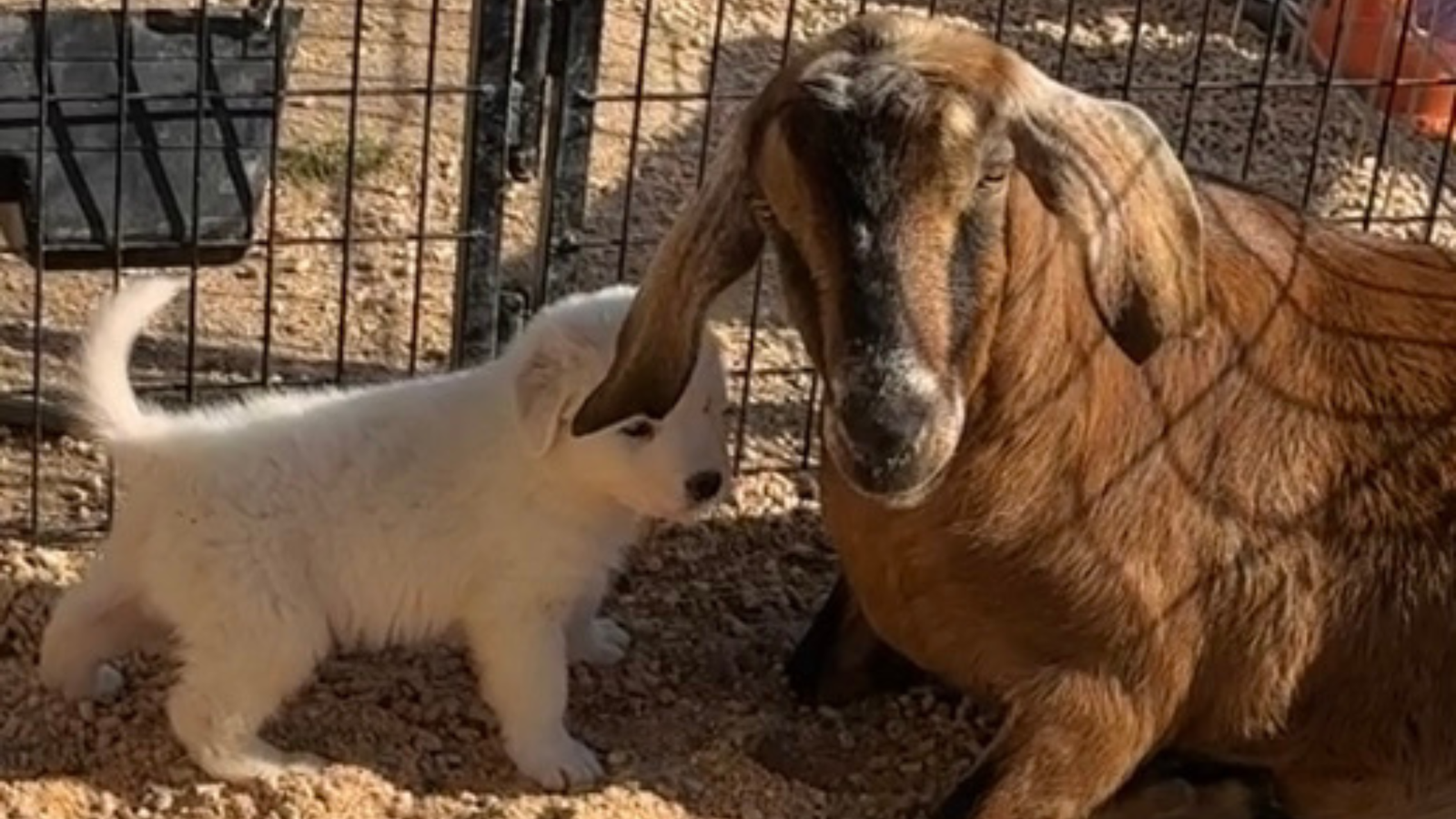
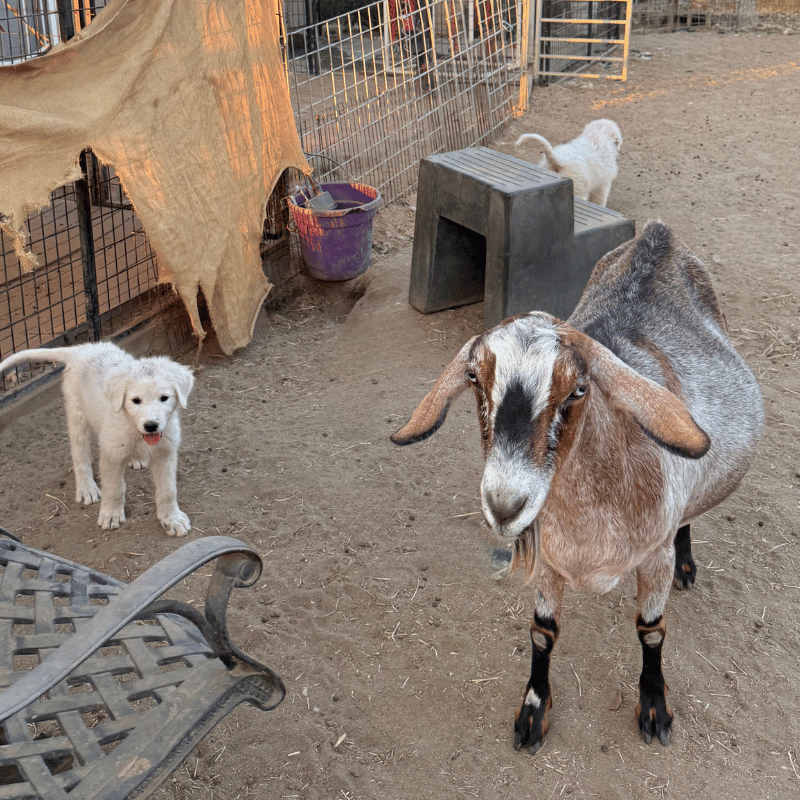


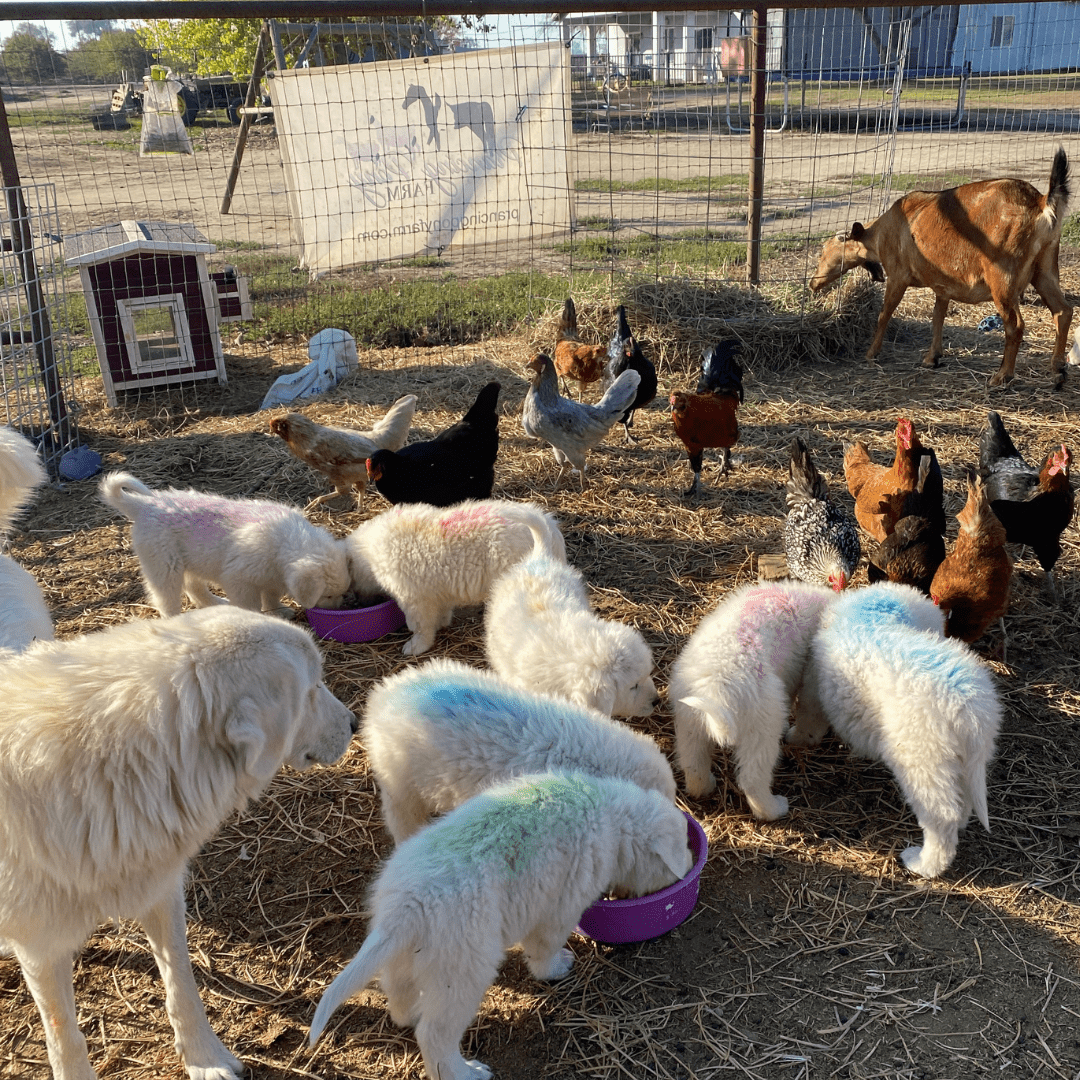
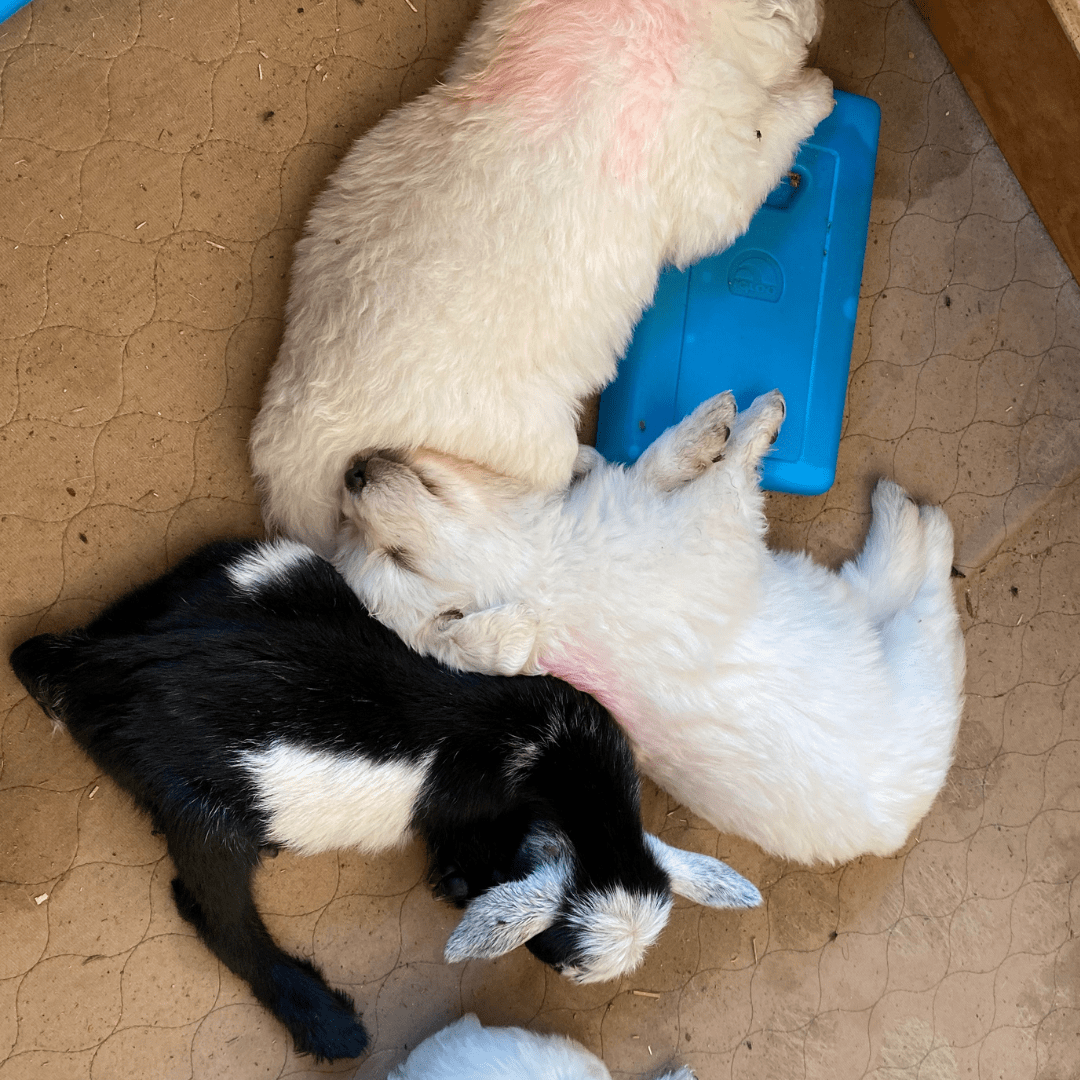
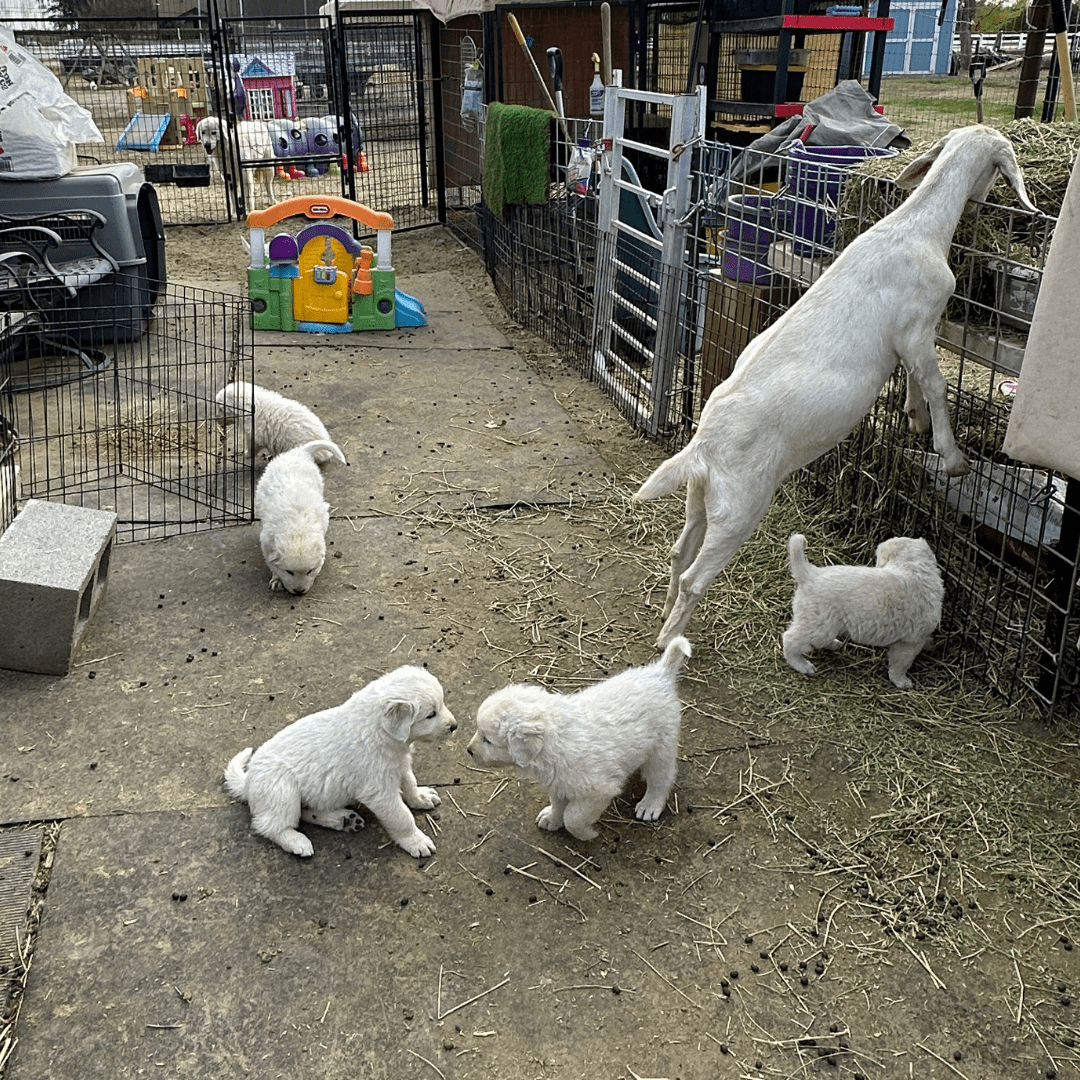
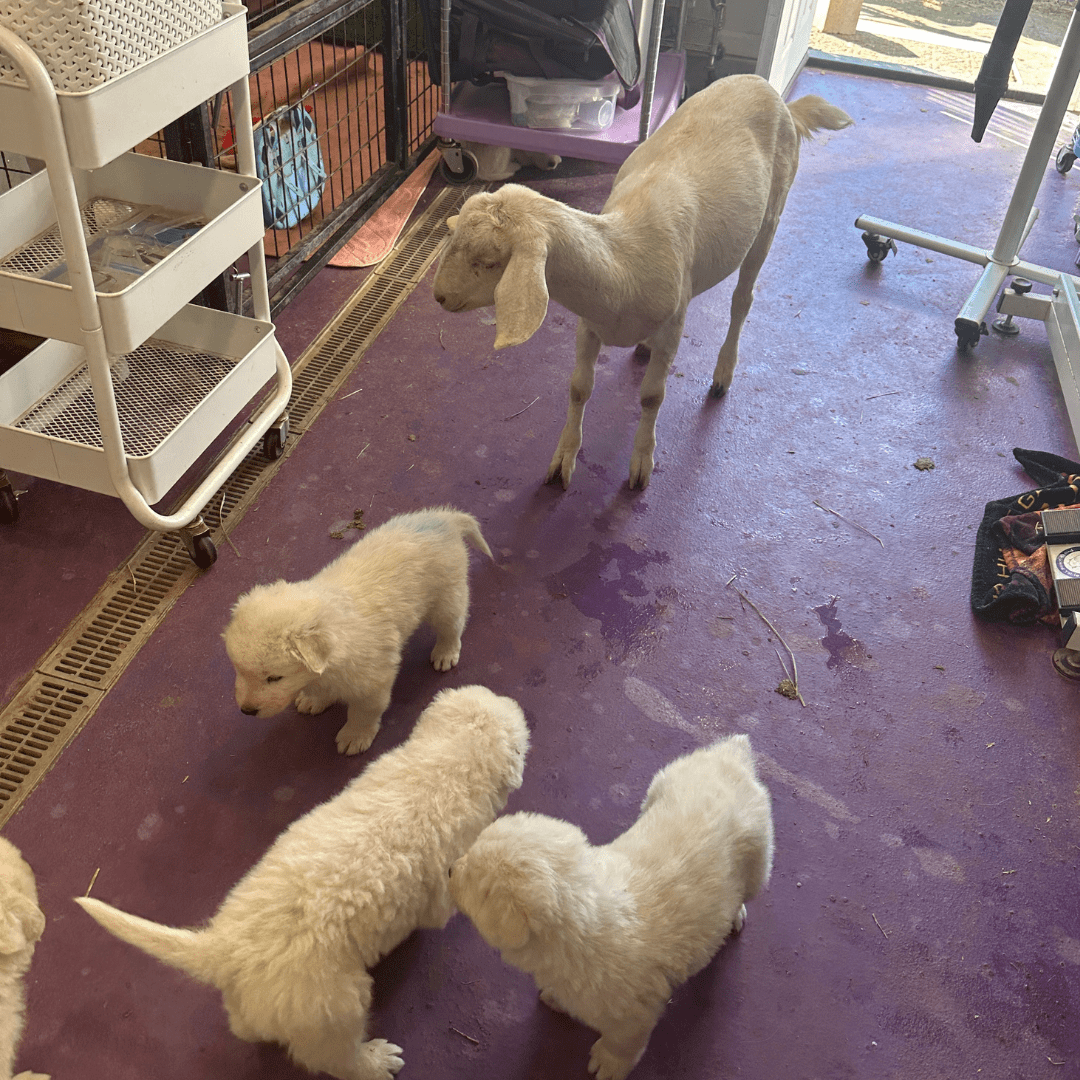
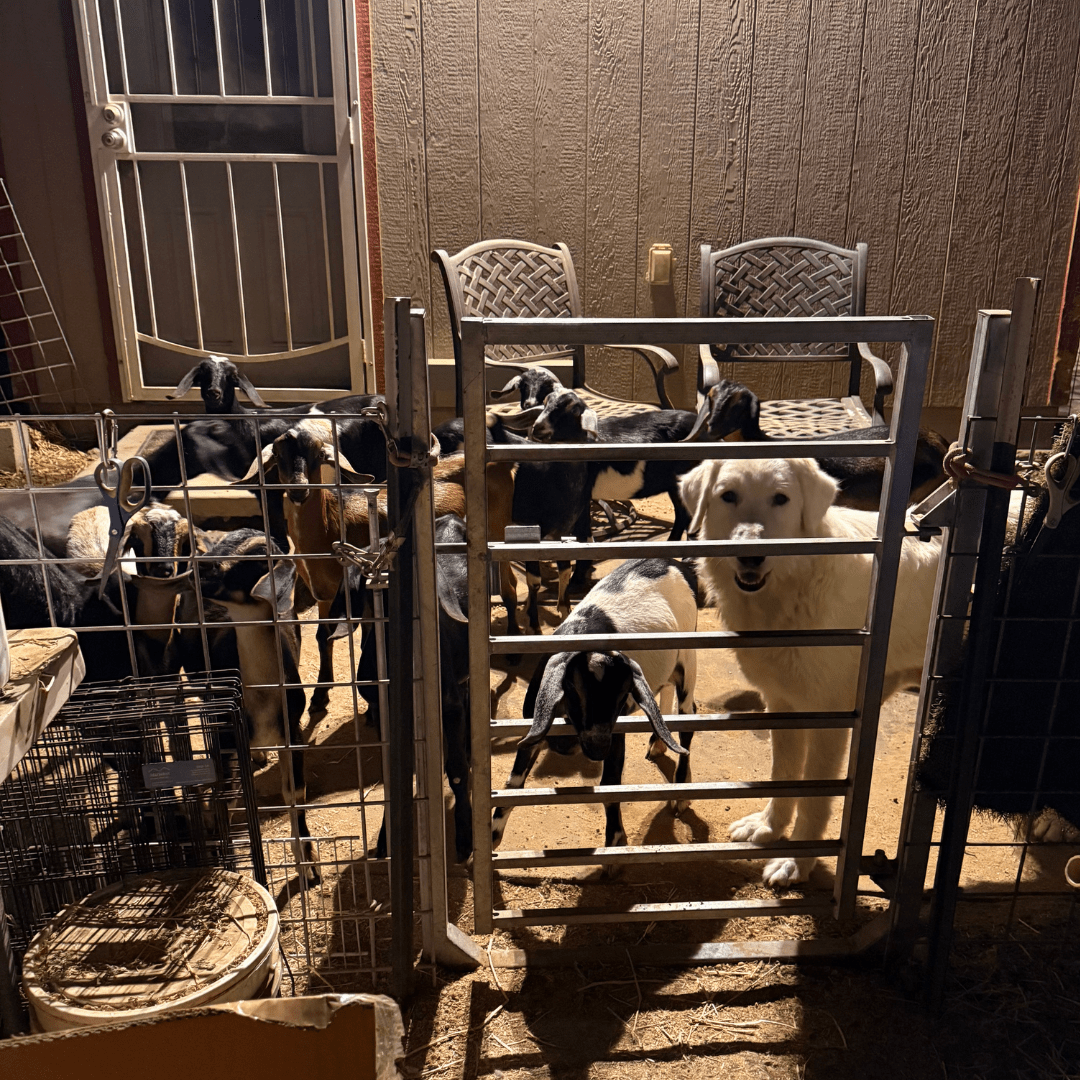
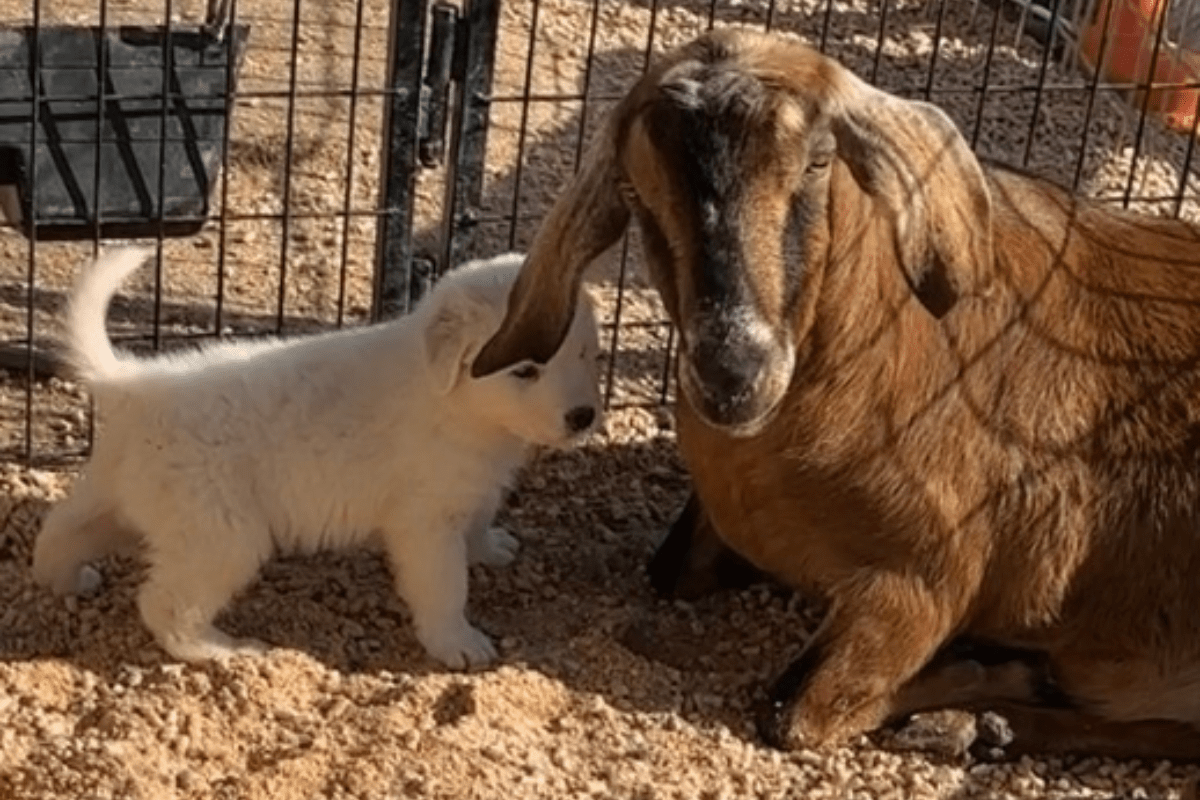
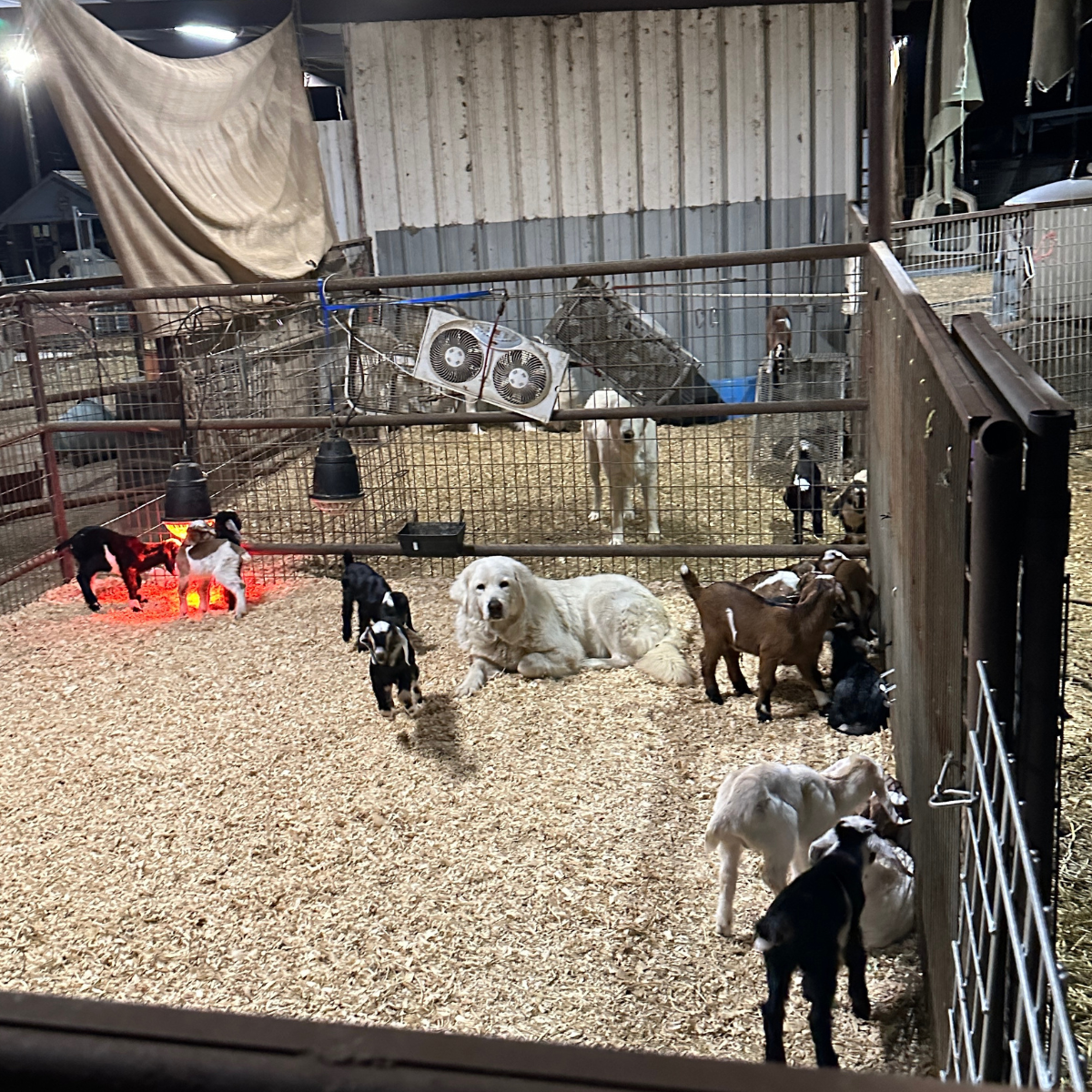
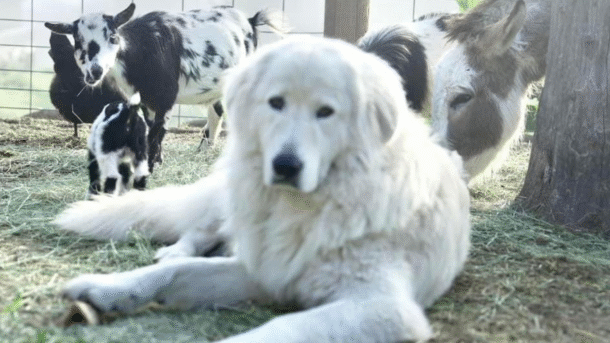
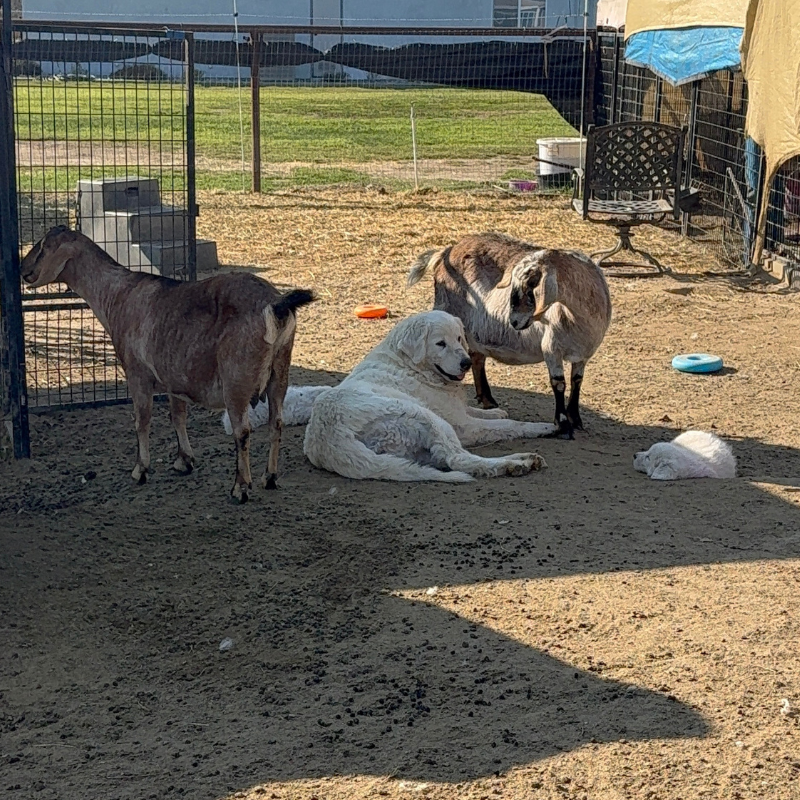
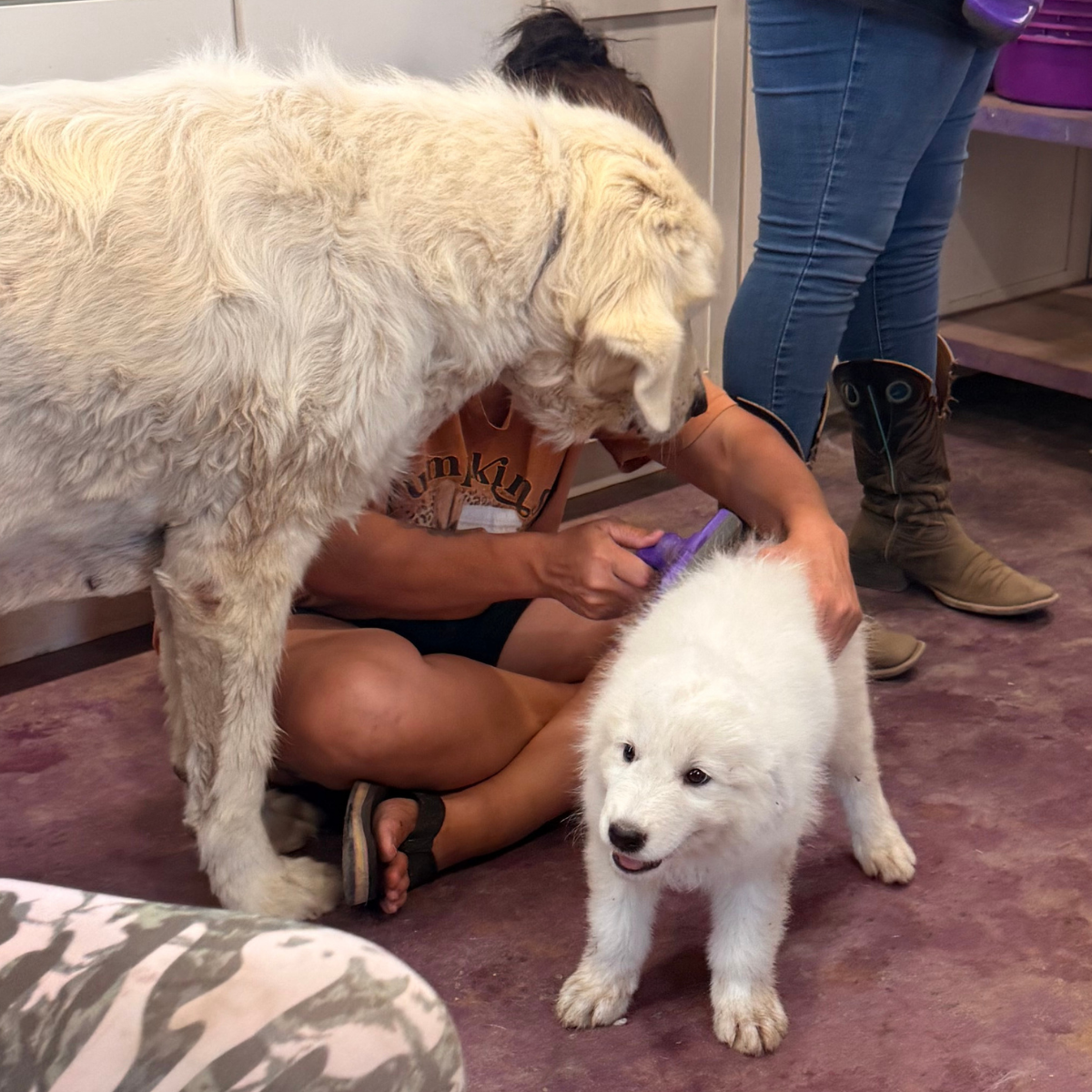
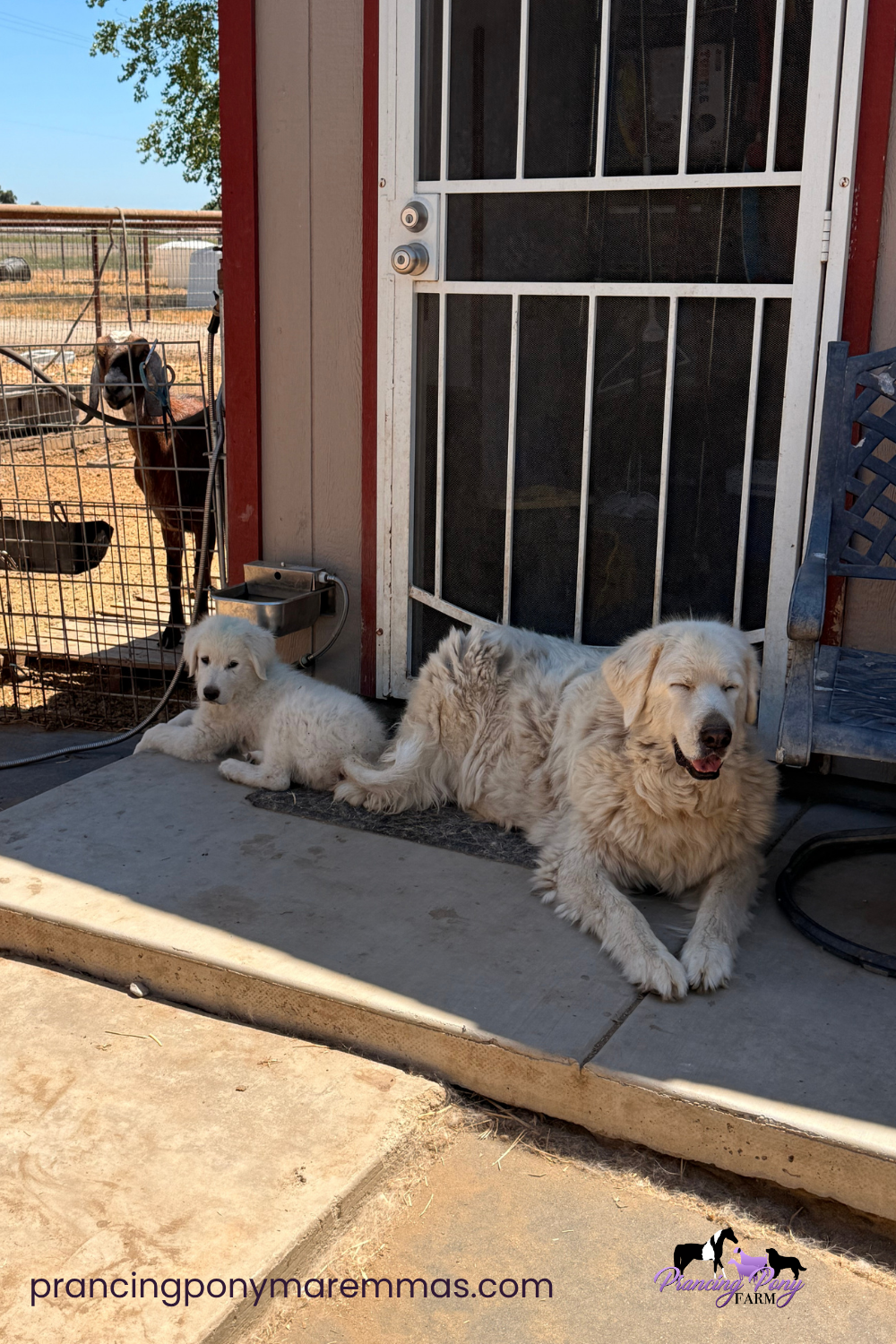
Every litter we raise is mentored by Genevieve — "Auntie Genny" — a 9-year-old Maremma who has spent nearly a decade teaching puppies what a great livestock guardian dog looks like. Not through corrections or dominance, but through calm, confident example. This post introduces her and explains why a mentor dog like her is one of the most valuable things in our program.
The Most Important Window — Livestock Bonding and Integration (Weeks 4–12)
There is a developmental window — roughly weeks 3 through 12 — during which puppies form their deepest bonds and establish what is normal and safe in their world. What happens in this window matters more for lifelong behavior than all the months and years that follow combined. Miss it, and no amount of later exposure can fully compensate. Use it well, and you've laid a foundation that lasts a lifetime.
This is why livestock bonding during this period isn't just a nice feature of our program. It's the whole point.
Some breeders send puppies home at 8, 10 or 12 weeks with little or no livestock exposure, leaving that work to the new owner. But the socialization window doesn't follow the puppy to their new home — it's closing whether anyone uses it or not. A puppy placed at 8 weeks with minimal livestock exposure has a narrow runway left. A puppy placed at 12 weeks with no livestock foundation has none. The window is simply gone. No amount of later exposure can replicate what should have happened in those early weeks on the breeder's farm. That's not a gap the new owner can close — it's a gap the breeder created.
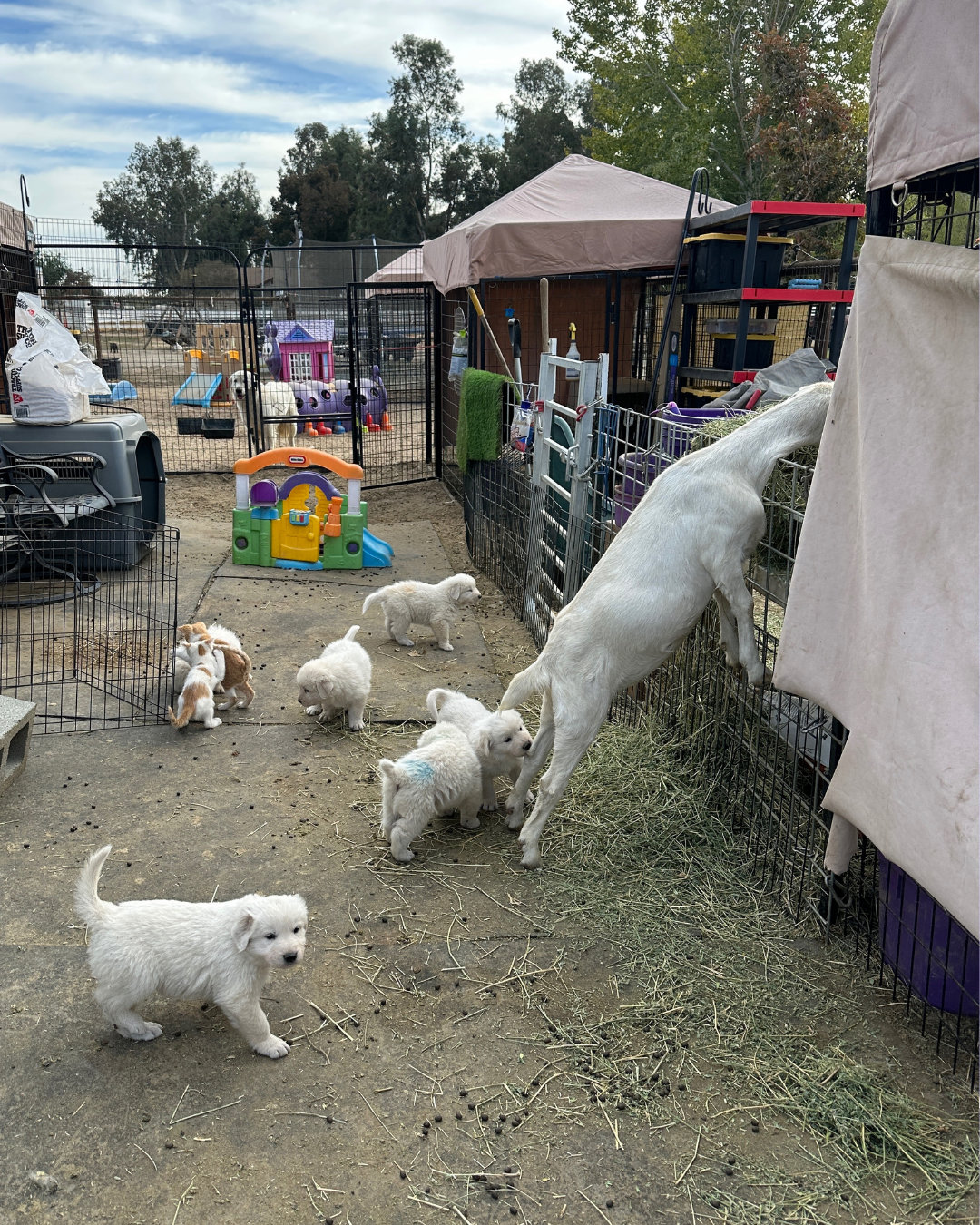
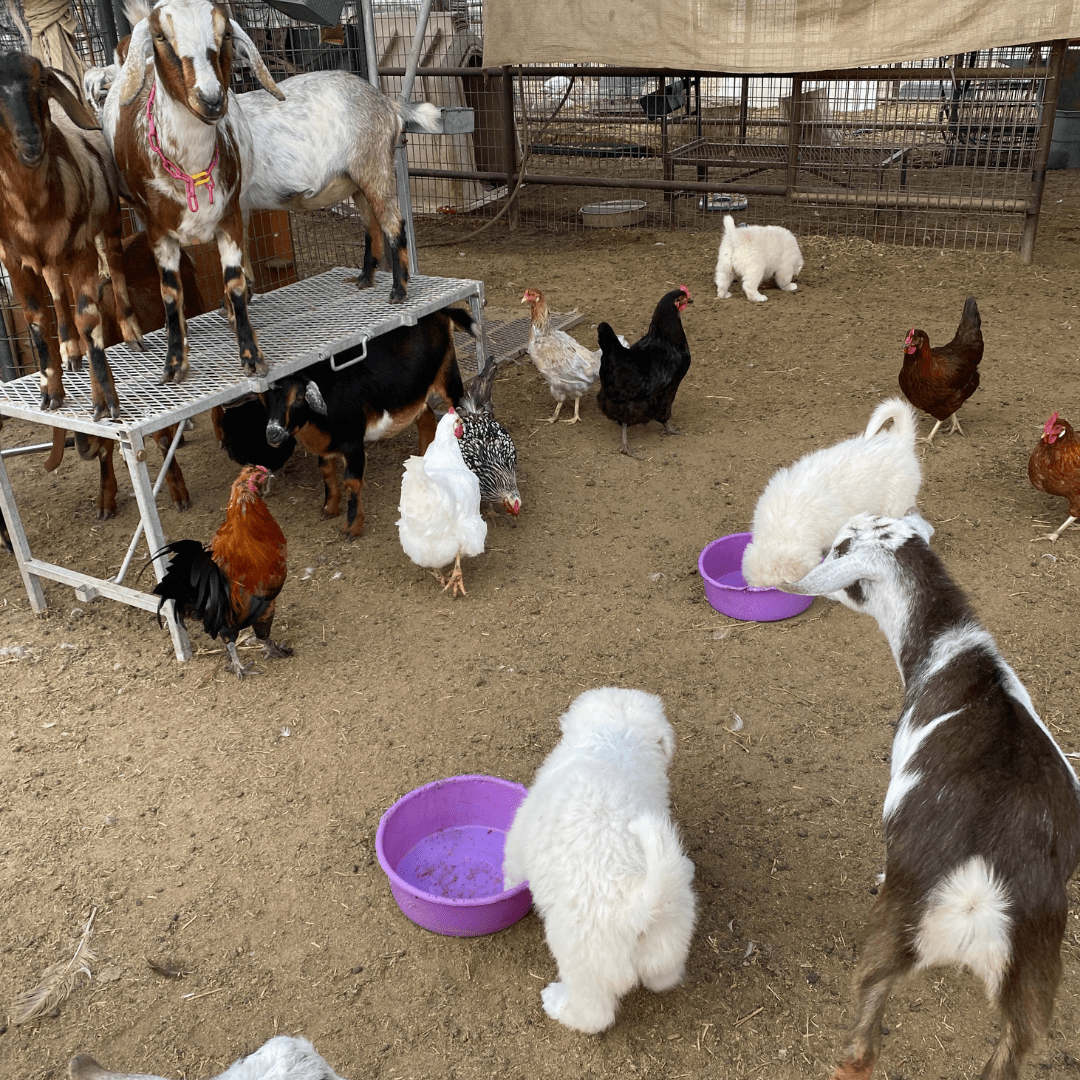
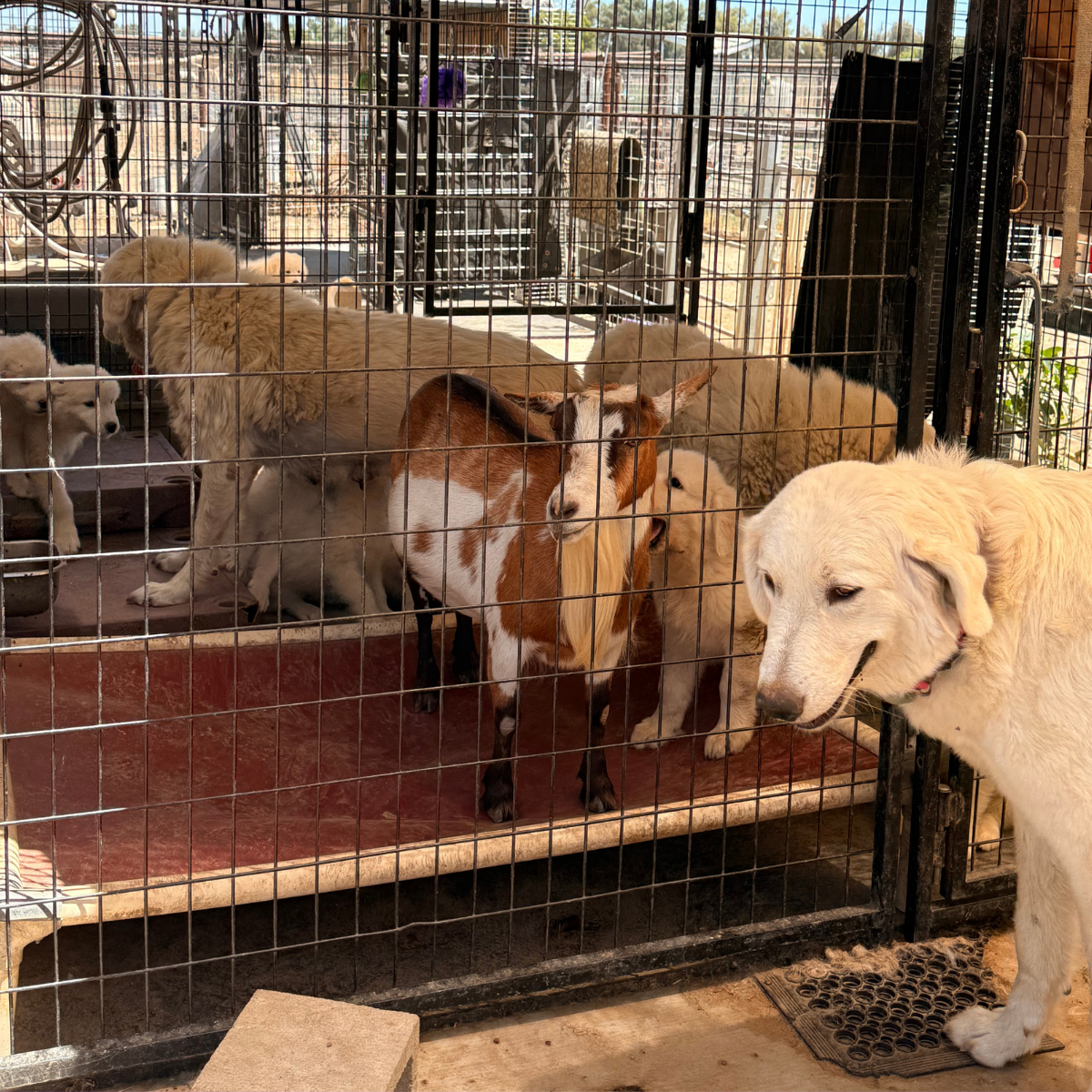
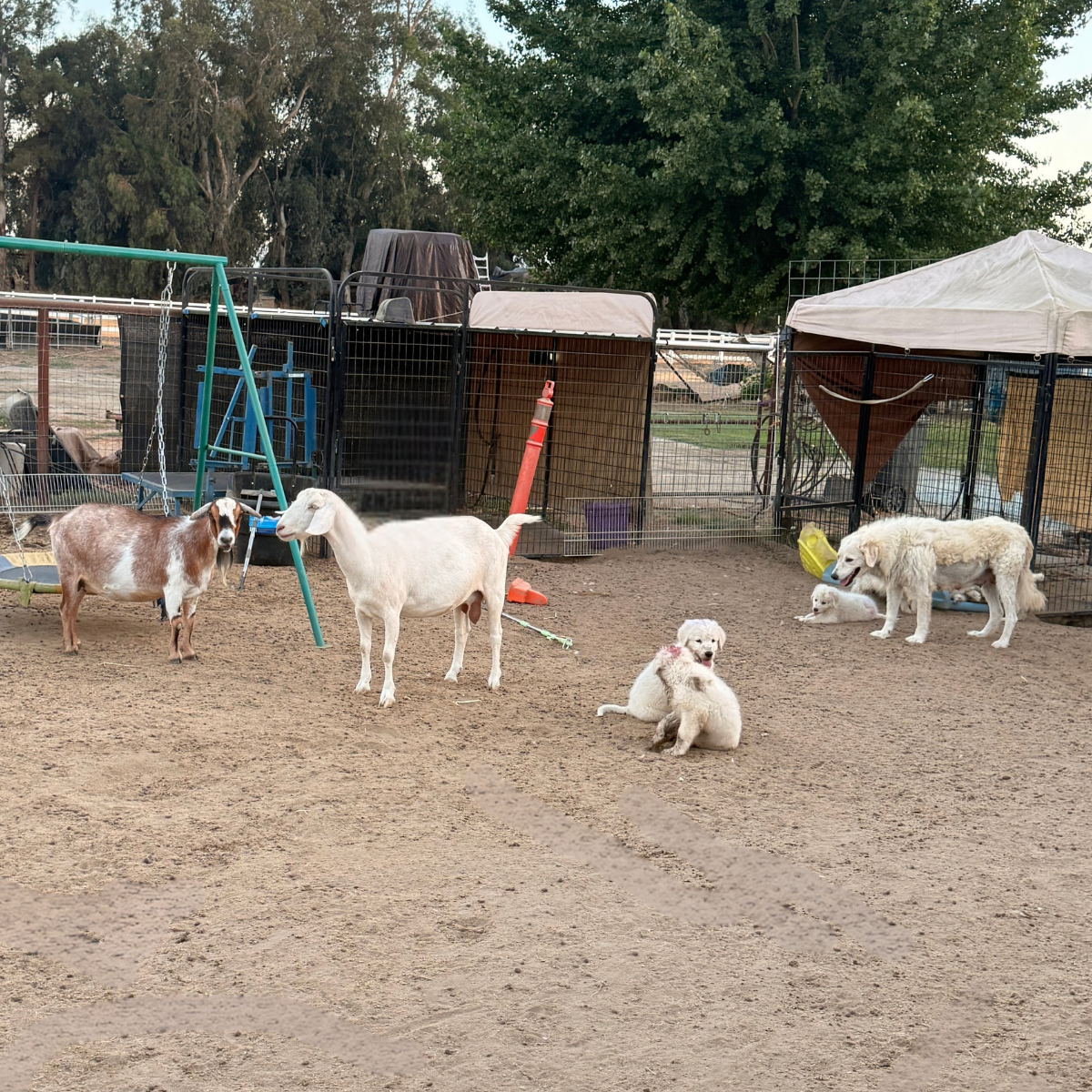
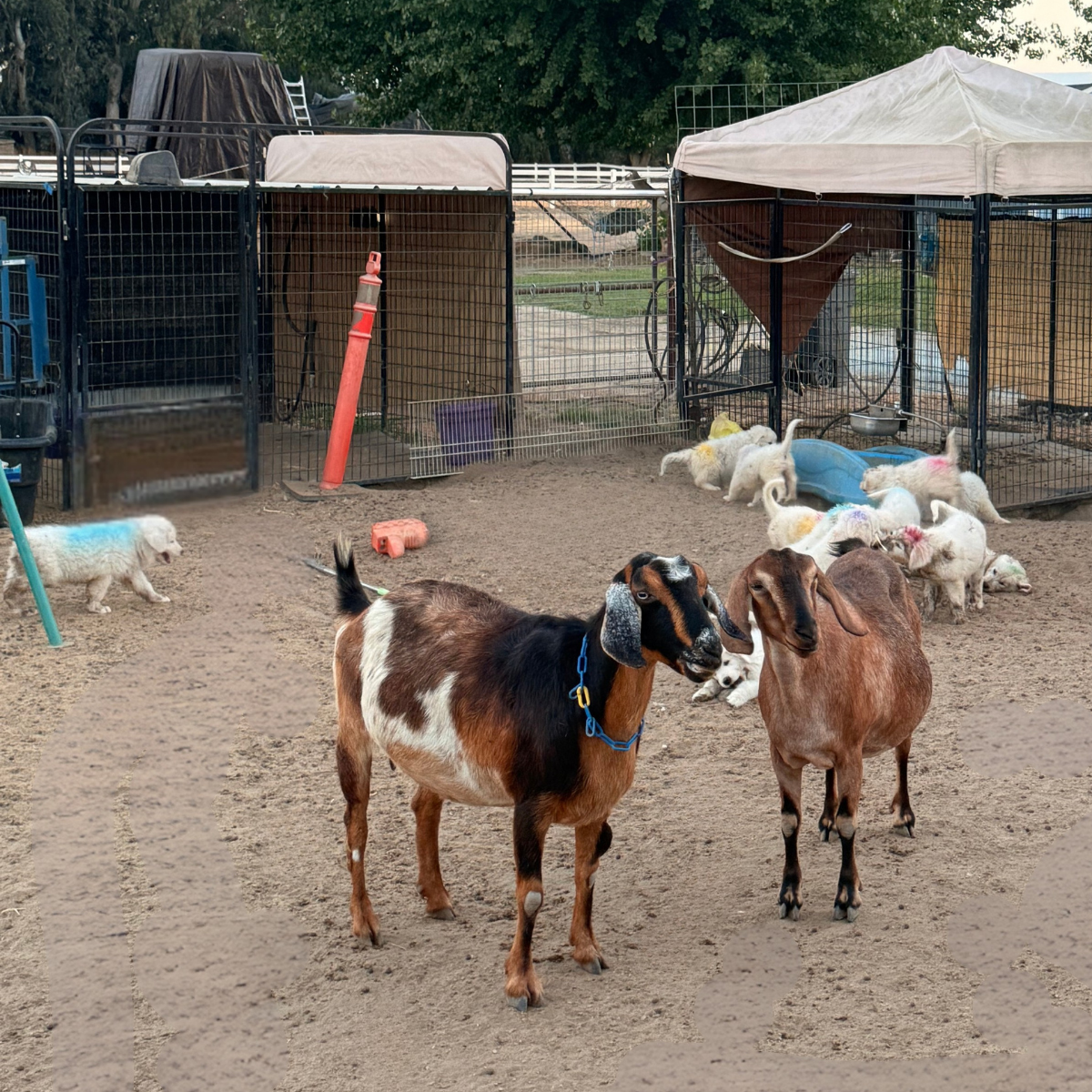
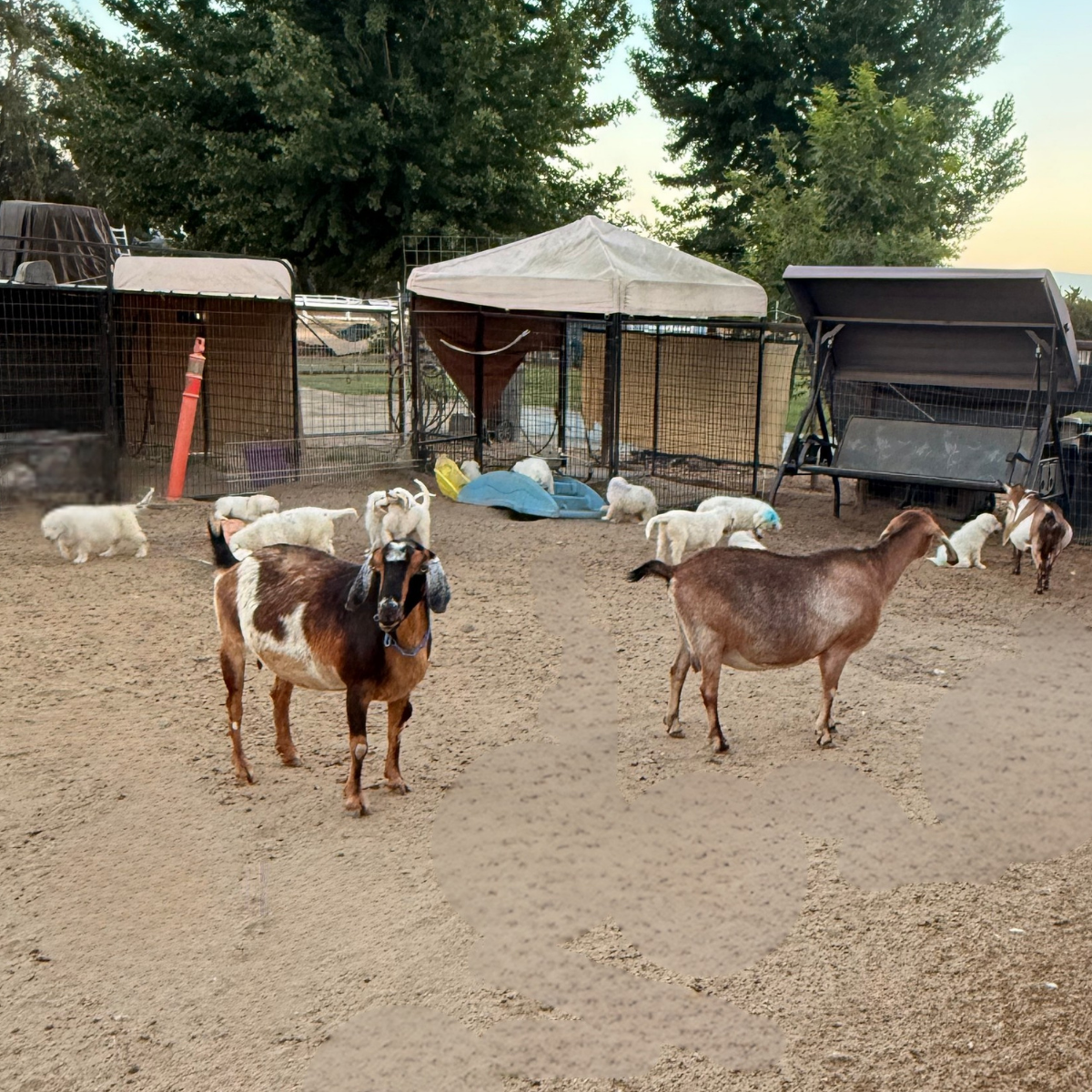
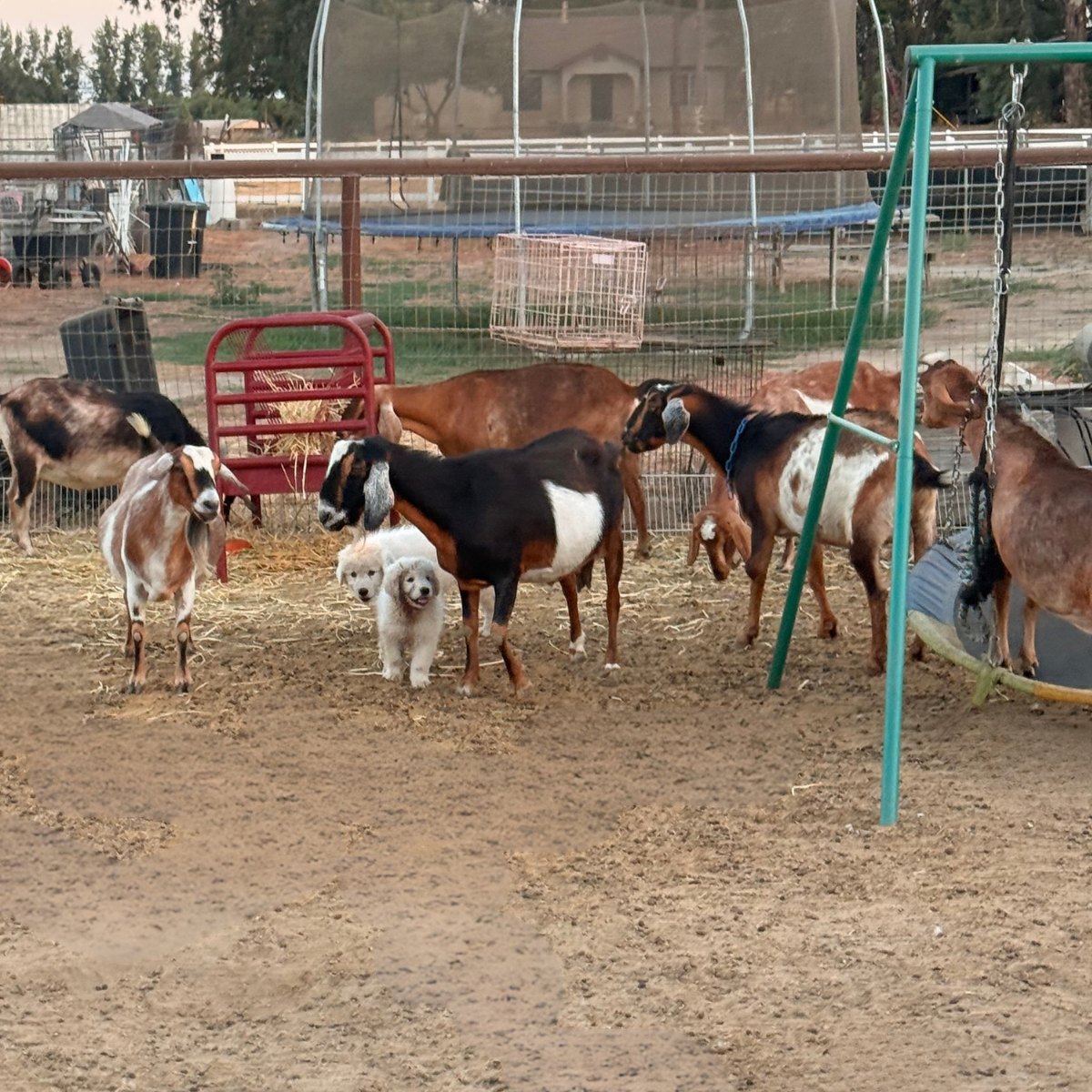
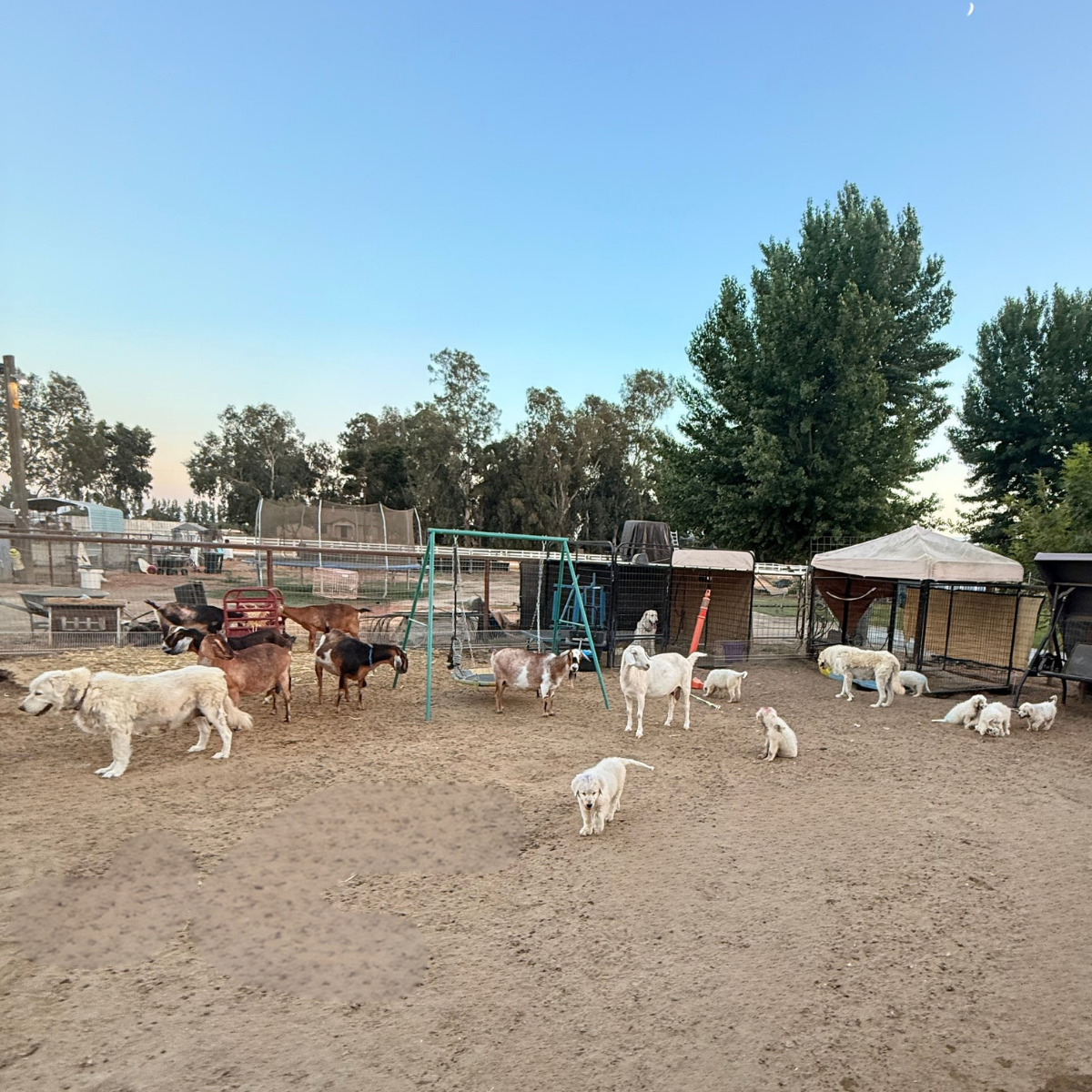
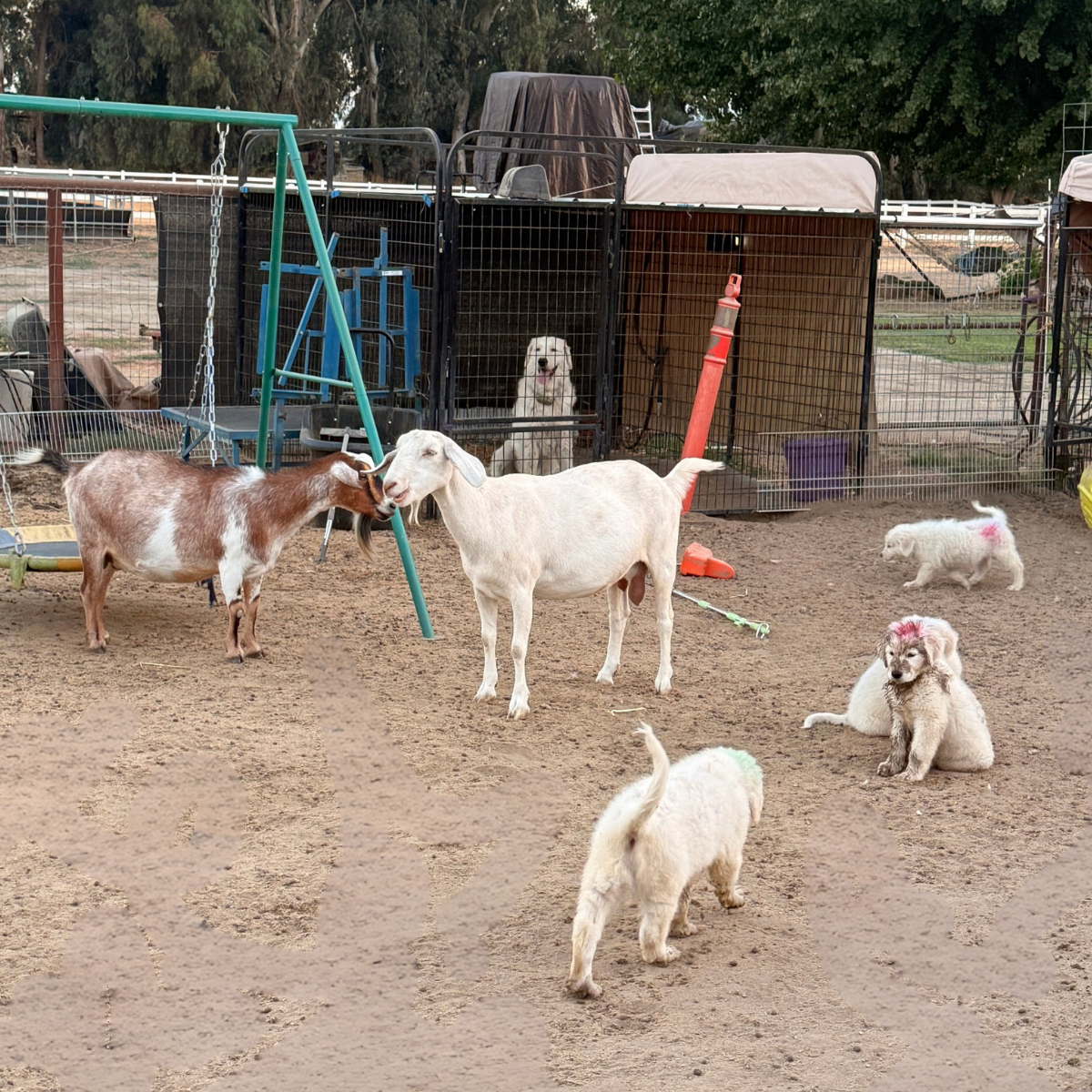
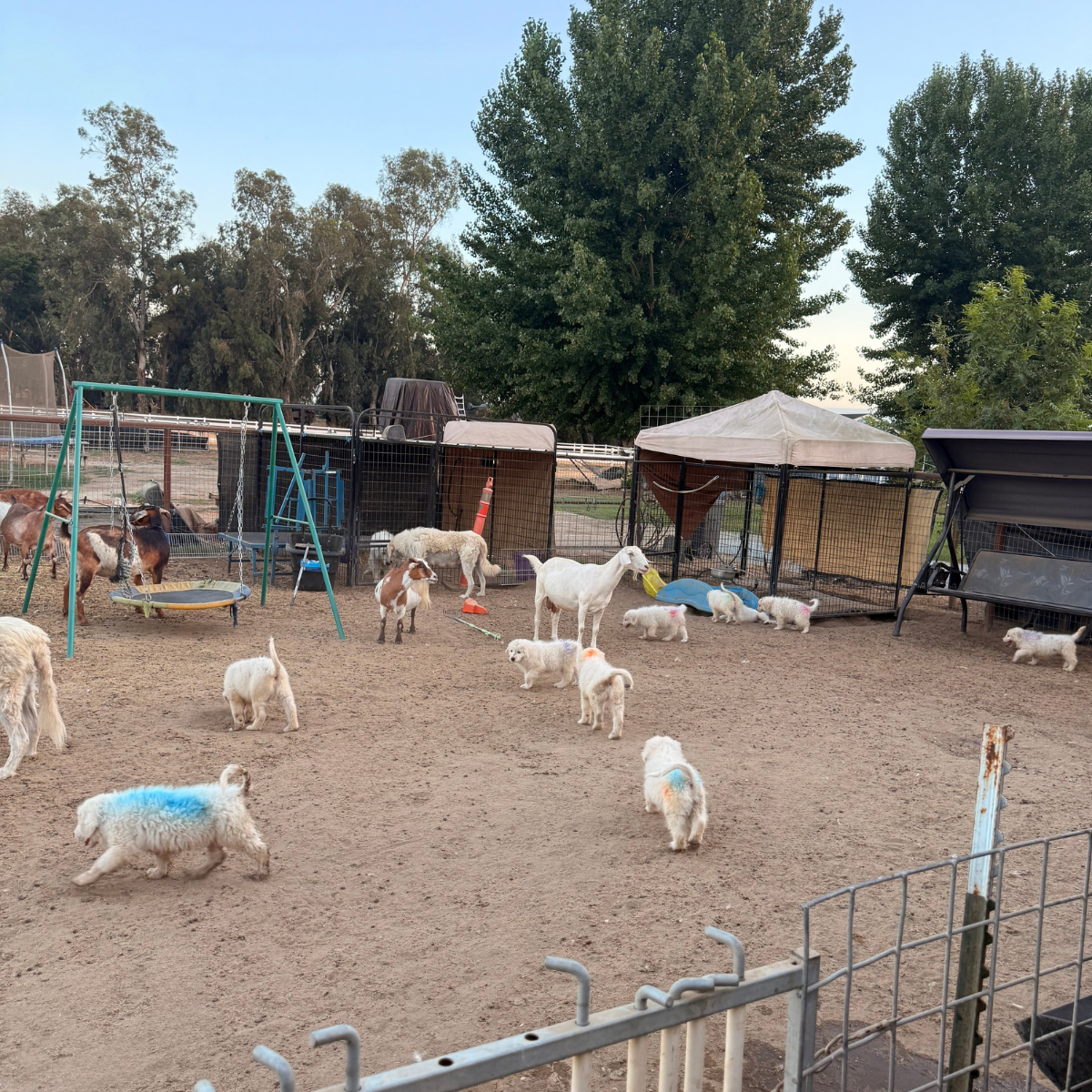
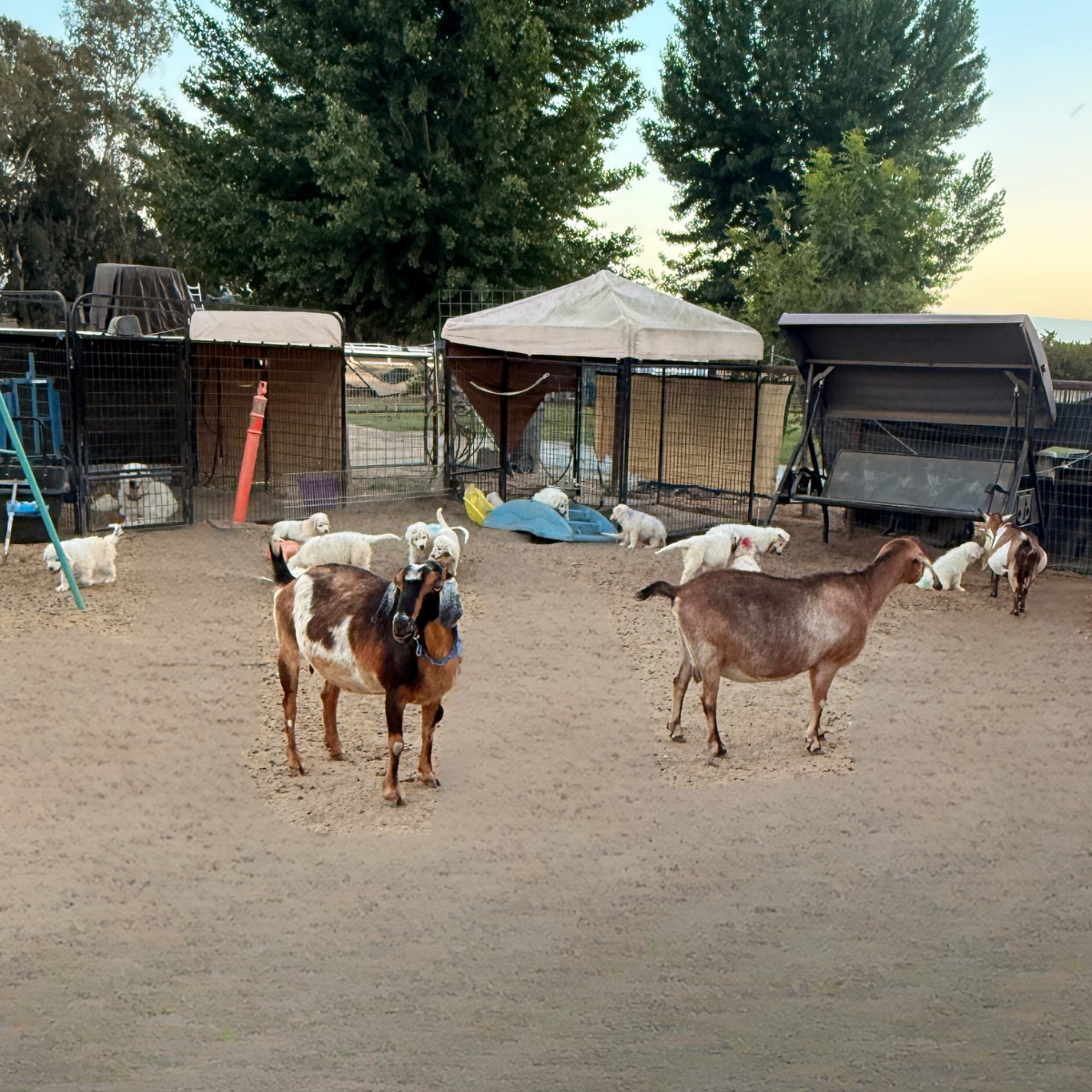
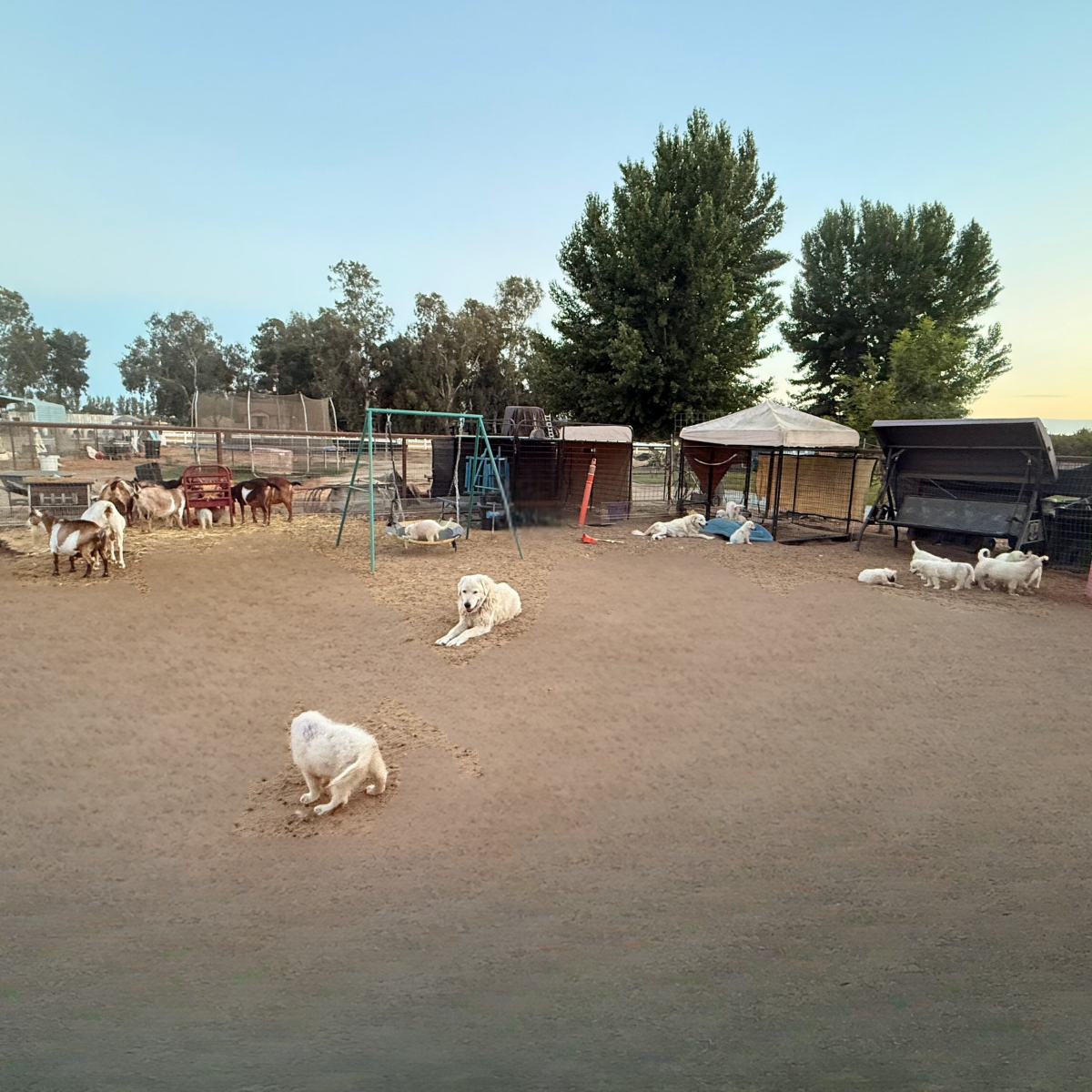
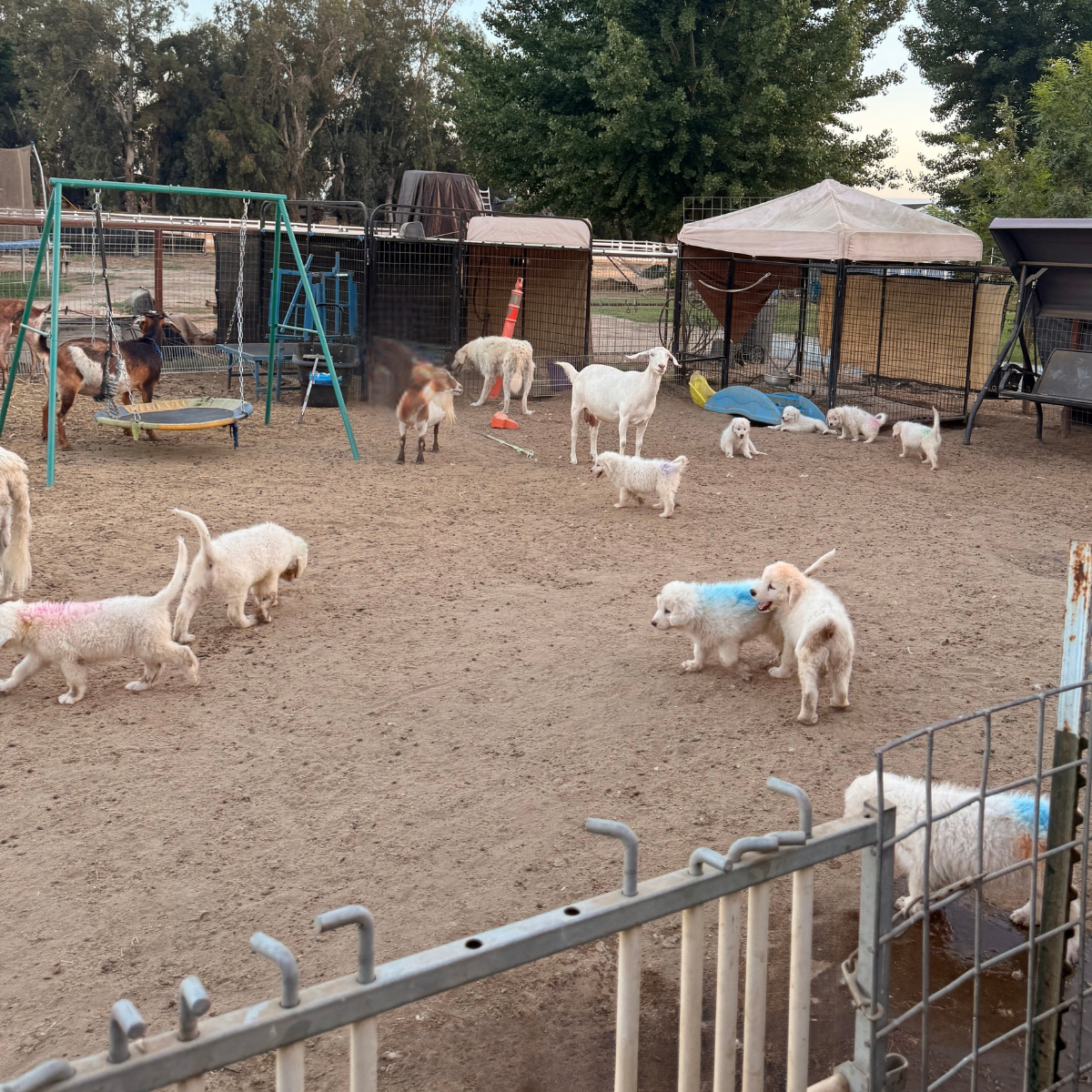
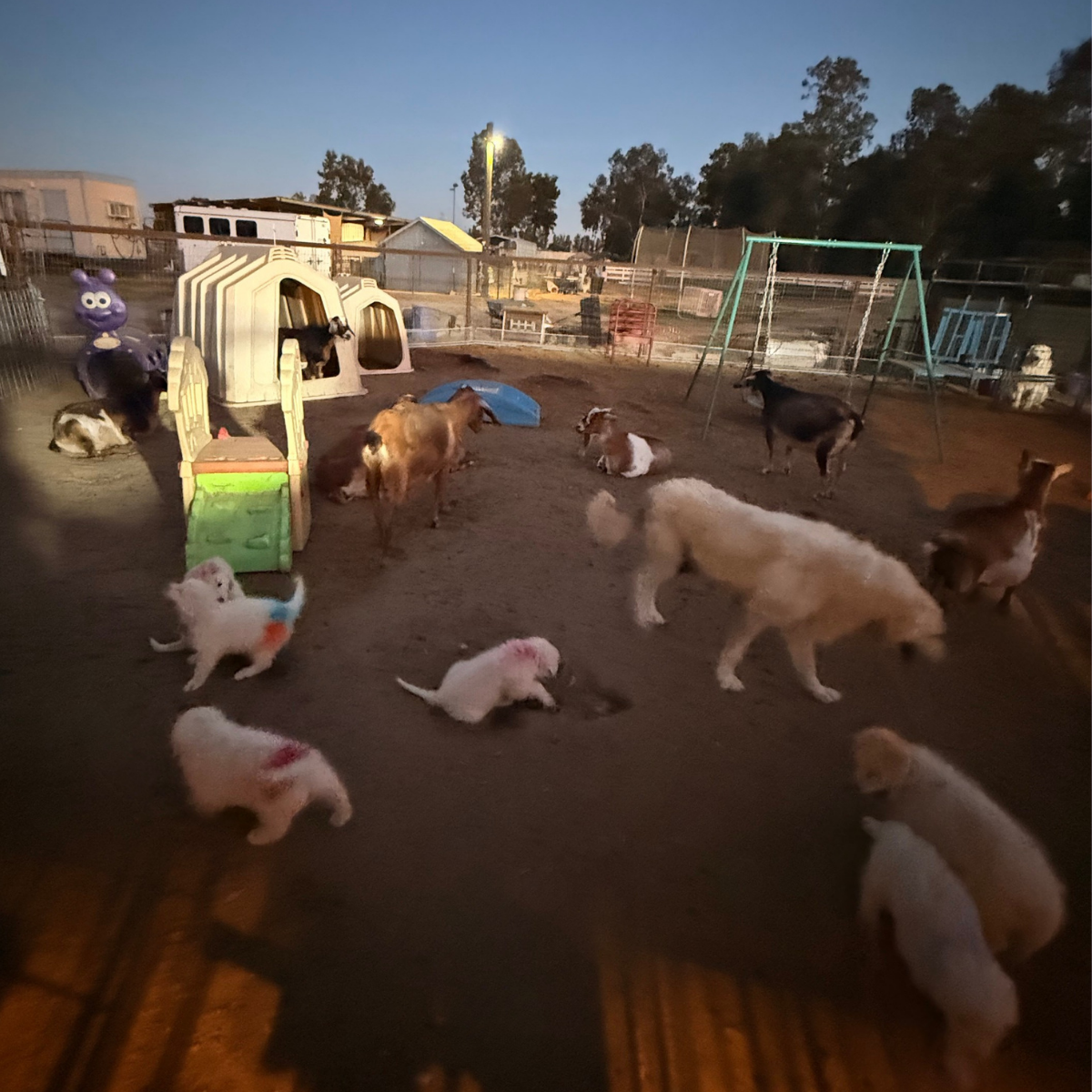
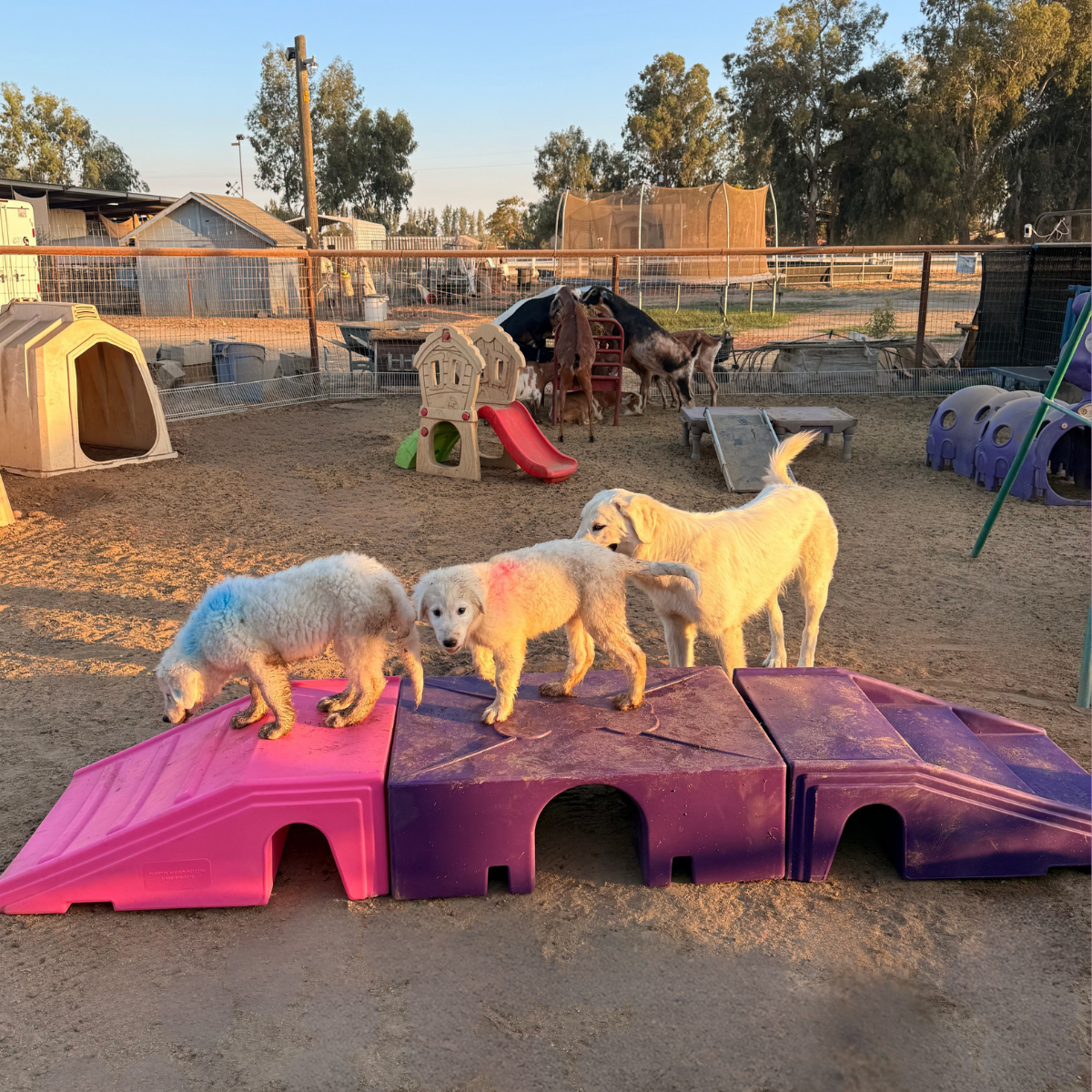
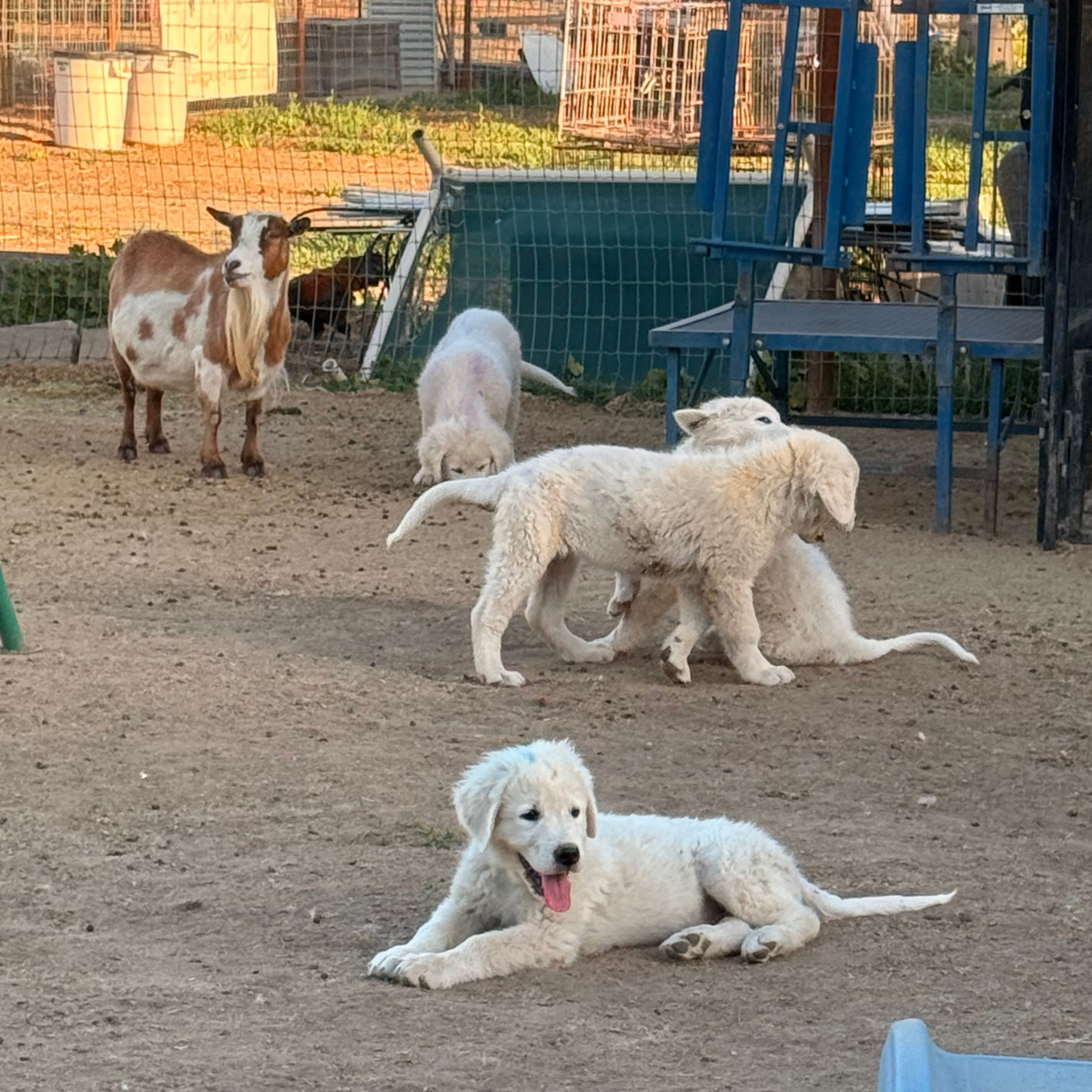
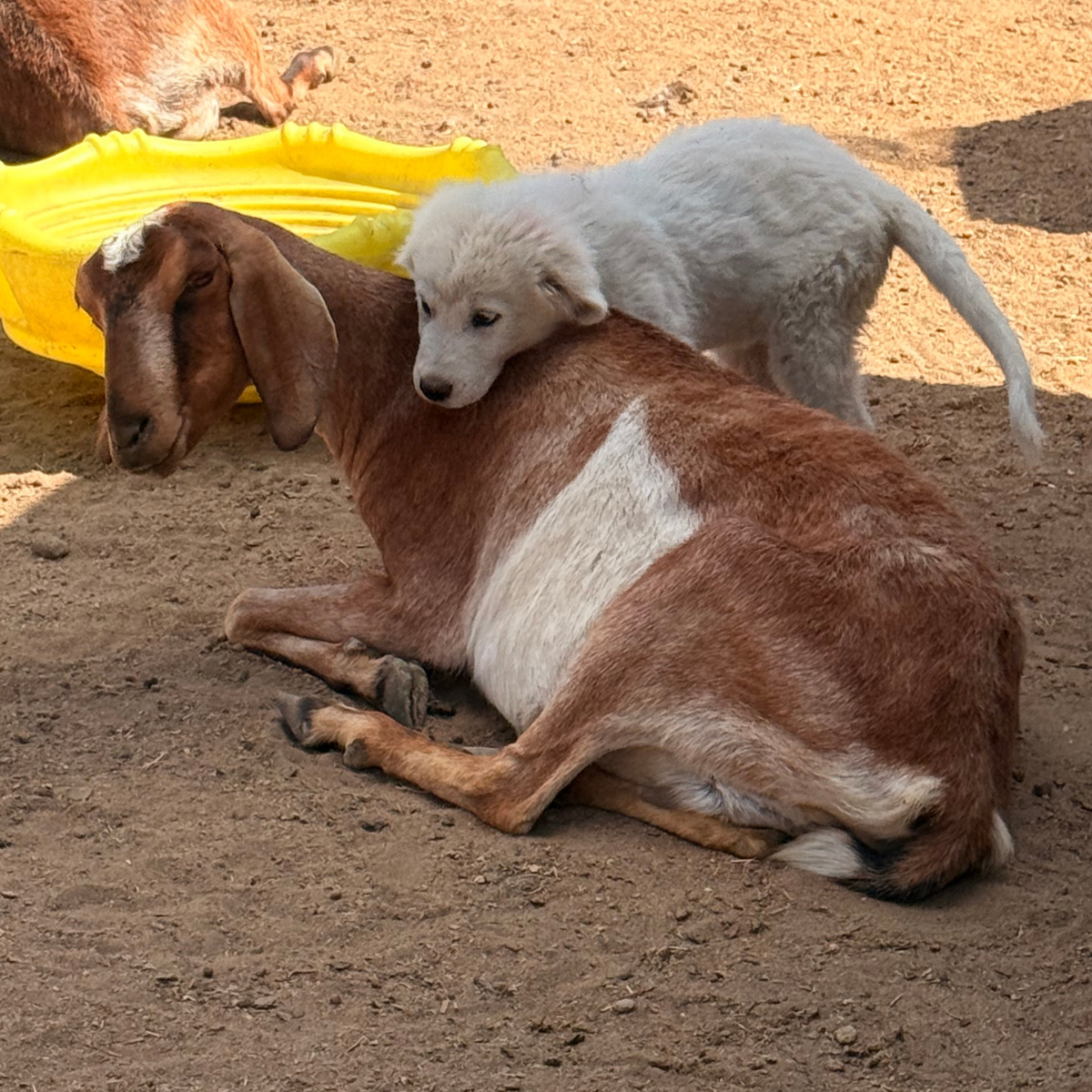
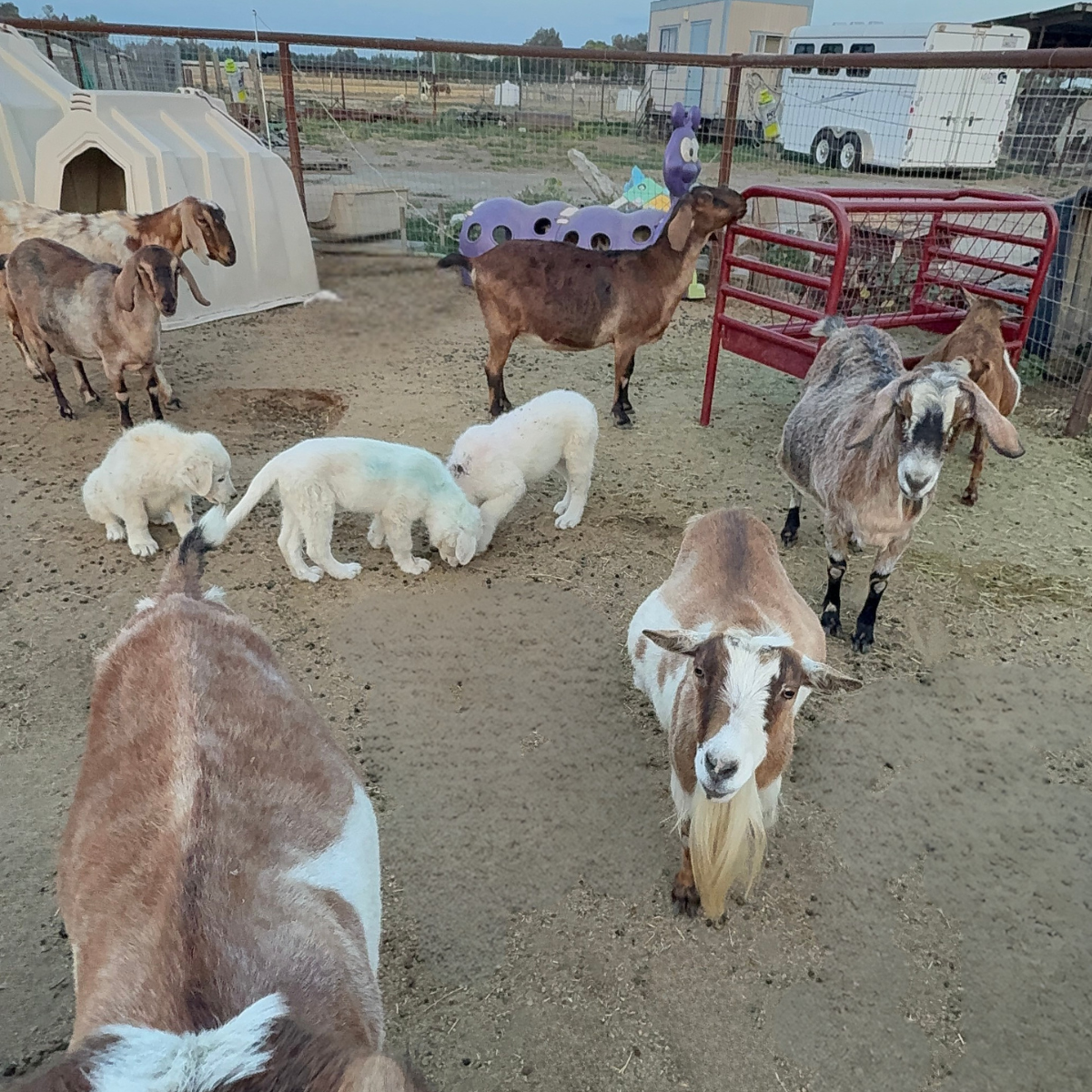
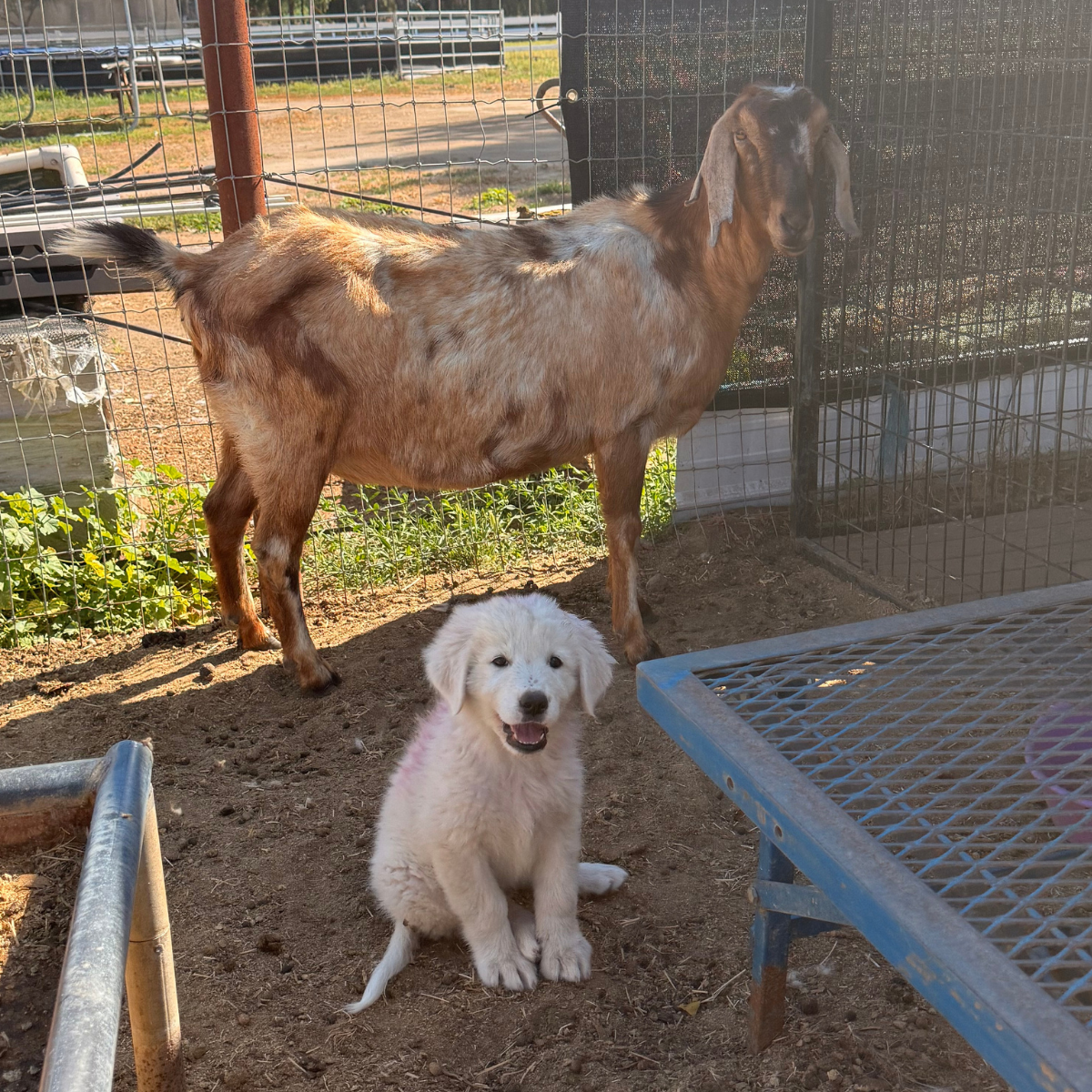
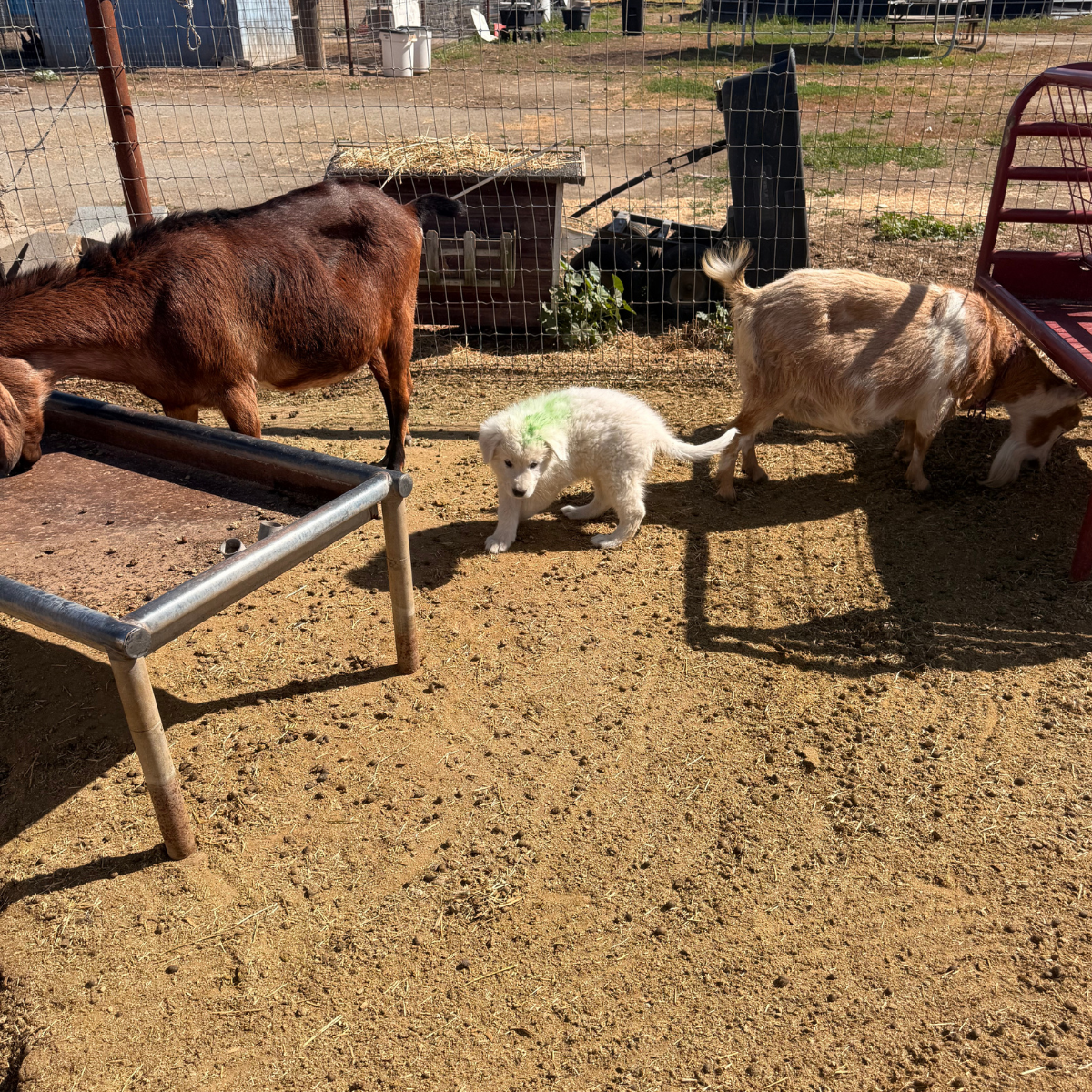
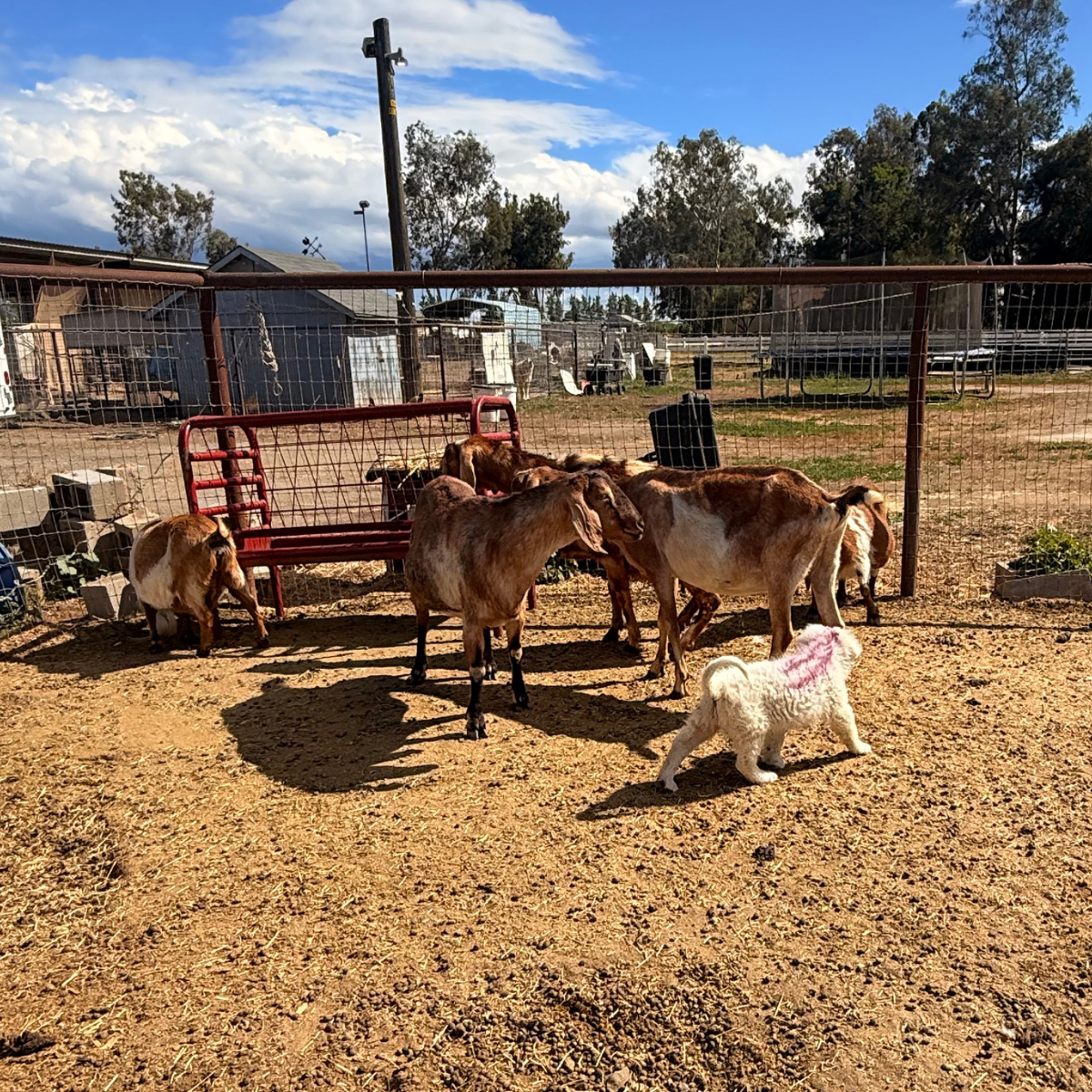
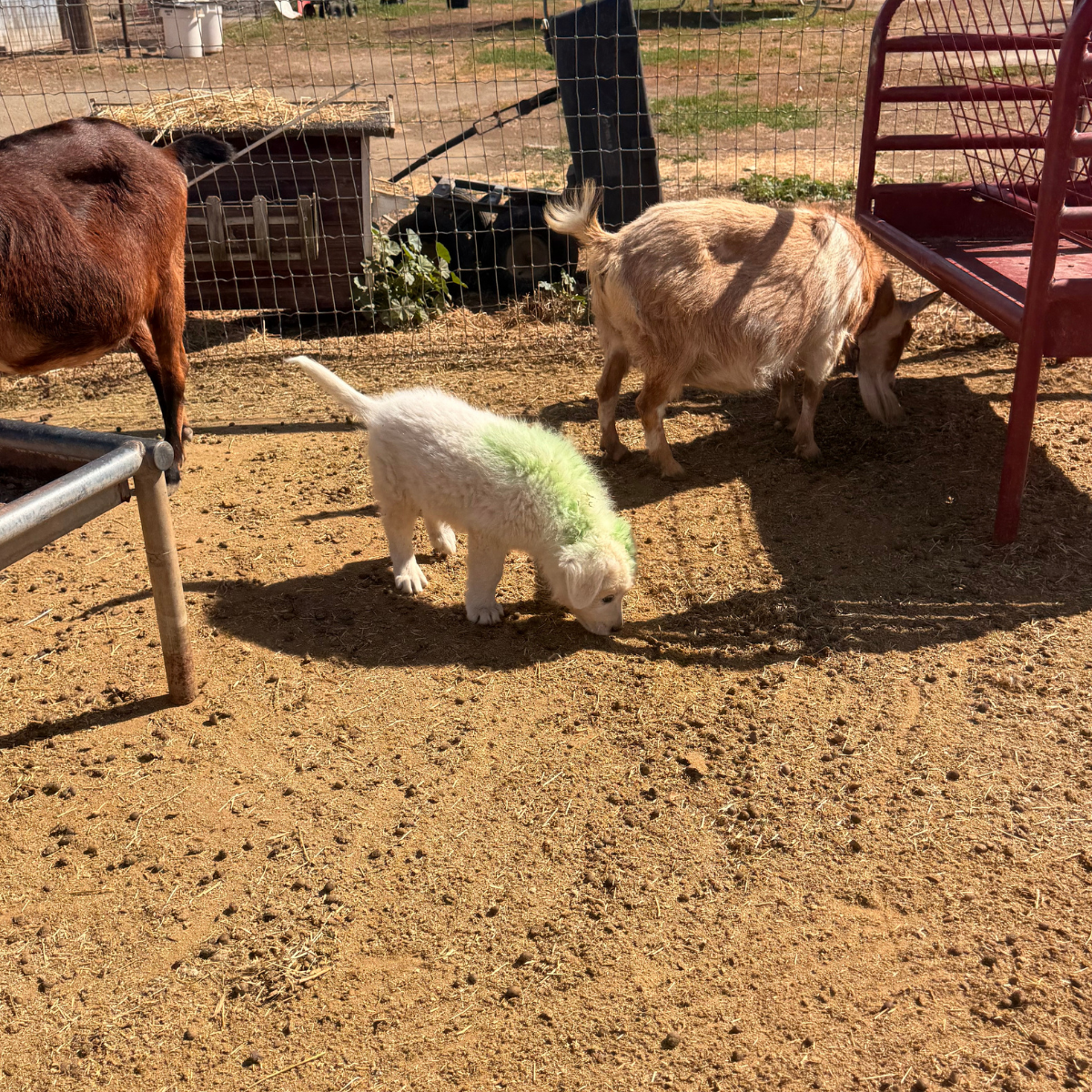
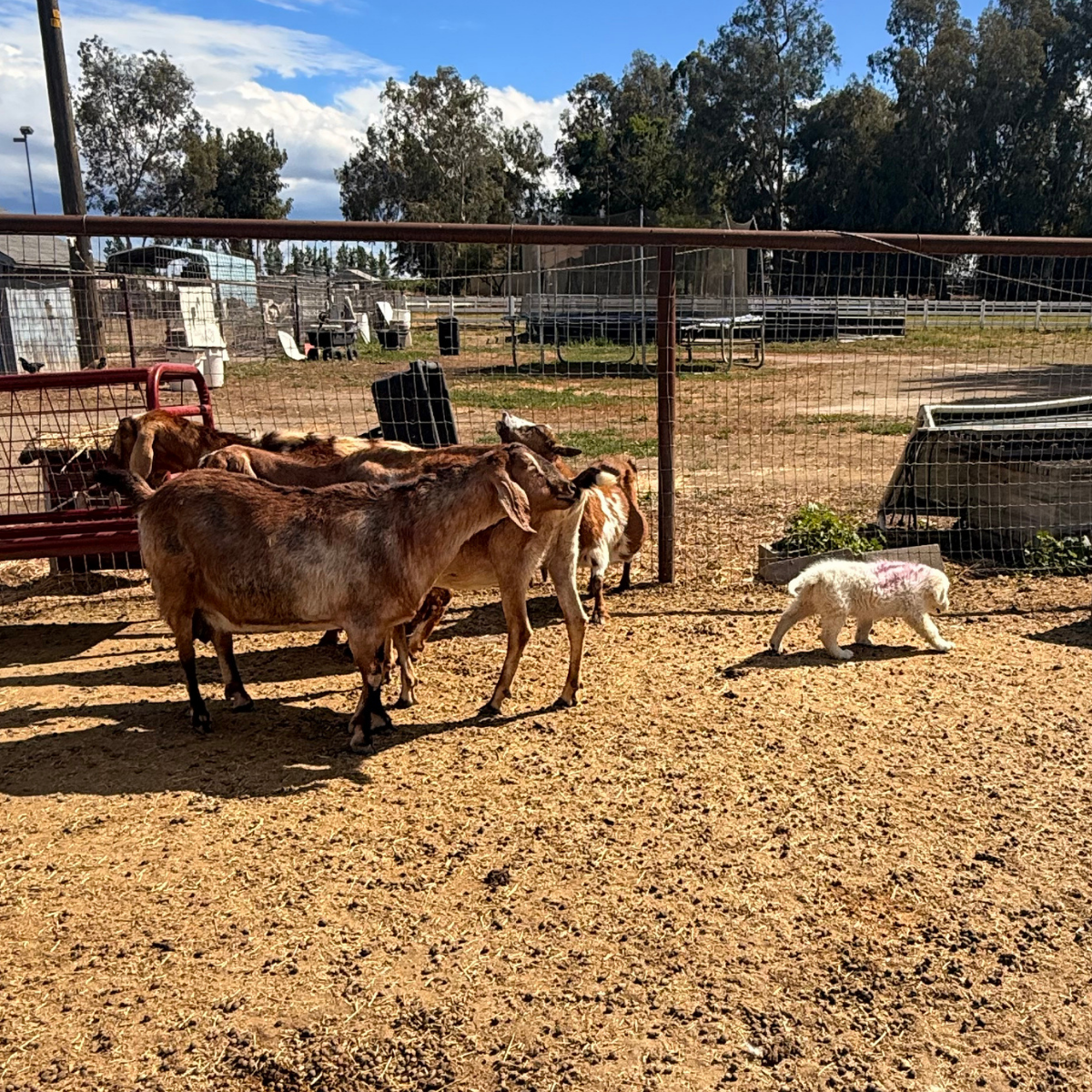
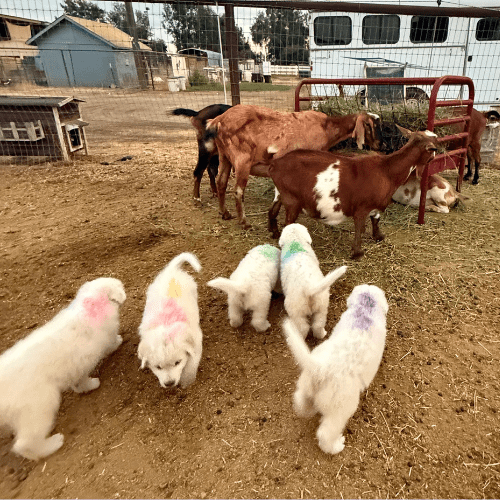
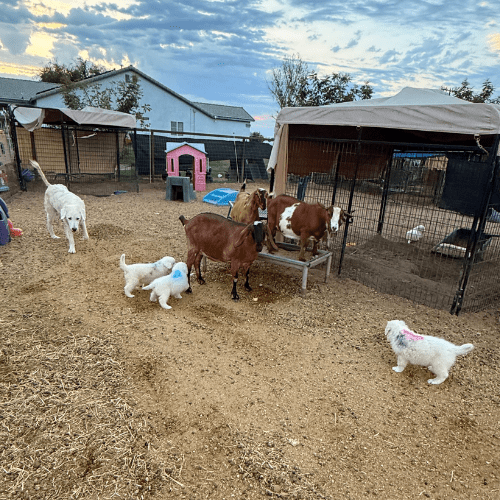
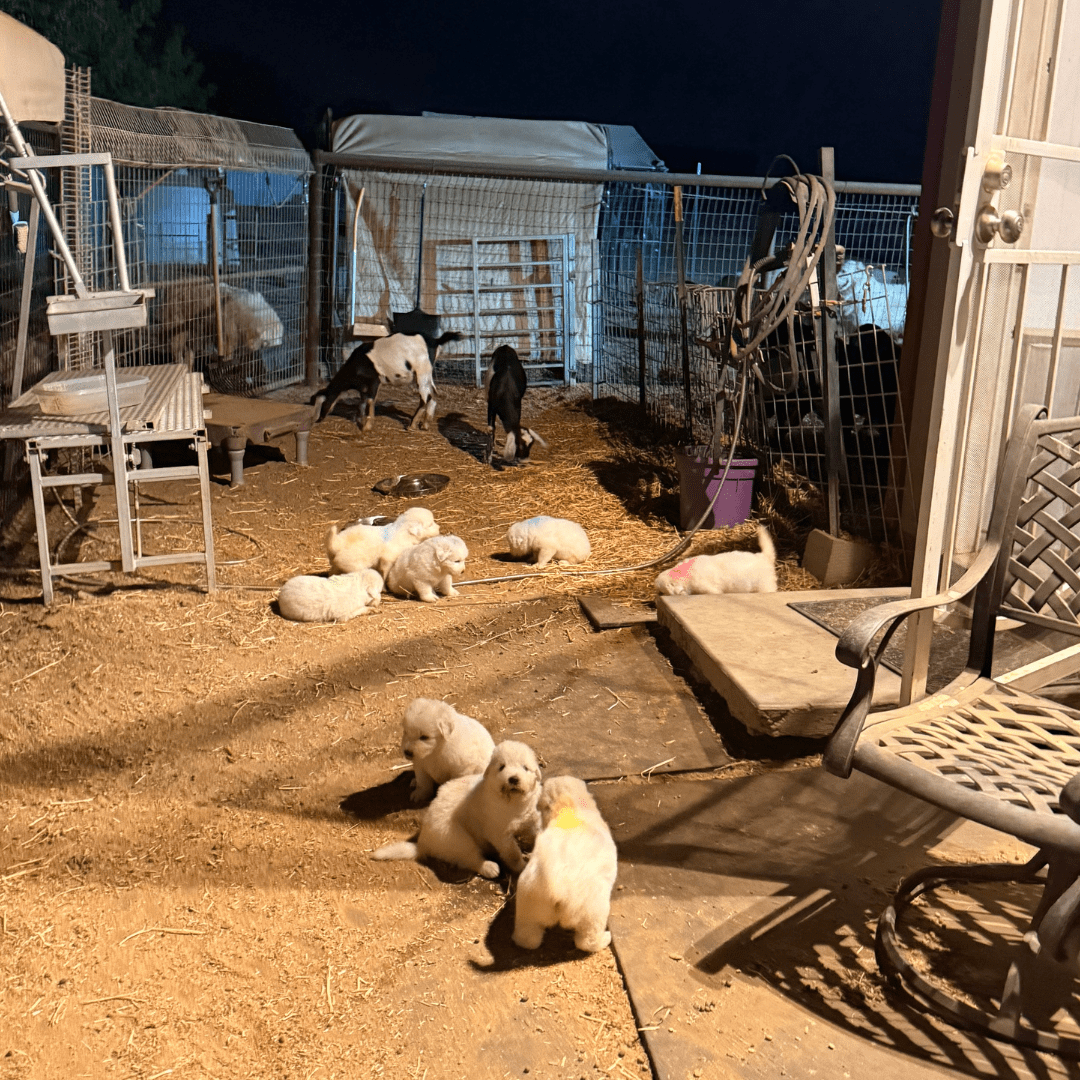
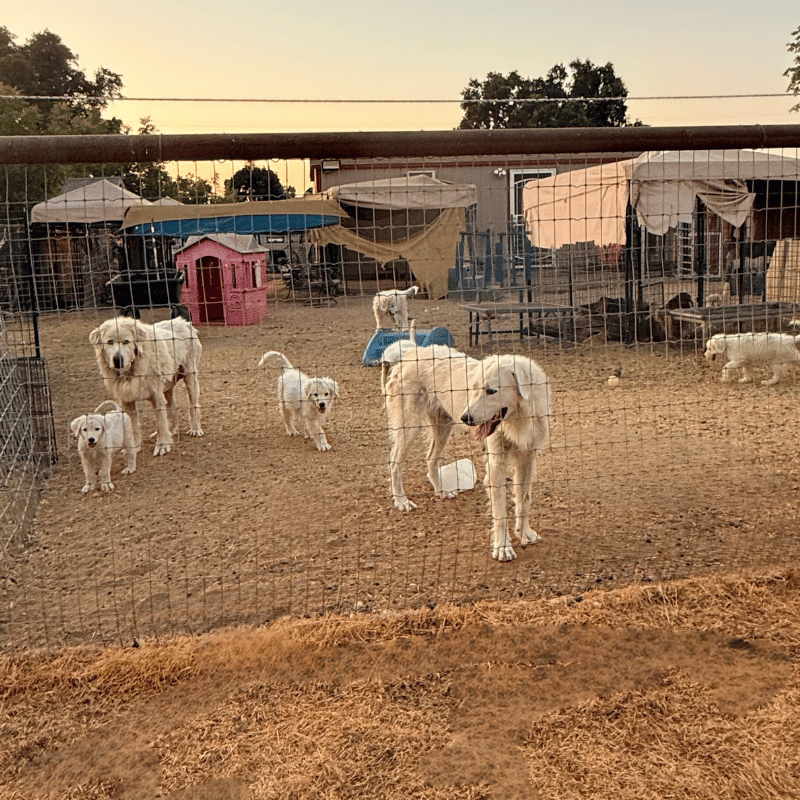
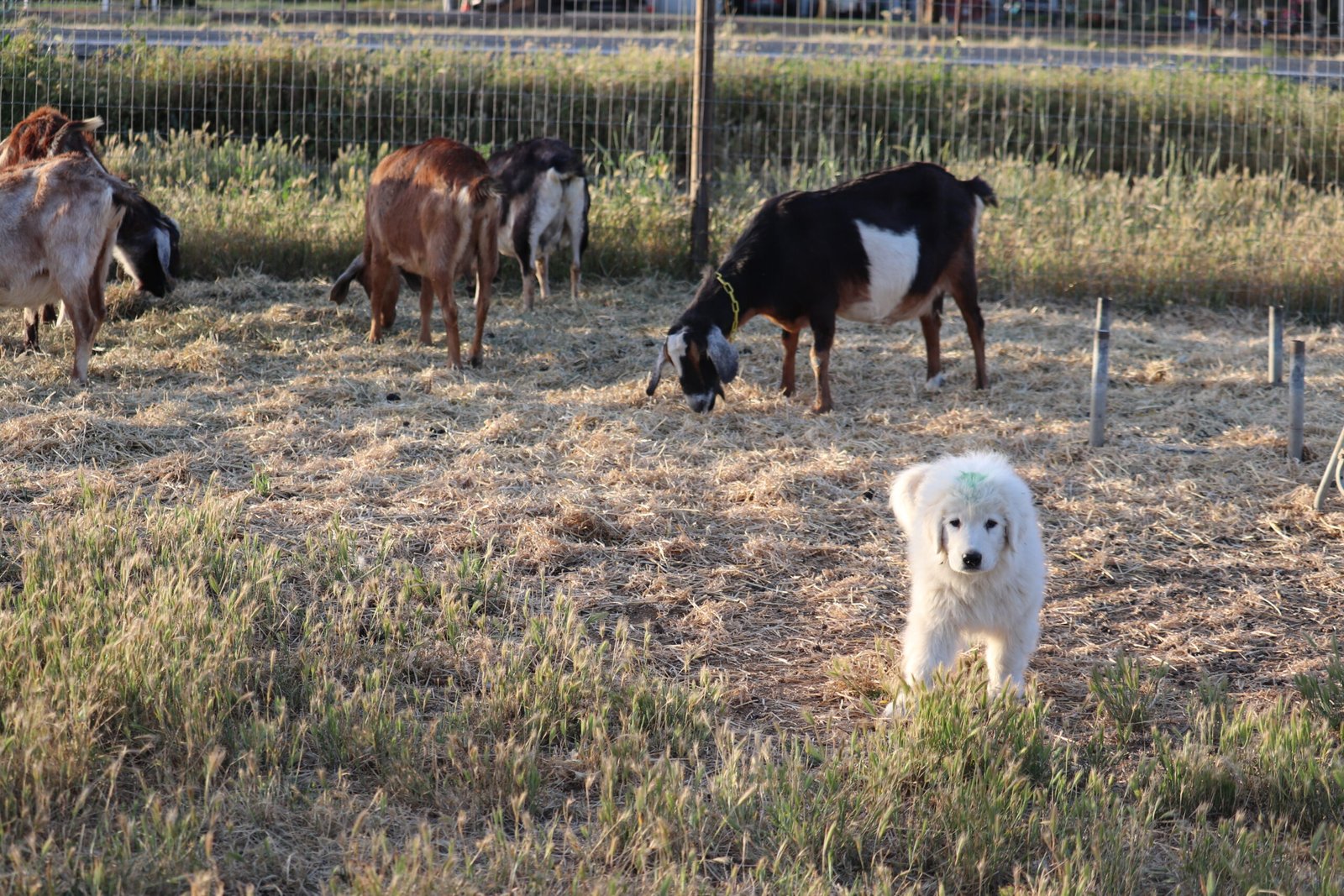
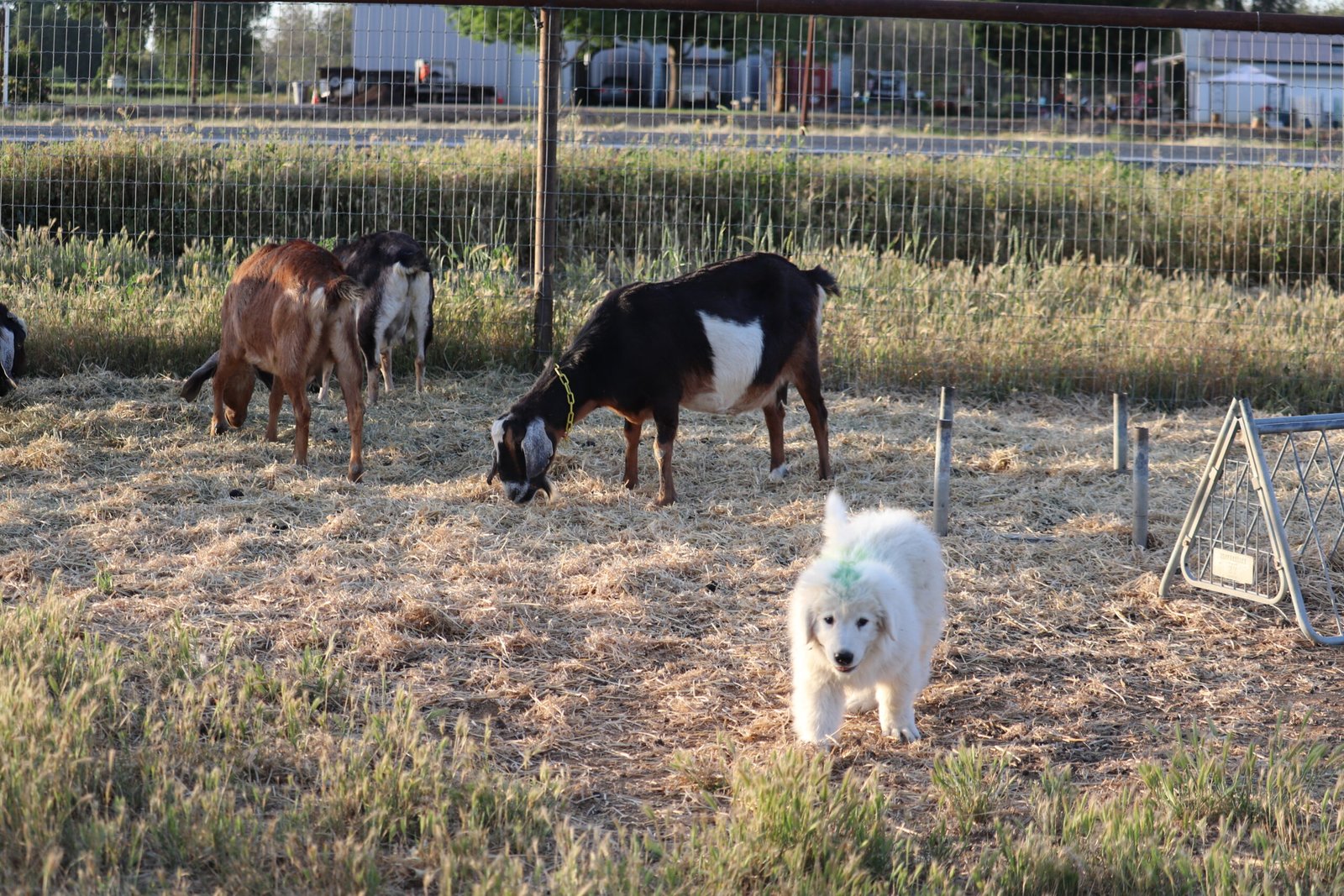
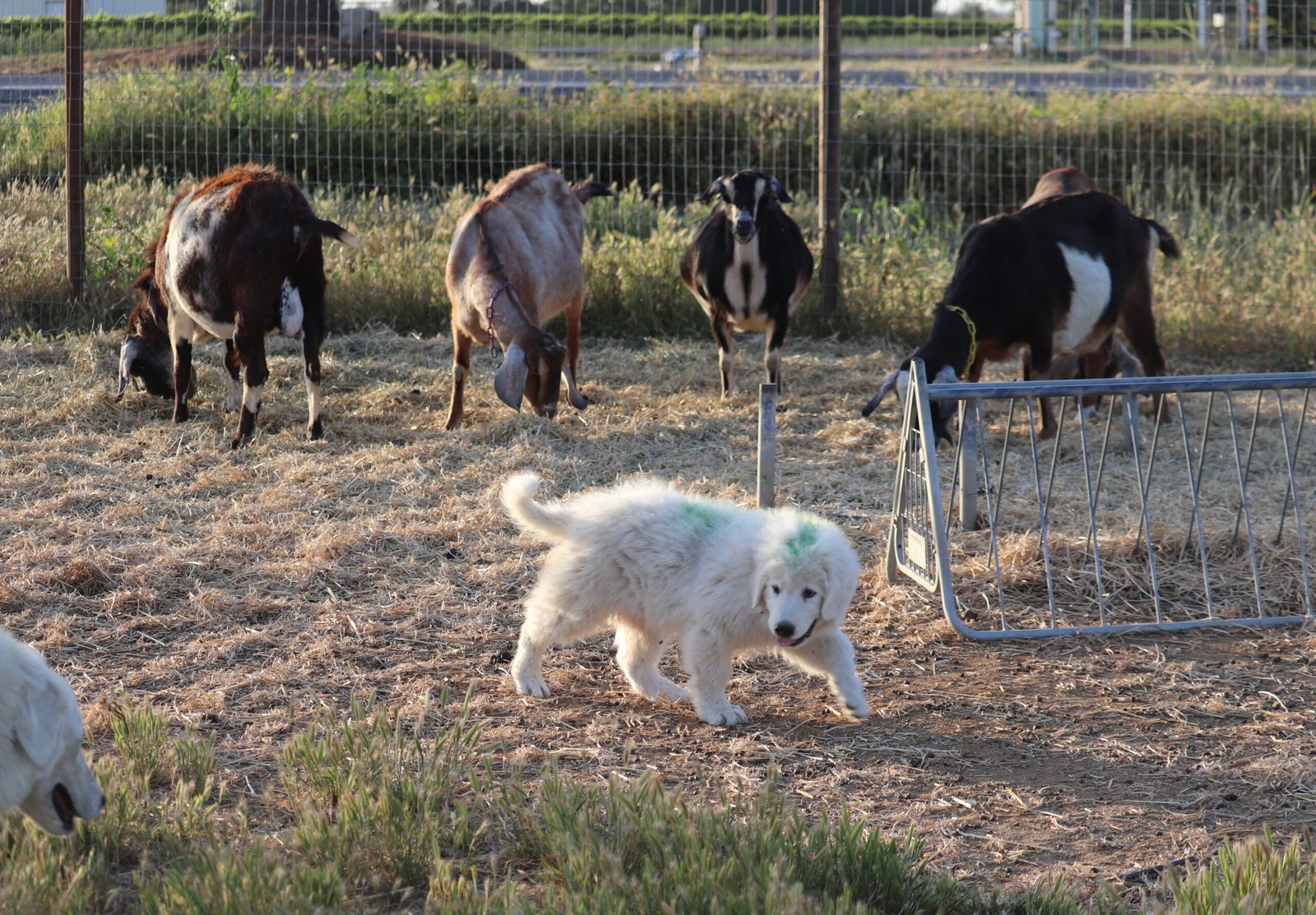
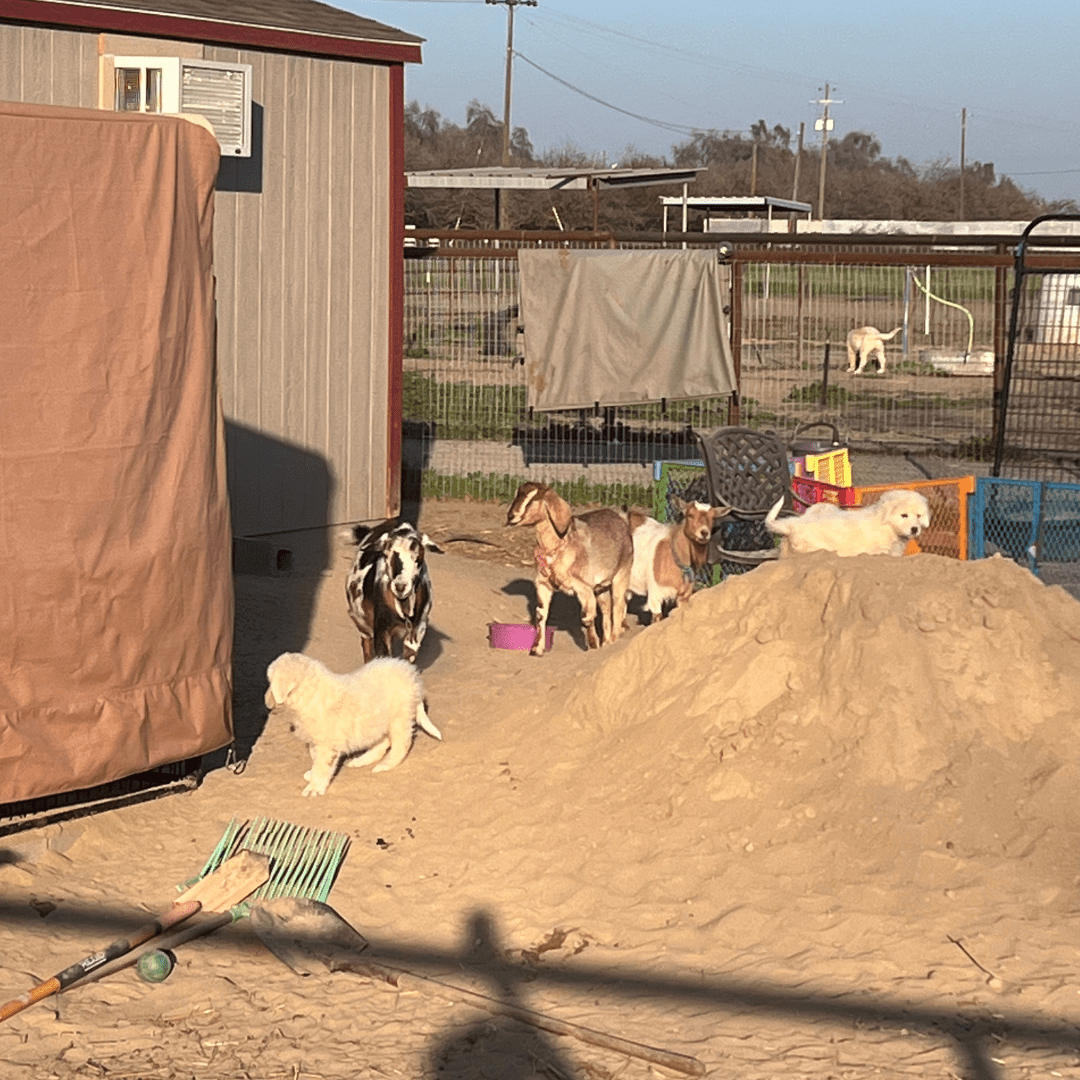
At Prancing Pony Farm, fulltime livestock integration begins around week 4 and continues through the entire time puppies are with us — all the way to placement at 12 weeks or later. Not unsupervised, and not rushed. Carefully staged, with calm animals we know to be appropriate puppy teachers, in an environment we control and monitor with our puppy cams.
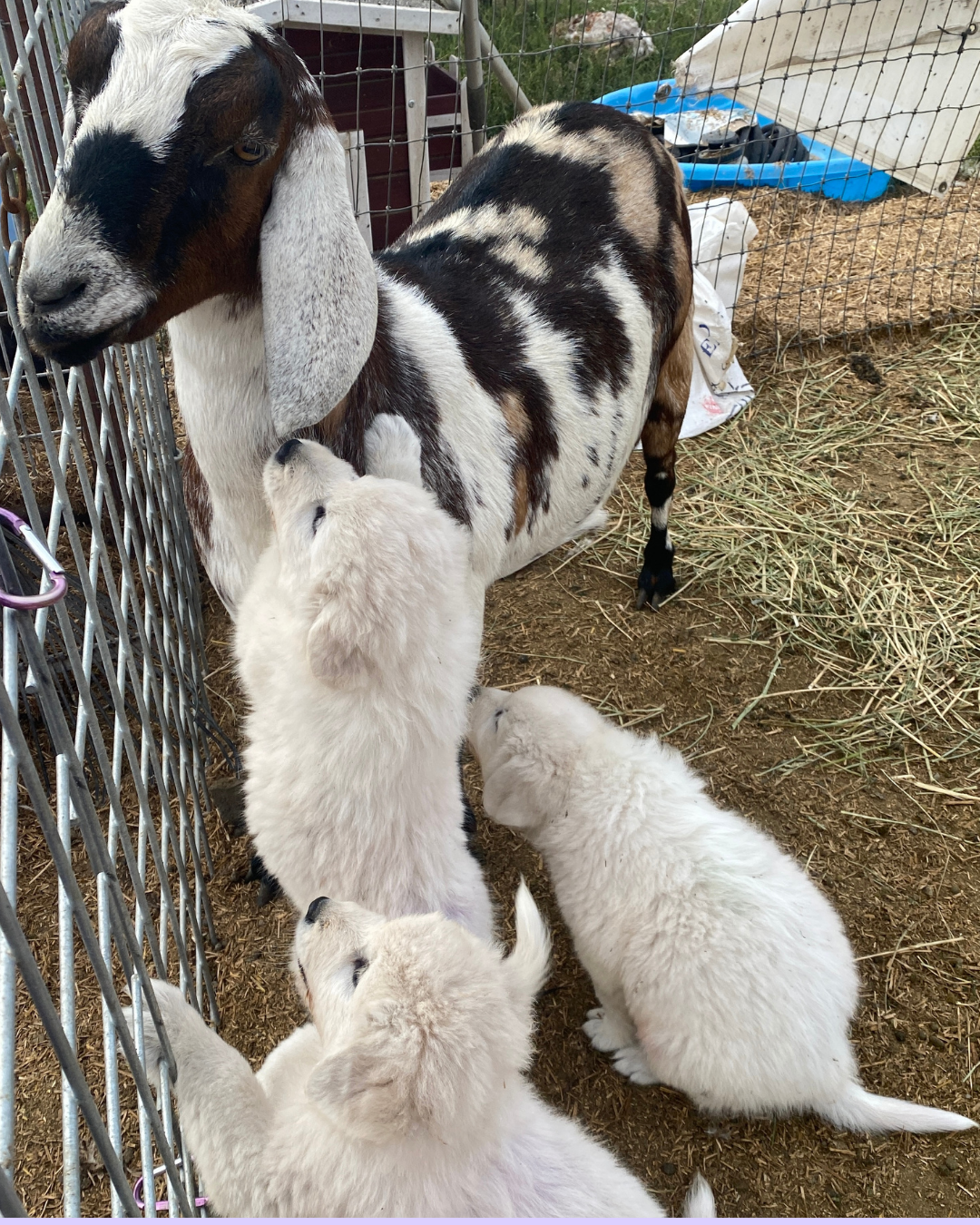
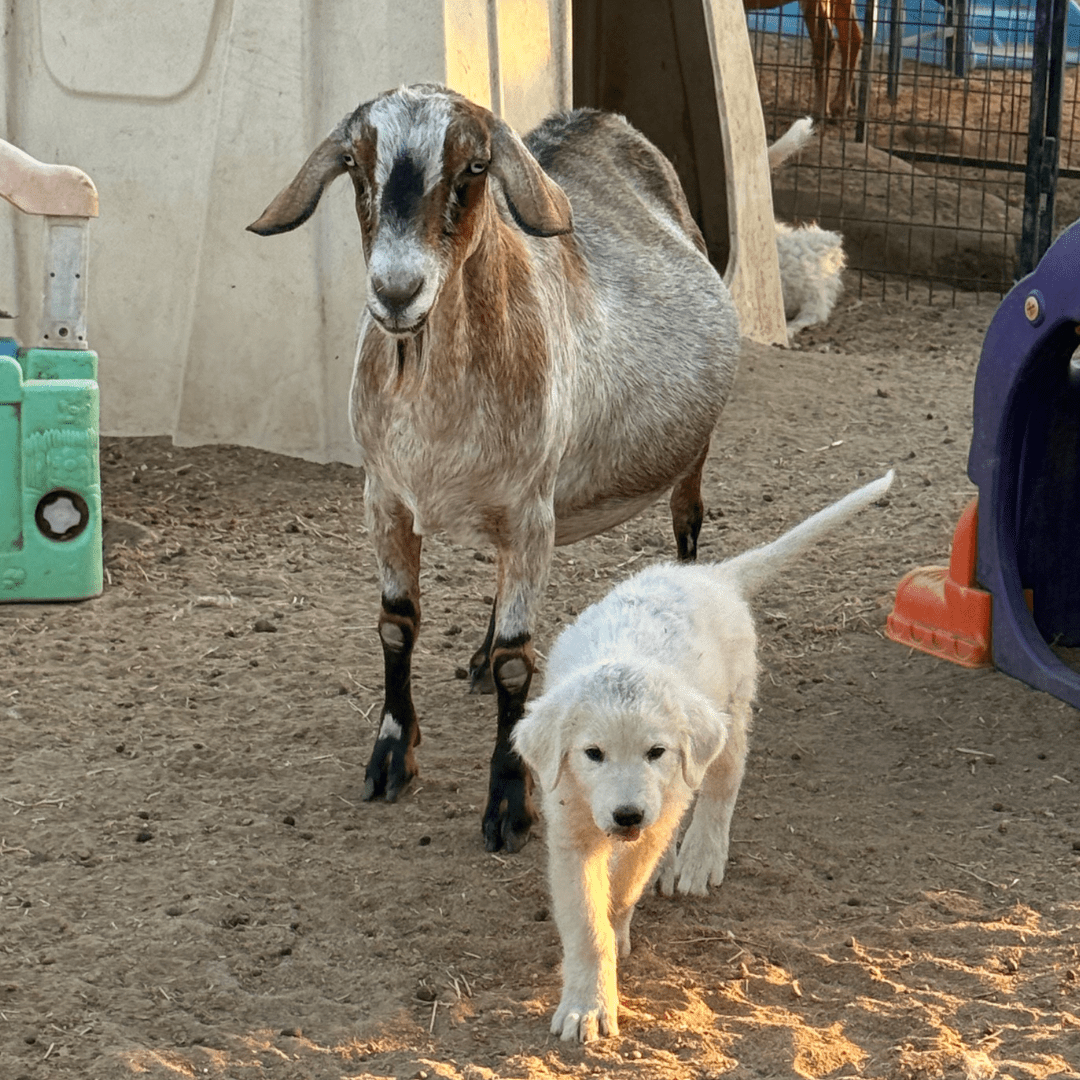
Not all livestock make good puppy trainers. Animals that are aggressive, flighty, or easily panicked teach puppies the wrong things. We use calm, steady animals who model the kind of settled energy we want the puppy to absorb.
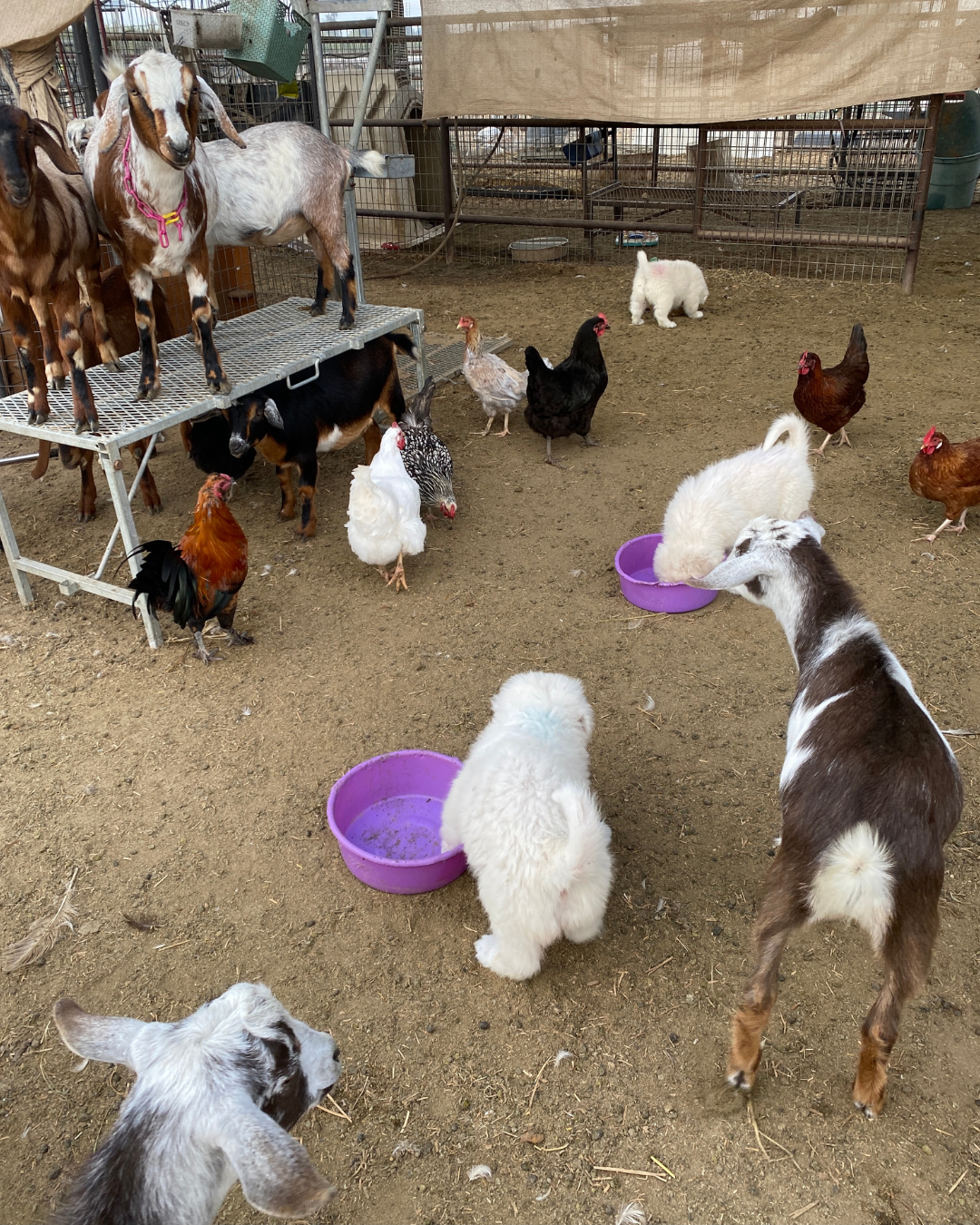
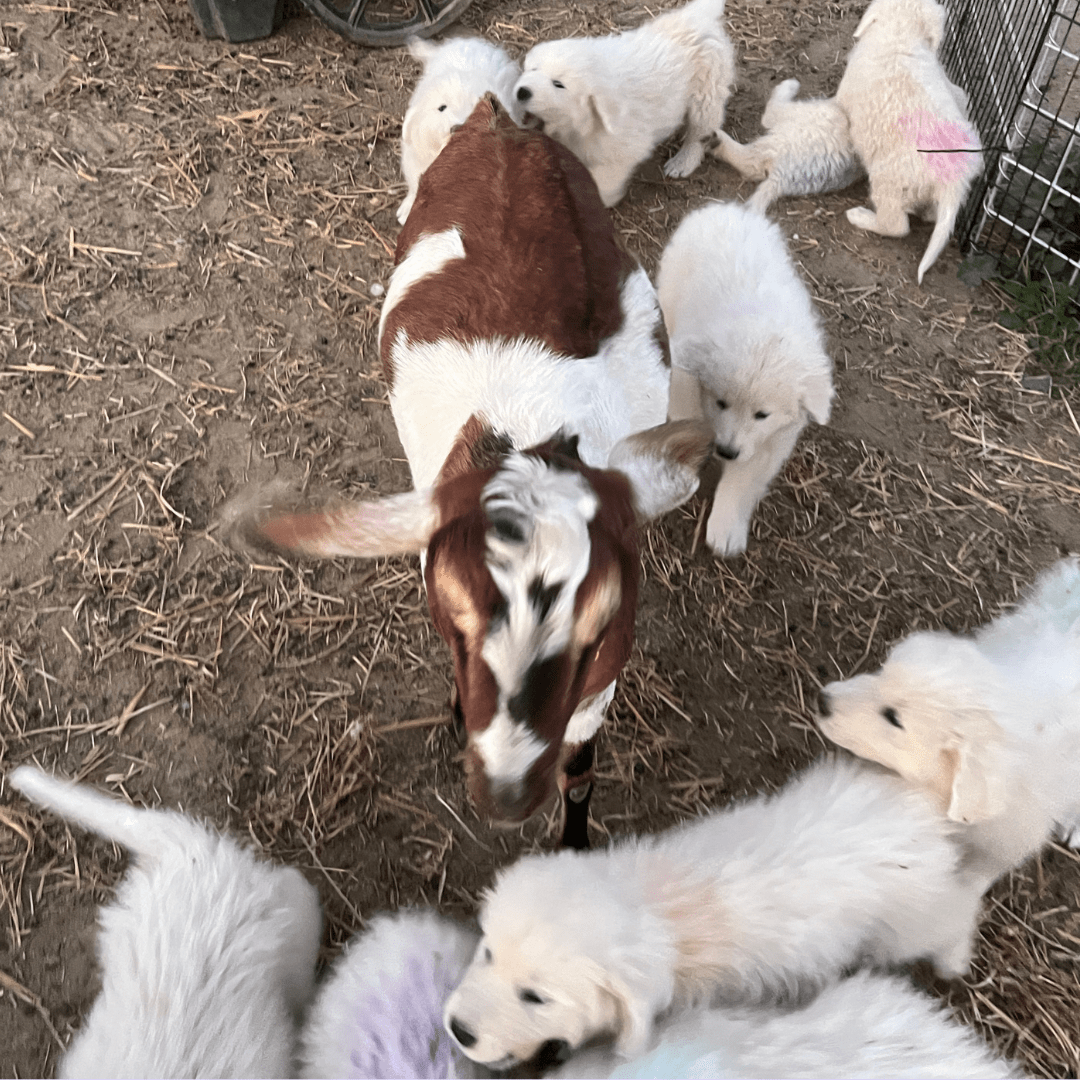
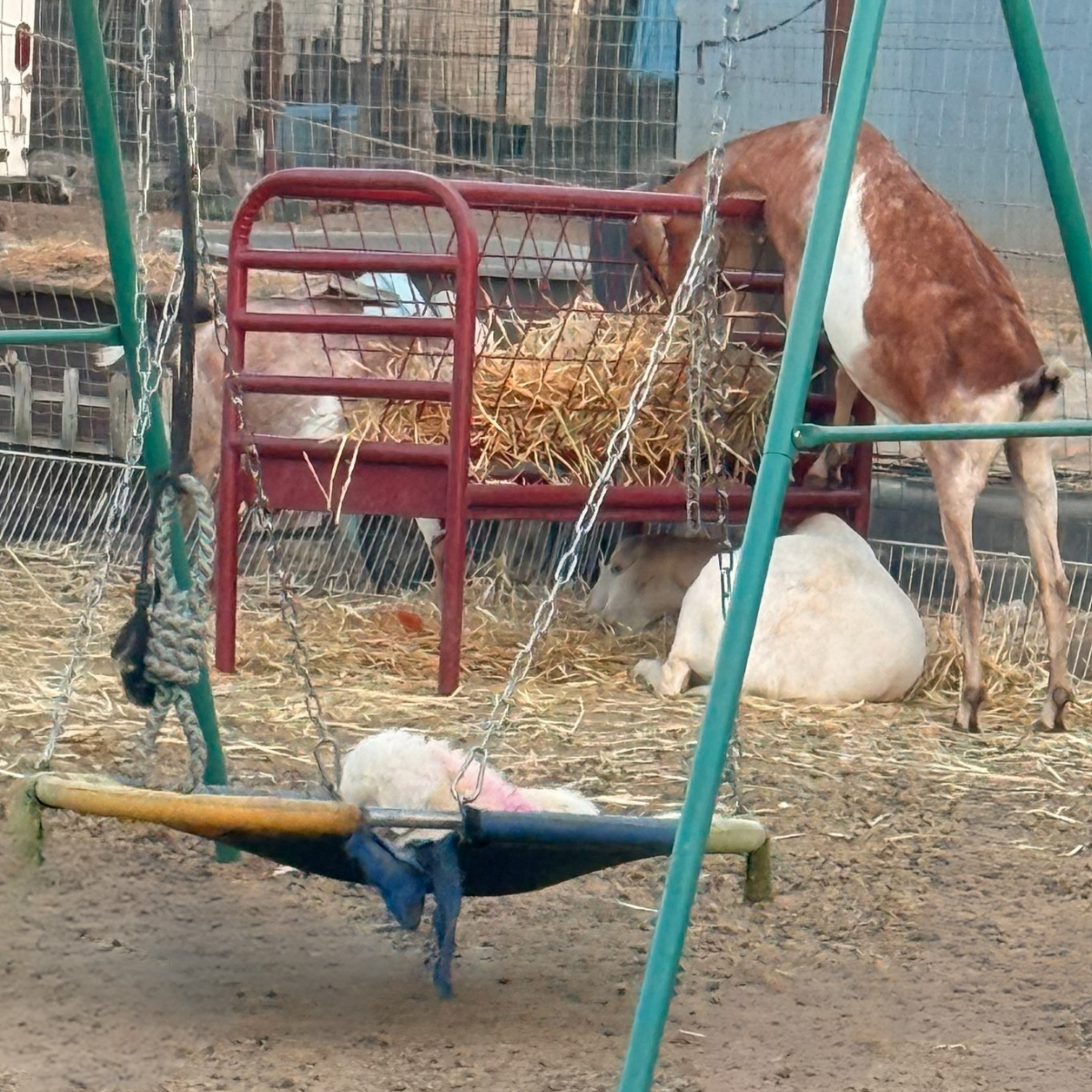
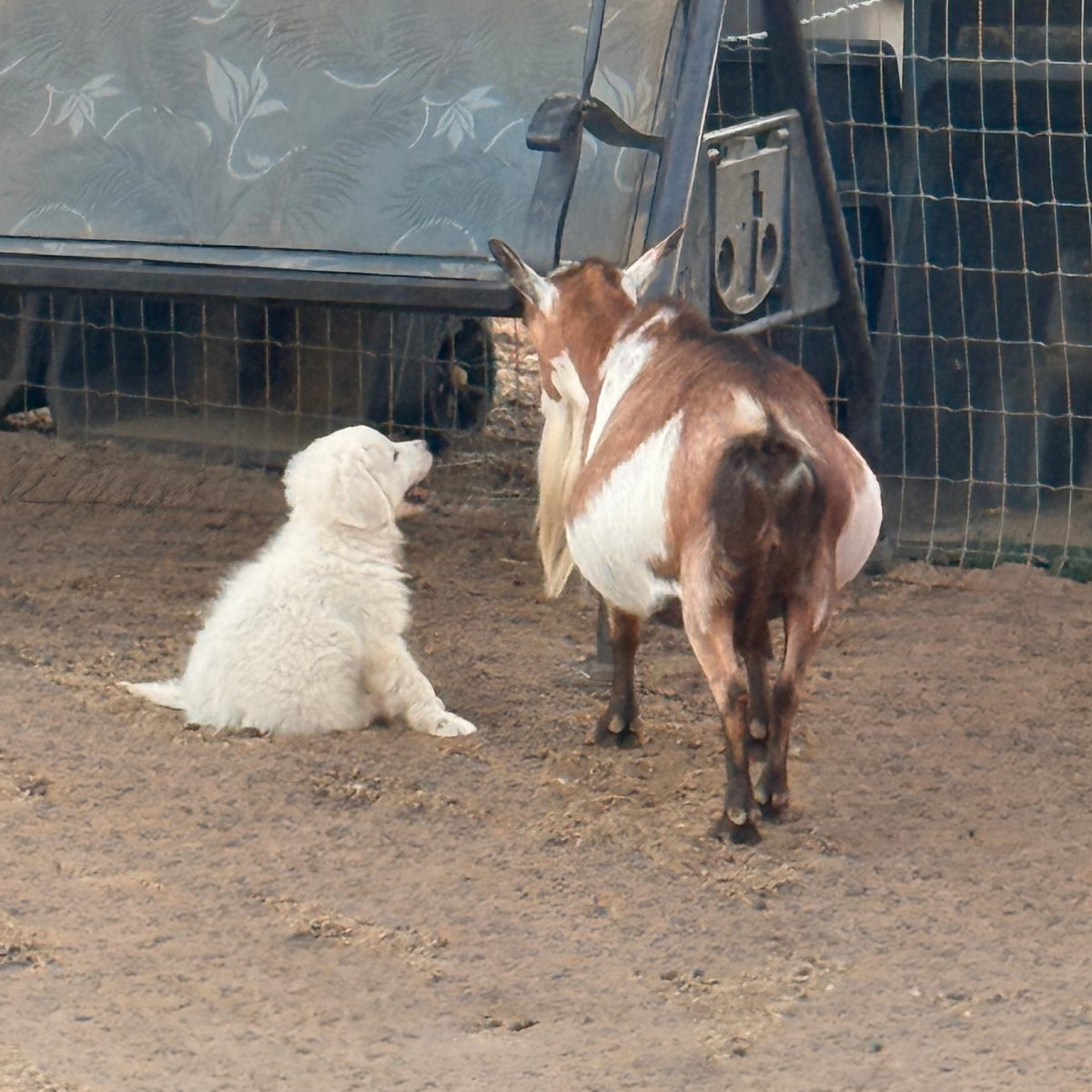
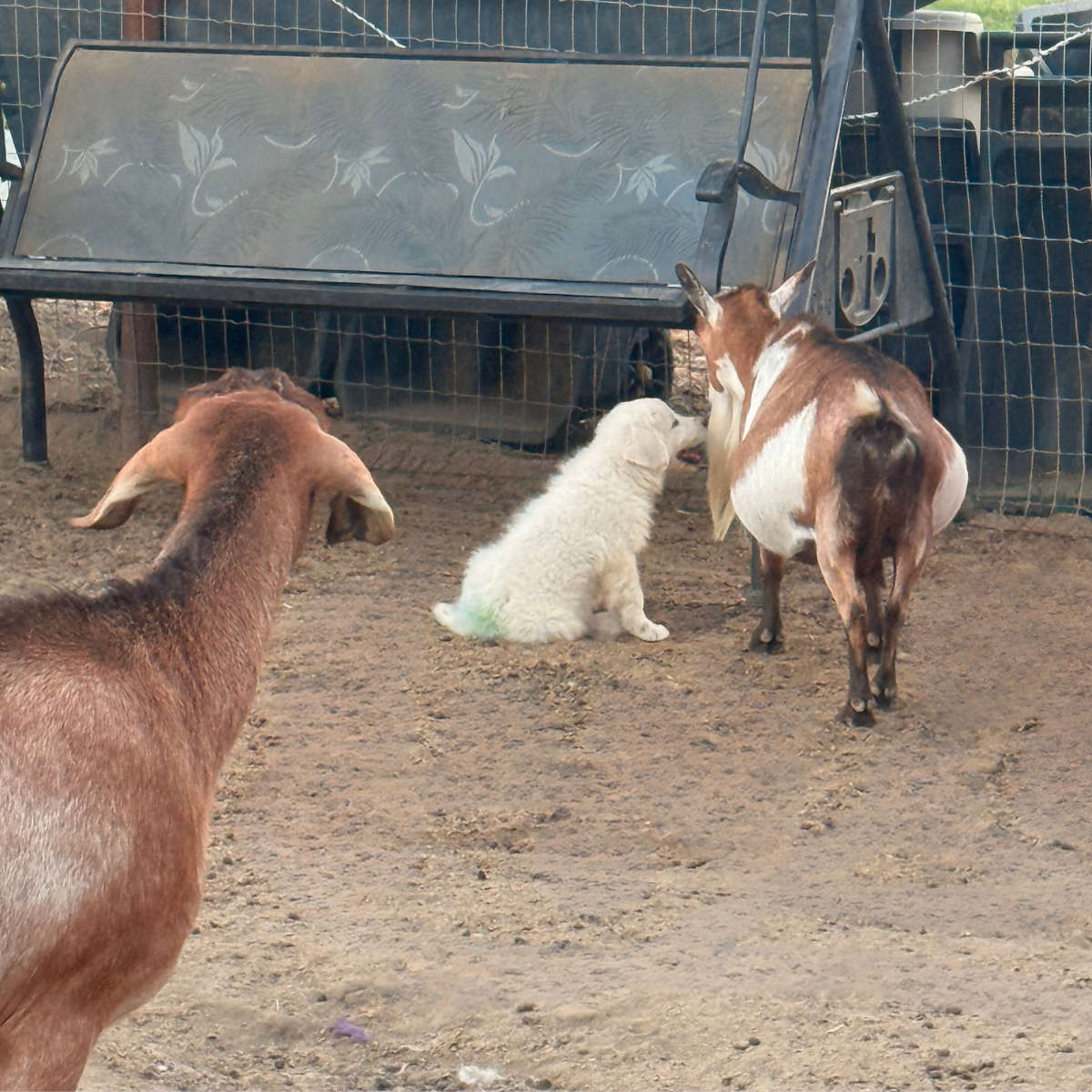
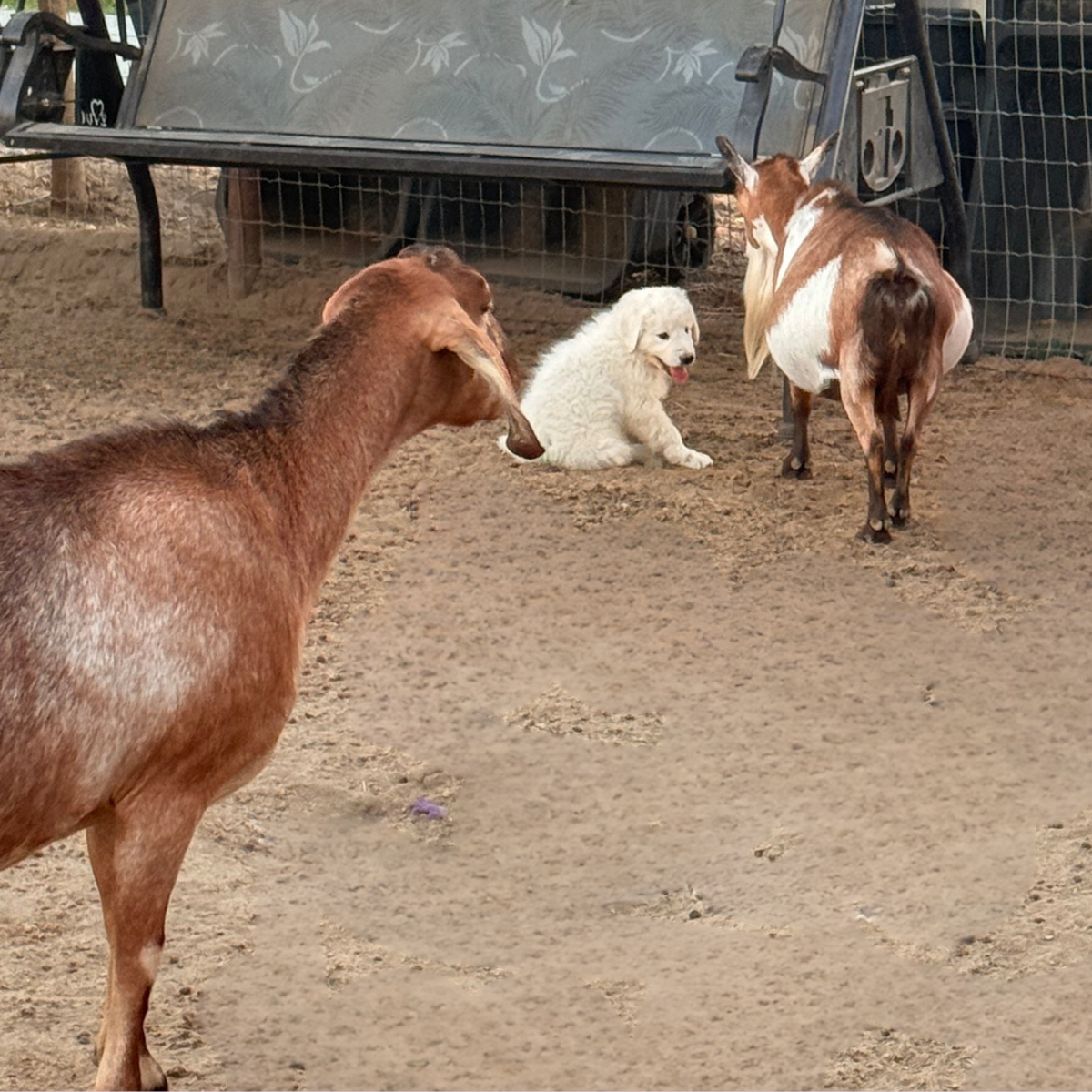
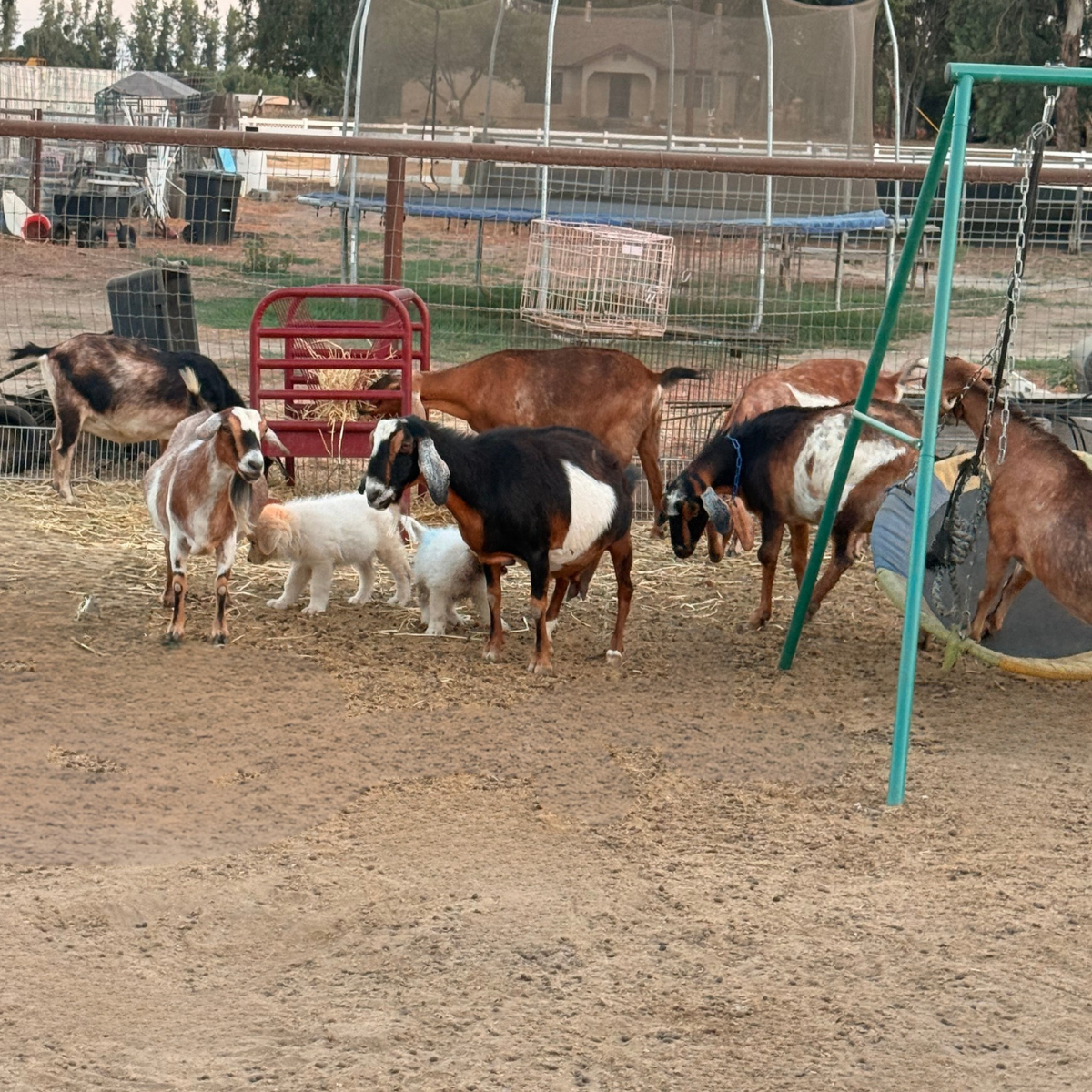
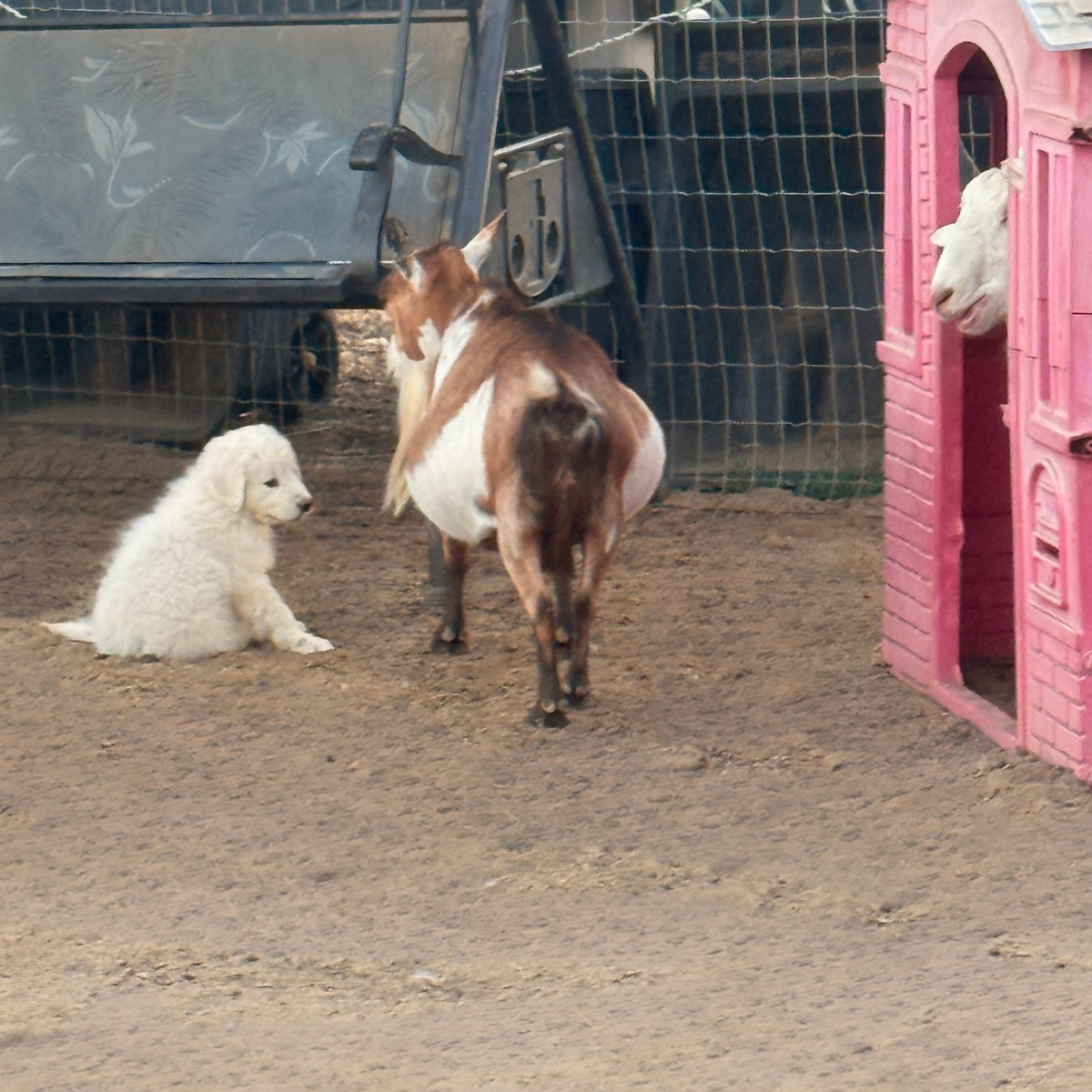
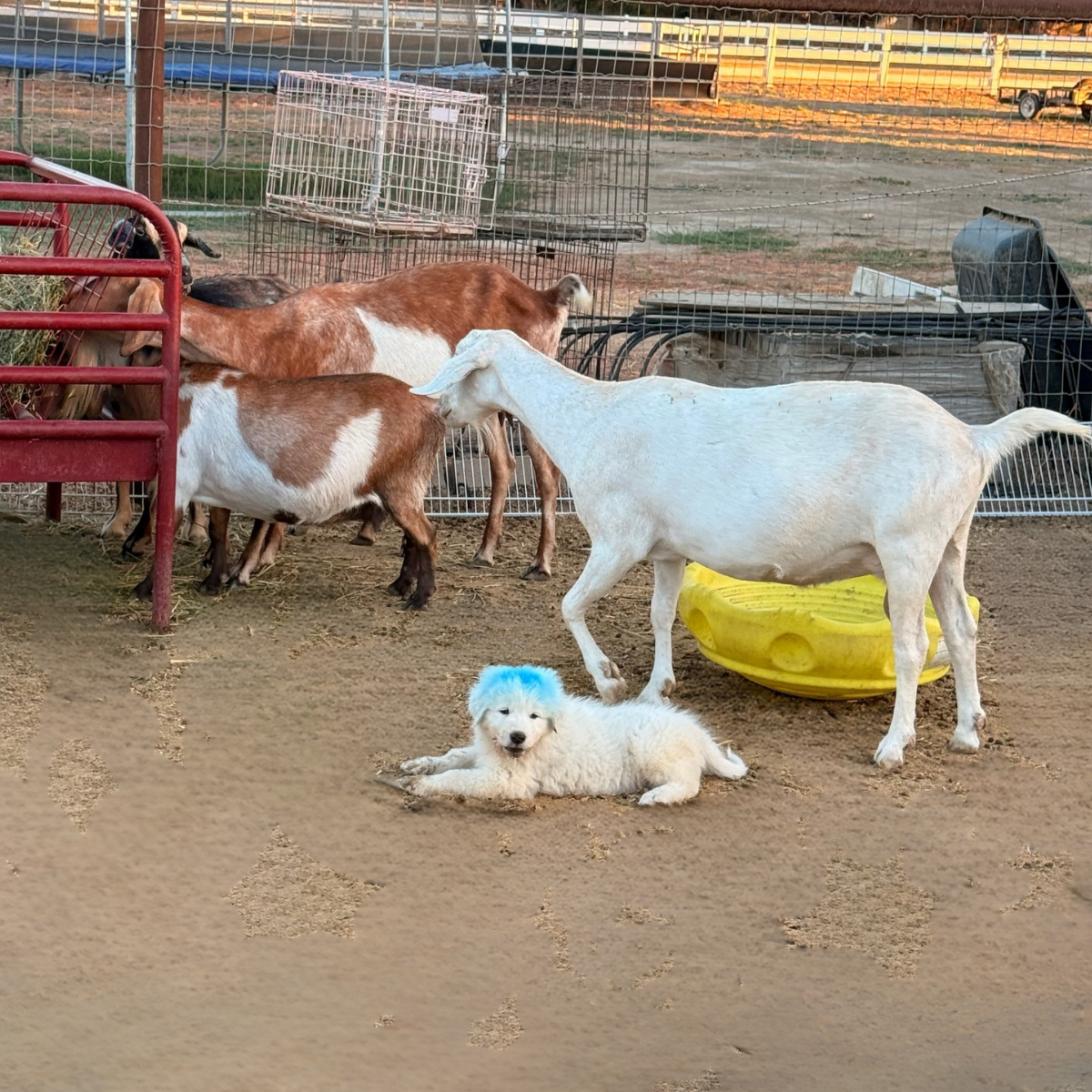
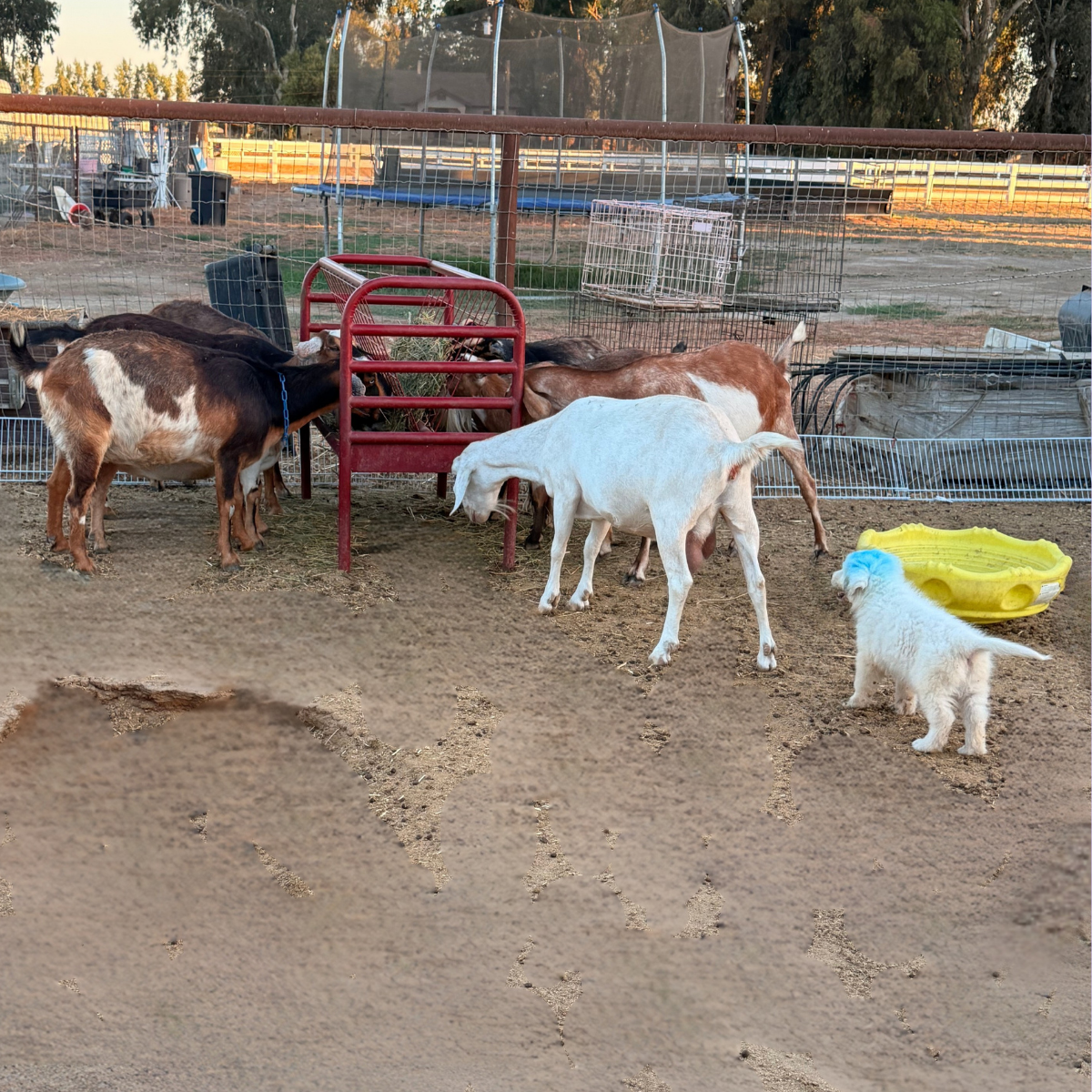
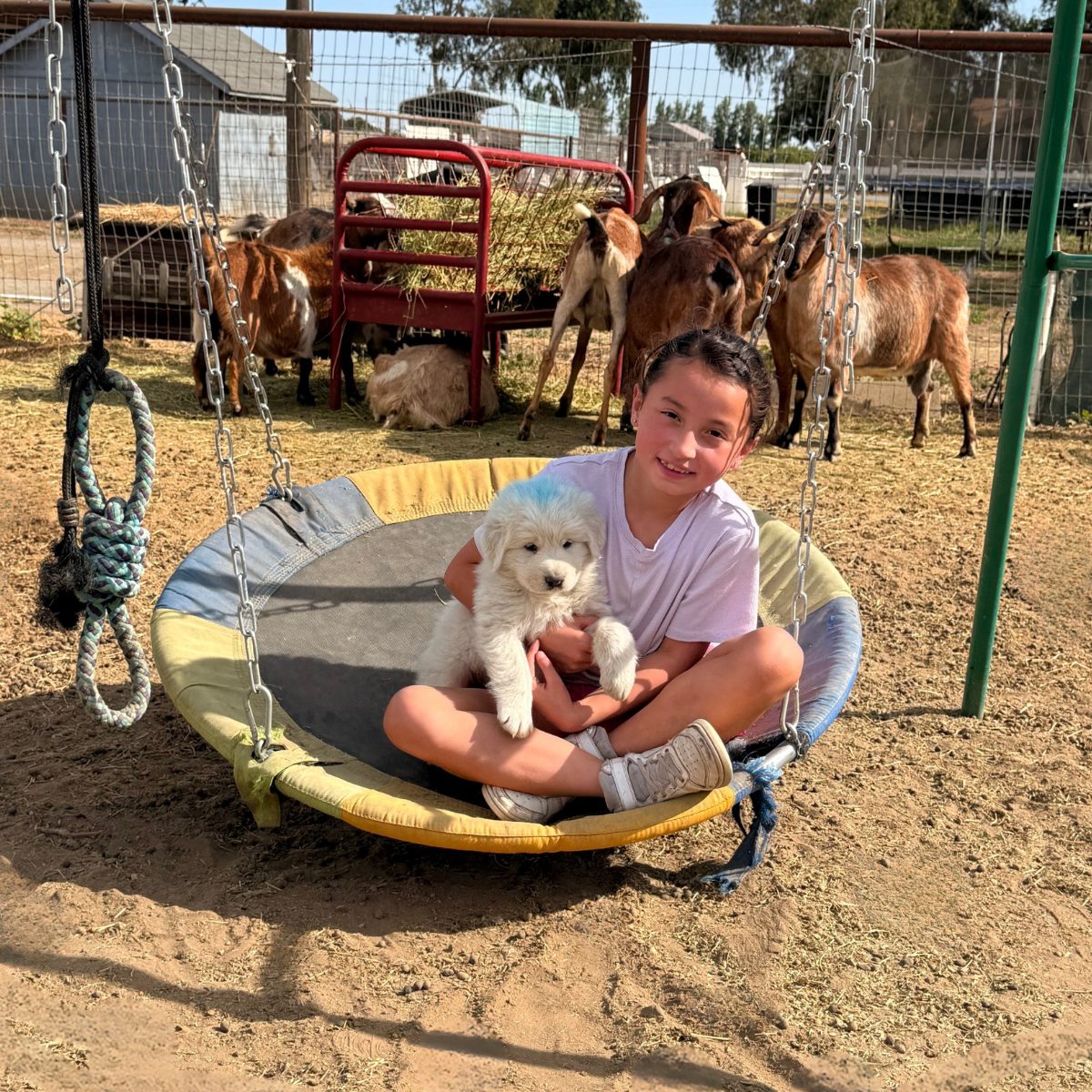
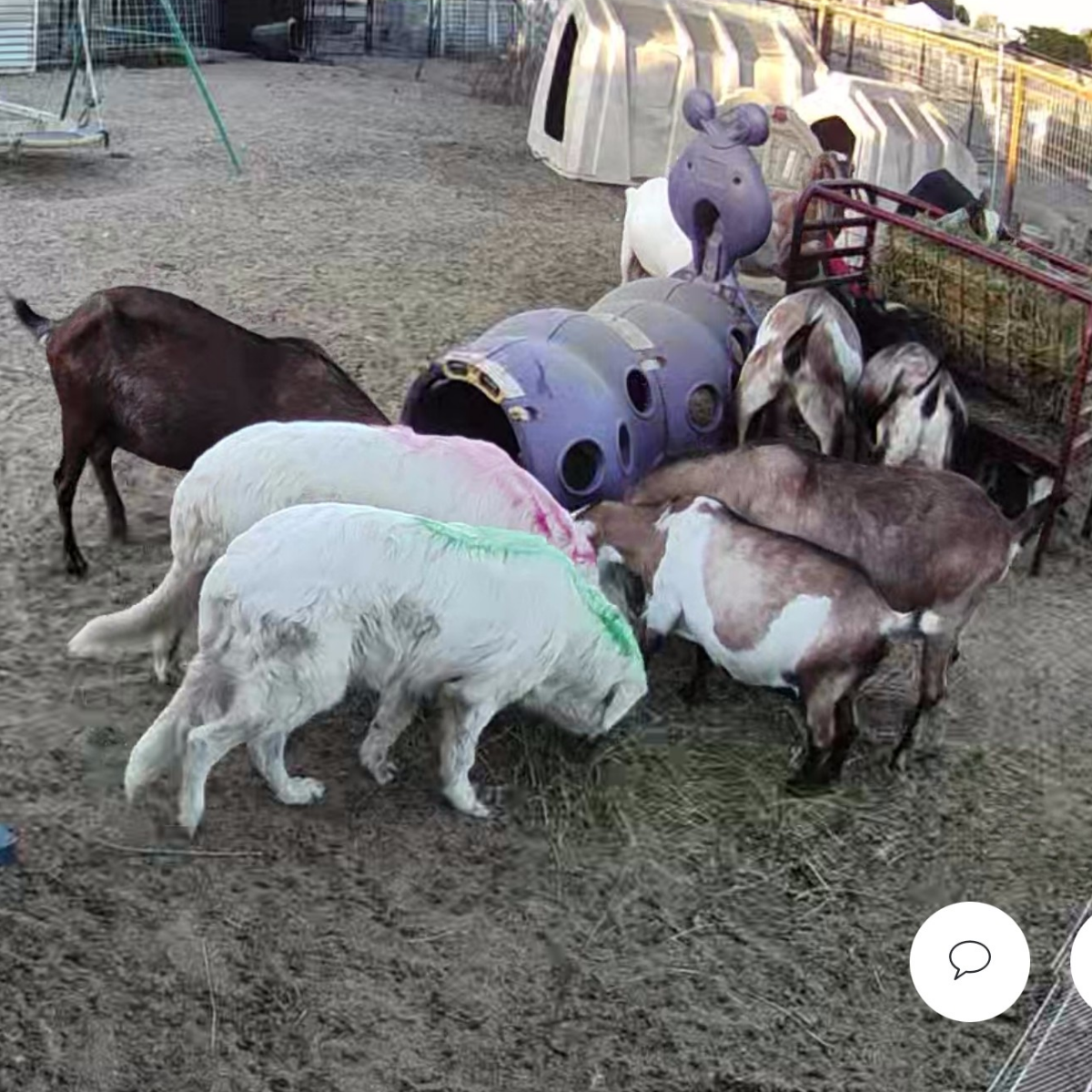
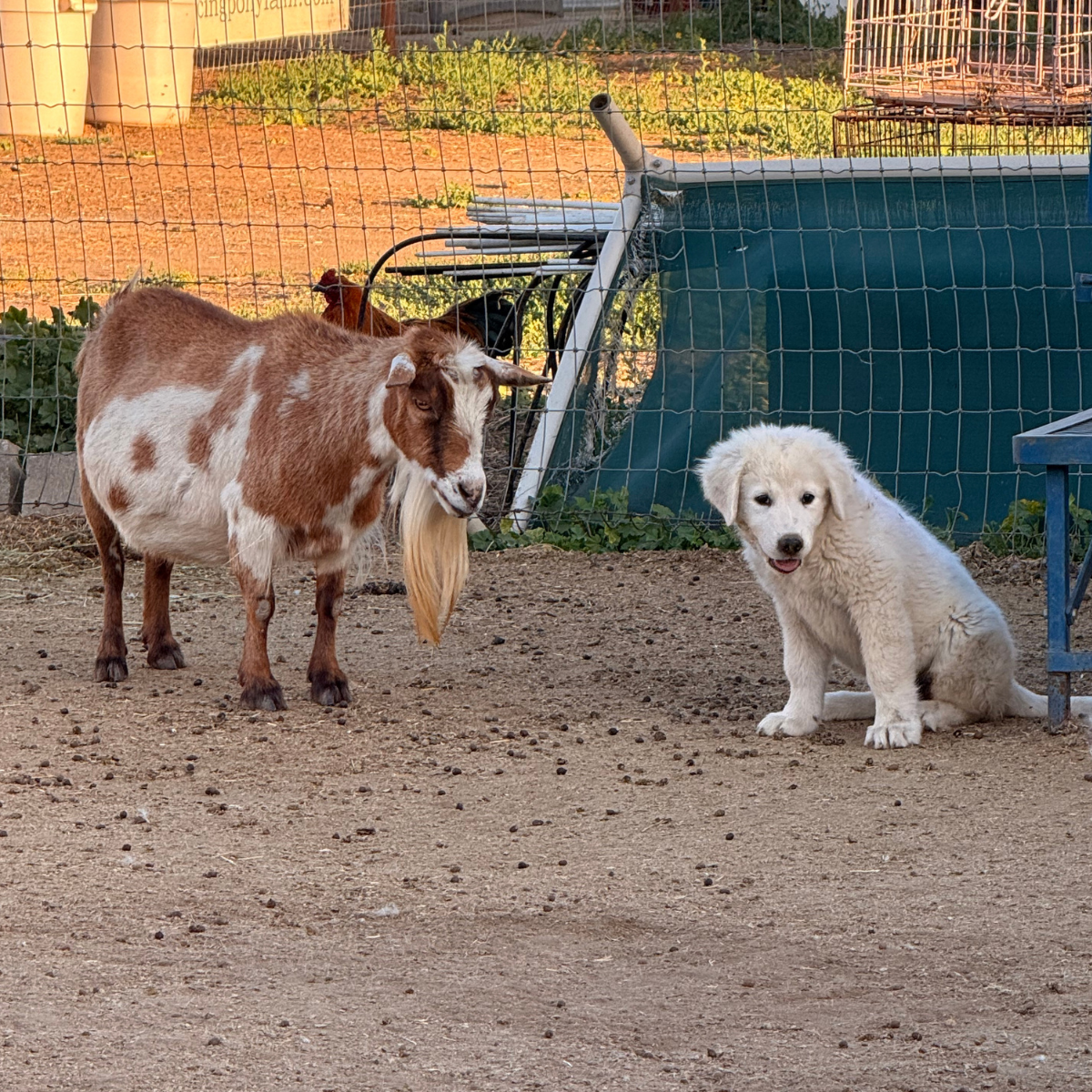
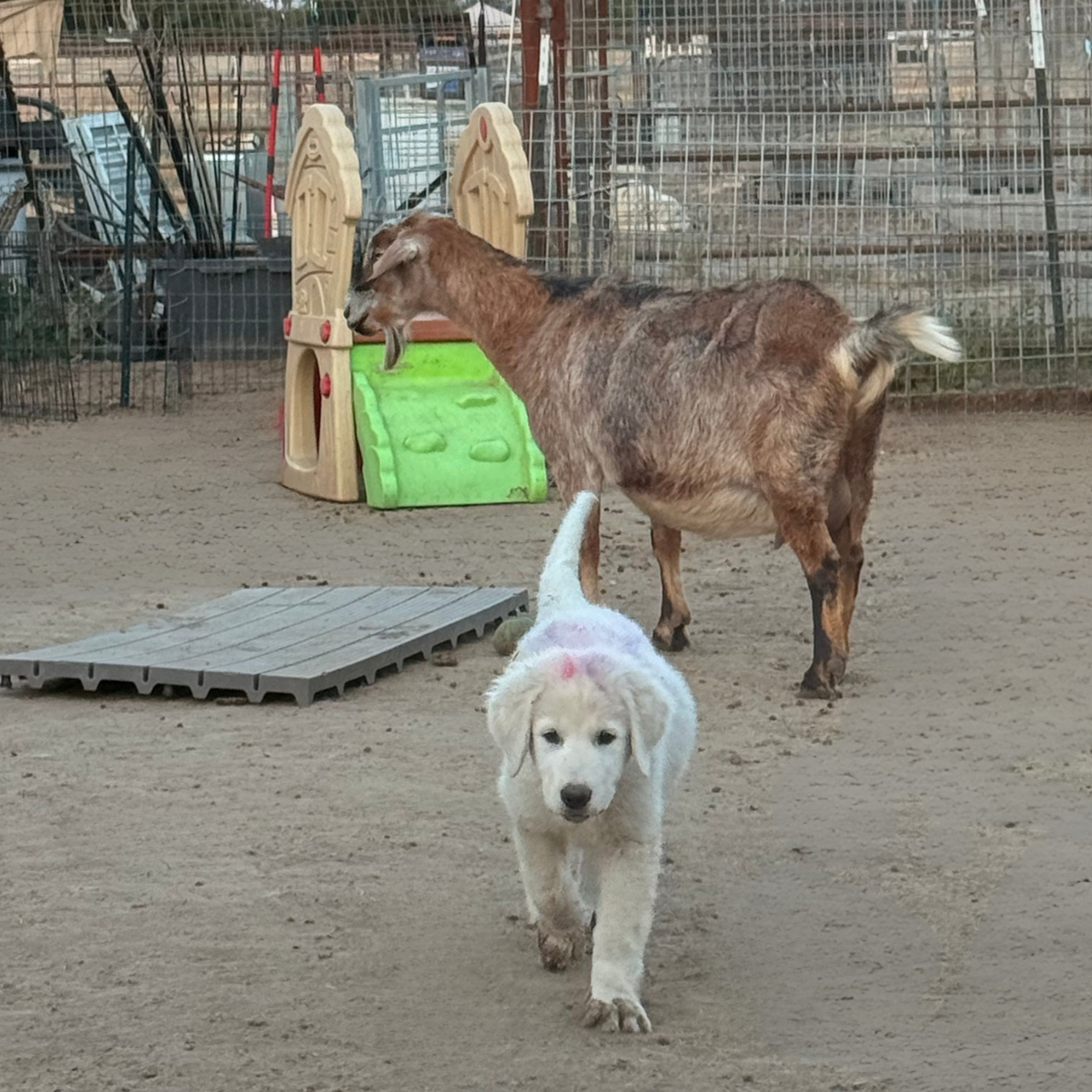
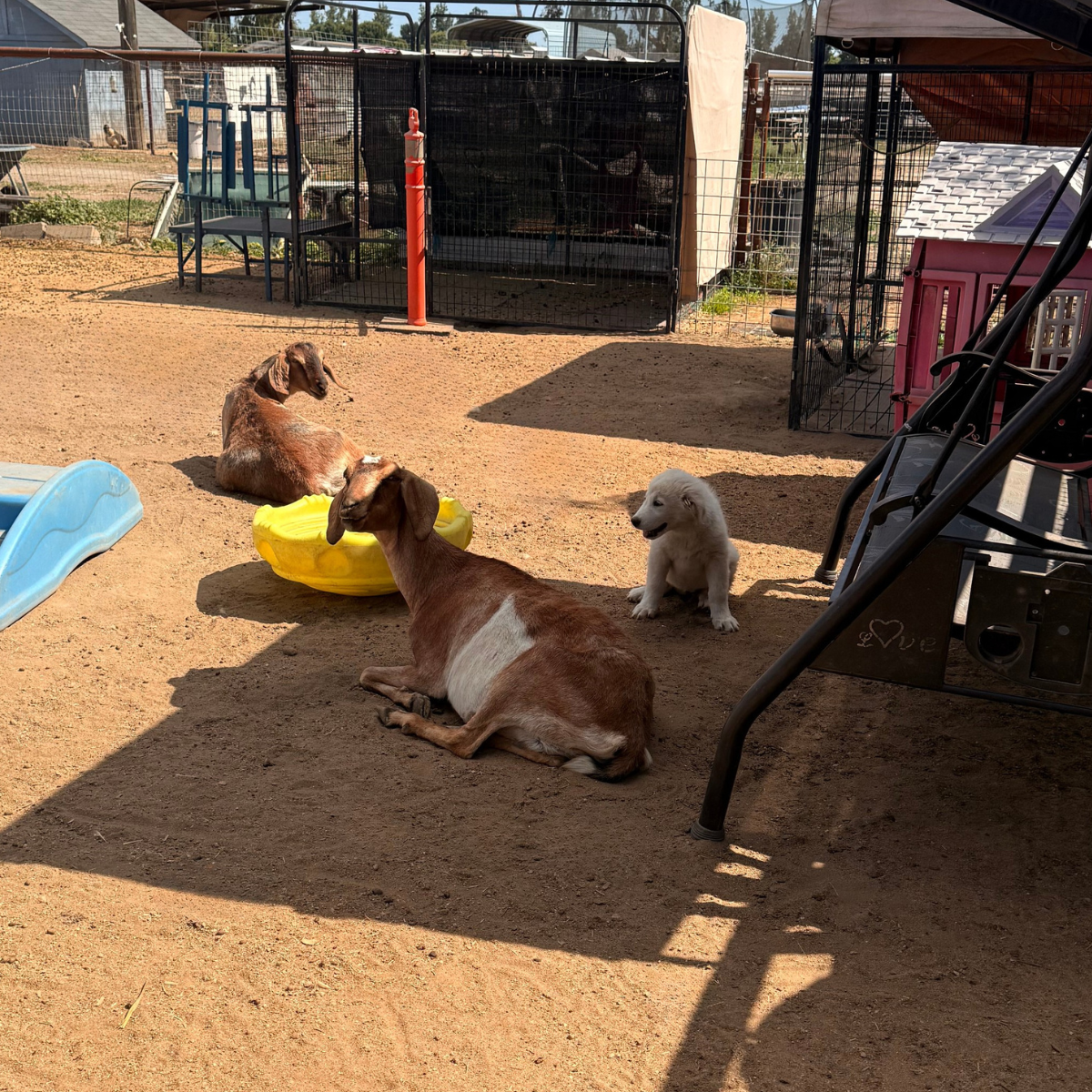
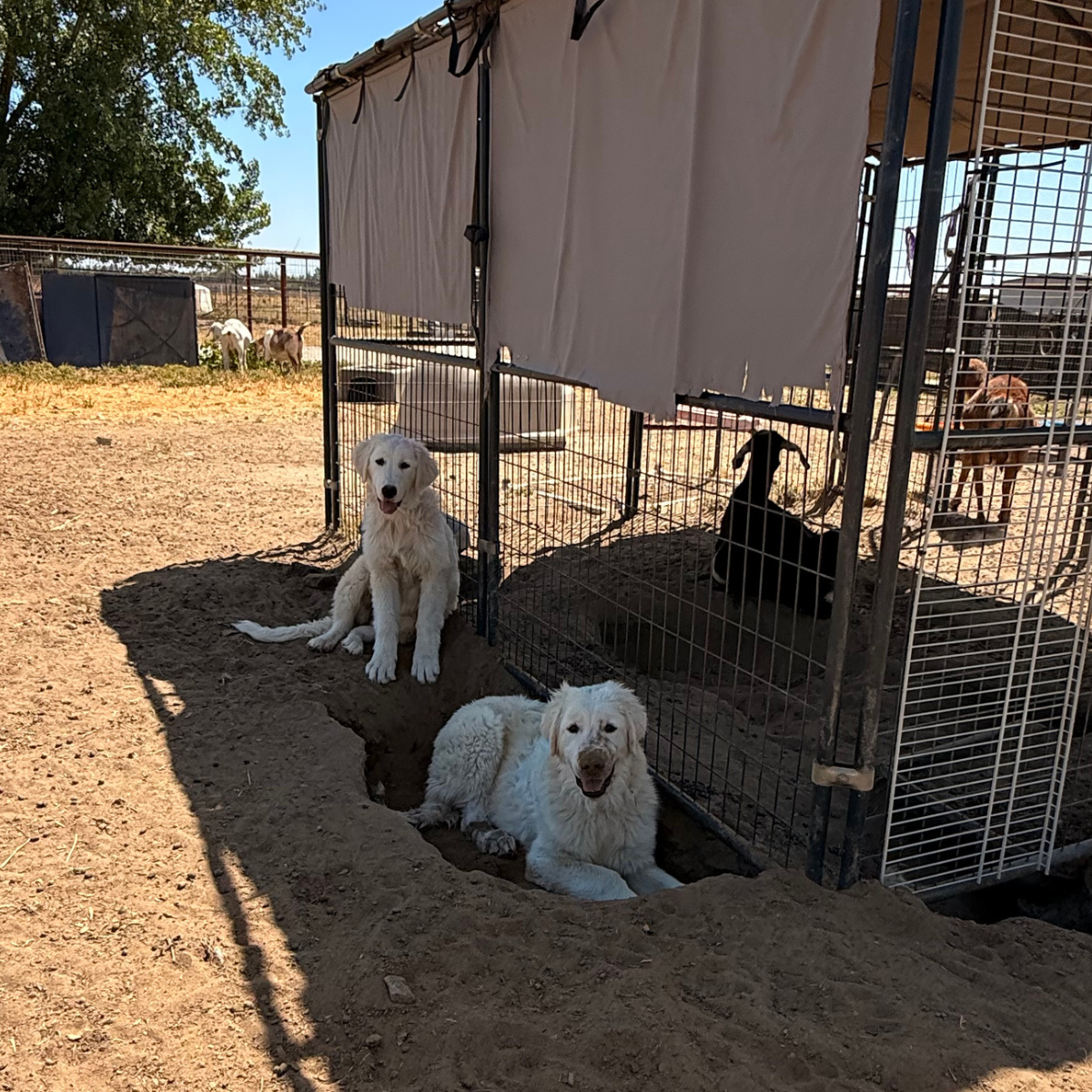
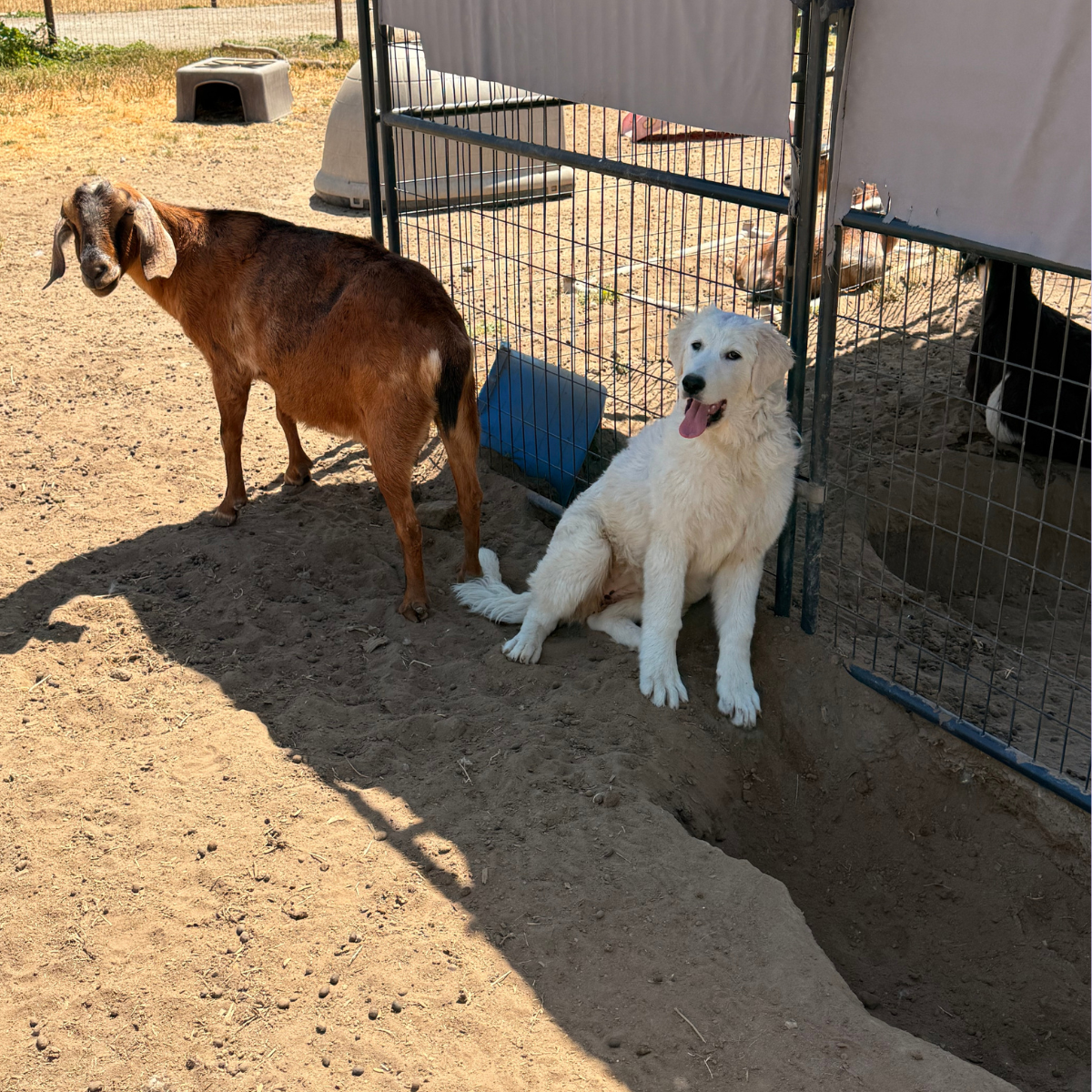
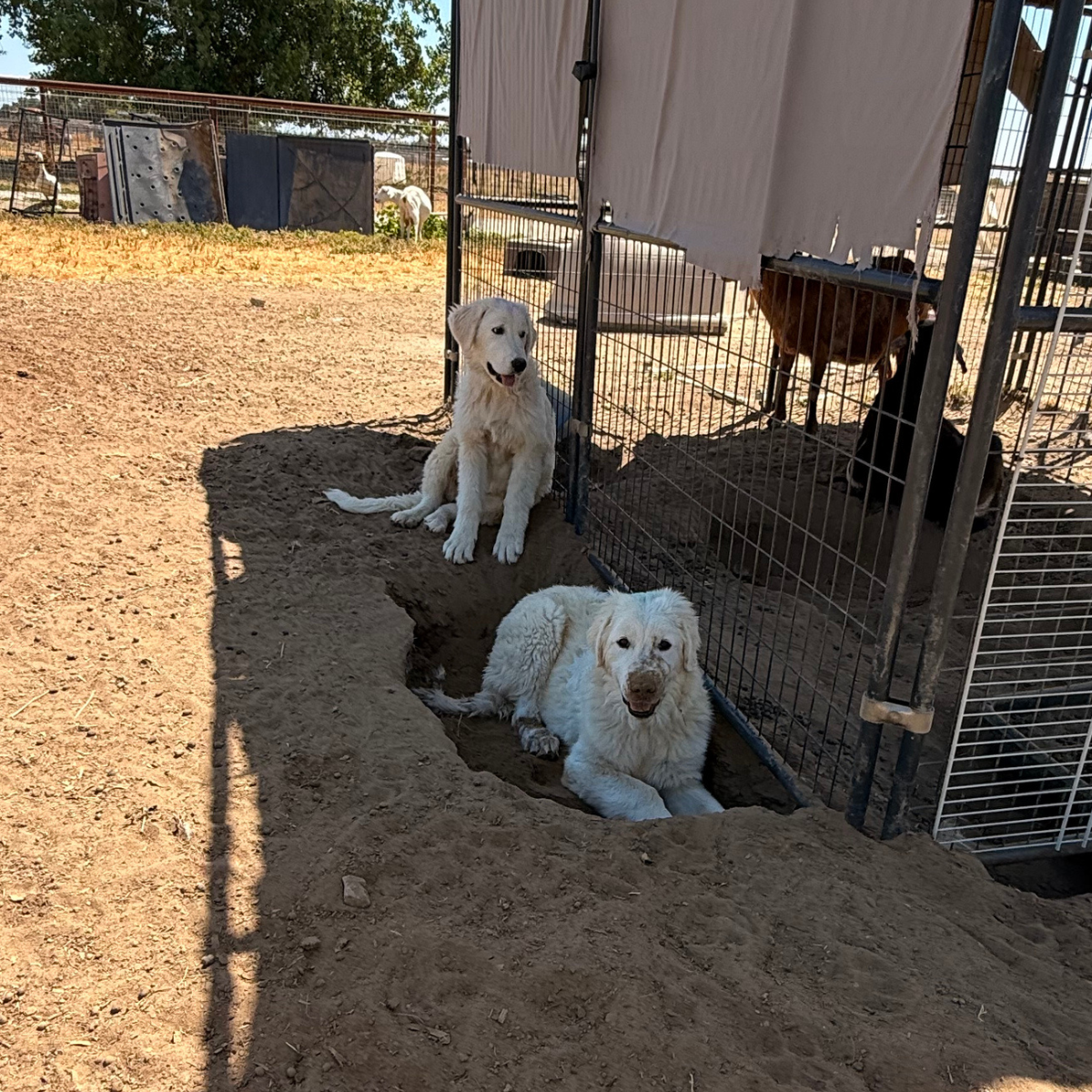
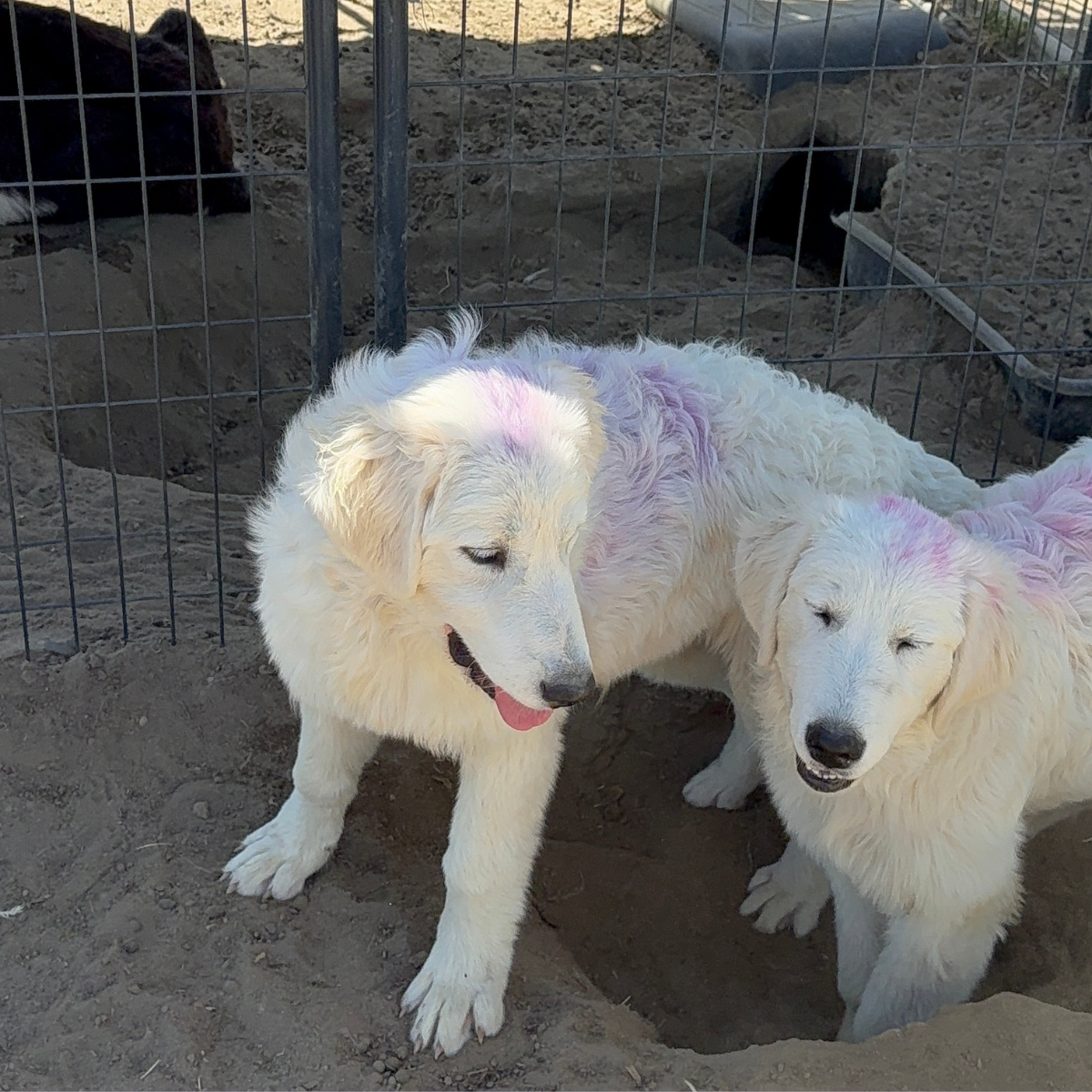
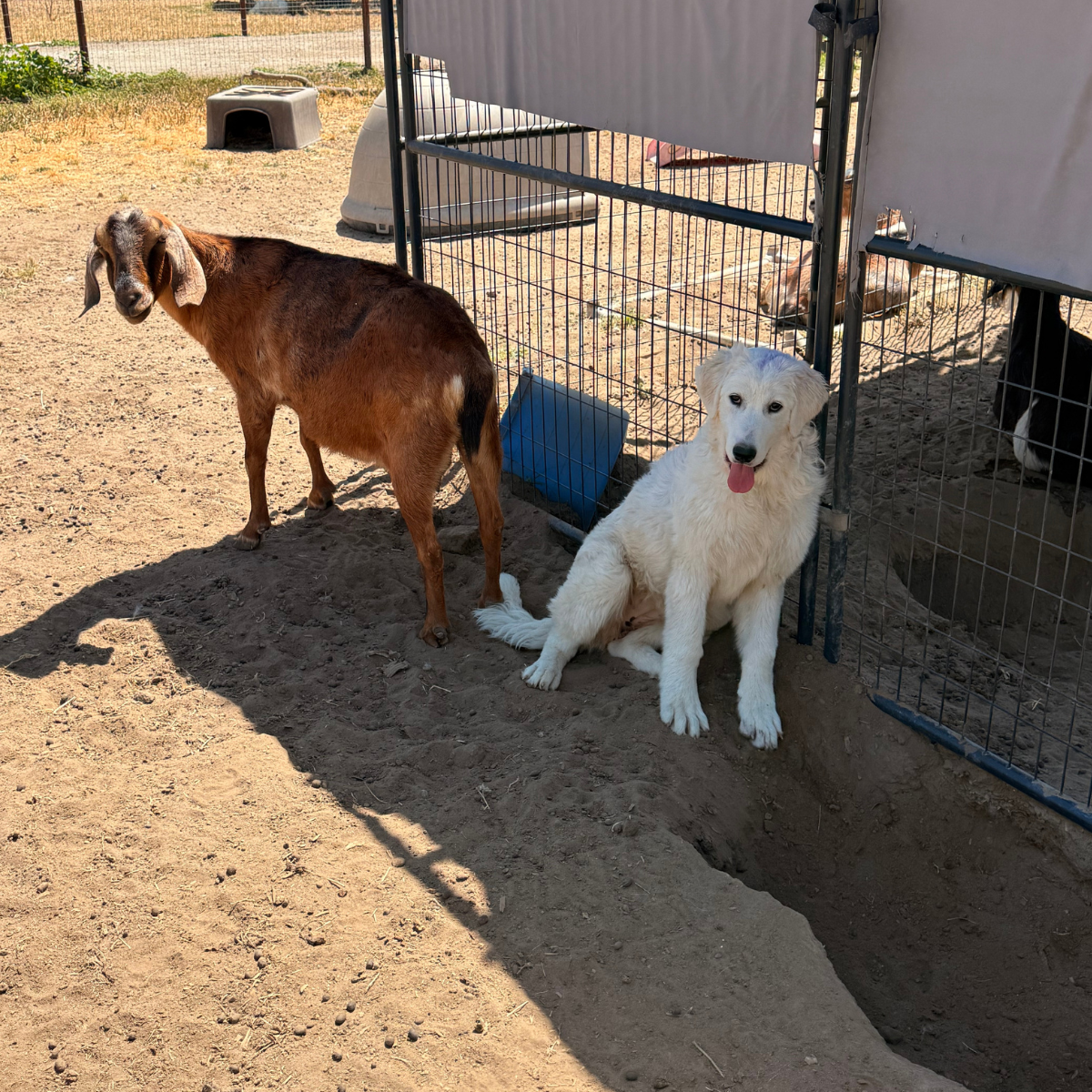
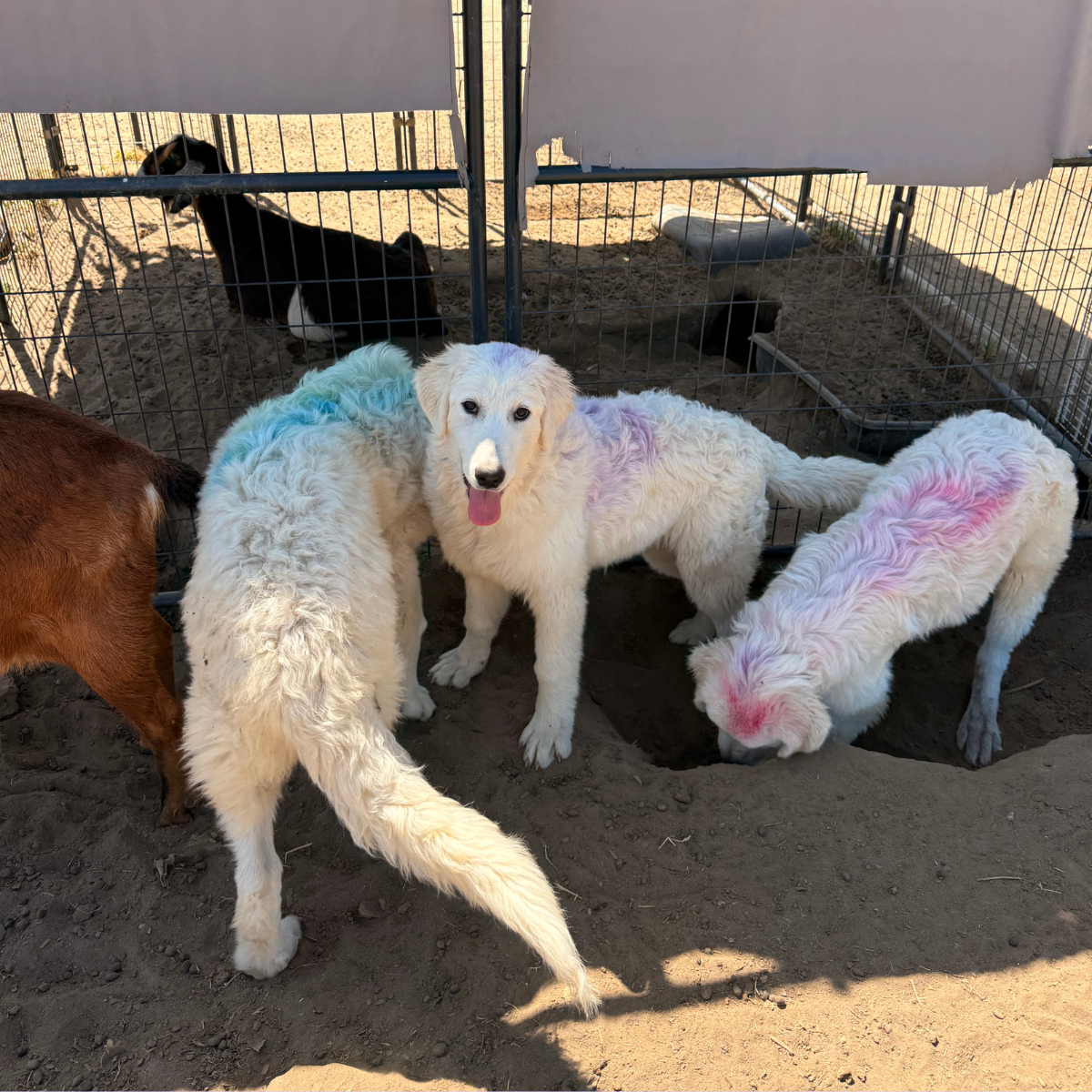
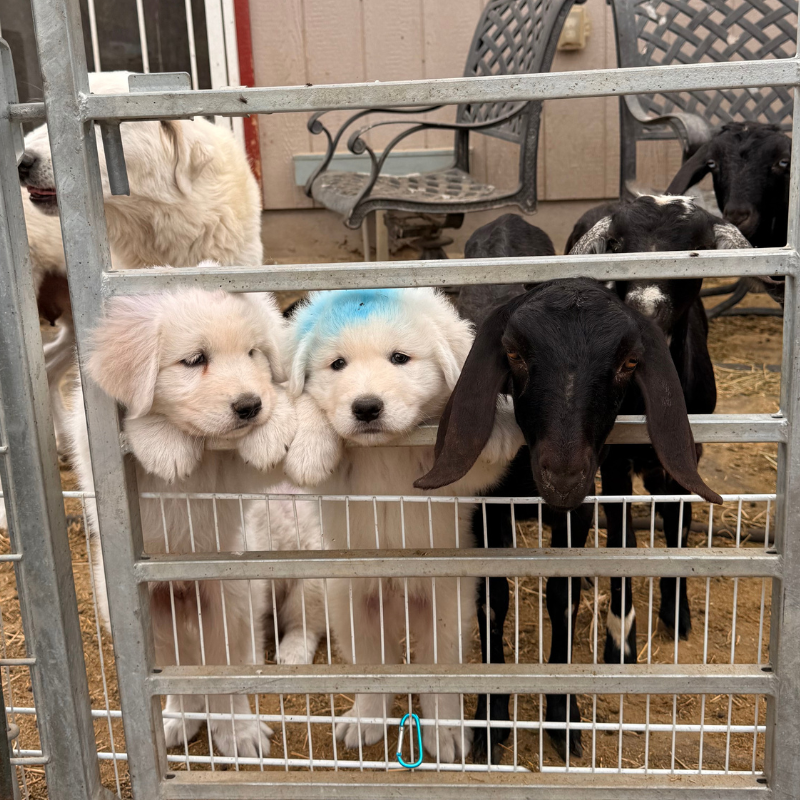
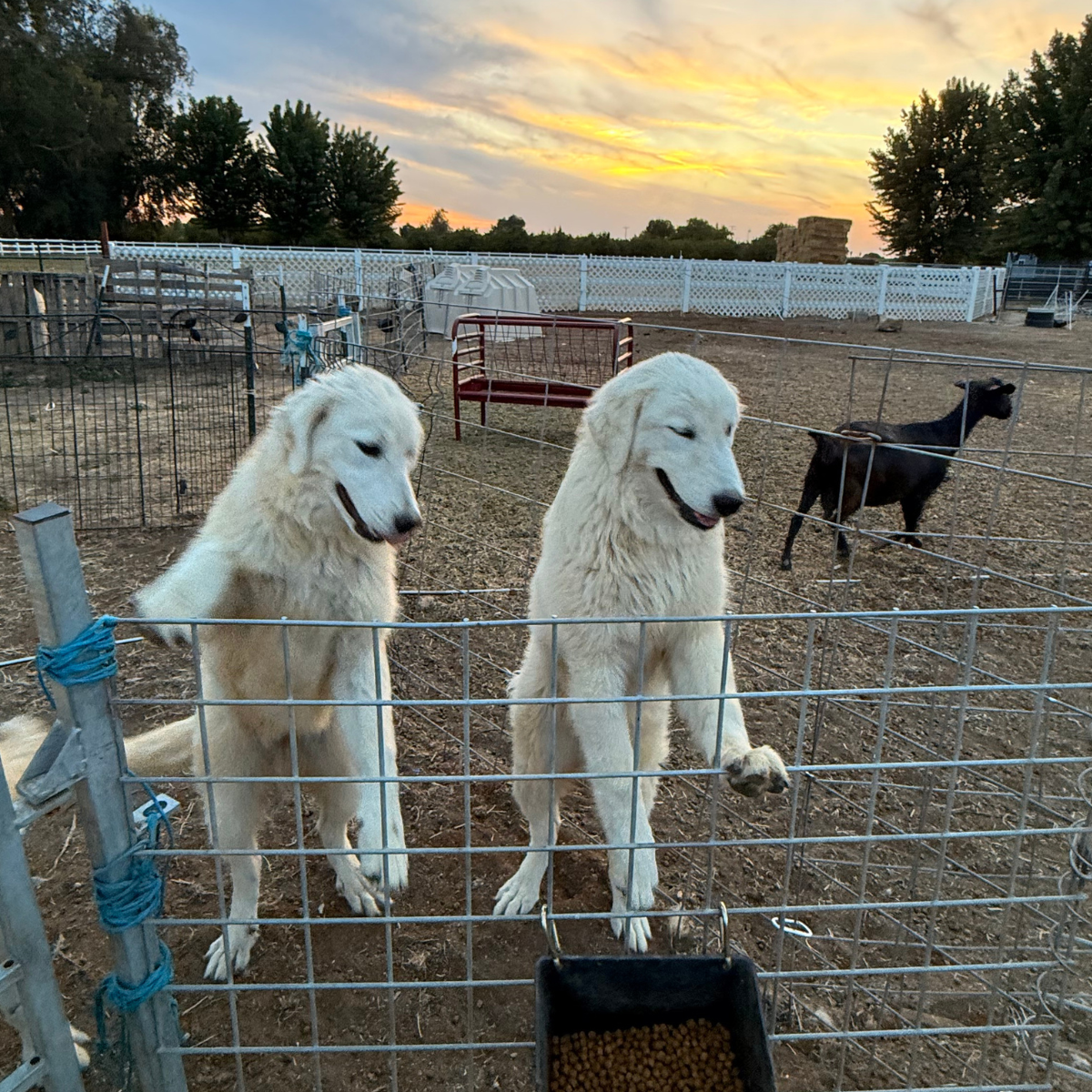
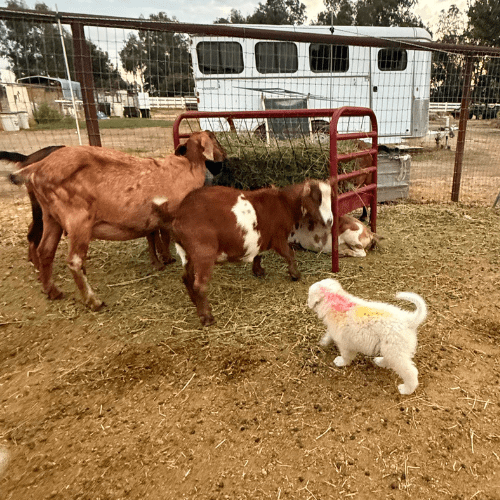
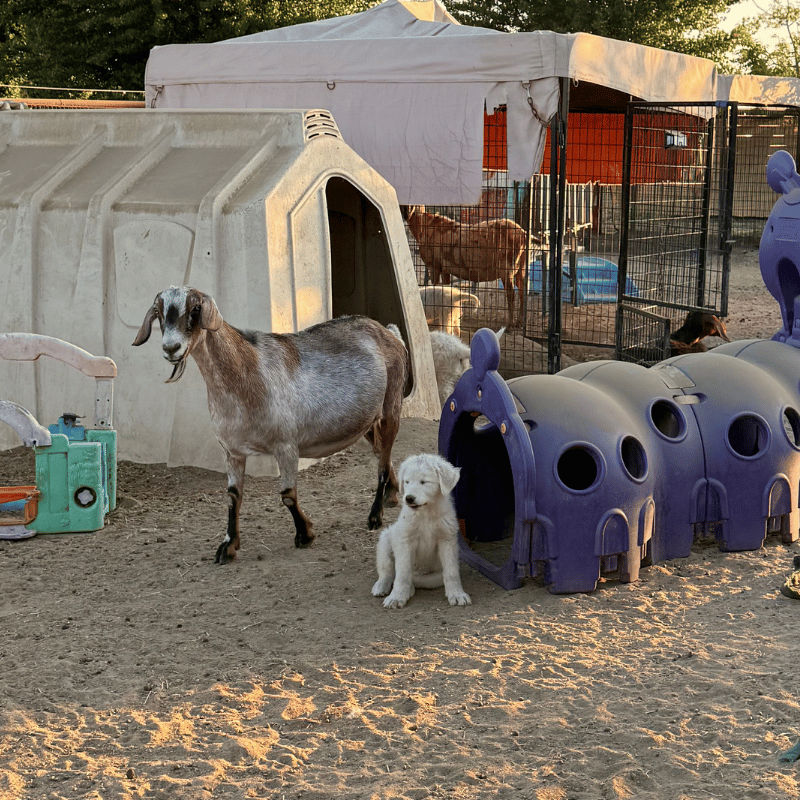
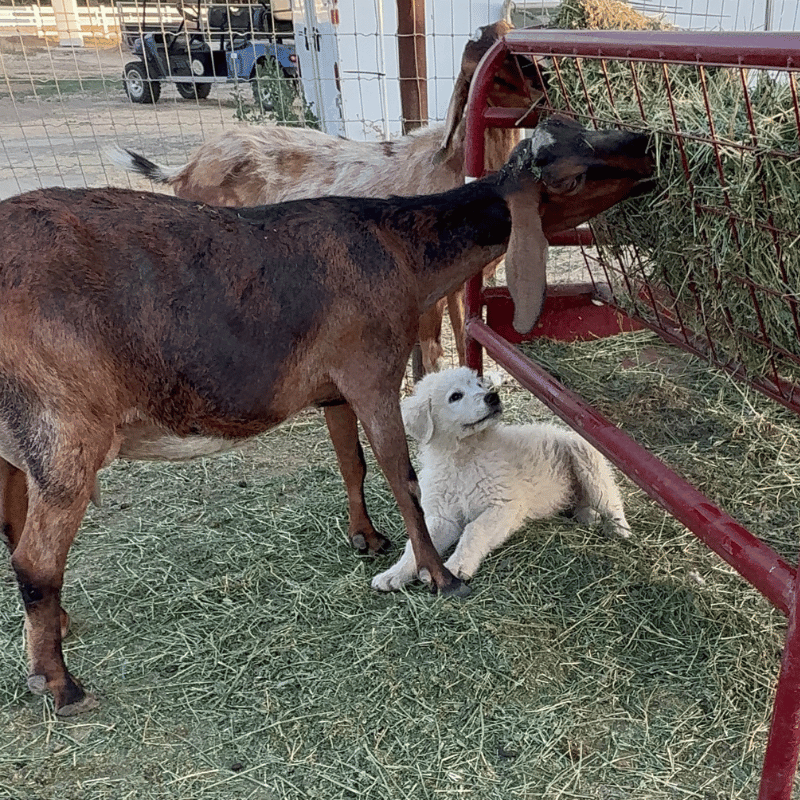
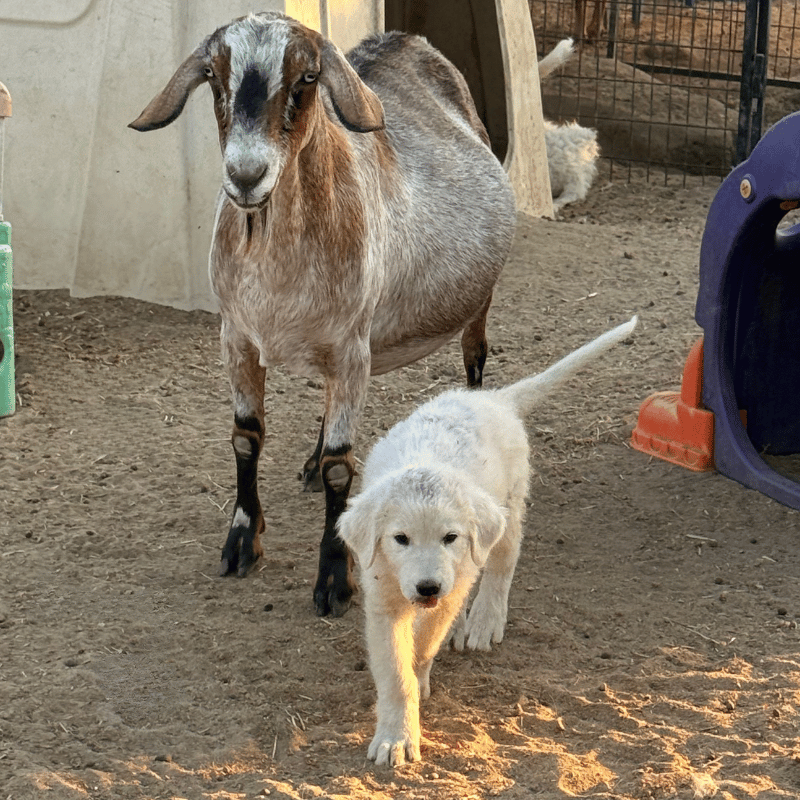
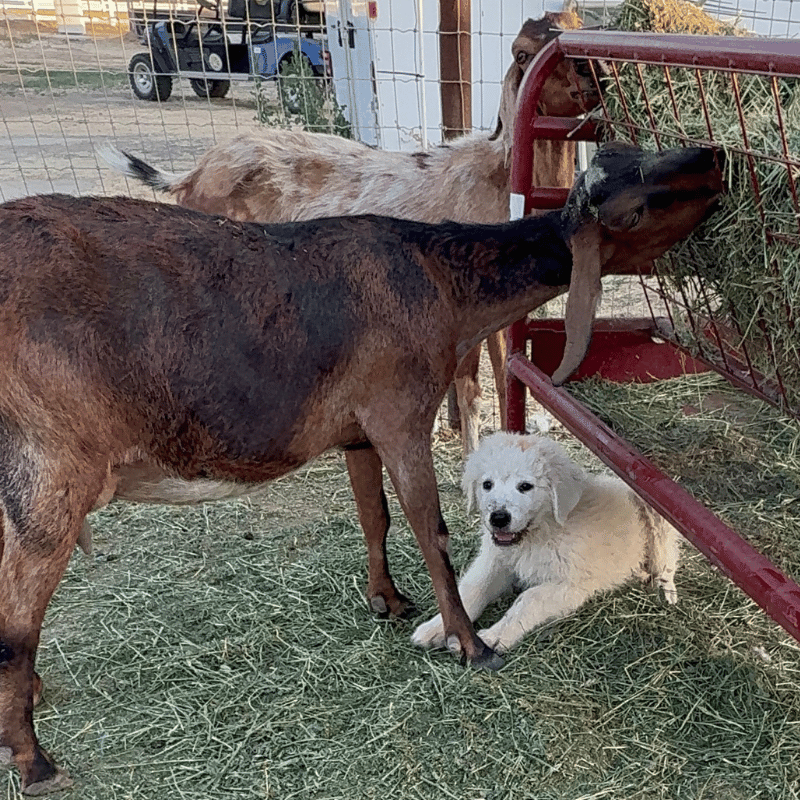
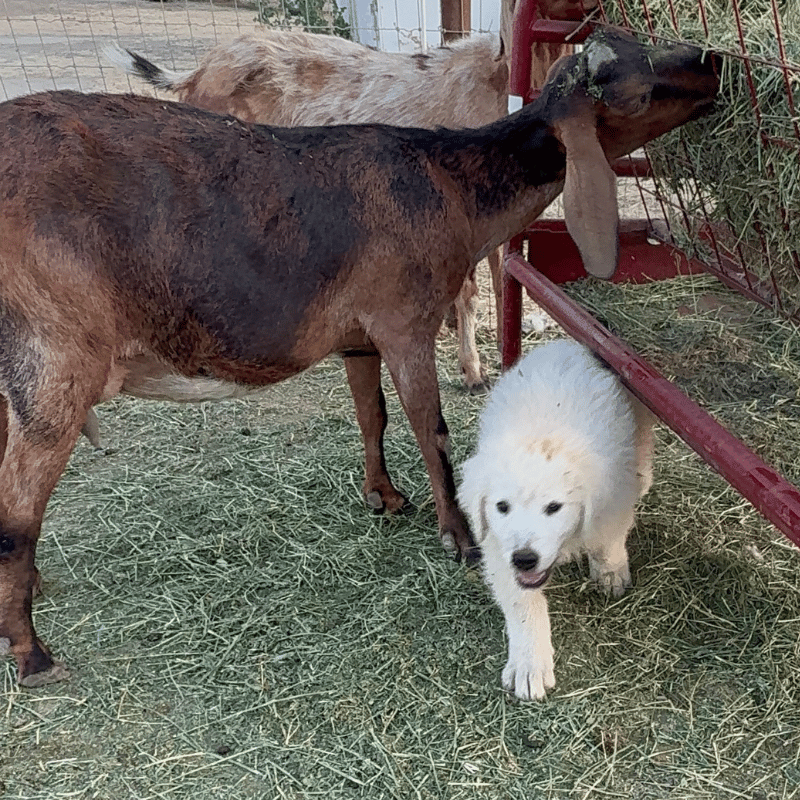
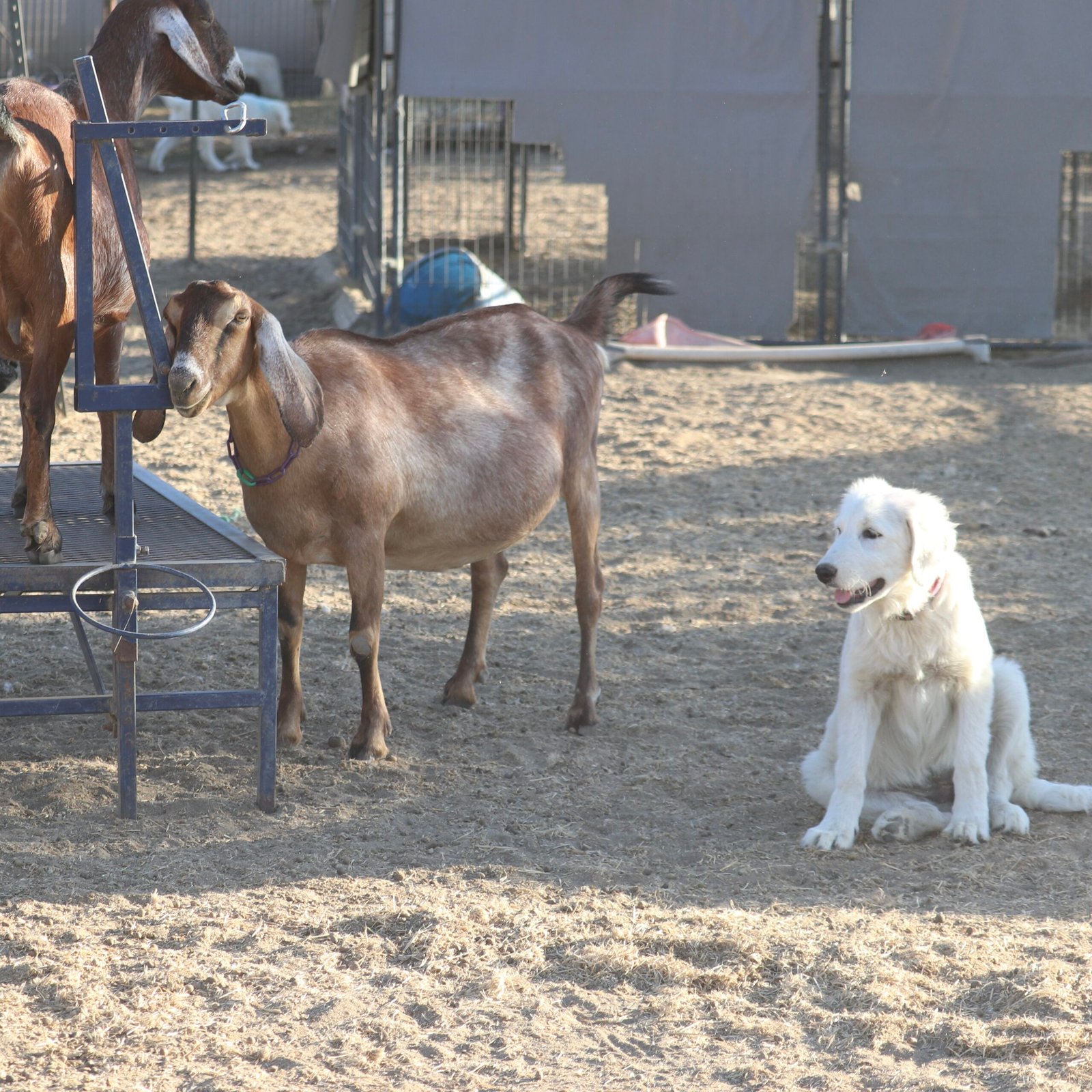
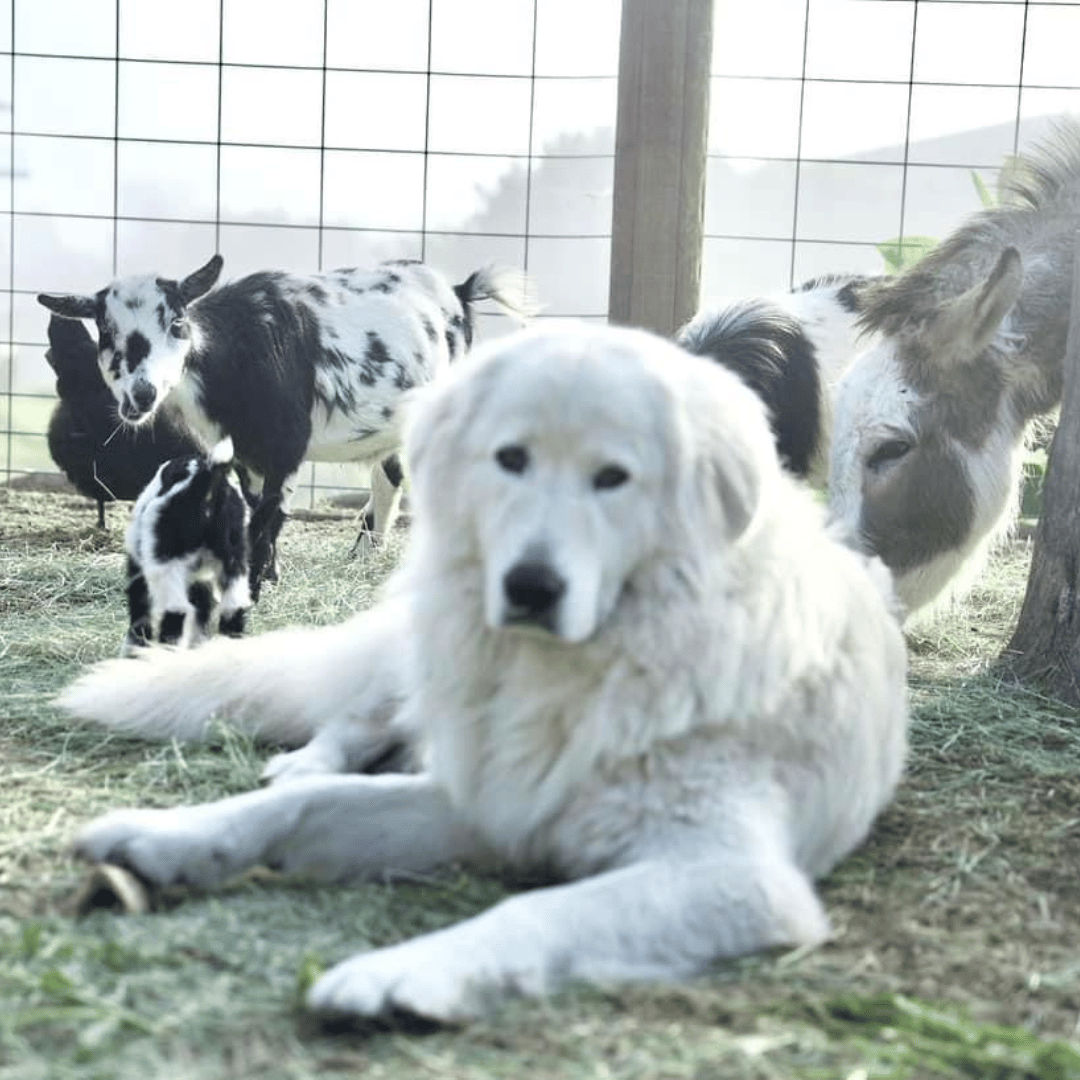
The result isn't a puppy who has been "introduced to livestock." It's a puppy who has learned the language of livestock by immersion — the way a child learns a foreign language by living in the country. No drills, no forced exposure. Just daily life alongside the animals they were born to protect, absorbed naturally, until it becomes second nature.
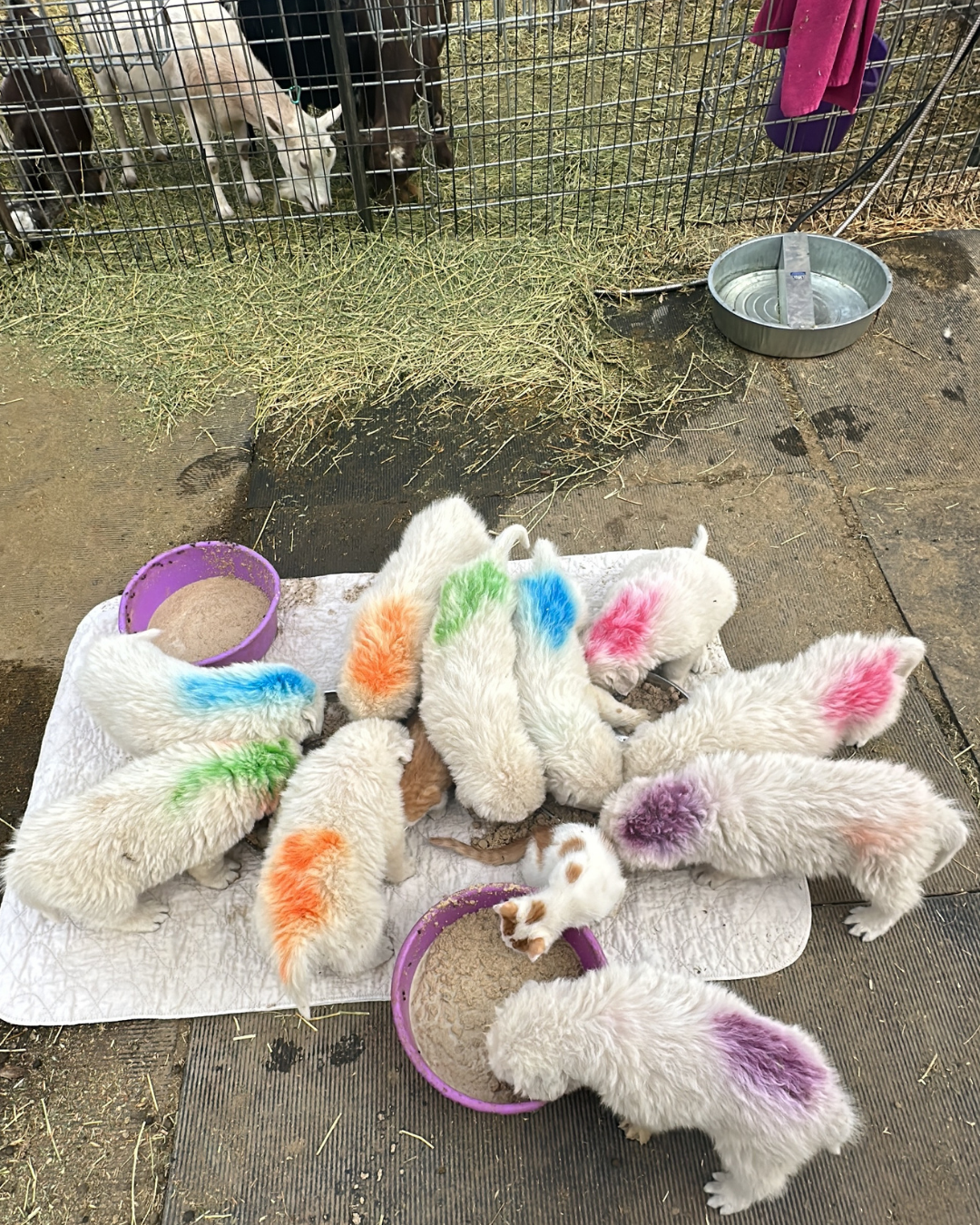
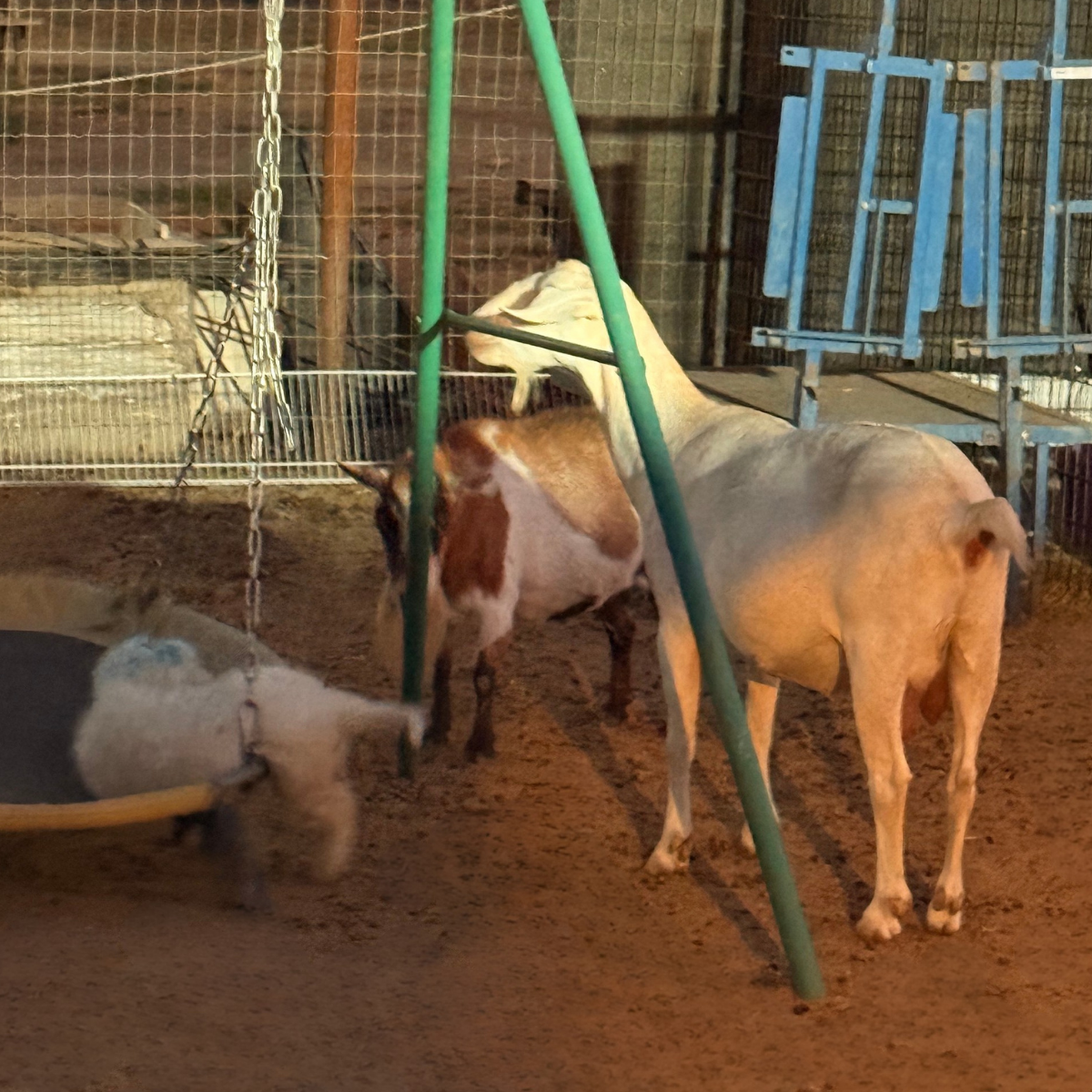
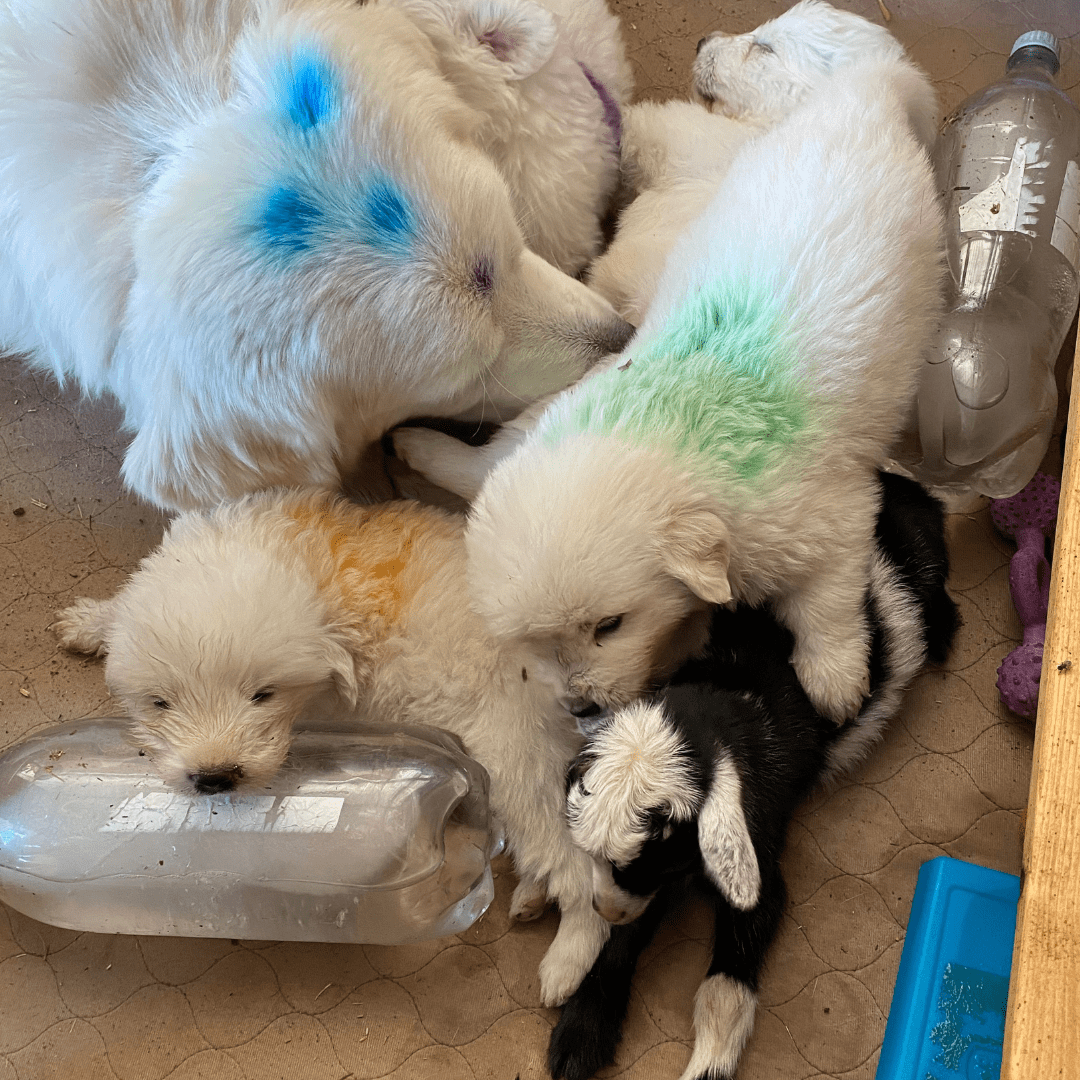
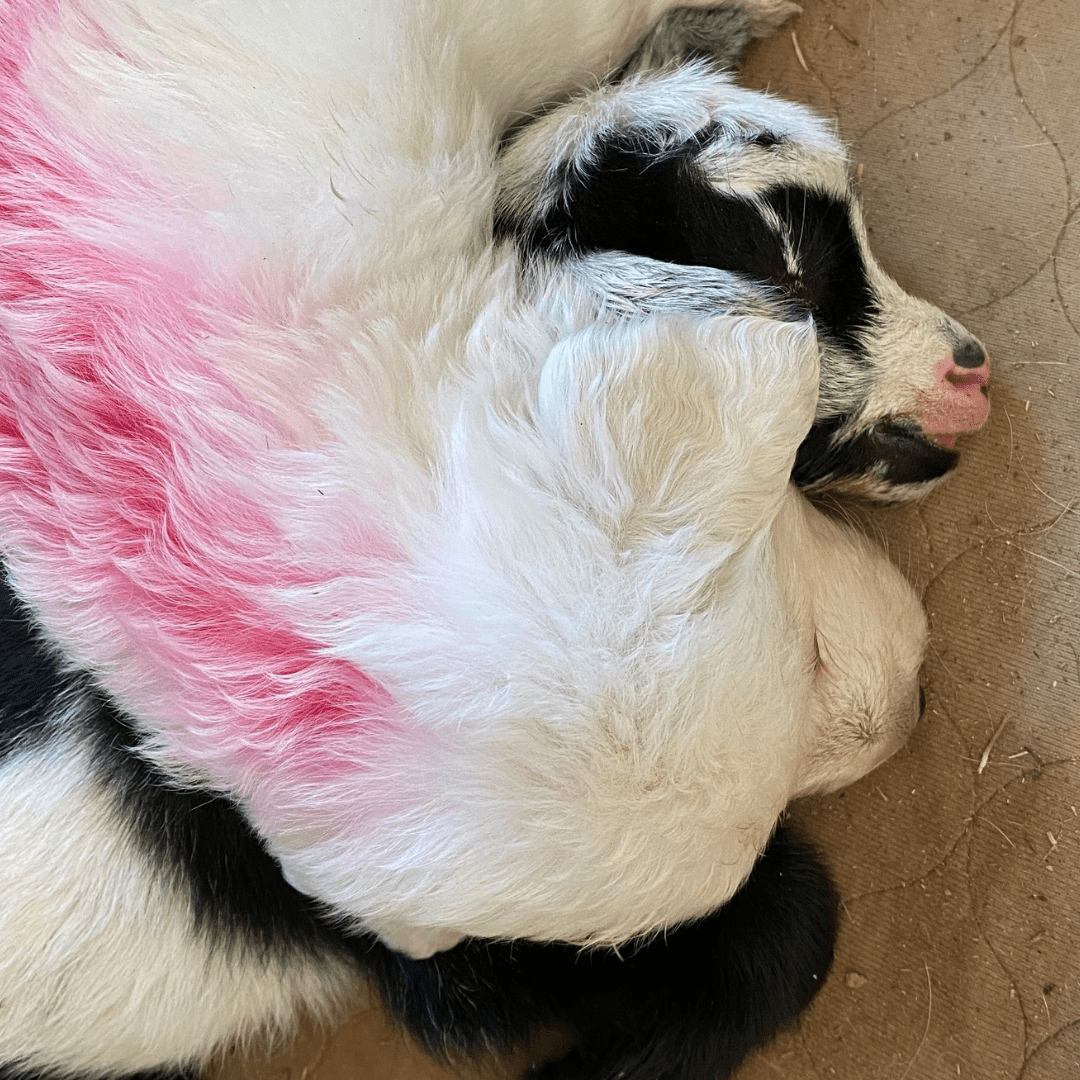
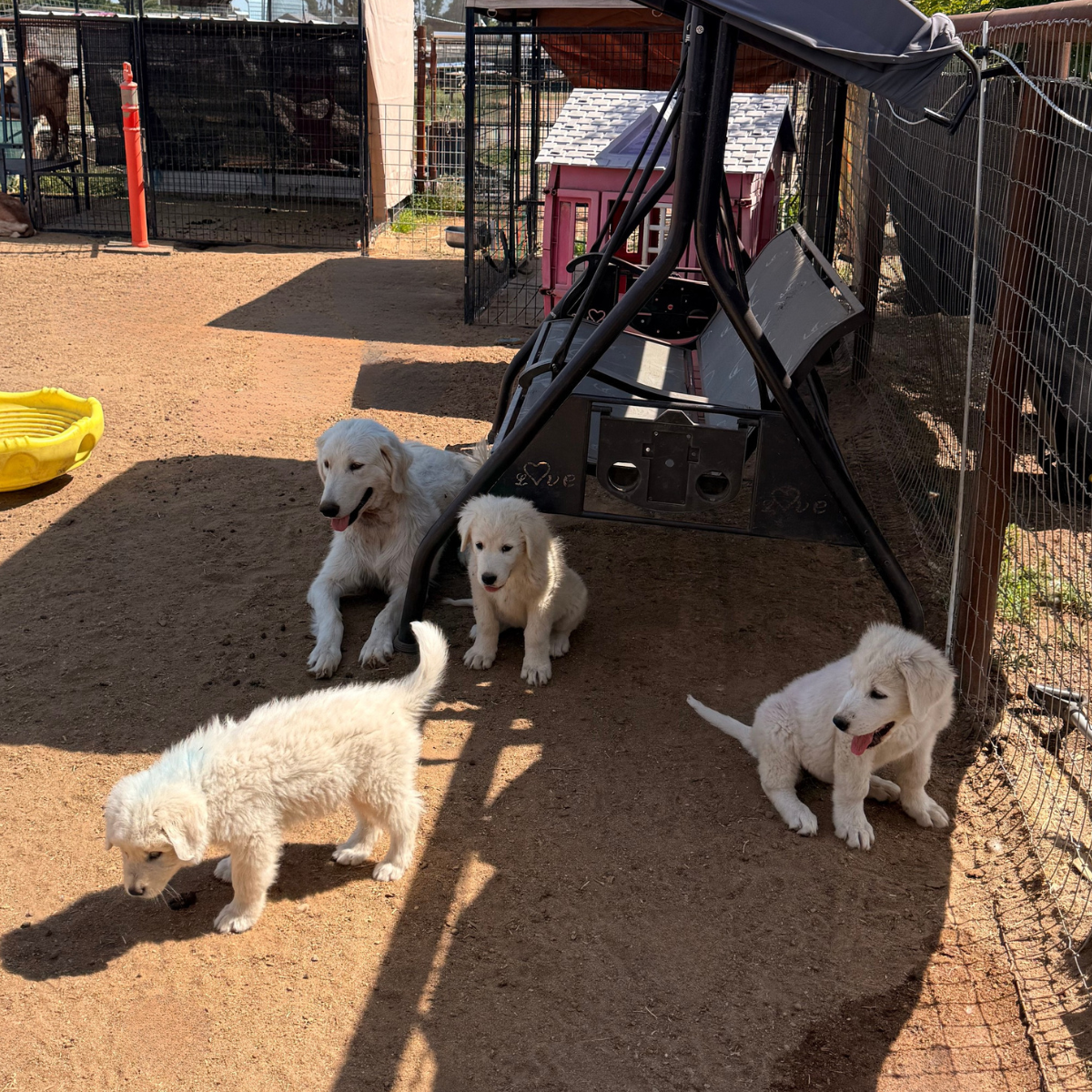
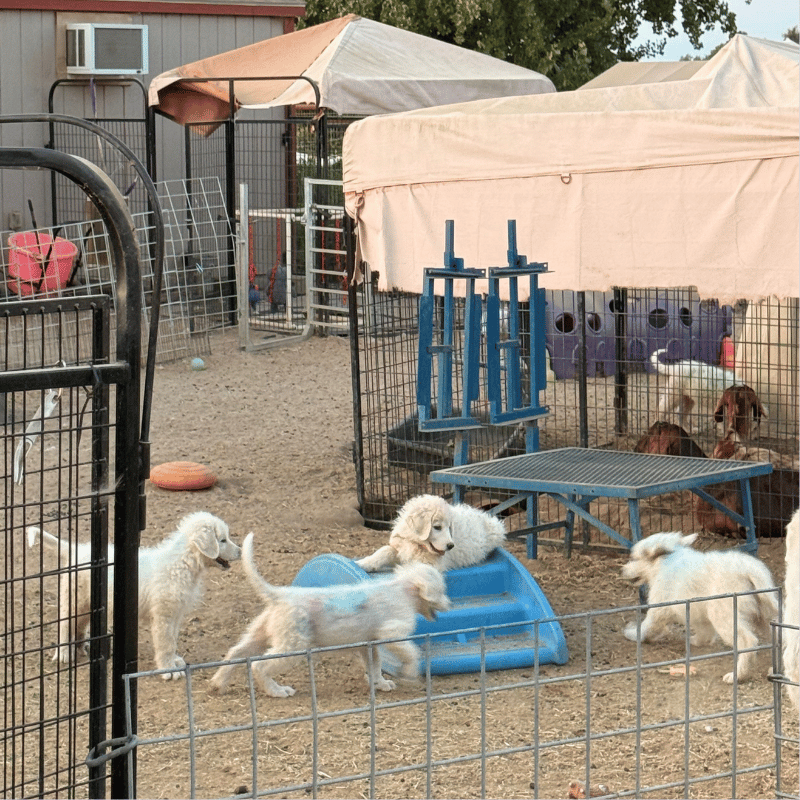
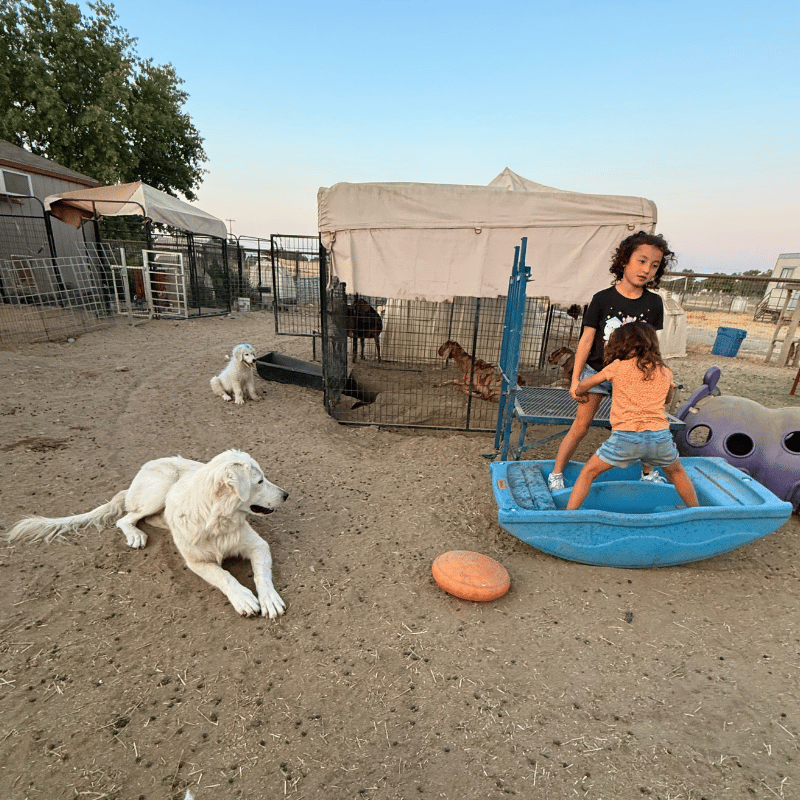
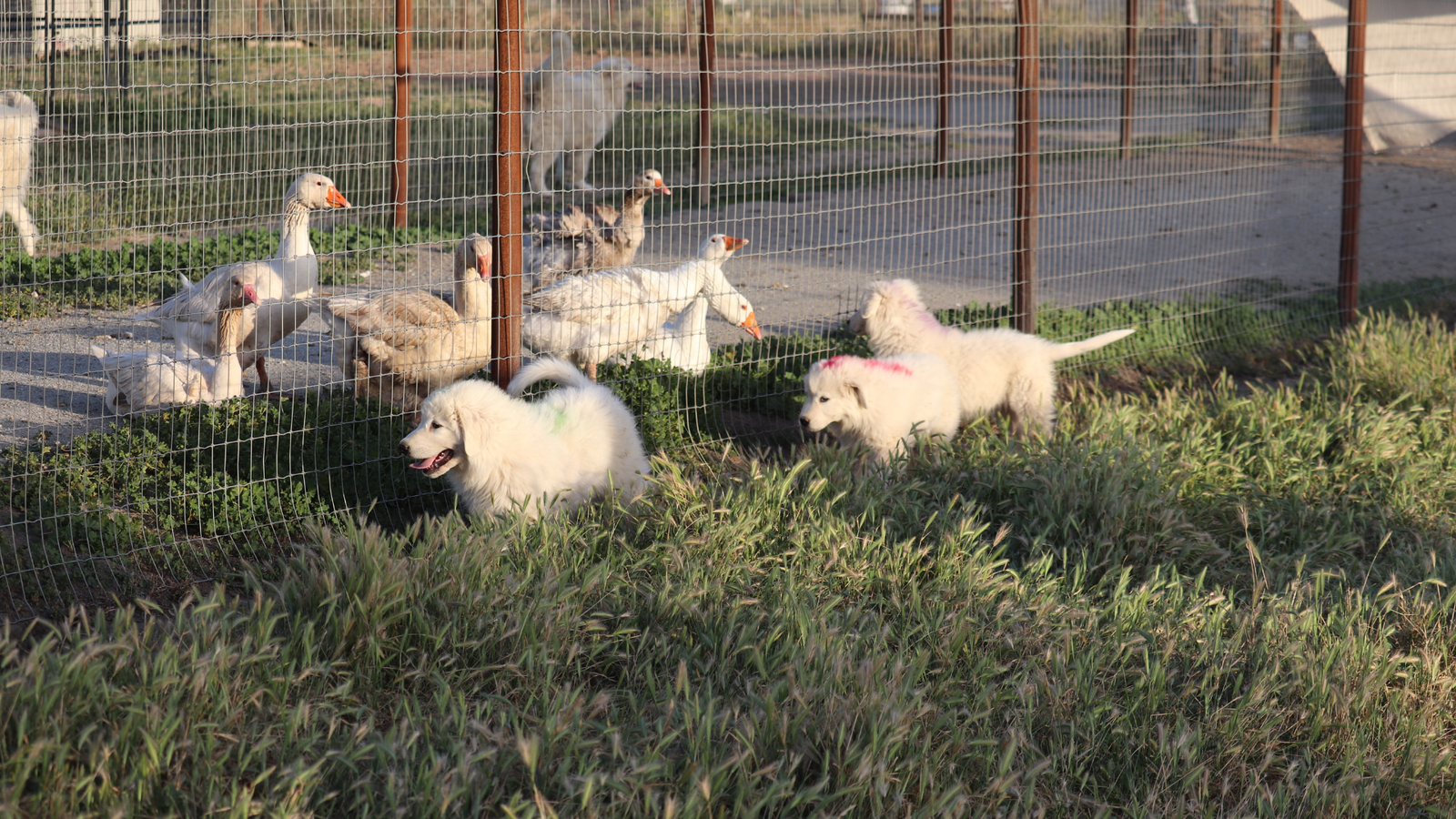
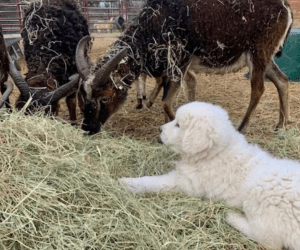
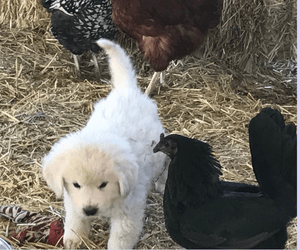
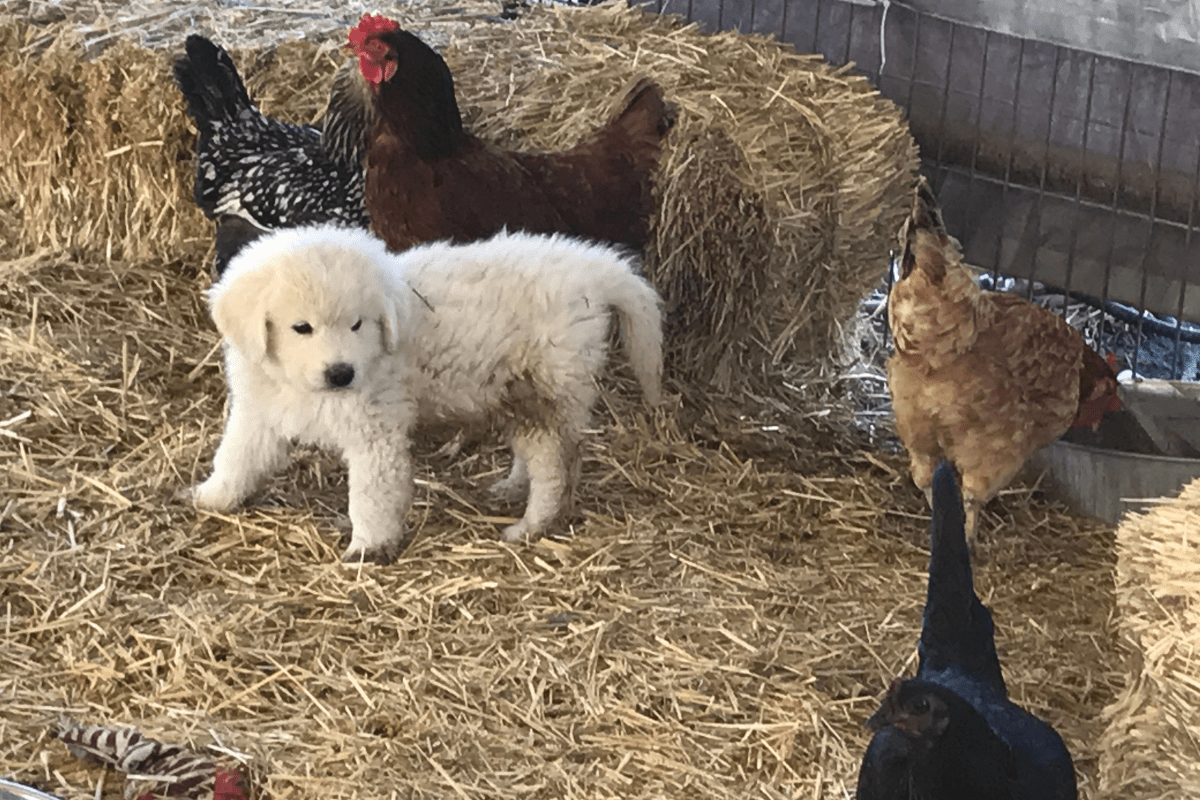
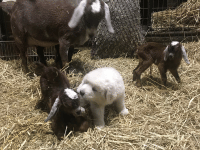
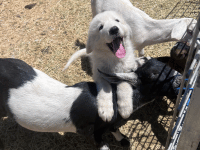
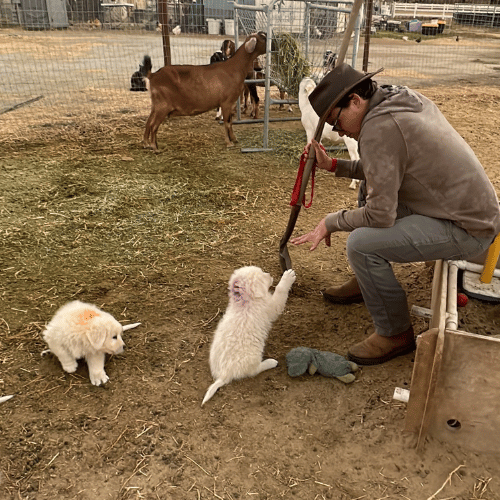
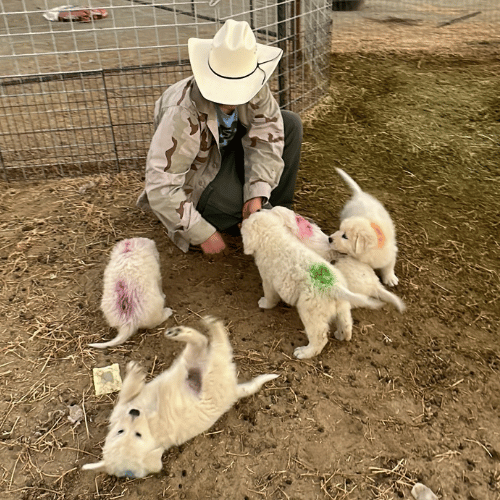
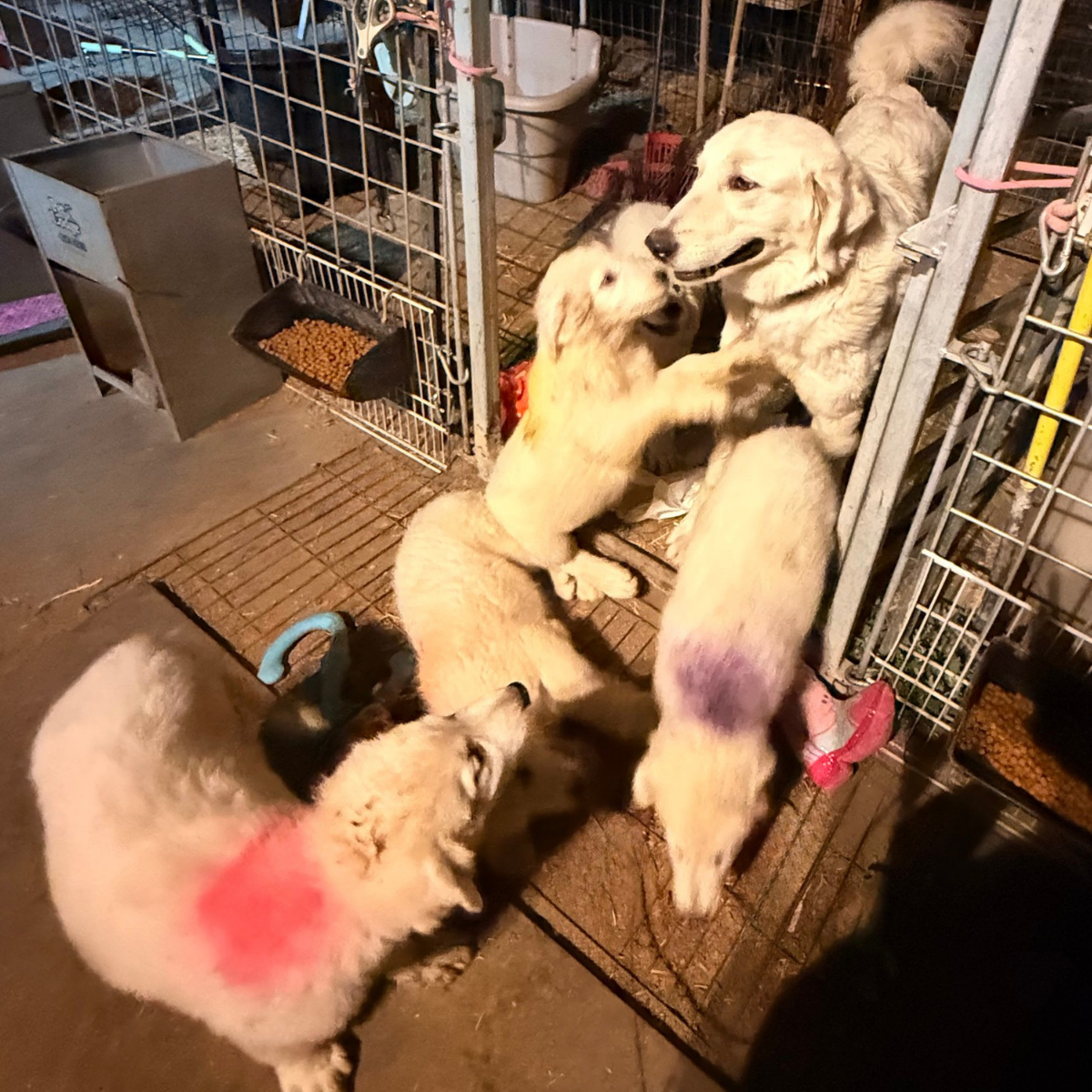
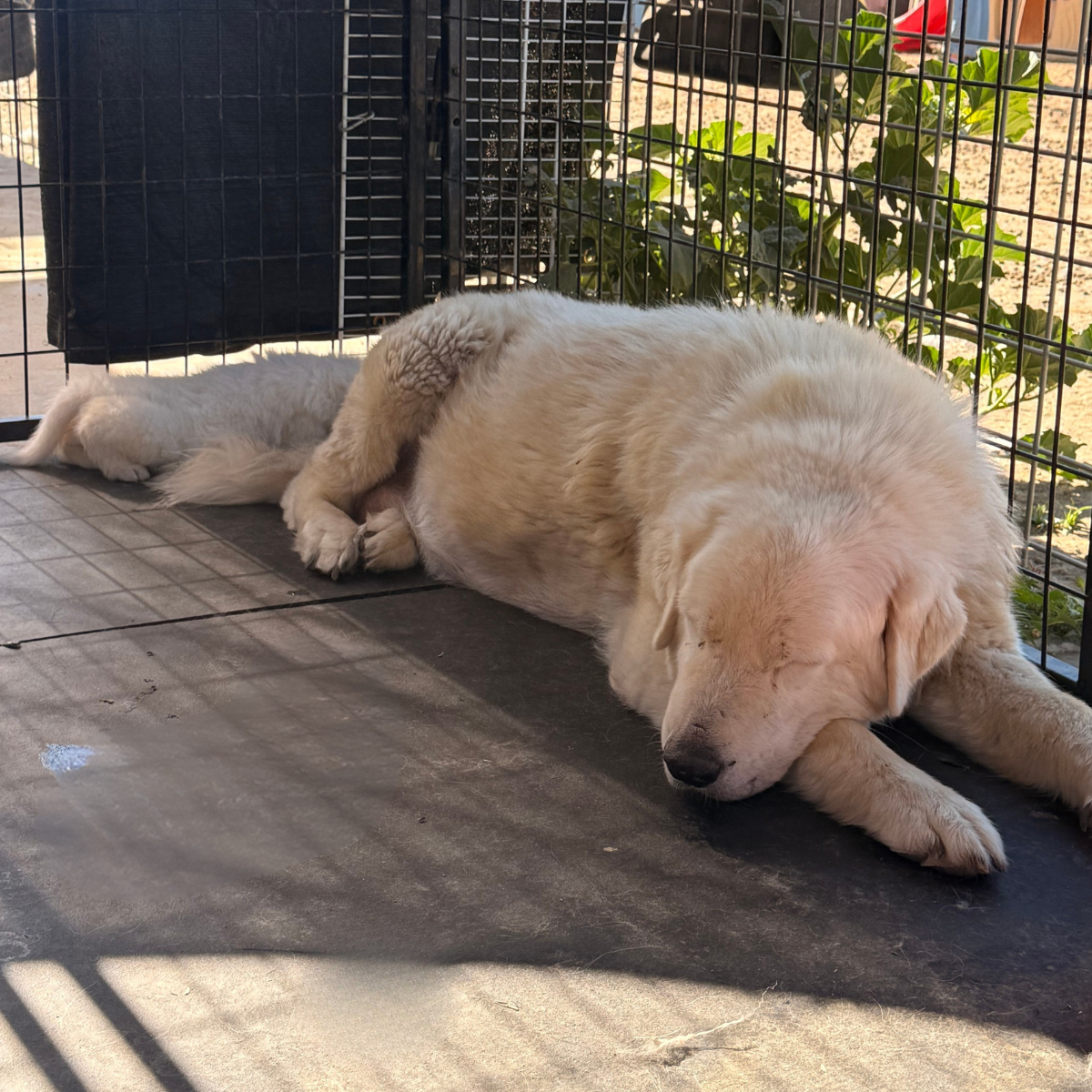
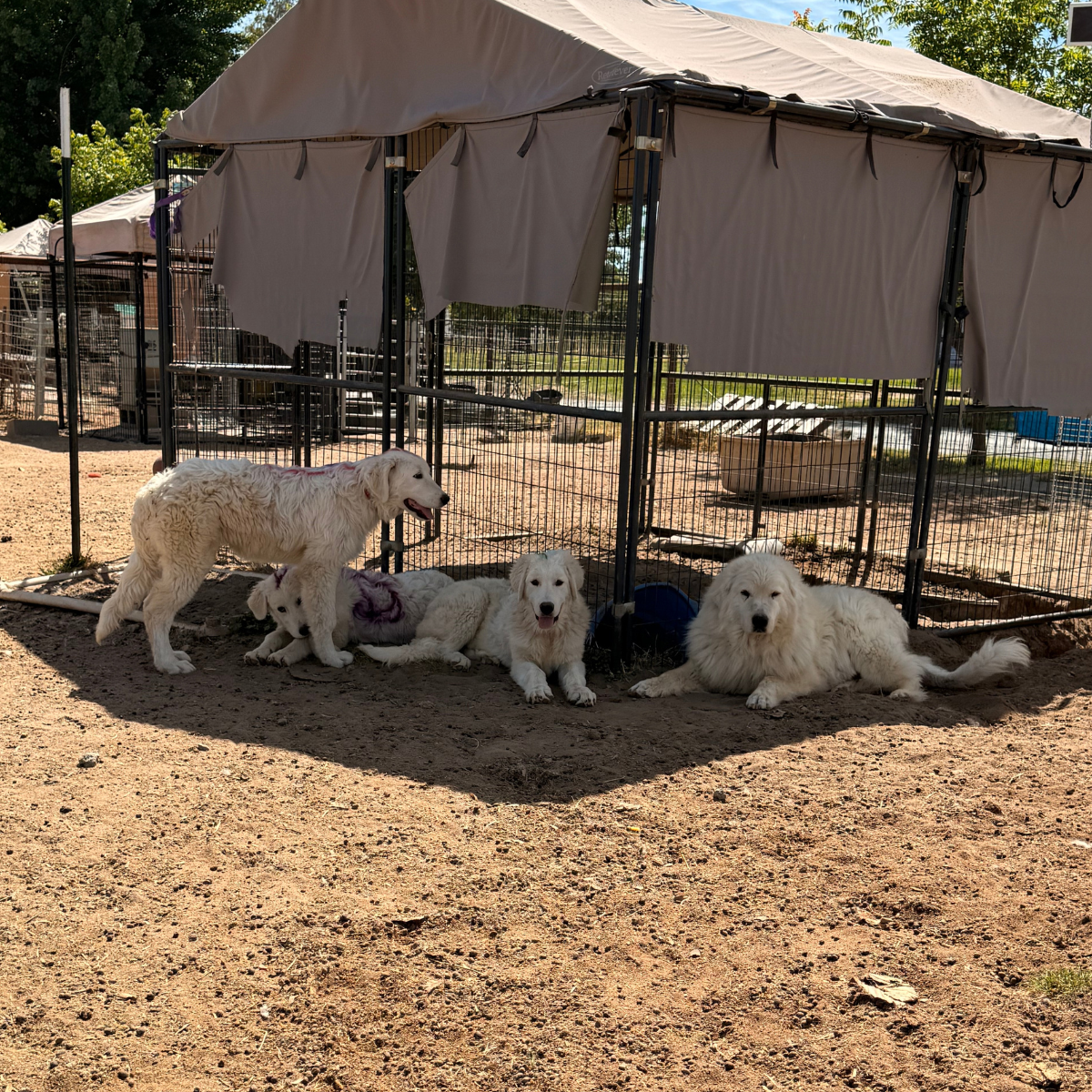
You'll see it in these photos. Puppies curled up against a goat's flank. Puppies playing as the goats calmly chew their cuds or mill about or sleeping under a hay feeder as the goats eat. Older puppies moving confidently through the herd, already finding their place. These aren't staged moments. This is just a Tuesday at Prancing Pony Farm.
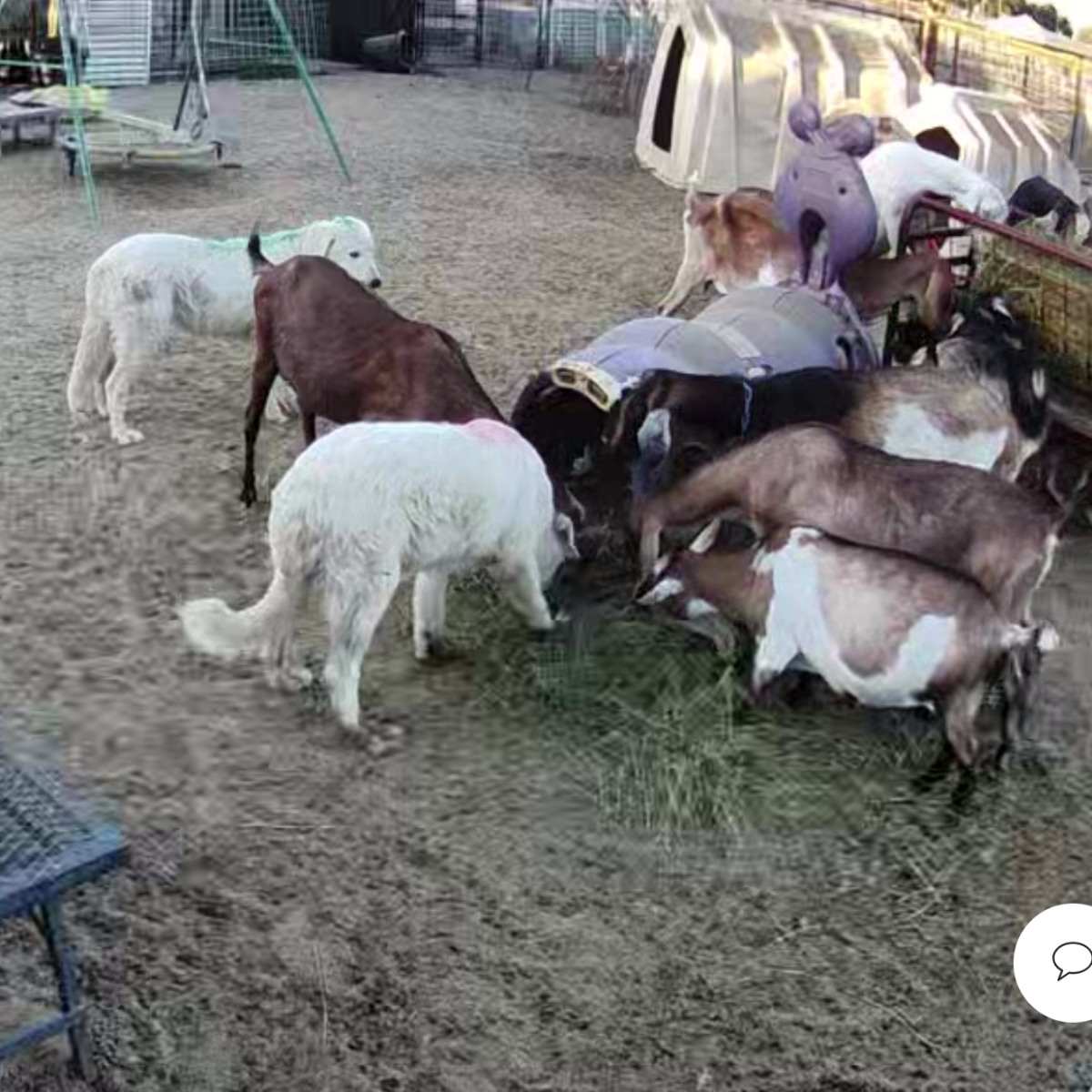
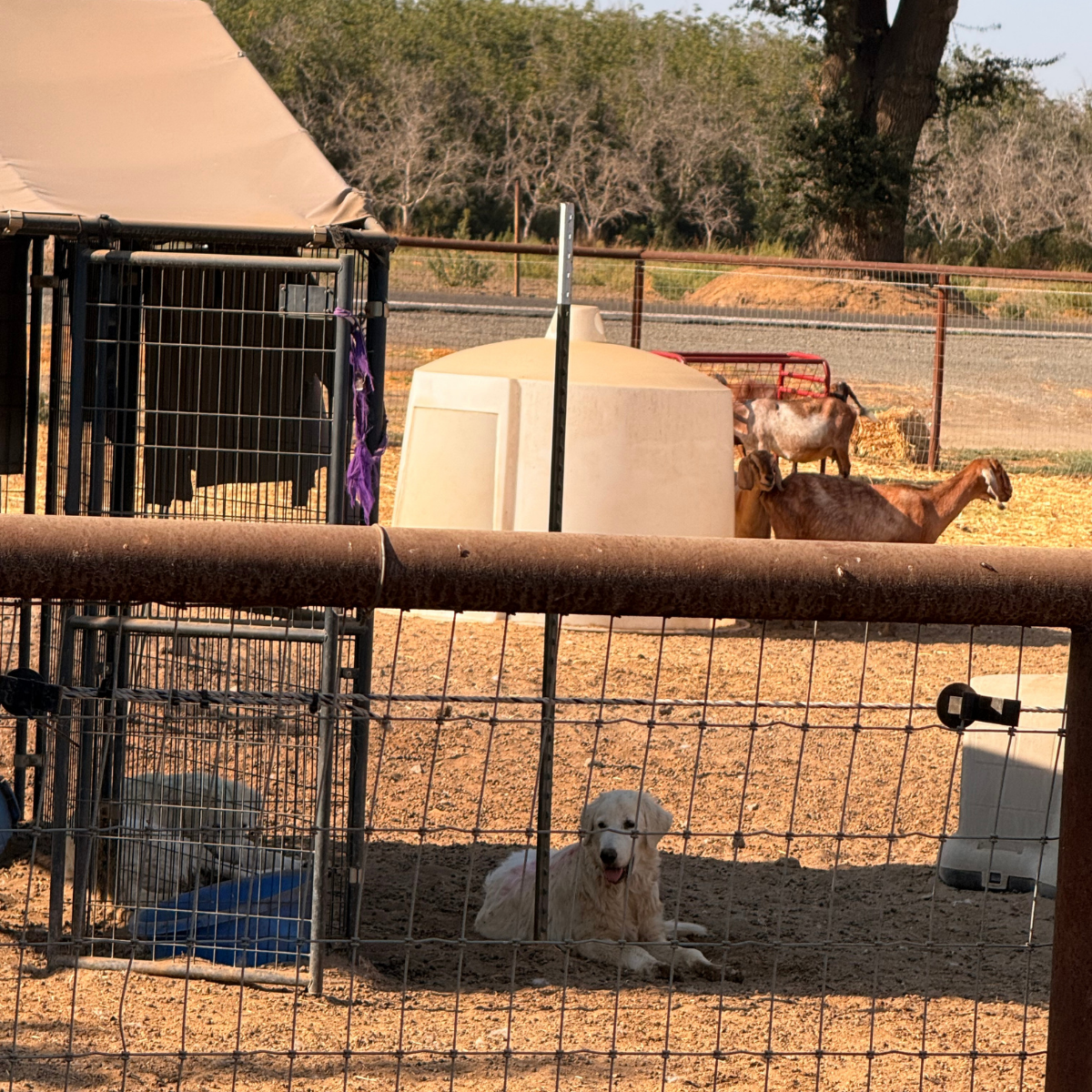
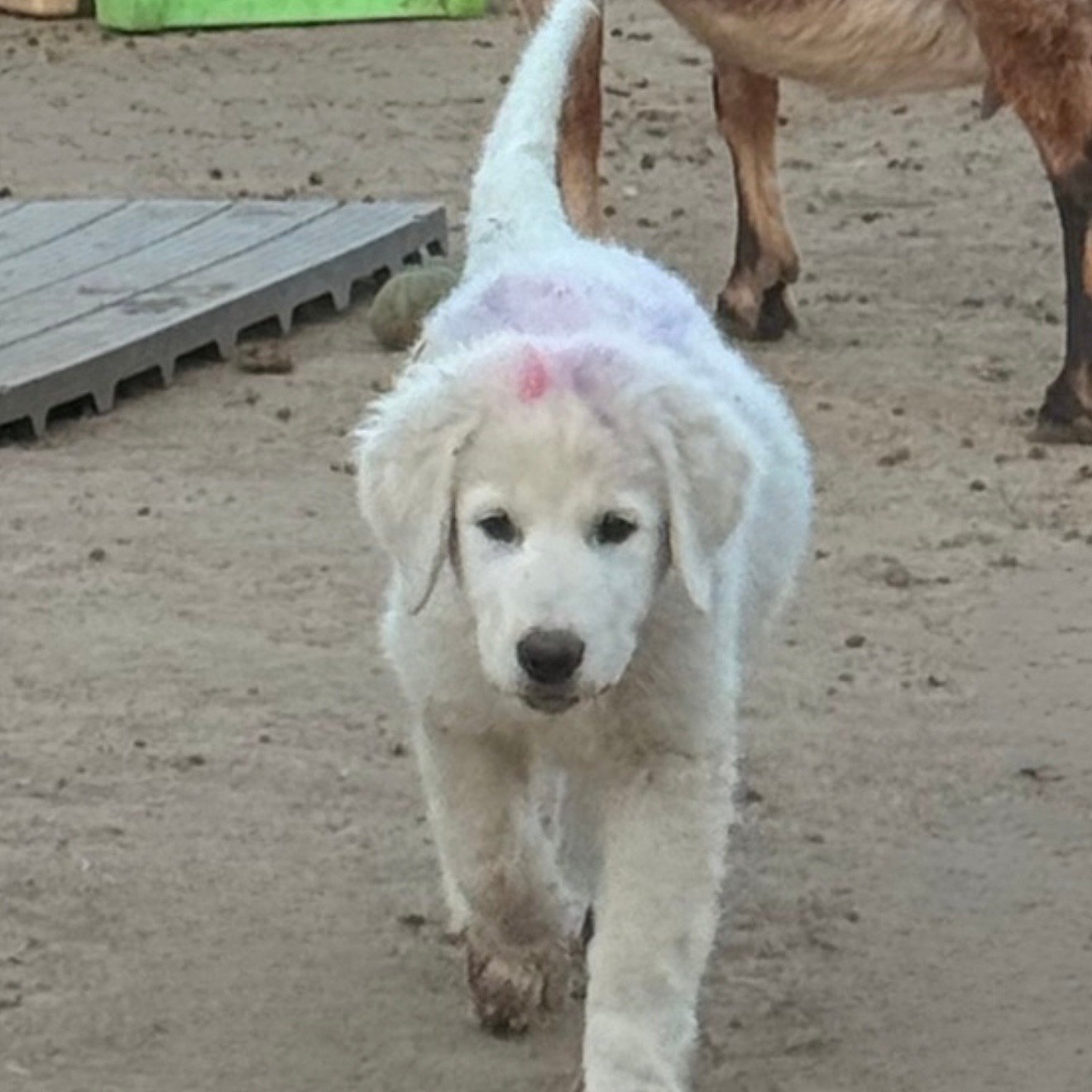
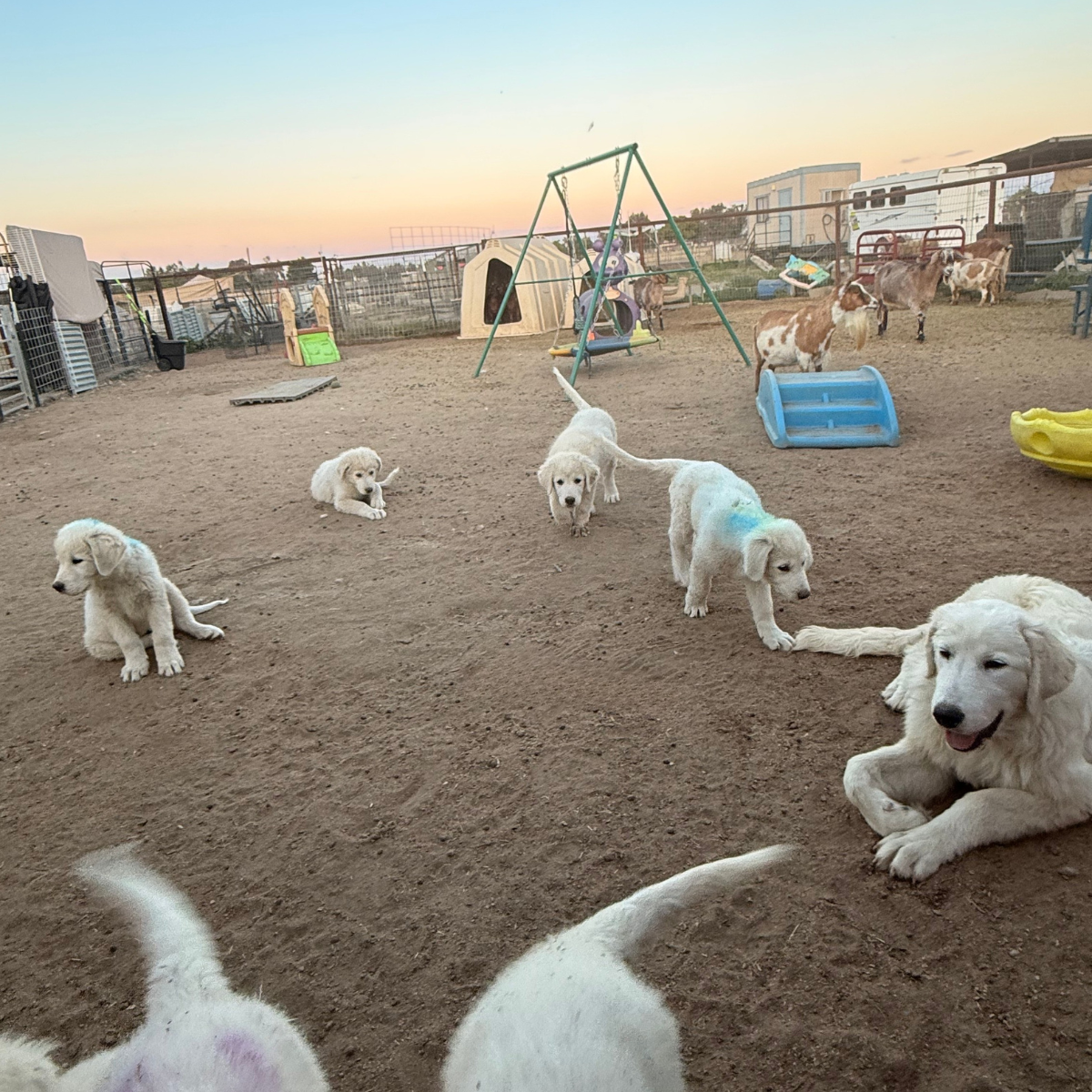
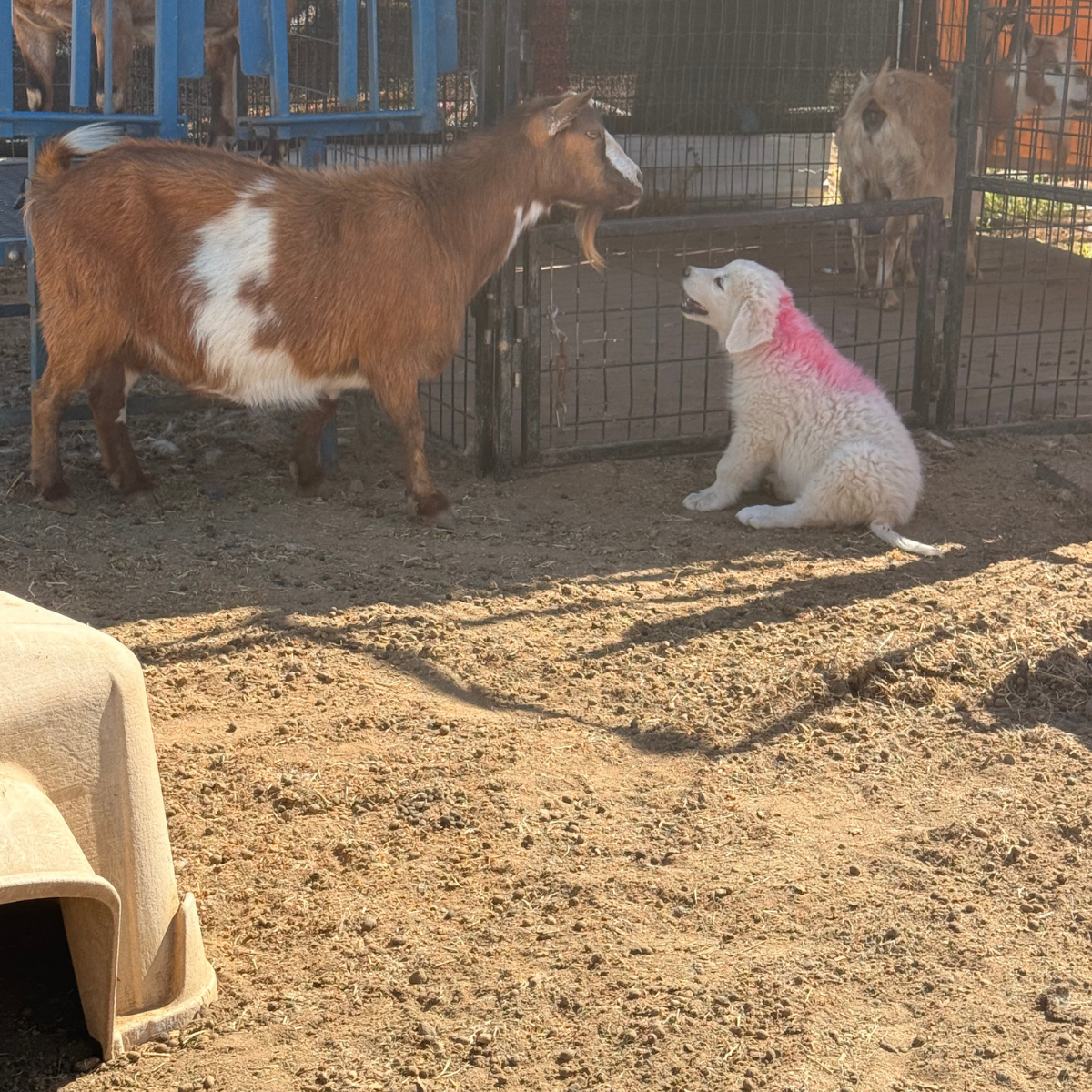
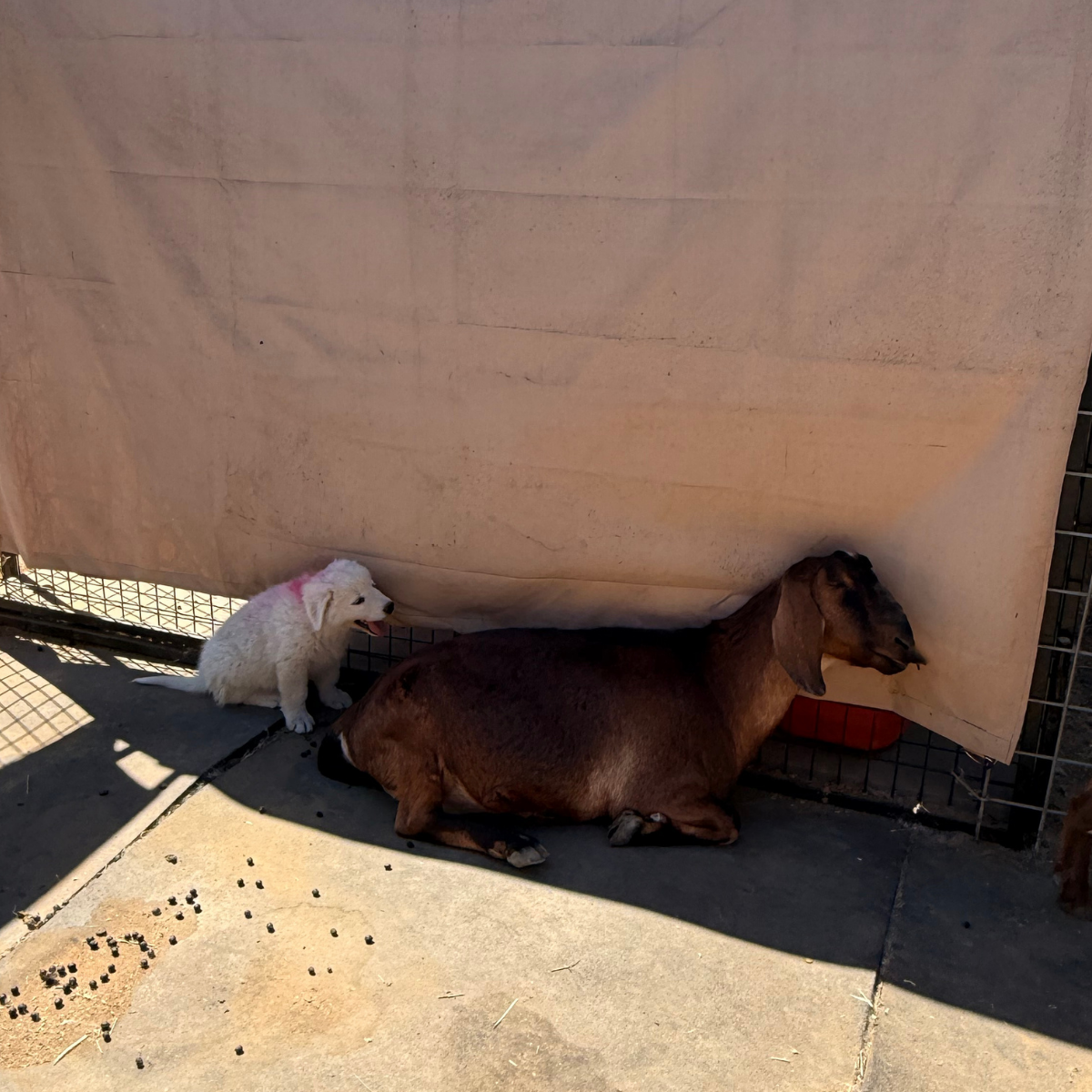
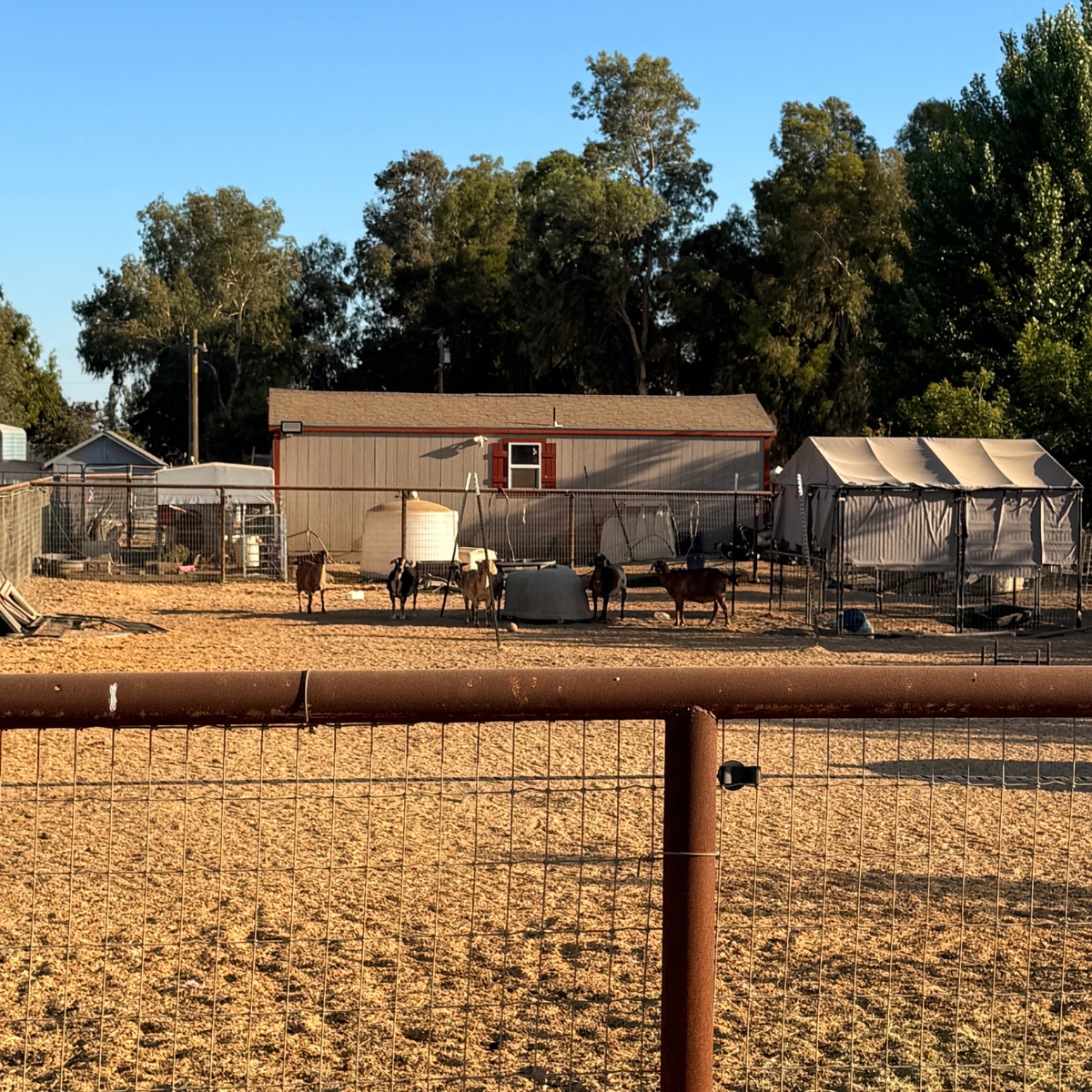
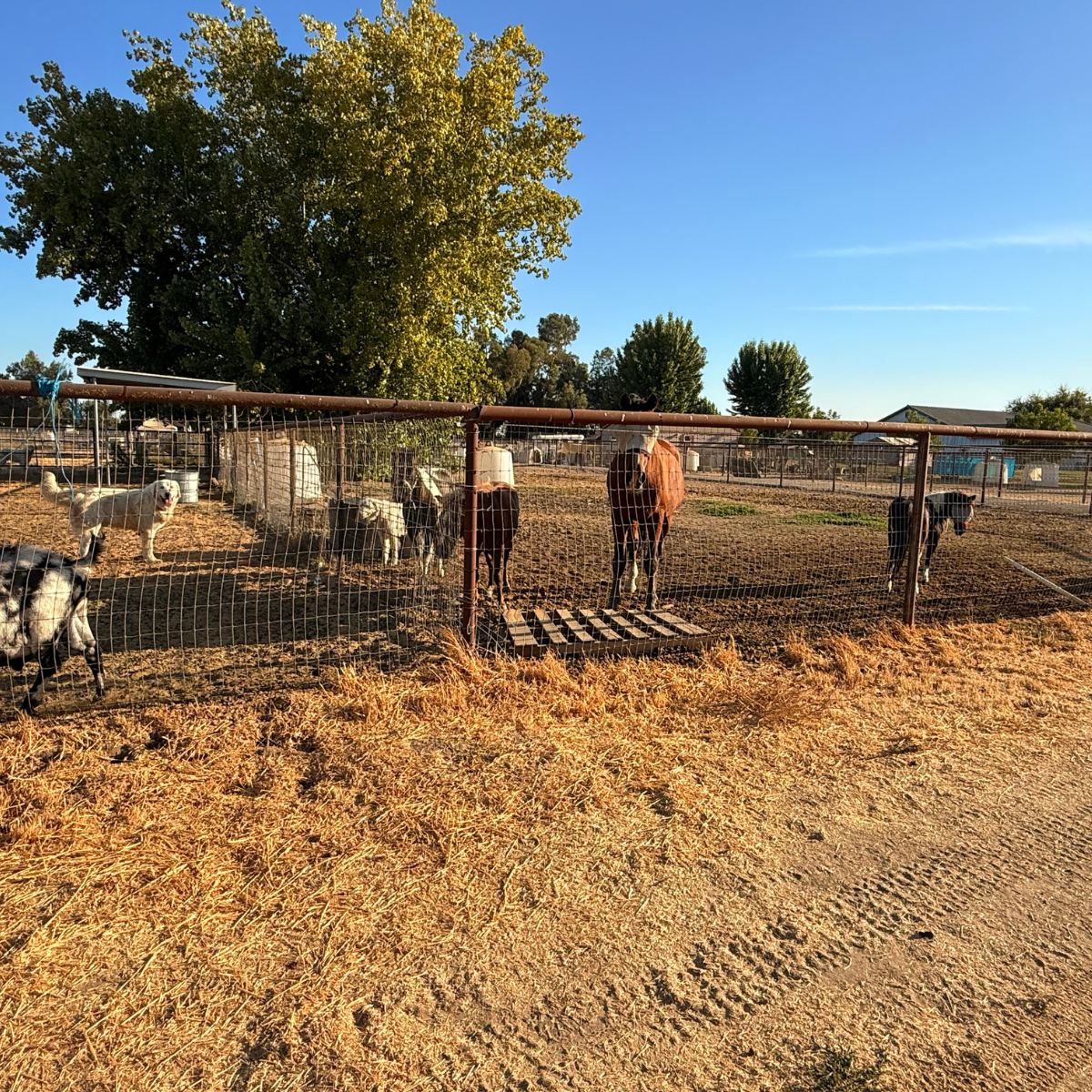
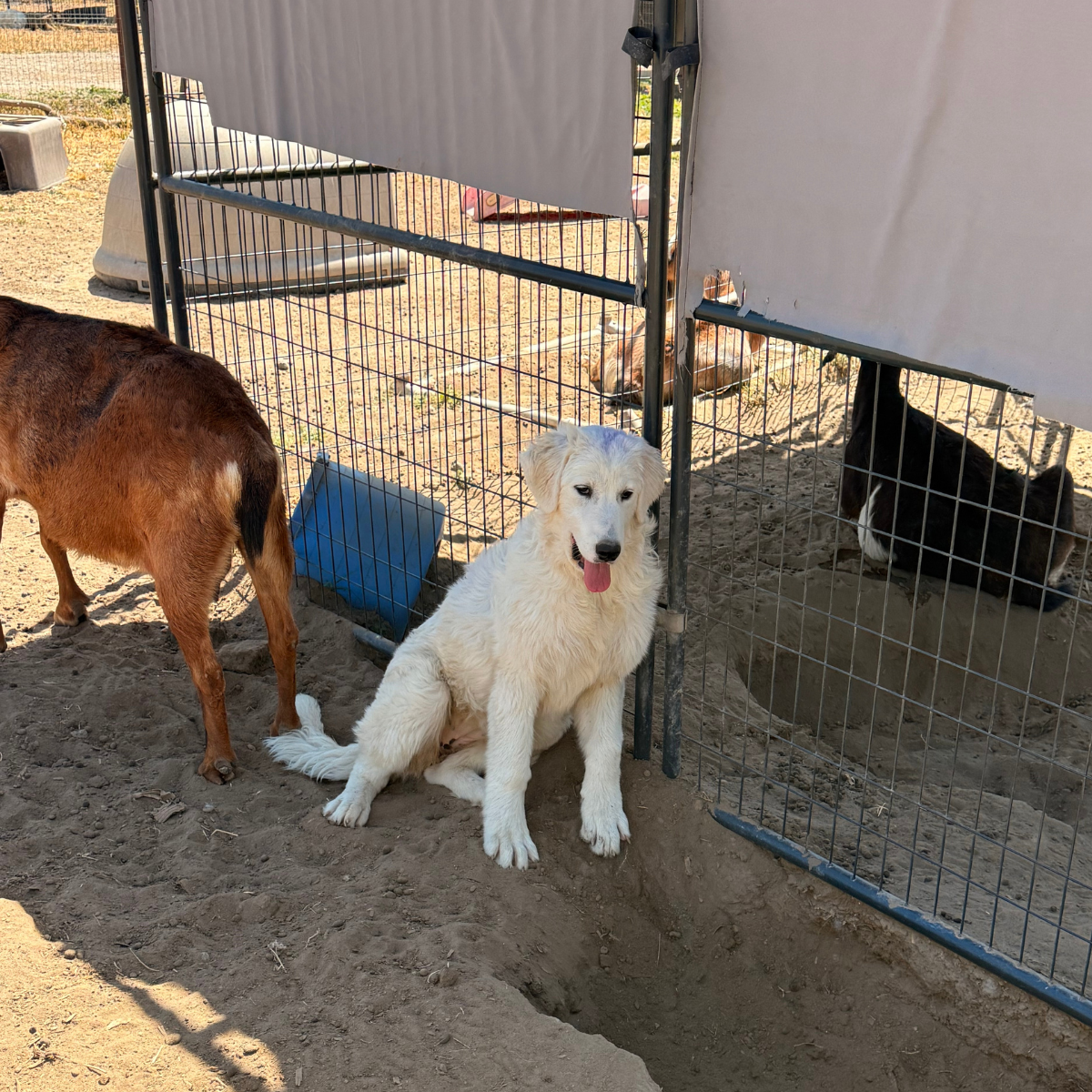
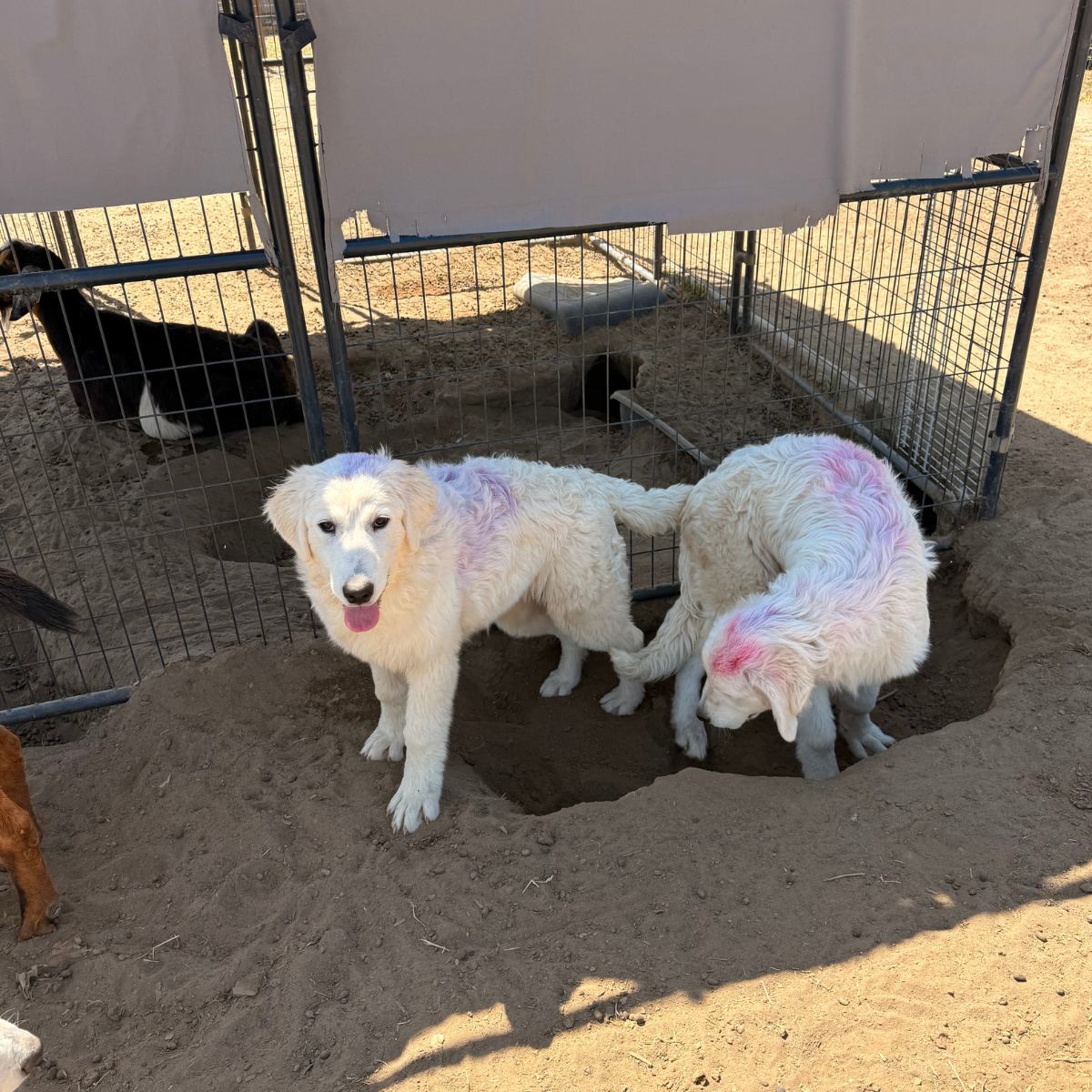
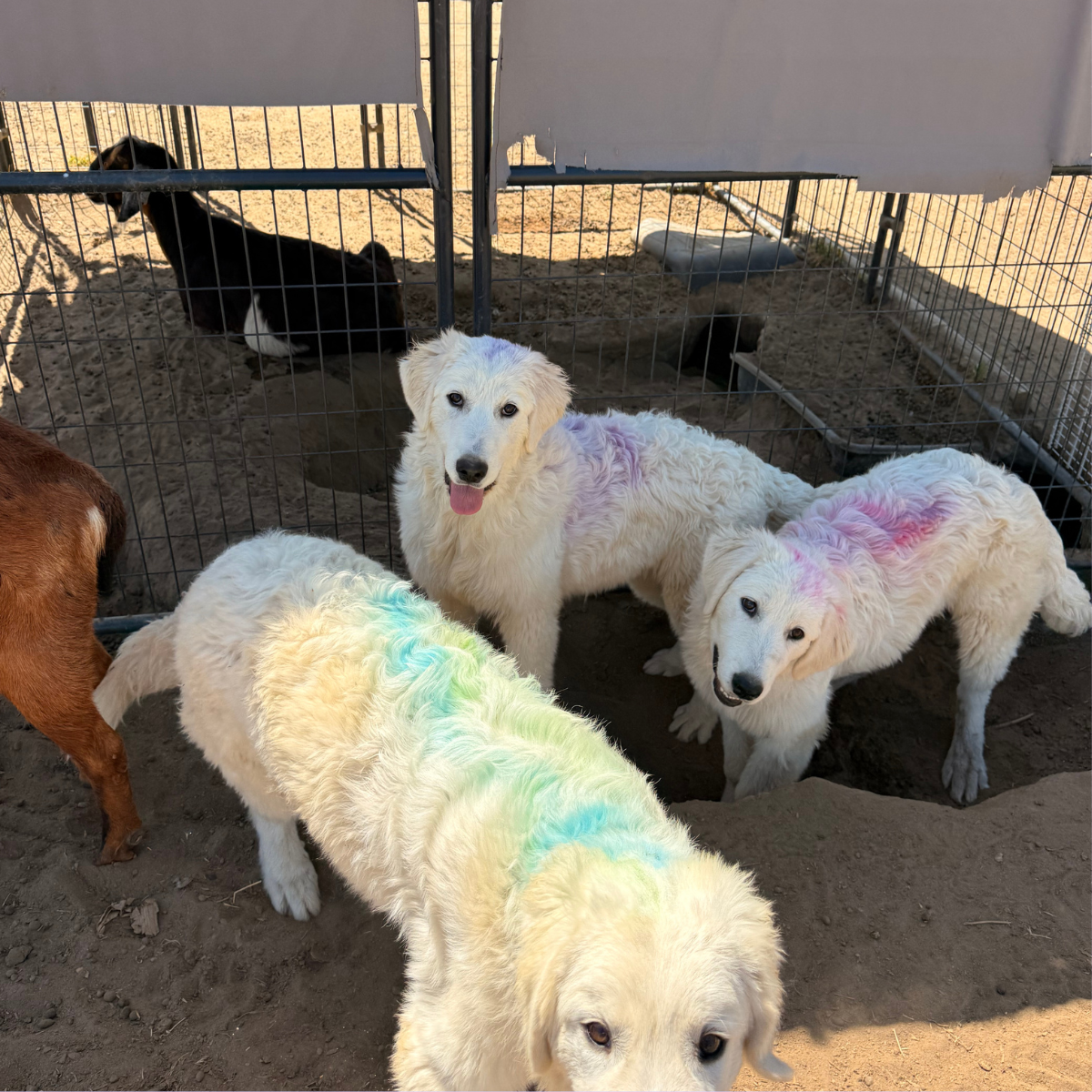
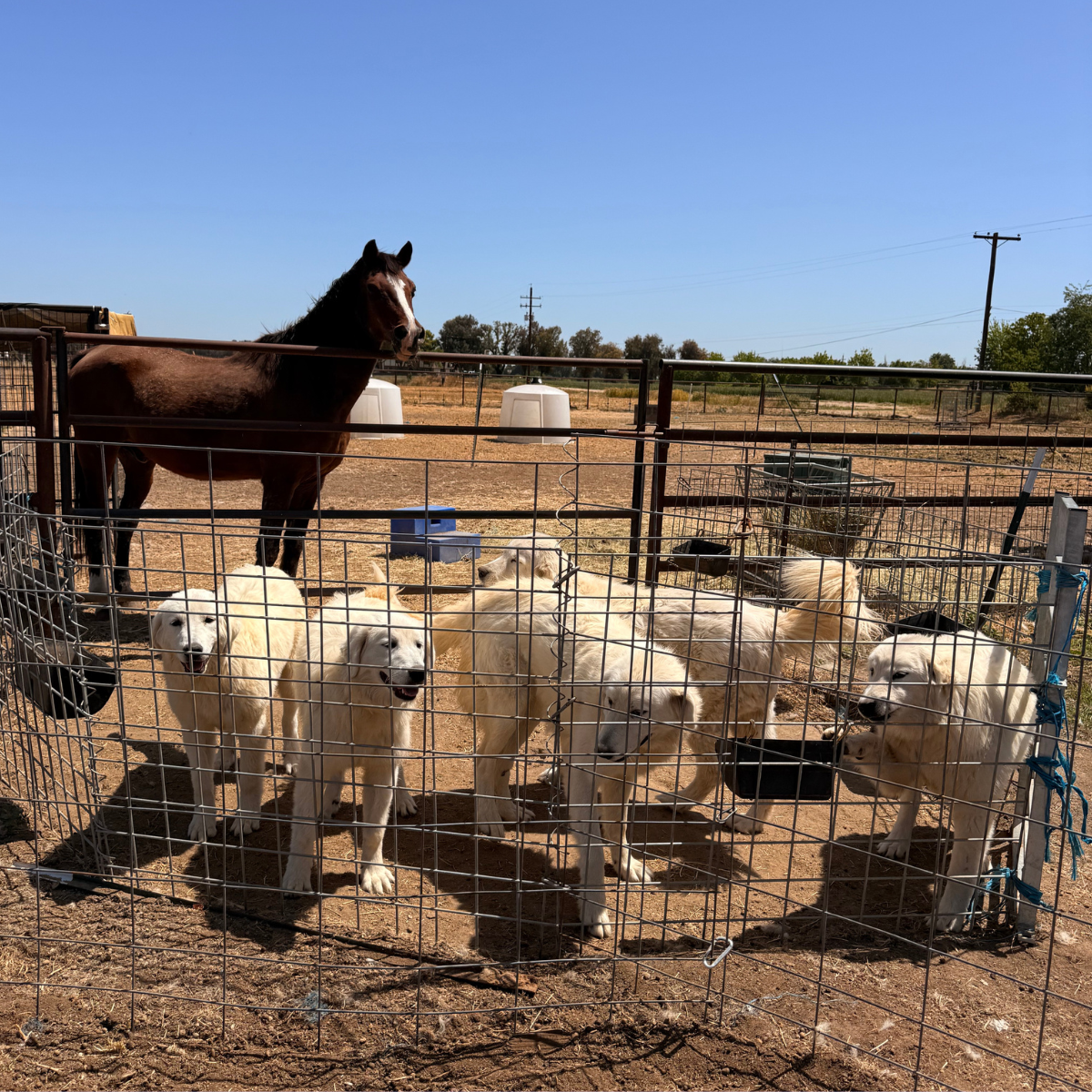
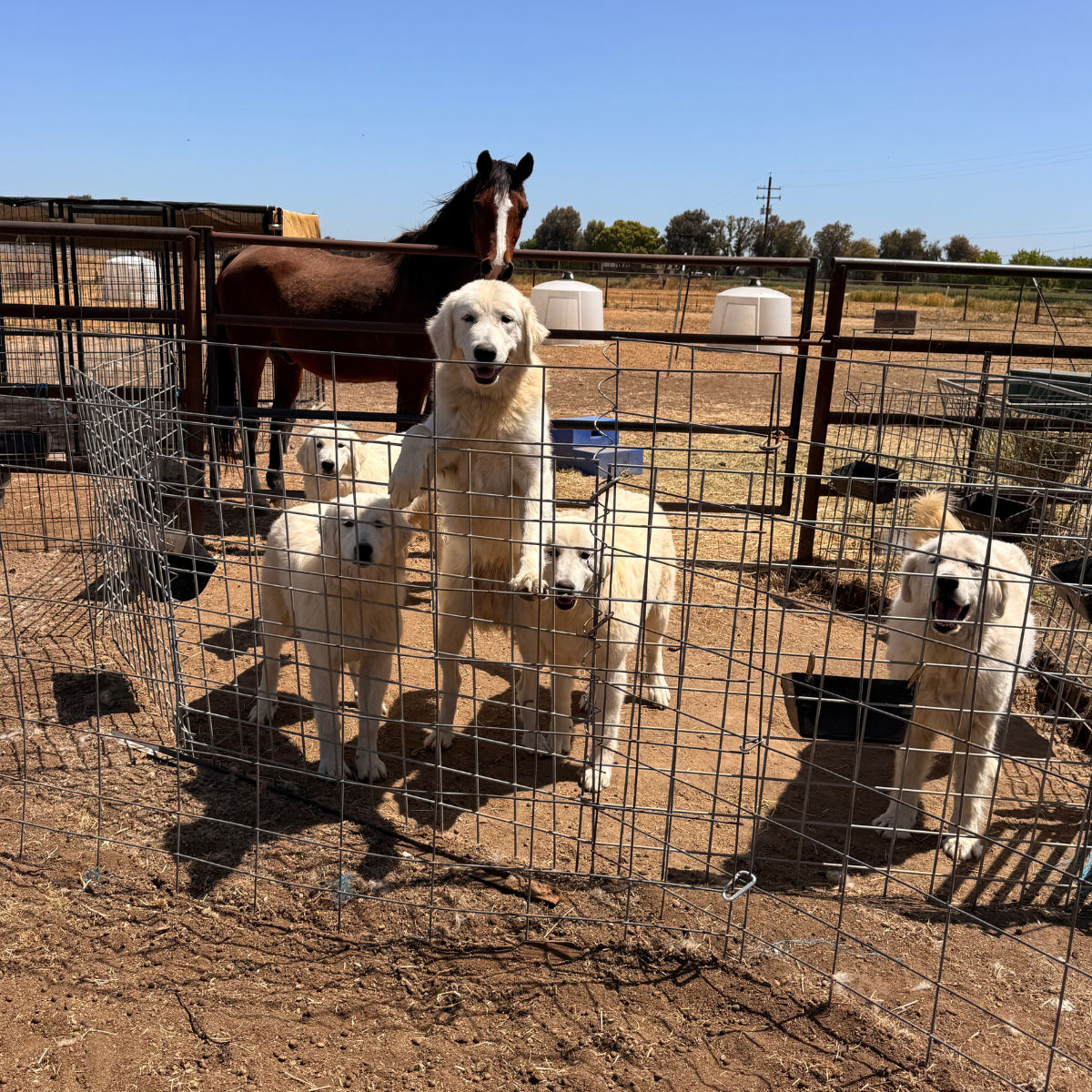
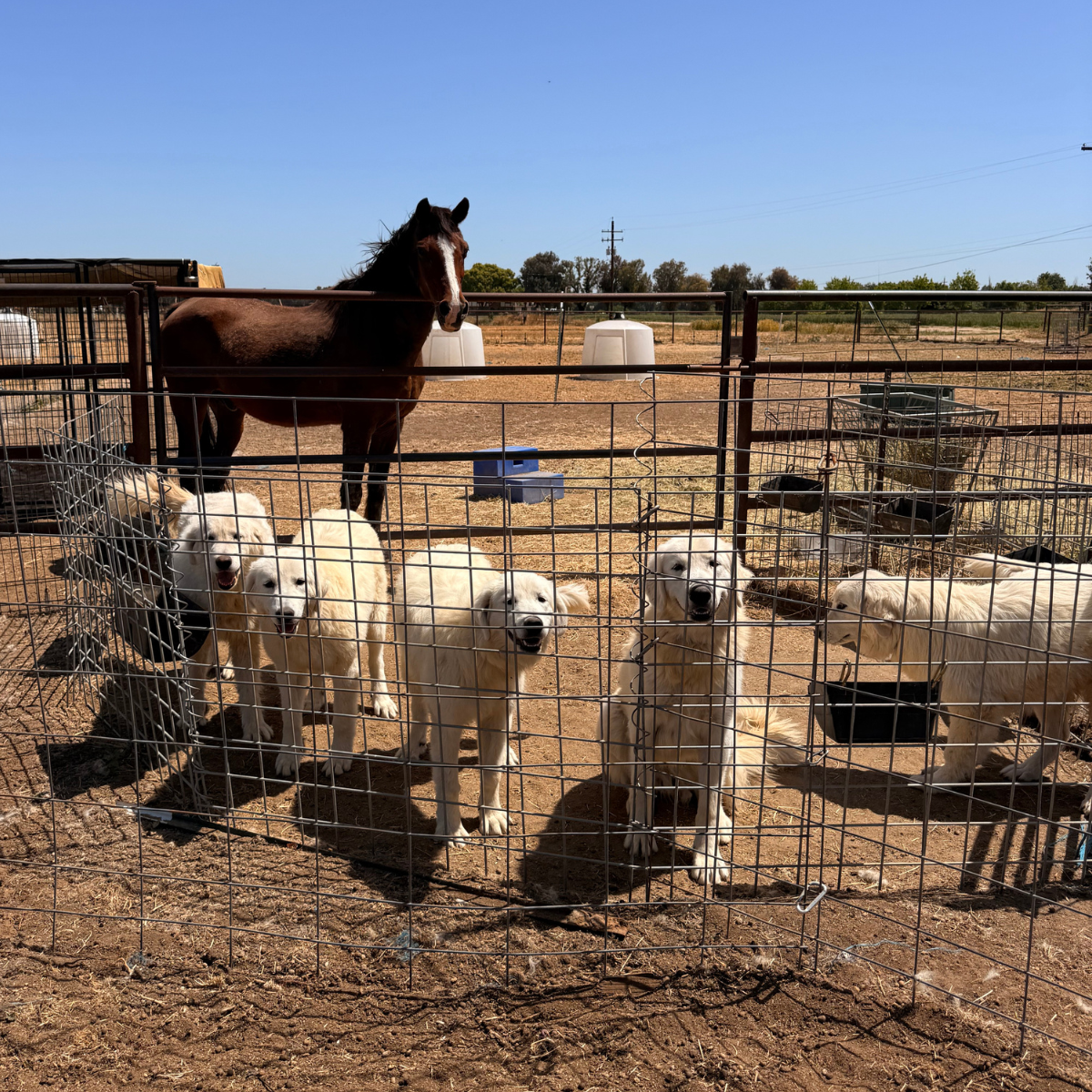
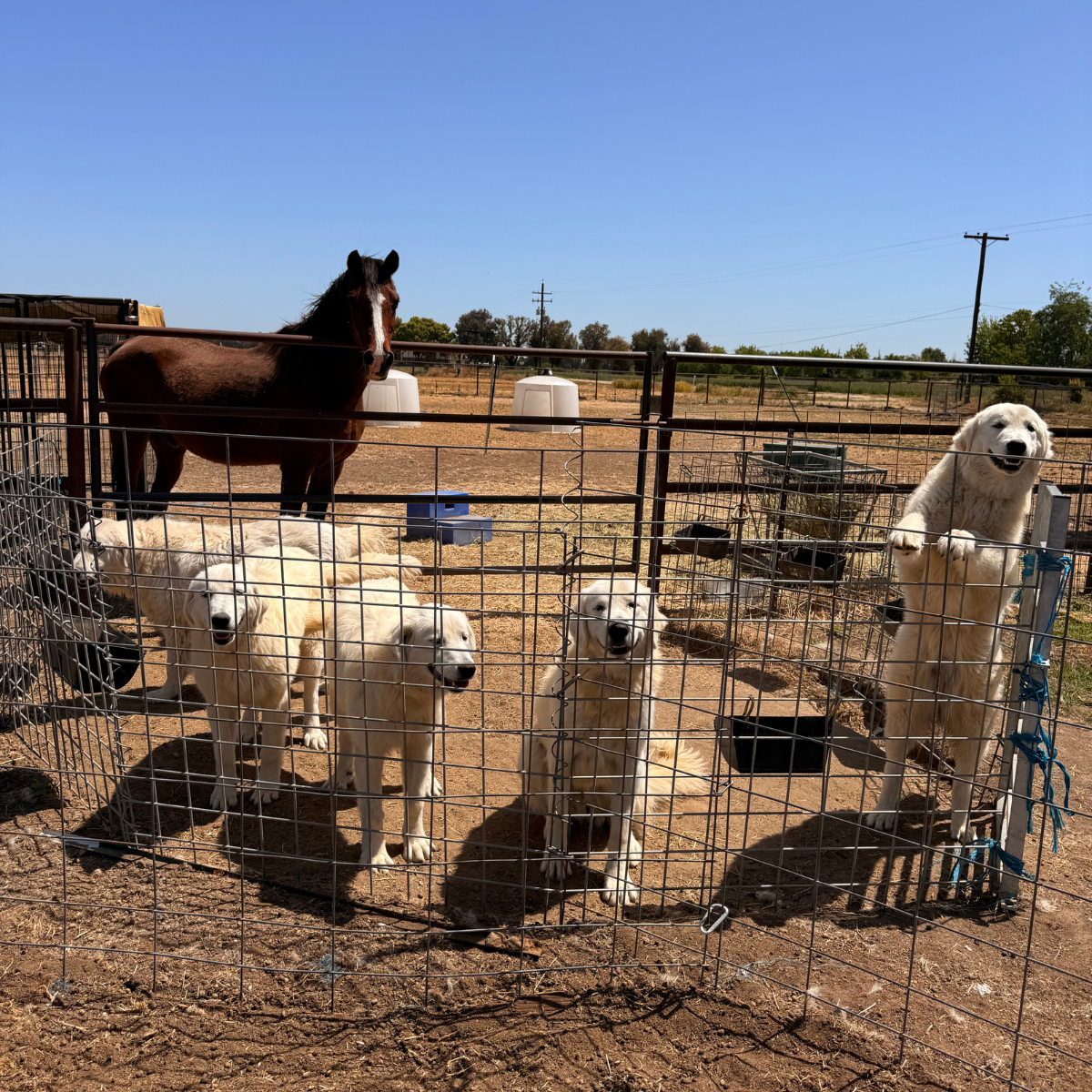
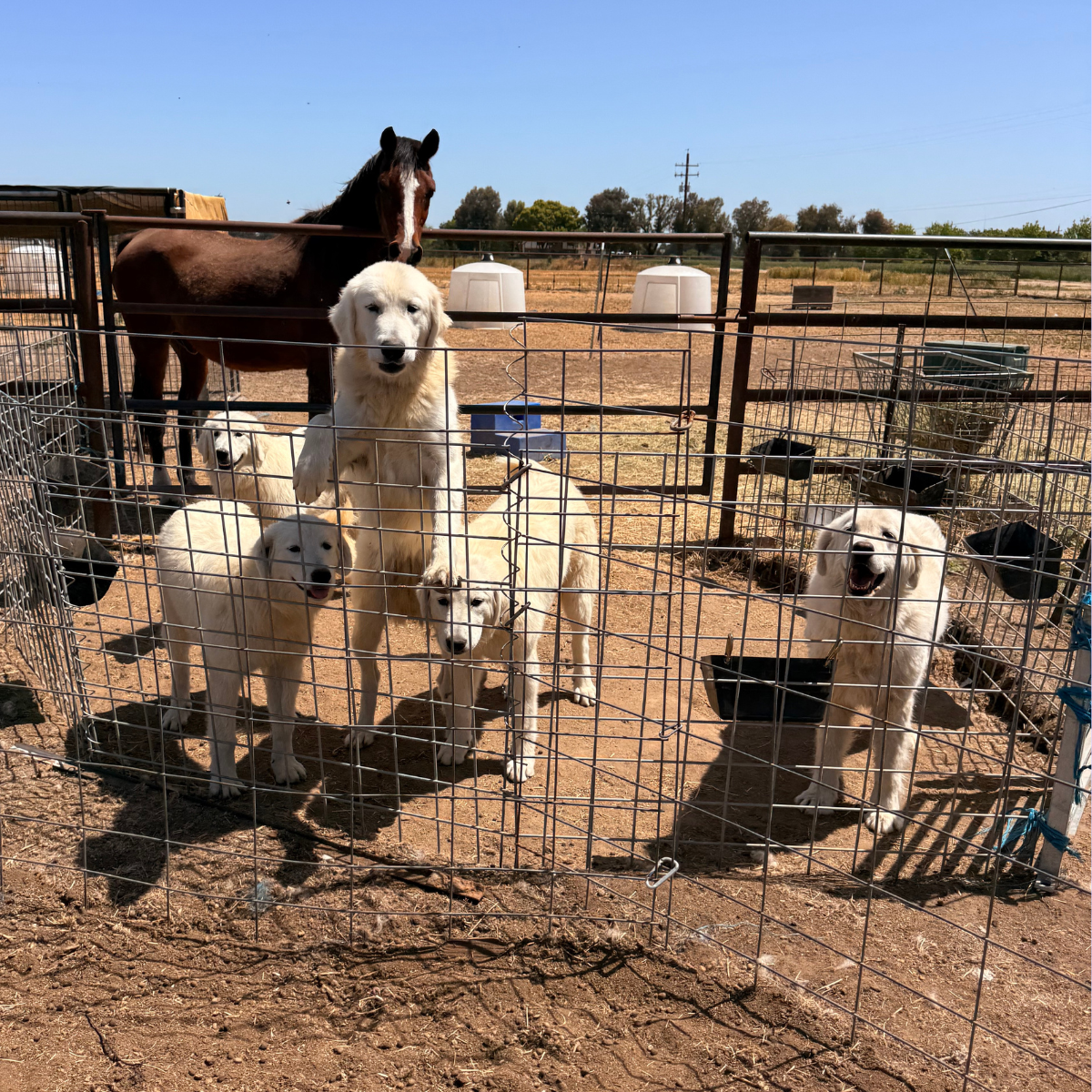
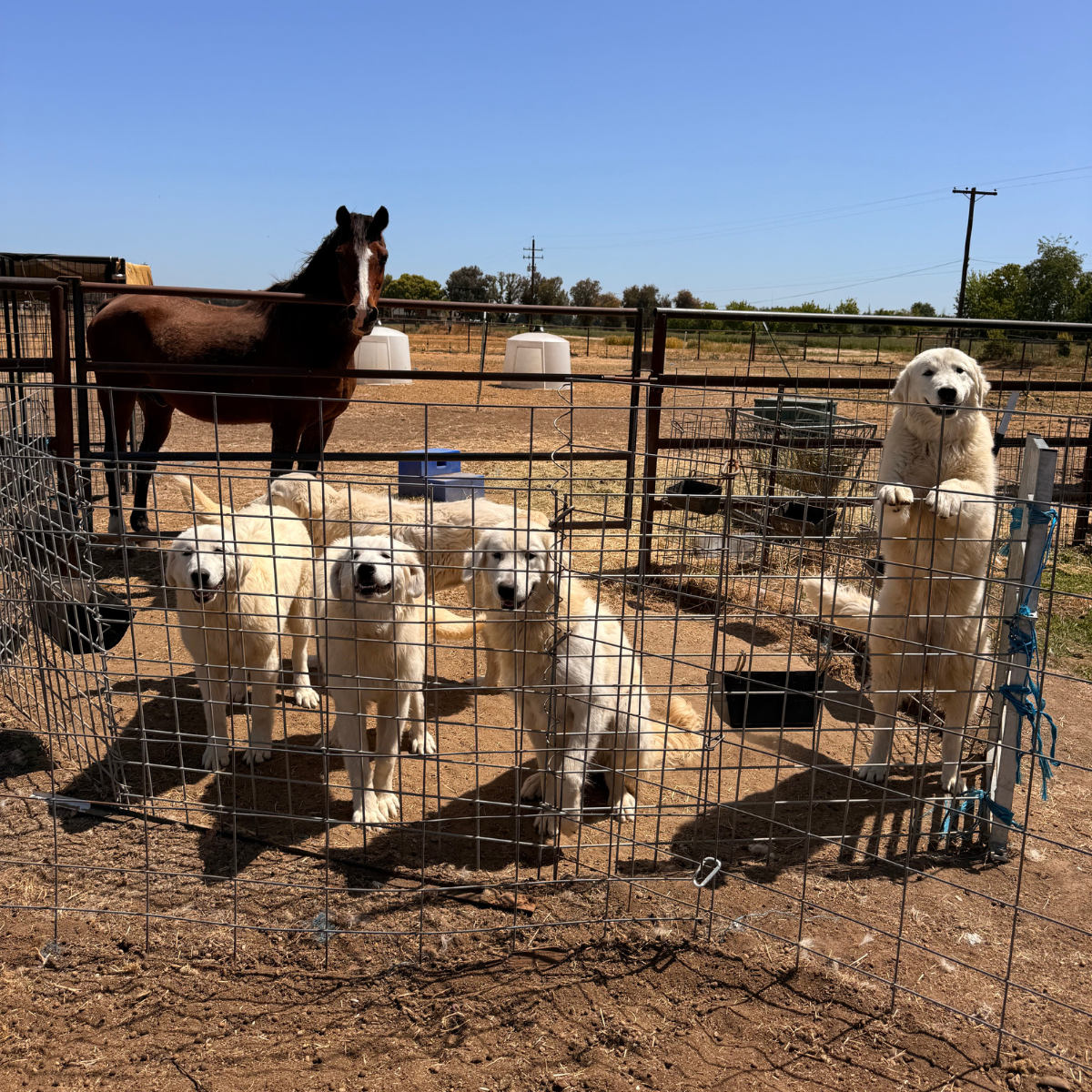
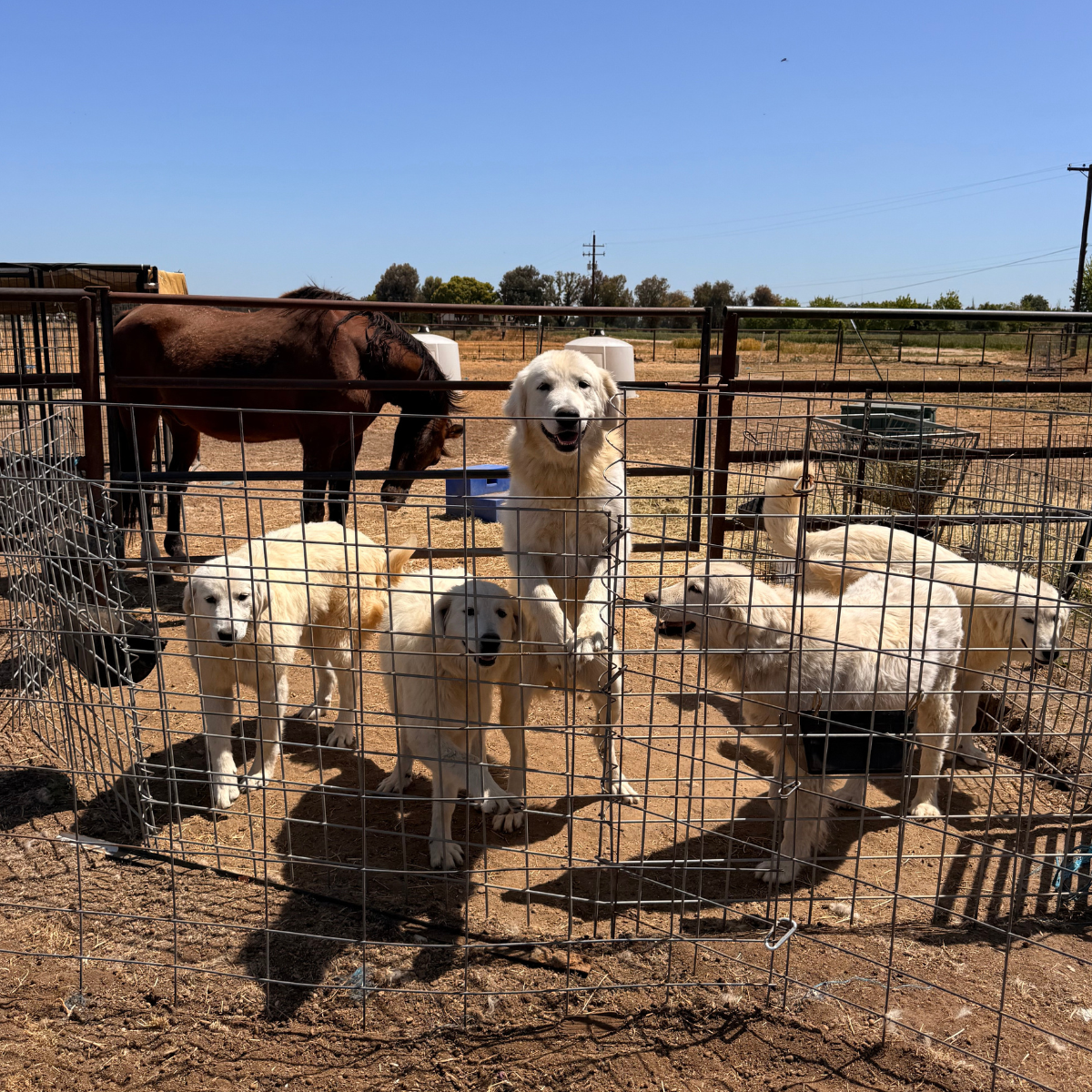
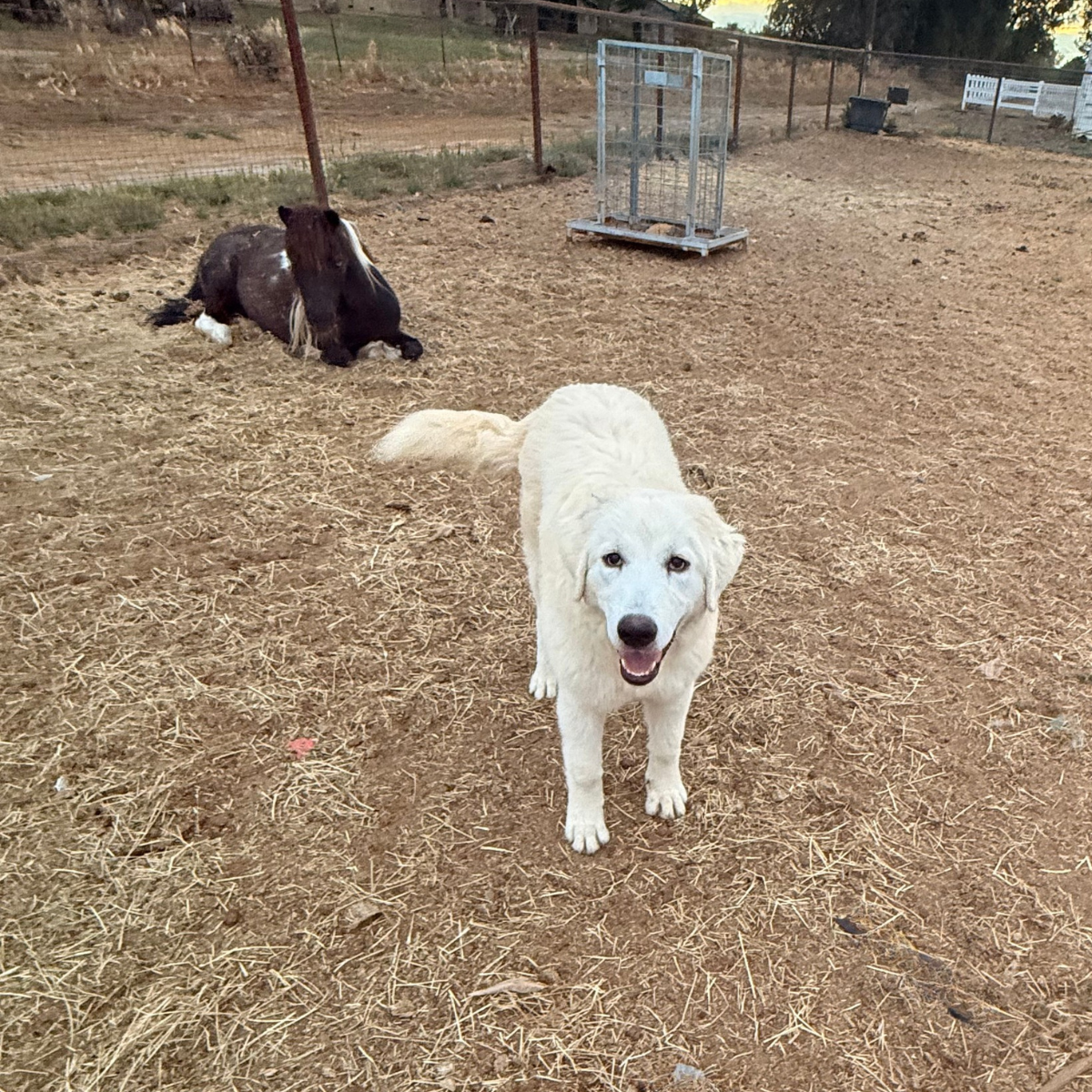
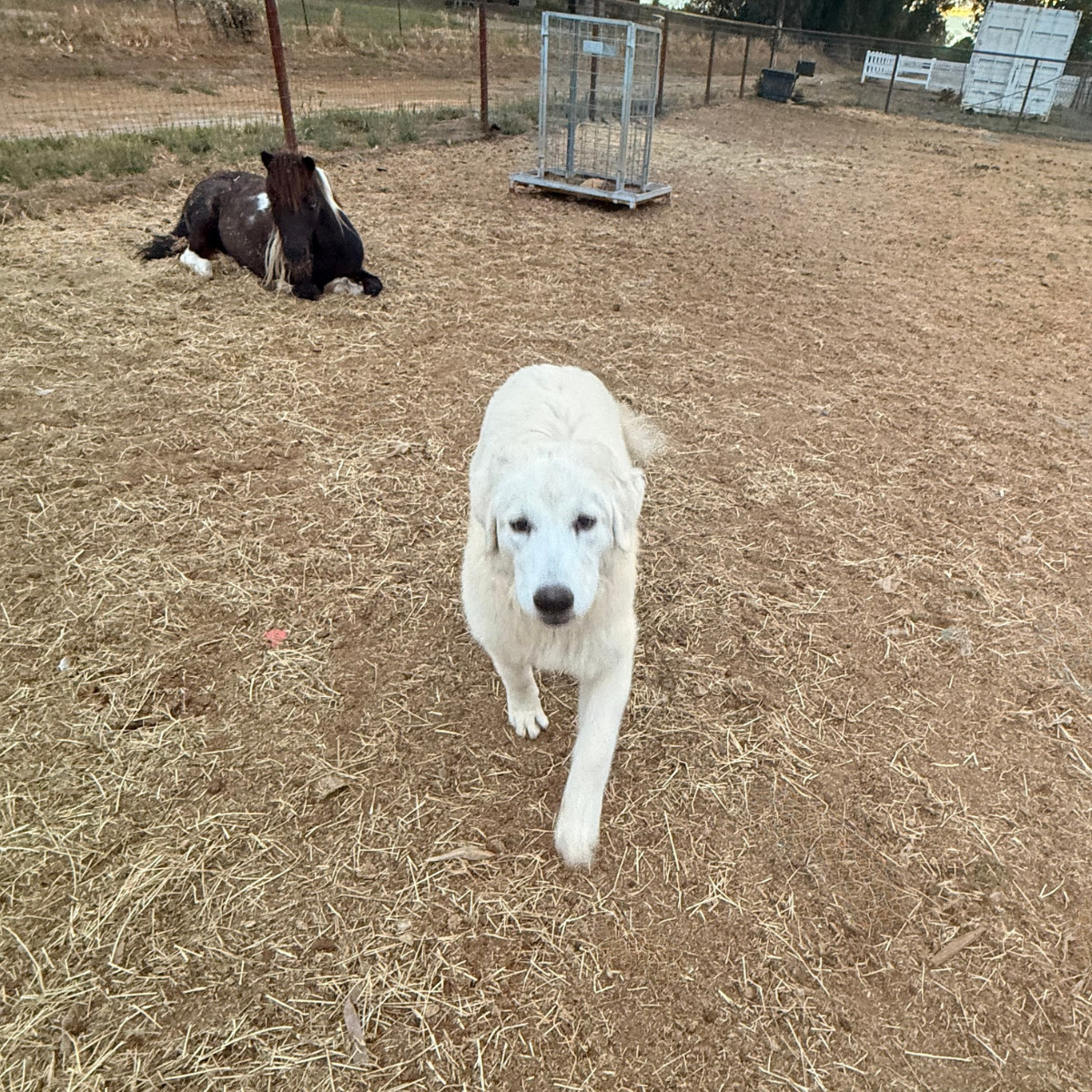
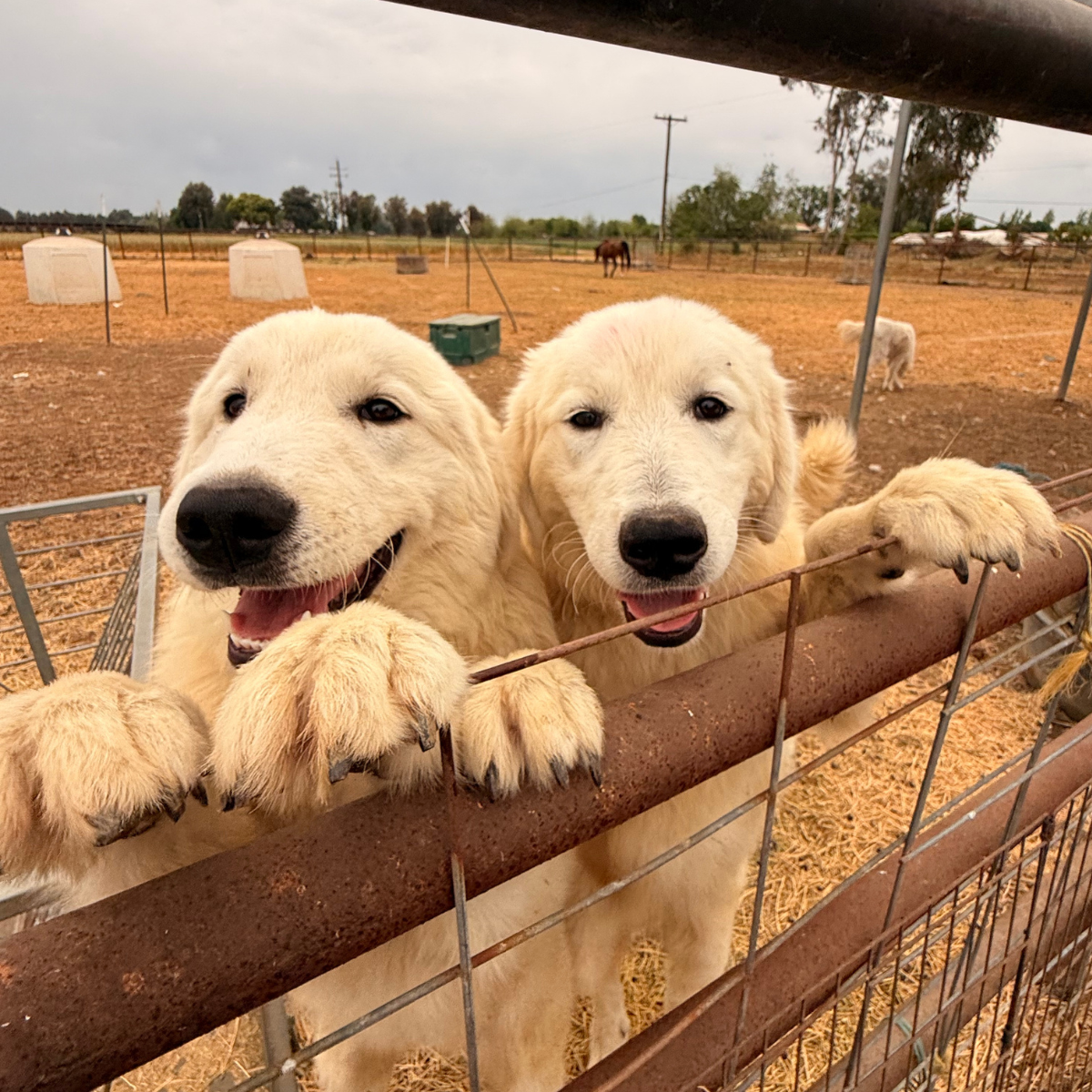
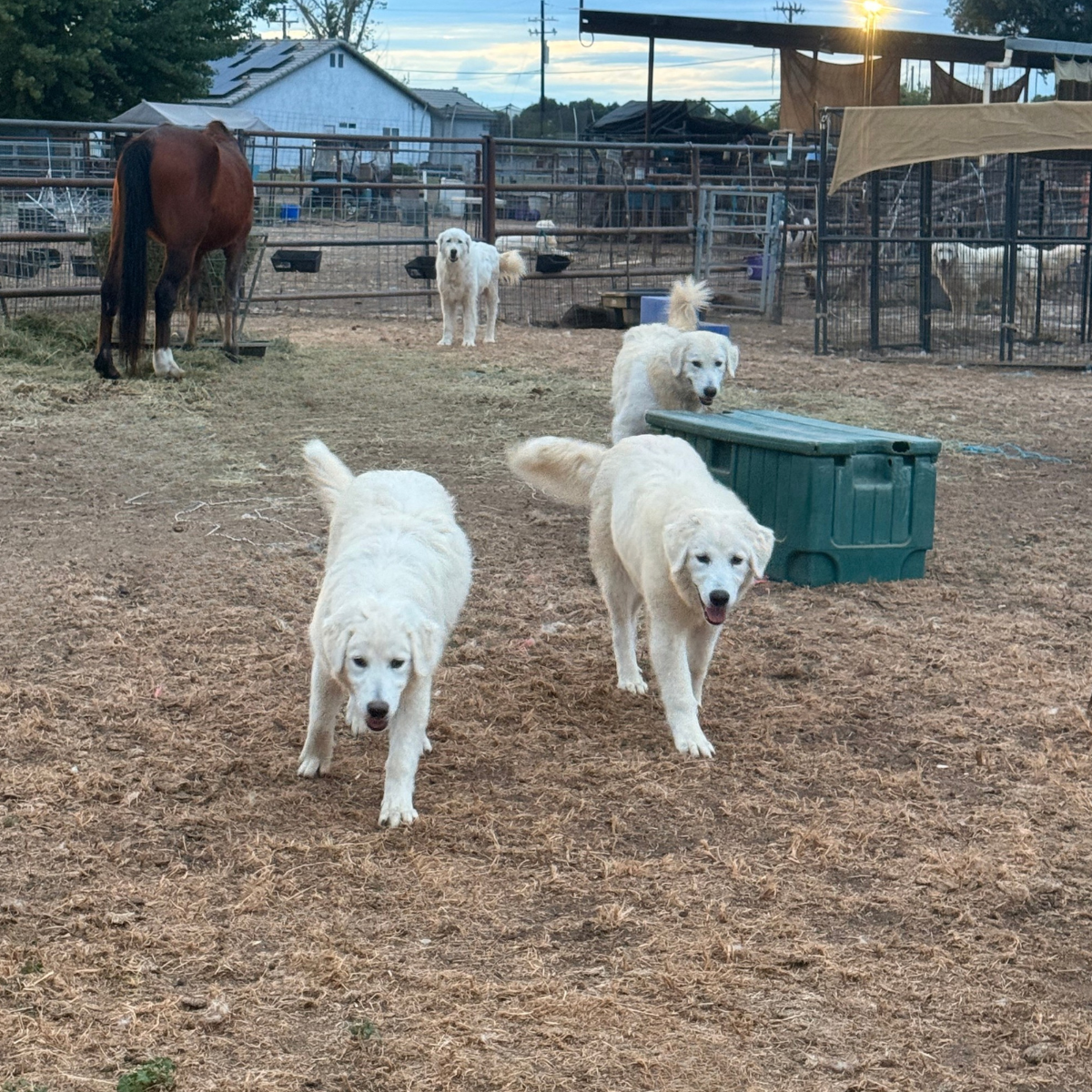
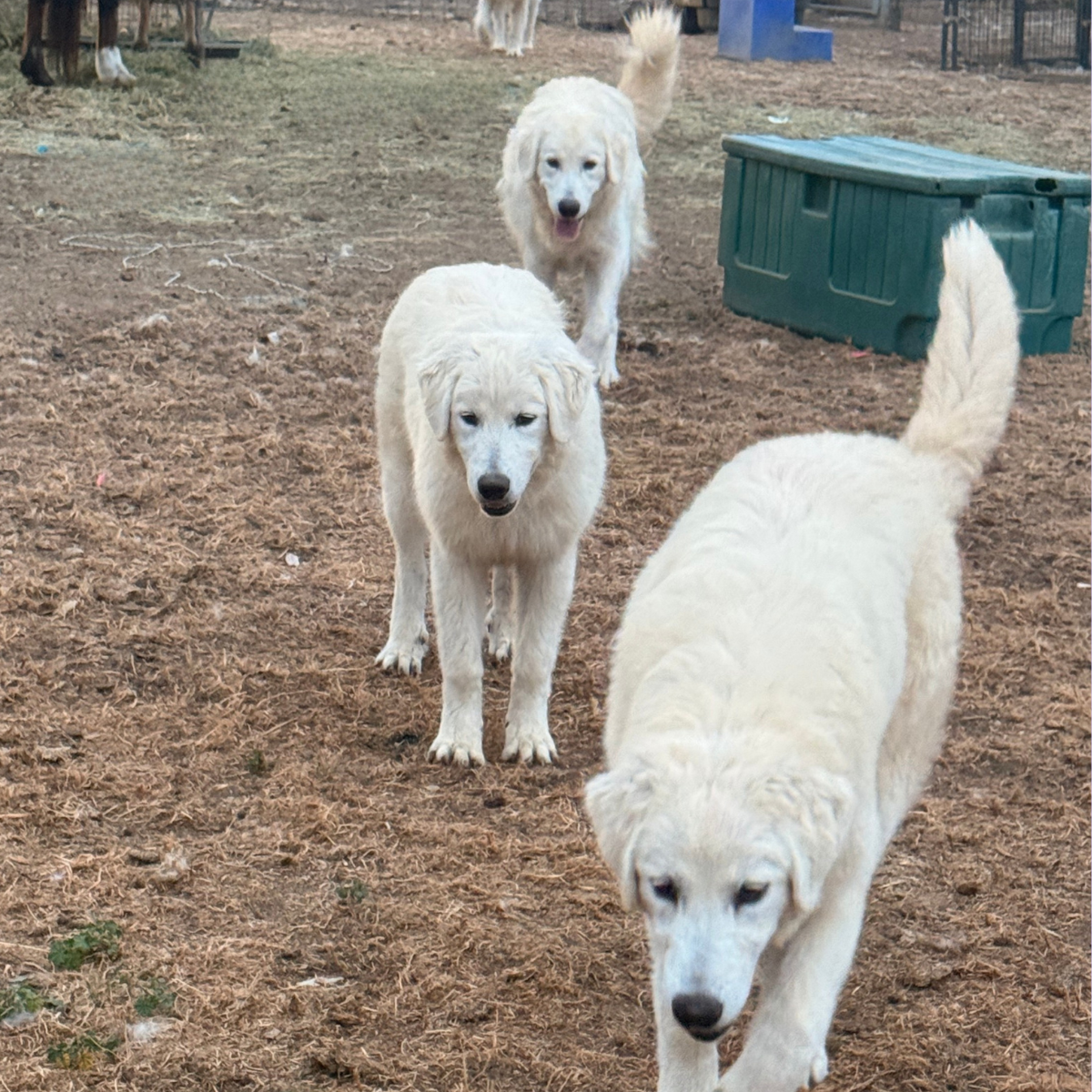
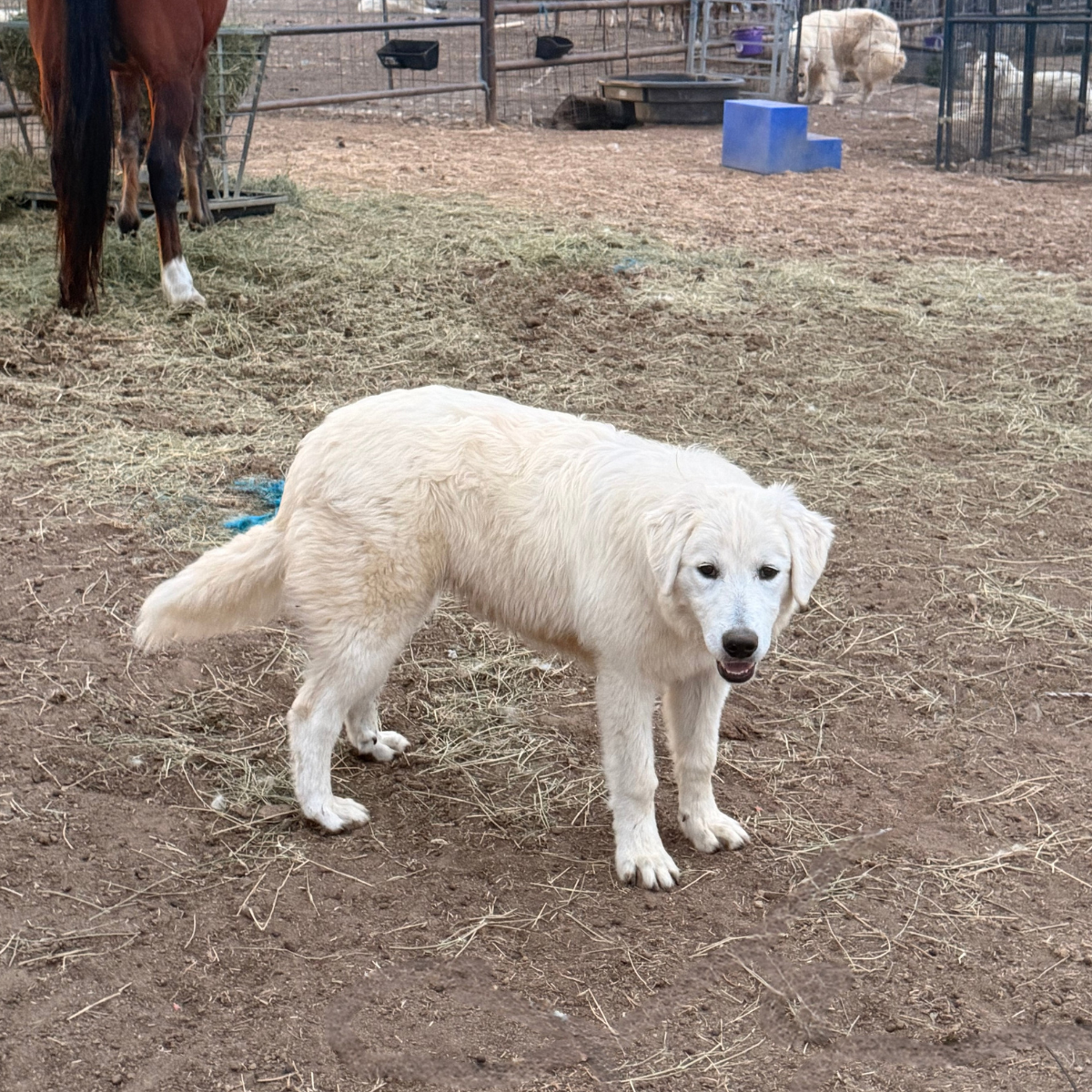
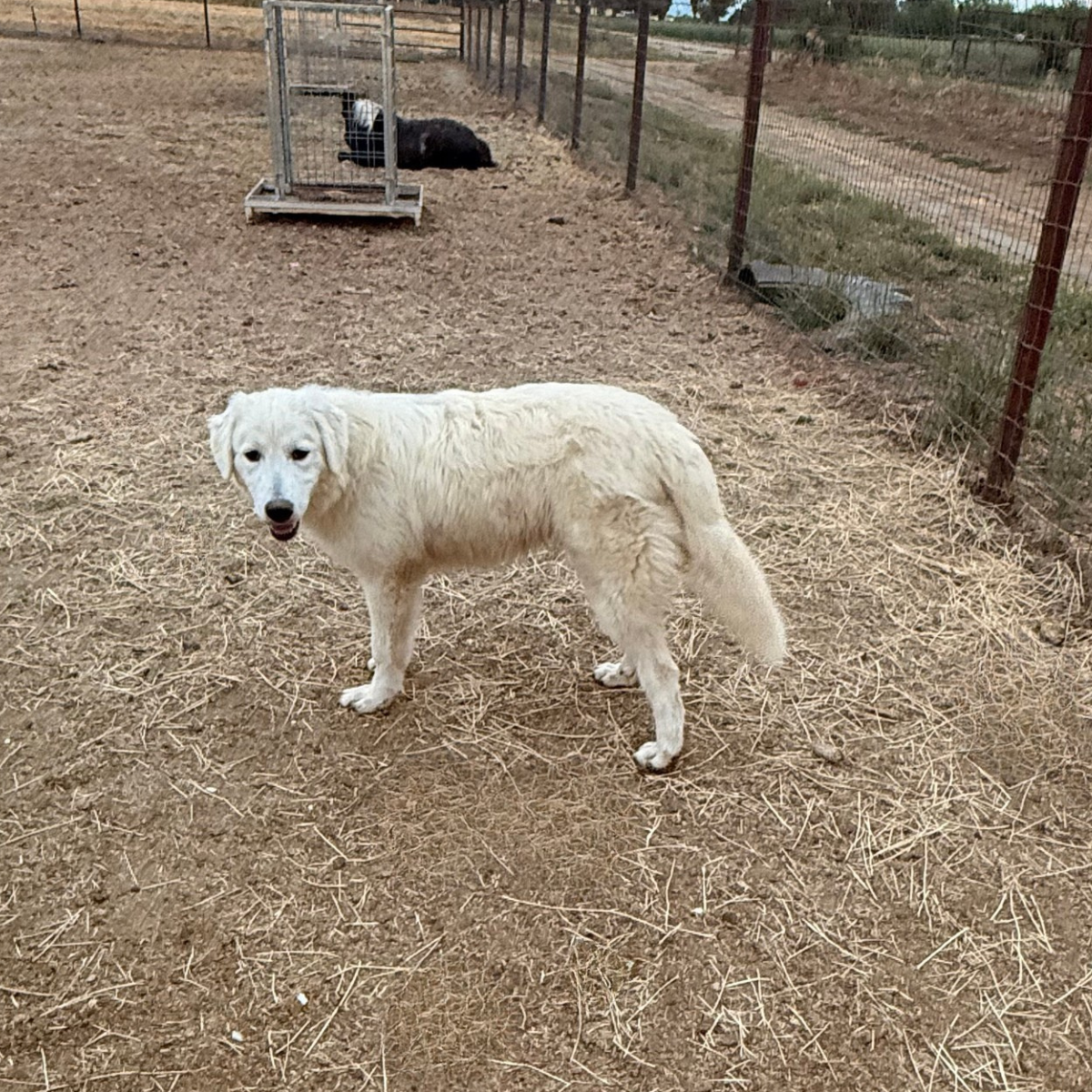
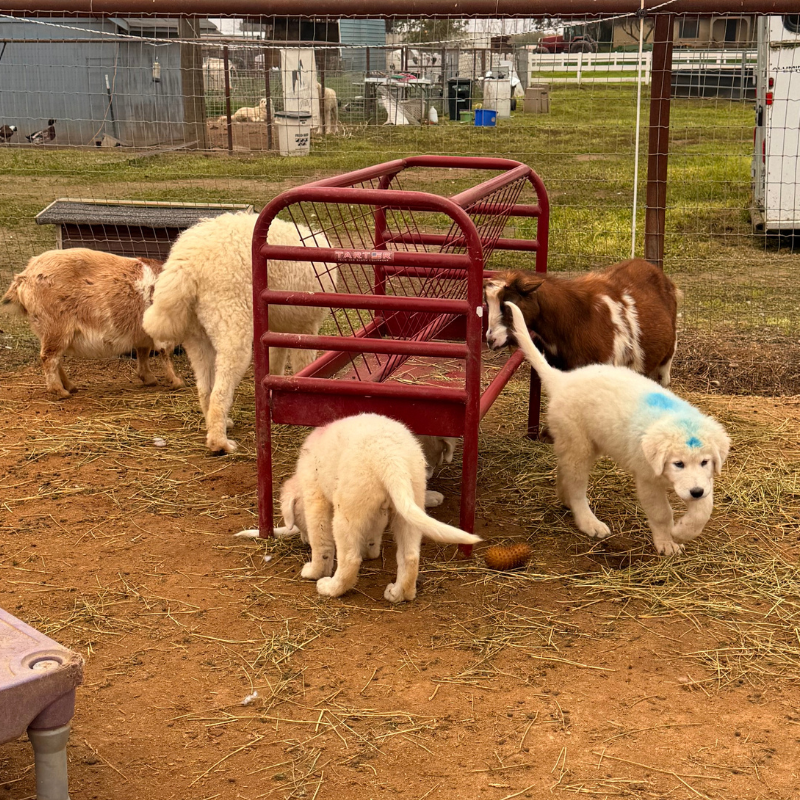

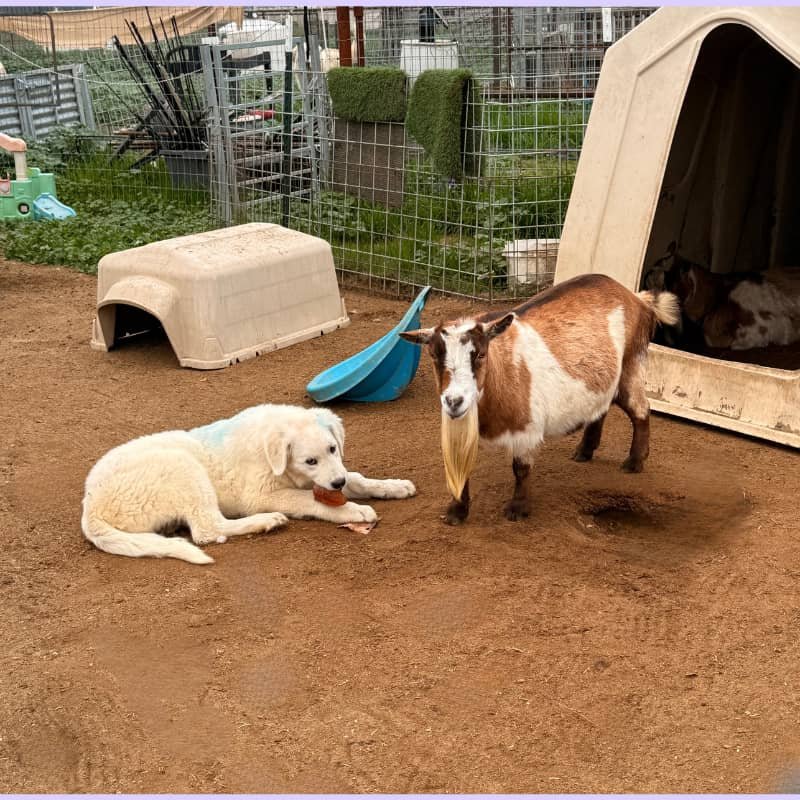
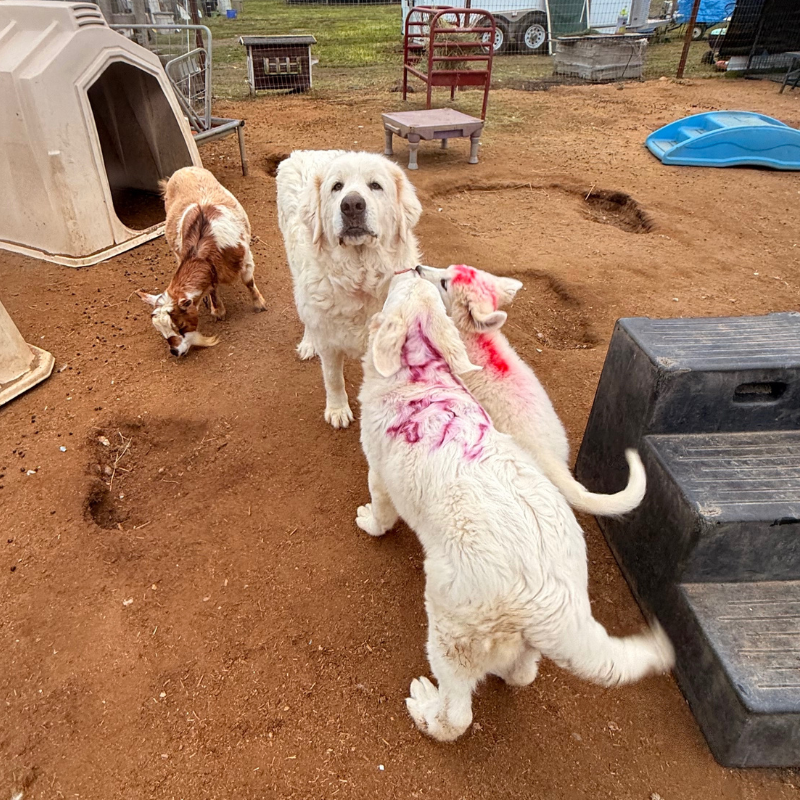
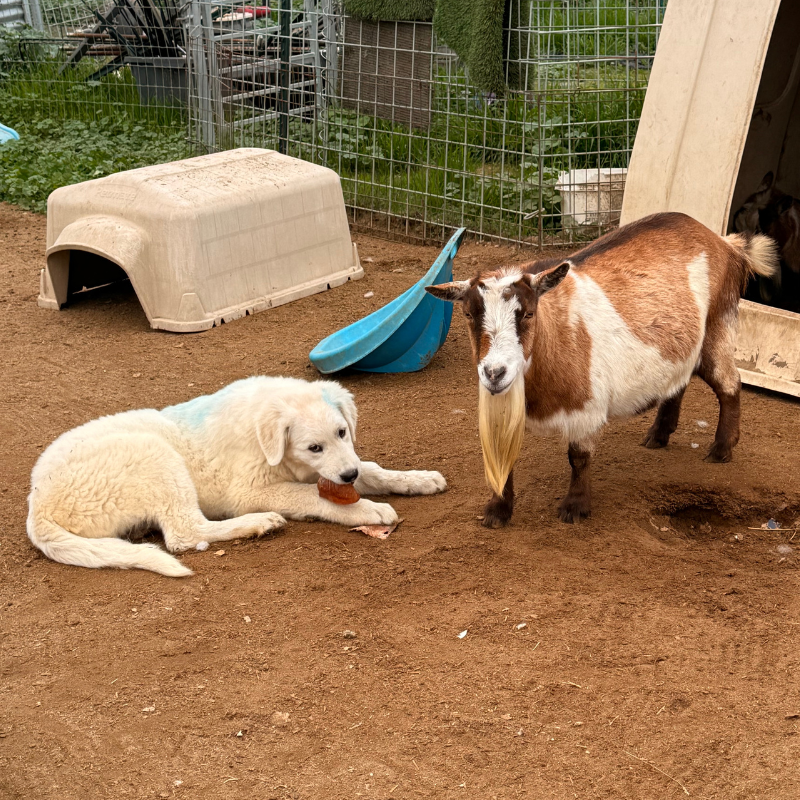
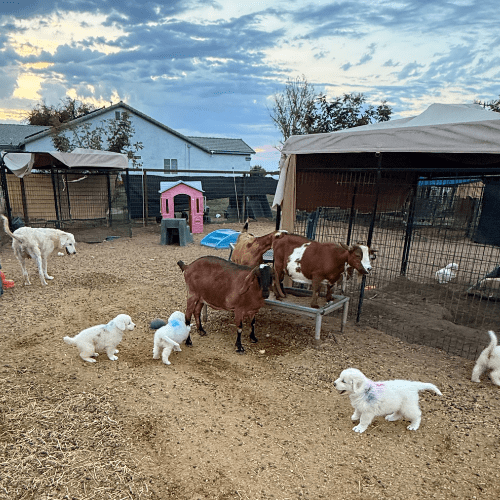
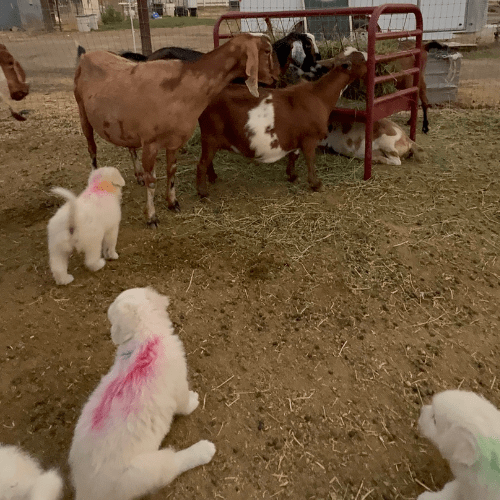
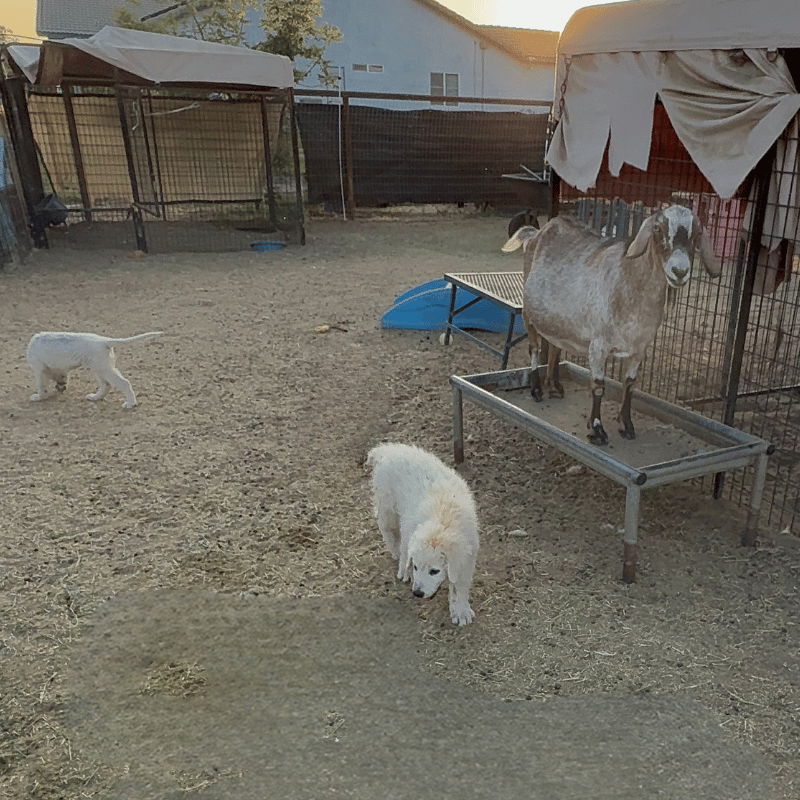
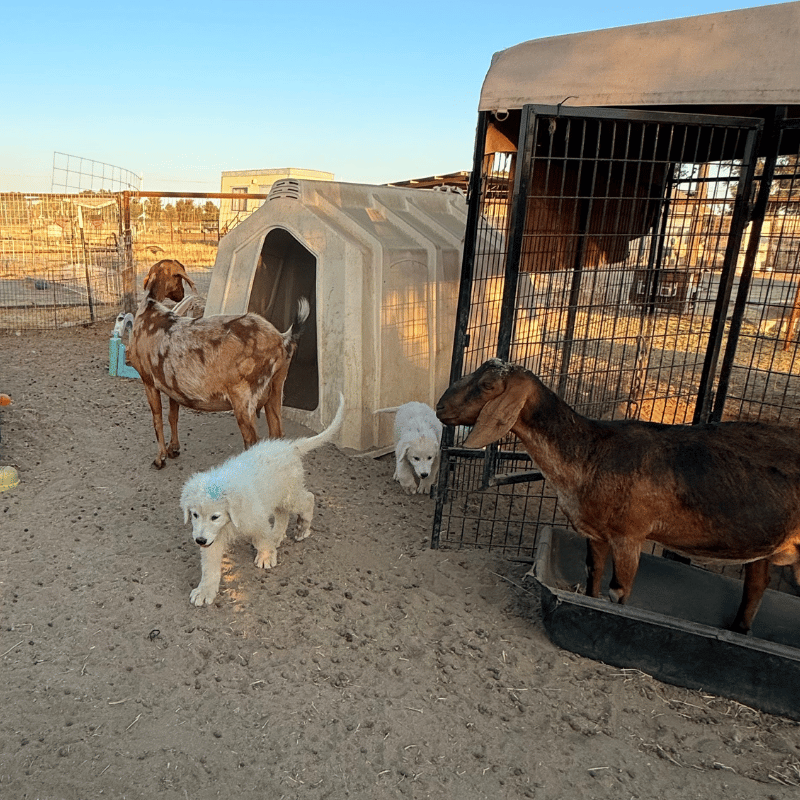
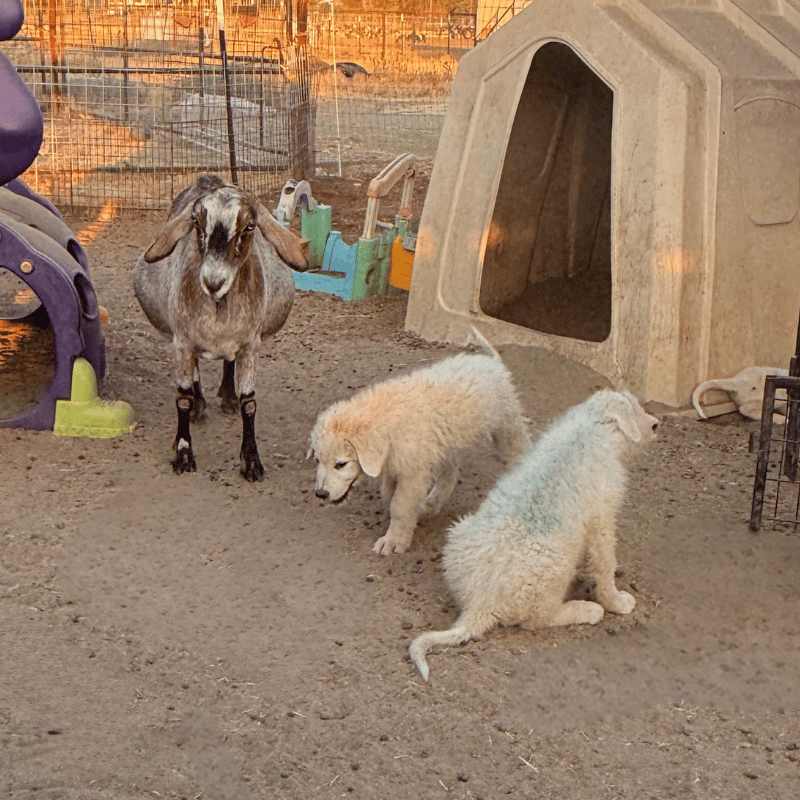
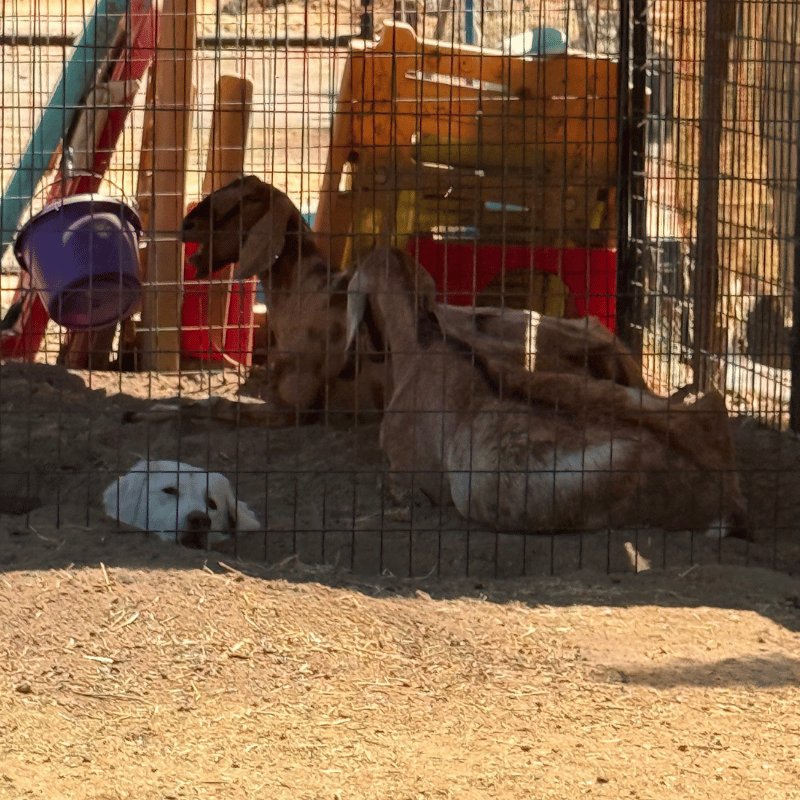
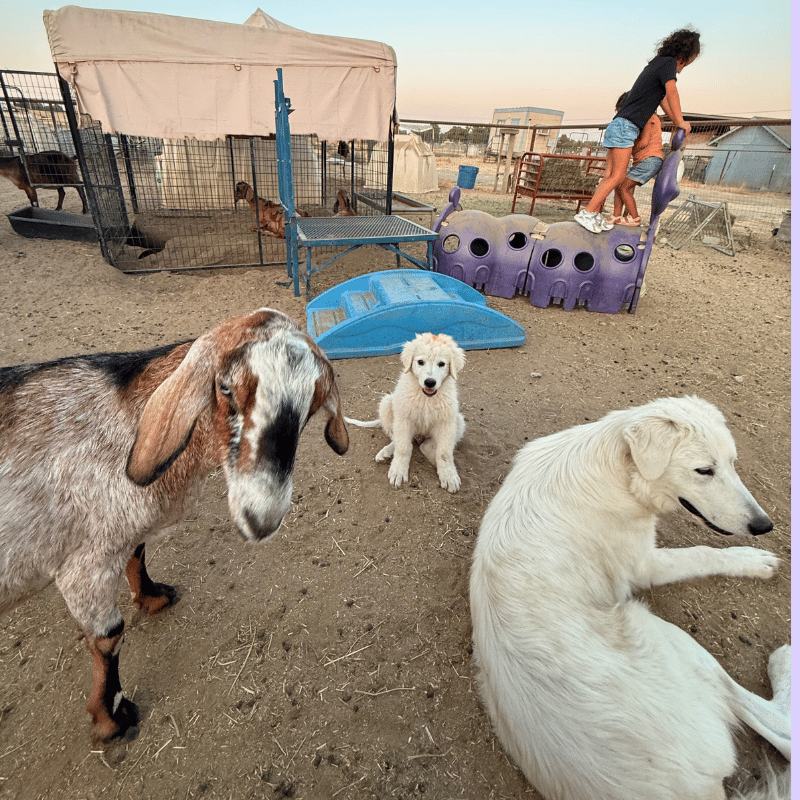
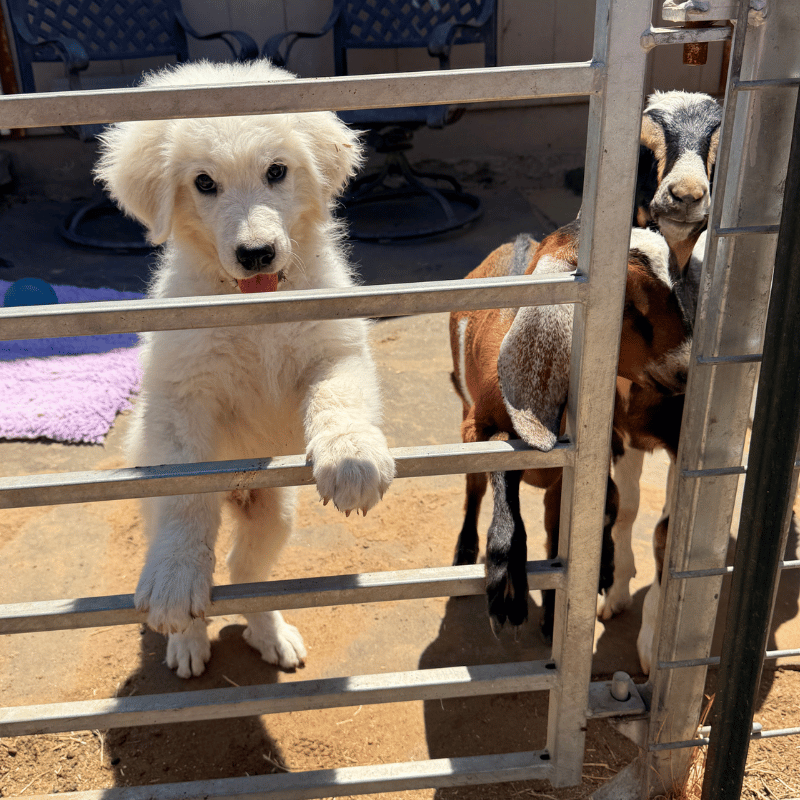
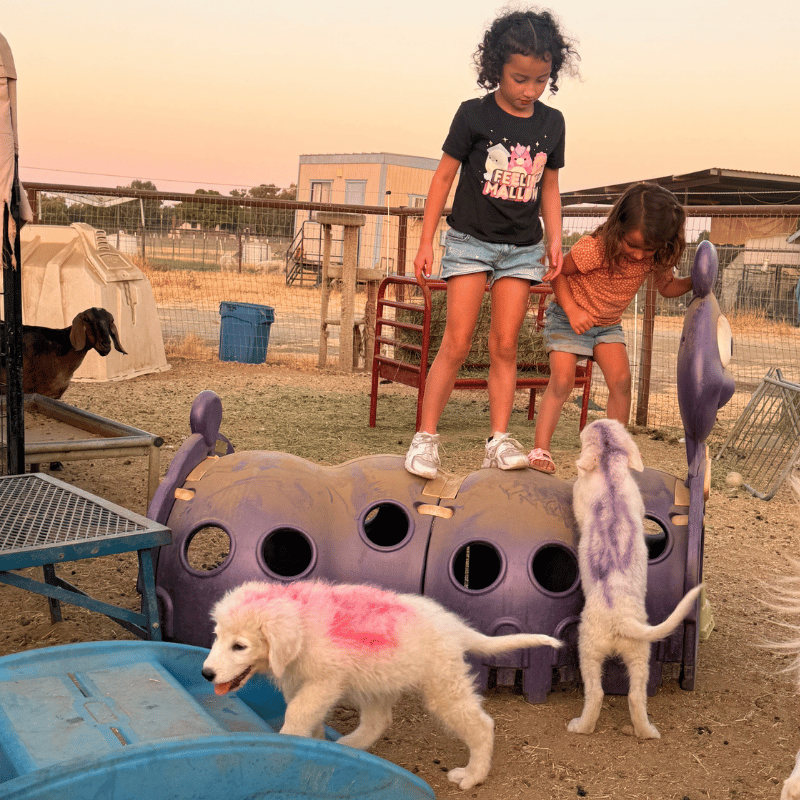
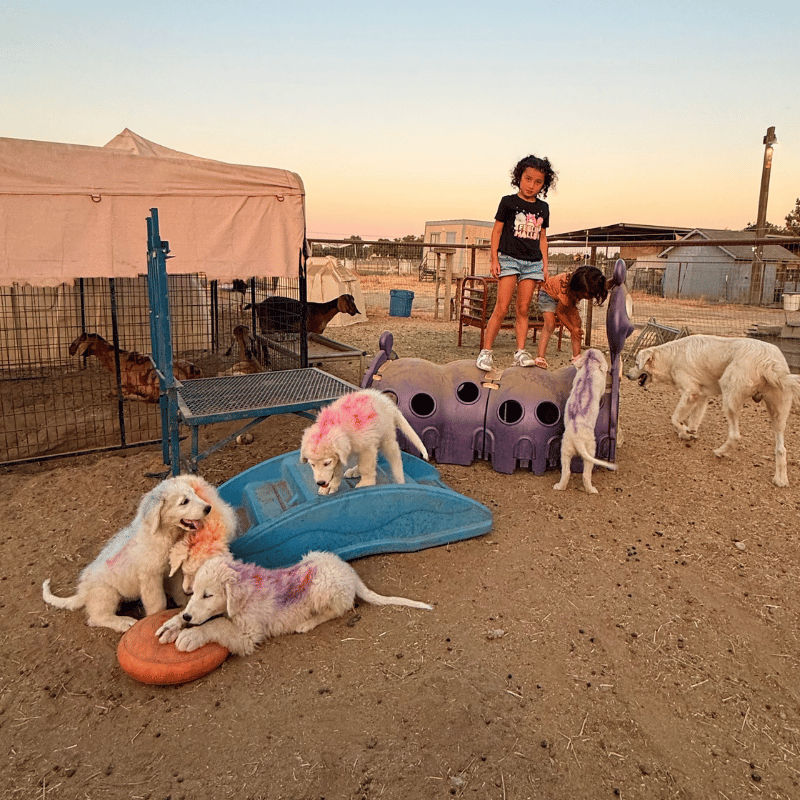
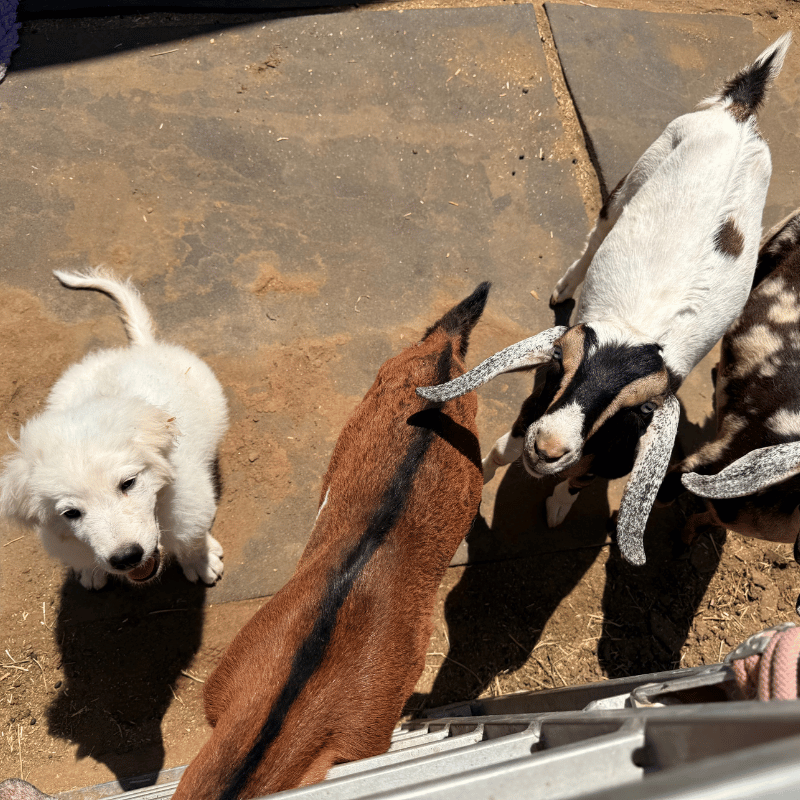
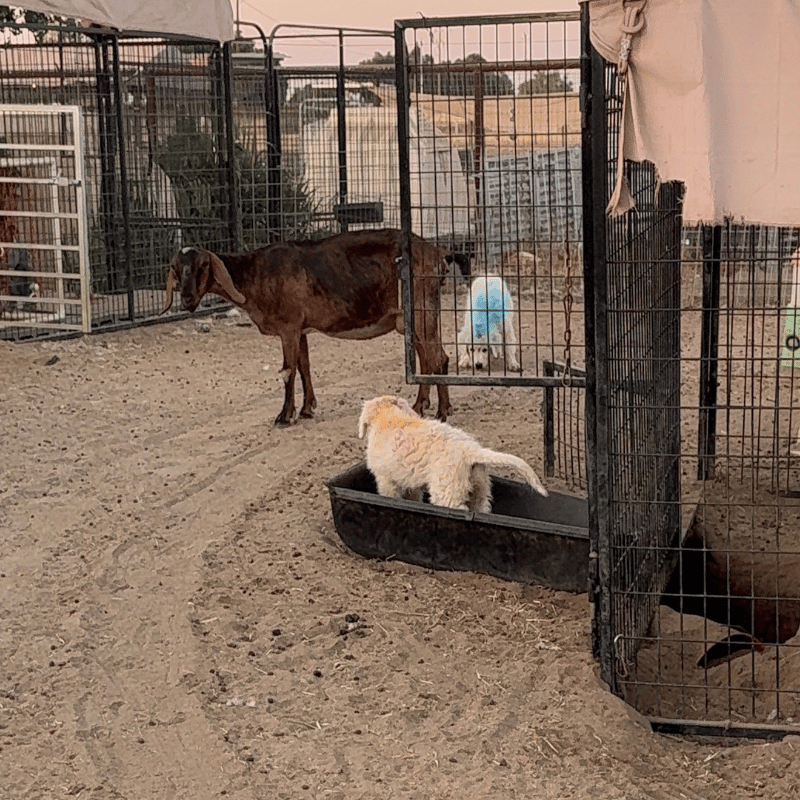
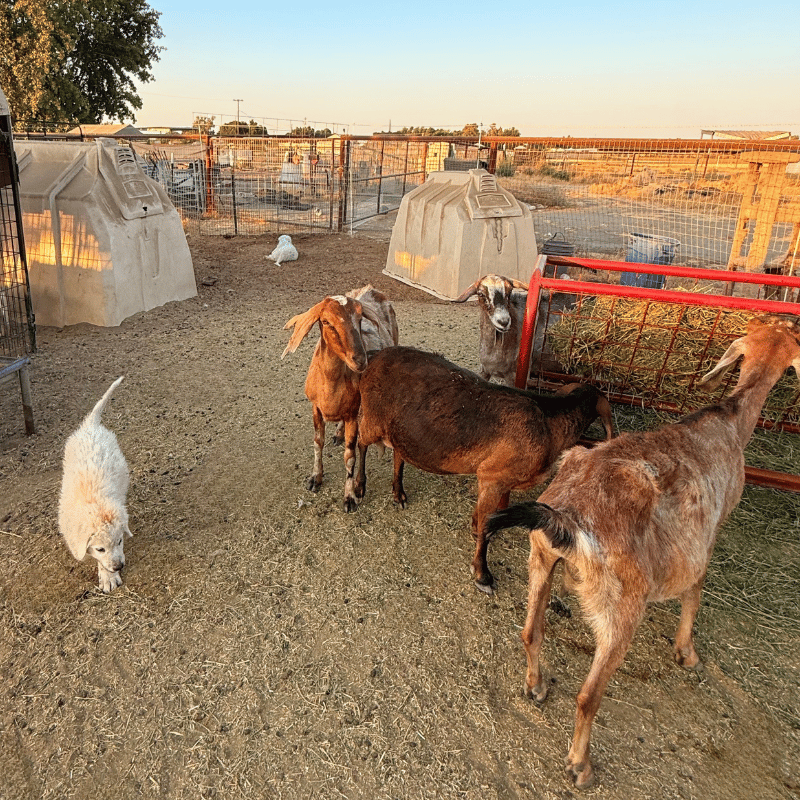
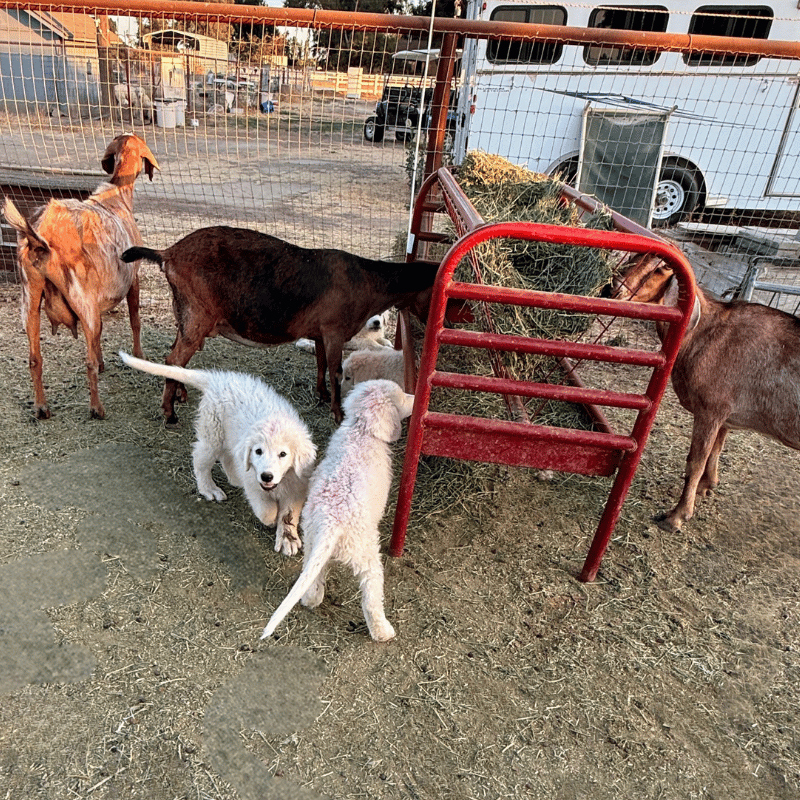
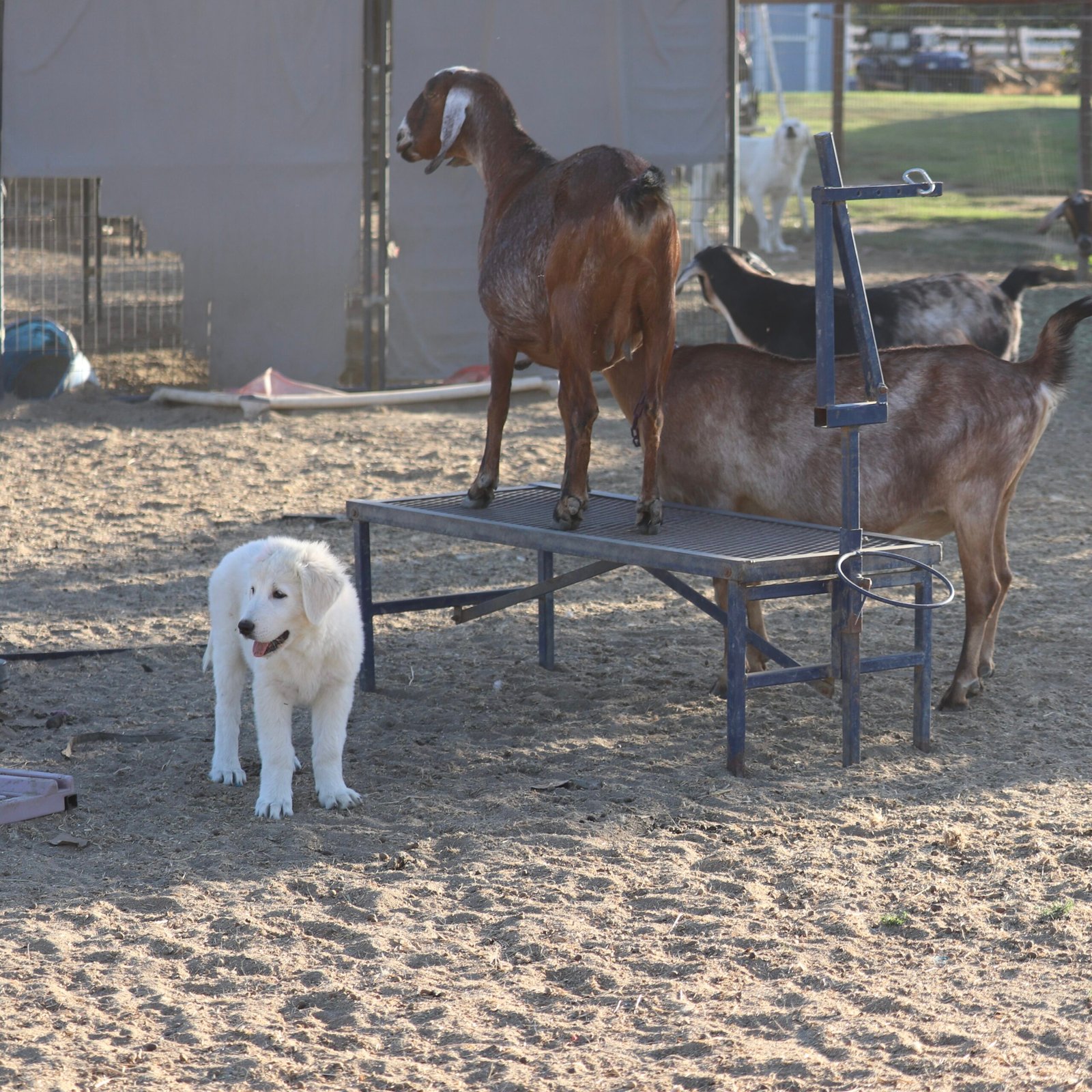
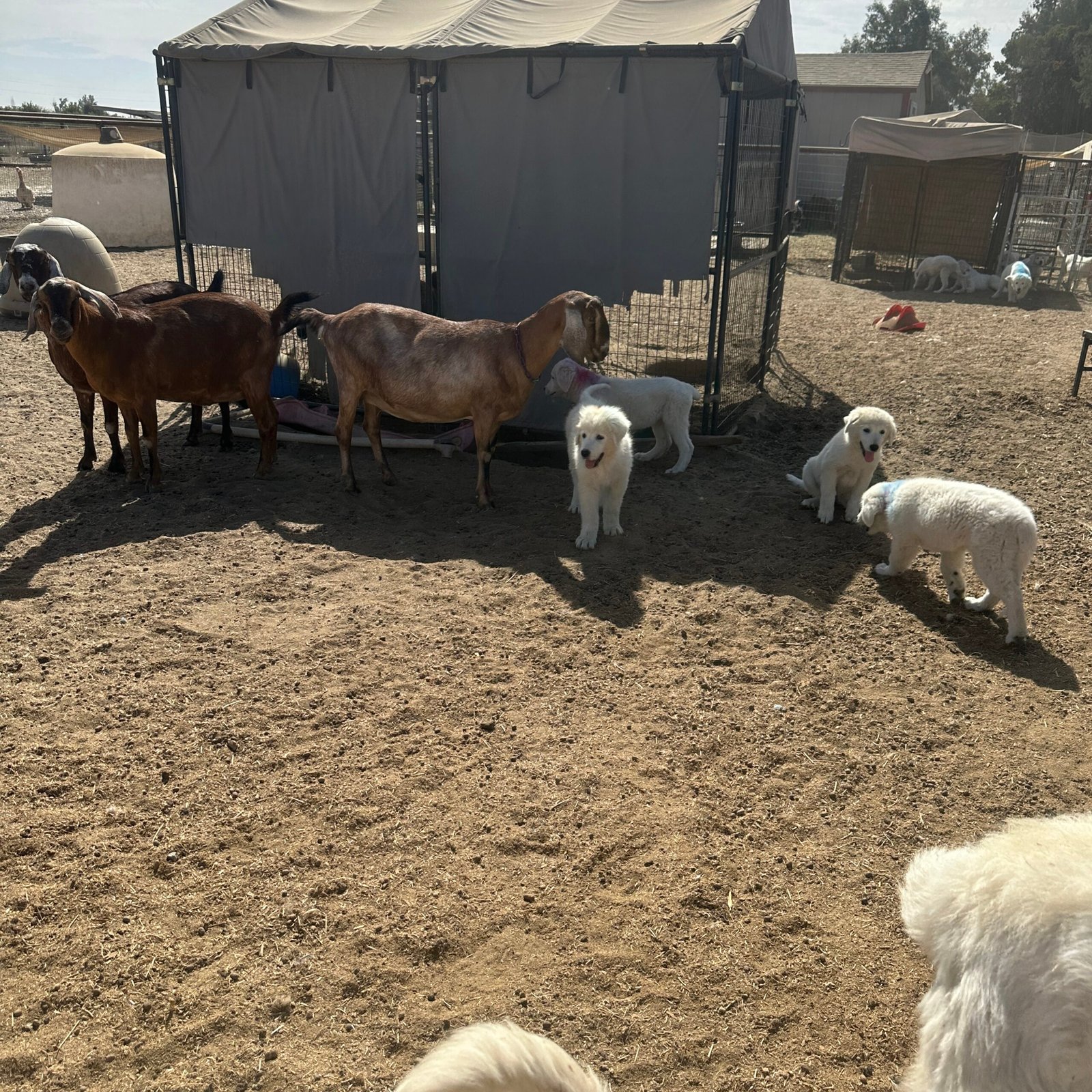
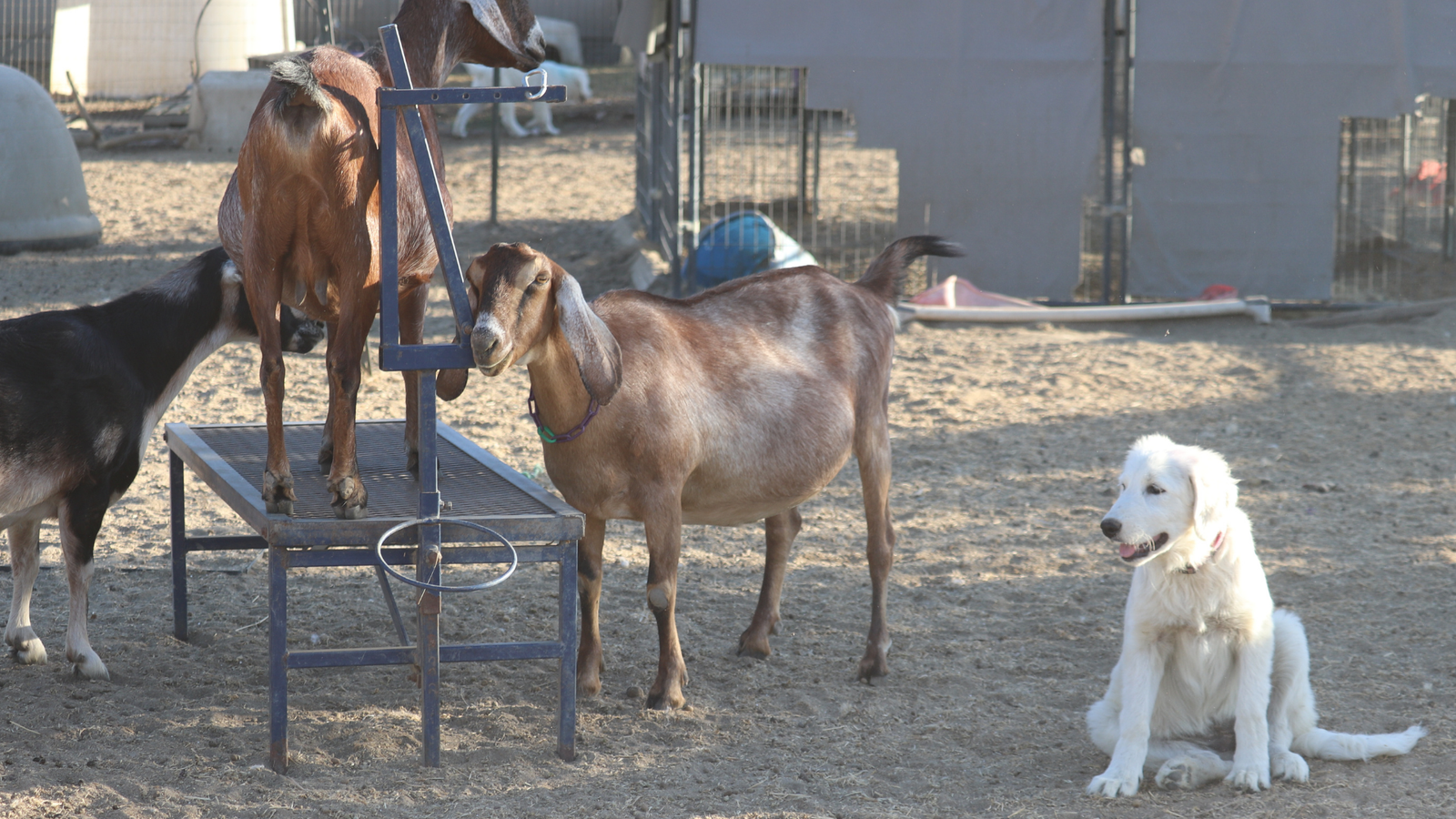

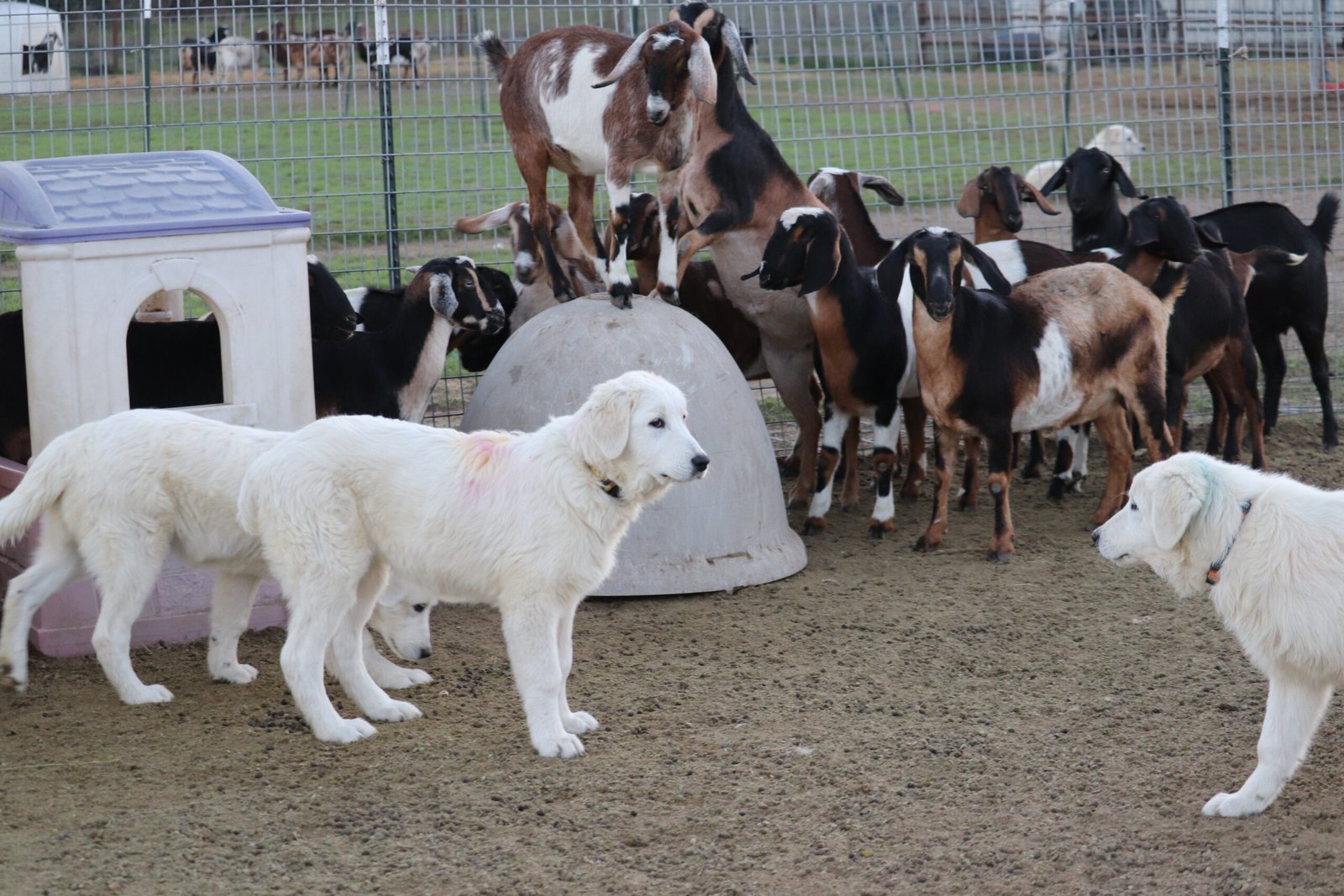


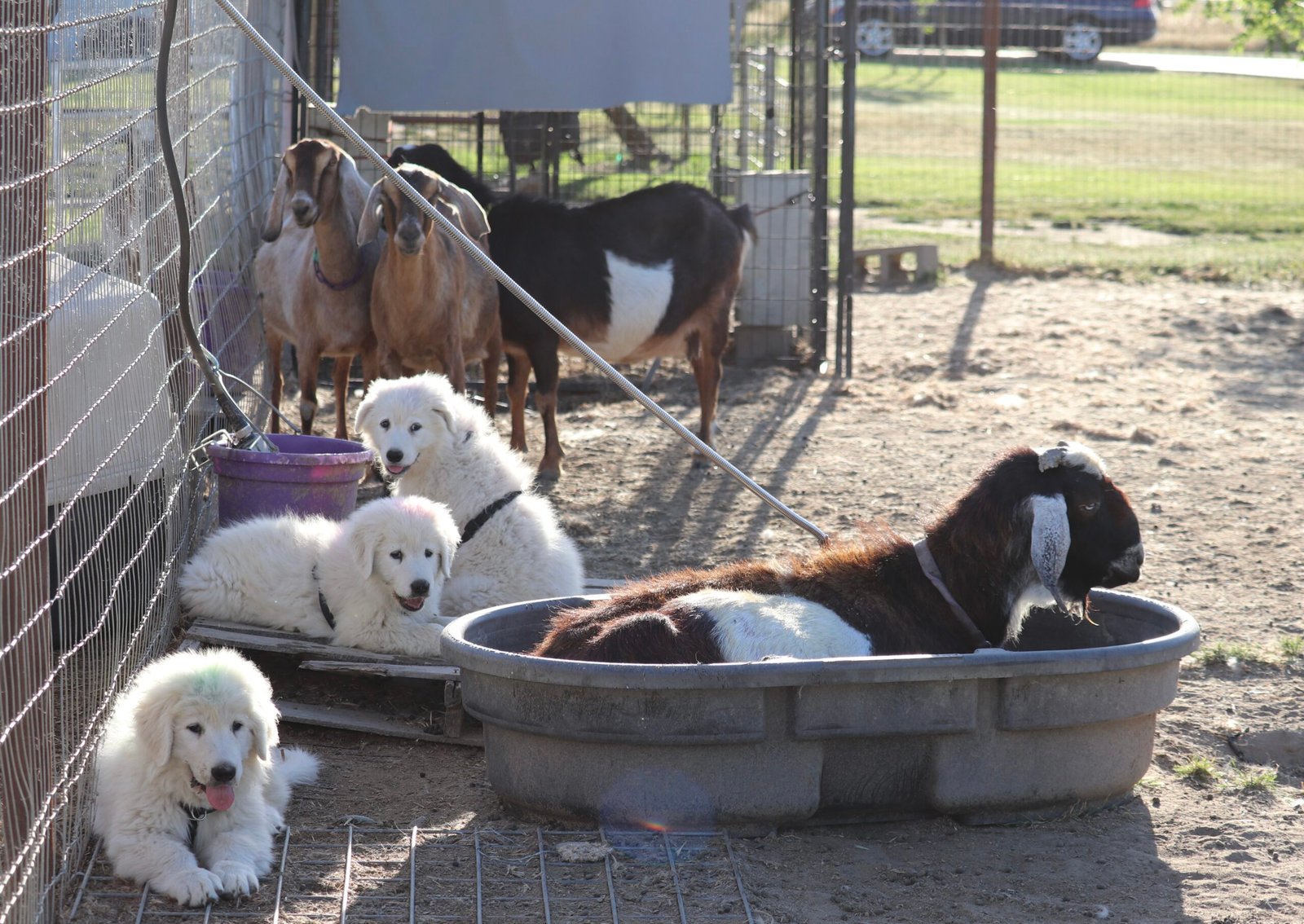
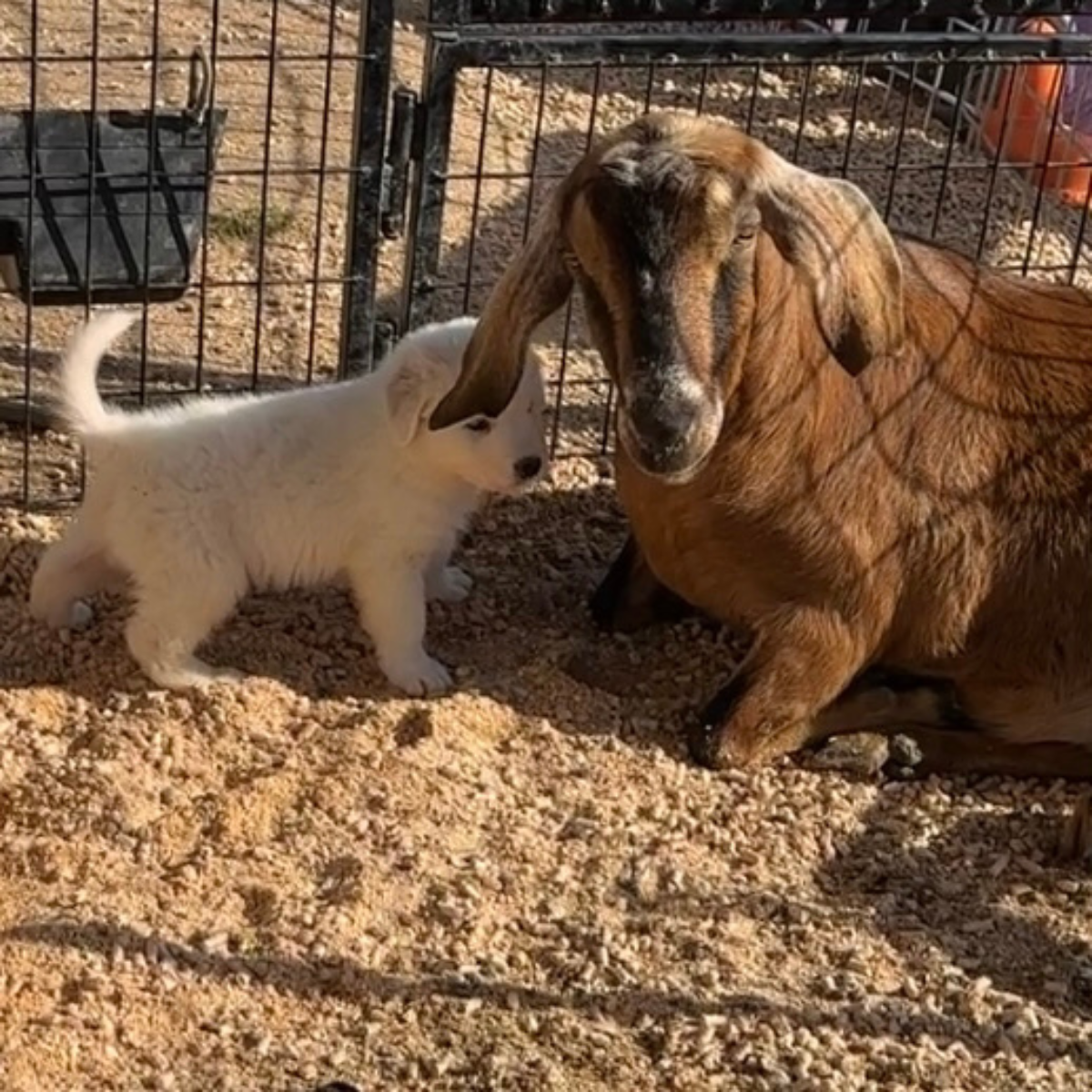
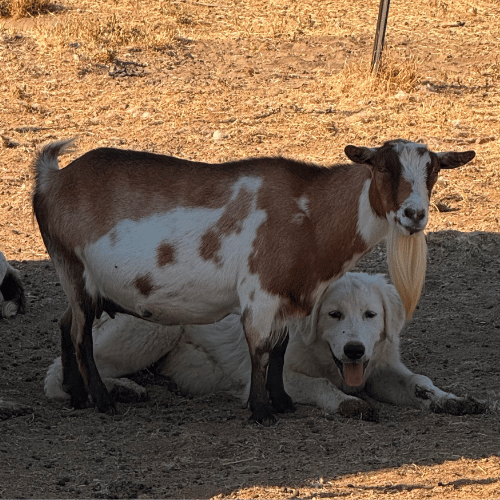

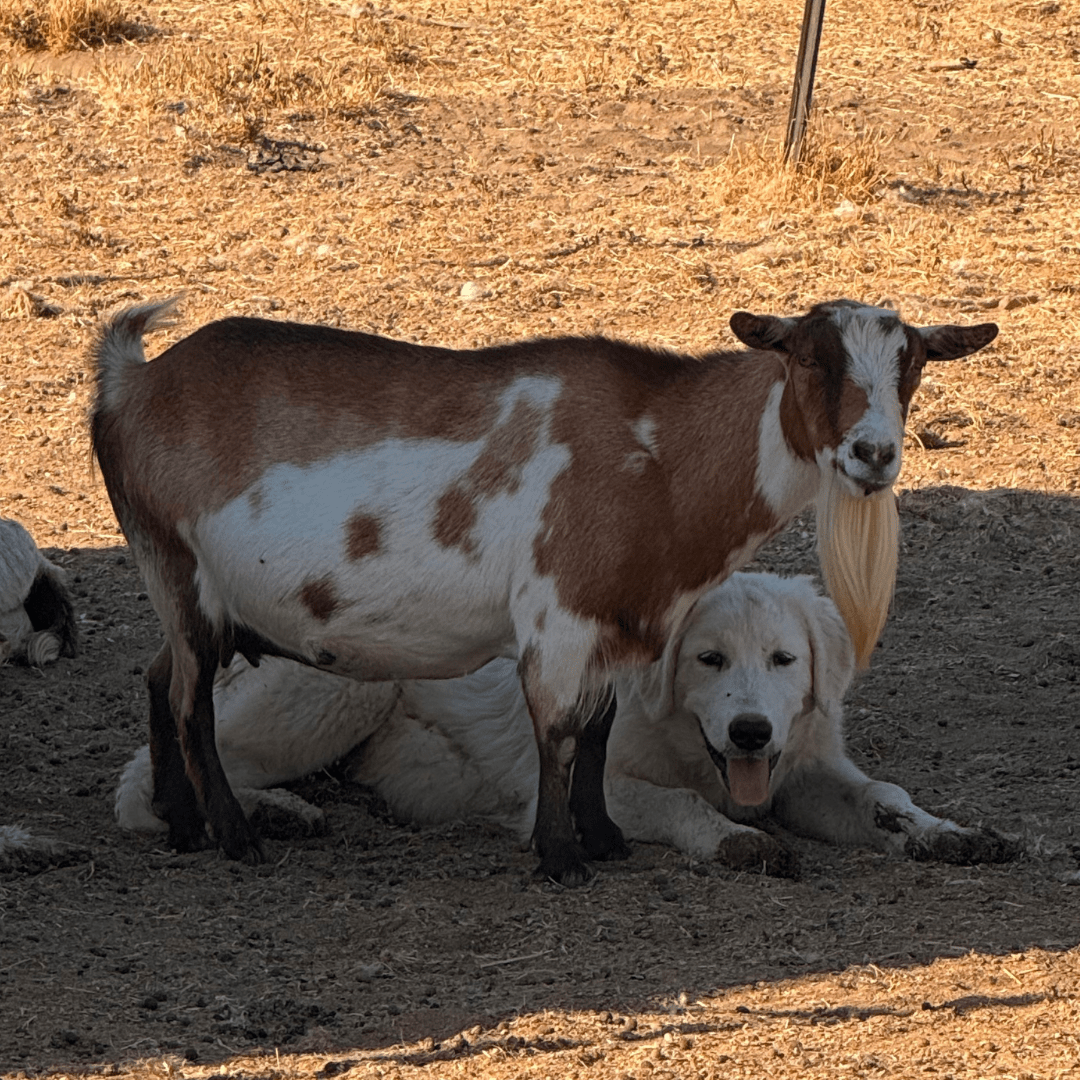
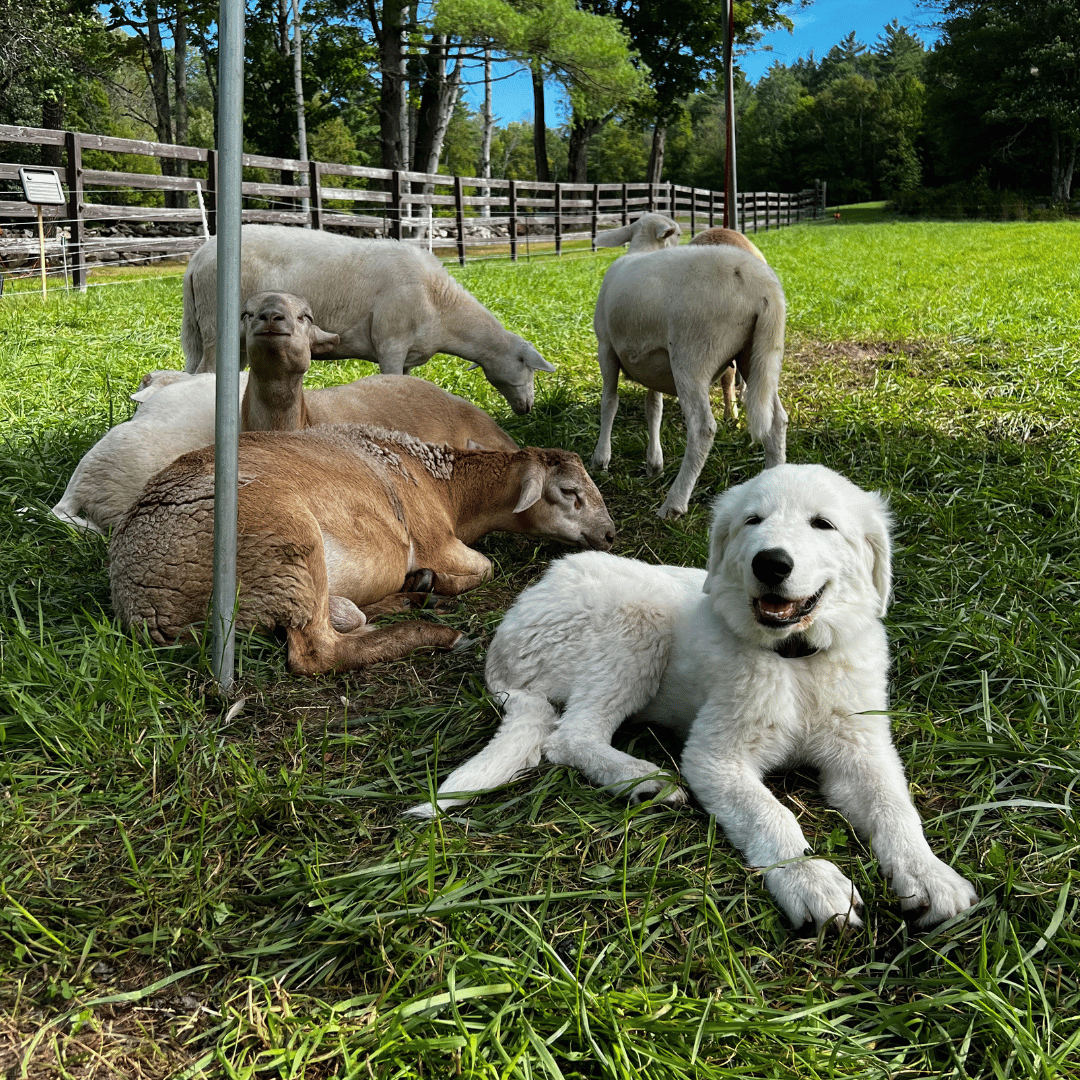
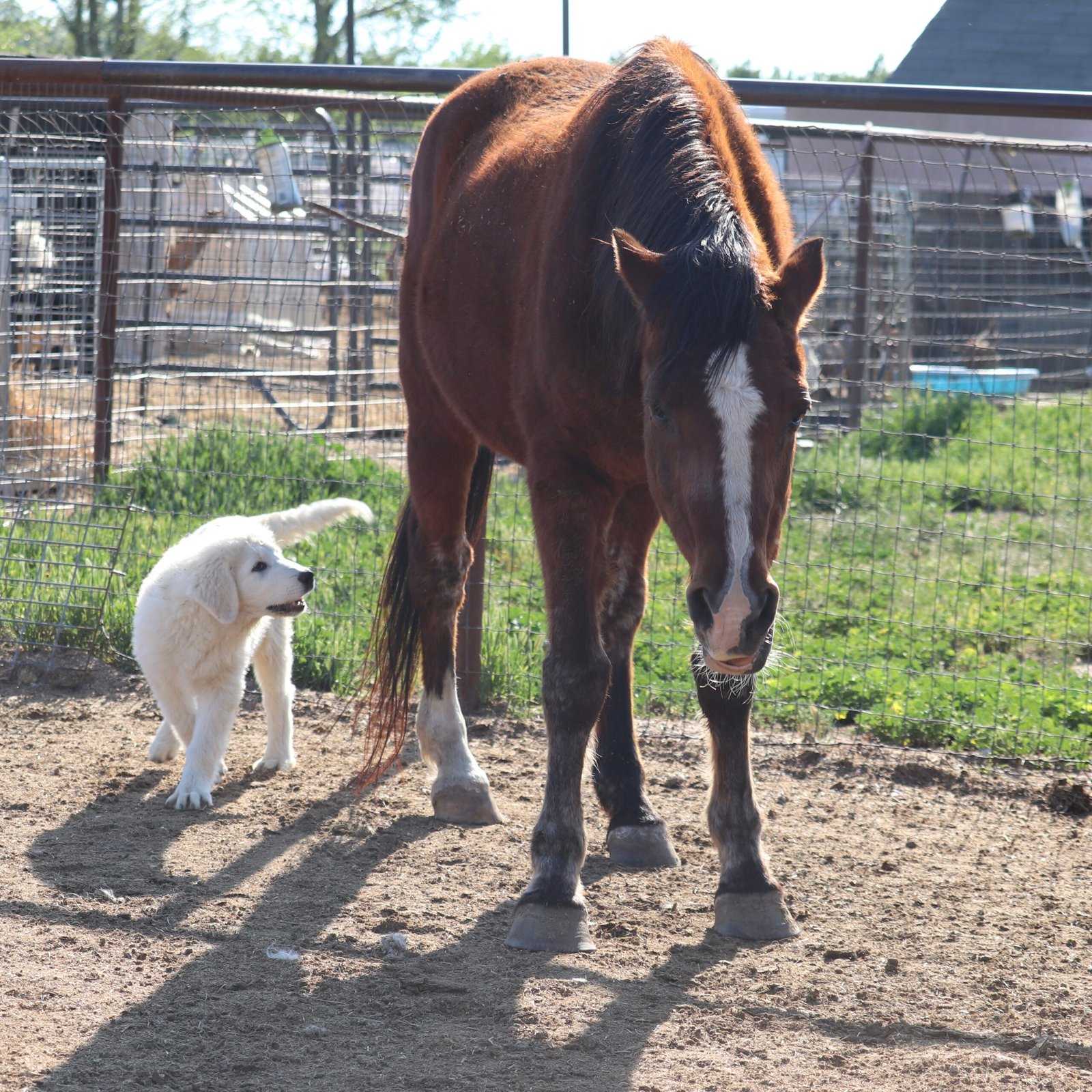
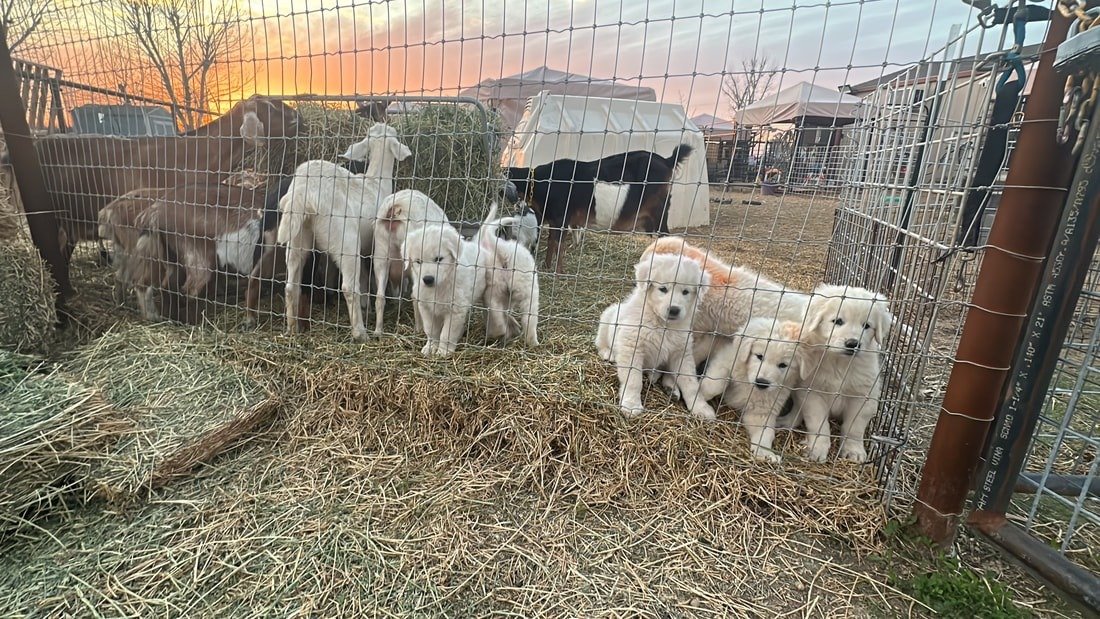
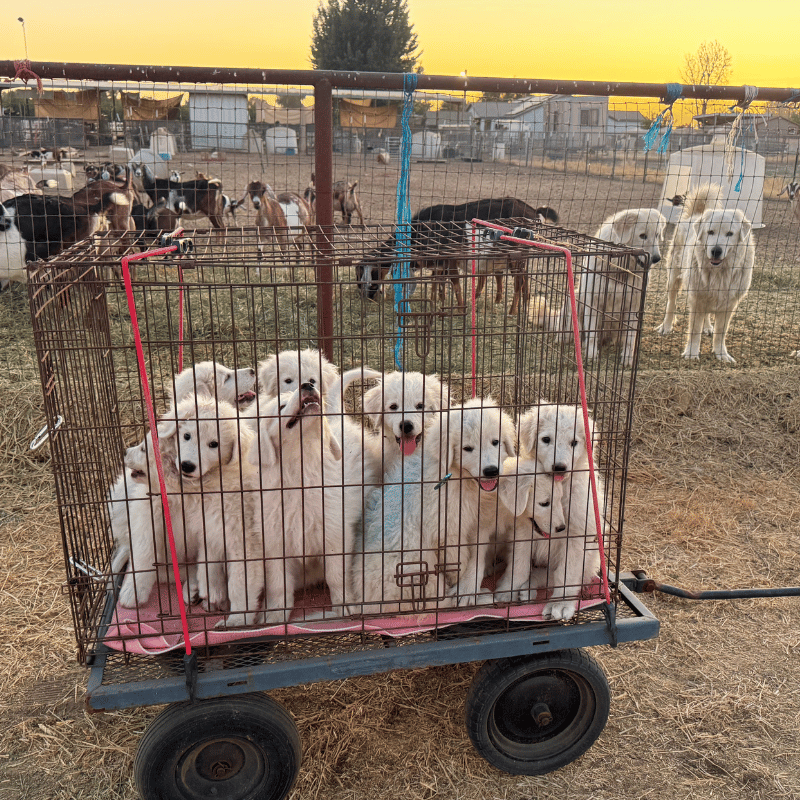
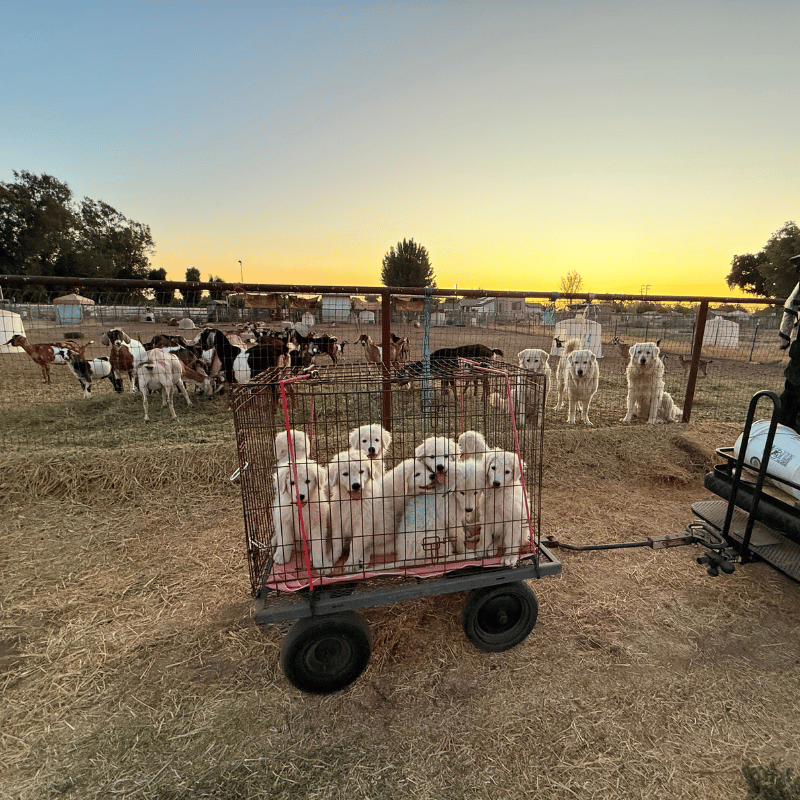
Not all livestock make good puppy teachers — and the wrong ones don't just fail to help, they actively create problems that may never fully resolve. This post covers how we select our trainer animals, what appropriate livestock teaching looks like in practice, and how we monitor and adjust when something isn't working.
Read: Livestock Integration — From Observation to Interaction →
Growing Up — Older Puppies and the Children Who Love Them
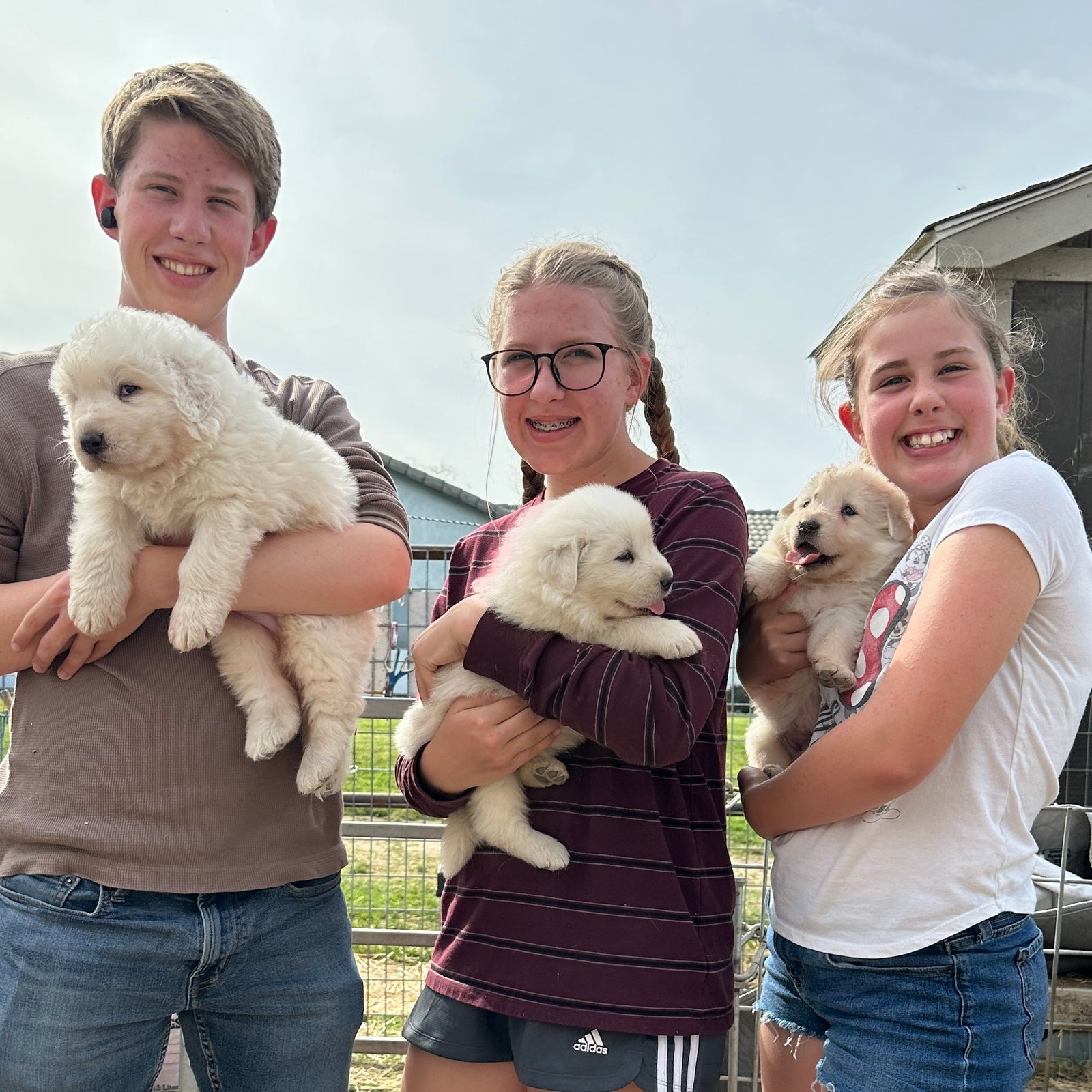
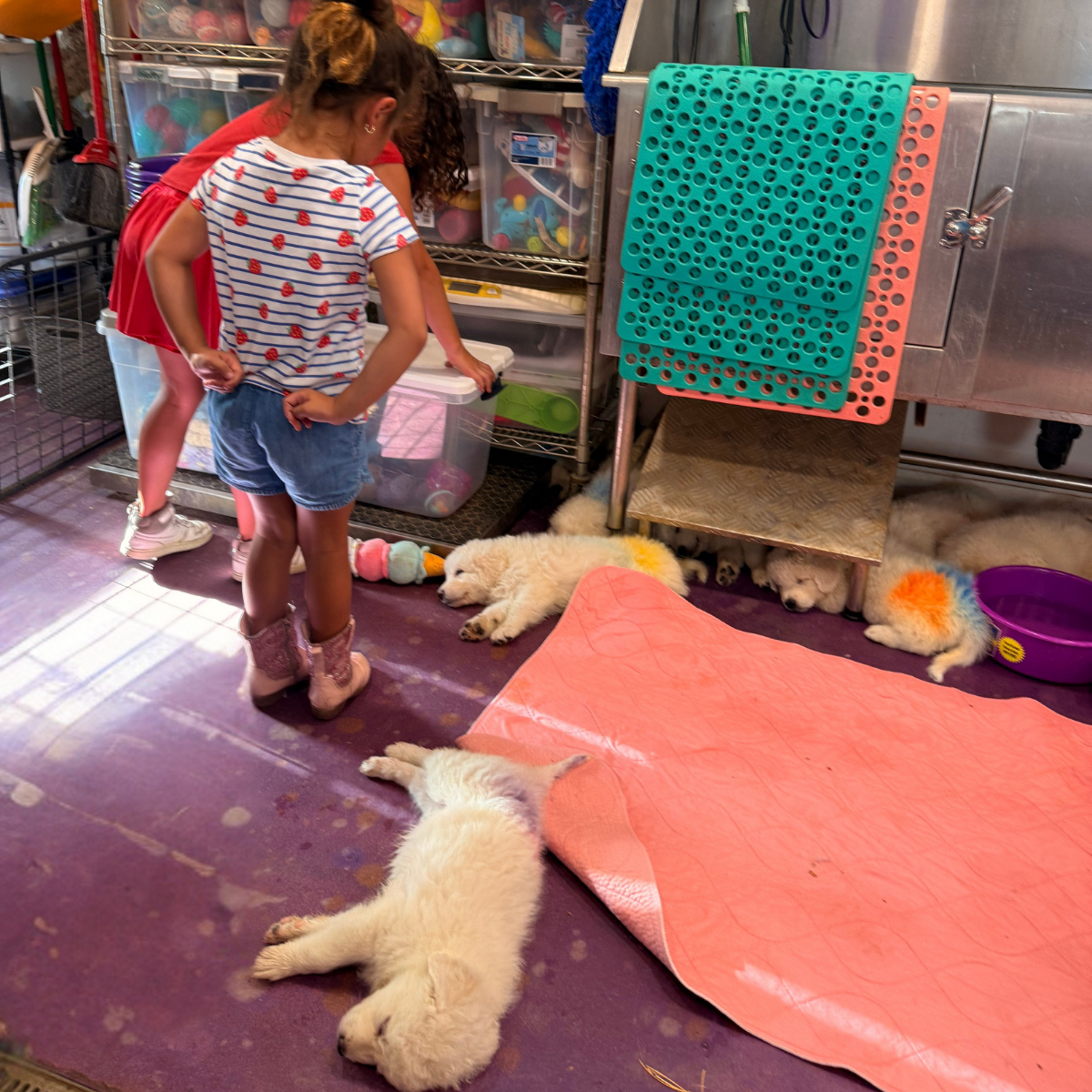
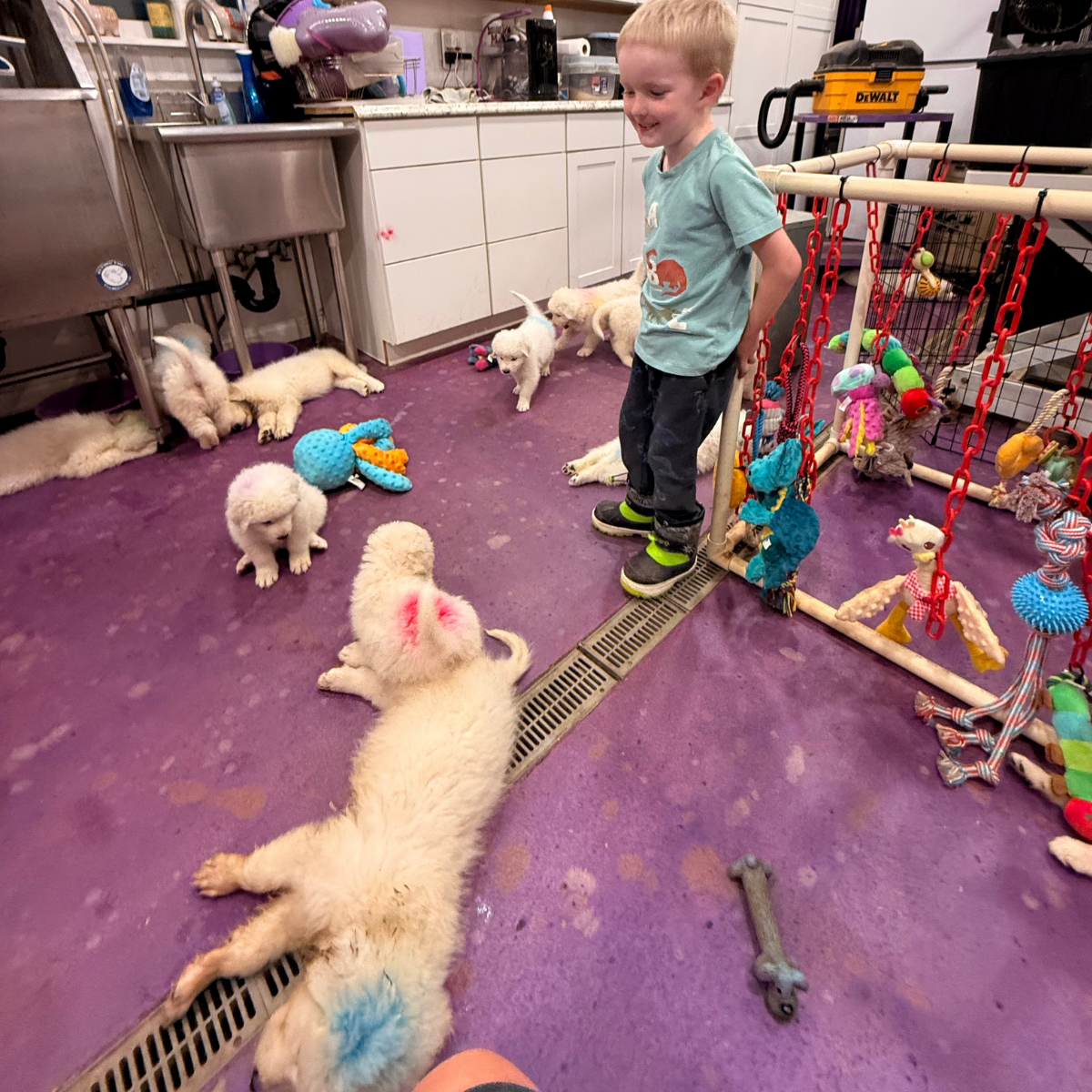
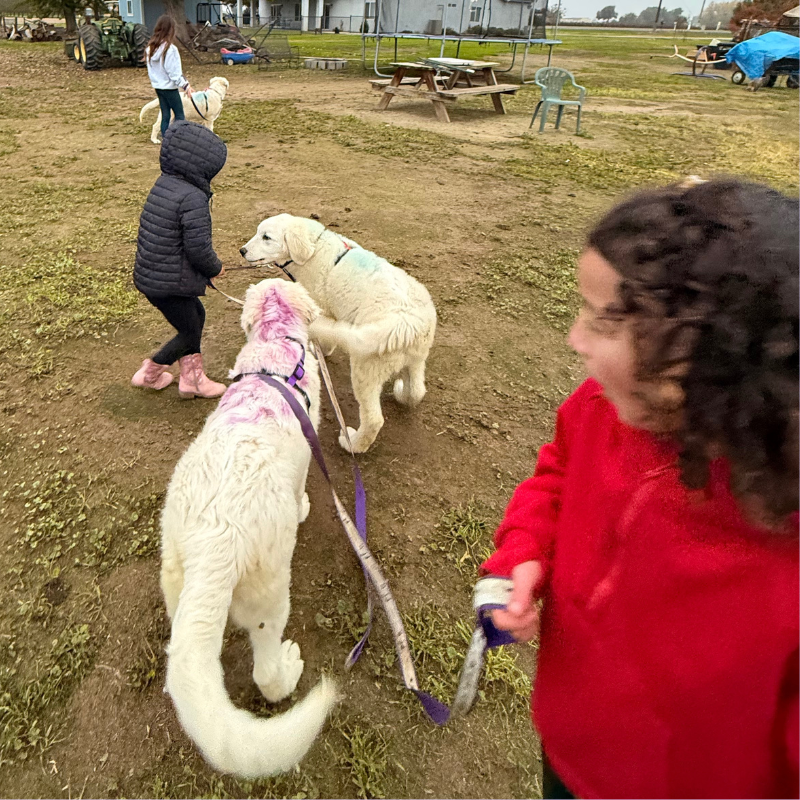
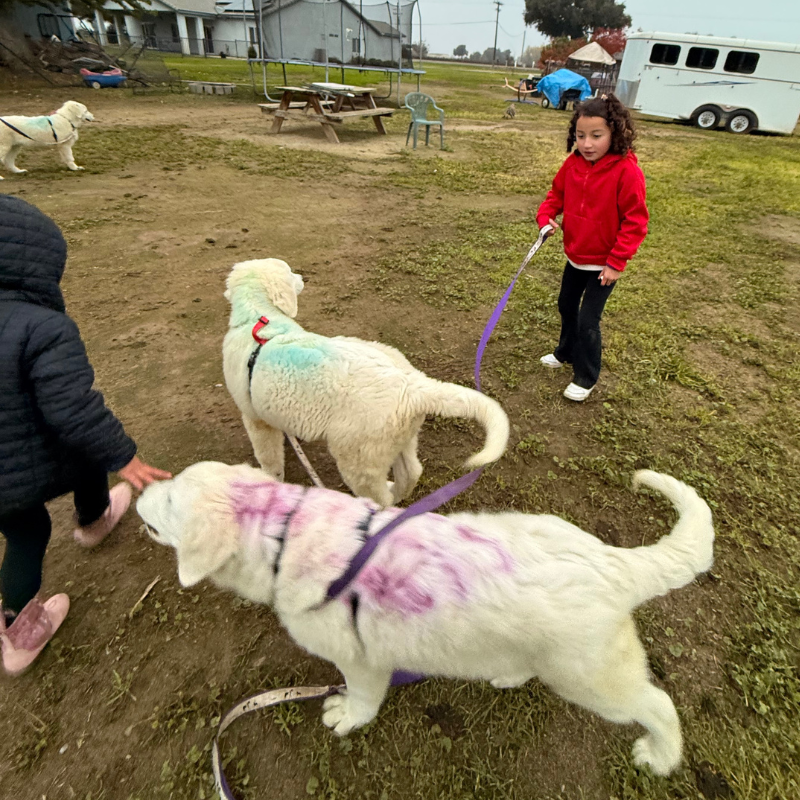
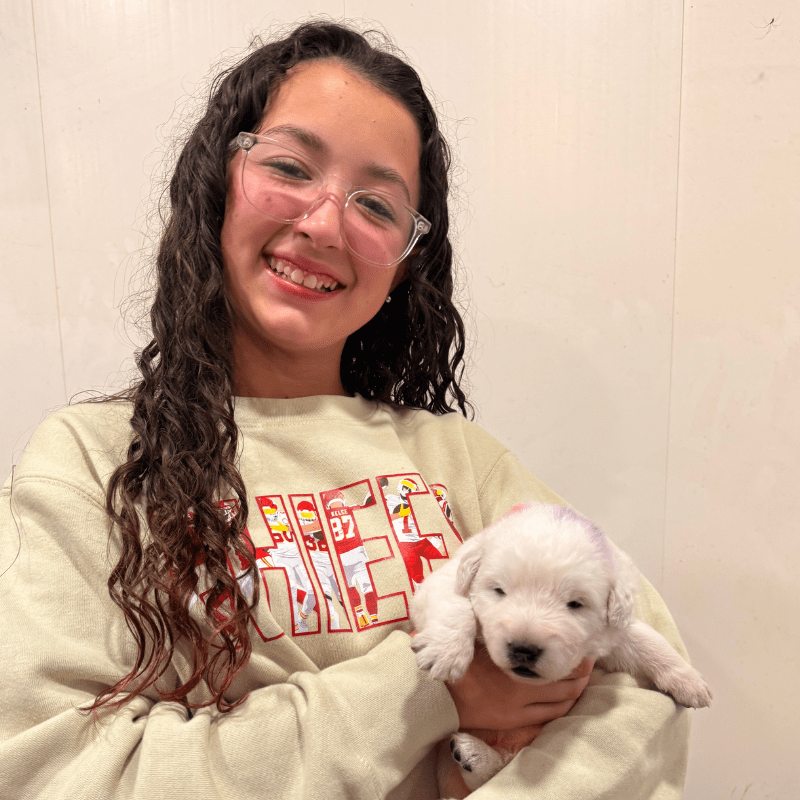
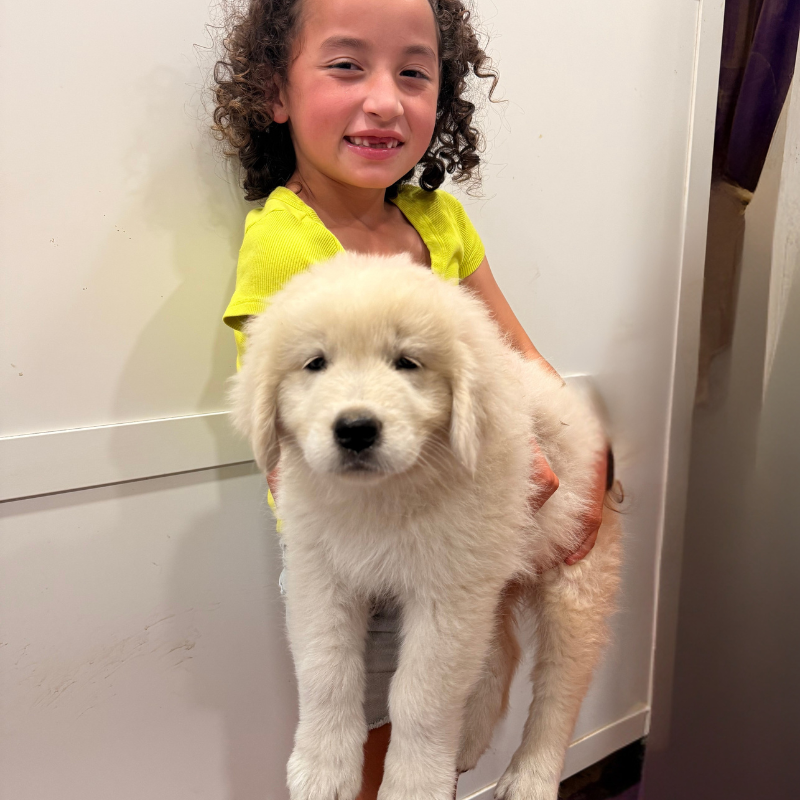
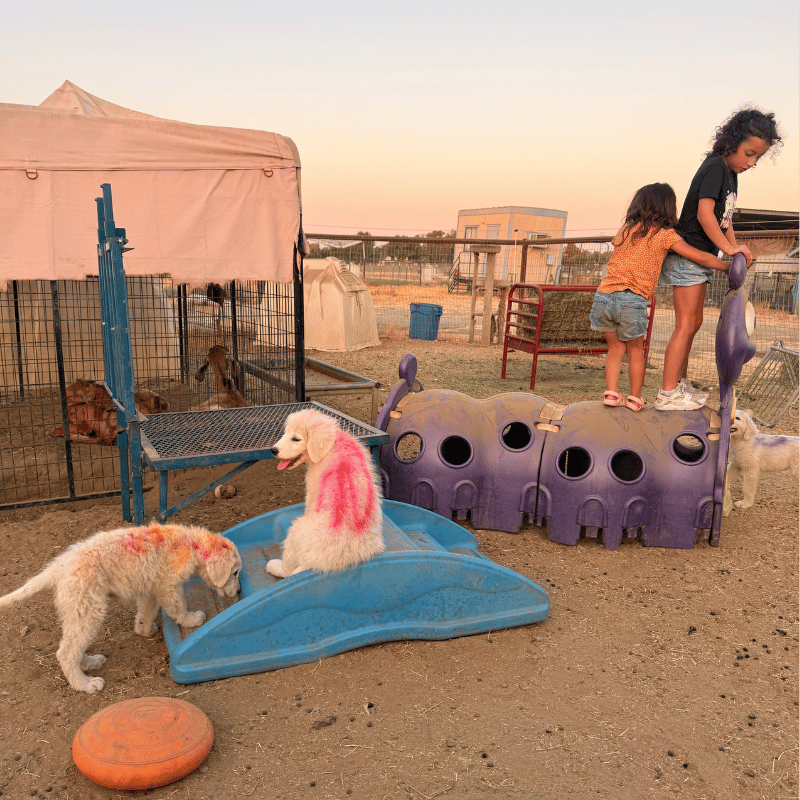
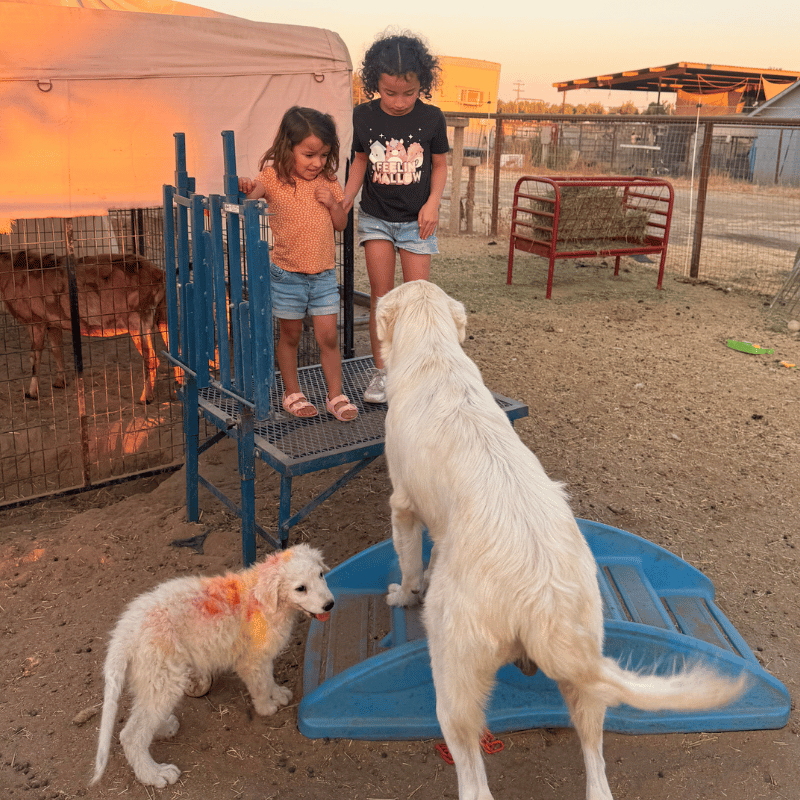
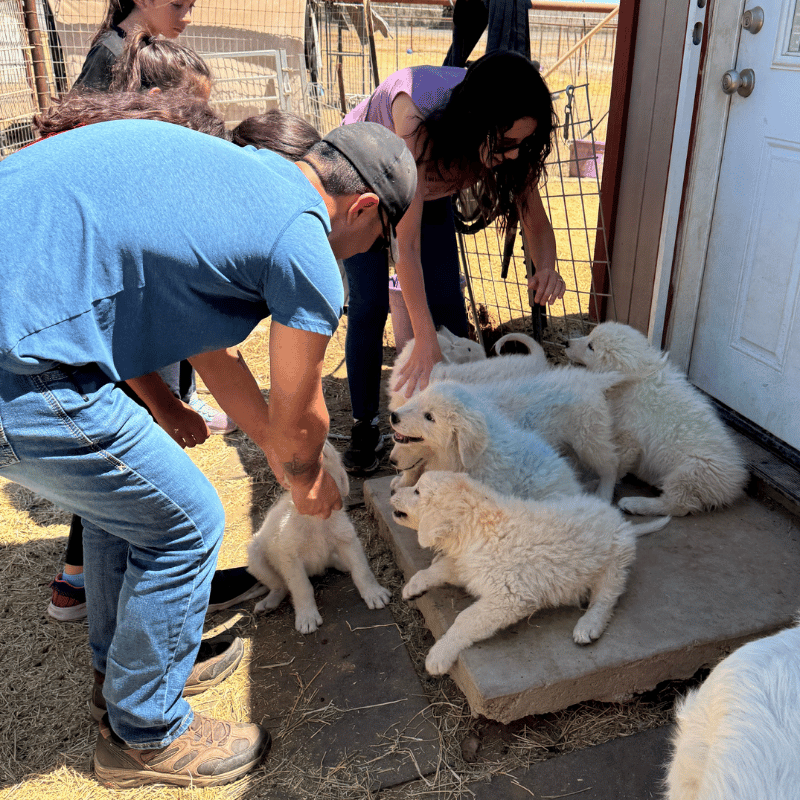
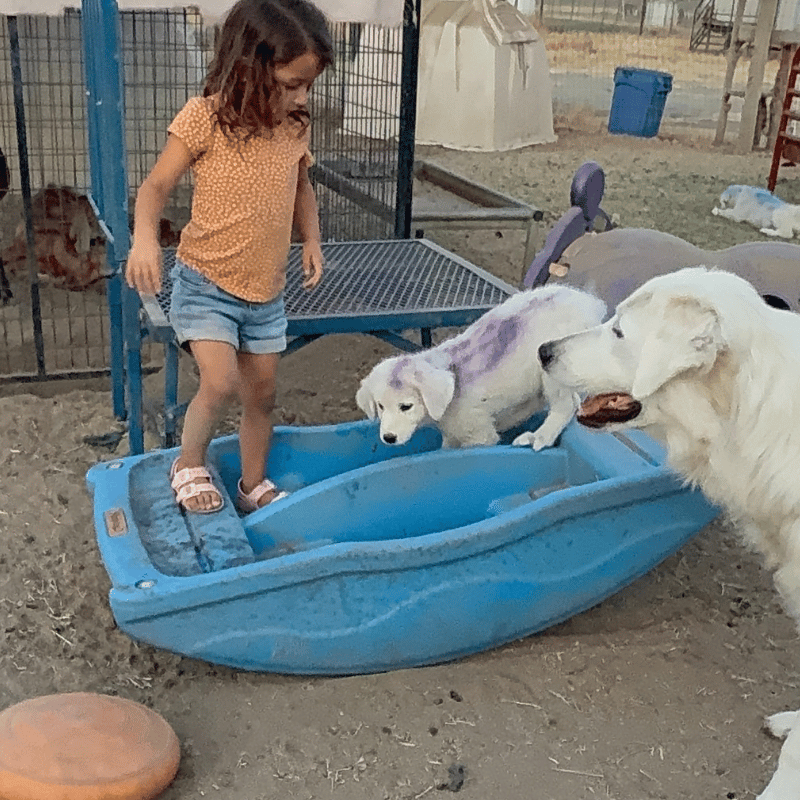
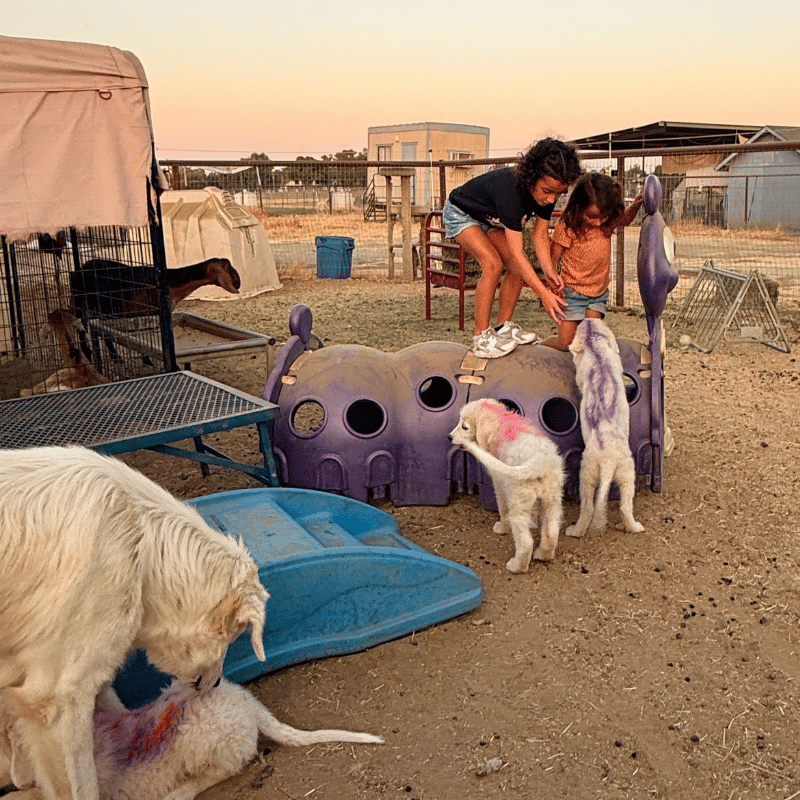
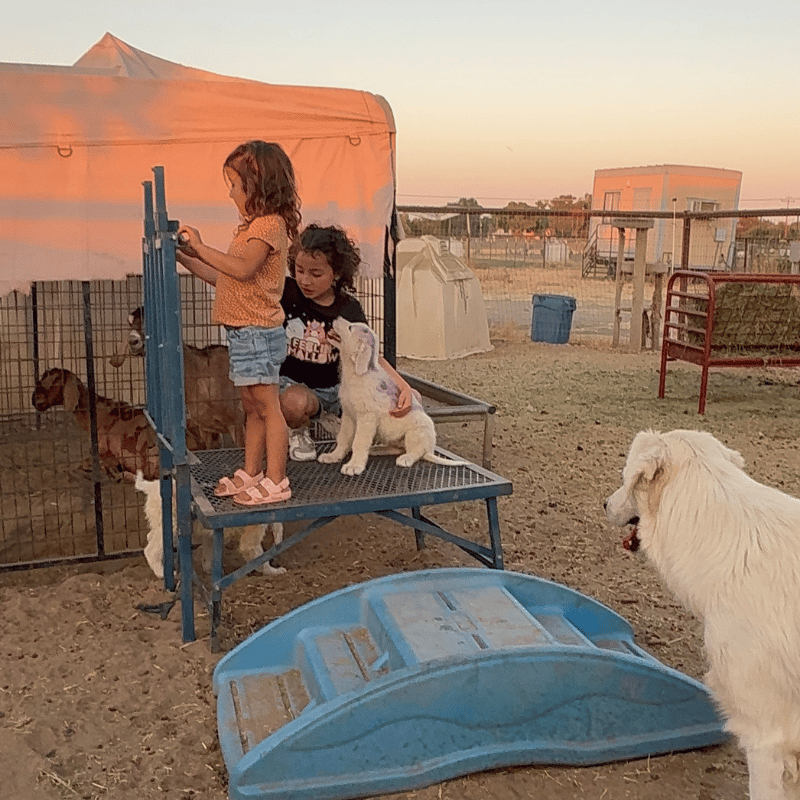
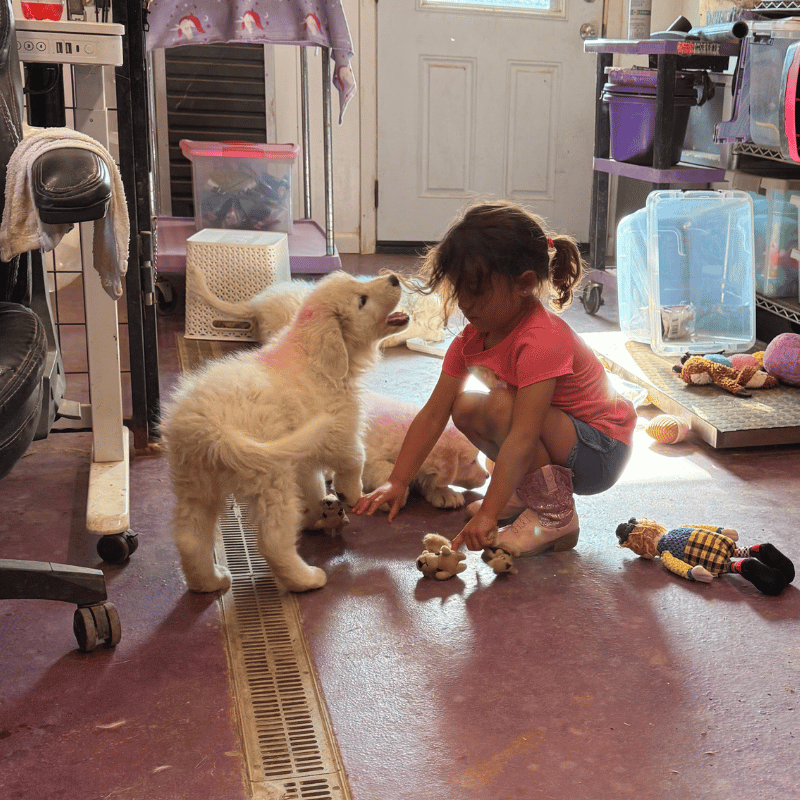
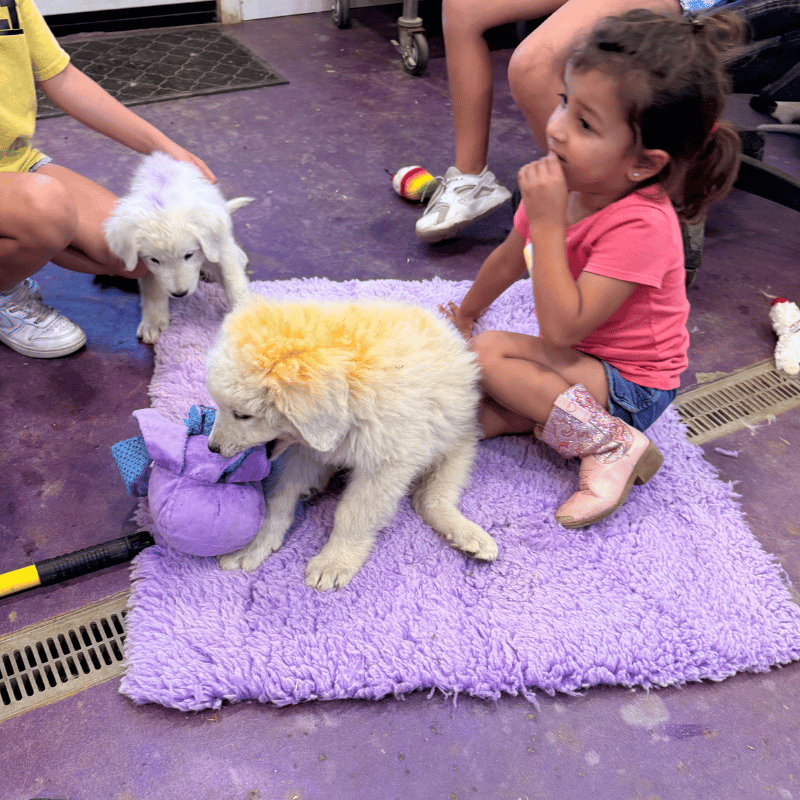
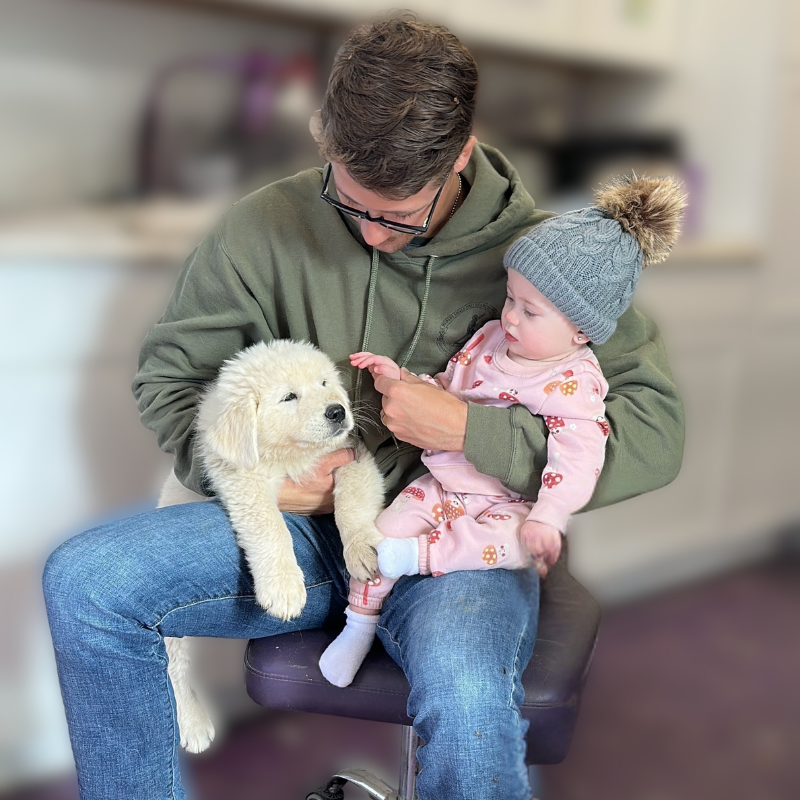
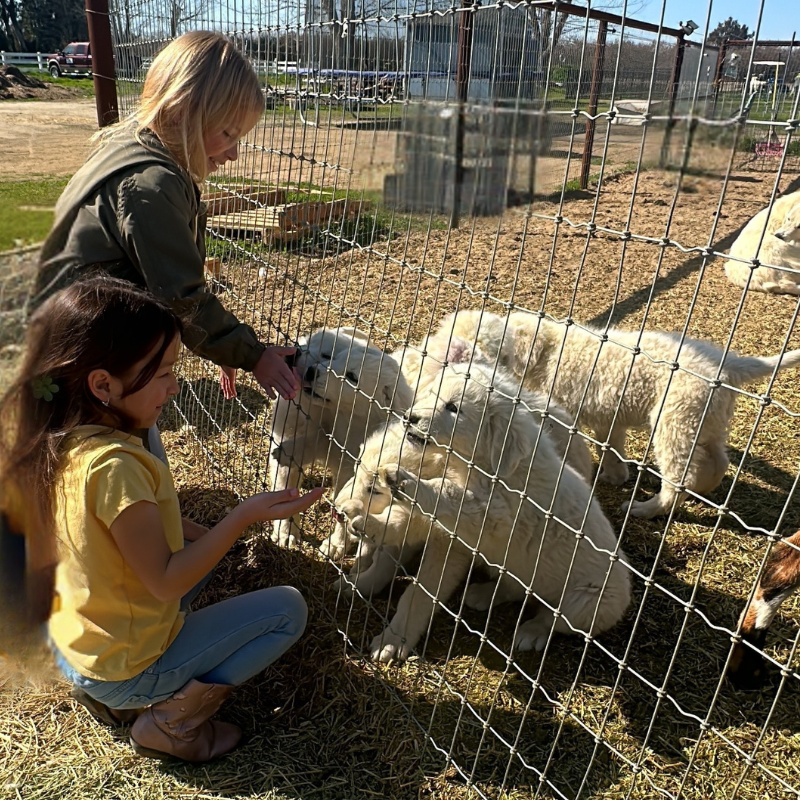
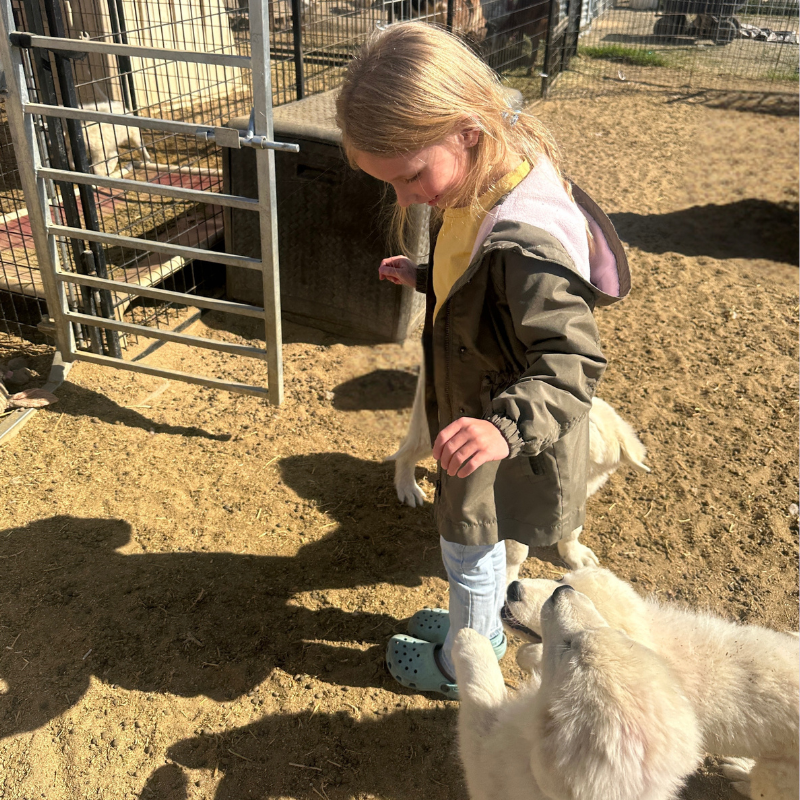
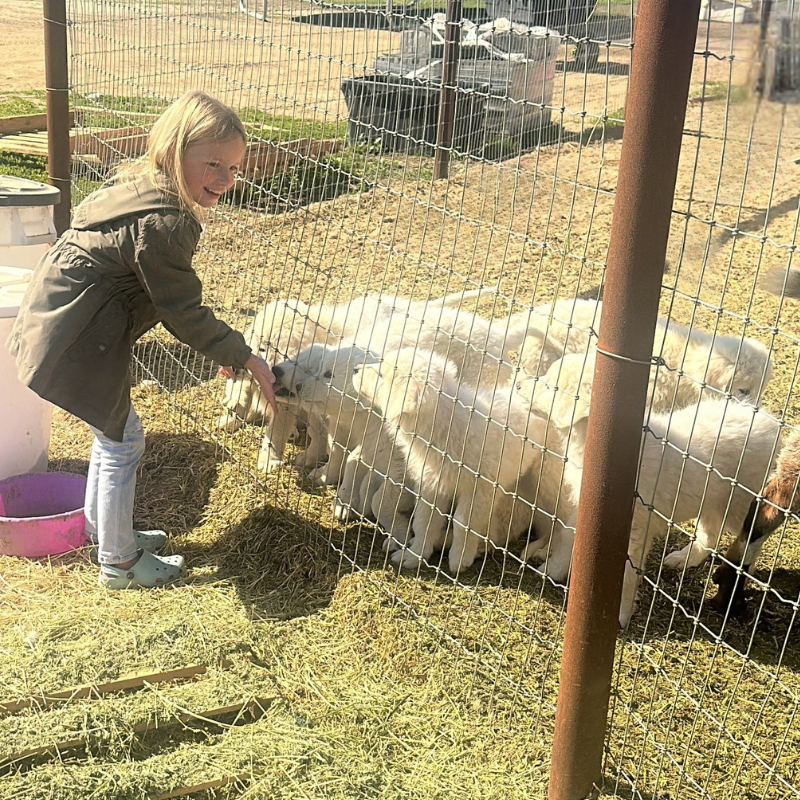
You already saw what it looks like when our puppies meet children in their first weeks of life. Here's what it looks like as they grow.
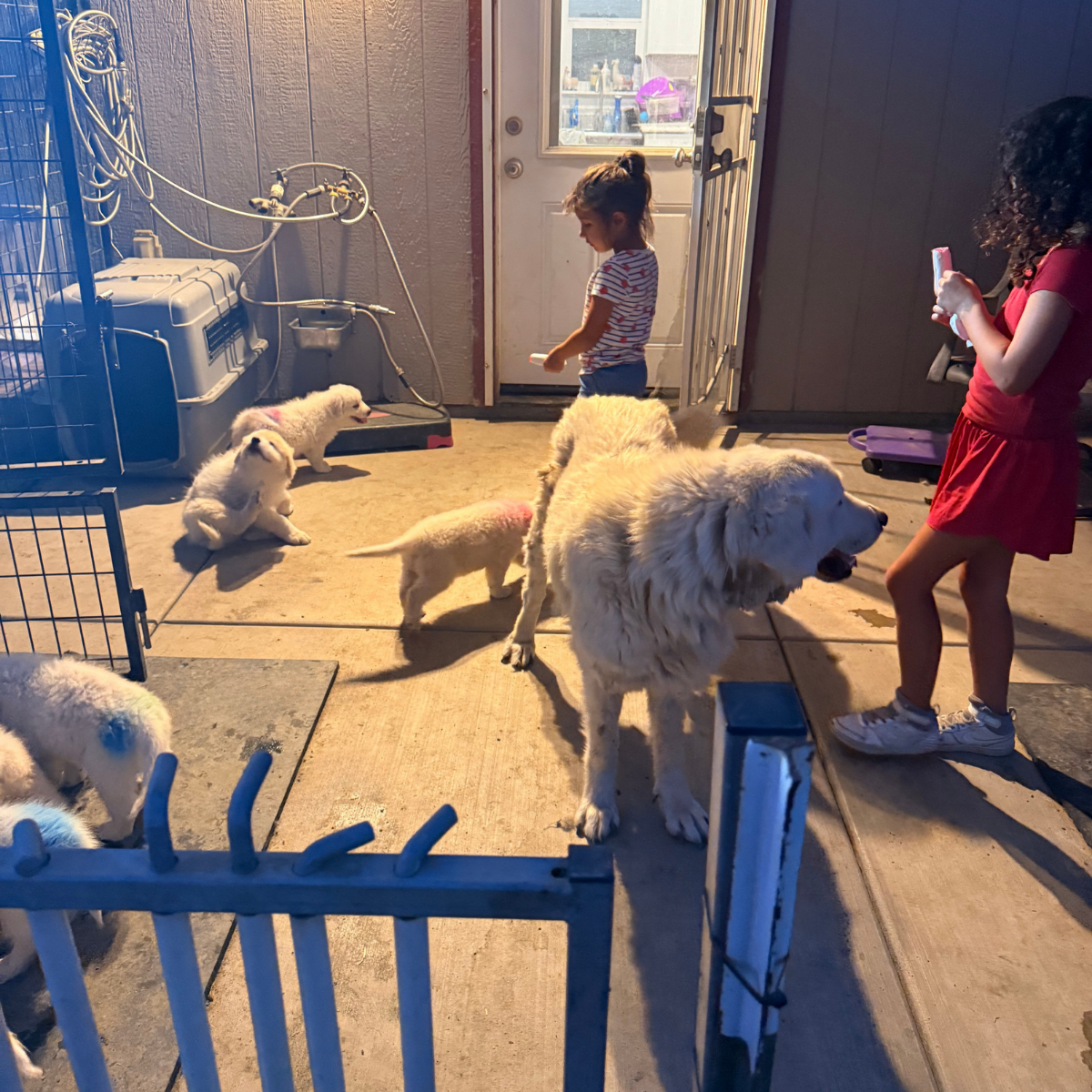
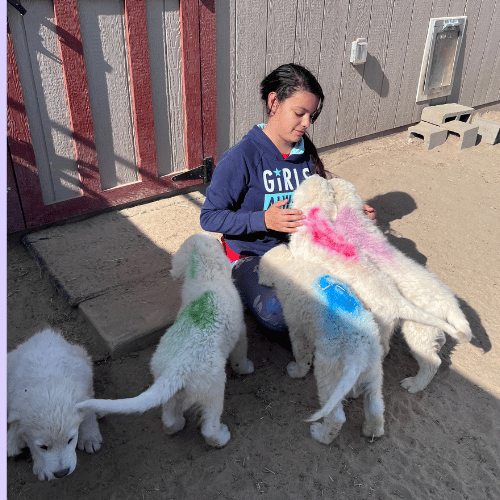
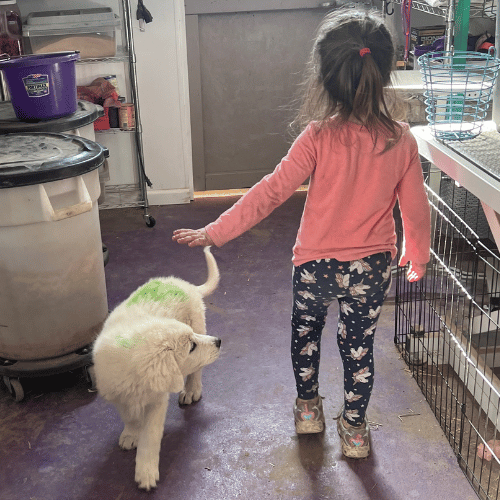
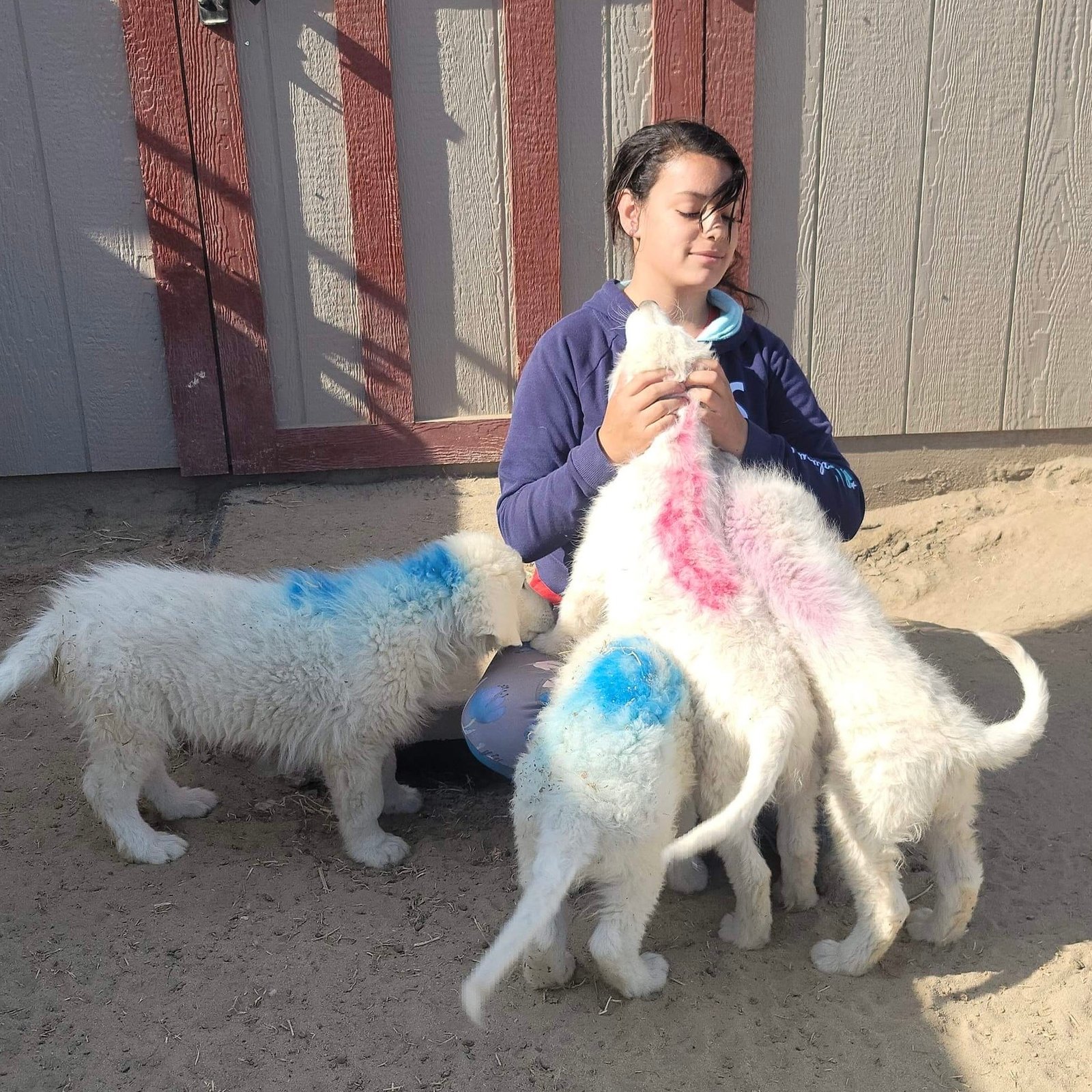
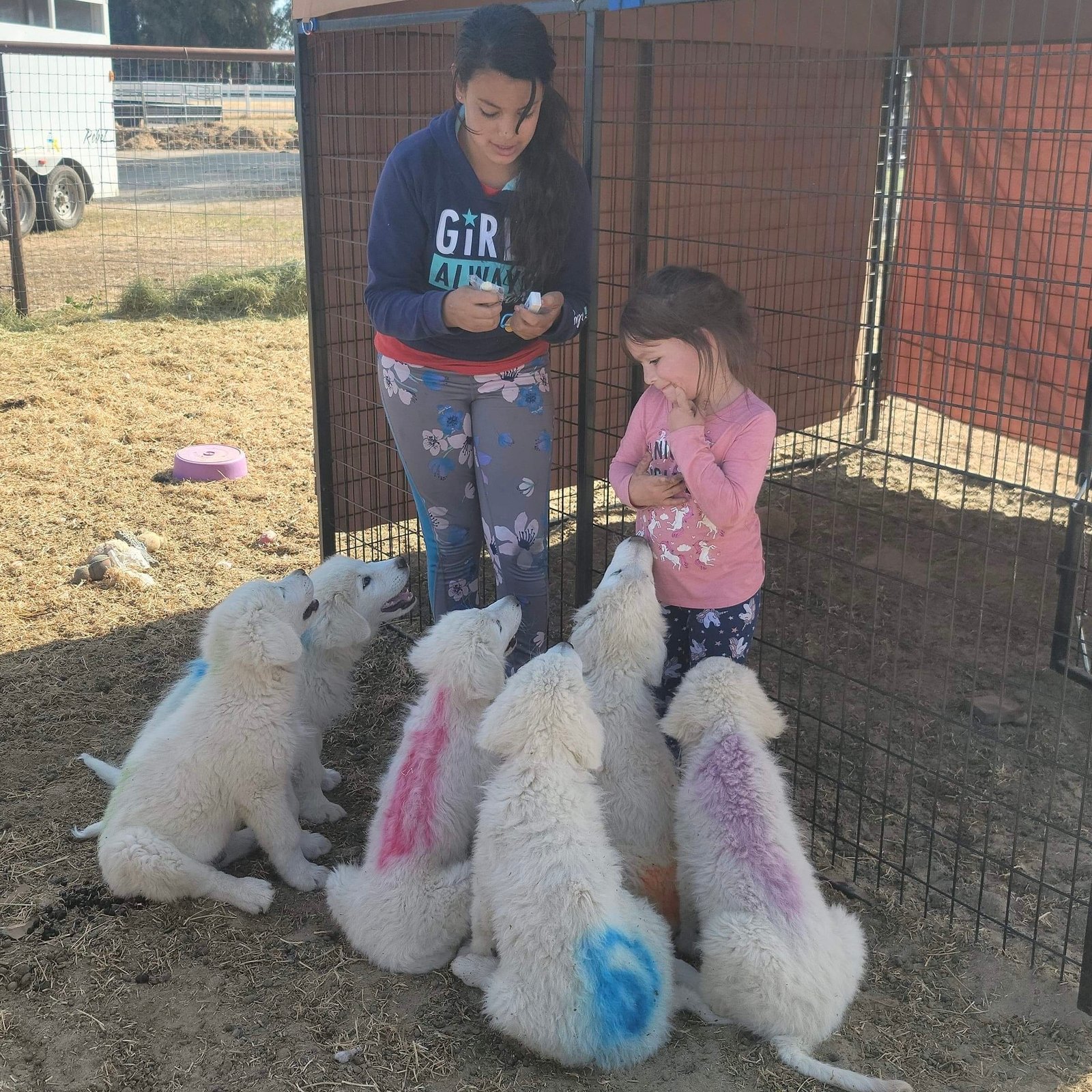
By the time our puppies are in the active socialization window — weeks three through twelve and beyond — children aren't a new experience. They're a familiar, comfortable part of life. Which means that as puppies get bigger, more mobile, and more curious, their response to children is relaxed confidence rather than overwhelm or uncertainty.
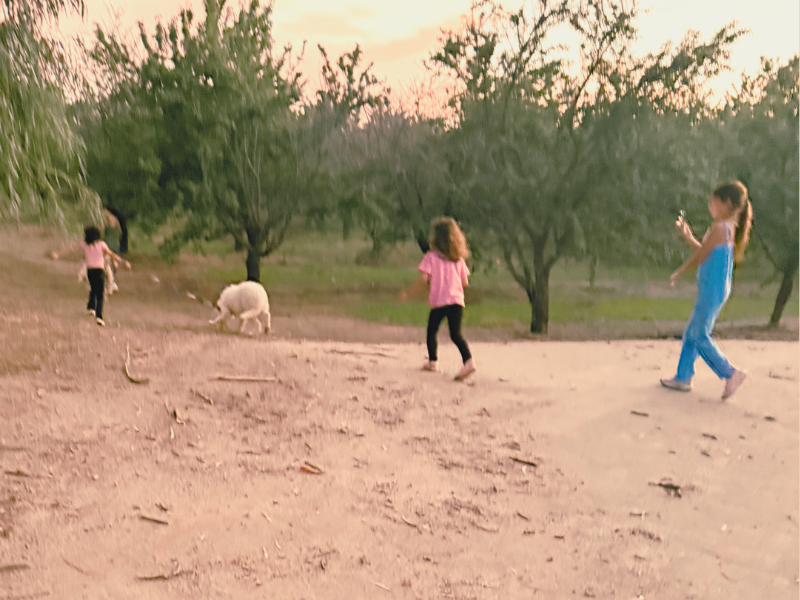
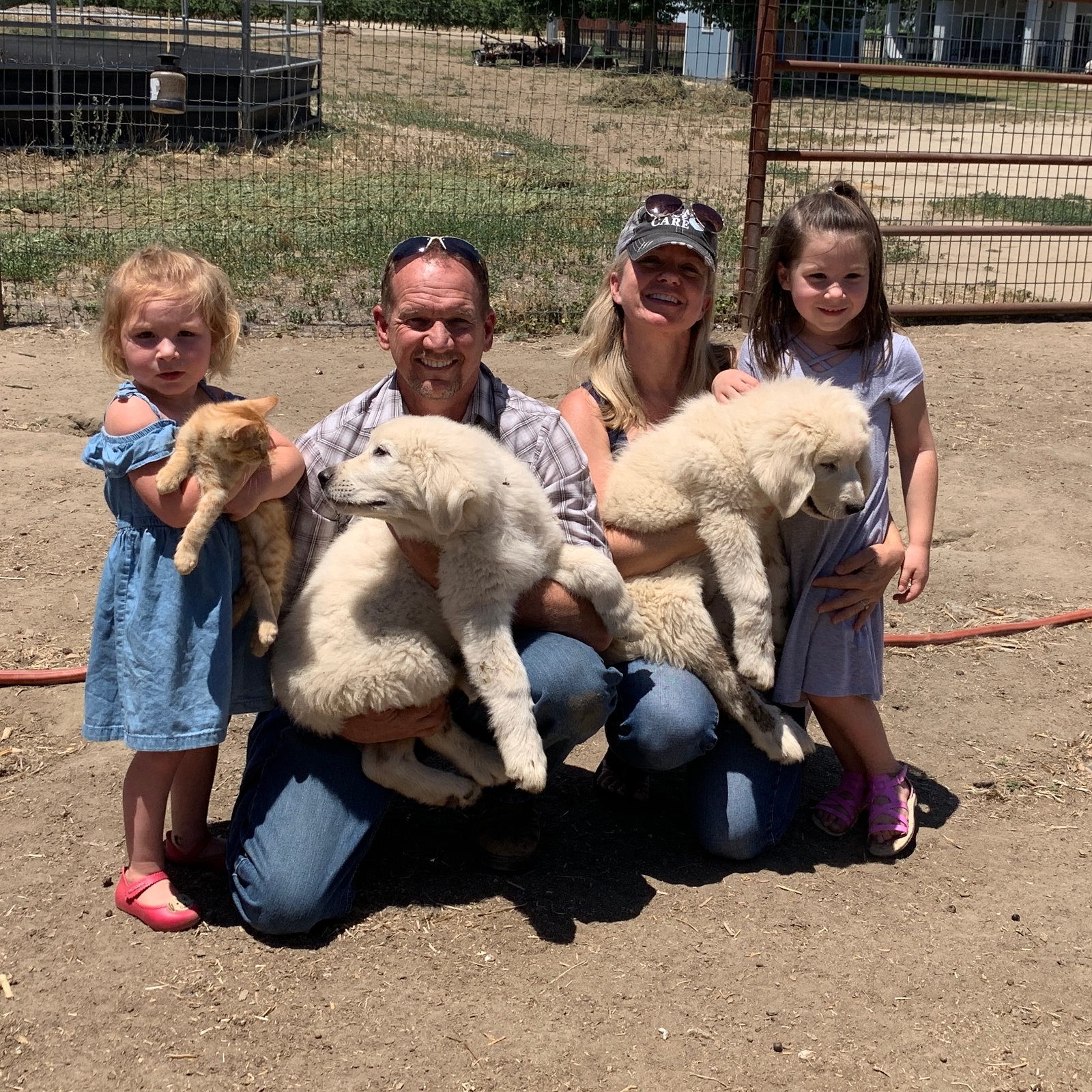
These photos show puppies of all ages with kids of all ages — my grandchildren, children of visitors, families who came to meet their future puppy. What you're looking at isn't staged sweetness. It's dogs who trust children because children have always been part of their world.
This matters whether your farm has kids on it or not. Children visit farms. Grandchildren come to stay. Neighbor kids show up. A Maremma raised this way is a known quantity in those moments — and a far safer one.
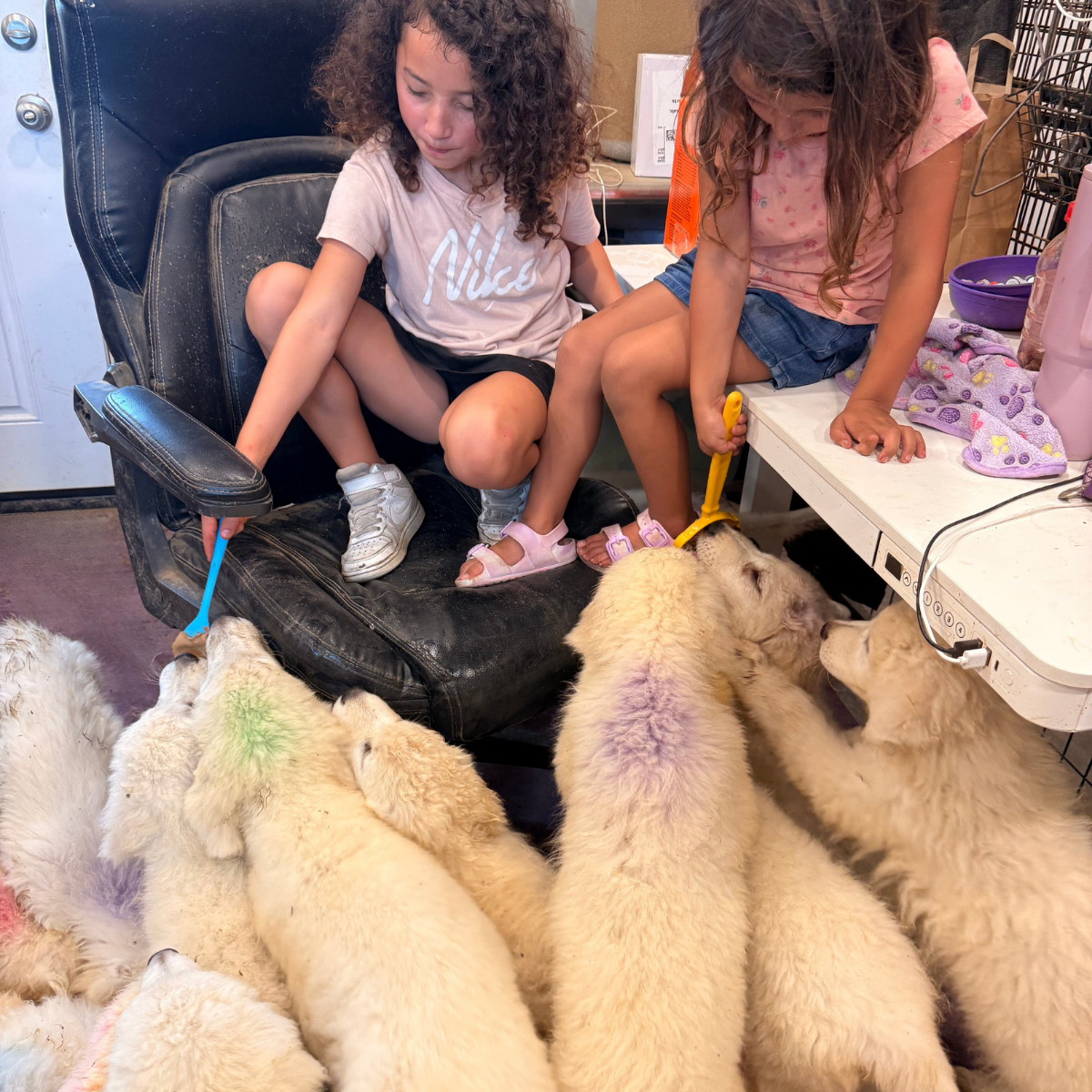
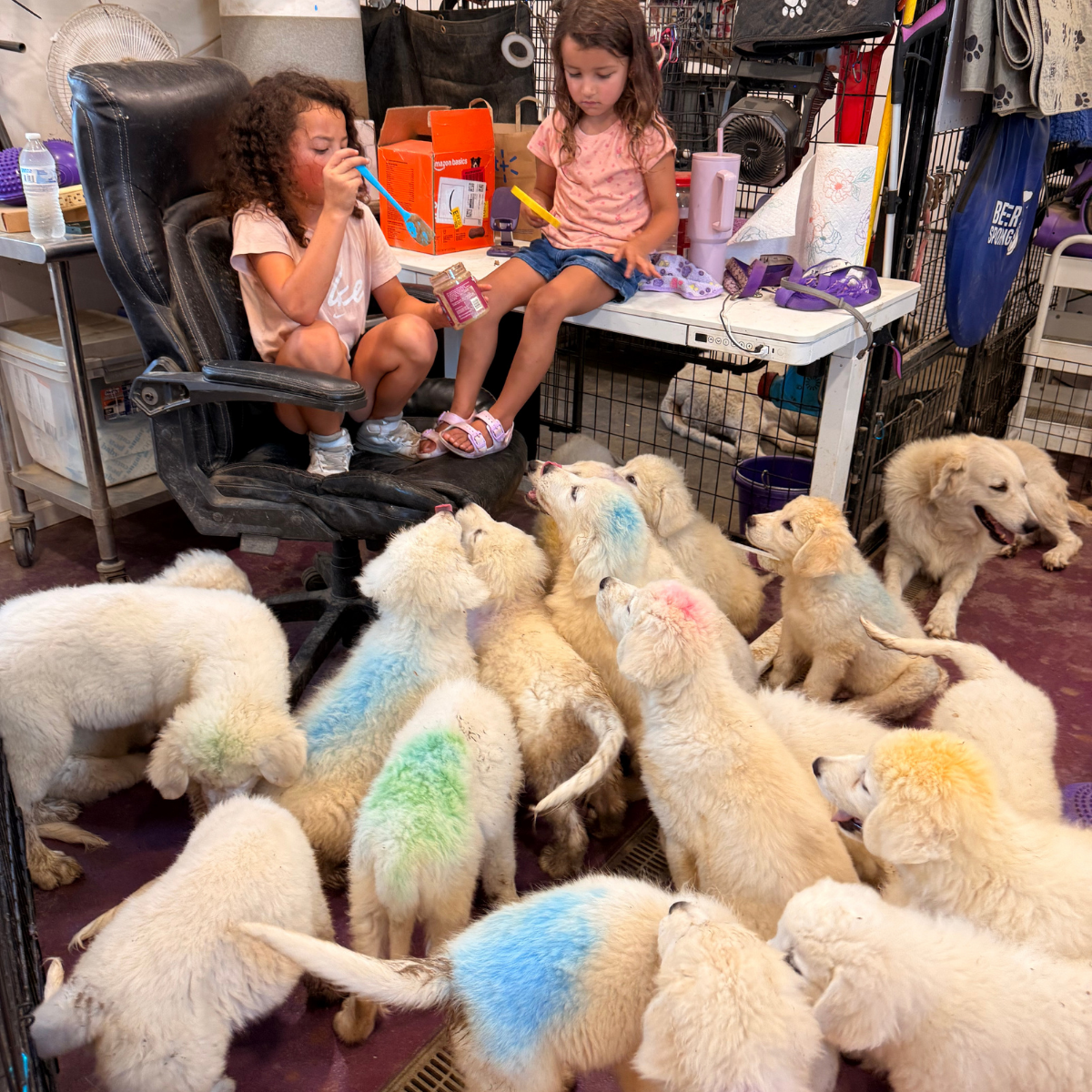
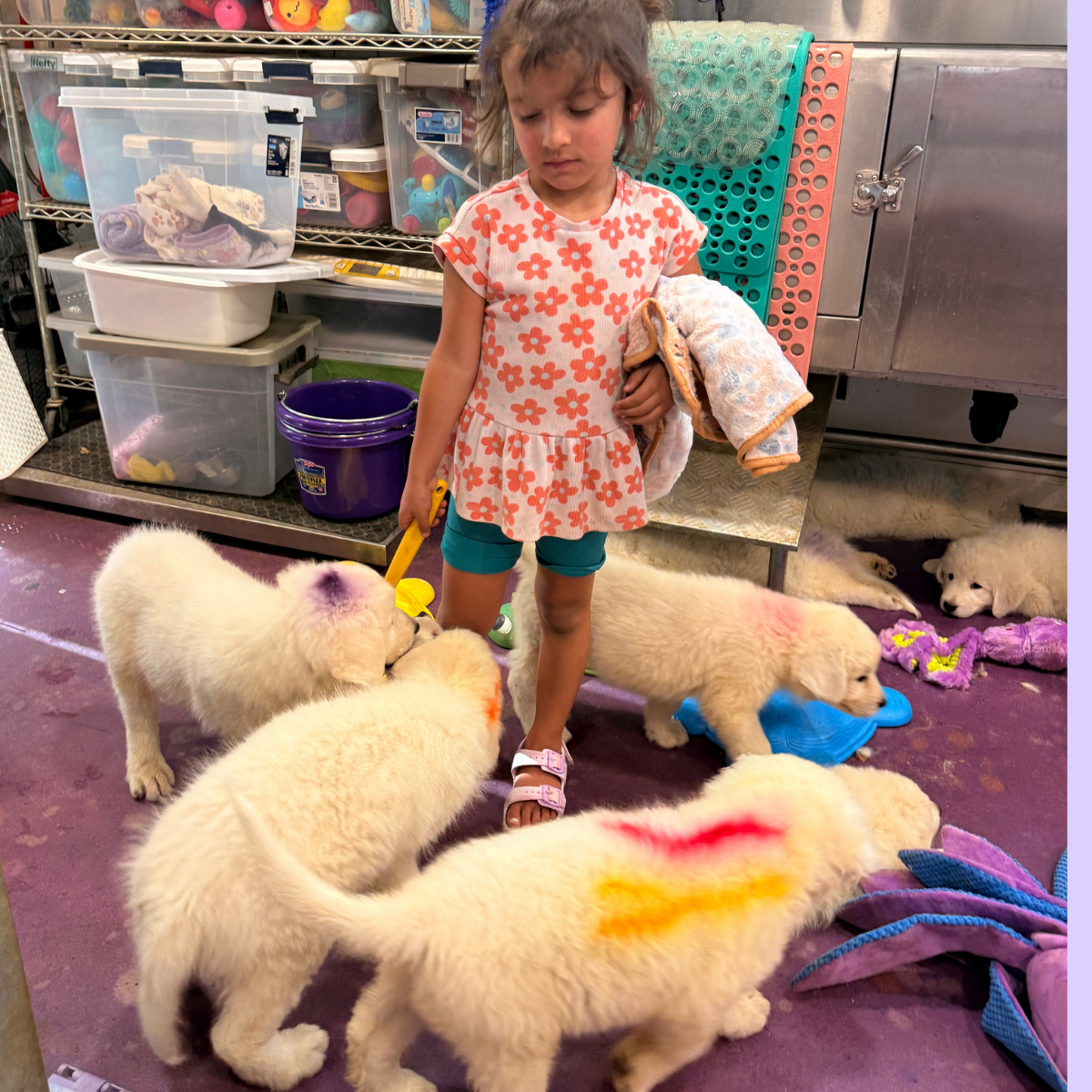
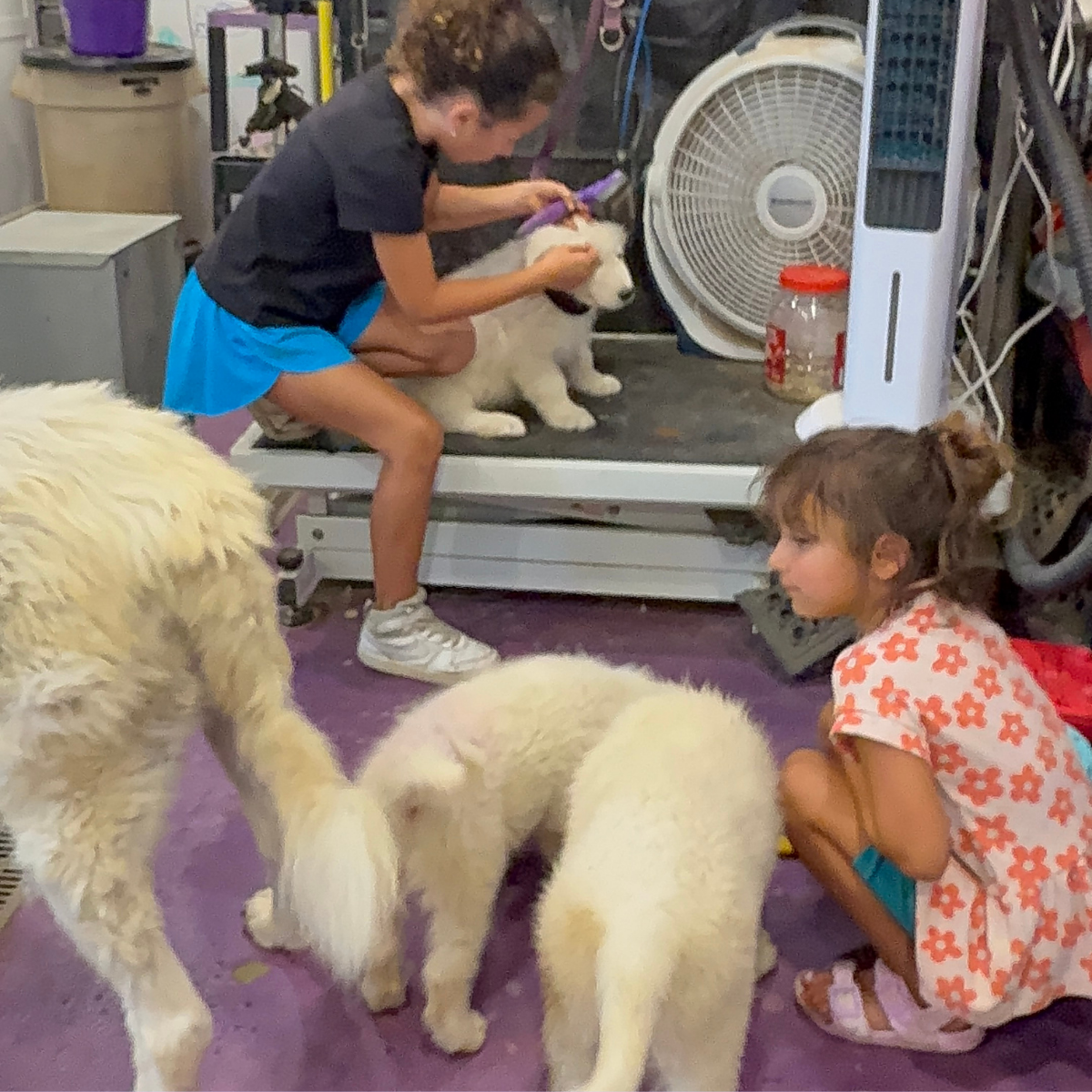
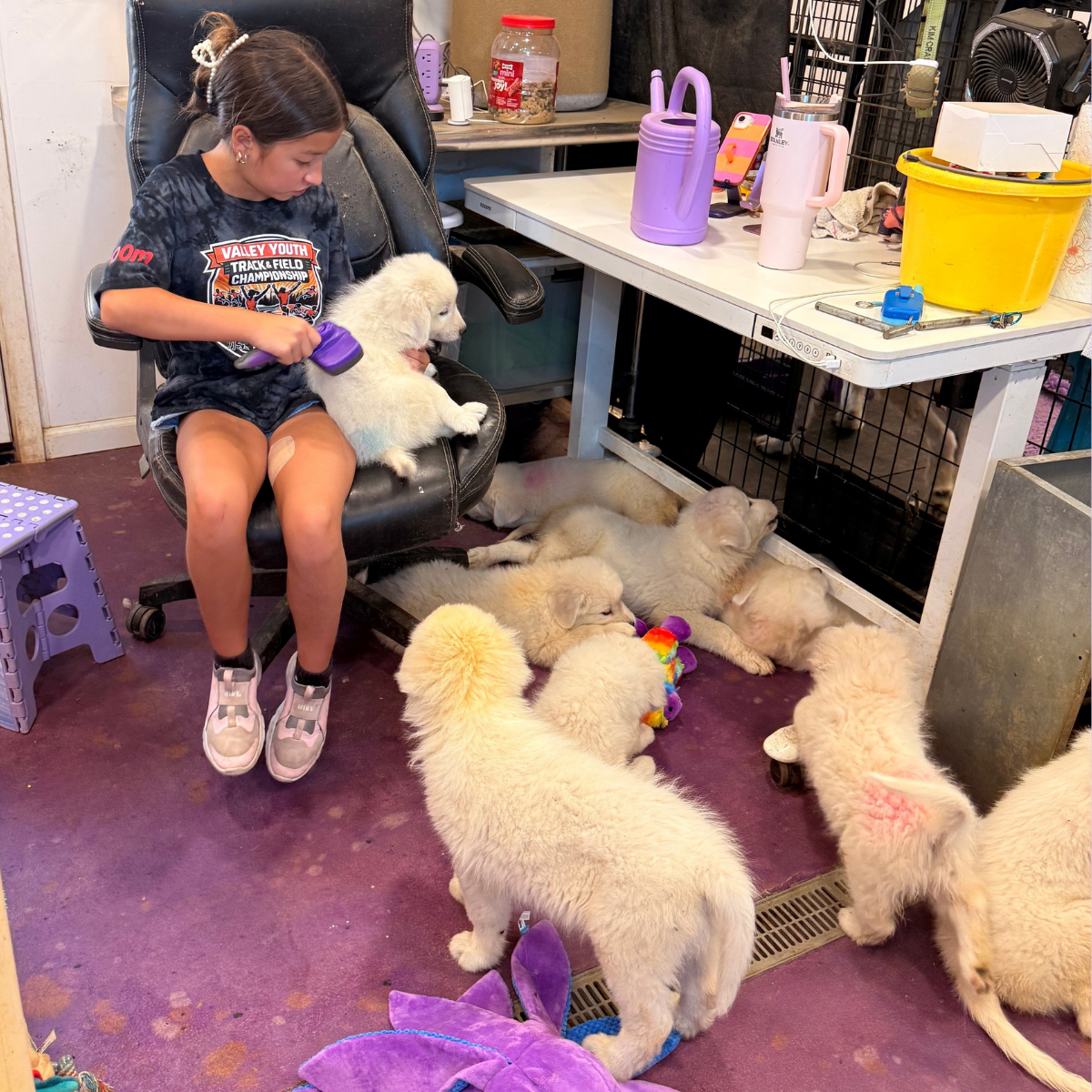
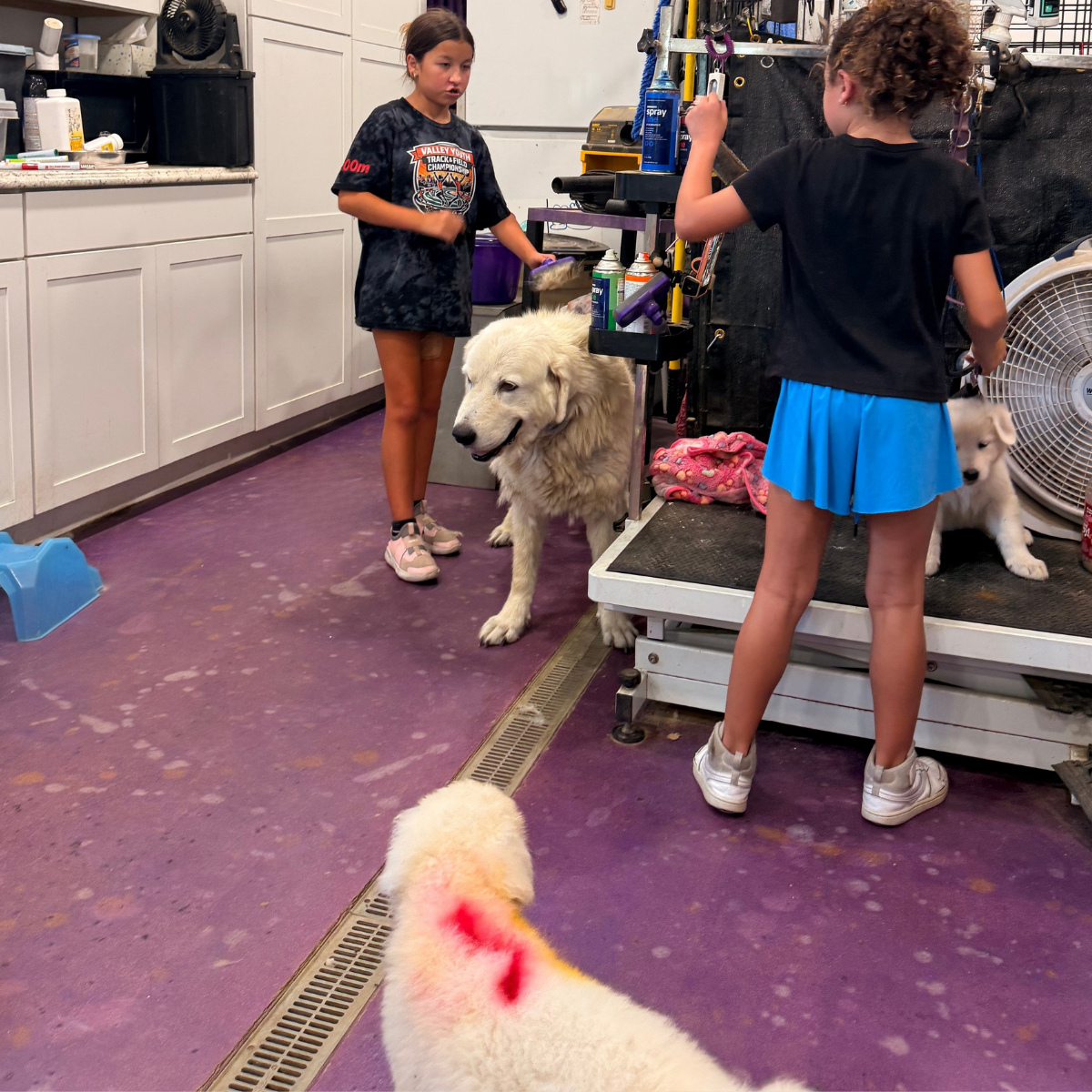
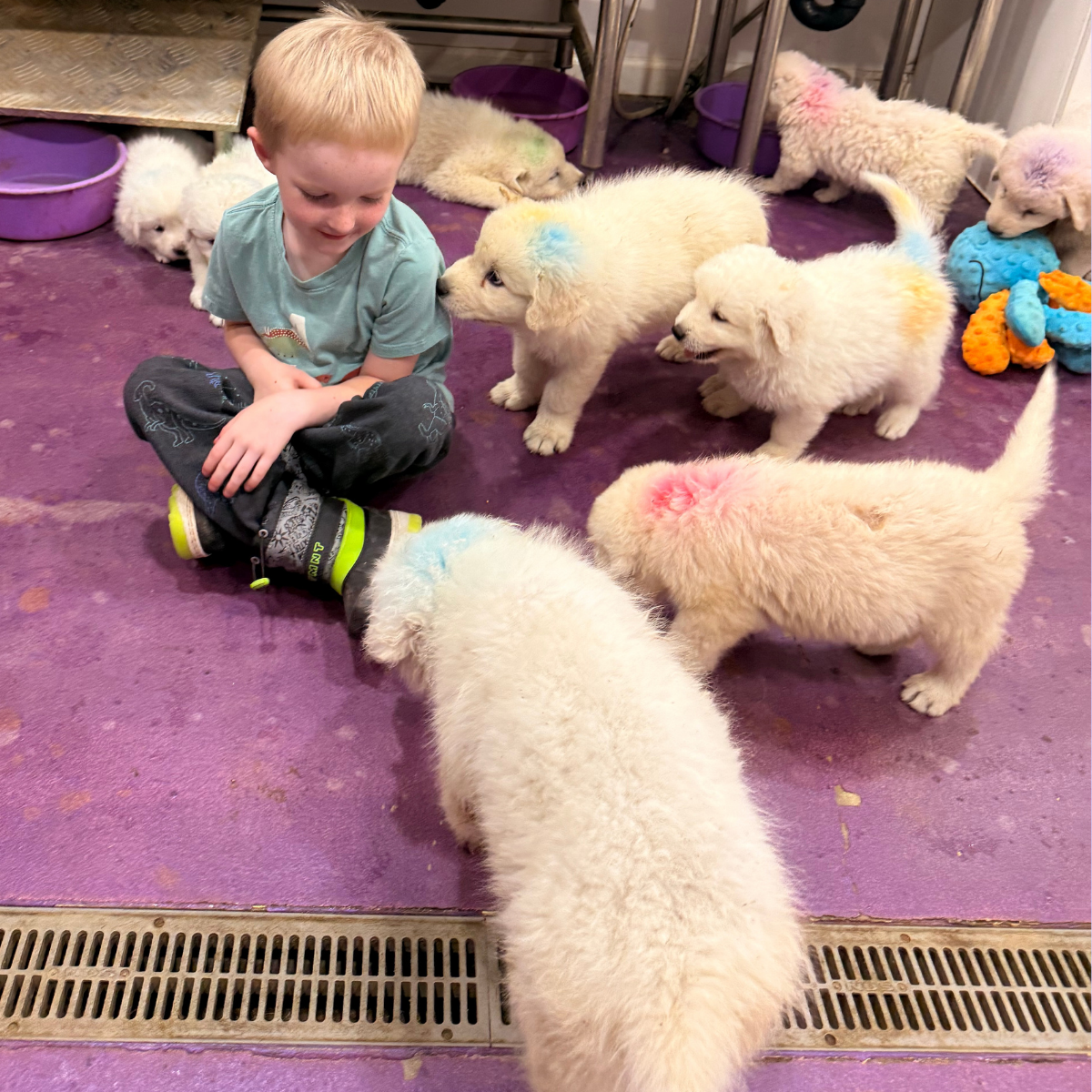
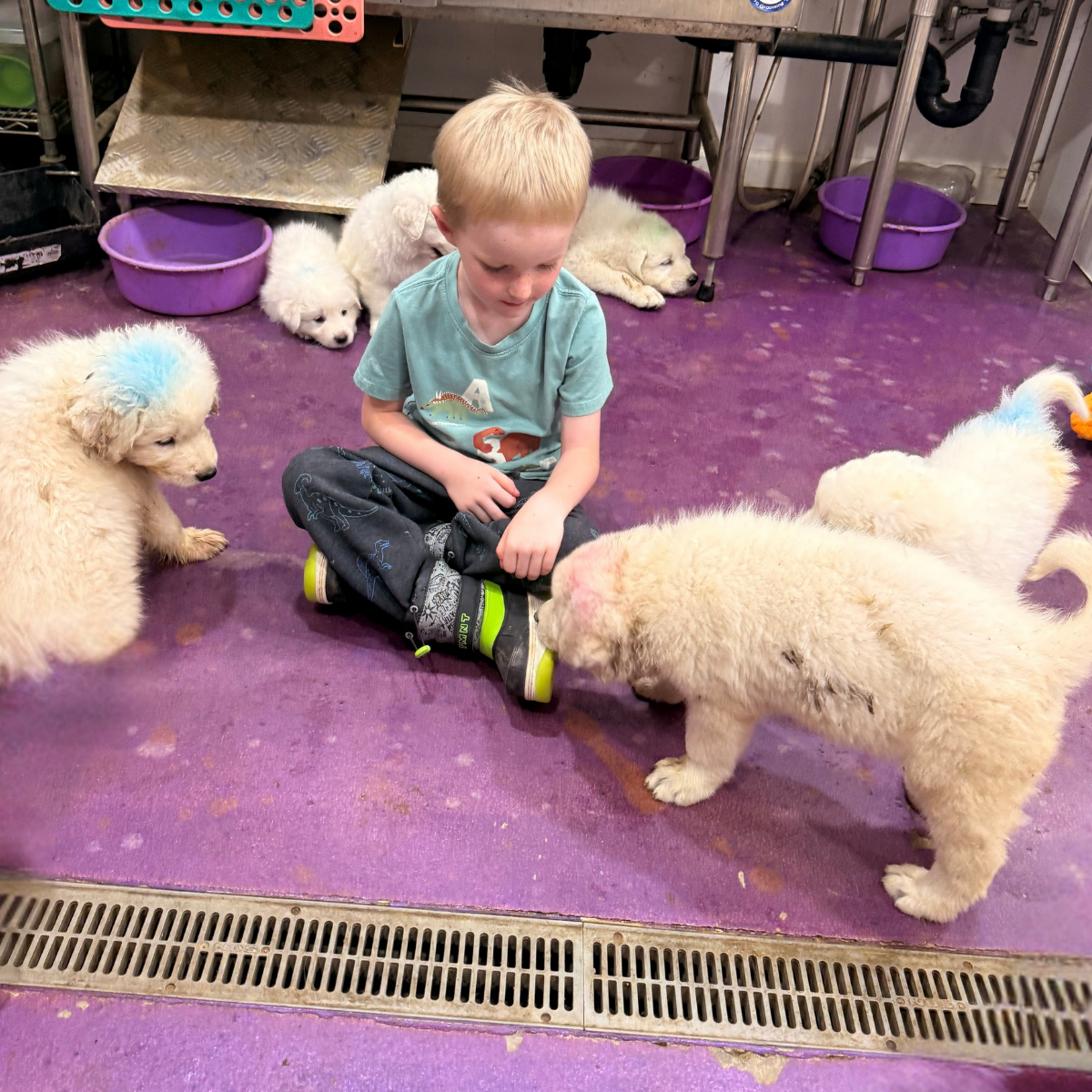
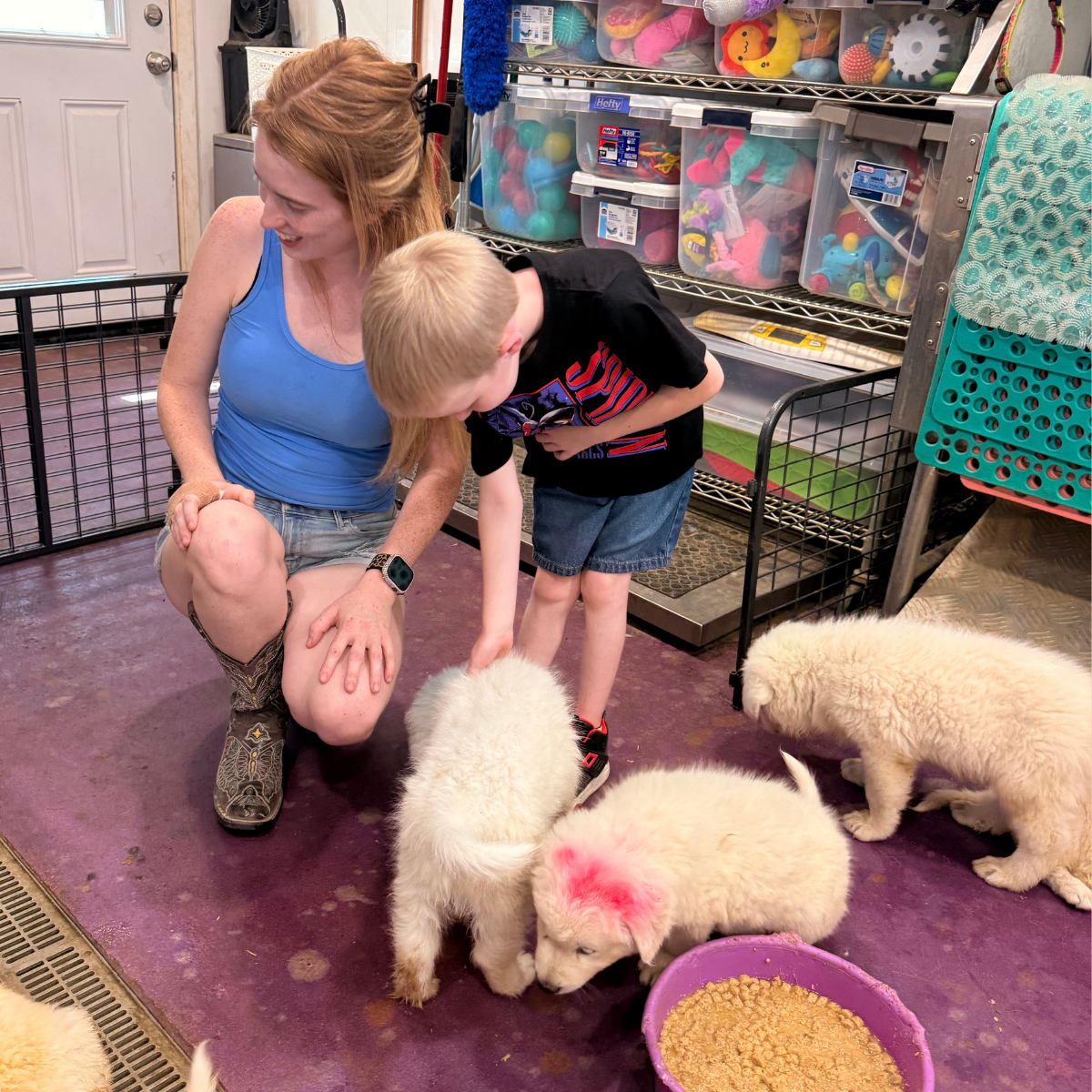
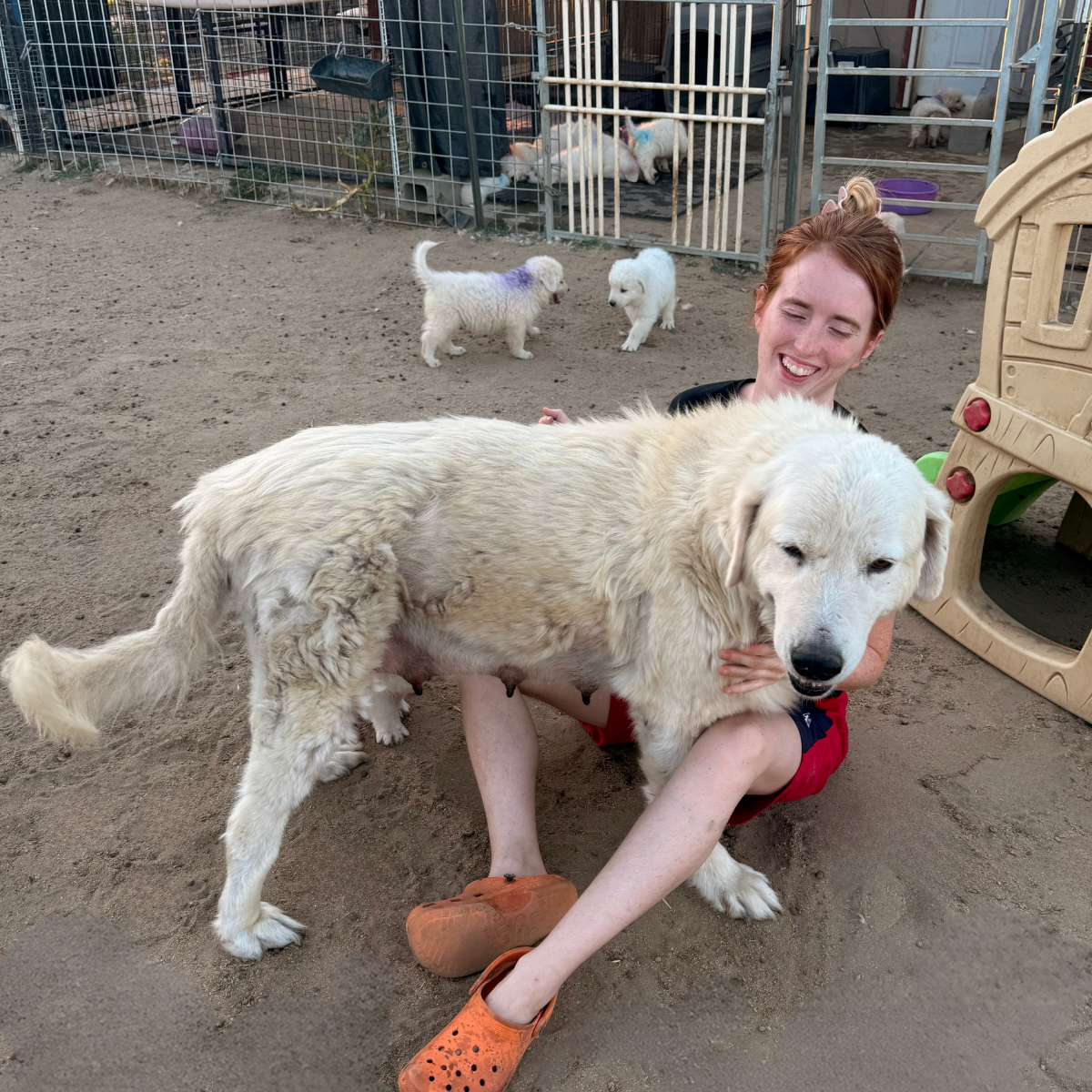
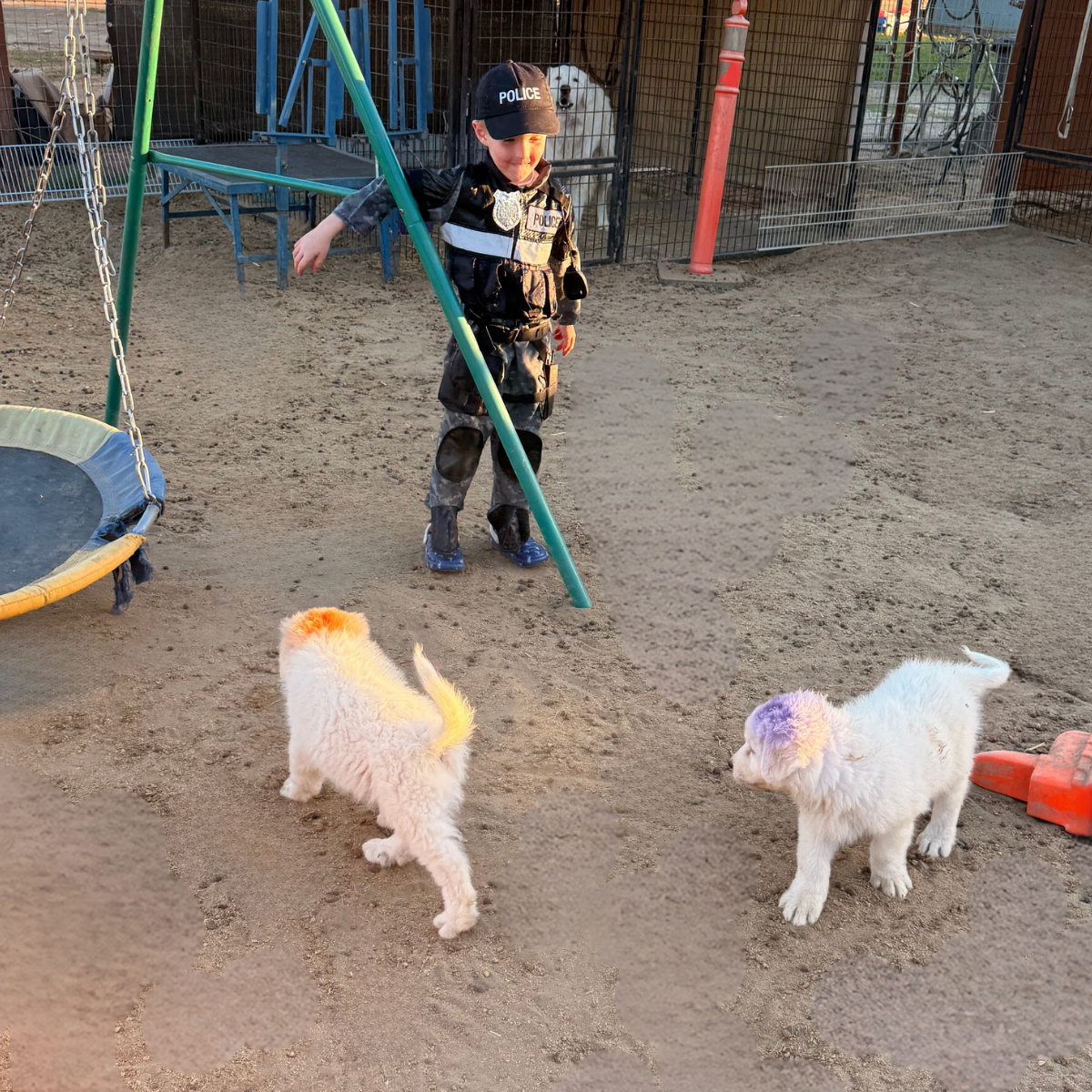
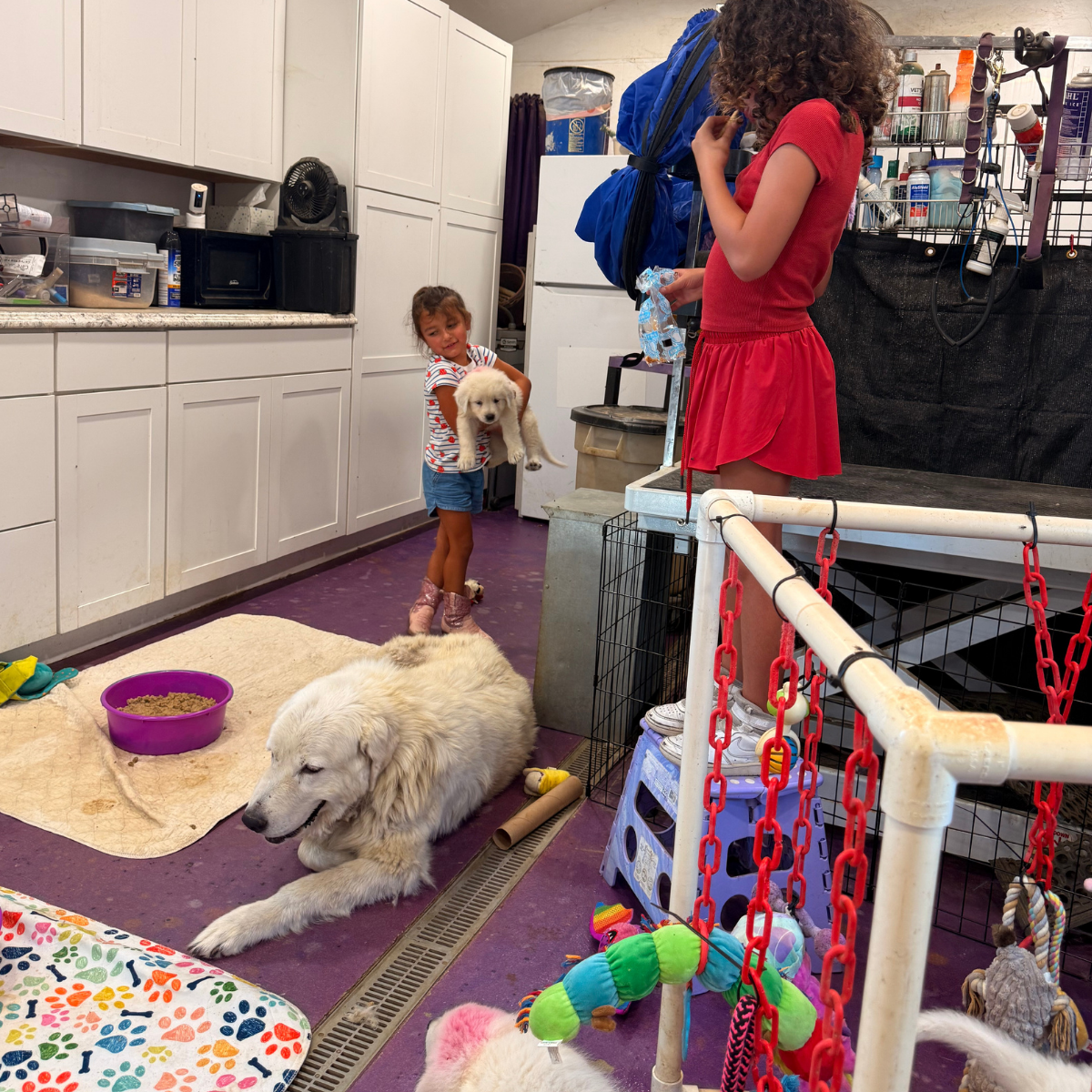
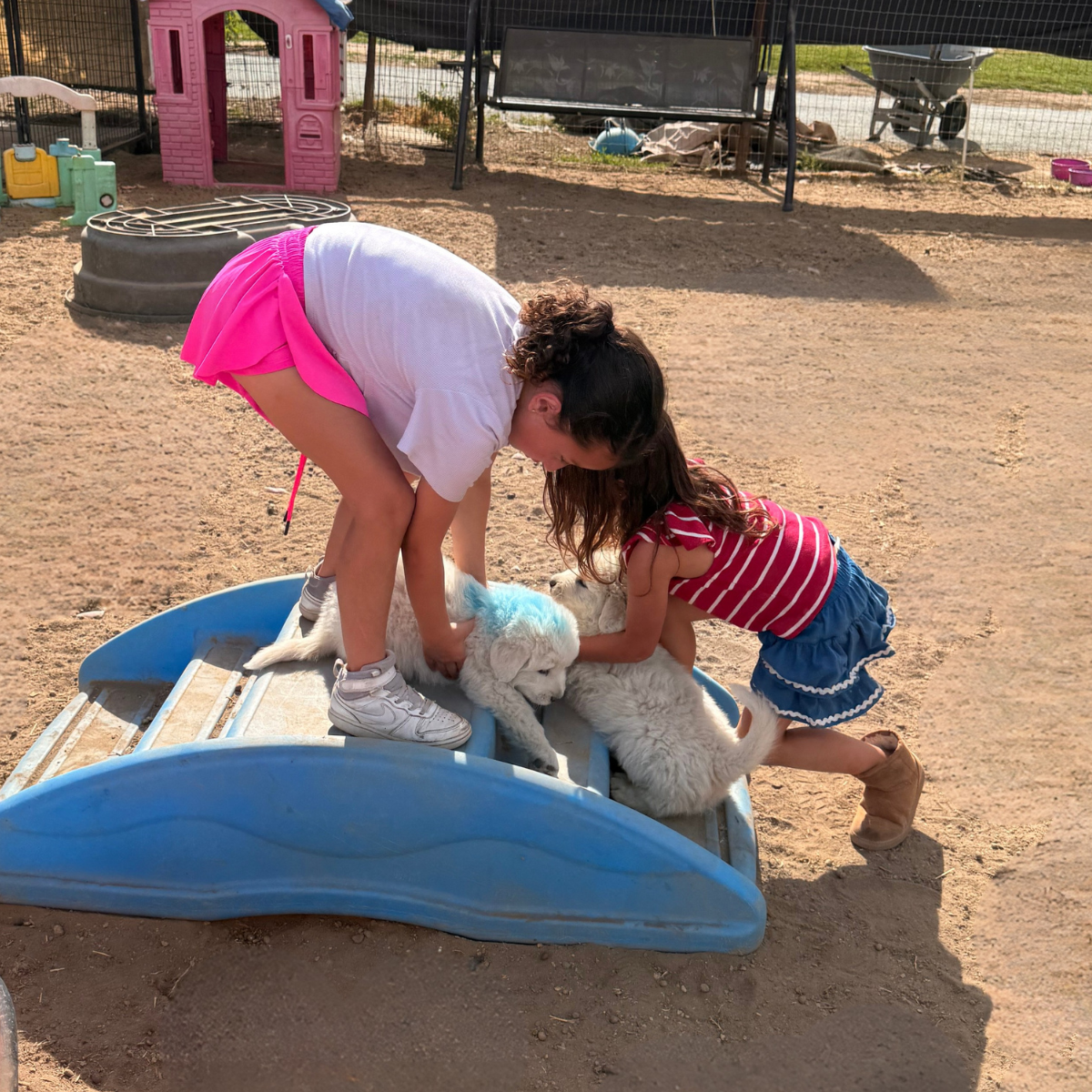
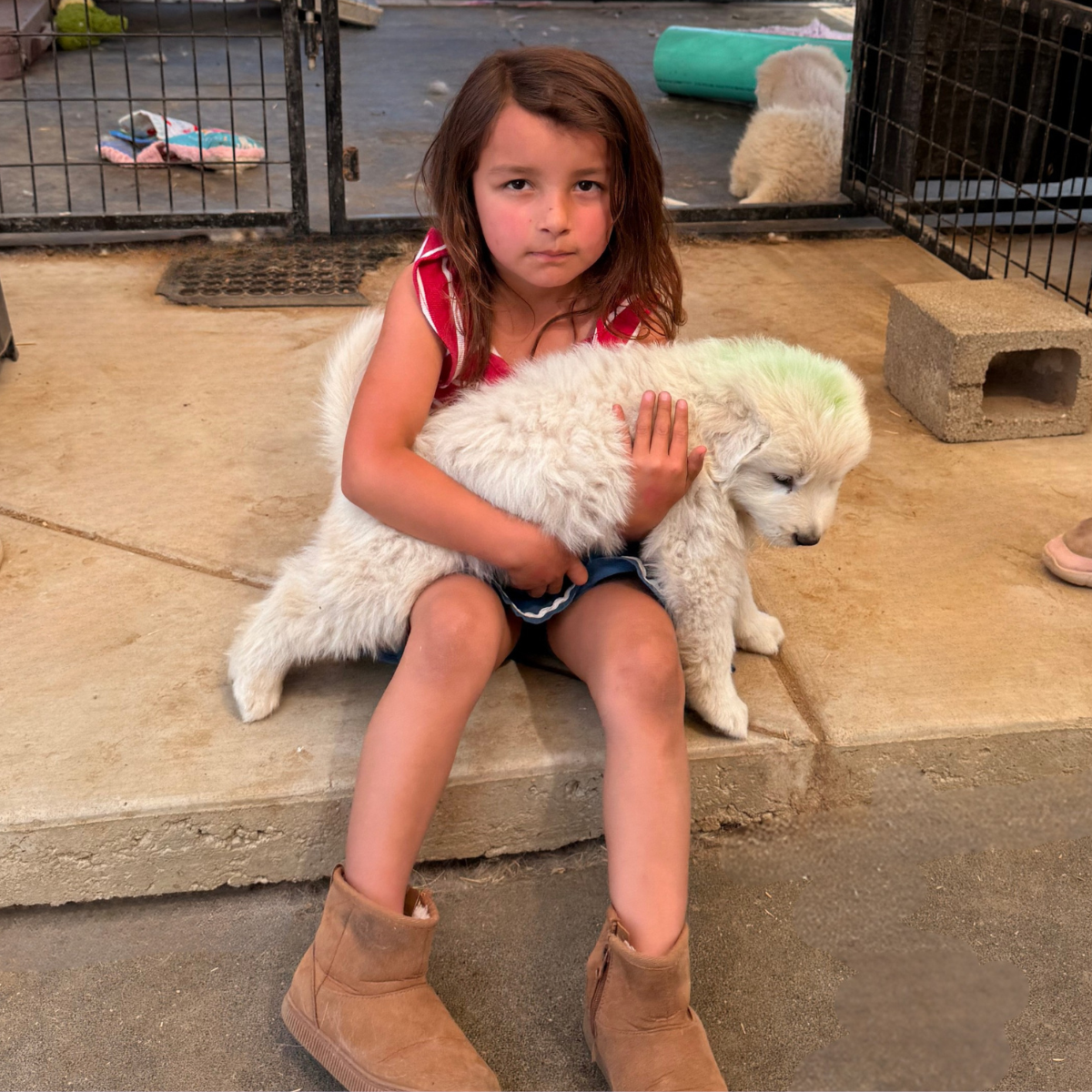
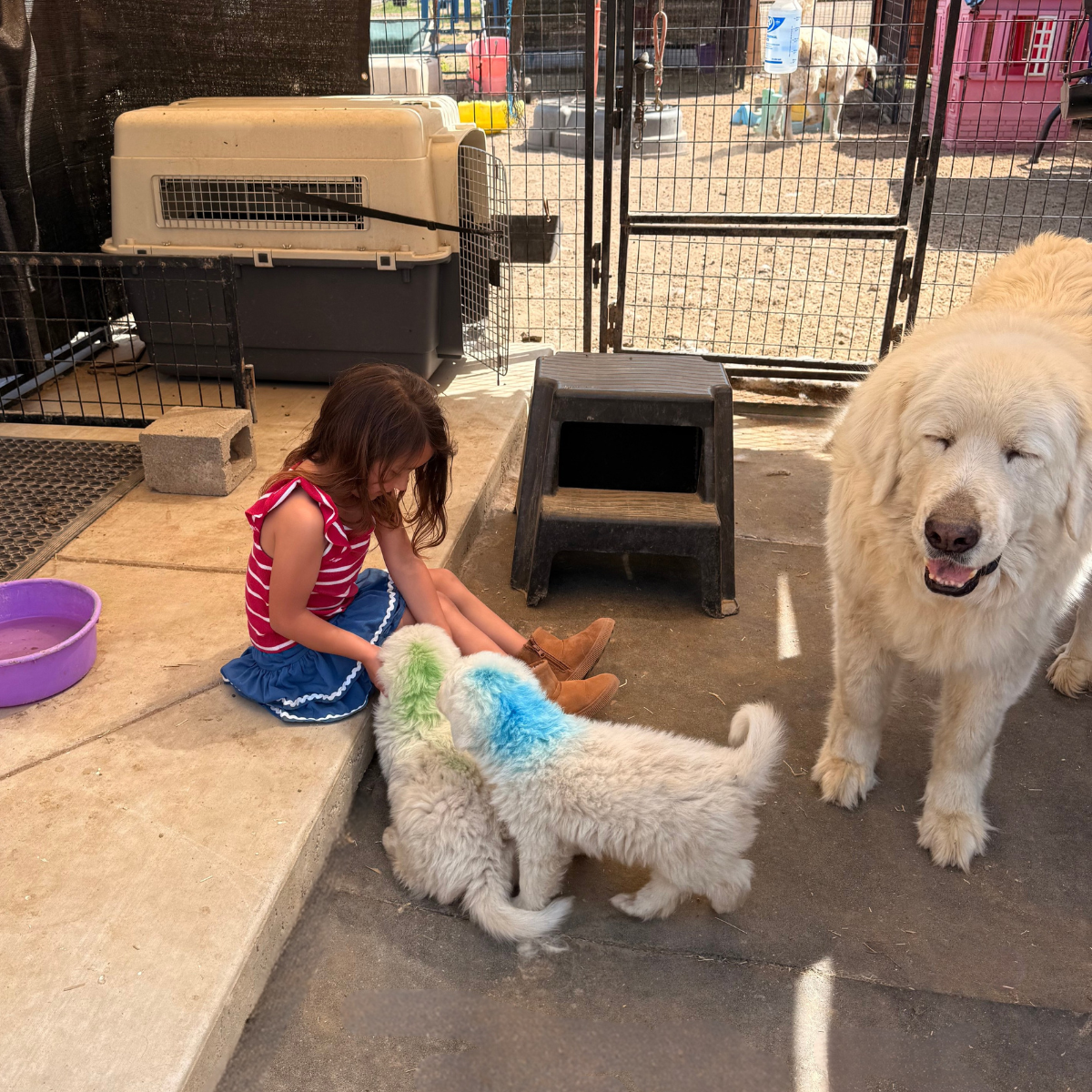
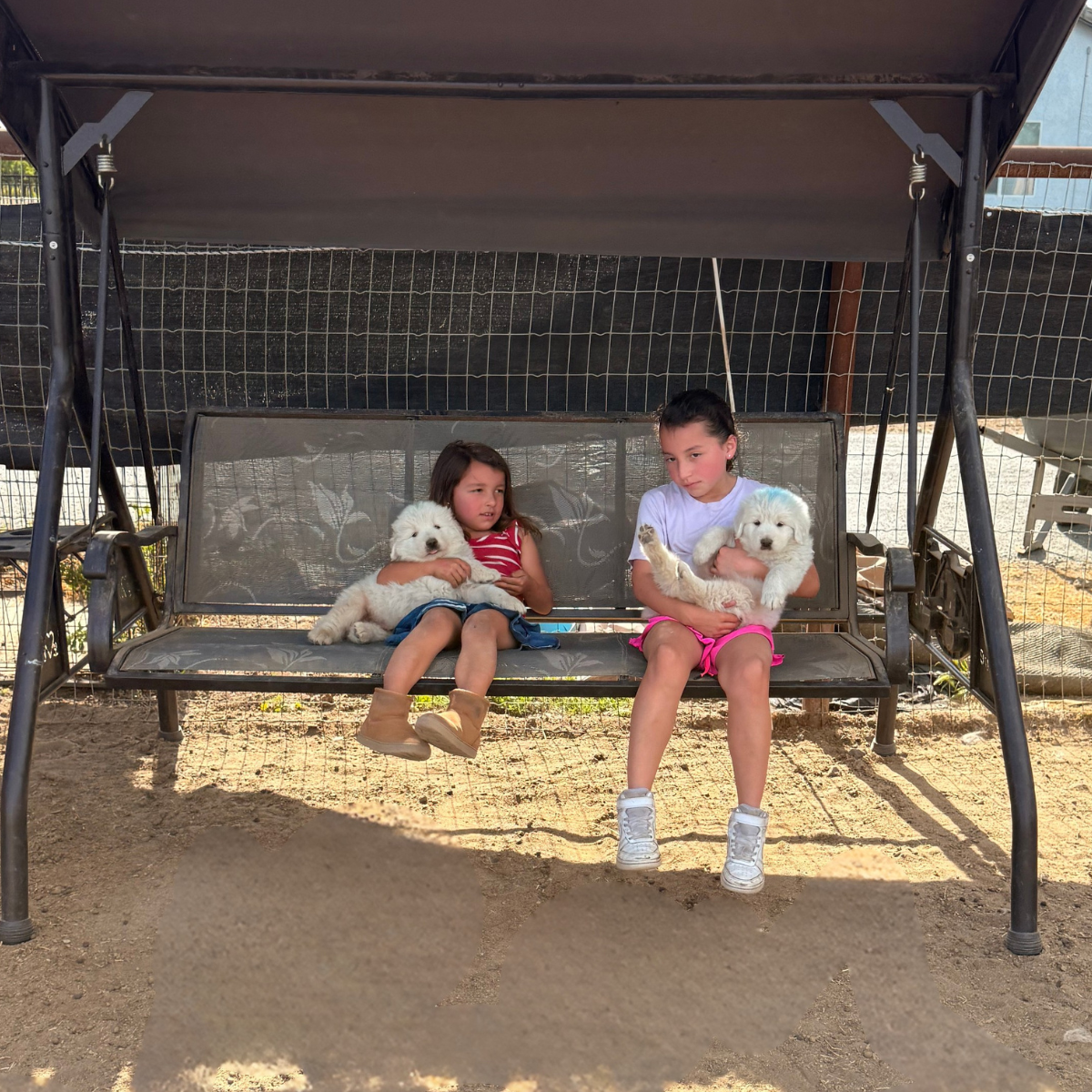
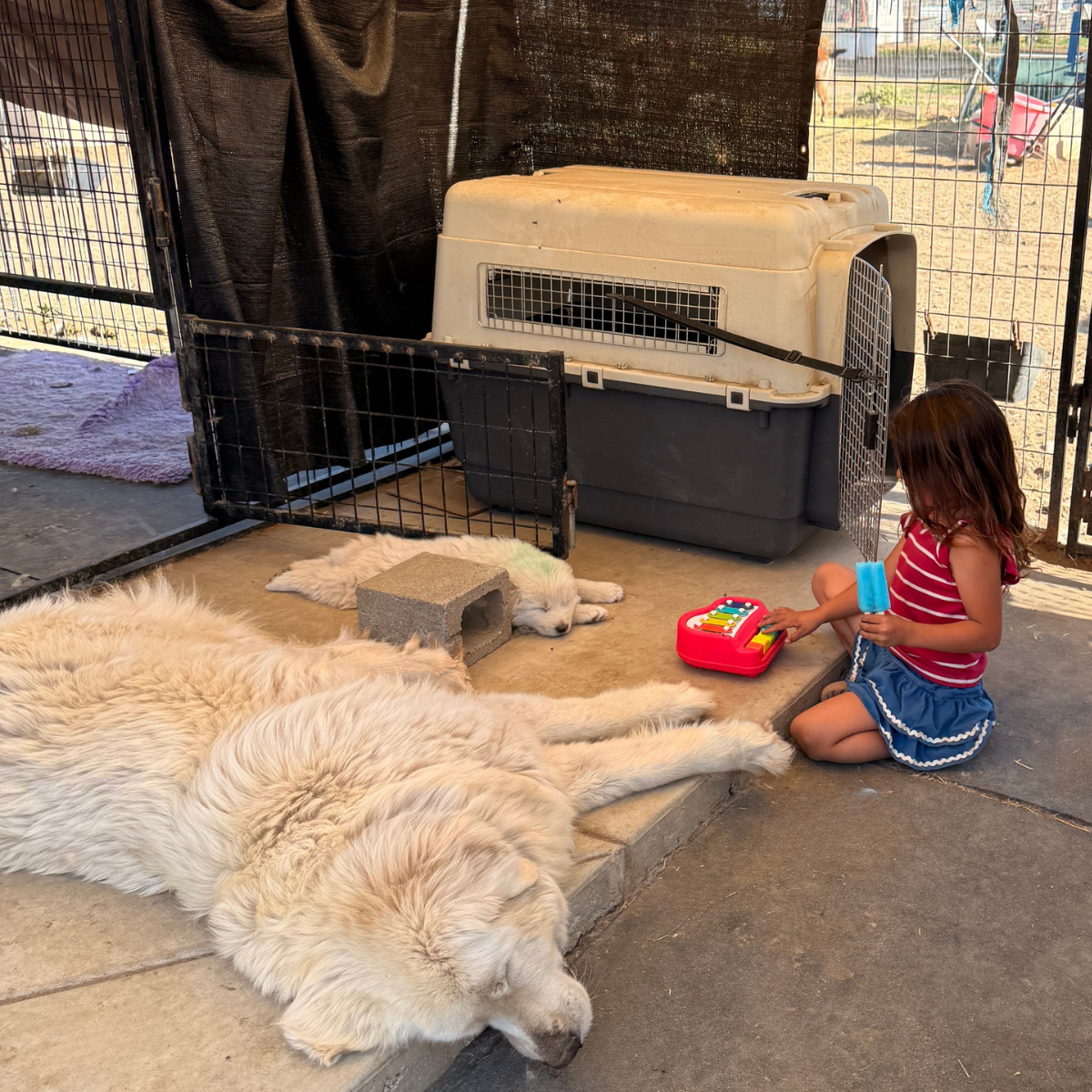
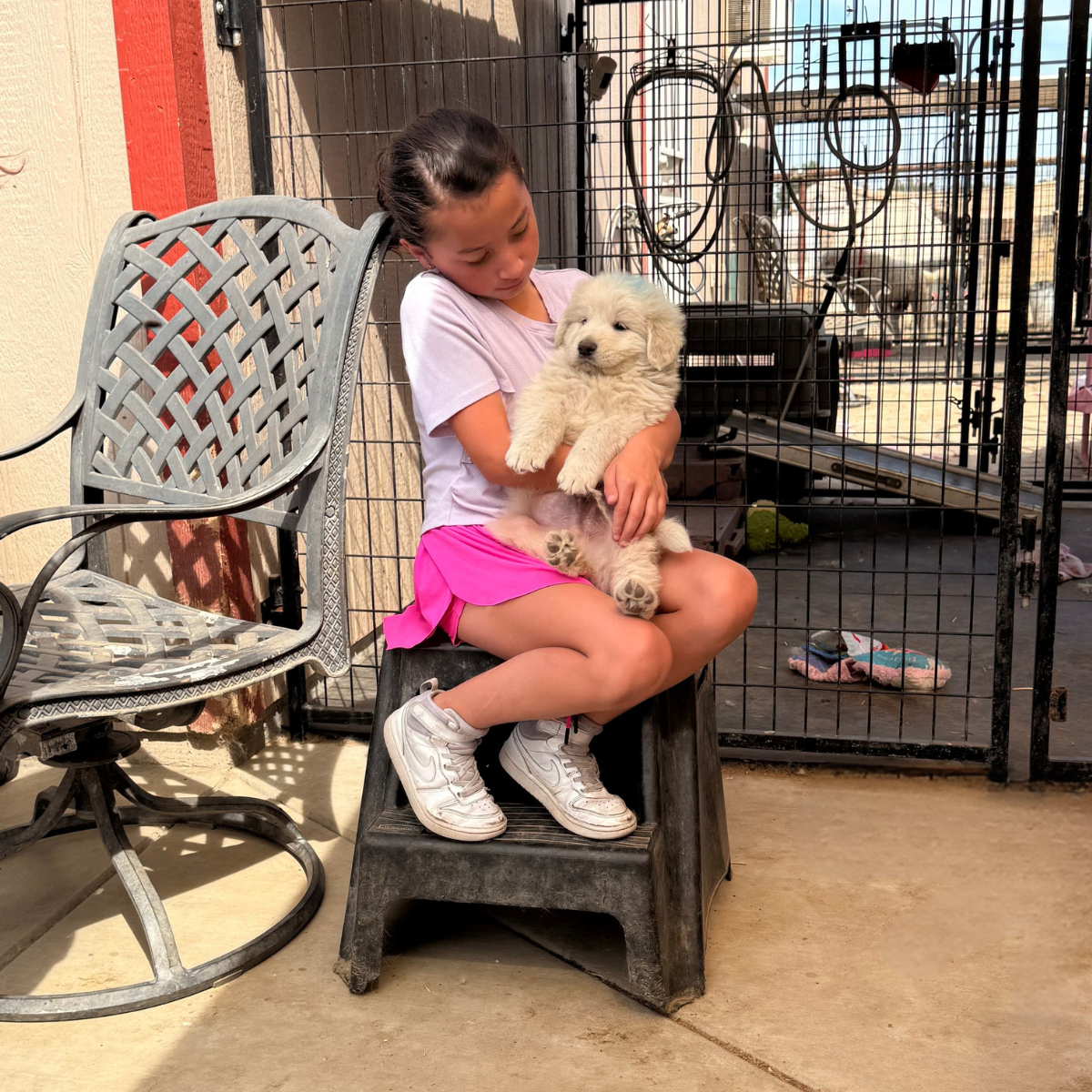
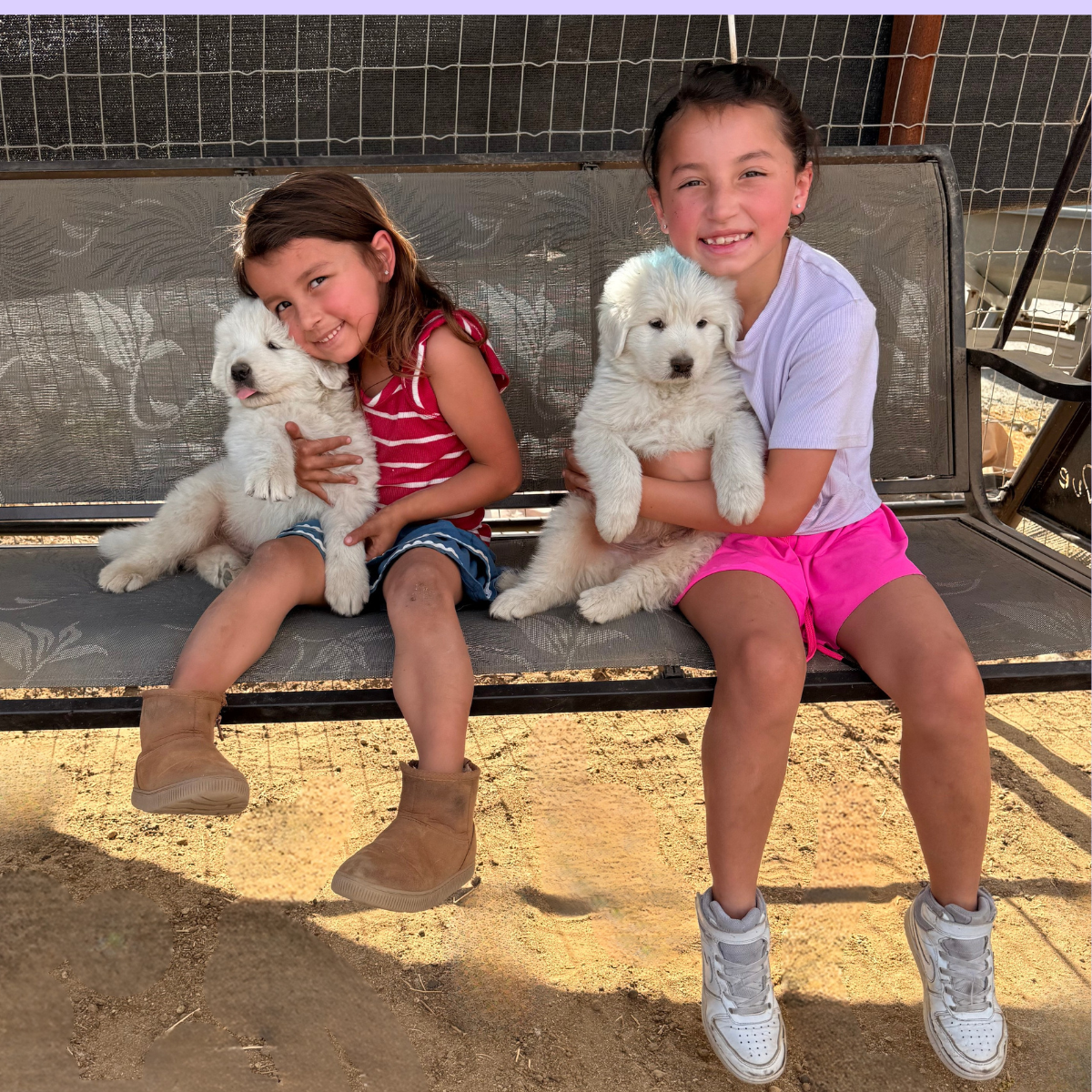
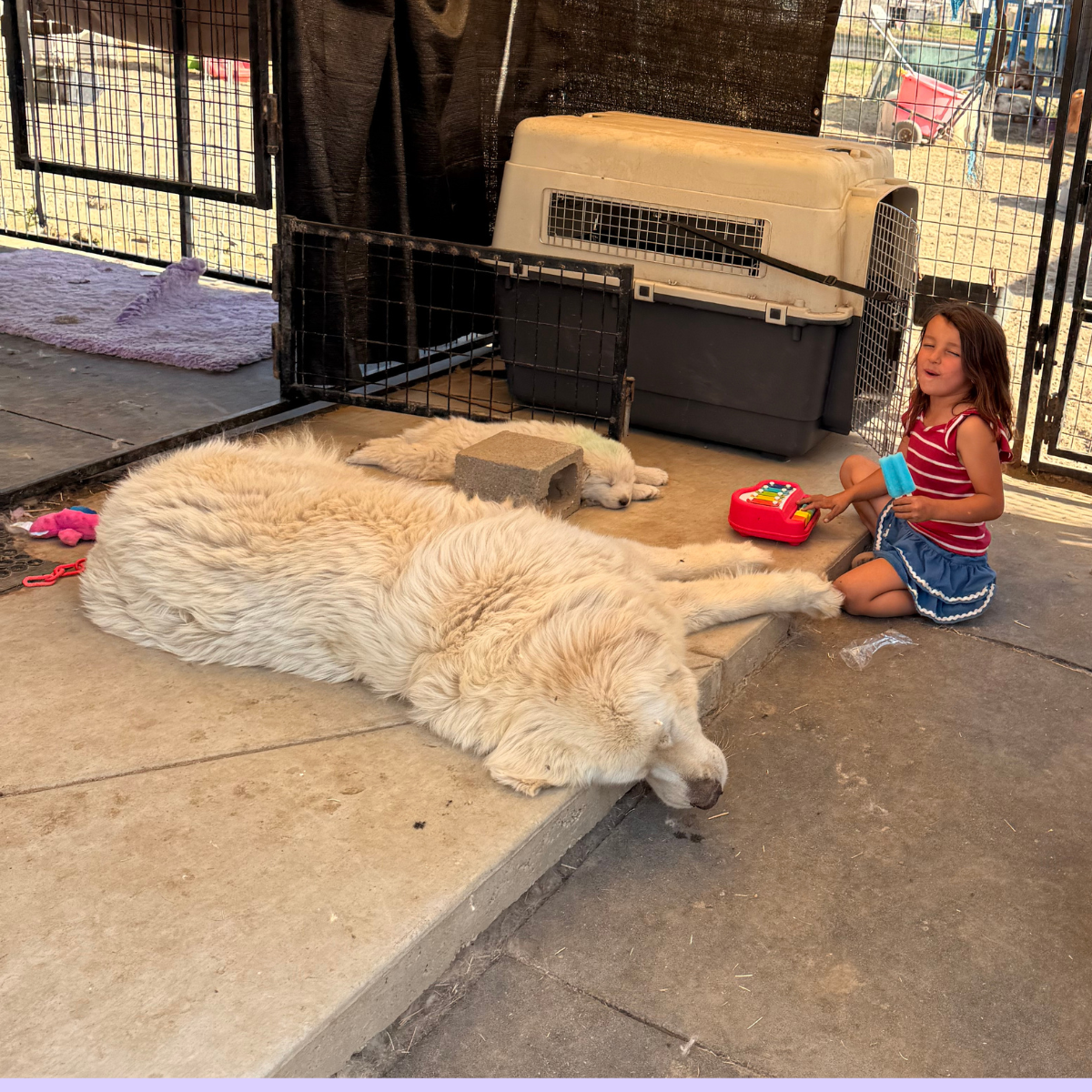
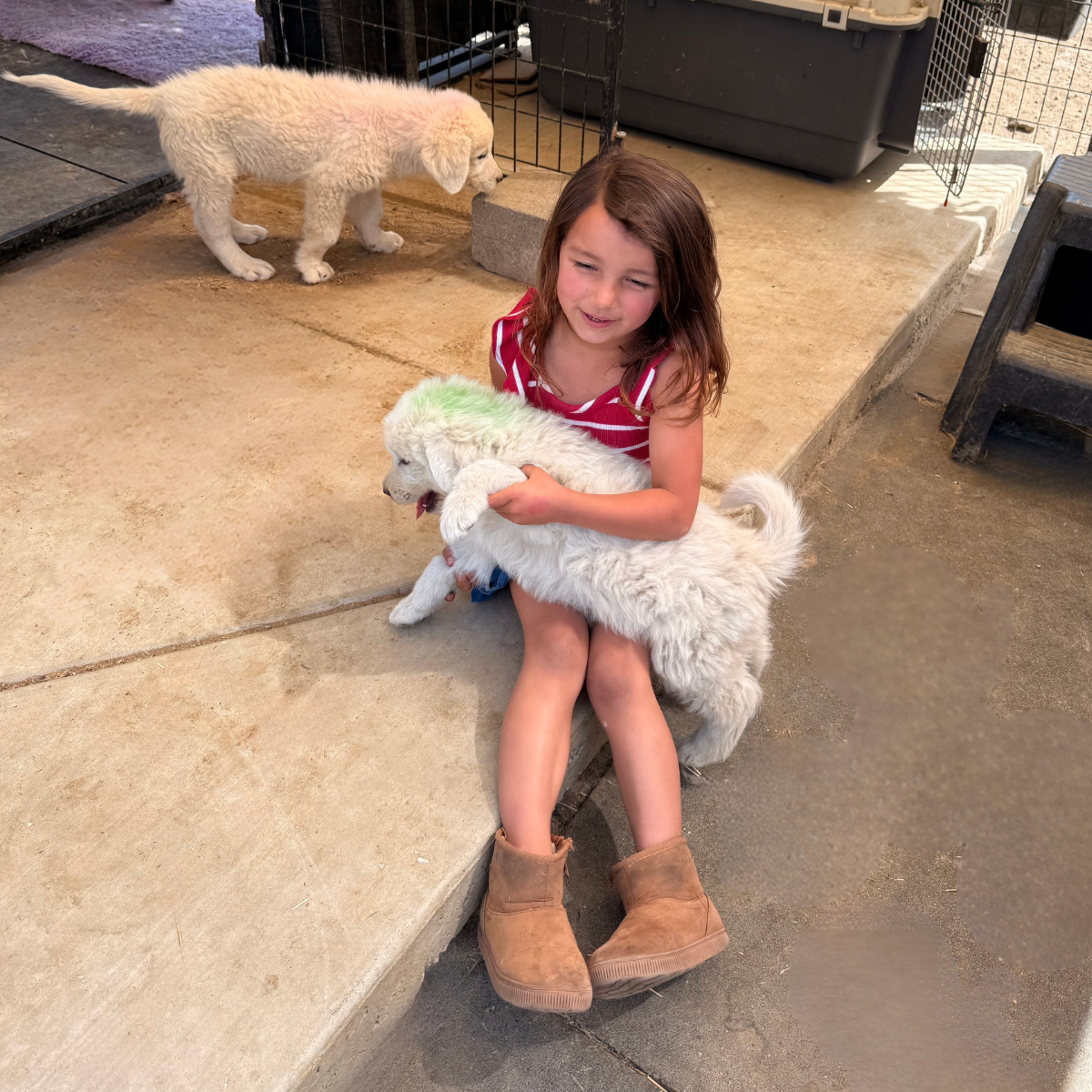
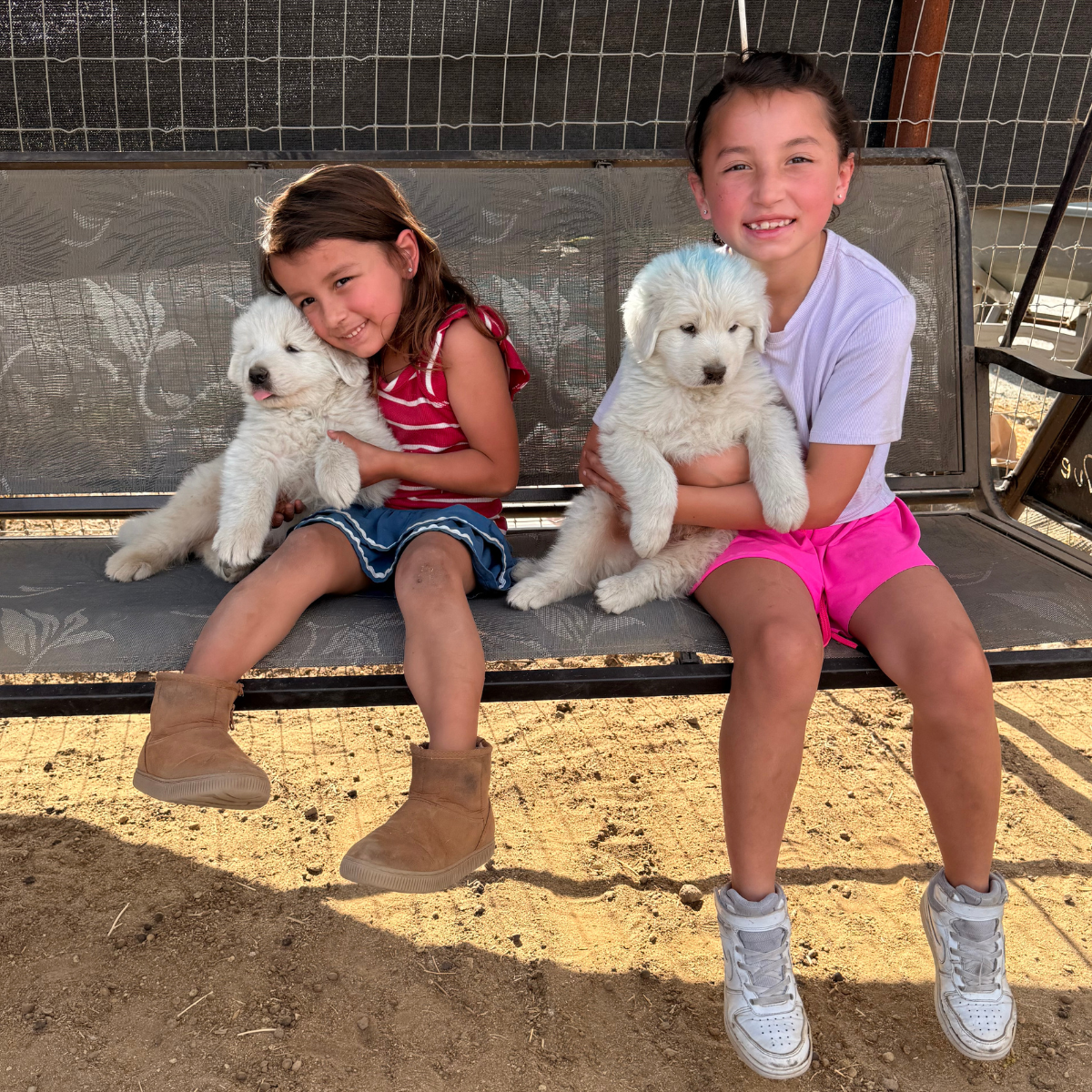
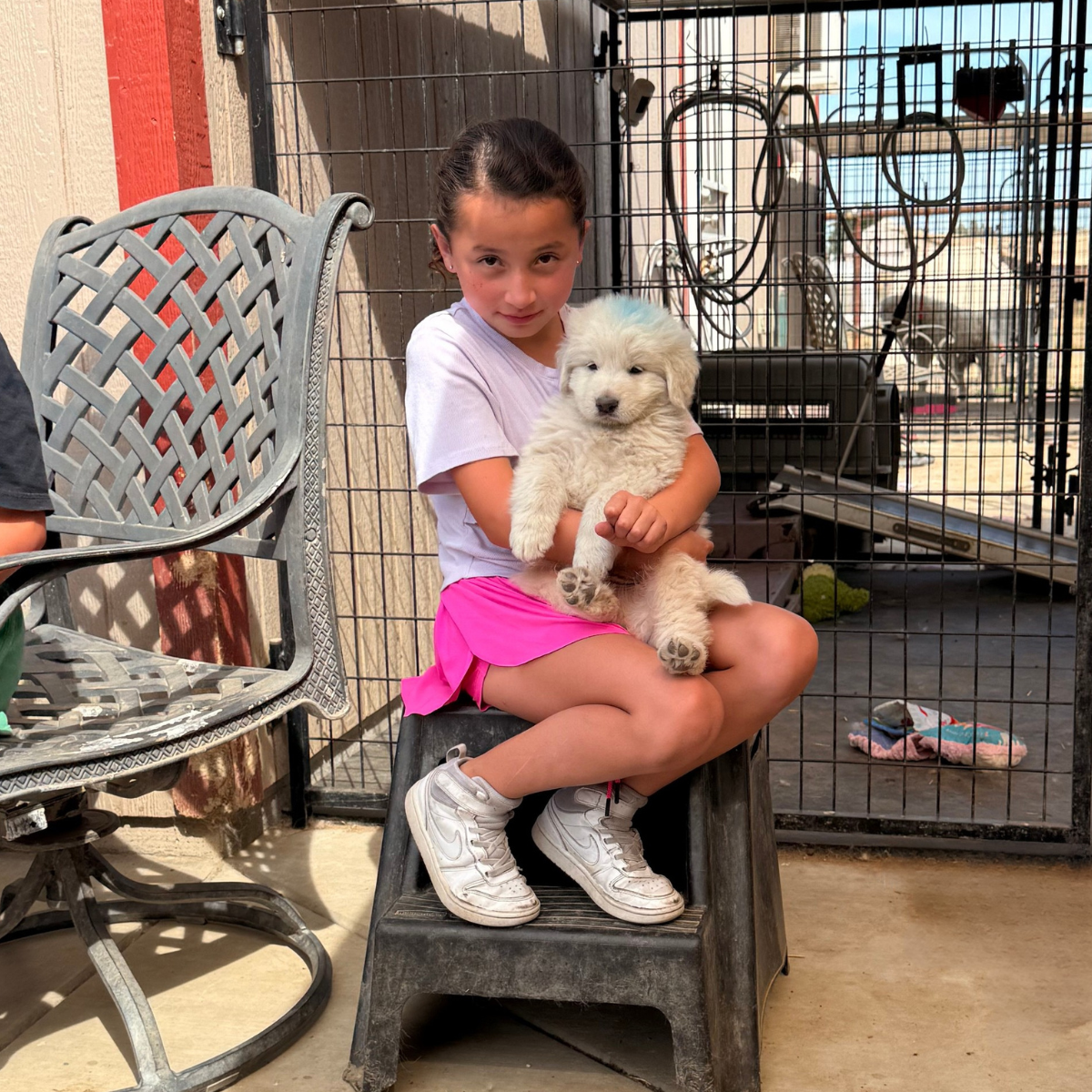
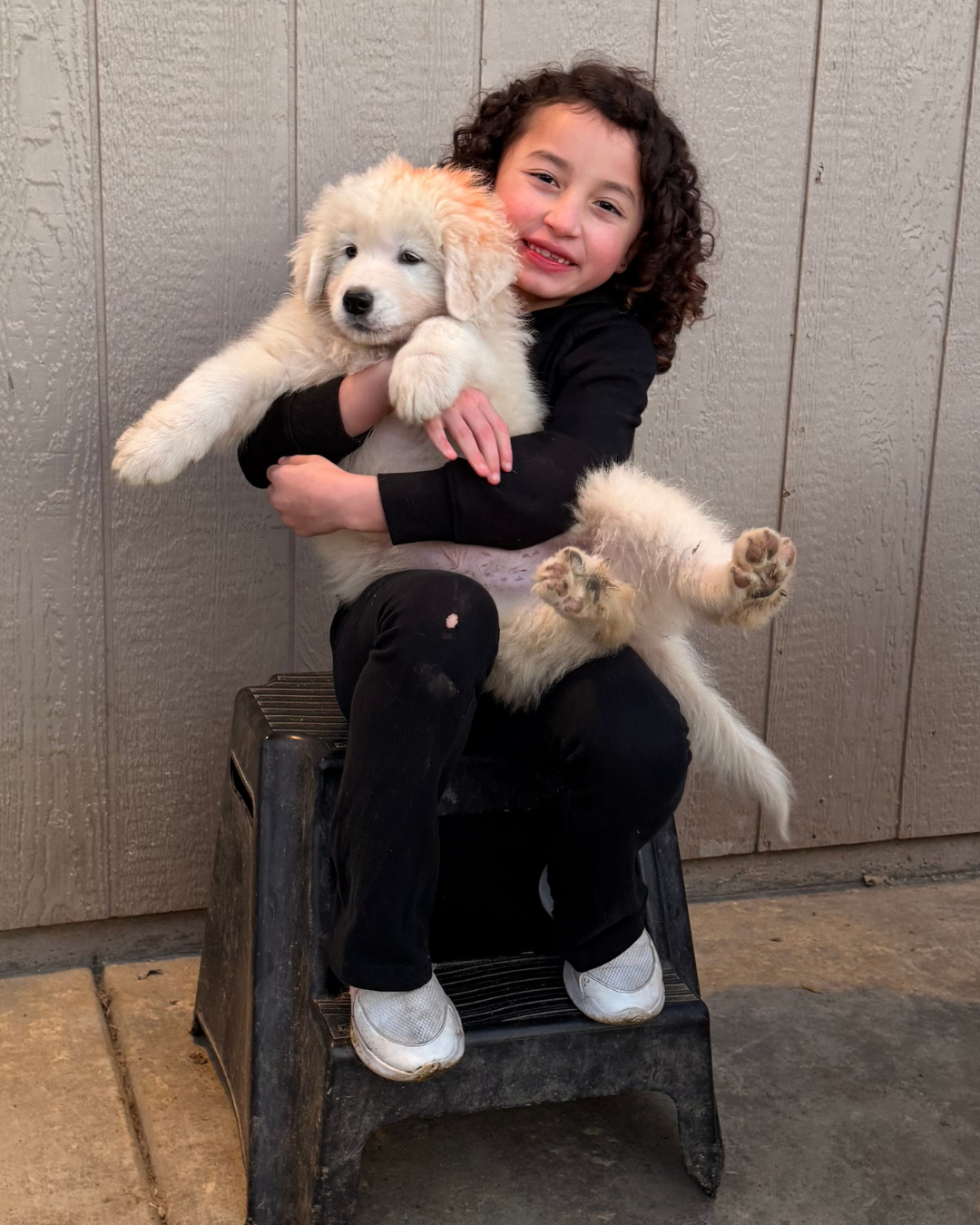
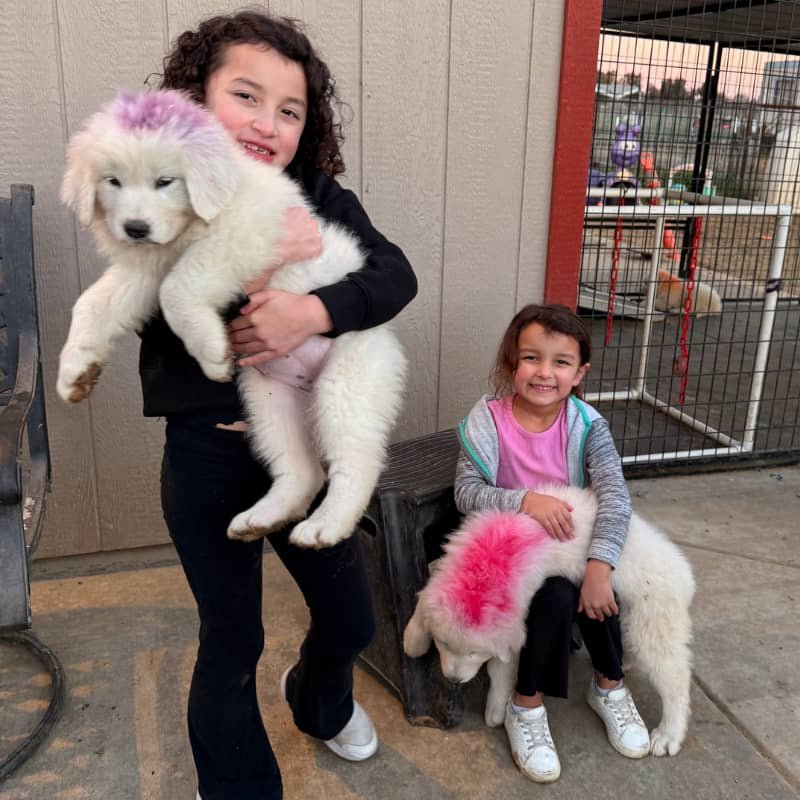
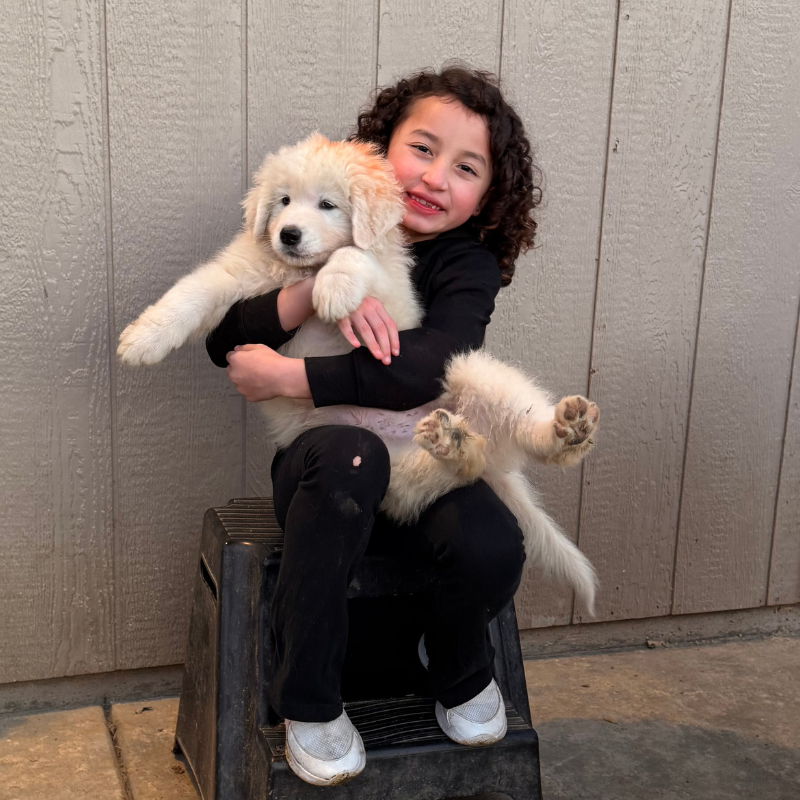
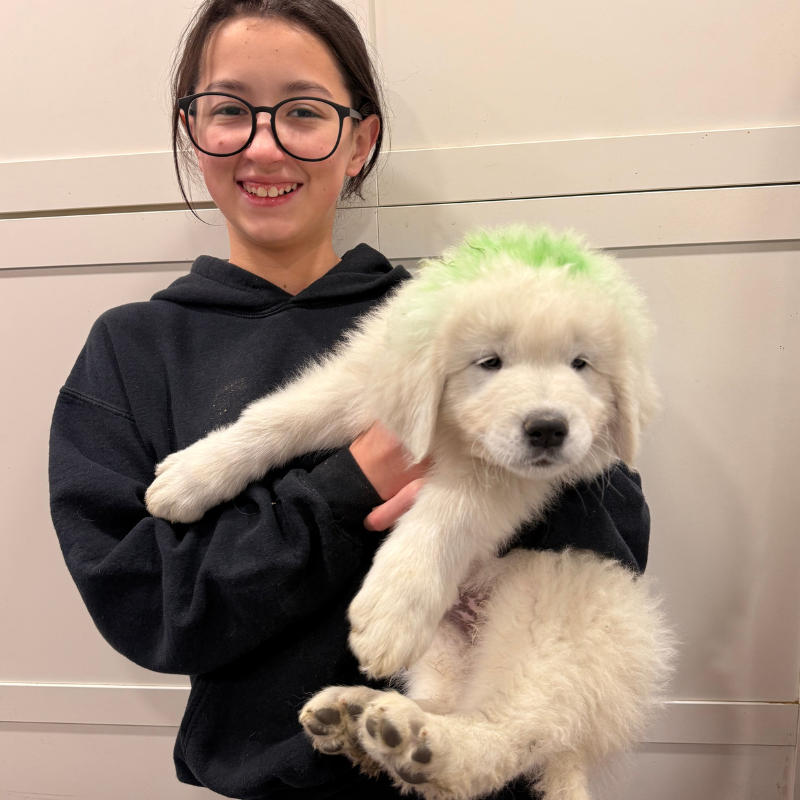
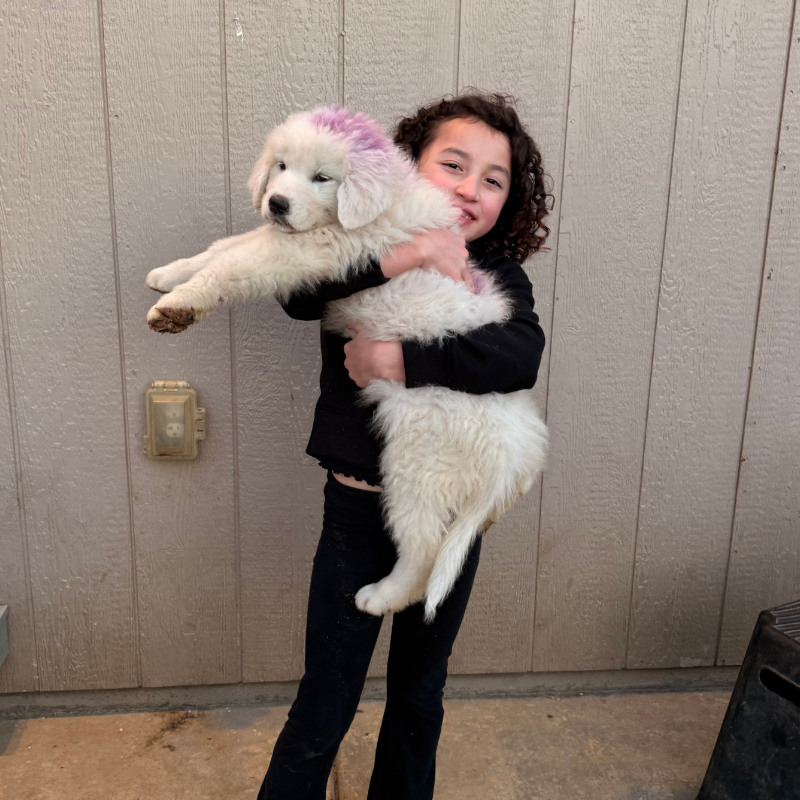
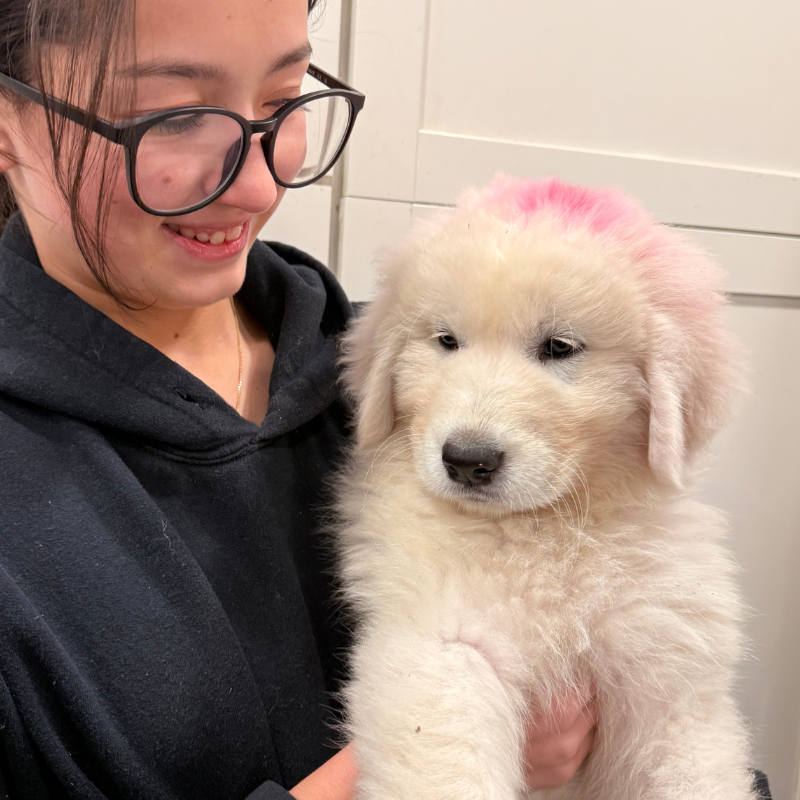
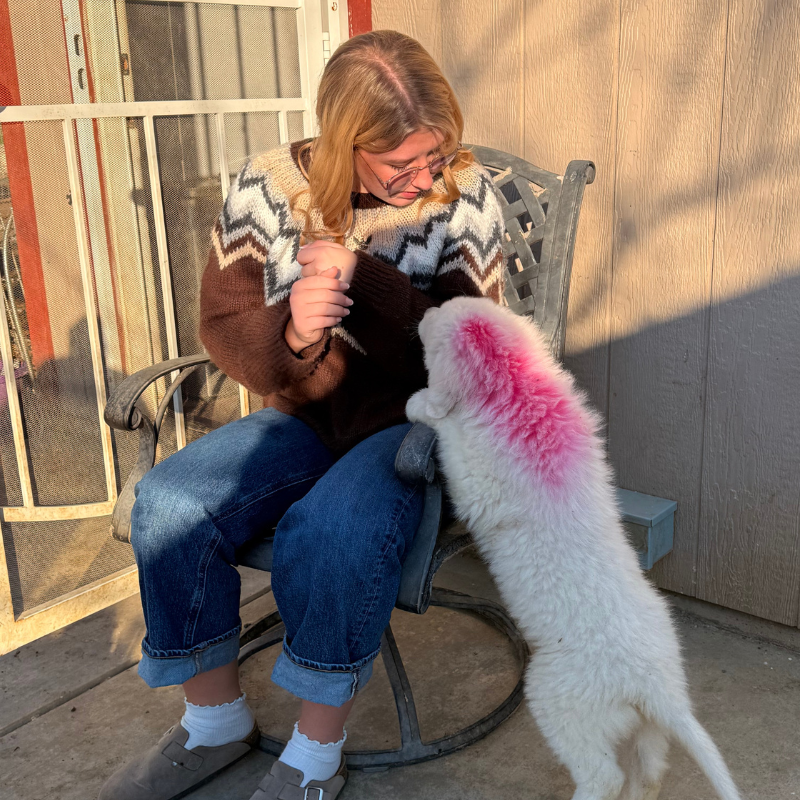
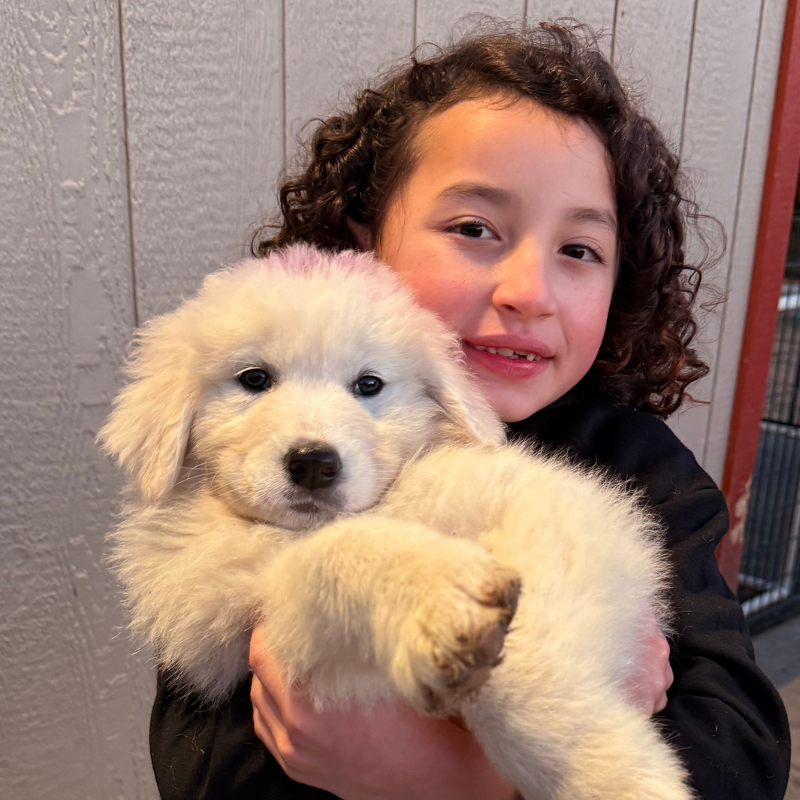
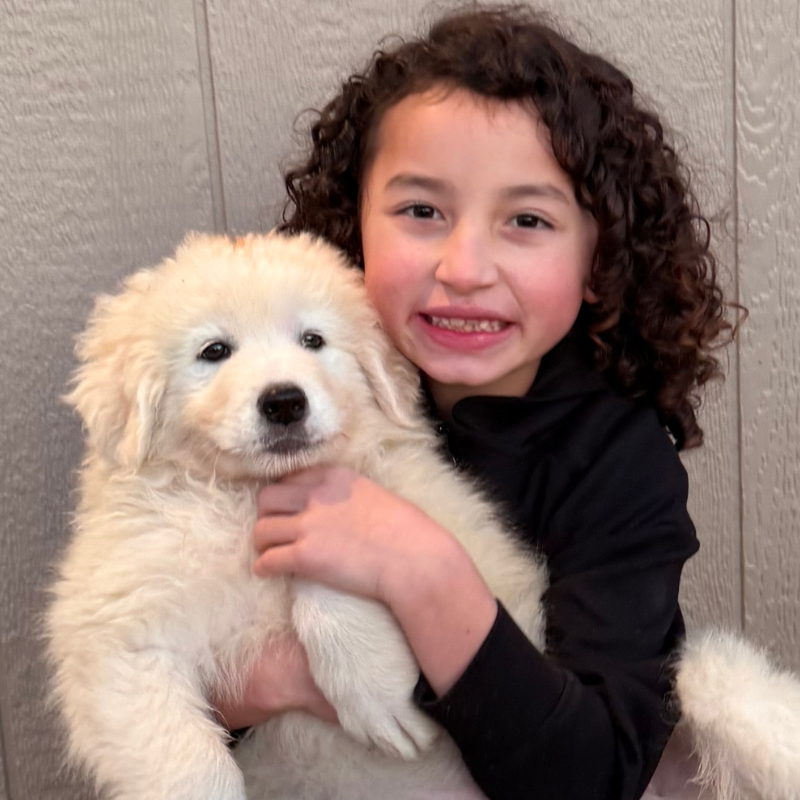
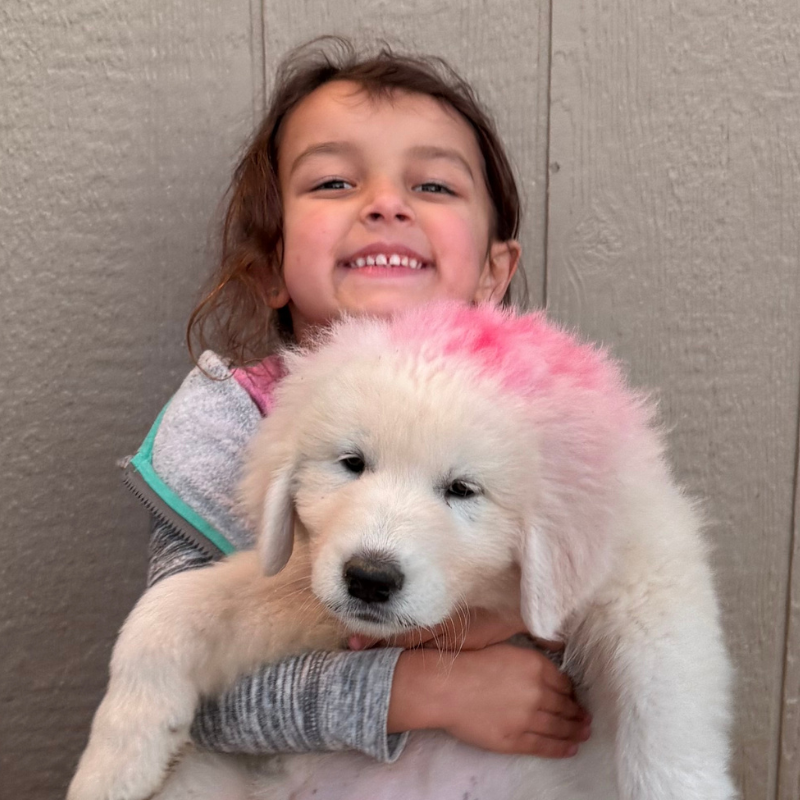
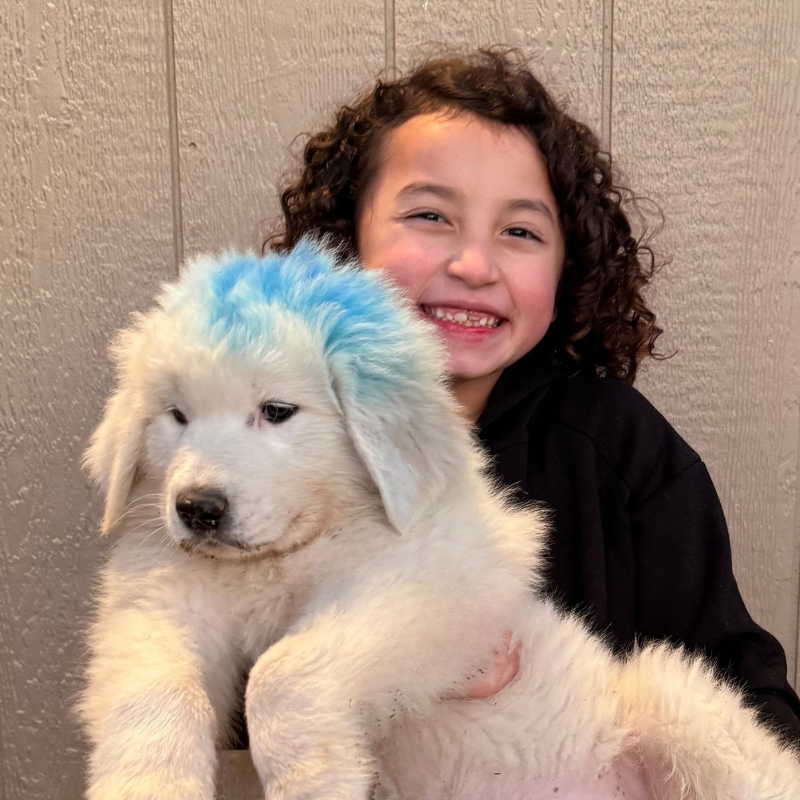
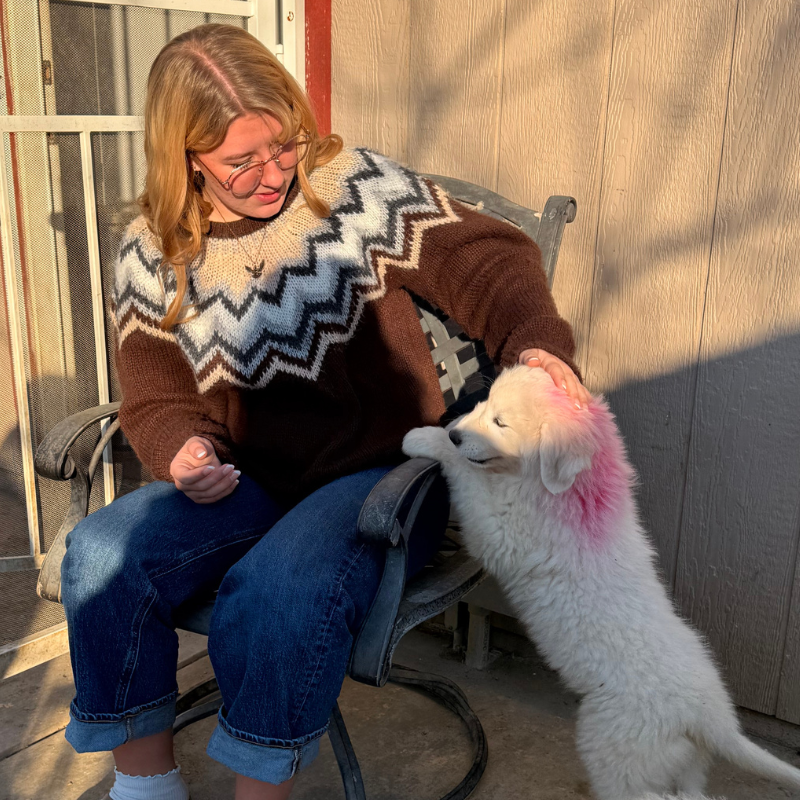
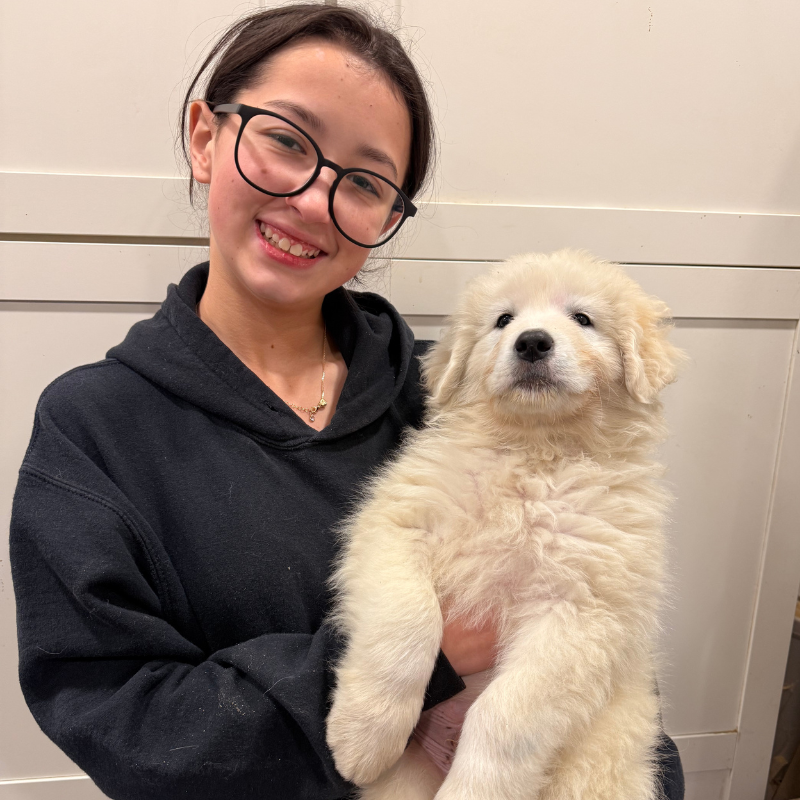
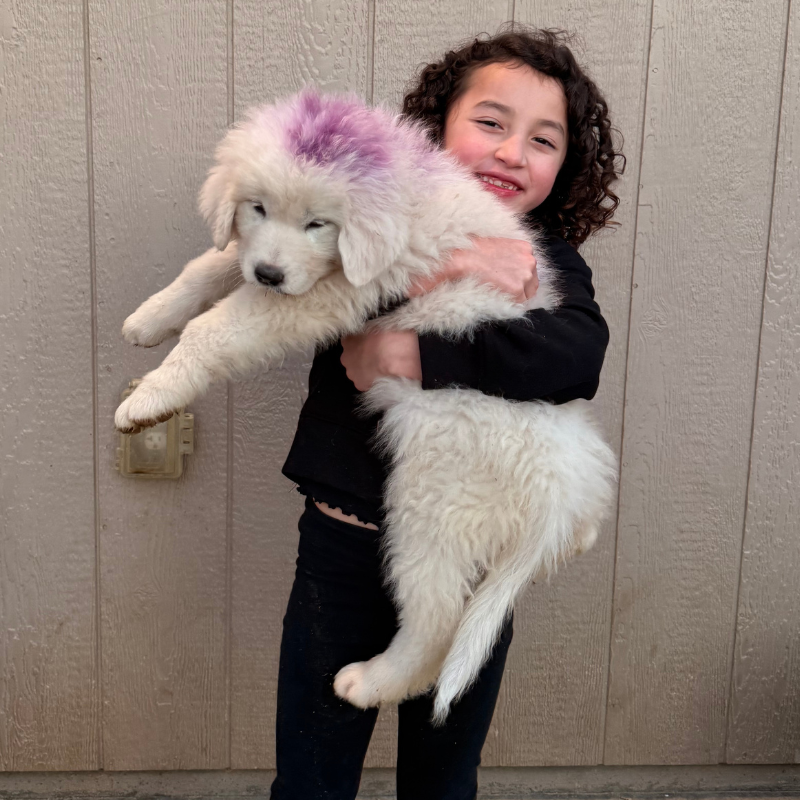
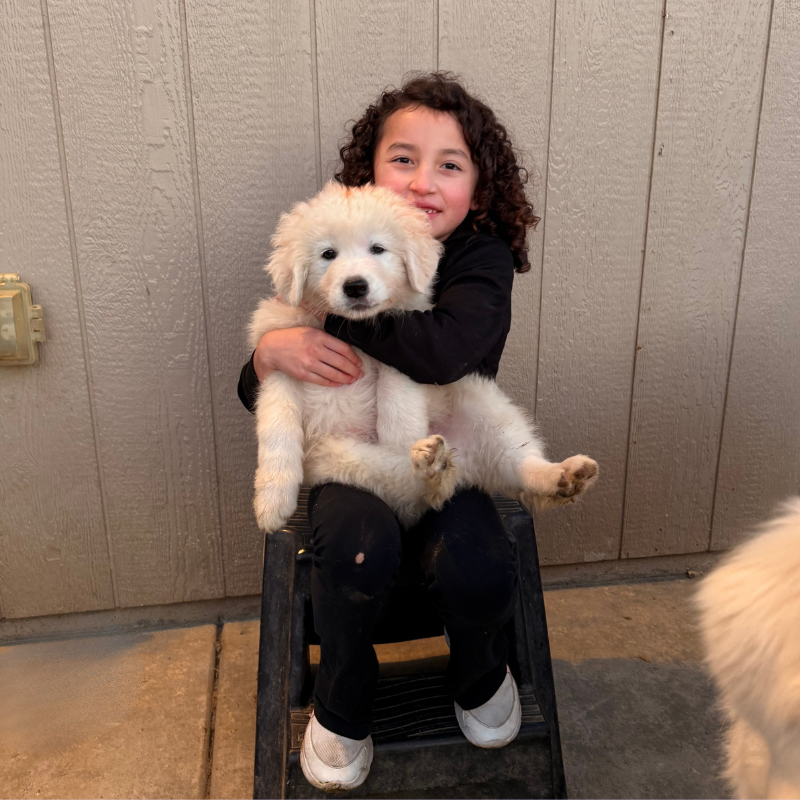
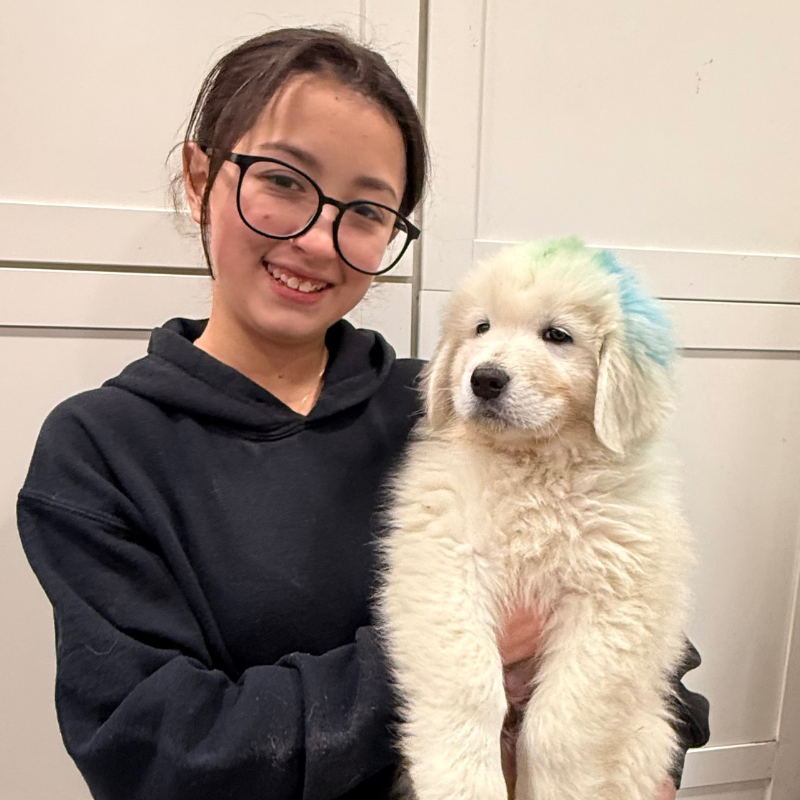


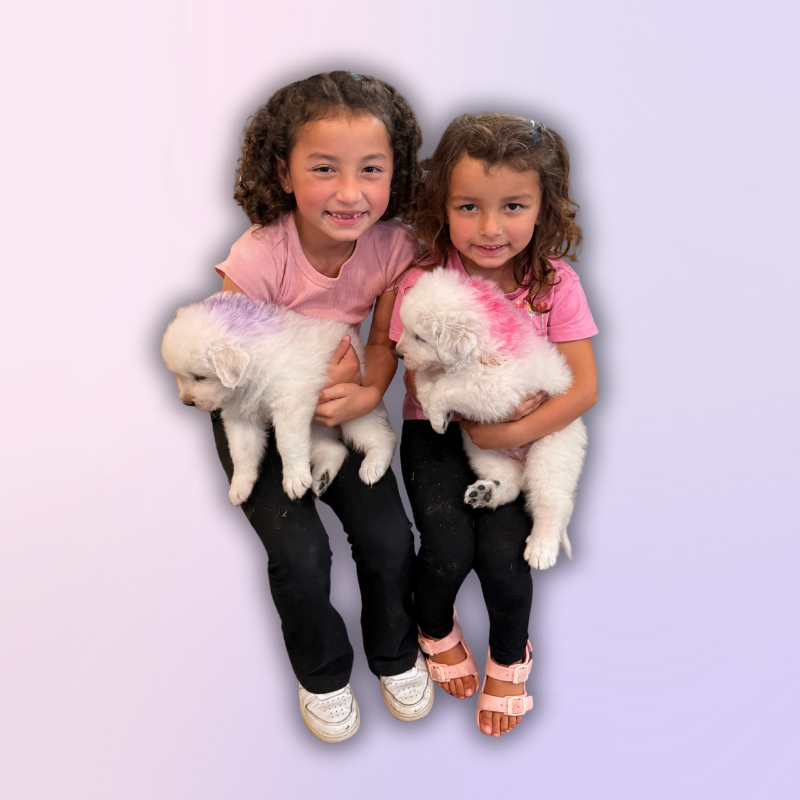
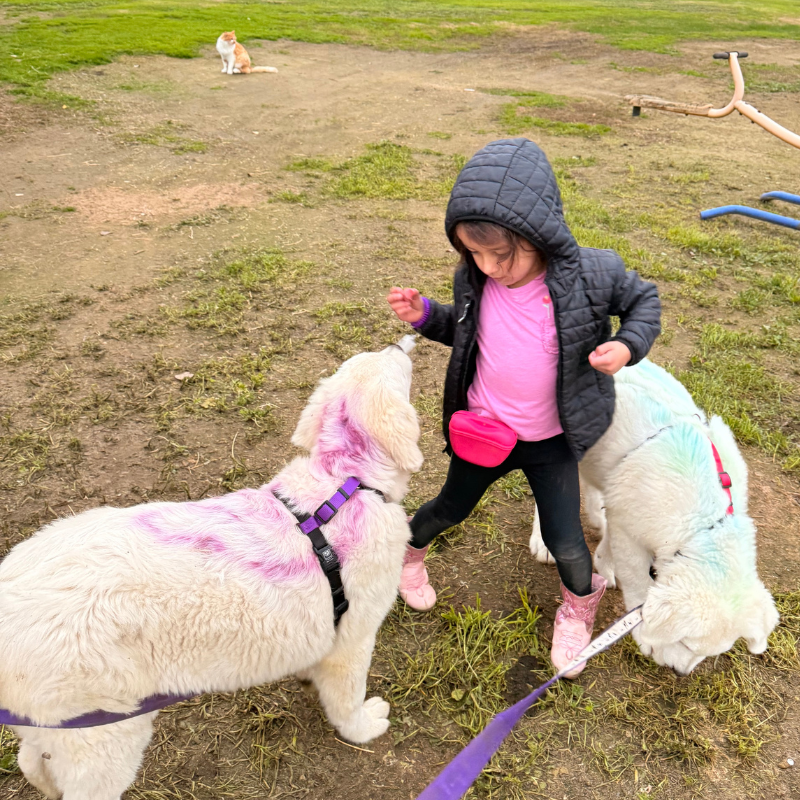

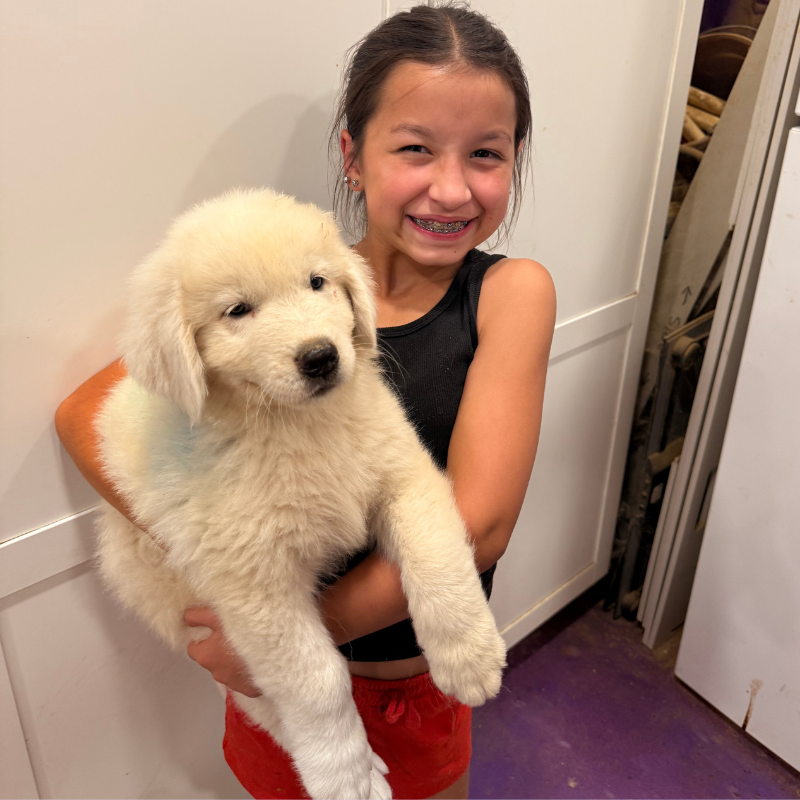
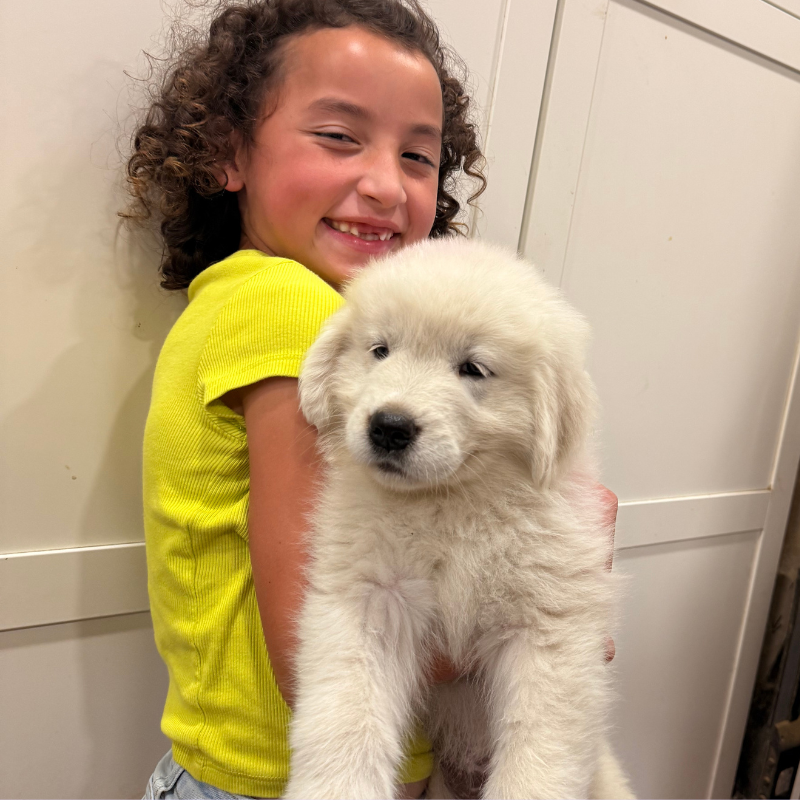
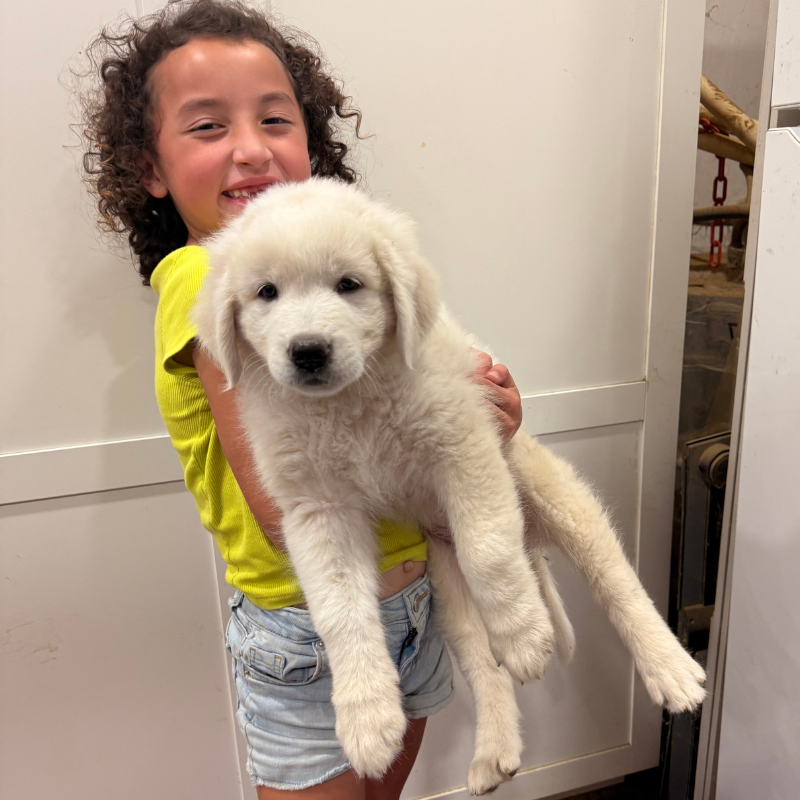
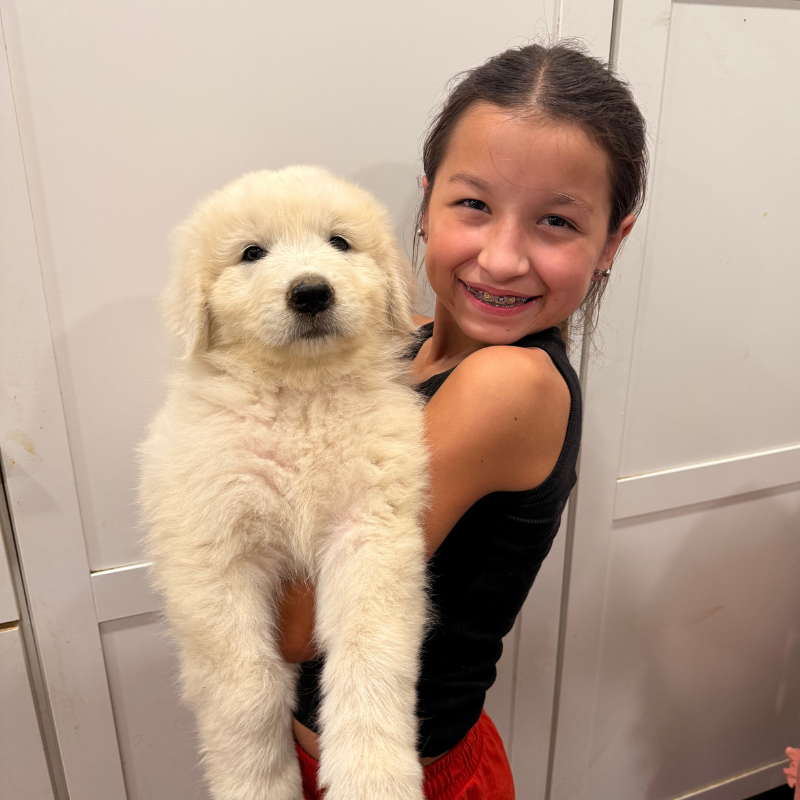
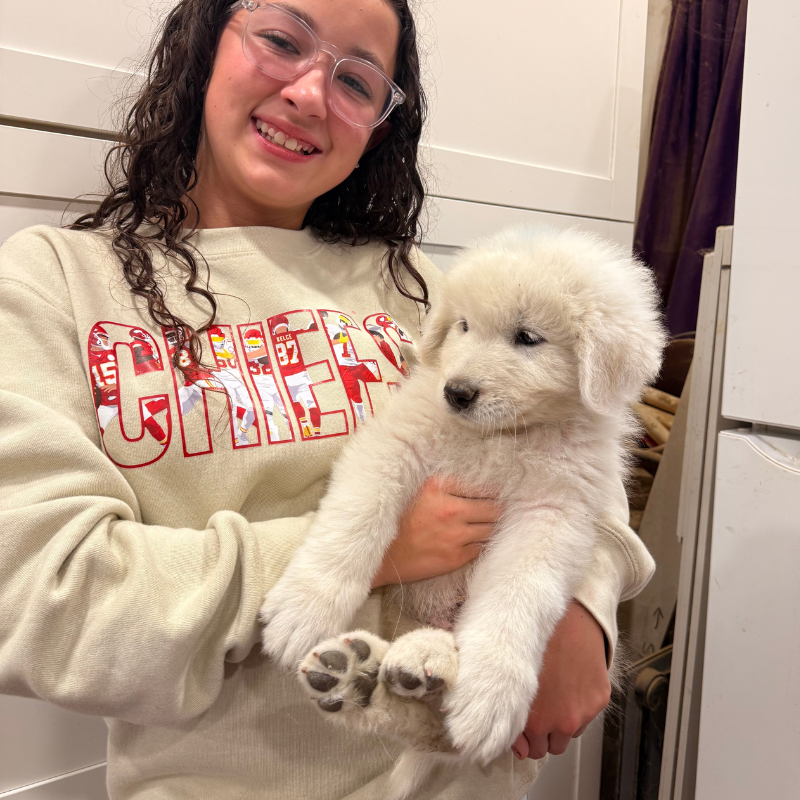
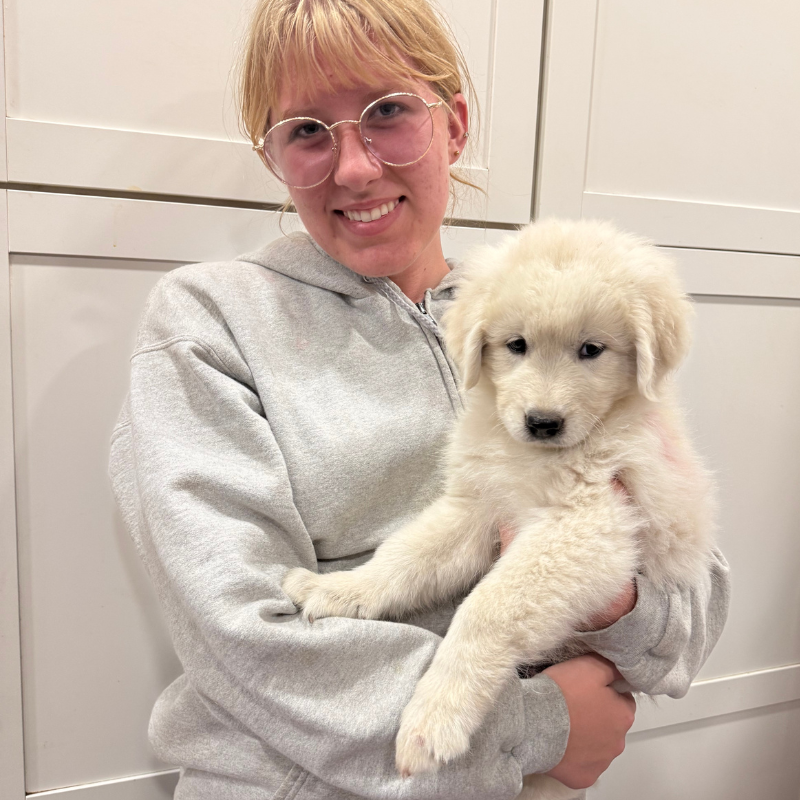
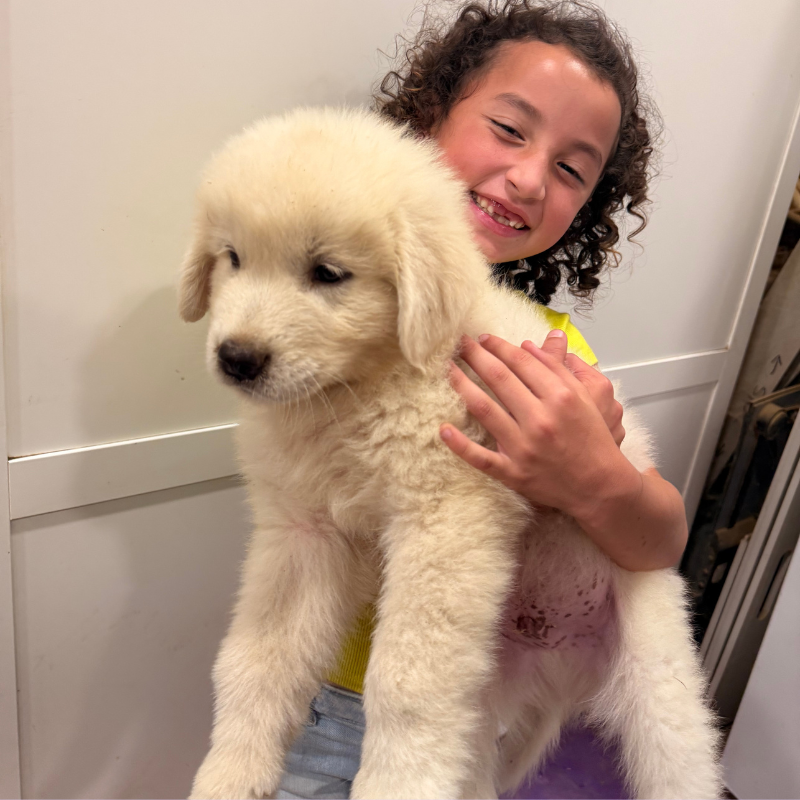

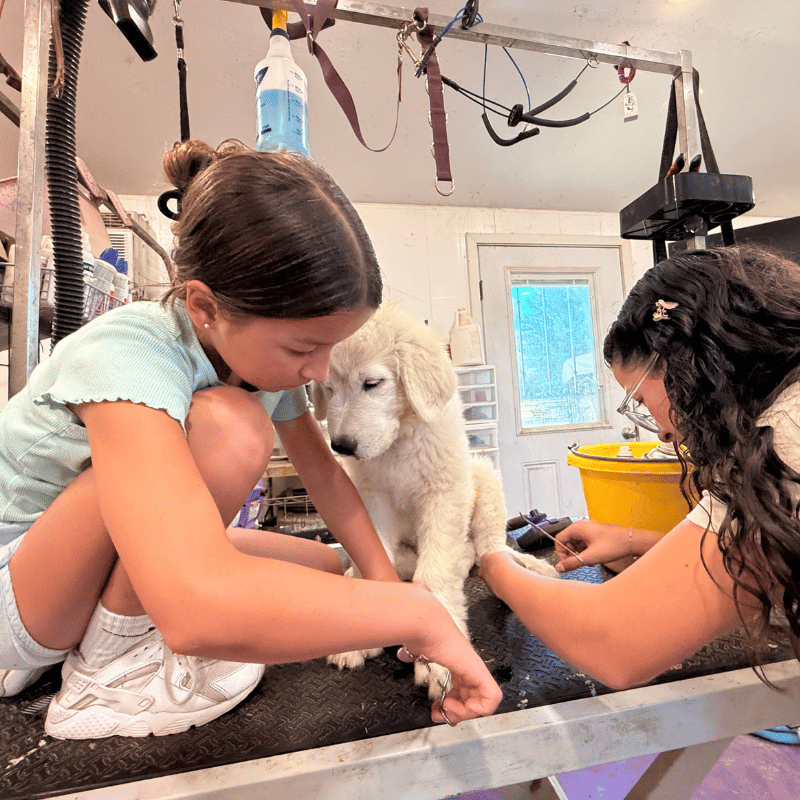
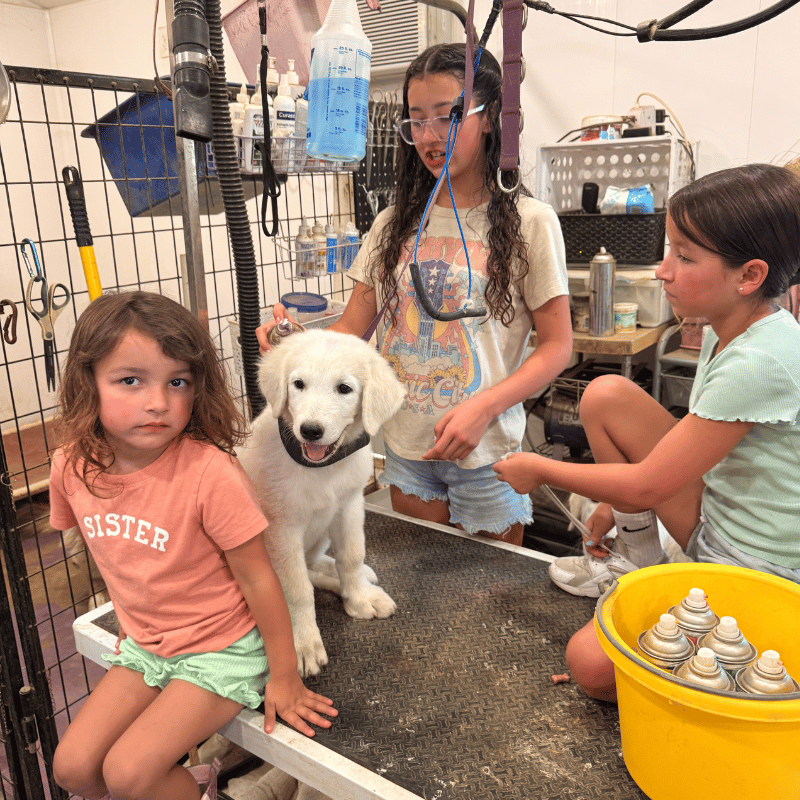
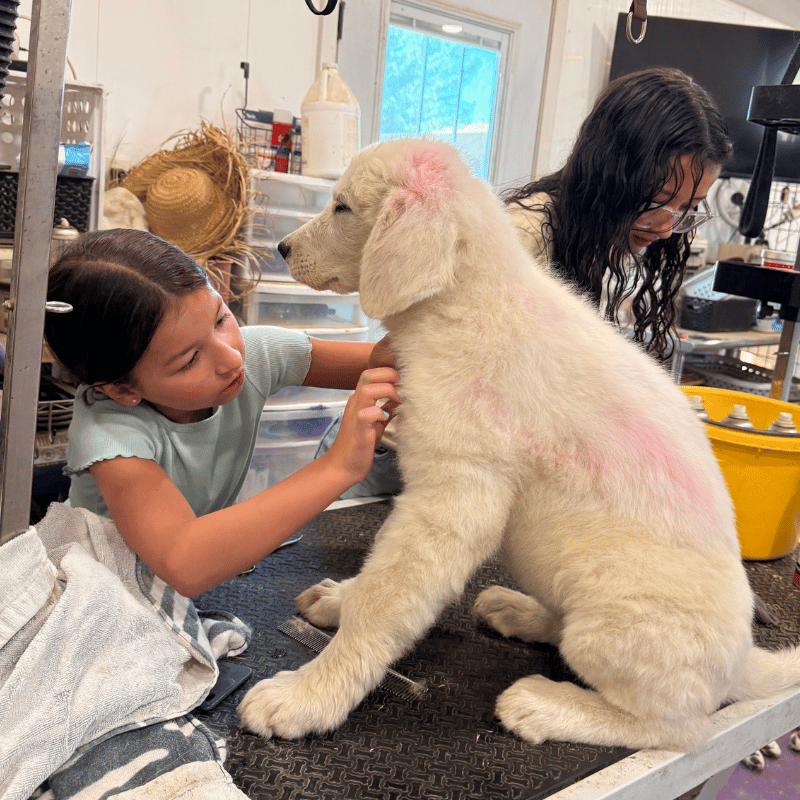
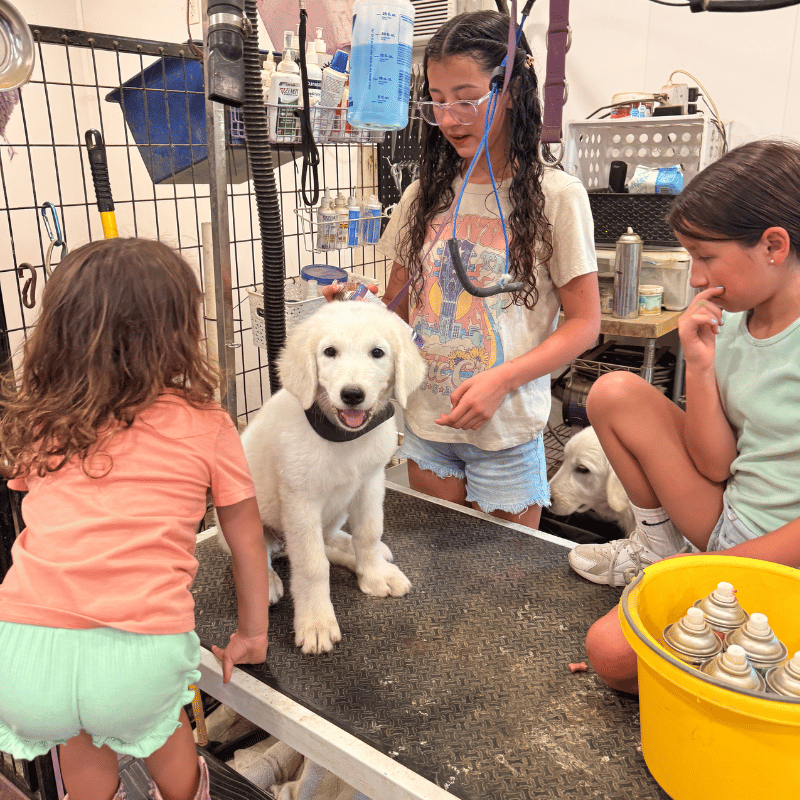
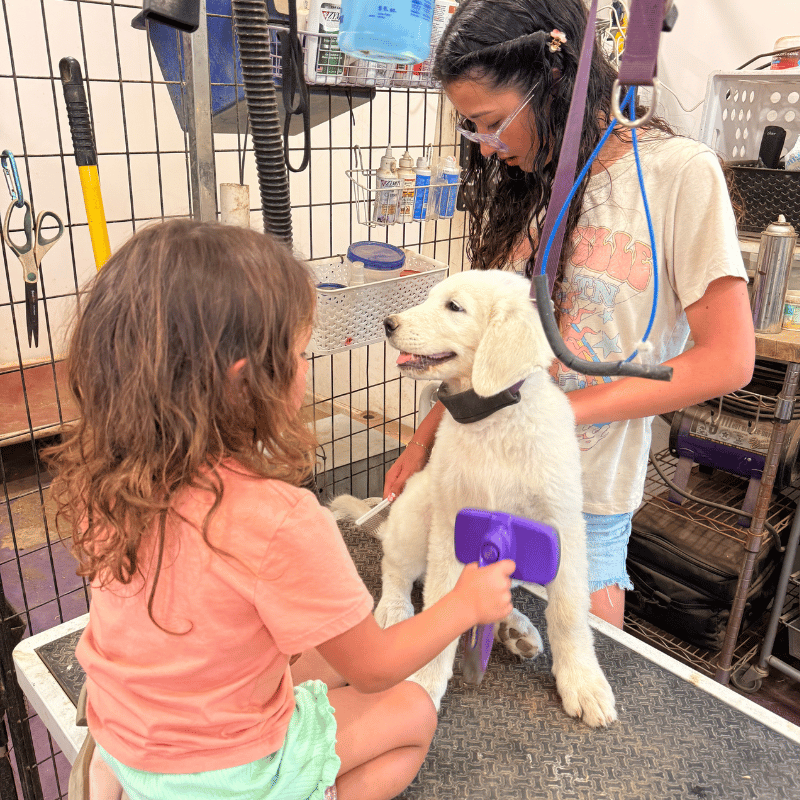
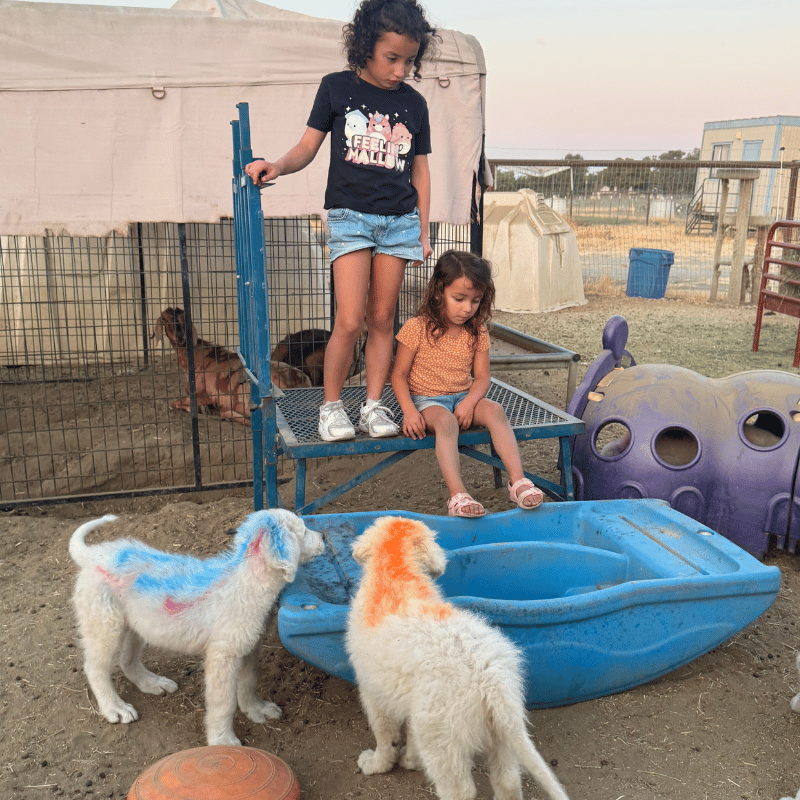
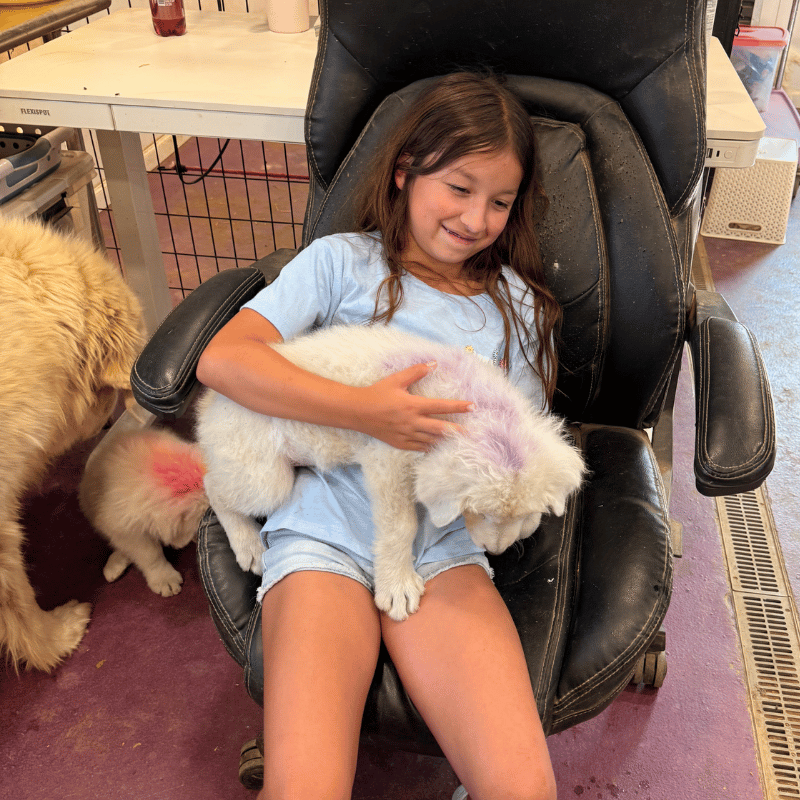
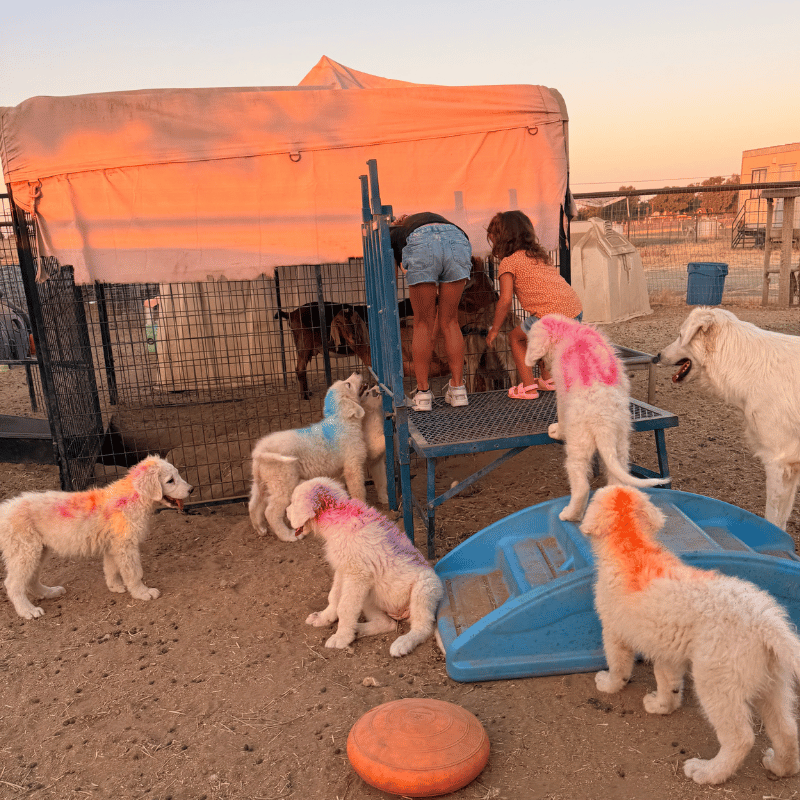
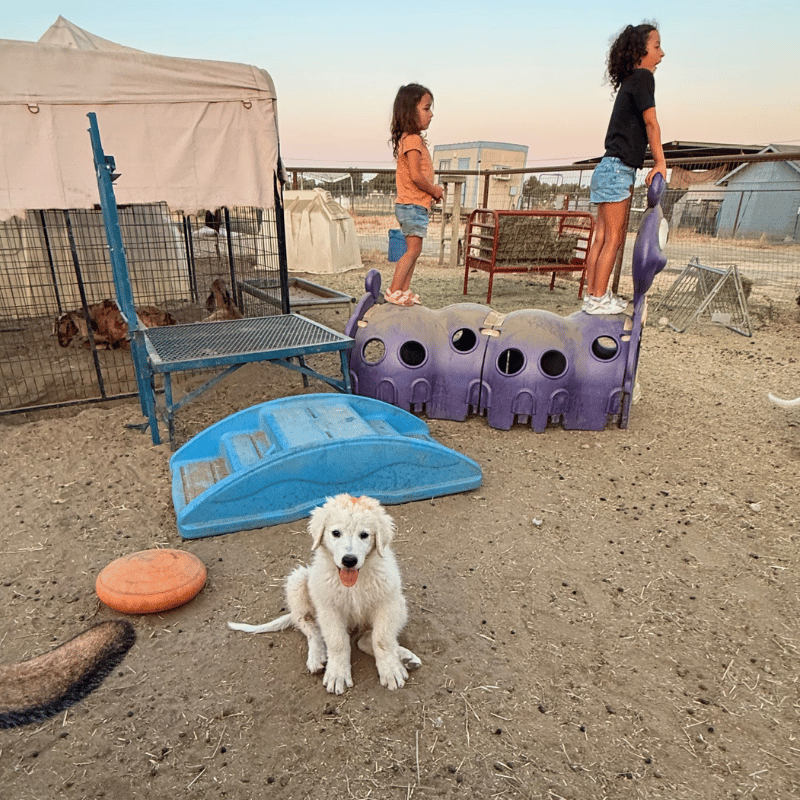
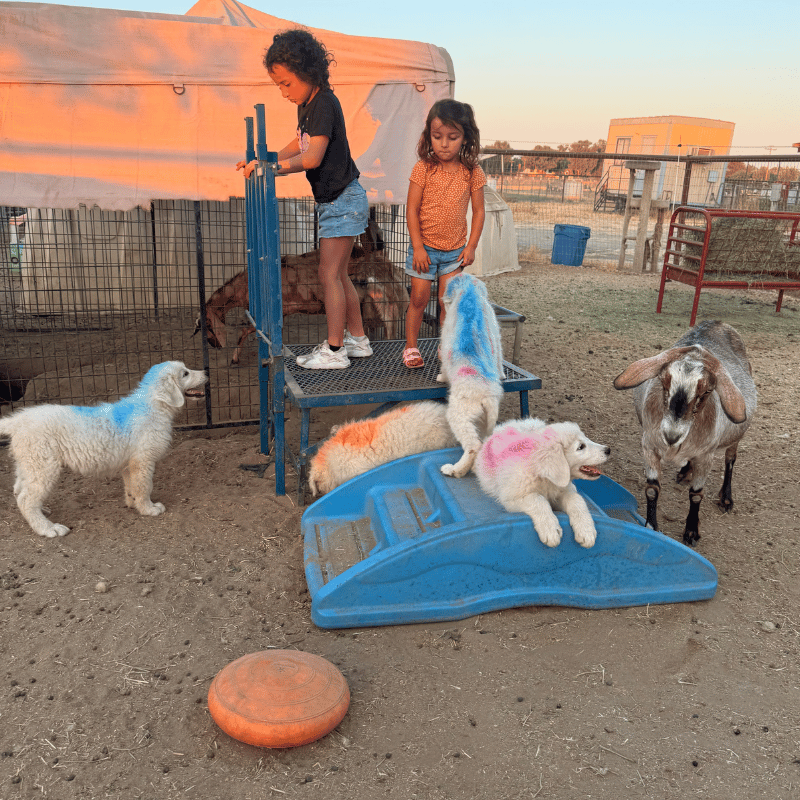
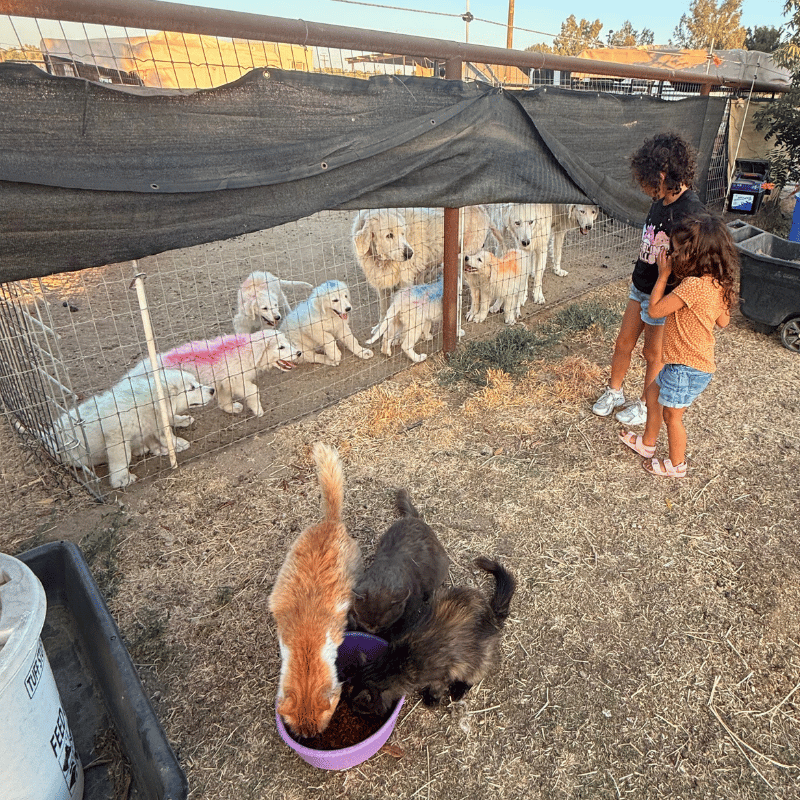
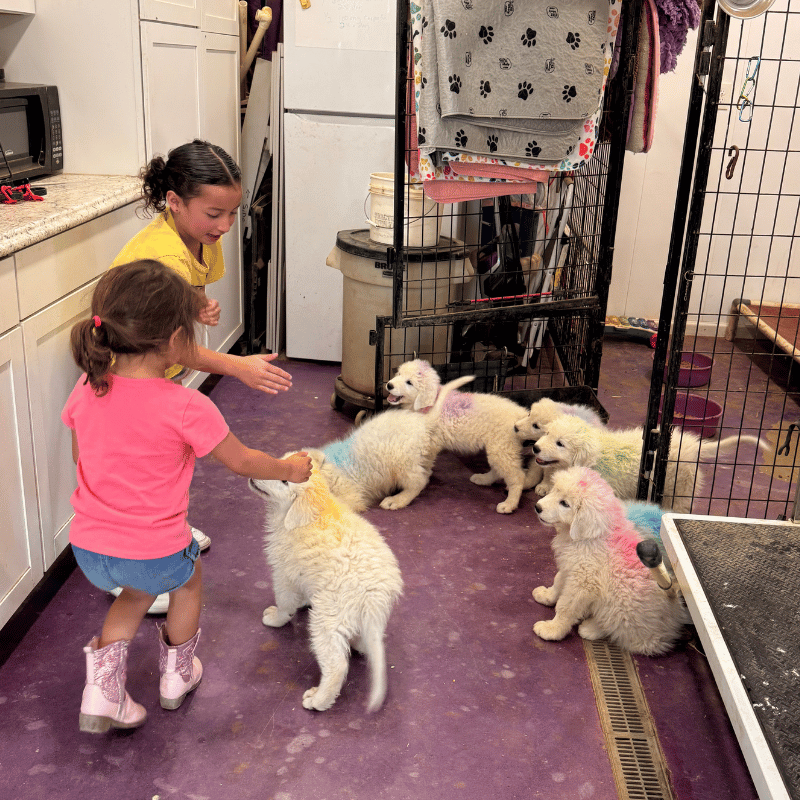
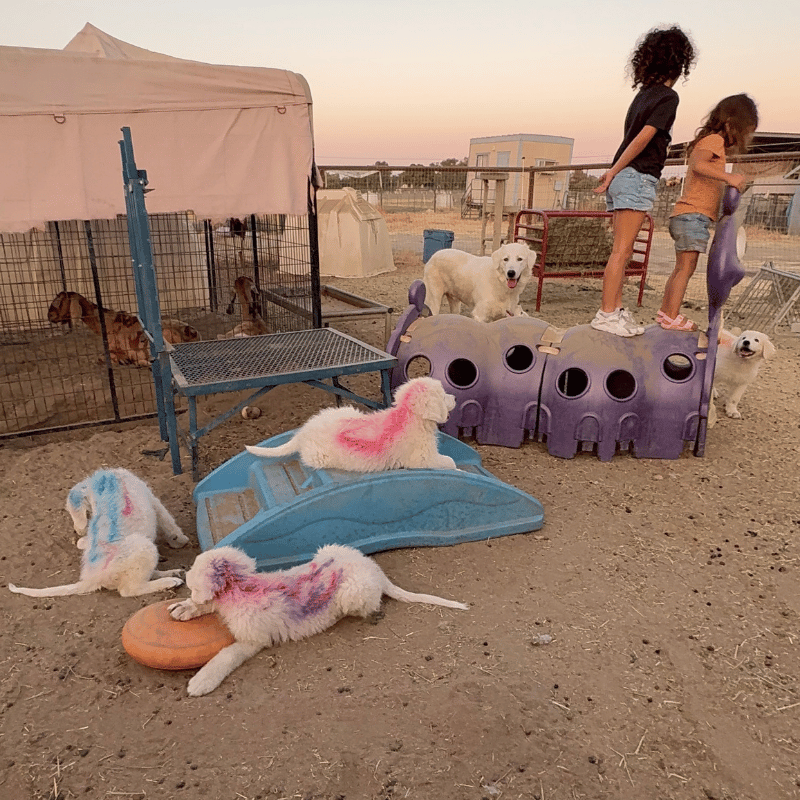
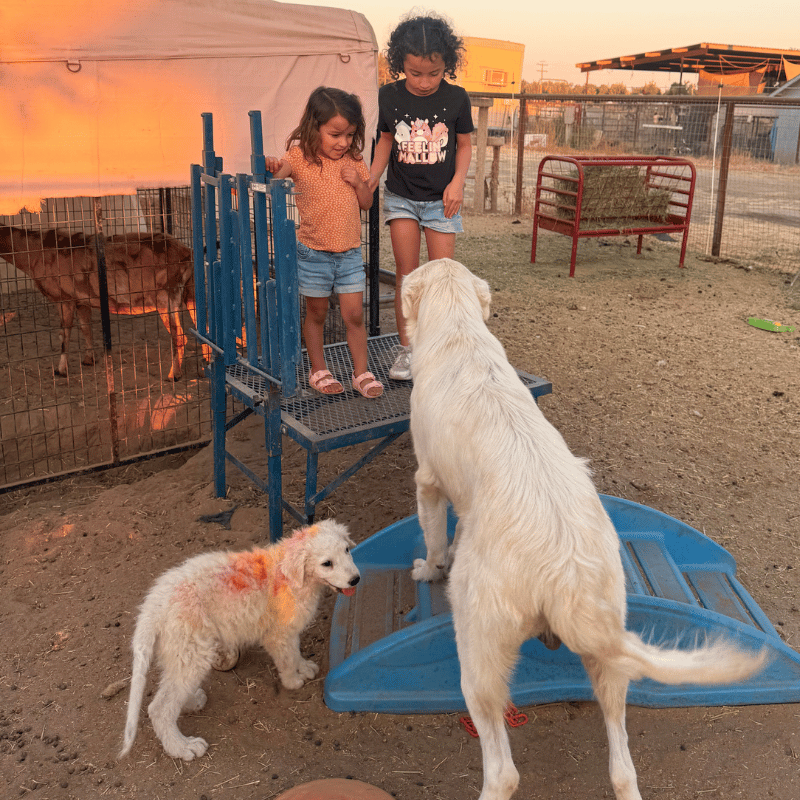
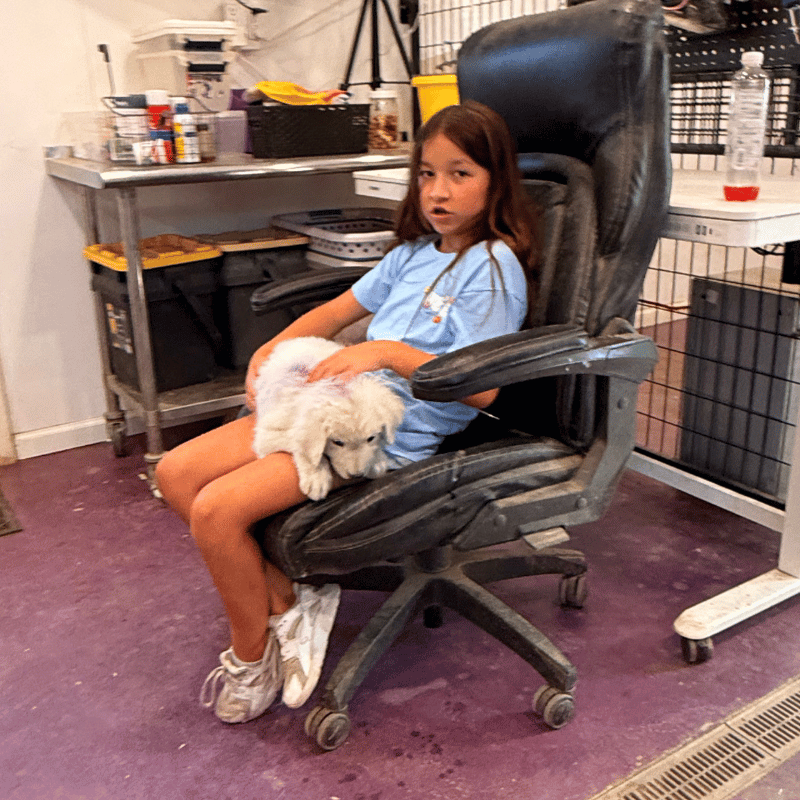
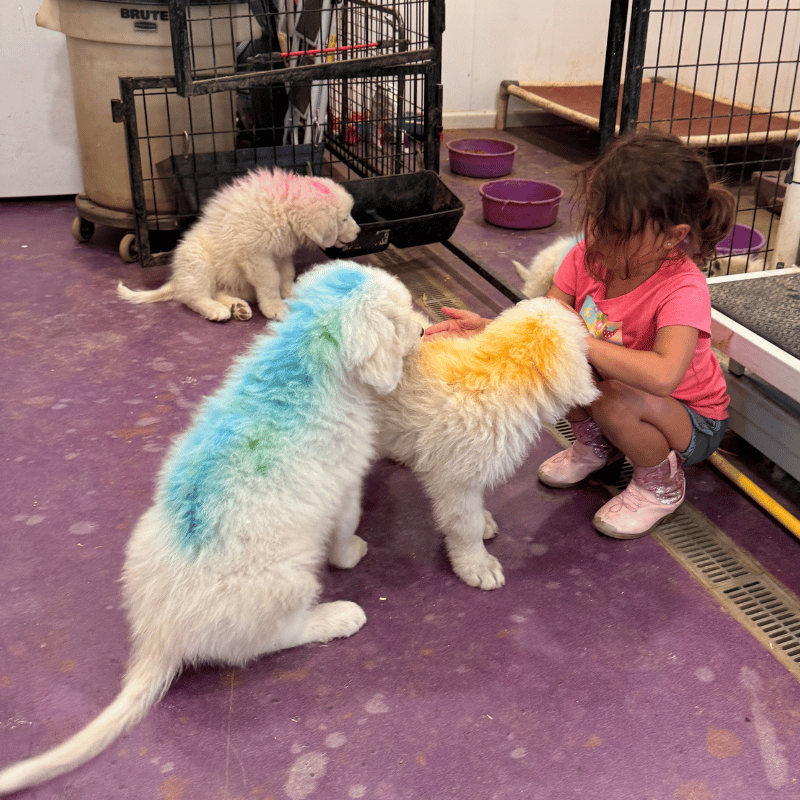
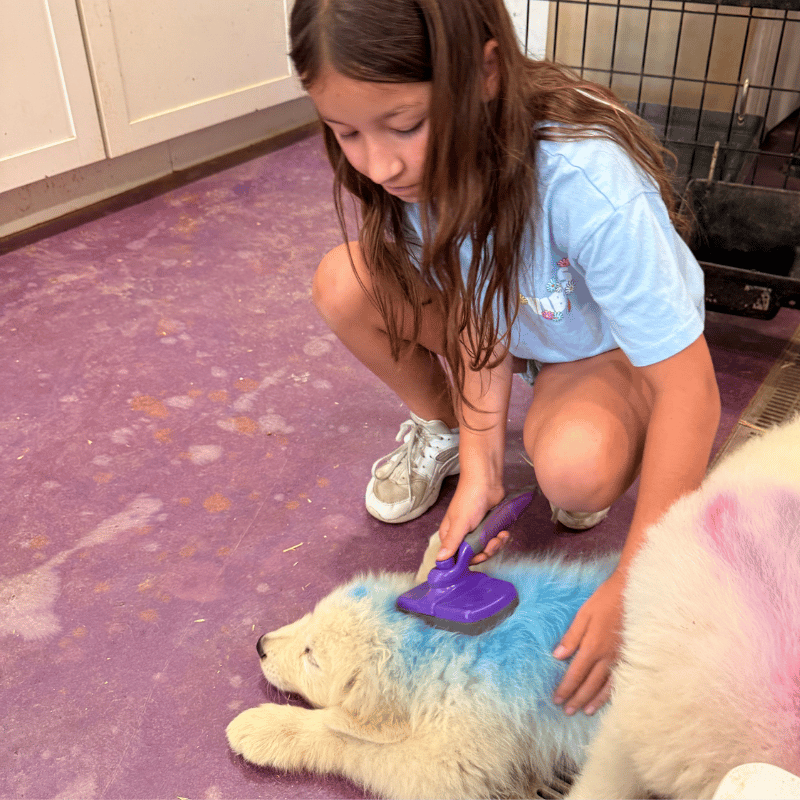

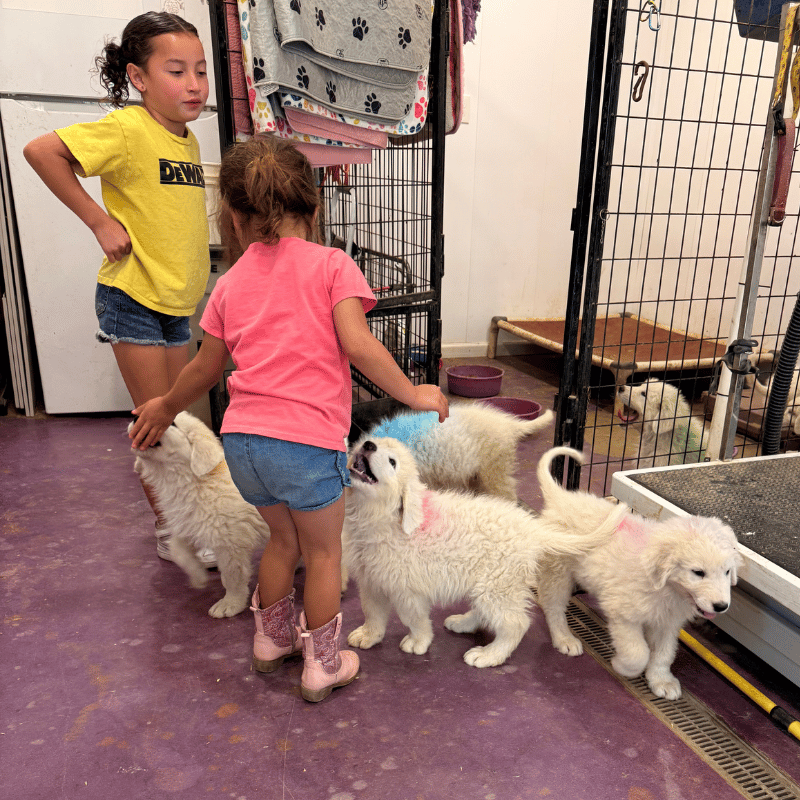
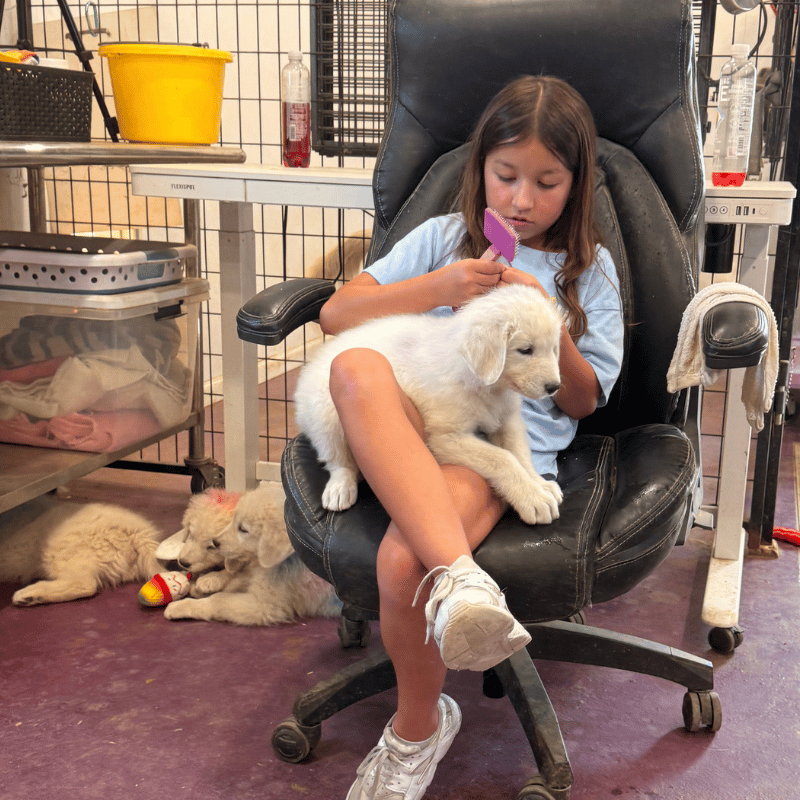
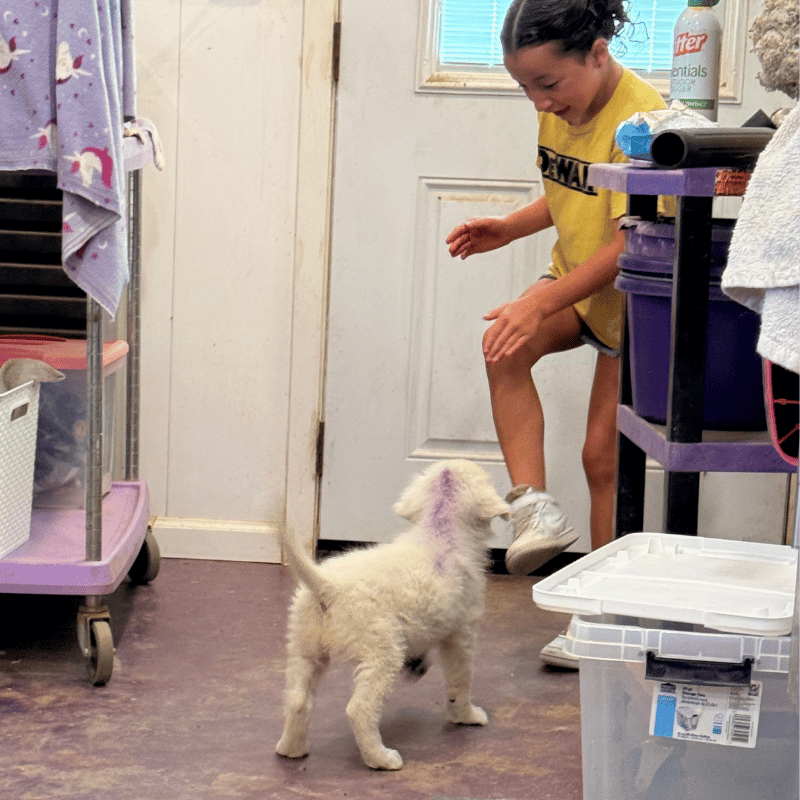
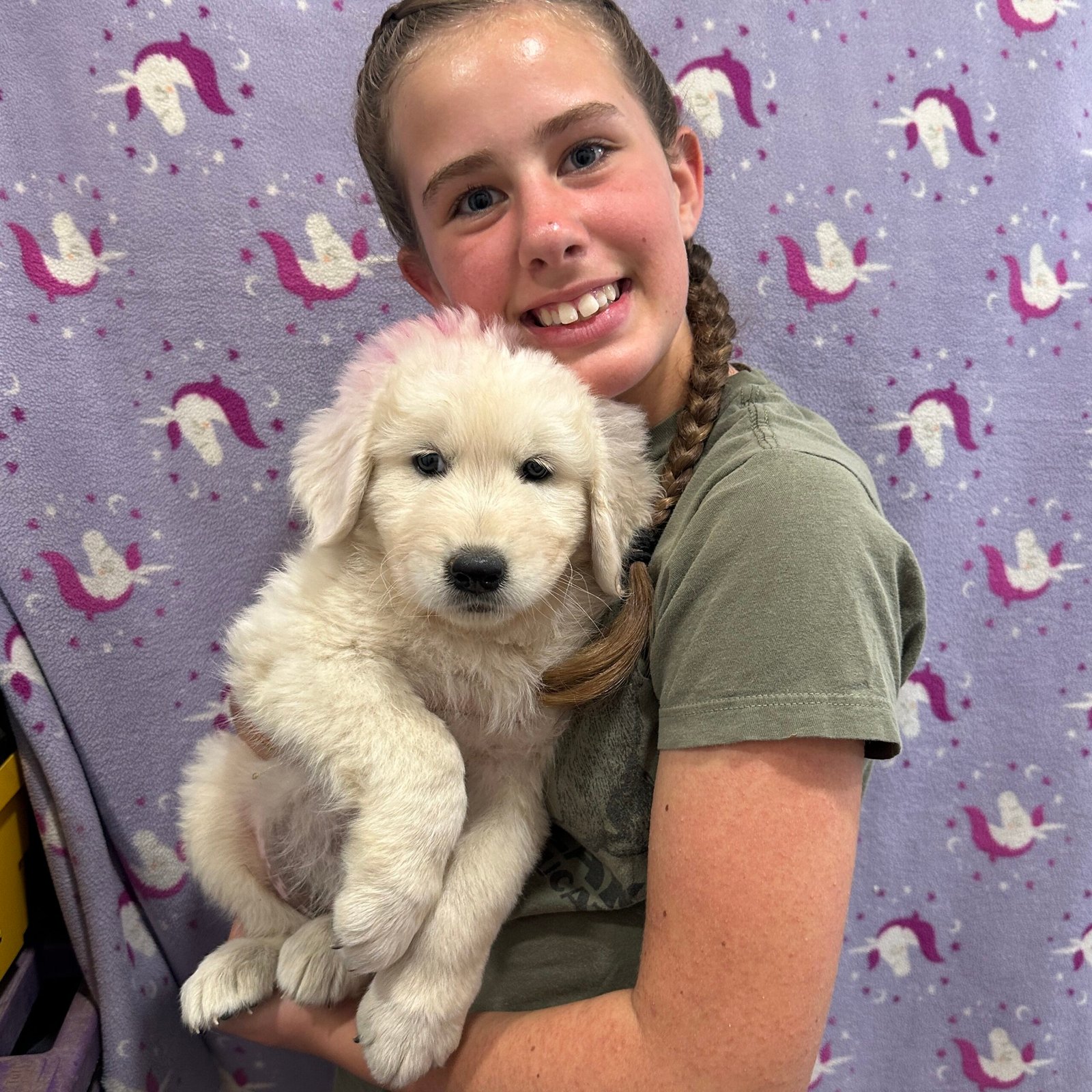


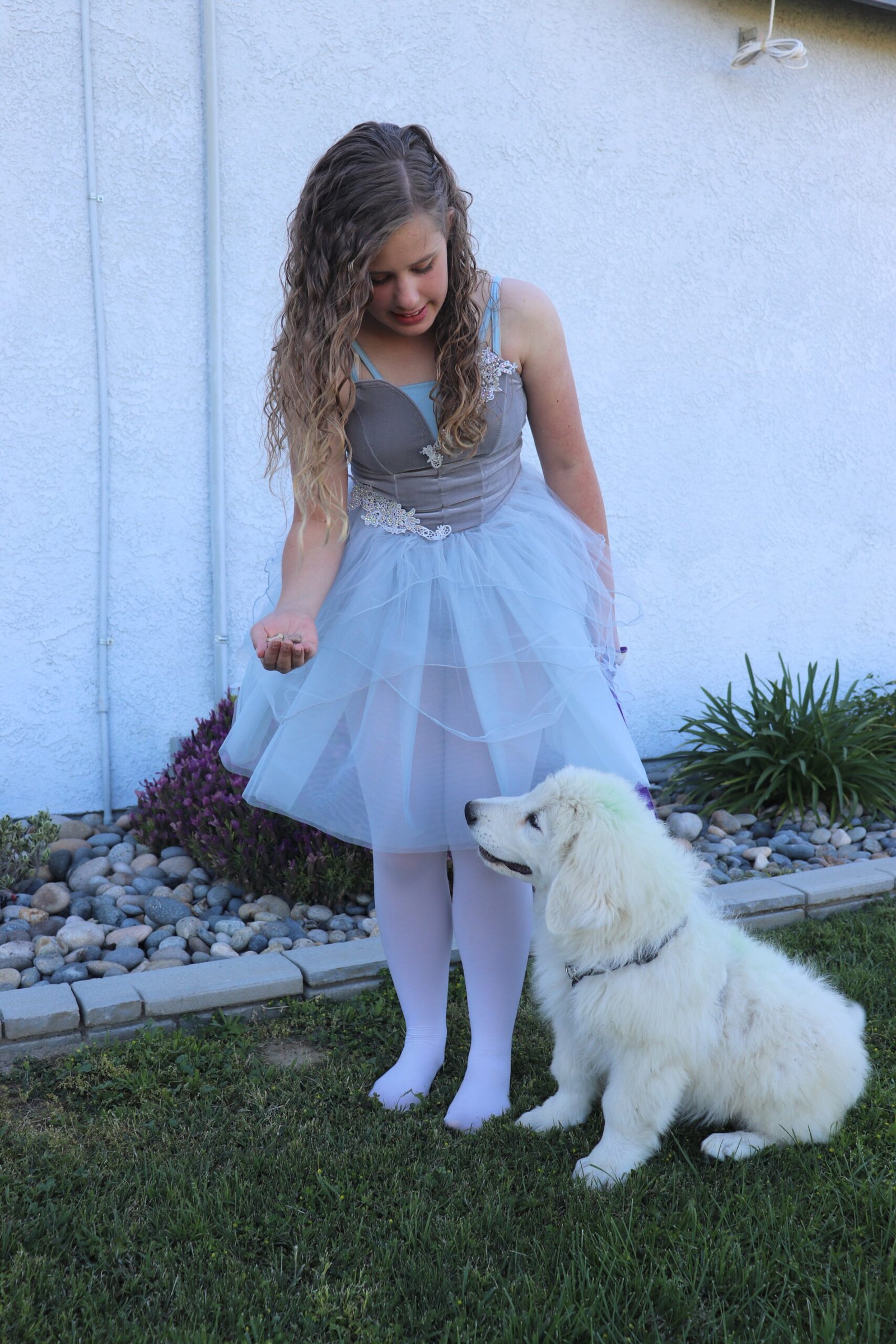
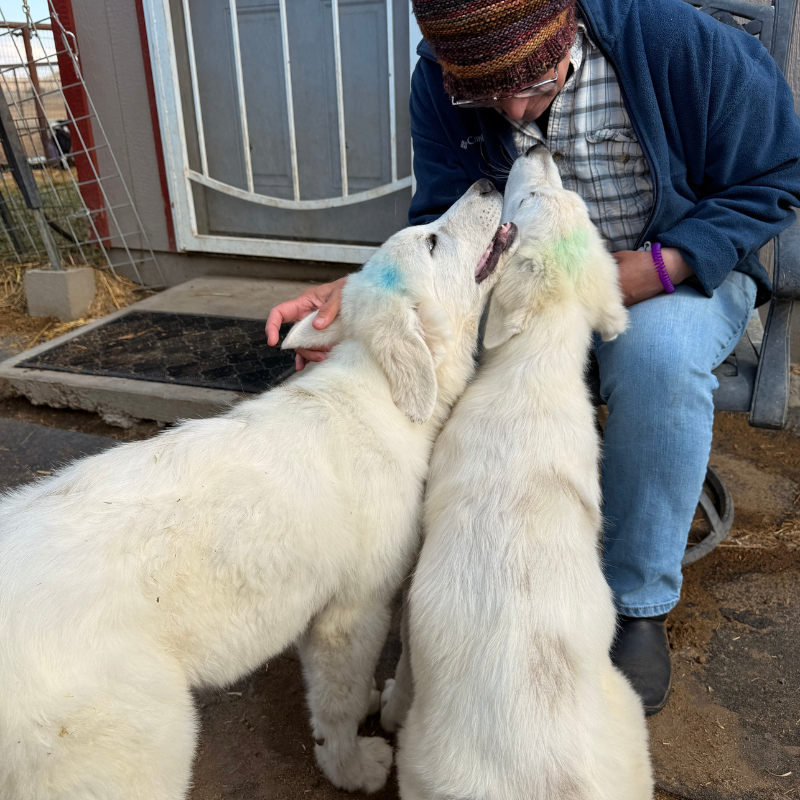
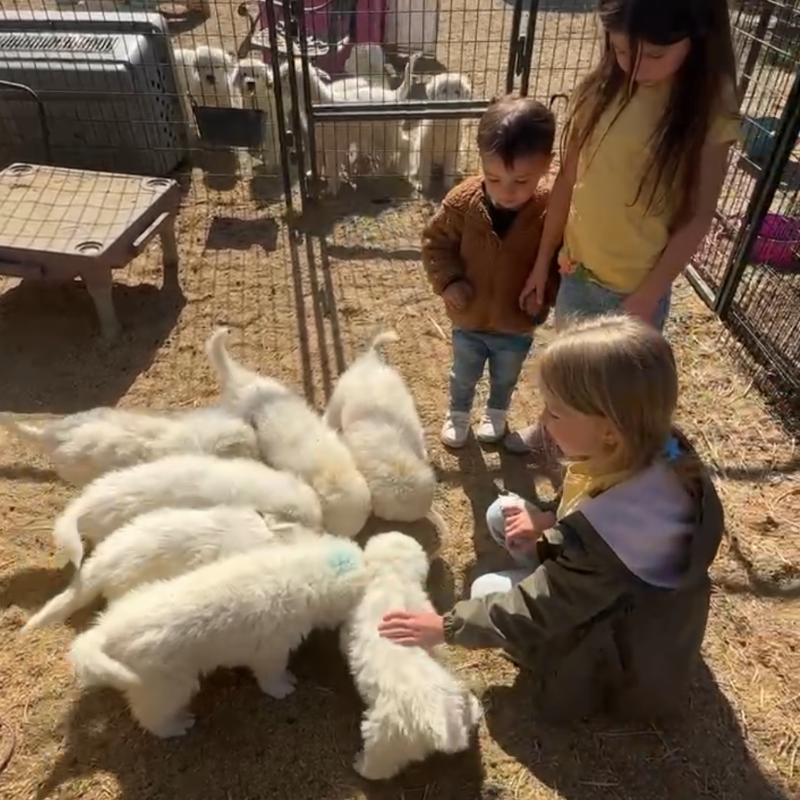
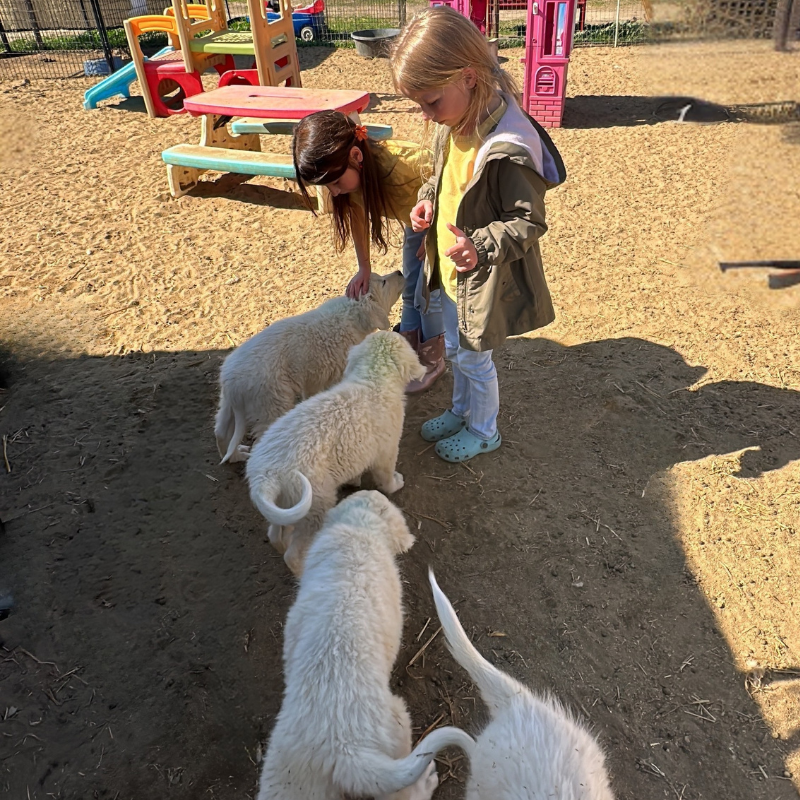


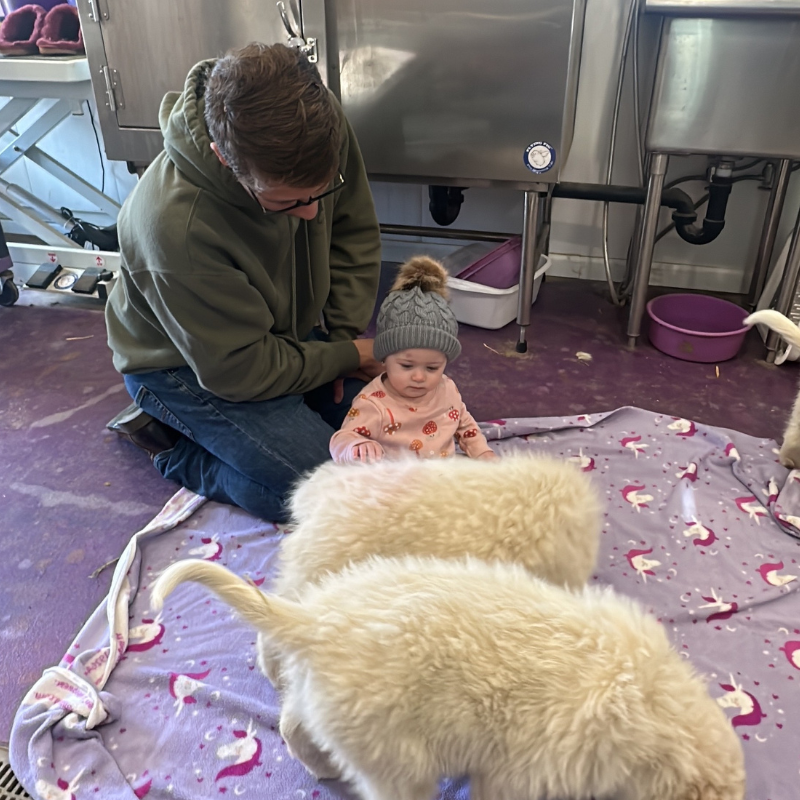


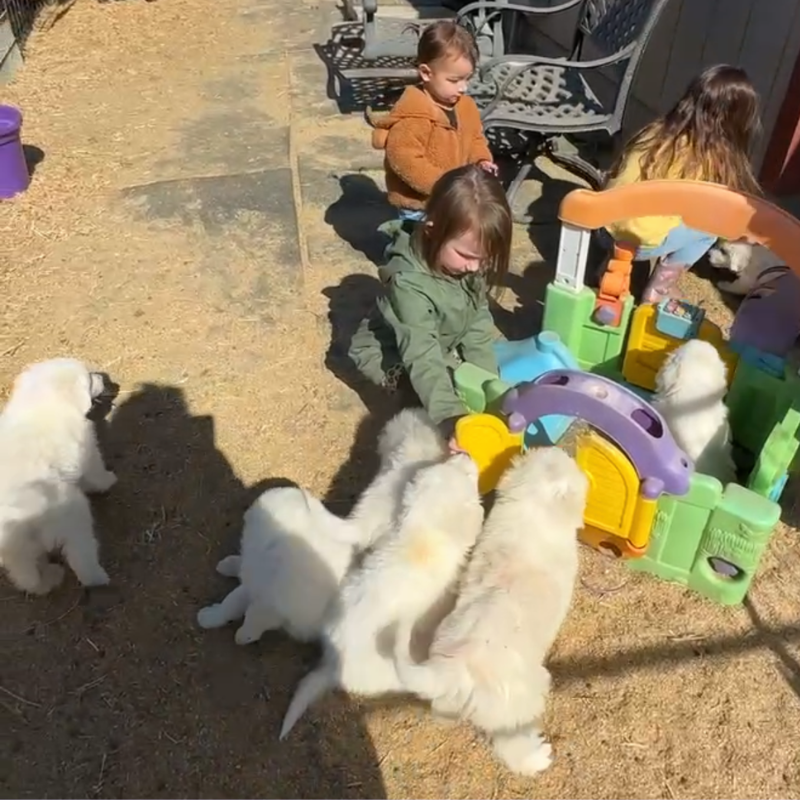
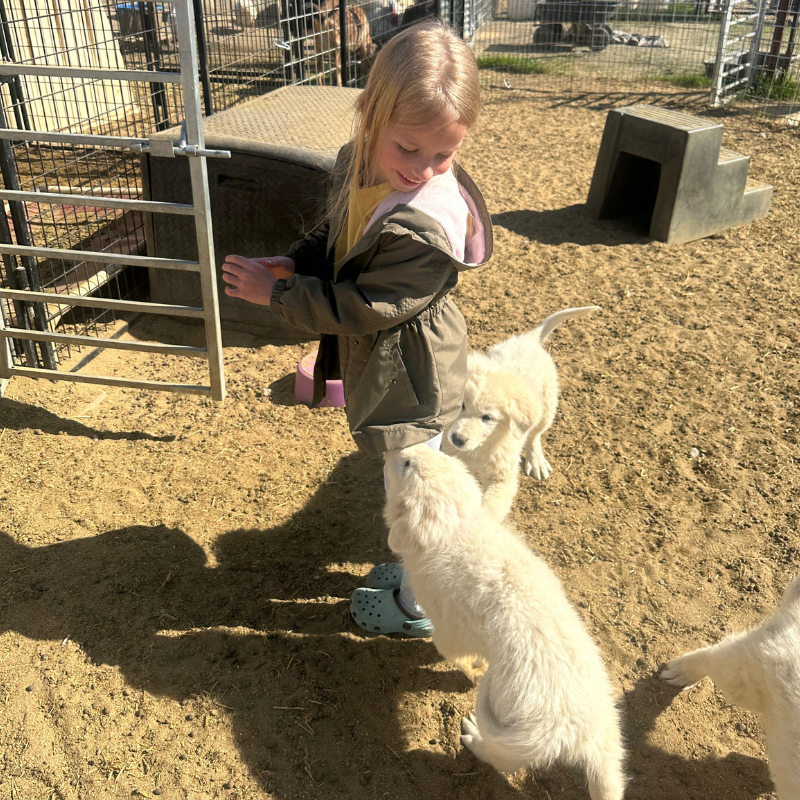
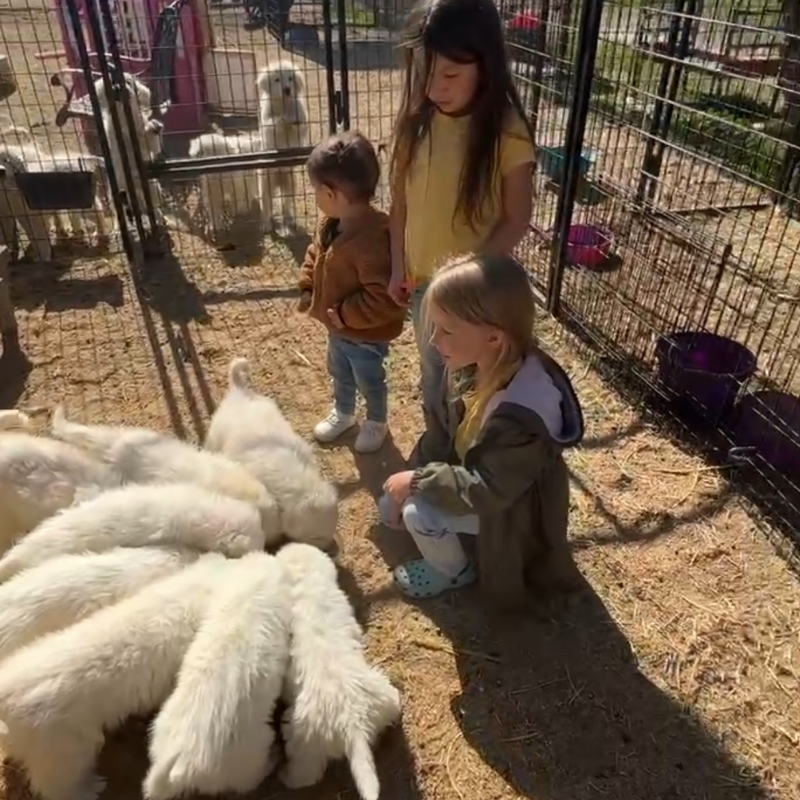


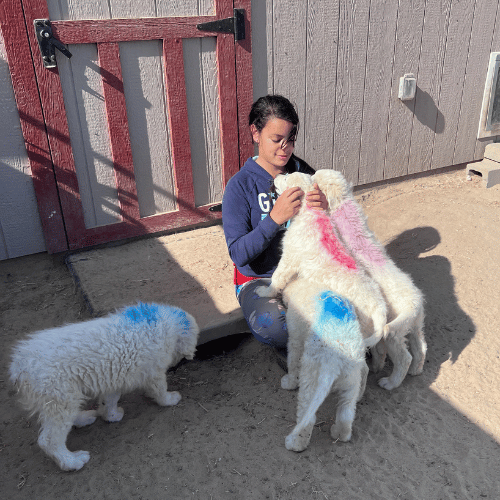
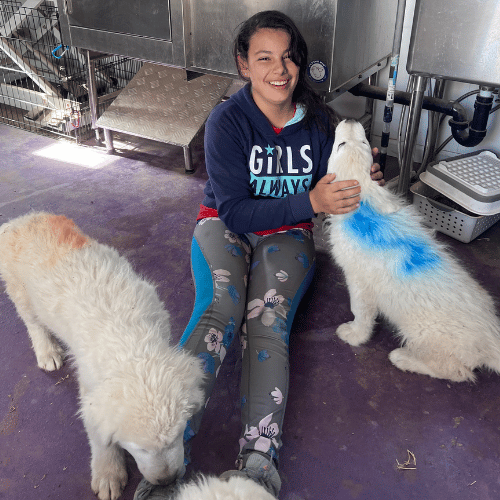
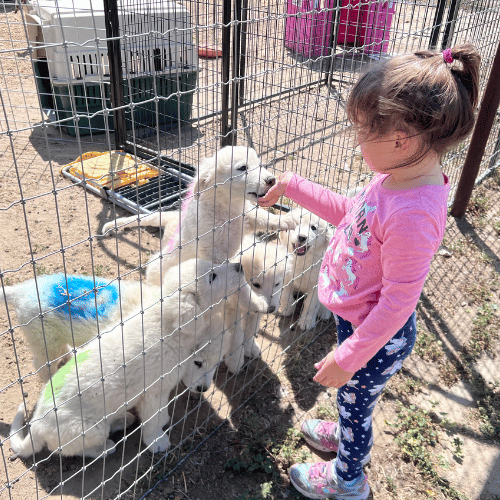
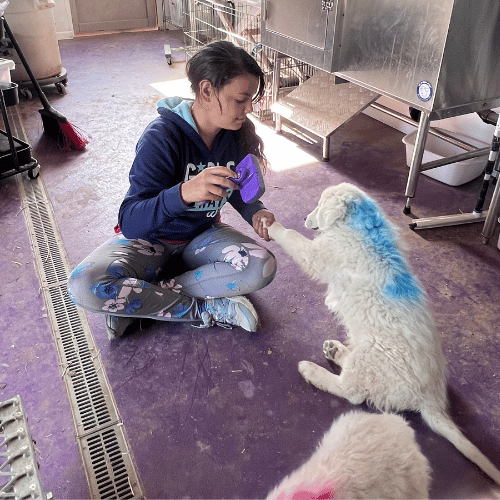
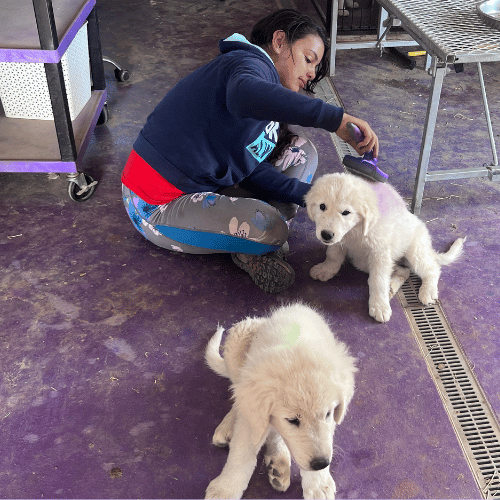
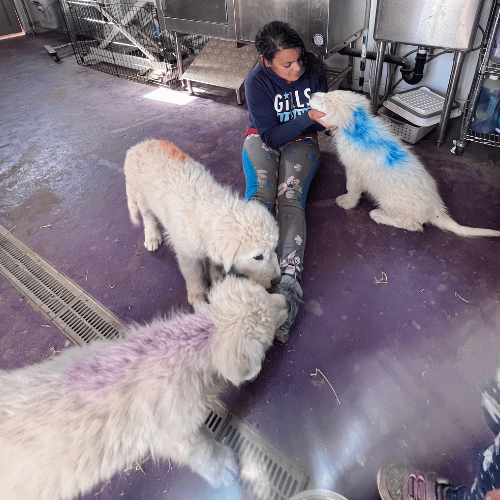
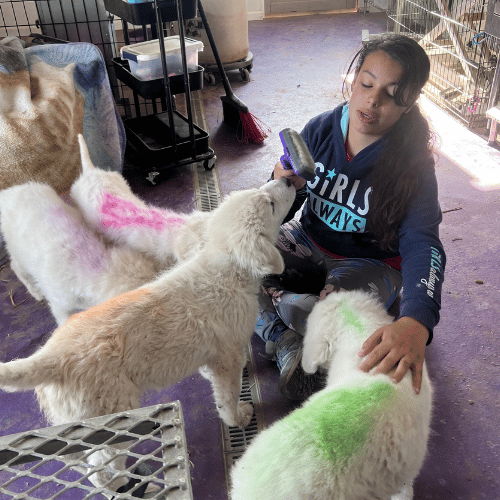
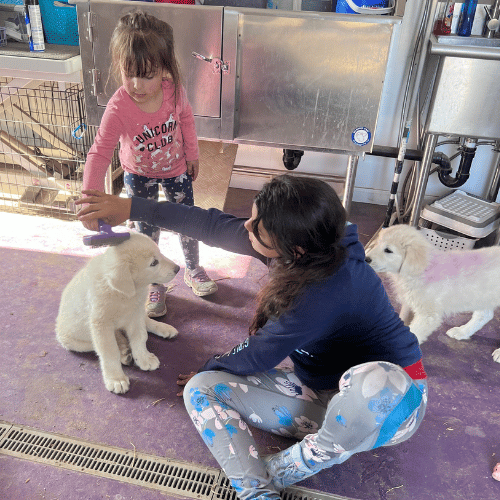
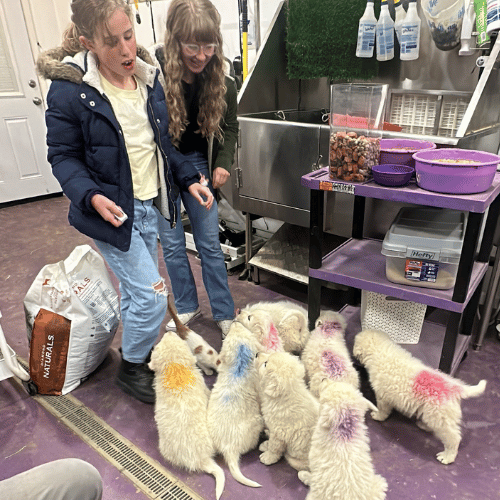
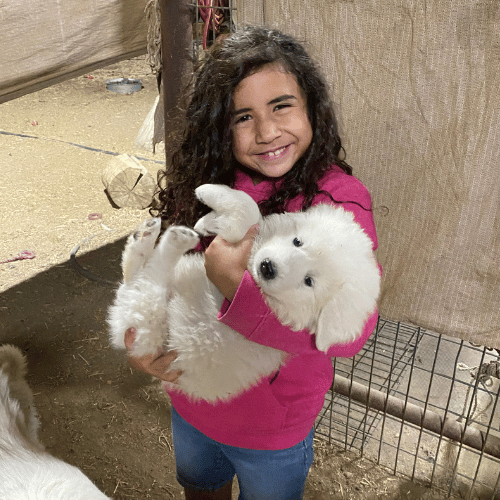
Maremmas and children can be a wonderful combination — or a dangerous one, depending on how the dog was raised and how the children are taught to interact. This page covers what you need to know, including book and course recommendations.
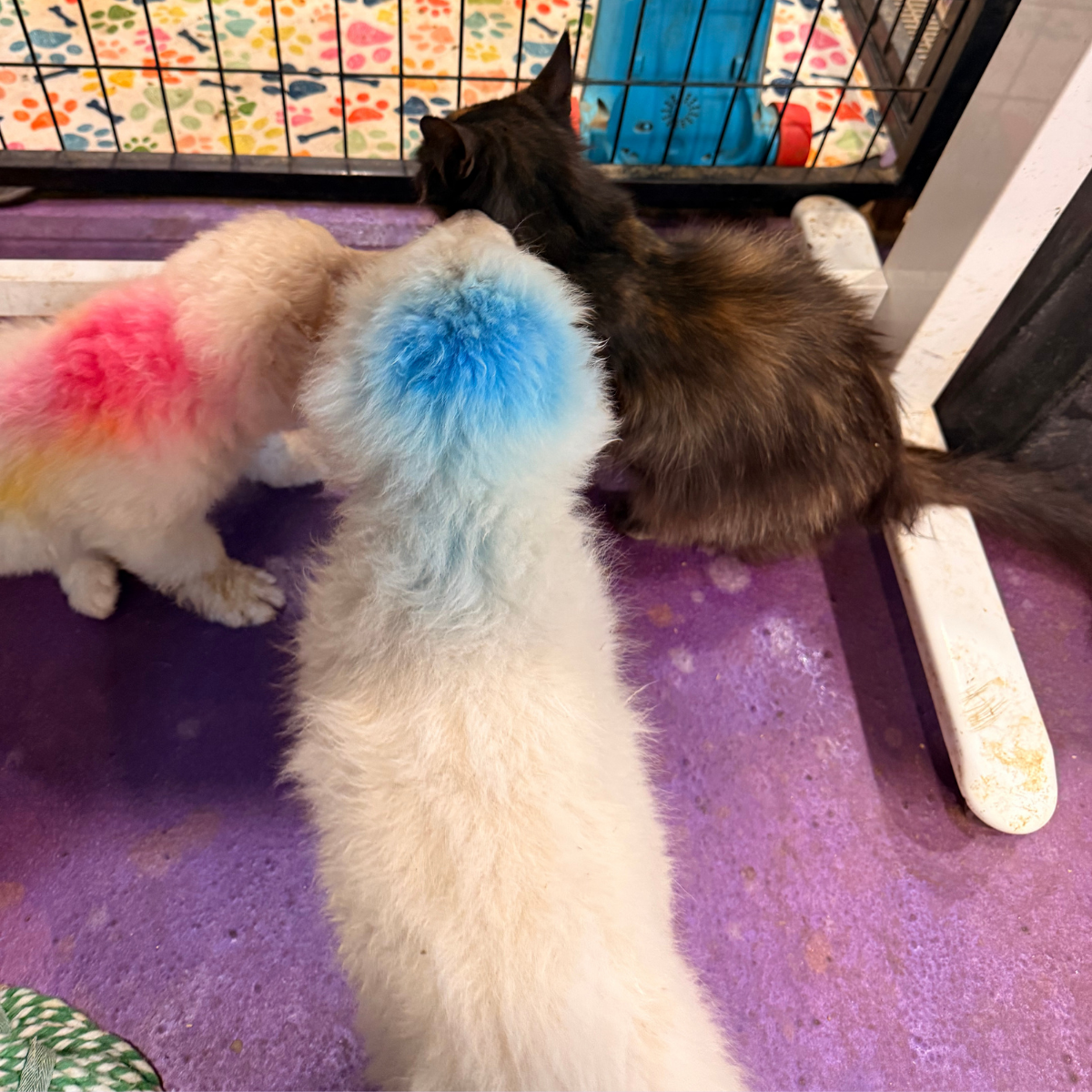
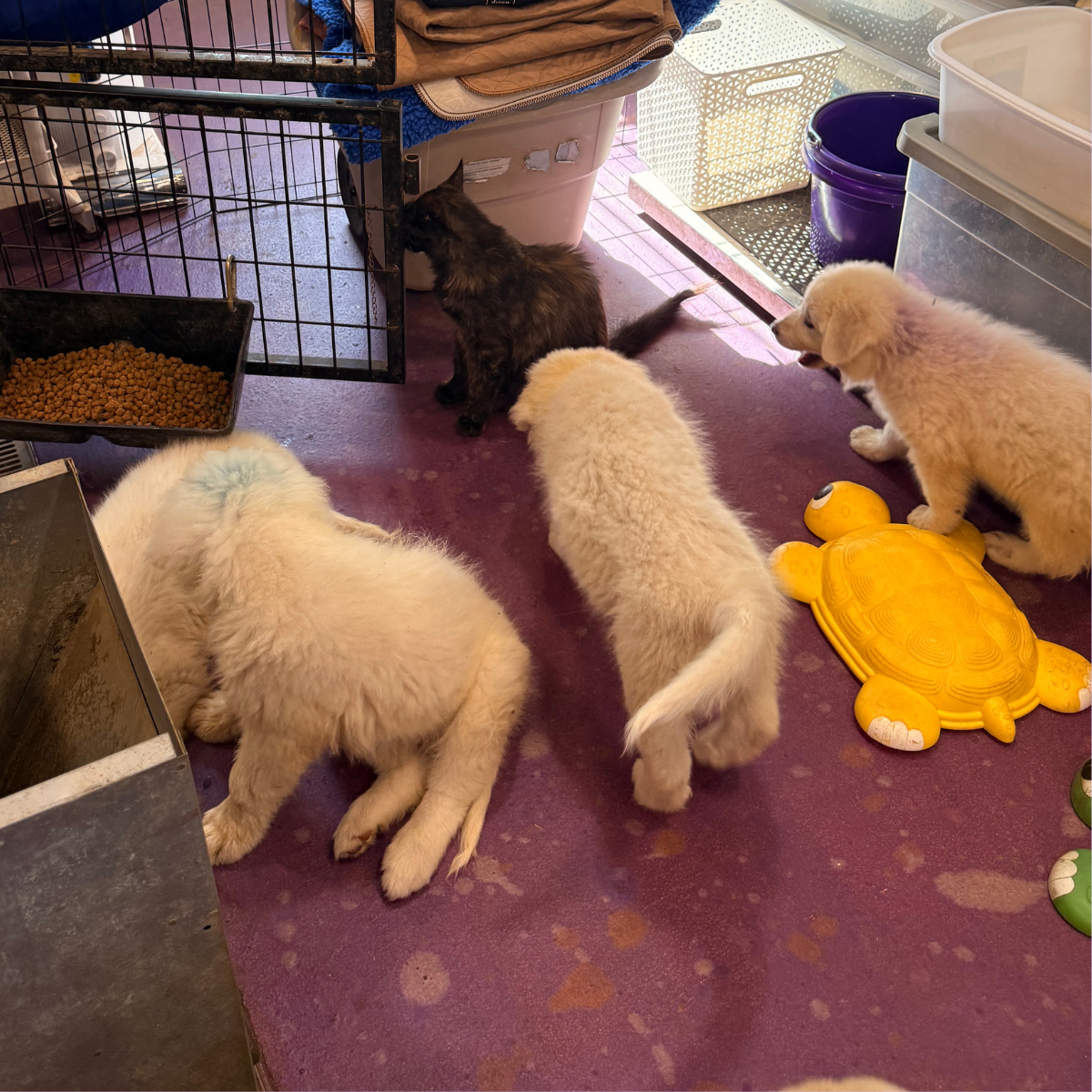
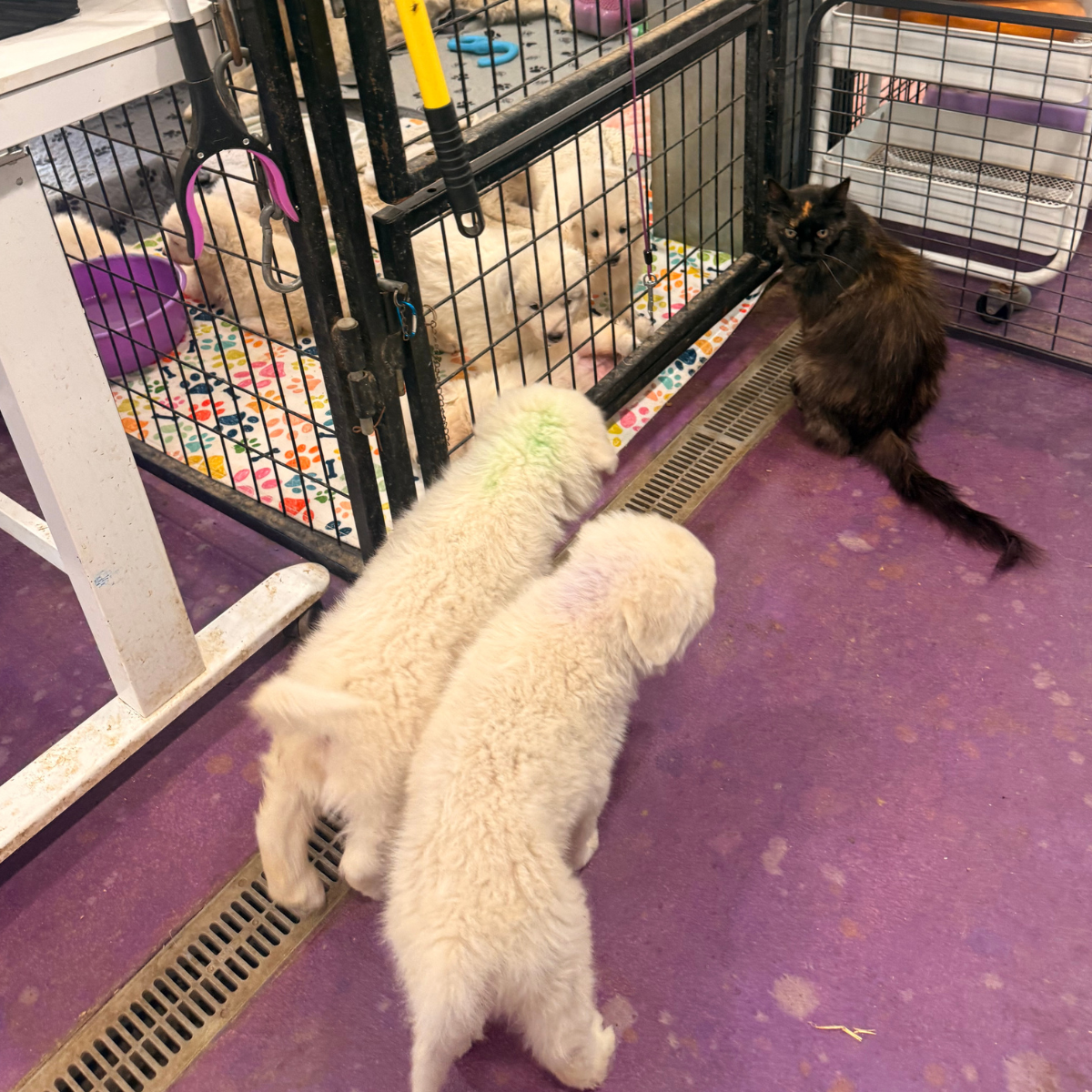
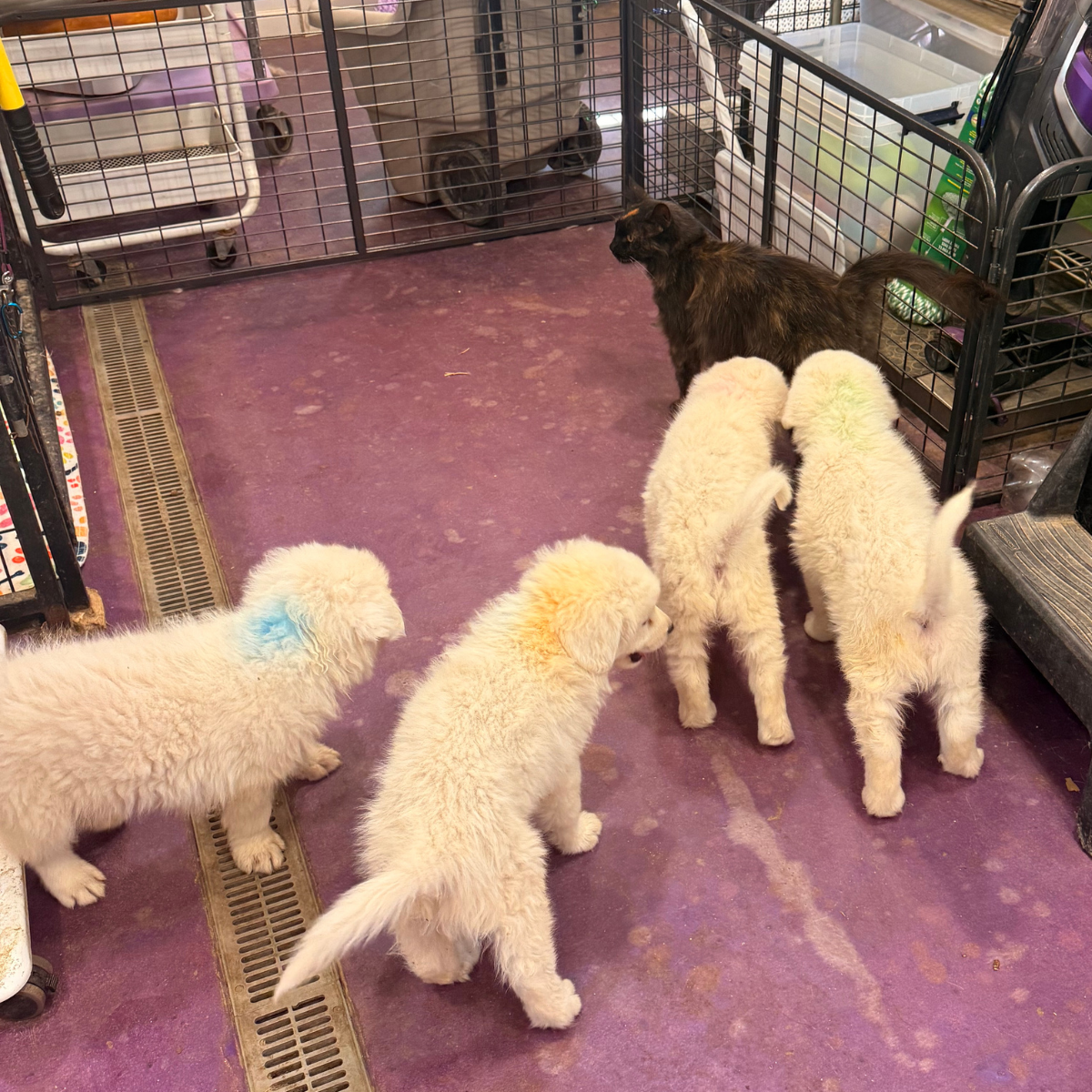
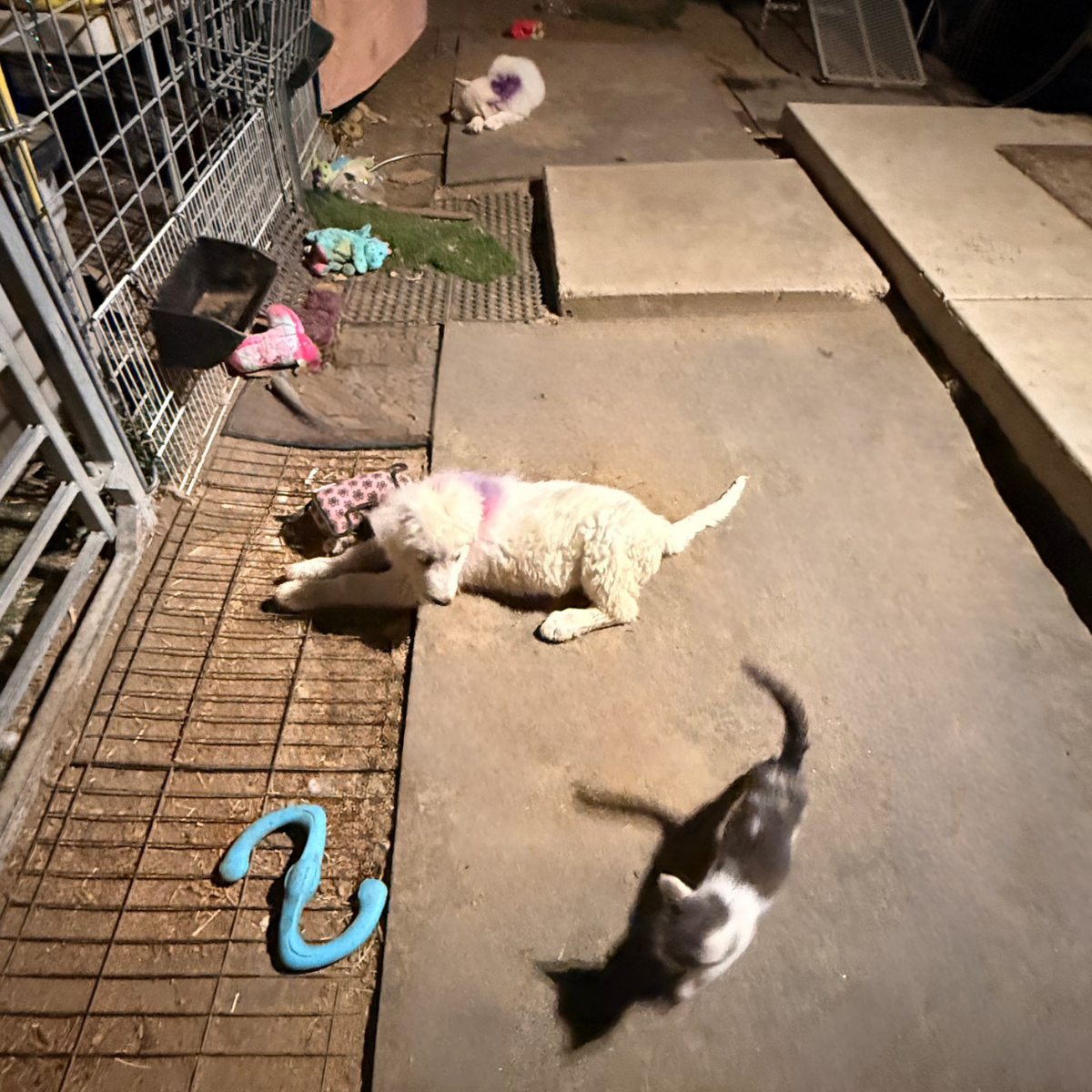
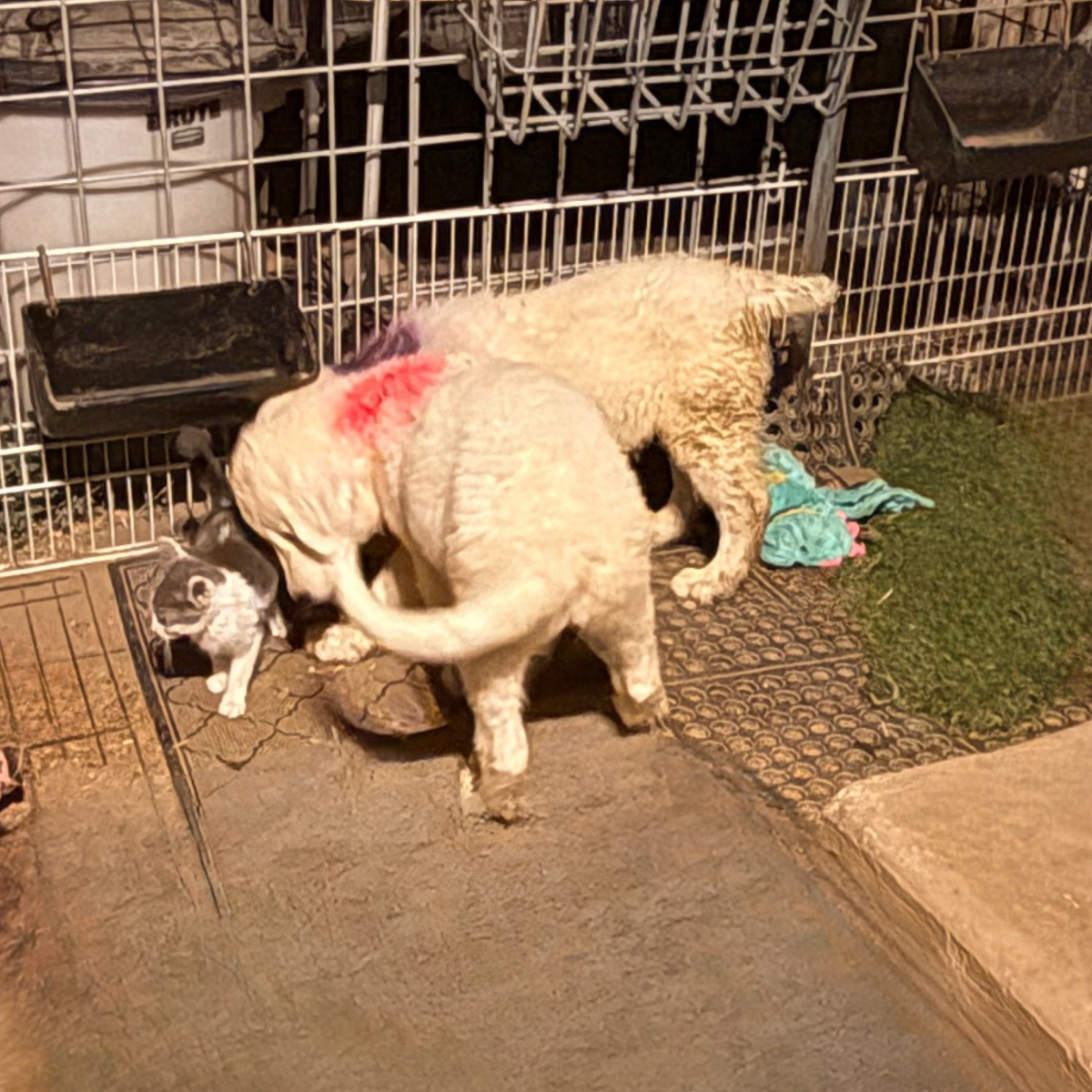
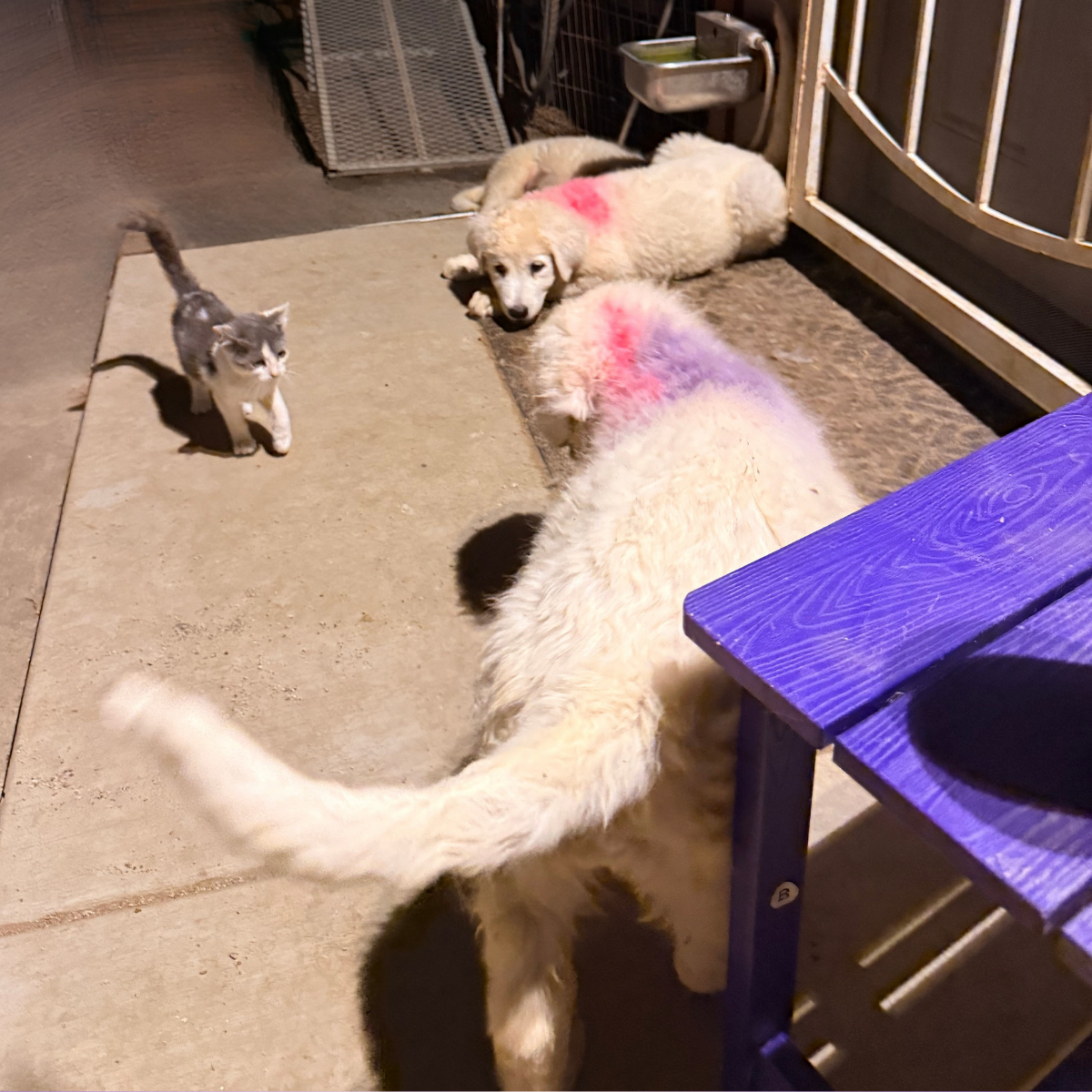
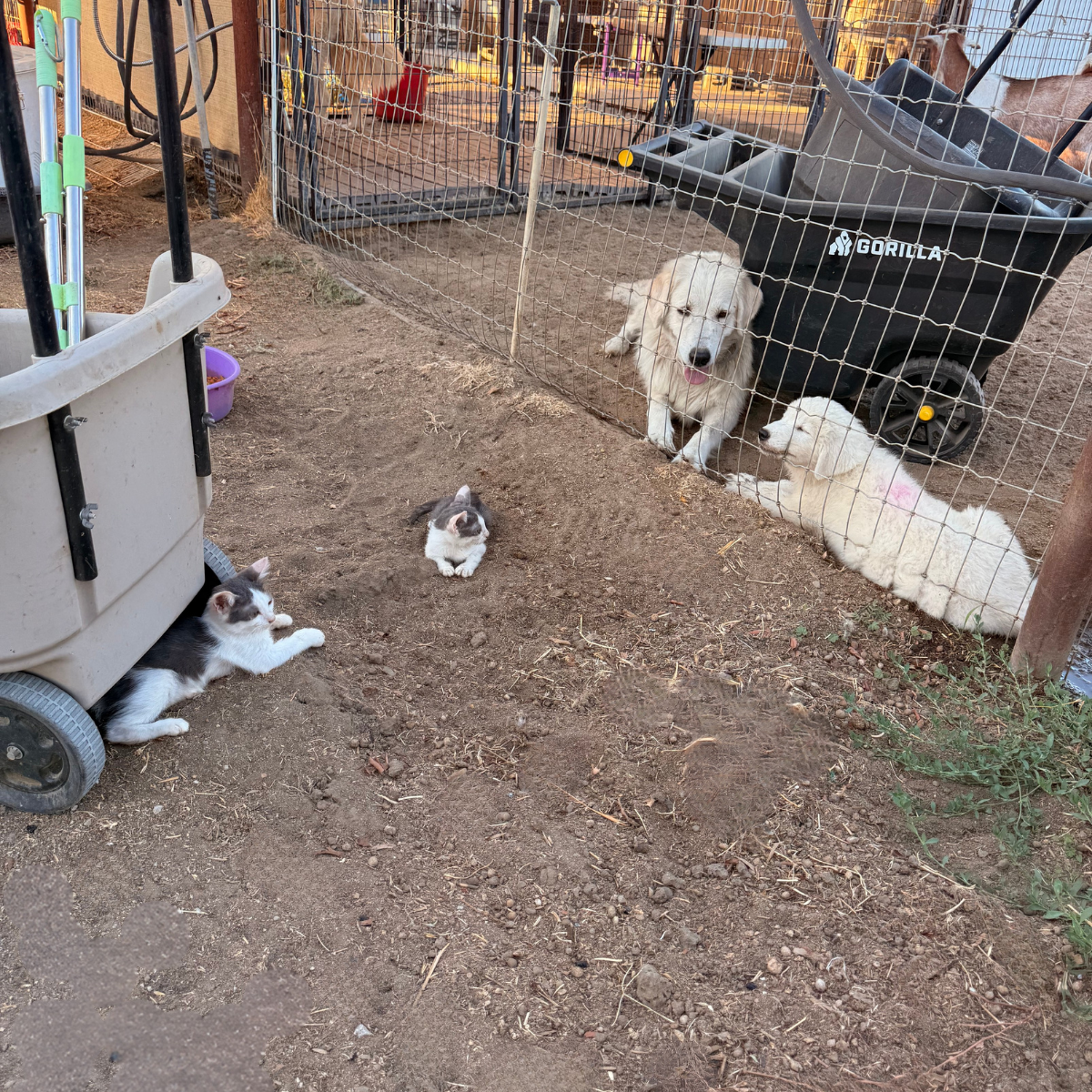
Farm Friends — Why Cat Socialization Matters for Livestock Guardian Dogs
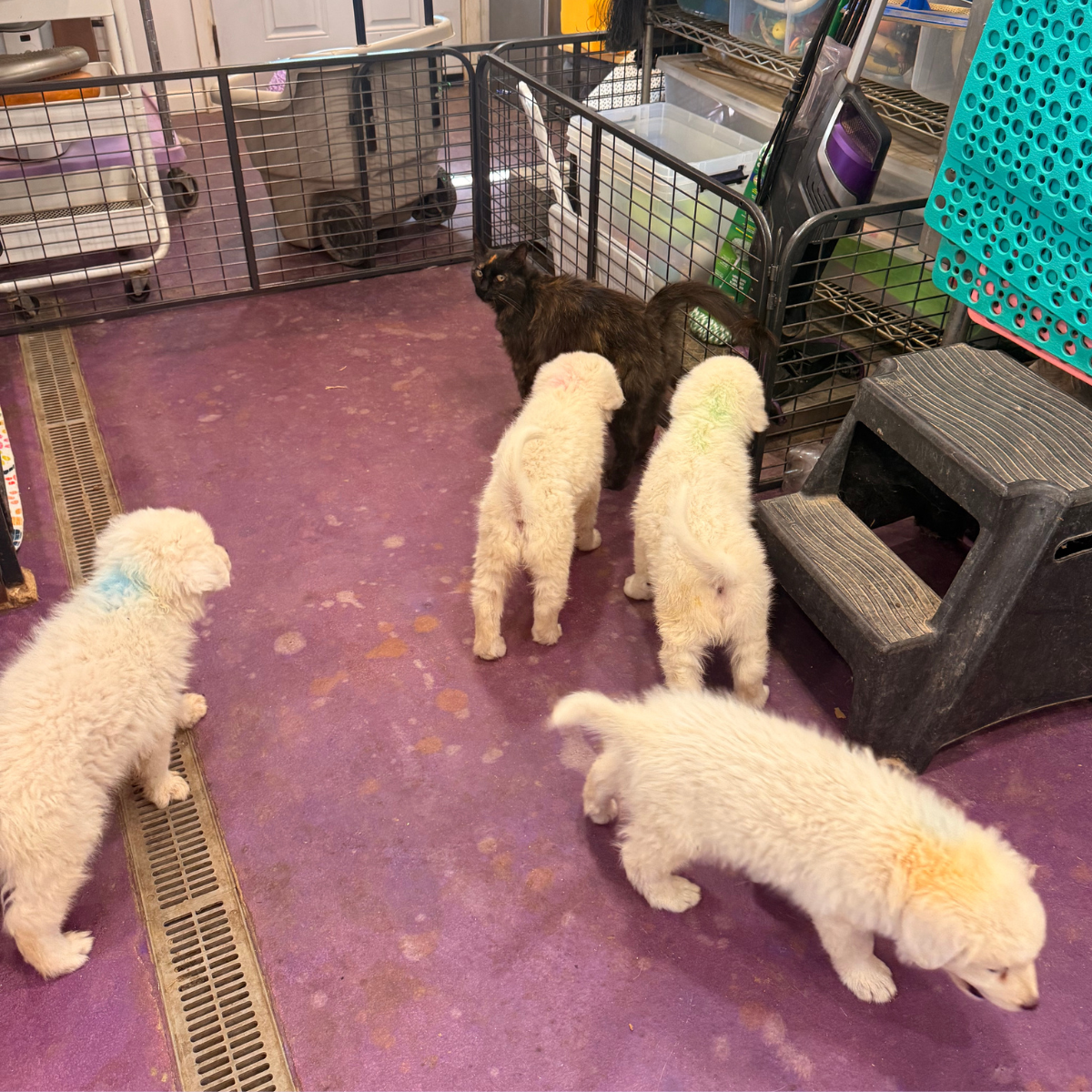
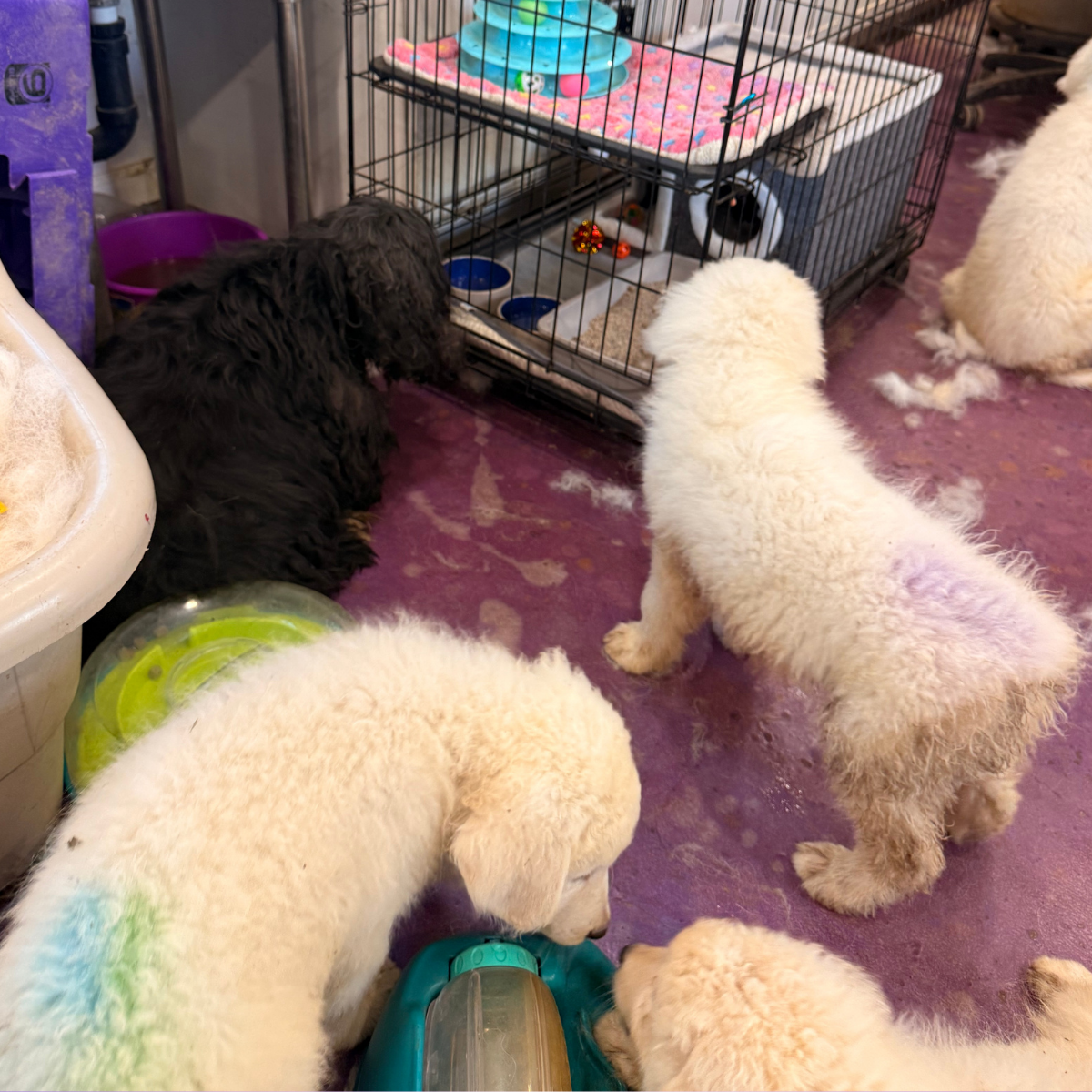
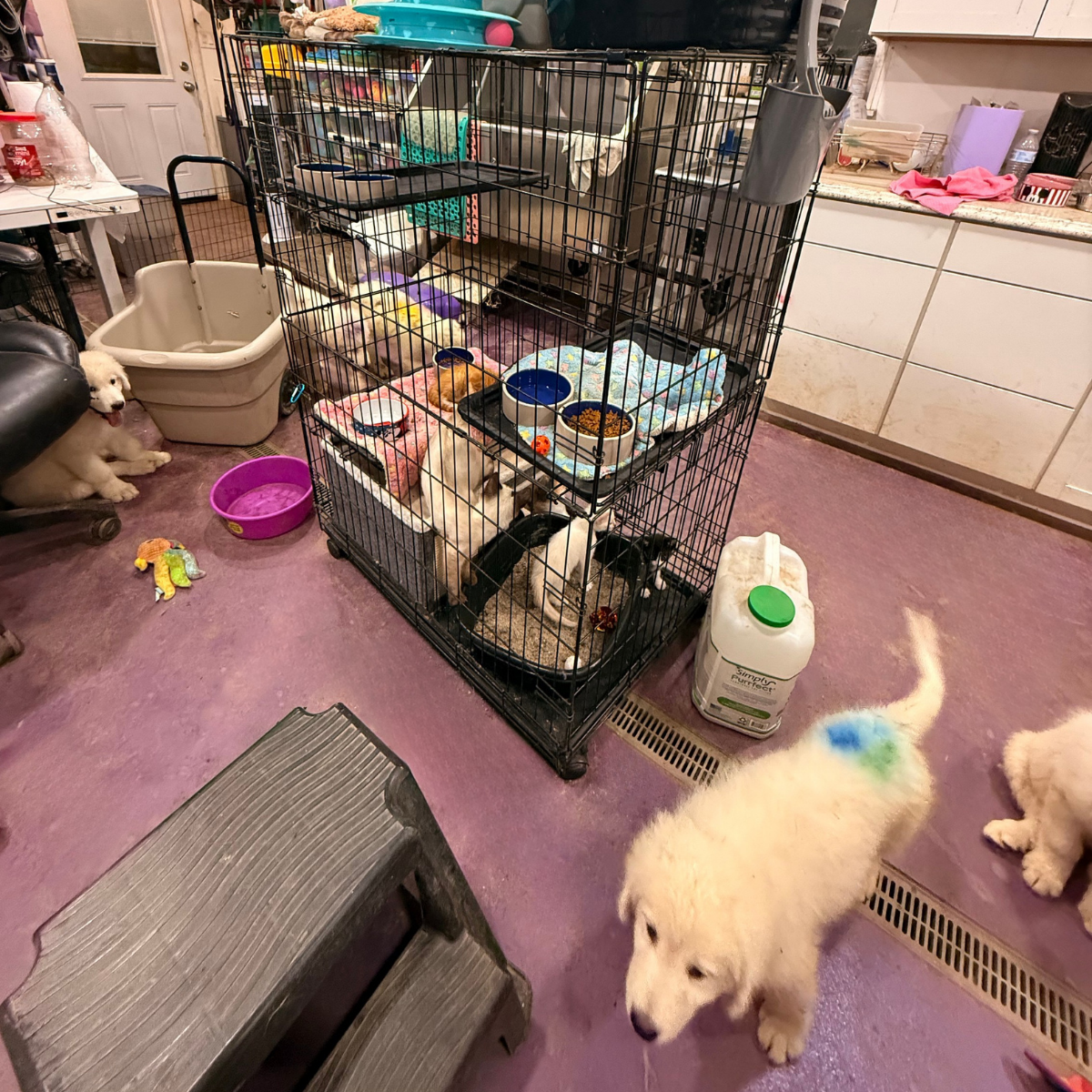
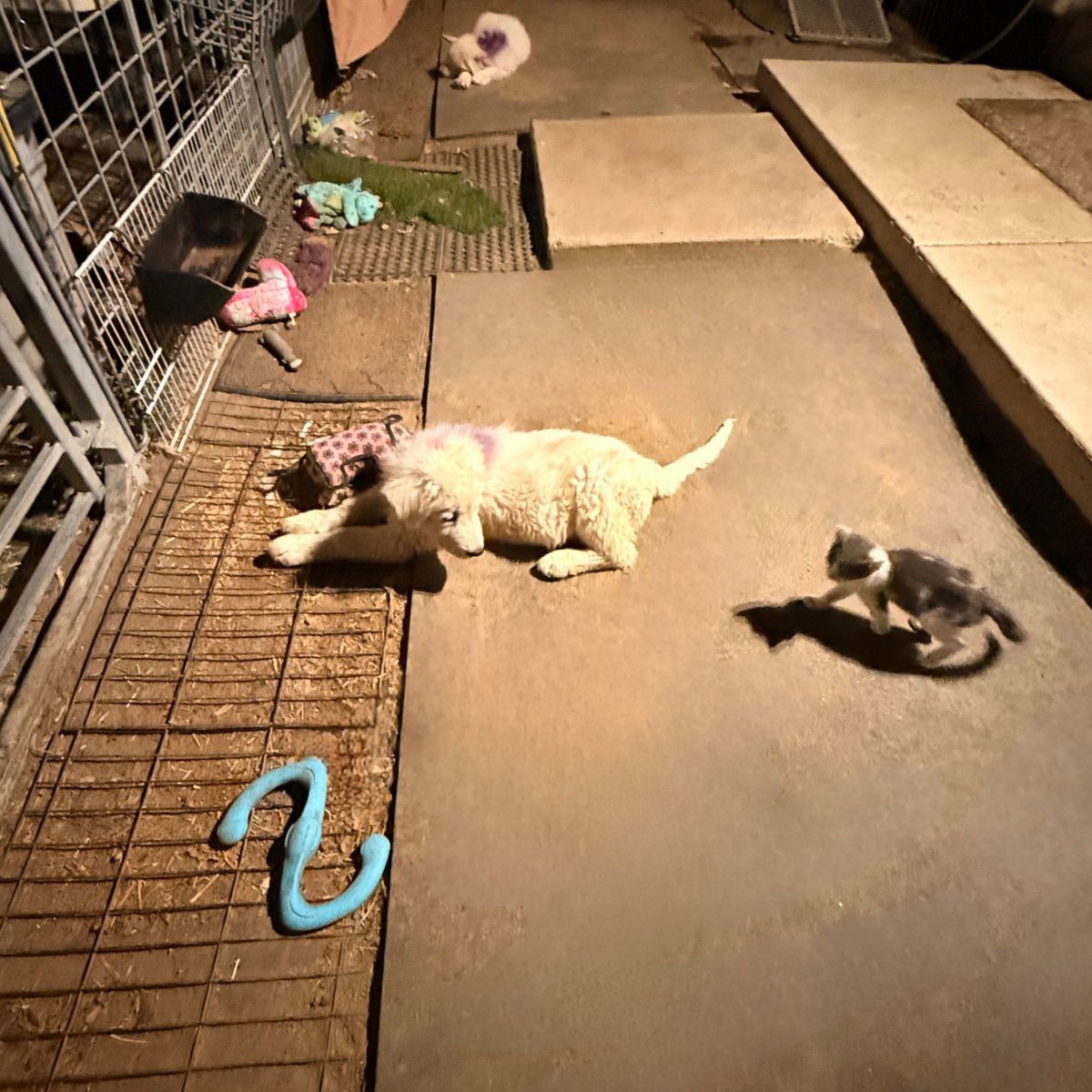
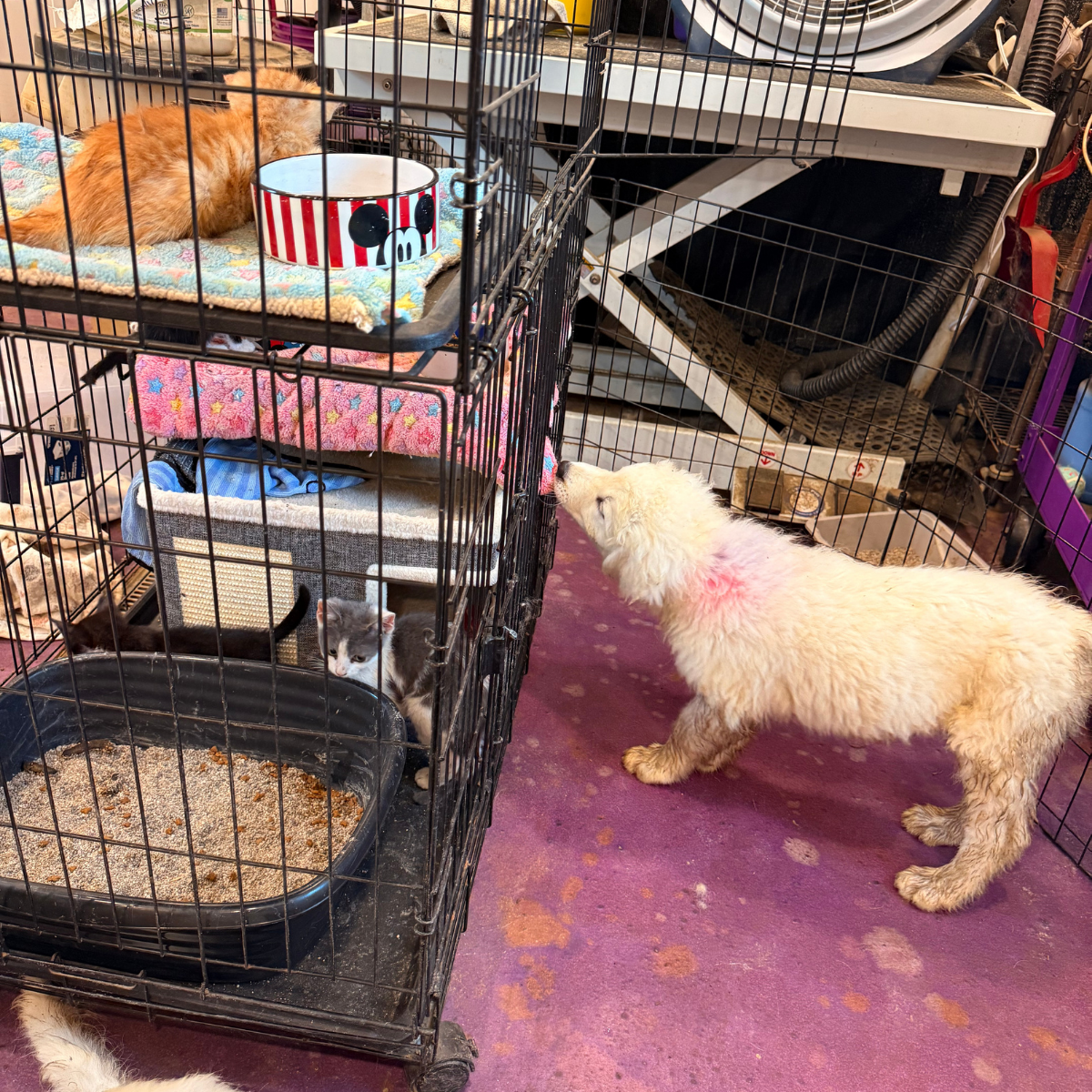
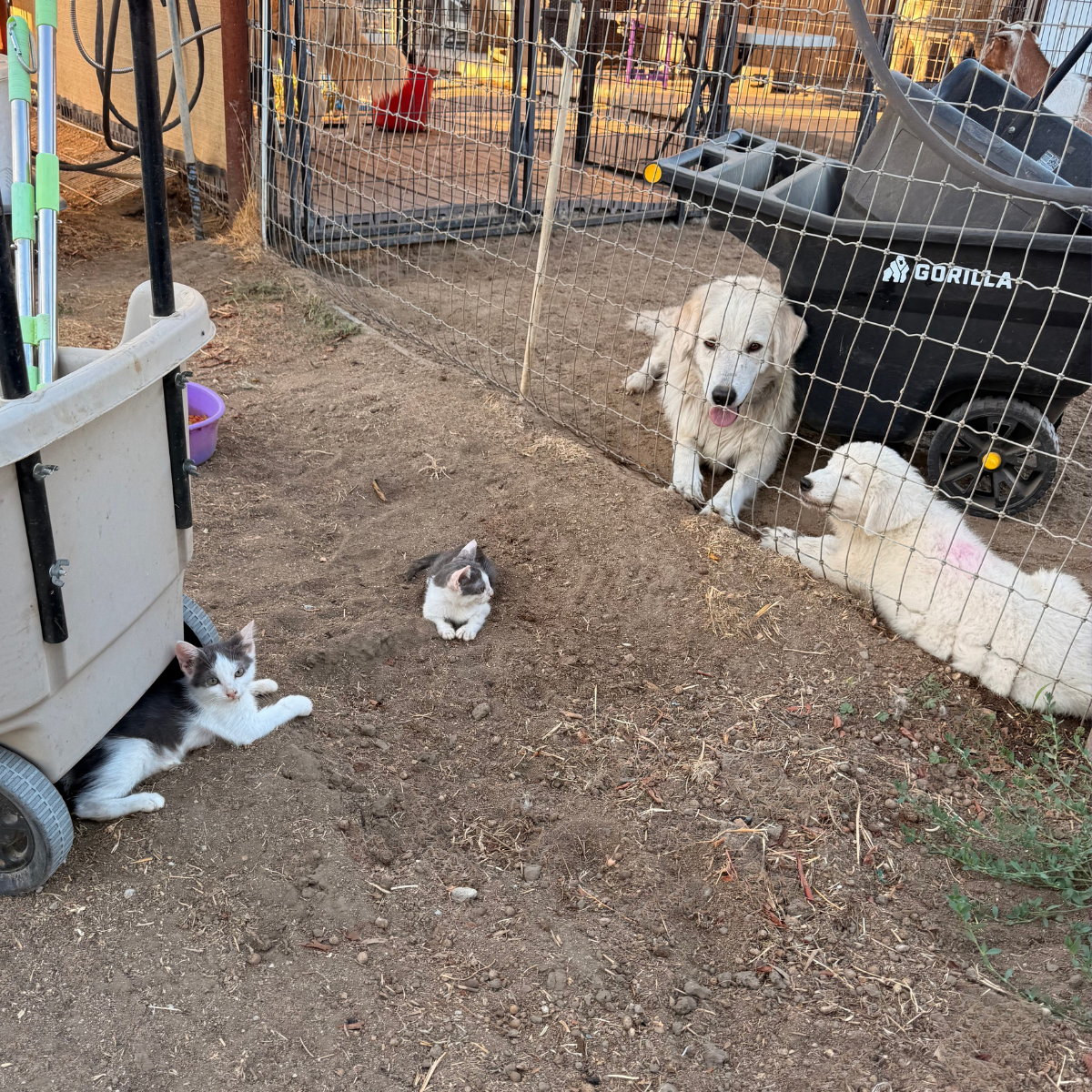
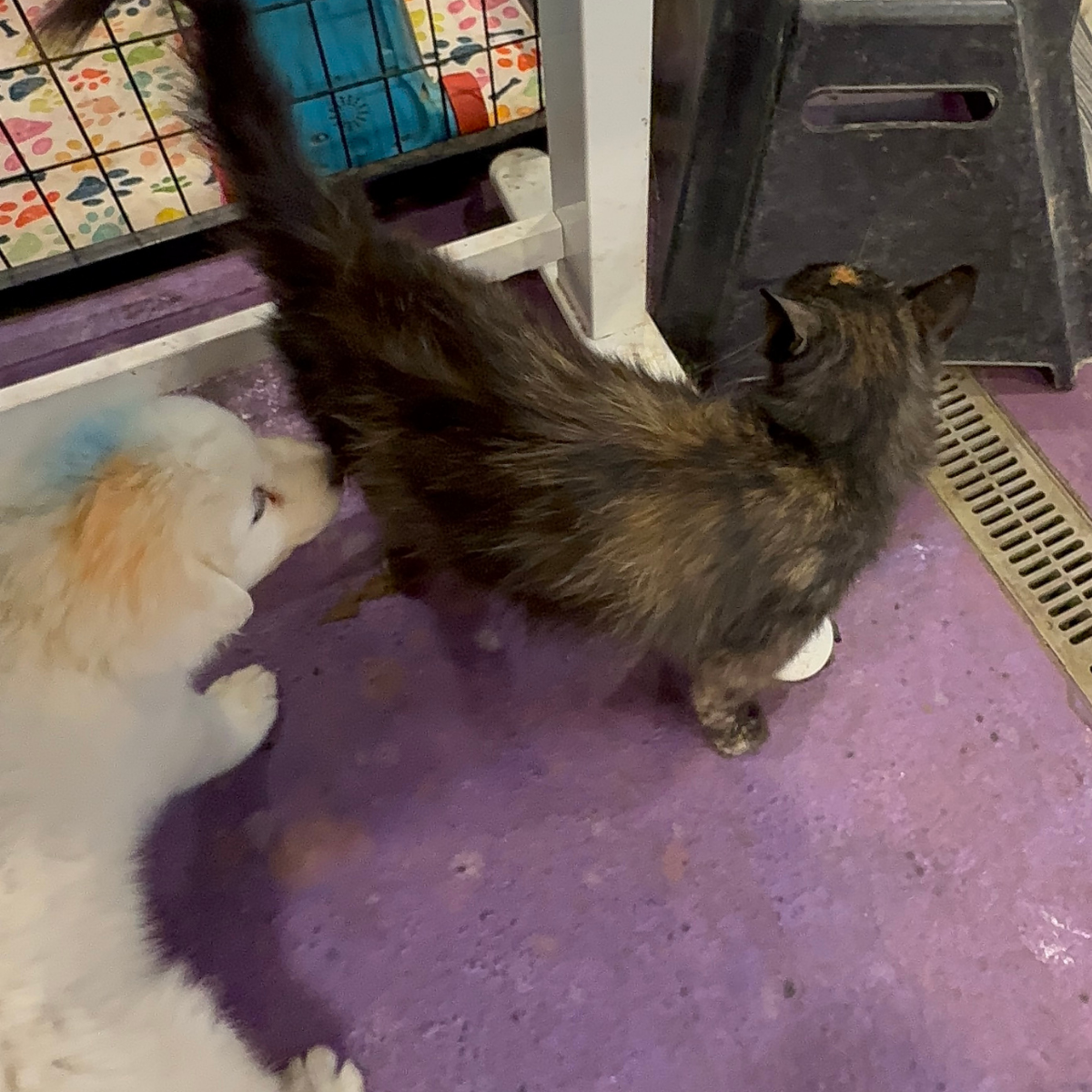
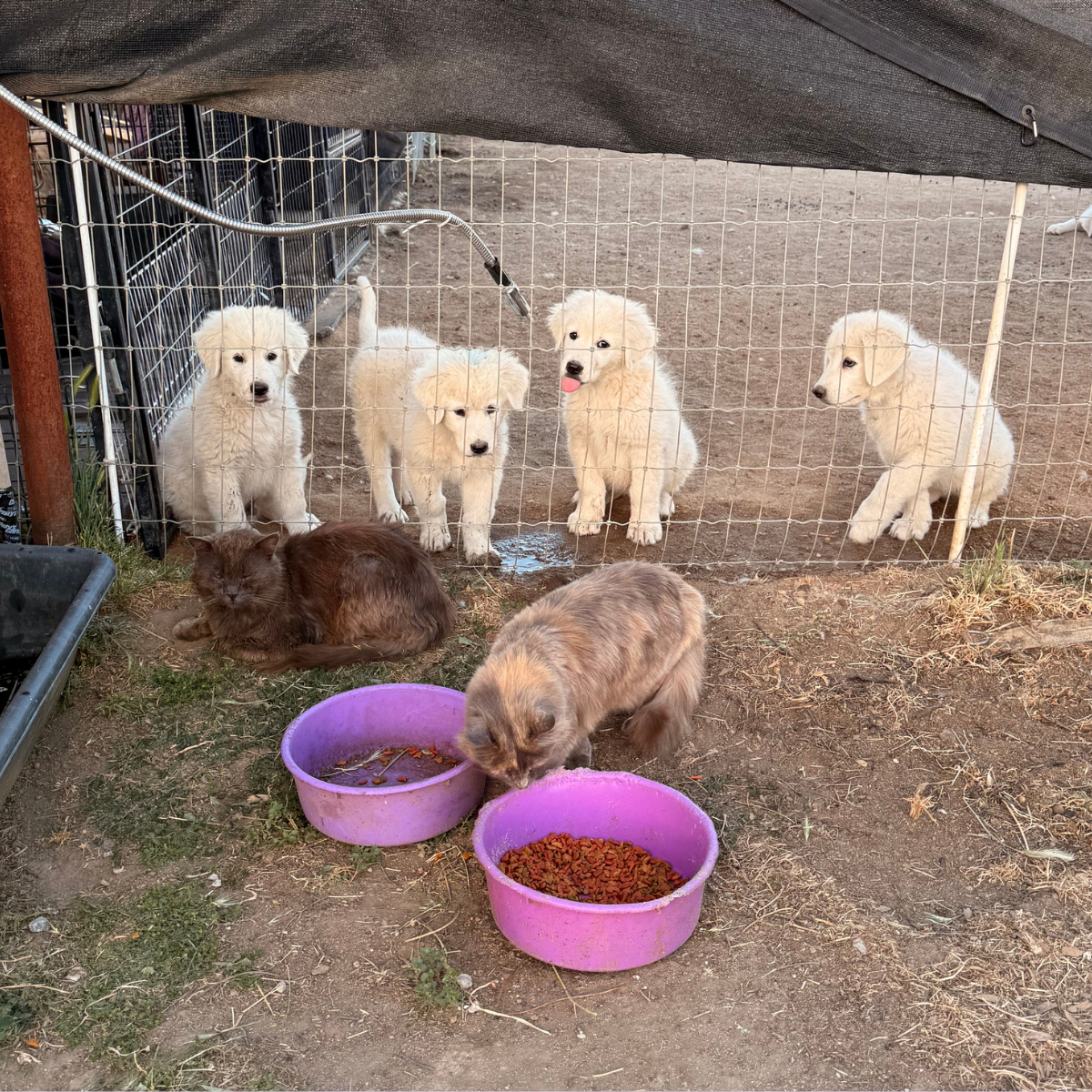
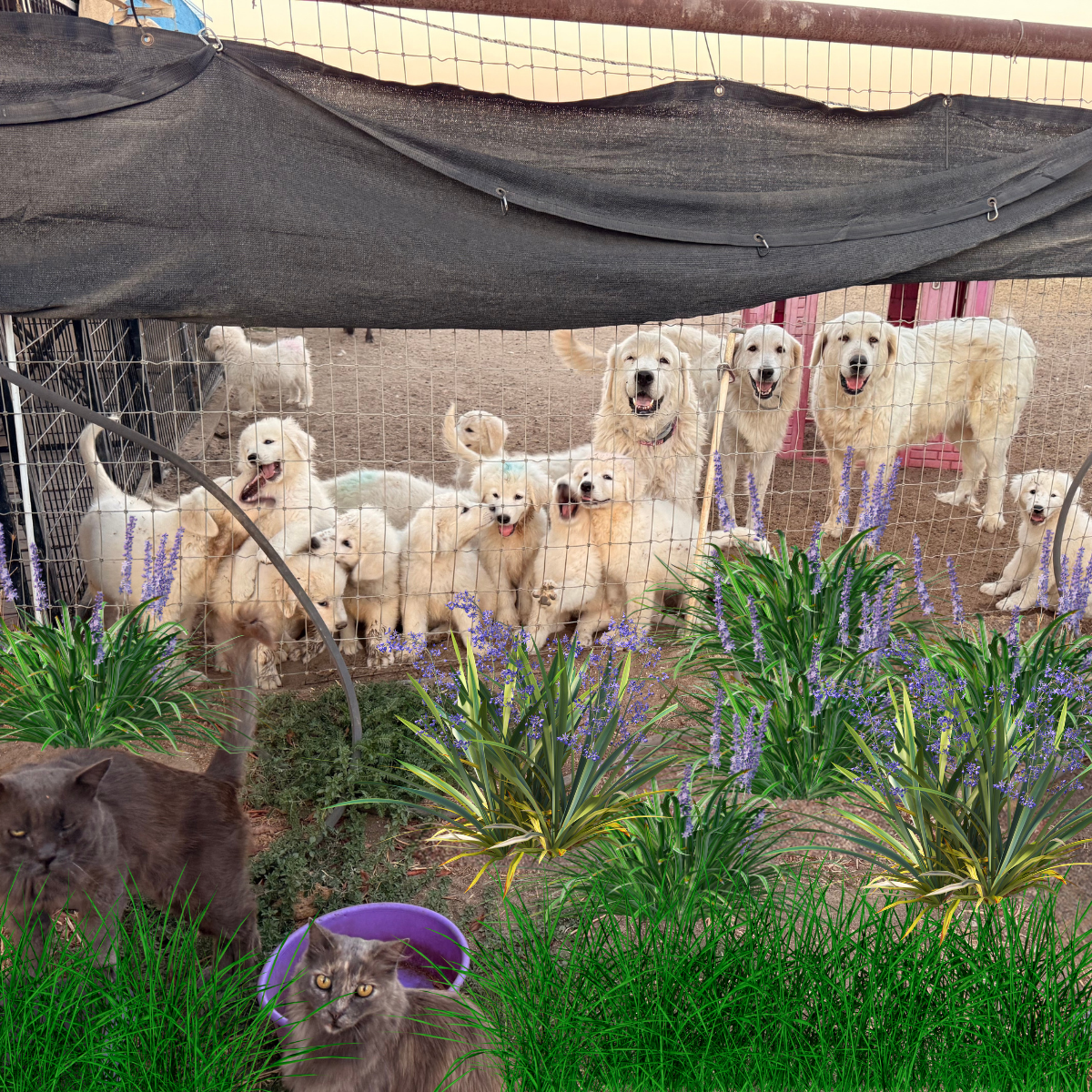
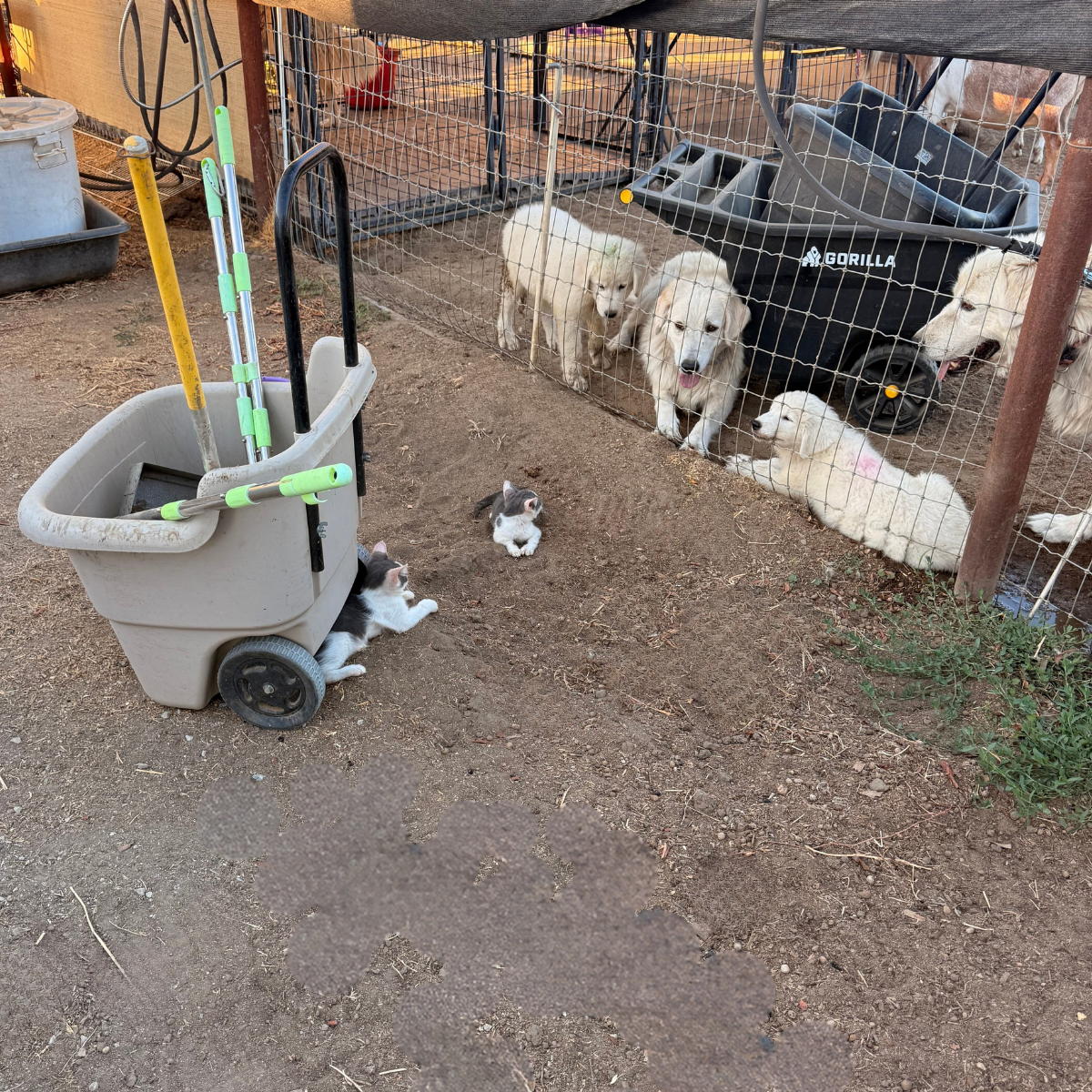
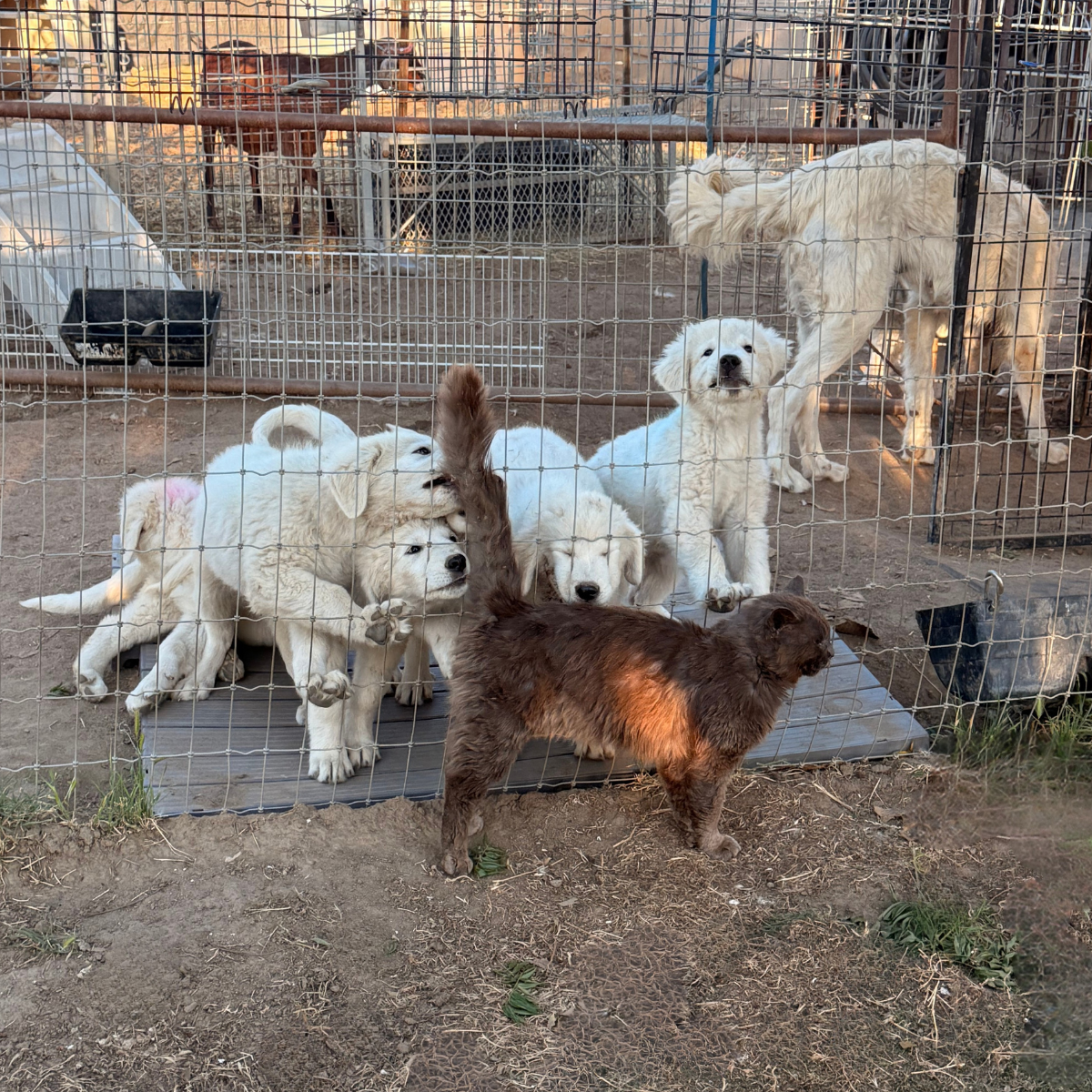
Here's something most LGD breeders don't talk about: cat socialization. And it matters far more than most people realize.
Cats are a fixture on working farms. They control rodents, they go where they want, and they do not take kindly to being chased by a 100+ pound livestock guardian dog who was never taught proper manners with cats. A Maremma who hasn't been properly introduced to cats is a liability on any farm that has them — and most farms do.
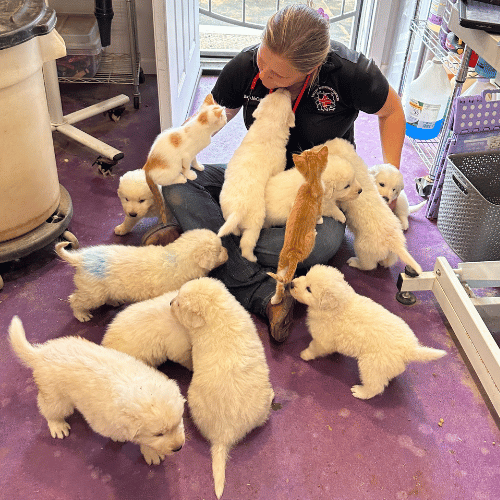
Our puppies have access to cats from early in the socialization period. We have a dedicated cat feeding station, and our barn cats visit the puppy area regularly. Puppies learn quickly that cats are part of the farm community — not something to react to or chase, just another neighbor going about their day.
It sounds simple. The results are significant.
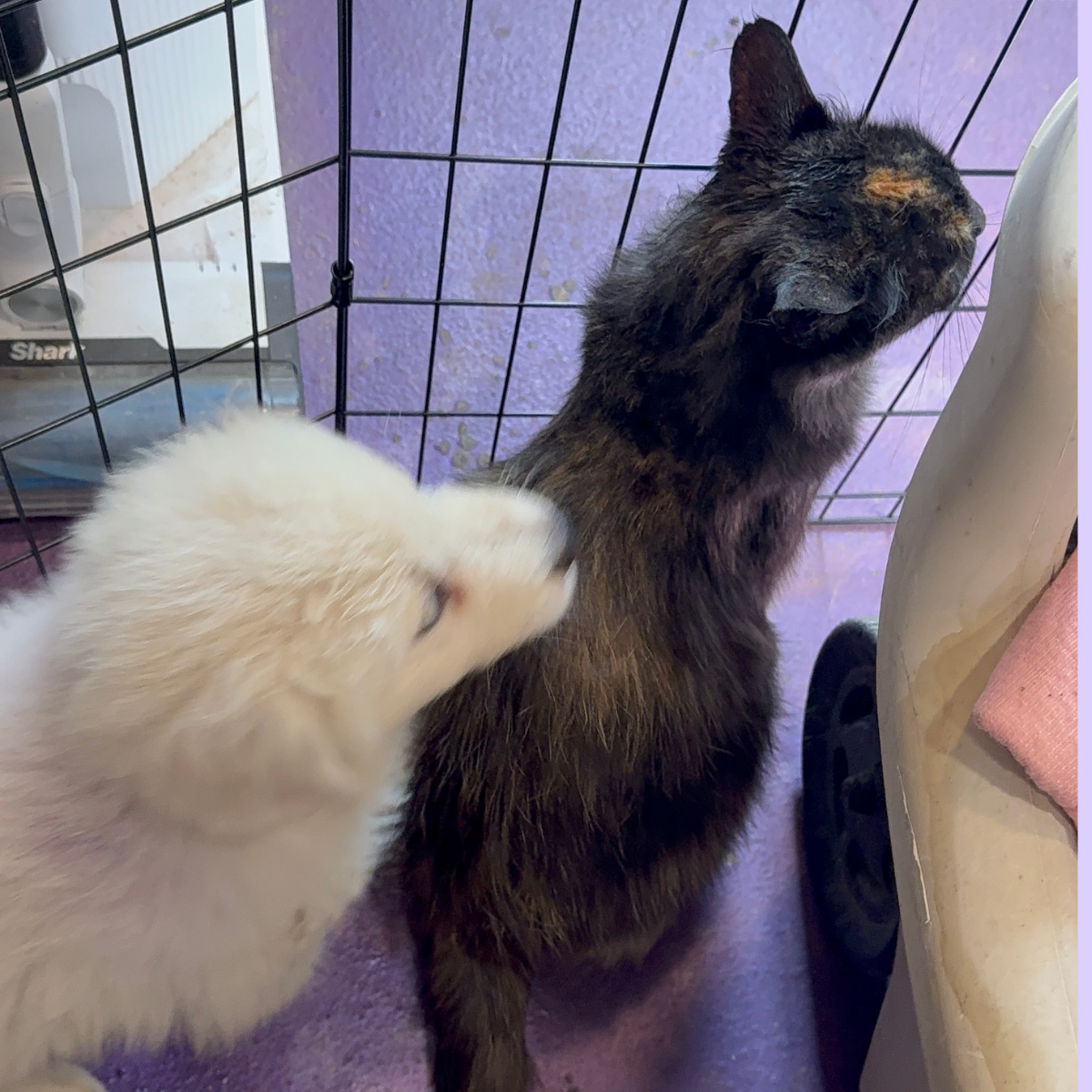
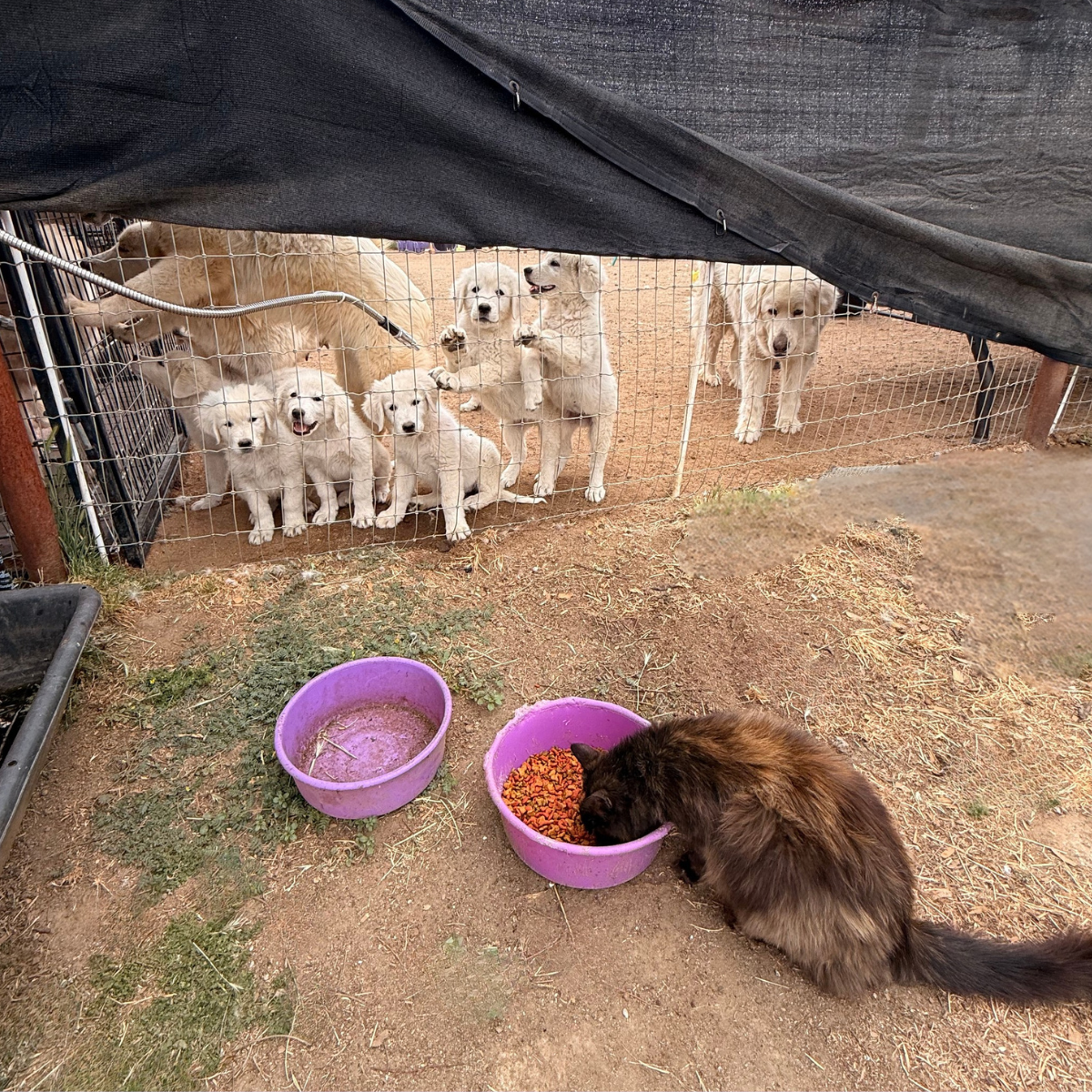
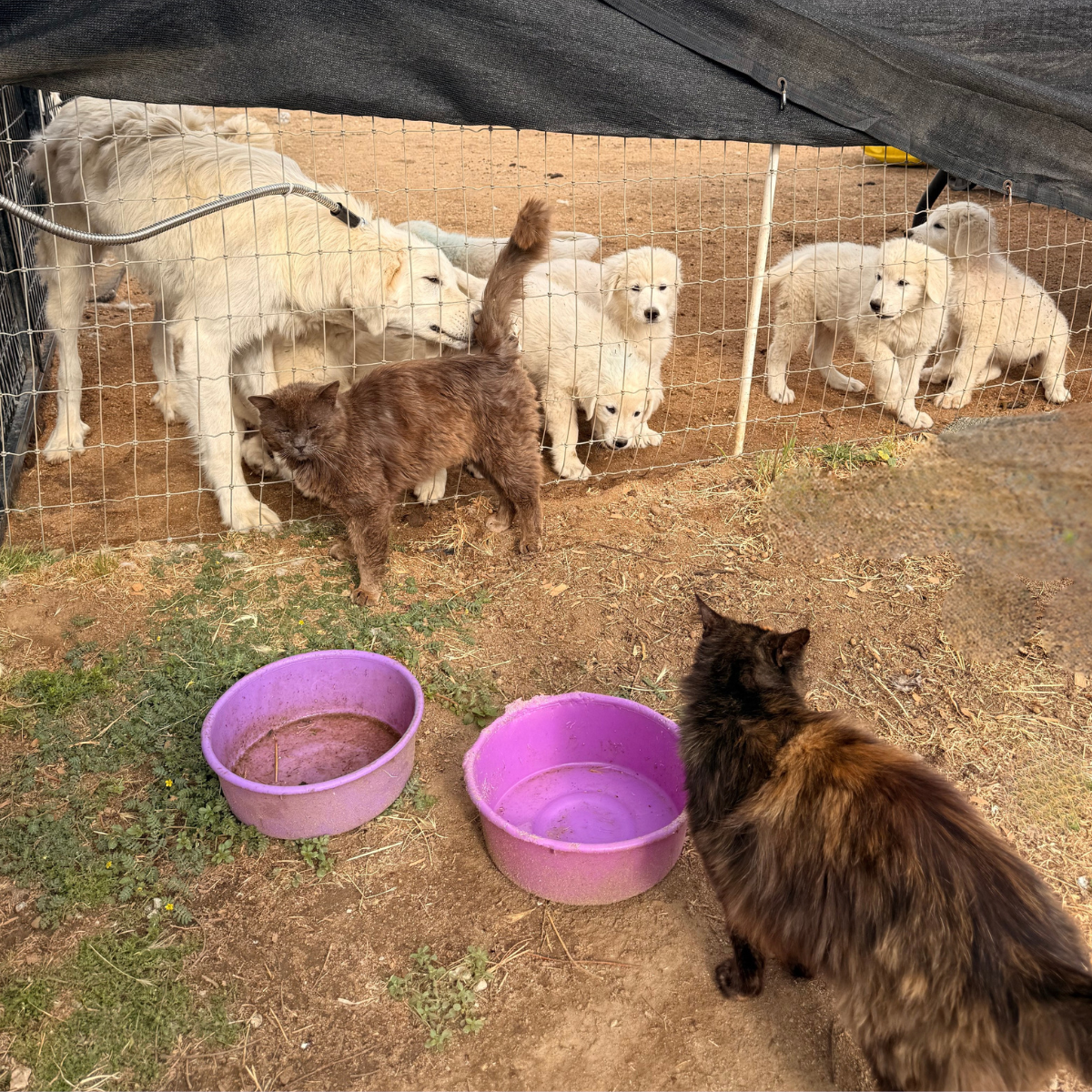
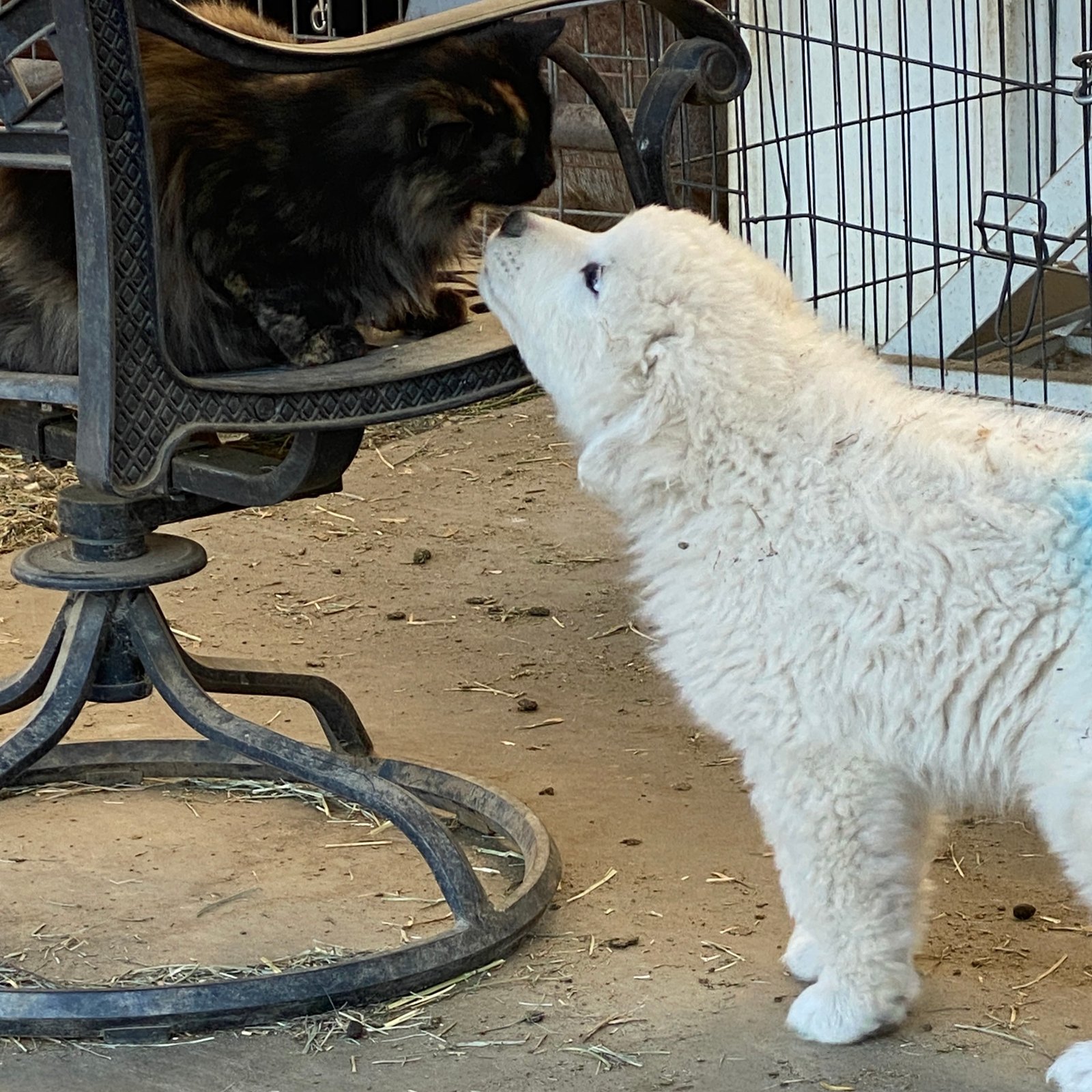
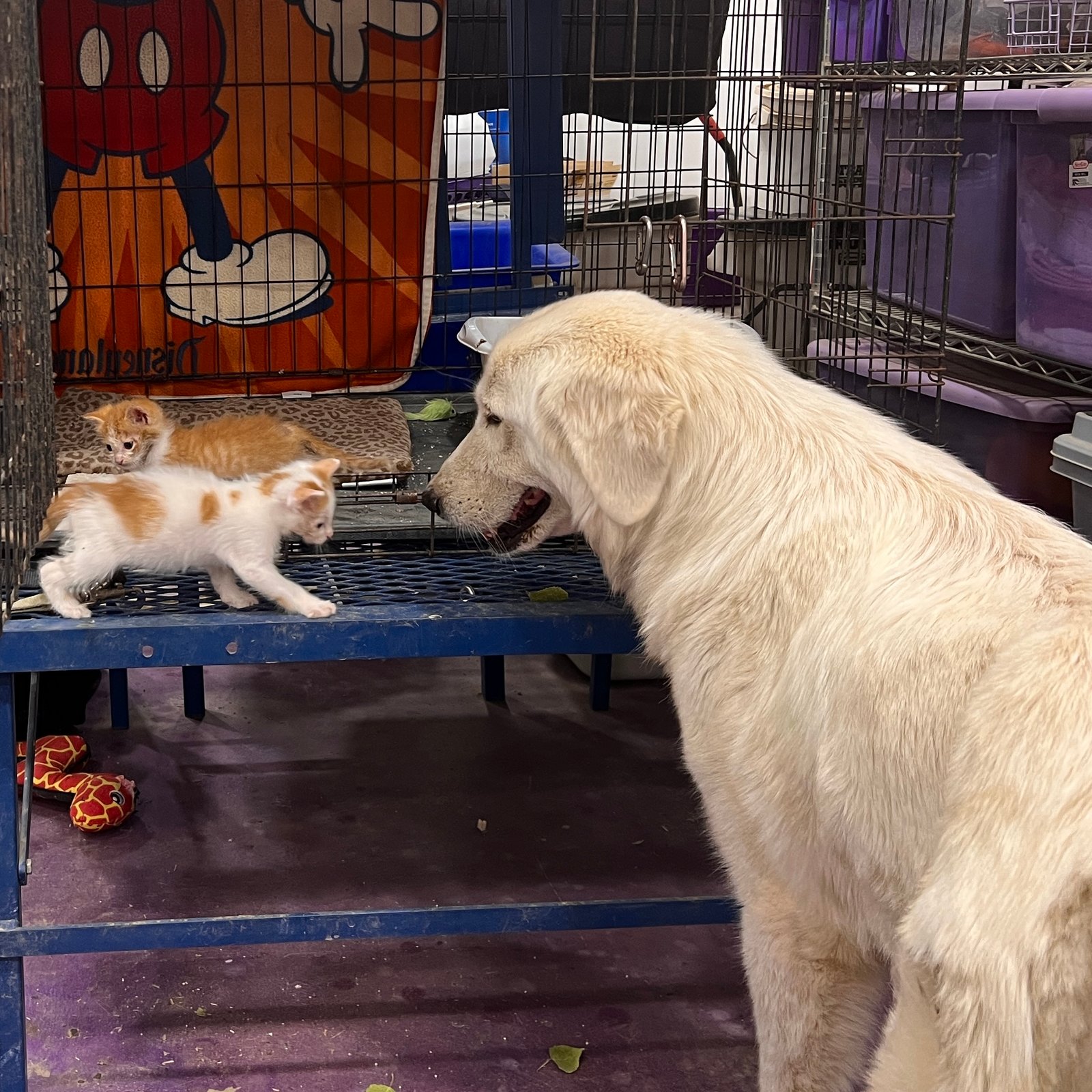
Want to understand why cat socialization is one of the most overlooked pieces of raising a great farm dog? Read our full post. Button text: Why Cat Socialization Matters for LGDs
→ Link: [cat socialization blog post URL — add when published]
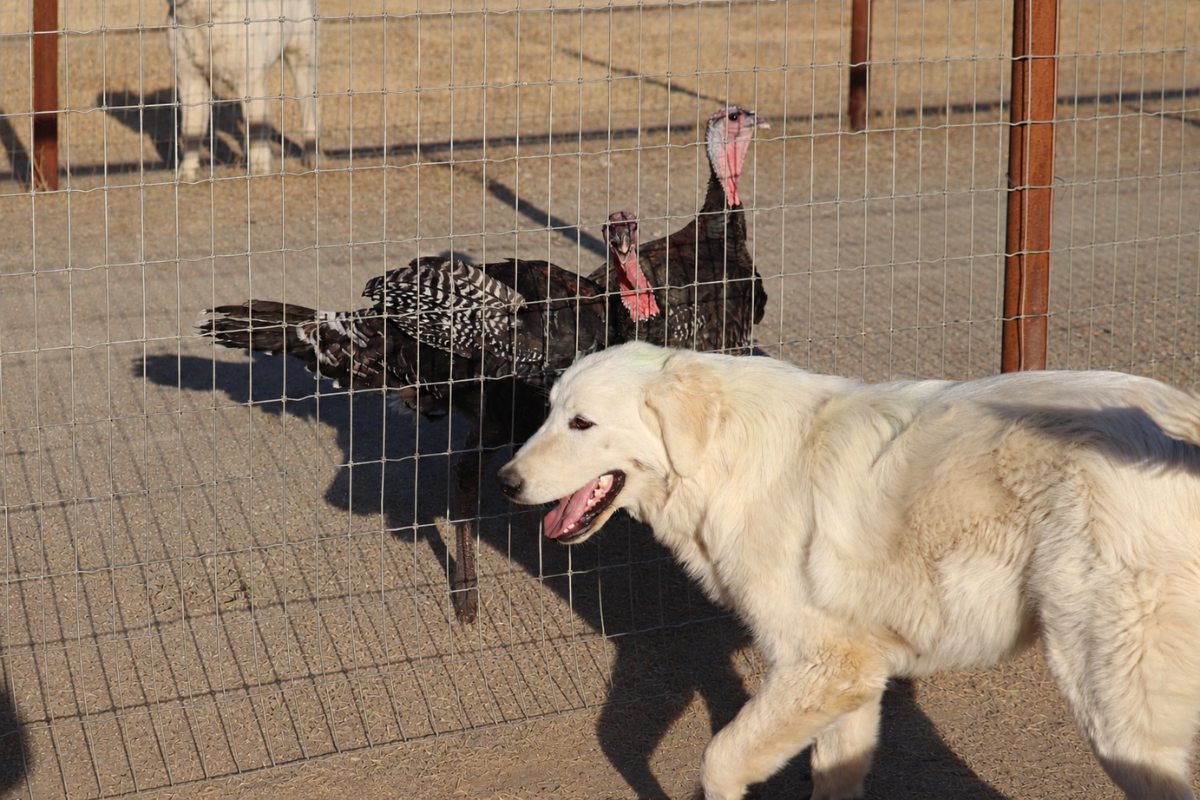
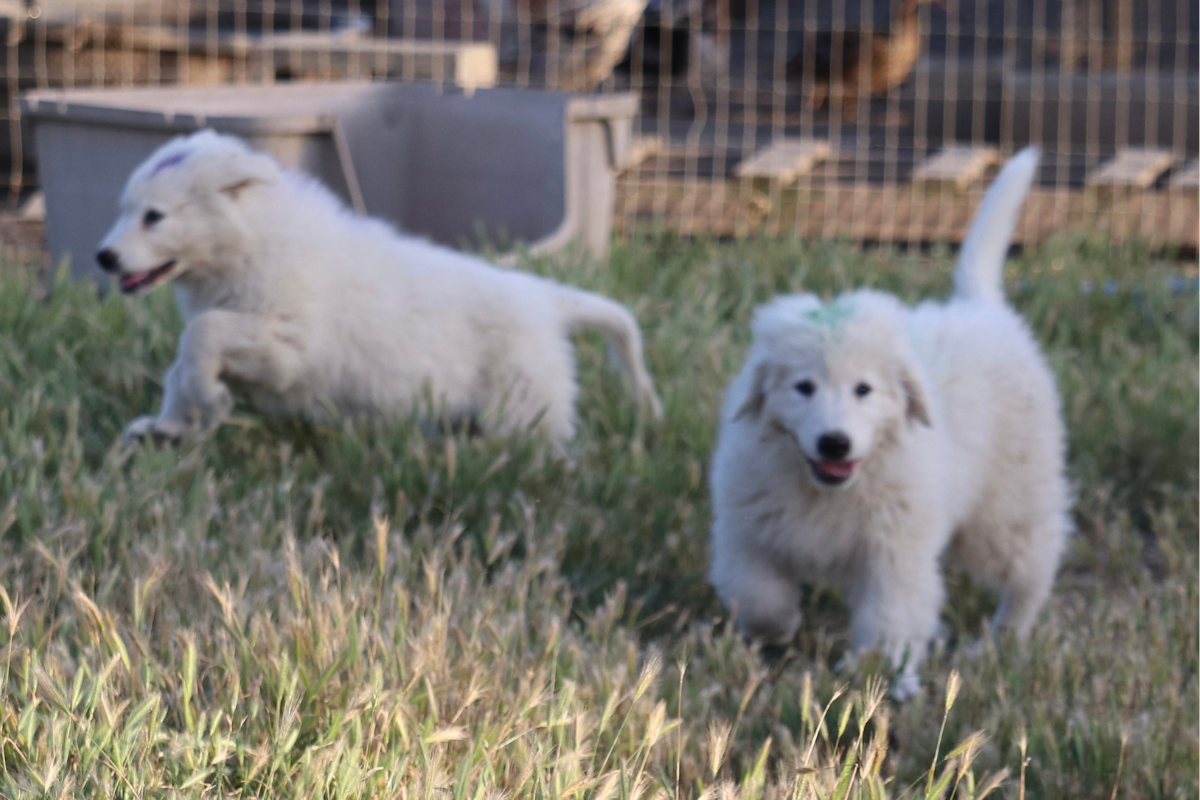
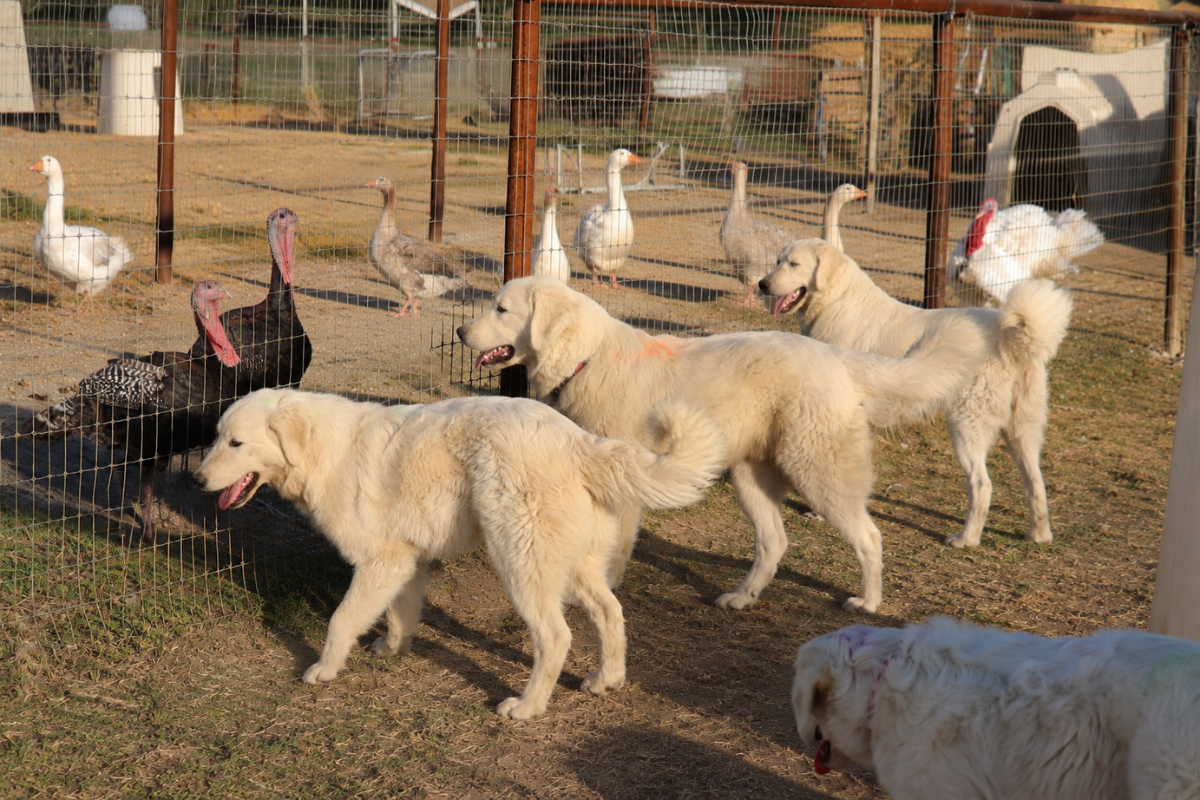
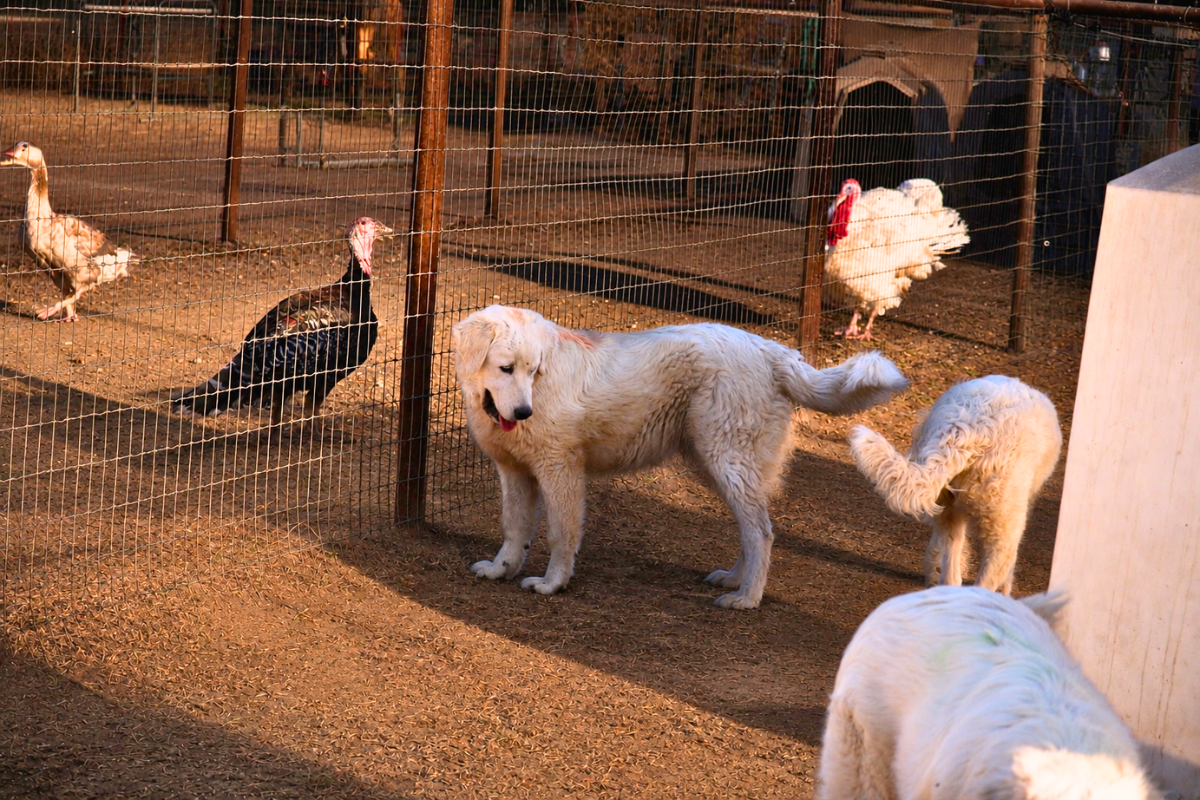
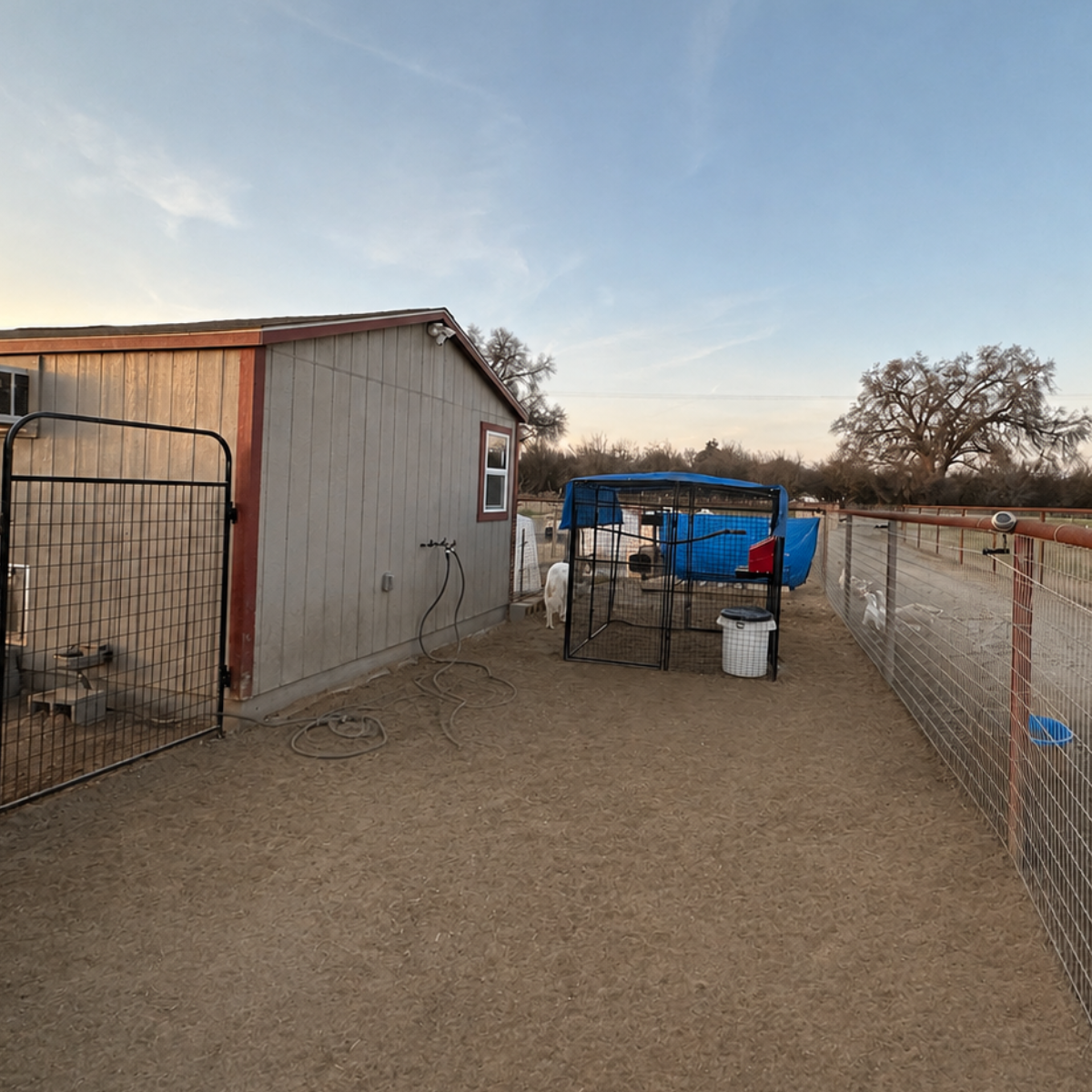
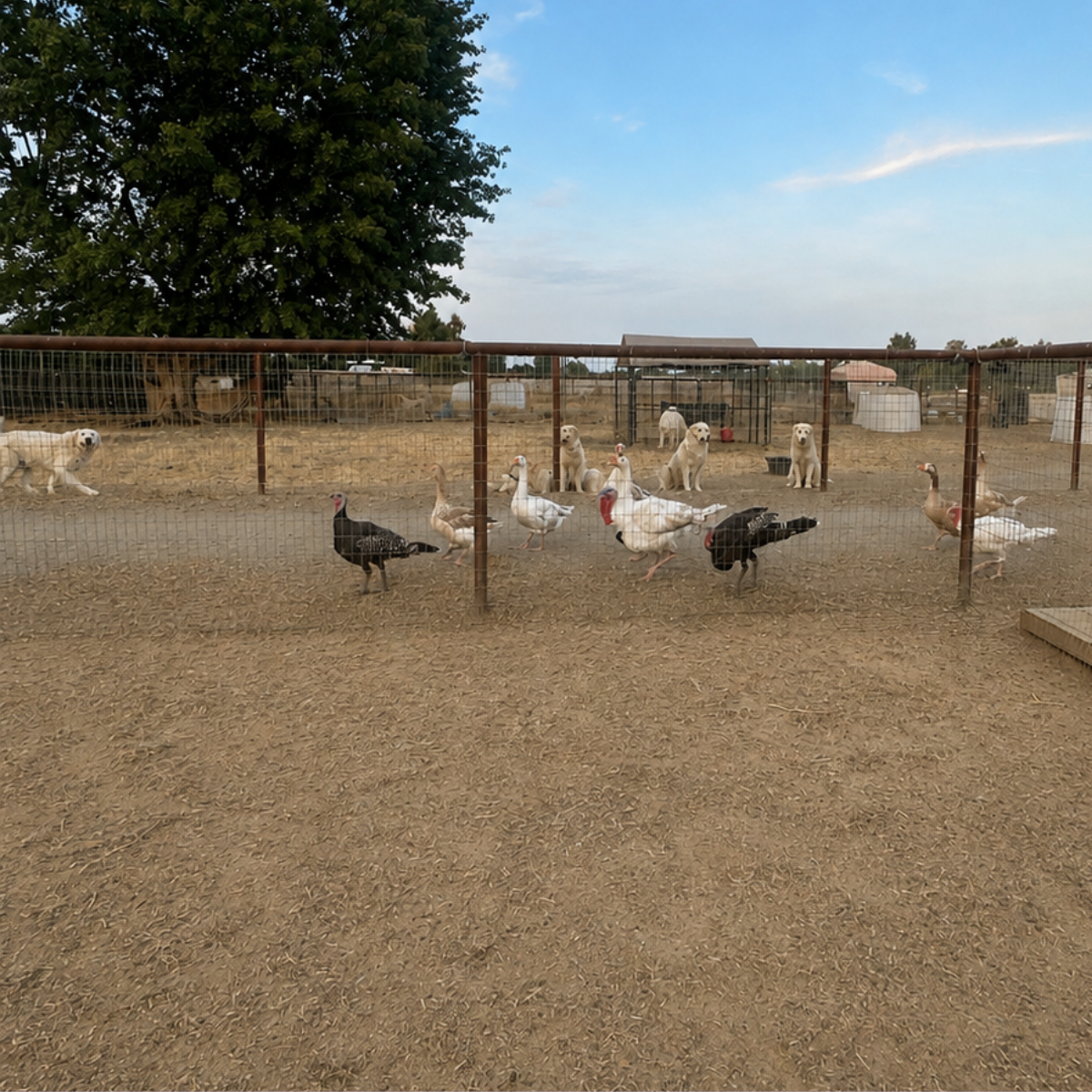
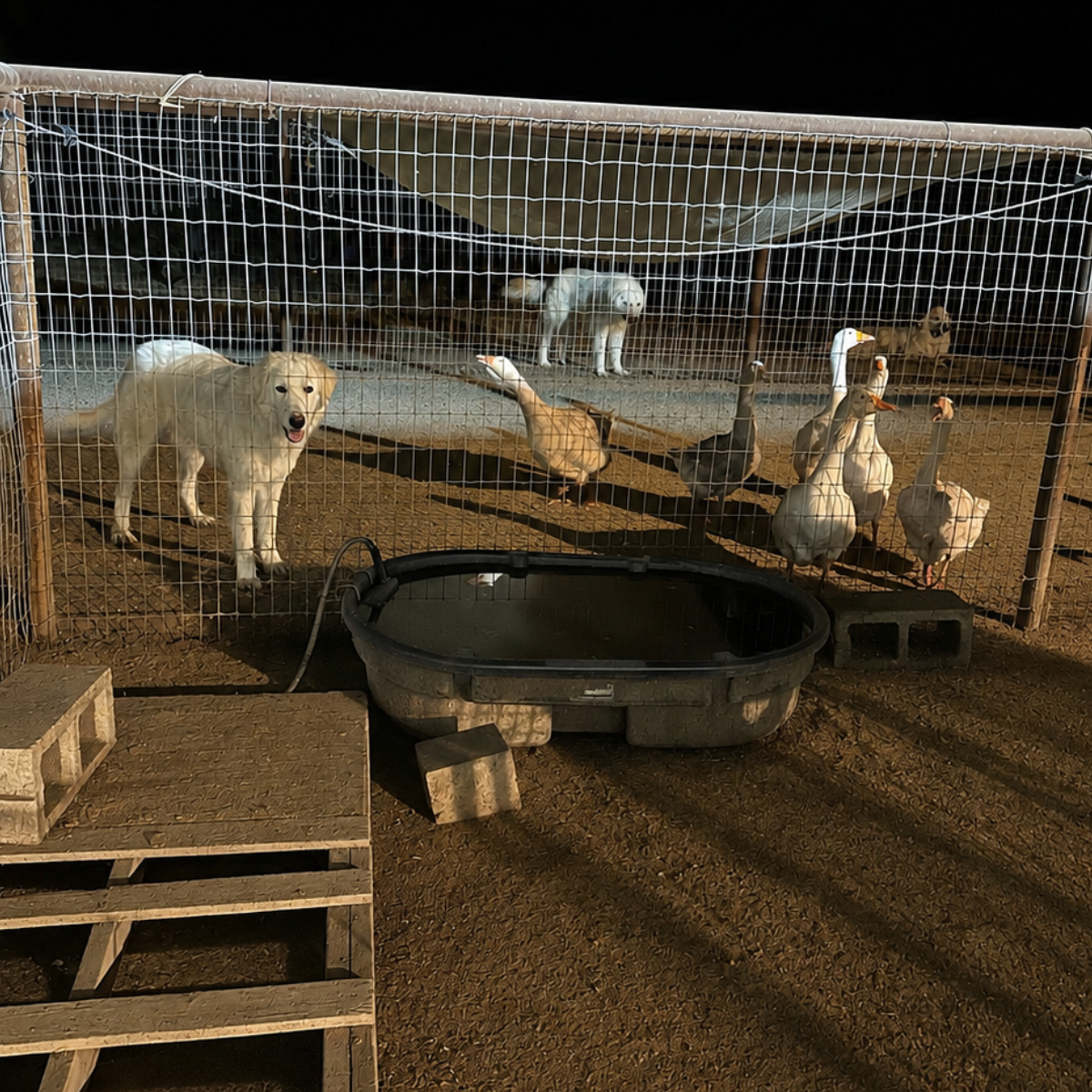
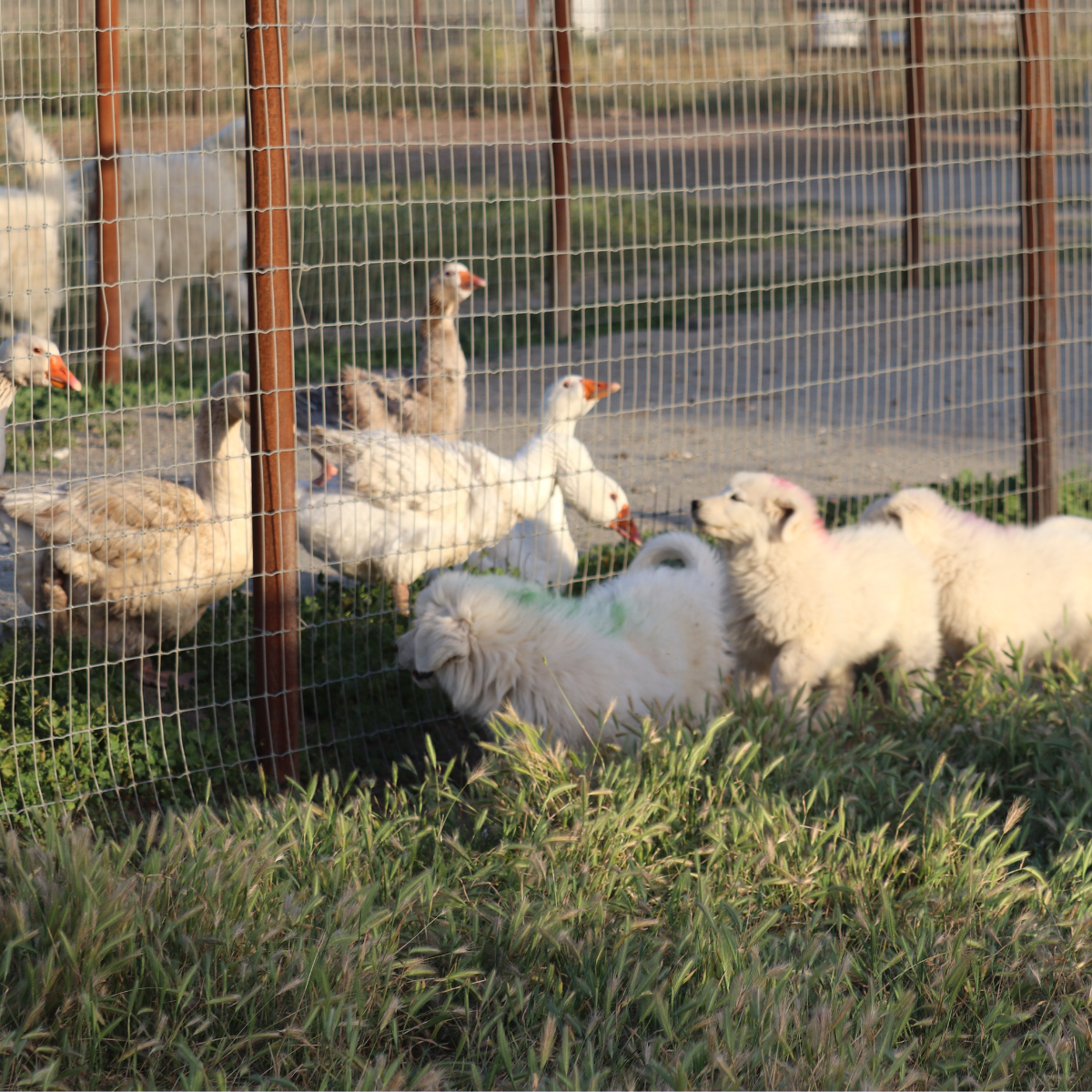
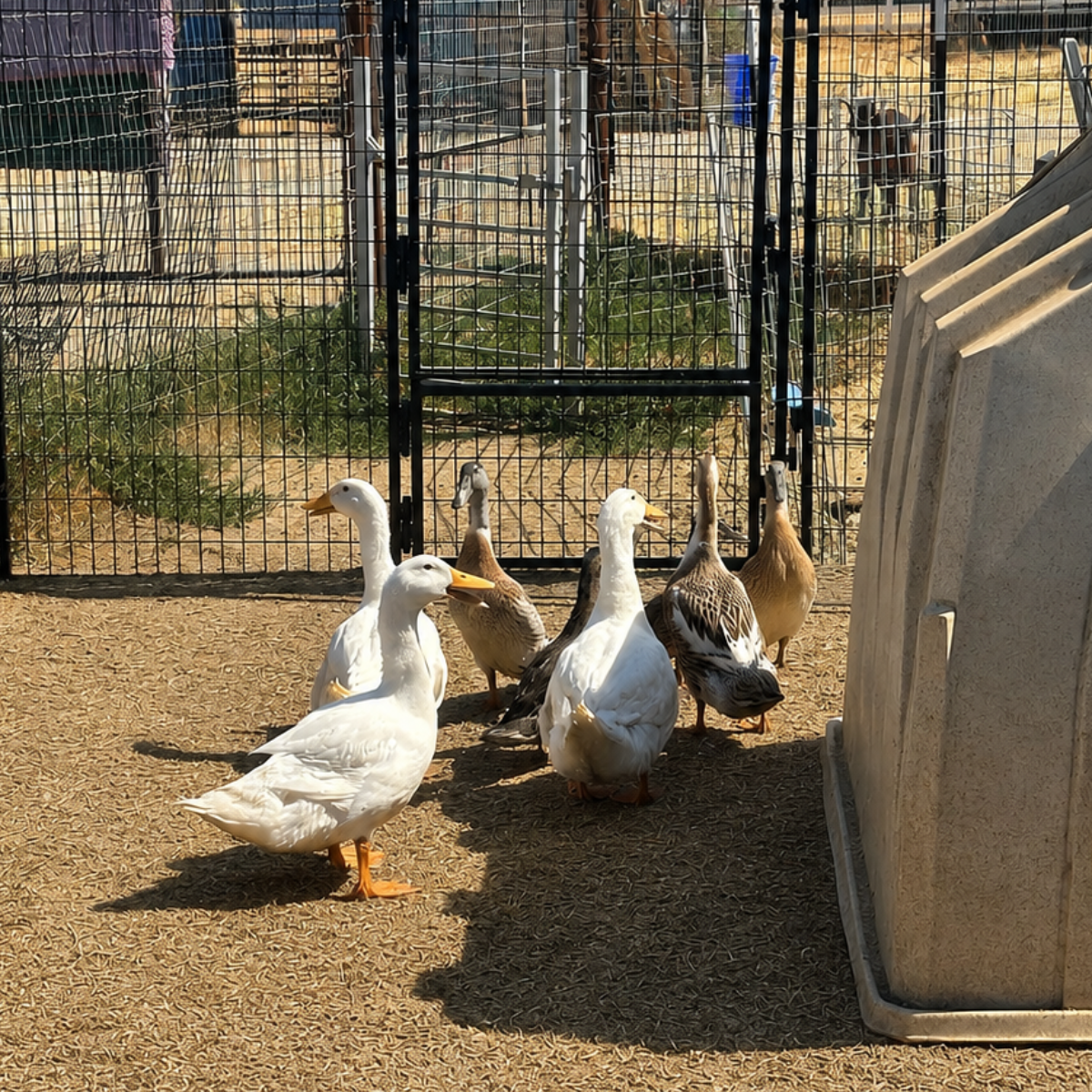
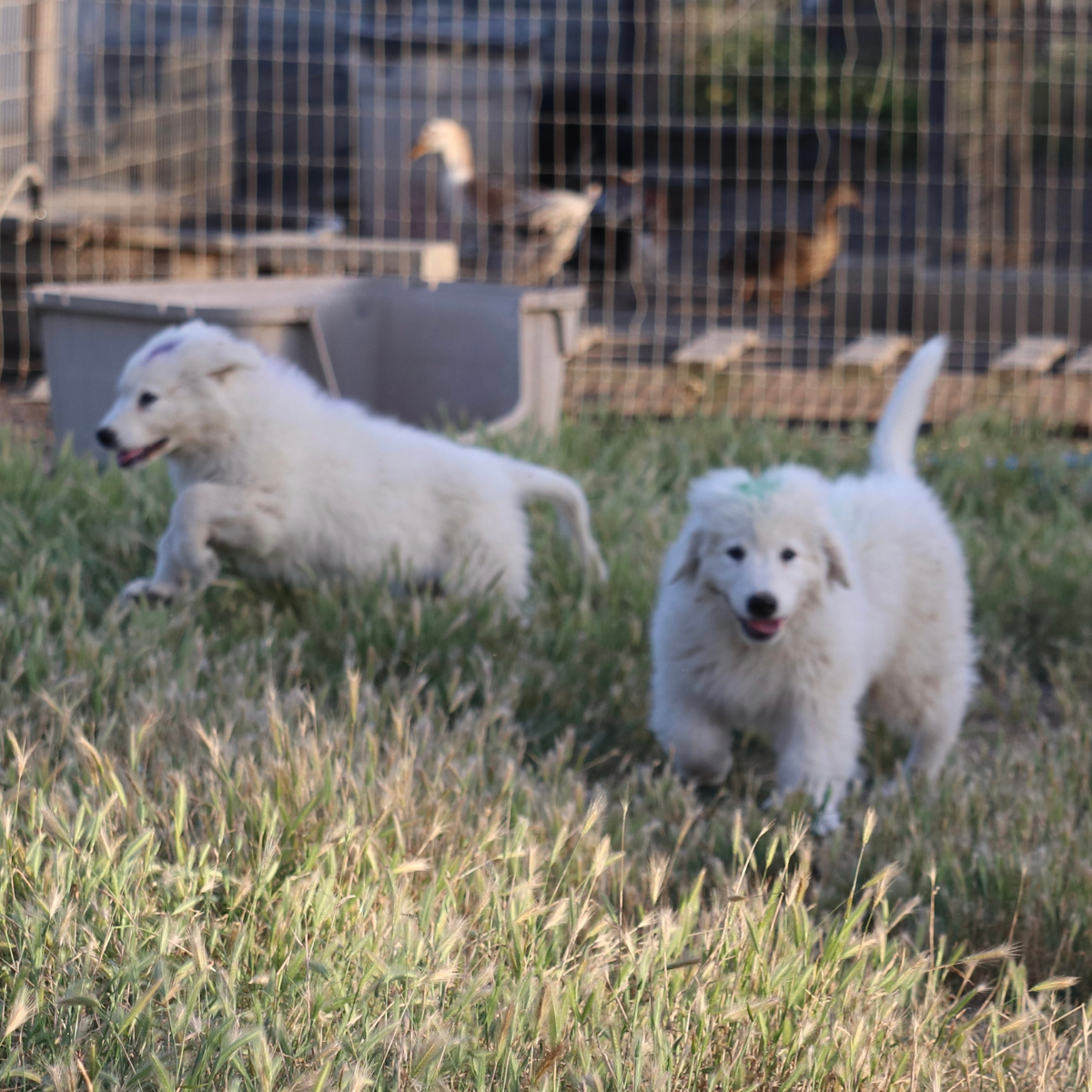
The Bird Run — Poultry, Mixed Species, and a 200+ Foot Classroom
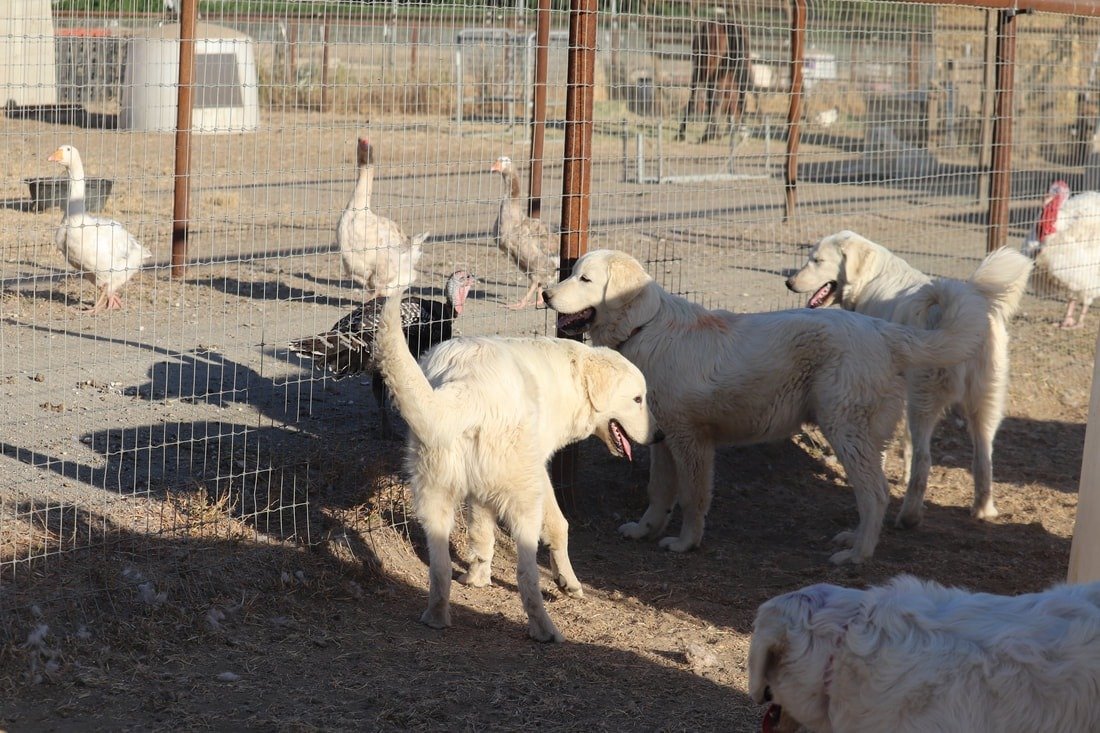
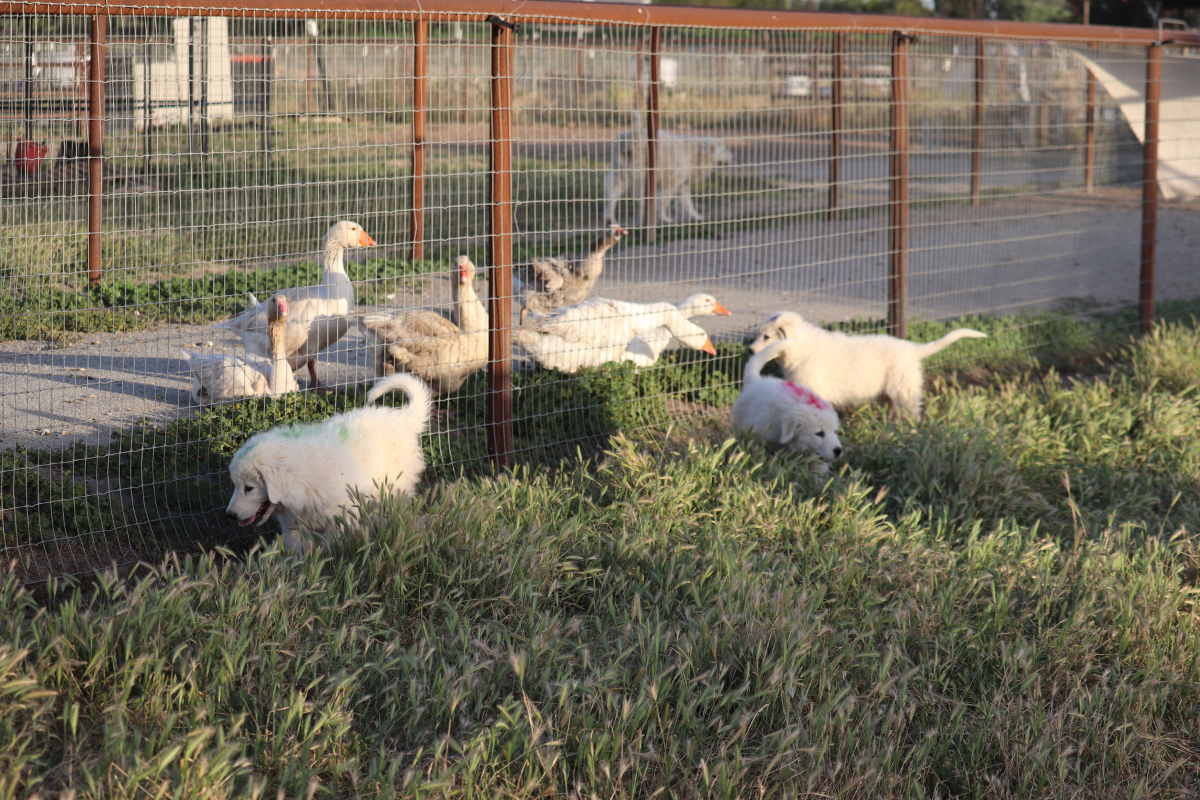
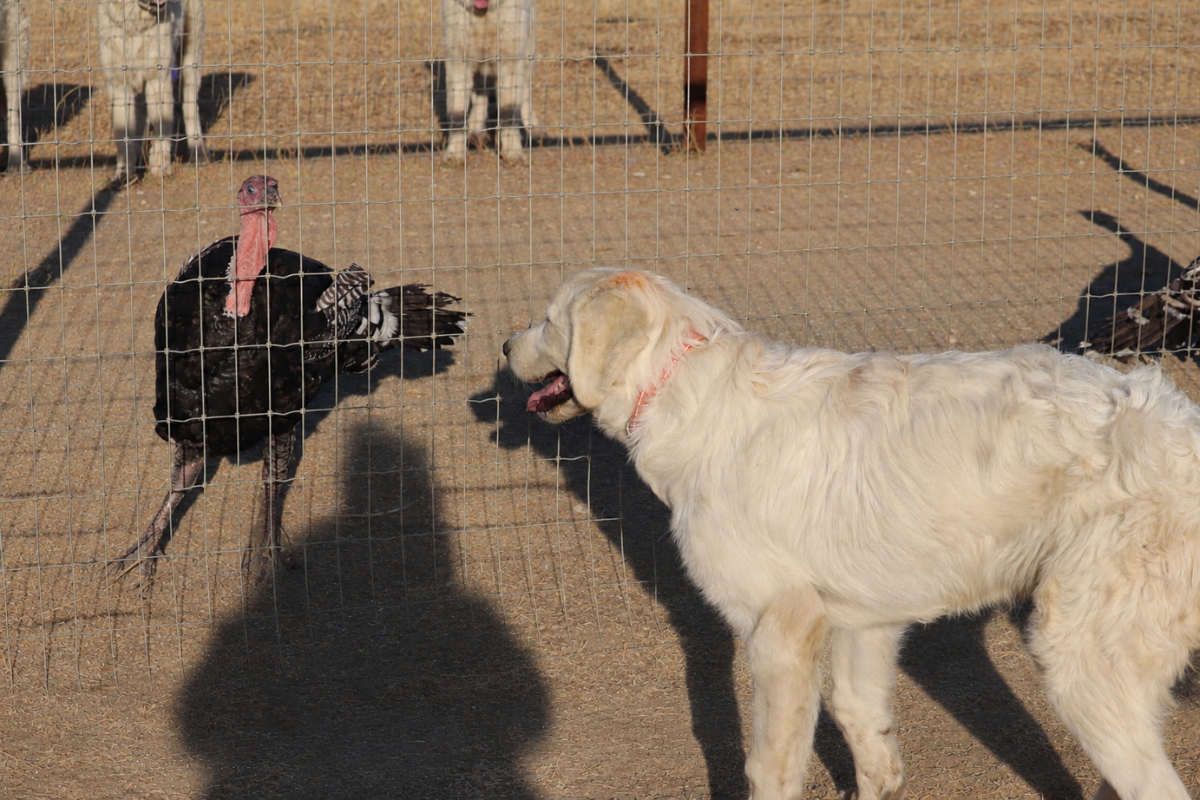
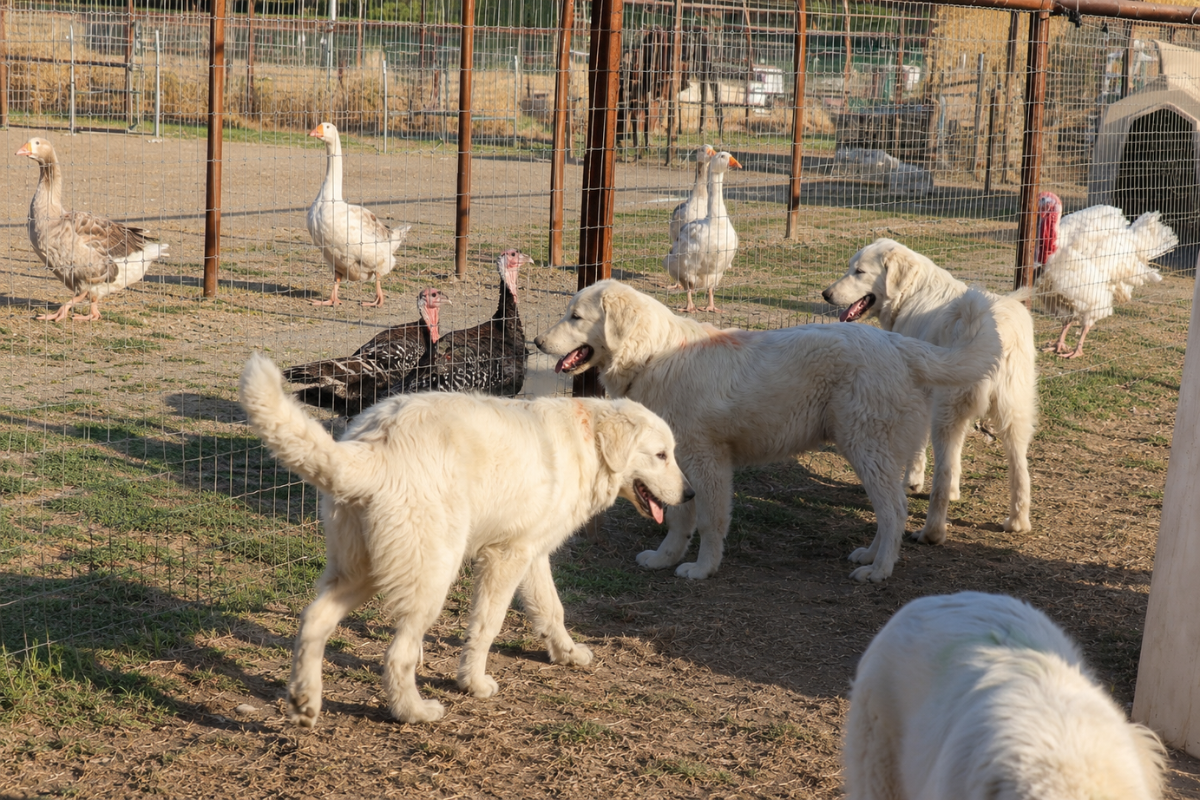
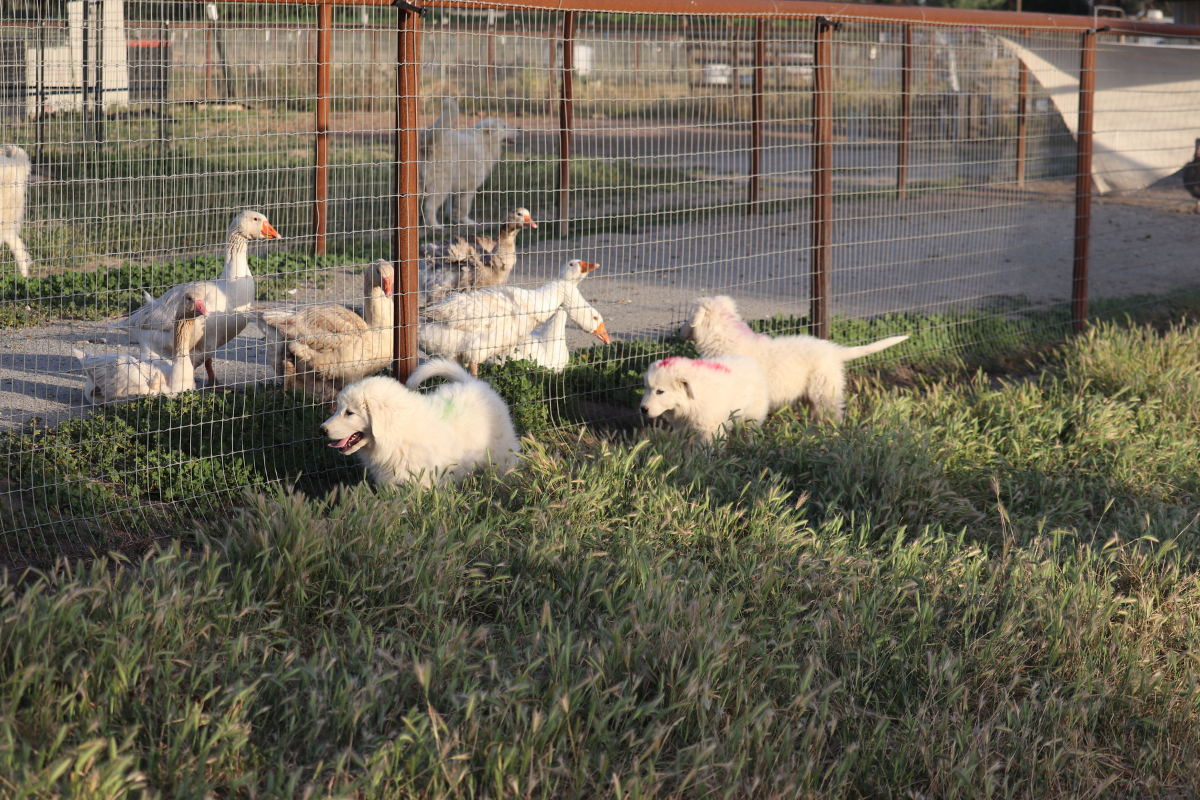
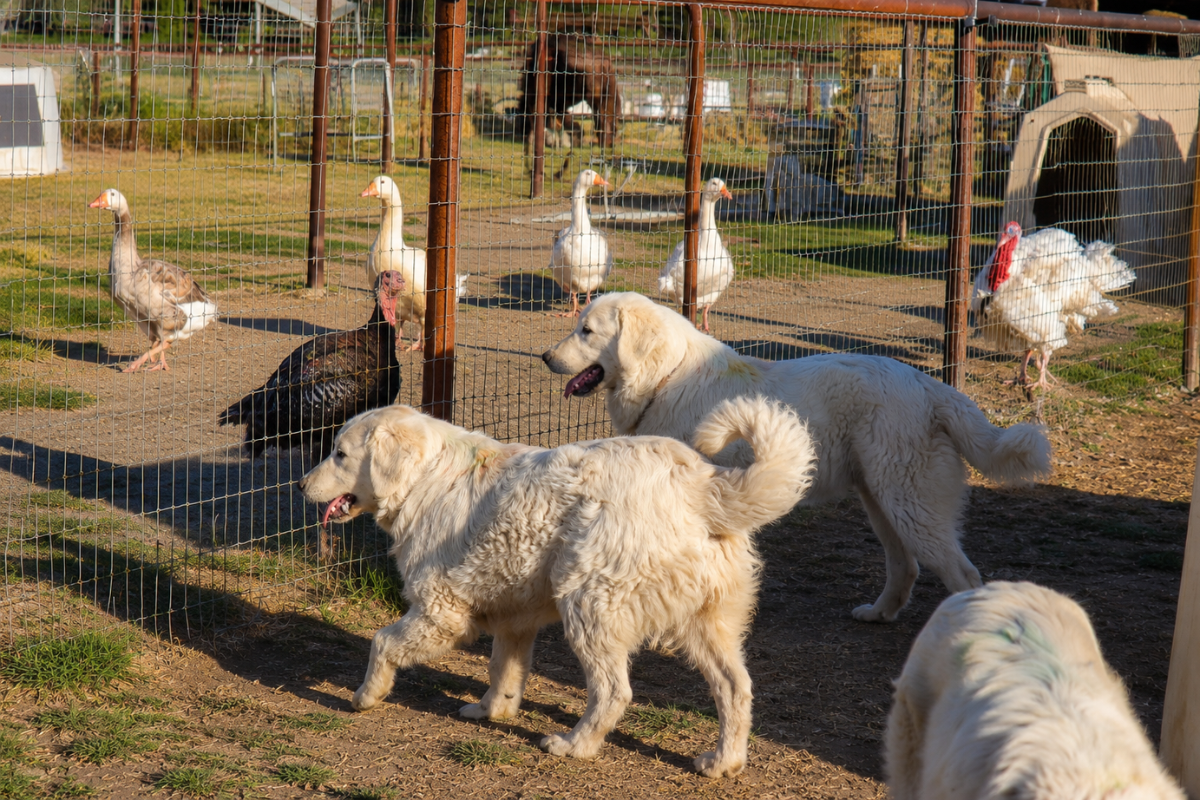
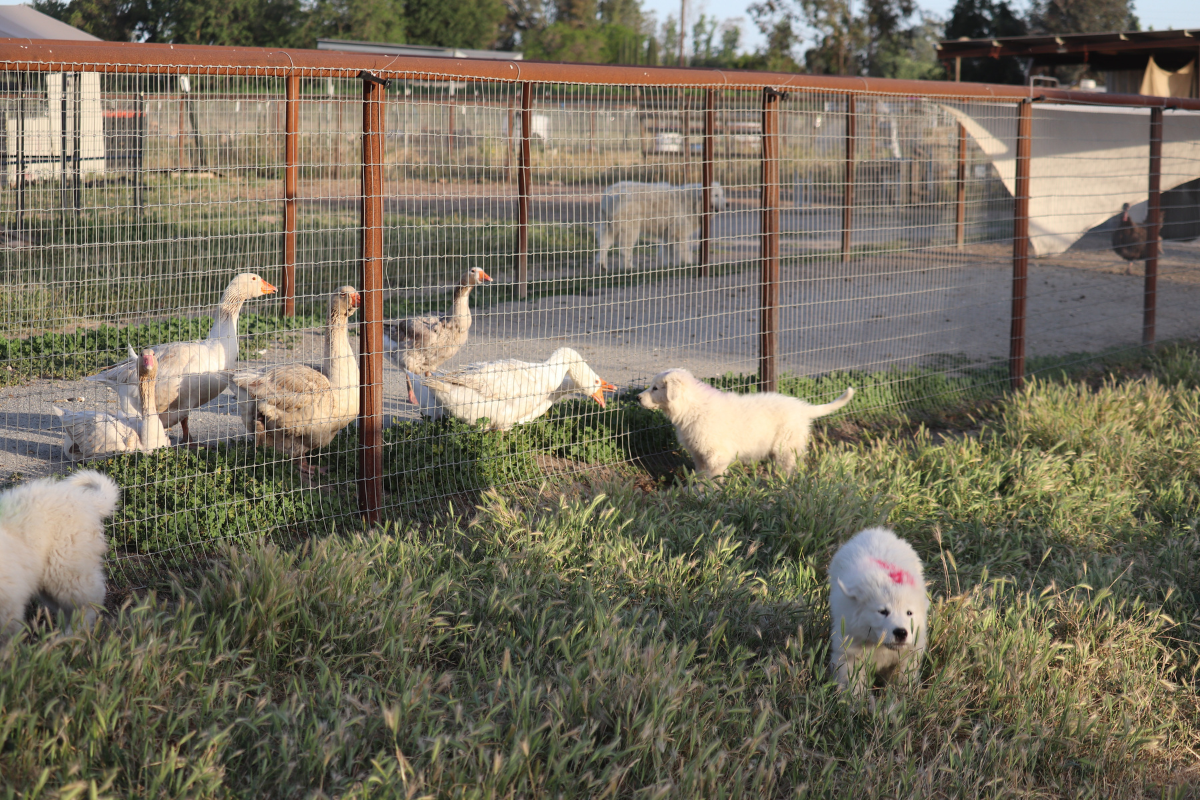
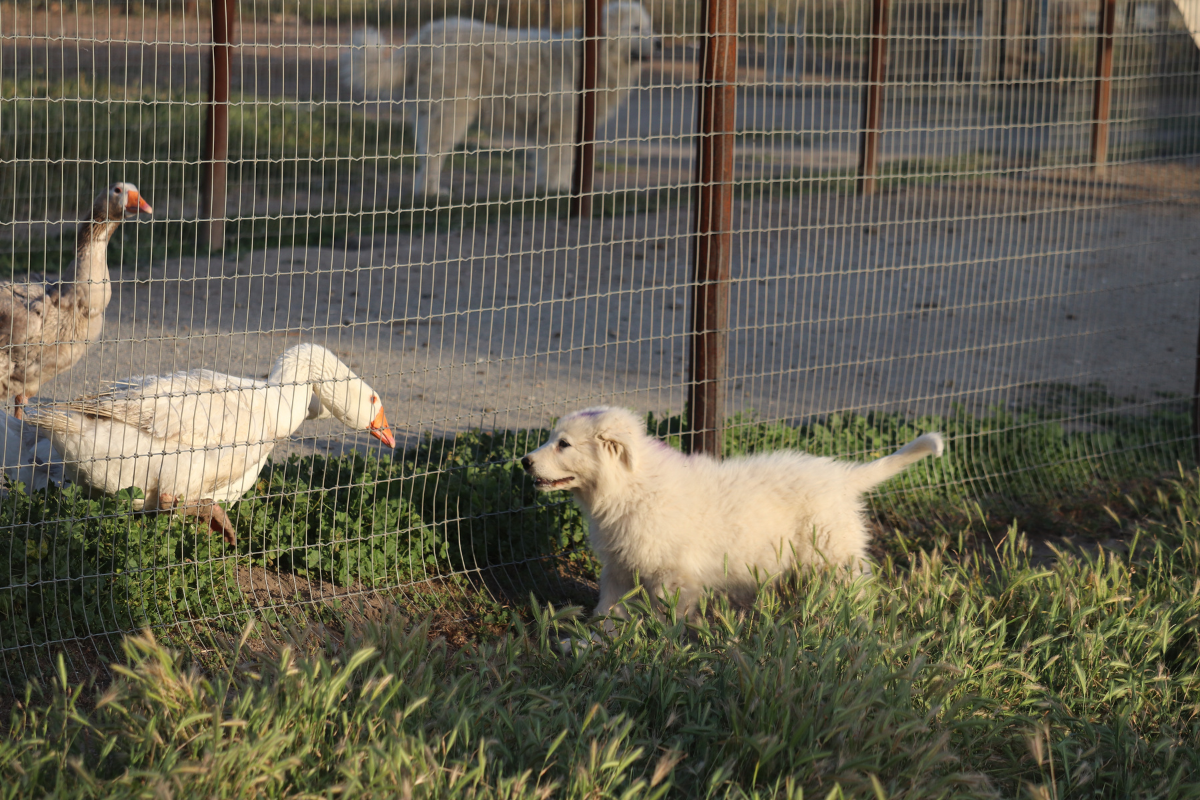
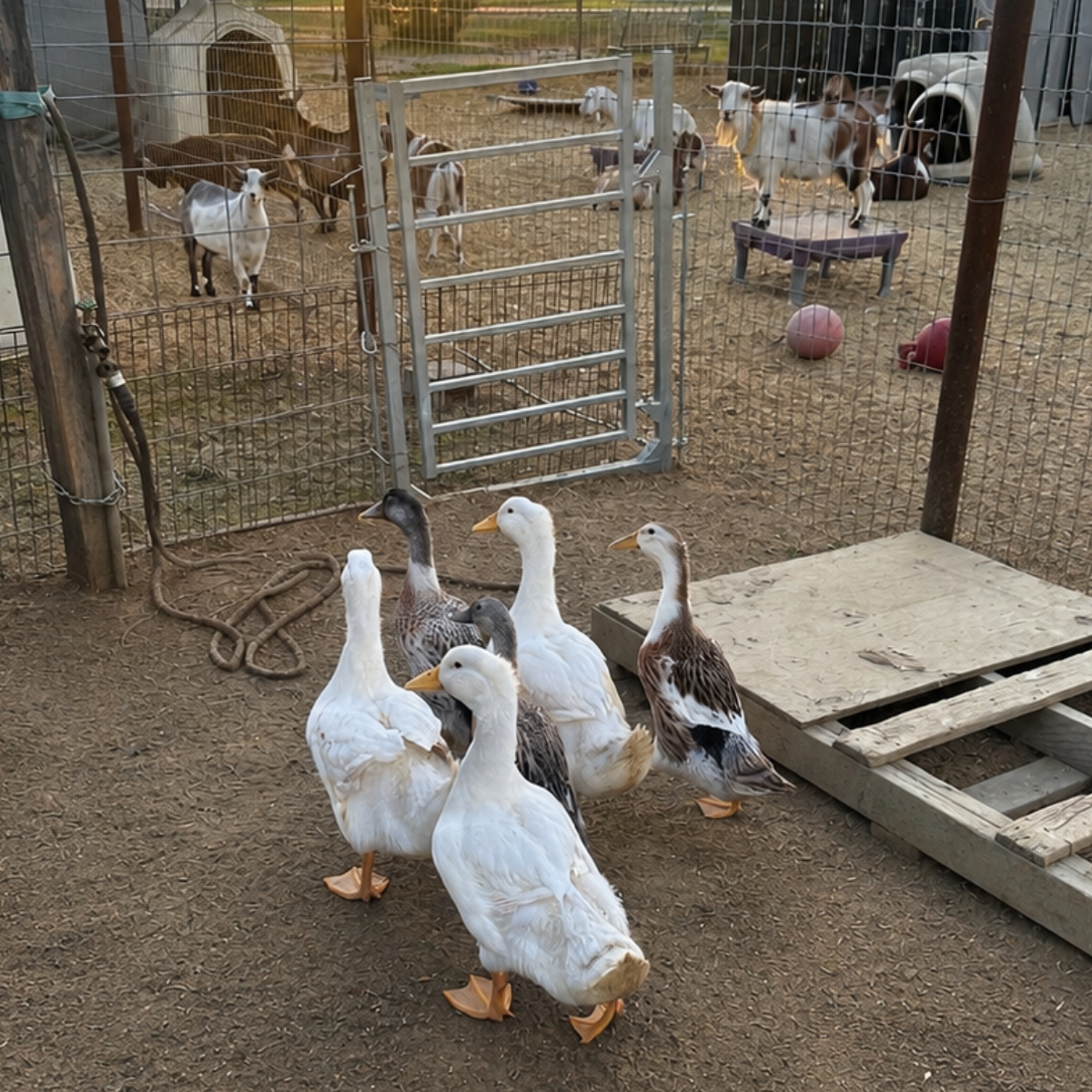
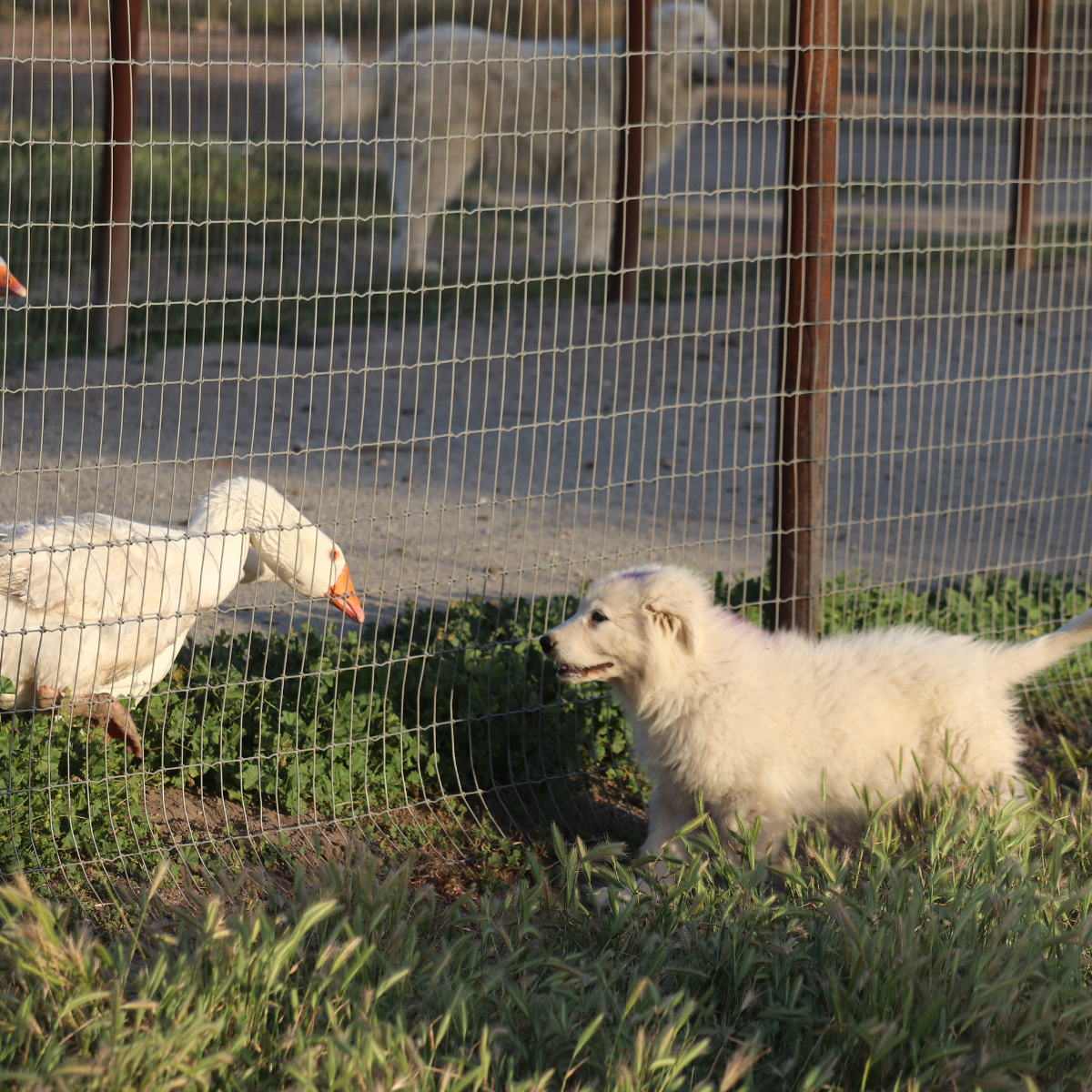
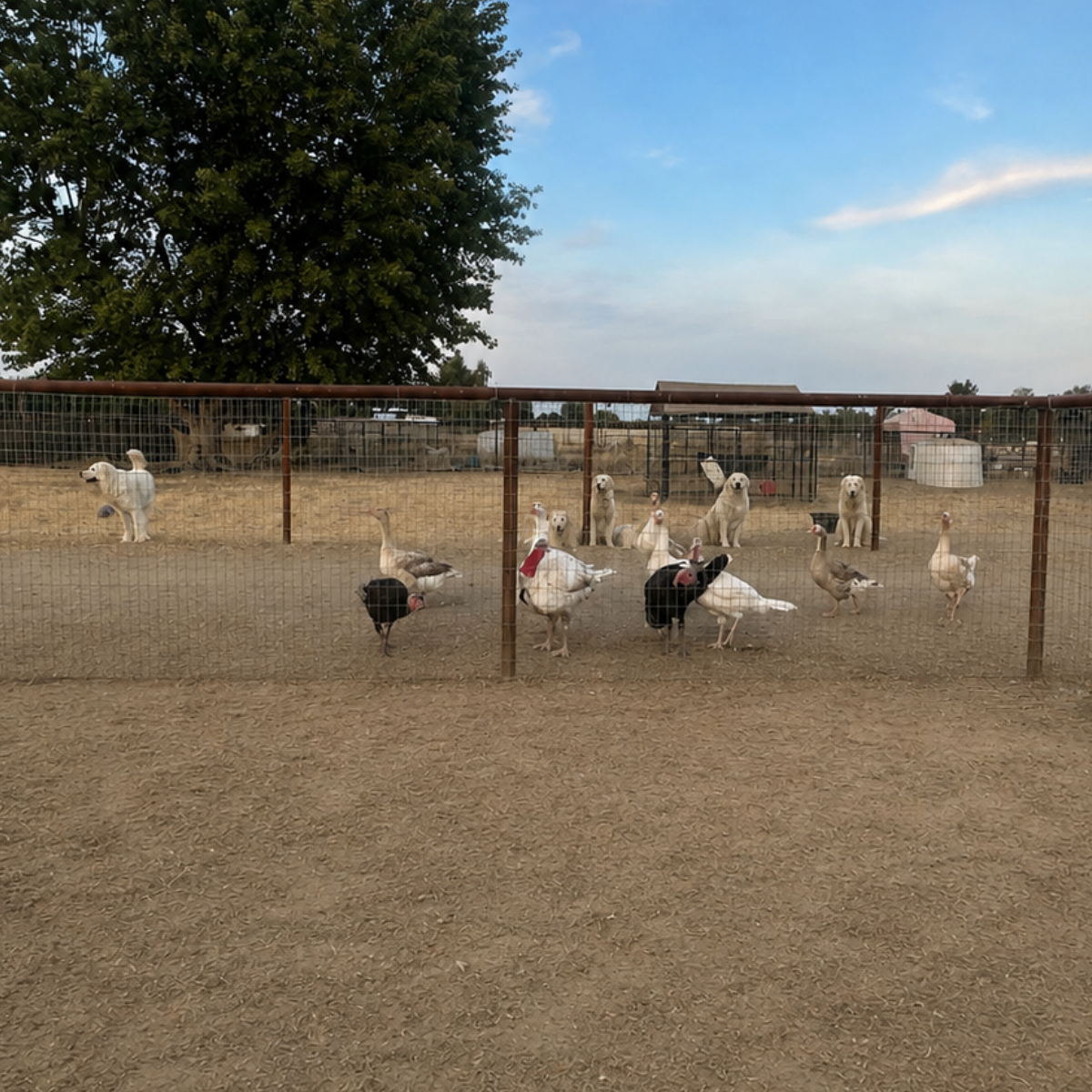
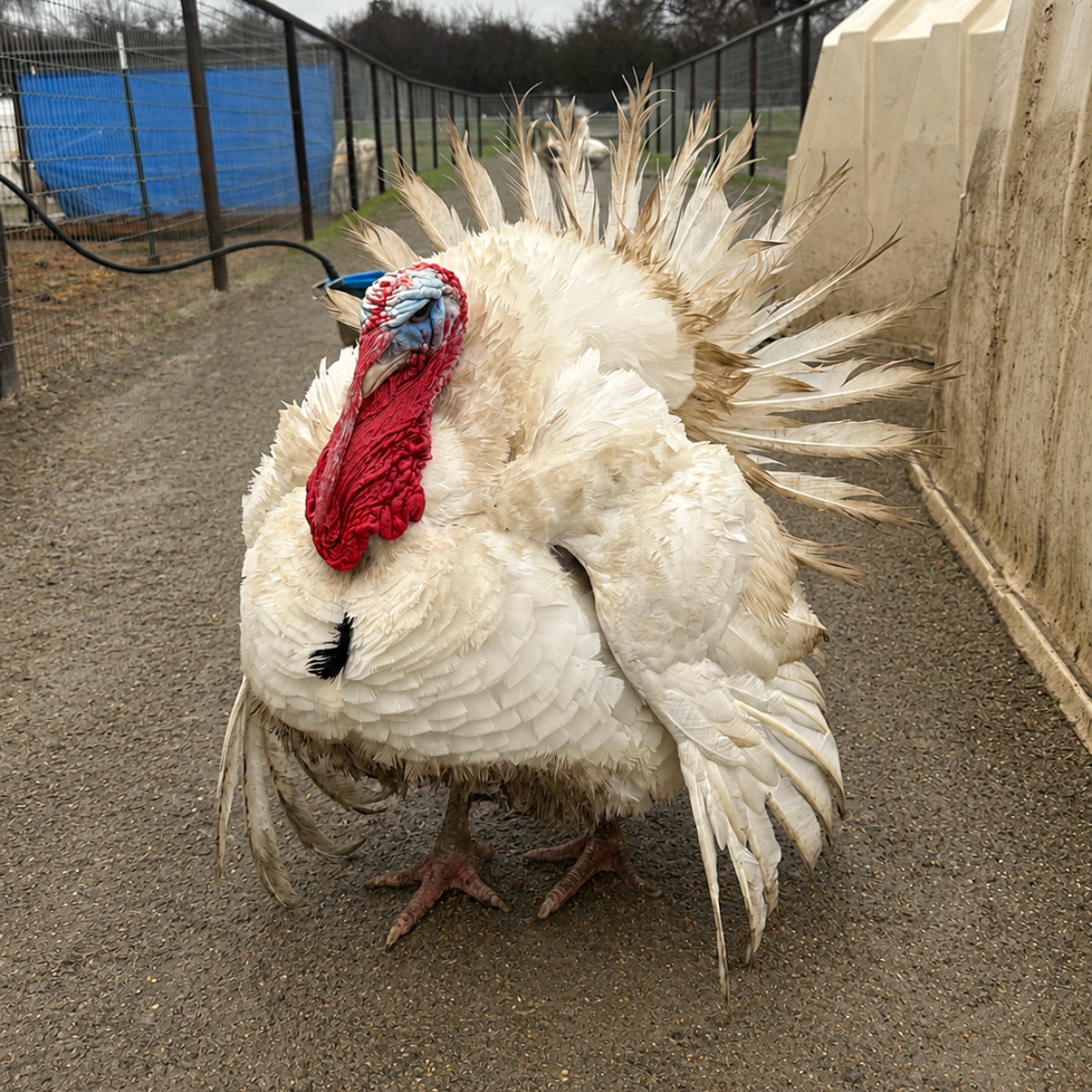
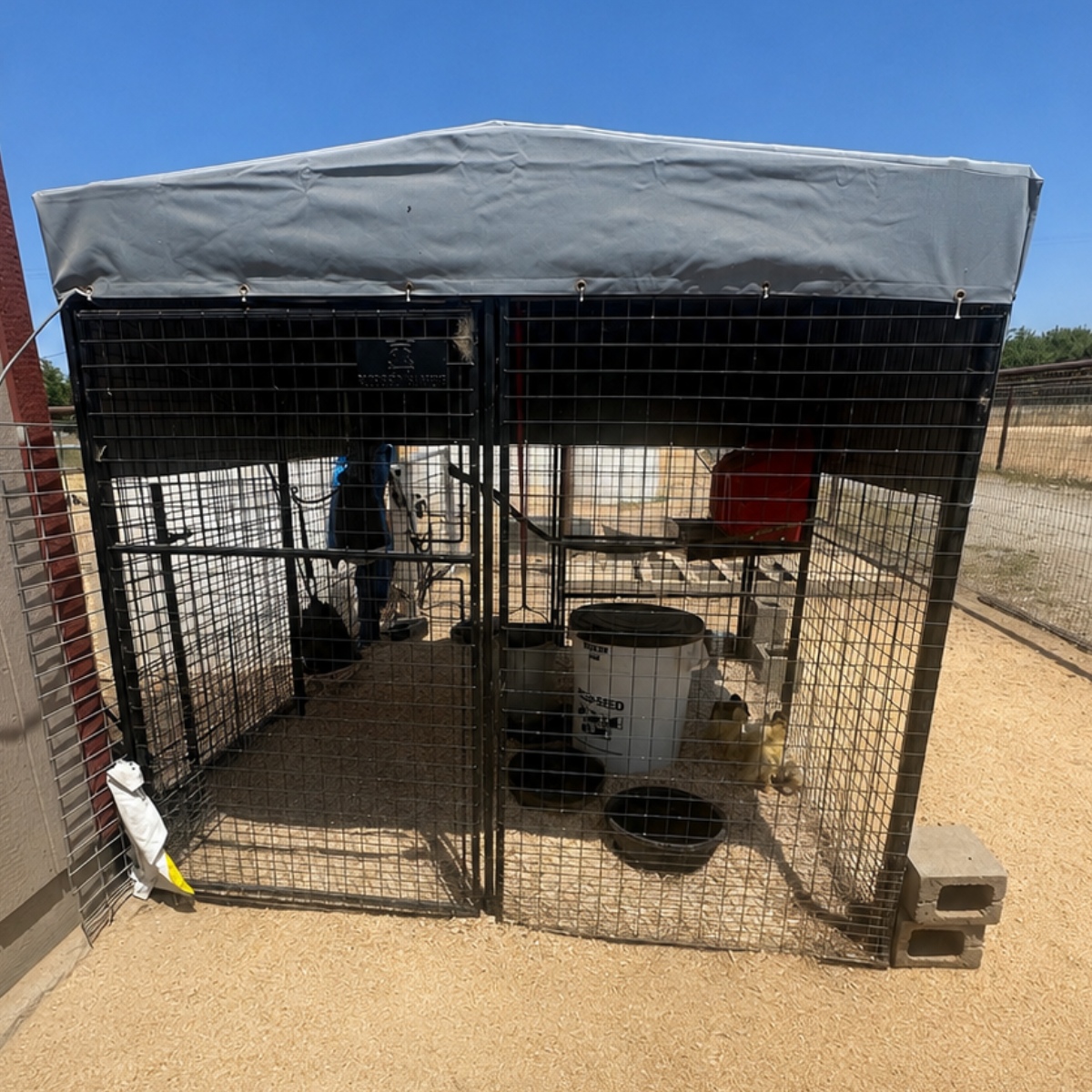
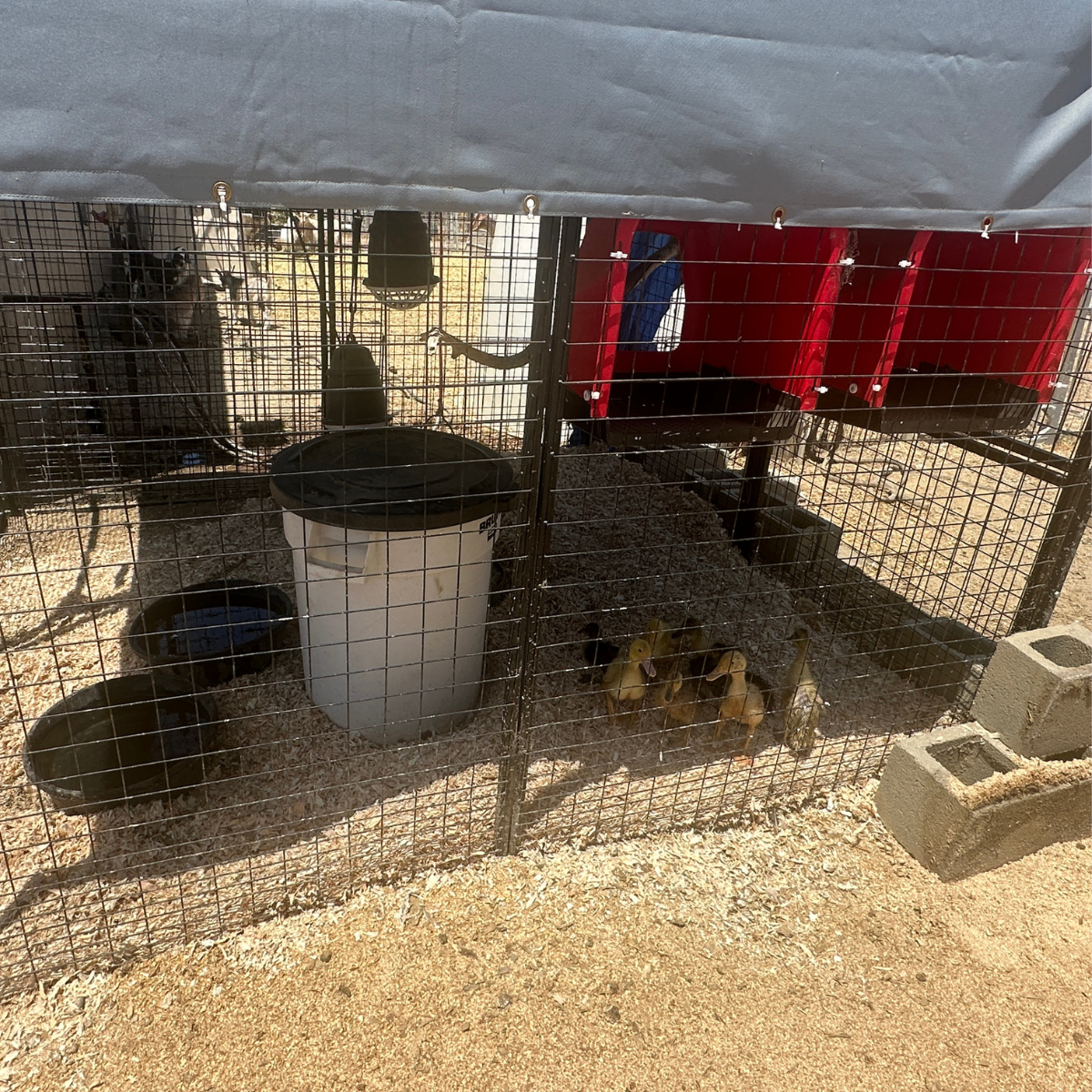
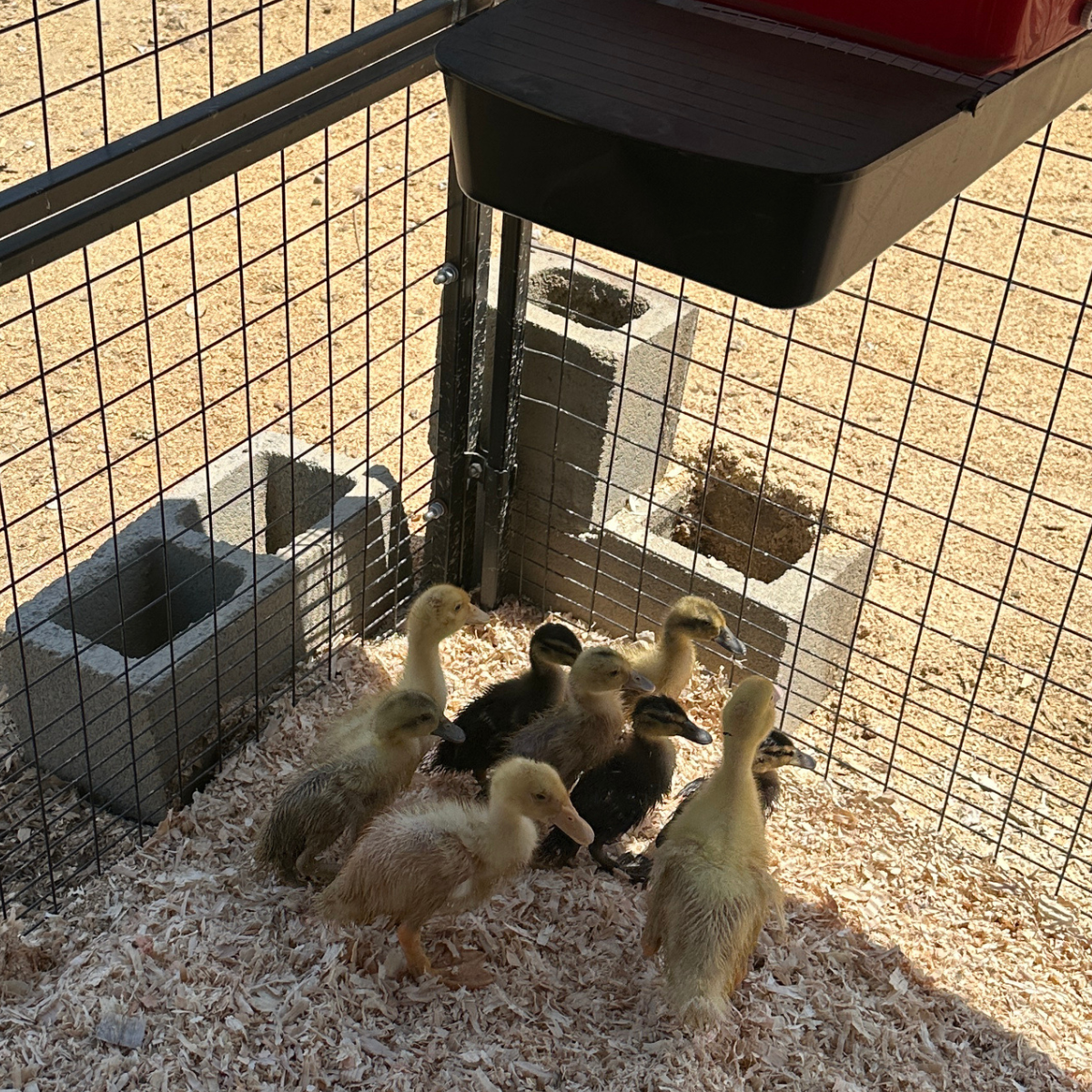
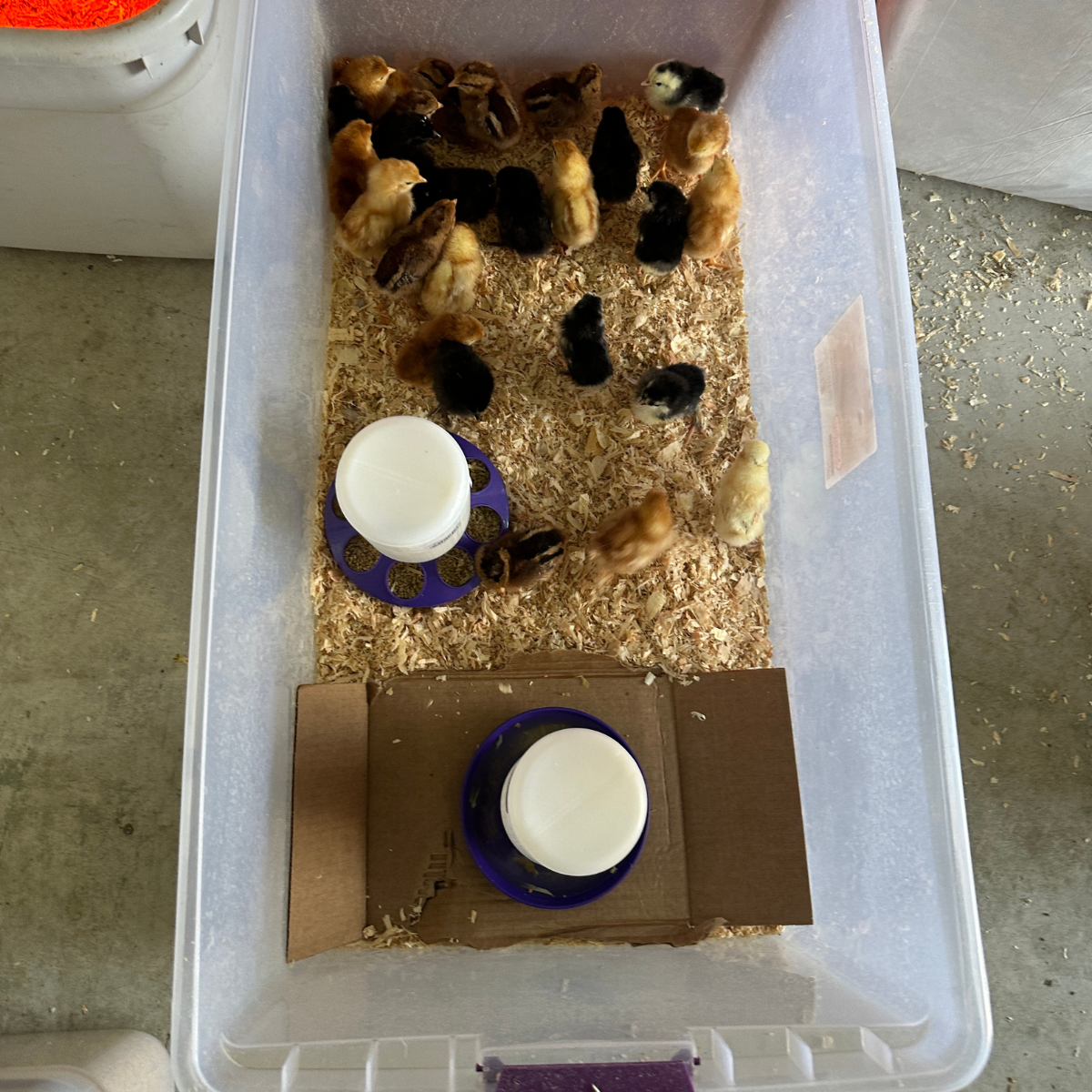
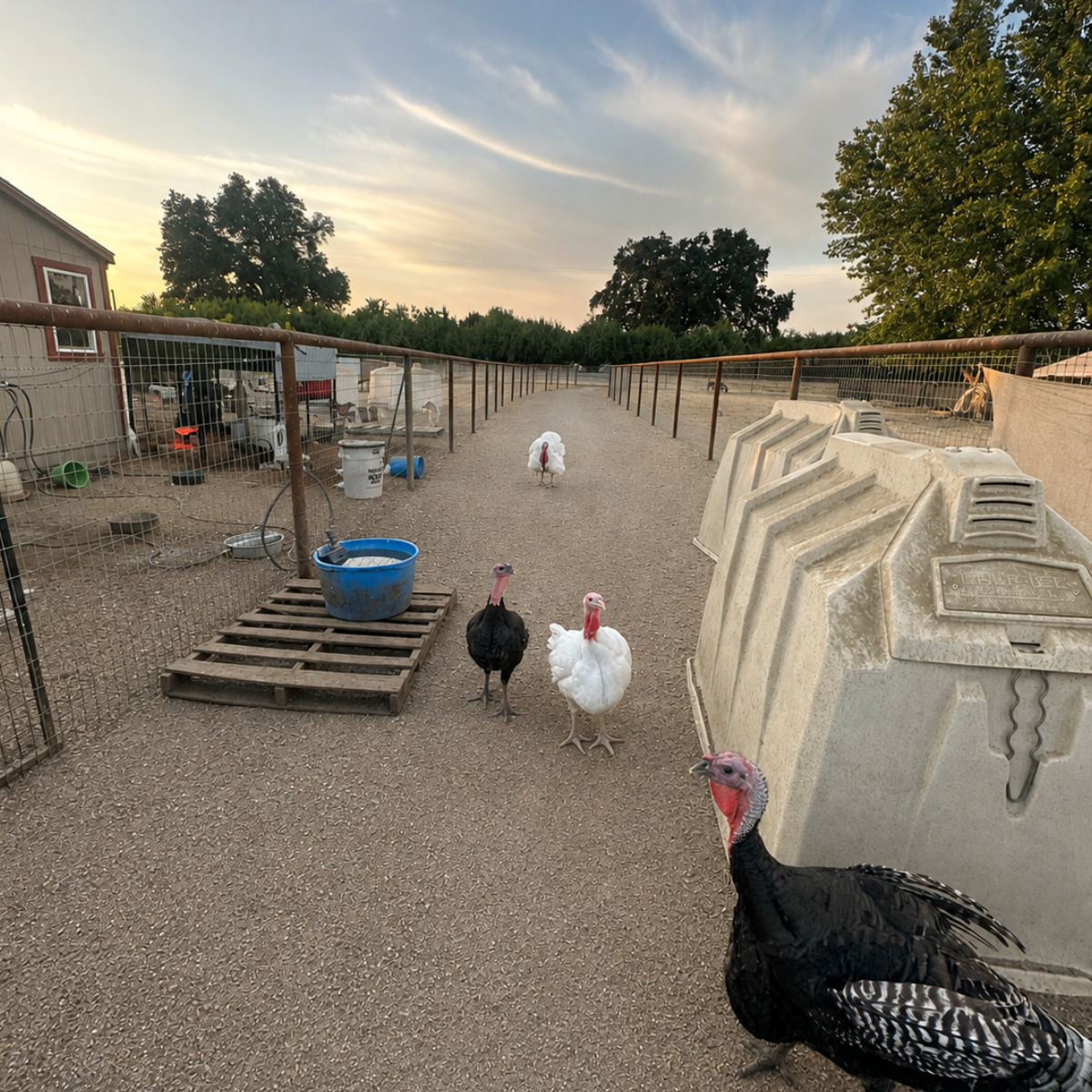
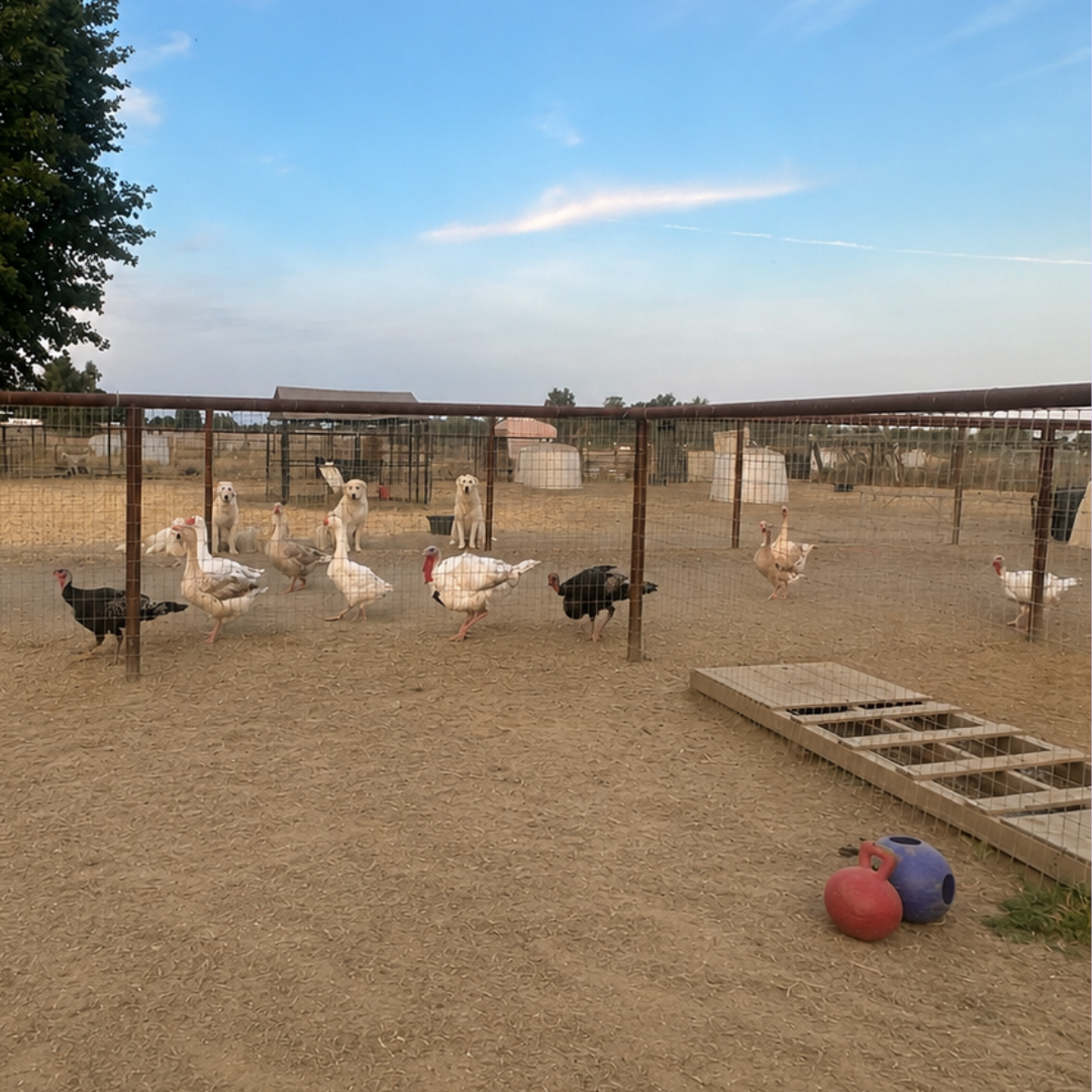
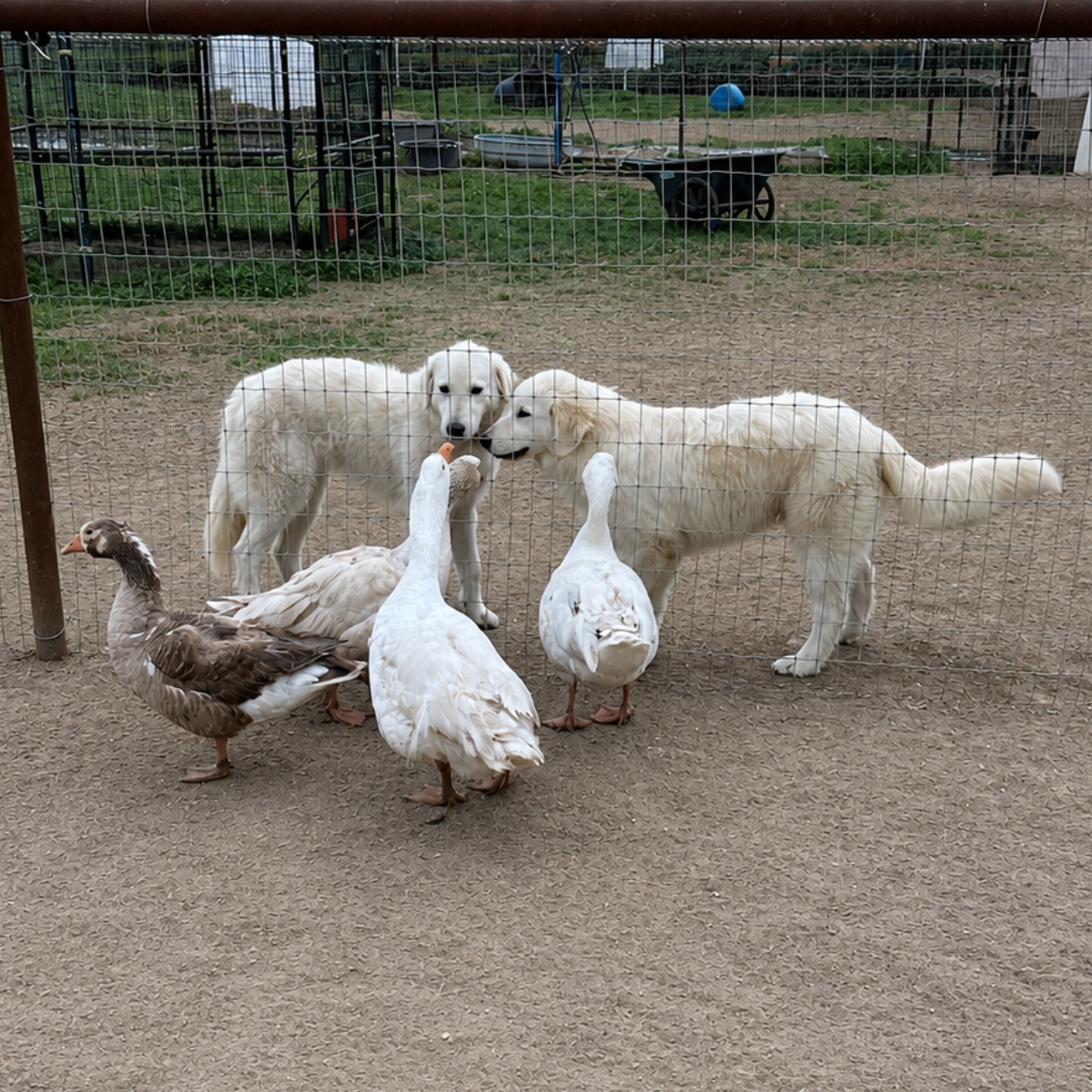
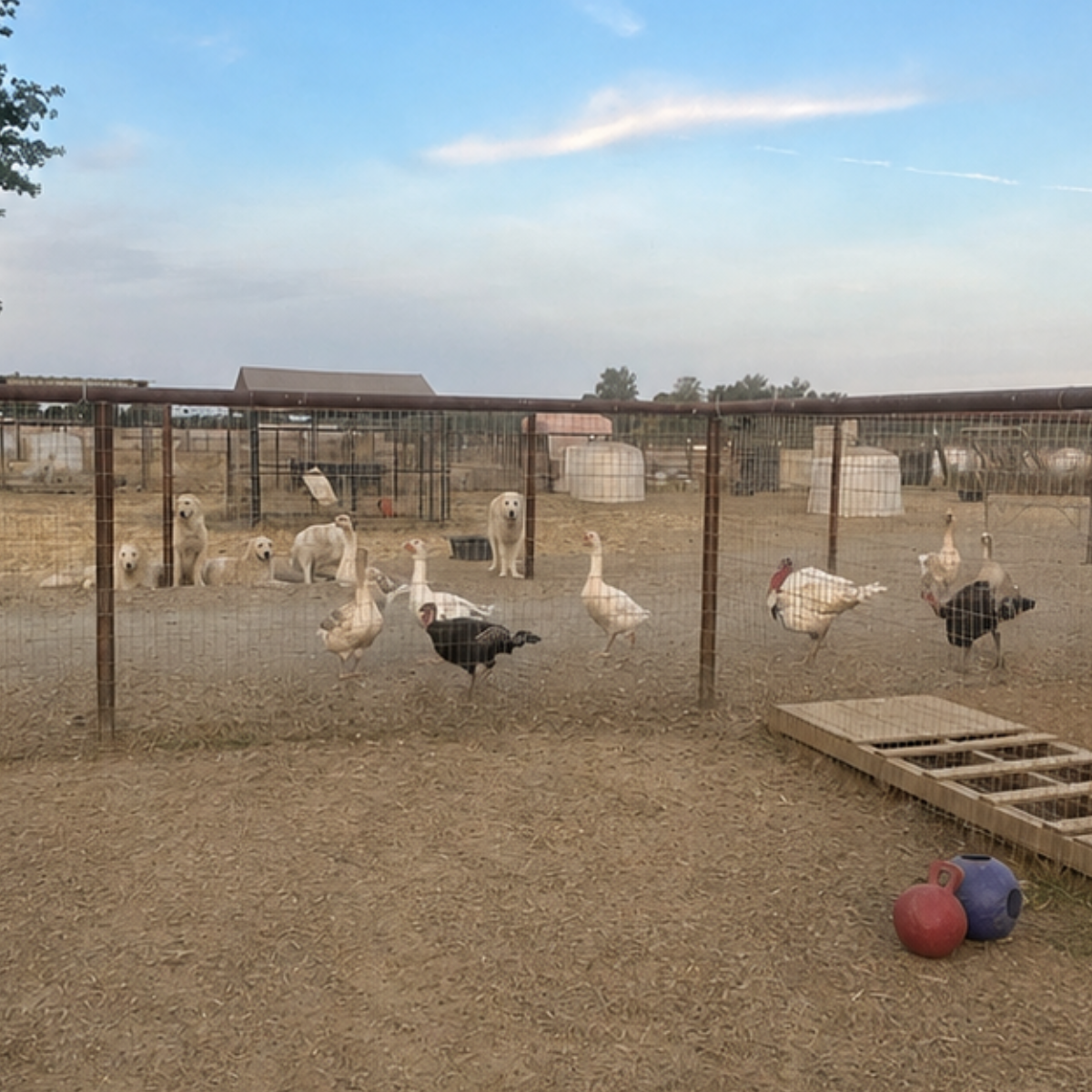
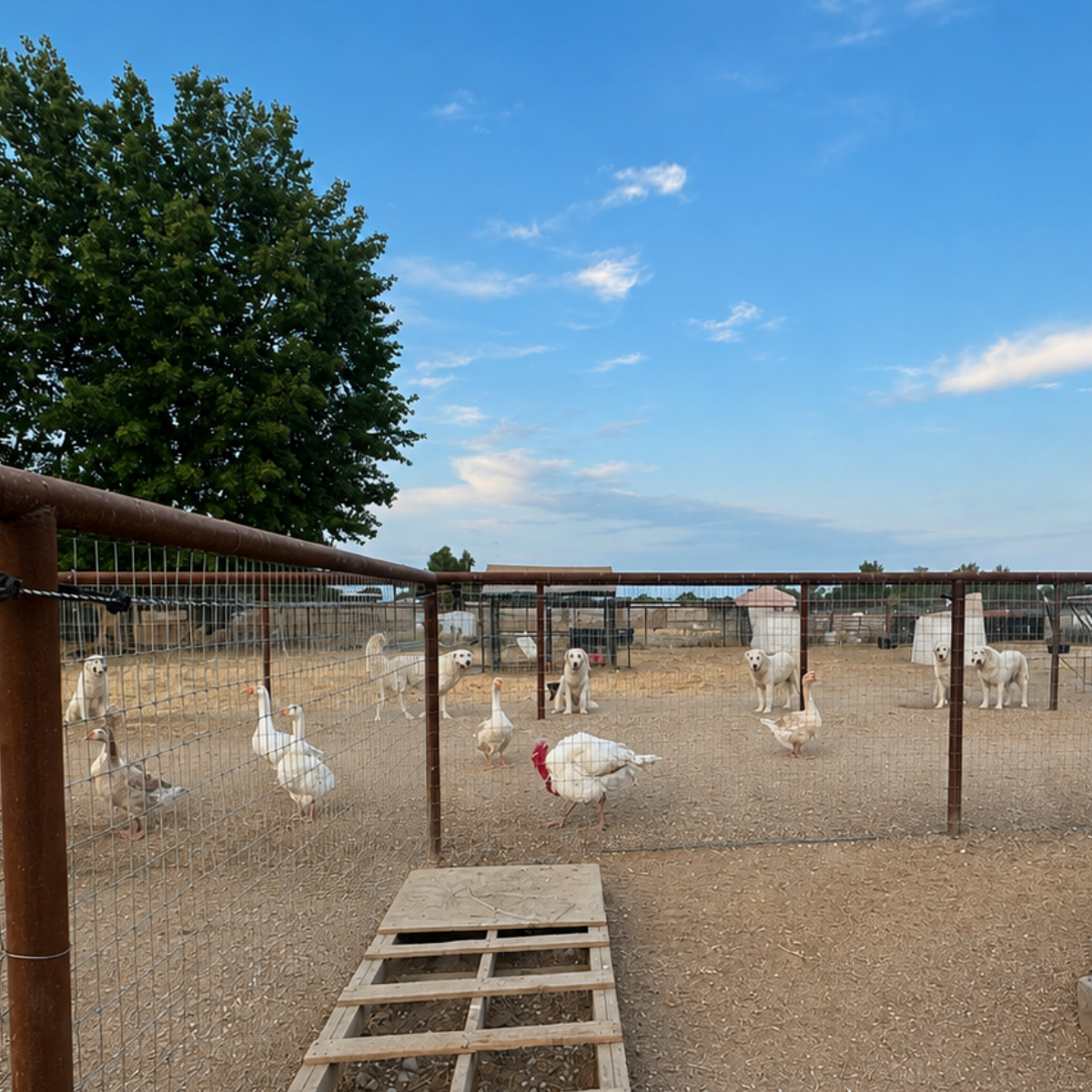
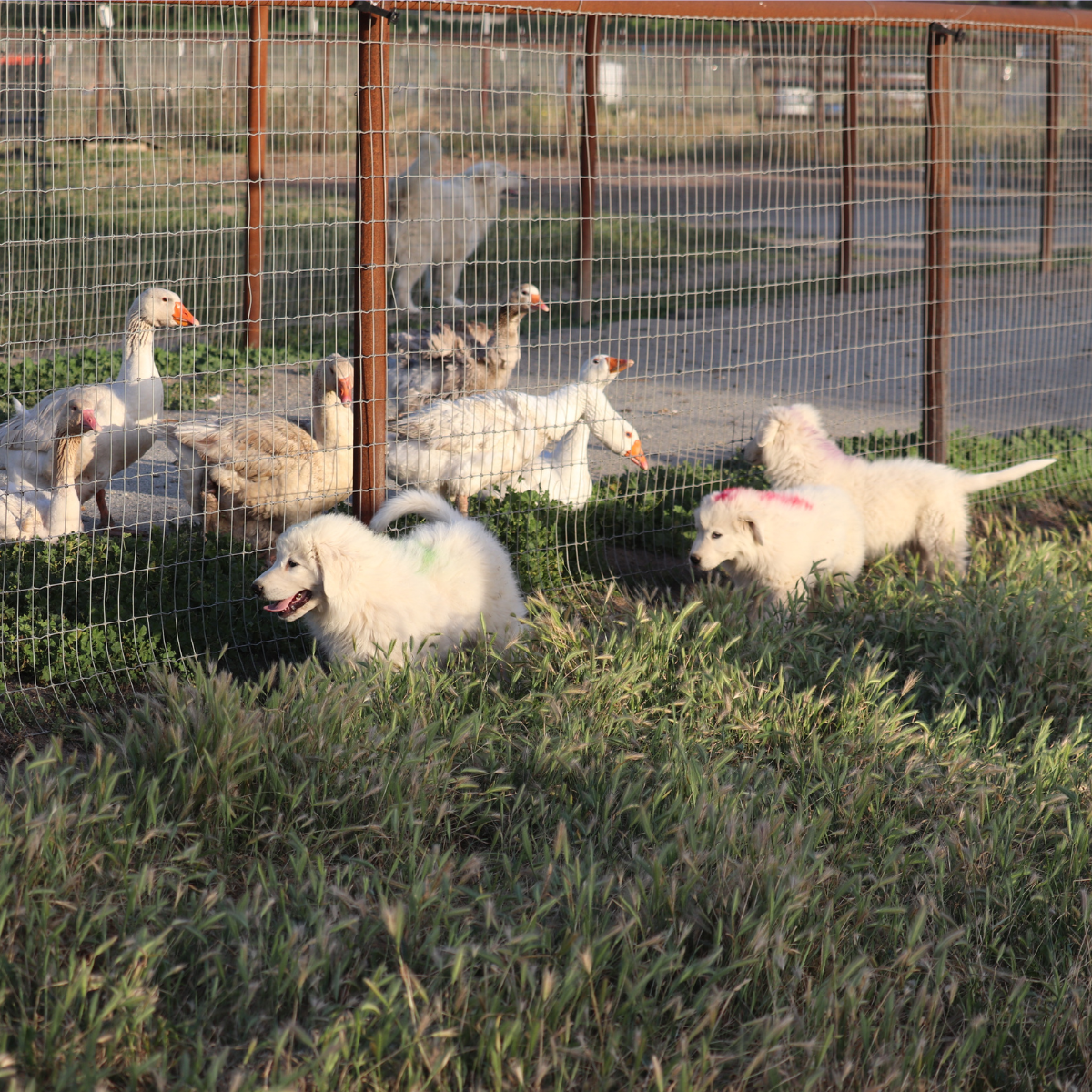
Running the entire length of our puppy pasture is an over 200-foot bird run housing some of the most diverse livestock our puppies will ever encounter: chickens, ducks, geese, turkeys, and guineas. And roaming freely throughout the farm are more of the same.
Poultry are a unique socialization challenge for livestock guardian dogs. They move unpredictably, they make sudden sounds, and their instinct is to flap, squawk and flee — which can trigger chase responses in young dogs who haven't learned otherwise. A Maremma who grows up alongside poultry from early puppyhood learns to read their behavior, ignore the flapping and funny noises, and treat them as part of the flock worth protecting.
Our puppies grow up with bird sounds, bird smells, and bird movement as a constant backdrop, without the ability to learn habits that could ruin a potentially great poultry guardian. By the time they leave, a honking goose or chicken running past is just another experience they've filed away for the future. That's exactly what we're after.
Button text: Raising LGDs with Poultry — What You Need to Know
→ Link: [future blog post URL]
Inside the Parlor — Enrichment, Toys, and Early Sensory Experiences
Before puppies ever set foot outside, the world comes to them.
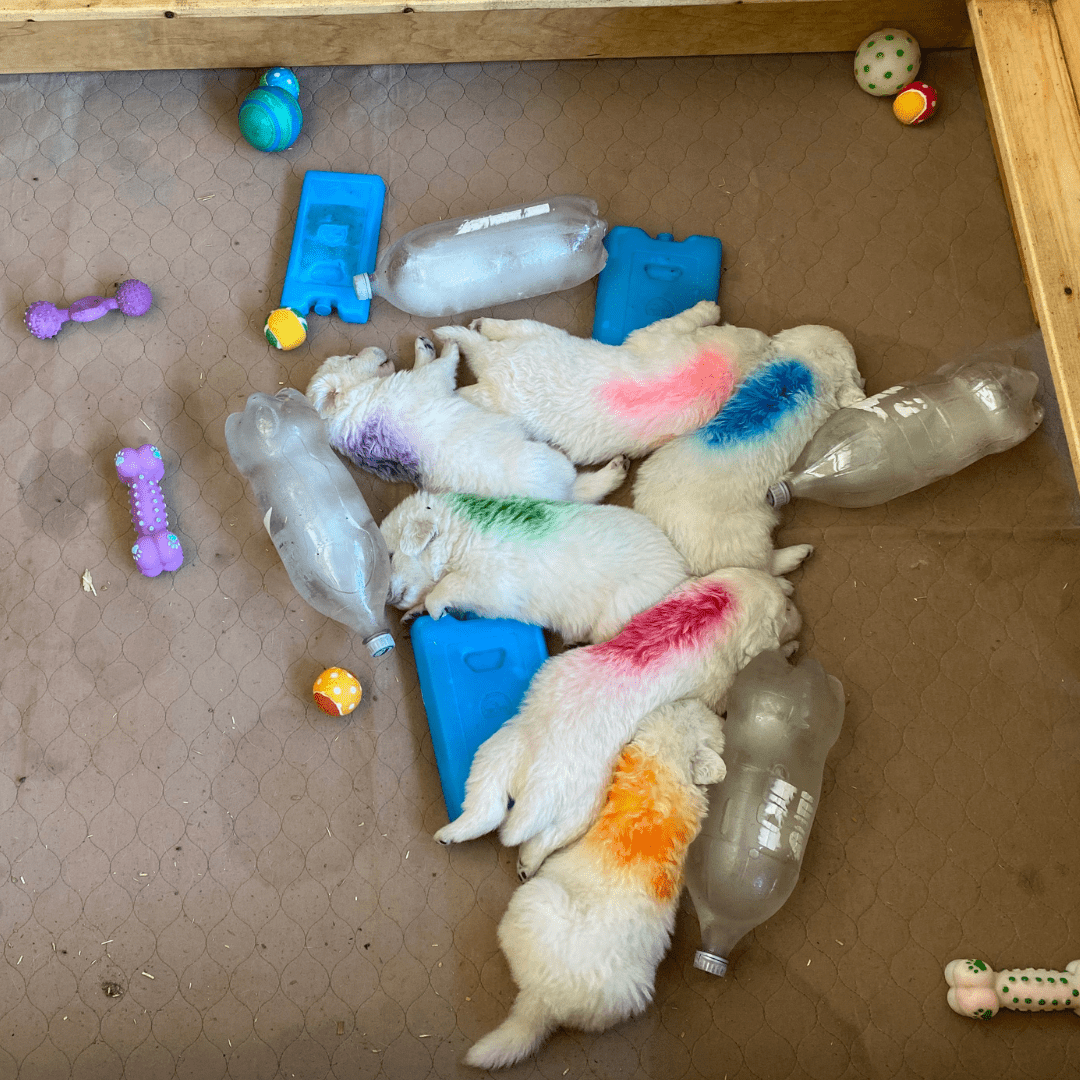
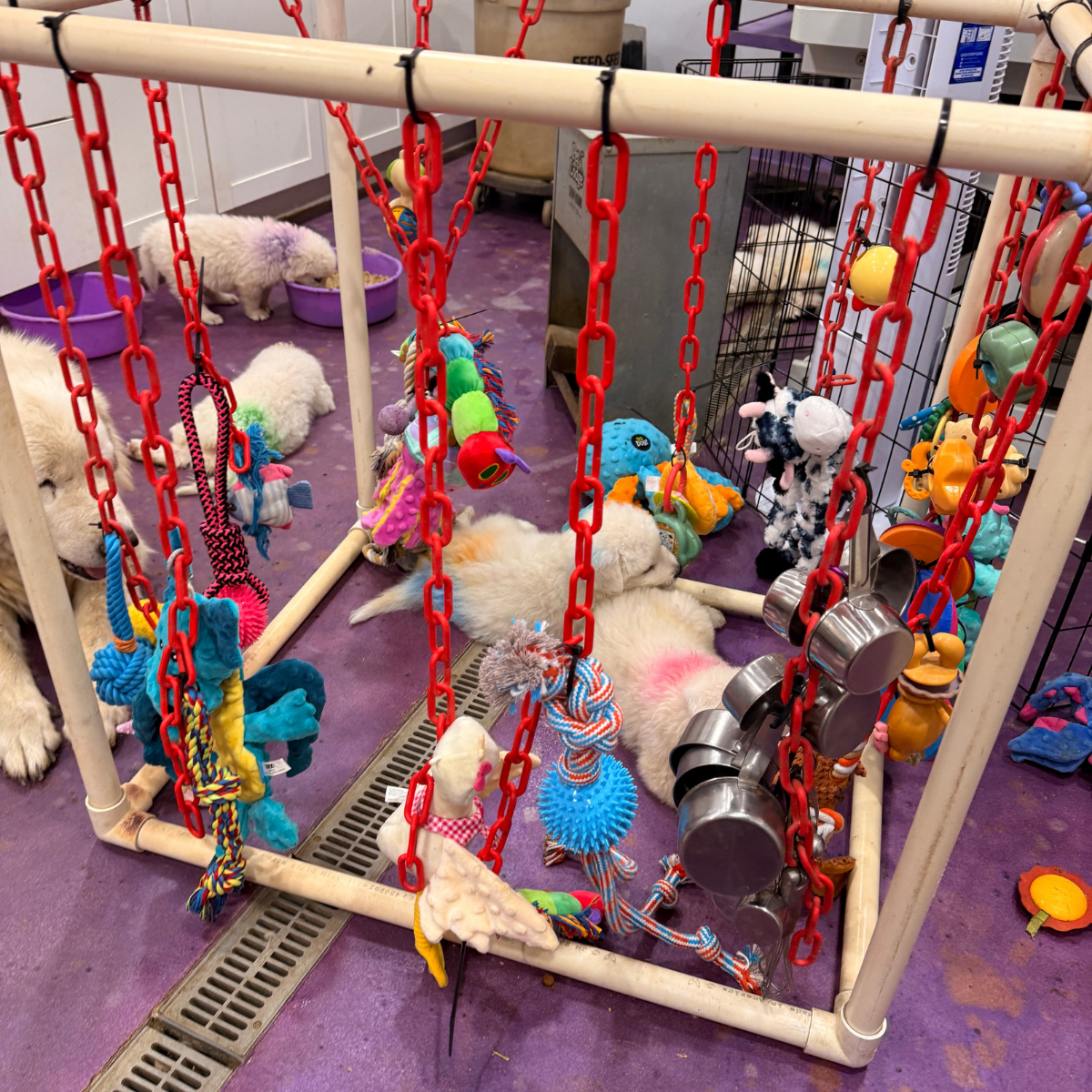
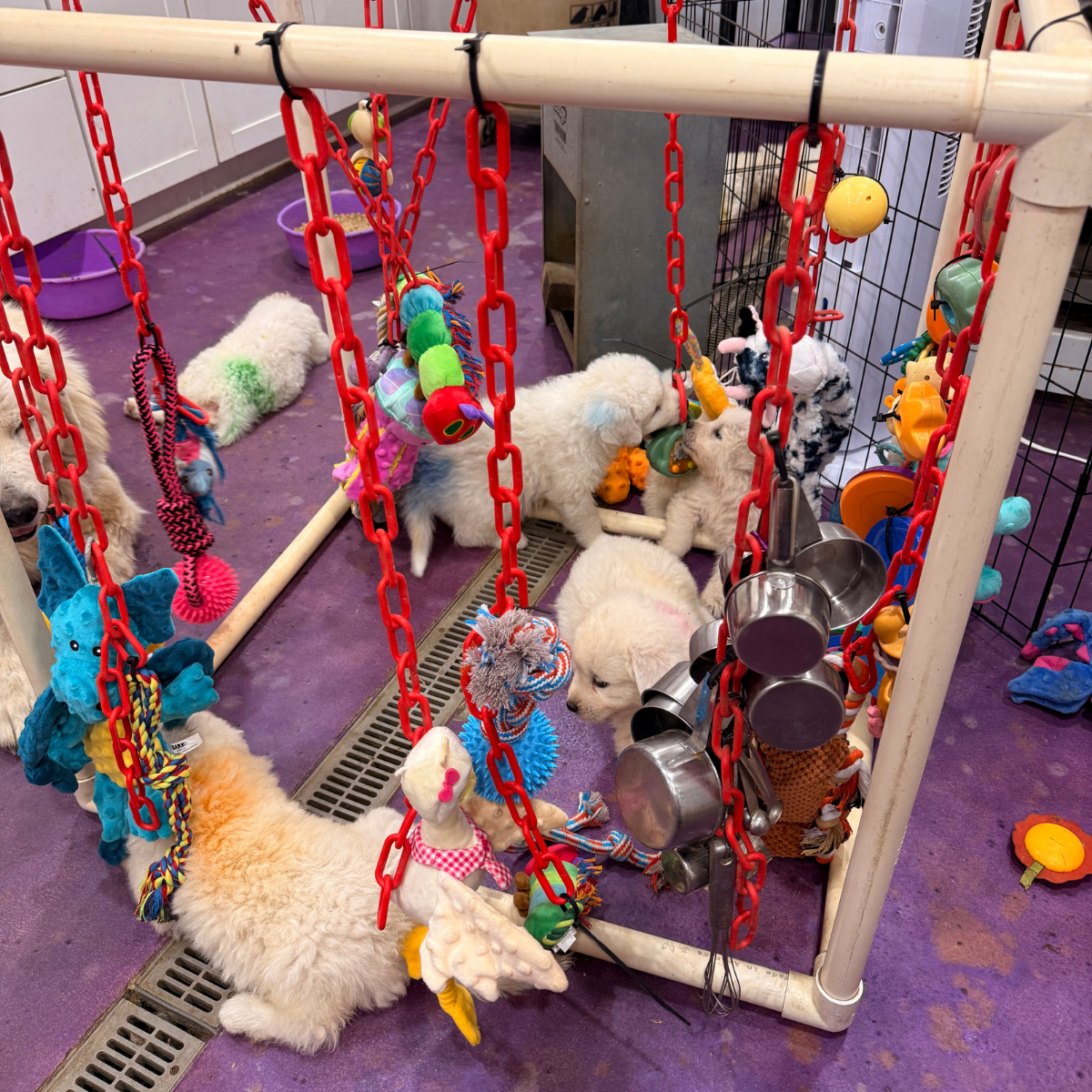
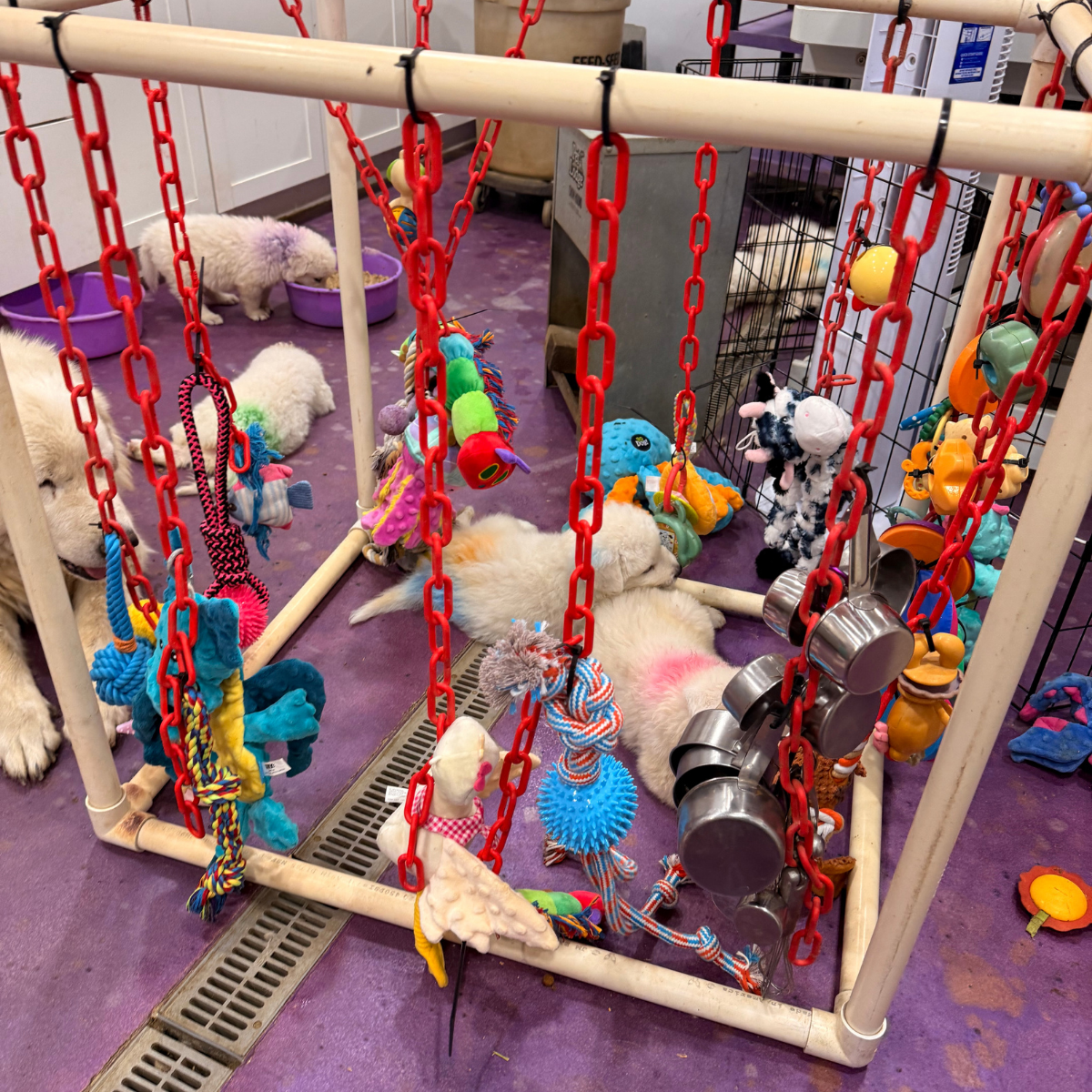
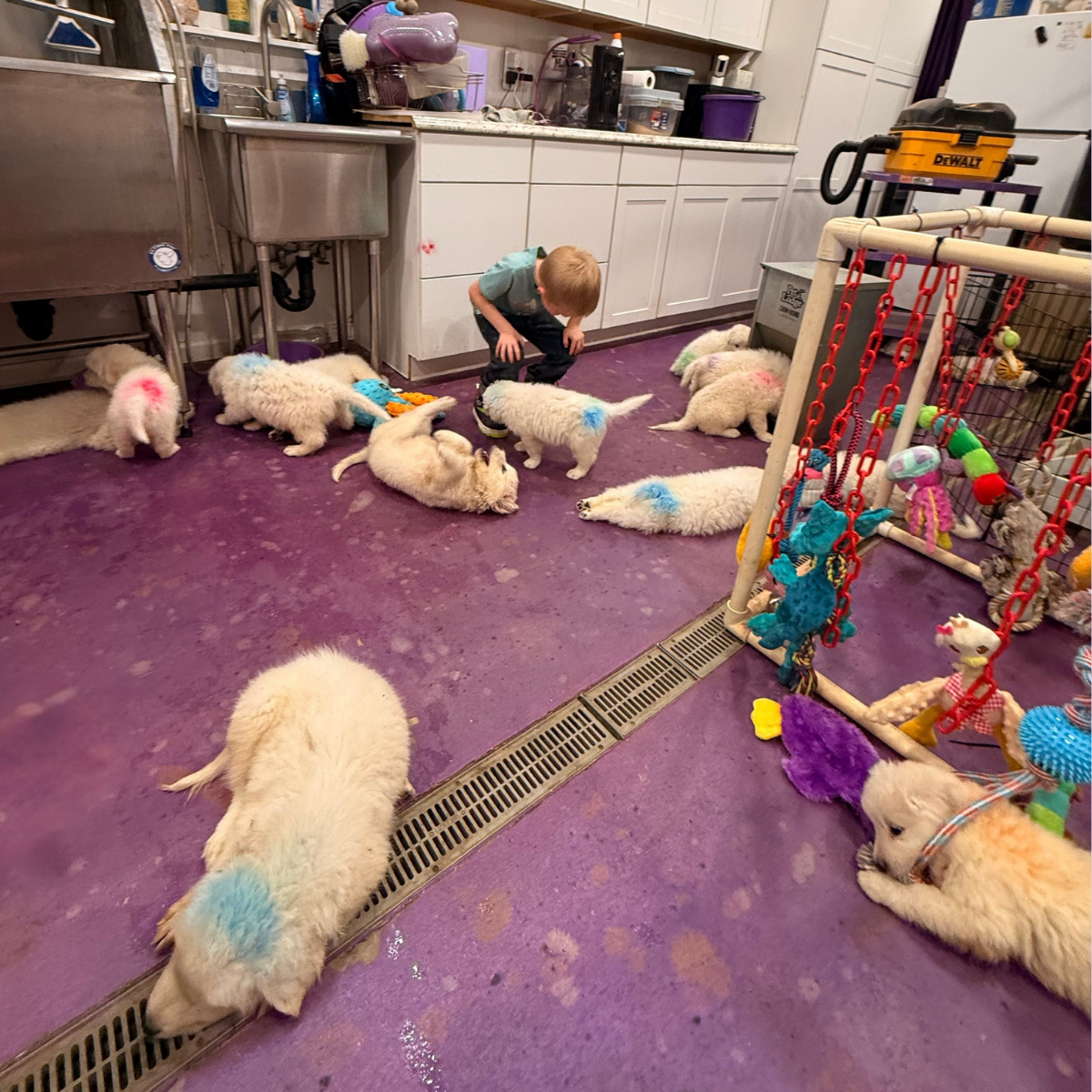
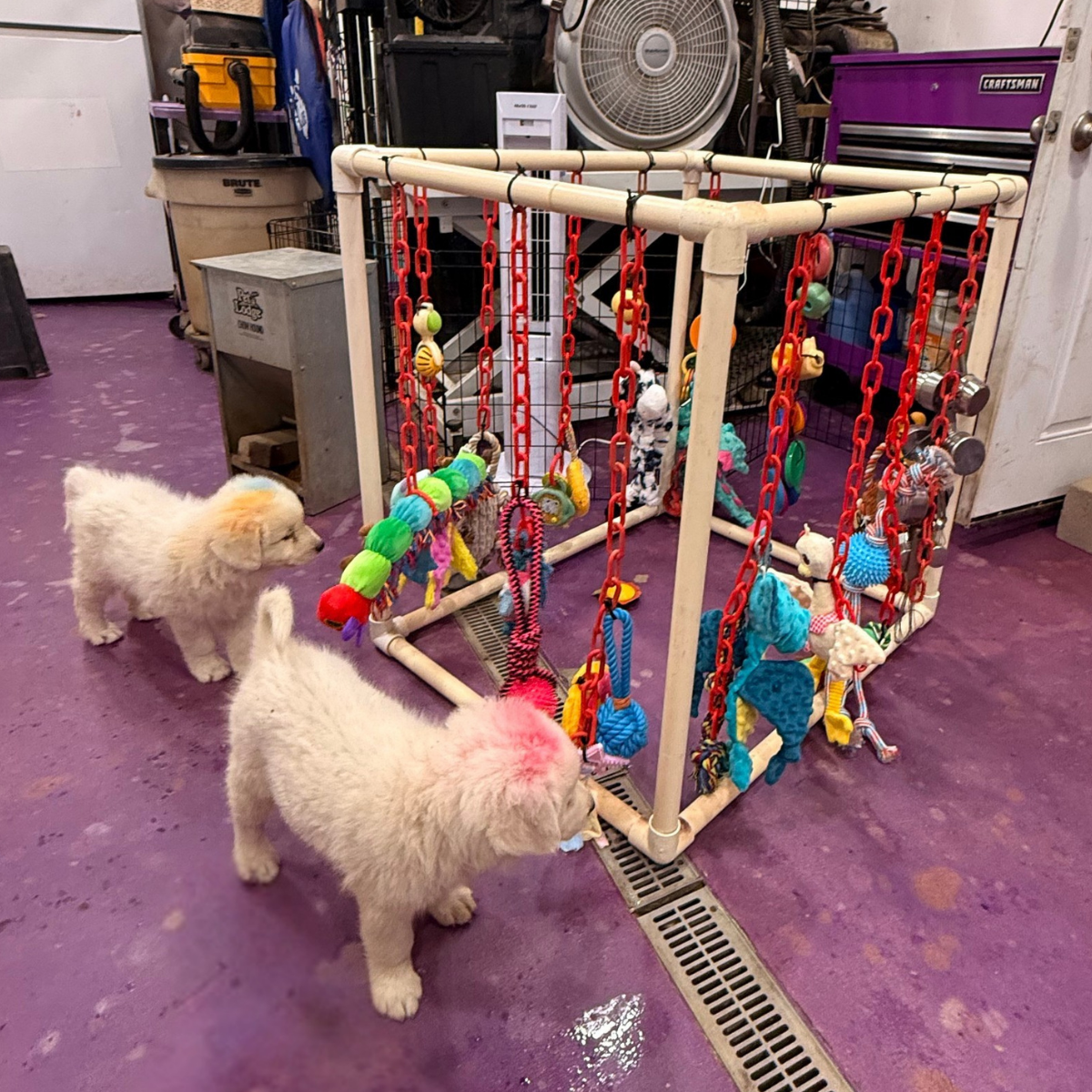
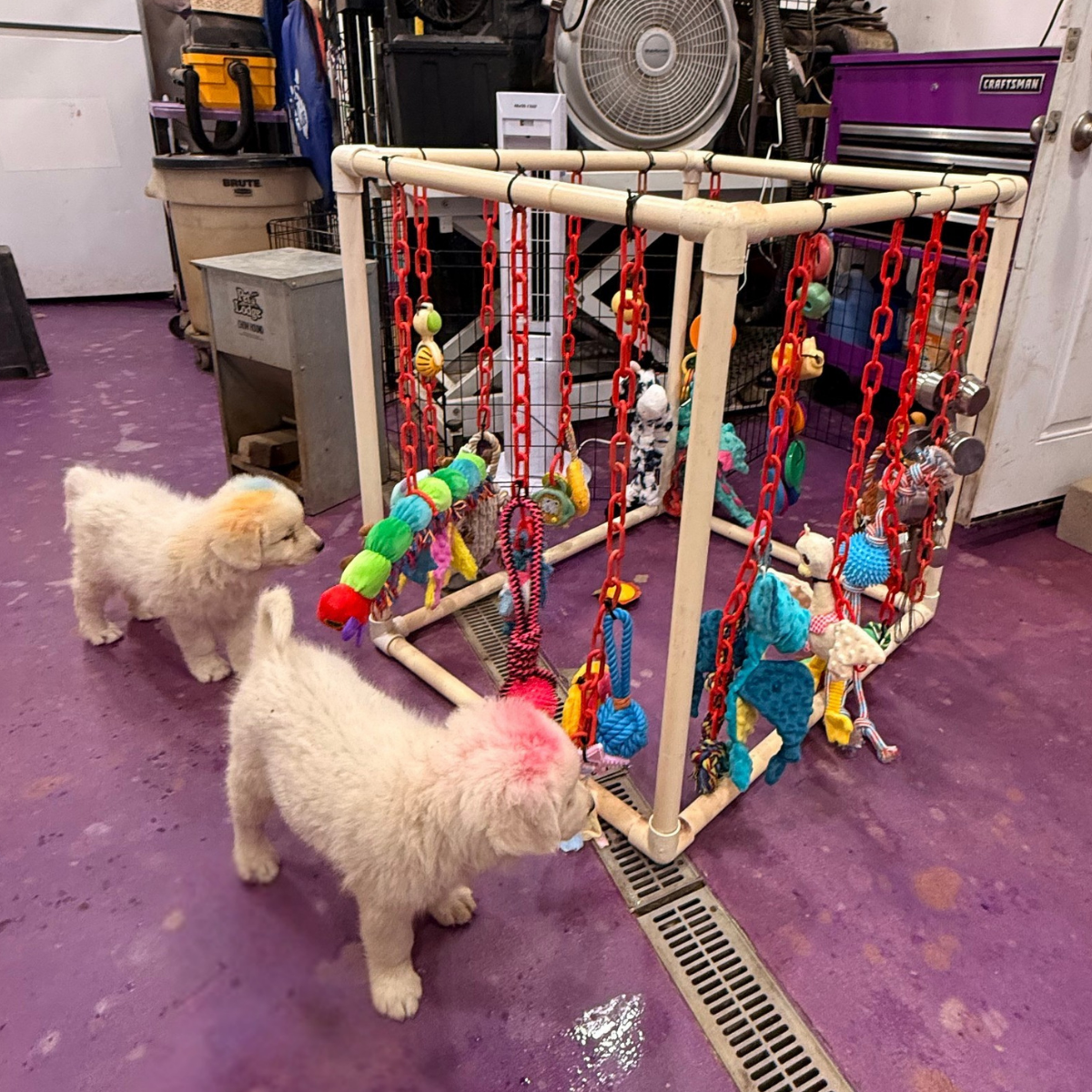
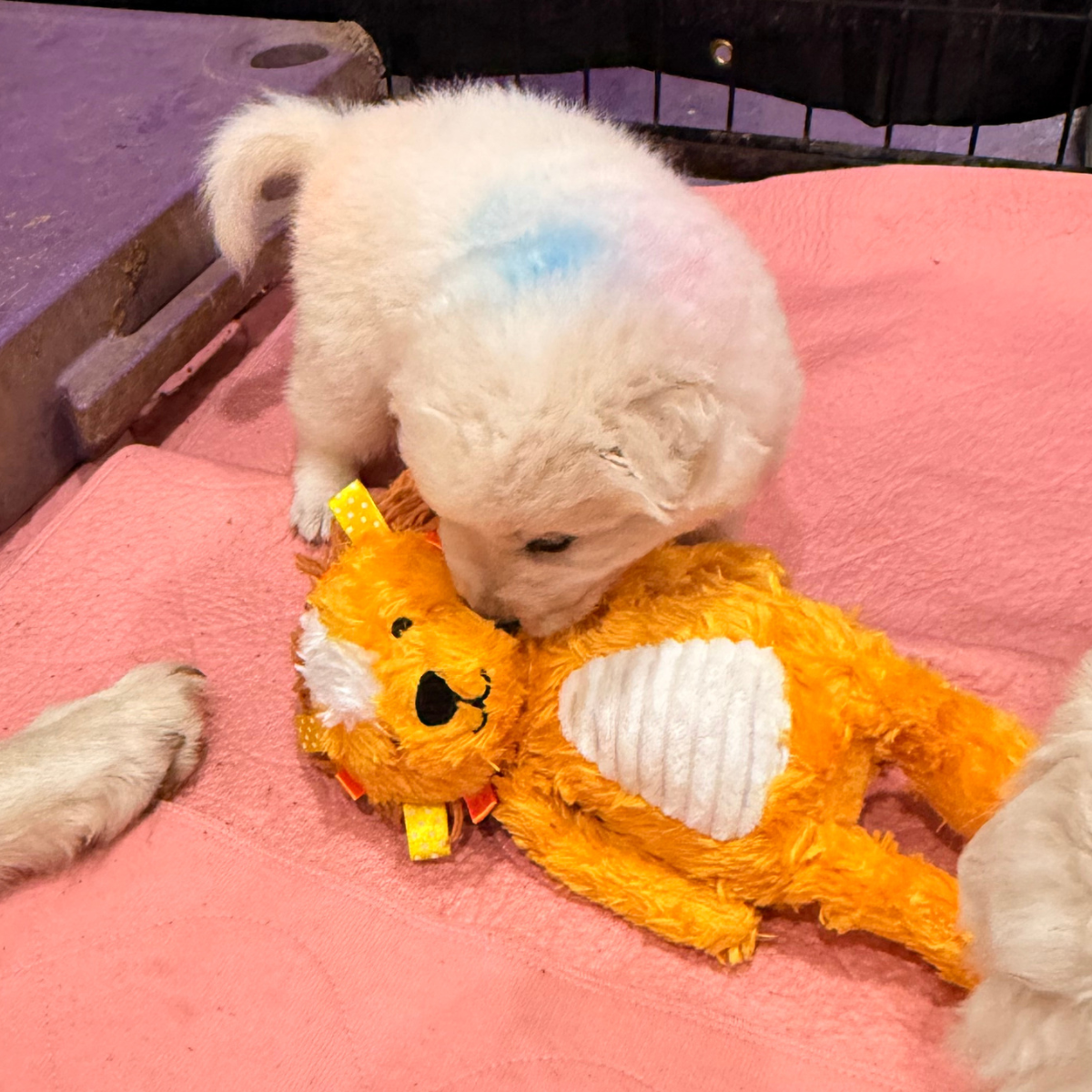
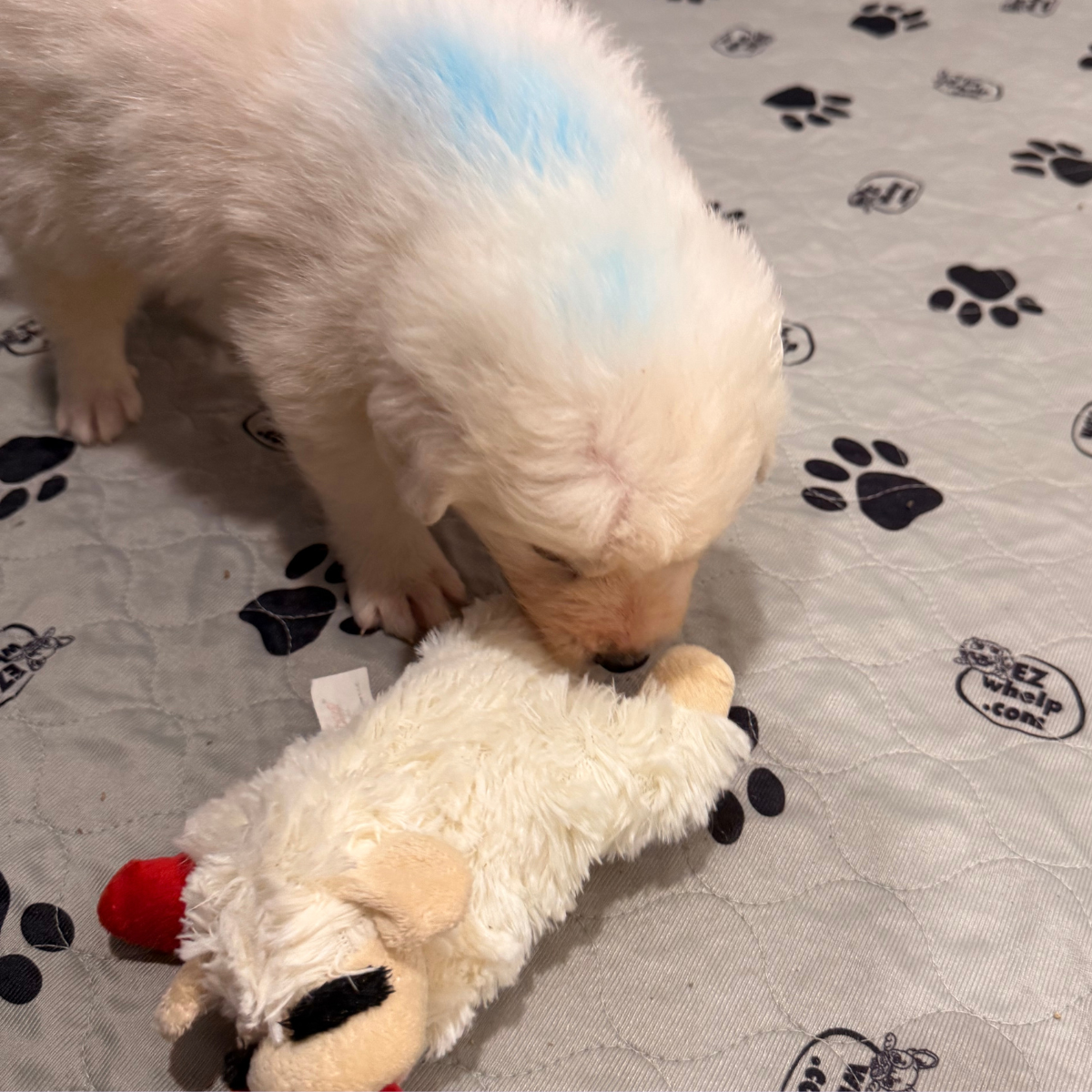
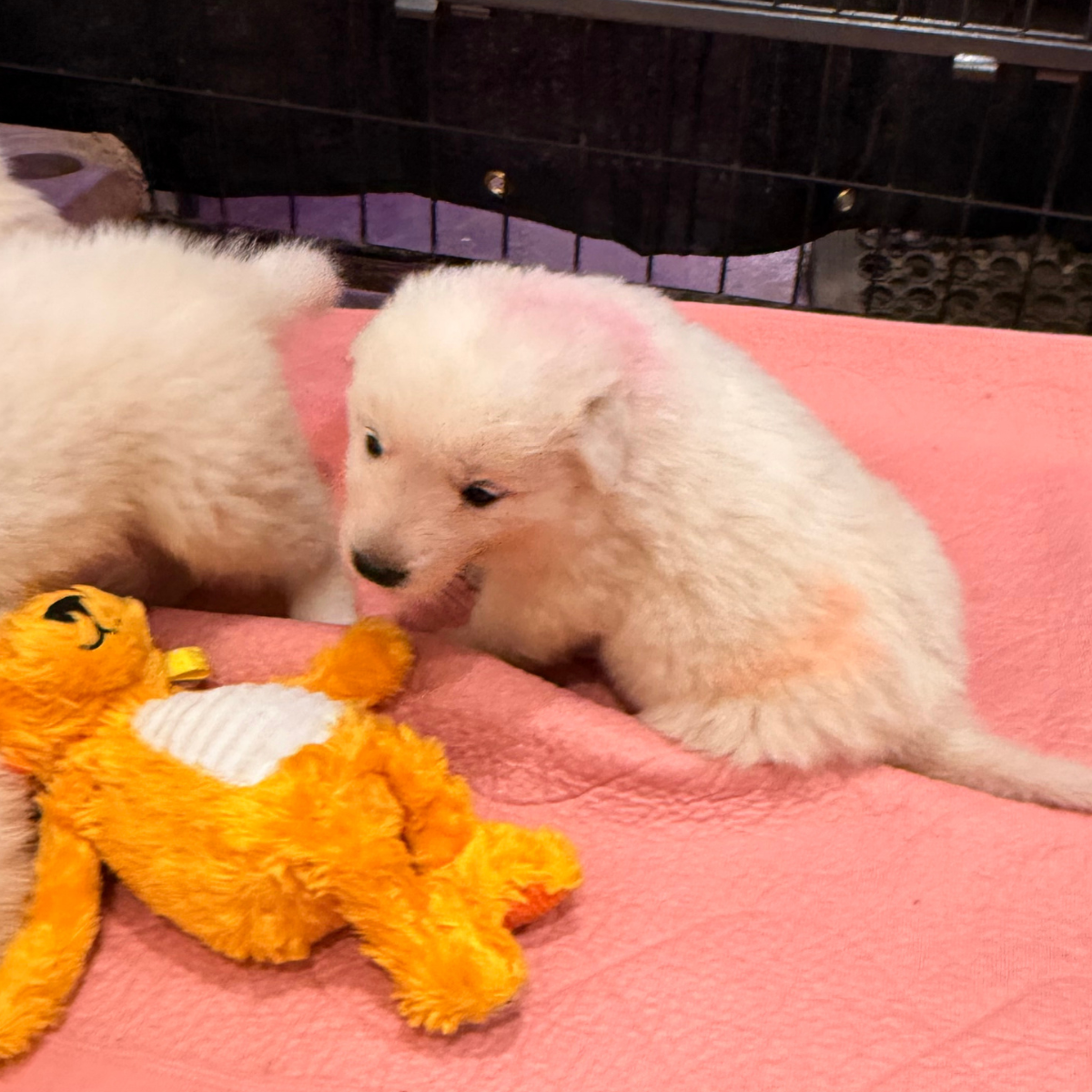
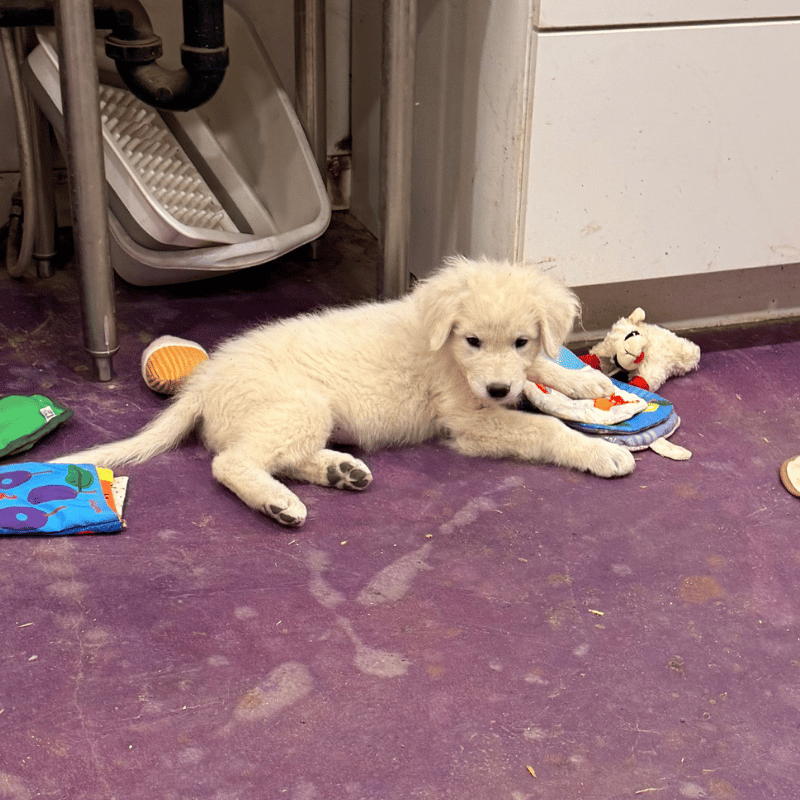
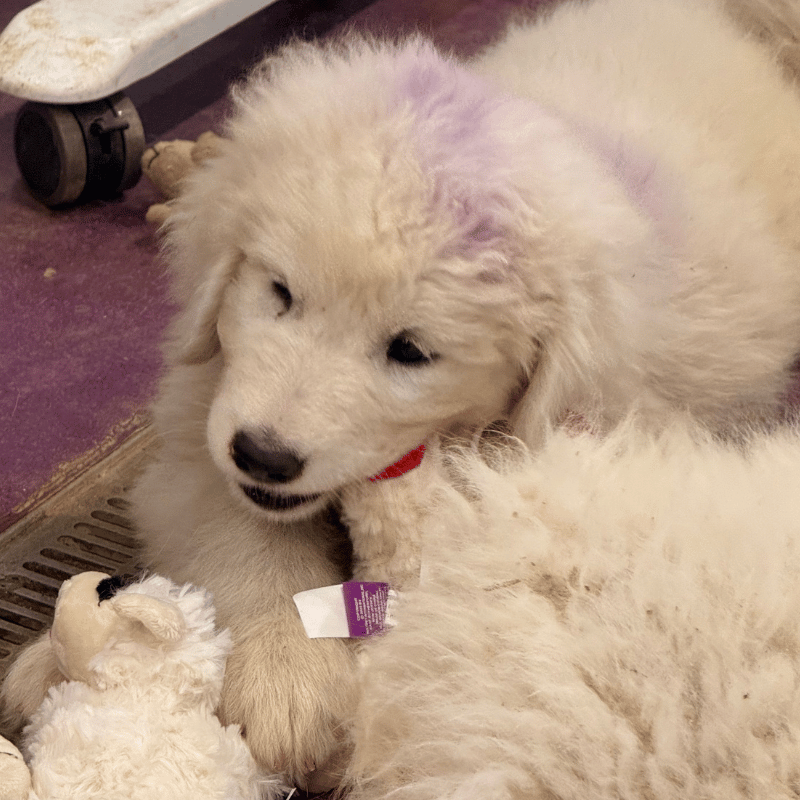
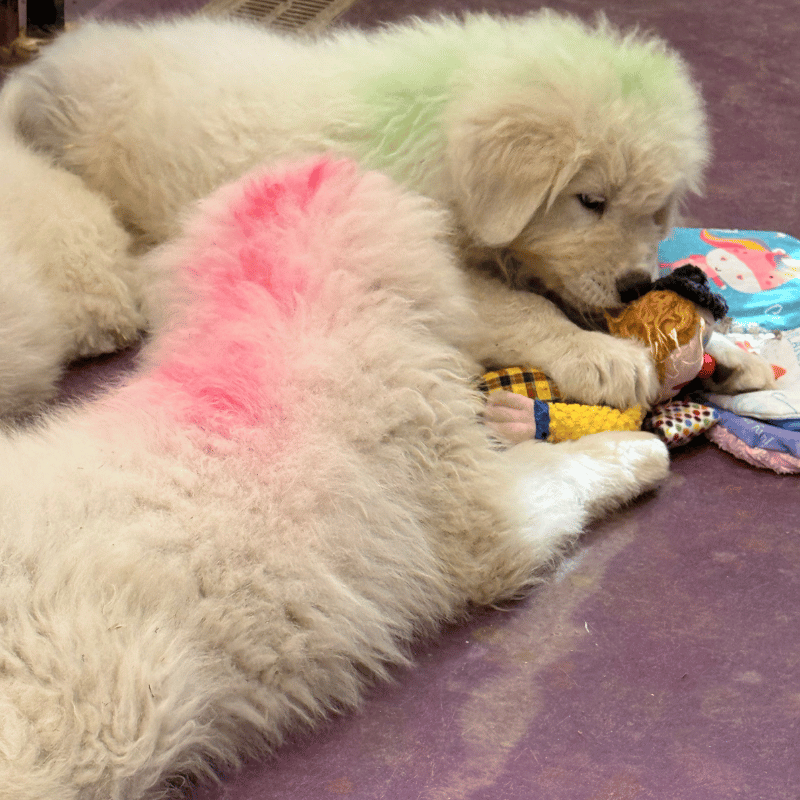
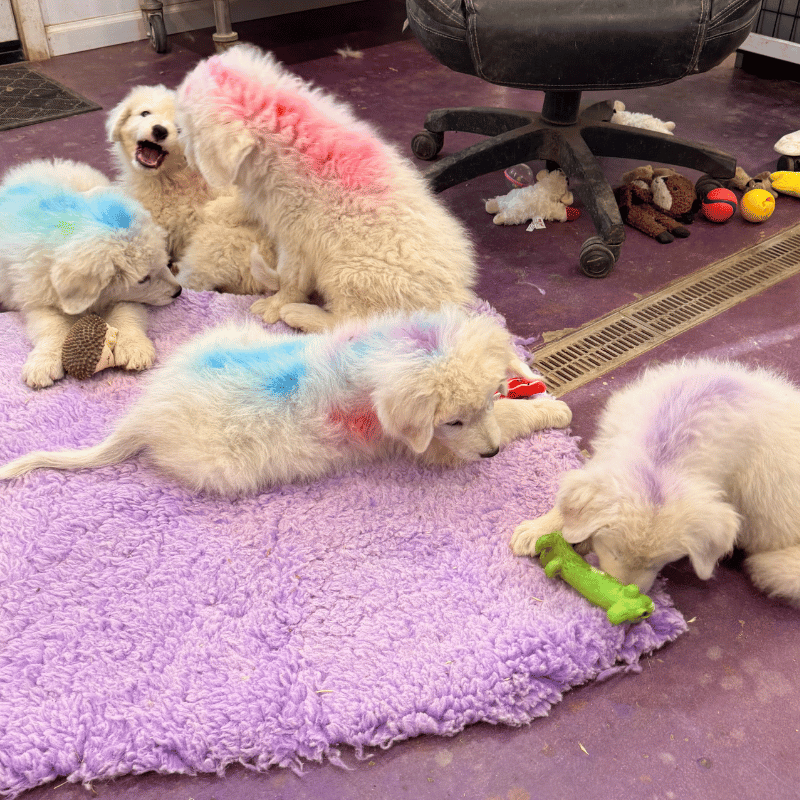
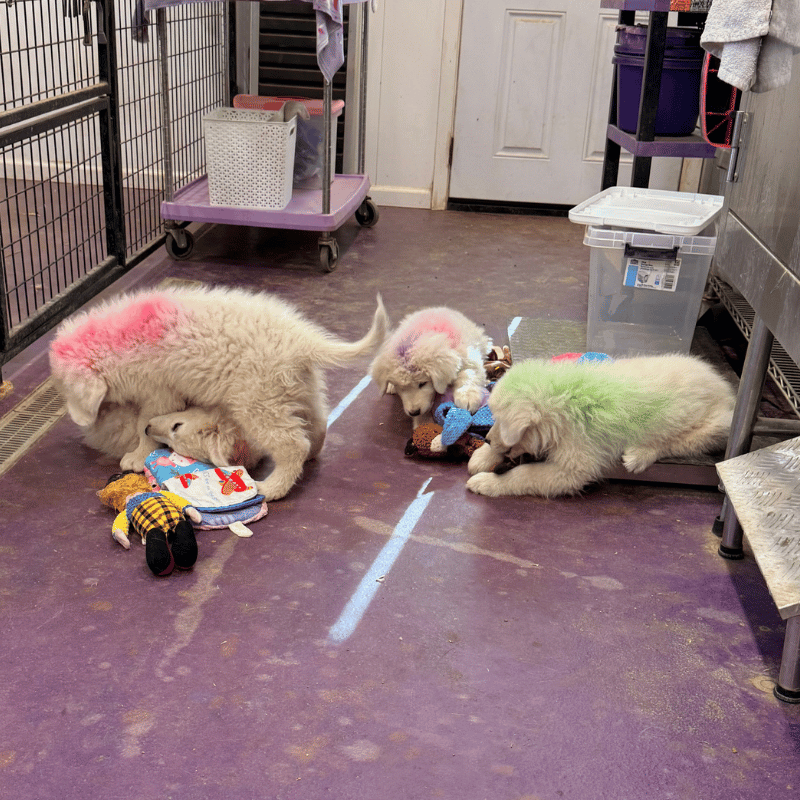
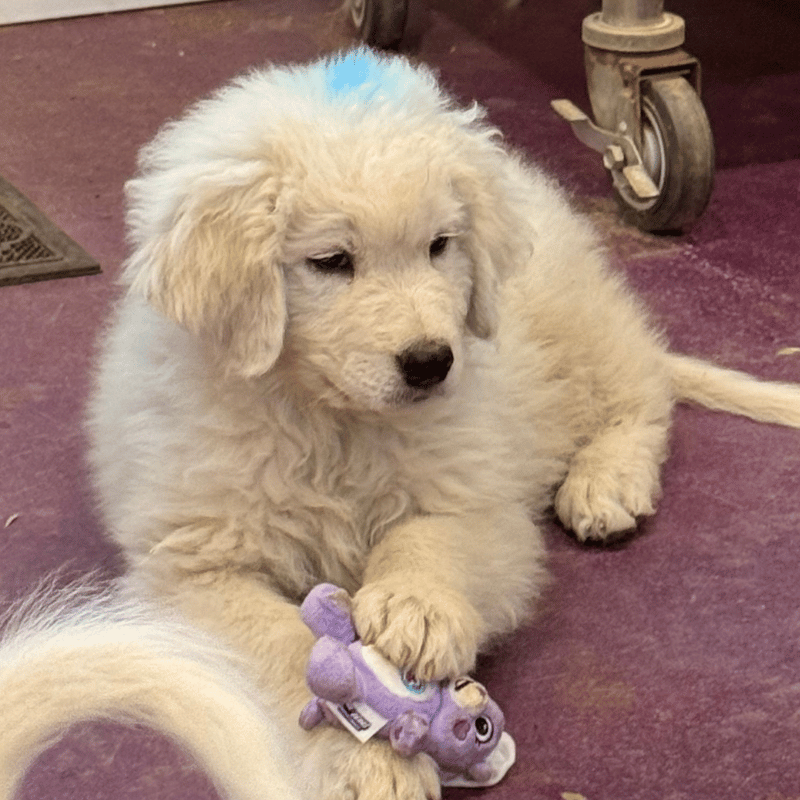
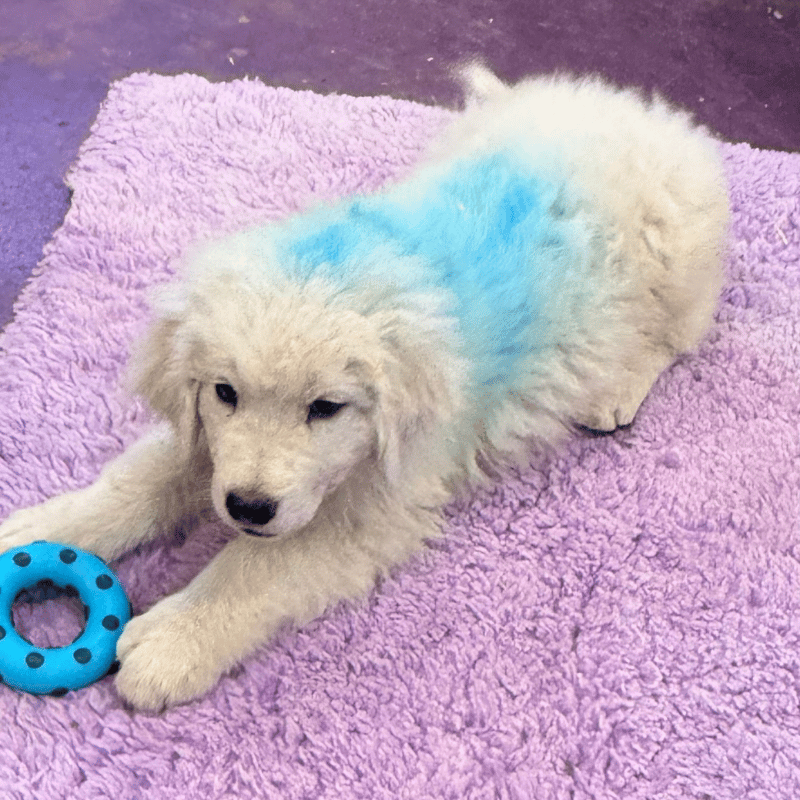
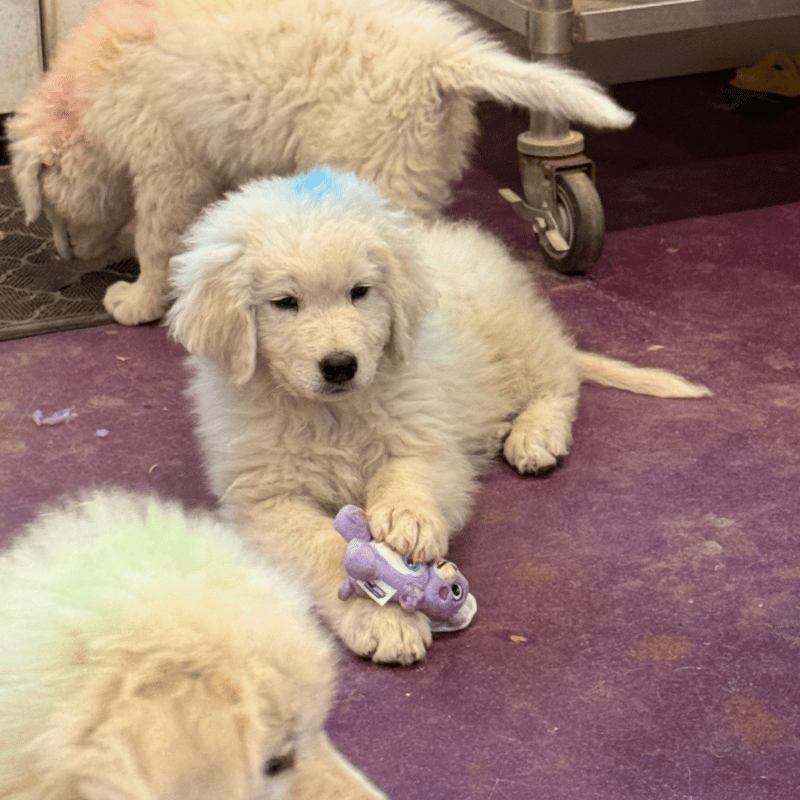
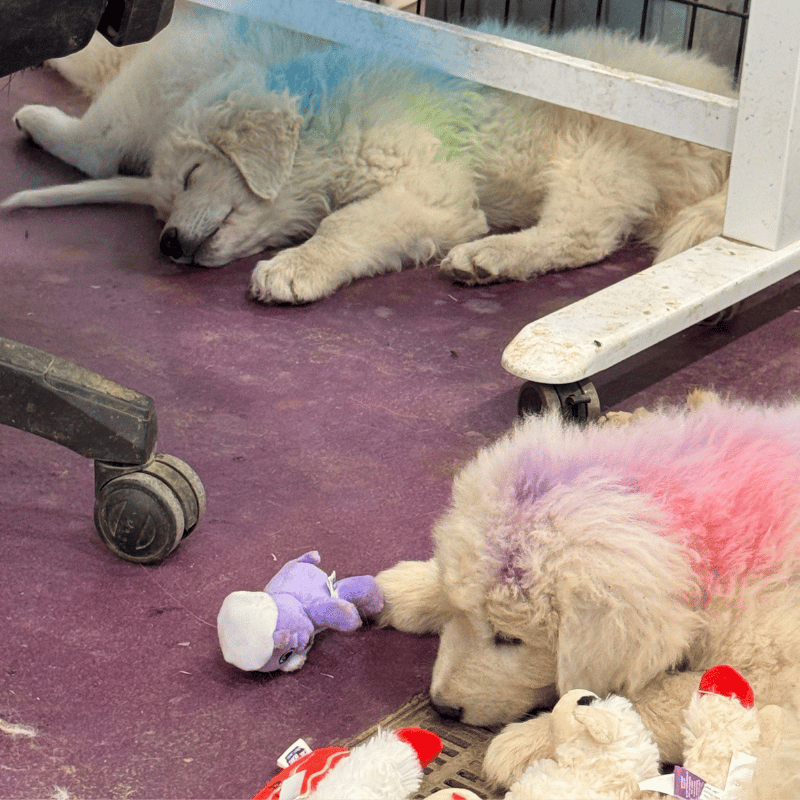
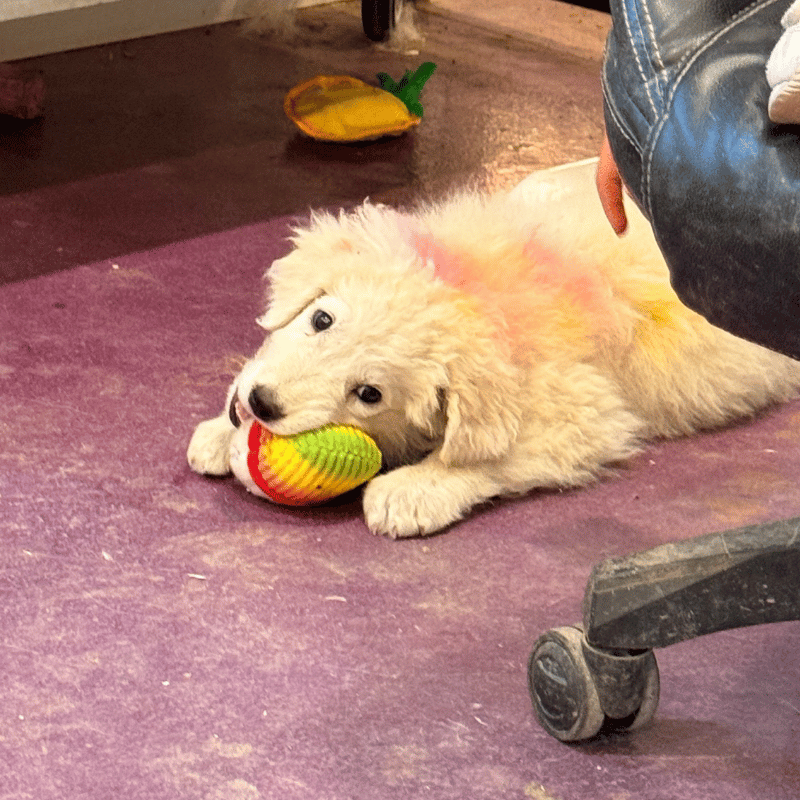
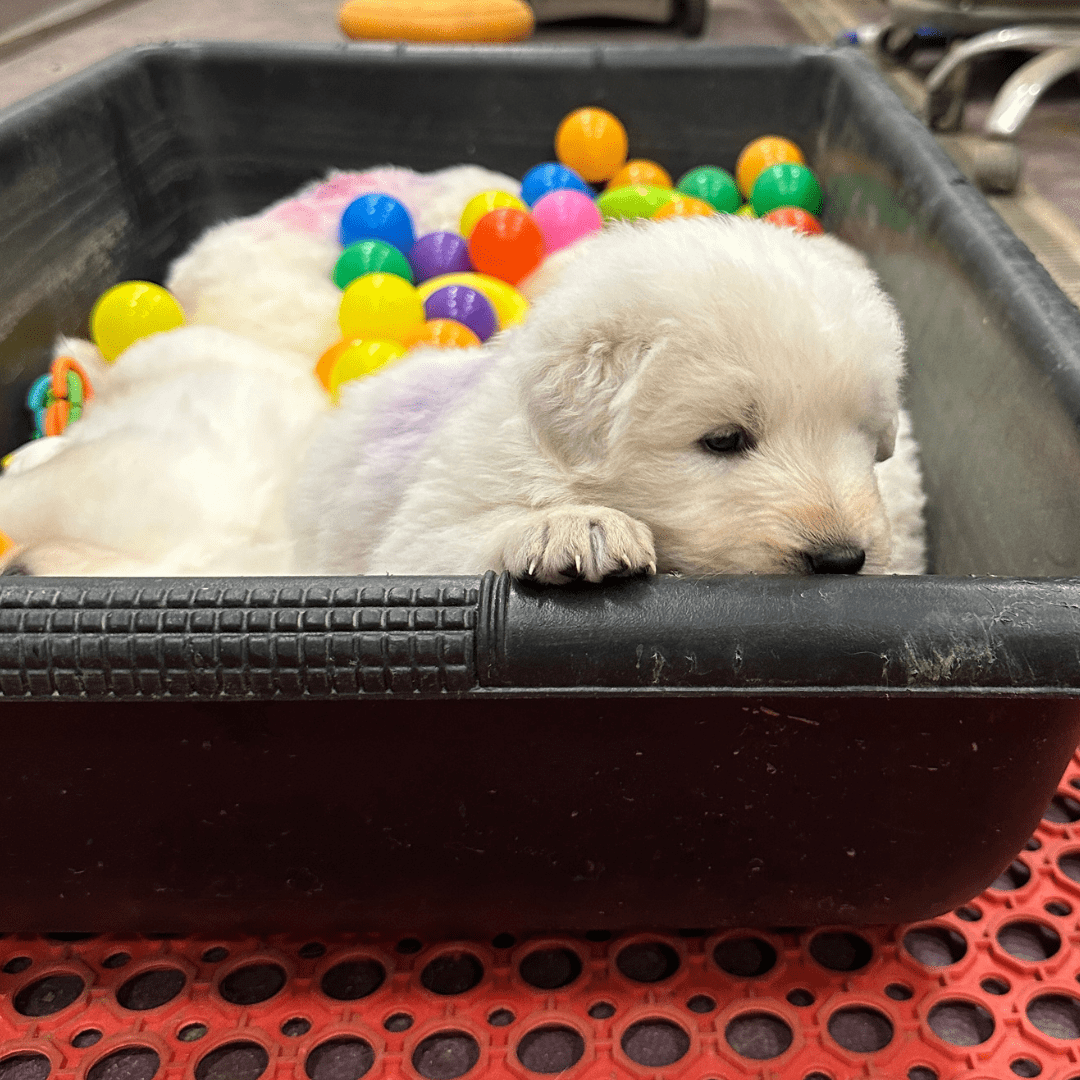
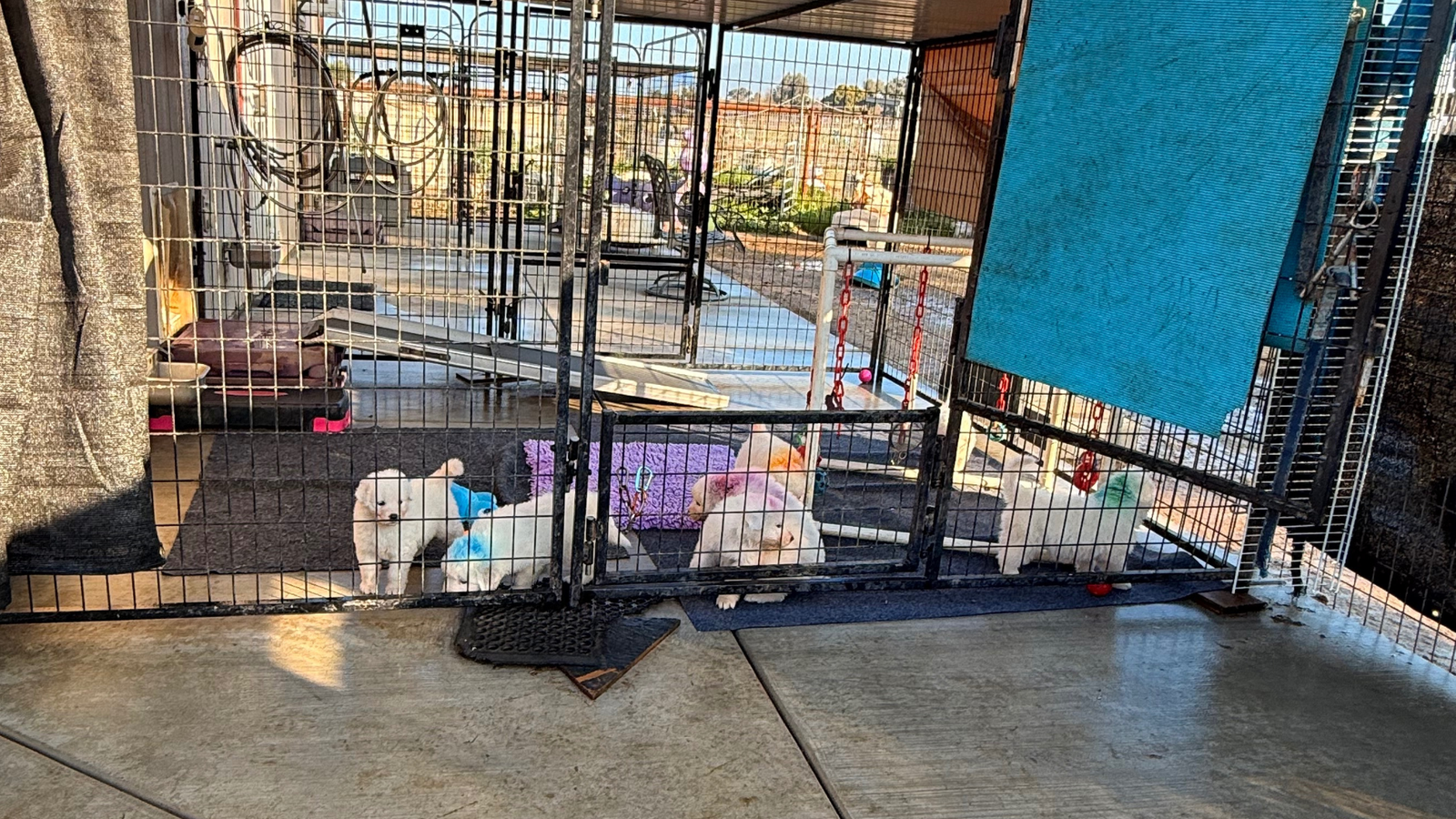
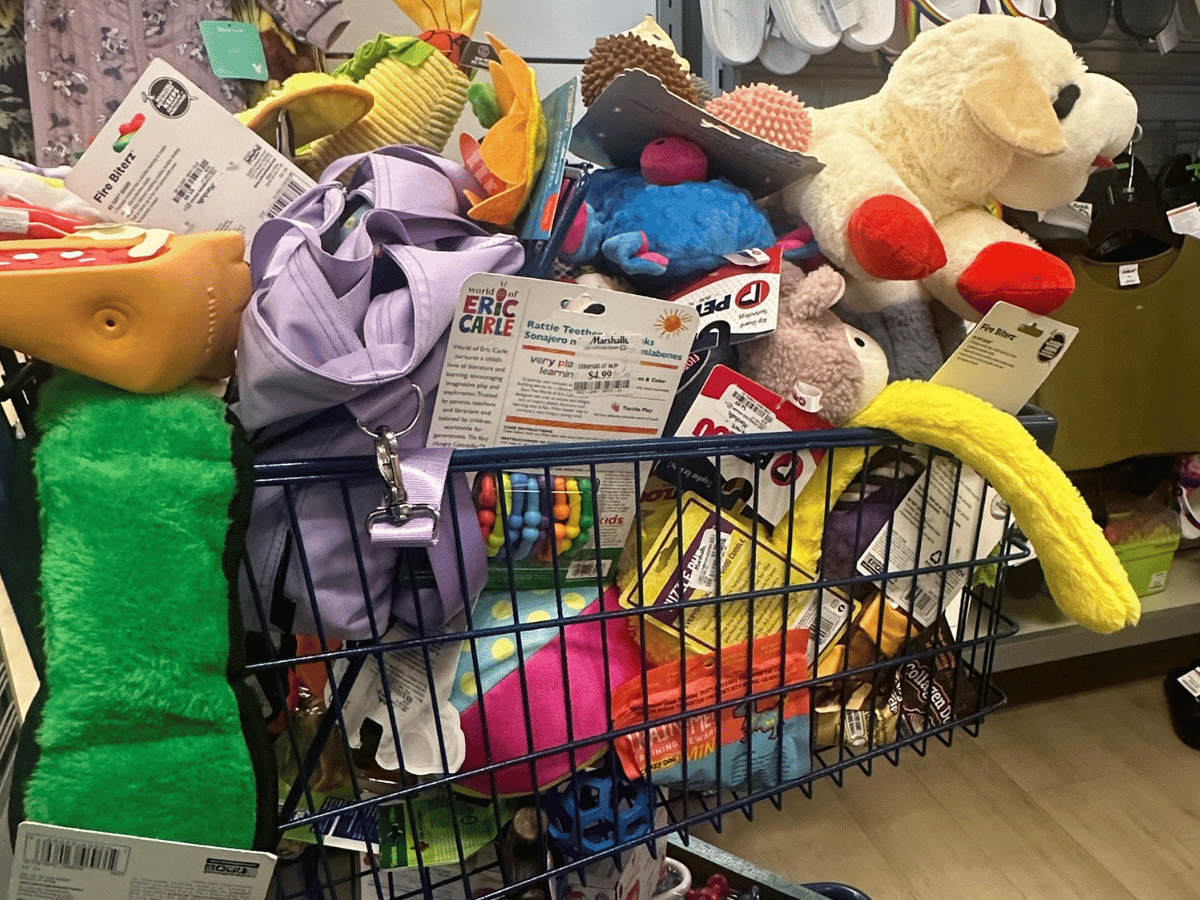
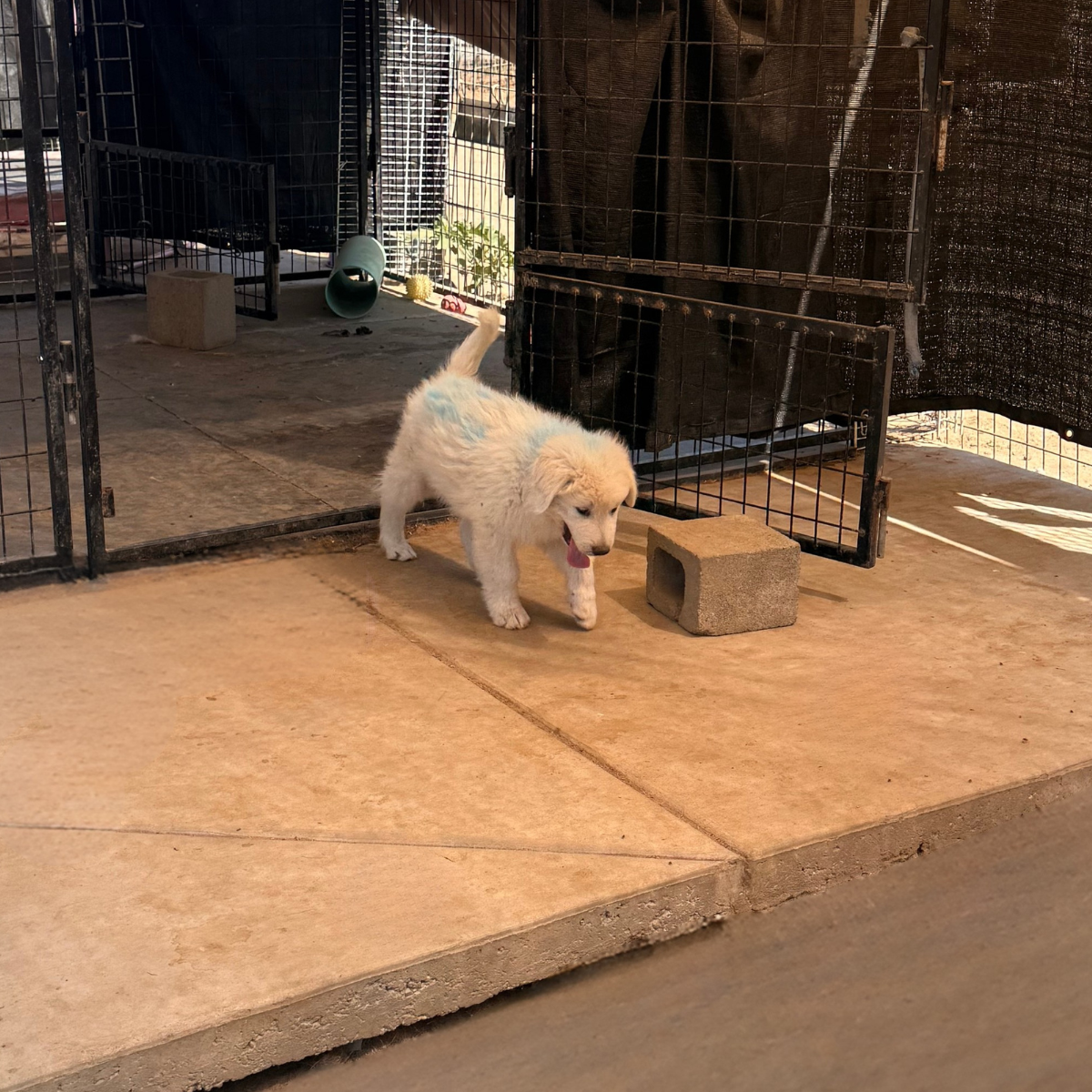
Inside the Puppy Parlor, enrichment is deliberate and ever-changing. Different textures underfoot — astro turf, rubber mats, wood, carpet, soft bedding — so no surface feels foreign. Toys that make noise, crinkle, squeak, and move. Objects of different shapes, weights, and materials introduced and rotated regularly so novelty becomes normal.
Sound is a big part of it too. The Fire TV runs — nature sounds, music, thunderstorms, fireworks sounds, movies, the ordinary chaos of household noise. Fans, blow dryers, vacuums, leaf blowers — the kinds of sounds that startle dogs who've never heard them and barely register for dogs who grew up with them. We introduce these intentionally, at appropriate volumes, so puppies build sound tolerance as a matter of course.
The goal isn't desensitization in the clinical sense. It's something simpler: a puppy who's encountered so many different things that one more new thing is just... interesting. Not alarming. Interesting.
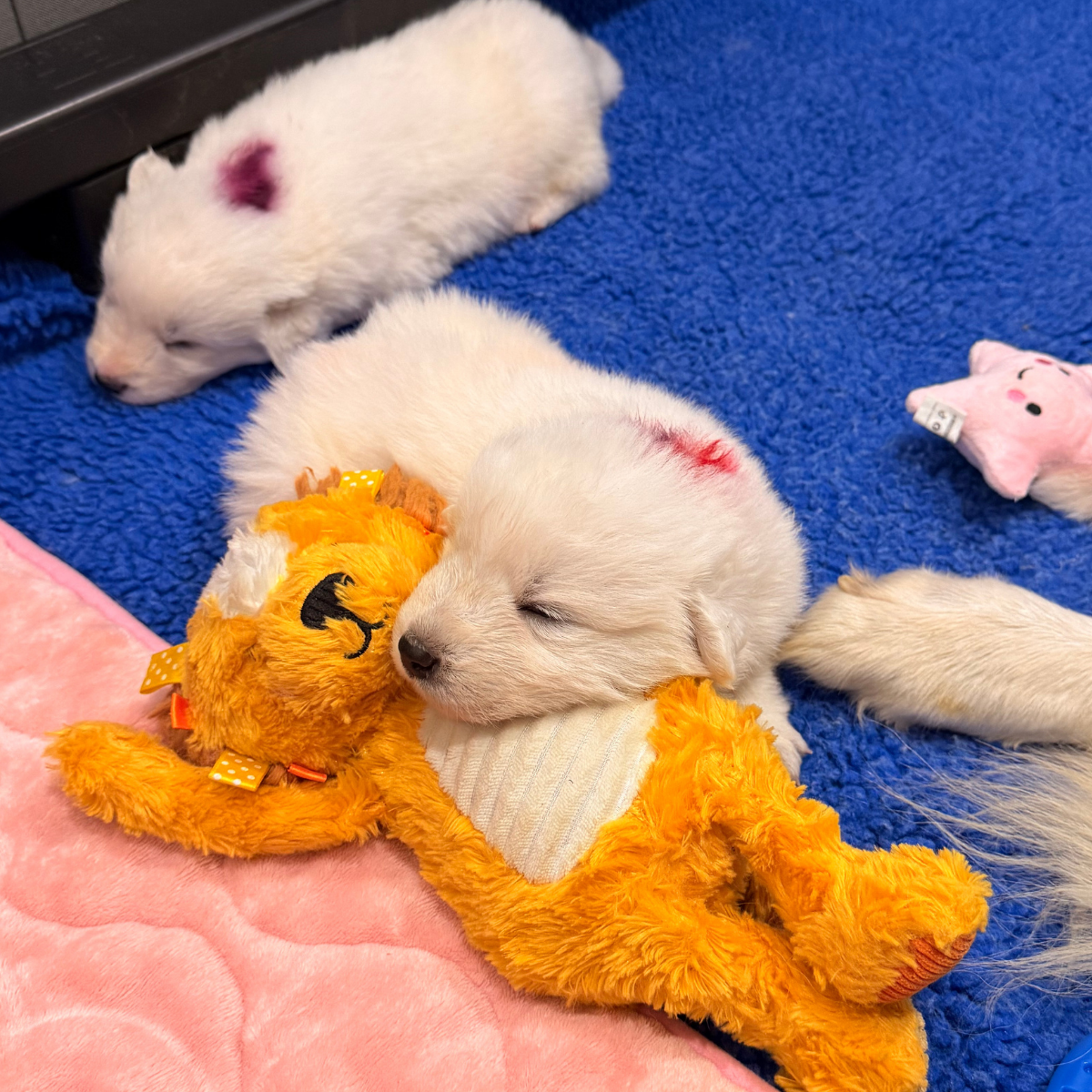
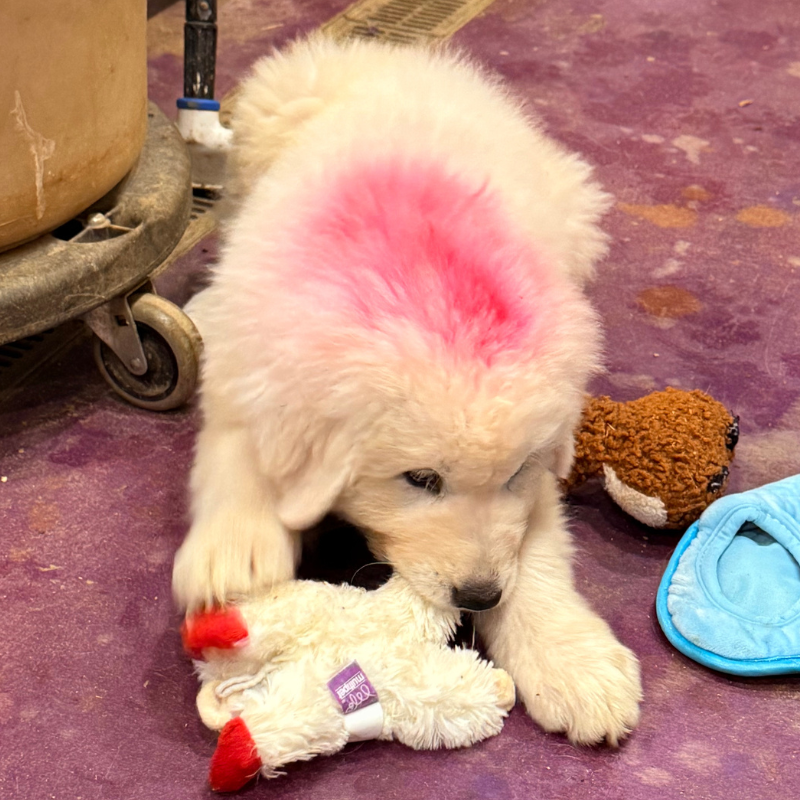
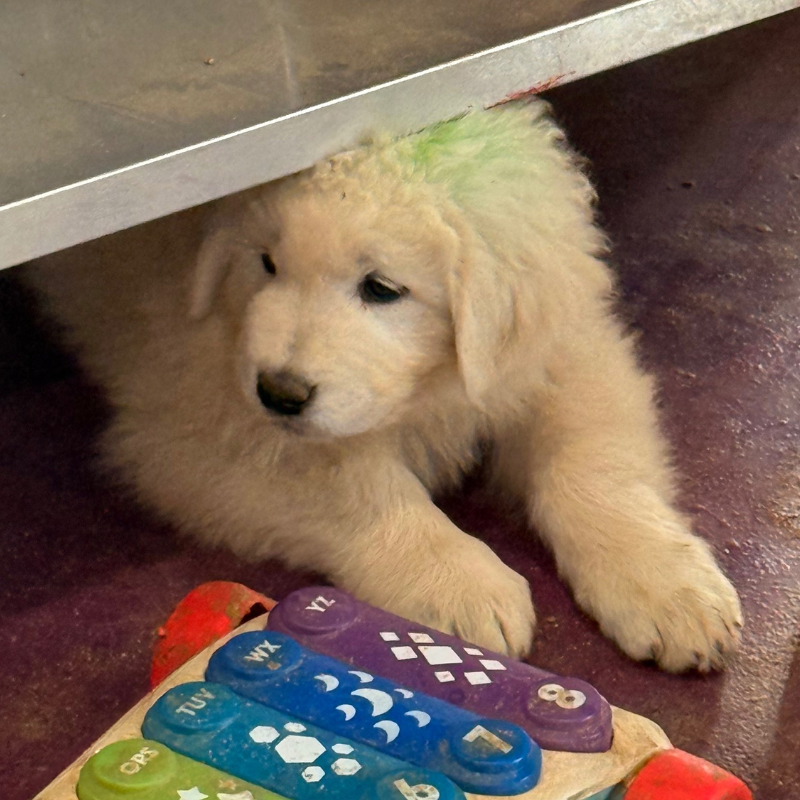
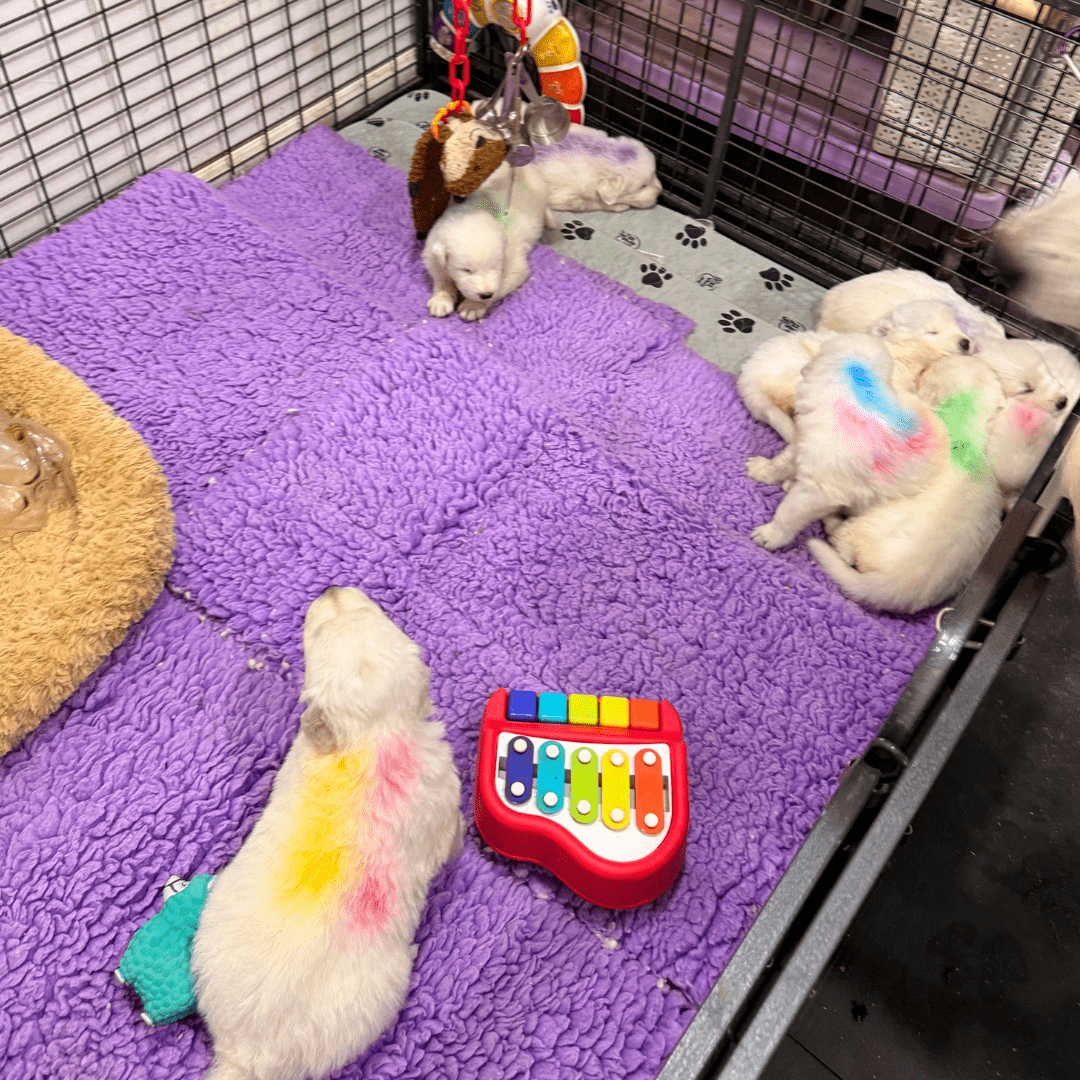
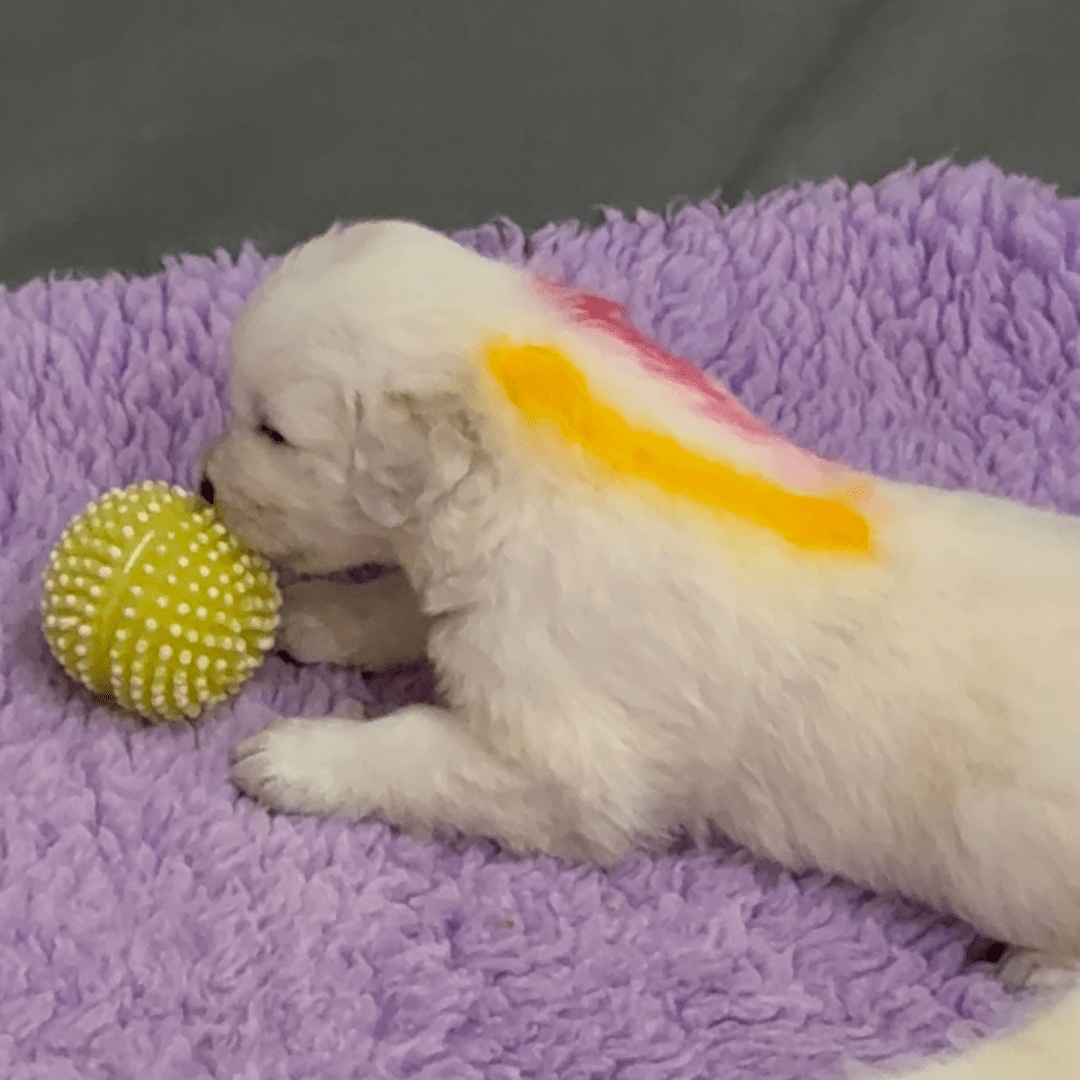
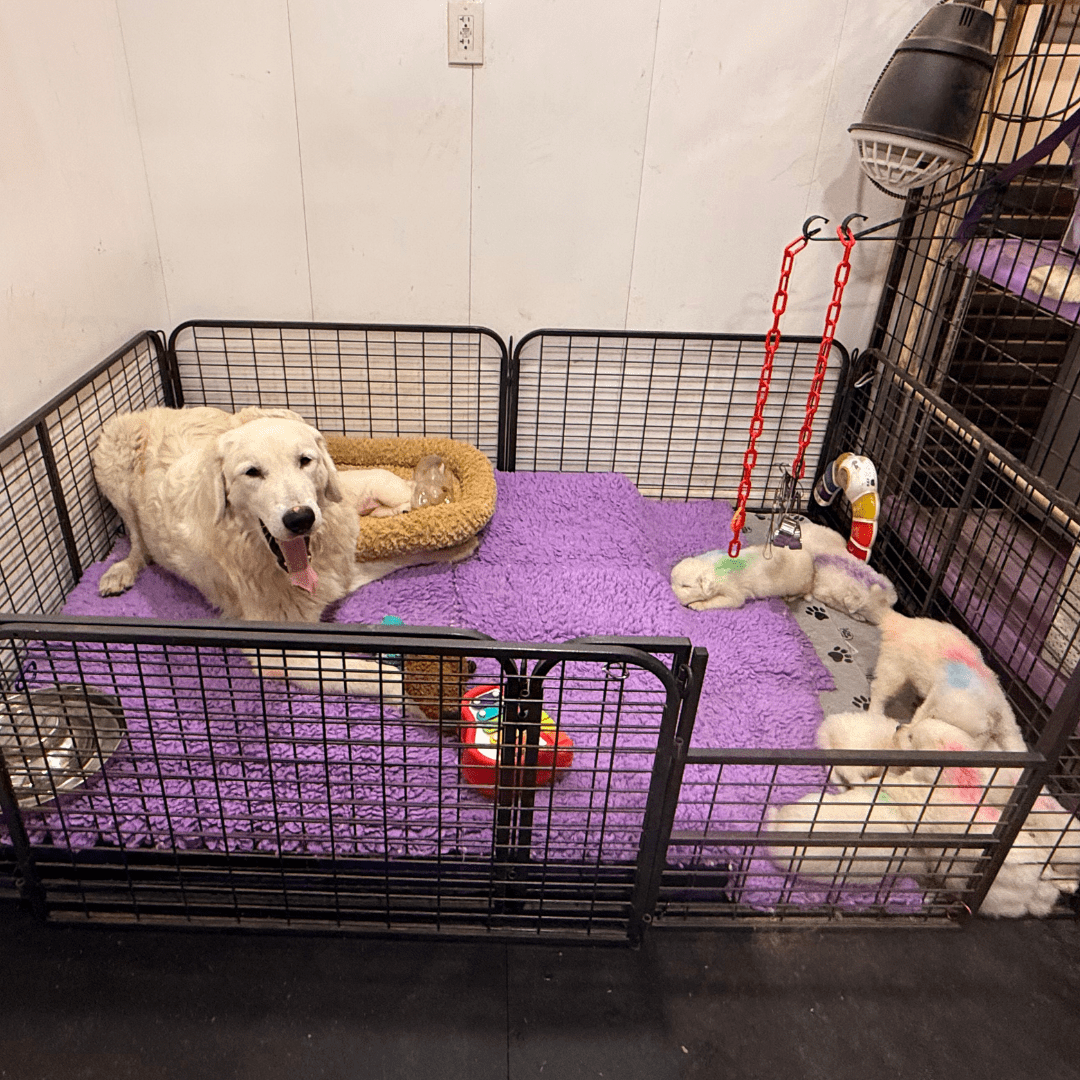
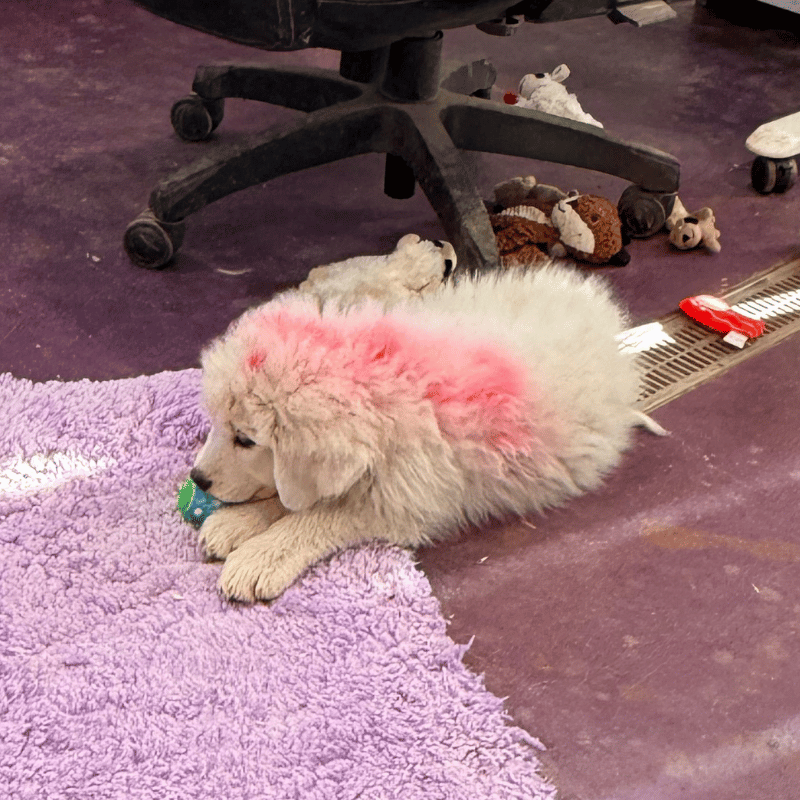
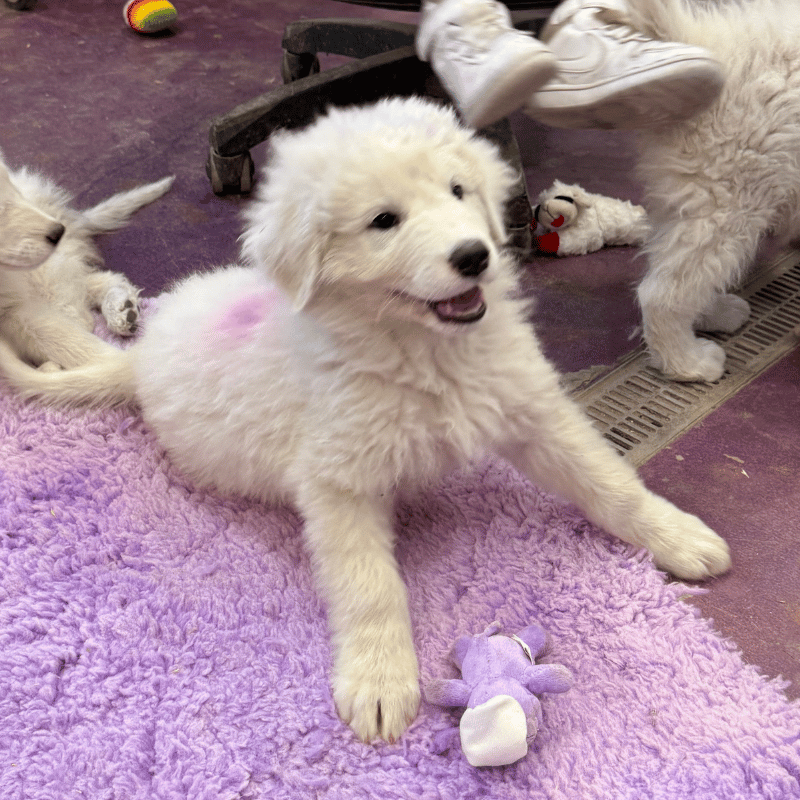
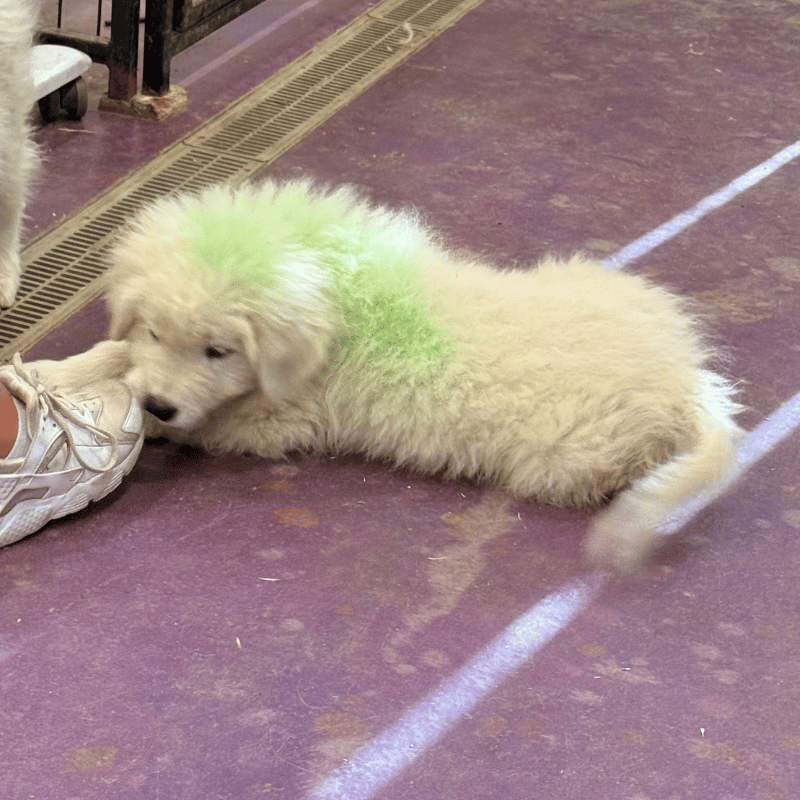
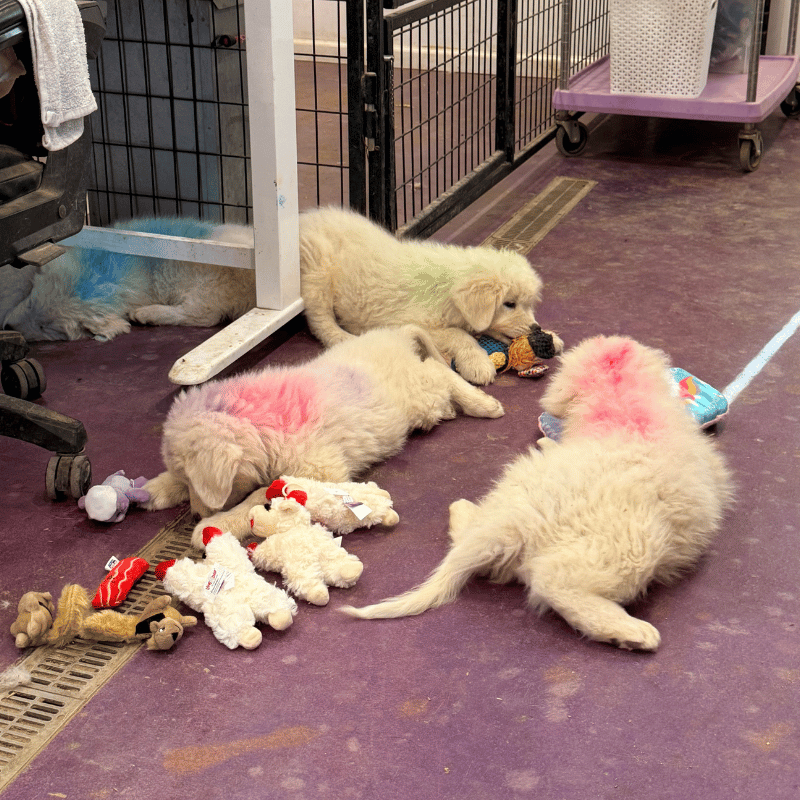
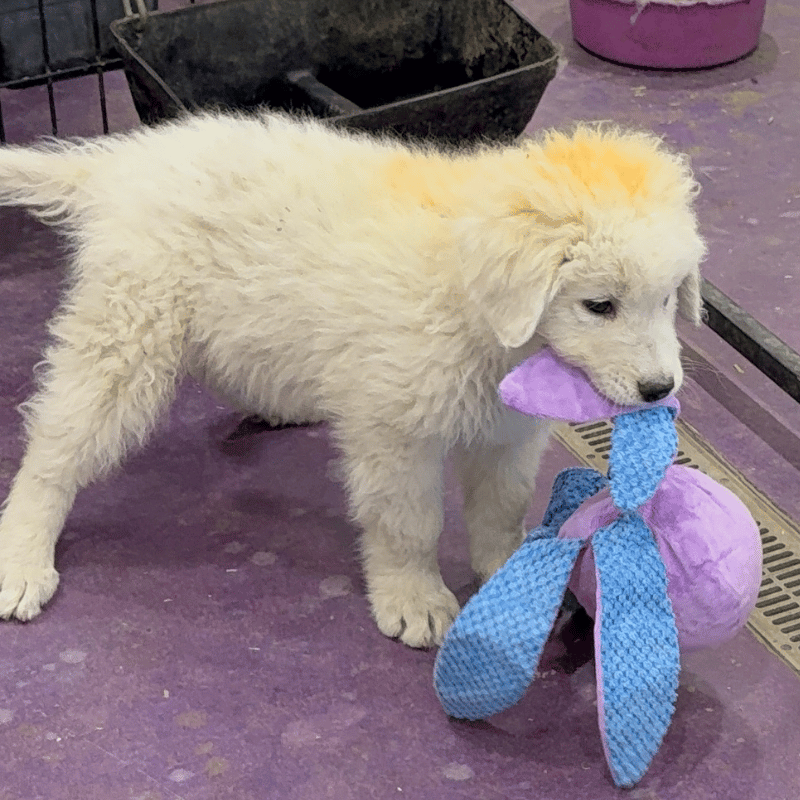
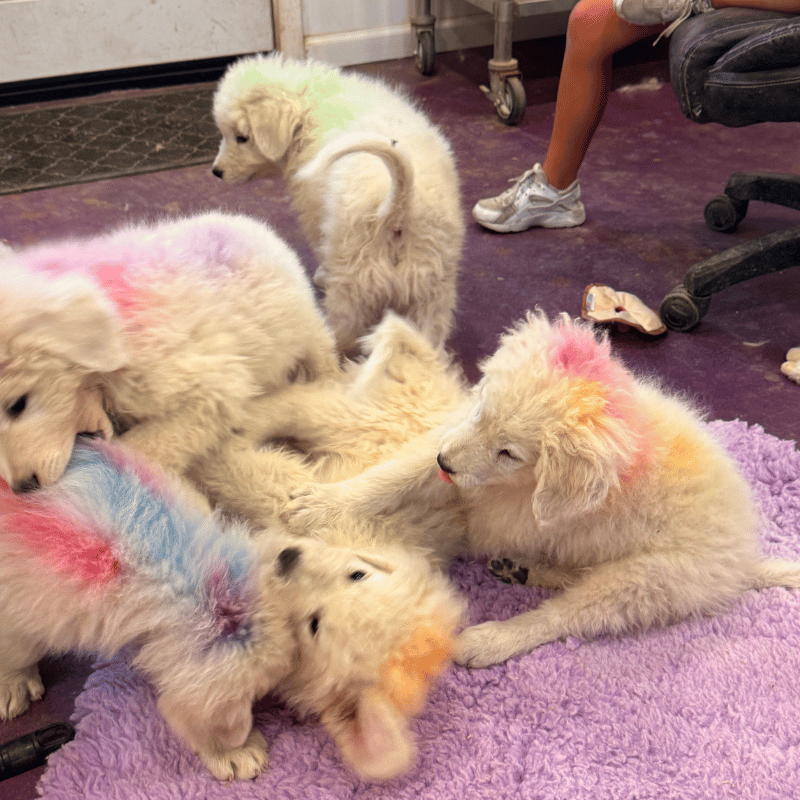

The World Comes to Them — Big Sounds, Real Vehicles, and Everything in Between
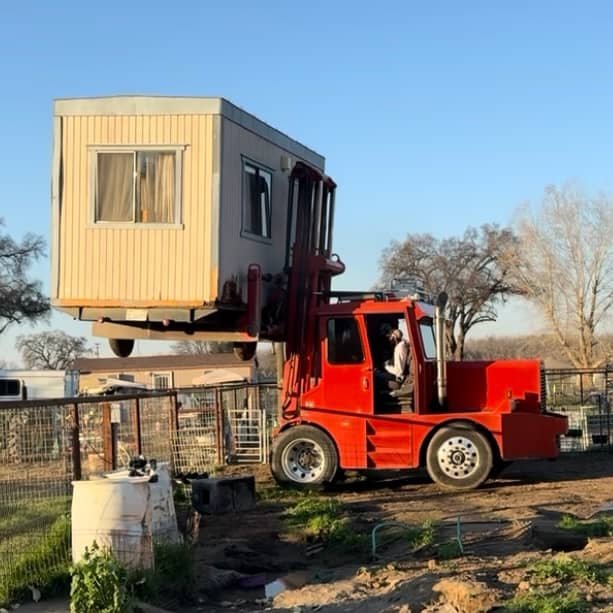
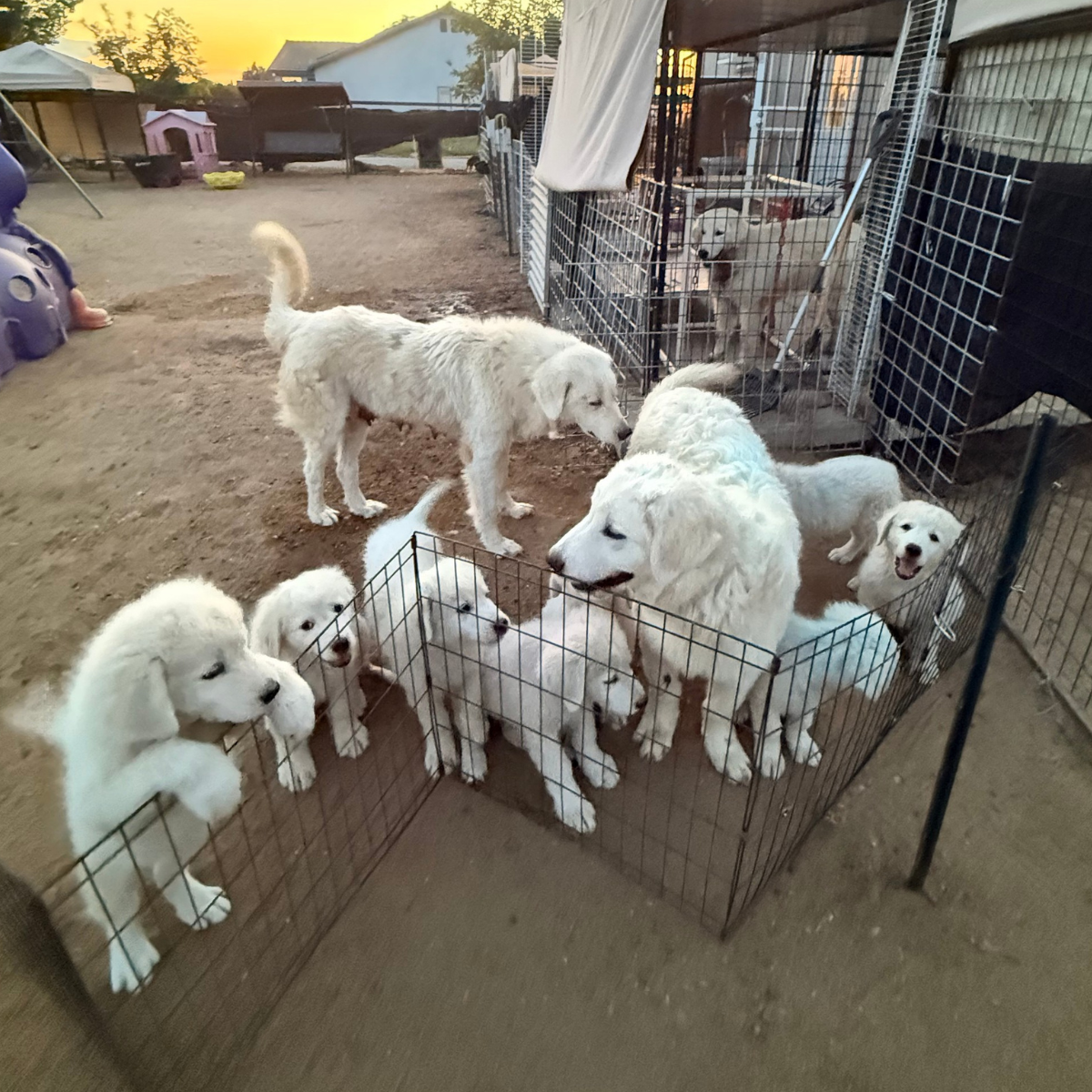
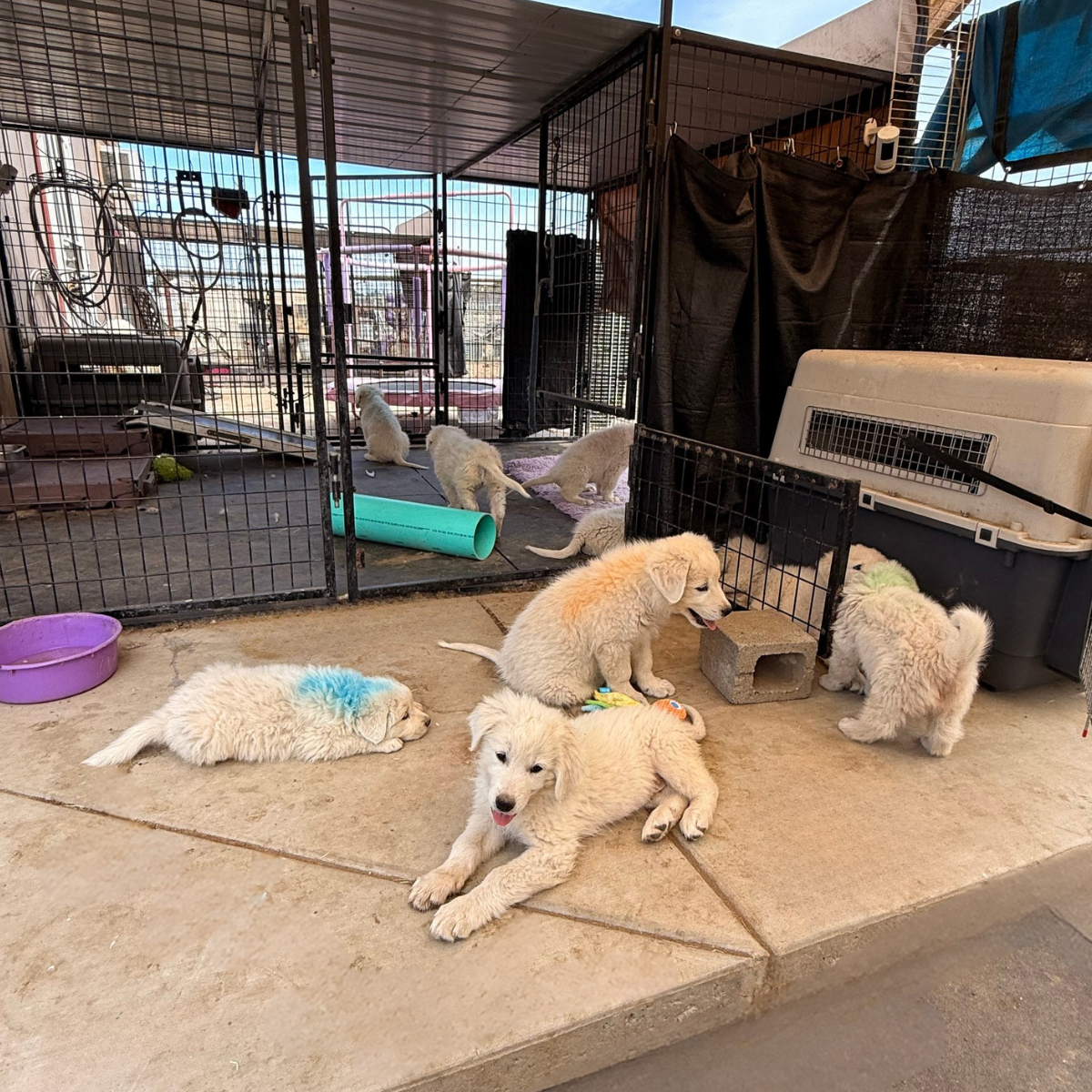
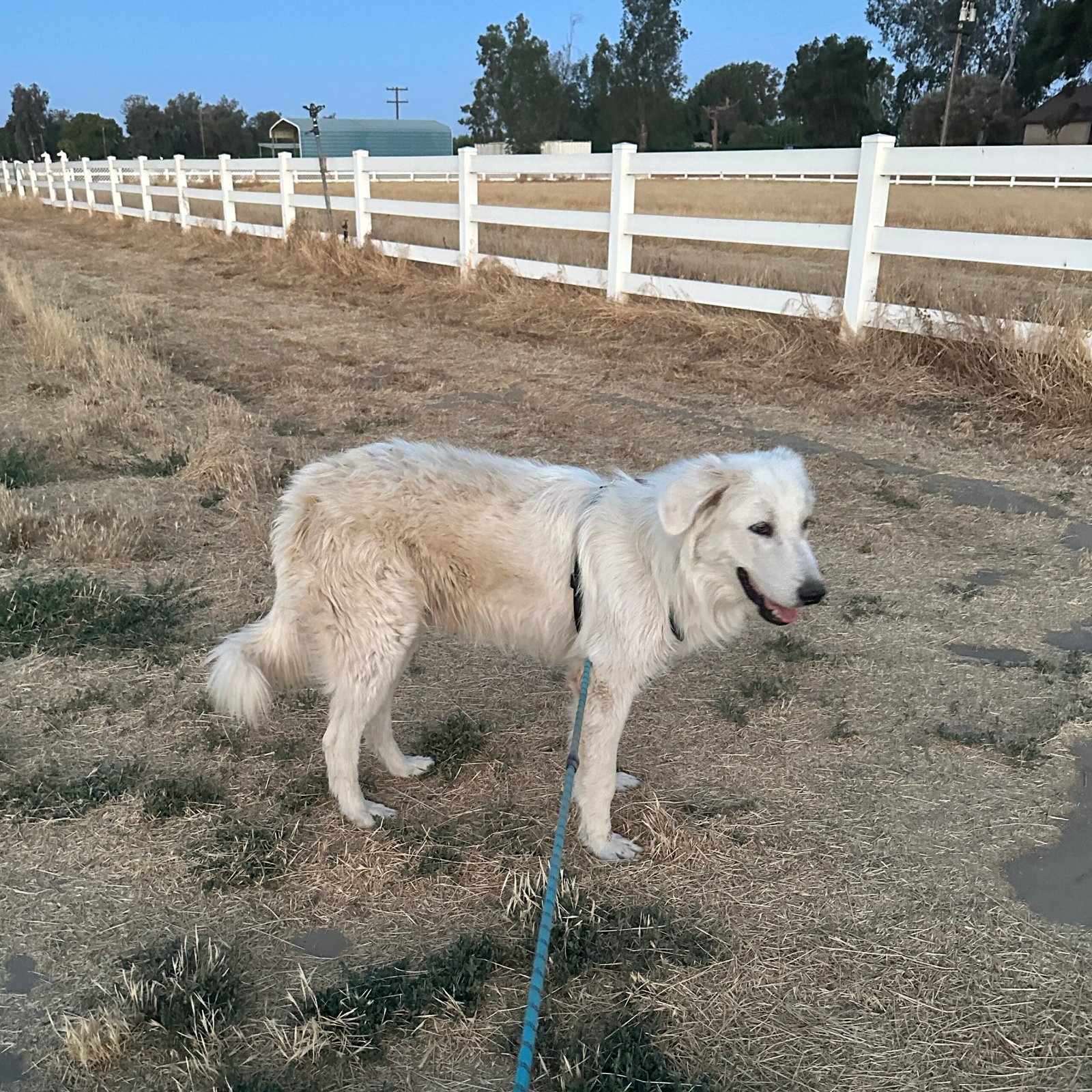
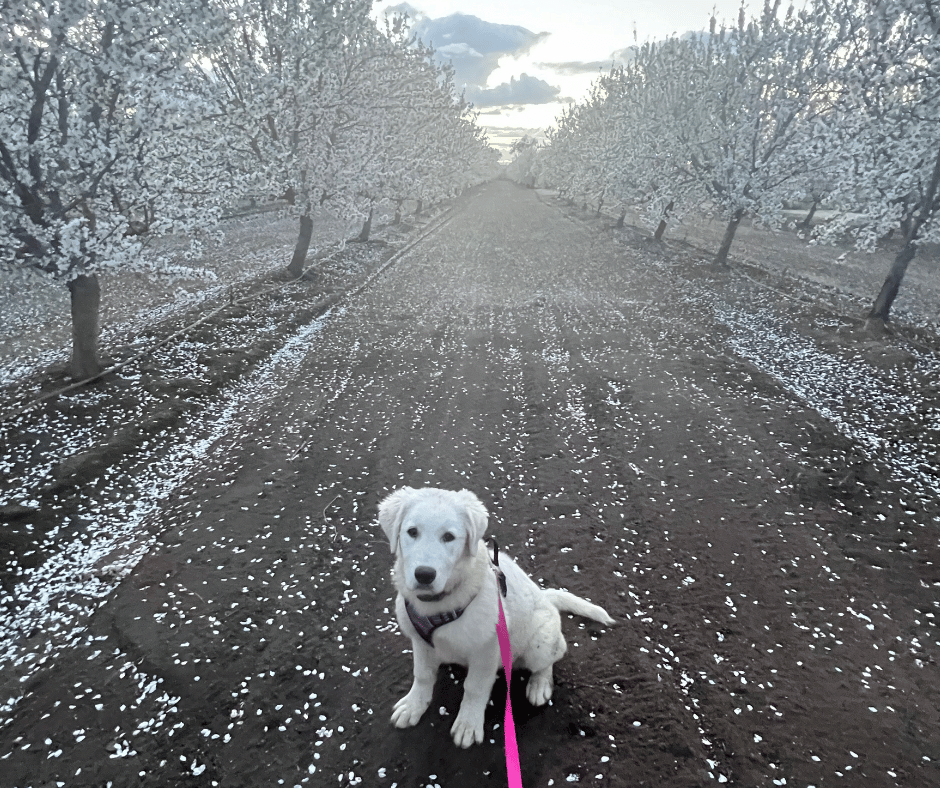
Once puppies are outside and mobile, the socialization picture gets a lot bigger. And on a working farm in Central California, "the world" shows up in some pretty remarkable ways.
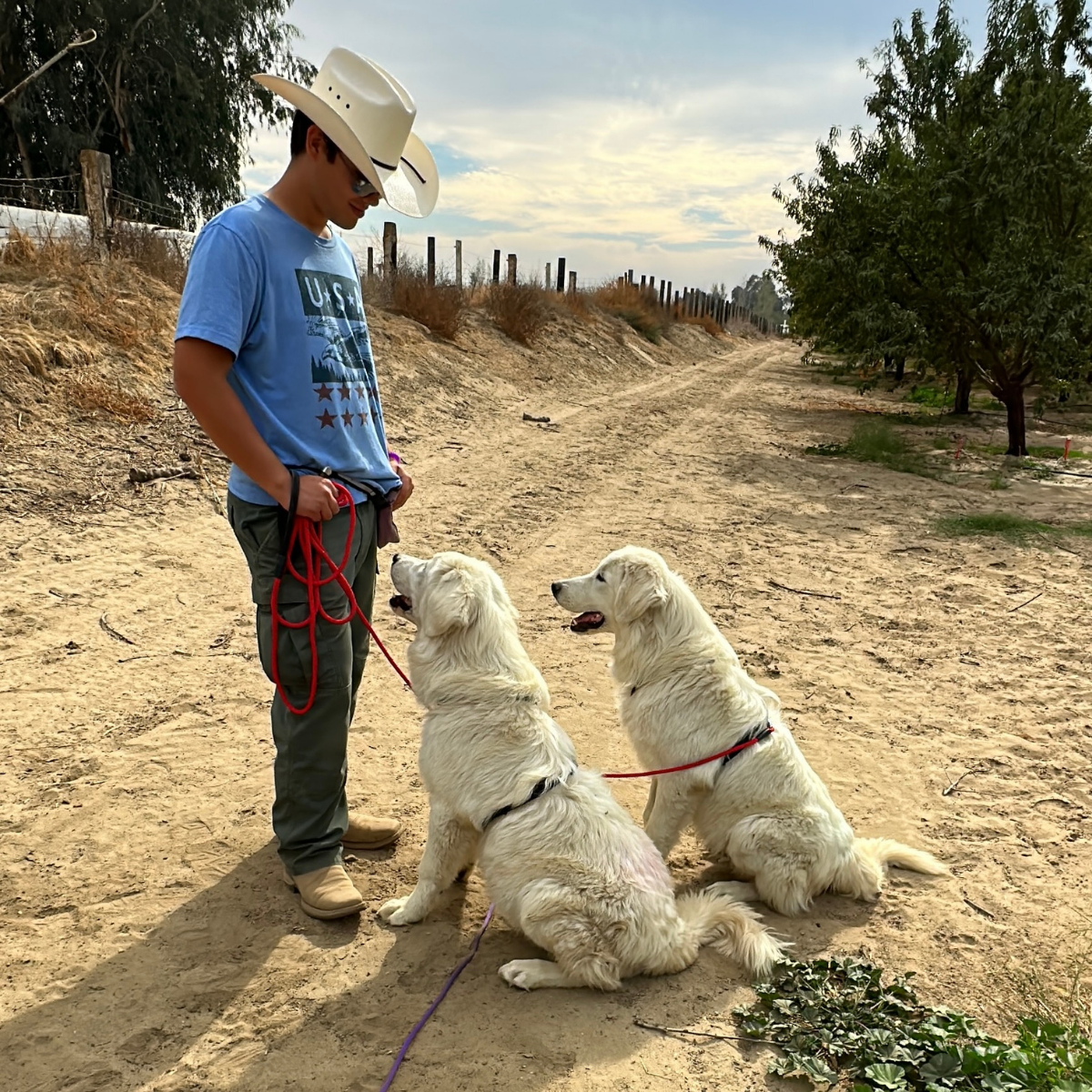
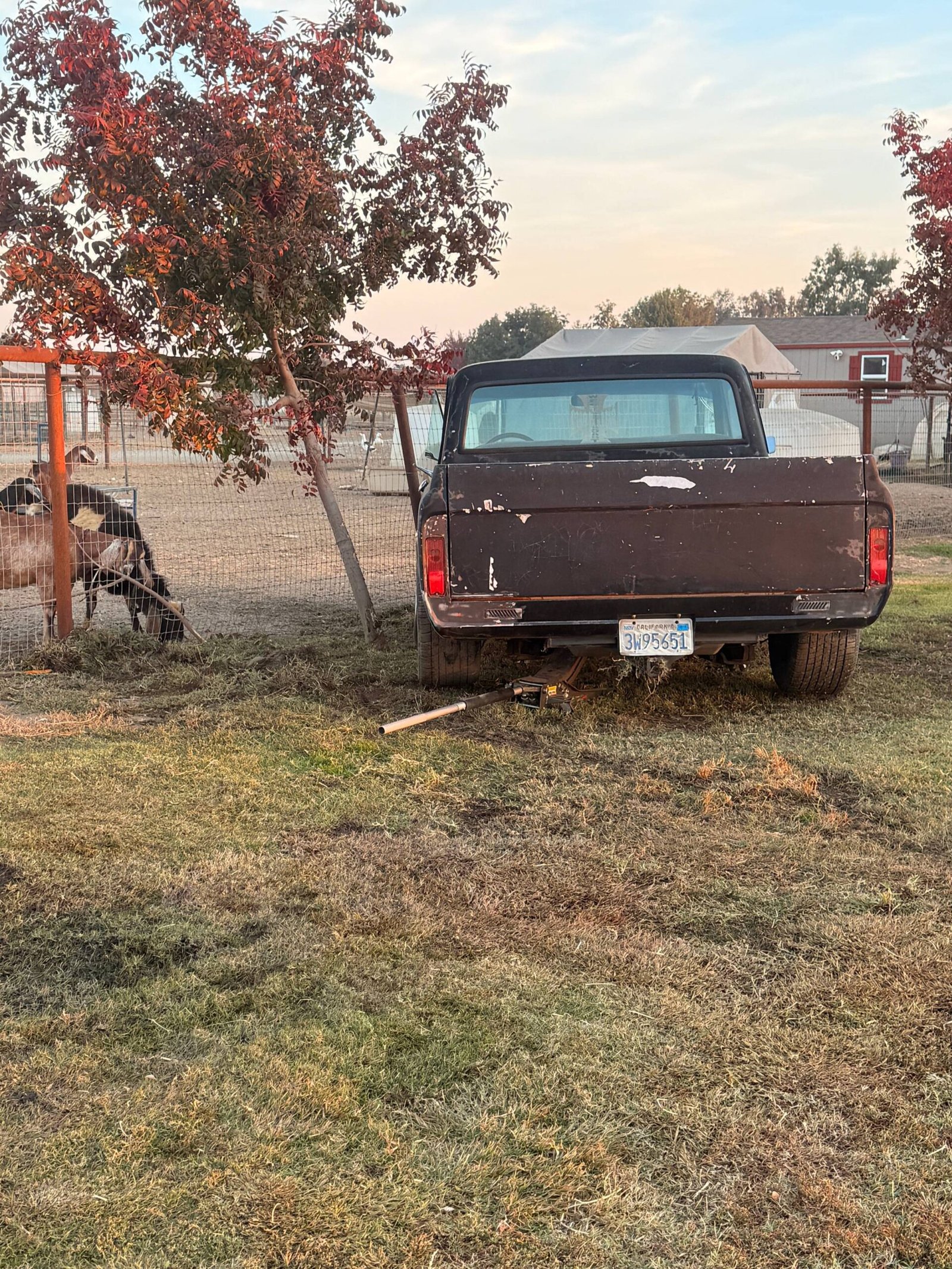
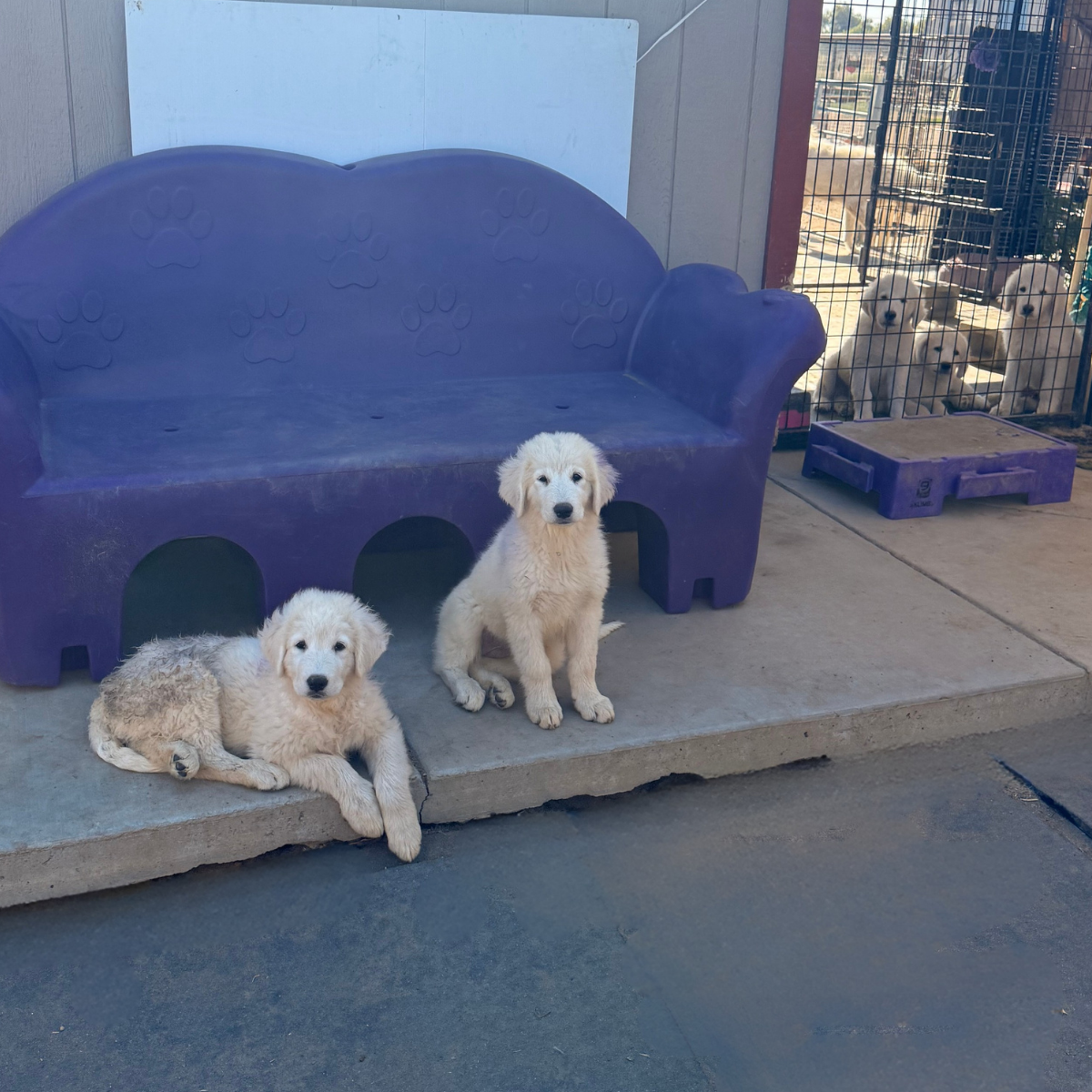
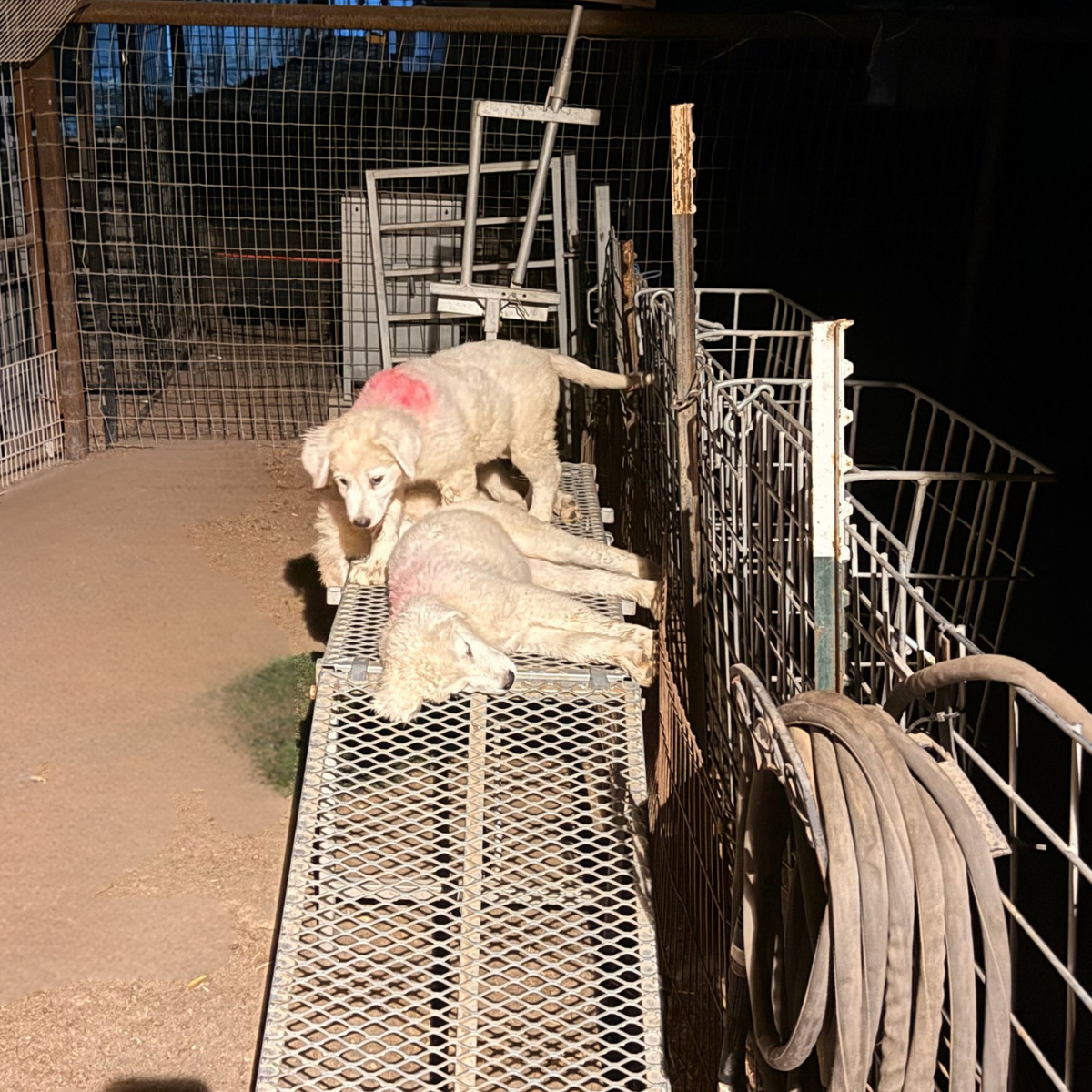
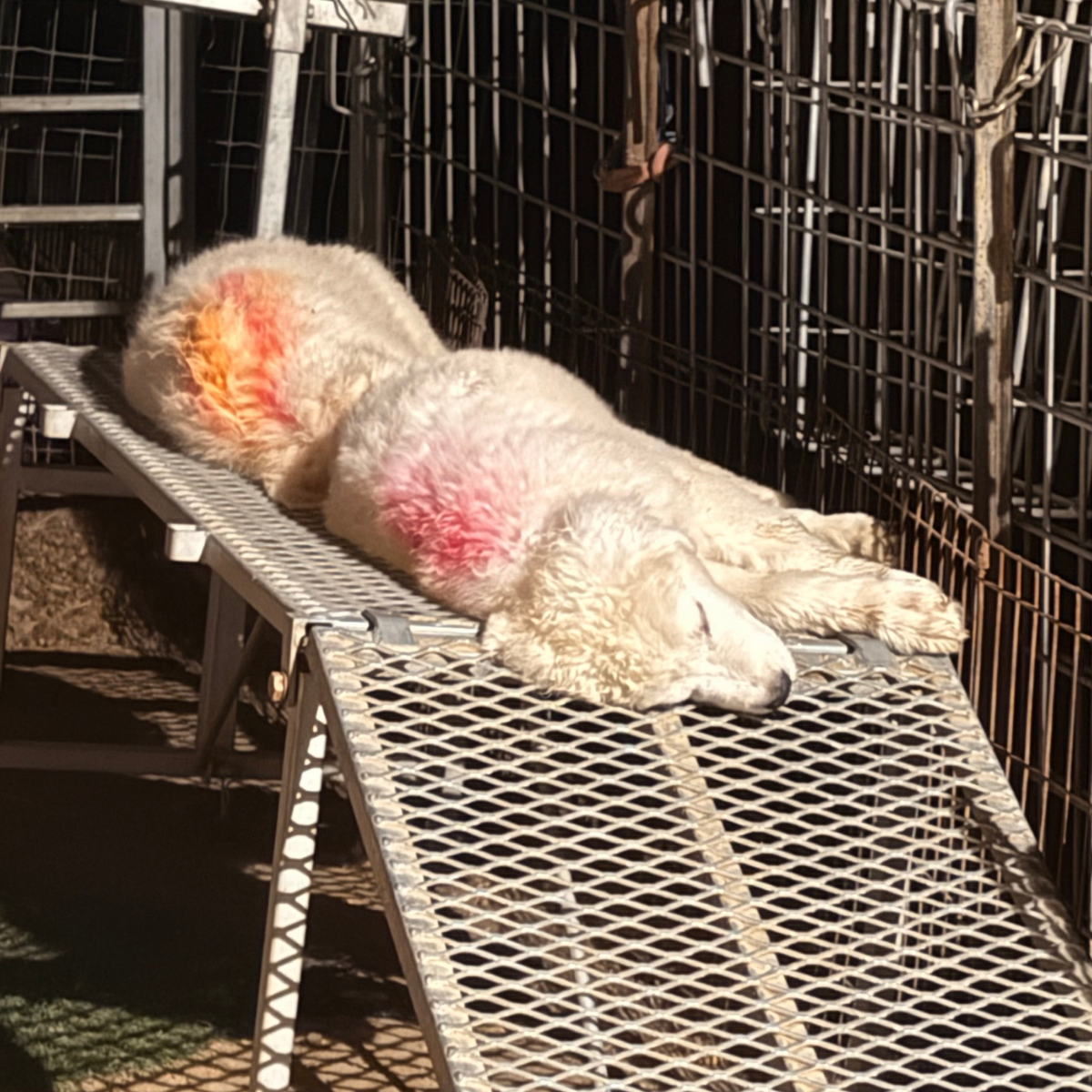
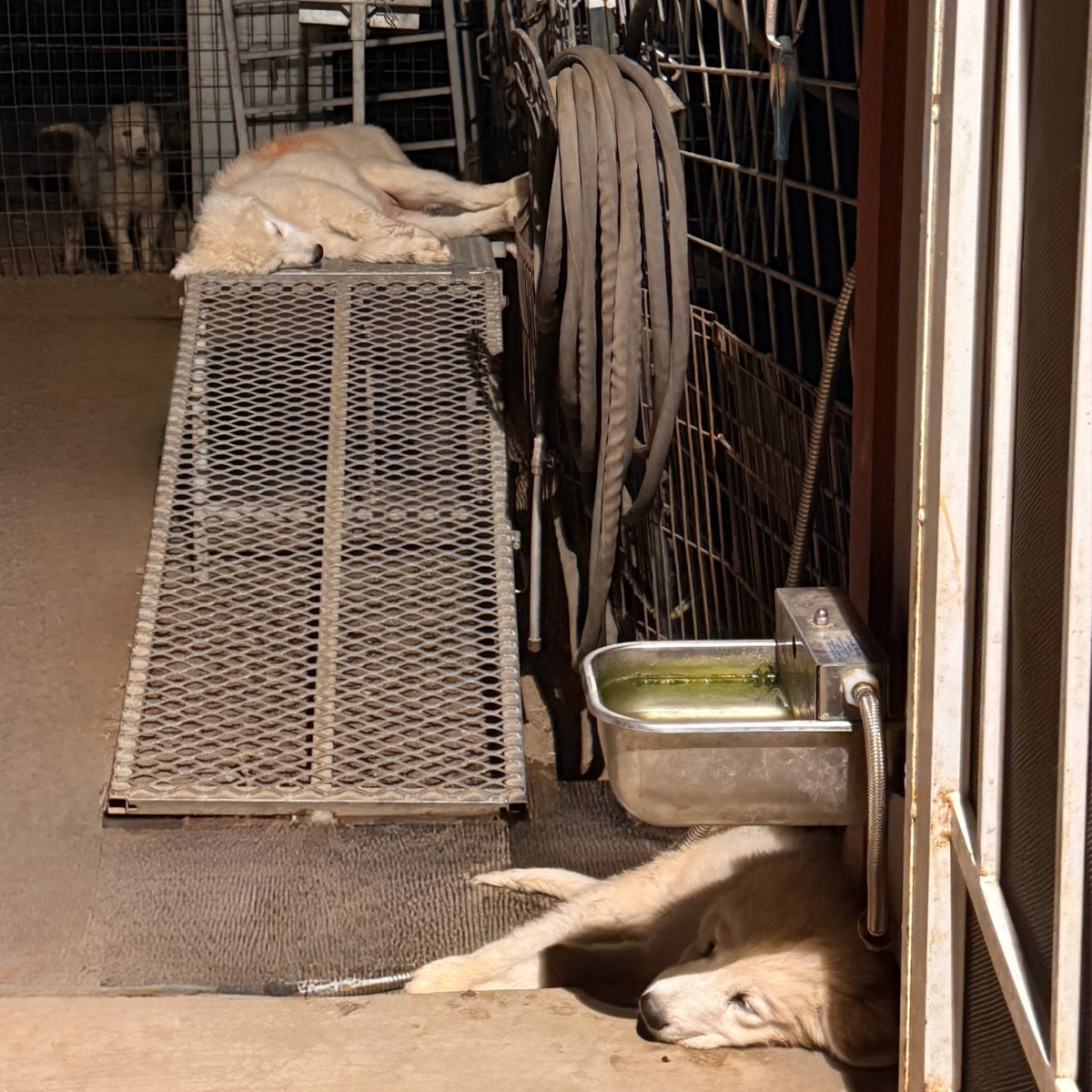
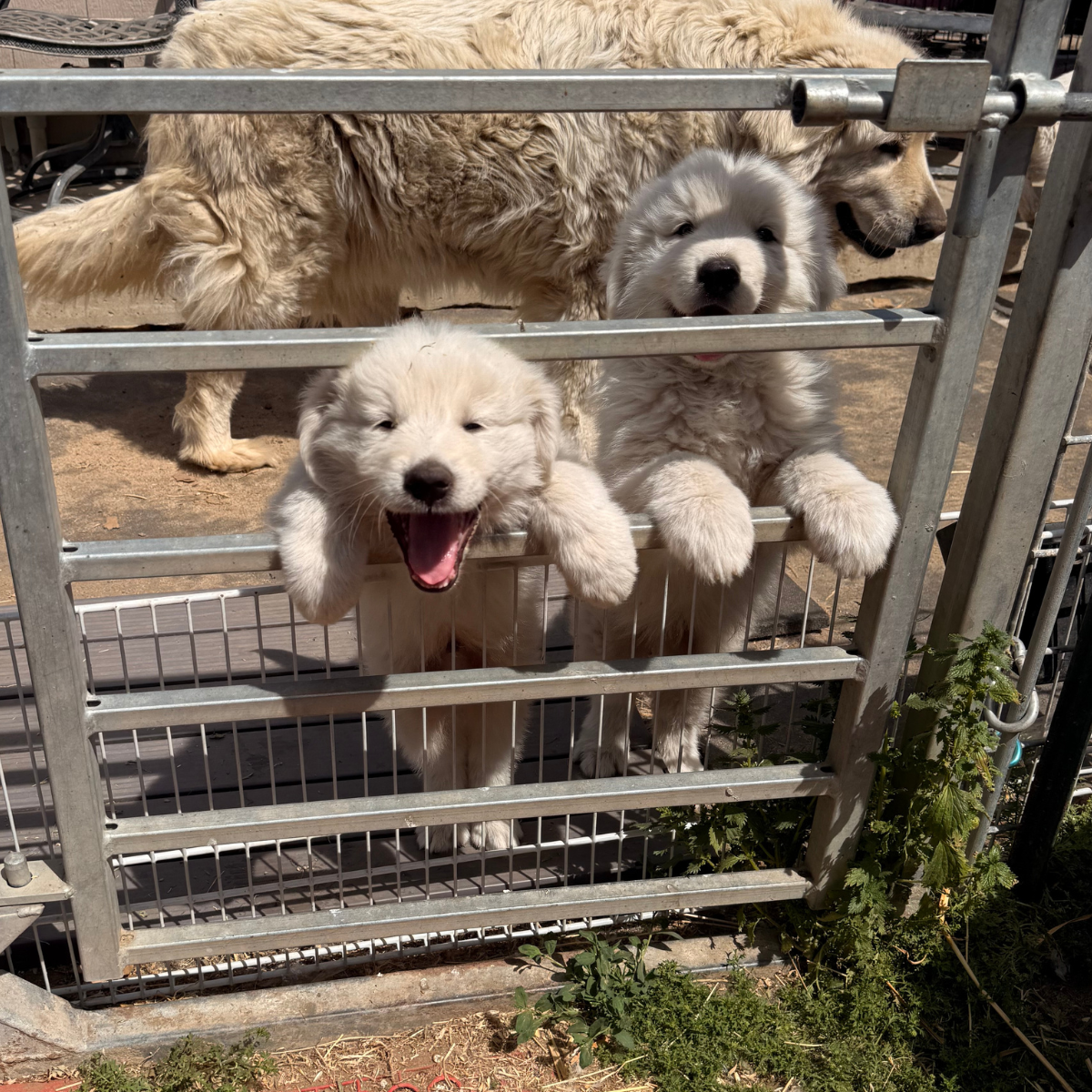
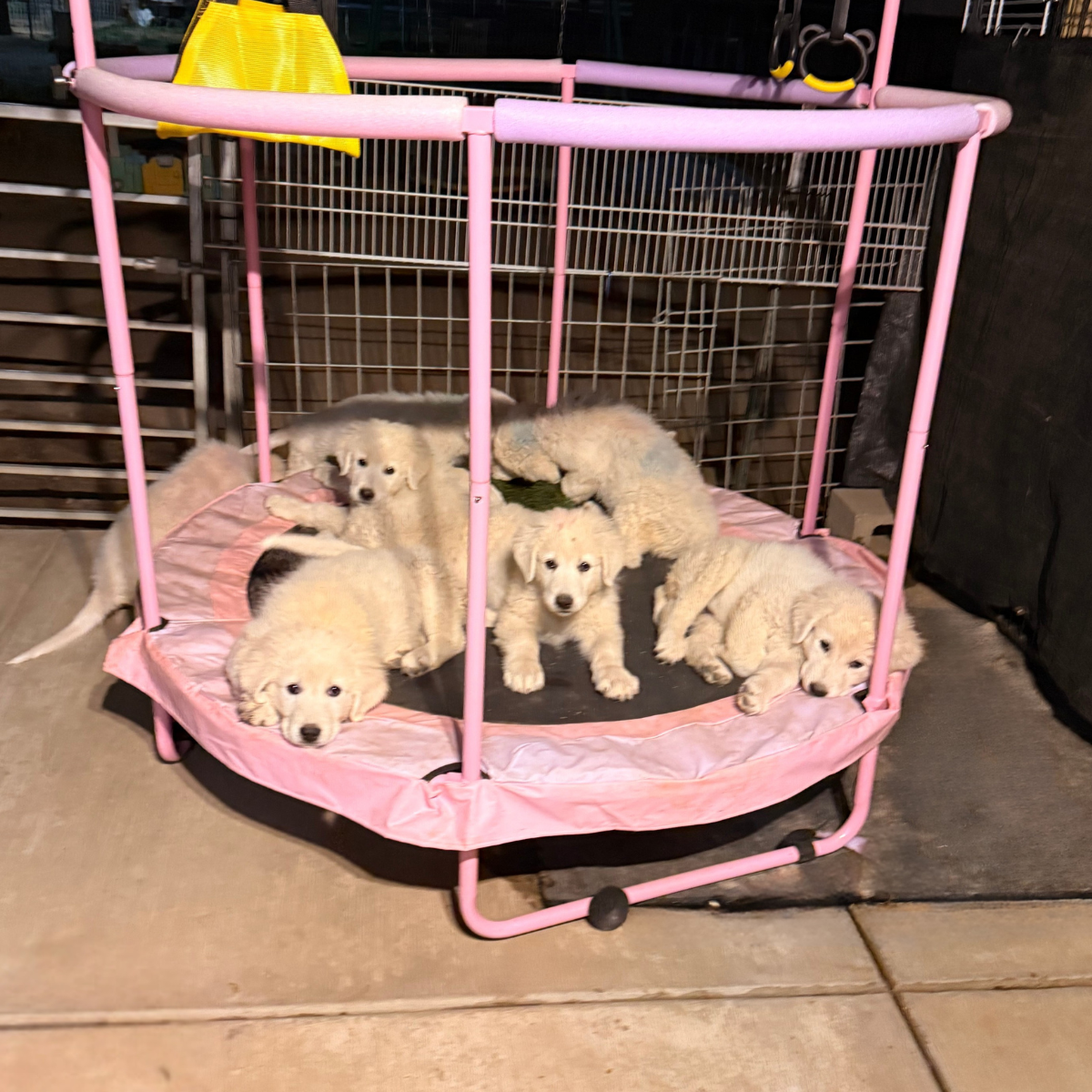
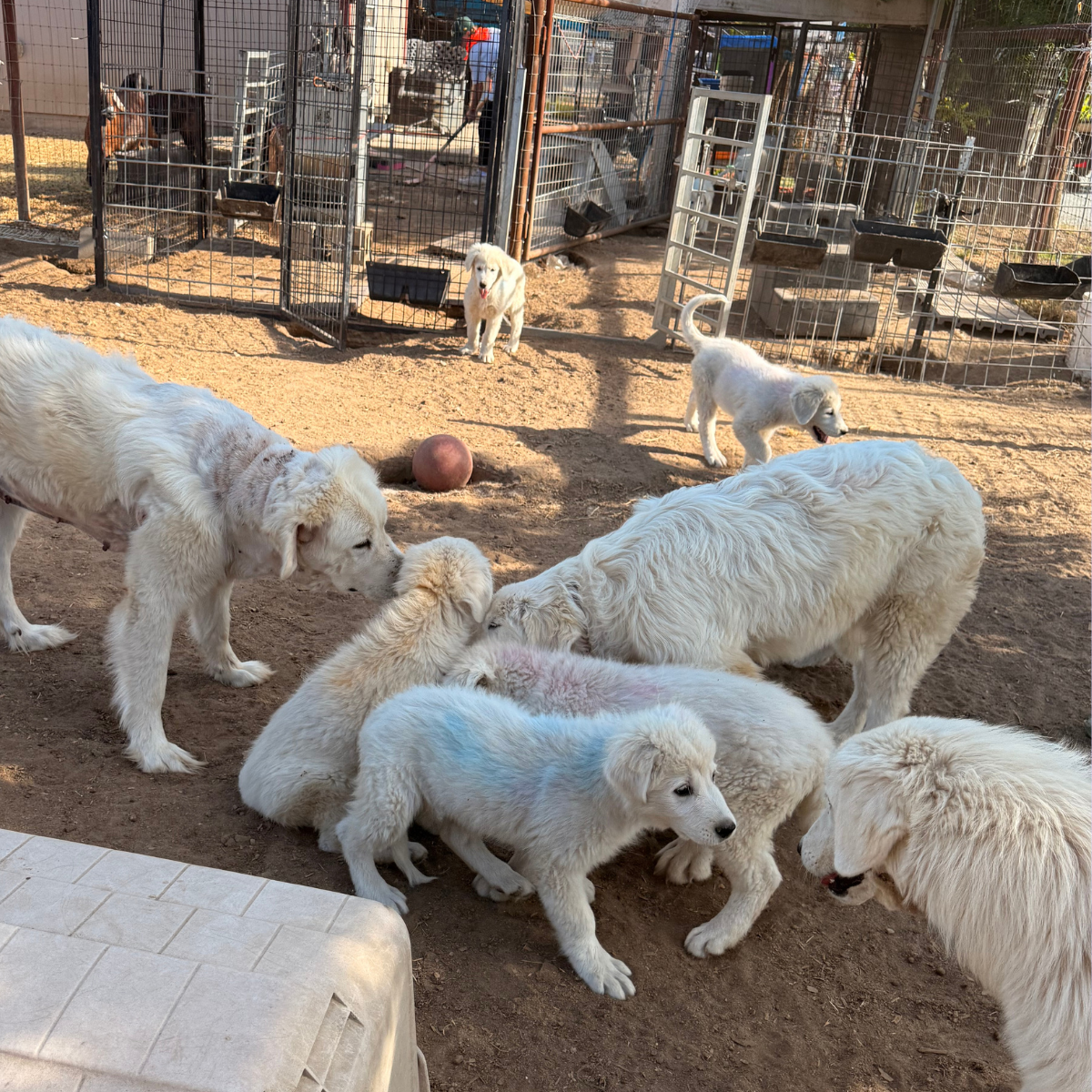
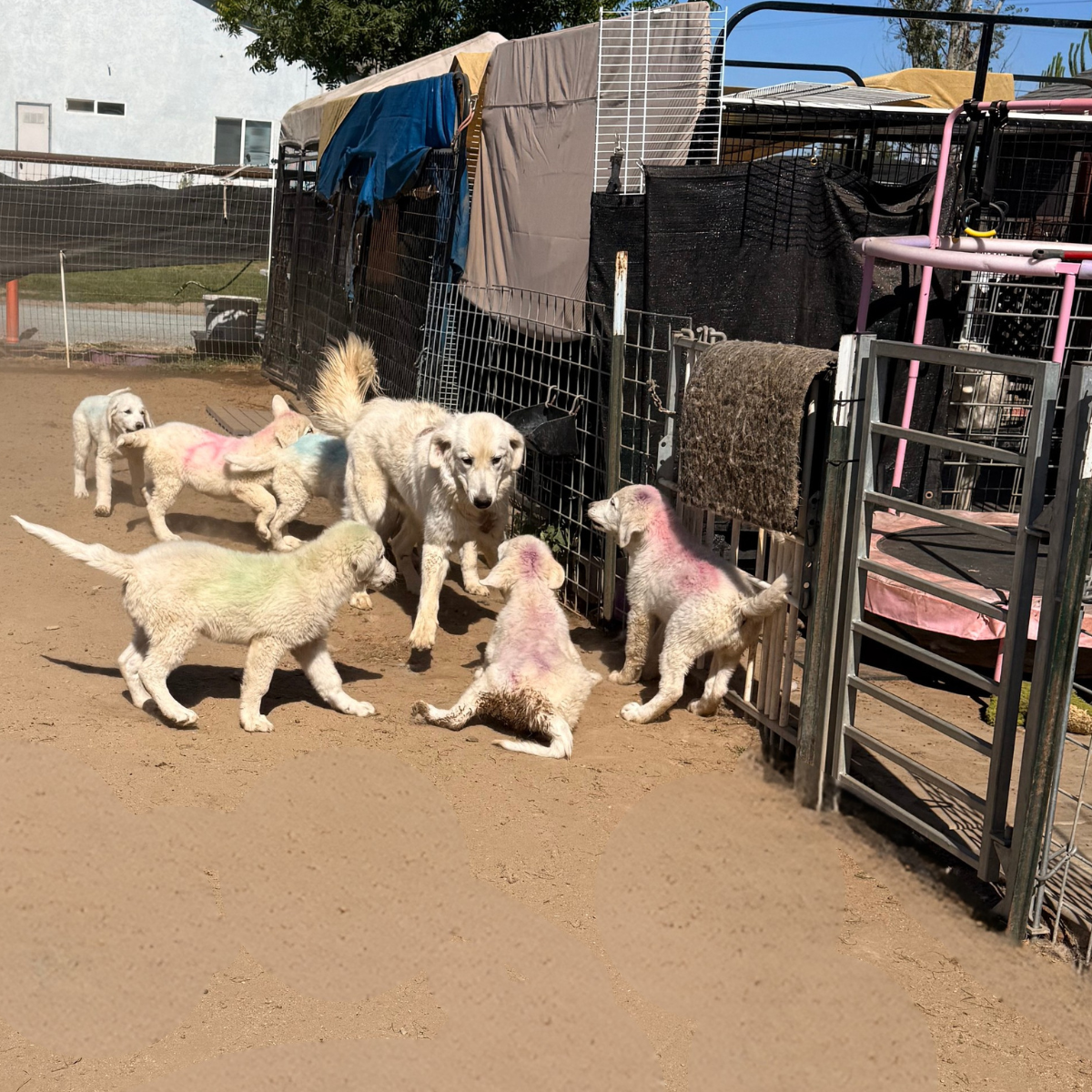
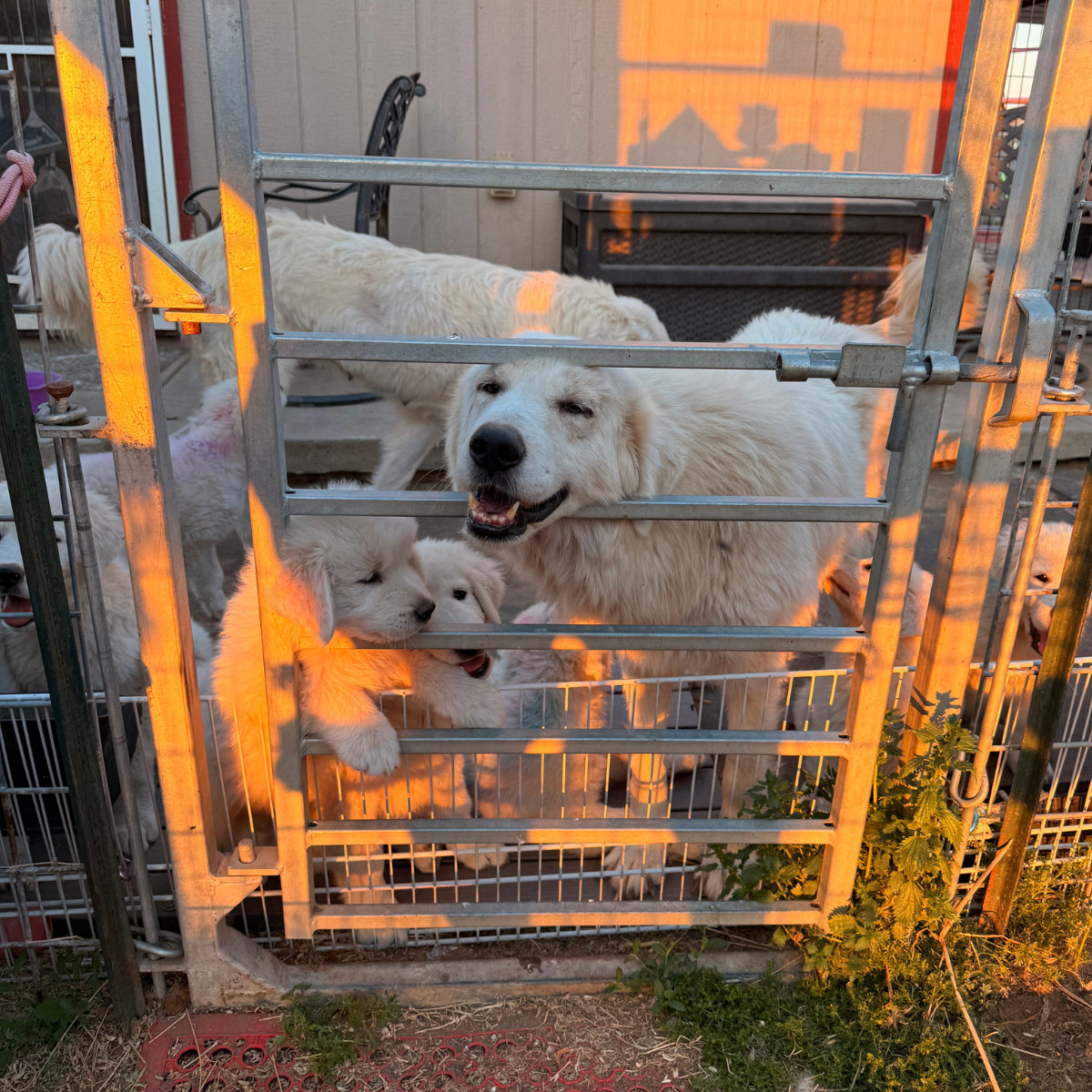
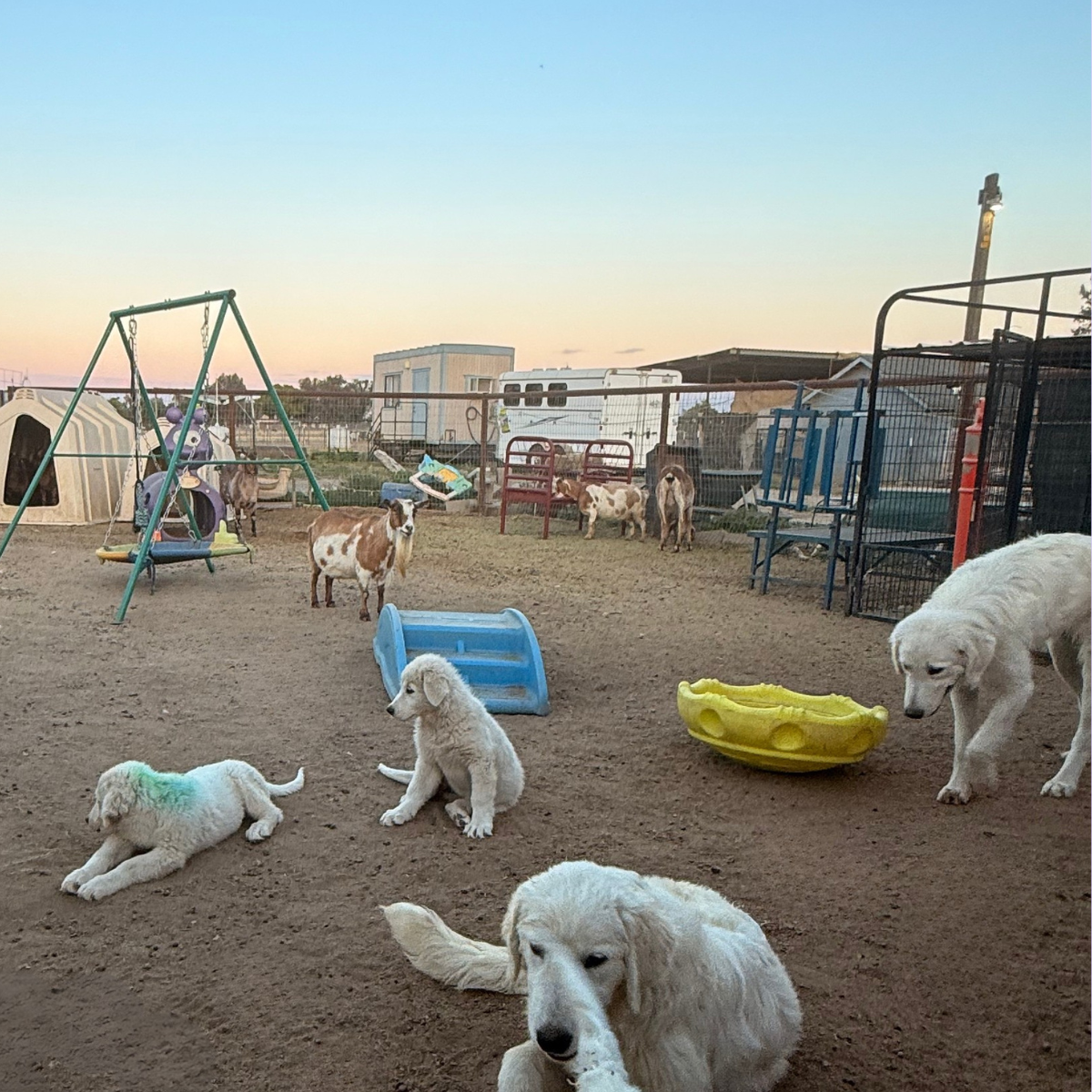
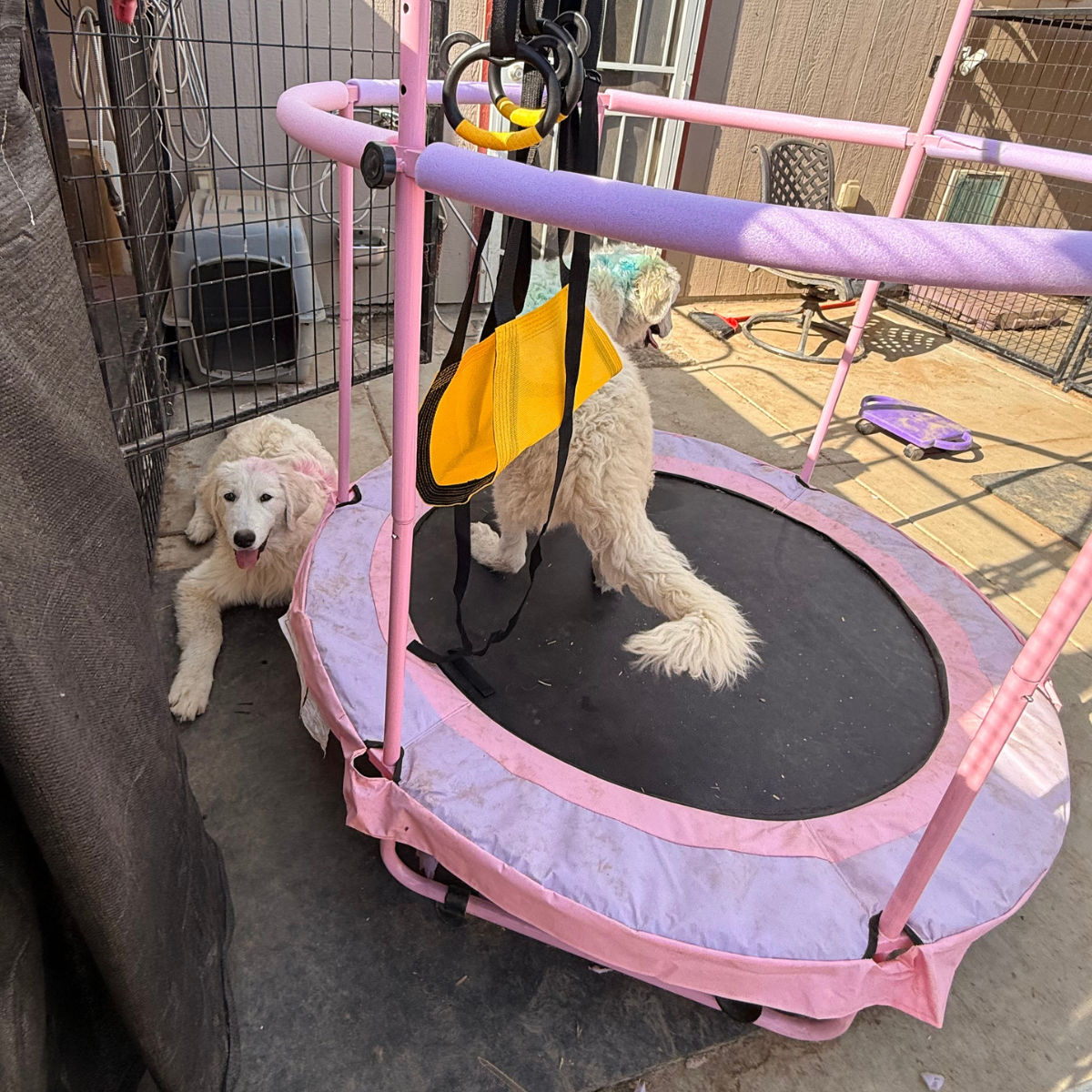
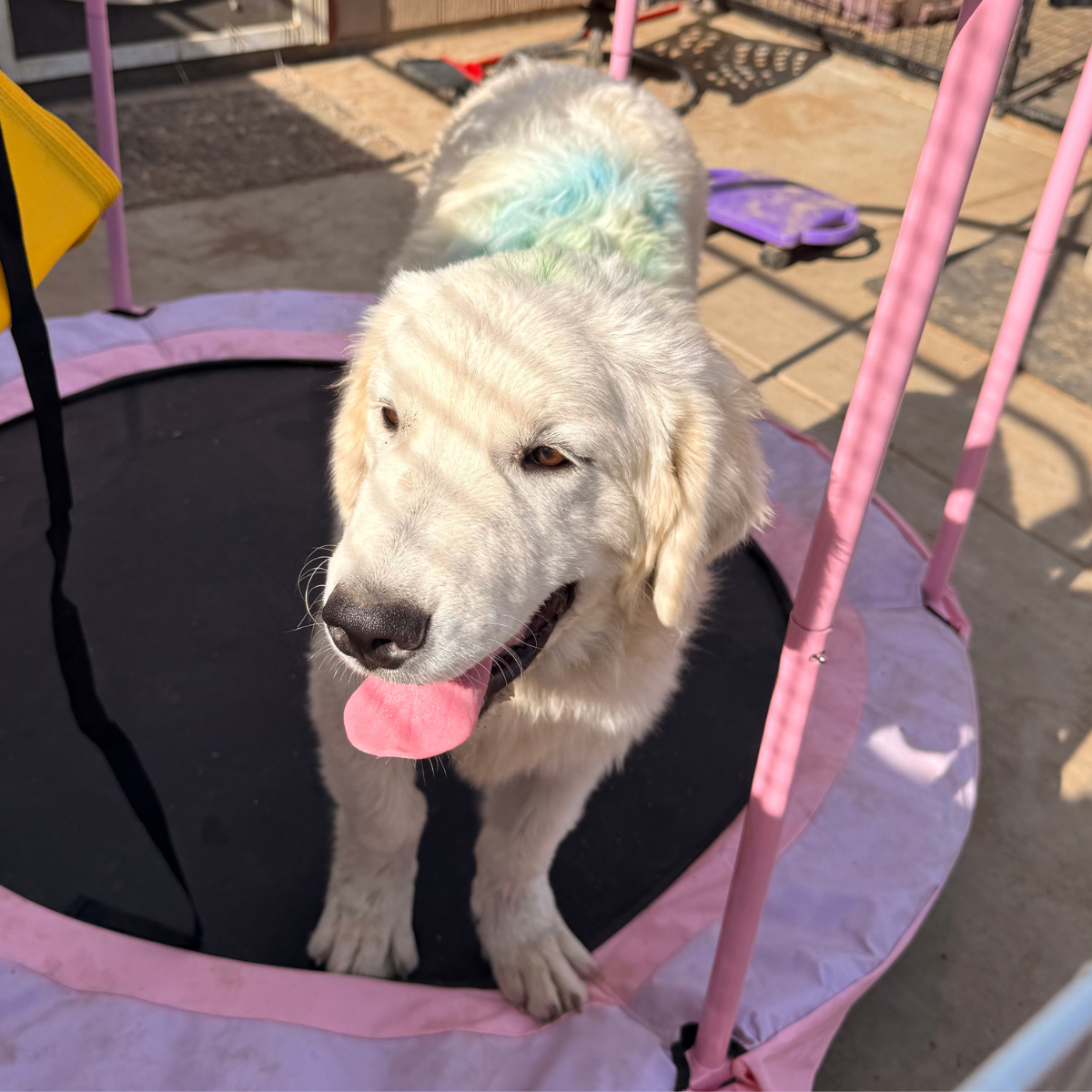
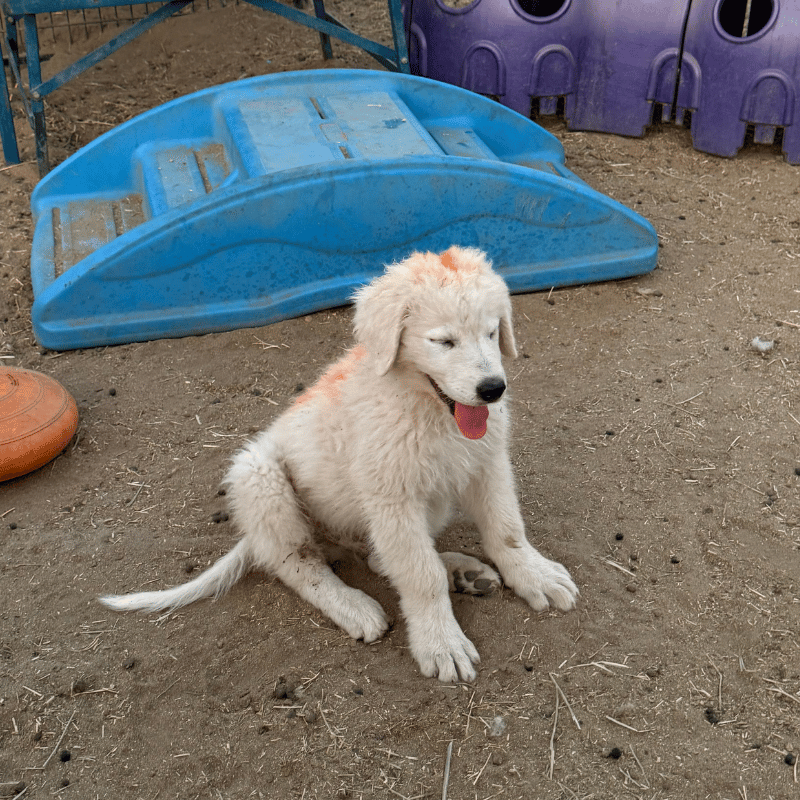
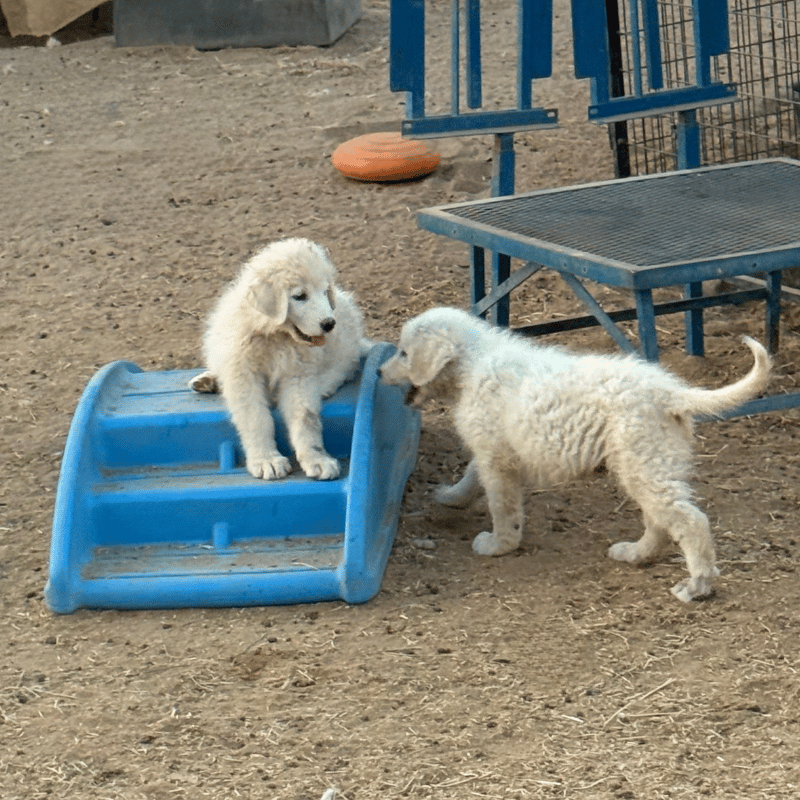
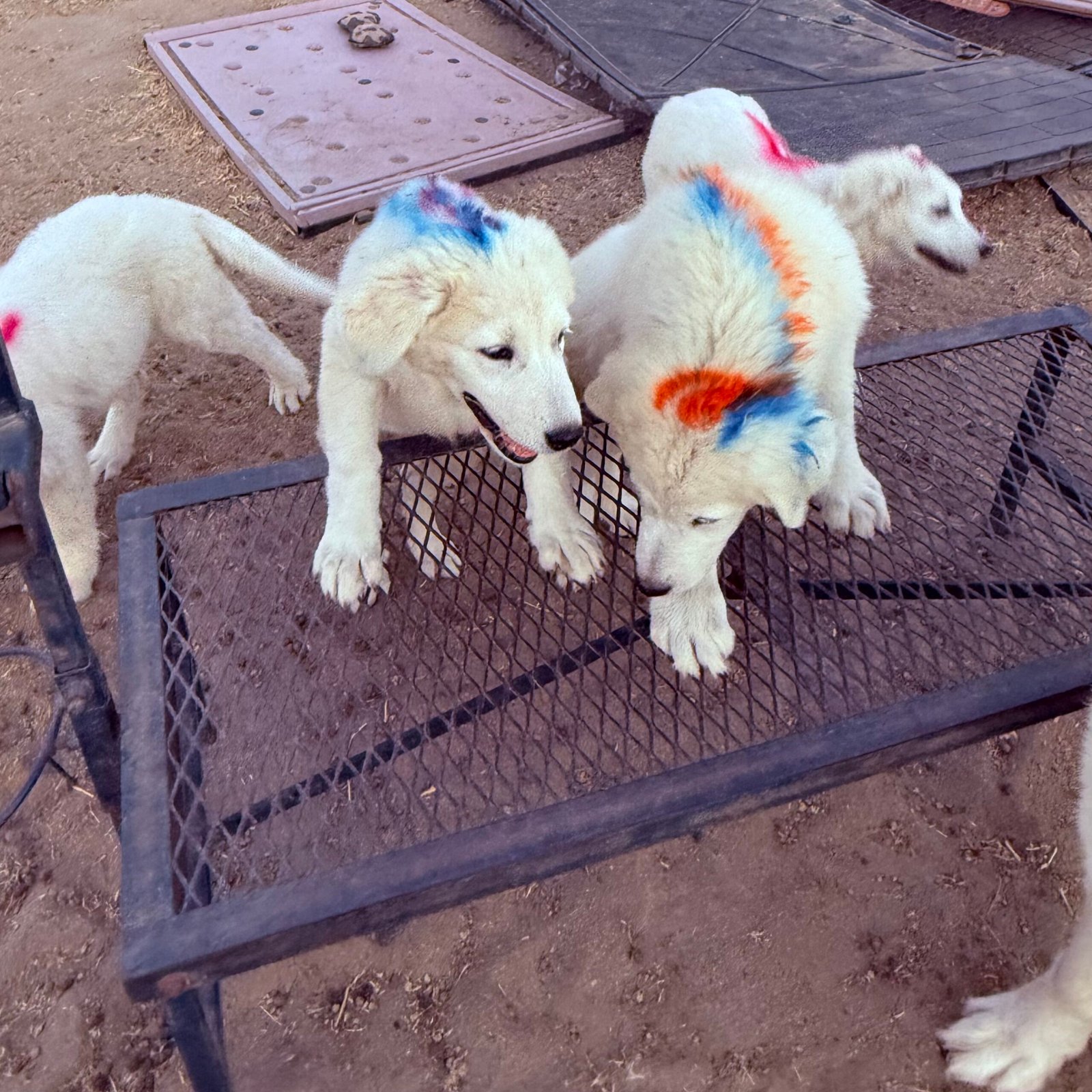
Our puppies experience golf cart rides and car rides. Trips to the vet. The weekly yard crew and their equipment. Farm vehicles of every kind — trucks, tractors, ATVs — coming and going as part of daily operations. Our grandchildren driving the golf carts, jumping on the trampoline and racing around the property. Visitors of all kinds: men and women, children and seniors, familiar faces and strangers, people in hats and people with equipment.
They also experience things most breeders can't offer. We've had dump trucks and construction equipment running right alongside the puppy area during a road-building project. We're near a Navy base, so there's constant traffic back and forth. Cars, big trucks, bikes, farm machinary. Crop dusters work the surrounding orchards. Orchard equipment runs nearby. Delivery trucks show up almost daily. These aren't controlled exposures — they're real life, and puppies who grow up in the middle of it learn that big, loud, unexpected things are just part of the world.
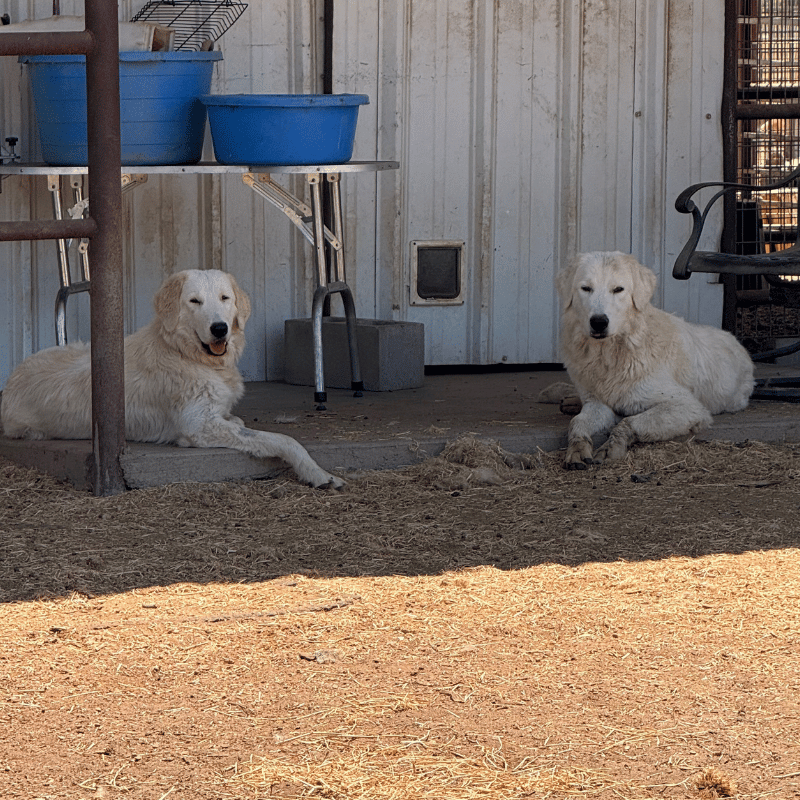
Not every puppy experiences every single thing on this list. But collectively, over the weeks they're here, our puppies encounter more novel experiences than most dogs see in their first year of life. That breadth is what builds genuine confidence — not just tolerance, but true unfazed curiosity.

Health, Care, and Monitoring — The Work Behind the Scenes
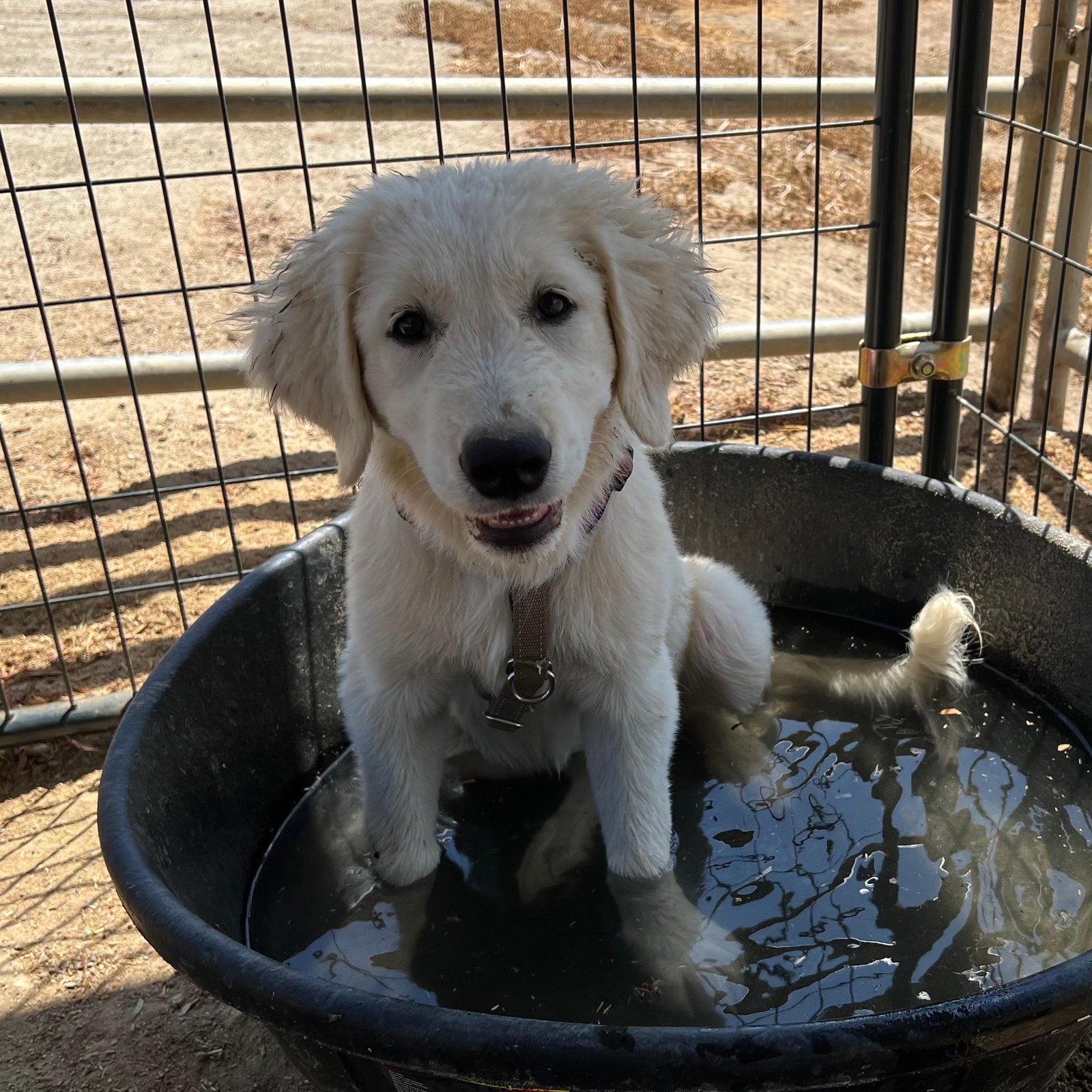
Pretty puppy photos are easy to post. What's harder to show — but just as important — is everything that happens between the photos.
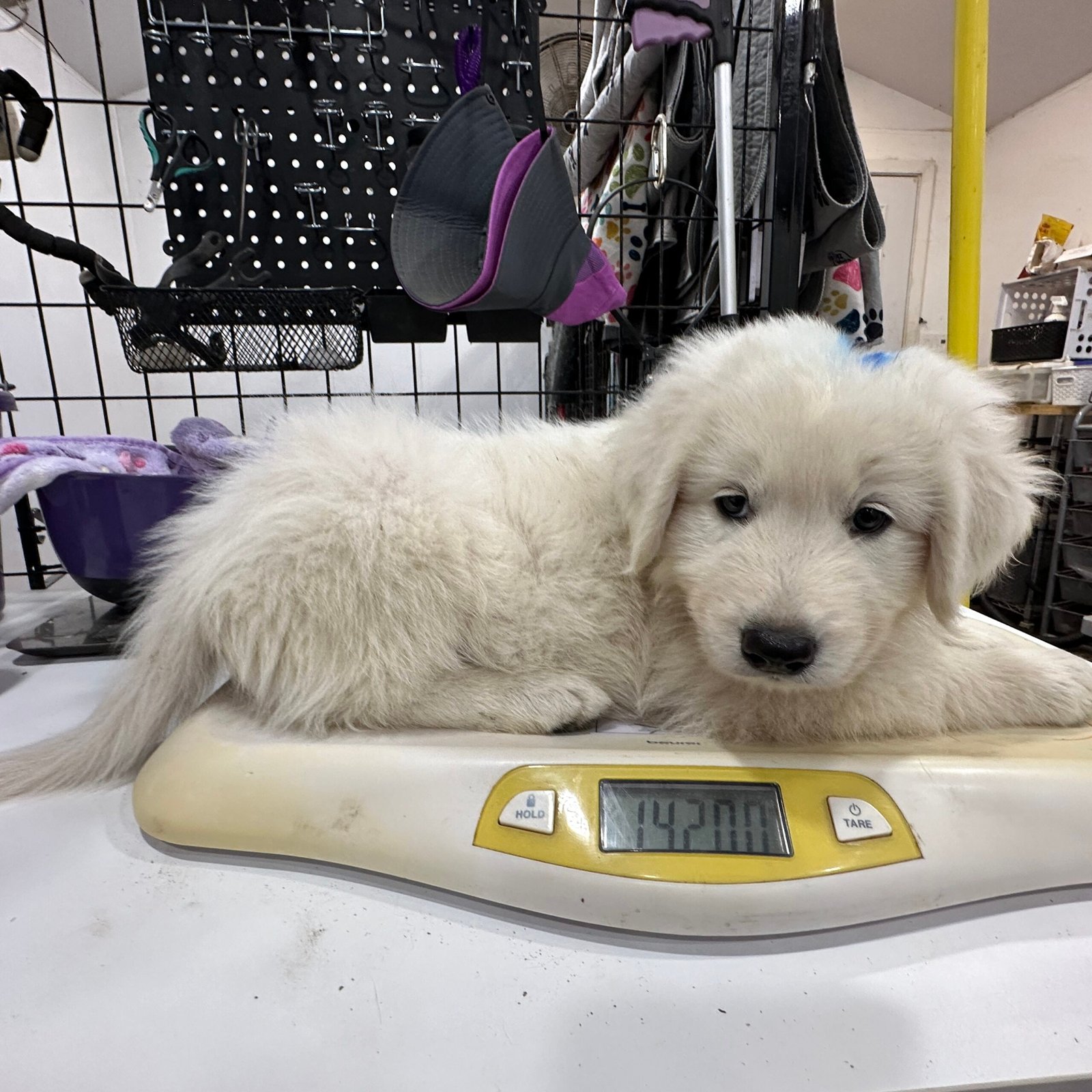
Regular weight checks from birth. Individualized health monitoring. Our vaccination and parasite prevention schedules, based on current science. Notes, records, tracking via our breeder software.
Every puppy who leaves here has a documented health history. You'll receive records of their vaccinations, deworming, and any health events that occurred during their time with us. Nothing is guessed at. Nothing is done "about right." It's documented.
This section of the gallery is less exciting than puppies with goats. But it's part of why our puppies are healthier, and why our buyers don't face the unexpected vet bills that come from cutting corners on early health care.
Our health protocols aren't guesswork and they're not generic. This post covers exactly what we do, why we do it, and how our approach has changed over the years — including the parasite prevention system that transformed our program.
The Final Weeks — Almost Ready to Go Home (Weeks 10–12+)
By the time our puppies are approaching placement age, they've accumulated hundreds of distinct experiences. Different people, different animals, different sounds, different textures, different situations. The goal was never a puppy who's been exposed to everything — that's not possible. The goal was a puppy who's learned that new things are usually fine, and that their curiosity is a safe tool.
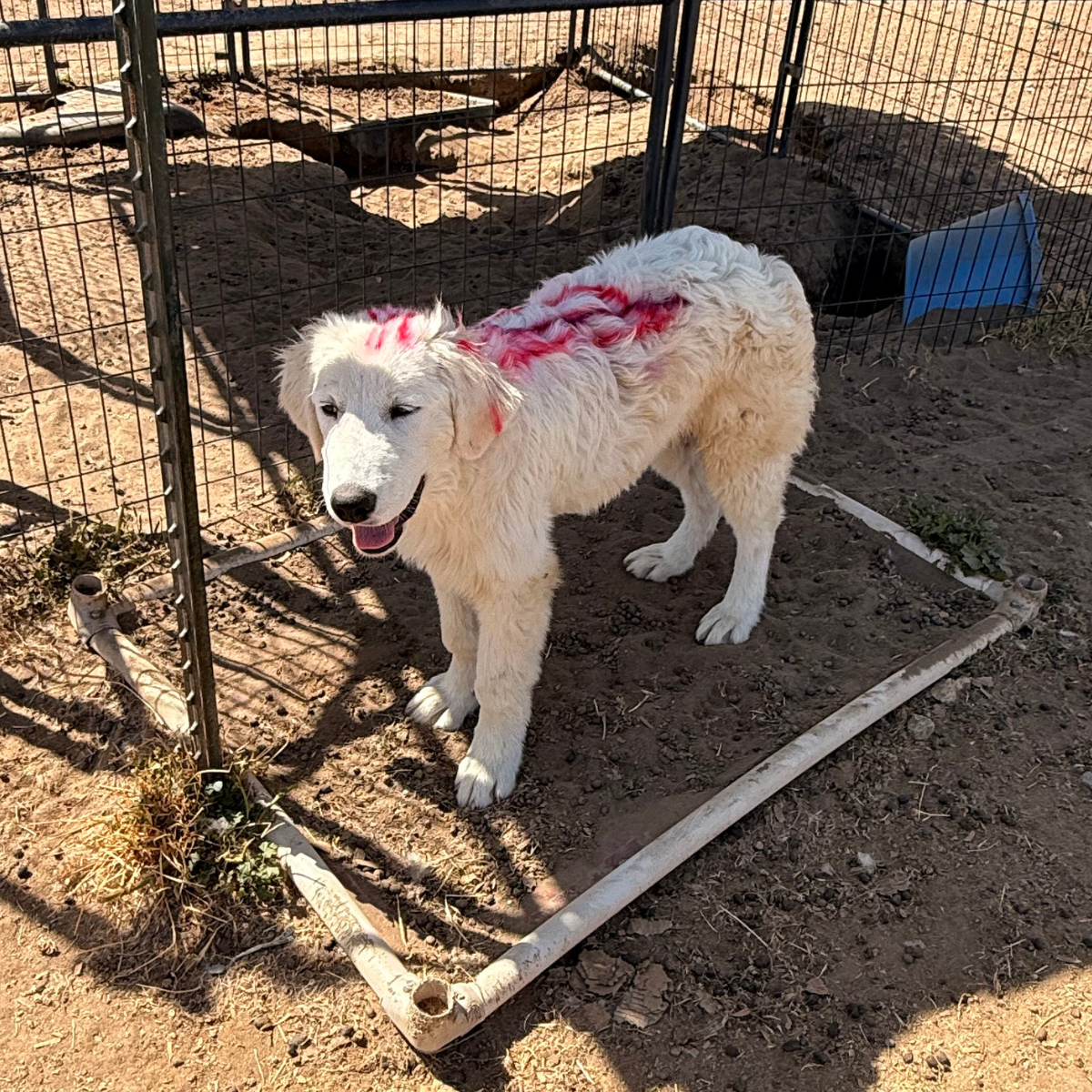
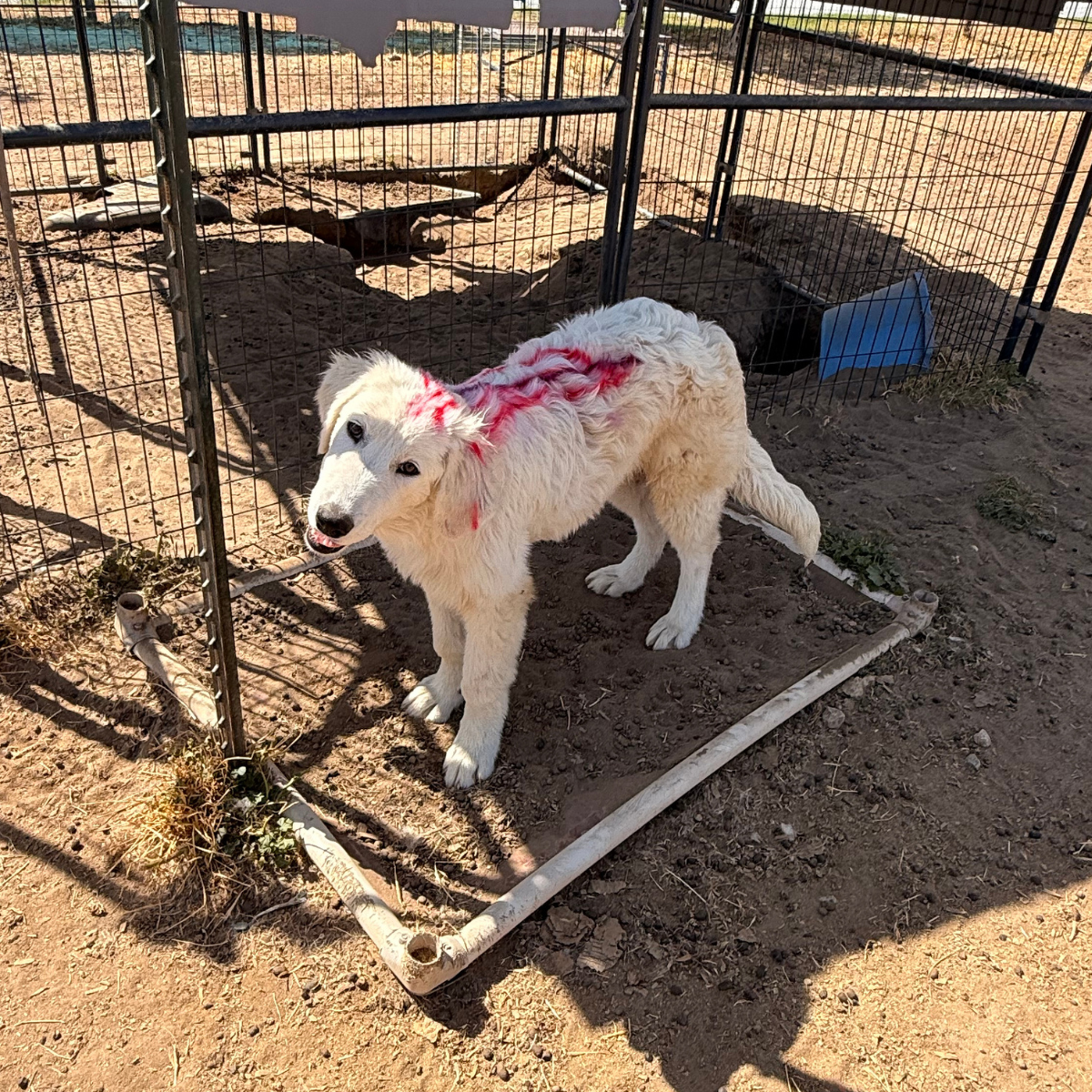
You can see that in the photos from these final weeks. Puppies who move toward new things instead of away from them. Who explore confidently. Who settle easily after stimulation. Who make eye contact with people and aren't unsettled by it.
That's not a personality type. That's a foundation. And it's what every puppy we place is built on.
We don't send puppies home at 8 weeks. Our standard placement age is 12-14 weeks for most homes, with later placement available for puppies going to buyers who prefer an older dog or more development time. That extra time matters — and you can see why when you look at the difference in these photos.
Go-Home Day — The Moment Everything Comes Together
Go-home day is one of my favorite days. After weeks of watching these puppies grow and develop, getting to hand one off to the family who's been waiting for them — it never gets old.
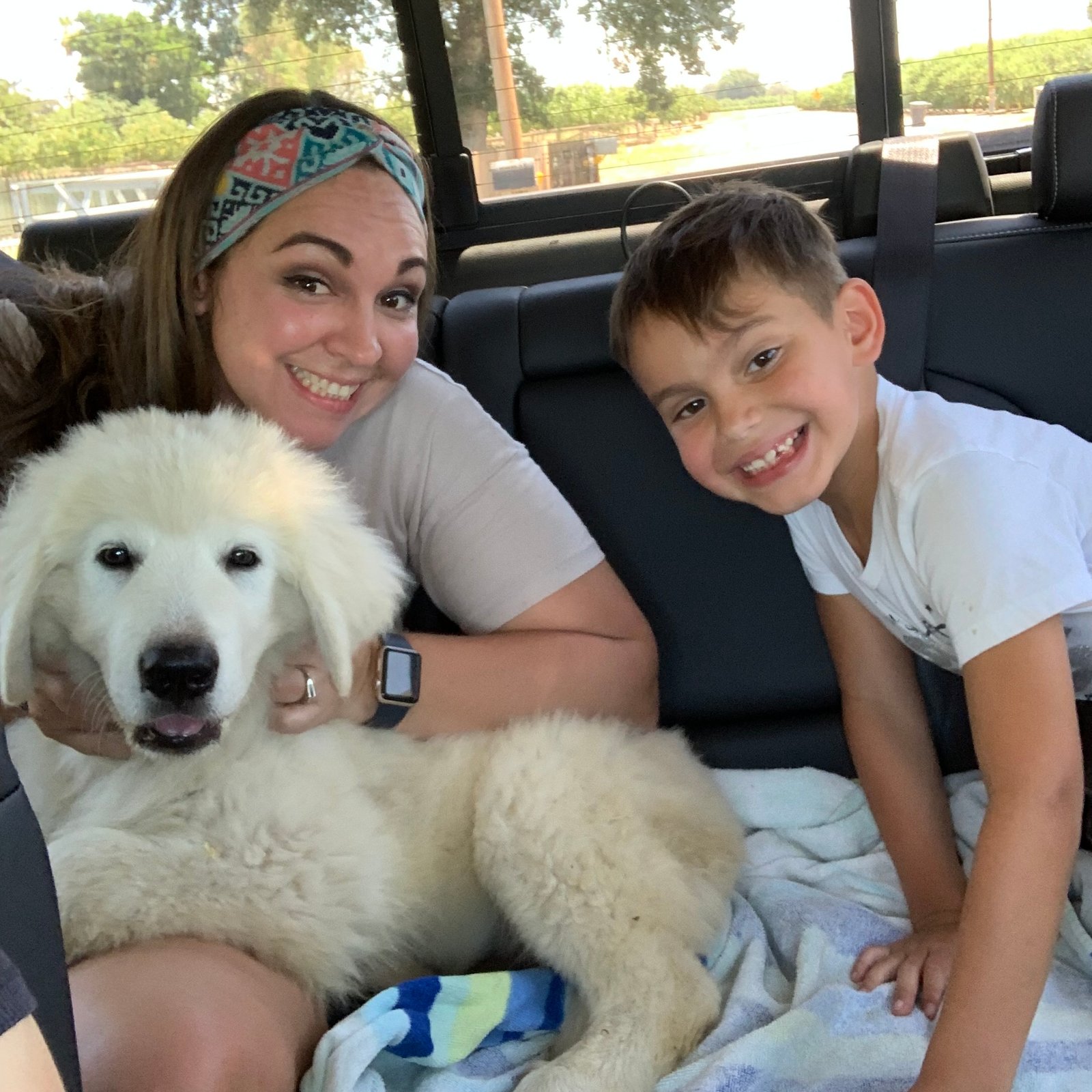
These photos show what go-home day actually looks like at Prancing Pony Farm. Families arriving to meet their puppy in person. Puppies riding safely for shipping. That moment of first contact between a puppy and their new people, right here on the farm or at their new home if they're being shipped.
What you'll notice in these photos: the puppies are calm. Not shut down, not overwhelmed — calm. Curious about the new faces, comfortable being held, ready for whatever comes next. That's what 12+ weeks of deliberate preparation looks like when it's time to go.
Whether your puppy comes home with you in a car or flies to meet you, the transition has been prepared for. We talk through what to expect, answer every question, and stay in touch. Go-home day is the beginning of the relationship, not the end of ours.
I've given your puppy an exceptional 12-week foundation. What happens next is up to you. This post — the final installment of our development series — covers exactly what your new puppy needs in the weeks and months ahead, from livestock integration protocols to training foundations to what to expect as they grow into their role.
Read: Beyond the Puppy Parlor — What Your Maremma Needs Next →
Out in the World — The Next Chapter
The goal of everything you've seen above is a puppy who's ready for this moment: stepping onto a new farm or companion home, smelling new animals, meeting new people — and taking it in stride.
These are a few of my favorite "first days" photos, shared by families who sent me updates right after their puppy arrived. A new puppy sniffing a sheep for the first time. A fluffy white pup already following the goats. A little one sleeping in the barn on day two like they've always lived there.
This is what 12+ weeks of intentional development makes possible.
Want to see where these dogs are now — years later, on farms across the country? Our Happy Families page is full of photos, videos, and testimonials from clients who are living this life right now.
Every Puppy You See Here Came From the Same Program
Different litters. Different years. Different farms and companion homes they went home to. But the same deliberate, documented development — because we don't cut corners based on the season or how busy the farm is.
When you're comparing breeders, ask to see the process — not just the puppies. Photos of what happens between birth and placement tell you more about a breeding program than any testimonial could. This gallery is our answer to that question.
If you've made it this far, you already know more about how we raise our puppies than most buyers ever learn about any breeder. The next step is a conversation — and I'd love to have it with you.
I've given your puppy an exceptional 12-week foundation. What happens next is up to you. This post — the final installment of our development series — covers exactly what your new puppy needs in the weeks and months ahead, from livestock integration protocols to training foundations to what to expect as they grow into their role.
Read: Beyond the Puppy Parlor — What Your Maremma Needs Next →
Ready to Protect What You Love?
Join scores of happy families who sleep peacefully knowing their beloved animals and family are protected by reliable Prancing Pony Farm Maremmas.
✅ Health-tested bloodlines ✅ Proven working genetics
✅ Lifetime breeder & professional trainer support included