Last Updated on August 13, 2026 by Kim Crawmer, KPA CTP, LFDM
If your Maremma Sheepdog growls over his food bowl, stiffens when a goat wanders near his feeding area, or gets into tussles with your other dog at mealtimes — take a breath. This behavior has a name, it makes complete sense, and it is absolutely something you can manage.
Resource guarding in Maremma Sheepdogs and other livestock guardian dogs is one of the most misunderstood behaviors I see in my work with LGD owners. People either dismiss it ("he's just being dominant") or panic ("something's wrong with my dog"). The truth is somewhere more nuanced — and a lot more useful.
Let's talk about what's actually happening, why it matters so much in Livestock Guardian Dogs specifically, and what you can do about it.
Whether you're dealing with this right now or trying to get ahead of it, here's exactly what this post will walk you through.
In This Post:
- Why resource guarding is a normal — and expected — behavior in Maremma Sheepdogs and other LGDs
- How unmanaged food guarding can threaten your dog's working career (and what's at stake)
- Simple management strategies to prevent resource guarding before it starts
- Positive reinforcement training techniques to change your dog's emotional response around resources
- How to recognize early warning signs before they escalate into aggression
What Is Resource Guarding in Dogs — and Why Is It Normal?
Resource guarding is a normal canine behavior rooted in survival. At its core, it's a dog communicating: I have something valuable, and I'm worried you're going to take it. The dog uses avoidance, stiffening, growling, or snapping to retain control of something they care about — food, space, a resting spot, another animal, or even a person.
Here's the key thing to understand: resource guarding is not a character flaw or a sign of a "bad" dog. It's an ingrained behavior that exists in virtually every dog to some degree. And in Maremma Sheepdogs and other LGDs, it is baked in at a biological level.
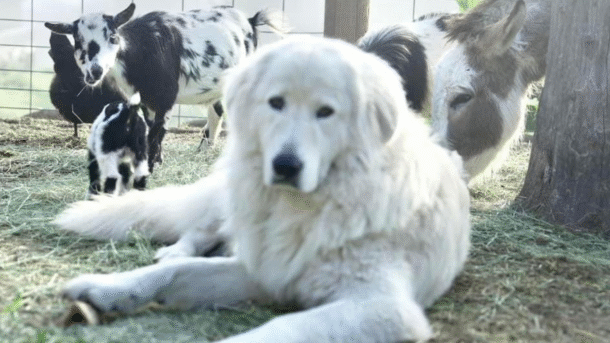
Think about it. We selectively bred these dogs — over centuries — to guard resources. Their livestock. Their territory. Their flock. The Maremma that holds a coyote at the fence line is, at its core, resource guarding the goats. We celebrate that behavior. The problem comes when that same hard-wired drive gets pointed at the wrong target — like the food bowl, or the dog standing six feet away.
You cannot reasonably expect a dog to guard what you value while freely giving up what they value. Understanding that disconnect is the first step toward actually solving the problem.
Why This Is Especially Important for Livestock Guardian Dogs
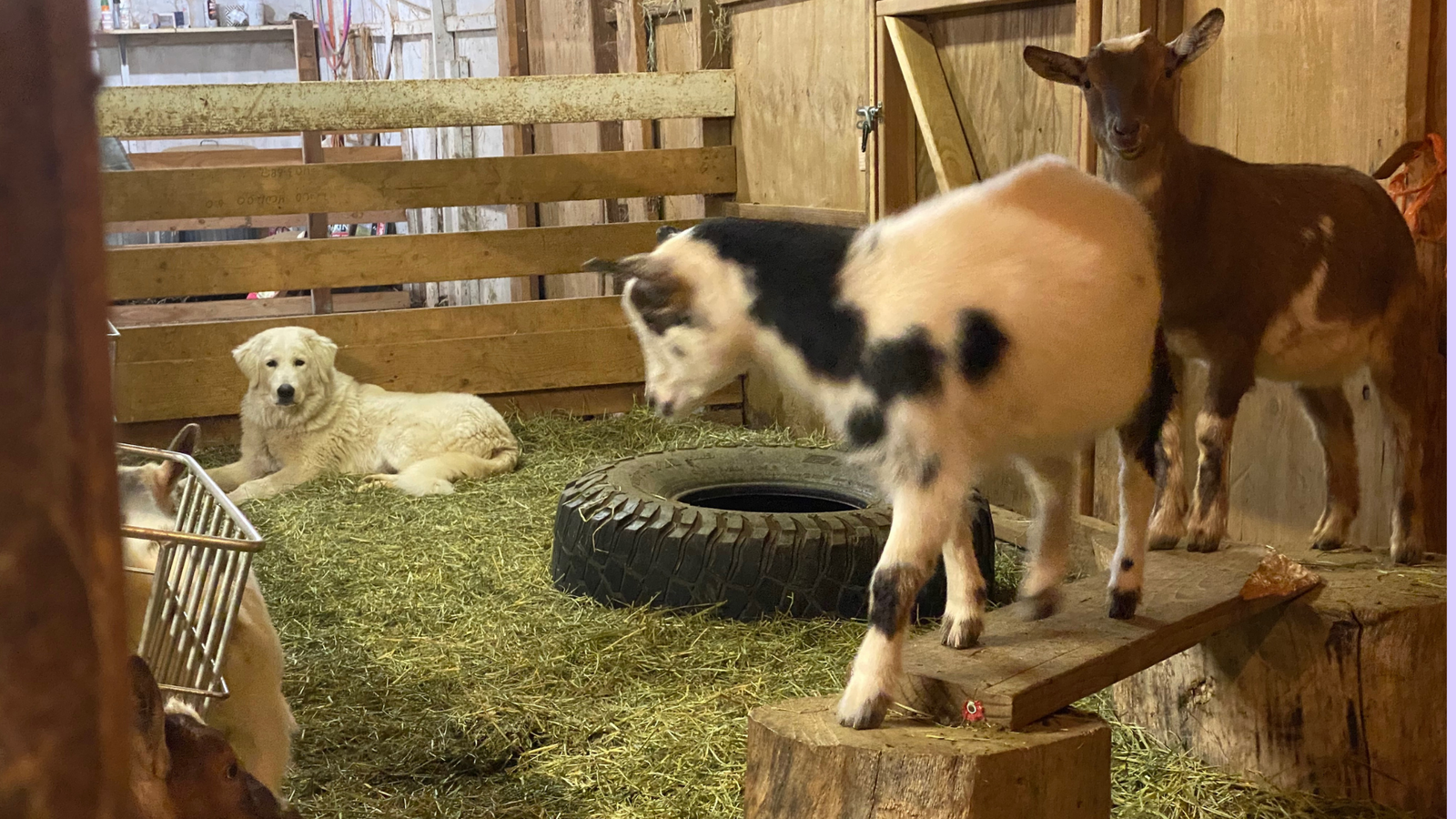
A stressed livestock guardian dog cannot do its job. When a dog is consumed by anxiety around resources — constantly on guard, unable to relax at mealtimes, scanning for threats from livestock or other dogs — that cortisol doesn't just disappear after dinner. It bleeds into everything. Excessive barking, redirected aggression, difficulty bonding with stock — a lot of LGD behavior problems trace back to a dog that doesn't feel safe.
I've seen it play out more times than I can count. And I'll tell you honestly: I learned some of this the hard way myself in my earlier years with these dogs.
There's another layer here that's critical for working dogs. If your LGD begins to see your livestock as competitors for food, their working career is in jeopardy. I'm not being dramatic. A dog who has been allowed to develop resource guarding toward livestock — growling, lunging, or aggressing when animals approach during feeding — may eventually take that aggression further. This is one of the leading causes of LGD rehoming and euthanasia, and it is almost entirely preventable.
This is why how you feed your dog matters as much as what you feed them.
🐾 Struggling with Your Dog's Behavior?
It might not be a training problem — it might be a "you" problem (in a good way!). This free cheat sheet walks through the human-side habits that make the biggest difference in how your dog behaves.
Training Strategies That Actually Work
Once management is in place, training gives you an opportunity to actively change how your dog feels about resources — not just manage around it.
Shape calm behavior at the bowl. Using a clicker and high-value treats (baked chicken, cheese, or whatever sends your dog over the moon), you can reinforce your dog for calm, relaxed behavior around their food. Reward the soft body, the slow approach, the non-reactive response to you standing nearby. You're not bribing — you're teaching the dog that your presence near their bowl predicts good things.
Teach duration. Work toward your dog being able to stay near their bowl even after it's empty, relaxed and not frantic or defensive, until you give a release cue. This builds incredible impulse control and teaches the dog that the meal isn't "over" the moment the bowl is empty, which reduces arousal around feeding time overall.
Use clear, consistent feeding cues. Feed at the same time, in the same location, in the same order every day, if possible. Dogs thrive on routine. Predictability reduces anxiety, and reduced anxiety reduces the urgency to guard.
Play the trade-up game. Teach your dog that giving something up — a bowl, a bone, a toy — always results in something equal or better. You are never just taking. You are always offering a fair trade. This one shift, practiced consistently, can fundamentally change a dog's emotional response to humans approaching their valued items.
Ask for permission before picking up the bowl. This sounds counterintuitive, but waiting for soft, relaxed body language before removing the empty bowl — rather than reaching in while the dog is still tense — builds profound trust over time. You're showing the dog that you respect them. That you notice them. That you're paying attention.

Resource guarding is extremely common in LGDs and should be handled correctly. Jean Donaldson's book is required reading on the topic.

Build impulse control beyond the bowl.
Resource guarding is fundamentally an impulse control problem — the dog is struggling to regulate the urge to defend. The good news is that impulse control is a trainable skill, and the practice transfers across situations. A few exercises worth adding to your routine:
- Leave It. Teach your dog that ignoring something they want on cue results in something better. Start with a low-value item in your closed fist — the moment your dog stops nosing at your hand and backs off, click and reward with something from your other hand. You're teaching them that not taking the thing is the most rewarding choice. Once they have it on a closed fist, progress to an item on the ground, then items near the food bowl. "Leave it" isn't about obedience — it's about teaching your dog they can trust you to make not-grabbing worth their while.
- Offered eye contact. Train your dog to offer you eye contact voluntarily when they're in a high-arousal situation — near the bowl, around other dogs at feeding time, when livestock approach. A dog who can find your eyes in a tense moment is a dog who's checking in rather than escalating. Reinforce eye contact heavily and often.
- Wait before eating. Ask your dog to pause — even just two or three seconds — before diving into the bowl. A short, reliable "wait" before release to eat teaches the dog that you are the source of good things, not a threat to them. It also lowers the overall arousal that tends to spike right at feeding time.
None of these exercises need to be long or formal. Five minutes a few times a week, done consistently, builds the foundation that makes everything else easier.
Our client, Sarah, demonstrates the It's Yer Choice game with Caia, our Hawaiian puppy. Sarah has done quite a lot of training with Caia and taken several dog training courses, dmonstrating just what these dogs are capable of with positive training methods.
How to Prevent Resource Guarding Before It Starts
The time to address food-related resource guarding is before it becomes a crisis. Here's what prevention looks like in practice:
Never, ever punish or correct a dog for resource guarding behavior. Your dog isn't resource guarding because they're "bad" or aggressive. Resource guarding comes from a place of insecurity and fear of losing something they value. Punishing your dog will only make things worse. The way to fix or even prevent resource guarding is to help your dog feel safe when they are eating.
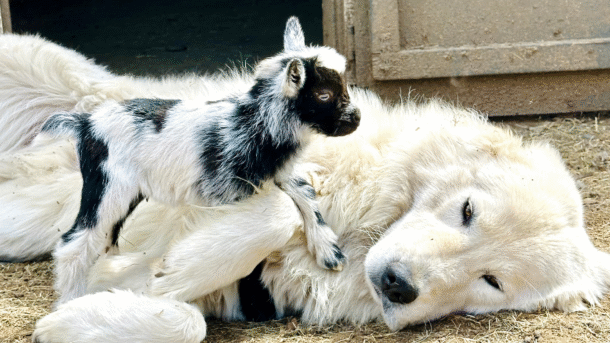
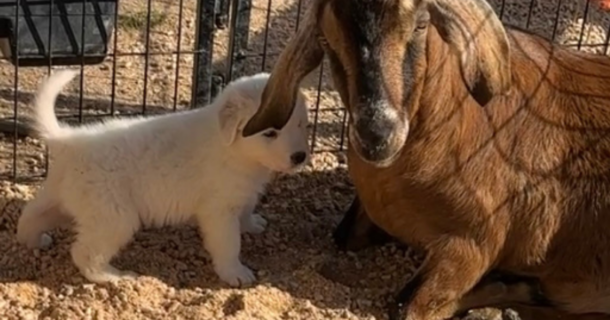
Protect your dog during meals. Your LGD should never feel threatened by livestock while eating. Curious goats, pushy chickens, and opportunistic barn cats have no business near your dog's bowl. I put my dogs in dog kennels, barn stalls, or fenced-off areas to eat each night and let them back with the stock when they're done. Yes, it takes more time. Yes, it is absolutely worth it.
Stay present during feeding, if this helps your dog. When your dog is eating, your presence should signal safety — not danger. If you're there, calm and watchful, you're communicating: I've got your back. No one's getting your food. Puppies who learn that a human nearby at dinner means peace and protection grow into dogs who trust humans around resources. That trust extends far beyond the food bowl.
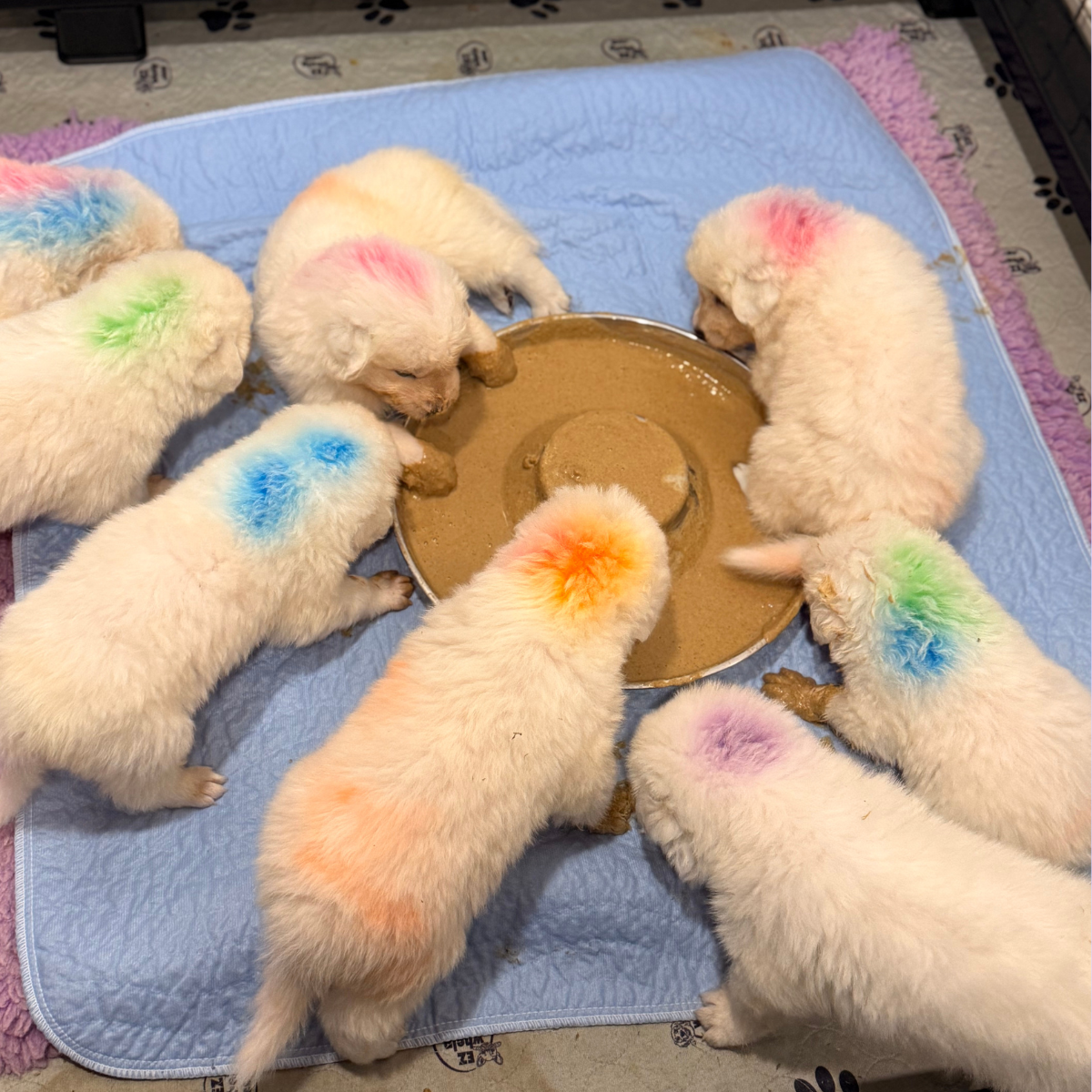
Feed dogs away from each other, if needed. Some dogs can share a relaxed mealtime with enough space between them. Others need to be completely out of visual range of other dogs and livestock to eat without stress. You know your dogs. Set them up to succeed. A tarp across a fence panel, a barn stall, a separate run — use whatever it takes to give them a stress-free meal.
Never let livestock steal your dog's food. Not once. Not "just this time." Every single time a goat noses into a dog bowl and nothing happens, your dog's brain files that away. The dog will solve the problem themselves eventually — and not in a way you'll like. Continued harassment by the livestock can cause the dog to become aggressive even outside of feeding time. You can absolutely ruin your dog by allowing the livestock to run roughshod over them during meals. Don't do it!
Put food away between meals. Never leave food out between meals or even within sight of the dog. A dog that's prone to resource guarding will stress and worry over the food, afraid that another animal is going to take it away. Even if your dog isn't eating the food, it knows the food is there and is worried that the food will be taken away. Put the food away, and the dog will relax and be much happier.
Use extra caution when feeding higher-value food. Some dogs are perfectly happy to eat calmly around other dogs when there's only dry kibble involved. But add something really yummy, like canned food or meat, and they become aggressive, wolfing down their food and then taking the food from their companion. This can lead to fighting or to one dog eating all the food while the other misses out. The fix is simple. If you're adding anything extra enticing to your dogs' food, separate them during the meal.
Use the one-bite rule for treats. Resource guarding can extend to treats, and even dogs that don't normally resource guard may fight over high-value, long-lasting treats like bully sticks and bones. An easy rule to avoid fights is to separate dogs if you're giving them any treat they can't consume in one bite.
Recognizing the Warning Signs Before Things Escalate
Resource guarding doesn't usually start with a bite. It starts with whispers — subtle body language cues that are easy to miss if you don't know what you're looking for.
Watch for:
- A stiff, still body (especially contrasted with normal movement)
- Weight shifting forward or backward
- Hard, direct eye contact — or the opposite, "whale eye" (showing the whites of the eyes)
- Eating faster than usual when another animal or person approaches
- A low, sustained growl (never punish this — it's communication)
A growl is information, not insolence. A dog that growls is telling you they're uncomfortable. A dog that has been punished for growling learns to skip the warning — and goes straight to the bite. Please don't punish warning signals. Work to address what's causing them.
And importantly: if you're seeing resource guarding escalate suddenly or severely in a dog who wasn't previously showing these behaviors, rule out pain or illness first. Dogs mask discomfort extraordinarily well. A medical check — including bloodwork — before diving into behavior modification is always the right call.

Understanding calming signals in dogs is essential for anyone who owns these remarkable animals. Calming signals are subtle behaviors that indicate a dog's desire to relax, de-escalate tension, or simply express comfort with their environment. Recognizing these signals can enhance the bond between dogs and humans, fostering a more harmonious living and working situation.
Building the Bond That Makes It All Work
At the end of the day, resource guarding is a trust problem. Your dog doesn't feel safe enough to relax around their resources. Your job is to become the thing that makes them feel safe — not the thing they need to guard against.
When you protect your dog at mealtimes, you prove you have their back. When you train with positive reinforcement instead of confrontation, you build a relationship where the dog doesn't need to guard against you. When you set up consistent routines and management, you reduce the anxiety that drives resource guarding in the first place.
Resource Guarding Management Comes Down to Helping Your Maremma Feel Safe
A Maremma Sheepdog who trusts their human is a fundamentally different dog than one who doesn't. And a Maremma who feels safe is one who can actually do the job they were born to do.
Resource guarding is not a dirty word. It's a normal behavior that, handled thoughtfully and early, becomes a manageable — even workable — part of life with an LGD.
If you're struggling with resource guarding in your Maremma Sheepdog and aren't sure where to start, that's exactly what I'm here for. Prancing Pony Farm clients have free lifetime training support, but I also offer consultations for LGD owners who acquired their dogs from other sources. You don't have to figure this out alone.

Quick Reference: Resource Guarding Do's and Don'ts
✅ DO separate dogs and livestock at mealtimes
✅ DO stay present and calm during feeding
✅ DO use positive reinforcement to build trust around resources
✅ DO pay attention to early warning signals
✅ DO rule out pain before assuming behavior is purely psychological
❌ DON'T punish growling
❌ DON'T challenge your dog for their food or bowl
❌ DON'T allow livestock to steal your dog's food — ever
❌ DON'T leave food out between meals
❌ DON'T skip medical evaluation for sudden or severe resource guarding
Free Webinar on Resource Guarding
This free webinar from Michael Shikashio covers resource guarding clearly and practically. It's not LGD-specific, but the foundation applies directly.
Frequently Asked Questions About Resource Guarding in Maremma Sheepdogs
Is resource guarding normal in Maremma Sheepdogs?
Yes. Resource guarding is a normal canine behavior, and it is especially common in LGDs who were bred specifically to protect things they value. The behavior becomes a problem when it's directed toward livestock or people, or when it escalates into aggression — neither of which is inevitable with proper management.
Why is my Maremma guarding food from my goats?
Your dog views the goats as potential competitors for a resource they value. If livestock have ever been able to steal food from your dog, or if your dog feels anxious or crowded at mealtimes, this response makes complete sense. The solution is to ensure your dog eats separately, in a secure space, with you present to signal safety.
Should I punish my dog for growling over their food?
No. Growling is a warning signal — your dog is communicating discomfort. Punishing the growl doesn't fix the underlying anxiety; it teaches the dog to skip the warning. Instead, work to understand what's triggering the behavior and address that with management and positive reinforcement training.
Can resource guarding be fixed with training?
In most cases, yes — especially when caught and addressed early. A combination of management (separating the dog at mealtimes, consistent feeding routines) and positive reinforcement training (shaping calm behavior, the trade-up game, building trust around the bowl) can significantly reduce and often eliminate resource guarding behavior over time.
My dog started resource guarding suddenly — what should I do?
A sudden onset of guarding in a previously non-reactive dog is a red flag for underlying pain or illness. Schedule a veterinary exam, including bloodwork, before beginning any behavior modification. Dogs are masters at hiding discomfort, and a medical cause should always be ruled out first.
If all of this feels like a lot to take in, I want to point you toward the single best thing you can do to get your training on solid footing: the Karen Pryor Academy Dog Trainer Foundations course. I recommend it to every single one of my puppy families — not because I earn anything from it, but because the owners who go through it have dramatically better outcomes than those who don't. It teaches you how dogs actually learn, how to use a clicker effectively, and how to build the kind of relationship where impulse control exercises like these actually stick. For a Maremma Sheepdog owner dealing with resource guarding, that foundation is everything.

About the Author
Kim has been breeding and training Maremma Sheepdogs since 2016 at Prancing Pony Farm in Central California. As a certified dog trainer and licensed family dog mediator (KPA CTP, LFDM), she specializes in helping livestock guardian dog owners develop well-balanced, effective working dogs.
Have questions or Experiences to Share?
Leave a comment below or reach out directly - I love hearing from fellow farmers and LGD owners!