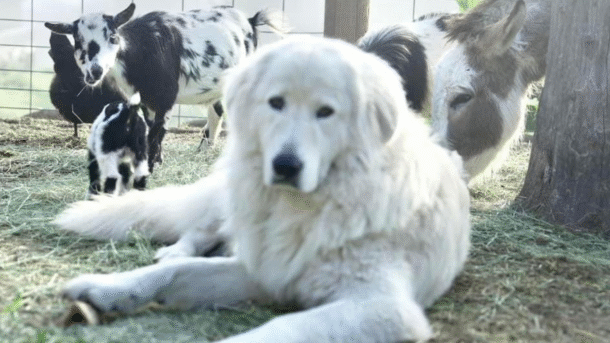
A client sent me a video recently — she’d just brought home two new puppies and noticed some weird scabby spots on their skin. She wasn’t sure if they were hot spots, dermatitis, or something else entirely, and under all that white fur, honestly, it was hard to tell even from a video.
I hear variations of this question a lot, especially from first-time LGD owners. And it makes complete sense — most people coming to livestock guardian dogs have only owned house dogs before. House dogs stay pretty clean. They don’t live outside with goats, wrestle with a litter of siblings all day, and roll in hay and weed patches every chance they get.
Your LGD does all of those things. Every single day.
When I bathe my dogs here on the farm, I’m genuinely amazed every time at the sheer volume of debris that comes out of their coats. Hay. Dirt. Grass seeds. Weed material. I rinse and it keeps coming. These dogs are living in their environment the way they were bred to — and their skin is going to reflect that.
So what are you actually looking at when you find something on your livestock guardian dog?
Most of the time, it’s one of these things: a play bite scab from rough-housing (puppies bite each other — a lot), a healing hot spot, a flea reaction, something seasonal going on with allergies or pollen, or — and this surprises people — the oily residue left behind by a topical flea treatment that I may have applied before your pup came home. That product + the first roll in the dirt = some pretty alarming-looking spots along the spine. It’s fine.
My go-to for almost any minor skin situation is diluted chlorhexidine solution. I buy it by the gallon. Spray it on, keep it clean, give it a few days. Most things resolve without a vet visit.
That said — I do want you to know the signs that it’s worth a call to your vet: an abscess that won’t resolve, a spot that spreads or gets worse instead of better, or anything that looks like it could be a foxtail situation (those swollen, festering spots that never quite heal on their own).
I put together a full post covering all of this — what’s normal, what to keep in your first aid kit, and a quick rundown of when to call in the professionals.
I also created a free LGD Skin & Grooming Checklist to go along with this post — it covers head to toe grooming procedures and what to look for on your dog. Grab it on the blog!
The Best Time to Get on the List Is Before You Need To
You don’t need to be ready for a dog to reserve your spot. The Master Reservation List holds your place in line and starts our relationship now — for $500 applied toward your purchase, with no expiration and no commitment to a specific timeline.
For a limited time, come talk Maremmas with other Maremma owners and me — free. Have a different livestock guardian dog breed? You're welcome here too — most of what we cover applies to all LGDs.
These calls and their recordings will become part of the Maremmas Made Easy membership community soon, so signing up now gets you a free sneak peek at the membership, plus first access to founding-member pricing when it launches.
For a limited time, come talk Maremmas with other Maremma owners and me — free. Have a different livestock guardian dog breed? You're welcome here too — most of what we cover applies to all LGDs.
These calls and their recordings will become part of the Maremmas Made Easy membership community soon, so signing up now gets you a free sneak peek at the membership, plus first access to founding-member pricing when it launches.