Last Updated on June 17, 2026 by Kim Crawmer, KPA CTP, LFDM
One of the most common questions I get from new Maremma families goes something like this: "What commands does my puppy know? Can he sit? Stay? Come when called?"
The answer might surprise you. While my Maremma puppies are extensively trained and socialized, they don't know traditional "obedience commands" like sit on cue. And that's intentional.
This often puzzles people who assume that all well-trained dogs should know basic commands like sit, stay, and come. But here's the thing: Livestock Guardian Dogs aren't just big pet dogs with a job - they're an entirely different type of dog that requires an entirely different approach to training.
Understanding Working LGD Instincts vs. Pet Dog Training
Like all livestock guardian dog breeds, Maremmas have been specifically developed over thousands of years to:
- Think independently and make decisions without human direction
- Work 24/7 in all weather conditions
- Assess threats and respond appropriately on their own
- Bond with livestock rather than being solely human-focused
Teaching Behaviors: When and How It Actually Works
Before I explain why I don't train sit, I want to be clear: teaching your dog behaviors isn't inherently bad. Some of my puppy families do amazing things with their Maremmas.
Take Caia, who lives in Hawaii with her owner Sarah. Sarah has done extensive positive reinforcement training with her—clicker training, games, practical behaviors like nail trimming (which she now loves). Sarah has completed several dog training courses and approaches training as enrichment and bonding with her companion Maremma.
And then there's Mushroom, who attended puppy classes when she was young, earned her AKC Good Citizenship certification at just 13 months and became a certified therapy dog—all positive reinforcement, all based on games and joy.
The key difference? Both Sarah and Mushroom's owner understand that they have companion Maremmas, not working livestock guardian dogs, and they approach training as a fun way to deepen their relationship with their dogs. They don't drill. They don't expect perfection. They respect that even companion Maremmas have LGD instincts and will get bored if you over-train. Training, for them, is enrichment—not control.
I've even taught a couple of my own Maremmas to sit—but the same way: as a fun game we play occasionally, not as a required behavior or something I expect them to do for any particular reason. One of my dogs learned sit because he was on kennel rest for an injury, and it was a fun way to keep his mind engaged. Otherwise? I probably wouldn't have taught it and I generally don't teach it to most of my dogs.
The problem isn't teaching behaviors. The problem is over-relying on them or using them as a control mechanism.
Why I Don't Put "Sit" On Cue for My Maremmas
1. Cued Sits May Conflict with Your Maremma's Instincts (For Working Dogs)
This applies specifically to dogs who are working livestock guardian dogs. A sitting dog cannot quickly respond to threats. When your Maremma is scanning the horizon for coyotes or positioning themselves strategically around the flock, asking them to sit removes their ability to do their job effectively.
Working livestock guardian dogs are bred to be independent thinkers who assess situations and make decisions without constant human direction. If you're expecting your dog to also be a working livestock guardian dog, frequent sit cues can conflict with those instincts.
2. Being Forced to Sit on Cue May Damage Your Maremma's Confidence and Independence
Research shows that forced stationary positions can actually deplete a dog's self-control reserves. A study by Miller et al. found that dogs required to hold sit/stay positions were more likely to give up on subsequent tasks and showed increased reactivity afterward.
For an LGD, confidence and independence are crucial traits. We want them to feel ownership of their territory and trust their own judgment. Requiring frequent sits can undermine this psychological foundation.
For companion Maremmas? This is less of an issue if training is done right—as enrichment, not as rigid control.
3. Most "Sit" Applications Don't Benefit Livestock Guardian Dogs
Traditional uses for sit training include:
- Sitting before meals
- Sitting to greet people
- Sitting while the leash is attached
- Sitting for long durations as "impulse control"
But think about this from an LGD's perspective:
- Meals: My Maremmas eat in pastures near their livestock. They need to remain alert even while eating in case of threats.
- Greeting people: LGDs should be somewhat aloof with strangers - excessive focus on humans for attention can interfere with their focus to be alert for threats to their flock or herd.
- Leash training: Most LGDs spend minimal time on leash. If I need to move a dog quickly, I use a slip lead and targeting behaviors.
- Impulse control: An LGD's job requires quick decision-making and immediate action when needed.
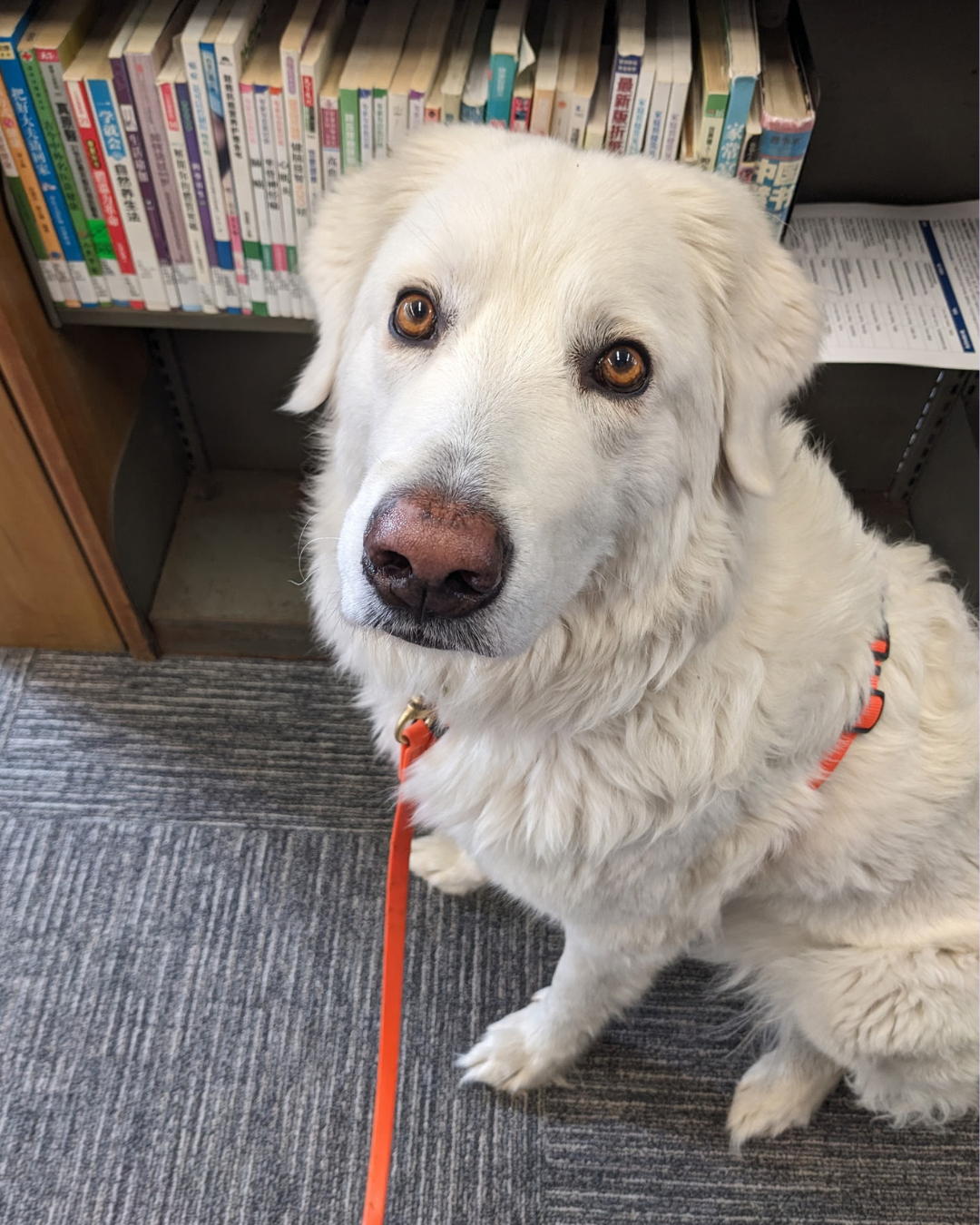
For companion dogs? Some of these actually make sense. But again, it depends on your purpose and approach. Mushroom (below) was taught to sit politely in the public library while her owner checks out her books. She gets a treat as reinforcement. (Her owner reports that Mushroom loves the library so much that she is always a polite and happy dog and is disappointed if the library is closed when they drop off books.)
What I Teach My Maremmas Instead: Manding vs. Cued Sits for LGDs
The approach you take should match your dog's actual purpose in your life. Working livestock guardian dogs need training that honors their independent nature leaves most of their autonomy intact. Companion dogs benefit from enrichment-based training to engage their minds and bodies, since they're often not actively engaged in dealing with predators. And yes, some dogs are both—they're family companions who may also guard a few chickens or a small herd of goats or other animals. Their training might benefit from a hybrid approach - teach some basic cues but don't overtrain or expect perfection.
While I don't teach "sit" as a cue to my Maremmas, I do encourage manding - the voluntary offering of a sit to request attention or resources.
Here's the crucial difference:
- Commanded sit: "You must sit because I told you to"
- Manding: "I choose to sit because it gets me good things"
Manding empowers the dog and maintains their sense of agency. It's communication from the dog to me, not control from me over the dog. My Maremmas often choose to sit when they approach me because they've learned it's an effective way to get my attention - but they're making that choice.
(I also give attention if they stand quietly in front of me. The goal for me is a dog that sits or stands politely for attention instead of jumping on me. Sitting or standing are equally valuable, but sitting is more recognizable to humans that the dog is "doing" something.)
As Jane Killion explains in her Puppy Culture work: "Manding is about empowering the puppy and instilling the realization that they are heard. The behavioral benefits of manding spring from that well, not from a 'good manners' skill set."
Should I Teach Recall to My Livestock Guardian Dog?
"But surely they need to come when called?" people ask.
Recall with LGDs is complicated. A perfect recall would actually be detrimental to their work - imagine if your livestock guardian dog abandoned their post chasing a coyote just because you called them.
Instead of training "come," I focus on:
- Name recognition so each dog knows when I'm addressing them specifically
- Making myself interesting and rewarding so they choose to check in with me regularly
- Positive associations with human interaction through consistent reinforcement
My Maremmas will come to me enthusiastically when they can - but they also understand that their job comes first. That's exactly what I want from working livestock guardian dogs.
The Real Training That Matters for LGDs
So what DO I train my Maremmas? Things that actually help them be better livestock guardian dogs:
- Manding for polite communication
- Targeting for easy, gentle handling when needed
- Wait at gates and doorways for safety
- Name recognition for individual communication
- Positive human association so they trust me as their partner
- Appropriate responses to livestock through careful socialization
- Confidence-building exercises to develop their independence
- Problem-solving skills through environmental enrichment
All of this training is designed to create confident, independent livestock guardian dogs who see me as a trusted partner in their work - not as someone who micromanages their every move.
When Clients Want "Obedience" in Their Maremmas
I understand why people expect their new Maremma to know traditional commands. We've been conditioned to think this is what "good dogs" do. But I ask my clients to shift their perspective:
Would you rather have a dog who sits on cue but fails as a livestock guardian dog, or a dog who excels at their actual job of protecting your livestock?
The choice becomes clear when you think about it that way.
This is part of my ongoing series on understanding and training Livestock Guardian Dogs. For more insights into the unique needs of working Maremmas, subscribe to our newsletter or check out our other training resources.
Trust the Process
My approach might seem unconventional, but it's based on a decade of experience with working Maremmas and the latest research in canine behavior and learning. The proof is in the results: confident, effective livestock guardian dogs who form strong bonds with their livestock while remaining trustworthy family companions.
Your Maremma doesn't need to sit on cue to be a good dog. They need to be empowered to do the job they were born for - and that requires a very different kind of training than what you'd use for a pet dog.
Remember: Different dogs, different training. Your Maremma isn't like other breeds - they're a successful livestock guardian dog.
If You Have a Companion Maremma (Or Want to Train Behaviors as Enrichment)
If you're raising a companion Maremma like Caia or Mushroom, absolutely pursue training if it brings you joy and strengthens your bond. Use positive reinforcement, keep it fun, understand that Maremmas learn differently than other breeds, and don't expect perfection.
My clients who train their companion Maremmas do it because:
- It's enriching and mentally stimulating for the dog
- It deepens their relationship
- It creates joyful moments of connection
- They approach it as play, not obedience
That's very different from someone who trains sit because they think their dog "has to" know it before getting food or going outside.
The Missing Piece: Why Education Matters More Than Commands
You don't need your dog to know sit. But you absolutely need to understand how your dog learns.
If you've read this post and thought "Wait, so what DO I teach my dog?" — that's exactly the right question. And the answer isn't a specific list of commands. It's understanding the science of dog behavior and communication.
The single most important thing I recommend to all my LGD owners — whether they're struggling with problems or just starting out — is education in how dogs learn and communicate. This foundation transforms how you interact with your dog, what you choose to train, and why.
Ready to understand your dog the way I do?
Read "The One Thing Most LGD Owners Skip (But Shouldn't)" to learn why the Karen Pryor Academy Foundations course has been the single biggest game-changer for my most successful clients.
*FYI: Don't see this course as a checklist of behaviors to teach your dog. Some of the behaviors are not even applicable to LGDs. But the understanding of how dogs learn and how to effectively communicate with your dog that this course teaches is priceless.

About the Author
Kim has been breeding and training Maremma Sheepdogs since 2016 at Prancing Pony Farm in Central California. As a certified dog trainer and licensed family dog mediator (KPA CTP, LFDM), she specializes in helping livestock guardian dog owners develop well-balanced, effective working dogs.