Last Updated on June 7, 2026 by Kim Crawmer, KPA CTP, LFDM
In just 84 days, blind, helpless newborns transform into confident young livestock guardian dogs. Here's the week-by-week science behind this incredible metamorphosis.
If you've ever wondered how a 2-ounce newborn Maremma Sheepdog puppy becomes a 100-pound livestock guardian dog capable of facing down predators, the answer lies in understanding the precise developmental stages that unfold during those critical first weeks.
Every single day matters during this transformation period. Miss a key developmental window, and you might end up with Sarah's heartbreaking situation from last week—dogs that harm instead of protect because they never learned the fundamentals during their most teachable moments.
Let's dive into exactly what happens during these remarkable weeks and why timing is everything in LGD development.
The Four Critical Developmental Periods
Neonatal Period (0-2 Weeks): Building the Foundation
During these first two weeks, puppies are completely dependent on their mother, but incredible development is happening beneath the surface.
Physical Development:
- Eyes and ears are sealed shut
- Limited mobility—mostly crawling and sleeping
- Temperature regulation depends entirely on mom and littermates
- Brain is rapidly developing neural connections
What's Critical for Future LGDs: Even at this stage, gentle handling and a calm environment with livestock nearby begin the early imprinting process. The sounds, smells, and vibrations of farm life start creating familiarity that will prove crucial later.
Red Flag: Breeders who keep newborns in sterile indoor environments (houses, garages or kennels) far away from livestock are already missing early sensory exposure opportunities.
Transitional Period (2-3 Weeks): The Awakening
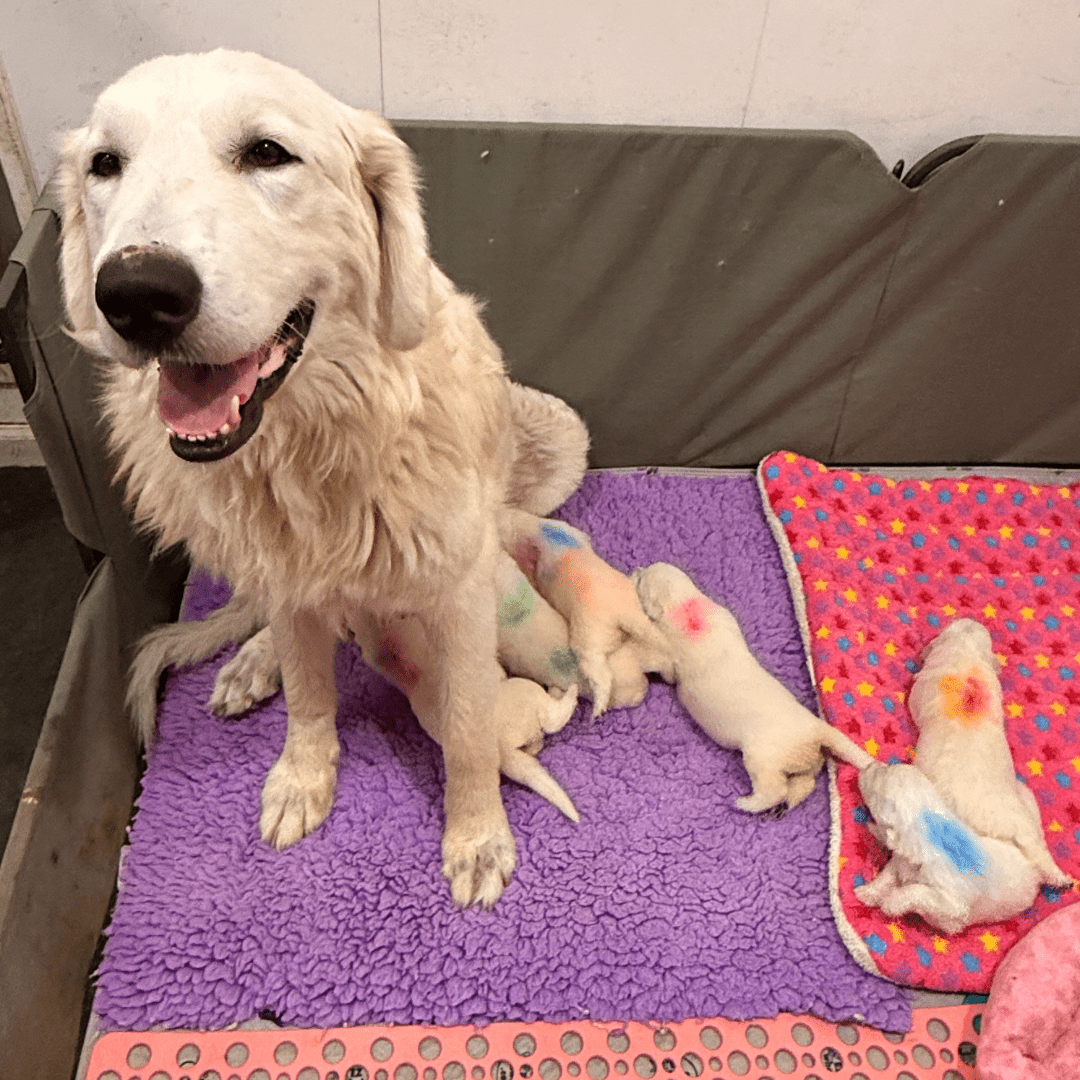
This brief but crucial period marks the beginning of a puppy's awareness of the world around them.
Physical Development:
- Days 10-16: Eyes begin to open, though vision is still limited
- Days 12-14: Ears open and hearing develops rapidly
- Weeks 2-3: First wobbly attempts at walking
- Week 3: Baby teeth start emerging
- Week 4: Motor skills improve dramatically
*Those develepmental stages are a range for all breeds. Maremmas are a precocious breed and tend to be a bit ahead of many breeds on things like eyes opening, walking and barking. Yes, barking! Usually eyes start to open in the second week and puppies are walking quite well by 3 weeks.
Behavioral Development:
- First tail wagging appears
- Beginning of play behavior with littermates
- Start of elimination without mother's stimulation
- Initial responses to sounds and movement
What's Critical for Future LGDs: This is when smart breeders begin controlled introductions to livestock. Puppies start forming their first impressions of what's "normal" in their environment. The sights, sounds, and smells they experience now become their baseline for life.
At Prancing Pony Farm: Our Puppy Parlor Livestock Guardian rearing system ensures that livestock sounds, smells, and gentle interactions begin during this crucial awakening period.
Primary Socialization Period (3-12 Weeks): Make or Break Time
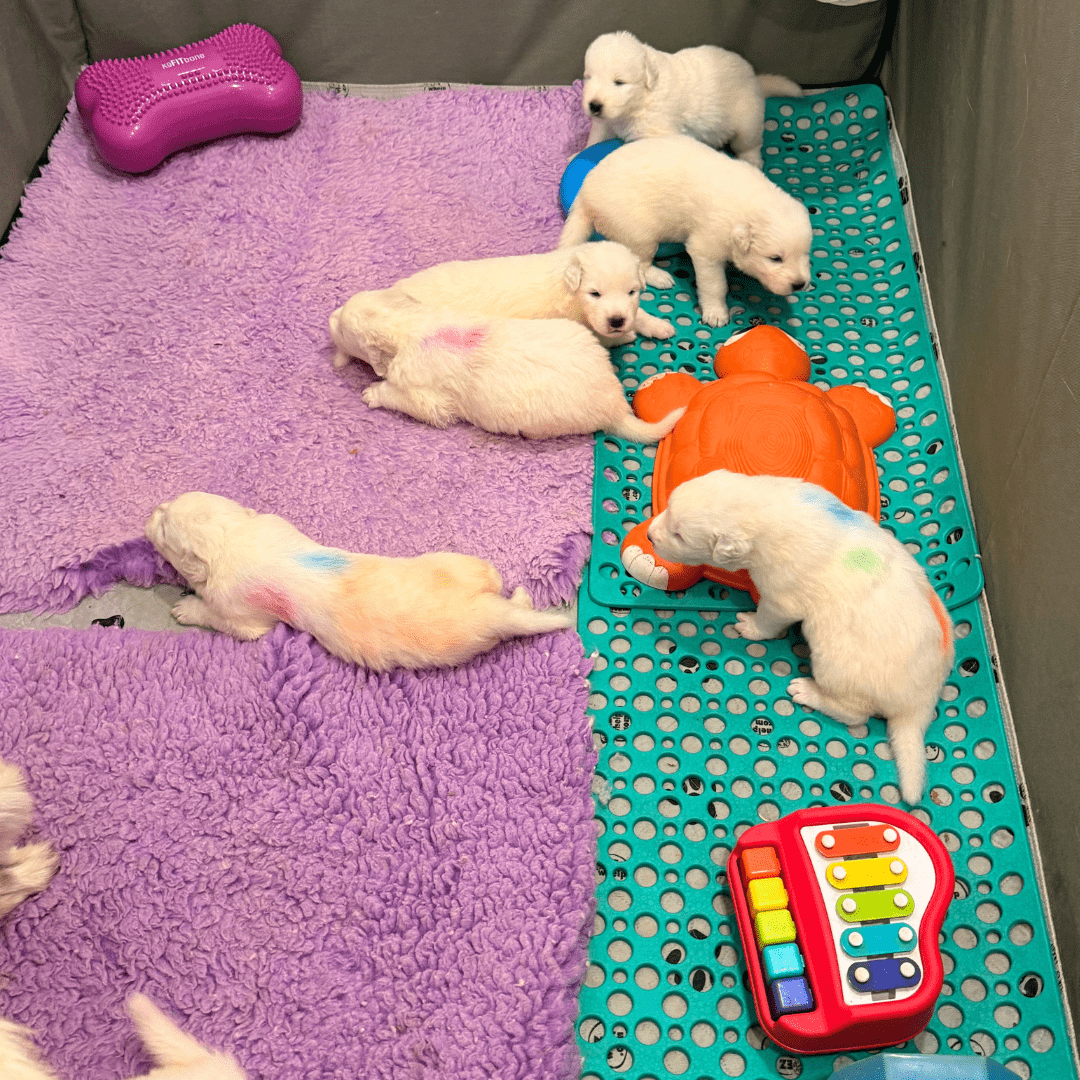
This is the most critical period in an LGD puppy's entire life. What happens during these 9 weeks will determine success or failure more than any other factor.
Weeks 3-4: First Impressions Matter
Physical Development:
- Confident walking and running
- All senses fully functional
- Beginning coordination for play
- Rapid brain development continues
Social Development:
- Week 3: Beginning of true social interaction
- Week 4: Play behavior intensifies
- First learning of bite inhibition from littermates
- Mother begins naturally teaching puppies manners (usually by leaving the baby sharks when they get too rough!)
Critical for LGDs: This is when livestock integration must begin. Puppies form their first lasting impressions of what species belong in their "pack." Wait too long, and you risk them viewing livestock as prey or toys rather than family, or at best, they may be indifferent and uninterested in the stock.
Puppies should be exposed to carefully selected human visitors during this time. They should also experience a wide variety of sights, sounds and experiences during their entire critical socialization window. Breeders who give their puppies the livestock exposure while ignoring the other elements of socialization are setting their puppies up to become fearful, shy and possibly aggressive dogs who are not safe with humans.
Weeks 5-7: The Learning Explosion
Physical Development:
- Full motor coordination develops
- Adult sleeping patterns begin to emerge
- Weaning process typically starts
Social Development:
- Peak learning period for social rules
- Hierarchy establishment within the litter
- Beginning of species identification patterns
- Week 6-7: Peak curiosity about new experiences
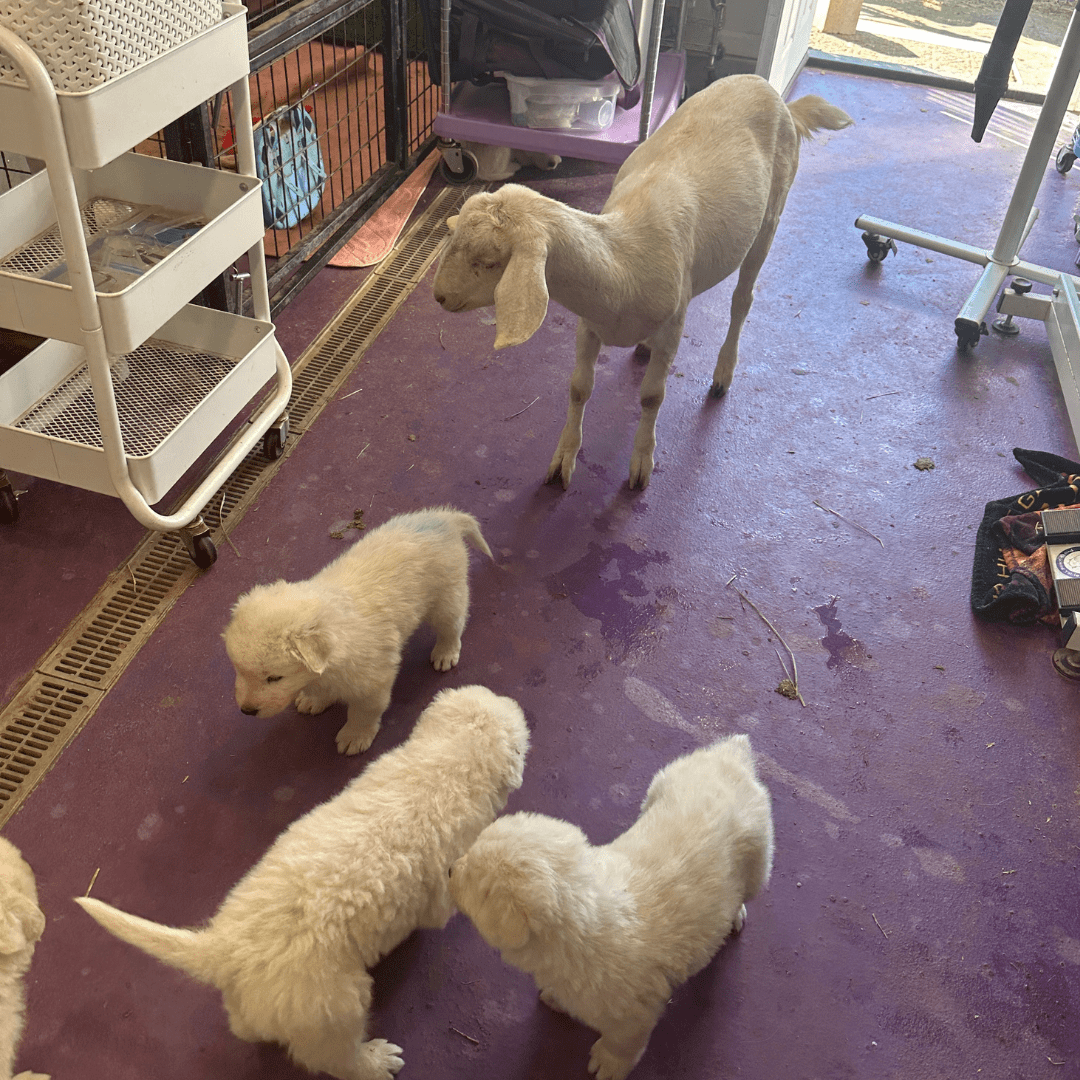
Critical for LGDs: This is the golden window for positive livestock interactions as well as human interactions. Puppies are curious about their world but not yet fearful. They readily accept new experiences as normal. Puppies should be living fulltime with carefully selected, gentle livestock "trainer" animals during this period.
Weeks 7-8: The First Fear Period
Behavioral Development:
- Critical Fear Period begins around week 7
- Puppies become more cautious about new experiences
- Bad experiences can create lasting phobias
- Good experiences build lifelong confidence
What This Means: Any negative livestock interactions during this period can create permanent fear or aggression issues. This is why proper "trainer" livestock (gentle, not aggressive) and careful supervision are essential.
Weeks 8-12: Confidence Building
Physical Development:
- Coordination becomes adult-like
- Second teeth may begin emerging (around week 12)
- Energy levels increase significantly
Social Development:
- Week 8: Traditional "pickup" age (though too early for LGDs)
- Weeks 9-10: Confidence building through positive experiences
- Week 11-12: Beginning of second fear period
- Independence from mother increases
Critical for LGDs: This period determines whether puppies will be confident guardians or anxious, reactive dogs. Continued positive livestock exposure and proper mentoring by adult LGDs becomes crucial. Positive interactions with humans and a variety of experiences ensure resilient, adapatble, mentally stable LGDs and family companions.
Juvenile Period (12-16 Weeks): Advanced Learning
Physical Development:
- Adult proportions begin to emerge
- Significant growth spurts
- Adult coat begins replacing puppy coat
- Week 14-16: Second fear period peaks
Behavioral Development:
- More independent exploration
- Testing of boundaries increases
- Adult behavioral patterns begin to emerge
- Critical: Final window for easy socialization
What's Critical for LGDs: This is the last opportunity to establish proper livestock relationships. (And in reality it may be too late if livestock exposure is just starting now.) After 16 weeks, socialization becomes much more difficult and may never be complete.
The Science Behind the Timeline
Research in canine behavioral development consistently shows that experiences during these specific windows create permanent neural pathways. You can't simply "make up for lost time" later.
Key Research Findings:
- Puppies isolated from livestock during weeks 3-12 show dramatically higher rates of predatory behavior
- Early exposure during weeks 3-7 creates positive associations that last a lifetime
- Fear periods (weeks 7-8 and 12-14) can create permanent behavioral issues if handled poorly
- After 16 weeks, socialization becomes exponentially more difficult
What This Means for Your Investment
Understanding these developmental stages helps you evaluate any potential LGD breeder. Ask these critical questions:
Week-by-Week Questions:
- Are puppies exposed to farm sounds and smells from birth?
- When do livestock introductions begin? (Should be week 3)
- What type of livestock do puppies interact with during weeks 5-7?
- How are fear periods (weeks 7-8, 12-14) managed?
- Are puppies still with livestock mentor dogs at 12+ weeks?
Red Flags:
- Puppies raised indoors until 6+ weeks
- No livestock exposure until "after pickup"
- Claims that "they'll figure it out from genetics"
- Pickup encouraged at 8 weeks for working dogs
- No mention of fear periods or developmental stages
The Prancing Pony Farm Advantage
Our understanding of these developmental stages drives every aspect of our puppy-raising program:
- Weeks 0-2: Livestock sounds, smells, and calm farm environment from day one
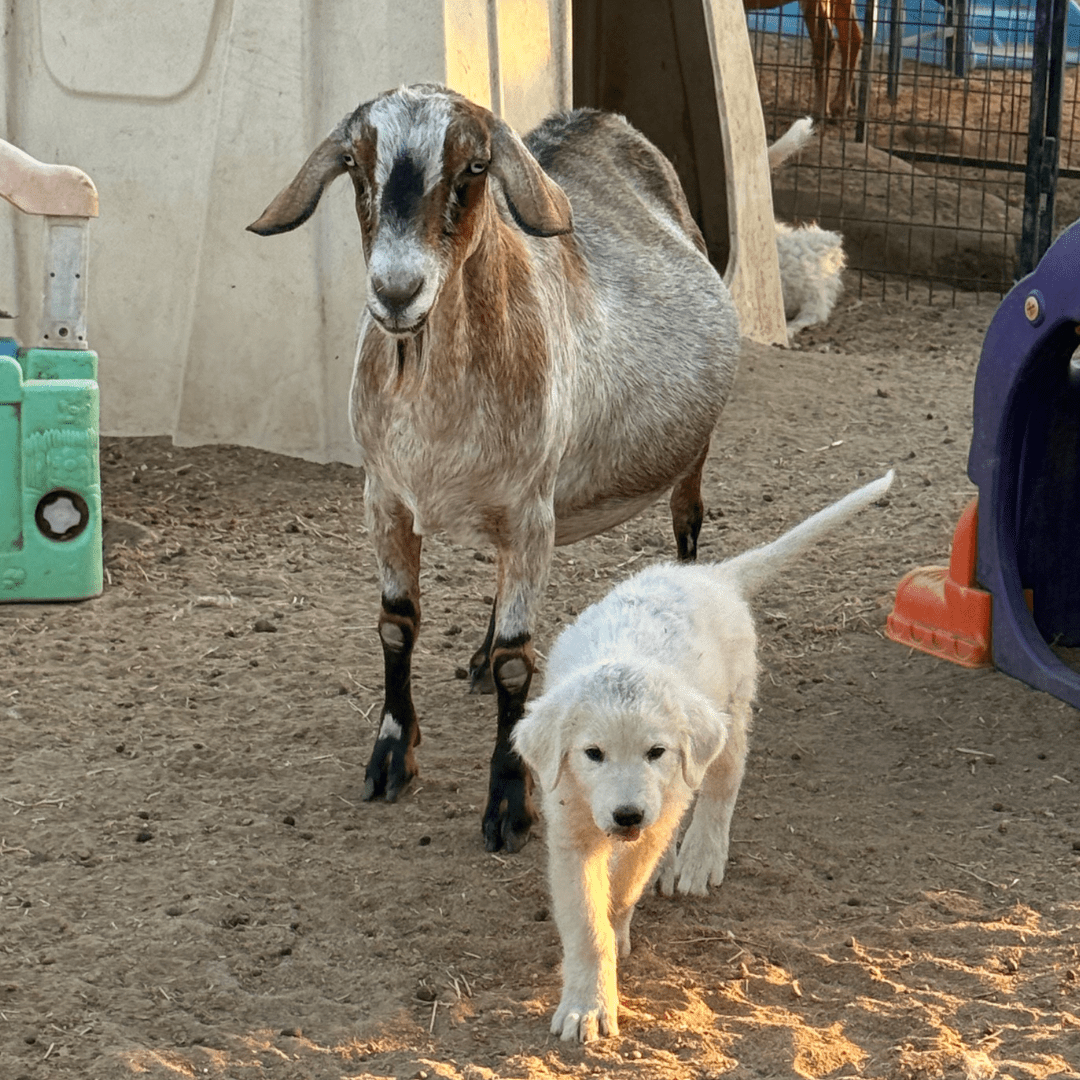
- Weeks 3-4: Gentle introductions to carefully selected trainer goats
- Weeks 5-7: Daily positive interactions with various livestock species (puppies live full time with goats with other livestock nearby)
- Weeks 7-8: Extra care during fear period with confident mentor animals
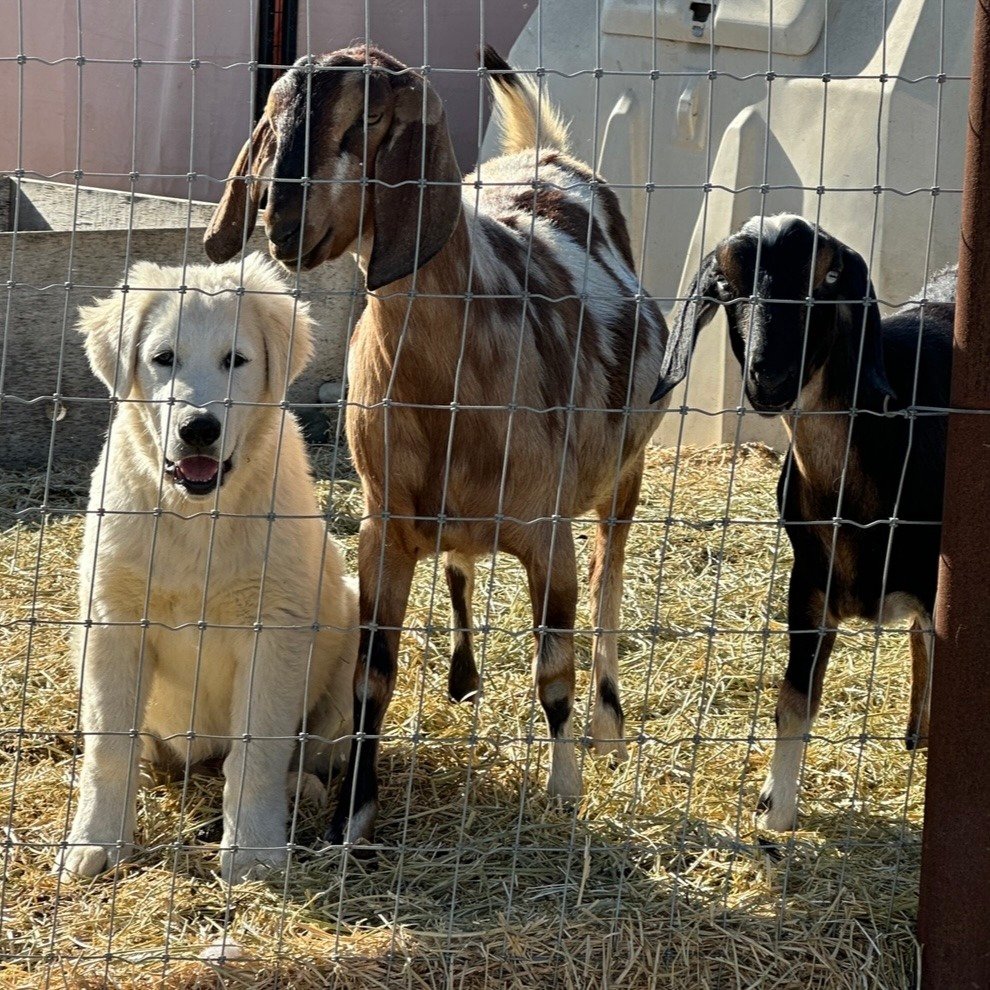
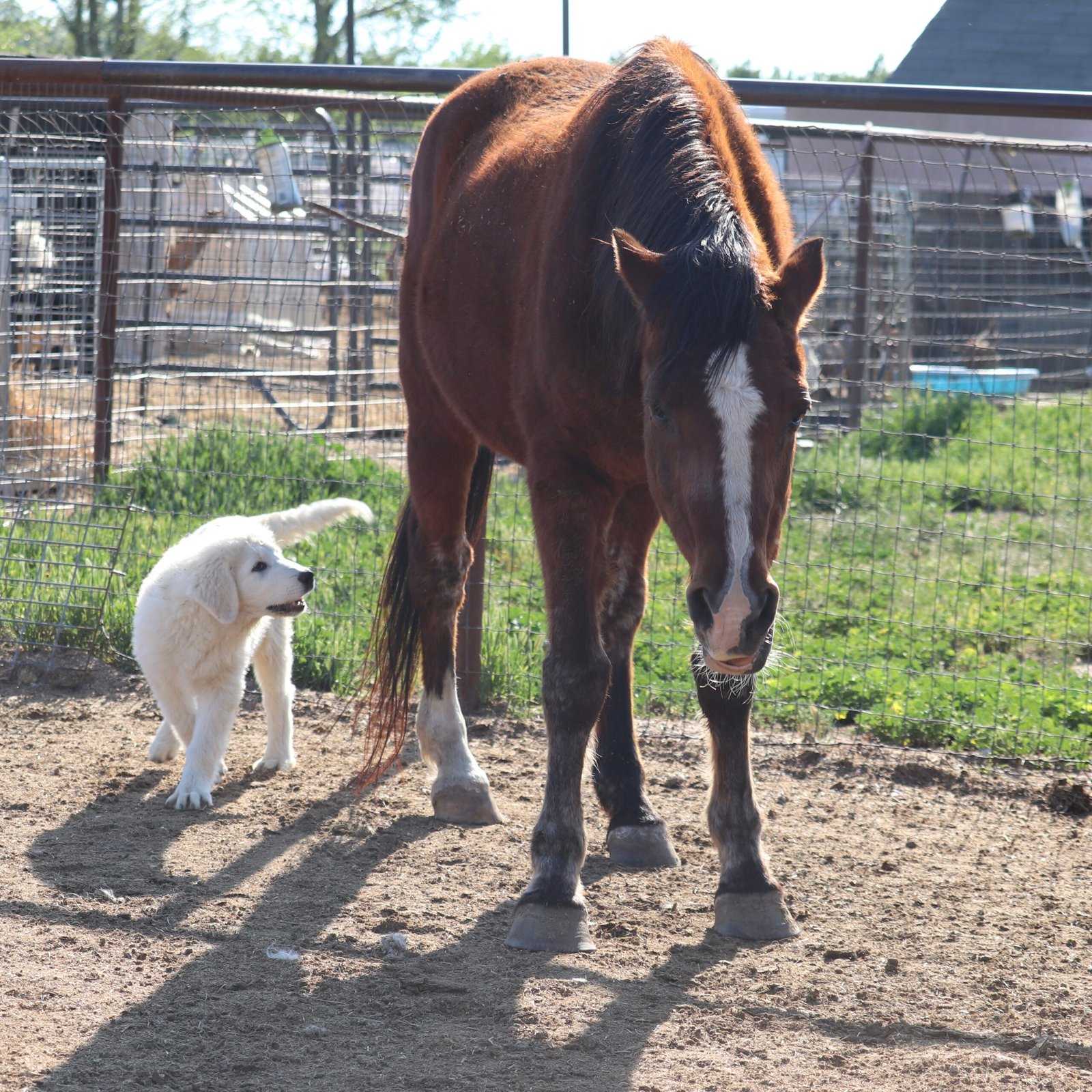
- Weeks 8-12: Advanced integration with adult LGDs, other types of livestock and independent exploration plus a well-rounded socialization program with humans and various experiences
- Weeks 12+: Evaluation and advanced training before placement
Every single day is planned to maximize your future livestock guardian dog's potential.
What's Next?
In the coming weeks, we'll dive deep into the specific techniques we use during each developmental stage, including:
- How to identify and work with "trainer" livestock
- Managing fear periods for confident adult behavior
- The role of adult LGDs in puppy development
- Environmental enrichment that builds working confidence
- Evaluation techniques that predict adult success
Because when you understand the science behind exceptional LGDs, you'll never settle for a breeder who doesn't.
Want to see these developmental stages in action? Join our email updates to follow a real litter's journey week by week
Ready to reserve your scientifically-socialized guardian? Apply for our waiting list - spaces are limited
Questions about our development process? Schedule a consultation call to discuss your specific needs
Next week: "The Puppy Parlor Method - Our Proven Livestock Integration System" - Discover the specific environment and techniques that create confident, livestock-bonded guardians from day one.