Hi Reader,
I’ve gotten some version of this question three times in the last couple of weeks, all from families who recently brought a puppy home: “What commands does she already know? Does she sit? Stay?”
It’s a completely fair question. You’ve got a new puppy, you’re trying to figure out where to pick up, and you want to know what’s already in place. So I don’t want this email to sound like I’m dodging it.
Does My Maremma Puppy Need to Know “Sit”?
Here’s my honest answer: almost none of my puppies know “sit” on cue when they leave here. Some of my older dogs do, because I taught it to them just for fun, the same way you might teach any dog a party trick. But it’s not something I train as a default, and it’s not something I expect my puppy families to drill either.
That surprises people every time, so I finally sat down and wrote out the full explanation, because I was tired of trying to type it out in a text message between farm chores.
Why Livestock Guardian Dogs Train Differently Than Pet Dogs
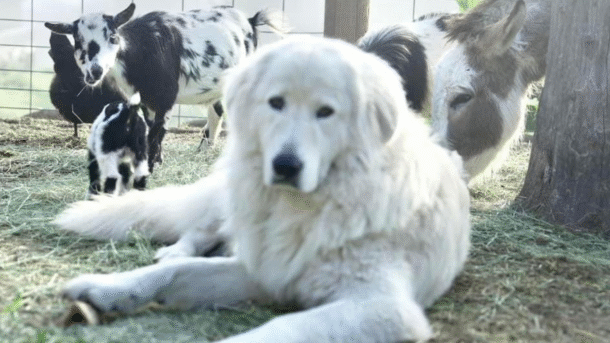
The short version: Maremma Sheepdogs aren’t just pet dogs with a job on the side. They’re bred to think independently, continually scan their environments for threats, and make decisions without waiting on a human to direct them. (This is true even if your Maremma is a full-time companion dog.) A dog sitting on cue while they’re supposed to be reading the tree line for coyotes isn’t a well-behaved dog. It’s a dog being asked to override the exact instinct that makes them good at their job.
What I Train My Maremmas Instead of Sit
Instead of “sit,” I focus on using positive reinforcement to teach my Maremmas things like manding (a dog offering a sit or a calm stand to ask for something, instead of being told to sit), targeting, basic manners and handling skills, and name recognition. There’s a real difference between a dog who sits because you told her to, and a dog who chooses to because she’s learned it gets her something good. One is control. The other is communication.
I go through all of it in this week’s post, including what this looks like differently if you’ve got a companion Maremma instead of a working livestock guardian dog, because that distinction matters too.
If you’ve been wondering whether your puppy is “behind” because she doesn’t know basic cues yet, or you’re just curious why I train the way I do, this one’s worth the read.
Read the full post: Why I Don’t Train My Maremmas to Sit on Cue →
I’m planning to link this one in future puppy go-home emails too, since it answers a question almost every new family eventually asks. Consider this your early access.
Talk soon,
Kim
P.S. — If you read it and find yourself thinking “okay, but what SHOULD I be teaching my Maremma puppy, then?”, that question’s bigger than one blog post can answer. Reach out anytime, that’s exactly what I’m here for.
Ready to find out if a Prancing Pony Farm Maremma is right for you? Book a free Maremma Discovery Call. |