Last Updated on October 22, 2026 by Kim Crawmer, KPA CTP, LFDM
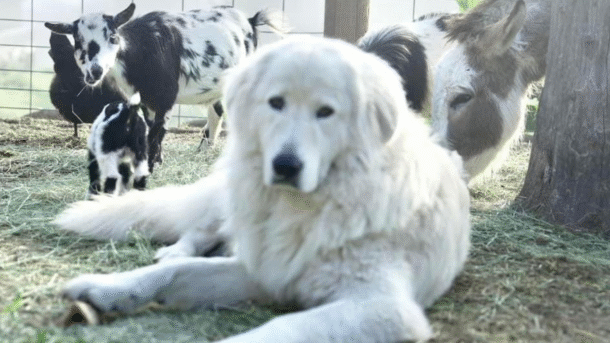
I've been saying this more and more lately, and I'm going to keep saying it: if you have something you love and want to protect, you need a livestock guardian dog. Even if you don't have a single goat, sheep, or chicken.
On a recent Maremmas Made Easy call, Tom, whose companion Maremma Jimmy is one of my pups and about 10 months old, told me the coyotes have been very active lately. Jimmy has been letting them know about it at night. We also talked about a story out of Los Angeles: a 16-month-old was bitten by a coyote in the Atwater Village neighborhood. Neighbors had complained for months that someone was feeding it, but officials said they couldn’t act without proof. Afterward, the coyote was euthanized.
This isn't a lone incident, and it's not just coyotes we need to worry about. It seems like every time I turn around, I hear another story of a coyote, bear, mountain lion, or other predator showing up in an urban area. Family pets (dogs and cats) get snatched right in their front yards or on walks with their owners. Sometimes humans get attacked and even killed by these predators. Not too long ago, a large bear took up residence in the crawl space under someone's home, causing a lot of damage. They tried for months to remove the bear with no luck.
I'm starting to think the predator problem in some neighborhoods is as bad as it is on farms. Thomas thinks it may be even worse. So let's talk about it.
Why Are Coyotes and Other Predators Showing Up in Neighborhoods?
As Tom put it, we keep pushing these predators farther and farther out of their normal habitat, and they're just trying to survive. Hot, dry weather makes it harder for them to find food, and they adapt to city living.
The trouble gets worse when people feed these predators. I can understand someone feeling sympathetic, but feeding wildlife makes them way too comfortable around humans. Coyotes are opportunistic. To a comfortable coyote, a little toddler running around can look like a meal. It's the same as people who feed alligators and then wonder why one goes after a person.
Quick takeaway: Never feed wildlife. A predator that's comfortable with humans is a dangerous predator.
Do You Need a Livestock Guardian Dog If You Don't Have Livestock?
If you live in a neighborhood but you have coyote problems, mountain lion problems, or whatever, you probably need a livestock guardian dog to keep your children safe and your little dogs safe.
Livestock guardian dogs bond with whatever they live with, whether that's a human, a Golden Retriever, or a goat, and they want to protect it. Jimmy lives in the city with Thomas, his wife, Cindy, and Gidget, their Golden Retriever. His "flock" is his family.
He also knows his territory. He watches the alley from his spot by the door, knows which cars belong there and ignores them. A car he doesn't recognize gets an earful.
Quick takeaway: A livestock guardian dog protects what it's bonded to. For a companion Maremma, that's you, your kids and your other pets.
Why Won't Any Big Dog Do the Job?
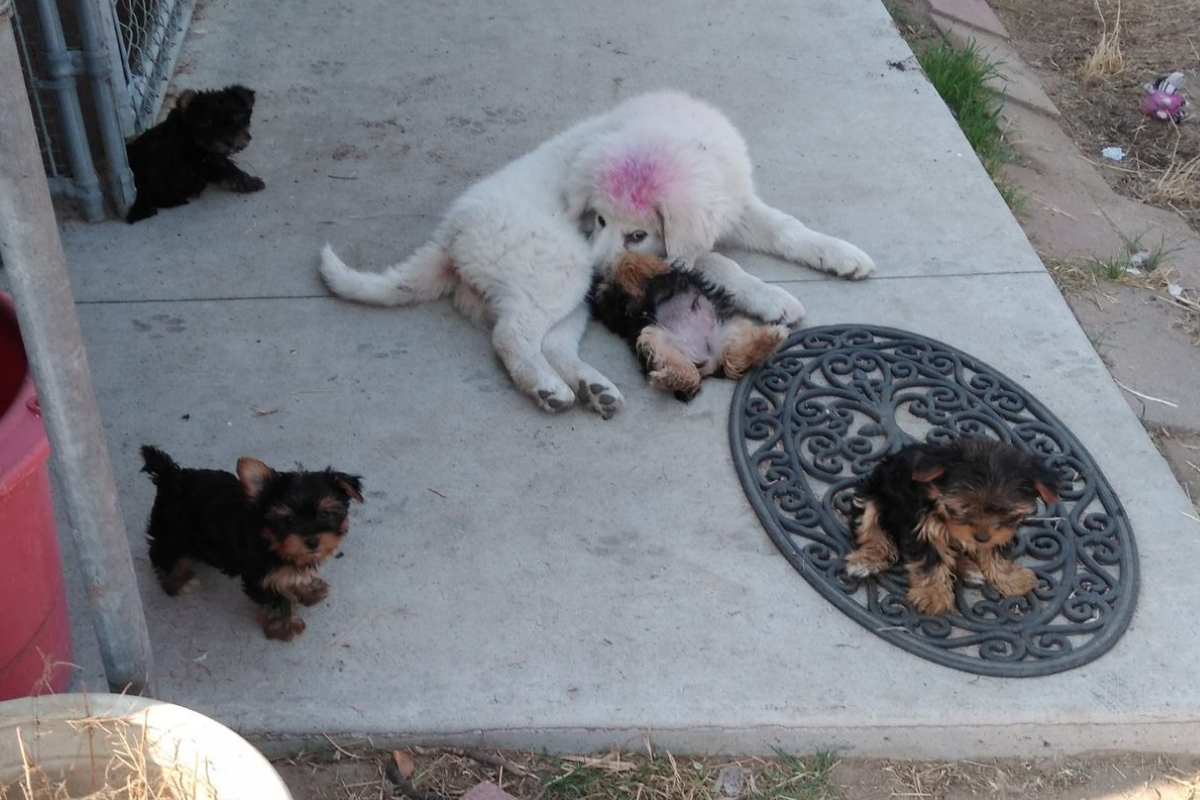
People come to me all the time and say, "I have a Lab and a German Shepherd, and I thought they would protect my animals, but they don't." That's not what they're bred to do!
There's nothing wrong with a nice Lab, Golden, or pit bull. But protection isn't about size. It's a dog specifically bred to guard other living beings. A dog not bred for that trait may just watch as coyotes or other predators come in and take your family pet or attack your child. It may also become the victim of the predator. Another breed may be caught off guard by a predator, or they may attack immediately and get hurt. Many of these dogs are bred to engage quickly, which is fine if you're herding sheep, hunting rodents, or chasing a ball, but not so good when you encounter a coyote or a mountain lion. Those encounters take thought, patience, and a special set of skills that only LGDs possess.
LGDs successfully protect other animals from predators of all kinds because of traits bred into them over centuries. LGDs stay alert, always listening for threats. (That's why they mostly stay awake at night and nap all day, because most predators are active at night.) That barking people find so annoying? It's designed to warn predators away before they get close enough to attack. The next step isn't an attack. It's ritualized aggression - barking, growling, posturing with hackles raised, and lots of angry telling the predator off. This is not an accident. It's designed to scare the predator away with the least harm to the dog. Injuries are costly to the dog, and most LGDs will avoid them if possible. They only engage if the predator refuses to heed the warnings. Then watch out - they will fight to the death if they have to. Luckily, they usually don't have to.
The whole point of LGDs is that in most cases everyone gets to live: the LGD and whatever the LGD is protecting, be it chickens, chihuahuas, or children. And yes, even the predator. That's why LGDs are considered non-lethal predator control. In most cases, no one dies. The predator simply goes on its way to find easier prey. To the farm or surburban home that doesn't have an LGD.
Quick takeaway: Choose a livestock guardian breed for a guardian job.
Can a Maremma Be Happy as a City Dog?
Some people think this can't work, that these dogs can't be happy in a home like Jimmy's. My question is: have you ever actually known a dog who lives this life? You might be surprised at how well they do and how happy they are.
Jimmy has a wonderful life living as a companion in the LA suburbs. He loves people, flops over for belly rubs, and has a whole neighborhood of friends, including Tom's neighbors who take him on long walks. In Tom's words, "You can see in his eyes, there's just nothing but pure, pure happiness in this dog's heart."
Thomas summed it up beautifully: "You accept what they are, and they accept you for who you are, and you've got a great pal for the rest of your life."
I'm seeing more companion homes than ever, maybe because I'm embracing and talking about it more. I won't say it's better for them to be pets than working LGDs, but I think it's a missed opportunity when people don't consider it. With the right home, someone who understands the breed, they have a really happy life. And some companion homes are actually easier than working homes, because there's no livestock element to worry about.
Quick takeaway: The right home matters more than the job title.

Your Breeder Shouldn't Disappear After Pickup
My support starts the day you reserve and lasts your dog's whole life. Free consultation calls, quick texts, and real answers, for as long as you have a Prancing Pony Maremma.
See what lifetime support looks like →
Do Livestock Guardian Dogs Need Attention?
Yes, and that's true for working dogs too. There's an idea that an LGD can't work if you make a pet out of it. That's not true. They're very capable of doing both.
My dogs all love attention, and I prefer homes where people go out, talk to their dog, pet it and play with it. It doesn't have to be hours. They want to come up, say hi, get petted a little, maybe get a treat, and then go back to watching the goats (or the family cat or the kids).
Quick takeaway: A few minutes of affection every day builds the bond that makes a livestock guardian dog want to guard. And it's a mutually beneficial relationship!
Isn't a Maremma Too Big for a Neighborhood?
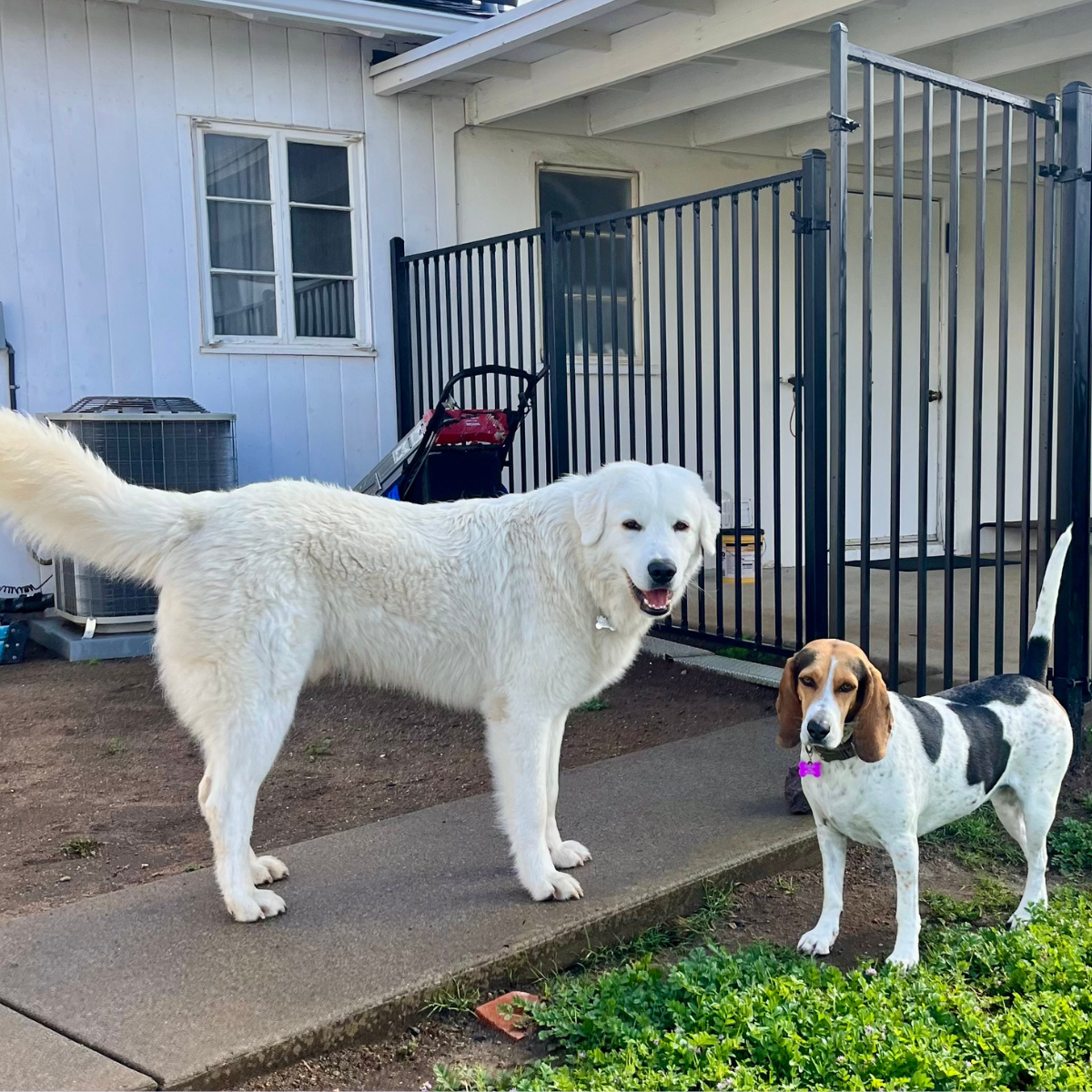
I hear this a lot, especially from people who have only had small dogs. A few things to know:
- Bigger doesn't mean more aggressive. My biggest stud dogs are absolute teddy bears.
- Raising one isn't so different. As Thomas says, they do everything a little dog does, just on a larger scale.
- Maremmas tend to be a little smaller than some other livestock guardian dog breeds, so there's a bit less dog to manage in a companion home. There are also plenty of breeds kept as pets that are the same size as Maremmas, or bigger.
- Some lines are smaller still. My imported stud dog, Pippin, is probably 85 or 90 pounds, and Nova is about 75. If you want a smaller Maremma, a puppy from Nova and Pippin's litter might be just what you need
Remember that a big body doesn't mean a grown-up brain. A one-year-old Maremma can look like a walking piece of furniture, but he's still a puppy, and his brain is still developing.
Quick takeaway: Size is manageable. Temperament, socialization and support are what make it work.
Is a Maremma Right for Your Family?
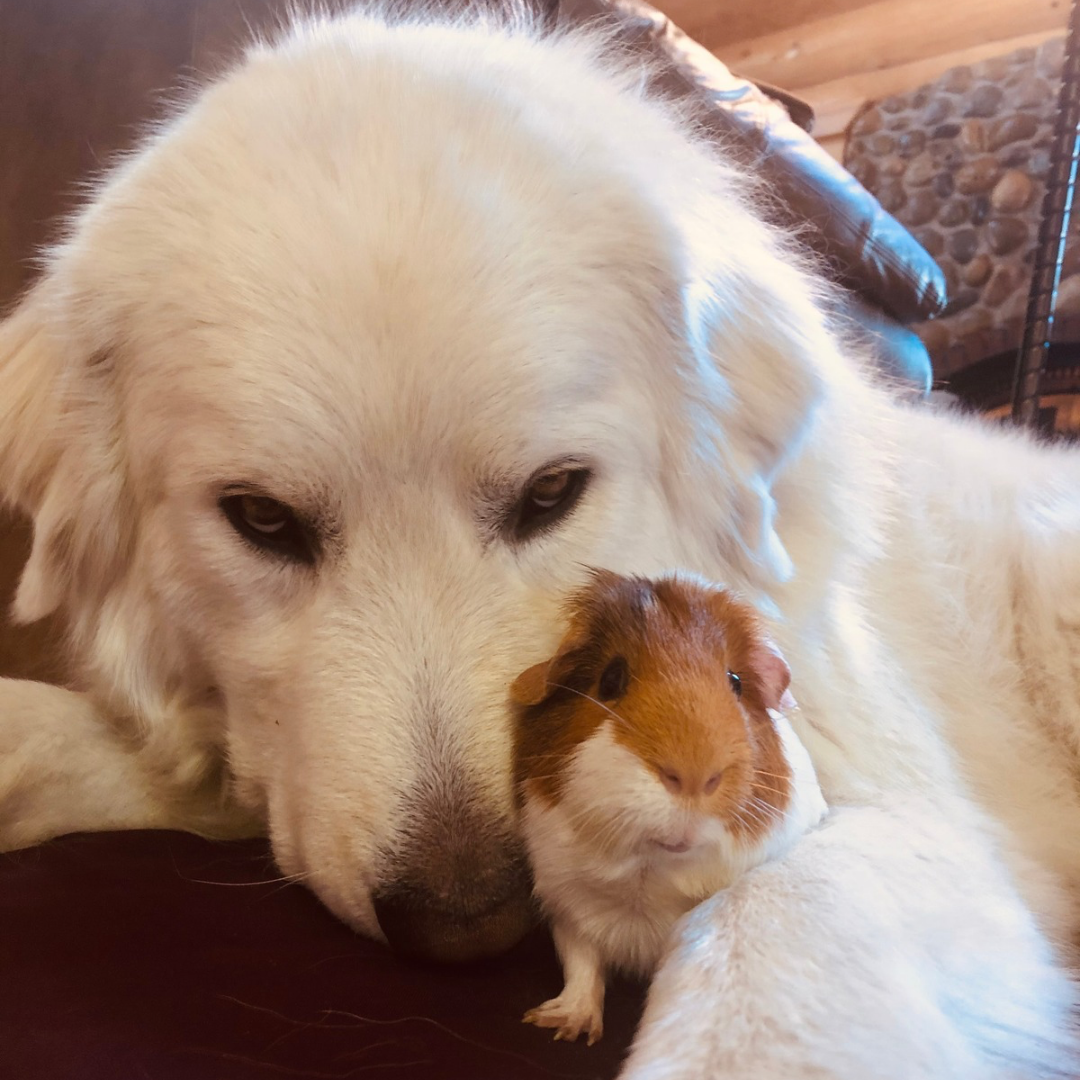
Whether you live on 100 acres or on a city lot with a predator problem, the source of your dog is the most important decision you'll make. A well-bred, well-socialized Maremma from a breeder who will support you for life makes all the difference.
If you're wondering whether a Maremma could protect your family, come ask me on a Maremmas Made Easy call, see my available puppies, or apply for a Maremma. Working home or companion home, I'd love to help you find the right fit.
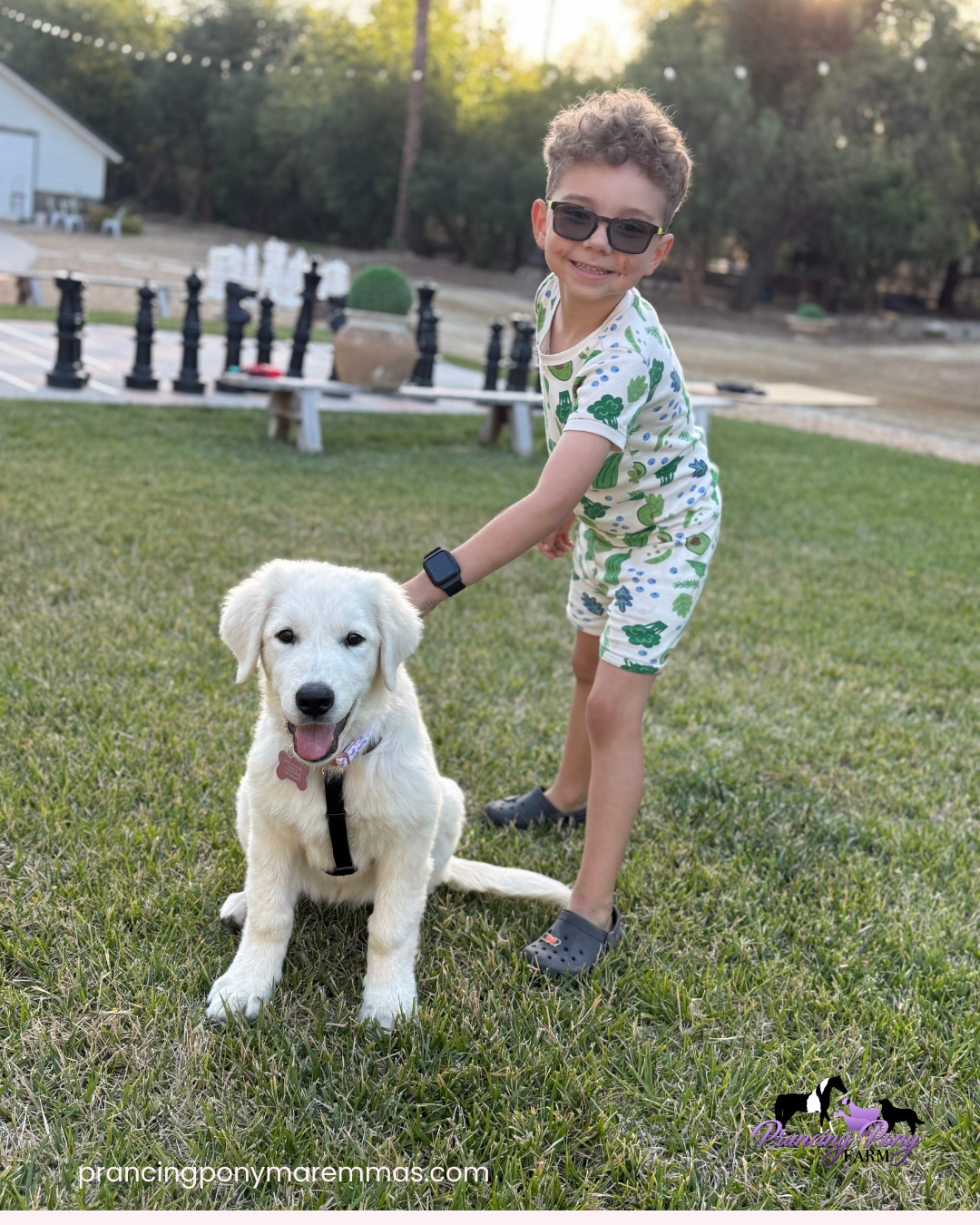
Thinking of a Maremma as a Family Companion?
Not every Maremma guards livestock. Many of ours guard a family instead — and we're proud to be one of the few Maremma breeders who raises puppies specifically with companion homes in mind. Curious if this could be the right path for you?
Learn About Maremmas as Companions →