Last Updated on October 15, 2026 by Kim Crawmer, KPA CTP, LFDM
These are dogs, not programmable robots.
I say that a lot, usually right after someone tells me their Maremma Sheepdog was perfect until about eight months old. And I get it. You chose a breeder who raises puppies with livestock practically from birth, you waited months for your dog, and you expected the hard part to be over at pickup.
Here's the honest truth after more than ten years and over 200 placements: the work I do before your puppy goes home is only half of the system. The other half is yours. Every family leaves with a success plan, and the families who work that plan raise reliable livestock guardian dogs. The plan only works if you work it.
So let's lay it all out in one place.
What Does Maremma Sheepdog Success Actually Require?
Quick answer: Raising a reliable Maremma Sheepdog takes four things from you: (1) foundational dog education, (2) a plan for adolescence, (3) the ability to read both your dog and your livestock, and (4) a place to separate them before you need it. None of these are optional extras. They're what success is built on.
The Four Resources I Recommend to Every Maremma Sheepdog Owner
These are the first things I tell every puppy family, no exceptions. When someone calls me later about leash pulling, jumping on people, or chasing stock, my first question is always, "Did you do the four things?" That isn't a gotcha. It's the starting point, because the answer changes everything about what comes next.
- The DIAL Method®. A program for understanding, managing, and living with any dog, built on the LEGS applied ethology model. It isn't LGD-specific but it's a fantastic foundation for understanding and living happily with any dog. I'm a certified DIAL Guide, and I offer it as a recommended add-on for every puppy and training client. There's a version for families with children, which I strongly suggest if kids or grandkids are around.
- Karen Pryor Academy Dog Trainer Foundations. Online and self-paced. You'll learn clicker mechanics, how dogs actually learn, and how to read dog body language. I earn nothing from recommending it. I recommend it because the people who do it are the most successful with their dogs.
- On Talking Terms With Dogs: Calming Signals by Turid Rugaas. A short book on the canine body language, including warning signals dogs give long before things escalate. Most people finish it in a day or a week.
- Meet Your Dog by Kim Brophey. The L.E.G.S. model applied to your individual dog: genetics, environment and learning, needs, and behavior. (L.E.G.S. stands for learning, environment, genetics, self.) It overlaps with DIAL and adds breed-specific depth. Short on time? Read the chapter for your dog's breed group. (Guardians for Maremmas and other LGDs.) It isn't long.
"I don't have time" (I hear you)
I understand busy. I've paused my own KPA courses during kidding season, and they put it on hold for me. (I also skipped kidding season when I was going through the KPA Professional Program.) So buy it now and start when you can, but start. Even if you can only do 15 minutes a day it will make a huge impact on your dog's success and your sanity. (The Dial Program is a great place to start since it's only four 15 minute videos total. 15 minutes a day for four days and you're done!)
Here's why I won't let this one go: without this education, you can't tell normal puppy behavior from a warning sign, and the signs get missed until there's blood. You find time to feed animals and clean pens. (And probably to watch TV or scroll social media, if we're being honest.) This belongs on the same list.
Build a Better Foundation With Your LGD
The DIAL Method® is a short, science-based program that teaches you how to truly understand your livestock guardian dog as an individual and how to set them up for success — before you ever start formal training. Four video modules, under 40 minutes, and a framework you'll come back to for the life of your dog.
I'm a certified Dial Guide and available for individual consultations if you want personalized support applying it to your specific dog and situation. (Consultations are free for Prancing Pony Maremma clients.)
Why Does My Maremma Puppy Seem to Forget Everything After a Few Months?
Because your puppy is a teenager now. Somewhere between about 6 and 18 months (often right around 8-9 months, but it's different for every dog), a puppy who was perfect with stock may start chasing, grabbing, or getting rowdy. That isn't a bad dog. That's a puppy being a dog.
What to expect during Maremma adolescence:
- Regression is common. Not every puppy goes through it, but most owners should plan for it. Hoping it won't happen is not a plan. Planning as if it will happen is the plan.
- Integration isn't a straight line. Side by side through a fence, then supervised visits, then more freedom, and sometimes back a step. Going back to a shared fenceline and supervised visits for a short time isn't a sign your dog has failed. Leaving them to work it out alone is you failing them both.
- Habits form fast. One incident of undesired behavior won't ruin your puppy. Chasing that keeps happening becomes a practiced motor pattern. Canine motor patterns developed during adolescence are almost impossible to undo. Stepping in early is the whole point. Don't blame your puppy for being a dog and don't blame yourself for not catching on right away. Just do what it takes to keep your livestock safe and to help your puppy succeed. And that usually involves a temporary separation.
- Maturity takes time. Full reliability, especially with poultry, babies and vulnerable stock, comes at around two years old for most dogs. That's not delayed development. It's normal. A puppy that matures early is a gift. Appreciate her, celebrate her but don't compare her normally developing brother to her.
There's no such thing as a perfect puppy. There are just normal puppies doing normal dog things on their journey to adulthood and that looks different for every puppy.
How Do I Read My Livestock's Body Language Around a Maremma Puppy?
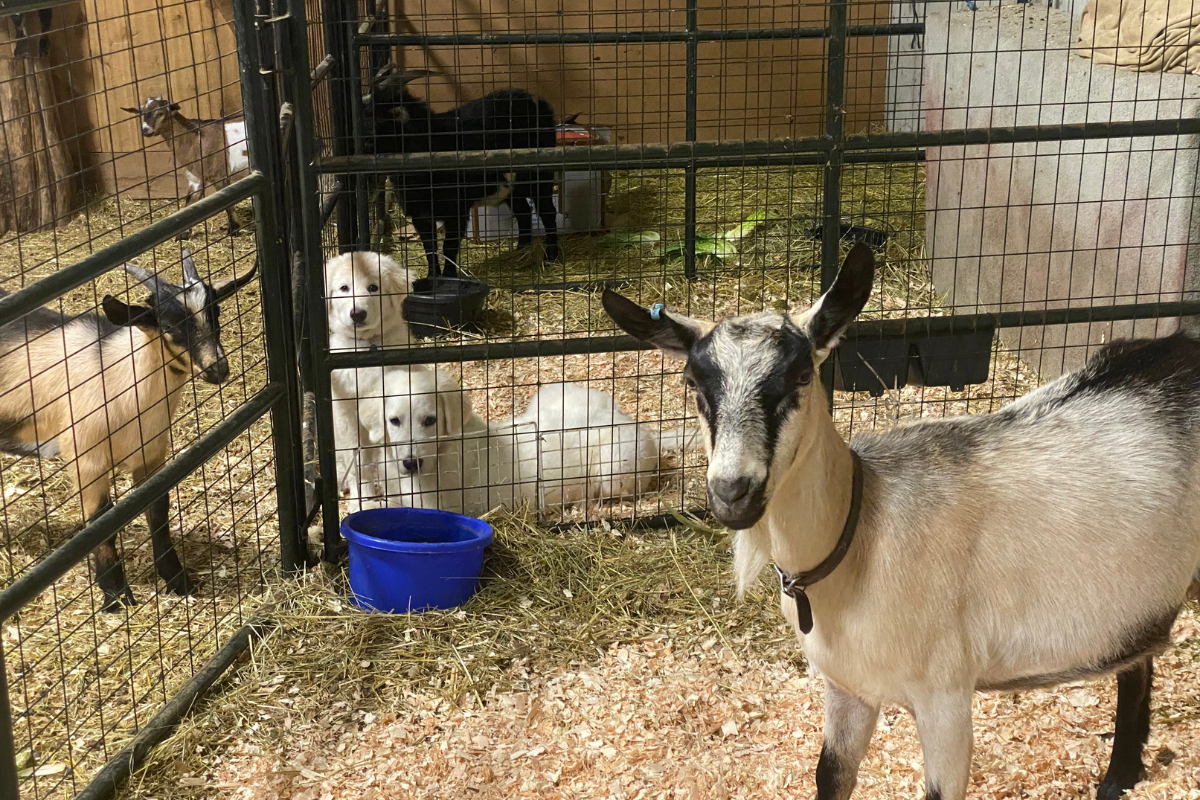
Dogs don't bite "out of the blue." They signal first, and owners who haven't learned the signals don't see them. That's exactly what Calming Signals and The Dial Method teach you.
But your livestock signal too. Whatever species you keep, their body language shows you when they're uncomfortable with the puppies. Ignoring that is how small problems become injuries.
I'm a goat breeder. I can teach you puppy behavior and goat behavior, but I can't teach every breed of sheep, alpaca, or cattle. Learning what normal looks like for your own animals is part of your job, and it's one of the most useful things you can do for your dog.

Understanding calming signals in dogs is essential for anyone who owns these remarkable animals. Calming signals are subtle behaviors that indicate a dog's desire to relax, de-escalate tension, or simply express comfort with their environment. Recognizing these signals can enhance the bond between dogs and humans, fostering a more harmonious living and working situation.

Does Breeding Season Affect My Maremma Sheepdog Puppy?
Yes, more than most people expect. Breeding season changes livestock behavior whether or not a male is in with the females. Here's what it looks like with goats:
- Does in heat leap, rear up and come down, headbutt and chase each other, act flirty, and sometimes fight.
- Bucks in rut (and likely rams) fight, chase, and act aggressive towards each other, the does, and oftentimes towards humans and other animals, including dogs. I've seen bucks try to mount a dog as if it were a doe. That's frightening for a young dog. Not to mention they stink to high heavens! You probably wouldn't want that rubbing on you so why should your dog like it? 🤢
- Males and females together turn all of that up, and the male may guard "his" females against the puppy.
Even without real aggression, the excitement alone is a trigger. Small ruminant play involves a lot of jumping and head butting. Puppy play is chasing, grabbing, and biting. A puppy who decides to join the game plays like a dog, not a goat.
I always separate puppies and young dogs from does in heat and bucks in rut, and I suggest you do the same. Let them watch from the sidelines (a shared fenceline) so they can become desensitized to it without engaging. One more thing: check what you actually have. A wether with an undescended testicle is still a buck (or ram) and will act like one, whatever you were told about whether he can breed or not. (Hint: He most likely can and even if he can't, he will try.)
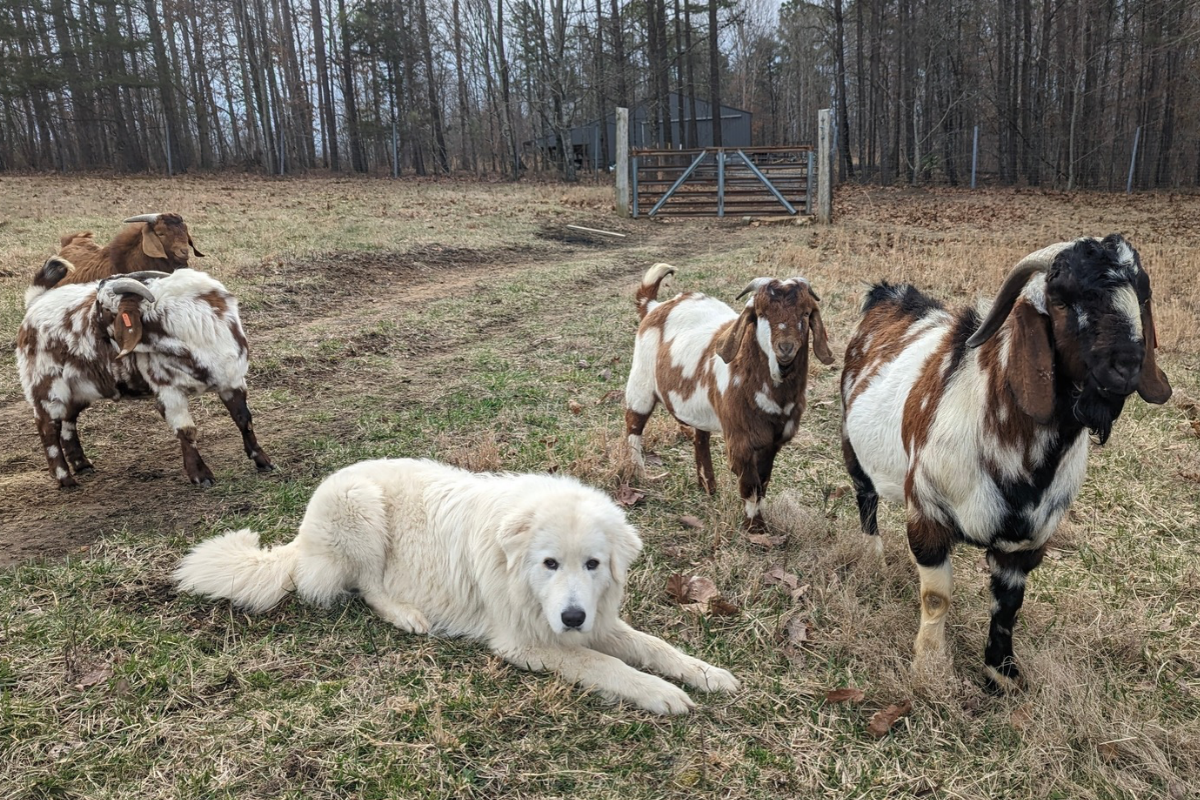
Why Every Maremma Owner Needs a Separation Area Before Pickup
Every farm needs a place where the dogs can be kept apart from stock on short notice, ideally sharing a fence line so everyone can still see and smell each other.
Trying to build one after a problem starts leaves you with no good options. Build the space before your puppy comes home. It could be the area you use for initial introductions or a bigger area suited for a teenage dog. Just make sure you have it when you need it. A few fence panels, t-posts, zip ties and extra water buckets can quickly turn one pasture into two. If a woman in her 60's with zero carpentry skills (me!) can build a temporary partition you can, too!
Separation is management, not punishment. It's a phase, not failure. The dogs go back to supervised visits and eventually living together again once things settle and their brains mature. Be prepared to keep them separate if you need to, and if you never do, great. Consider yourself lucky!
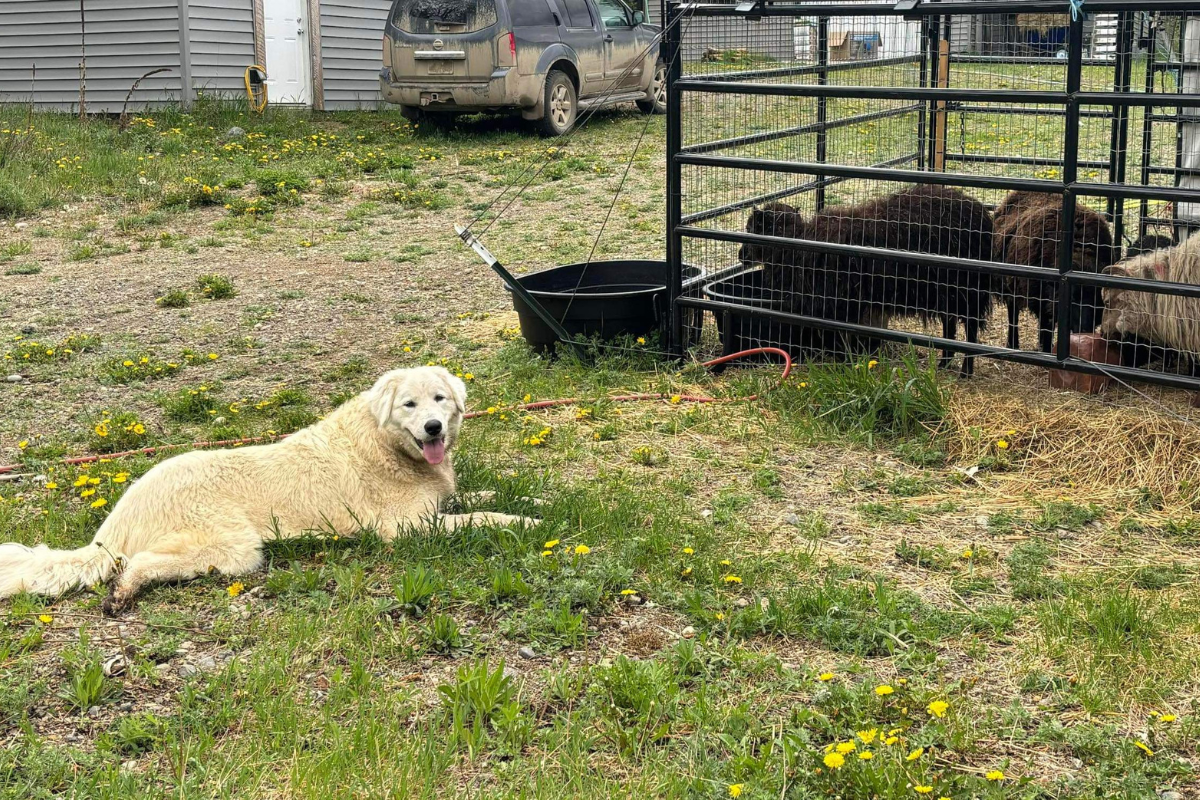
Key Takeaways
- Do the four resources: DIAL, KPA Dog Trainer Foundations, Calming Signals, and Meet Your Dog.
- Expect adolescence between 6 and 18 months, and plan for regression.
- Learn your own livestock's body language, not just your dog's.
- Separate young dogs from stock during breeding season.
- Build your separation area before pickup.
- Expect full reliability at around two years.
You Don't Have to Be Lucky. You Have to Be Prepared.
I'll always tell you exactly what it takes to succeed with your Maremma Sheepdog, and I tell you up front because it's the kindest thing I can do. It protects you, your livestock, and your dog.
The families who work the plan end up with a mature livestock guardian dog at around two years old and calm, settled stock. That's what I want for every one of you.
Questions about any of this? Bring them to our free Maremmas Made Easy call, every Tuesday at 5pm Pacific on Zoom. Register once and come any week. And if you're already in the thick of the teenage months, you can book a training consultation with me.
Want More Like This?
If this kind of Maremma question comes up a lot for you, Maremmas Made Easy might help — live Q&A calls, a real owner community, and ongoing support from someone who's bred, trained and placed 200+ Maremmas. Free for Prancing Pony Farm puppy families; open to everyone else at founding-member pricing.
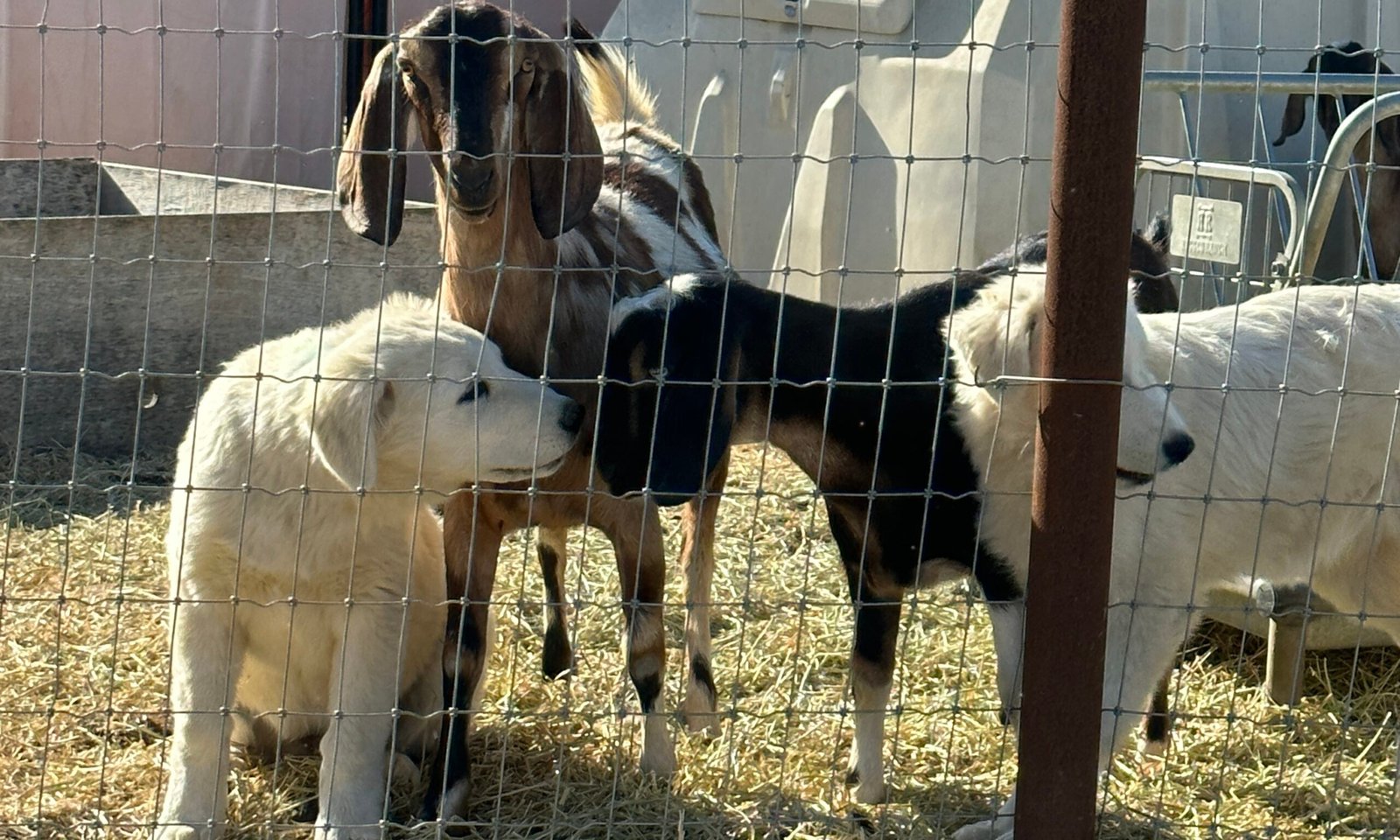
Maremma Sheepdog Success: Frequently Asked Questions
What should I do before bringing home a Maremma Sheepdog puppy?
Start the four recommended resources (the DIAL Method®, KPA Dog Trainer Foundations, Calming Signals, and Meet Your Dog) and build a separation area that shares a fence line with your livestock.
At what age do Maremma puppies go through adolescence?
Roughly 6 to 18 months, often really showing up around 8-9 months. Chasing, grabbing, and rowdiness with stock are common, and with good management they pass.
When is a Maremma Sheepdog fully reliable with livestock?
Around two years old, especially with poultry and baby animals. Until then, expect to supervise and occasionally take a step back.
Should I separate my LGD puppy during breeding season?
Yes. Females in heat and males in rut can frighten or provoke young dogs, and the excitement alone can trigger chasing. Separate them until things settle, then return to supervised visits.

About the Author
Kim has been breeding and training Maremma Sheepdogs since 2016 at Prancing Pony Farm in Central California. As a certified dog trainer and licensed family dog mediator (KPA CTP, LFDM), she specializes in helping livestock guardian dog owners develop well-balanced, effective working dogs.
Recommended Reading
- Why I Recommend the Karen Pryor Academy Foundations to Every New Maremma Owner
- The One Thing Most Maremma Owners Skip (but Shouldn't)
- The Tale of Two White Dogs
- How to Successfully Train Your New Maremma Sheepdog
- Understanding Calming Signals in Maremma Sheepdogs (Book Review)
- Sarah's Dog Training Journey: From First-time Maremma Owner to Confident Dog Trainer