Last Updated on October 29, 2026 by Kim Crawmer, KPA CTP, LFDM
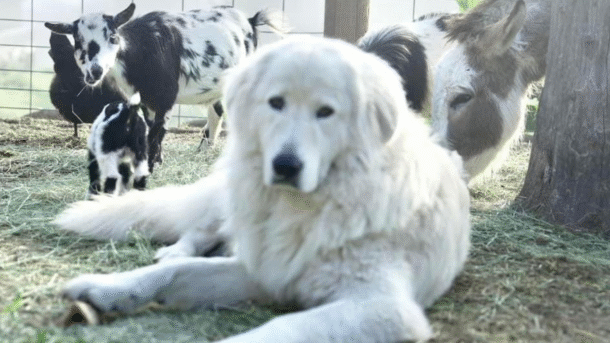
If you've been following this series, you already know Hudson — the Maremma Sheepdog who fought off a mountain lion to protect his family's homestead. What I haven't told you yet is how Hudson and his sister Ripley almost weren't puppies at all.
When Mary and Dan first applied for one of my dogs, they were looking for an adult or older dog. It's one of the most common starting points I see, and it makes sense on the surface — an adult dog already has its personality formed, it's presumably already working, and it feels like less of a gamble than raising a puppy from scratch. But it's often not the right call, and Mary and Dan's story is a good example of why.
Why Do People Think They Want an Adult Livestock Guardian Dog?
The logic makes sense: you skip the chewing, the accidents, the months of "will this dog actually turn out to be any good." You get a known quantity. For families with young children especially, an adult dog can feel like the safer bet — you can see exactly what temperament you're getting.
The Case for Starting with a Puppy
Here's what that logic misses. Mary and Dan weren't just looking for a livestock guardian dog. They wanted a dog that would grow up alongside their three kids — including a daughter who especially loves animals — as both a working livestock guardian dog and a genuine family companion. That kind of deep, lifelong bond is built, not transplanted. A puppy raised alongside your children, your other animals, and your specific property grows into all of those roles at once, shaped by your actual life rather than someone else's.
Adult dogs absolutely have their place — sometimes a mature, already-proven dog is exactly the right fit, especially for someone without young kids or who wants a dog that can start working immediately. But for a family looking for both a working livestock guardian dog and a true companion, starting younger usually means a stronger, more naturally formed bond by the time that dog is fully grown.

Real Story: How Mary and Dan Chose Puppies
During our first phone call, we talked through all of it — their homestead, their kids, their goals, their predator pressure. By the end of that conversation, they'd landed on something different from where they started: two puppies, littermates, a brother and sister.
They reserved Hudson and Ripley months before the litter was even born, waited through the whole process, and Dan drove down to pick them up personally once they were ready (it was too hot that summer to fly them safely). Today, those puppies are 1 year and 5 months old, guarding goats, ducks, and chickens on a five-acre homestead — and, as you now know, one of them recently went toe-to-toe with a mountain lion and won.
What About Littermate Syndrome? Debunking the Myth
If you've spent any time researching dogs, you've probably heard of "littermate syndrome" — the idea that raising two puppies from the same litter together leads to behavioral problems, over-bonding with each other instead of their owners, or difficulty training. It's repeated constantly online as settled fact.
Hudson and Ripley are a real-world counterexample. They've been raised together since day one, and rather than causing problems, their bond has made them better at their job. They work as a true team — when Hudson was recently sidelined by his injury, Ripley stepped up to guard on her own, something she's able to do precisely because she's spent her whole life as part of a working pair, not because she was isolated from him.
Littermate syndrome isn't a myth built entirely from nothing — poorly managed situations can create real challenges with any two dogs, related or not. But raised thoughtfully, sibling pairs like Hudson and Ripley often turn out to be exactly what a family needs.
Two Dogs Are Better Than One
This connects to something I tell every single client, regardless of whether they choose siblings or two unrelated dogs: get a pair, not a single dog.
After the mountain lion encounter, Hudson couldn't guard anything for a while — he was recovering indoors from his injuries. If he were the only dog, Mary and Dan's goats, ducks, and chickens would have zero protection during the exact season a mountain lion already came through. Instead, Ripley was able to cover for him. It's not how they'd choose to do it long-term, and she clearly missed her brother, but their farm was never left completely undefended either.
I've had clients call me in a genuine panic because their single livestock guardian dog got sick, got hurt, or died — and in that moment, their livestock had no protection at all. That gap is exactly what a second dog prevents.

Quick Takeaways
- Adult dogs have their place, but a puppy raised alongside your family and property often builds a stronger, more naturally formed bond over time
- Littermate syndrome is often overstated; a well-raised sibling pair can become an exceptionally strong working team
- A single livestock guardian dog leaves your livestock with zero backup if that dog is ever sick, hurt, or aging
- A pair means your farm is never left completely undefended, even during a recovery period
Frequently Asked Questions
Is littermate syndrome real?
Not at all. It's just a made-up term people use to explain other issues, like training problems, poor socialization, or mismatched dogs. Thoughtfully raised sibling pairs, like Hudson and Ripley, usually thrive together.
Should I get one livestock guardian dog or two?
Two, whenever possible. A single dog leaves your livestock with no protection if that dog is ever sick, injured, or aging out of active work.
Is it harder to train two puppies at once than one?
It takes more intentional effort to give each puppy individual attention, but it's very manageable with the right approach, and the payoff is a working pair that can cover for each other for the rest of their working lives.
At what age do most livestock guardian dog puppies go to new homes?
Most of our Maremma pups go to their new homes around 12–16 weeks old, though older pups and adults are sometimes available for families who prefer a slightly more mature dog.