Last Updated on October 5, 2026 by Kim Crawmer, KPA CTP, LFDM
Raising a Maremma Sheepdog Successfully Doesn't Happen by Accident
It happens because you showed up prepared — and kept learning at every stage.
Whether you're still searching for your dog or you brought one home last week, you're in the right place. This page is your organized starting point for everything you need to know about raising a livestock guardian dog — from choosing the right puppy through solving the challenges that come up years down the road.
Work through it in order if you're just getting started. Or jump to the section that matches where you are right now.
Start With the Right Dog From the Right Place
Here's something most people don't realize until it's too late: the single biggest factor in your livestock guardian dog's success isn't what you do after they come home. It's what happened to them in the first eight to twelve weeks of their life — before you ever met them.
The breeder who raised that puppy either did the work or they didn't. And no amount of great training, careful integration, or good intentions on your part can fully compensate for a puppy who missed critical socialization windows, was raised in isolation from livestock and people, or came from a breeding program that prioritized convenience over proper development.
This is not meant to overwhelm you. It's meant to help you ask the right questions before you commit — because the right foundation makes everything else on this page easier.
What proper LGD puppy development looks like:
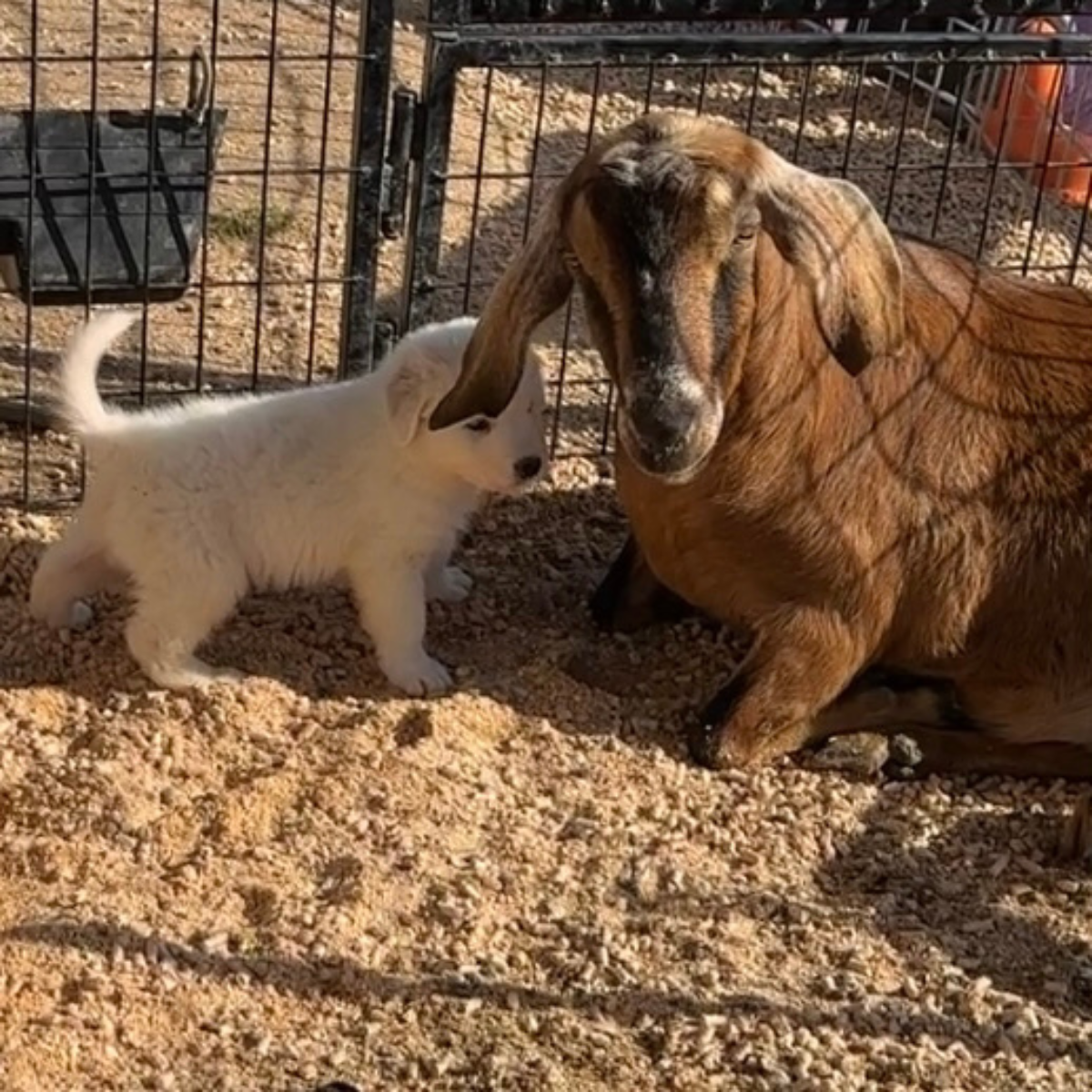
A well-prepared puppy has been raised with livestock from birth or very early puppyhood, handled regularly by people of different ages, exposed to the sights and sounds of farm life, and socialized intentionally — not just left to figure things out on their own. Their breeder can walk you through exactly what that development process looked like and show you evidence of it.
What to look for — and what to watch out for:
→ Read: How to Raise a Great LGD — The Complete Puppy Development Series
→ Read: What Makes Our Program Different
Not sure what age dog is right for your situation?
Puppy, adolescent, or adult — each comes with different advantages and different challenges. The right answer depends on your experience level, your livestock setup, and what you're prepared to handle.
Already have your dog?
Skip ahead to the section that matches where you are. Everything here will still be useful context — but the most urgent information for you is in Sections 3 through 5.
Want a quick overview of everything?
I put together a free video series that covers the most important decisions new LGD owners face — from choosing your breeder to the first days of livestock introduction. It's about 20–30 minutes total and a good place to start if you're still in the research phase.
Training Support Is Part of Every Prancing Pony Placement
If you're considering a Maremma Sheepdog, here's something most breeders can't offer: built-in training support from day one — and for the life of your dog. Every puppy placement includes lifetime support from me directly, including the same consultation calls my training clients pay $100 an hour for, free, for life.
You're not just buying a well-bred dog — you're starting a relationship with someone who will still be there six months from now when adolescence hits, and ten years from now if you need me.
That's not standard in the breed. It's standard here.
See how lifetime support works →
🎉 Introducing Maremmas Made Easy
A new membership for anyone who wants real support with a Maremma — or any livestock guardian dog. Live Q&A calls, a real community, and guidance from a KPA Certified Training Partner and Licensed Family Dog Mediator who's placed 200+ Maremmas. Free for Prancing Pony Farm puppy families; open to everyone else at founding-member pricing.
The Clients Who Thrive Are the Ones Who Showed Up Prepared
I've been placing Maremma Sheepdogs for over a decade. I've seen what the experience looks like for owners who invest in their own education before their dog arrives — and I've seen what it looks like for owners who decide they'll figure it out as they go.
The difference is significant.
The people who prepare tend to recognize normal LGD behavior for what it is, handle challenges without panic, and build real communication with their dogs early. The people who don't tend to misread their dog, make avoidable mistakes, and call me six months in wondering why things feel so hard.
I'm not saying this to make anyone feel bad. I'm saying it because investing a few hours in education before your dog comes home — or as soon as possible after — will save you months of struggle. It's the single most impactful thing you can do.
Here's where to start.
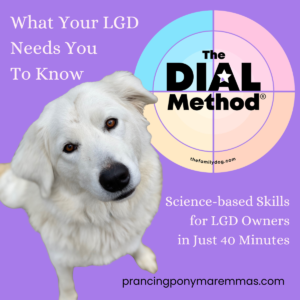
Step 1: The Dial Method
The Foundation Every Maremma Owner Needs
Before any other training program, before any other resource — start here.
The DIAL Method® is a 40-minute video course that does something most dog training programs don't: it helps you understand what your individual dog actually needs before you try to teach them anything. It's not a list of commands. It's a framework for understanding your dog — their nature, their needs, the environment they're living in, and whether your expectations are realistic for who they actually are.
It works for all your dogs, not just your livestock guardian. And because it's short, affordable, and video-based, there's no good reason to skip it.
One important note: the DIAL Method® is not LGD-specific. It uses general dog examples. That's intentional — the principles apply to every dog. I'm working on some companion resources that apply the DIAL framework specifically to livestock guardian dogs and their unique needs, and I'll add those here as they become available.
"The Dial Method® works for all dogs and households. While the program uses general examples, these concepts are especially valuable for LGD owners — because livestock guardian dogs need a patient, informed partnership to thrive." — Kim Crawmer, KPA CTP, LFDM
Prancing Pony Farm Maremma puppy clients receive a free training consultation with their Dial program purchase. Other LGD owners can book a consultation below.
Step 2: Karen Pryor Academy Dog Trainer Foundations
This is the most important course you can take as an LGD owner.
If you could only do one thing on this entire page, I would tell you to take this course. The DIAL Method® is where I start people because it's quick and it reframes how you see your dog. But Foundations is where the real shift happens.
If you can complete it before your dog comes home, do it. If not, start it as soon as possible after. If you want to succeed with your dog you don't want to skip or put off this step. It truly is the foundation you and your dog need.
This course teaches you how dogs learn. Not what to teach them — how learning actually works, what drives behavior, how to communicate clearly, and how to build the kind of relationship where your dog genuinely wants to work with you. When you understand these principles, everything you do with your dog starts making sense in a way it didn't before.
It is not LGD-specific. It doesn't have a module on livestock introduction or teach you how to handle a dog that's chasing goats. But here's what I've seen over and over: the owners who take this course figure out the LGD-specific stuff because they understand how to think about behavior and how to respond to it. The ones who skip it keep making the same kinds of mistakes — not because they're bad dog owners, but because they're missing the foundation that everything else is built on.
I don't make any money when you take this course. I recommend it because it works.
Already have both? Great. Everything else on this page builds on that foundation.
Want to understand more about why I recommend these courses so strongly? → Read:
The One Thing Most Maremma Owners Skip (But Shouldn't)
How to Successfully Train Your New Maremma Sheepdog
One Key Thing You Must Do To Succeed as a New Maremma Sheepdog Owner
Step 3: Two Books That Will Change How You See Your Dog
You can read both of these before your puppy comes home. Between them, they cover two of the most important skills any dog owner can have: reading your dog's body language and understanding why your dog is the way they are.
Meet Your Dog by Kim Brophey
This is the book behind the LEGS framework — Learning, Environment, Genetics, Self — the same framework the DIAL Method® is built on. Where DIAL gives you a quick video introduction to these concepts, Meet Your Dog gives you the full picture.
It explains what your dog was bred to do and how deeply that shapes their behavior, how their environment and past experiences factor in, and how to see the individual dog in front of you rather than the idealized version you expected. It applies to every dog you will ever own, not just LGDs — and if you have multiple breeds, it will help you understand each of them on their own terms.

Every dog owner knows that along with the joy can come the stress and frustration of behavioral problems, which are expensive to diagnose and treat. Enter Kim Brophey, award-winning canine behavior consultant. Using cutting-edge research, Brophey has developed a groundbreaking system that allows owners to identify what their dog is struggling with, why, and how they can fix it. Brophey's approach is unlike anything published before and will give dog owners a new understanding of what motivates and affects their dog's behavior. Brophey's innovative technique rethinks how we categorize dogs and distills information from over twenty scientific disciplines into four comprehensive elements: learning, environment, genetics, and self. With revolutionary tips for specific dog breeds, this book will change every dog owner's life and lead to happier human-canine relationships.

On Talking Terms With Dogs: Calming Signals by Turid Rugaas
Short. Readable in an hour or two. Possibly the most practically useful dog book ever written.
This book teaches you to read what your dog is telling you through their body language — the subtle signals dogs use to communicate stress, discomfort, or the need for space. Once you can see these signals, you start understanding your dog's experience in real time instead of only noticing there's a problem after things have escalated.
I give this book to clients who pick up their dogs in person. That's how strongly I feel about it.

Understanding calming signals in dogs is essential for anyone who owns these remarkable animals. Calming signals are subtle behaviors that indicate a dog's desire to relax, de-escalate tension, or simply express comfort with their environment. Recognizing these signals can enhance the bond between dogs and humans, fostering a more harmonious living and working situation.
Also recommended:
The Dog's Truth
A free documentary-style video available on YouTube that covers the LEGS framework in depth. Used to cost $100. Now free. Worth every minute.
Your Dog's Not Broken Podcast
Kim Brophey and Justine Schuurmans, the creators of the LEGS framework and the DIAL Method®. Conversational, practical, and excellent for anyone who wants to keep going deeper on how dogs think and what they need.
Where Your Dog Lives Determines How Your Dog Behaves
You can do everything else right — choose a great puppy, take every course, read every book — and still make things harder than they need to be if you haven't thought carefully about your dog's physical environment.
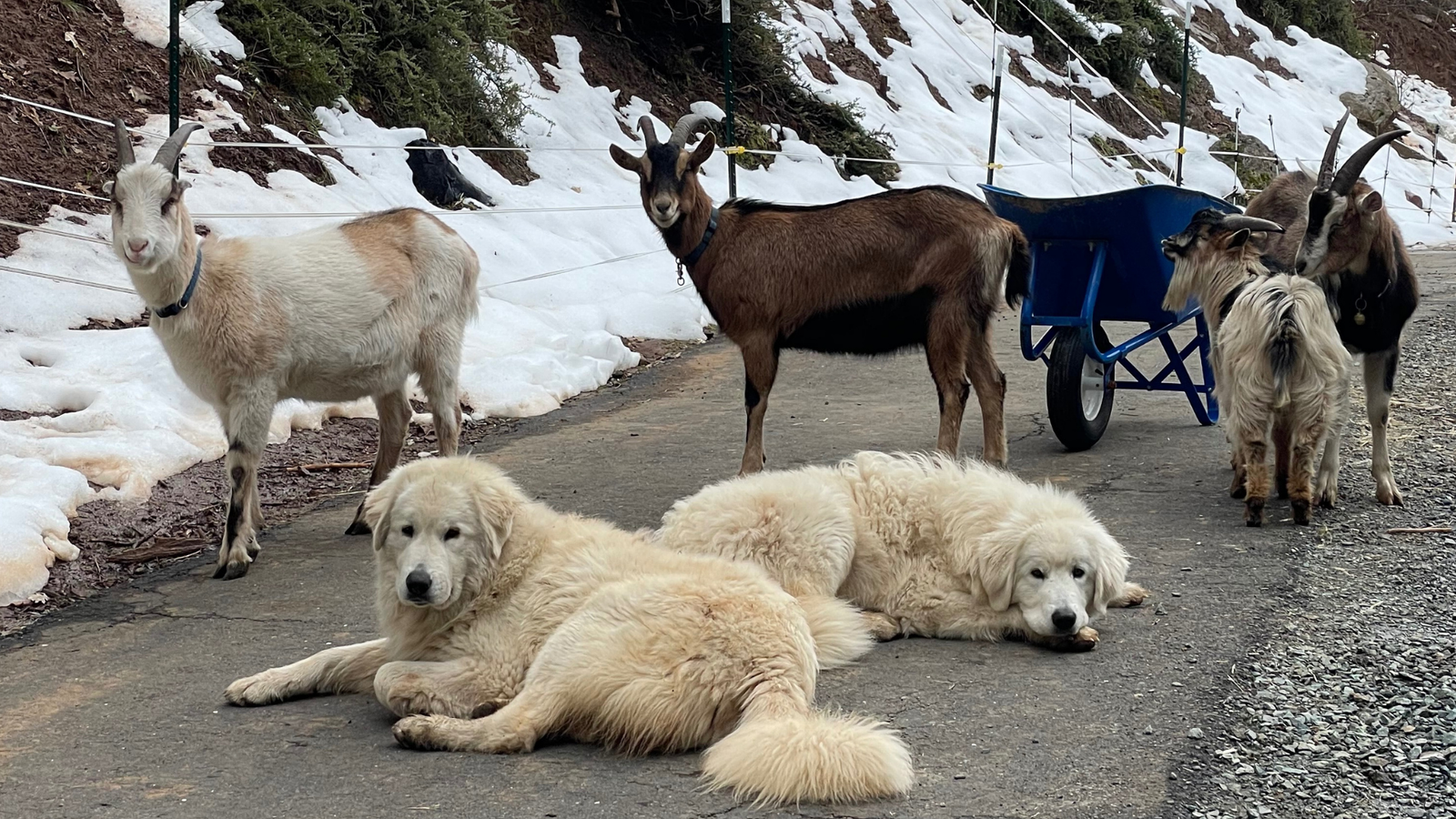
Livestock guardian dogs need space to do their job. They need to be close enough to their livestock to bond with them, but managed carefully enough in the early stages that they can't make mistakes they'll repeat. The setup you create before your dog arrives sets the tone for everything that follows.
The most important principle: your LGD puppy should not have unsupervised access to livestock in the beginning. Not because they're dangerous — because they're young dogs and they're still learning. And mistakes made early become habits. The goal is to set up a situation where your puppy can observe, smell, and gradually interact with livestock in a controlled way, building the bond and the habits that will make them a reliable livestock guardian dog over time.
The side-by-side introduction:
Your puppy lives adjacent to the livestock — close enough to see, smell, and hear them, separated by a fence or other barrier. They get used to each other's presence without the pressure of direct contact. This phase is often skipped or shortened. Don't skip it and don't shorten it.
Confinement area:
Your puppy needs a space that is theirs — safe, appropriately sized, and set up so they can't get themselves into trouble when you're not there to supervise. A 4x6 kennel is not enough. A dog who is confined too tightly becomes frustrated, bored, and difficult to work with.
Property-proofing:
Assume your dog will chew, dig, and test every boundary you create. Anything you don't want chewed or dug up needs to be out of reach — not because you'll train them out of it later, but because management is how you prevent problems from becoming habits.
Your Dog Is Not Going to Figure Everything Out Immediately — and That's Normal
Bringing home a livestock guardian dog — whether a puppy, an adolescent, or an adult — is the beginning of a process, not the beginning of a finished product. What you see in the first days and weeks is a dog adjusting to an entirely new world. Their job right now is to figure out what belongs, what doesn't, who their people are, and what their new place feels like.
Your job is to let that process happen without panicking.
This is the stage where I get the most calls. Clients worried that something is wrong because their dog is barking at the cats they were socialized with, or digging up the garden, or acting nervous around people they don't know. Almost always, what they're describing is completely normal — a livestock guardian dog doing exactly what a livestock guardian dog does when everything around them is new.
The 3-3-3 Rule: What to Expect When You Bring Home Your New Maremma
Setting up for success in this phase:
- Keep the environment consistent and calm in the first days — don't flood your new dog with visitors, new animals, and new experiences all at once
- Establish a routine immediately and stick to it
- Let your dog observe more than they interact in the early days
- Resist the urge to correct everything — focus on management and redirection
- Give adult dogs more time than you think they need — the older the dog, the longer the adjustment
For adult dogs specifically:
A dog who has spent years in one place — bonded to specific animals, specific people, specific routines — is going through a significant transition when they move to you. They may seem nervous, clingy with one person, or slow to warm up. This is grief and adjustment, not a problem with the dog. It resolves with time, patience and consistency.
Integration Is a Process, Not an Event
This is the part most people are focused on — and it deserves that focus, because how you handle livestock introduction has long-term consequences for how your dog works.
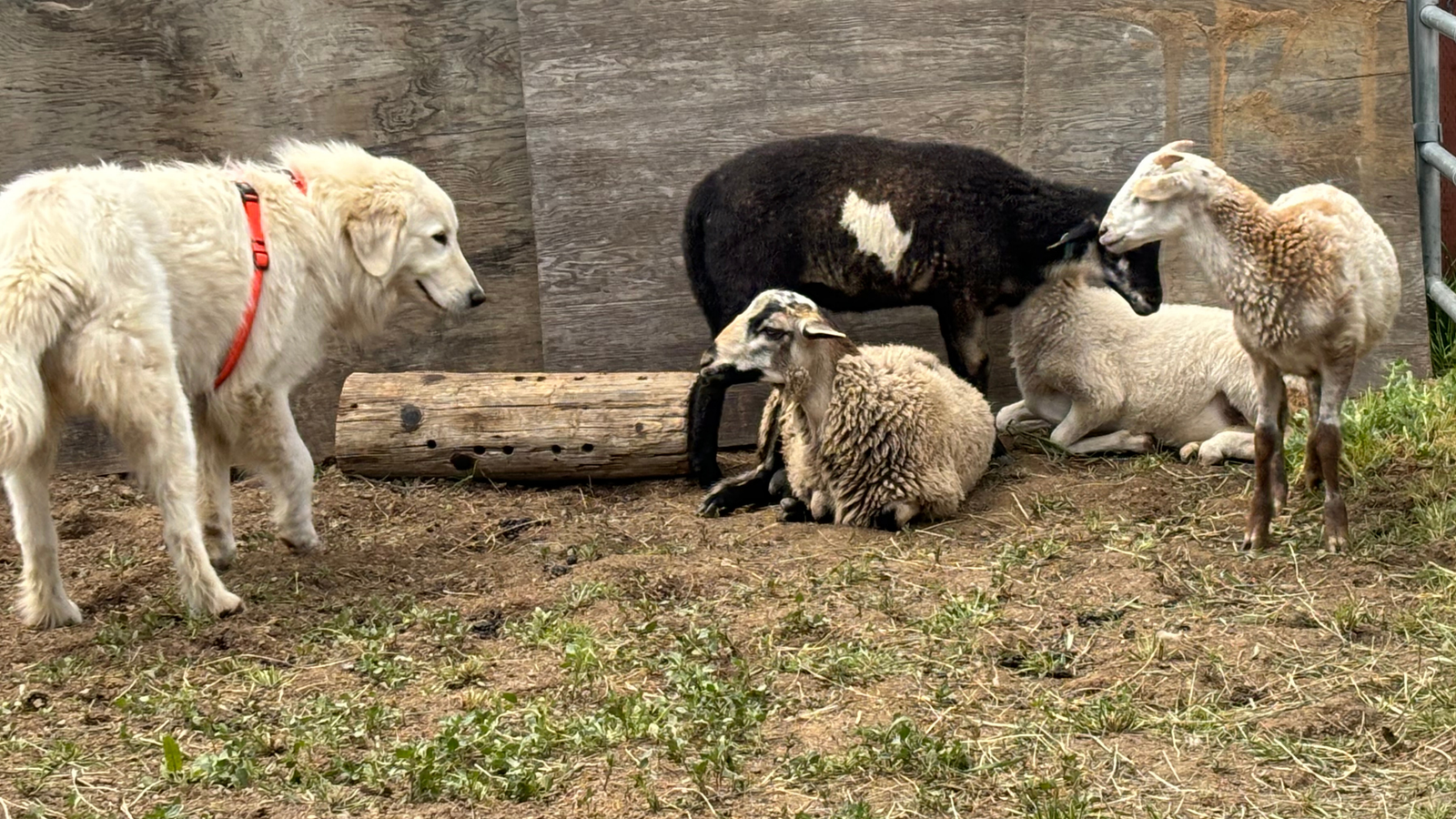
Even properly socialized puppies and dogs who were previously living with livestock fulltime need to be introduced slowly and graually to new livestock. This is as much about how the livestock feel about a strange dog as how the dog feels about the new livestock. Animals that are afraid of a strange dog may act in a flighty matter, which can be triggering for the dog and encourage chase behavior.
The most common mistake is moving too fast. An LGD who is introduced to livestock before they're ready, without adequate supervision, or without a proper setup is an LGD who may learn that chasing is an option. And once they've learned that, you're undoing a habit instead of preventing one.
The second most common mistake is expecting the dog to already know what to do. Livestock guardian instincts are real, but they still need to develop through experience, especially in puppies and adolescents. Your dog is not going to walk onto your property and immediately understand their job. They're going to learn it — with the right guidance and setup from you.
The integration stages:
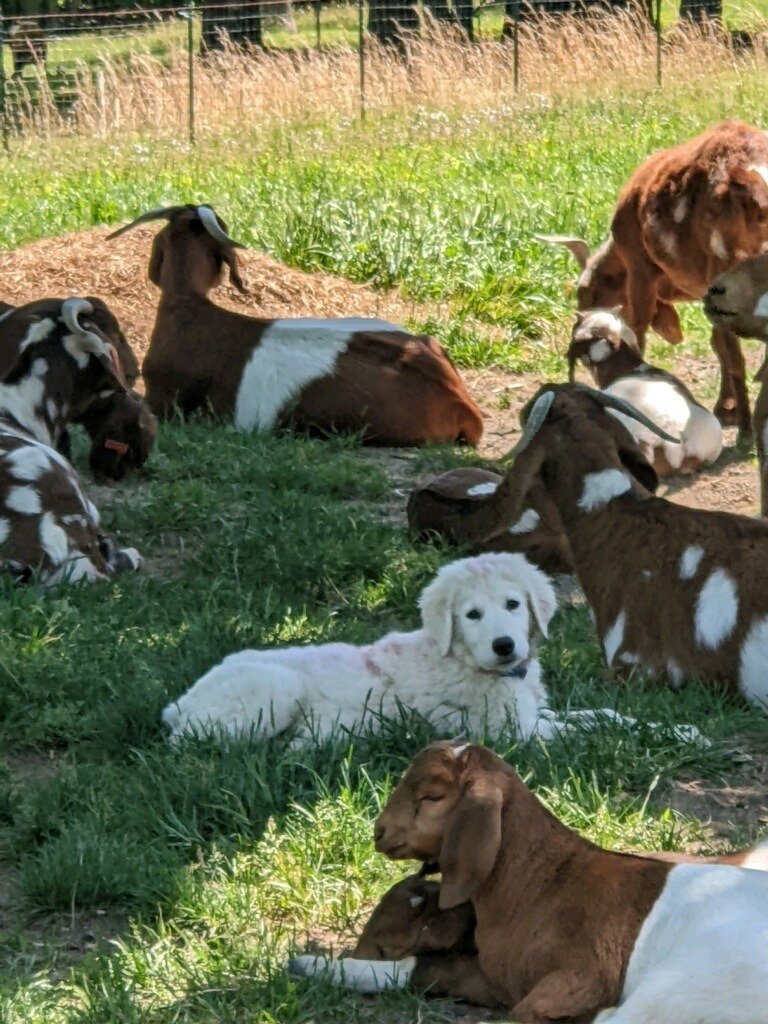
Side-by-side introduction — Dog and livestock separated by a fence. Observation and smell, no direct contact. This phase builds familiarity without pressure and should not be skipped.
Supervised face-to-face contact — Short, controlled sessions with you present. You're watching for both the dog's behavior and the livestock's behavior. Some livestock will be better "puppy teachers" than others.
Extended supervised access — Longer periods together with you nearby. You're looking for calm, appropriate behavior from your dog — curious but not aroused, following but not chasing.
Unsupervised access — Earned, not given. Your dog gets here when they've consistently demonstrated calm, appropriate behavior in supervised sessions. This is not a timeline — it's a behavior standard.
Problems Will Come Up. Here's How to Handle the Most Common Ones.
Even with the best preparation, the best setup, and the most well-socialized puppy from the best breeder — challenges happen. Some are management issues. Some are training issues. Some are just livestock guardian dogs being dogs. This section covers the ones I hear about most often.
Resource Guarding
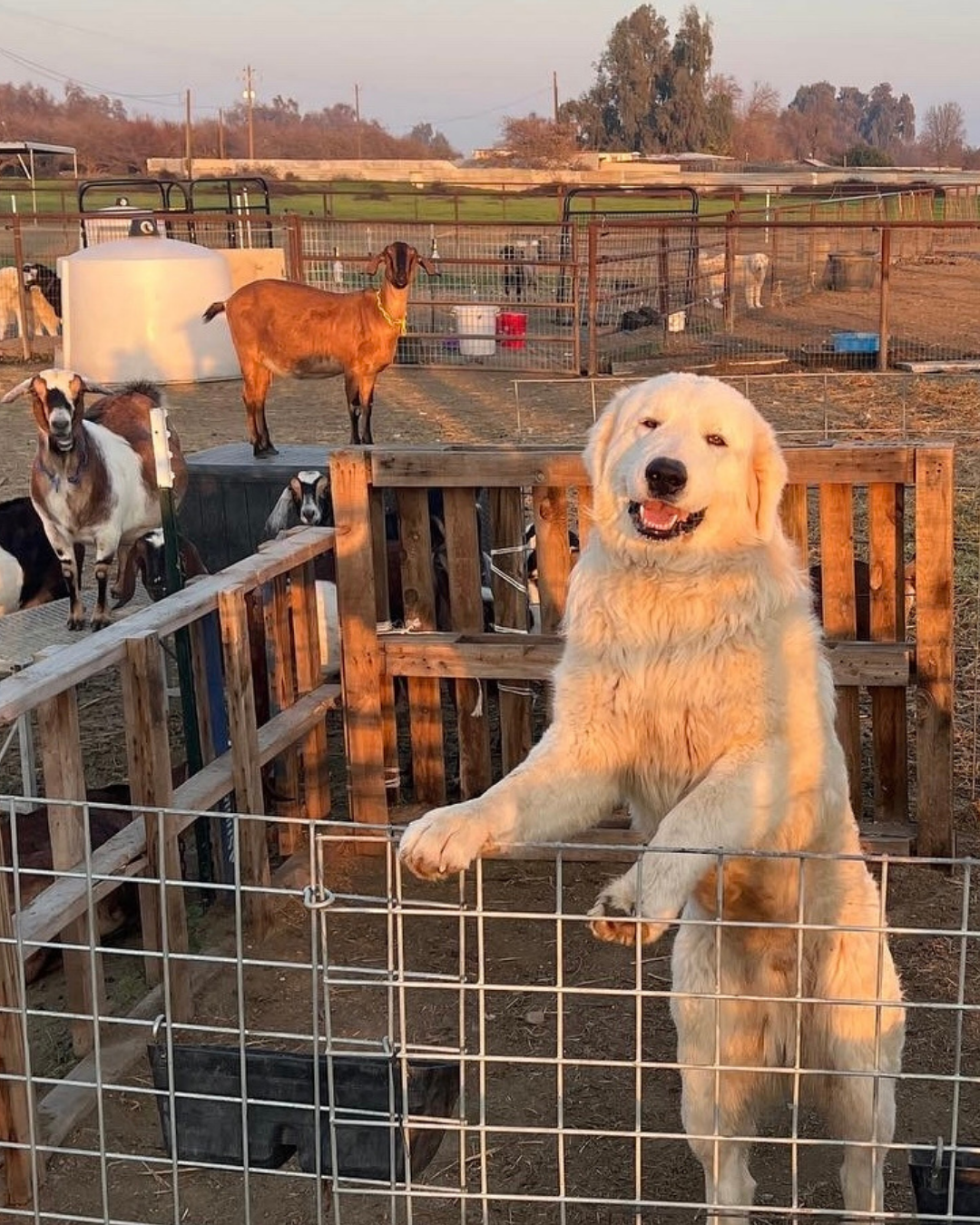
Resource guarding is one of the most common issues I see with LGDs, particularly with high-value items like long-lasting chews, food, or favored resting spots. Resource guarding between dogs (or dogs and livestock) is normal — but it can escalate if not managed correctly.
The first and most important rule: Resource comes from a place of insecurity. The dog is afraid that another dog or some other animal (or possibly a human but I've never seen this in any of my dogs) will take something they value. You are not going to train a livestock guardian dog out of the instinct to guard valuable resources. You manage around it.
→ Coming Soon: Resource Guarding in Livestock Guardian Dogs — What It Is and What to Do About It
Chasing, Digging, and Destruction
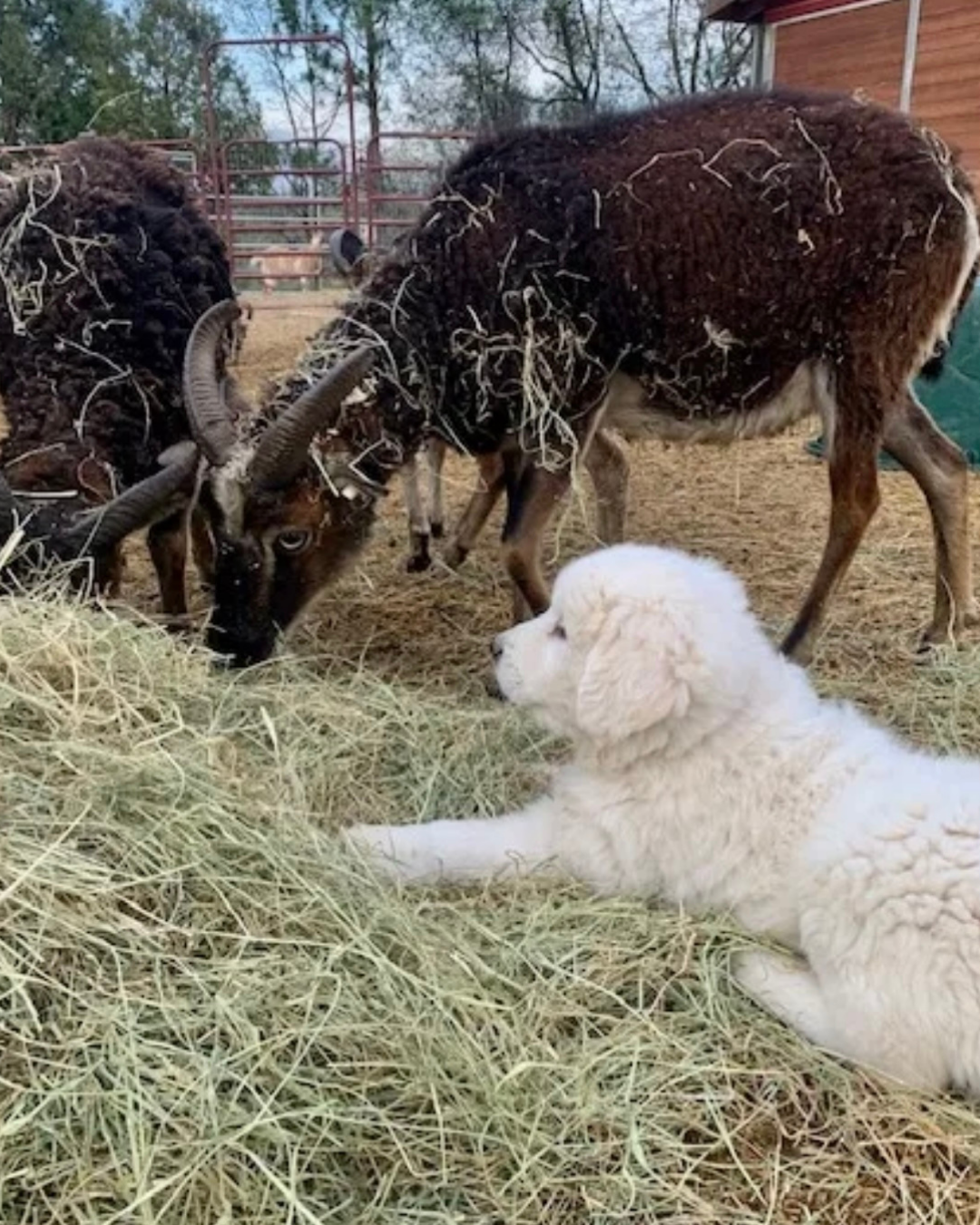
Your dog dug up the flower bed. Your dog is chewing the irrigation lines. Your dog is chasing the chickens.
None of these are training failures. They are management failures — meaning the dog had access to something they shouldn't have had access to yet. The solution is almost always the same: reduce access, increase supervision, and add appropriate outlets for the energy that's driving the behavior.
→ Coming Soon: Puppy-Proofing Your Farm — Setting Up for Success Before Problems Start
Escaping
An LGD who escapes consistently is usually telling you one of a few things: the fencing isn't adequate, they don't have enough space, they're bored or lonely, or they haven't fully bonded to the property and animals they're supposed to be guarding yet.
Escaping in the first weeks of a new placement is common and usually reflects exploration and adjustment rather than a chronic problem. Persistent escaping in an established dog is a setup issue worth evaluating seriously.
→ Coming soon: Fencing for Livestock Guardian Dogs — Keeping Your Dog Safe and on Your Property
Barking
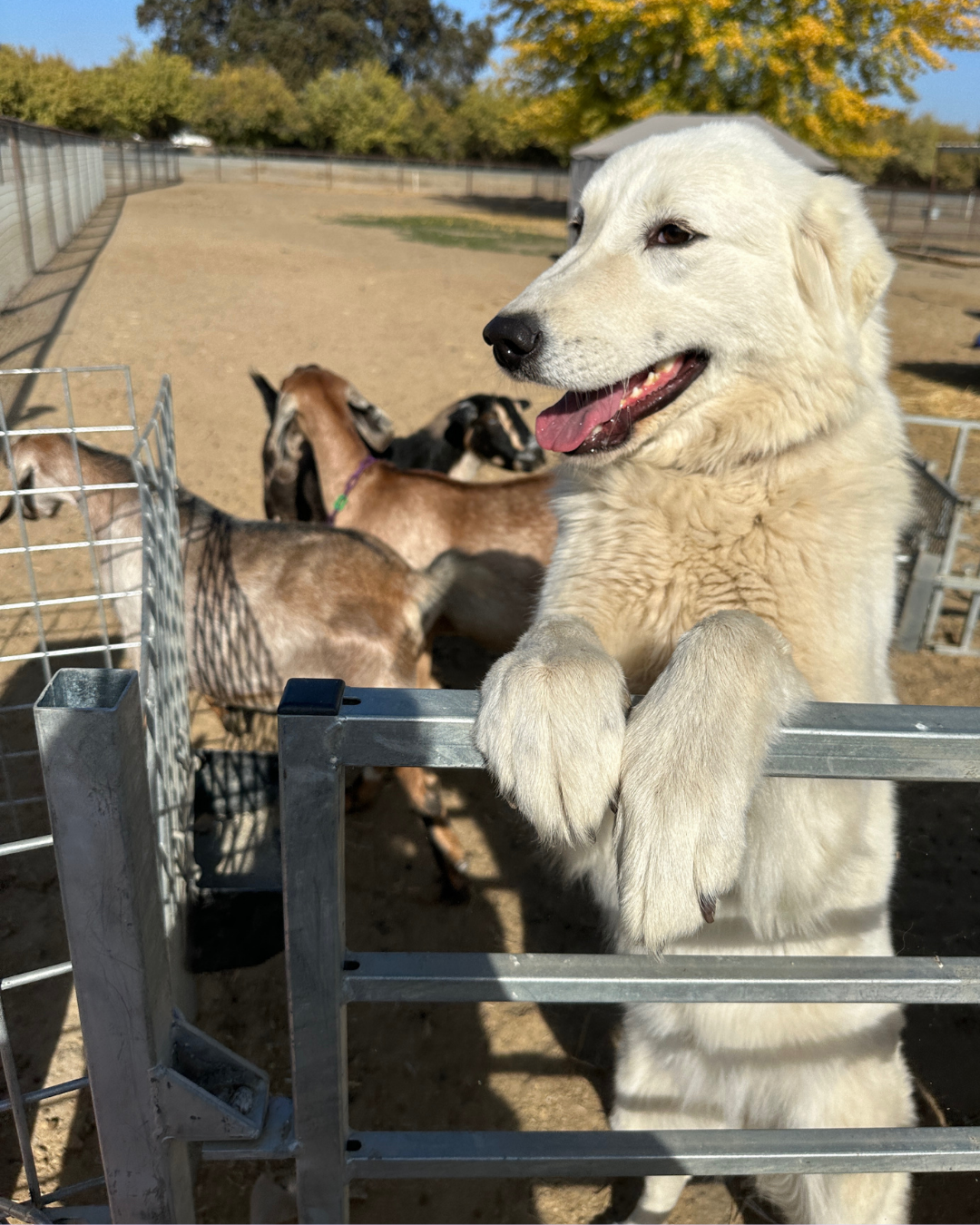
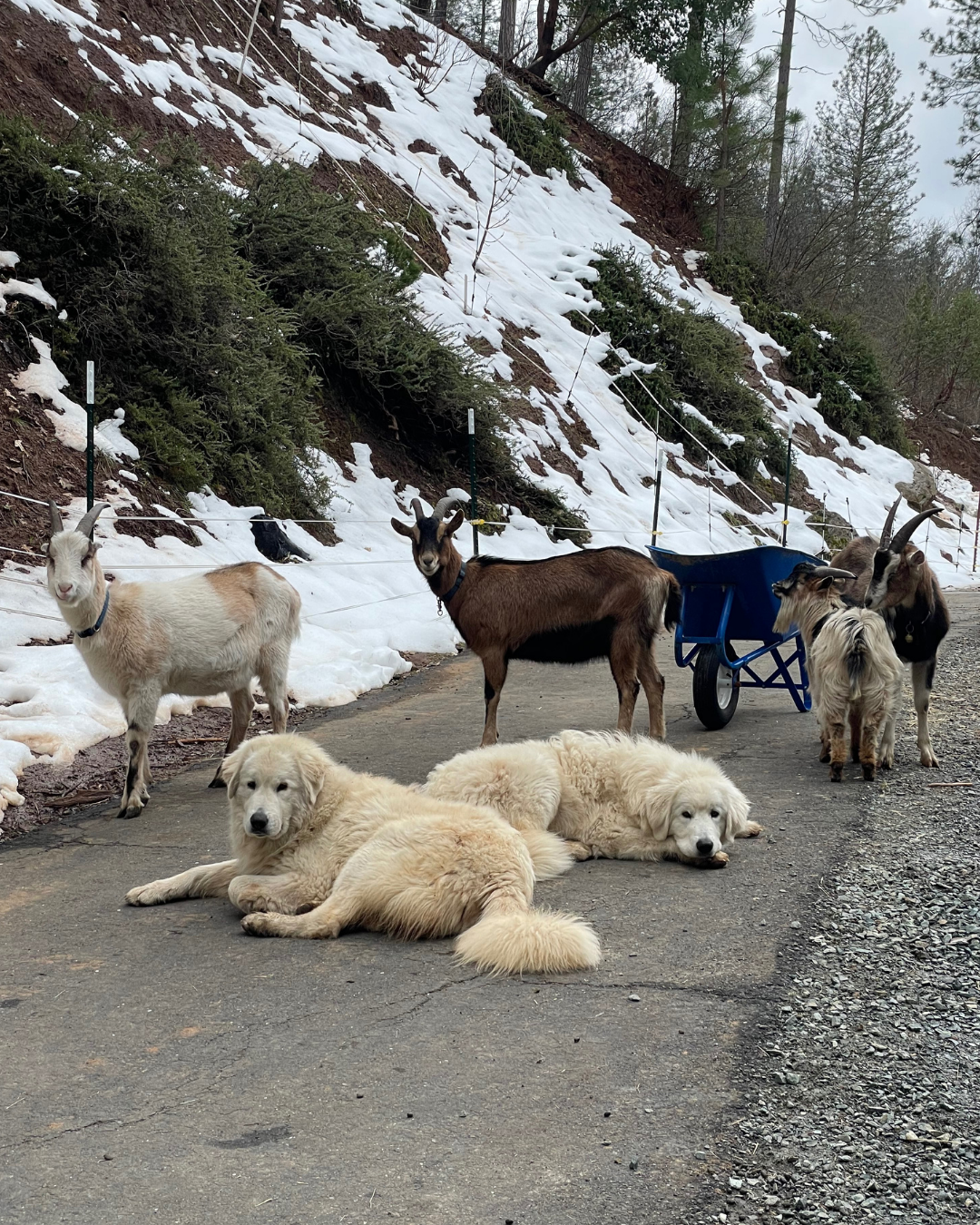
LGDs bark. That is the job. The question is never "how do I stop my dog from barking" — it's "is this level of barking appropriate for my situation, and am I managing my dog and farm in a way that reduces unnecessary triggers?"
→ Coming soon: LGD Barking — How Much Is Normal and What to Do When It's Too Much
When Your Dog Seems to Be Regressing
Everything was going well. And then suddenly it's not. This is one of the most common things I hear — and it almost always has an explanation. New animals added to the property. A change in routine. The dog entering adolescence. A stressful event. Regression is almost never permanent, but it does need a response. Need help navigating this period? That's what training consultations are for.
Not Finding Your Answer Here?
Some problems are specific enough that a general blog post won't solve them. If you're working through something that feels bigger than what's covered here, book a consultation. That's what I'm here for.
All Prancing Pony Maremmas come with free training consultations for life. Just text me to schedule a call. All others can book a consultation below:
Every LGD Goes Through This. Almost Nobody Is Prepared For It.
Somewhere between six months and two years, your dog is going to test every boundary you've established, push back on routines that used to work, and possibly do things that make you wonder if all the progress you made was an illusion.
It wasn't. This is adolescence. It is temporary. And knowing it's coming makes it dramatically easier to get through.
Adolescence is the single most common reason livestock guardian dogs are rehomed, returned, or written off as failures. Not because these dogs can't do the job — but because their owners weren't prepared for the phase and interpreted normal adolescent behavior as a permanent problem.
What adolescence actually looks like in an LGD:
- Increased independence and boundary-testing
- Renewed interest in chasing or interacting roughly with livestock
- More frequent and intense alerting and barking
- Possible regression in behaviors that seemed solid
- More challenging to redirect or refocus than they were as young puppies
What to do: Stay consistent. Continue to use positive reinforcement to encourage the behavior you want to see more of. Don't make dramatic changes to their setup or routine. Keep working on your relationship. And get support if you need it — this is the stage where a consultation call is most likely to make a concrete difference.

Five Unknown Benefits of Choosing Adolescent Maremma Sheepdog
Sometimes Your Situation Is Specific Enough That General Advice Won't Cut It
Everything on this page is free. And it goes a long way. But there are situations where what you really need is someone who knows LGDs, knows how learning and behavior work, and can look at your specific dog in your specific setup and tell you what to do.
That's what consultations are for.
I work with LGD owners at every stage — people preparing for a new dog, people working through integration challenges, people in the thick of adolescence, and people who got a dog from somewhere else and are trying to figure out what went wrong and how to fix it. I regularly get referrals from other breeders specifically because LGD-knowledgeable trainers are genuinely hard to find.
All Prancing Pony Maremmas come with free training consultations for life. All others can book a consultation below:
A consultation gives you:
- Focused attention on your specific dog, your specific livestock, your specific situation
- A concrete action plan you can implement immediately
- Follow-up notes and resources by email
- Guidance grounded in the LEGS framework — Learning, Environment, Genetics, Self — so we're addressing the actual cause, not just the surface behavior
Get Weekly LGD Guidance Delivered to Your Inbox
Every week I send one email with practical livestock guardian dog guidance — training tips, management advice, real stories from the field, and myth-busting for the stuff that causes the most confusion. No fluff. No sales pressure.
Ready to Protect What You Love?
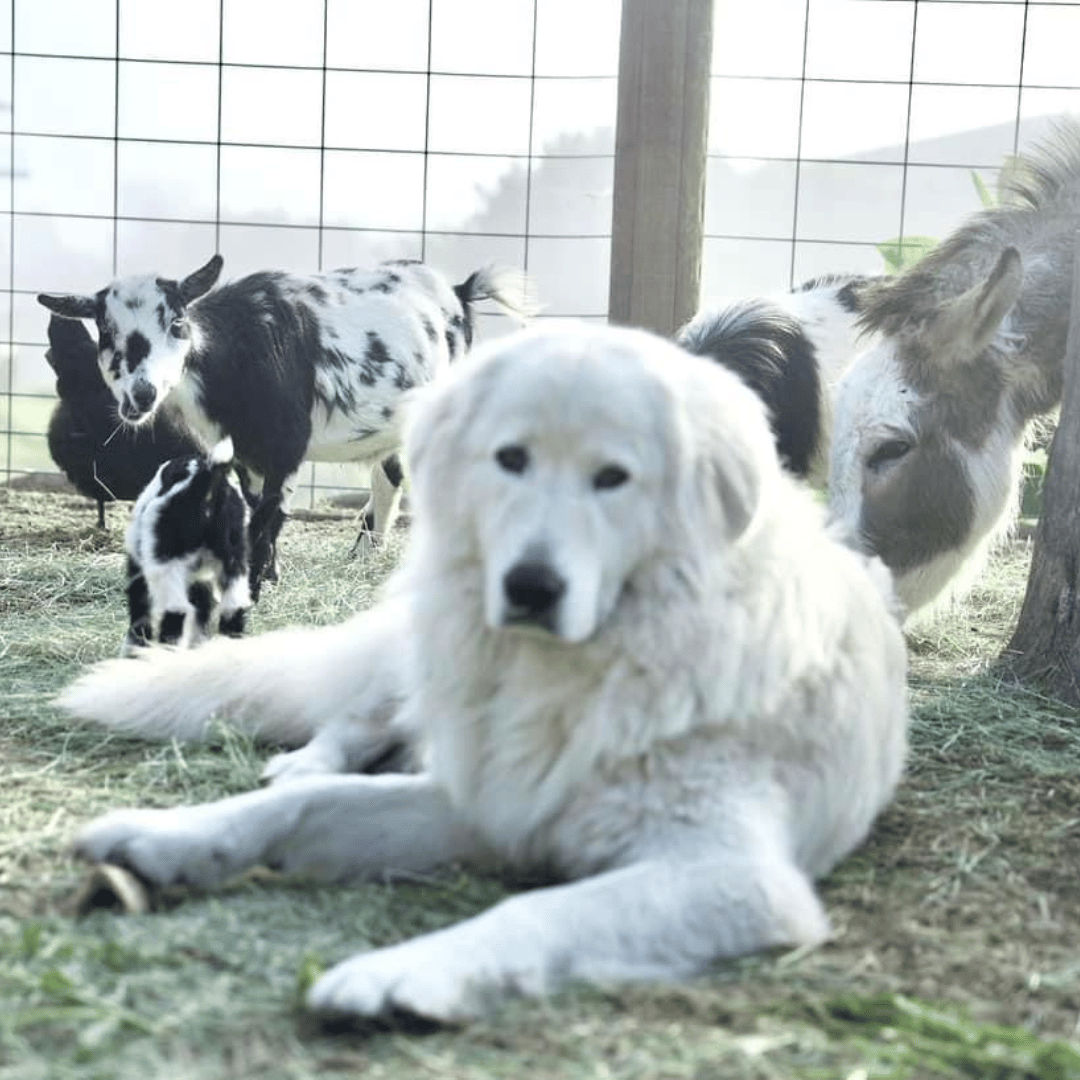
Join scores of happy families who sleep peacefully knowing their beloved animals and family are protected by reliable Prancing Pony Farm Maremmas.
✅ Health-tested bloodlines ✅ Proven working genetics
✅ Lifetime breeder & professional trainer support included