Last Updated on October 23, 2026 by Kim Crawmer, KPA CTP, LFDM
Can a Maremma Sheepdog Be a Companion Dog? The Honest Answer Is Yes — With the Right Foundation
By Kim Crawmer, KPA CTP, LFDM | MSCA Code of Ethics Breeder
If you've been researching Maremma Sheepdogs and landed here, you've probably already read the dismissive version of this answer. "Working dogs only." "Not recommended as pets." "Only suitable for experienced livestock owners with large properties."
I used to say some of those things myself. I was wrong.
Not because the breed is misunderstood — it isn't, or at least it doesn't have to be. But because the assumption that a Maremma can only thrive in one specific type of situation ignores something I've watched play out across dozens of placements over more than a decade: these dogs go where their people go. They bond to who they live with. And when the people they live with are committed, educated, and genuinely invested in meeting their needs — whatever the setting — these dogs flourish in ways that would surprise everyone who told you this was impossible.
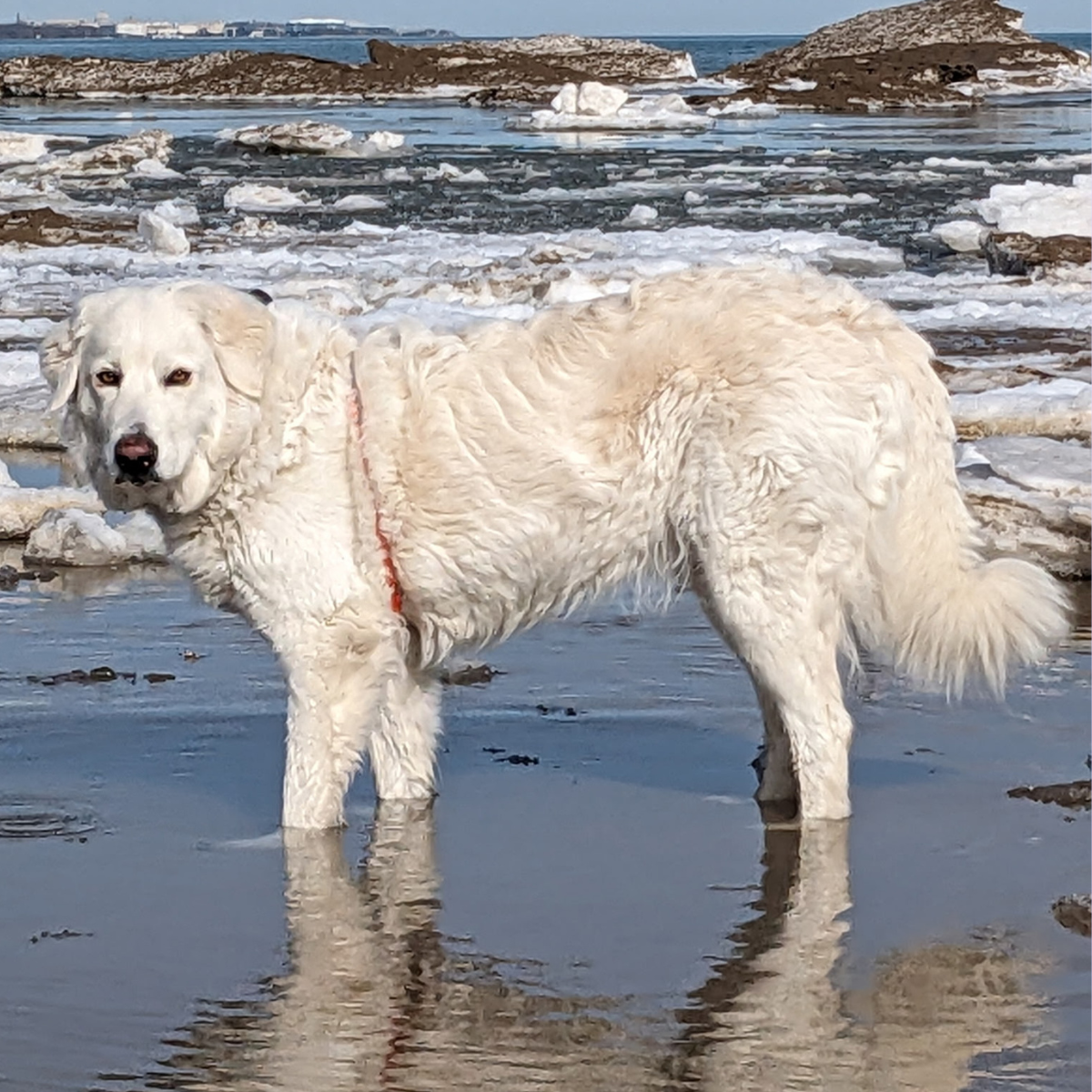
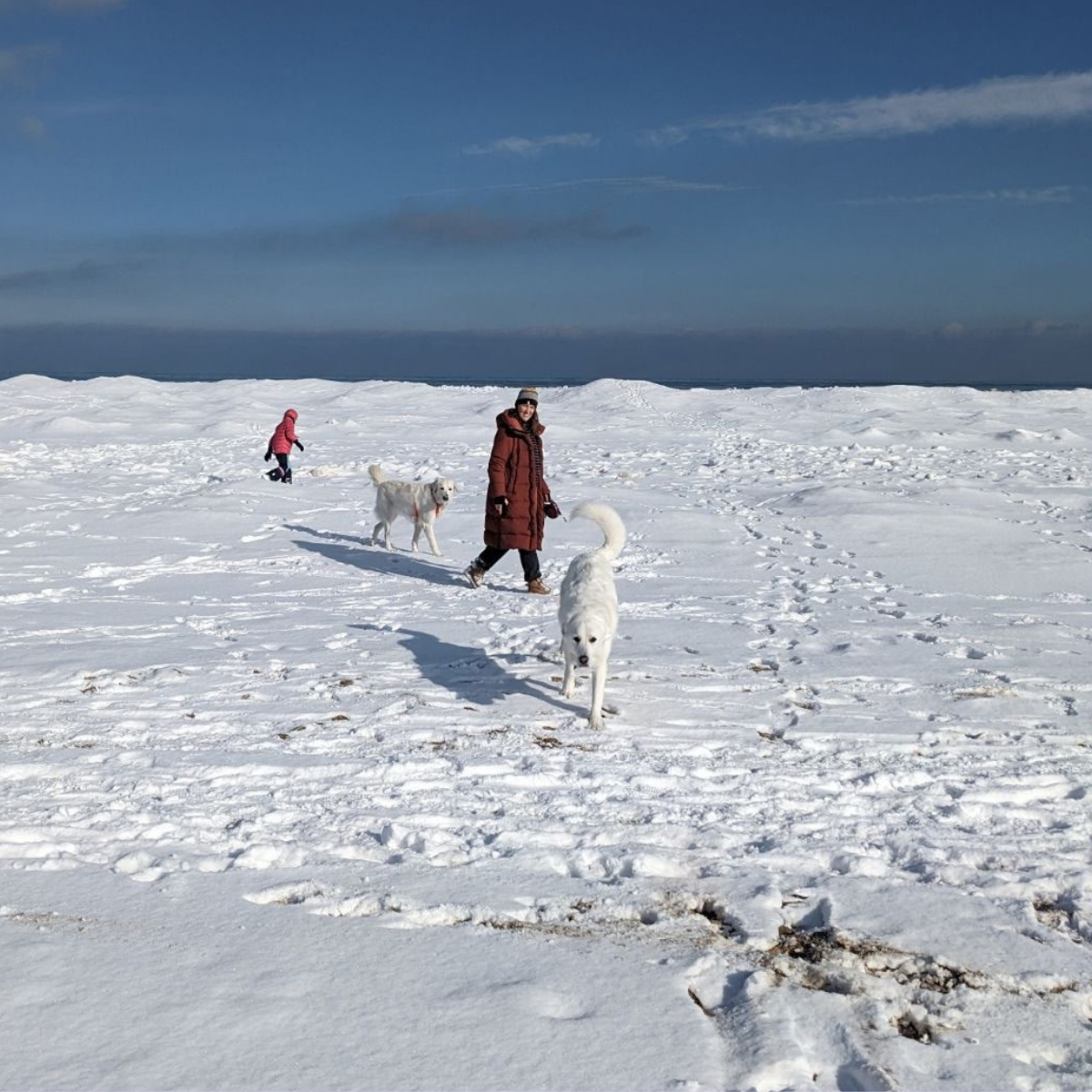
I have a client whose Maremma lives in a penthouse apartment in Chicago. She goes to the library. She swims in Lake Michigan. She is one of the happiest, most well-adjusted dogs I've ever placed.
I'm going to tell you her story. And several others. And by the end of this page, you'll have the real answer to whether a companion Maremma could work in your situation — not a dismissal, not a rubber stamp, but an honest framework for making that assessment yourself.
Jump to what you need:
- What "Companion Maremma" Actually Means
- The Same Program, Every Puppy
- What Actually Determines Success
- The Myth of the Failed LGD
- Early Pickup Doesn't Help — Here's Why
- Real Companion Dogs, Real Stories
- Companion vs. Working — What's the Same, What's Different
- Is a Companion Maremma Right for You?
- Next Steps
What "Companion Maremma" Actually Means
Let's start by defining the term, because people use it to mean very different things.
When I talk about a companion Maremma, I mean a dog whose primary role is family member rather than working livestock guardian dog. That covers a wide range of situations:
A dog on a small homestead with a few chickens who spends most of her time in the house with the family. A dog on several acres with no livestock at all who serves as a property guardian and beloved pet. A dog in a neighborhood home with a yard who goes everywhere with her people. A dog in a city apartment who has an active, enriched, adventurous life.
What these situations share isn't a property type or a livestock count. It's that the dog's primary bond is with her human family (and perhaps other household pets), her primary job is being a devoted companion and property guardian, and her success depends on people who understand what she is and what she needs — not on acreage or barn access. (She is still an LGD, her role is just non-traditional.)
Many of my placements are what I'd call dual-purpose dogs or "family farm dogs". They have a few chickens or goats to guard but they may also sleep in the house full or part-time and go on hikes, road trips and adventures with their families. That's actually a beautiful life for a Maremma, and it's far more common in my program than the "strictly working" or "strictly pet" categories suggest.
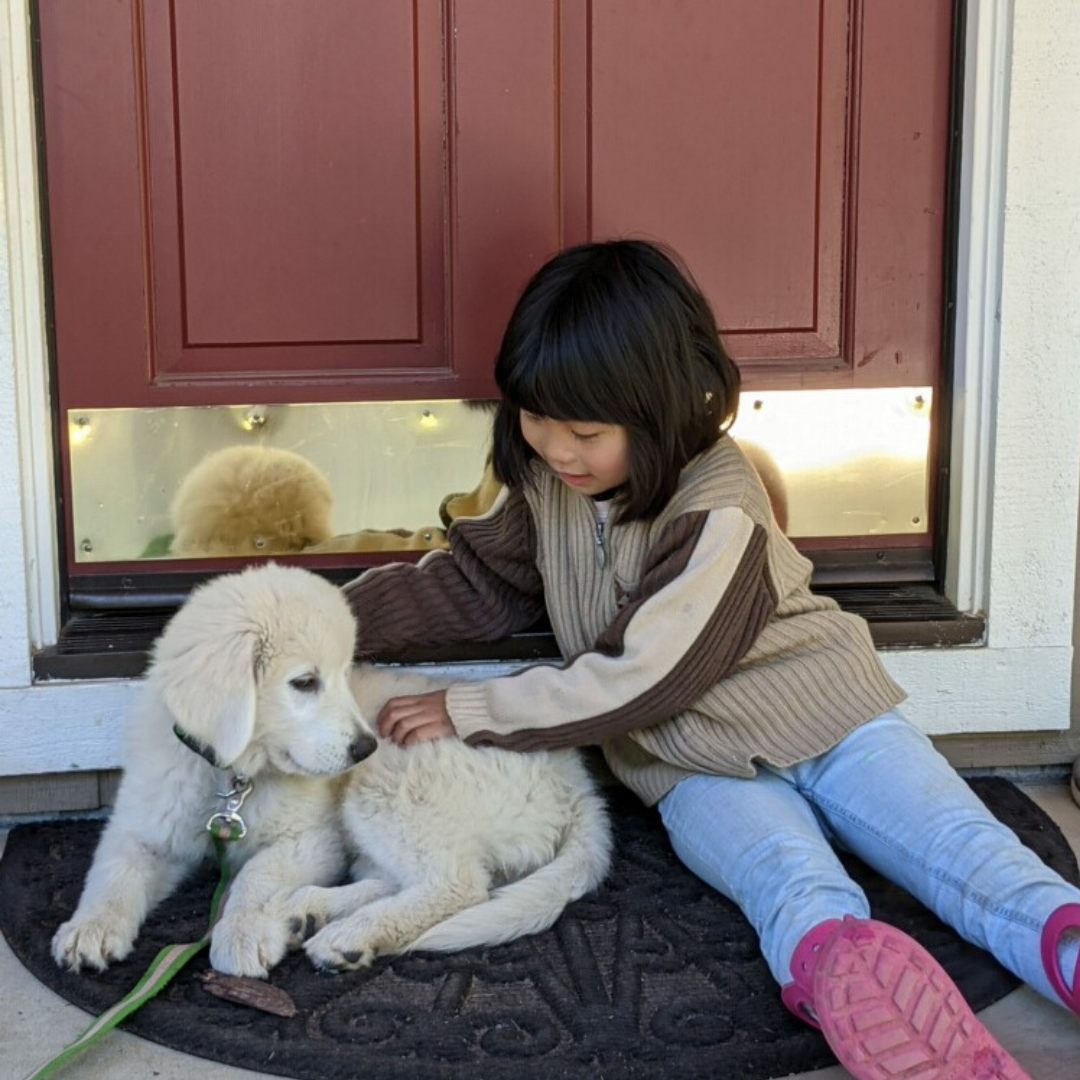
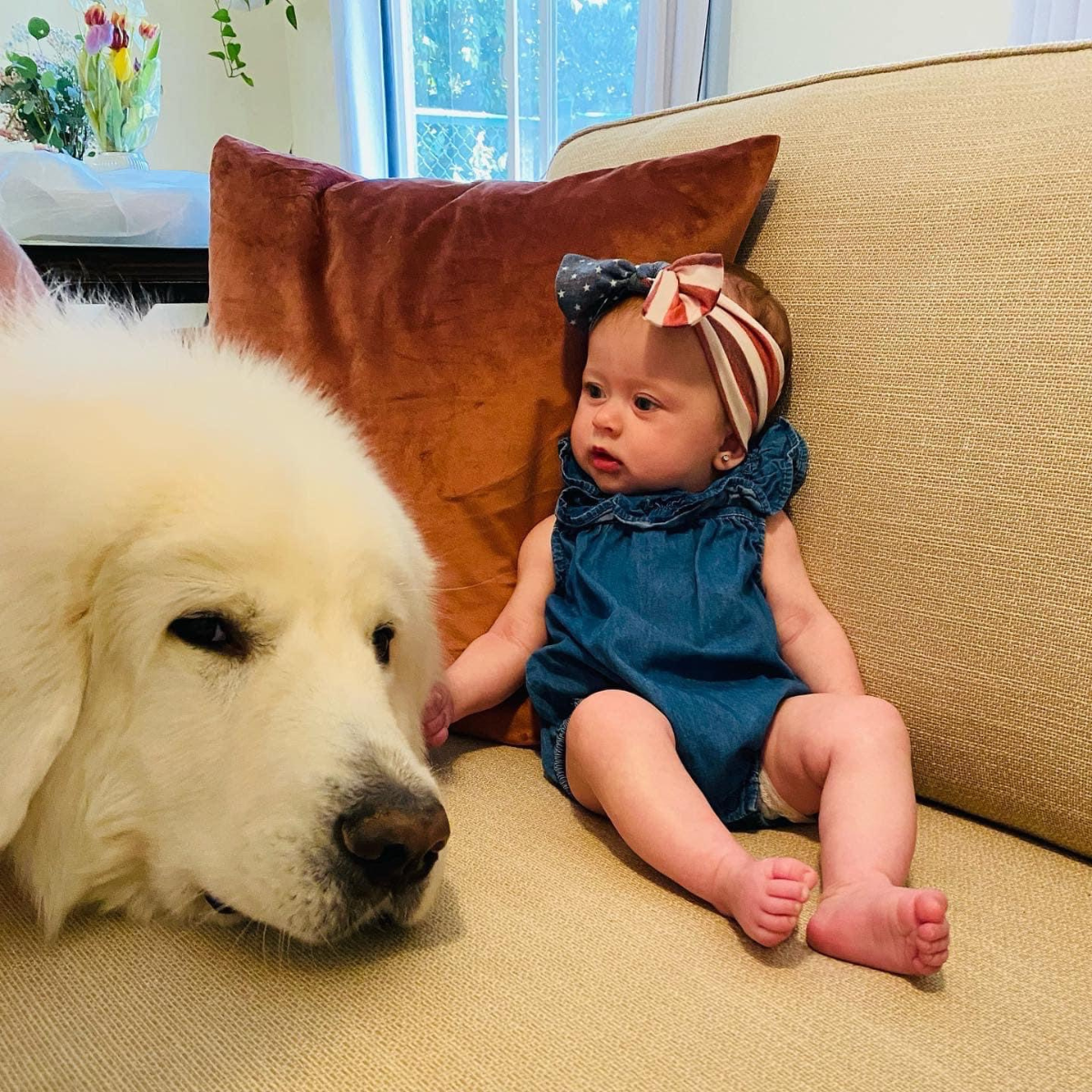
Experience The Softer Side of a Maremma
The Best Time to Get on the List Is Before You Need To.
You're already doing the work of preparing — that's exactly the right mindset. The Master Reservation List holds your place in line while you get ready, and gives you direct access to Kim for coaching and guidance along the way. For $500 applied toward your purchase, no expiration, no commitment to a specific timeline.
The Same Program, Every Puppy
Here's the thing that surprises most people when they learn how my program works: I don't do anything differently for puppies going to companion homes versus working homes.
Not one thing.
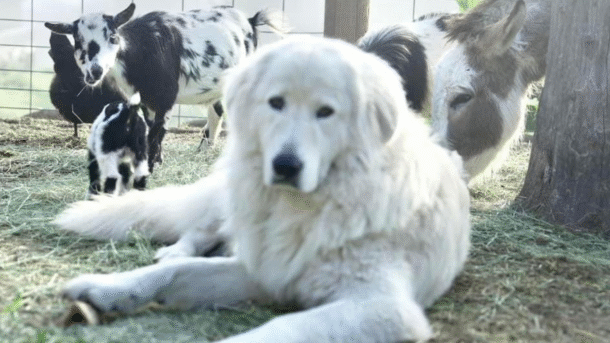
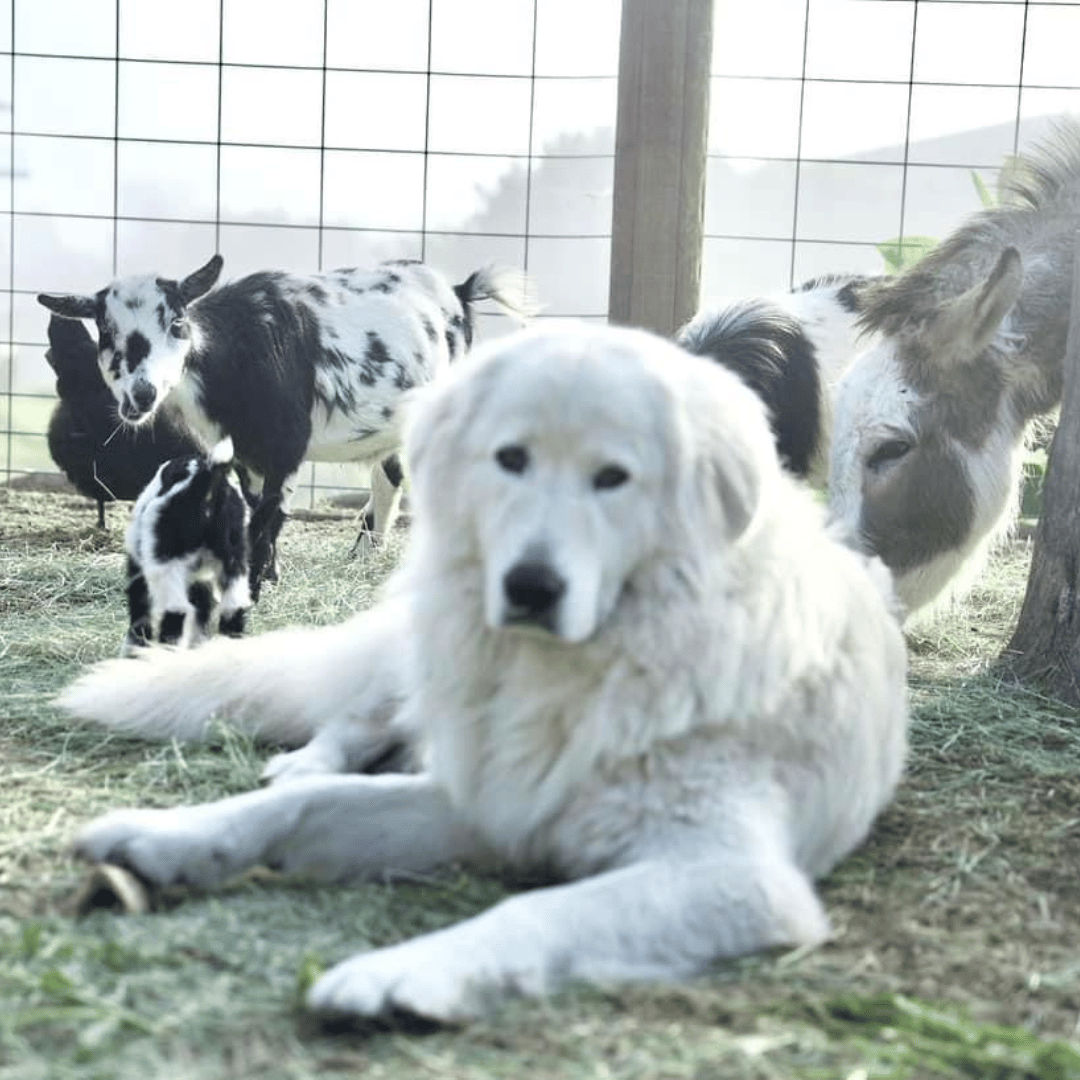
Every puppy born at Prancing Pony Farm goes through the same 12-week development program. They live in the Puppy Parlor — an environment that looks and sounds like a home on the inside and opens onto a working farm on the outside. They have continuous access to goats from the time they can navigate a dog door. They are handled constantly by people of all ages. They hear construction equipment, ATVs, delivery trucks, farm machinery. They are exposed to children, other dogs, and all the normal chaos of a busy working farm. They learn to take all of it completely in stride.
That broad, thorough, real-world socialization is what creates a dog that can succeed anywhere — not just on a farm, not just as a livestock guardian dog, but in any situation where people are committed to understanding and meeting her needs.
The differentiator between a successful companion Maremma and an unsuccessful one is almost never the dog. It's what happened during those first 12 weeks, and what happens after the dog goes home. Get both of those right and the setting — farm, homestead, suburb, city — matters far less than most people think.
Read the complete Puppy Development Series to see exactly what those 12 weeks look like →
Thinking of a Maremma as a family companion?
Come meet our dogs in person before you decide. A one-hour consultation lets you see how our Maremmas live and behave and ask your questions. The $100 fee is non-refundable. If you reserve a specific puppy or dog, or join our Master Reservation List, within 7 days, the full fee is applied to your reservation. A consultation does not reserve a spot.
What Actually Determines Success
I've placed companion Maremmas into a wide range of situations. Across all of them, three things consistently determine whether a placement thrives.
1. What happened during the critical socialization window
The first 12 weeks of a puppy's life are when lifelong behavioral patterns are established. A puppy that was truly well-socialized during that window — with livestock, with people of all ages, with varied environments and experiences — arrives at her new home with a foundation of confidence that no amount of later training can fully replicate. A puppy that wasn't is starting from a deficit that will follow her for life.
This is the single most important reason to care deeply about your breeder's actual program, not just their marketing claims. "Farm-raised" is not a socialization program. Ask specifically what the puppy was exposed to, when, and how.
2. An owner who understands what they have
A Maremma is not a golden retriever. She is not going to be enthusiastically biddable, constantly eager to please, or emotionally demonstrative in the way many people expect from dogs. She is independent, thoughtful, and deeply devoted to the people and animals she considers her responsibility — but she expresses that devotion on her own terms.
Owners who succeed with companion Maremmas are people who have genuinely learned what drives this breed. They don't fight the independence. They don't expect the dog to behave like a different breed. They've done the work of understanding her nature, and they find that nature fascinating rather than frustrating.
The families in my program who have the most extraordinary companion dogs are almost always the ones who asked the most questions, sought out the most education, and stayed the most engaged with me after their puppy came home. That's not a coincidence.
3. A commitment to meeting the dog's needs — whatever that looks like
This is where I push back hardest against the "you need X acres" rule. There is no minimum property size for a companion Maremma. I have placed dogs on hundreds of acres who were less happy and fulfilled than dogs living in much smaller spaces, because the large-property owners weren't actively enriching their dog's life.
What matters is this: is this dog getting enough physical exercise, mental stimulation, human connection, and outlets for her natural instincts? That can happen on a farm. It can happen on a quarter-acre lot. It can happen in a Chicago penthouse, if the people involved are committed enough to make it happen.
The question to ask yourself isn't "do I have enough land?" It's "am I the kind of person who will make this dog's life genuinely full?"
The Myth of the Failed LGD — And Why It's Backwards
I want to address something directly, because it comes up enough that it needs to be said clearly.
There is a belief in some LGD communities that companion homes are the right destination for dogs that didn't work out as livestock guardian dogs — the dog that chased chickens, the dog that couldn't be trusted with small animals, the dog with behavioral problems that made her unsuitable for working placement.
I understand where this idea comes from. But I think it's completely backwards, and I want to explain why.
If you can't trust a dog with livestock — if she's reactive, unreliable, or has shown genuine aggressive tendencies in a working context — why would you trust her with children? With elderly family members? With the family cat? With visitors coming to your home?
The traits that make a dog fail as a livestock guardian dog don't disappear because she's now living as a pet. They follow her into the new environment. And in many cases, a dog who struggled in a working situation because she wasn't properly socialized or supported is going to face those same challenges in a companion setting — just with different consequences.
The companion homes in my program don't get the dogs that didn't work out elsewhere. They get puppies from exactly the same litters as the working homes, raised on exactly the same program, placed with just as much care and consideration. A companion placement is not a consolation prize. It is a deliberate, thoughtful decision to put a well-prepared dog into a home that will give her a full and extraordinary life.
Early Pickup Won't Help — Here's Why
Some breeders will let companion families pick up puppies earlier than working families, operating on the assumption that earlier human bonding is better for pet dogs.
I don't do this, and I want to explain my reasoning.
My puppies go home at 12 weeks minimum. That's true for every puppy, going to every type of home. Not because it's a policy for policy's sake, but because everything that happens between birth and 12 weeks at Prancing Pony Farm is building the foundation your dog will stand on for the rest of her life. The livestock bonding. The human socialization. The environmental exposure. The mentorship from adult dogs like Genevieve, my nine-year-old Maremma who has spent nearly a decade teaching puppies how to be great dogs.
Pulling a puppy out of that environment at 8 weeks to speed up the transition to a companion home doesn't give her more. It takes something away. The work being done here during those extra weeks is irreplaceable — and it's specifically the work that makes companion placements succeed.
Your puppy is getting everything she needs here. She'll be ready at 12 weeks, and she'll be better prepared because she stayed.
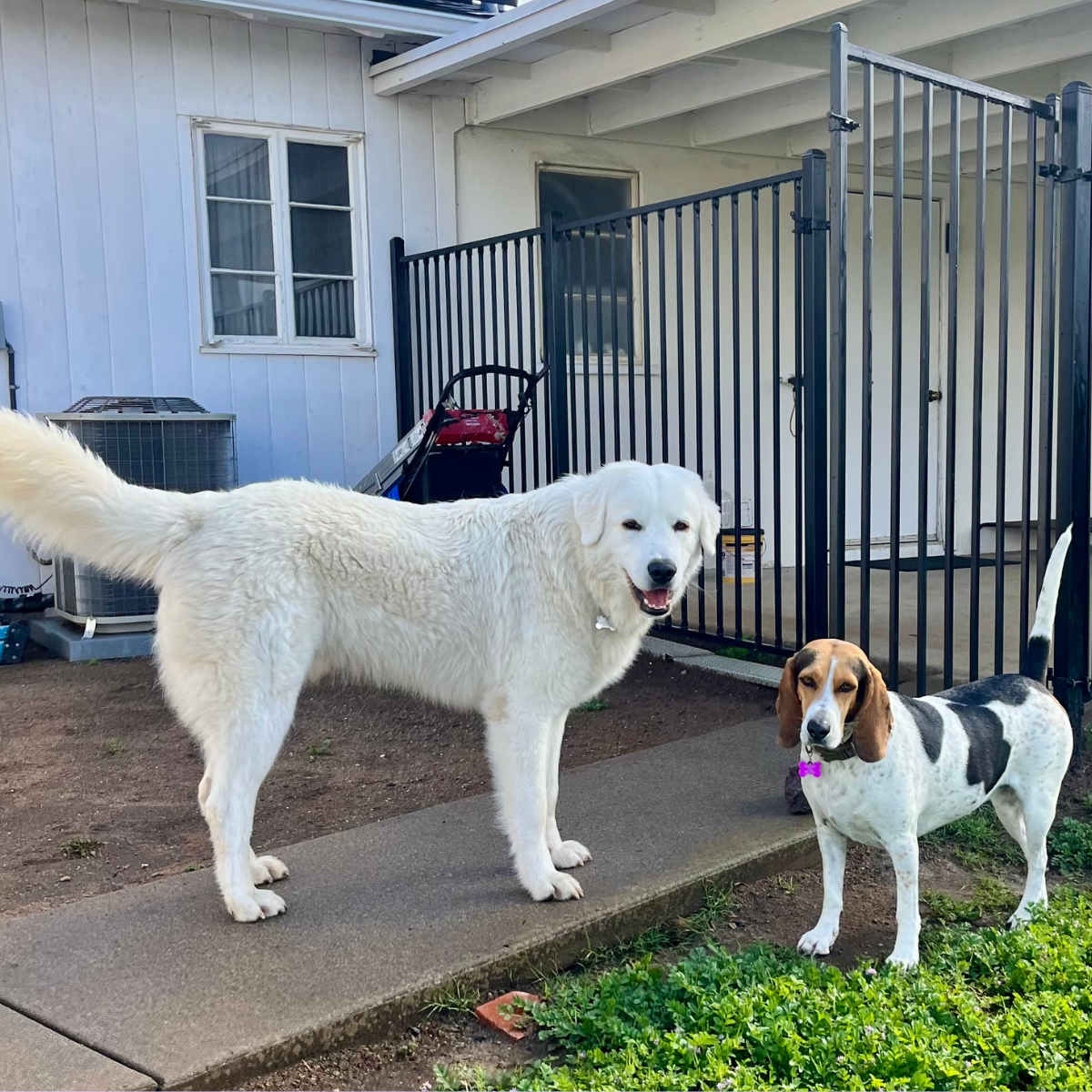
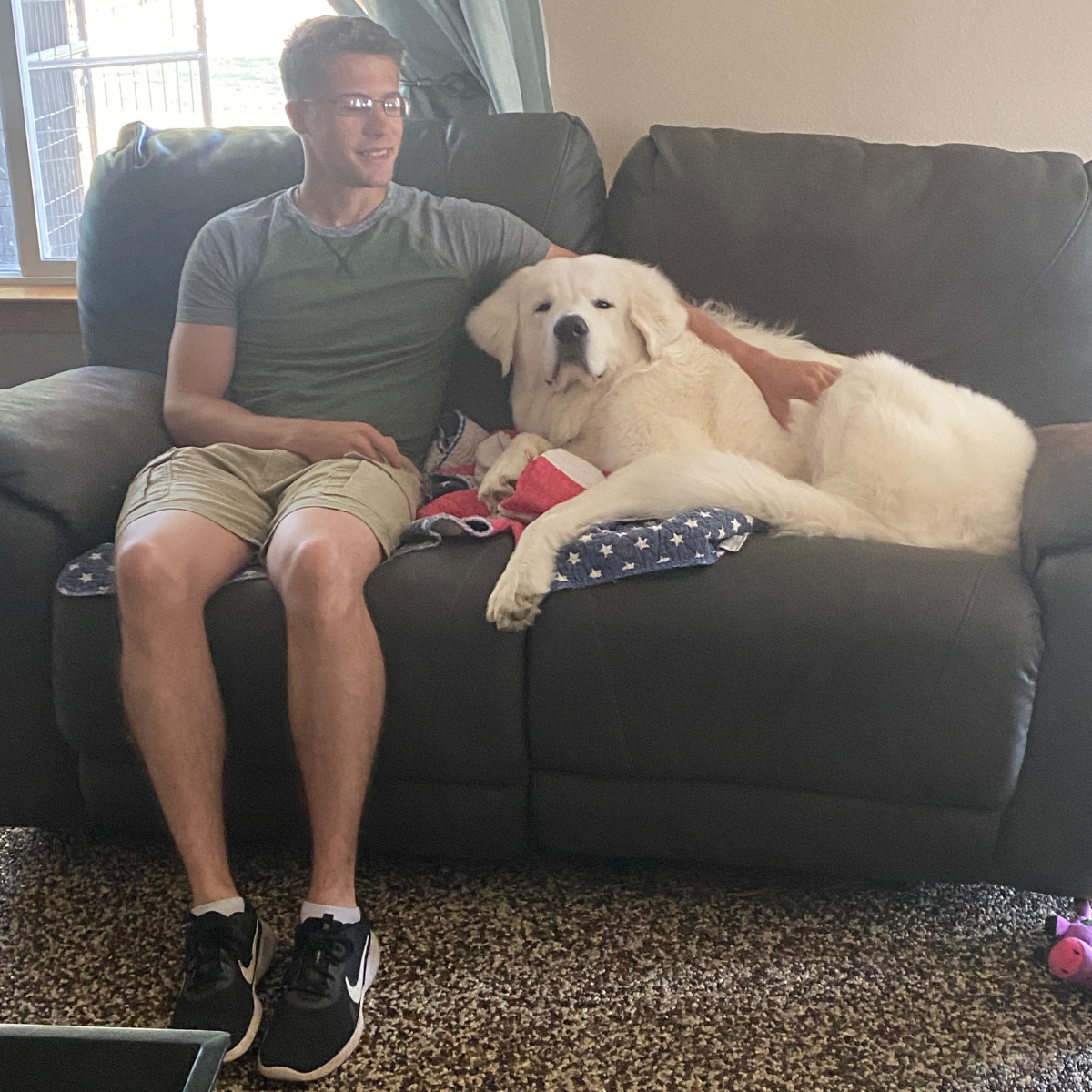
Titus, one of our pups, born in 2020, lived with our goats and other livestock until he was 5 months old. He adapted to house-dog life beautifully and has been a devoted family companion ever since.
Real Companion Dogs, Real Stories
I can talk about this in the abstract all day. But the most persuasive thing I can offer is what these placements actually look like in real life.
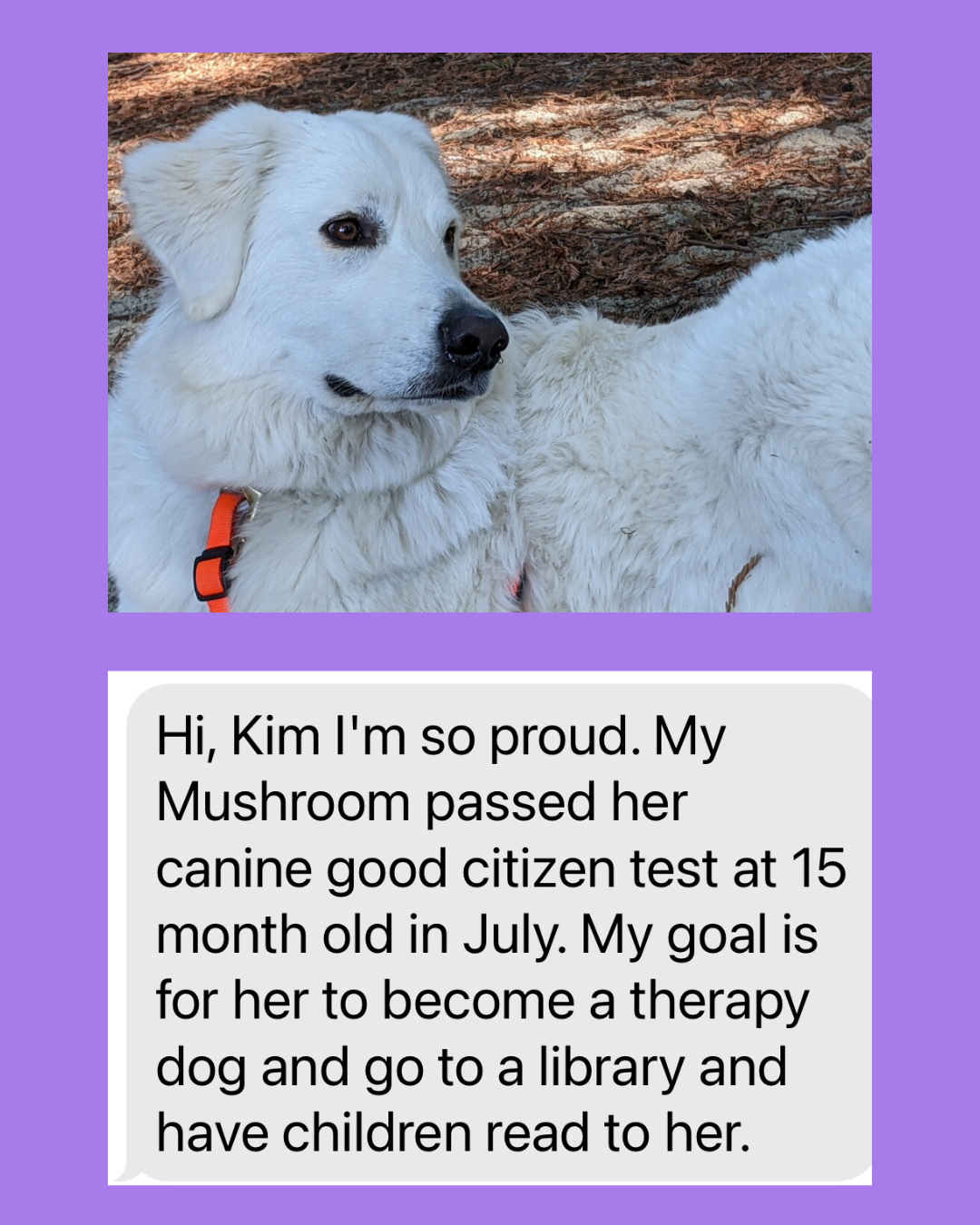
Mushroom — Chicago, Illinois
Mushroom was my first companion placement, and she broke every rule I'd been told I should follow.
Her owner Fan came to me in 2020 wanting a Maremma specifically as a companion for her daughter. She had seven acres in California at the time and a few chickens, but she was honest with me: the dog was going to be a pet. She wanted a Maremma because she didn't want a dog that would chase her chickens — but the dog was going to live in the house and be a family member first.
At the time, I was still operating under the conventional wisdom that you shouldn't sell Maremmas as pets, and certainly not to a family with no prior dog experience. Fan and her family had never owned any dog of any breed. Not a Maremma. Not a retriever. Nothing.
I said no. She came back. She told me about the puppy classes she planned to take, the socialization experiences she'd arranged, the research she'd done. She had clearly thought about this more carefully than most experienced dog owners I'd spoken to. I finally said yes — partly because of the chickens, which gave me something to point to, but honestly because I could see she was going to be exceptional.
I was right. They were exceptional.
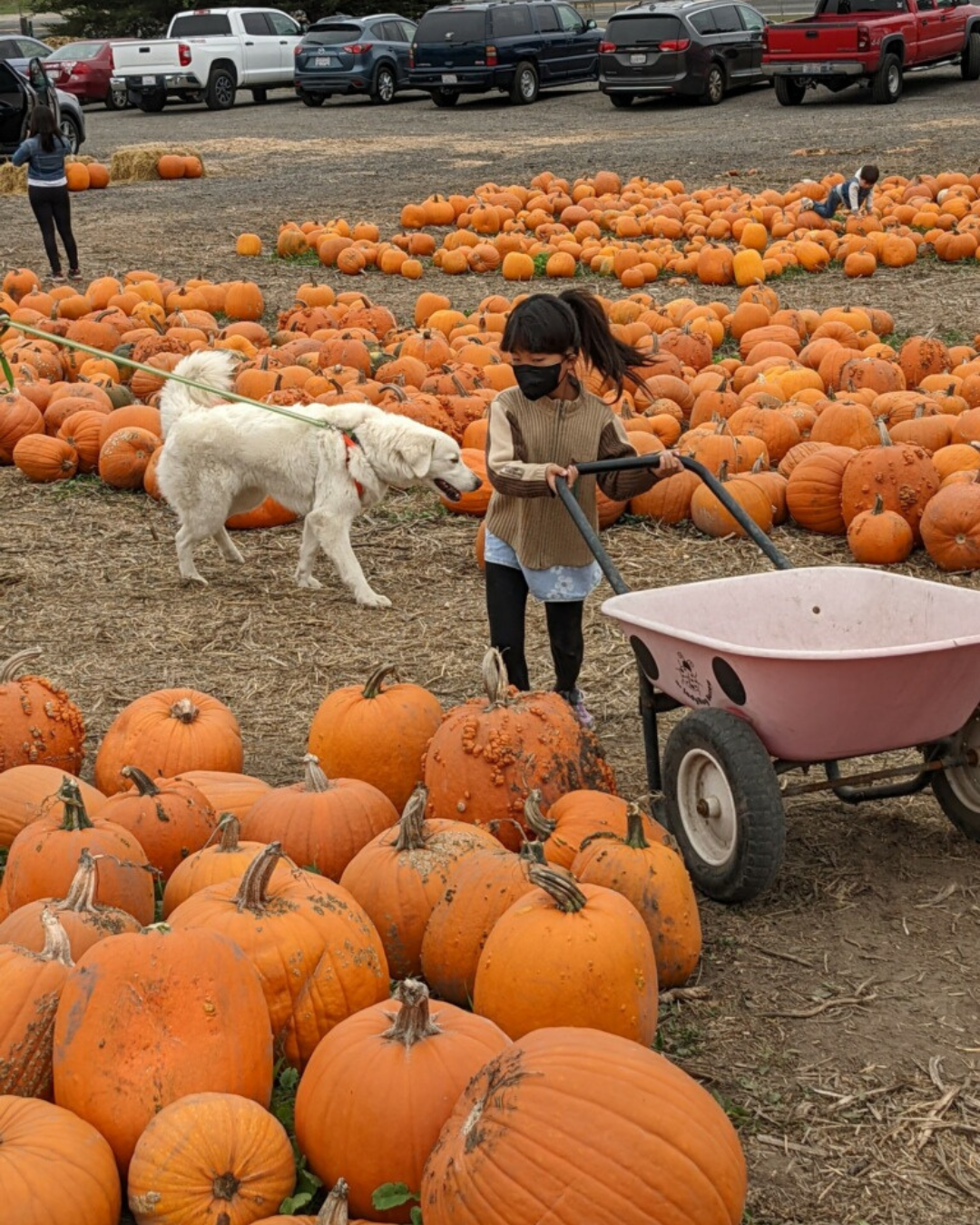
Fan took Mushroom to puppy classes. She took her on field trips with her daughter's school. She asked me more questions in Mushroom's first year than any working dog home has ever asked me — and I mean that as the highest compliment. She wanted to get it right, and she worked at getting it right every single day.
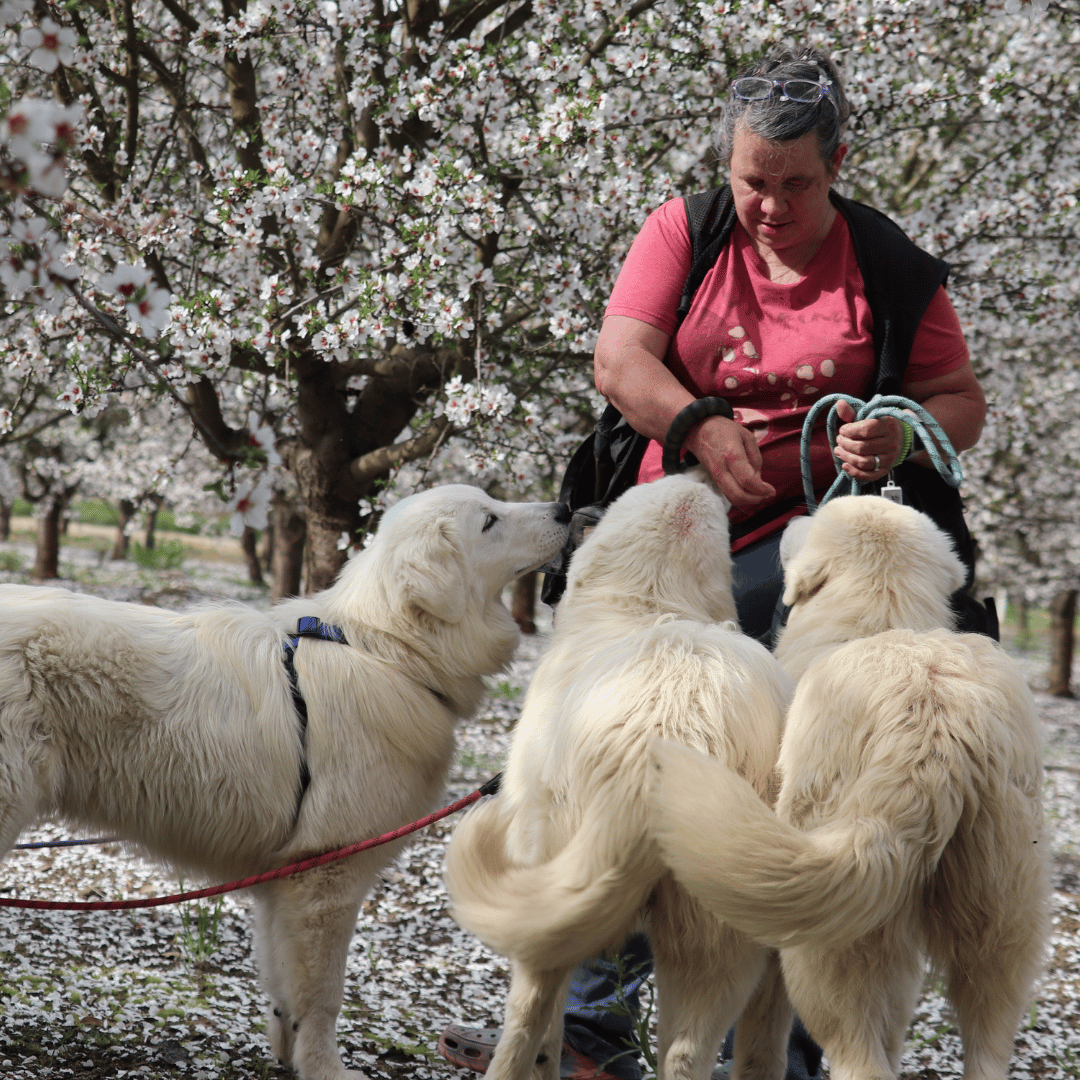
Mushroom earned her AKC Canine Good Citizenship at 15 months old and soon after became a certified therapy dog, visiting hospitals and nursing homes. So much for the idea that Maremmas can't be trained and can't excel in non-traditional roles.
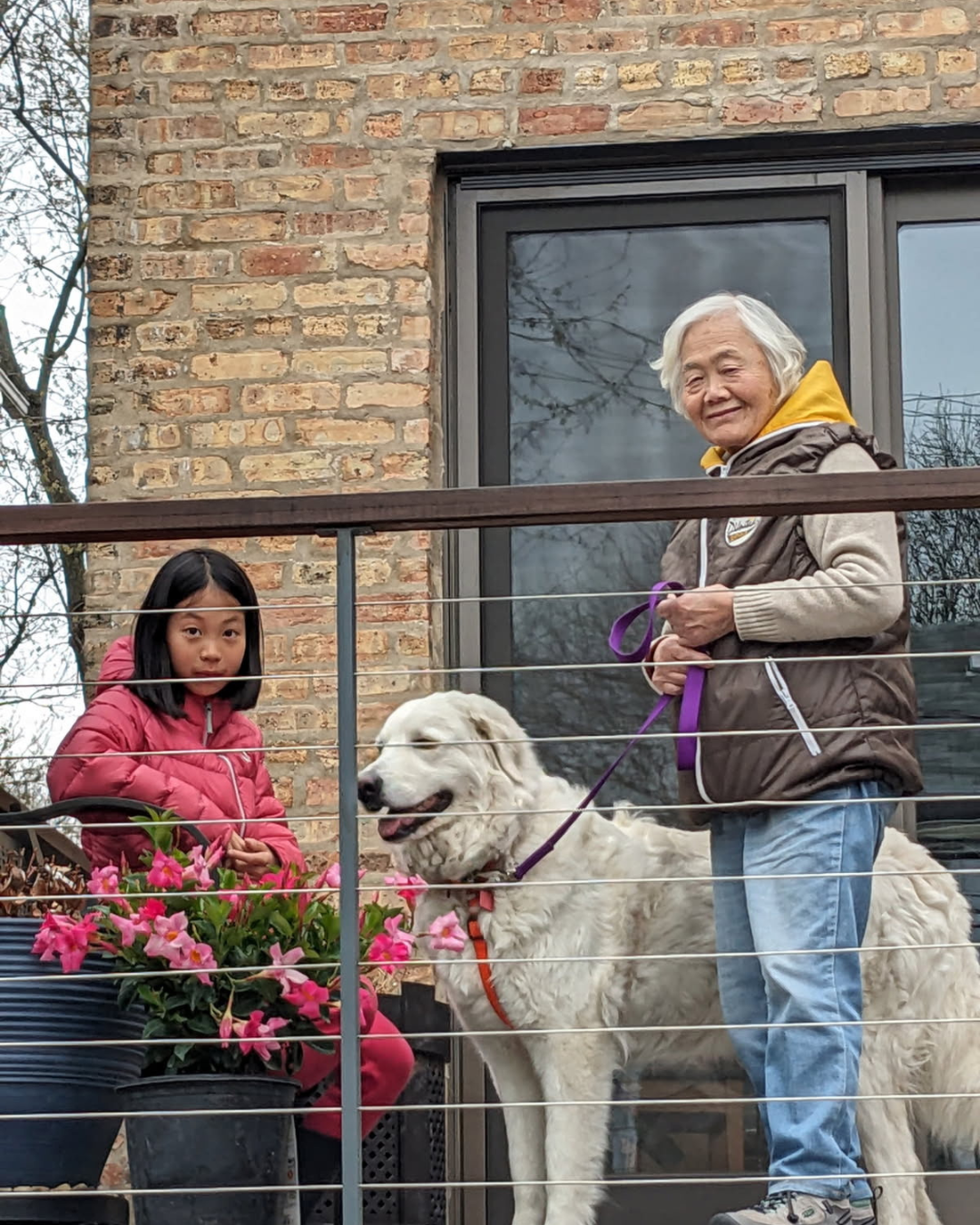
A few years later, Fan's family moved to Chicago. To a penthouse apartment. And of course, they took Mushroom.
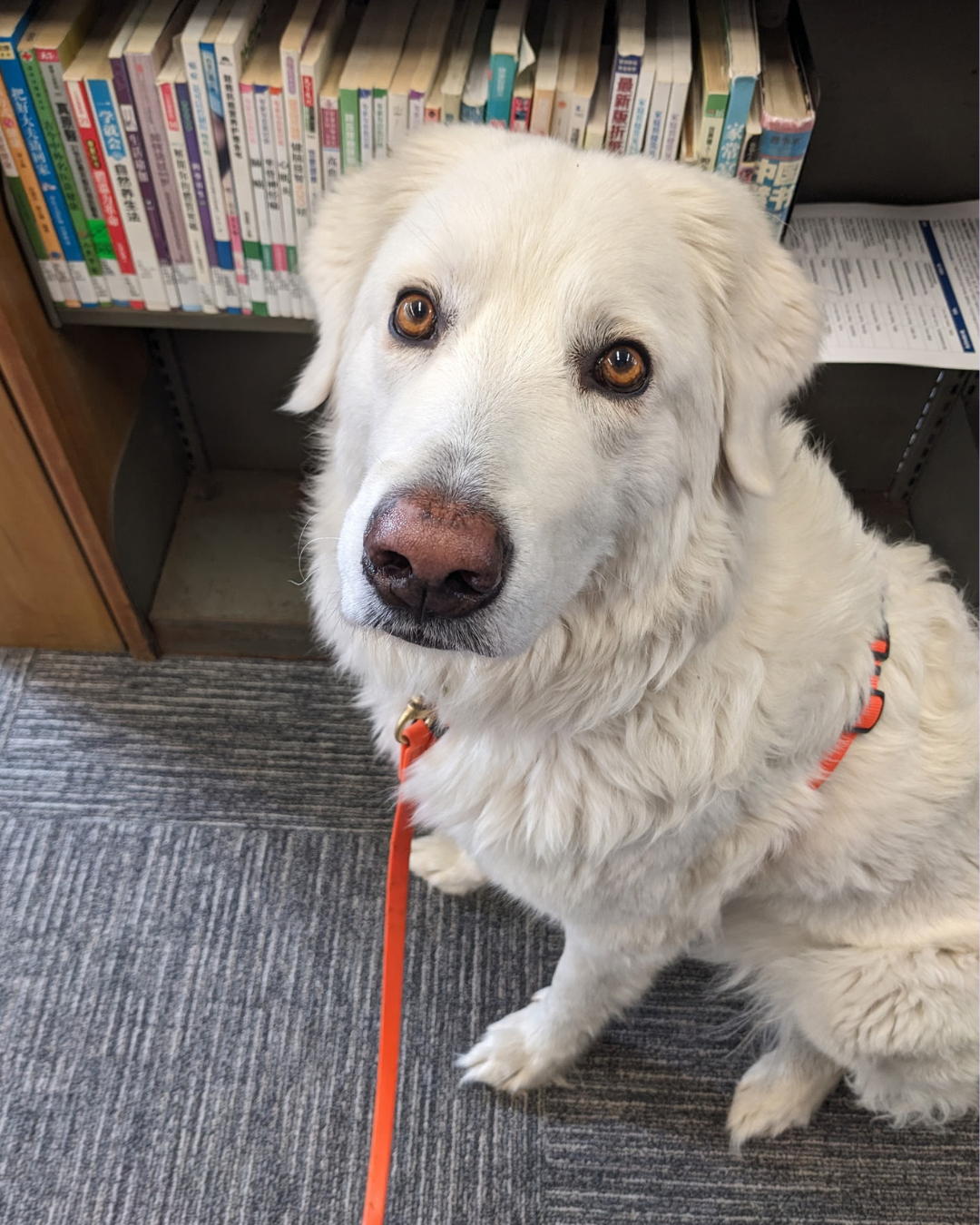
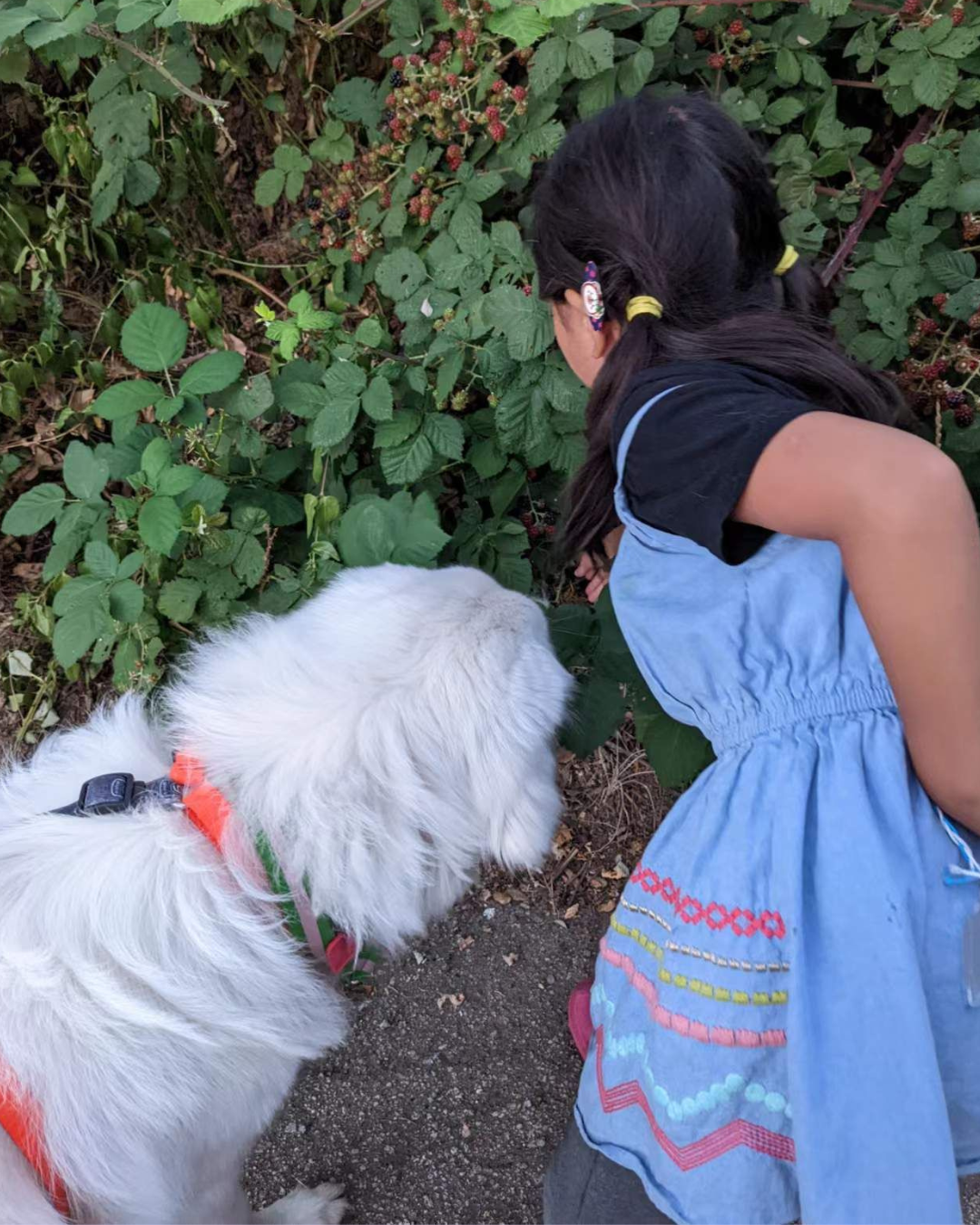
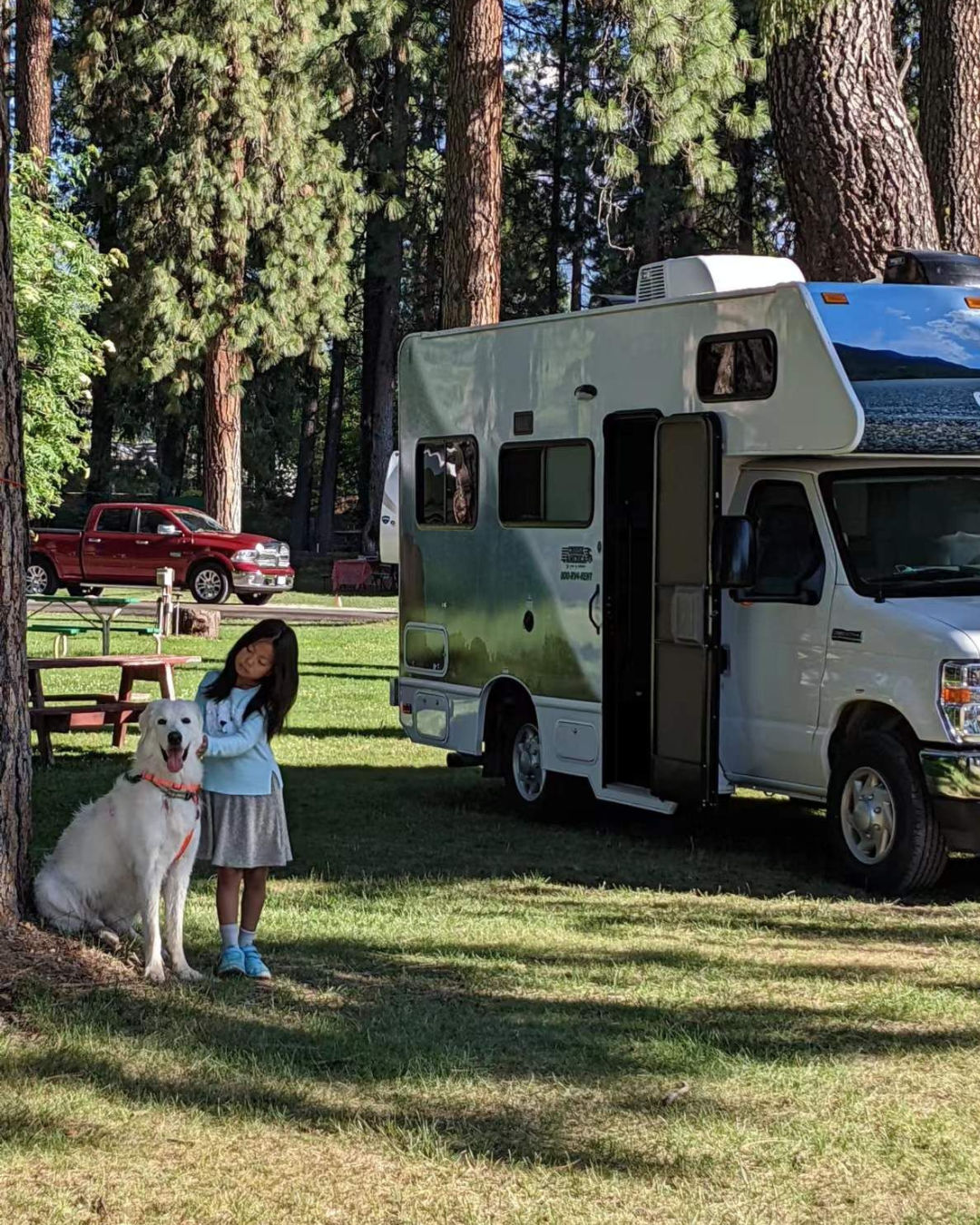
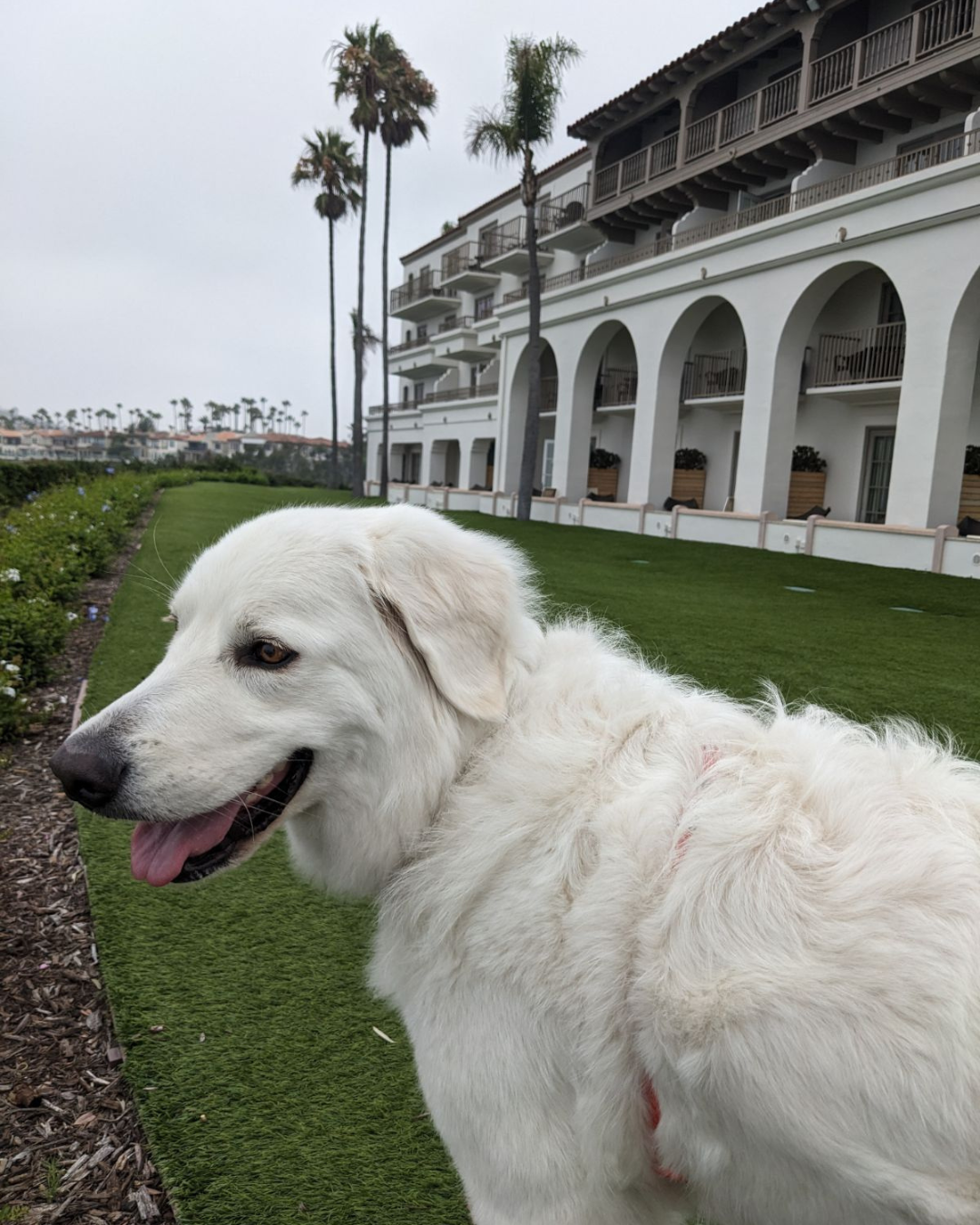
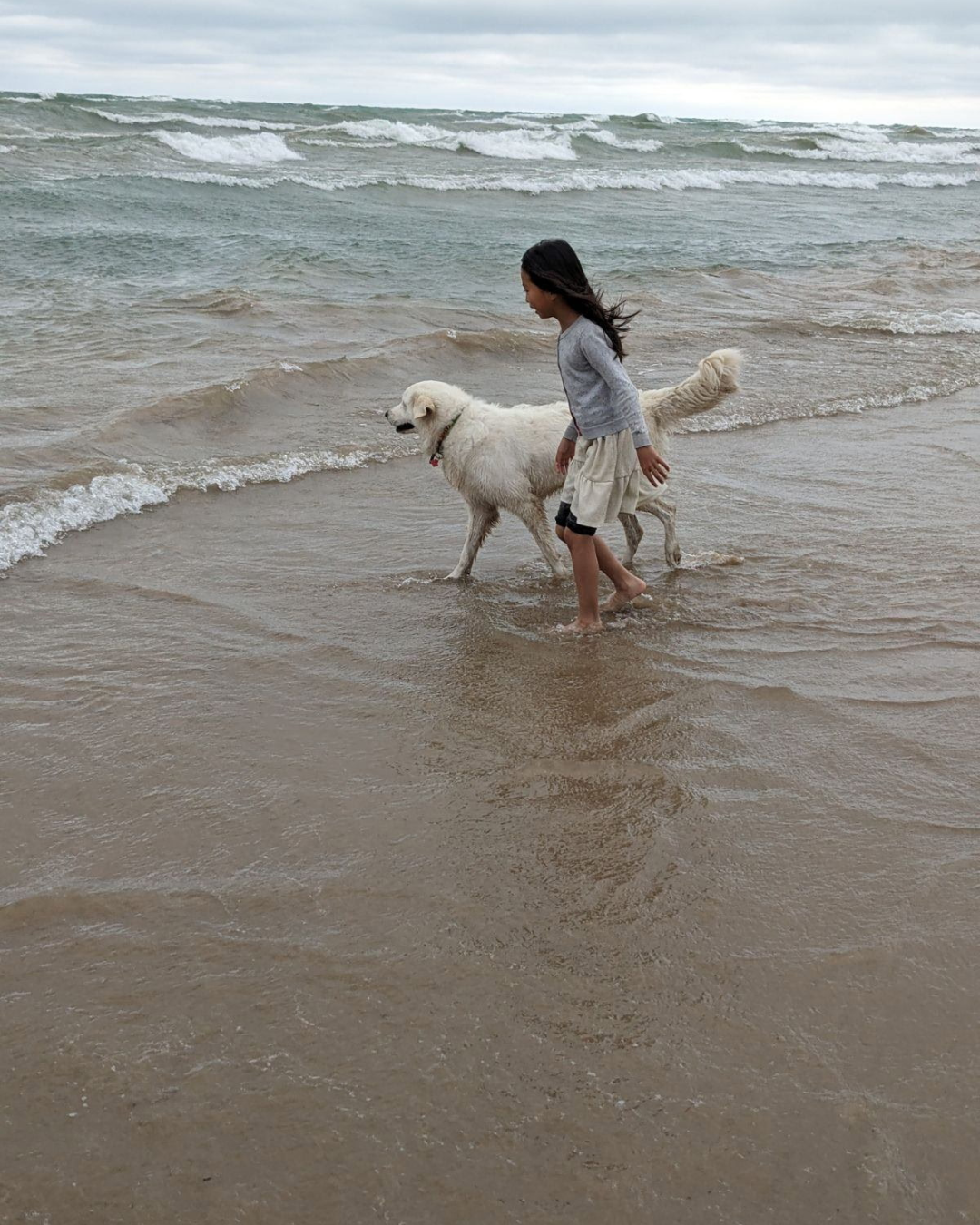
Mushroom swims in Lake Michigan. She goes camping. She goes to the library — and her favorite thing about the library is the treats the staff give her when she walks in. Fan told me that if they stop to return books in the after-hours drop slot without going inside, Mushroom gets upset. A Maremma Sheepdog, disappointed about not getting to go to the library. I never would have known that was possible if I hadn't made that placement.
Mushroom is proof that this breed is capable of far more than the conventional wisdom allows — and that the right owner, with the right foundation, can give a Maremma an extraordinary life in almost any setting.
Caia — Hawaii
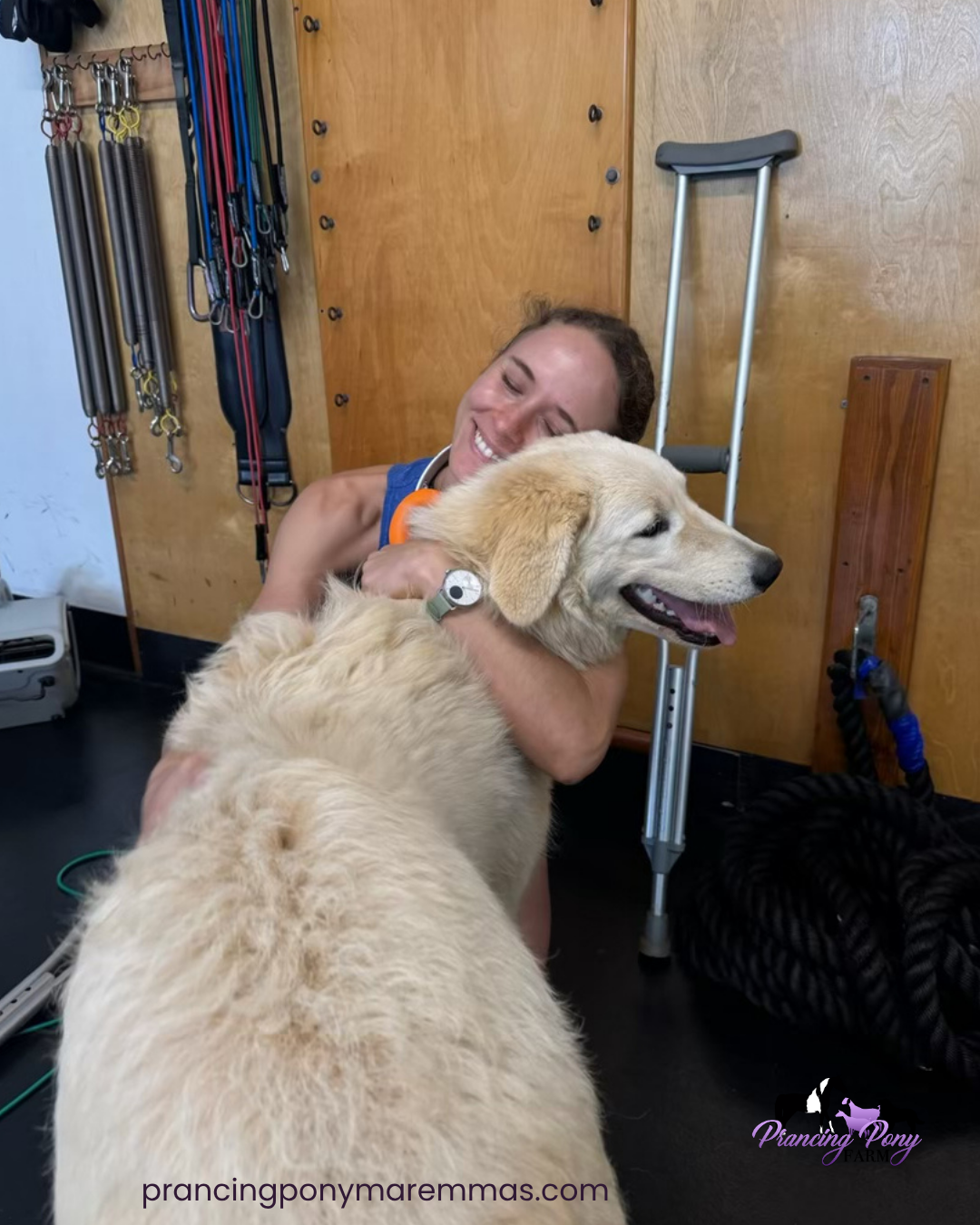
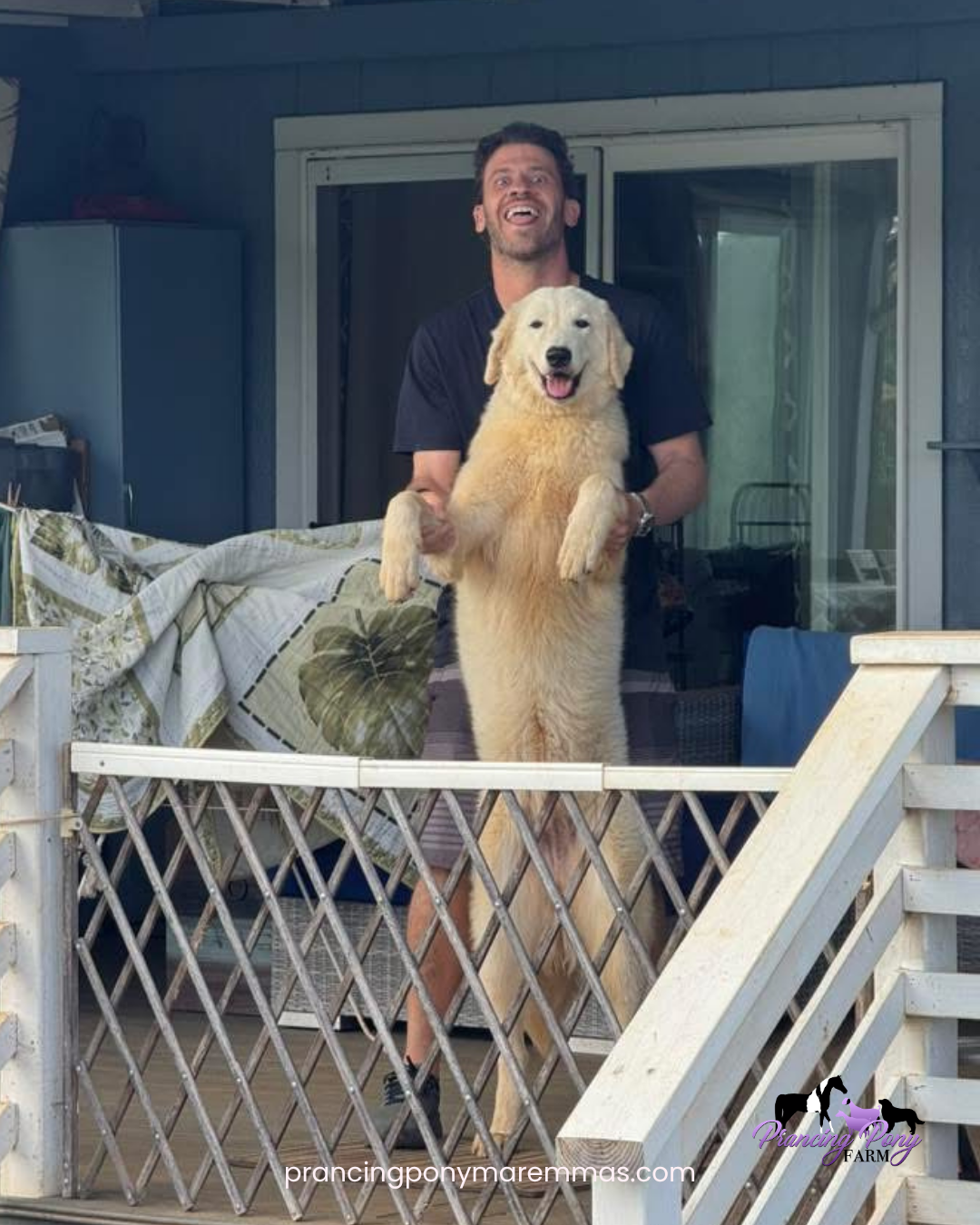
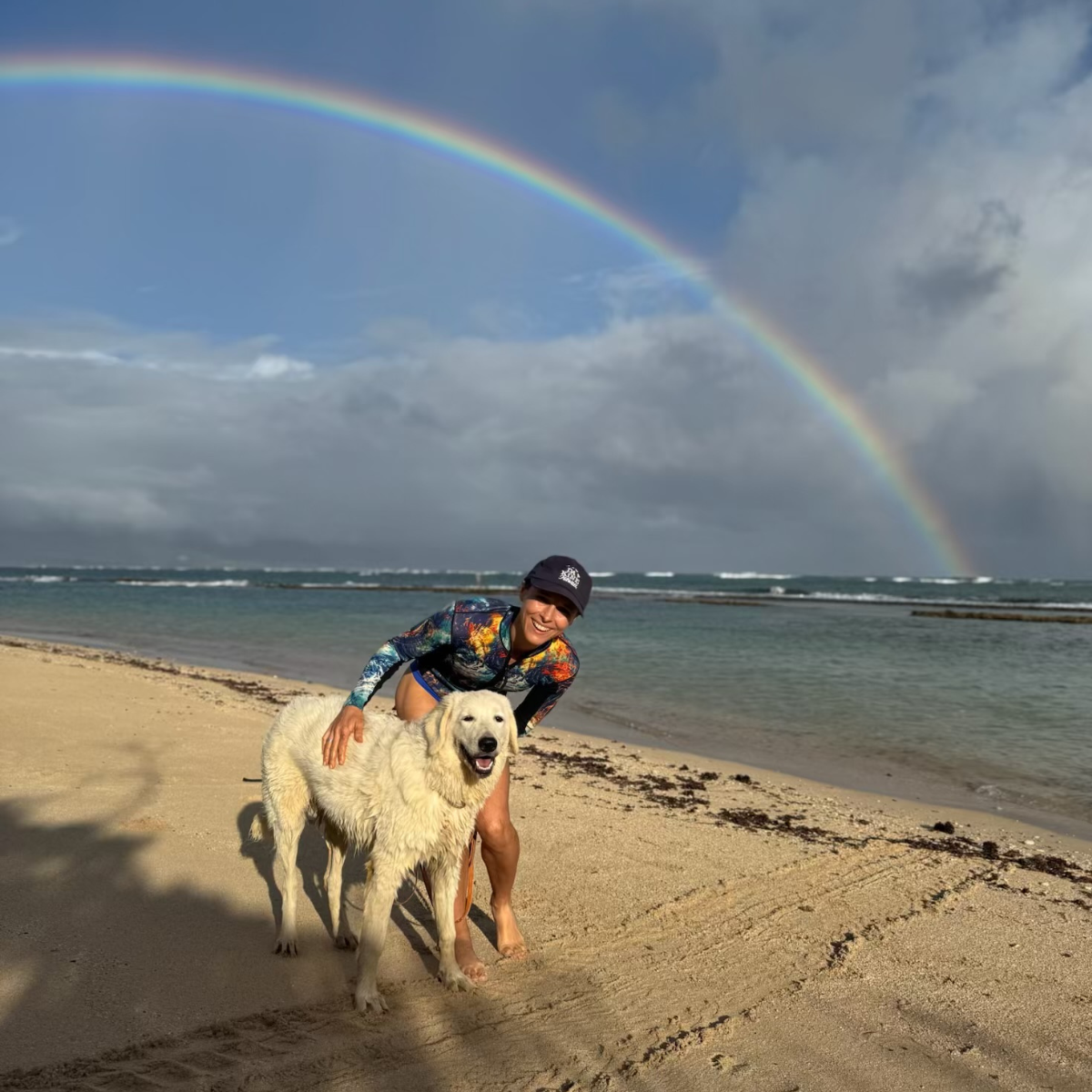
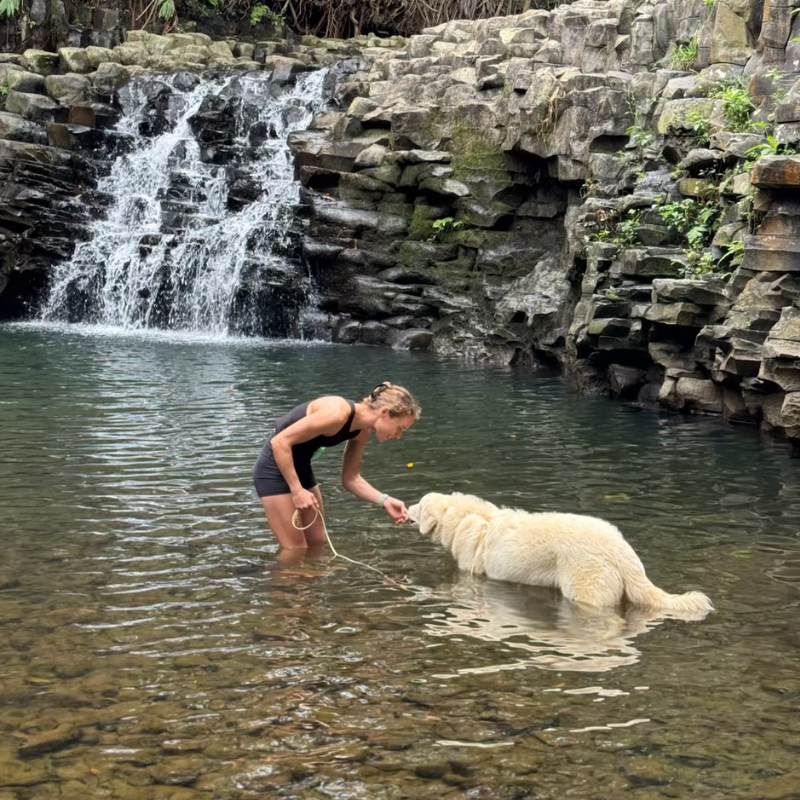
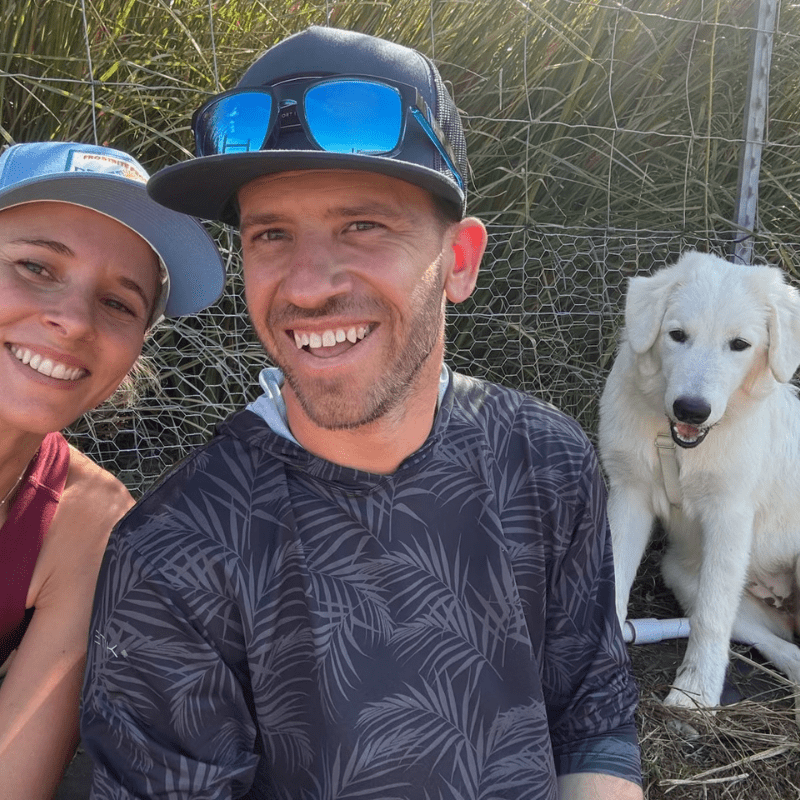
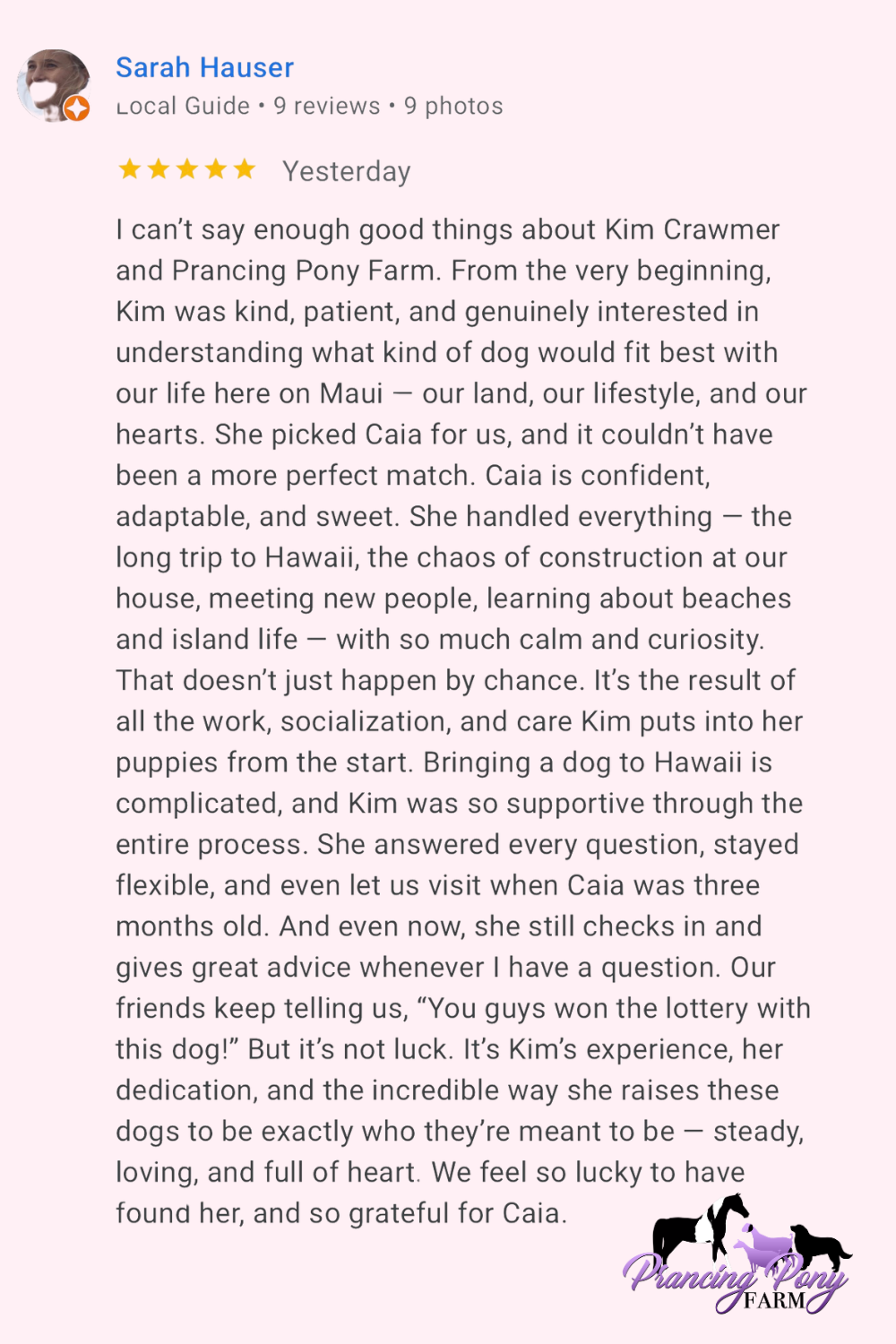
Caia went to Sarah and Casey in Hawaii when she was a puppy, and she has become something of a celebrity on her island.
Sarah and Casey are professional athletes. They have a few acres, plans for some chickens eventually, and a lifestyle that is genuinely full — beach trips, river hikes, neighborhood walks, friends and their dogs coming over to play, gym days where Caia comes along. Caia has more friends, canine and human, than most dogs I've placed anywhere. She loves other dogs unconditionally. She loves people. She's gentle with young children. She is friendly and confident and joyful in a way that makes everyone around her happier.
She spends time in the house and time outside — sometimes choosing to be out in the rain because Maremmas love rain and mud, and sometimes choosing the couch. She is living her best life. I could not have chosen a better home for her.
When she eventually takes on some light guardian duties with whatever livestock Sarah and Casey end up getting, she'll bring that same confident, well-socialized energy to the job. But right now she is proof that a Maremma without livestock is not an incomplete Maremma. She is simply a Maremma whose flock is her people.

Jimmy — Southern California
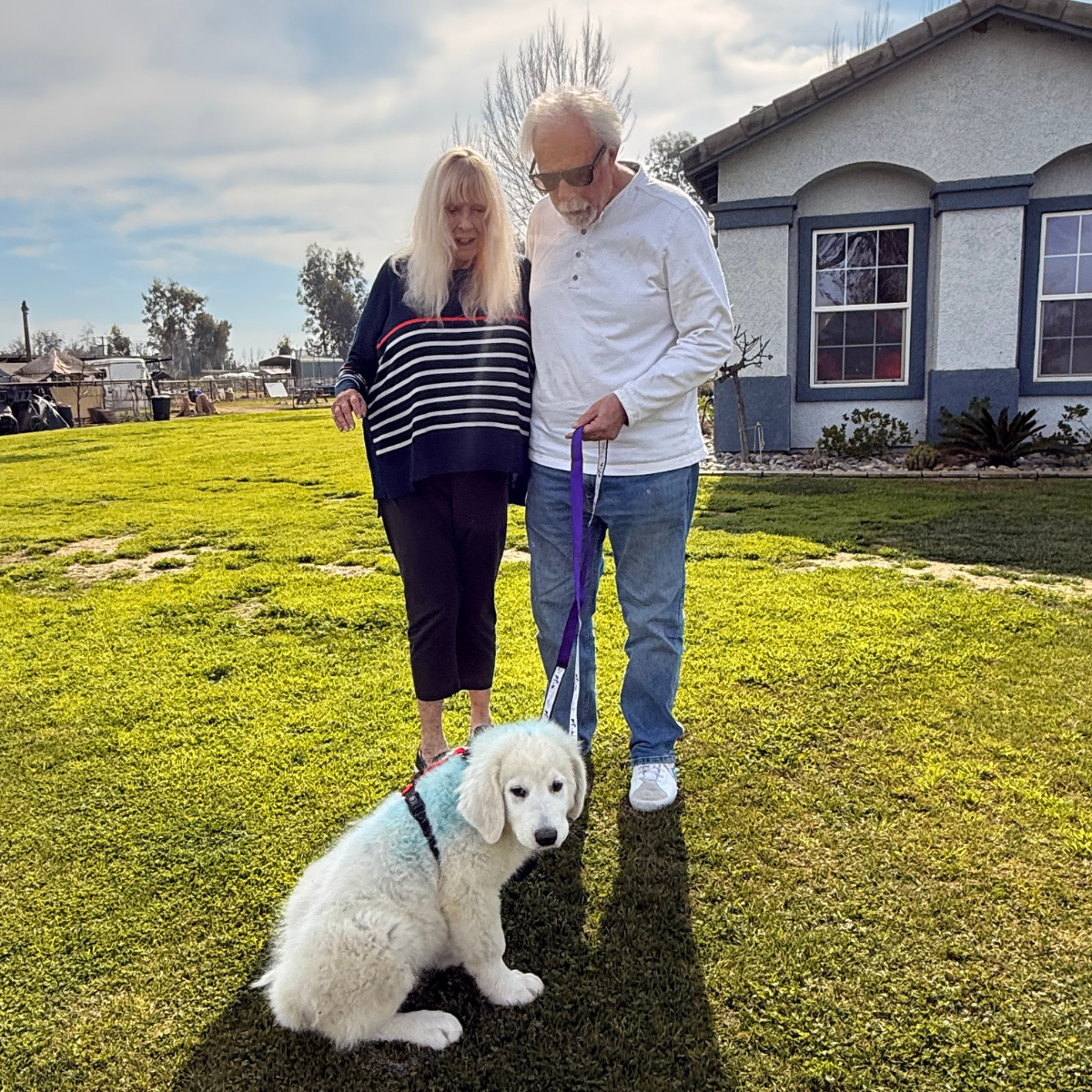
Tom has been keeping companion livestock guardian dogs for thirty years — always Kuvasz, until now. When his beloved Kuvasz Polo was diagnosed with cancer, Tom put himself on my waitlist. He wasn't ready to bring a new puppy home while Polo was still with him. He just wanted a place held for when the time came.
For over a year, I updated Tom every time a new litter arrived. Each time: not yet. Still with Polo. Then Tom called to tell me Polo had passed. He was ready.
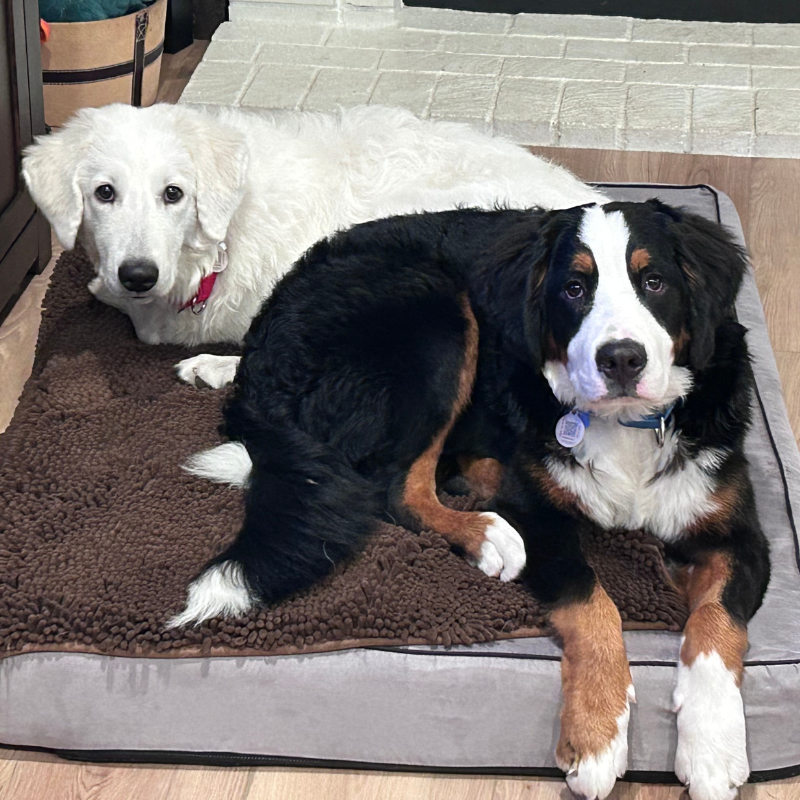
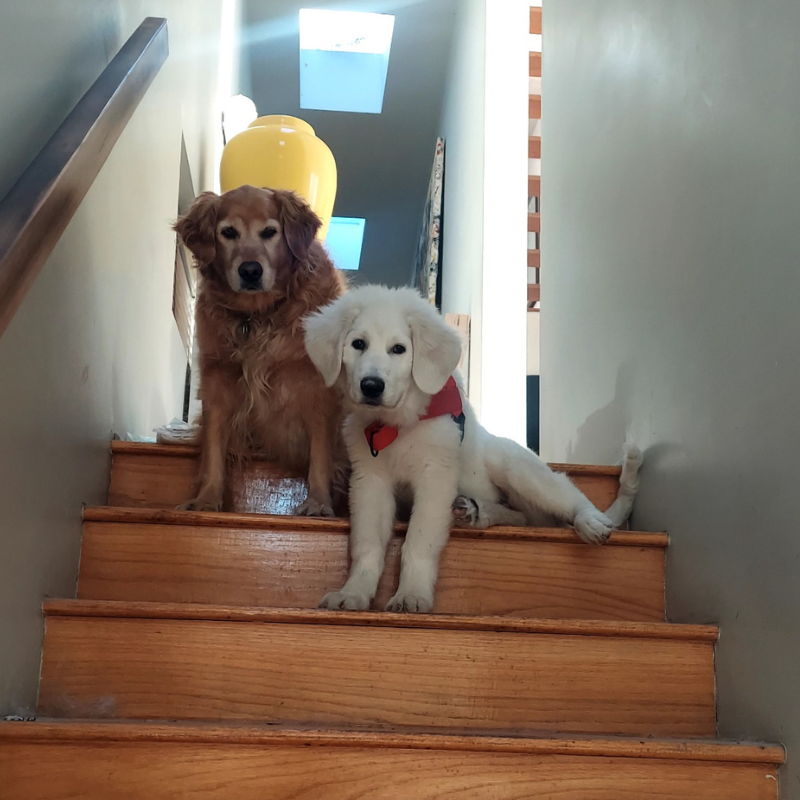
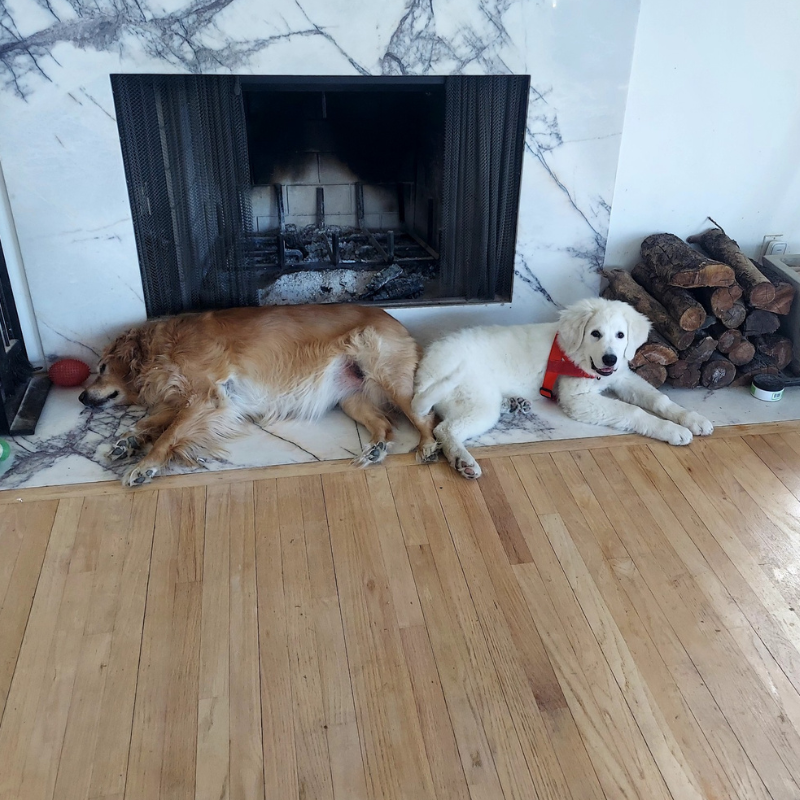
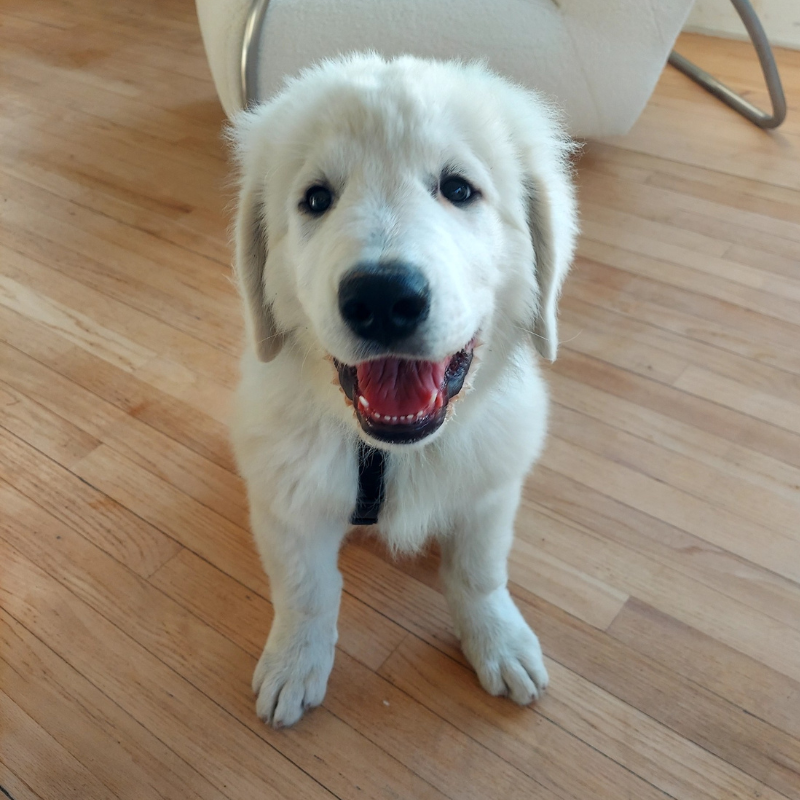
Tom lives in Southern California with his wife, Cindi, and their older golden retriever, Gidget. No farm. No livestock. He wanted a young puppy, the full experience of raising one, and a dog who would grow up alongside Gidget as a devoted companion. Jimmy — a puppy I selected for Tom based on temperament and fit — went home with him at 12 weeks.
Tom sends me updates constantly. Gidget has a new lease on life with Jimmy to keep her busy. Jimmy is doing exactly what a well-prepared puppy from a solid program does: settling in, bonding to his people, becoming exactly who he was always going to be.
Tom and Cindy are one of my favorite families, partly because they represent something I've noticed consistently about companion placements: these owners stay in touch. They share updates and photos and questions and victories. They are deeply invested in their dogs in a way that makes the whole relationship feel like a genuine partnership rather than a transaction.
Titus — My Own Dog
I can't write this page without mentioning Titus, because he is the example I keep coming back to when people ask me how I know companion placement works.
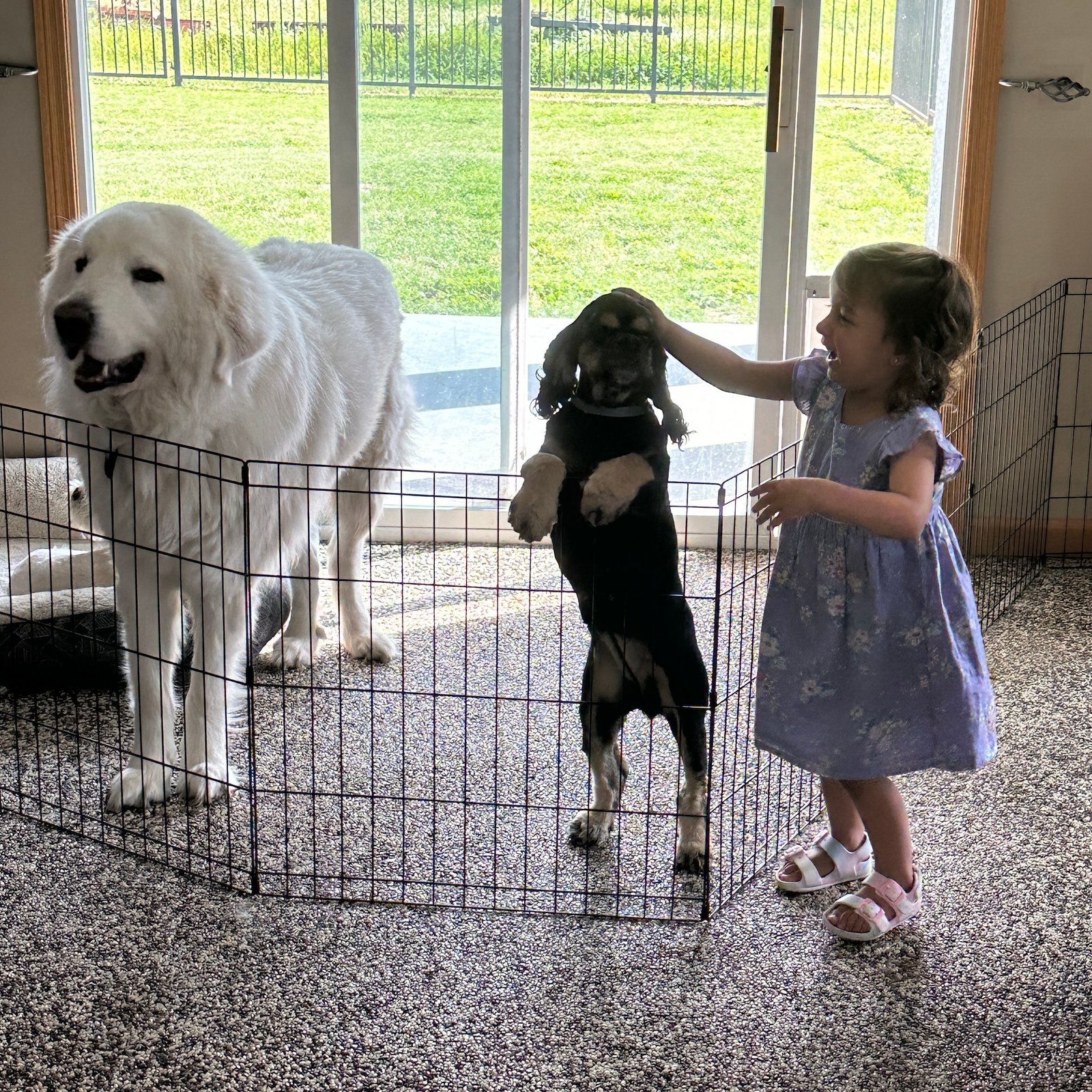
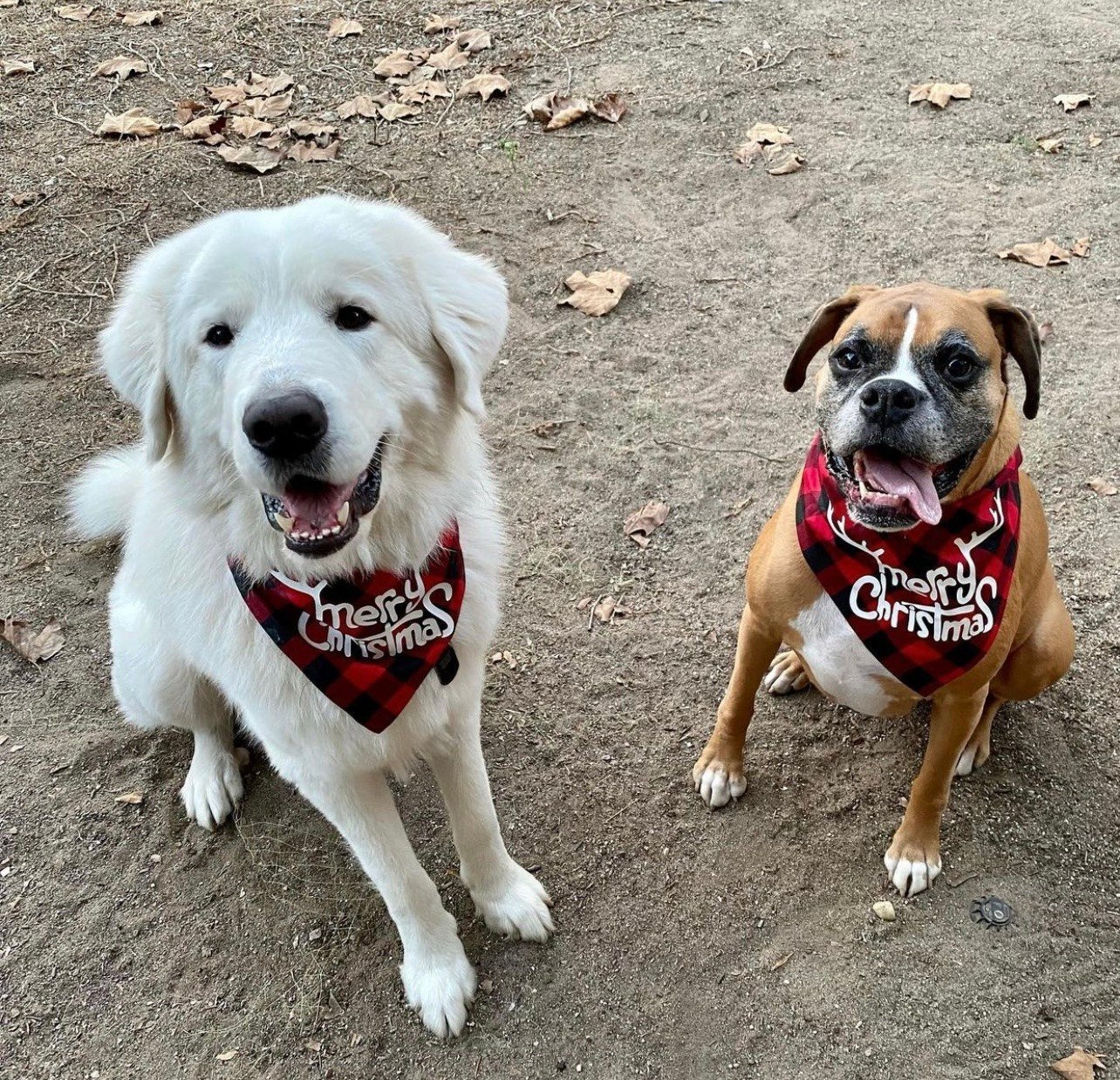
Titus is a dog I bred. He lived in my barn with my livestock and my other dogs until he was five months old. He had the full Prancing Pony Farm experience — livestock integration, human socialization, the whole program. Then he transitioned to being a full-time companion at 5 months old, living in my youngest daughter's home at Camp Pendleton marine base, where he went to the dog park, on daily walks and on doggie playdates with his "brother, Emmett the boxer.
Titus adapted beautifully. Not because companion life is easier, or because he forgot what he was, but because a well-socialized, well-prepared Maremma carries his nature with him wherever he goes — and his nature is to be devoted to whoever he considers his flock. When that's your family rather than your goats, he devotes himself to your family.
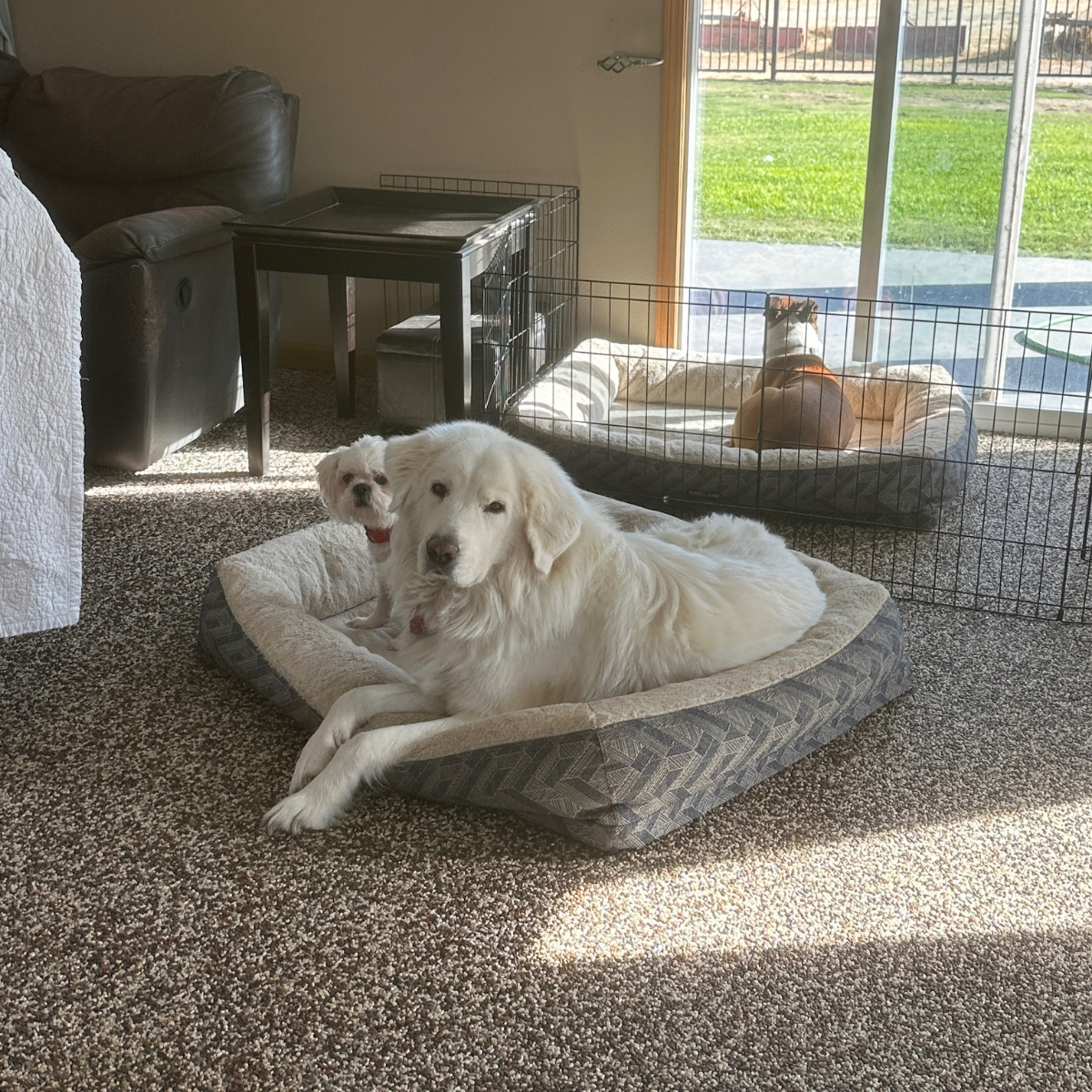
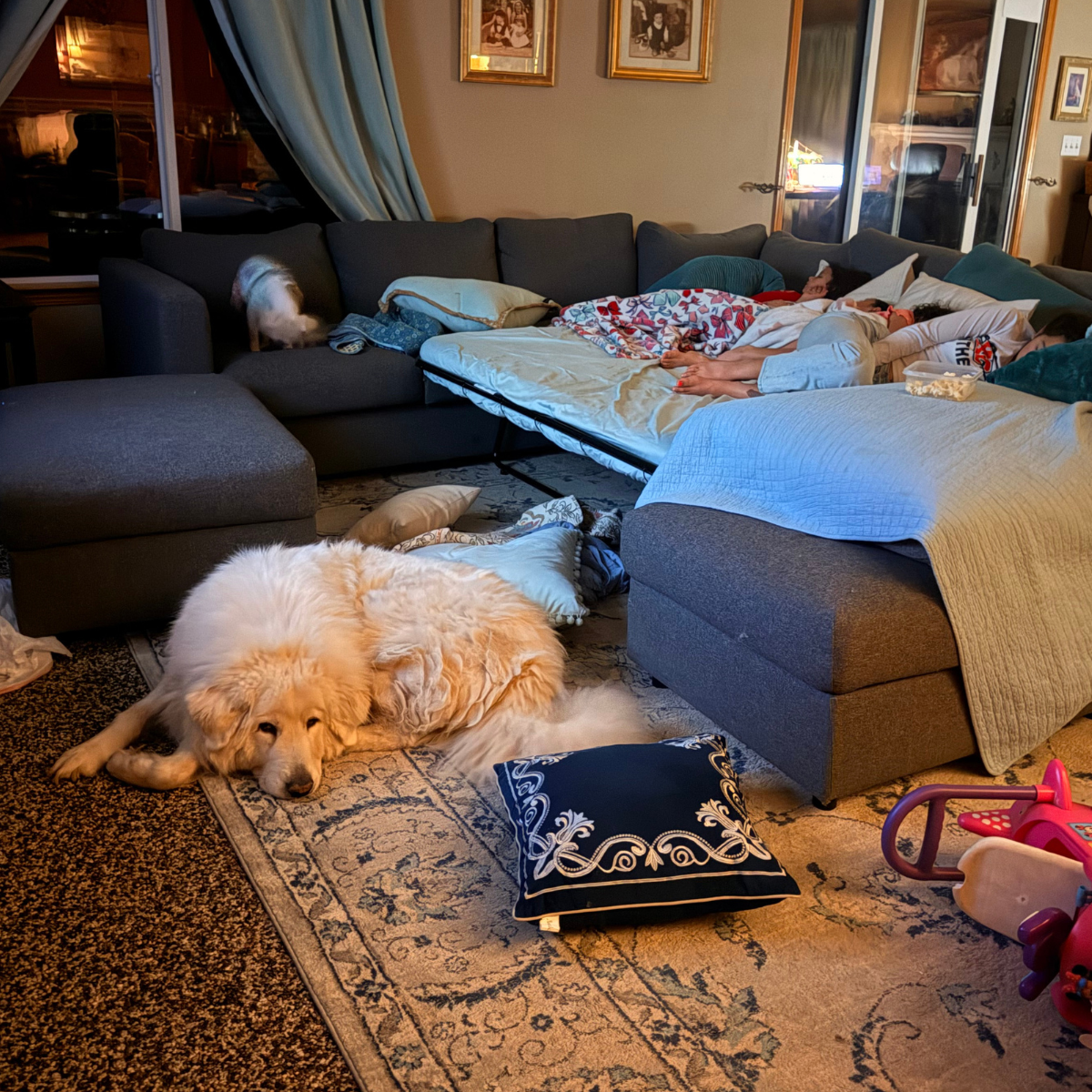
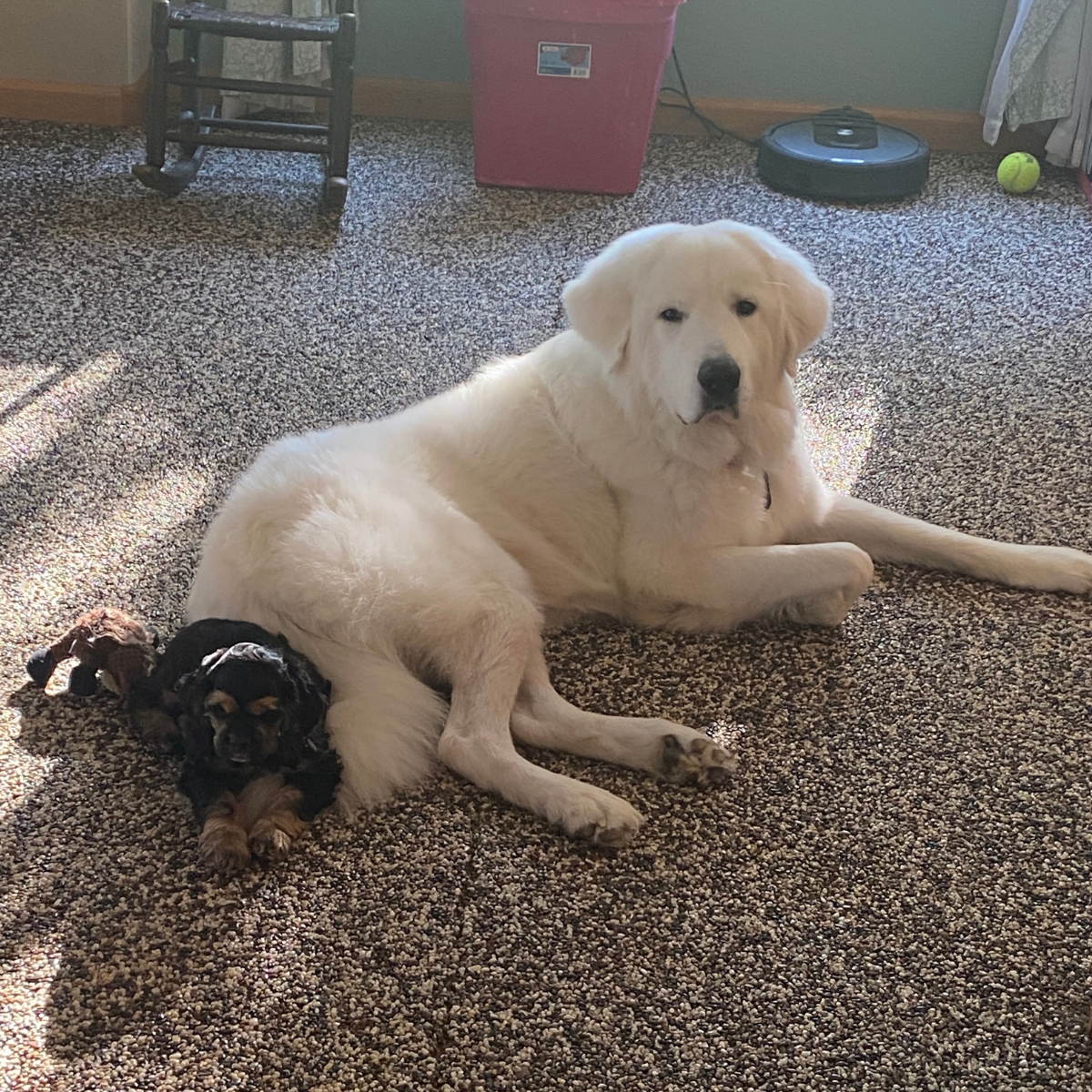
When my daughter's husband was transferred to North Carolina Titus came home. I decided to keep him as a personal companion rather than putting him back out with the animals. (I secretely always wanted to have a Maremma in the house so this was my excuse.) He guards my family and my three small non-Maremma dogs. He is crazy about my grandchildren. Whenever they spend the night he plants himself on the floor in front of their bed, guarding them through the night. No dog ever had a more devoted guardian angel than Titus.
Titus is why I know this works. He's the proof of concept I live with every day.
Companion vs. Working — What's the Same, What's Different
The most important thing to understand about a companion Maremma is that she is still a Maremma. The genetics don't change because the setting does. Here's what stays the same and what shifts.
What stays the same:
The independence. Your companion Maremma will make her own assessments, think for herself, and not look to you for direction the way a golden retriever does. This is a feature. Learn to work with it.
The guardian instincts. She will be alert to her environment. She will bark at genuine concerns. She will take her responsibility for the people and property in her care seriously. In a companion setting, this often means a dog who is naturally watchful, deeply loyal, and calm in the house but alert at any changes in the environment. (Unfamiliar visitors, strange noises, etc.)
The bonding depth. When a Maremma chooses you, that bond is profound. It's not showy or constantly demonstrated — it's quiet and steady and absolutely real. Companion owners often tell me that once they understood how Maremmas express affection, they realized their dog was more devoted than any dog they'd ever had.
The need for proper training and ongoing education. A companion Maremma is not a lower-maintenance version of a working Maremma. She needs the same patient, force-free, understanding approach to training. She needs the same investment in education from her owner.
What changes:
Who she considers her flock. A Maremma is still a livestock guardian dog, even if there are no farm animals in sight. Without livestock, that drive to protect is driven towards your family and your other pets. The instinct redirects — it doesn't disappear.
The expression of guardian behavior. A companion Maremma in a neighborhood setting needs thoughtful management of her natural territorial instincts — clear boundaries, good fencing, proper introductions to visitors and neighbors. This is manageable with the right approach, but it's something to plan for consciously rather than discover by accident. Neighbors who are tolerant of barking is a non-negotiable.
The social life. Many companion Maremmas, particularly those with active owners, end up with richer social lives than some working dogs. More human contact, more novel environments, more experiences. For a well-socialized dog, this is genuinely enriching. For the humans it can be very rewarding to have a big, beautiful dog you can take for walks, camping, to the beach, on vacation and to dog-friendly resturaunts and businesses. And yes, even to the library.
Is a Companion Maremma Right for You?
Let me be direct here, because that's more useful to you than a soft answer.
This is likely a strong fit if:
You are deeply committed to understanding your dog's nature and working with it rather than against it. You are willing to invest in education — your own, not just your dog's. You have a breeder who is experienced with companion placements and you will stay in consistent contact with her and use the support that's available to you. You can provide meaningful daily exercise and enrichment, whatever that looks like in your setting. You have secure fencing or can install it — a Maremma needs safe containment, even in a companion setting. You are drawn to this breed specifically, not just to "a big fluffy white dog." You understand that this is a 10–13 year commitment to an animal with specific needs and a genuinely independent nature.
This requires an honest conversation first if:
You've never owned a dog before. Not a disqualifier — neither Fan nor Sarah and Casey had ever owned a dog when they got Mushroom and Caia, and these two dogs are the best companion placements I've ever made. But it requires the right mindset and genuine commitment to ongoing education. You live in a setting with close neighbors and noise restrictions. Maremmas bark. It's not excessive if they're well-managed, but it is real, and neighbors notice. You want a dog who is immediately friendly and enthusiastic with everyone. Some wariness with strangers is common in the breed, though this depends on the individual dog and a dog who's well-socialized as a puppy and raised with lots of positive experiences with novel people may be more friendly than the average working LGD. You're expecting the independence to train away. It won't. You can learn to work with it, but you can't eliminate it, nor should you want to.
This is probably not the right fit if:
You want a low-maintenance dog. This breed is not that, regardless of setting. You are looking for a dog you can leave alone for long hours without enrichment or engagement. You have a lifestyle that doesn't accommodate an active, large-breed, double-coated dog that sheds significantly twice a year.
If you're reading this list and finding yourself wanting to argue with the "not the right fit" items — that's worth paying attention to. I'd rather have an honest conversation now than place a dog in a situation that isn't going to work.
Book a Free Discovery Call — let's talk through your specific situation →
Next Steps
If you've read this far, you already know more about companion Maremmas than most people who contact me. That's exactly where I want you to be.
Ready to talk about your specific situation? A discovery call is the best next step. It's a real conversation — about your home, your lifestyle, your family, your goals — not a sales pitch. If a companion Maremma is a strong fit for your situation, we'll both know it by the end of the call. If it isn't, I'll tell you that too.
Still doing your research? Get on my email list. I write weekly about Maremma ownership, training, and the reality of life with these dogs. It's the best way to keep learning and to hear about available dogs and upcoming litters when they happen.
Not sure if a Maremma is right for you at all? Take the breed quiz — it asks the right questions and gives you an honest answer based on your actual situation, not just enthusiasm for the breed.
Take the Quiz: Should You Get a Maremma? →
Want to go deeper on the breed first?
Read the Complete Maremma Sheepdog Breed Guide →
How to Raise a Great Livestock Guardian Dog — The Full Development Series →
Maremma Sheepdogs and Children →
The DIAL Method — A Framework I Recommend to Every Maremma Owner →
Why Families Choose Prancing Pony Farm
- MSCA Code of Ethics Breeder
- Karen Pryor Academy Certified Training Partner (KPA CTP)
- Licensed Family Dog Mediator (LEGS Applied Ethology)
- Over 200 Maremmas placed in working and companion homes
- Health-tested breeding program with two-year guarantee
- Lifetime breeder and trainer support included with every dog



Buying a Maremma Sheepdog From Us is Easy!
Step 1
Get on the email list
This is where everyone starts. You'll receive several emails over the next week or two covering our program, our dogs, and what successful Maremma ownership actually looks like. This gives you everything you need to decide if we're the right fit — before either of us invests more time.
Step 2
Apply and book a call
When you're ready to move forward, you'll fill out a short application and schedule a phone call with me at the same time. The application helps me understand what you're looking for in a dog before we talk. The call is where we actually figure out if one of our dogs is the right match for you.
Step 3
Reserve your dog
Reservations start with a $500 non-refundable Master Reservation Fee that holds your place in line and applies toward your purchase price. When a litter is confirmed, a second $500 Litter Commitment Payment locks your specific spot — bringing your total to $1,000, all applied toward your purchase price.
Have a current litter available right now? If spots on an announced litter are open, you can skip the line and reserve directly with a single $1,000 Litter Reservation — same total investment, one step. I'll let you know on our call if that option is currently available.
Just curious and not ready to commit? That's completely fine — stay on the email list and read at your own pace. My weekly newsletter covers training tips, farm stories, and practical LGD advice. You're welcome here as long as you like, and you can apply when the timing is right.
Ready to Protect What You Love?
Join scores of happy families who sleep peacefully knowing their beloved animals and family are protected by reliable Prancing Pony Farm Maremmas.
✅ Health-tested bloodlines ✅ Proven working genetics
✅ Lifetime breeder & professional trainer support included