
Last Updated on August 16, 2026 by Kim Crawmer, KPA CTP, LFDM
I get asked about "littermate syndrome" more than almost anything else. I've addressed it on my website on my How Many LGDs Do I Need? page and countless blog posts. I've addressed it in emails. I've discussed it on Maremma Discovery calls and LGD Training Consultations, more times than I could count. And still, week after week, someone brings it up like it's the first time anyone's ever mentioned it to me.
I understand why. Every person who reaches out looking for info about Maremma Sheepdogs is walking into the middle of a conversation I've been having for a decade. They don't know what's already been said. So let's settle this, in one place, for good.
Littermate syndrome is not real.
There is no peer-reviewed research documenting Littermate Syndrome as an actual condition. Search the scientific literature and you'll find nothing — not because no one has looked, but because it isn't there to find. What you'll find instead is a label people reach for when they see a problem with two dogs and don't understand what's actually going on.
What Littermate Syndrome Actually Is
Two puppies fight over a toy? "Littermate syndrome." Two puppies get anxious if they're apart? "Littermate syndrome." Two dogs won't listen when they're together? "Littermate syndrome." Two dogs fight over food? "Littermate syndrome." Two intact male dogs fight over an intact female? "Littermate syndrome." Two female dogs fight over anything and everything? "Littermate syndrome." Same label, completely different problems. That's the tell. A real condition doesn't explain multiple contradictory symptoms. A folk myth does.
What's actually happening in these cases is almost always one of a few things: no individual training, not enough attention from their humans, mismatched dogs to start with, normal resource guarding (which can happen between any two dogs, related or not), or plain adolescent hormones. These are training and management issues. They have solutions. They are not a mysterious syndrome that dooms two dogs raised together.
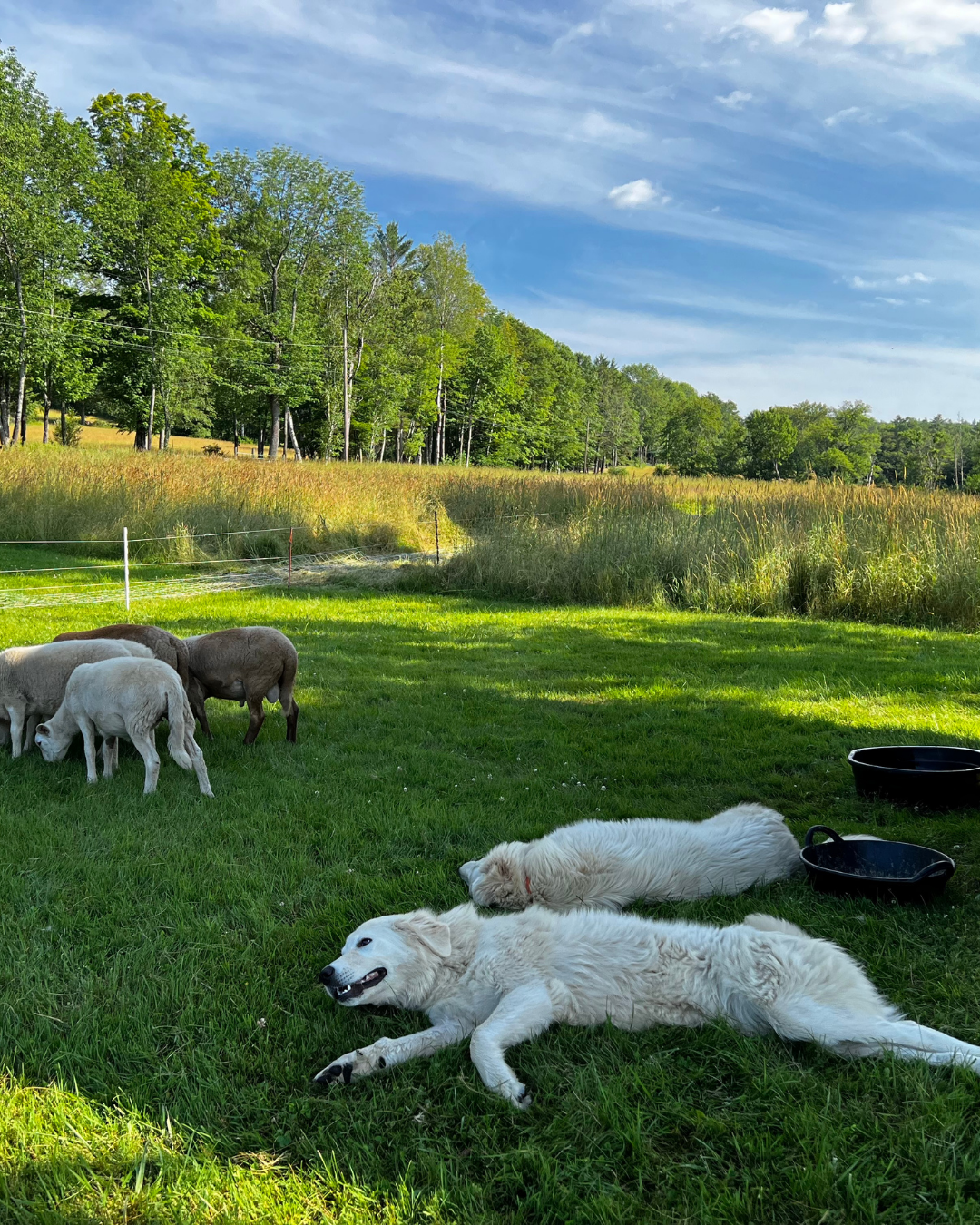
Show dog breeders regulary keep multiple pups from a litter together for months past normal placement age, while they are evaluating their next show and breeding prospects. I keep entire litters together here at Prancing Pony Farm for a minimum of 12 weeks and often much longer. I maintain multiple same-age pairs on purpose.
As I write this post I have three litters, for a total of 20 puppies, plus multiple adult females, all living happily together. In nearly a decade of doing this, I have never seen littermate syndrome. I've seen normal puppy behavior, hormonal scuffles, resource guarding that needs to be properly managed occasionally and dogs who are happier and better adjusted for having a partner. My dogs always live with a minimum of one partner (often 2-3) and i have never had a dog of any age or gender who needed to live alone, and certainly not for some made up "syndrome."
What the Science Really Says
Don't just take my word for it, though. If you want the deeper science behind why dogs do better with canine companionship — not just my decade of firsthand experience with it — there's a peer-reviewed research review worth your time. It doesn't use the term "littermate syndrome" (because, again, that's not a real scientific term), but it lays out the actual research on dogs as social animals: how bonds with other dogs regulate stress, how isolation from other dogs shows up as quiet tension and over-dependence on humans rather than obvious distress, and how the quality of the relationship between two dogs — not just having two dogs — is what actually determines the benefit. That last point is exactly why I don't just hand people two random puppies and call it done. Pairing has to be done right, which is exactly what I'll get into next.
Read: Disconnected Dogs — the science of canine social bonding →
Here's Why the Litter Mate Syndrome Myth Persists, and I'm Not Going to Soften It
There's a specific group of breeders who tell clients littermate syndrome is real, refuse to sell two puppies together, and then — once that single puppy is grown — recommend the client come back and buy a second one. Or worse, they tell their clients that they only need one LGD and that the livestock are enough company for their dog, forever. That is absolutely not true. A breeder intentionally relegating their puppies to a life of loneliness, boredom and stress is inexcusable, and I think it's worth saying plainly why.
It isn't that these breeders know something I don't. It's the opposite. A breeder who genuinely understands dog behavior and science knows littermate syndrome isn't real. So when a breeder tells you it is, one of two things is true: they haven't done the reading, or they're using it as cover.
Here's what I mean by cover. Successfully raising two puppies together takes real skill — proper socialization from birth, careful puppy matching based on temperament, and the willingness to support a client through two dogs' worth of questions for the rest of those dogs' lives. That's a lot of confidence to have in your own program. Breeders who don't have that confidence, who haven't put in the socialization work, who can't tell you which puppies actually complement each other and which ones would clash — they have a problem. And "littermate syndrome" solves it for them. If they only place one dog at a time, they only have one dog's worth of problems to manage, and if something goes wrong with that one dog, they can quietly blame the owner instead of the breeding and raising decisions that were actually theirs to make.
That's not protecting puppies. That's protecting the breeder's own comfort while setting both the dog and the client up for a lonelier, harder road than it needed to be. If you're a breeder and you don't understand basic canine behavior and development well enough to know littermate syndrome isn't real, that's a sign you have more studying to do before you're ready to be placing litters at all.
Choosing Pairs Isn't Guesswork — It's the Job
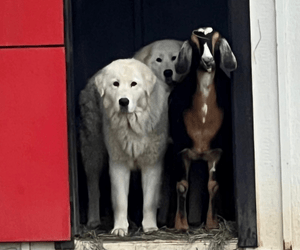
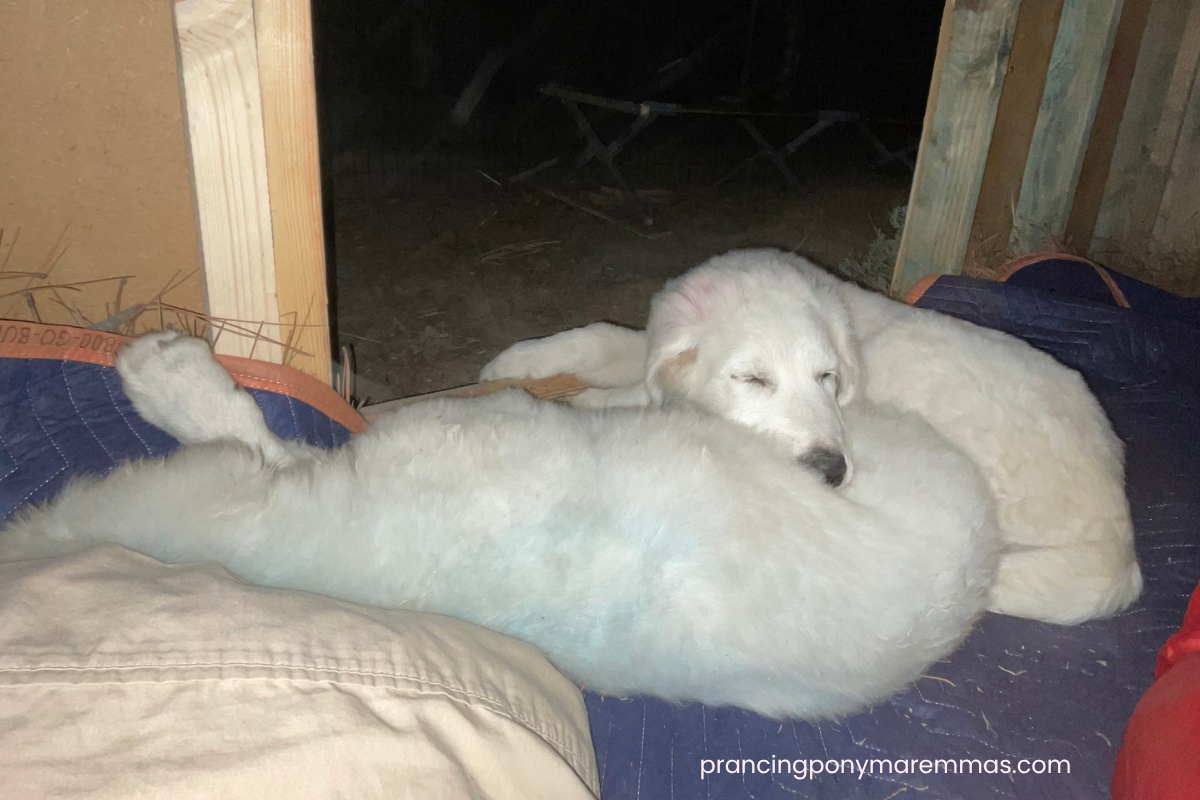
I don't hand people two random puppies and hope for the best. I watch every litter closely enough to know which pups genuinely complement each other, and I don't pair two dominant puppies together just because they're the same age. That's why I insist on choosing the pairing myself instead of letting a client pick their favorites — I'm the one who's watched these puppies every day of their lives. That takes time. It's a big part of why my process moves at the pace it does. Here's what it actually looks like when it's done right.
Bear & Chief
Dave runs a 55-acre free-range operation in Texas — around 300 chickens and a small cattle herd. Before Bear and Chief, coyotes were taking dozens of birds a day. The two brothers went home at nine months old, and by ten months they were guarding full-time.
What makes them work isn't just that they solved the predator problem. It's how differently they operate. Bear is constant motion — patrolling, checking the fence line, chasing off the wild pigs that wander onto the property. Chief holds a position, watching from high ground, waiting things out under cover when it rains. One dog trying to do both jobs would burn out fast, or do neither one well. Together, they cover the whole farm.
They'd been raised next to poultry here on the farm — not in with them, but close enough that birds weren't a novelty. Dave supervised them directly with his flock from day one, and by ten months they were free-ranging with the chickens full time, with zero incidents. A big part of why that transition went so smoothly: they had each other to wrestle, chase, and burn energy with. Neither dog needed the chickens to be entertainment.
Athena & Cassius
This brother-sister pair went to their California home at 18 months old, guarding goats, horses, and more. I'd had them long enough to know exactly who they were — Athena confident and outgoing from day one, Cassius sweet but genuinely shy, needing time to trust new people.
I told the client before placement that being together would make the difference for Cassius — that he'd take his confidence cues from his sister settling in happily, and that having her as an appropriate playmate meant he wouldn't need to work out his energy on the goats. That's exactly what happened. Athena was also the more livestock-savvy of the two early on, giving Cassius a calm role model rather than just a playmate. Years later, they're still a team, and the family's daughter has taught them to jump agility-style obstacles together.
Caitlin & Napheesa
Sisters, placed together at seven months, now approaching their first birthday. Phee is bold, fast, and curious — the profile that, alone, tends to end up either chasing something out of boredom or escaping out of loneliness. Caitlin is quieter, more nervous, the kind of dog who needs someone she trusts making the introductions for her.
It hasn't been a spotless year — there was a real escape-artist phase with Phee, and a scary day when both dogs got loose. Their owner was upfront about that, which I respect. But she also wrote to me recently, and one line has stuck with me since: "You can tell they've been raised right. I can't even put my finger on how you can tell, but you can tell." Phee now bunks down near the family's geese like she's appointed herself backup guardian. Caitlin does quiet supervision shifts by the coop and posts up with the goats in the shade. When a hawk came through recently, both dogs — cued by the family's daughter — chased it off together.
"But I've Never Owned One of These Dogs Before"
Every single client above was a first-time livestock guardian dog owner. That's not the exception — it's close to the rule. The overwhelming majority of my clients have never owned an LGD before, and most of them have two dogs. If two dogs required prior experience, none of these stories would exist.
I hear it on almost every call: people apologizing before they've even asked their question, embarrassed that they don't already know the answers, convinced they must be the only one who feels lost. You're not. Some of my most successful placements ever — including a Maremma living her best life on Hawaii and one thriving in a Chicago penthouse — were a first dog, period, for their owners.
What actually determines success isn't experience. It's the breeder. A breeder who raises and socializes puppies properly, tells you the truth instead of validating a myth, and stays available for the dog's whole life — and a client willing to follow that guidance instead of substituting their own apprehension or opinions on social media when the two disagree. Nearly every placement struggle I've seen traces back to exactly one thing: somewhere along the way, my advice and what the client actually did stopped matching.

Quick Takeaways
- Littermate syndrome has no scientific backing. No peer-reviewed studies support it as a real condition.
- What people call littermate syndrome is training and management — individual training, practiced separations, and resource management solve it.
- Breeders who refuse pairs while citing littermate syndrome are usually covering for their own program's limitations, not protecting your dog.
- Careful pairing matters. Success comes from a breeder who knows the puppies' individual temperaments, not from any two same-age dogs.
- First-time ownership is not a disqualifier for two dogs. Most successful pair placements are first-time owners.
Want More Info on Two Dogs Versus One?
Read: Why Two LGDs Are Better Than One (And Why it's Actually Easier)
FAQs
Is littermate syndrome real?
No. There's no scientific evidence supporting it as an actual behavioral condition. What gets labeled "littermate syndrome" is almost always a training, socialization, or management issue that could occur between any two dogs.
Why do some breeders insist littermate syndrome is real?
Often because they lack confidence in their own ability to properly socialize and pair puppies, or to support two dogs' worth of questions long-term. Refusing pairs — and citing a myth to justify it — lets them avoid problems they aren't equipped to help solve.
Do I need dog experience before getting two puppies?
No. Most of my successful pair placements are first-time livestock guardian dog owners.
How do you decide which puppies go together?
By temperament, not just age. I watch each litter closely and match puppies who genuinely complement each other, and I avoid pairing two dominant personalities together.
Ready to Talk Pairs?
If you've been told two dogs are a risk, or that you need to prove yourself with one first, I'd love to walk you through what a well-matched pair actually looks like for your situation. Schedule a Discovery Call or browse our current and upcoming litters to see what's available.

About the Author
Kim has been breeding and training Maremma Sheepdogs since 2016 at Prancing Pony Farm in Central California. As a certified dog trainer and licensed family dog mediator (KPA CTP, LFDM), she specializes in helping livestock guardian dog owners develop well-balanced, effective working dogs.
Have questions or Experiences to Share?
Leave a comment below or reach out directly - I love hearing from fellow farmers and LGD owners!