Last Updated on May 9, 2026 by Kim Crawmer, KPA CTP, LFDM
YOUR MAREMMA MATCH:
A Carefully Matched Partner for Your Current Dog
The right age to add depends entirely on who you already have. Let's figure out the perfect match together.
Why This Needs a Conversation
For someone starting from scratch, a quiz can give a solid age recommendation based on experience, timeline, and situation. But when you're adding a new team member to an existing LGD, the right age to add depends almost entirely on the dog you already have — their age, temperament, energy level, social history, and how they respond to new dogs.
An adolescent who'd be perfect for one person's 3-year-old female could be a disaster paired with another person's 7-year-old male. The details matter enormously, and a quiz can't capture them.
If You Currently Have a Single LGD
If your solo dog has been showing signs of stress — excessive barking, restlessness, escaping, chasing livestock, anxiety — please know that these are almost always loneliness symptoms, not training failures.
LGDs are pack animals. A single working dog is carrying a burden they were never designed to carry alone. The behavior problems aren't a reflection of your training or your dog's quality — they're a reflection of an unmet biological need for canine companionship.
Adding the right partner won't just improve your protection. It can genuinely transform your current dog's behavior and quality of life. Kim has seen this happen over and over.
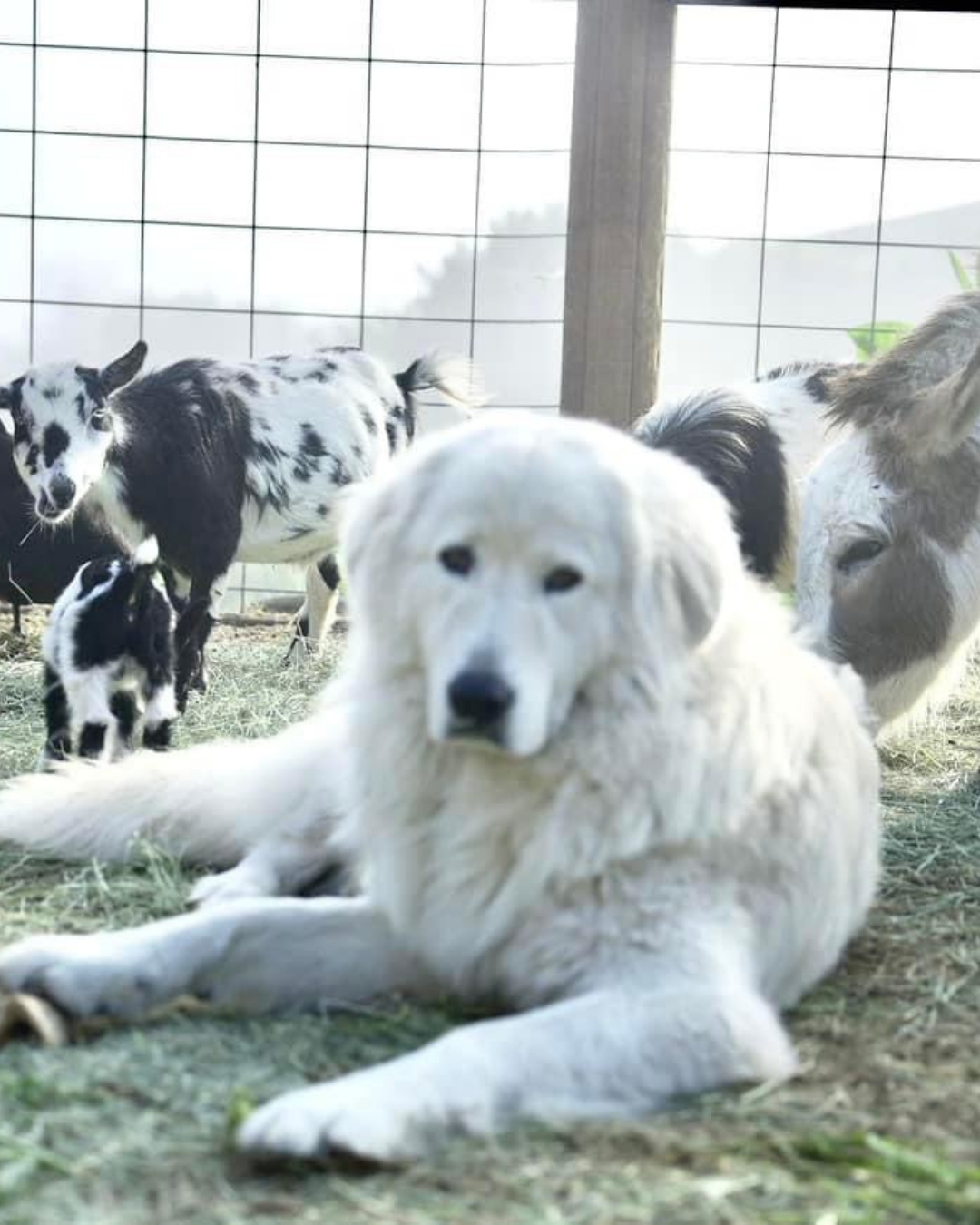
Age Matching Guidance
Every situation is unique, but here's what we typically see work best. This is general guidance — the specifics of YOUR dogs are what actually determine the right match, which is why this result leads to a conversation rather than a quick reservation.
A Quick Note About Gender
As a general rule, opposite-gender pairings tend to be the smoothest — a male added to a female, or a female added to a male. Two neutered males can also work well together in many cases. Two females is the trickiest combination and one we typically don't recommend when adding a new dog to an existing one. Female-female dynamics can shift unpredictably as dogs mature, and what seems fine at first can become a serious management issue later. This isn't absolute — there are always exceptions — but it's something I will want to discuss with you based on your specific dogs.
Your current dog is a puppy (under 6 months)
Another puppy close in age is the best match. Puppies need a partner at the same developmental stage. An age gap of more than a few months creates real problems — a 3-month-old and a 1-year-old are in completely different worlds physically, mentally, and socially. Keep the ages close.
Your current dog is 6-12 months
A dog within a few months of the same age is ideal. A much younger puppy would be overwhelmed by your dog's size and energy. Slightly younger (4-5 months) can sometimes work if temperaments align, but the closer in age, the better.
Your current dog is 1-2 years
You have the most flexibility here. Same age range is easiest. An older puppy (5-6+ months) can work well. Even a younger puppy is possible with carefully matched dogs. A young adult close in age is another solid option.
Your current dog is in their prime (2-5 years)
An adolescent (roughly 8-18 months) is often the sweet spot. Old enough to be past the neediest puppy phase, young enough to have compatible energy and to look to your older dog for guidance instead of seeing them as competition. Adults close in age also work well. A very young puppy paired with a prime adult is one of the trickier combinations — the size and energy mismatch is significant and we do not recommend this in most instances.
Your current dog is mature (5+ years)
Another adult or mature adolescent is usually best. Pairing a mature adult with a 12-week-old puppy is one of the hardest combinations we see — your older dog doesn't want to wrestle with a hyper baby. The puppy has no one to plasy with and will most likely try to make your livestock into playmates, which is not good. The energy mismatch is frustrating for both dogs. It can eventually work, but it requires significant management and patience.
Your current dog is struggling
The right partner can be genuinely transformative. But — and this is important — the wrong one can make things worse, not better. A dog who's too young and demanding can actually escalate the problems you're already dealing with rather than solving them. This is the most important placement to get right, and it absolutely requires a personal conversation.
What I Need to Know About Your Situation
When you book a discovery call or fill out the application, come prepared to talk about:
- Your current dog's age and breed — this is the starting point for everything
- Their temperament — are they friendly with new dogs? Selective? Reactive? Playful? Reserved?
- Where they came from and how they were socialized — helps me understand what they're used to
- Any challenges you're currently experiencing — barking, escaping, livestock issues, anxiety, anything
- Your livestock and property setup — species, numbers, acreage, fencing, layout
A 30-minute phone call with this information is worth more than any quiz result. I can give you an honest recommendation about the right age, the right temperament, and the right approach for integrating a new dog into your existing situation.
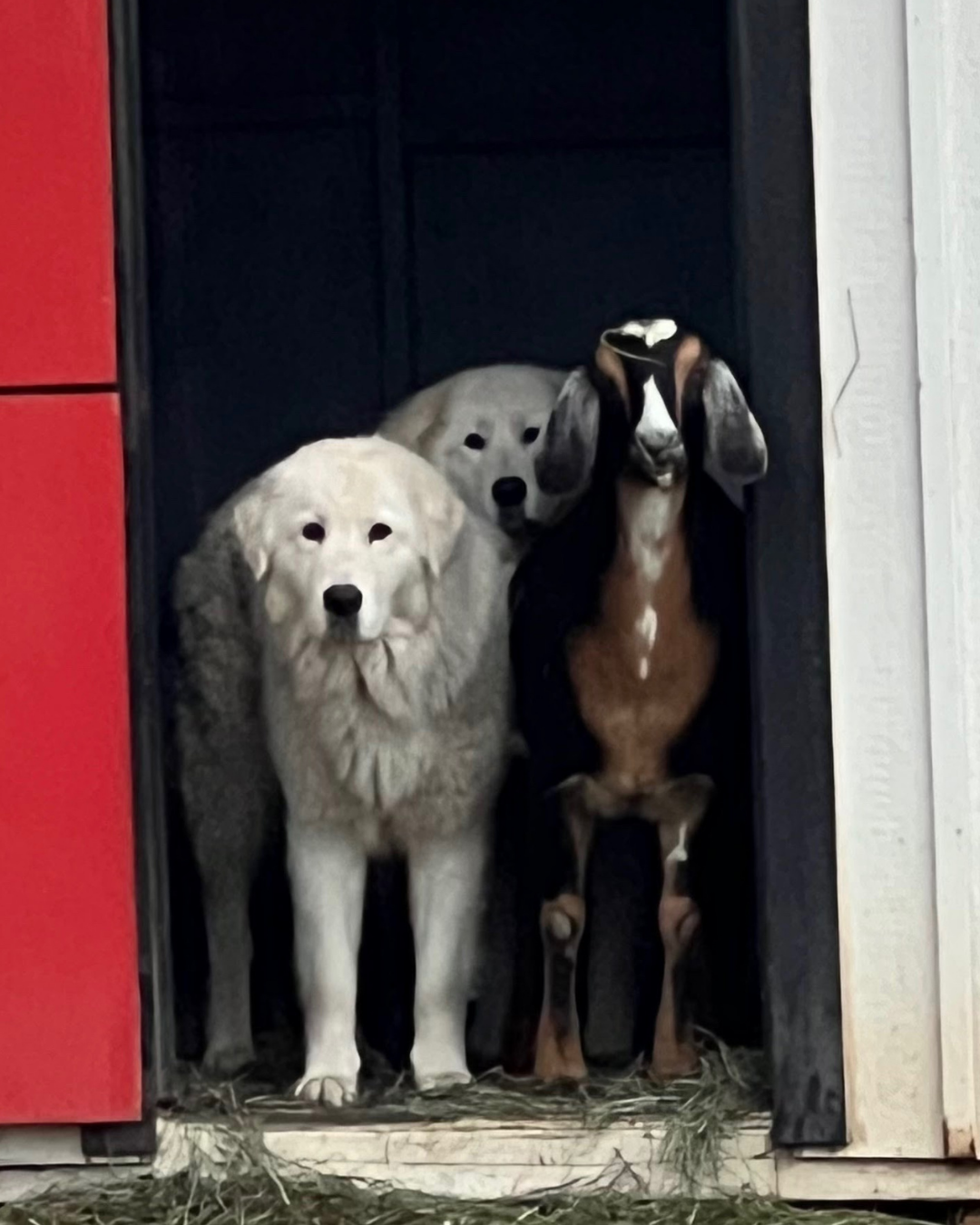
Why Getting This Right Matters So Much
This is one of the most common mistakes people make with livestock guardian dogs. They have a 6-year-old dog and bring home a 12-week-old puppy because puppies are available and adorable. Then they spend months managing a frustrated older dog who doesn't want to babysit and a bored puppy who has no one to play with and burn up that puppy energy with.
Or they have a dog who's struggling with loneliness and anxiety, and they add a young, high-energy dog who demands more from the struggling dog than it can give. The problems double instead of halving.
I have placed over 150 Maremmas. I've seen what works and what doesn't. I've matched adults with adolescents, adolescents with puppies, bonded pairs with solo dogs, and everything in between. I know which combinations thrive and which ones create stress for everyone — dogs, livestock, and owners.
That experience is free. All you have to do is have the conversation.
Keep in Mind
This recommendation is based on your quiz answers, but seven questions can't capture every nuance of your situation. If part of you is drawn to the idea of raising puppies from the beginning, or if an adolescent — partway through development but still adaptable — sounds appealing, those instincts are worth exploring. The right answer is the one that fits your specific farm, family, and goals.
These results are a starting point for the conversation, not a prescription. If you want to talk through the options, that's exactly what our free discovery call is for.
The Master Reservation List Advantage
Don’t see what you're looking for? Get on the Master Reservation List.
Adding a second dog to an existing team is one of those decisions that sounds like it can wait — until the timing is perfect and there’s nothing available, or a great dog comes up, and you’re not positioned to act. Adolescents and adults who are already socialized with livestock and a proven partner don’t appear on a predictable schedule. They become available when circumstances shift in our program: a retirement decision, a breeding program change, or the right home finally exists for a specific dog.
Most of the time, when a dog like that becomes available, it goes to someone already on the Master Reservation List before it’s ever publicly posted.
The same $500 reservation fee that holds your place for a puppy also holds your place for a yet-to-be-determined adolescent or adult. You’re not committing to a specific dog — you’re making sure you’re first in line when the right one appears.
Important things to know before you decide:
There’s no timeline guarantee. It could be weeks or many months. This works well for people with flexibility — not for people with a hard deadline.
The more open you are on age, gender, and working history, the better your chances of a quick match.
If a dog is offered to you and you pass, the offer goes to the next person immediately.
The reservation fee is non-refundable, but it can be transferred to a puppy reservation if you decide to go that route instead.
Important!
Before paying your reservation fee, please make sure you’ve completed our Maremma application and had a chance to connect with me. Reservations are most successful when we’ve already talked through your farm setup, your livestock, and what you’re looking for — that conversation is what makes the matching process work.
If we’ve already connected and you’re ready to move forward, you can pay your reservation fee directly here:
Why Families Choose Prancing Pony Farm
- MSCA Code of Ethics Breeder
- Karen Pryor Academy Certified Training Partner (KPA CTP)
- Licensed Family Dog Mediator (LEGS Applied Ethology)
- Over 200 Maremmas placed in working and companion homes
- Health-tested breeding program with two-year guarantee
- Lifetime breeder and trainer support included with every dog


Why Choose Maremmas?
Not all livestock guardian dog breeds are created equal. Discover why Maremmas are perfect for busy homestead families—and why our dogs are exceptional.
How it Works
Wondering what it’s like to work with a breeder who is also a certified professional trainer? Learn about our processes and how we guide you every step of the way before and after the sale.
Available Maremmas
Ready for a puppy? In need of an older Maremma? Or planning ahead for the future? Click the link below to see our available pups and dogs and upcoming litters.
Ready to Take the Next Step?
Your next step is a free consultation call, booked right through our application form. Bring all your questions and info on your current dog — that's exactly what the call is for, and there's no commitment required.
Not ready yet? No pressure. You’re on our email list now, and you’ll receive helpful information over the next week, plus our weekly Thursday newsletter. When the timing is right, we’ll be here.

Why Ethical Maremma Sheepdog Breeding Matters Despite Challenges
“I hate your business,” my husband tells me whenever challenges arise in my Maremma breeding program. Despite the financial strain, sleepless nights, and endless responsibility, here’s why I continue this work—and what it means for the families who trust me with their livestock’s protection.

Why Smart Planning Makes All the Difference: Your Guide to Maremma Success
The families who get perfect livestock guardian dogs all share one secret: they don’t wait until they desperately need a dog to start looking. Discover why the best Maremma placements happen months before the dogs go home, and how smart planning turns livestock protection dreams into reality.
Last Chance: Why You Need to Reserve Your Maremma Sheepdog This Week
One urgent call changed everything: “My livestock guardian dog died suddenly yesterday—now I have nothing protecting my herd from coyotes.” This farmer’s nightmare could have been avoided with one simple step, and it’s the same mistake that costs livestock owners thousands every year.
Reviews From Our Amazing Clients








first the dog: cotton candy is a little over 2.5 years old now, and i can honestly say that she has been a very effective LGD since 6mo of age. while she's a sweet and playful big puppy around humans, she has always been very serious about her guardian duties, even when she first showed up as a 3mo pup. she is very nurturing with my barn cats, gentle with the chickens, alerts me when the horses get into mischief, and knows exactly what to do to make skittish goats relax. she's a super quick learner.
now, we have to realize that this wonderful dog is a product of the breeder's hard work and dedication. in addition to good breeding, kim put in a lot of work socializing her puppies with all sorts of farm animals and people, as well as starting their training using positive reinforcement methods. i have another LGD who came to me as an 8wk old, and didn't get the same kind of training and socialization kim gives her puppies. while he is a very good natured and smart dog, he required WAY more management throughout his puppyhood and adolescence. he turned out to be a great LGD. but if you don't have the time or skills to start an LGD on the right path, you would be doing yourself a huge favor by getting a well-started puppy from kim.
kim's puppies come with lifetime support, and that is not a mere sales tactic. in the 2+ years i've had cotton candy, kim has been a great resource on how to understand, communicate with, and care for not only cotton candy, but also my other LGD. she even shares tips on goat husbandry. in the past year, kim completed a professional dog trainer certification program so that she could not only better support her own puppy clients, but also help other LGD owners develop better relationships with their dogs. she is now working on an online course on LGD care and training, which will be made available free of charge to her puppy clients (and for a fee for non-clients). consider how much time, effort, and kim's own money she puts in to continuously improve the lifetime support that comes with the purchase of a dog, the choice is obvious when deciding where to get an LGD.



And it definitely shows in the quality of her puppies. The dogs we brought home are loving, well socialized, and adaptable. We have them caring for our flock of macaws, and even at only 9 months old they are not reactive to the birds even when they fly, but come immediately if the macaws sound a warning call. They get along well with other dogs and people, but are very alert to potential threats. These are our dream dogs and we are so grateful to Kim for all the time and effort that went into giving these dogs that perfect start so that we could enjoy and cherish them for the rest of their lives.




When we decided to start our little homestead we decided on the Maremma Sheepdog based on their typical dispositions. After considerable research, I picked Prancing Pony based off reviews and from what I learned about their facilities and practices. But they had two things against them - they are located in California and the price tag was steep.
I ended up purchasing a Maremma that was on this side of the Mississippi. I’m not going to bash anyone here, this is only for comparison sake - but the breeder understood this would be our first LGD and had glowing reviews about the girl she was selling. I trusted that they understood our situation and where we were in our journey. But what we got was a beautiful loving dog who has proven repeatedly that she can’t be trusted with any of our livestock or pets.
By the time we brought her home, I was already in talks with breeders (again) trying to find her partner and went back to Prancing Pony for talks about their offerings. Fast forward a few months, and a couple of hiccups, I could not be more pleased with our boy Daxo. I do have regrets that I didn’t get two from her when I first considered it.
Listen, they’re not cheap, I get it. There’s likely added expense with shipping... I get that too. Knowing what I know now, going through the experience of having a dog that just didn’t fit our lifestyle is so exhausting AND costly. Our boy literally came as a Plug-N-Play model, he’s just THAT good because Kim listened to our wishlist and understood our needs. Will we go anywhere else for our third attempt? Absolutely not.


The reason I decided to invest in an LGD from Kim is because she sets up her puppies for success as LGDs from the day they are born. I have a small farm and needed a dog who can live with and/or guard a variety of animal species. Most breeders I’ve talked to have some of the animal species, but none had all. Kim happened to be the only one. And that’s not an accident. Kim actually goes out of her way to acquire animals just so that her pups are well prepared to take on any job in their new homes. She also spends time teaching her pups basic skills via positive reinforcement. When I picked up my pup at 13 weeks old, she knew how to give me attention and target. She also understands that it’s her good behavior that earns her praise and treats, and is very motivated and quick to figure out what I want from her. Since she has been on my farm, she has made my adolescent Great Pyrenees a much happier and mentally mature dog. She has not chased a cat or chicken (it doesn’t mean she hasn’t thought about it. One does need to pay attention and redirect BEFORE the pup does something undesirable). She’s been in and around horses and are very good at reading their body language and staying out of harm’s way (not that my horse try to hurt her, but they’re just so much bigger). And most amazingly, she’s already showing guarding behavior with my goats! At less than 4 months old!
I also wanted to vouch for the validity of the puppy lifetime support policy that comes with the sale. Since I’ve brought the puppy home, I have been in daily communication with Kim. She was at a clicker training workshop the week following my puppy pickup and had class from morning all the way through evening. She still found time to answer my texts to make sure the pup is settling in well. I’ve received advice on integrating the pup with my resident LGD, fencing, introducing her to the goats, worming, vaccination, etc.
Having purchased my first LGD pup from an oopsie litter from a hobby farm, and now the second pup from Kim, I can see for myself what a difference a well bred, well started pup makes. Kim’s puppies aren’t cheap, but they are such a worthwhile investment!
2 YEAR UPDATE:
The pup I purchased from Kim in 2022 just turned 2. She has been a great LGD. I had an adolescent Great Pyrenees before I bought CC from Kim. Though my GP worked his butt off, I still had a chicken go missing and a barn kitty mauled by coyotes (kitty recovered).
As soon as CC joined the farm at 3 months of age, she immediately showed guarding instincts, protecting my goats while sleeping in the barn with them at night. When she was about 6 months, I took my GP in for his neuter surgery. For about a week she had to work the whole property while my GP was on kennel rest. It was a nerve wracking week as I live in coyote country with the occasional visit from mountain lions. Amazingly, I lost nothing. The streak has continued to this day. Since CC joined the farm, I lost nothing to predation.
Not only did CC form an effective team with my GP as LGDs, she has also saved his life by telling him off when he approached a rattlesnake last summer. One night I heard the dogs bark at something, then all of a sudden turn against each other. I rushed out the door to see what was happening, only to hear the distinct rattling sound. Then I saw my GP move towards that sound, and CC T-boning him, growling, to tell him to stay away. Thanks to CC's amazing instincts, I was able to remove the snake before anybody got bit (my cats and goats were all curious about it at that point).
This update wouldn't be complete without a comment on Kim, CC's breeder. 2 years in, and I am still in regular contact with her. She promised lifetime support, and has gone beyond that - she even answers questions regarding my GP or my goats, in addition to anything concerning CC's training, well-being, etc.
I highly recommend Kim and her dogs!



Dave

Dogs are incredible as well 😍


Not only does Kim have dogs from two top-notch Maremma breeders in her breeding program (Benson Ranch and Unfinished Acres) but she raises her litters with Puppy Culture, a program I have used with my own German Shepherds. AND she has an amazing Puppy Parlor that allows the puppies to be raised around goats and other animals from birth.
So what you get when you buy a Maremma puppy from Prancing Pony Farm is a pup with excellent breeding (including all the essential health testing on both the sire’s and dam’s sides), raised with all of the benefits of Puppy culture (which gives puppies confidence when they encounter new experiences) and exposed to livestock from Day 1. That’s a terrific foundation to build upon.
Kim spent many hours in conversation with me, answering my questions about introducing the puppies (yes I got a pair!) to my pack of German Shepherds and about the pros and cons of having one puppy or two. Every question I had she was happy to answer (I had many!) and she shared resources I hadn’t previously discovered. She listened closely to my description of my home, my animals and my lifestyle and suggested two of her male puppies; as a matchmaker she was spot on.
I have been immensely impressed with the puppies I purchased from Kim. They are bonding easily with me and my family, with my GSDs and with the livestock (horses, goats and chickens). They are good-natured, affectionate and VERY smart and even at just 5 months old are showing their guardian traits. Although they look almost identical and both have great temperaments I can see differences in their personalities with one more of an observer who waits to engage and one more likely to investigate actively - that difference will work well when they are working together.
Bringing a LGD puppy home means making a commitment to build on the foundation they’ve received with their breeder, working one-on-one to develop a partnership and to shape their lives with their stock. Puppies from Prancing Pony Farm are set up for success from day one and in the hands of a good shepherd will develop into trustworthy, responsible and awesome protectors.
If I decide to add another Maremma [or two] to my pack I know where I will be going to find the perfect match for my boys Arthur and Merlin.




I appreciated that she also took the time to vet us to make sure the animals were going to a good home. She was not looking to unload them. She even requires we sign a contract that we get certified in positive reinforcement training and follow guidelines for their healthcare.
A little while after the puppies were born, she let us know that a few from one litter had umbilical hernias (harmless and not uncommon when a mother licks the umbilical cord excessively). She gave us the option to purchase the pup or wait for another litter. She was completely transparent in the entire process. As expected, there is no problem with the hernia.
I am seeing reviews on here from people who have never even communicated with her or purchased from her, so just a reminder to be discerning when reading reviews.

1. Health testing for the parents.
2. Parents are on site and proven LGDs.
3. Early socialization for puppies with livestock, adults, and kids.
4. Proper veterinary care for parents and puppies.
5. Careful selection of parents for genetic diversity, guarding ability, health, and confirmation.
6. Tons of support during the puppy buying process and afterwards. Kim is always responsive and takes time to help me through any issues I've encountered with our pups, offering advice and support.
We love our dogs that came from Prancing Pony Farm. They were among the first members of the family to join the farm, because we knew the importance of having well-bred LGDs to protect our stock. We have not had a single issue with predators on our farm, and we live in an area with coyotes, bears, foxes, wolves, hawks, etc, etc. They guard sheep, pigs, chickens, guinea fowl, and ducks.
I'd be remiss without acknowledging the dispute between PPF and Gold Shaw Farms, so I will just say, my husband and I always enjoyed Morgan's content, but we were really disappointed with how he's portrayed Abby and Kim. Our two girls came from the same litter as Abby. They are energetic, happy, and healthy puppies. They require training and patience. What we have experienced with them is not out of the realm of what we were expecting when we got two puppies. I think Morgan's judgement of Abby is based on his experience with Toby and has been unfair to Abby and his judgement of Kim has been inflammatory and uncalled for.
I suspect most people who are looking for a LGD already have experience purchasing dogs and stock, so know what to look for in a reputable breeder. That said, if this is your first time or your first LDG, consider what's most important to you and do your own research. You can't go wrong with someone who ticks all of those boxes and offers support to her buyers.




Even though I am new to goats and LGD, Kim the owner, has really dedicated her time to teaching me about how to raise them. She is always available to answer my questions and provides me with the expertise knowledge. I am sure she is like that with all of her clients, always willing to help.
I bought 2 Maremma LGDs and 18 goats. Yes 18 goats! I go to bed at night knowing my LGDs are protecting themselves and my 18 precious goats.
Now, I am waiting to buy another male maremma LGD since she brought a male Maremma from a Italy. Kim is always making sure her registered LGDs, ND and Mini Nubians have the best genetics possible. I fully trust my LGDs in my fields, I bought Chloe at close to six months old, and I appreciate so much that she had additional training time. In fact, the next LGD I would buy from Kim will be arriving to my farm with additional training time as well.
Prancing Pony Farm has the best quality of LGDs and goats. I will highly recommend Prancing Pony Farm if you are looking for a diverse genetics in Maremma LGDs, Mini Nubians and Nigerian Dwarfs.
I now have a 1 month old Nigerian Dwarf, and I am still getting Kim’s help to assure my kid goat grows healthy. I am just very happy I chose Prancing Pony Farm when I did. Kim is the best out there!



Kim has a top of the line welping house complete with incubators and on call mobile veterinarian.
If you are looking for a well trained Maremma puppy, this is the place to get them. Kim goes the extra mile with early clicker training, and lots of live stock exposure from day one with her puppies.
You will see how much care goes into these amazing live stock guardian dogs, if you buy from her. They are ready to go to work right away.
Thanks Kim we love our new LGD.