Last Updated on December 18, 2025 by Kim Crawmer, KPA CTP, LFDM
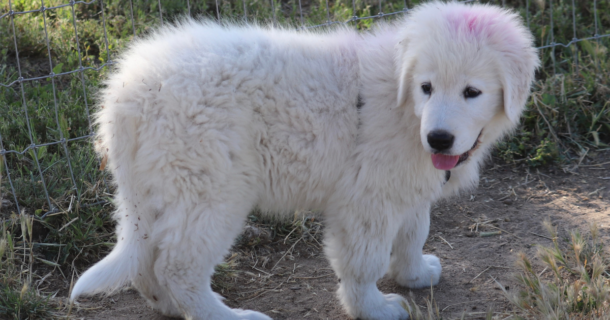
Last week, I loaded a beautiful Maremma puppy into my van for the hour-long drive to the airport. She was headed to Seattle to meet her new owner, who would then drive her up to British Columbia. I’ve made this airport run dozens of times over the past ten years of breeding—it’s become routine.
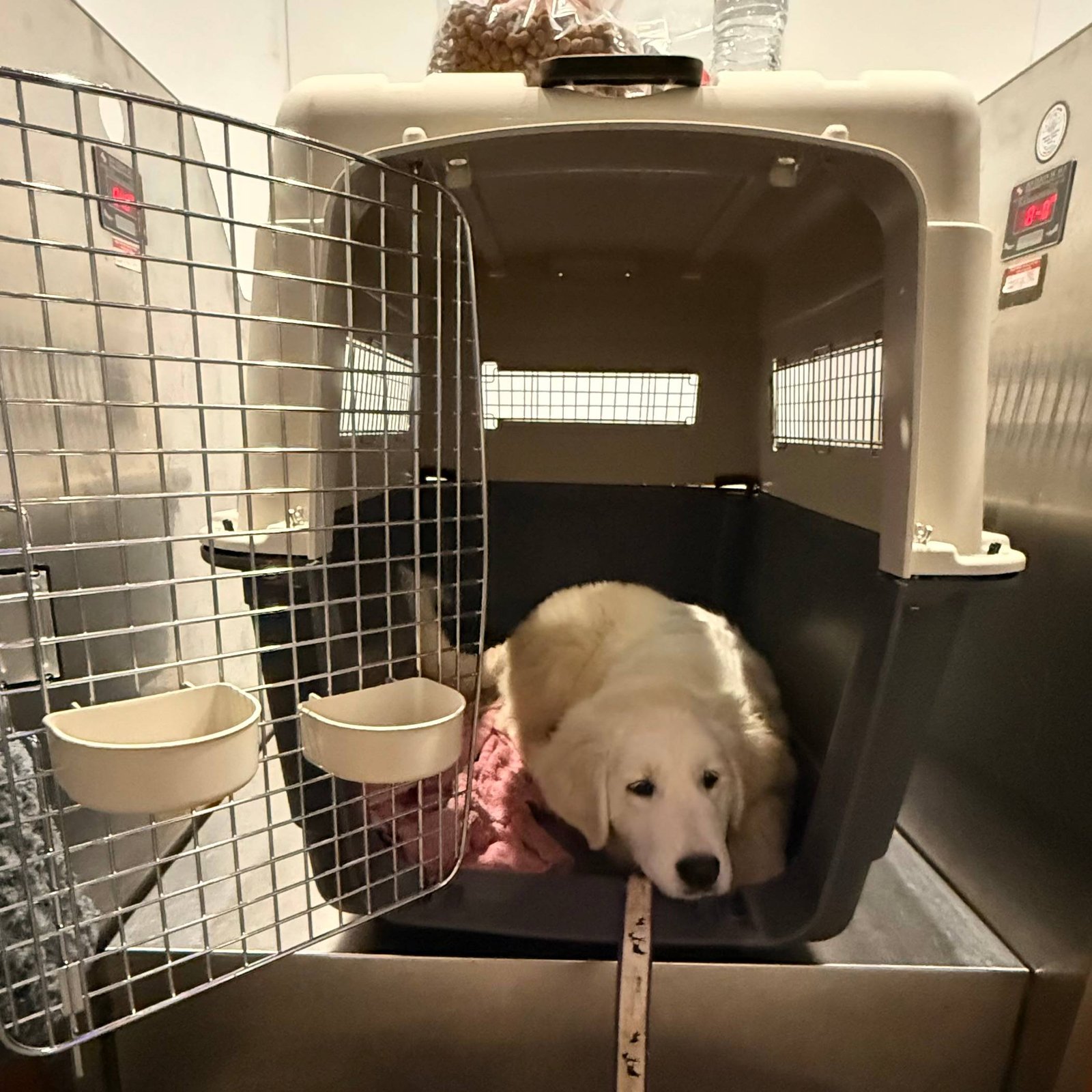
What wasn’t routine? Arriving at the airport, only to discover the puppy had thrown up all over her crate.
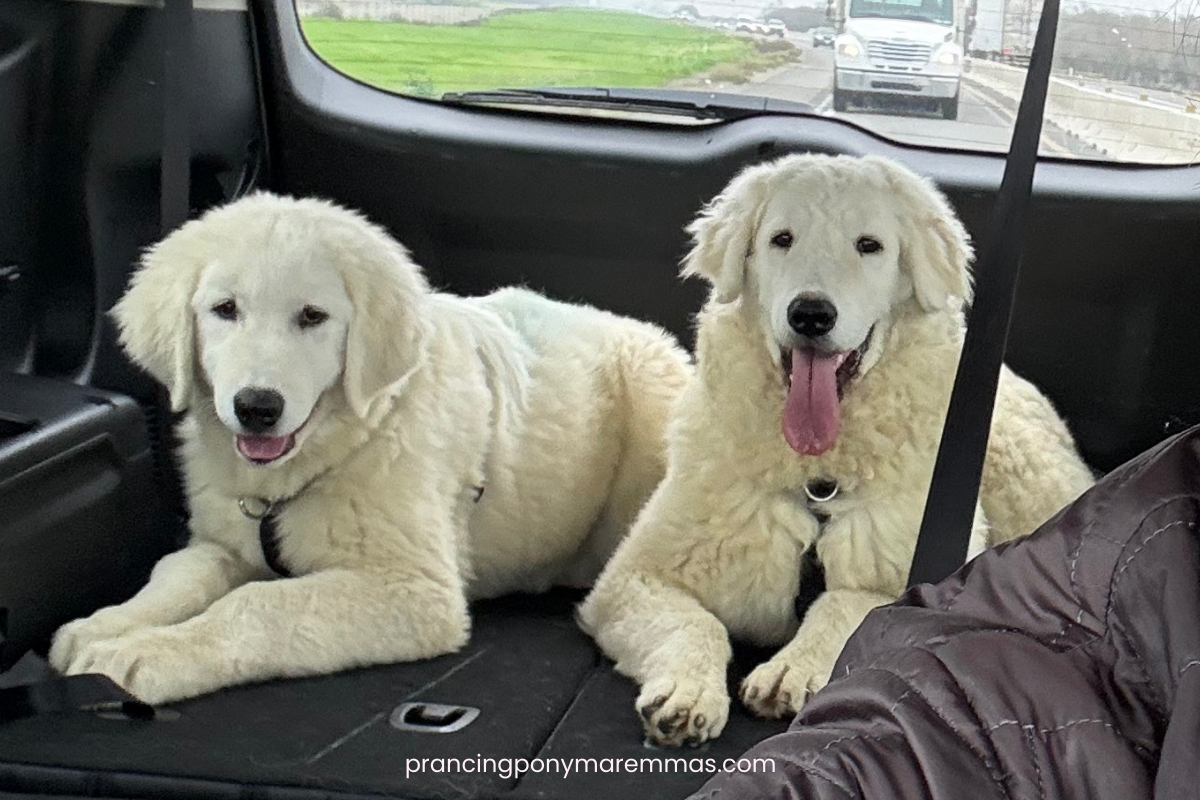
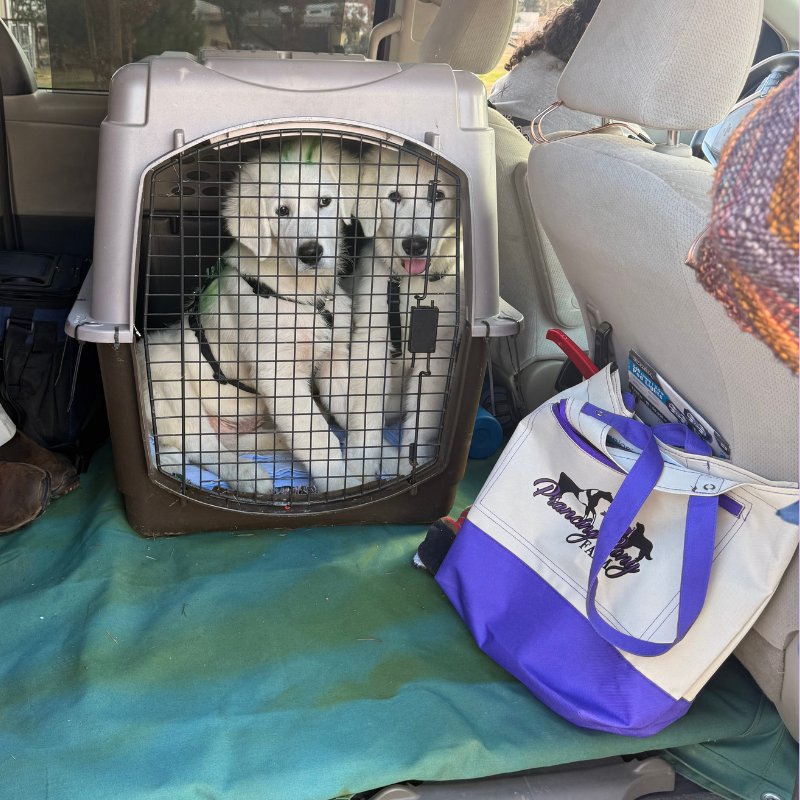
Then, exactly one week later, I got a phone call from a client who’d just picked up two of my Maremma puppies to protect his sheep who graze his vineyard in Napa Valley. About two hours into their four-hour drive home, both dogs had gotten carsick.
Two incidents in eight days, after months of smooth travels. It was the perfect reminder that motion sickness in dogs is real, unpredictable, and something every livestock guardian dog owner should understand—especially if they’re planning any kind of travel with their new puppy or dog.
*While I’ll share what I’ve learned about managing motion sickness—including medication options—always remember that I’m a breeder, not a veterinarian, and you should consult with your vet before medicating your dog.
Motion Sickness in Dogs: Quick Reference
- ✓ Genetic trait—some dogs get it, others don’t
- ✓ Common even among littermates
- ✓ Not dangerous or harmful—just uncomfortable
- ✓ Cerenia (prescription) is the most effective medication
- ✓ Always pack cleaning supplies for car travel
- ✓ Crate travel makes cleanup much easier
- ✓ An empty stomach before long trips reduces mess
- ✓ Stay calm—your dog will pick up on your stress
Why Do Some Dogs Get Carsick?
Motion sickness in dogs works remarkably similarly to motion sickness in humans. Just like some people can read in the car without any issues while others turn green at the first curve in the road, some dogs are simply more prone to getting carsick than others.
The evidence suggests there’s a strong genetic component. I’ve had litters where one or two puppies got motion sickness while their littermates traveled beautifully. About a year and a half ago, a client picked up two puppies from the same litter—one got terribly ill during the drive home, while the other never had a single issue.
My husband has dealt with severe car sickness his entire life. He’s almost 70 now, and despite a lifetime of car travel, he still can’t read a map or look at his phone without feeling ill (unless he’s driving, which isn’t a good idea). Meanwhile, I’ve never experienced motion sickness in my life. We have six children, and most of them inherited their father’s sensitivity to motion. Some have it worse than others, but the pattern is clear—this trait runs in families, both human and canine.


The Challenge of Prediction
Here’s what makes motion sickness tricky for livestock guardian dogs: most LGDs don’t take frequent car rides like companion dogs might. My veterinarian is literally a two-minute drive from my property, and she often does farm visits to treat my dogs. This means I rarely know whether my adult dogs are prone to motion sickness because they simply don’t spend much time in vehicles.
Some of my dogs might be susceptible to car sickness, but I’ll never know because the circumstances that would trigger it rarely arise. This is true for many LGD owners—your dog might live their entire life on your property without ever revealing whether they’d get carsick on a longer journey.
Can You Train Away Motion Sickness?
I recently listened to a podcast where a companion dog breeder described her extensive motion sickness prevention protocol. She takes puppies on frequent car rides, provides swings for them to play on, and rolls them around in strollers—all before they turn eight weeks old. Her goal is to ensure her puppy buyers can travel with their dogs without issues.
The question I couldn’t answer: Does this actually work, or do her dogs simply not carry the genetic trait for motion sickness?
I do have a swing for my puppies—they absolutely love it and look adorable playing on it. But I got it primarily for enrichment and fun, not specifically for motion sickness training. If it helps with motion tolerance, that’s a wonderful bonus, but it’s not my main objective.
The reality is that I’ve had plenty of puppies whose first car ride was the journey to their new home, and they traveled perfectly fine. I’ve also had puppies who got several practice rides and still got sick on departure day. With everything else involved in raising well-socialized, healthy livestock guardian dogs, intensive motion sickness training falls pretty low on my priority list.
Once puppies go to their new homes, I absolutely encourage owners to take them on car rides to build positive associations with vehicle travel. But I’m skeptical that any amount of early conditioning can override a genetic predisposition to motion sensitivity.
When to Worry (Spoiler: Almost Never)
The most important thing I want you to understand is this: motion sickness won’t harm your dog. It’s uncomfortable and inconvenient, but it’s not dangerous, and it won’t cause any lasting effects.
Just like when we get carsick, dogs feel better once they vomit. They might need some time to fully recover after the trip ends—it’s an unpleasant experience, after all—but there’s no medical concern.
The one exception is if your dog develops such severe anxiety about car travel from a bad motion sickness experience that they become extremely stressed at the sight of your vehicle. In those cases, medication becomes important not just for the nausea but for their mental well-being.
A Quick Note: I’m a dog breeder and trainer, not a veterinarian, and nothing in this post should be considered medical advice. Every dog is different, and what works for one may not be appropriate for another. Always consult with your veterinarian before giving your dog any medication, including over-the-counter options. If you’re picking up a puppy from me, I’m happy to coordinate with my vet to examine your puppy and discuss medication options—but your own vet should always be your first resource for medical decisions about your dog’s health.
Medication Options for Motion Sickness
If you’re planning to travel with your livestock guardian dog or picking up a new puppy, you have medication options to consider.
Cerenia (Maropitant) is the gold standard. It’s a prescription medication specifically designed to prevent nausea and vomiting in dogs. (It’s used to treat canine parvovirus and other severe gastrointestinal illnesses.) It works extremely well, but you’ll need to get it from your veterinarian.
Here’s where it gets tricky: most veterinarians won’t prescribe medication for a dog they haven’t examined. If you’re buying a puppy from us and want Cerenia for the trip home, your vet probably won’t provide it until after you’ve brought the puppy in for their first appointment.
I offer clients the option to have my veterinarian examine their puppy before pickup and prescribe Cerenia if they want it. The client pays for the vet visit and medication, but I handle the appointment and have everything ready when they arrive. It’s one less thing to worry about on an already exciting (and sometimes stressful) day.
Dramamine is a human over-the-counter medication that some people use for their dogs. While I know it’s an option, I’m not a veterinarian and can’t provide medical advice. If you choose to use Dramamine, research the proper dosage carefully. Personally, I prefer medications that are specifically formulated and labeled for dogs—the safety profile is clearer.
Trazodone is an anti-anxiety medication that you can give your dog if they get extremely stressed in the car. Trazodone is only available from veterinarians. It doesn’t help with nausea, but it calms your dog, which makes travel less stressful. It makes your dog sleepy and relaxed. We use it for any dog who is dealing with a situation that’s above their stress-level threshold. The key to using Trazodone is to give it an hour or so before the “scary” event. Otherwise, it can have a reverse effect, ramping them up instead of calming them.
Important note about air travel: You cannot give any medications to puppies flying on airplanes. Most anti-nausea or anti-anxiety medications make dogs drowsy, and having a sedated puppy in cargo is a safety risk. Medication is only an option for ground transportation, where you can monitor your dog. And most importantly, you should only medicate your dog on the advice of a veterinarian.
Practical Preparation: The Real Solution
Whether you choose to medicate your livestock guardian dog or not, the best approach is simply being prepared. Here’s what I recommend:
Pack a car sickness kit:
- Multiple towels
- Pet-safe cleaning spray
- Disinfecting wipes
- Large trash bags or plastic shopping bags
- Extra blankets or crate pads
- Paper towels

32 Ounce Spray Bottle, Original Eucalyptus Scent
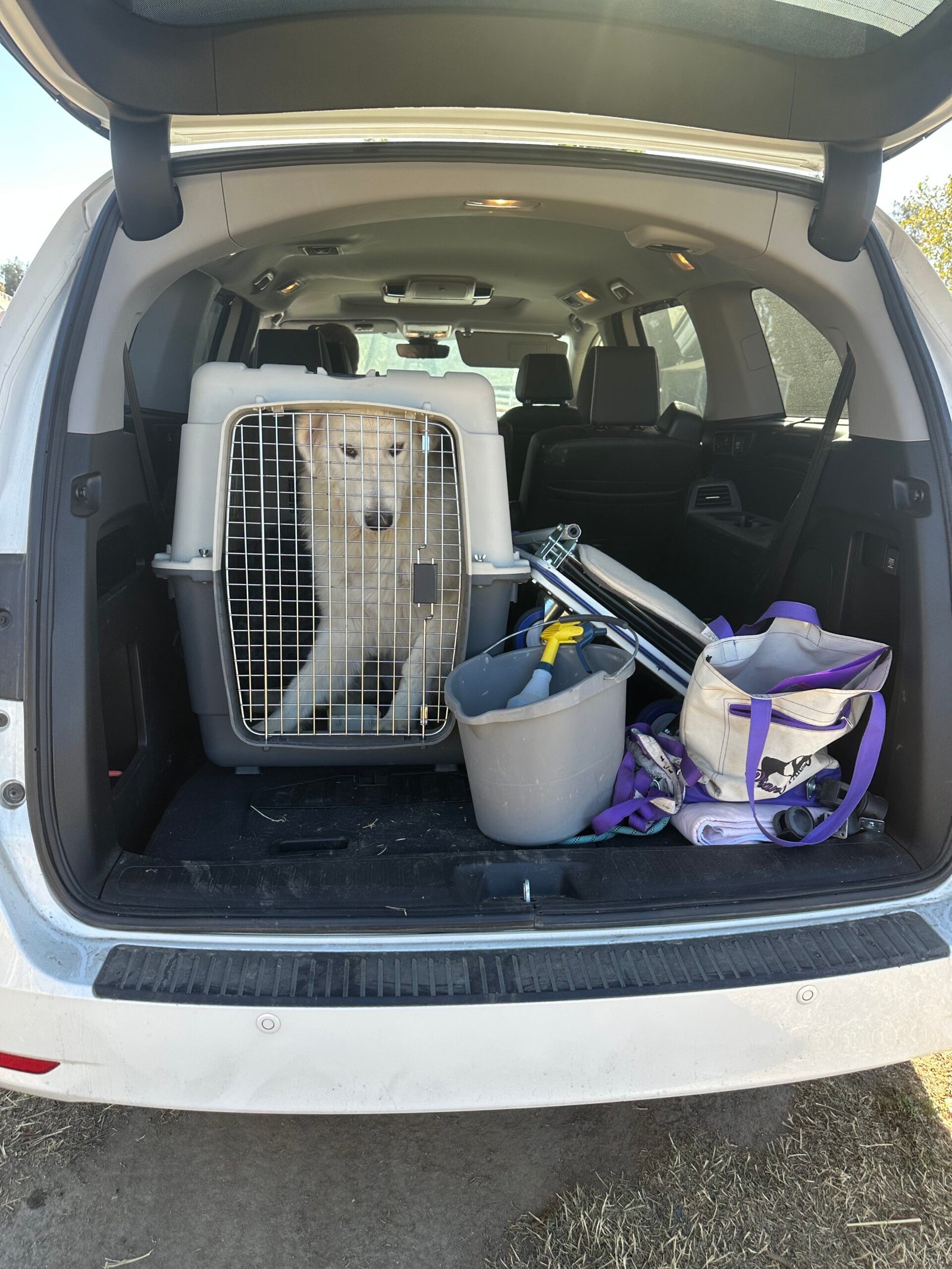
Consider crate travel. I know many people prefer to let their dogs travel loose in the back of the vehicle, and that’s their choice. But cleaning vomit out of a dog crate is significantly easier than cleaning it out of your car’s carpet, leather seats, and all those crevices. The puppy heading to Canada last week? I’m so grateful I had a temporary towel in her crate instead of the nice new crate pad I’d planned to send with her. (I learned long ago not to put the crate pad in until we arrive at the airport.)
Don’t feed right before travel. An empty stomach obviously produces less mess if your dog does get sick. I learned this lesson after having the airport-bound puppy vomit up her entire breakfast.
Be aware of your route. Winding roads and hilly terrain increase the likelihood of motion sickness. If you have a choice of routes and suspect your dog might be sensitive, choose the smoother, flatter option.
Stay calm if it happens. Your dog will pick up on your stress. If they vomit, clean it up matter-of-factly, reassure them, and continue on your way. They’re not sick or broken—they’re just motion-sensitive.

Looking Ahead
After that first incident happens, you’ll know your dog is prone to motion sickness. At that point, you can decide whether to use medication for future trips or simply come extra-prepared with cleaning supplies. Some owners prefer to medicate every time to avoid the mess and discomfort. Others only medicate for long trips or particularly curvy routes.
There’s no wrong answer—it’s about what works for your situation and your dog’s needs.
The Bottom Line for LGD Owners
Motion sickness in livestock guardian dogs is common, unpredictable, and ultimately not a big deal. Some dogs have it, some don’t. You might not discover your dog is prone to it until they’re several years old and you take an unusual trip. Or you might find out on day one when you bring your new puppy home.
Either way, it’s manageable. Come prepared, stay calm, and remember that your dog isn’t defective or ill—they’re just a little more sensitive to motion than their litter mates.
And if you’re picking up a puppy from me and want to discuss medication options or have questions about travel preparation, I’m always happy to help you plan for a smooth journey home.
Have questions about preparing for your new livestock guardian dog? Contact me to discuss travel plans, puppy preparation, or anything else on your mind. I’m here to help ensure both you and your new dog start off on the right paw.
FAQs
Q: How common is motion sickness in livestock guardian dogs?
A: Motion sickness affects some dogs and not others, even within the same litter. Over my ten years of breeding Maremmas, I’ve seen it occur occasionally—some litters have one or two puppies prone to it, while others never experience issues.
Q: Will my puppy outgrow motion sickness?
A: Not necessarily. Just like humans, some dogs remain sensitive to motion throughout their lives. However, with medication and preparation, it’s easily manageable.
Q: What's the best medication for dog motion sickness?
A: Cerenia (maropitant) is the prescription medication that works best. It’s specifically designed to prevent nausea and vomiting in dogs. Talk to your veterinarian about whether it’s right for your dog.
Q: Can I prevent motion sickness through training?
A: While frequent short car rides may help some dogs build positive associations with vehicle travel, there’s limited evidence that training can override a genetic predisposition to motion sensitivity. Preparation and medication are more reliable solutions.
Q: Should I avoid feeding my dog before car travel?
A: Yes, traveling on an empty stomach can reduce mess if your dog does get sick. Avoid feeding for 2-3 hours before a long car trip.
Q: Is motion sickness dangerous for my dog?
A: No, motion sickness is not dangerous. It’s uncomfortable and unpleasant, but it won’t cause lasting harm to your dog.
Start Strong: Prepare for Success Before Your Puppy Arrives
Getting a Maremma puppy is a significant investment—in time, money, and emotion. The difference between a successful working LGD and a frustrated owner often comes down to understanding your dog from day one.
The Dial Method® helps you:
- Understand what your Maremma actually needs (they’re fundamentally different from other dogs)
- Set up your environment and routines for success before the puppy arrives
- Communicate clearly with your independent thinker
- Build confidence instead of second-guessing every decision
Available as an add-on to your puppy reservation. Think of it as insurance on your investment—a framework you’ll use for your dog’s entire lifetime.