I know what you’re thinking. It’s January. Spring feels like forever away. You’re planning for lambing or kidding season in a couple of months, and you’re thinking, “I should probably get livestock guardian dogs… but not yet. Spring makes more sense, right?”
I hear this constantly. And I totally get the logic.
But here’s what I need you to understand: waiting until spring to get your livestock guardian dogs is actually setting yourself up for the hardest possible scenario.
Let me tell you why.
The Problem with “Perfect” Timing
Imagine this: It’s March. Your ewes or does start having babies. Or maybe you’ve just bought new lambs or kids to start your new flock or herd. You bring home a pair of 12-week-old puppies to “grow up with” the lambs or kids. (Because you’ve learned that LGDs should always work in pairs.)
Sounds perfect, right?
Except those puppies can’t protect those babies. They’re babies themselves—too small, too young, too untrained.
And that puppy isn’t safe WITH those babies. Young puppies and newborn livestock don’t mix. Puppies are clumsy with sharp teeth. Baby animals are fragile and zippy. Accidents happen.
Meanwhile, it’s peak predator season. Coyotes are raising their own pups and hunting hard to feed them. Your livestock are incredibly vulnerable, and your puppies are not ready to protect them. In fact, the puppies could also be in danger from the same predators that are attracted to those babies.
Plus, you’re now trying to manage brand new livestock AND a pair of brand new puppies during your busiest season of the year.
This is not a recipe for success.
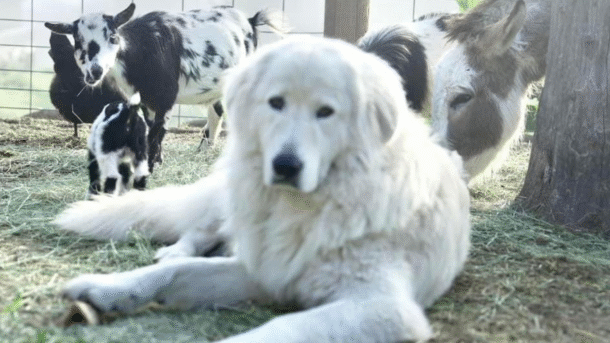
Six-week-old Prancing Pony Maremmas in training with goats
Here’s What Actually Works
When you bring home properly socialized livestock guardian dog puppies now—in January or February—here’s what happens instead:
By the time spring hits, those puppies are 6-8+ months old instead of 3 months old. (Depending on the age of the puppies when you get them.) That’s a HUGE difference in maturity, size, and capability. They’re past the crazy “velociraptor” puppy phase. They’re bigger, calmer, closer to being able to actually work.
You have time to bond and train before your busy season explodes. You can learn positive reinforcement training, build your relationship with your pups, practice handling skills. When your livestock arrive or have babies, you’re not learning everything at once.
If you buy puppies from a breeder like me—who has raised them with livestock since they could crawl—they’ve already had that critical exposure. Even if they need to wait a few weeks or months before meeting YOUR livestock, they’re fine. That window has been handled.
But if you wait and buy a puppy who has NEVER been properly socialized with livestock during the first 12 weeks? You can’t get that window back. That puppy will be much harder to train and may never develop the natural, calm bond a properly socialized puppy has.
Before I understood critical socialization periods, I made the mistake of acquiring dogs from breeders who didn’t socialize their puppies with livestock until 4+ months. (And some who left that vital job entirely up to the new owners) Those dogs were always difficult and never became great livestock guardians. Not because they were bad dogs, but because they missed that critical window to learn their jobs when their brains were most receptive.
I Have What You Need Right Now
I’m telling you all this because I genuinely want you to succeed. But also because right now, I have exactly the dogs that can set you up for spring success:
Not sure what would work for your situation? Just hit reply or book a call with me and let’s talk through it. I love helping people think through these decisions.
For a limited time, come talk Maremmas with other Maremma owners and me — free. Have a different livestock guardian dog breed? You're welcome here too — most of what we cover applies to all LGDs.
These calls and their recordings will become part of the Maremmas Made Easy membership community soon, so signing up now gets you a free sneak peek at the membership, plus first access to founding-member pricing when it launches.
For a limited time, come talk Maremmas with other Maremma owners and me — free. Have a different livestock guardian dog breed? You're welcome here too — most of what we cover applies to all LGDs.
These calls and their recordings will become part of the Maremmas Made Easy membership community soon, so signing up now gets you a free sneak peek at the membership, plus first access to founding-member pricing when it launches.