Last Updated on June 6, 2026 by Kim Crawmer, KPA CTP, LFDM
It's January. Your farm is quiet. Maybe your ewes or does are pregnant and you're planning for spring babies. Maybe you're getting your first livestock in a couple of months. And you're thinking, "I should probably get a livestock guardian dog... but not yet. Spring makes more sense, right?"
I hear this all the time. And I get it—it seems logical to wait until you actually need the protection before bringing home livestock guardian dogs.
But here's what most people don't realize: waiting until spring to get your livestock guardian dogs can actually set you up for failure.
Quick Answer: When Is the Best Time to Get Livestock Guardian Dogs?
The best time to get livestock guardian dogs is late winter (January–February)—before spring lambing or kidding. This timing allows puppies to mature before peak predator season, ensures proper livestock socialization, and gives owners time to bond with and train their new dogs before their busiest months.
Why Most People Wait Until Spring — and Why That’s a Mistake
"I’ll Get Them When I need them,” Thinking
Most people don’t get this wrong because they’re careless — they get it wrong because the timing sounds logical. Spring is when lambs and kids arrive, predator pressure increases, and protection suddenly feels urgent. So it makes sense to think, I’ll get a livestock guardian dog when I actually need one.
Why Protection Timing Matters More Than People Realize
The problem is that livestock guardian dogs don’t work on emergency timelines. By the time spring arrives and the need is obvious, the most important developmental windows have already passed. Decisions made months earlier — in January and February — are what determine whether a dog grows into a calm, reliable livestock guardian or struggles to catch up later.
The Critical Socialization Period for Livestock Guardian Dog Puppies
Here's the science that changes everything: Puppies have a critical socialization period that happens between 3 weeks and 12-16 weeks of age.
This early bonding is especially critical for Maremma Sheepdogs, a breed known for deep livestock attachment and slower emotional maturity, which makes early, consistent exposure even more important for long-term success.
During this window, whatever a puppy is exposed to becomes "normal" to them. This is when their brains are like sponges, soaking up information about what's safe, what's family, what's worth protecting.
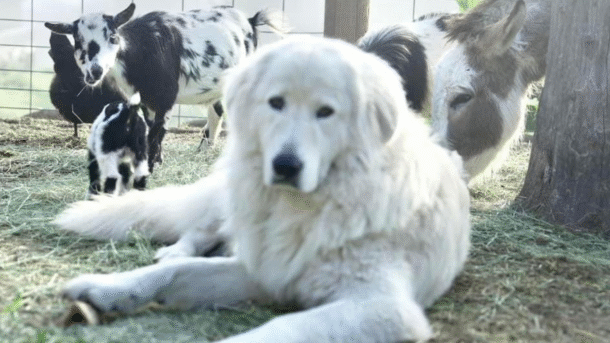
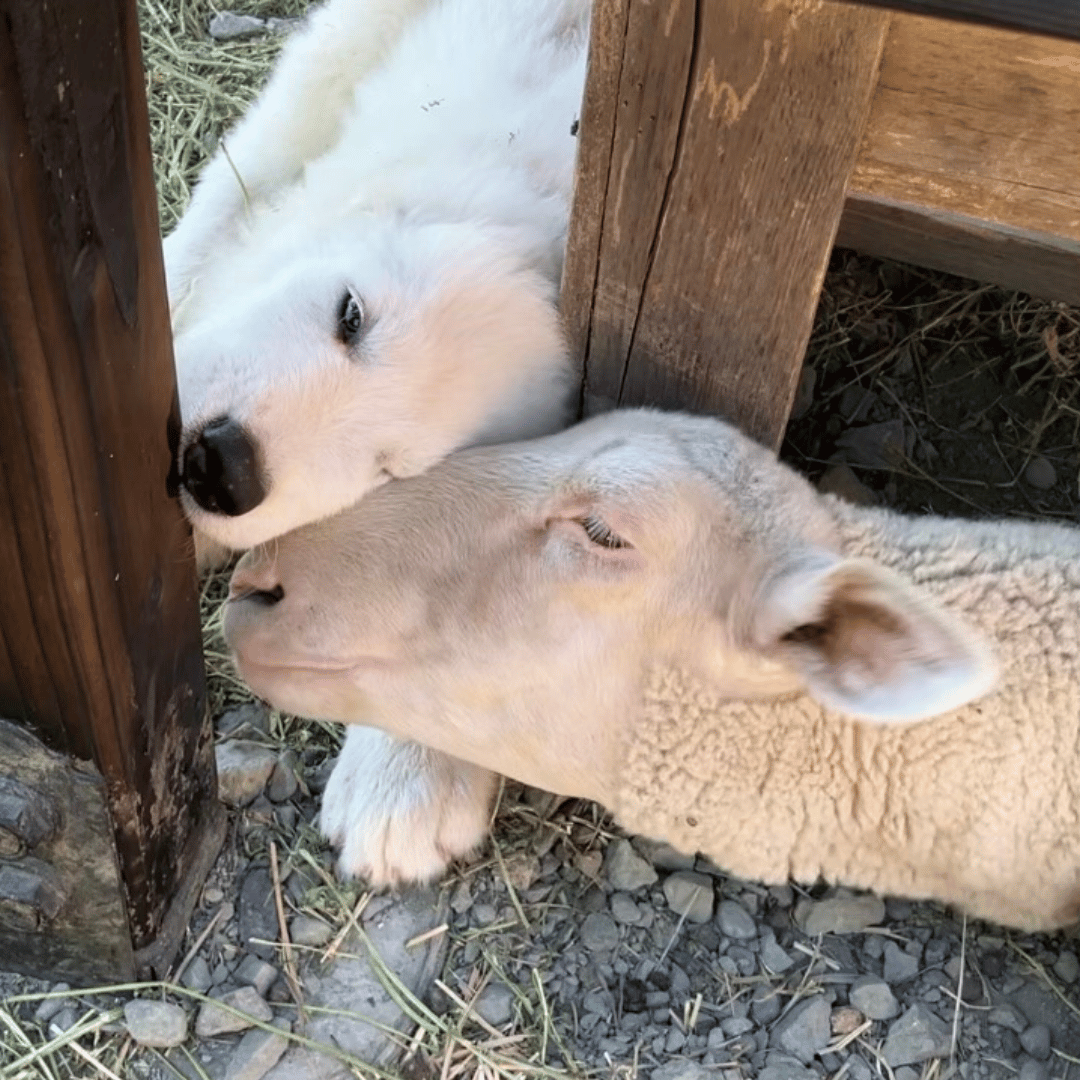
For livestock guardian dogs, this means they need to be living full-time with livestock during this period. Not visiting occasionally. Not watching from a distance. Living with them.
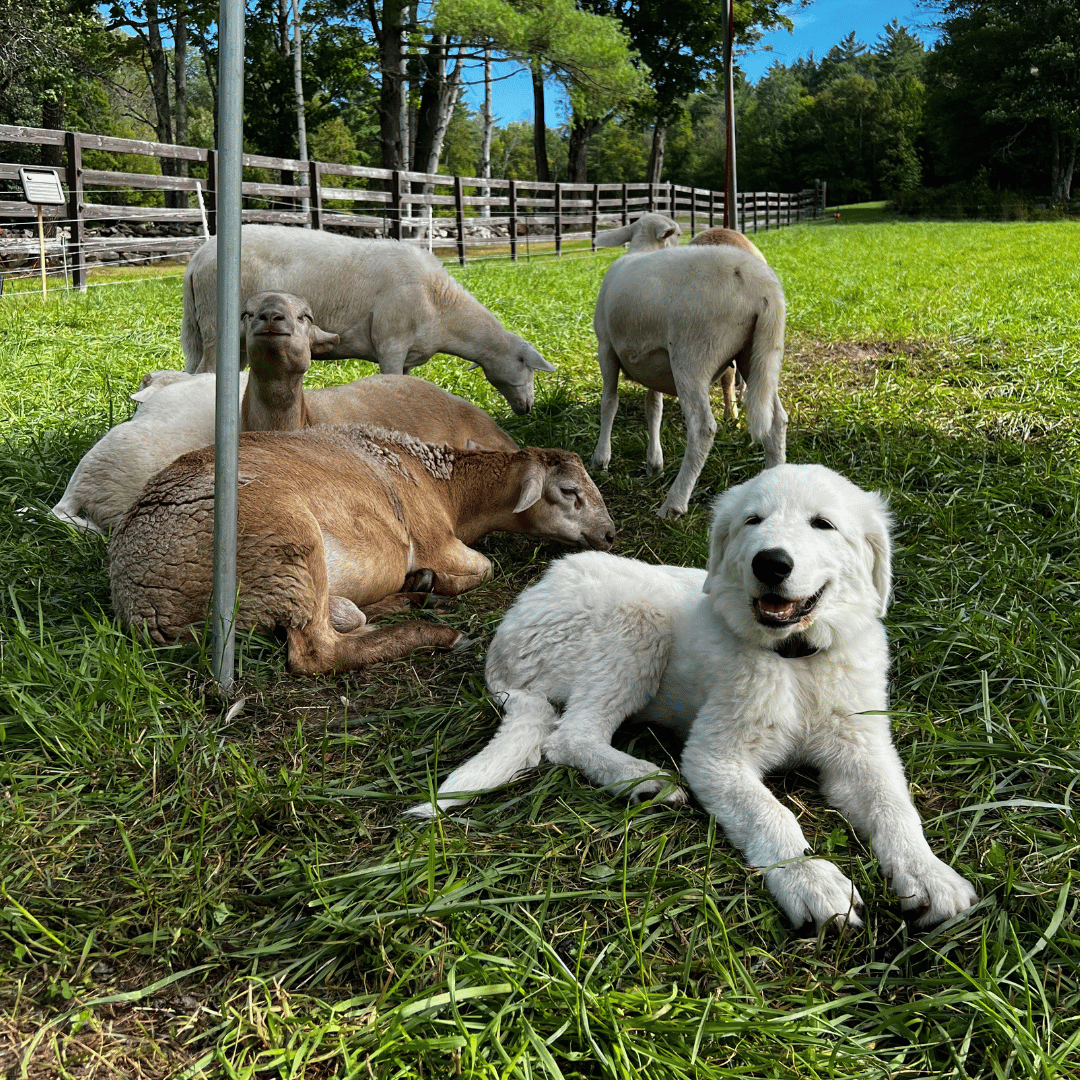
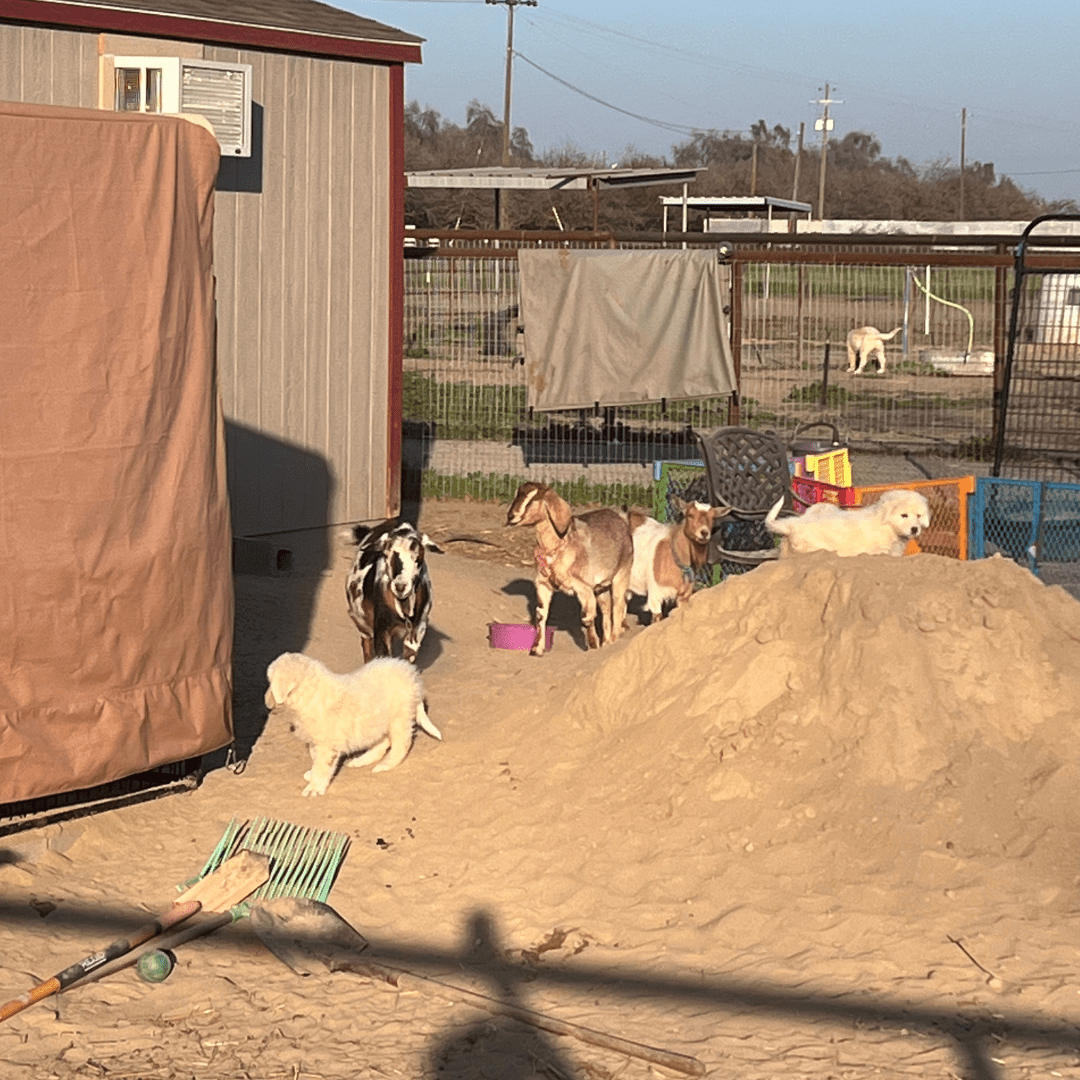
When you buy a 12-week-old puppy who has been raised with goats since birth, that puppy has had constant exposure during their entire critical socialization window. Goats smell normal. Goat sounds are normal. Baby goats jumping around are normal. The puppy's brain has already wired itself to see these animals as family. (If you raise sheep, don't worry - goats and sheep are similar enough for this learning to carry over.)
But if you buy a 12-week-old puppy who has never seen livestock? (Or only visited the stock occasionally.) You've missed that window. You can't get it back. That puppy will be much harder to train, more likely to chase or play rough with animals, and may never develop the calm, protective bond that a properly socialized puppy naturally has.
With a lot of time and training, they may end up being a functional livestock guardian dog, but they will never be a great LGD. They will never live up to the potential they were born with. And this isn’t just theory — I learned this lesson the hard way.
What I Learned the Hard Way About Missing the Socialization Window
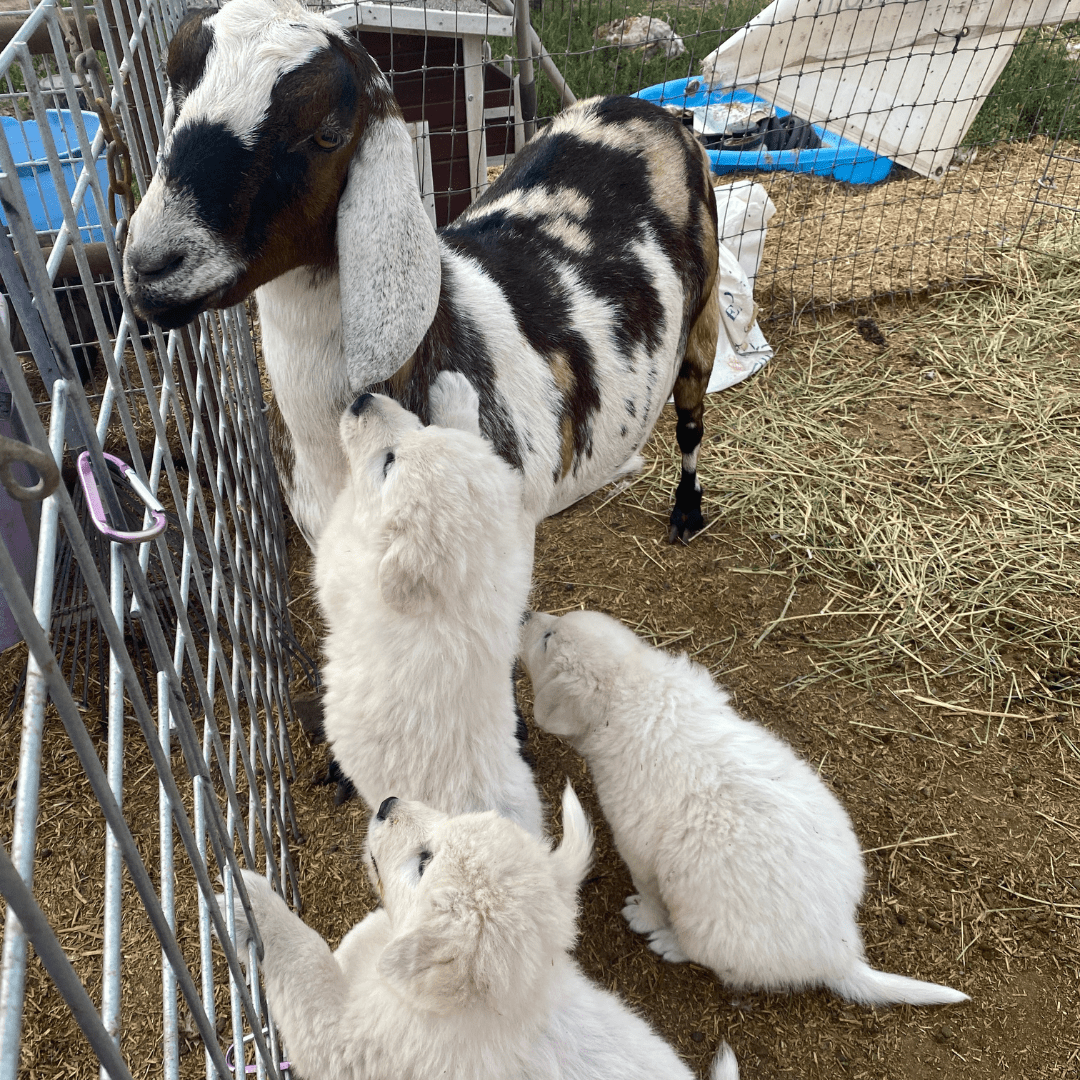
I didn’t fully understand how permanent this window was until I made some costly mistakes myself. I've seen this firsthand. Before I understood critical socialization periods, I made the mistake of acquiring dogs from breeders who didn't introduce puppies to livestock until 4+ months old. (Or who didn't introduce their puppies to livestock at all, leaving that job entirely to the new owners.) I was so impressed with the great genetics and quality of these dogs that I never asked the breeders about their puppy socialization programs. Honestly, it never occurred to me that anyone who was breeding LGDs wouldn't raise their puppies the same way I do - intensively with the livestock. But unfortunately it's more common than you might think. Why? Because raising puppies with livestock while also keeping them healthy and safe is a lot of work. That's what led me to eventually develop my Puppy Parlor, which is the ultimate LGD puppy development center.
Adding those improperly socialized puppies to my farm was a mistake that took me years to undo. Those dogs were extremely difficult to integrate with my livestock. They had no interest in bonding with my goats and other livestock. Some of them were very aggressive with my goats, horses, cats, and poultry, causing serious injuries and even deaths. They never really became the completely trustworthy, reliable livestock guardians I needed. Not to the same level as the dogs I bred and the dogs I bought from breeders who socialize their puppies the way I do. Not because they were bad dogs or had bad genetics, but because they missed their critical socialization window.
This is where timing really starts to work against people. When someone waits until spring to look for a livestock guardian dog, the breeders who prioritize proper early livestock socialization often no longer have puppies available. Those puppies are typically placed months earlier, because responsible breeders plan for proper development first — not seasonal demand. By spring, people are frequently choosing from whatever is available rather than from breeders who raise puppies correctly from the start, and that’s how socialization gets compromised. The issue isn’t that all breeders have “good” and “bad” puppies — it’s that waiting limits access to the breeders who prioritize proper early livestock socialization.
Why Spring Lambing & Kidding Is the Worst Time to Add a New Puppy
Let's say you wait until March when your lambs or kids are born to get your LGDs. You bring home a pair of 12-week-old puppies.
Here's what actually happens:
Problem #1: Those puppies can't protect newborn babies. 3-month-old puppies are still babies themselves. They don't have the size, maturity, or training to guard anything yet.
Problem #2: Those puppies aren't safe with newborn babies. Young puppies and baby livestock don't mix well. Puppies are clumsy, curious, rowdy, playful, and have sharp little teeth. Baby goats and lambs are fragile and fast-moving. It's a recipe for disaster.
Problem #3: You now have to manage brand new livestock AND brand new puppies at the same time, during your busiest season. Good luck.
Problem #4: This is peak predator season. Coyotes are raising their own pups and need to feed them. Your unprotected livestock are incredibly vulnerable, and your puppies are too young to help.
So you're juggling newborn animals, puppies who can't do their jobs yet, predator pressure, and trying to supervise everyone so nobody gets hurt. This is not the recipe for success.
Why Getting Livestock Guardian Dogs in Winter Works Better
When you bring home properly socialized livestock guardian dog puppies in January or February—before your livestock arrive or have babies—here's what happens instead:
They'll Be Older and More Mature When You Actually Need Them
A puppy who is 4-6 months old right now will be 6-8 months old by March or April. That's a huge difference in maturity, size, and capability. They're past the worst of the "velociraptor" stage (that crazy 10-14 week period when puppies are testing boundaries and being extra rambunctious). They're bigger, calmer, and much closer to being able to actually do their job.
An adolescent dog who is 12-18 months old right now? They'll be nearly fully mature and ready to work by spring. You're not scrambling to train a baby during your busiest season.
The Critical Socialization Period Doesn't Get Wasted
If you buy puppies from a breeder like me—someone who has raised those puppies with livestock from birth—they've already had their critical socialization.
Even if those puppies need to be separated from your livestock for a few weeks or even a couple of months while you're waiting for spring, it doesn't hurt them. They've already formed those neural pathways. They already know livestock are family.
In fact, there may be a benefit to separating puppies from livestock during that early "velociraptor" phase anyway. That's when they're most likely to experiment with chasing, nipping, and rough play. So, if you're keeping them separated during this time while waiting for your livestock to arrive? You're actually avoiding a problem period.
Getting Livestock Guardian Dogs Before Your Livestock Arrive
When you bring puppies home before your busy season hits, you actually have time to:
- Let them settle in and bond with your family
- Learn about positive reinforcement training and clicker training
- Teach them basic manners and behaviors
- Practice the training techniques you'll use when introducing them to livestock
- Build your confidence as a handler
Then, when your livestock arrive, or stock you already own have their babies, you're not learning everything at once. You already have a relationship with your dogs. You already understand how to communicate with them. The livestock introduction becomes just one new element instead of everything being brand new.
What This Timing Looks Like for Maremma Sheepdogs
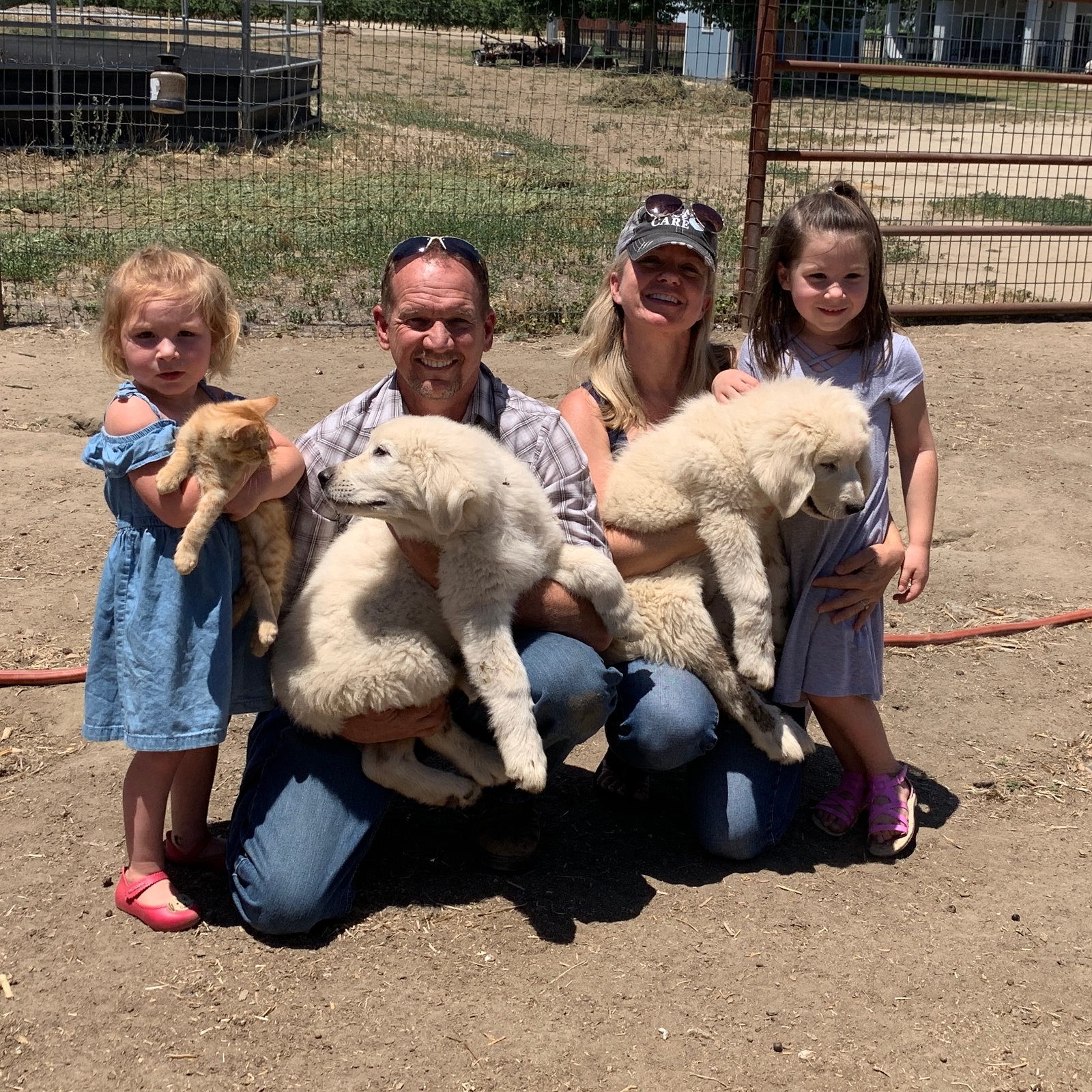
Maremma Sheepdogs, in particular, benefit from earlier placement and longer maturity time. Maremmas are a slower-maturing livestock guardian breed that relies heavily on early bonding and environmental stability. Getting Maremma Sheepdog puppies in late winter allows them to grow, settle, and build confidence before spring lambing or kidding, rather than trying to manage immature dogs during the most demanding season on the farm. When timed correctly, Maremmas tend to develop into calm, steady guardians instead of overwhelmed adolescents.
Why Getting Two Livestock Guardian Dogs Works Better Than One
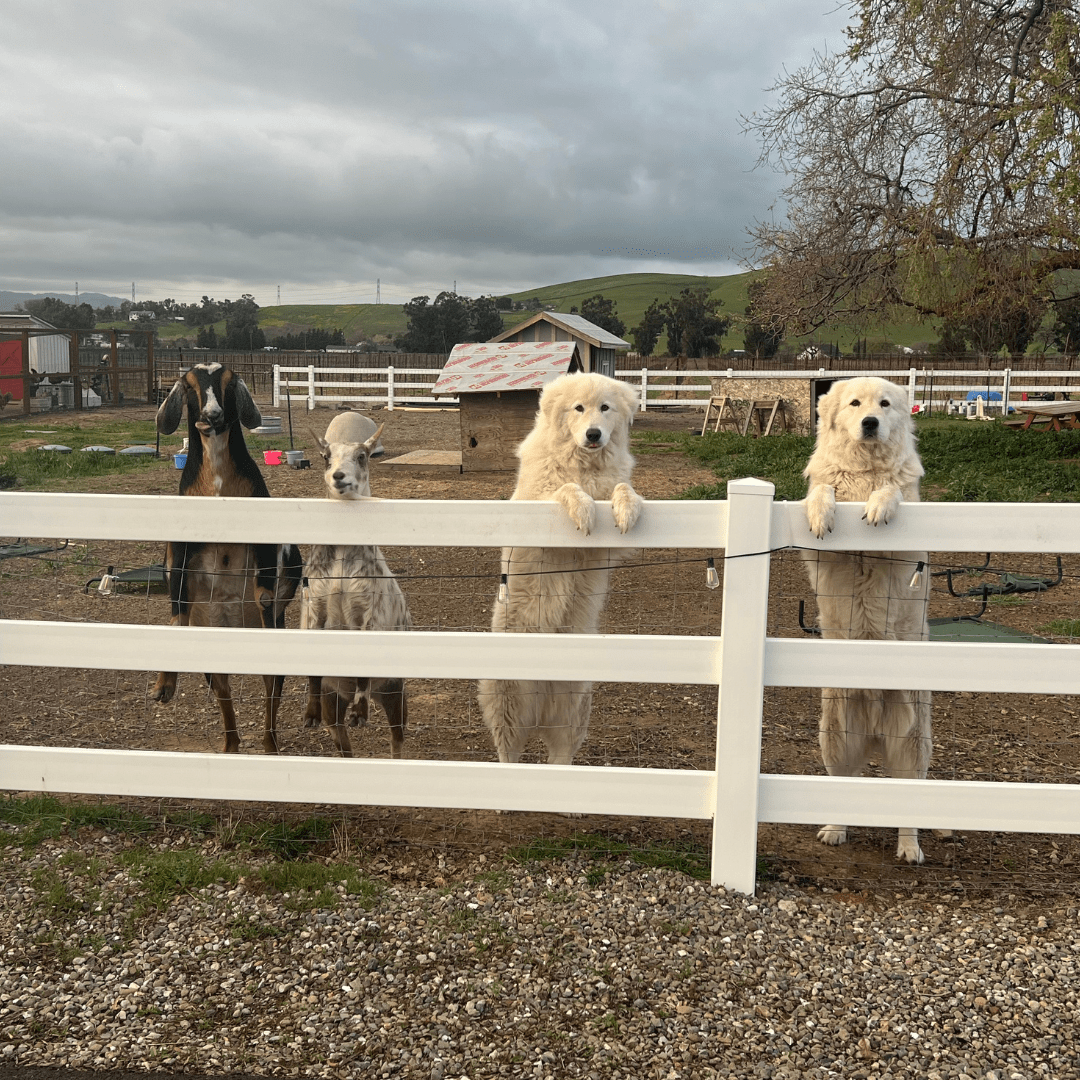
I almost always recommend people get two puppies instead of one. Livestock guardian dogs are social animals who work better in pairs. They keep each other company, build confidence together, play together instead of pestering livestock, and create a more effective security team.
But a single puppy living alone in a barn or pasture, separated from both livestock and human companionship? That's a recipe for a fearful, bored, or anxious dog who may develop behavioral problems.
When you bring home two puppies in January or February, they can live together, play together, and keep each other company while they're waiting to meet your livestock. You're building your team before you need it.
What If You Don't Have Livestock Yet At All?
Maybe you're not waiting for spring babies. Maybe you're waiting for your first livestock and they won't arrive for months.
Should you still get your livestock guardian dogs now?
My answer: Yes, if you're getting them from a breeder who has done excellent socialization work.
Here's what you need:
Two puppies (not one—they need each other for company and confidence)
From a breeder who raises puppies with livestock from birth (goats, sheep, or similar animals—they don't have to be the exact species you'll eventually have)
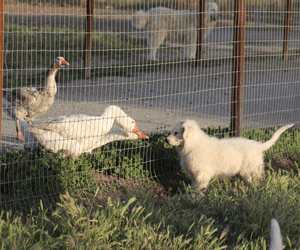
Who has exposed them to poultry (through a fence is fine—they need to see, hear, and smell chickens/ducks so the strange movements don't trigger prey drive later)
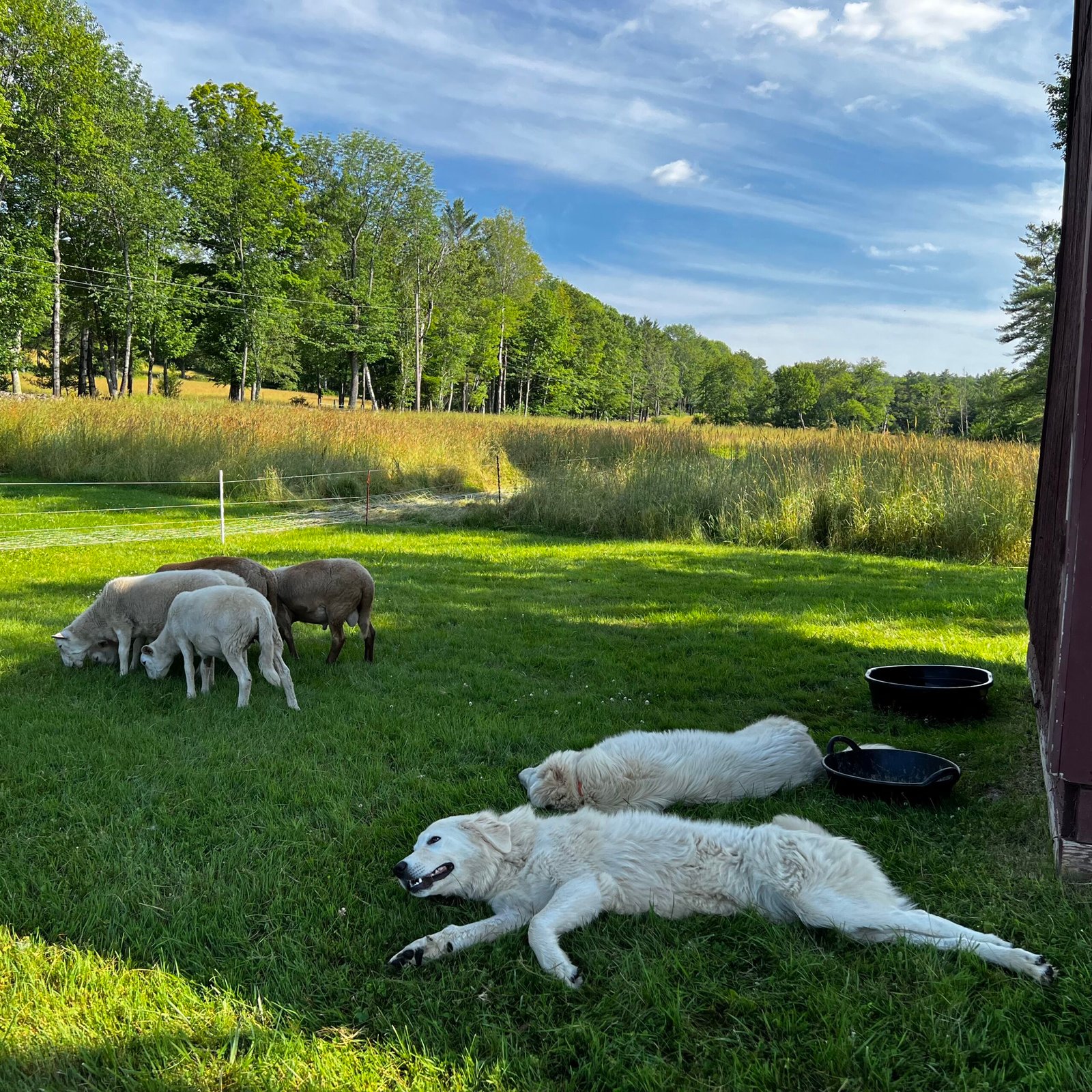
If you get puppies like this, they can absolutely live without livestock for a period of time. The critical window has been handled. You're just waiting to apply their education to your specific situation.
During this waiting period, you:
- Build a strong relationship with your puppies
- Learn training techniques
- Let them mature past the difficult early puppy stages
- Create a confident, bonded team
Then when your livestock arrive, your dogs are older, calmer, better trained, and ready to meet their new family members.
The Perfect World vs. Real Farm Timing
In a perfect world, you'd bring home your livestock guardian dog puppies at the exact same time you bring home your livestock. Everyone meets each other on day one. Puppies and animals grow up together from the start.
But we don't live in a perfect world.
Most of us are getting livestock at specific times—when they're born, when we buy them, when our own animals have babies. We can't always control that timing.
So if you can't bring puppies and livestock home at the exact same time, the next best option is to get well-bred, properly socialized puppies a little bit BEFORE your livestock arrive.
Not after. Before.
Here's why this is better than waiting:
If you get a puppy who has NEVER been with livestock, but you bring them home at the same time as your livestock, you've still missed the critical socialization window. That puppy is already 12+ weeks old with no livestock exposure. You're playing catch-up.
If you get a puppy who has been raised with livestock since birth but needs to wait a few weeks or months before meeting your livestock, the critical socialization has already happened. You're just continuing their education.
I would choose the second scenario every single time.

Best Age to Get a Livestock Guardian Dog for Spring
If you’re planning for spring lambing or kidding, the question isn’t just when to get livestock guardian dogs — it’s how old they should be when you actually need them. Different ages can work well, but they serve different types of farms and experience levels.
Younger puppies (12–16 weeks old)
This age works best for people who enjoy raising a puppy and have the time to supervise early development. When properly socialized with livestock from birth, these puppies already understand that livestock are family. By the time spring arrives, they’ll be several months older, more coordinated, and past the most fragile baby stage — while still bonding deeply to their new home and family.
Older puppies (4–6 months old)
This is often the sweet spot for many farms. Older puppies have already moved past the most intense early puppy behaviors and are physically larger, calmer, and easier to manage. By spring, they’re significantly more mature and better able to coexist safely around livestock while continuing to learn their role.
Adolescent dogs (12–18 months old)
Adolescents are a good option for people who want a dog that can begin contributing sooner. While livestock guardian dogs aren’t fully mature until 18–24 months, adolescents have more confidence, size, and awareness than younger puppies and require less constant supervision.
Adult dogs
For farms that want immediate protection or have less interest in raising a young dog, a mature livestock guardian dog can be the right choice. Adults have already completed most of their development and can step into their role with the least learning curve.
The right age depends on your experience level, farm setup, and how much time you want to spend on early training — but planning ahead gives you the ability to choose the age that actually fits your situation, instead of settling for whatever happens to be available in spring.
What We Have Available Right Now
I'm sharing all of this because I genuinely want people to succeed with livestock guardian dogs. But I'm also sharing it because right now, I have exactly the kind of puppies and dogs that can set you up for spring success.
Younger puppies (ready early February)
These puppies were born in November and will be ready to go home in early February. By the time spring lambing or kidding is underway, they’ll be several months older and well past the very early puppy stage.
Older puppies (ready now)
I currently have puppies in the 4–6 month age range. This is an excellent option for someone who wants to skip the tiniest puppy phase while still bringing home a young dog that bonds easily and continues developing alongside their farm animals and family.
Adolescents and adults (ready now)
I also have dogs ranging from adolescents to fully mature adults. Adolescents will be nearly fully mature by spring, while adult dogs are ready to work immediately for those who need protection sooner.
All of these dogs have been raised with grazing livestock from the time they could crawl, with consistent exposure during their critical socialization period. They have also been exposed to poultry through fencing, so the movement, sounds, and smells don’t trigger prey behavior later. (Some of the adults are fully trained with poultry. Younger dogs and puppies are still in training with birds.) Because my dogs grow up together across age groups, they can often be placed in compatible pairs or combinations depending on your needs.
If you’d like to see photos and videos of the dogs currently available, or talk through which option might be the best fit for your farm, you can visit our available puppies page or sign up for more info about our program.

The Bottom Line
January feels early. It feels like you should wait.
But if you're planning for spring lambing or kidding, or you're bringing home livestock in a few months, NOW is actually the strategically smart time to get your livestock guardian dogs.
You get:
- Dogs who are older and more mature when you actually need protection
- Puppies who've had proper critical socialization (which you can't make up for later)
- Time to bond, train, and build confidence before your busy season
- The ability to bring home a proper pair who can work together
You avoid:
- Trying to manage brand new livestock and brand new puppies simultaneously
- Missing the critical socialization window
- Having a puppy too young to protect during peak predator season
- The chaos of training everything at once during your busiest time
The farms I see succeed with livestock guardian dogs are the ones who plan ahead. Who get their team in place before they desperately need it. Who give themselves time to build relationships and skills.
Don't wait until you're in crisis mode with predator losses to bring home puppies who are too young to help anyway.
Get ahead of it. Start building your team now.
Ready to talk about which dogs might be right for your situation? Check out our available puppies or available older dogs pages to see photos and videos of all the current options, or sign up for info about our program and let's have a conversation about what would work best for your farm.
And if you're not quite ready yet but want to keep learning? That's totally fine. I'm here to be a resource, whether you buy from me tomorrow or a year from now. Sign up for our weekly newsletter to keep getting this kind of practical, honest information about livestock guardian dogs.
FAQs: Timing Your Livestock Guardian Dogs
Q: What if my livestock won't arrive for 3-4 months?
A: If you're getting puppies from a breeder who raised them with livestock during the critical 3-16 week window, they'll be fine waiting a few months. They've already formed those important bonds and associations.
Q: Can I keep puppies in the house while waiting for livestock?
A: I don't recommend it for working livestock guardian dogs. You don't want them to get too comfortable with house life if they're going to live outside. But you also don't want them alone in a barn. The best solution is two puppies together in an appropriate outdoor space with shelter.
Q: Will puppies forget their livestock training if separated for a while?
A: Nope. The critical socialization that happens in those first 16 weeks creates lasting neural pathways. It's like learning your native language—you don't forget it even if you don't use it for a while.
Q: What age is too young for a puppy to actually protect livestock?
A: Most LGDs don't fully mature until 18-24 months. Younger dogs can absolutely deter predators by their presence and barking, but I wouldn't rely on a dog under 10-12 months to physically defend against serious threats.
Q: Should I get just one older dog instead of two puppies?
A: It depends on your situation. In almost every circumstance, LGDs should be worked in pairs when possible—they work better together, are happier, and more effective. You also have a backup plan if one of your dogs gets ill or injured.
The only situation where a single LGD might work is where the dog is also (or exclusively) a family companion and will be getting enough DAILY and EXTENSIVE attention (hours, not minutes) from the humans in its life to make up for a lack of a canine partner.
When should I get a Maremma Sheepdog puppy?
The best time to get a Maremma Sheepdog puppy is late winter, ideally January or February. This timing allows the puppy to mature before spring lambing or kidding, reduces safety risks with newborn livestock, and ensures early livestock socialization has already taken place.
Can livestock guardian dog puppies wait several months before meeting livestock?
Yes—if the puppies were raised with livestock during their critical socialization period (3–16 weeks). Once that window is complete, short-term separation does not erase their training.
Is winter a good time to get livestock guardian dogs?
Yes. Winter is often the best time to get livestock guardian dogs because puppies can mature before spring, predator pressure increases later in the year, and owners have time to train and bond before lambing or kidding season.
Will LGD puppies forget their livestock training if separated for a while?
No. Early livestock exposure creates permanent neural pathways. Just like learning a native language, properly socialized LGDs do not “forget” their training even if there is a gap before meeting new livestock.
What age can a livestock guardian dog start protecting animals?
Most LGDs mature between 18–24 months. Younger dogs can deter predators with presence and barking, but dogs under 10–12 months should not be relied on for serious physical protection.
Should I get one older LGD or two puppies?
It depends on the individual situation, but pairs that are close in age generally work better than a single LGD or two dogs that are far apart in age. Two similarly aged LGDs provide companionship, shared patrol duties, and reduced boredom, which leads to better livestock behavior long-term.
A quick note on timing:
While this article uses winter and spring as examples, the underlying principle applies any time of year. Livestock guardian dogs do best when they’re brought home before they’re urgently needed, with enough time to mature, settle, and bond properly. If you’re reading this in a different season, the takeaway isn’t “wait for January” — it’s to plan ahead relative to your livestock timeline rather than reacting at the last minute.